Article

Physics-Guided Neural Network-Based Feedforward Control for Seamless Pipe Manufacturing Process

by
Luka Filipović
1,*,†,
Luka Miličić
2,*,†,
Milan Ristanović
1,
Vladan Dimitrijević
3 and
Petar Jovanović
3
1
Automatic Control Department, Faculty of Mechanical Engineering, University of Belgrade, 11000 Belgrade, Serbia
2
Weapon Systems Department, Faculty of Mechanical Engineering, University of Belgrade, 11000 Belgrade, Serbia
3
MIKA ENGINEERING GmbH, Luxembourg L-2241, Luxembourg
*
Authors to whom correspondence should be addressed.
These authors contributed equally to this work.
Appl. Sci. 2025, 15(4), 2229; https://doi.org/10.3390/app15042229
Submission received: 21 January 2025 / Revised: 7 February 2025 / Accepted: 11 February 2025 / Published: 19 February 2025

Abstract

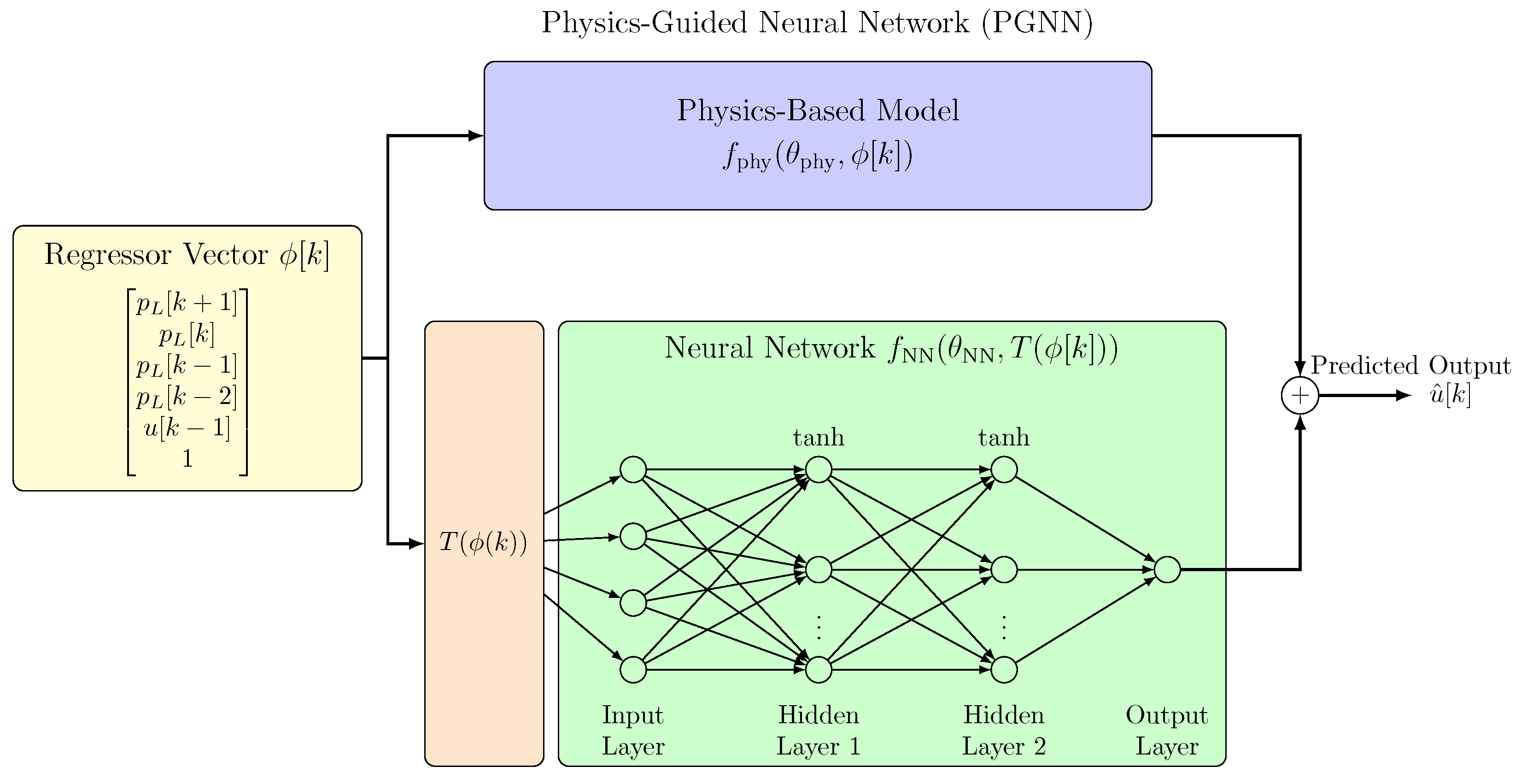
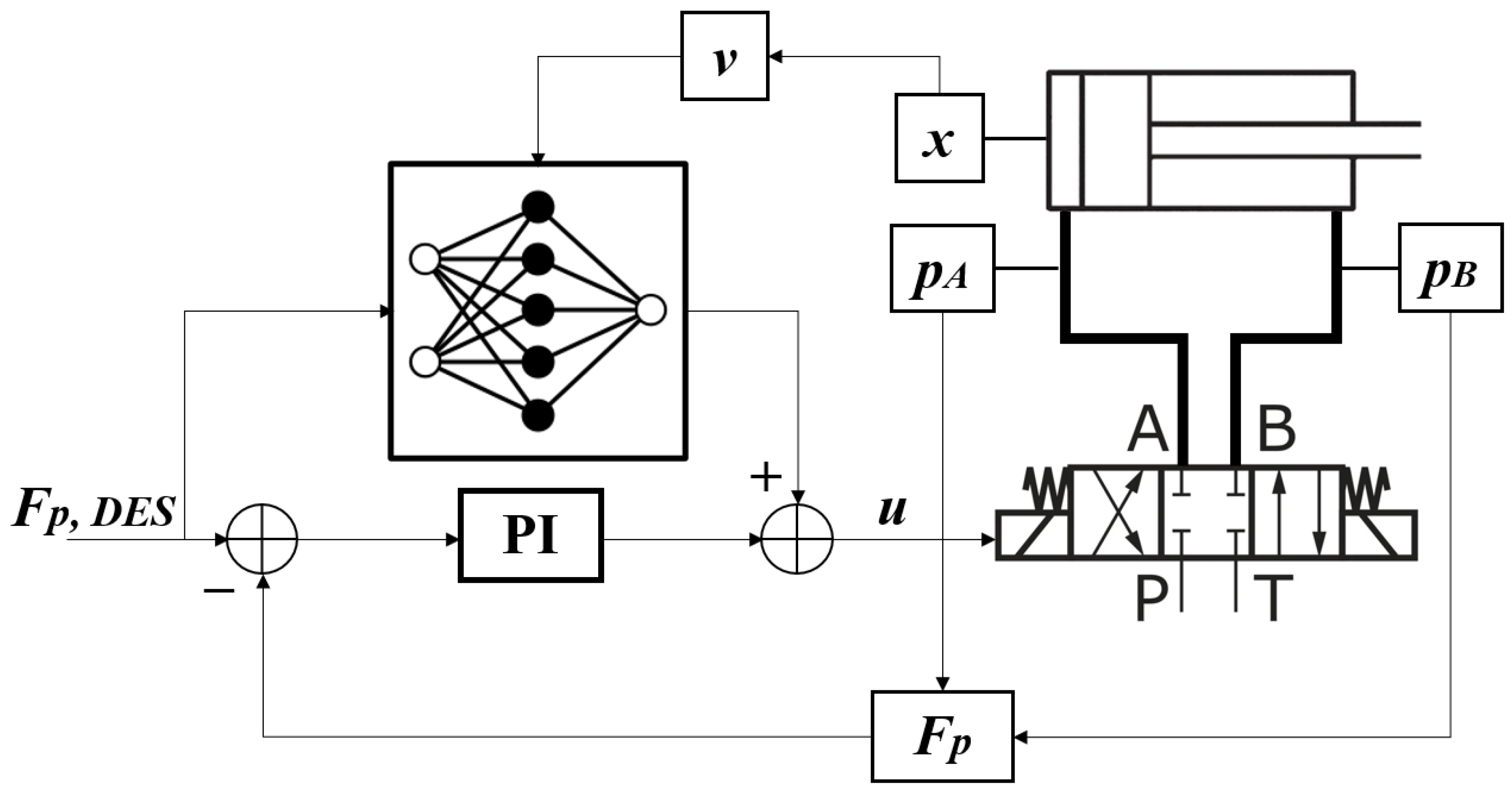
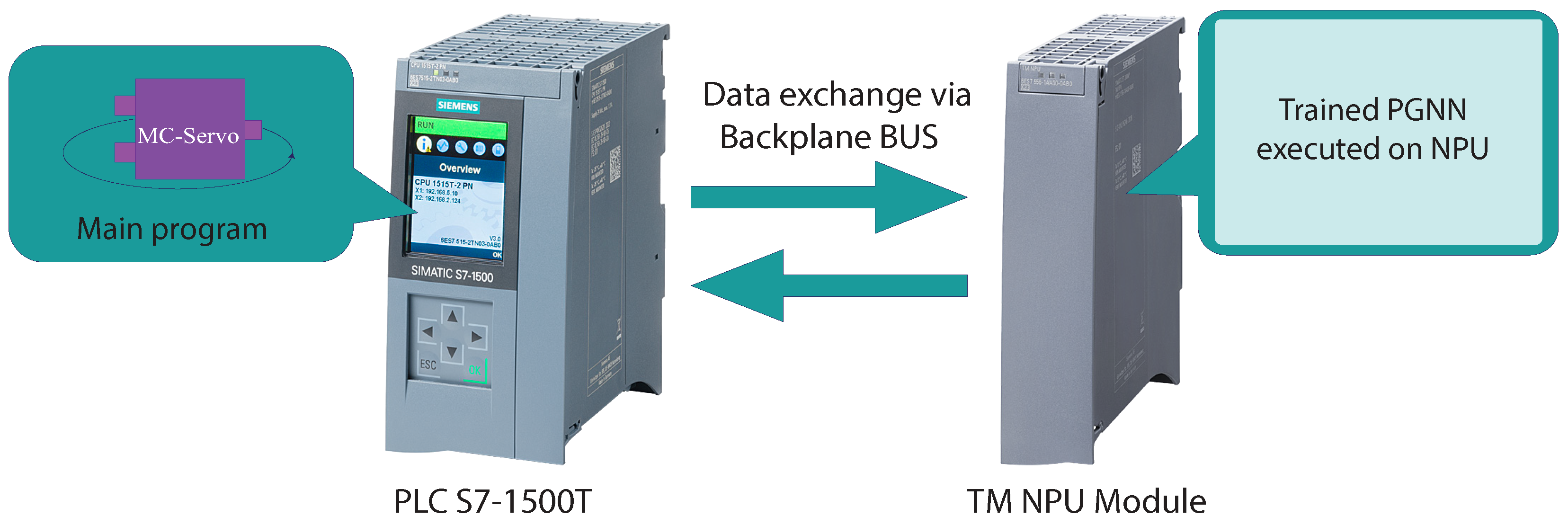
Artificial intelligence (AI) is increasingly being utilized in the industrial sector, revolutionizing traditional manufacturing processes with advanced automation systems. Despite their potential, neural networks have seen limited adoption in industrial control systems due to their lack of interpretability compared to traditional methods. The recently introduced physics-guided neural networks (PGNNs) address this limitation by embedding physical knowledge directly into the network structure, enhancing the interpretability and robustness. This study proposes a novel feedforward control framework that integrates a reduced-order physics-based model of a hydraulic actuator with a data-driven correction term for accurate force control in the seamless pipe manufacturing process. The coupled dynamics of the actuator and the continuously cast material being pushed into the piercing mill are identified through experimental data, and reduced-order models are developed for integration into the PGNN structure. The training of the networks is performed on a dataset from a scaled industrial hydraulic system, with the validation of the proposed methods conducted on a neural processing unit (NPU), a specialized industrial-grade platform for AI, operating within a PLC environment. The results demonstrate real-time execution with excellent force tracking, even with a limited training dataset—a typical constraint in industrial processes—while providing safer and more predictable behavior compared to traditional neural-network-only solutions.
Keywords: pipe manufacturing; physics-guided neural networks; feedforward control; real-time control; neural processing unit pipe manufacturing; physics-guided neural networks; feedforward control; real-time control; neural processing unit