Review

Guineensine: Isolation, Synthesis, and Biological Activity

by
Dimitris Matiadis
*,
Eleni Kakouri
,
Eleftheria H. Kaparakou
and
Petros A. Tarantilis
*
Laboratory of Chemistry, Department of Food Science & Human Nutrition, School of Food and Nutritional Sciences, Agricultural University of Athens, Iera Odos 75, 11855 Athens, Greece
*
Authors to whom correspondence should be addressed.
Appl. Sci. 2025, 15(3), 1444; https://doi.org/10.3390/app15031444
Submission received: 6 January 2025 / Revised: 27 January 2025 / Accepted: 27 January 2025 / Published: 30 January 2025
(This article belongs to the Special Issue Advances in Organic Synthetic Chemistry)

Abstract

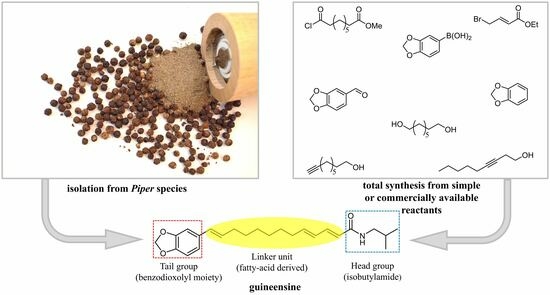
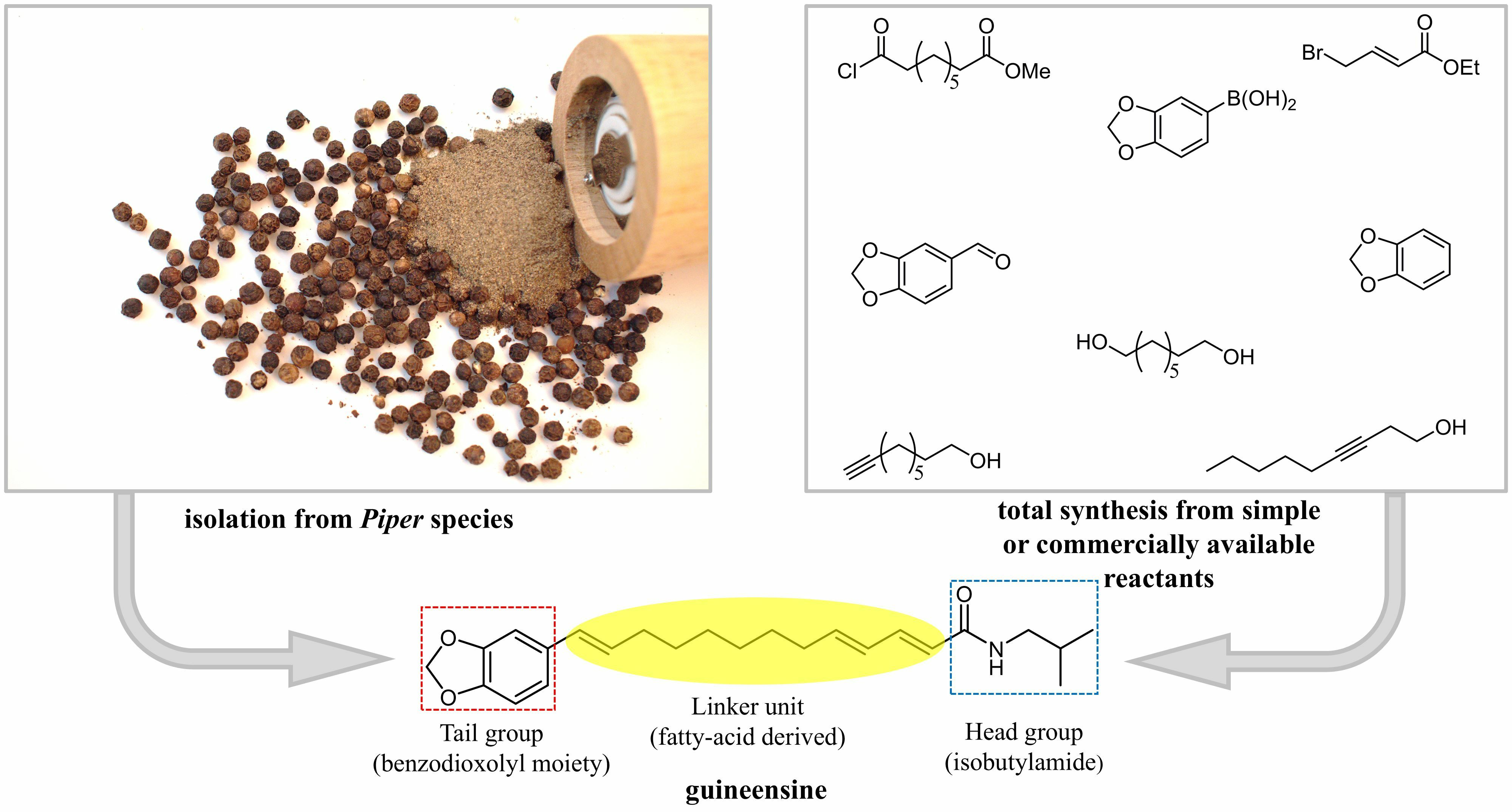
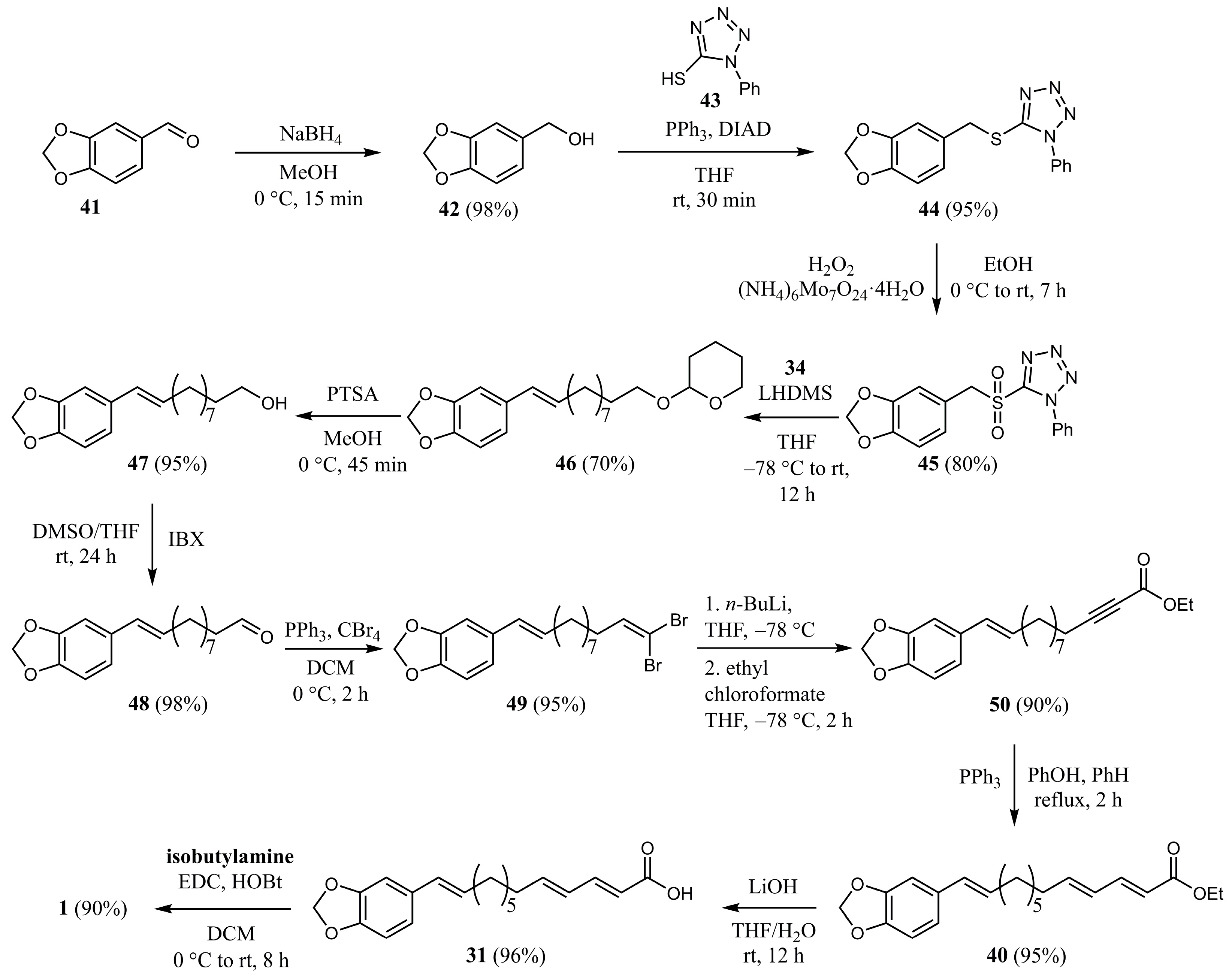
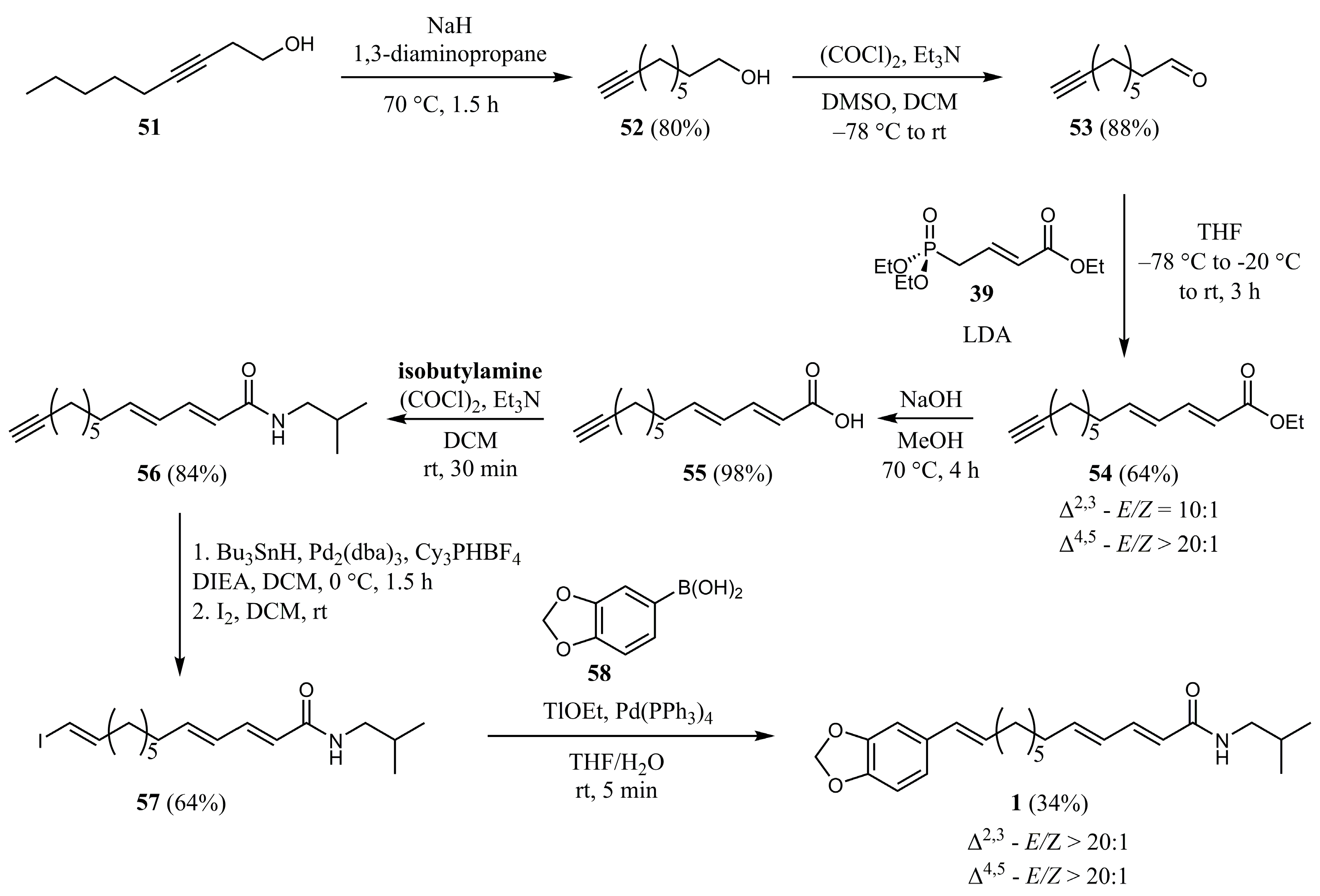
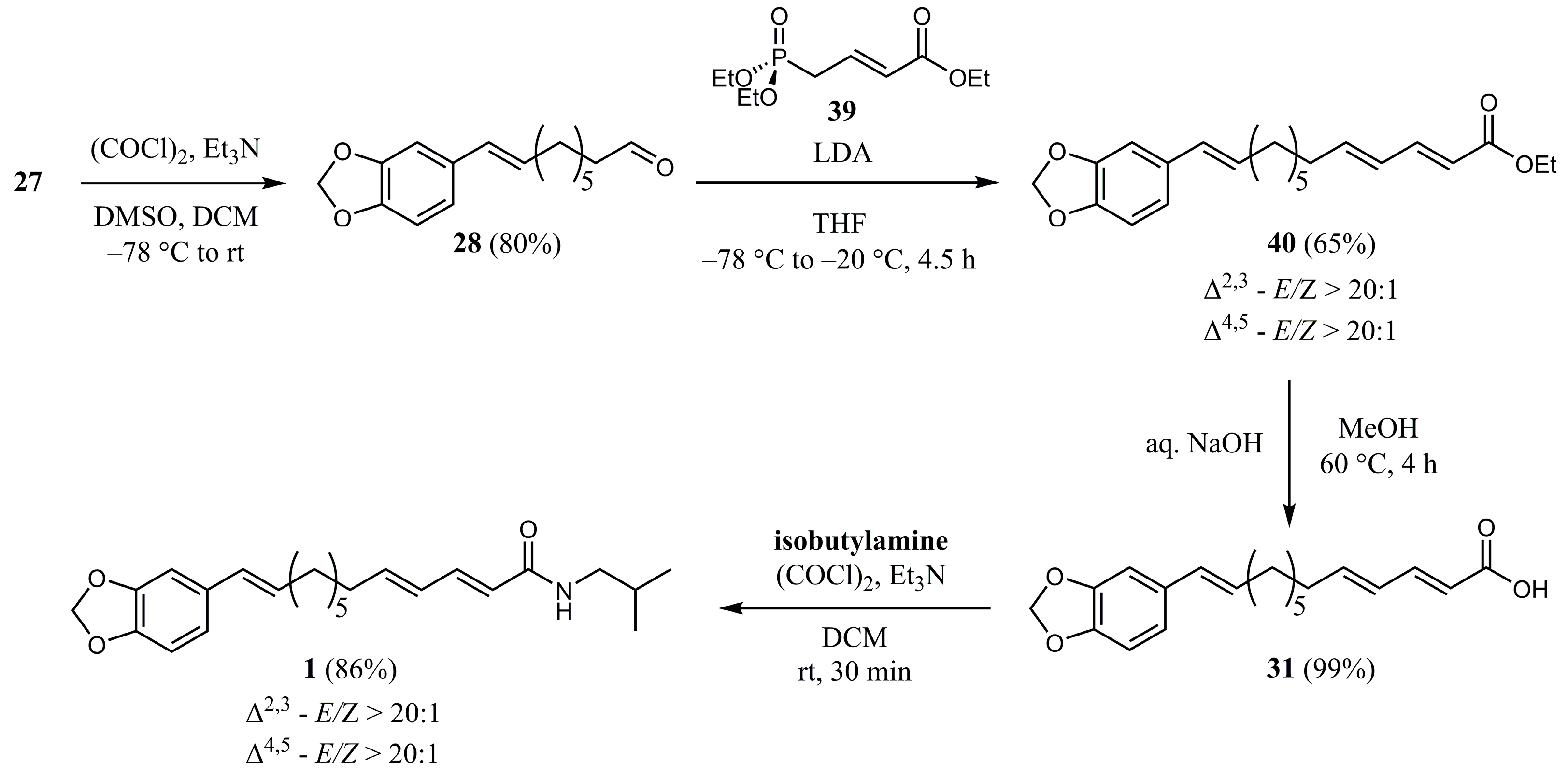
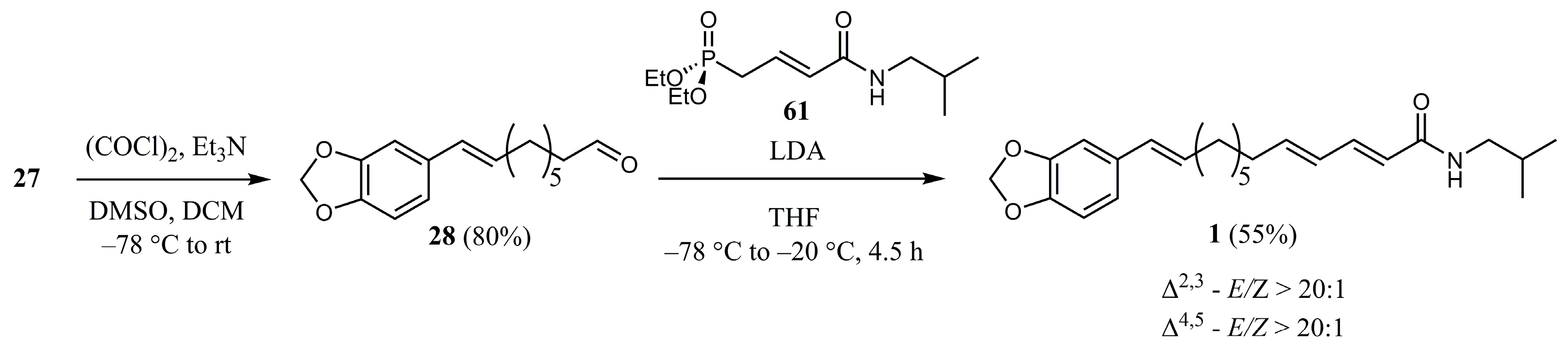
The genus Piper is the largest among plants of the Piperaceae family. Phytochemical studies on various piper species indicate the presence of bioactive compounds, with alkamides being among the most prominent. Piperine is well studied, and is usually found in abundance in most species. Guineensine is an alkamide that merits particular interest and, until now, has received less scientific attention. Therefore, in the present review, we discuss guineensine’s isolation, synthesis, and pharmacological activity. Data were collected from 1974 to 2024. Databases including PubMed, Google Scholar, and Science Direct were used to retrieved information using the following keywords: guineensine, isolation, synthesis, biological activity, alkamides, Piper spp., pepper, and SAR. Guineensine is obtained using various isolation methods. However, it yields low amounts; therefore, its synthesis is important. In addition, guineensine exerts many biological activities. Its potential is connected to its terminal benzodioxolyl and isobutyamide groups and to the length of its unsaturated carbon chain of twelve atoms. Findings of the studies presented in this review provide substantiation regarding the scientific interest in guineensine. Isolation procedures present advantages and disadvantages, and the methods of its synthesis are efficient. Its biological activity seems promising and further studies may lead to the development of new therapeutic agents.
Keywords: alkamides; extraction; natural product; piperamide; Piper spp.; pepper; SAR alkamides; extraction; natural product; piperamide; Piper spp.; pepper; SAR
Graphical Abstract