Plastic Waste in Romania: Between European Union Commitments and Actual Realities




Abstract
1. Introduction
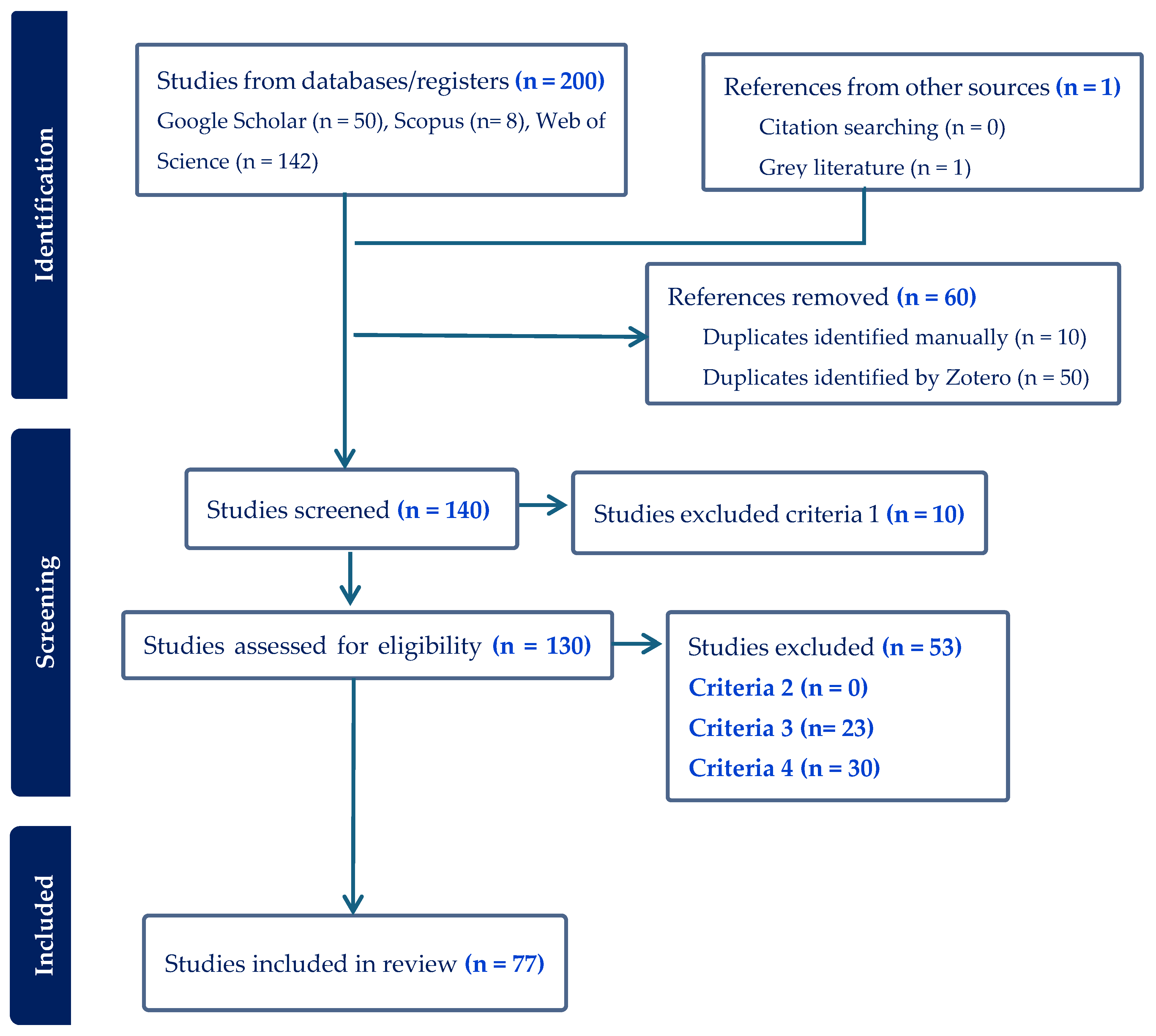
2. Materials and Methods
- Clarity of Scope: Is the goal of the LCA clearly defined (functional unit, system boundaries)?
- Methodological Transparency: Are the data sources (LCI) and impact assessment methods (LCIA) clearly reported?
- Relevance: Does the study address the specific context of plastic waste management or EU legislative compliance?
- Robustness of Conclusions: Are the findings supported by the presented data?
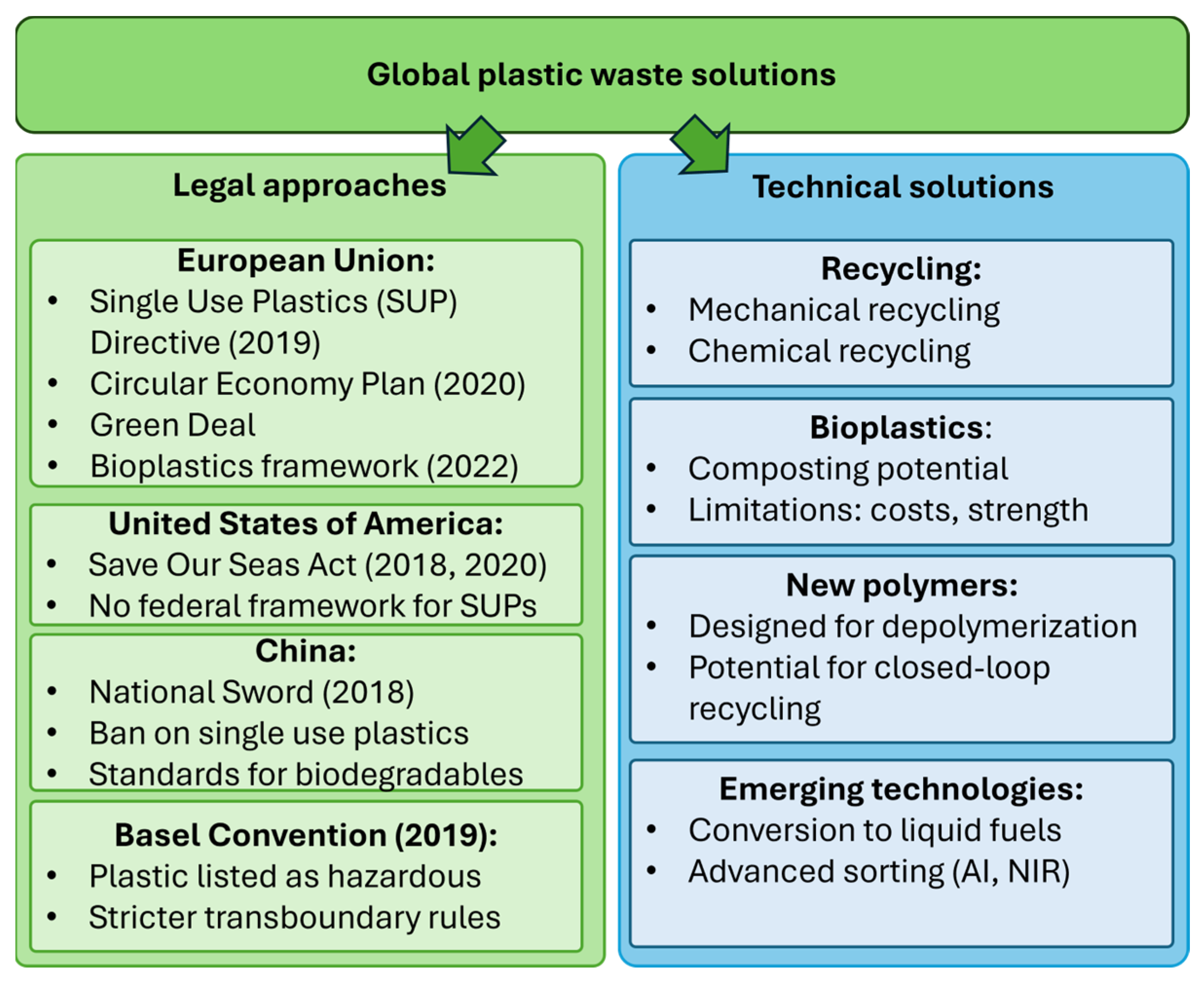
3. An Overview of European Union Legislation on Plastic Waste
4. Does Romania Meet the Requirements Imposed by European Union Legislation? A Case Study
4.1. Definition of Life Cycles Assessment
4.2. Romania—Life Cycle Analysis of Plastic Waste
4.3. A Comparative Perspective Between Romania and European Countries Regarding the Life Cycle Analysis of Plastic Waste
5. Discussion
Limitations of the Review
- Data scarcity and latency: There is a lack of primary LCA data specifically for Romania, necessitating reliance on aggregated EU datasets. Additionally, national reports often exhibit a reporting lag (e.g., 2025 reports grounded in 2022 data), limiting real-time impact assessment.
- Methodological heterogeneity: The reviewed studies employ diverse system boundaries (cradle-to-gate vs. cradle-to-grave), limiting the feasibility of a direct quantitative meta-analysis.
- Predominance of attributional LCA: Most identified studies utilize attributional LCA (static snapshots), limiting the ability to predict the systemic market consequences (consequential LCA) of mechanisms like the SGR.
6. Conclusions
Author Contributions
Funding
Data Availability Statement
Conflicts of Interest
Abbreviations
| EU | European Union |
| LCA | Life Cycle Assessment |
| REACH | Regulation on Registration, Evaluation, Authorization and Restriction of Chemicals |
| POPs | Persistent Organic Pollutants |
| EoW | End-of-waste |
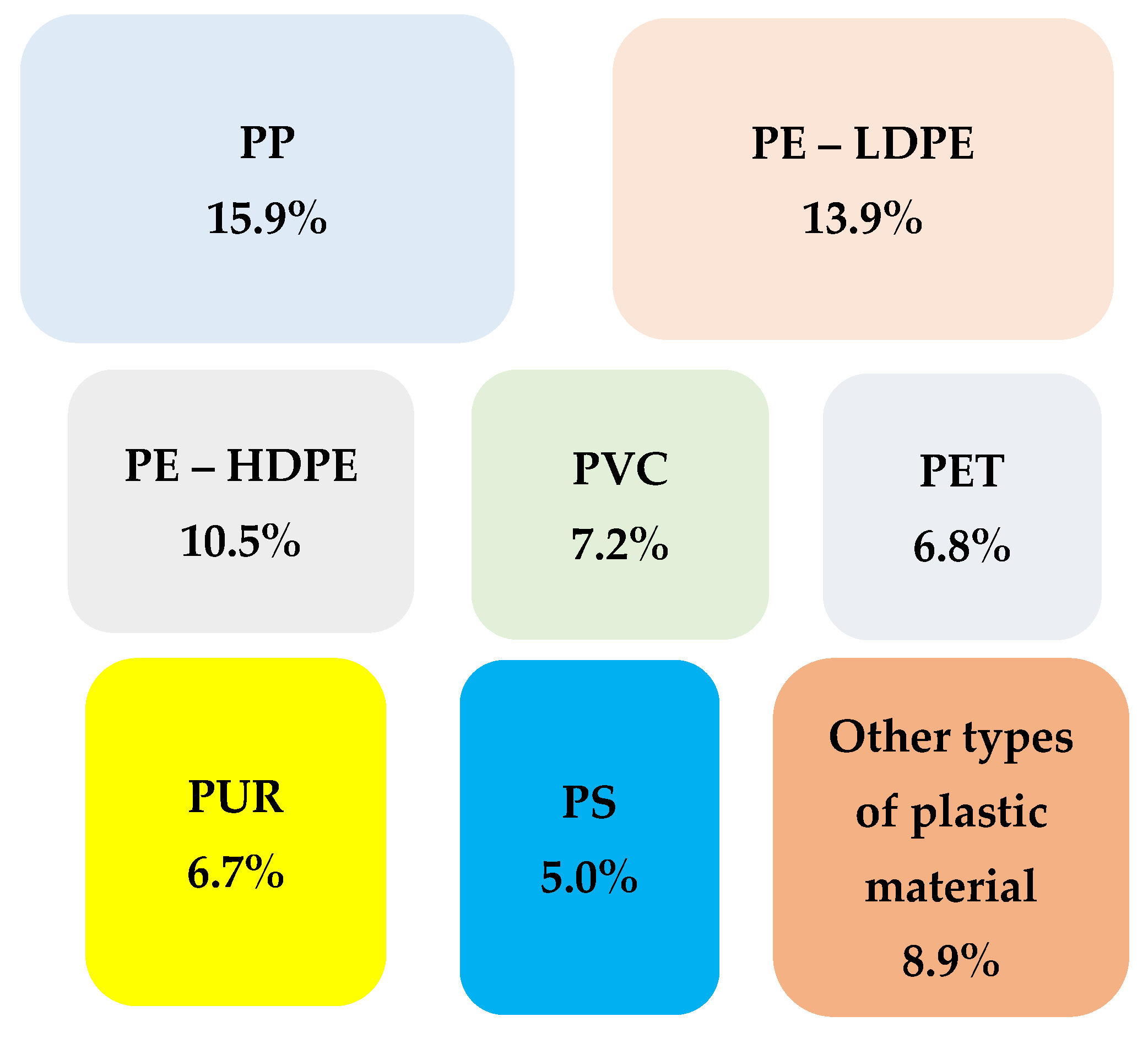
| PP | Polypropylene |
| PE | Polyethylene |
| LDPE | Low Density Polyethylene |
| HDPE | High-Density Polyethylene |
| PVC | Polyvinyl Chloride |
| PET | Polyethylene Terephthalate |
| PUR | Polyurethane |
| PS | Polystyrene |
| SUP Directive | Single-Use Plastics Directive |
| US EPA WARM | U.S. Environmental Protection Agency Waste Reduction Model |
References
- Baran, B. Plastic Waste as a Challenge for Sustainable Development and Circularity in the European Union. Ekon. I Prawo. Econ. Law 2020, 19, 7–20. [Google Scholar] [CrossRef]
- Singh, N.; Walker, T.R. Plastic Recycling: A Panacea or Environmental Pollution Problem. npj Mater. Sustain. 2024, 2, 17. [Google Scholar] [CrossRef]
- Leal Filho, W.; Saari, U.; Fedoruk, M.; Iital, A.; Moora, H.; Klöga, M.; Voronova, V. An Overview of the Problems Posed by Plastic Products and the Role of Extended Producer Responsibility in Europe. J. Clean. Prod. 2019, 214, 550–558. [Google Scholar] [CrossRef]
- Anwar, M.A.; Sasongko, N.A.; Najib, M.; Pranoto, B. Challenges and Prospects of Multilayer Plastic Waste Management in Several Countries: A Systematic Literature Review. Case Stud. Chem. Environ. Eng. 2024, 10, 100911. [Google Scholar] [CrossRef]
- Ejdys, J.; Szpilko, D. European Green Deal—Research Directions. a Systematic Literature Review. EiS 2022, 81, 8–38. [Google Scholar] [CrossRef]
- Iliescu, D. Including Circular Economy Waste Measures in the Climate Mitigation Mix in EU Policy. Circ. Econ. Sust. 2025, 1–22. [Google Scholar] [CrossRef]
- da Costa, J.P.; Mouneyrac, C.; Costa, M.; Duarte, A.C.; Rocha-Santos, T. The Role of Legislation, Regulatory Initiatives and Guidelines on the Control of Plastic Pollution. Front. Environ. Sci. 2020, 8, 104. [Google Scholar] [CrossRef]
- Kubiczek, J.; Derej, W.; Hadasik, B.; Matuszewska, A. Chemical Recycling of Plastic Waste as a Mean to Implement the Circular Economy Model in the European Union. J. Clean. Prod. 2023, 406, 136951. [Google Scholar] [CrossRef]
- Wang, Q.; Tweedy, A.; Wang, H.G. Reducing Plastic Waste Through Legislative Interventions in the United States: Development, Obstacles, Potentials, and Challenges. Sustain. Horiz. 2022, 2, 100013. [Google Scholar] [CrossRef]
- Liu, C.; Liu, C. Exploring Plastic-Management Policy in China: Status, Challenges and Policy Insights. Sustainability 2023, 15, 9087. [Google Scholar] [CrossRef]
- Li, K.; Ward, H.; Lin, H.X.; Tukker, A. Shift to Intra-EU-OECD Trade Enhanced Environmental Benefits after Basel Convention Plastic Waste Amendments. Resour. Conserv. Recycl. 2025, 223, 108527. [Google Scholar] [CrossRef]
- Rosenboom, J.-G.; Langer, R.; Traverso, G. Bioplastics for a Circular Economy. Nat. Rev. Mater. 2022, 7, 117–137. [Google Scholar] [CrossRef]
- Deng, Z.; Gillies, E.R. Emerging Trends in the Chemistry of End-to-End Depolymerization. JACS Au 2023, 3, 2436–2450. [Google Scholar] [CrossRef] [PubMed]
- Seliverstov, E.S.; Furda, L.V.; Lebedeva, O.E. Thermocatalytic Conversion of Plastics into Liquid Fuels over Clays. Polymers 2022, 14, 2115. [Google Scholar] [CrossRef]
- Schmaltz, E.; Virdin, J.; Poti, M.; Roman, L.; Hardesty, B.D.; Wilcox, C. Plastic Pollution Solutions: Emerging Technologies to Prevent and Collect Marine Plastic Pollution. Environ. Int. 2020, 144, 106067. [Google Scholar] [CrossRef] [PubMed]
- França, W.T.; Barros, M.V.; Salvador, R.; De Francisco, A.C.; Moreira, M.T.; Piekarski, C.M. Integrating Life Cycle Assessment and Life Cycle Cost: A Review of Environmental-Economic Studies. Int. J. Life Cycle Assess. 2021, 26, 244–274. [Google Scholar] [CrossRef]
- Alhazmi, H.; Almansour, F.H.; Aldhafeeri, Z. Plastic Waste Management: A Review of Existing Life Cycle Assessment Studies. Sustainability 2021, 13, 5340. [Google Scholar] [CrossRef]
- Davidson, M.G.; Furlong, R.A.; McManus, M.C. Developments in the life cycle assessment of chemical recycling of plastic waste—A review. J. Clean. Prod. 2021, 293, 126163. [Google Scholar] [CrossRef]
- Bracquené, E.; Martinez, M.G.; Wagner, E.; Wagner, F.; Boudewijn, A.; Peeters, J.; Duflou, J. Quantifying the environmental impact of clustering strategies in waste management: A case study for plastic recycling from large household appliances. Waste Manag. 2021, 127, 121–133. [Google Scholar] [CrossRef] [PubMed]
- Hadzic, A.; Voca, N.; Golubic, S. Life-cycle assessment of solid-waste management in city of Zagreb, Croatia. J. Mater. Cycles Waste Manag. 2018, 20, 1286–1298. [Google Scholar] [CrossRef]
- Szalainé Kaczkó, O.I.; Kovács, V.B.; Cséfalvay, E. Evaluation of the circularity of the Hungarian waste management system using LCA methodology. In Proceedings of the 2024 9th International Youth Conference on Energy (IYCE), Colmar, France, 2–6 July 2024; IEEE: Budapest, Hungary, 2024. [Google Scholar] [CrossRef]
- The PRISMA 2020 Statement: An Updated Guideline for Reporting Systematic Reviews—PMC. Available online: https://pmc.ncbi.nlm.nih.gov/articles/PMC8008539/ (accessed on 15 November 2025).
- PRISMA Statement. Available online: https://www.prisma-statement.org (accessed on 15 November 2025).
- Chioatto, E.; Sospiro, P. Transition from Waste Management to Circular Economy: The European Union Roadmap. Environ. Dev Sustain. 2023, 25, 249–276. [Google Scholar] [CrossRef]
- Lehmann, C.; Colaço, A.; Cruz-Jesus, F.; Oliveira, T. The Circular Economy Gap in the European Union: Convergence or Divergence Among Member States? Adv. Sustain. Syst. 2023, 7, 2300247. [Google Scholar] [CrossRef]
- Pierri, E.; Egle, L.; Milios, L.; Saveyn, H. EU-Wide End-of-Waste Criteria for Plastic Waste: JRC Technical Proposals; Publications Office of the European Union: Luxembourg, 2024. [Google Scholar]
- Directive 2008/98/EC of the European Parliament and of the Council of 19 November 2008 on waste and repealing certain Directives. Off. J. Eur. Union 2008, L312, 3–30. Available online: https://eur-lex.europa.eu/eli/dir/2008/98/oj (accessed on 10 November 2025).
- Directive (EU) 2019/904 of the European Parliament and of the Council of 5 June 2019 on the reduction of the impact of certain plastic products on the environment. Off. J. Eur. Union 2019, L155, 1–19. Available online: https://eur-lex.europa.eu/eli/dir/2019/904/oj (accessed on 10 November 2025).
- Deșeurile din Plastic și Reciclarea în UE în Cifre. Available online: https://www.europarl.europa.eu/topics/ro/article/20181212STO21610/deseurile-din-plastic-si-reciclarea-in-ue-in-cifre (accessed on 6 November 2025).
- Matthews, C.; Moran, F.; Jaiswal, A.K. A Review on European Union’s Strategy for Plastics in a Circular Economy and Its Impact on Food Safety. J. Clean. Prod. 2021, 283, 125263. [Google Scholar] [CrossRef]
- Paloniitty, T.; Ala-Lahti, T. The European Union and Plastics. In Research Handbook on Plastics Regulation; Edward Elgar Publishing: Cheltenham, UK, 2024; pp. 187–207. ISBN 978-1-80220-152-9. [Google Scholar]
- Camilleri, M.A. European Environment Policy for the Circular Economy: Implications for Business and Industry Stakeholders. Sustain. Dev. 2020, 28, 806–815. [Google Scholar] [CrossRef]
- Burlakovs, J.; Kriipsalu, M.; Porshnov, D.; Jani, Y.; Ozols, V.; Pehme, K.-M.; Rudovica, V.; Grinfelde, I.; Pilecka, J.; Vincevica-Gaile, Z.; et al. Gateway of Landfilled Plastic Waste Towards Circular Economy in Europe. Separations 2019, 6, 25. [Google Scholar] [CrossRef]
- Pontes, L.A.M.; da Silva Ruy, A.D.; Pinto, J.C.; de Lima, D.L.S. The Complexities of Solid and Plastic Waste Legislation Implementation: A Comparative Study Across the European Union, United States, and Brazil. SSRN Electron. J. 2024. [Google Scholar] [CrossRef]
- Syberg, K.; Nielsen, M.B.; Westergaard Clausen, L.P.; van Calster, G.; van Wezel, A.; Rochman, C.; Koelmans, A.A.; Cronin, R.; Pahl, S.; Hansen, S.F. Regulation of Plastic from a Circular Economy Perspective. Curr. Opin. Green Sustain. Chem. 2021, 29, 100462. [Google Scholar] [CrossRef]
- Robaina, M.; Murillo, K.; Rocha, E.; Villar, J. Circular Economy in Plastic Waste—Efficiency Analysis of European Countries. Sci. Total Environ. 2020, 730, 139038. [Google Scholar] [CrossRef] [PubMed]
- Baran, B. Resource (in)Efficiency in the EU: A Case of Plastic Waste. Ekon. I Prawo. Econ. Law 2022, 21, 45–62. [Google Scholar] [CrossRef]
- Plastics Europe. The Circular Economy for Plastics—A European Analysis 2024; Plastics Europe: Brussels, Belgium, 2024. Available online: https://plasticseurope.org/knowledge-hub/the-circular-economy-for-plastics-a-european-analysis-2024/ (accessed on 6 November 2025).
- Bhat, R.A.; Dar, G.H.; Hajam, Y.A. (Eds.) Zero Waste Management Technologies; Springer: Cham, Switzerland, 2024. [Google Scholar] [CrossRef]
- Mihai, F.-C.; Ulman, S.-R. Plastic Waste Trade Issues and Environmental Contamination in Romania. In Plastic Waste Trade; Springer Nature: Cham, Switzerland, 2024; pp. 191–216. [Google Scholar] [CrossRef]
- Mihai, F.-C.; Ulman, S.-R. Post-Consumer Plastic Waste Pollution under Linear Economy Mechanisms in Romania. In Proceedings of the SWS International Scientific Conferences (ISCSS); SWS International Scientific Conferences, Sofia, Bulgaria, 22–31 August 2022. [Google Scholar] [CrossRef]
- ISO 14040:2006; Environmental Management—Life Cycle Assessment—Principles and Framework. International Organization for Standardization: Geneva, Switzerland, 2006. Available online: https://www.iso.org/standard/37456.html (accessed on 16 November 2025).
- ISO 14044:2006; Environmental Management—Life Cycle Assessment—Requirements and Guidelines. International Organization for Standardization: Geneva, Switzerland, 2006. Available online: https://www.iso.org/standard/38498.html (accessed on 16 November 2025).
- Loiseau, E.; Aissani, L.; Le Féon, S.; Laurent, F.; Cerceau, J.; Sala, S.; Roux, P. Territorial Life Cycle Assessment (LCA): What Exactly Is It about? A Proposal towards Using a Common Terminology and a Research Agenda. J. Clean. Prod. 2018, 176, 474–485. [Google Scholar] [CrossRef]
- Pellengahr, F.; Ghannadzadeh, A.; Van Der Meer, Y. How Accurate Is Plastic End-of-Life Modeling in LCA? Investigating the Main Assumptions and Deviations for the End-of-Life Management of Plastic Packaging. Sustain. Prod. Consum. 2023, 42, 170–182. [Google Scholar] [CrossRef]
- Bernstad Saraiva, A.; Souza, R.G.; Mahler, C.F.; Valle, R.A.B. Consequential Lifecycle Modelling of Solid Waste Management Systems—Reviewing Choices and Exploring Their Consequences. J. Clean. Prod. 2018, 202, 488–496. [Google Scholar] [CrossRef]
- Bamber, N.; Turner, I.; Arulnathan, V.; Li, Y.; Zargar Ershadi, S.; Smart, A.; Pelletier, N. Comparing Sources and Analysis of Uncertainty in Consequential and Attributional Life Cycle Assessment: Review of Current Practice and Recommendations. Int. J. Life Cycle Assess. 2020, 25, 168–180. [Google Scholar] [CrossRef]
- Butyrin, A.Y.; Shnain, A.H.; Reddy, G.K.; Singh, T.; Pandey, A.K.; Singh, N.; Jagga, M.; Sharma, P.; Venkatraman, A. Assessing the Environmental Impact of Plastic Waste Using Life Cycle Assessment. E3S Web Conf. 2024, 581, 01010. [Google Scholar] [CrossRef]
- Schaubroeck, T.; Schaubroeck, S.; Heijungs, R.; Zamagni, A.; Brandão, M.; Benetto, E. Attributional & Consequential Life Cycle Assessment: Definitions, Conceptual Characteristics and Modelling Restrictions. Sustainability 2021, 13, 7386. [Google Scholar] [CrossRef]
- Jiao, H.; Ali, S.S.; Alsharbaty, M.H.M.; Elsamahy, T.; Abdelkarim, E.; Schagerl, M.; Al-Tohamy, R.; Sun, J. A Critical Review on Plastic Waste Life Cycle Assessment and Management: Challenges, Research Gaps, and Future Perspectives. Ecotoxicol. Environ. Saf. 2024, 288, 115942. [Google Scholar] [CrossRef] [PubMed]
- Barjoveanu, G.; Gadaleta, G.; Santomasi, G.; De Gisi, S.; Notarnicola, M.; Teodosiu, C. Does PET Trays Sorting Affect the Sustainability of Plastic Waste? An LCA and Cost-Revenue Approach. Sci. Total Environ. 2023, 897, 165222. [Google Scholar] [CrossRef]
- Gavrilescu, D.; Seto, B.-C.; Teodosiu, C. Sustainability Analysis of Packaging Waste Management Systems: A Case Study in the Romanian Context. J. Clean. Prod. 2023, 422, 138578. [Google Scholar] [CrossRef]
- Seto, C.-B.; Gavrilescu, D.; Teodosiu, C. Sustainability Assessment of Single-Use versus Reusable Beverage Packaging Waste: A Romanian Case Study. Environ. Eng. Manag. J. 2025, 24, 559–571. [Google Scholar]
- Berechet, M.; Mirel, I.; Staniloiu, C.; Fischer, K. Carbon Footprint of Waste Management in Romania in the Context of Circular Economy. Environ. Eng. Manag. J. 2019, 18, 1289–1295. [Google Scholar] [CrossRef]
- Enache, M.-M.; Gavrilescu, D.; Teodosiu, C. Comparative Analysis of Plastic Waste Management Options Sustainability Profiles. Polymers 2025, 17, 2117. [Google Scholar] [CrossRef]
- Ministerul Mediului, Apelor și Pădurilor; Agenția Națională pentru Protecția Mediului. Raportare de Mediu; Ministerul Mediului, Apelor și Pădurilor: București, România, 2025. Available online: https://raportare.anpm.ro/ (accessed on 16 November 2025).
- GreenPoint Management. Available online: https://www.greenpoints.ro/ (accessed on 29 November 2025).
- Civancik-Uslu, D.; Puig, R.; Ferrer, L.; Fullana-i-Palmer, P. Influence of End-of-Life Allocation, Credits and Other Methodological Issues in LCA of Compounds: An In-Company Circular Economy Case Study on Packaging. J. Clean. Prod. 2019, 212, 925–940. [Google Scholar] [CrossRef]
- McClelland, S.C.; Arndt, C.; Gordon, D.R.; Thoma, G. Type and Number of Environmental Impact Categories Used in Livestock Life Cycle Assessment: A Systematic Review. Livest. Sci. 2018, 209, 39–45. [Google Scholar] [CrossRef]
- Shevchenko, T.; Ranjbari, M.; Shams Esfandabadi, Z.; Danko, Y.; Bliumska-Danko, K. Promising Developments in Bio-Based Products as Alternatives to Conventional Plastics to Enable Circular Economy in Ukraine. Recycling 2022, 7, 20. [Google Scholar] [CrossRef]
- Mirabella, N.; Allacker, K.; Sala, S. Current Trends and Limitations of Life Cycle Assessment Applied to the Urban Scale: Critical Analysis and Review of Selected Literature. Int. J. Life Cycle Assess. 2019, 24, 1174–1193. [Google Scholar] [CrossRef]
- Sala, S.; Amadei, A.M.; Beylot, A.; Ardente, F. The Evolution of Life Cycle Assessment in European Policies over Three Decades: Policies and Support in Relation to LCA. Int. J. Life Cycle Assess. 2021, 26, 2295–2314. [Google Scholar] [CrossRef]
- Briassoulis, D.; Pikasi, A.; Hiskakis, M. End-of-waste life: Inventory of alternative end-of-use recirculation routes of bio-based plastics in the European Union context. Crit. Rev. Environ. Sci. Technol. 2019, 49, 1835–1892. [Google Scholar] [CrossRef]
- Kousemaker, T.M.; Jonker, G.H.; Vakis, A.I. LCA Practices of Plastics and Their Recycling: A Critical Review. Appl. Sci. 2021, 11, 3305. [Google Scholar] [CrossRef]
- Prokić, D.; Stepanov, J.; Milošević, L.; Panin, B.; Stojić, N.; Pucarević, M. Evaluating Plastic Waste Management in EU Accession Countries: A Life Cycle Perspective from the Republic of Serbia with Microplastic Implications. Sustainability 2025, 17, 6297. [Google Scholar] [CrossRef]
- Joachimiak-Lechman, K.; Garstecki, D.; Konopczyński, M.; Lewandowska, A. Implementation of Life Cycle Based Tools in the Circular Economy Context—Case Study of Plastic Waste. Sustainability 2020, 12, 9938. [Google Scholar] [CrossRef]
- Arena, U.; Parrillo, F.; Ardolino, F. An LCA answer to the mixed plastics waste dilemma: Energy recovery or chemical recycling? Waste Manag. 2023, 171, 662–675. [Google Scholar] [CrossRef]
- García-Gutiérrez, P.; Amadei, A.M.; Klenert, D.; Nessi, S.; Tonini, D.; Tosches, D.; Ardente, F.; Saveyn, H.G.M. Environmental and economic assessment of plastic waste recycling and energy recovery pathways in the EU. Resour. Conserv. Recycl. 2024, 202, 108099. [Google Scholar] [CrossRef]
- Zaikova, A.; Vinitskaia, N.; Deviatkin, I.; Havukainen, J.; Horttanainen, M. Life Cycle Assessment of Existing and Alternative Options for Municipal Solid Waste Management in Saint Petersburg and the Leningrad Region, Russia. Recycling 2022, 7, 19. [Google Scholar] [CrossRef]
- Schwarz, A.E.; Ligthart, T.N.; Godoi Bizarro, D.; De Wild, P.; Vreugdenhil, B.; van Harmelen, T. Plastic recycling in a circular economy; determining environmental performance through an LCA matrix model approach. Waste Manag. 2021, 121, 331–342. [Google Scholar] [CrossRef] [PubMed]
- Milios, L.; Esmailzadeh Davani, A.; Yu, Y. Sustainability Impact Assessment of Increased Plastic Recycling and Future Pathways of Plastic Waste Management in Sweden. Recycling 2018, 3, 33. [Google Scholar] [CrossRef]
- Amadei, A.M.; Rigamonti, L.; Sala, S. Exploring the EU plastic value chain: A material flow analysis. Resour. Conserv. Recycl. 2023, 197, 107105. [Google Scholar] [CrossRef]
- Todorova, E.; Yunussova, G.; Formazyuk, X.; Kostadinova-Slaveva, A.; Kazkenova, G.; Jetpysbai, G. Advancing Plastic Waste Management for a Circular Economy: Comparative Insights from Plovdiv (Bulgaria) and Kostanay (Kazakhstan). Processes 2025, 13, 888. [Google Scholar] [CrossRef]
- European Environment Agency (EEA). Country Profiles on Municipal and Packaging Waste Management—2025; European Environment Agency: Copenhagen, Denmark, 2025. Available online: https://www.eea.europa.eu/en/topics/in-depth/waste-and-recycling/municipal-and-packaging-waste-management-country-profiles-2025 (accessed on 16 November 2025).
- Directive (EU) 2018/851 of the European Parliament and of the Council of 30 May 2018 amending Directive 2008/98/EC on waste. Off. J. Eur. Union 2018, L150, 109–140. Available online: https://eur-lex.europa.eu/eli/dir/2018/851/oj/eng (accessed on 3 December 2025).
- Directive (EU) 2018/850 of the European Parliament and of the Council of 30 May 2018 amending Directive 1999/31/EC on the landfill of waste. Off. J. Eur. Union 2018, L150, 100–108. Available online: https://eur-lex.europa.eu/eli/dir/2018/850/oj/eng (accessed on 3 December 2025).
- Eurostat. Available online: https://ec.europa.eu/eurostat (accessed on 1 December 2025).



| Criteria | Inclusion Criteria | Exclusion Criteria |
|---|---|---|
| Time period | Publications between 2018 and 2025 | Publications before 2018 |
| Language | English | Languages other than English |
| Document type | Research articles, reviews, book chapters, and technical reports | Editorials, conference abstracts, |
| Topic relevance | Focus on plastic waste and LCA methodology within EU/Romania context | General waste management without LCA focus; Studies outside the European geographic scope |
| Methodology | Studies providing quantitative environmental impact data | Descriptive studies without data; Duplicate entries |
| Indicator | Numerical Threshold | Observations | References |
|---|---|---|---|
| Foreign materials (EU) | ≤2% | From the weight of the dry material (without moisture) | [27] |
| Foreign materials (export) | ≤0.5% | Only for PE, PP, PET * | |
| Minimum sampling frequency | Once every 6 months | For composition and contaminant analysis | |
| POPs (persistent organic pollutants) content | Below the limits in Annex IV Reg. (EU) 2019/1021 | Thresholds vary depending on the substance |
| Country | Numerical Threshold | EU legal Target (by 2025 and 2030) | Observations | References |
|---|---|---|---|---|
| Portugal | ≤2% | 50%—2025 55%—2030 | Compliance with technical specifications | [27,36] |
| Spain | ≤2% (UE), ≤0.5% (export) | Export allowed only for PE, PP, PET | ||
| Finland | It is not specified exactly | Stricter criteria on contaminants and monitoring |
| Indicator | Value | Notes | References |
|---|---|---|---|
| Total plastic demand in the EU | 58 million tonnes/year | Includes all sectors and polymer types | [37] |
| Total plastic production in the EU | 49 million tonnes/year | Domestic production only | |
| Post-consumer plastic waste collected for treatment | 29 million tonnes/year | Represents 49% of plastic production | |
| Share of collected plastic waste that is recycled | 32.5% | Based on Eurostat and Plastics Europe data | |
| Share of collected plastic waste used for energy recovery | 42.5% | Incineration with energy recovery | |
| Share of collected plastic waste sent to landfill | 25% | Final disposal | |
| Plastic waste recycled as % of total plastic demand | 5–10% | Indicates low circularity | |
| Share of new plastic materials derived from recycled plastics | 6% | Secondary raw material input | |
| Share of plastic waste exported outside the EU | 46% | Often to countries with low environmental standards | |
| Foreign material threshold for recycled plastic (EU use) | ≤2% | Based on dry weight | |
| Foreign material threshold for recycled plastic (export) | ≤0.5% | Only for PE, PP, PET * polymers | |
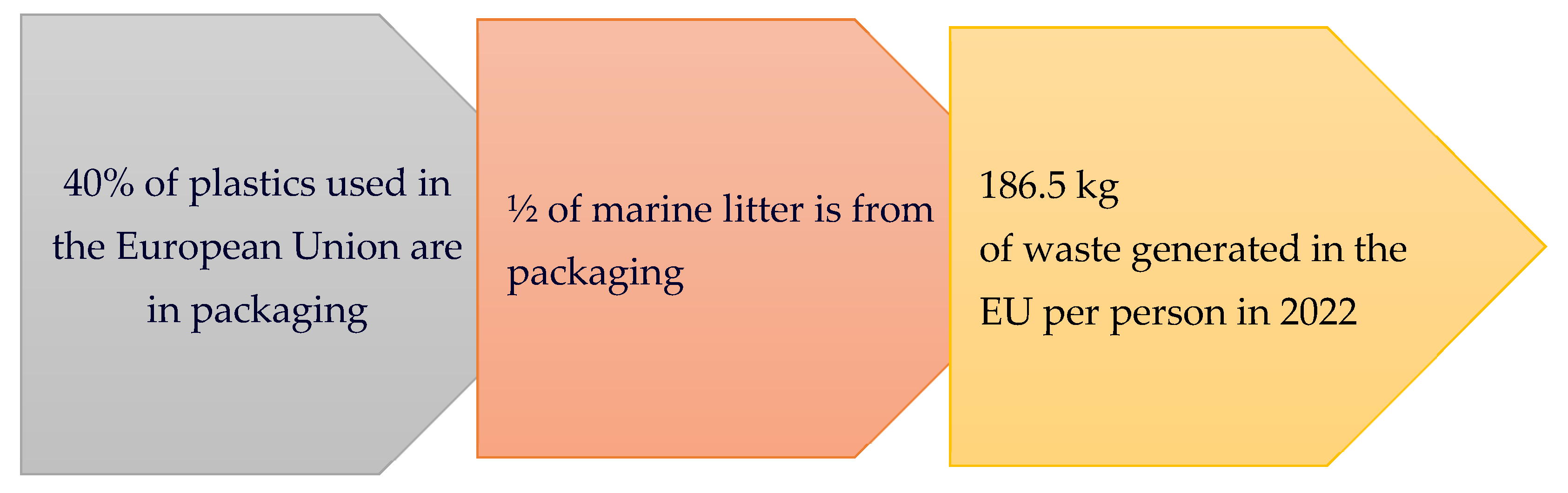
| Sectoral share of plastic demand—Packaging | 39.6% | Highest contributor to plastic waste | |
| Sectoral share of plastic demand—Building and Construction | 20.4% | Long lifespan materials, low waste generation | |
| Sectoral share of plastic demand—Automotive | 9.6% | Complex materials, low recyclability | |
| Sectoral share of plastic demand—Electrical and Electronic Equipment | 6.2% | High contamination, legacy additives |
| Type | Definition | Main Features | Utility | References |
|---|---|---|---|---|
| Attributional LCA (ALCA) | Analyzes the average impacts associated with the production of a product in a static system. | Uses average data; focuses on co-product allocation; retrospective approach. | Assessing the current impacts of a product or process. | [48] |
| Consequential LCA (CLCA) | Assess the impacts generated by future changes in production or consumption. | Uses marginal data; includes substitution effects and market interactions; prospective approach | Analysis of policies, future scenarios and market effects. | [49] |
| Dynamic LCA | Integrates the temporal dimension into inventory and characterization. | High temporal resolution; models emissions evolution and ecosystem sensitivity. | It provides more accurate results, relevant for short and long-term actions. | [50] |
| Year | PET Recycling Rate (%) | GHG Emissions (t CO2e/Year)—Waste Operations Only | GHG Emissions (t CO2e/Year)—Production + Waste | Energy Use (GJ/Year)—Waste Operations Only | Energy Use (GJ/Year)—Production + Waste | Jobs (Number) | Wages (Million USD) | Taxes (Million USD) | References |
|---|---|---|---|---|---|---|---|---|---|
| 2018 | 63% | Significant reduction (negative values) | Increase compared to 2018 baseline | Significant reduction (negative values) | High but partially offset | ~3.07 | ~138 | ~24 | [52] |
| 2019 | 55% | Higher impact (lowest performance year) | Increase compared to 2018 baseline | Maximum energy consumption | Highest in the period | ~2.71 | ~123 | ~21.7 | |
| 2020 | 61% | Significant reduction (similar to 2018) | Increase compared to 2018 baseline | Significant reduction | Slightly higher than 2018 | ~2.95 | ~134 | ~23.4 |
| Scenarios | PET Recycling Rate (%) | GHG Emissions (t CO2e/Year) | Emissions Reduction Compared to 2019 | Energy Consumption (GJ/Year) | Energy Reduction Compared to 2019 | References |
|---|---|---|---|---|---|---|
| 2019 reference | 55% | ≈3.73 × 10⁴ | - | High (maximum in range) | - | [53] |
| 2030—Reuse 20% | 65% EU targets | −28% vs. 2019 | Moderate discount | −20% vs. 2019 | Significant discount | |
| 2040—Reuse 75% | 65% | −76.6% vs. 2019 | Major reduction, but not neutrality | −60% vs. 2019 | Significant reduction, but not “net zero” |
| Scenarios | Percentage of Recycled Plastic | CO2-eq/Year Savings (t) | Observations | References |
|---|---|---|---|---|
| 50% sorting performance | ~50% of plastic collected separately | ≈18.000 t | Moderate benefits | [54] |
| 70% sorting performance | ~70% of plastic collected separately | ≈23.000 t | Greater benefits | |
| Recycling + anaerobic treatment | Recycled plastic + treated wet fraction | ≈40.000 t | The most favorable scenario; applying circular economy principles |
| Management Options | GHG Emissions (kg CO2e/kg Plastic) | Energy Consumption (GJ/kg Plastic) | Benefits/Limitations | References |
|---|---|---|---|---|
| Recycling | Negative values (avoid virgin production) | Significant reduction (primary resource substitution) | The most sustainable option; depends on collection and sorting performance | [55] |
| Incineration with energy recovery | ≈2.3 kg CO2e/kg | Moderate (partial energy recovery) | Energy benefits through fossil fuel substitution, but high emissions | |
| Landfill | ≈0.11 kg CO2e/kg | No recovery | Reduced emissions, but negative impact on eutrophication and land use |
| Articles | Similarities | Differences | References |
|---|---|---|---|
| Sustainability analysis of packaging waste management systems: Romanian case study (Gavrilescu et al., 2023) | All studies show that recycling reduces the impact | Includes socio-economic data (jobs, salaries, taxes) | [52] |
| Sustainability assessment of single use vs. reusable beverage packaging: Romanian case study (Seto et al., 2025) | Recycling and reusing reduce impact | The only study that analyzes reuse vs. single use beverage packaging | [53] |
| Carbon footprint of waste management in Romania (Berechet et al., 2019) | Recycling has the greatest positive impact | Analyze plastic in the municipal mix, not just PET | [54] |
| Comparative analysis of plastic waste management options (Enache et al., 2025) | All confirm recycling as the most sustainable | The only study with a direct comparison between recycling, incineration, landfilling | [55] |
| Author (Year)/Reference | Region/Country | Main Theme | LCA Results/Main Findings | Identified Limitations |
|---|---|---|---|---|
| Shevchenko et al., 2022 [60] | Ukraine | Bioplastics and circular economy | LCA applied biodegradability and end-of-life scenarios | Lack of infrastructure and clear standards |
| Mirabella et al., 2018 [61] | European Union | LCA at city/urban level | Integration into urban planning and green infrastructure | Insufficient data, non-uniform methodologies |
| Pellengahr et al., 2023 [45] | European Union | End-of-life modeling for plastic packaging | Analysis of deviations between assumptions and real practices | Incompatibilities between waste streams (e.g., PLA vs. PET) |
| Sala et al., 2021 [62] | European Union | EU policies and LCA | Integration into directives | Need for harmonization and avoidance of impact transfer |
| Briassoulis et al., 2019 [63] | European Union | Inventory of alternative end-of-life routes | LCA for reuse and recycling scenarios | Limited market, contamination of conventional waste streams |
| Kousemaker et al., 2021 [64] | European Union | LCA practices for plastics | Evaluation of mechanical and chemical recycling | Lack of dynamic datasets, difficulties in comparability |
| Prokic et al., 2025 [65] | Serbia | PET waste management in Serbia, EU alignment, microplastic concerns | LCA of three scenarios (landfill, recycling, incineration) using GaBi and ReCiPe. Recycling shows major benefits: avoided 24.5 M kg CO2 eq., reduced human toxicity and ecotoxicity. | Limited local data; lack of microplastic characterization factors; insufficient infrastructure; no legal framework for microplastics; reliance on generalized EU parameters. |
| Barjoveanu et al., 2023 [51] | Italy | PET trays sorting sustainability assessment in Italy. Comparing manual and automated sorting scenarios. | ISO 14040 based LCA using ReCiPe 2016. Compared baseline vs. manual/optical sorting scenarios. ~10% lower impacts in climate change. | Small net benefits (<3% in most categories). Energy recovery from incineration excluded. Assumed 100% substitution despite lower rPET quality. PET trays < 1% of recycled stream. |
| Joachimiak-Lechman et al., 2020 [66] | Poland (case study within EU context, CIRCE2020 project) | Application of life cycle–based tools (LCA, LCC, SLCA) to plastic waste management in circular economy | - Shows how LCA compares recycling, incineration, prevention strategies for plastics - Demonstrates substitution potential of recycled plastics vs. virgin production - Integrates LCC (economic costs) and SLCA (social impacts) for holistic sustainability assessment - Provides evidence for aligning national practices with EU circular economy goals | - Limited and fragmented inventory data for plastic waste streams - Methodological complexity (system boundaries, substitution assumptions) - Underdeveloped social indicators in SLCA - High costs for advanced recycling technologies - Need for harmonization of standards across EU |
| Arena et al., 2023 [67] | Italy (University of Campania “Luigi Vanvitelli”), with EU relevance | Comparative LCA of energy recovery vs. chemical recycling for mixed plastics waste (MPW) | - Demonstrates that chemical recycling via advanced thermochemical treatments (ATT) can outperform energy recovery in terms of climate impact - Shows potential transition from a carbon-intensive to carbon-negative sector when recycling substitutes virgin feedstock - Highlights how LCA quantifies trade-offs between incineration (energy recovery) and recycling pathways - Provides evidence for EU policy to prioritize chemical recycling for complex MPW ** streams | Complex and unpredictable composition of MPW (heterogeneous polymers, additives, contaminants) complicates modeling - High CAPEX/OPEX * costs for chemical recycling technologies - Limited industrial-scale data, many results based on pilot or lab studies - Regulatory uncertainty regarding acceptance of recycled outputs - Methodological uncertainties (substitution rates, allocation choices) strongly influence outcomes |
| García-Gutiérrez et al., 2025 [68] | European Union (EU-27) | Comparative environmental and economic assessment of mechanical, physical, chemical recycling vs. energy recovery | - Provides EU-wide LCA and LCC using primary data from operators - Shows that recycling (mechanical, physical, chemical) generally performs better than energy recovery for climate change mitigation - Highlights that environmental performance depends on waste fraction (PET, PS, PE, MPO, tires, multilayer films) - Demonstrates that recycling can substitute virgin plastics and reduce fossil resource use - Integrates economic assessment (LCC) to evaluate financial viability alongside environmental impacts | - Lack of robust primary data for chemical and physical recycling (low maturity technologies) - High uncertainty in CAPEX/OPEX * and market prices for recyclates - Difficulty in establishing clear ranking between recycling technologies due to waste heterogeneity - Results highly dependent on EU energy mix assumptions - Recycling often incurs higher costs than incineration for certain waste streams (PS, MPO **, PE, tires, multilayer films) |
| Zaikova et al., 2022 [69] | Russia (Saint Petersburg and Leningrad Region) | Comparative LCA of current and alternative municipal solid waste (MSW) management scenarios | - Evaluates five scenarios: current system (S0), post-reform (S1), improved landfill gas collection (S2), increased incineration (S3), and separate collection with recycling (S4) - Demonstrates that separate collection and recycling (S4) delivers the greatest environmental benefits (lower GHG emissions, reduced resource use) - Shows how LCA can guide Russian waste reform by quantifying trade-offs between landfill, incineration, and recycling - Highlights importance of landfill gas capture in reducing climate impacts | - Limited availability of local inventory data for waste composition and treatment - Uncertainty in future projections (e.g., efficiency of incineration plants, landfill gas recovery rates) - Economic and social dimensions not fully integrated (focus mainly on environmental indicators) - Dependence on assumptions about energy mix and substitution rates - Institutional and infrastructural barriers to implementing separate collection at scale |
| Schwarz et al., 2021 [70] | Europe (EU context, The Netherlands case study) | Development of an LCA matrix model to assess environmental performance of different plastic recycling technologies | - Introduces an LCA matrix model covering 25 polymers and multiple recycling technologies (mechanical, chemical, dissolution, energy recovery) - Quantifies CO2 reduction potential: recycling top 15 polymers in Europe could cut emissions by ~73% (200 Mt CO2 eq) - Shows that primary recycling (closed-loop, dissolution) is optimal for engineering/high-performance plastics - Demonstrates that tertiary recycling (gasification, pyrolysis to monomers) performs best for commodity plastics (polyolefins) - Highlights importance of pre-treatment (sorting, cleaning) for maximizing environmental benefits | - Results depend strongly on purity and sorting efficiency of waste streams - Data gaps for innovative technologies (low TRL ***) - Quality reduction in secondary recycling not fully captured - System boundaries exclude collection/use phases, limiting comparability - Economic feasibility not assessed (focus only on environmental impacts) - Methodological sensitivity: assumptions on substitution and avoided products influence outcomes |
| Milios et al., 2018 [71] | Sweden (national case study within EU framework) | Assessment of environmental, economic, and social impacts of future plastic waste management scenarios | - Applies a plastic waste flow model integrating LCA (environmental impacts), LCC (economic costs/benefits), and social indicators (jobs) - Compares three scenarios: (A) meeting EU targets, (B) meeting targets + retaining plastics domestically, (C) meeting targets + banning incineration of recyclable plastics - Quantifies GHG savings, costs, and job creation for each scenario - Demonstrates that increased recycling can significantly reduce emissions and create employment compared to business-as-usual | - Results depend on assumptions about substitution potential of recycled plastics - Limited data on real economic costs (often replaced with EU averages) - Social impacts less quantified (indirect jobs estimated via multipliers) - Scenario C (ban on incineration) shows highest environmental/social benefits but very high costs, raising feasibility concerns - Methodological uncertainties: boundaries differ between LCA, LCC, and social assessment, making integration complex |
| Amadei et al., 2023 [72] | European Union (EU-27) | Macro-scale MFA of plastic flows across sectors and polymers (2019 baseline, 2025 scenarios) | - Provides quantitative input data (production, consumption, recycling rates, mismanaged waste, losses) that can be used in LCA models - Highlights recycling rates (~19% in EU-27) and sectoral contributions (packaging, construction, transport) - Identifies environmental release pathways (microplastics, macroplastics) relevant for impact categories in LCA - Supports scenario analysis (2025 projections) that can be integrated into prospective LCA | - Study is MFA ****-based, not a full LCA (no impact categories calculated) - Limited integration of environmental/economic/social indicators - Data gaps for certain sectors (healthcare, fishing) - Excludes chemical recycling differentiation (treated together with mechanical) - Results sensitive to assumptions on trade, stock variation, and mismanaged waste |
| Todorova et al., 2025 [73] | Bulgaria (Plovdiv) and Kazakhstan (Kostanay) | Comparative study of plastic waste management practices, household data, recycling systems, and legislative frameworks in two cities | - LCA not directly applied, but authors emphasize its relevance for assessing environmental impacts of recycling vs. landfilling - Suggests that life cycle–based tools could strengthen policy decisions and harmonize practices with EU circular economy goals - Highlights the role of LCA in quantifying benefits of improved collection and recycling systems | - Study limited to descriptive comparison, without full LCA modeling - Lack of detailed inventory data for plastic waste flows in both cities - Absence of integrated environmental, economic, and social indicators - Methodological gap: reliance on qualitative analysis rather than quantitative life cycle metrics |
| Time | 2020 | 2021 | 2022 |
|---|---|---|---|
| GEO * (Labels) | kg per Capita | kg per Capita | kg per Capita |
| European Union—27 countries (from 2020) | 34.61 | 36.25 | 36.24 |
| Belgium | 32 | 32.02 | 31.36 |
| Bulgaria | NA ** | 23.25 | 22.95 |
| Czechia | 24.72 | 27.1 | 26.05 |
| Denmark | 39.27 | 36.3 | 38.55 |
| Germany | 39.71 | 41.09 | 39.78 |
| Estonia | 40.32 | 37.63 | 33.83 |
| Ireland | 60.86 | 72.95 | 66.16 |
| Greece | NA | 26.09 | 24.65 |
| Spain | 36 | 38.63 | 41.43 |
| France | 35.67 | 36.07 | 35.92 |
| Croatia | 16.83 | 18.11 | 19.26 |
| Italy | 37.16 | 38.4 | 39.45 |
| Cyprus | 19.91 | 22.35 | 23.29 |
| Latvia | 24.58 | 25.53 | 26 |
| Lithuania | 30.64 | 36.43 | 37.81 |
| Luxembourg | 39.08 | 37.18 | 35.85 |
| Hungary | 47.84 | 43.95 | 44.64 |
| Malta | 27.42 | 34.28 | 29.26 |
| The Netherlands | 31.76 | 31.13 | 31.14 |
| Austria | 33.55 | 33.67 | 33.17 |
| Poland | NA | NA | 33.12 |
| Portugal | 40 | 41.14 | 43.17 |
| Romania | 24.95 | 26.42 | 26.78 |
| Slovenia | 23.68 | 26.22 | 26.88 |
| Slovakia | 23.49 | 23.56 | 26.72 |
| Finland | 28.41 | 29.94 | 28.94 |
| Sweden | 24.03 | 39.11 | 32.98 |
| Iceland | 39.42 | 44.55 | 50.46 |
| Liechtenstein | 23.21 | 23.17 | 22.11 |
| Scenario | Current Policy Approach | Proposed Strategic Intervention | Projected Impact/Benefit |
|---|---|---|---|
| A. Dynamic LCA integration | Investment decisions are based on static LCA data (attributional), reflecting Romania’s historical, fossil-fuel-intensive energy mix. | Adoption of dynamic LCA modeling that accounts for the progressive decarbonization of the national electricity grid (2025–2030). | Long-term Asset Optimization: Shifts incentives towards recycling technologies that become carbon-negative in a green grid, avoiding “lock-in” investments in outdated tech. |
| B. Harmonized reporting standards | Recycling rates are calculated at the collection/sorting output, often including non-recyclable residues (impurities), leading to inflated performance figures. | Implementation of the stricter “Calculation Point” rule (Directive 2018/852), measuring weight at the entrance of the final recycling operation. | Infrastructure Sizing Correction: Likely statistical contraction of recycling rates (−10% to −15%) but ensures accurate capacity planning for the Deposit-Return System (SGR) and prevents capital waste. |
Disclaimer/Publisher’s Note: The statements, opinions and data contained in all publications are solely those of the individual author(s) and contributor(s) and not of MDPI and/or the editor(s). MDPI and/or the editor(s) disclaim responsibility for any injury to people or property resulting from any ideas, methods, instructions or products referred to in the content. |
© 2025 by the authors. Licensee MDPI, Basel, Switzerland. This article is an open access article distributed under the terms and conditions of the Creative Commons Attribution (CC BY) license (https://creativecommons.org/licenses/by/4.0/).
Share and Cite
Enache, M.-M.; Gavrilescu, D.; Barjoveanu, G.; Teodosiu, C. Plastic Waste in Romania: Between European Union Commitments and Actual Realities. Appl. Sci. 2025, 15, 13264. https://doi.org/10.3390/app152413264
Enache M-M, Gavrilescu D, Barjoveanu G, Teodosiu C. Plastic Waste in Romania: Between European Union Commitments and Actual Realities. Applied Sciences. 2025; 15(24):13264. https://doi.org/10.3390/app152413264
Chicago/Turabian StyleEnache, Madalina-Maria, Daniela Gavrilescu, George Barjoveanu, and Carmen Teodosiu. 2025. "Plastic Waste in Romania: Between European Union Commitments and Actual Realities" Applied Sciences 15, no. 24: 13264. https://doi.org/10.3390/app152413264
APA StyleEnache, M.-M., Gavrilescu, D., Barjoveanu, G., & Teodosiu, C. (2025). Plastic Waste in Romania: Between European Union Commitments and Actual Realities. Applied Sciences, 15(24), 13264. https://doi.org/10.3390/app152413264