Article

Study on Distribution Law of Vertical Earth Pressure on the Top of High-Fill Box Culvert in Gully Terrain Under Expanded Polystyrene Board Unloading


1
School of Highway, Chang’an University, South Second Ring Rd., Yanta District, Xi’an 710064, China
2
Shanxi Road and Bridge Construction Group Co., Ltd., Taiyuan 030000, China
3
School of Energy and Architecture, Xihang University, Xi’an 710077, China
4
China Railway Fist Survey and Design Institute Group Co., Ltd., Xi’an 710043, China
*
Authors to whom correspondence should be addressed.
Appl. Sci. 2025, 15(24), 13169; https://doi.org/10.3390/app152413169
Submission received: 19 September 2025 / Revised: 16 November 2025 / Accepted: 12 December 2025 / Published: 15 December 2025

Abstract

This study quantifies vertical earth pressure on the roofs of box culverts under high fills in valley terrain using centrifuge model tests with expanded polystyrene (EPS) geofoam for load mitigation. We compare buried-type culverts with valley-terrain high-fill culverts and isolate the effects of the EPS installation height and panel thickness on the roof pressure and the associated concentration factor. The analysis of fill settlement elucidates the terrain-dependent load reduction mechanism and the efficacy of EPS panels. The results show that the roof pressure increases with EPS installation height but decreases and then plateaus once the panel thickness exceeds 75 cm; the load reduction benefit weakens when the installation height exceeds 2 m. Optimal performance is achieved with panels installed at 2 m and with a 75 cm thickness, which lowers applied loads while maintaining structural stability. These findings clarify soil–structure interactions in complex topography and provide practical guidance for deploying EPS in high-fill valley projects.

1. Introduction

Box culverts combine high sectional efficiency with robust strength. They are widely used to convey large surface runoff, cross small gullies or depressions, serve as underpasses to connect opposing embankments, and meet drainage and traffic demands in areas with constrained topography or where traffic continuity must be maintained. Their integral behavior and high load-carrying capacity allow them to sustain substantial overburden, making them prevalent in highway works. In high-fill applications, load-reduction at culvert roofs has long been a central research topic [1,2,3,4,5,6,7,8,9,10,11,12,13,14,15], fundamentally tied to the governing load transfer mechanisms. In mountainous regions, culverts are frequently sited in gullies, where lateral boundary effects from valley flanks critically shape the distribution of vertical loads.
Gully topography, with natural relief and complex geology, markedly alters the magnitude and pattern of earth pressures on box culverts. Heterogeneous stratification, weak interlayers, and pore-water enrichment at valley floors create pronounced contrasts in compressibility under fill, fostering local stress concentrations and asymmetric pressures on culvert sidewalls and roofs. Meanwhile, the slope angle and stability of valley sides modify lateral confinement; incipient lateral deformation elevates side pressures, potentially driving loads beyond design expectations and increasing risks of cracking and settlement. To reduce overburden, high-fill culvert projects employ flexible cushions, reinforcement strategies, and foundation strengthening [15] to mobilize soil arching and lower roof pressures. Expanded polystyrene (EPS), as a lightweight, high-strength material, offers low density, stable compressive behavior, and construction efficiency and thus shows strong promise for embankment load mitigation. However, for gully settings, the cooperative mechanism between EPS and high-fill box culverts, optimization of EPS design parameters, and long-term performance evolution remain insufficiently resolved, limiting direct guidance for practice. Accordingly, this study delineates the vertical earth pressure distribution at culvert roofs in high-fill gullies under EPS-based load reduction conditions.
Recent studies have examined the stress–deformation response of high-fill culverts under load reduction measures. Meng et al. [16] addressed the omission of bottom and side earth pressures in conventional culvert formulas and, building on Zeng Guoxi’s buried-culvert framework, derived a rigid-culvert earth-pressure expression for reduced-load conditions. Using numerical models, Li et al. [17], via ANSYS (16.0) analyses, quantified the joint load reduction effect of EPS boards and geogrids atop high fills and proposed a corresponding soil pressure formula; simulations indicated that differential settlement between inner and outer soil columns drives deviations in crown minor principal stress, thereby reducing roof pressure. Zhou [18] introduced a novel load reduction cover for culverts and found that the benefit weakens with increasing block height, whereas the block width has limited effect. Incorporating time dependence, Chen et al. [19] formulated a creep-based load reduction model for high-fill culverts and derived a time-aware earth pressure equation. Through scaled experiments, Gao et al. [20] observed that the crown pressure initially increases and then gradually decreases with minor fluctuations to a stable level; relative to the just-filled state, the roof pressure drops by ~52.12%, while the side and base pressures rise and stabilize, increasing by ~28.32%. Xie et al. [21] numerically evaluated EPS thickness, elevation, and coverage on embankment settlement and recommended parameter ranges for varying fill heights. Using an unsaturated-soil-based reduction model, Zhang [22] showed—consistent with field data—that matric suction and the suction angle exert dual effects and that the load reduction efficiency increases and then plateaus with EPS thickness, indicating an optimal thickness. Field tests by Vaslestad et al. [23,24] confirmed that polystyrene foam substantially reduces the vertical earth pressure to <30% of overburden in granular fills and <50% in silty clay.
Furthermore, with the deep integration of modern engineering technology and intelligent algorithms, the fields of high-fill structure and earth pressure analysis are gradually breaking through the limitations of traditional methods. Jiang et al. [25] Currently, modern computational techniques—such as finite element and discrete element methods—have enabled refined simulations of stress and strain under complex geological conditions. Hoang et al. [26]; Najafzadeh and Kargar [27] Meanwhile, neural network systems, artificial intelligence analysis, and machine learning models have further provided new approaches for predicting earth pressure distribution and analyzing dynamic responses. Their advantages in fitting nonlinear problems and evaluating multi-factor coupling effects offer theoretical expansion space for optimizing the design of high-fill box culverts and EPS unloading schemes [28].
Despite this progress, most work has focused on arch, circular, and slab culverts in flat terrain; box culvert mechanics in valleys have been treated mainly by simulation and field observation, with few centrifuge studies. Moreover, the interaction among pressure concentration, valley topography, and EPS-induced load reduction yields stress states in trapezoidal valleys that differ from those of conventional buried culverts in flat or ditch settings. This research systematically analyzes the influence of various factors—including fill height, valley slope, valley width, EPS board installation elevation, and EPS board thickness—on the vertical earth pressure above the culvert crown. Furthermore, the load reduction mechanism of EPS boards in high-fill scenarios under valley terrain is thoroughly explored. The findings of this study provide practical load reduction methods and key design parameters for high-fill culvert engineering, thereby enhancing the structural design efficiency and safety of culvert infrastructure.

2. General Situation of the Project

Drawing on the Baomao Expressway in Guangdong Province (122 km, 444 culverts), our survey and statistical analysis show that 67.8% of culverts have fill heights of <8 m, 22.3% have fills of 8–14 m, 6.98% have fills of 14–20 m, and 2.93% have fills of ≥20 m. Along this route, trapezoidal gullies at high-fill culvert sites vary in width and slope, and the culverts frequently exhibit structural distress, raising safety concerns. Forensic assessments indicate that excessive earth pressure is the principal cause of cracking. When fill heights exceed 14 m, the stress distribution becomes particularly complex, underscoring the need for effective load reduction measures at both the design and construction stages, as shown in Figure 1.

3. Centrifugal Test Design

3.1. Geotechnical Centrifuge

Compared to conventional model tests, centrifuge modeling accurately replicates prototype stress fields at small scales by gravity acceleration compensation, eliminating scale-induced stress distortion. Unlike numerical simulations or other methods, centrifuge tests directly capture true soil behavior through physical mechanisms, offering higher data reliability and resolving complex nonlinear responses.
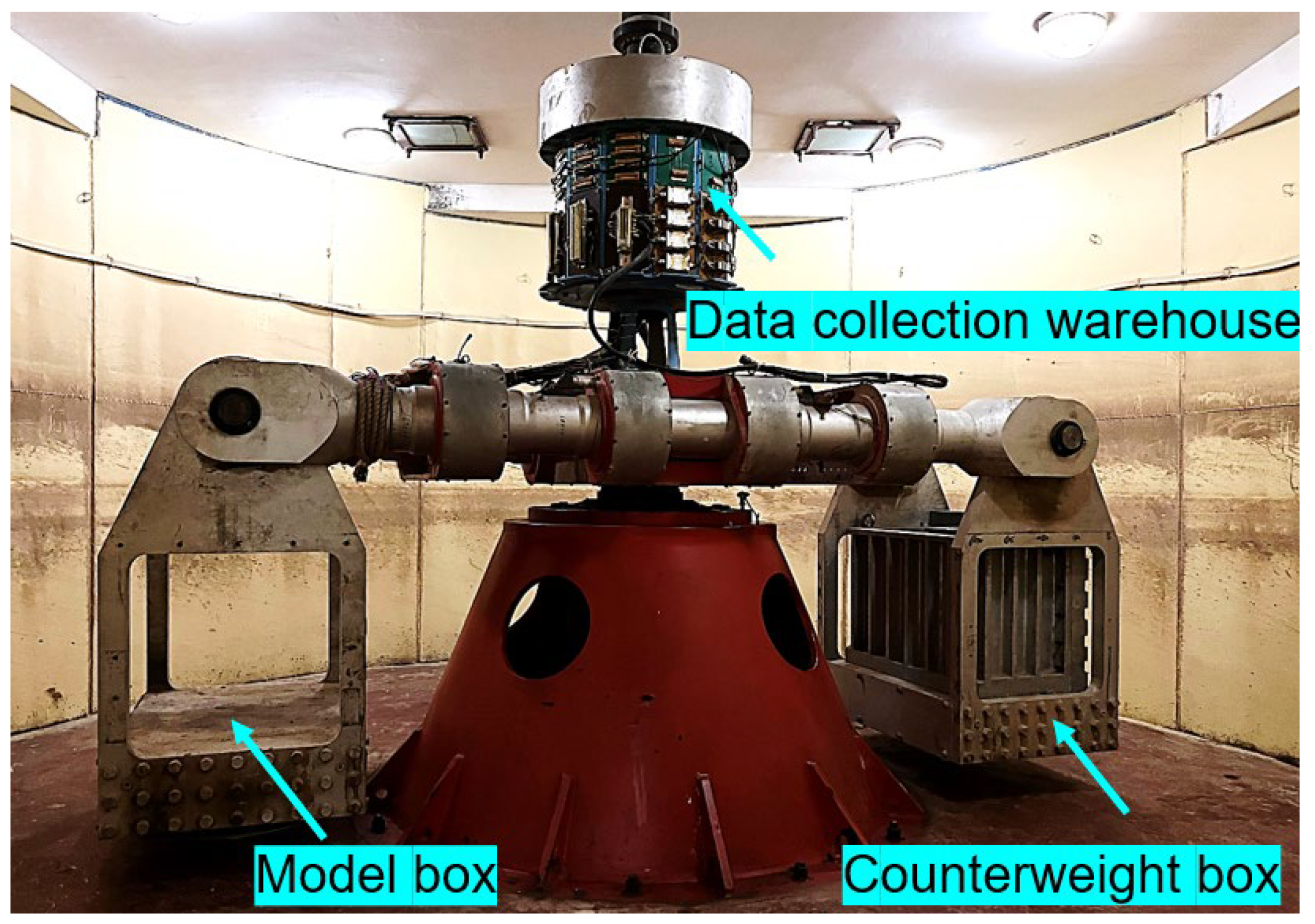
Experiments were conducted on the TLJ-3 geotechnical centrifuge model apparatus (Institute of General Engineering, Chi-na Academy of Engineering Physics, Mianyang, Sichuan, China) from Chang’an University (Figure 2). The facility’s specifications (Table 1) provide the requisite g-field to reproduce prototype stress states characteristic of high-fill culvert applications.

3.2. Similarity Law of Centrifugal Model Test

Box culvert mechanics are governed primarily by structural geometry, material properties, and the conditions of the foundation and backfill. Considering centrifuge operating constraints, specimen preparation, and project requirements, we adopted a geometric similarity ratio of n = 1/50. The corresponding parameter similarity relations derived from dimensional analysis are summarized in Table 2.

3.3. Model Design

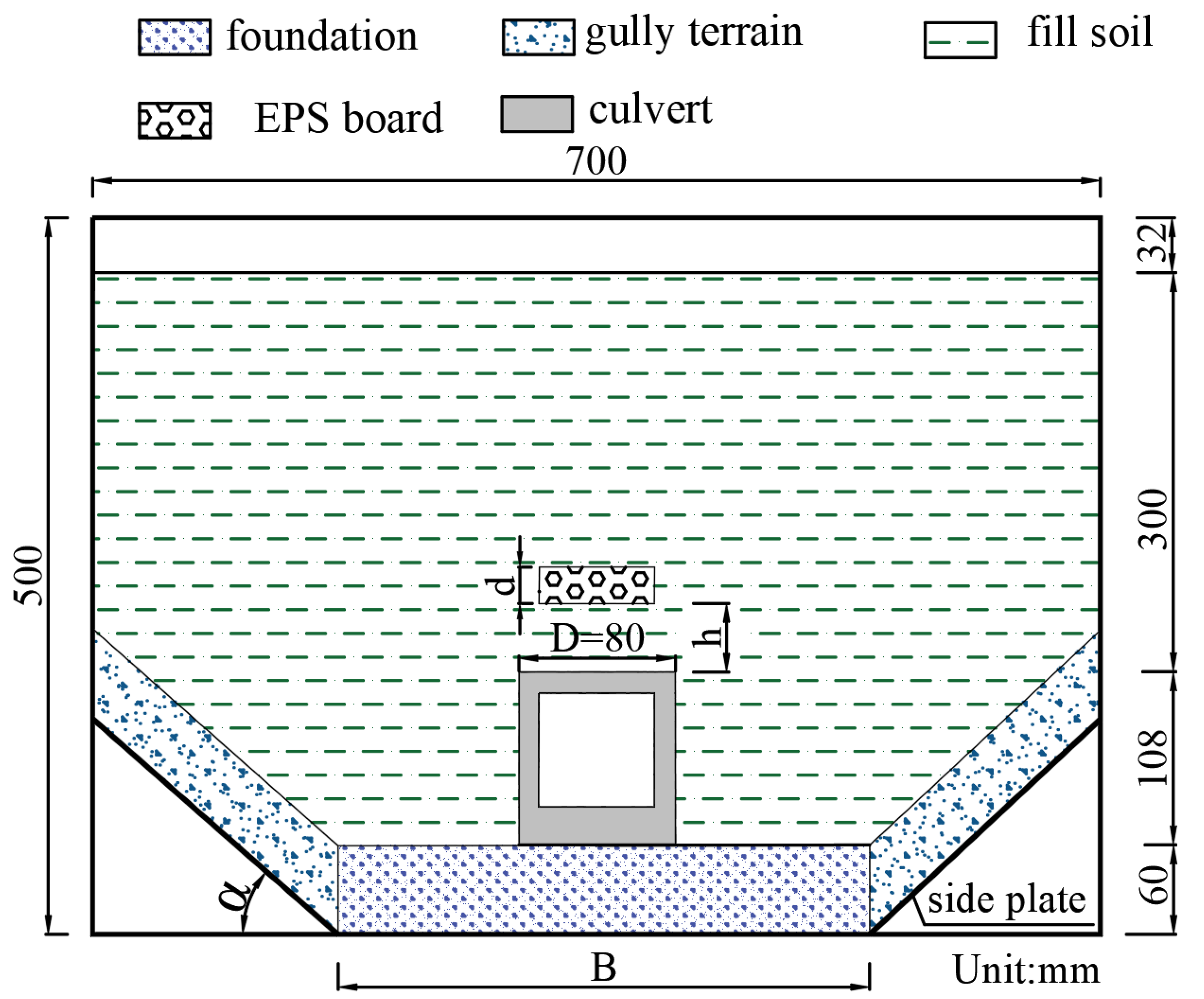
To quantify how valley topography alters box culvert mechanics and to assess alternative expanded polystyrene (EPS) placement schemes, we constructed a 1:50-scale model informed by field investigations. The foundation, valley terrain, culvert, EPS load-reducing panels, and backfill were assembled for testing in a geotechnical centrifuge to measure the earth pressure distribution on the culvert under valley conditions. The detailed model configuration is shown in Figure 3.
Among them, B is the width of the valley, D represents the span of the box culvert, which is 80 mm, θ is the slope of the valley, h is the height of the EPS load reduction board, and d is the thickness of the EPS load reduction board.

3.4. Experimental Plan

3.4.1. Fill Design

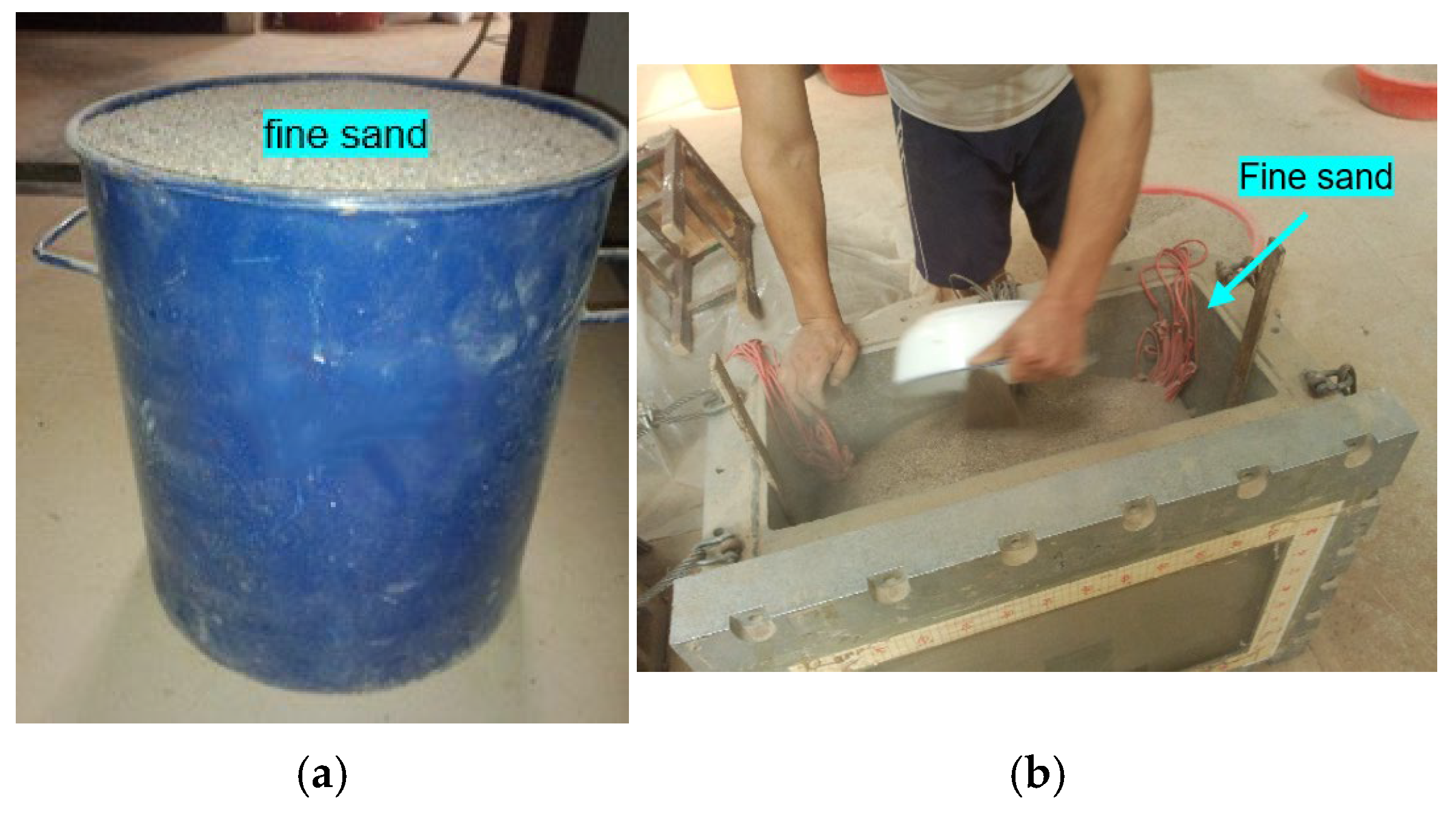
Because the natural structure and water content of undisturbed soils are readily altered during sampling and transport—and are inevitably disturbed when reloaded into the centrifuge model—we used fine sand as the backfill. This choice rests on two considerations: (i) its density (1.8–2.2 g cm−3) closely matches that of typical natural soils (1.6–2.2 g cm−3), and (ii) its low cohesion simplifies placement and allows for material reuse. A representative sample and the filling procedure are shown in Figure 4a and Figure 4b, respectively.
In the experiments, fine sand was used as backfill at a geometric scale of 1:50 to represent a 20 m prototype embankment. The required model backfill height was 400 mm within a box 500 mm high. After installing the foundation and box culvert, the remaining space could not accommodate the full backfill. To reproduce the target overburden stress, sand was placed up to 300 mm, and the shortfall was simulated with a uniformly distributed surcharge of steel plates, whose combined mass was equivalent to the vertical load of a 20 m fill.
It should be noted that in this study, fine sand was used to simulate backfill soil. During the centrifuge tests, by controlling the amount of sand poured in and keeping the sand distribution method consistent, the comparability among different test conditions was improved. Accordingly, this approach can be considered a form of load equivalence in the centrifuge tests, enabling better control over variations in different test scenarios.

3.4.2. EPS Board Design

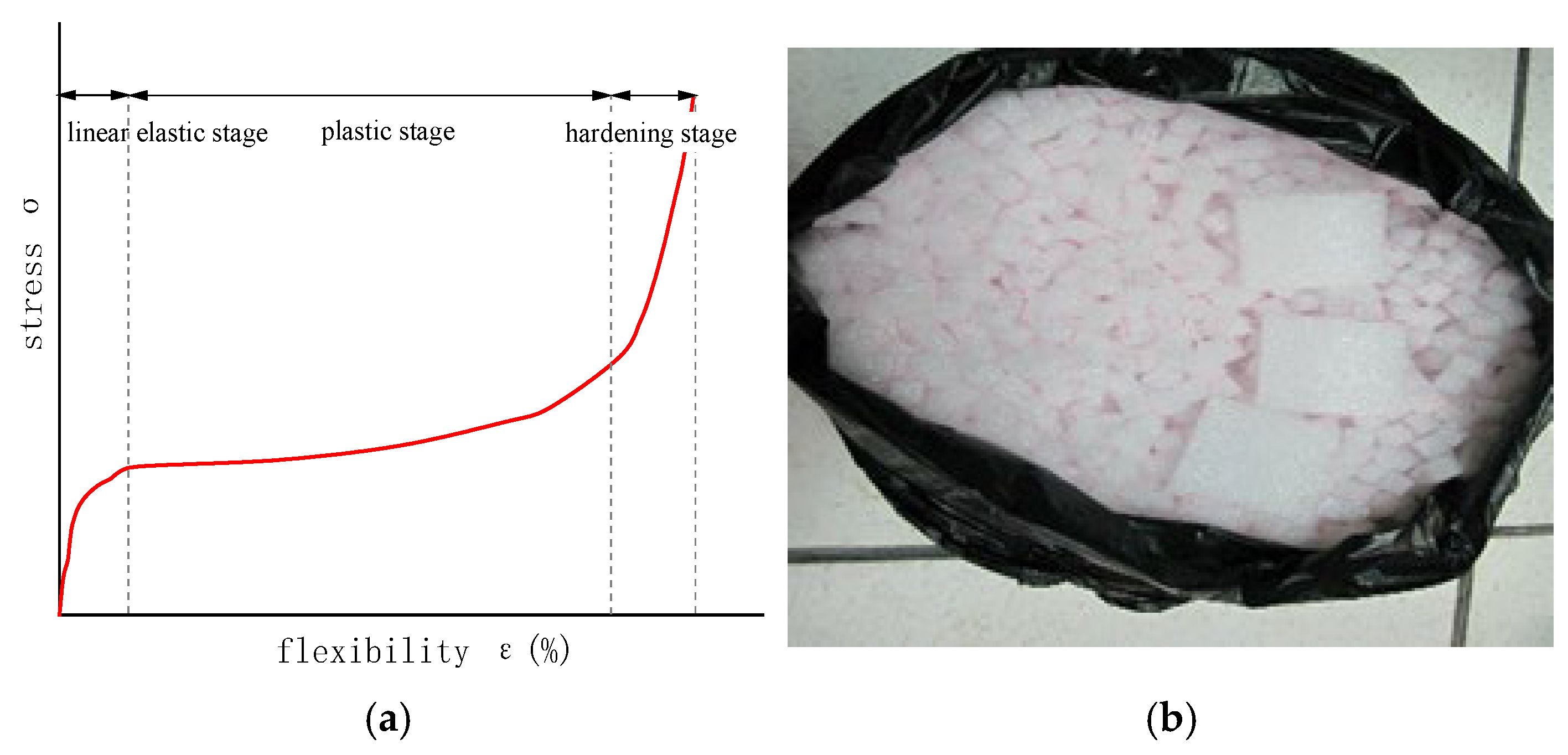
EPS panels comprise fused beads of closed-cell foam, each with gas-filled chambers. Under compression, cells progressively collapse as gas vents, yielding a three-stage stress–strain response: (i) a linear elastic regime as cells compress without failure; (ii) a plastic (plateau) regime marked by large deformations as cell walls buckle and gas is expelled; and (iii) a densification regime in which the cellular skeleton collapses and particle-to-particle contact governs. The high energy absorption in the plateau regime makes EPS an effective load reduction medium for high-fill culverts.
In the experiments, we used project-grade EPS panels with mechanical properties matching those specified for the prototype. Density selection is critical: too low a density undermines load reduction efficacy in high-fill subgrades, whereas too high a density suppresses beneficial deformation and wastes material. We therefore adopted panels of 15 kg m−3 to examine their influence on culvert stress [29,30].
Horvath’s research shows that the elastic modulus and compressive strength of EPS decrease as its density decreases [31]. Therefore, the lower the EPS density, the greater its elastic deformation capacity, making the material more compressible. According to the unloading mode of the fill soil, the load-reducing effect of EPS becomes more pronounced.
Figure 4a shows the stress–strain curve of the EPS panels, and Figure 5b presents the specimens used in the tests.
Furthermore, expanded polystyrene (EPS) boards demonstrate considerable suitability for load reduction applications in highway culverts. EPS exhibits high durability, chemical stability against most substances, and resistance to biological degradation. Nevertheless, prolonged exposure to ultraviolet (UV) radiation induces material aging; therefore, protective measures are required to ensure extended outdoor service life. EPS is also prone to creep behavior, characterized by rapid initial deformation followed by gradual stabilization. The creep rate is dependent on the applied load, ambient temperature, and material density. Consequently, engineering designs should incorporate appropriate deformation allowances or utilize modified EPS formulations to mitigate long-term deformation. The operational temperature range of EPS is between −50 °C and 70 °C, within which its mechanical properties remain stable. Additionally, EPS exhibits extremely low biodegradability, requiring several centuries to decompose under natural environmental conditions. This attribute contributes to its structural stability during typical service periods.

3.4.3. Foundation and Valley Terrain Design

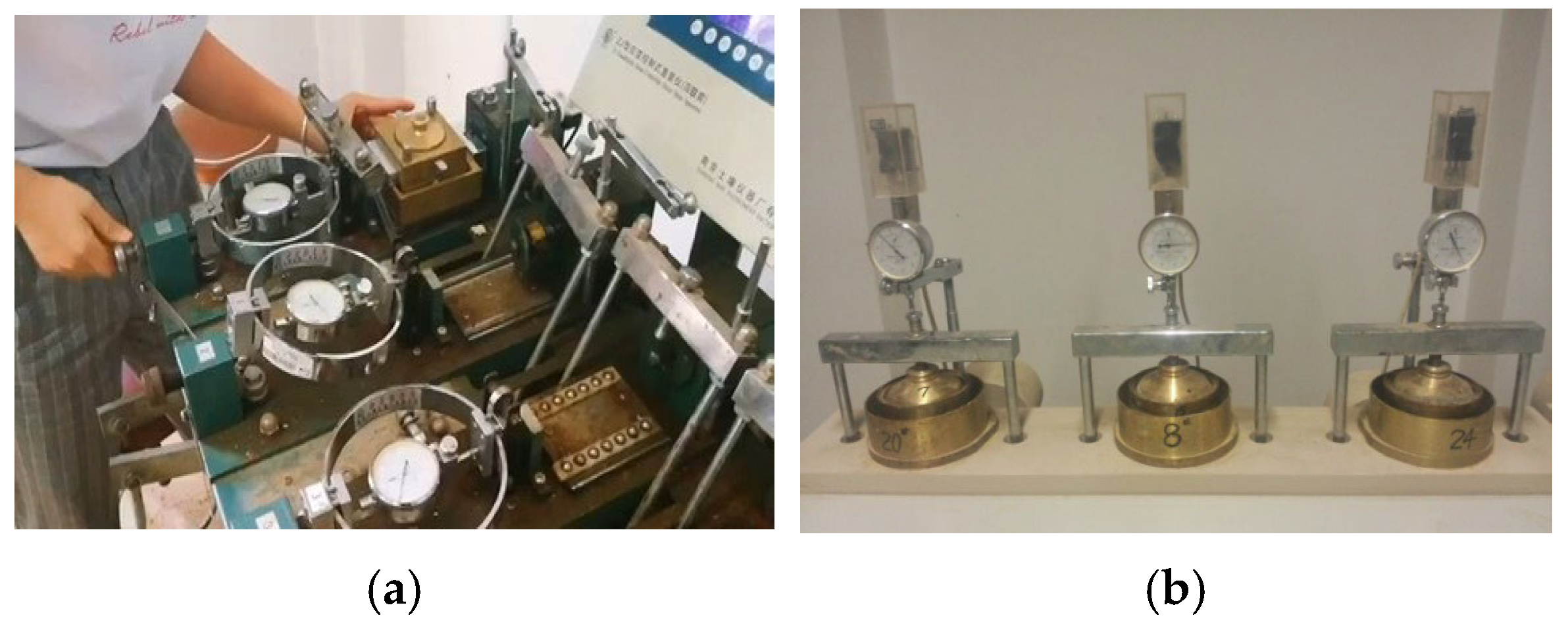
In the centrifuge tests, both the foundation and valley terrain were modeled with synthetic soils to avoid the moisture loss and structural disturbance that occur when undisturbed field soils are transported to the laboratory. A single, sufficiently large batch was prepared to ensure specimen uniformity. Soil shear strength was determined by direct shear testing, optimal water content was determined by standard compaction tests, and the compression modulus was determined by oedometer (confined compression) tests. The experimental workflow is shown in Figure 6, and the physical–mechanical properties of the test soil are summarized in Table 3.
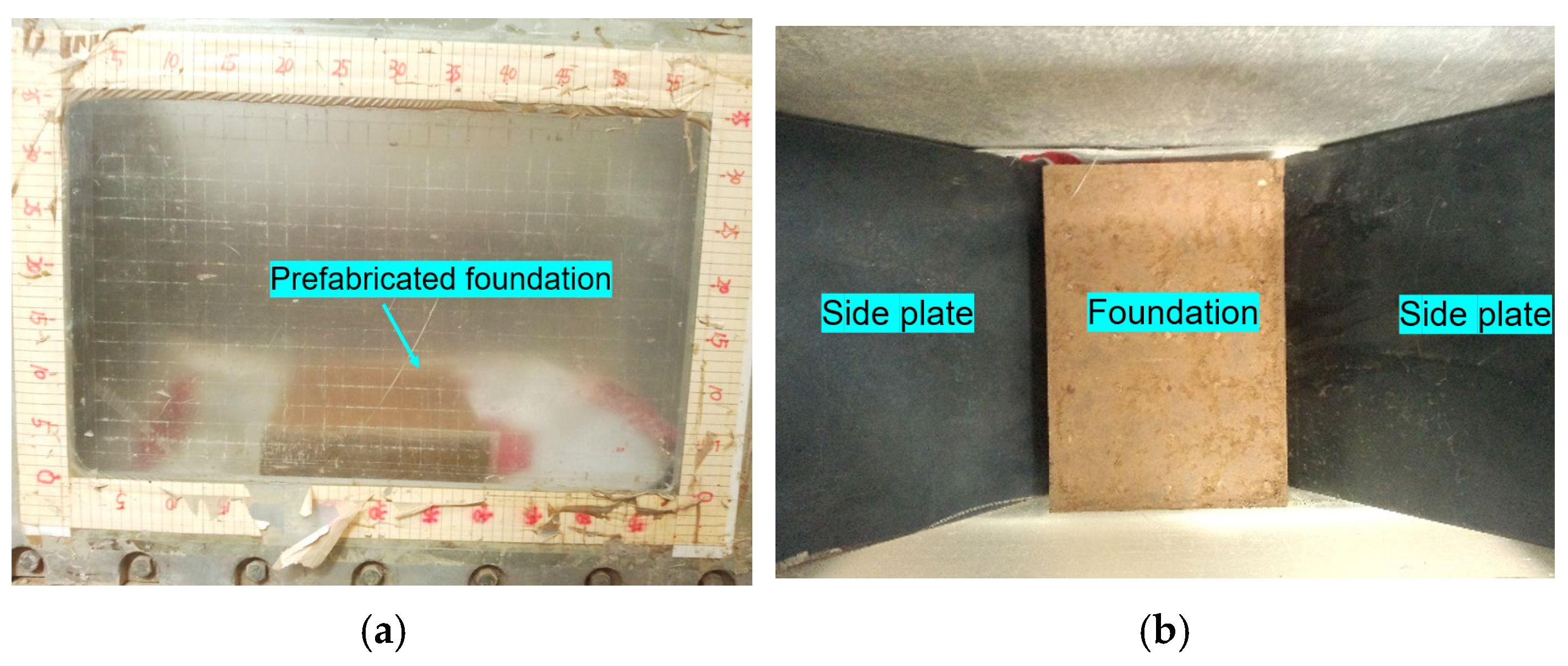
Recompacting the model box to restore foundation strength was impractical given scale and operational constraints, and nonuniform compaction would distort the stress state of the box culvert model. To avoid these effects, we prefabricated both the foundation soil and gully topography using precast formwork. The foundation was cast with an in-house prefabrication device, and the gully terrain was formed with our geotechnical centrifuge modeling apparatus. During assembly, adjustable support frames were installed on both sides and set to the target gully slope; side plates were mounted on the frames, and the prefabricated gully surface was placed to reproduce the required terrain. Figure 7 illustrates the setup, including the prefabricated foundation and gully topography.

3.4.4. Laying of Box Culvert Simulation and Test Elements

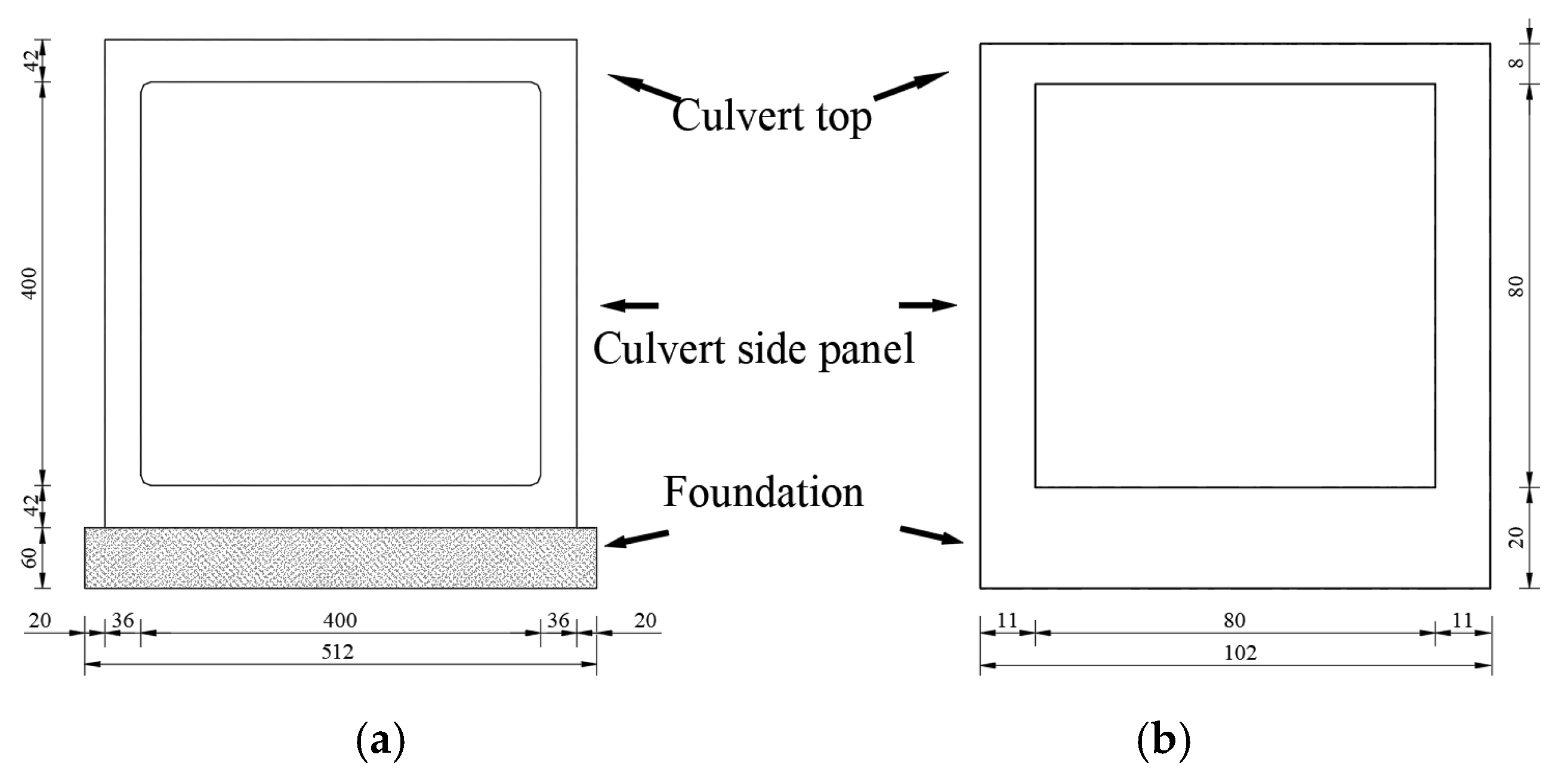
Following a comprehensive evaluation of candidate materials, acrylic (PMMA) was selected to fabricate the culvert model for its deformation characteristics comparable to concrete. This choice captures soil–structure interactions while satisfying requirements for reusability and testing efficiency. Using a 1:50 geometric scale, the box culvert model was built with a length of 300 mm to meet the dimensional constraints of the model container. Figure 8 shows the completed model.
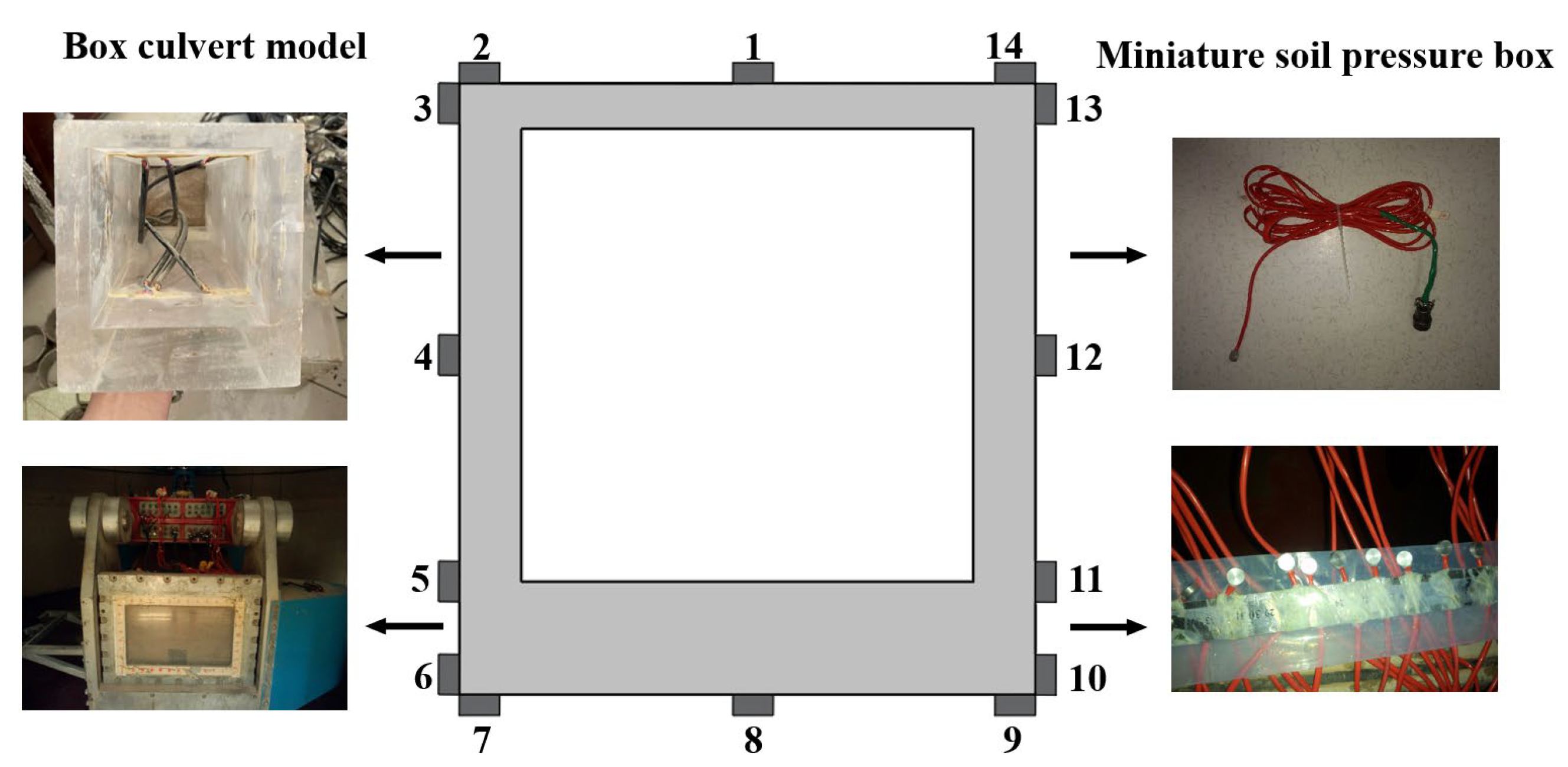
Earth pressures were recorded with BW11-1.2 miniature vibrating-wire cells. The earth pressure cell used in the test was a miniature earth pressure cell (Zebest Technology Co., Ltd., Beijing, China). It had a maximum measurement range of 1.0 MPa, a resolution of ≤0.05% F·S, an overall error of ≤1.0% F·S, and an operating temperature range of 25 °C to +60 °C.
To monitor crown vertical pressure, base reaction, and lateral pressure along the sidewalls, instrumentation was installed on a transverse section 150 mm from the culvert midspan. Cells were placed at the crown and invert (midspan and both ends) and on the sidewalls (top, midheight, and bottom of both left and right walls), yielding 14 measurement points in total (Figure 9).

3.5. Test Conditions

In valley settings, the mechanical response of box culverts with EPS-based load reduction is controlled by the installation height and thickness of the EPS panels, which together govern stress redistribution. Guided by engineering practice and theory, two mechanisms emerge:
(1)
Installation height reshapes the stiffness profile of the soil column, inducing differential settlement between soils above and below the EPS layer and thereby altering the vertical earth pressure distribution at the crown.
(2)
Panel thickness modulates compressive compliance and load sharing under embankment loading, which in turn changes overburden settlement patterns and the roof pressure.
To resolve these effects, we implemented a factorial set of tests spanning multiple EPS heights and thicknesses (Table 4).

4. Centrifuge Test Results Analysis

4.1. Analysis of the Influence of Filling Height on the Distribution Law of Earth Pressure of Box Culvert

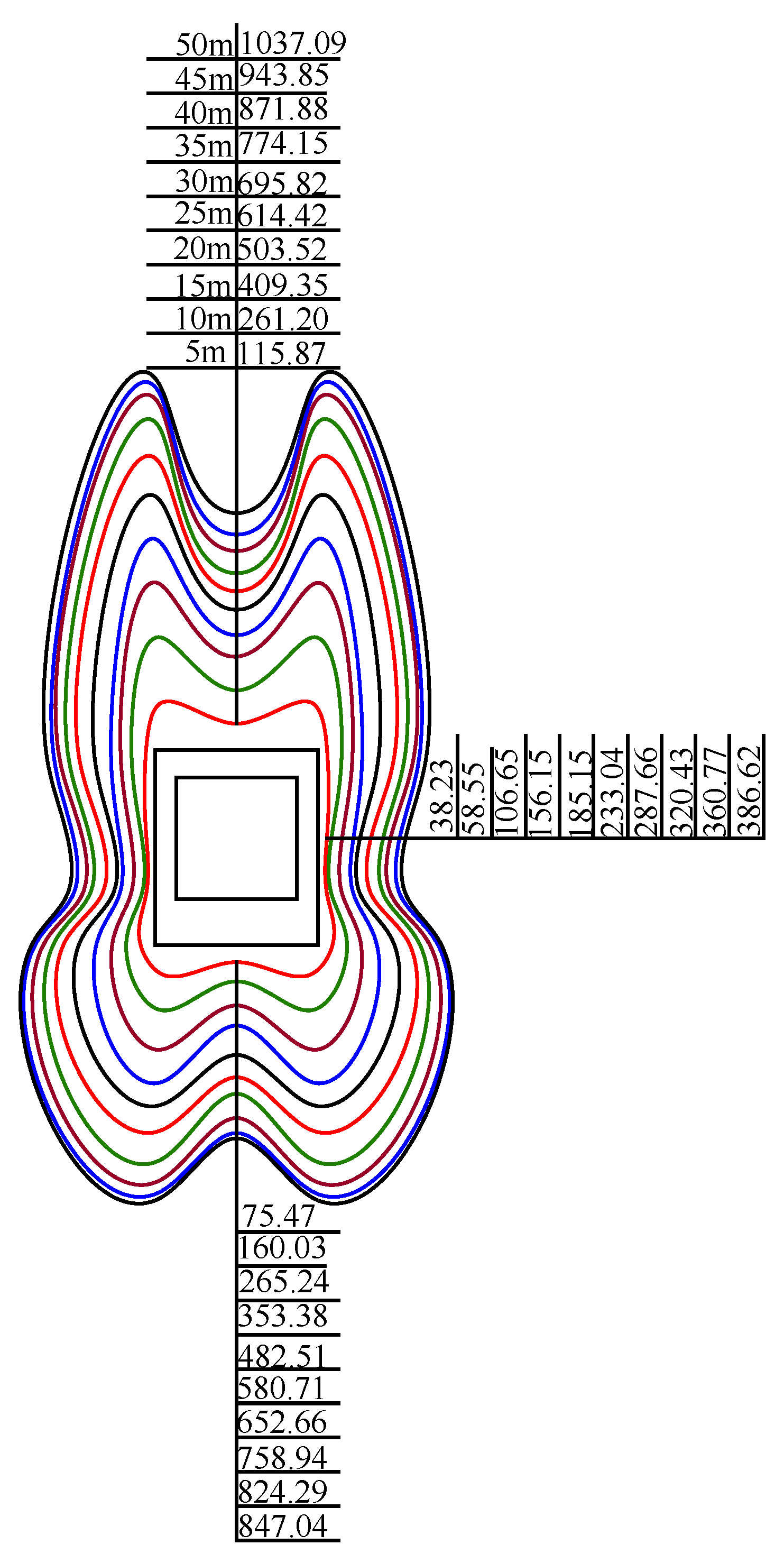
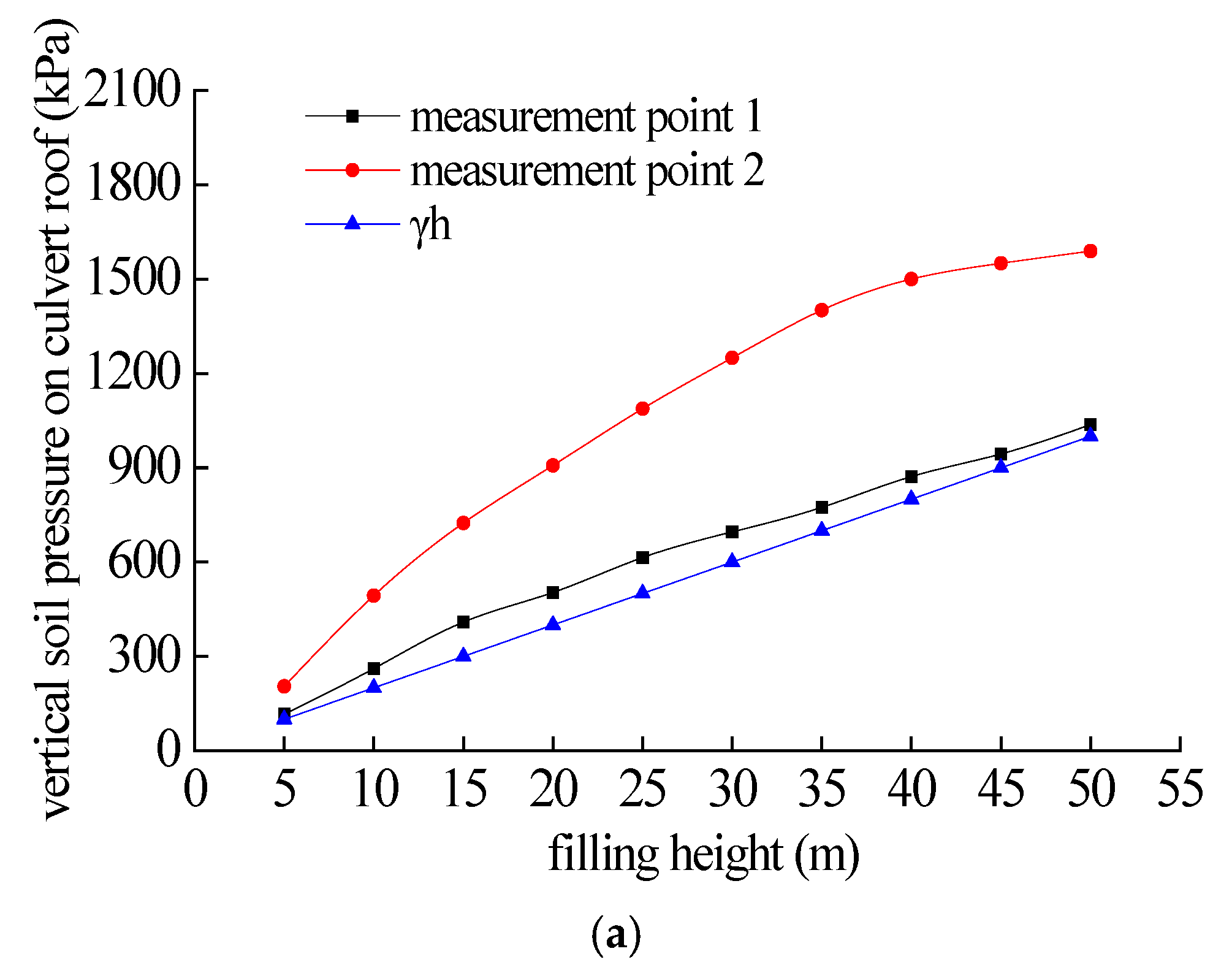
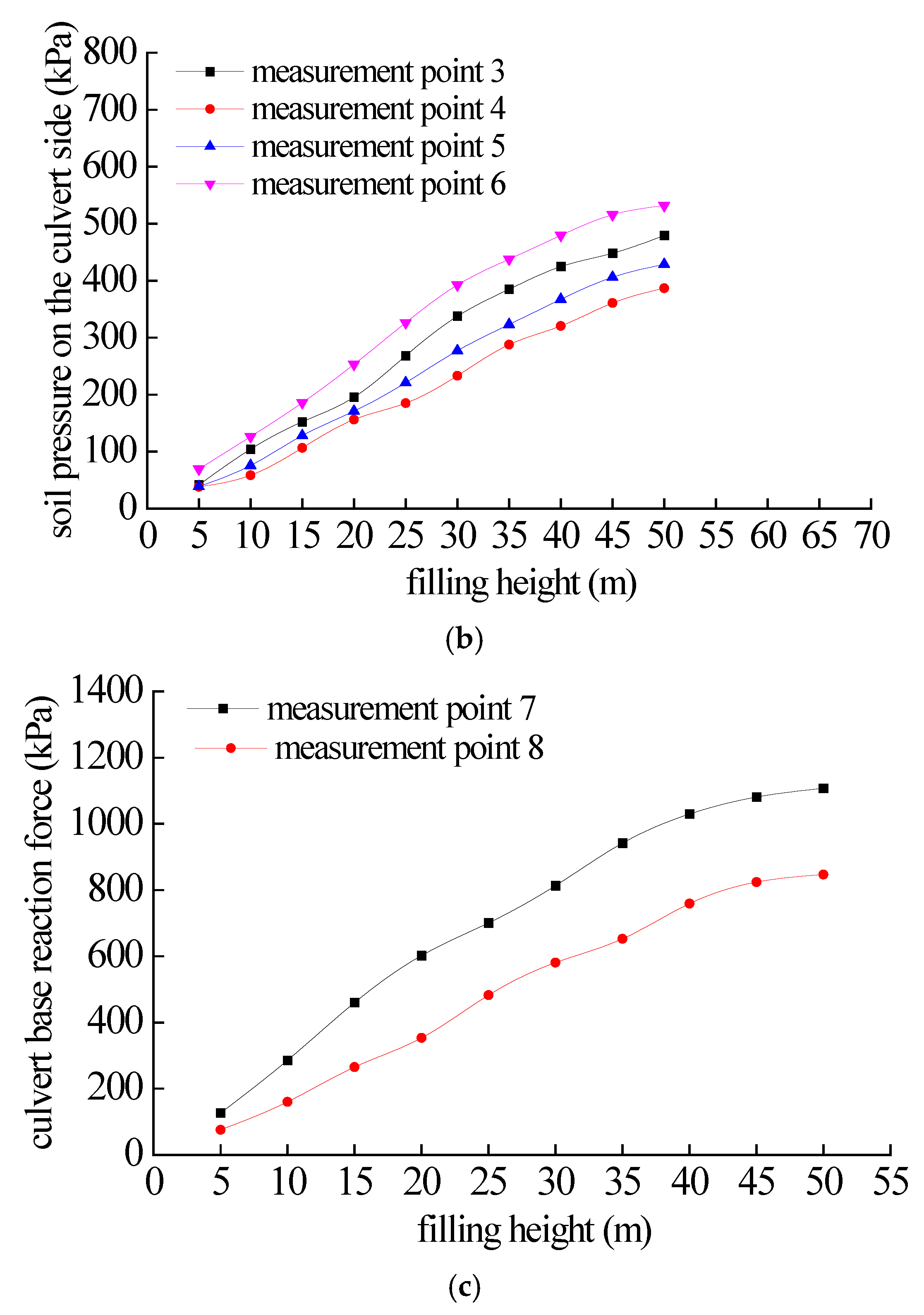
A schematic diagram of the earth pressure distribution around the culvert under different fill heights is shown in Figure 10, and the earth pressure distribution law of representative measuring points at the culvert top, culvert side, and basement is shown in Figure 11.
Figure 10 and Figure 11 show that the vertical earth pressure on the box culvert crown exhibits a saddle-shaped pattern: pressures peak at the roof corners and drop markedly at the midspan, indicating a pronounced stress concentration at the corners. As the fill height increases, the crown pressures rise overall, with faster growth at the corners than at the midspan, thereby accentuating the saddle shape.
The lateral earth pressure is highest at the lower foundation corners, exceeding the theoretical value at the upper culvert corners and evidencing a strong stress concentration at the base. Side pressures increase monotonically with fill height.
The base reaction is likewise saddle-shaped: corner reactions exceed those at the midspan, and the corner subgrade remains in the elastic regime. With increasing fill height, corner reactions grow more rapidly than midspan reactions, further intensifying the saddle pattern; the total base reaction also increases.
From Figure 10, the measured crown pressure exceeds the theoretical value. The incremental increase is larger for fill heights of 5–15 m than for 15–50 m. For fills <15 m, the stiffness contrast between the culvert and surrounding soil induces pronounced shear transfer from the outer to the inner soil columns, concentrating stress at the crown and steeply elevating pressure. Beyond 15 m, this interaction weakens, and the growth rate of the crown pressure diminishes.

4.2. Box Culvert Earth Pressure Under the Influence of EPS Board Laying Height

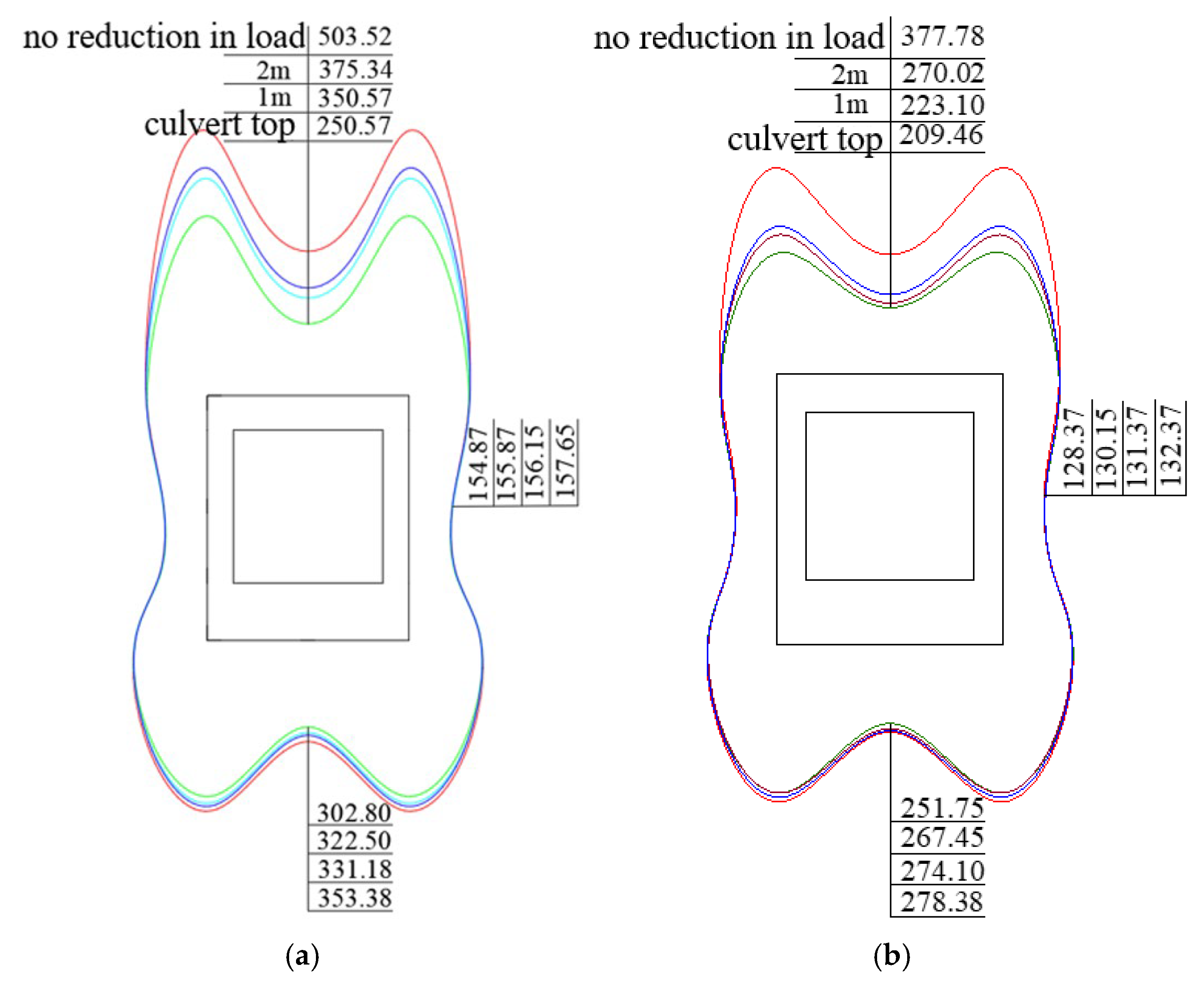
The filling height is 20 m, the valley width is B = 3D, and the slope of the valley is 45. Under the flat and valley topography, the laying height of the EPS board is 0, 1, and 2 m, respectively, and the distribution law of the earth pressure around the culvert without an EPS board is shown in Figure 12.
As shown in Figure 11, for EPS installation heights of 0, 1, and 2 m—and in the no-EPS case—the vertical earth pressure on the culvert crown exhibits a saddle-shaped distribution, with maxima at the ends and a minimum at midspan. The lateral earth pressure on the sidewalls is “3-shaped” (digit-3-like), and the base reaction is ω-shaped (omega-like). Installing EPS markedly reduces the surrounding earth pressures; the reductions at the crown and base exceed those at the sidewalls. For identical EPS configurations, pressures in valley terrain are lower than in flat terrain. However, the magnitude of the pressure reduction diminishes as the EPS installation height increases.

4.2.1. Vertical Earth Pressure on Culvert Top with the Changes of EPS Board Laying Height

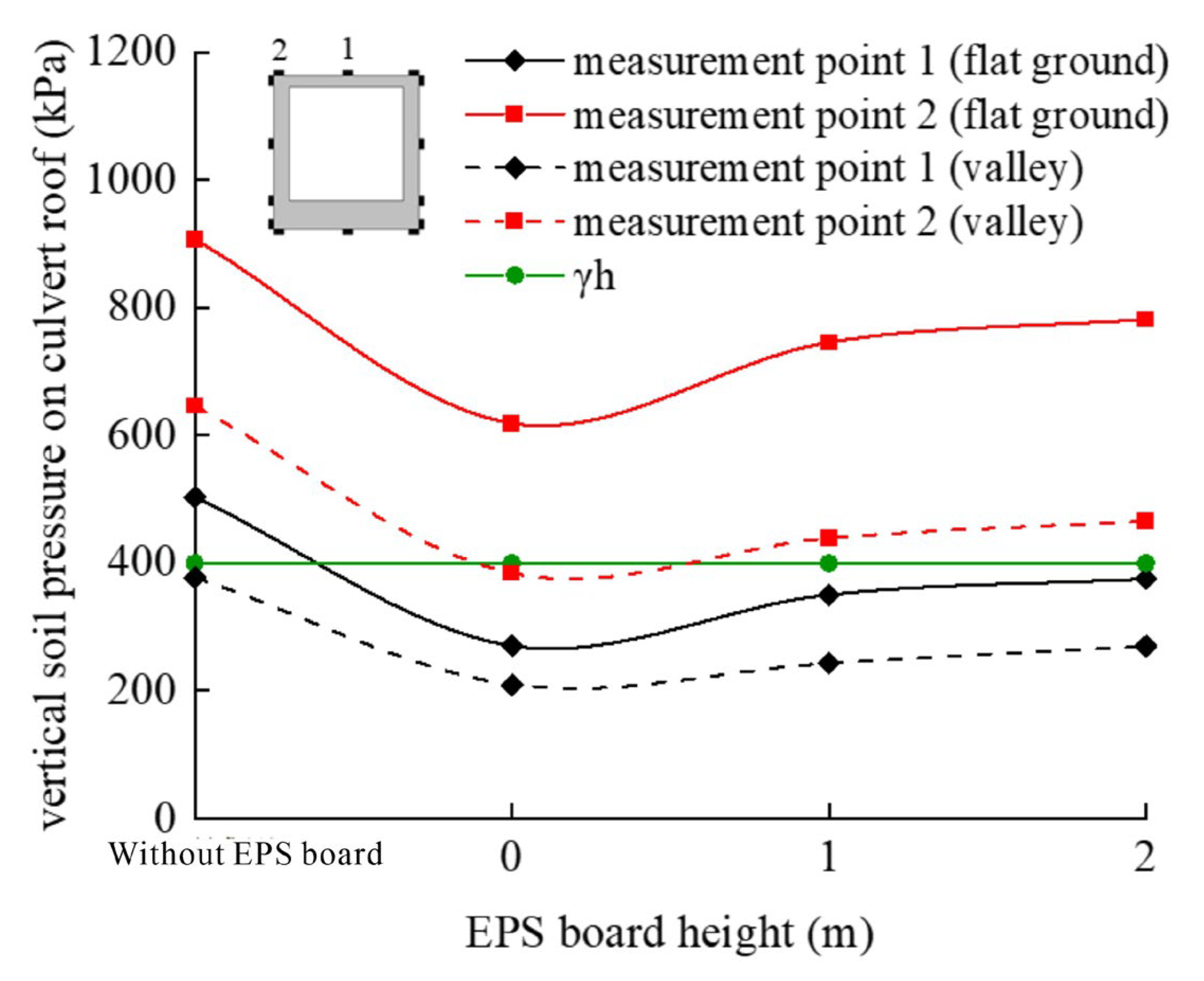
To analyze the vertical earth pressure at the culvert crown, we selected representative measurement points 1 and 2. Under a 20 m fill and a 45° gully slope, Figure 13 shows the crown–pressure response for EPS installation heights of 0, 1, and 2 m, along with the no-EPS baseline.
Figure 13 shows that installing EPS panels substantially reduces the vertical earth pressure on the culvert crown in both valley and flat terrain. The crown pressure increases with installation height up to 2 m, beyond which the reduction effect becomes negligible. At a height of 50 cm, the midspan crown pressure is reduced by 232.9 kPa (flat) and 168.3 kPa (valley) relative to the no-EPS case, confirming the strong load mitigation effect of EPS. This reduction reflects the compressibility of EPS, which absorbs part of the overburden, and the differential settlement it induces between inner and outer soil columns, promoting arching and lowering the crown pressure.
Increasing the EPS installation height from 0 to 1 m raises the midspan crown pressure by 79.9 kPa (flat) and 33.6 kPa (valley) and raises the roof corner pressure by 126.5 kPa and 54.8 kPa, respectively; the height effect is therefore more pronounced at the corners than at the midspan. The mechanism is that higher panels reduce pressure and settlement directly beneath the EPS, while adjacent side soils settle more, imposing greater downward drag on the roof edges. Further increasing the height from 1 to 2 m yields only modest midspan increments—36 kPa (flat) and 26 kPa (valley)—indicating diminishing sensitivity once a characteristic height is exceeded.

4.2.2. Vertical Earth Pressure Coefficient of Culvert Top

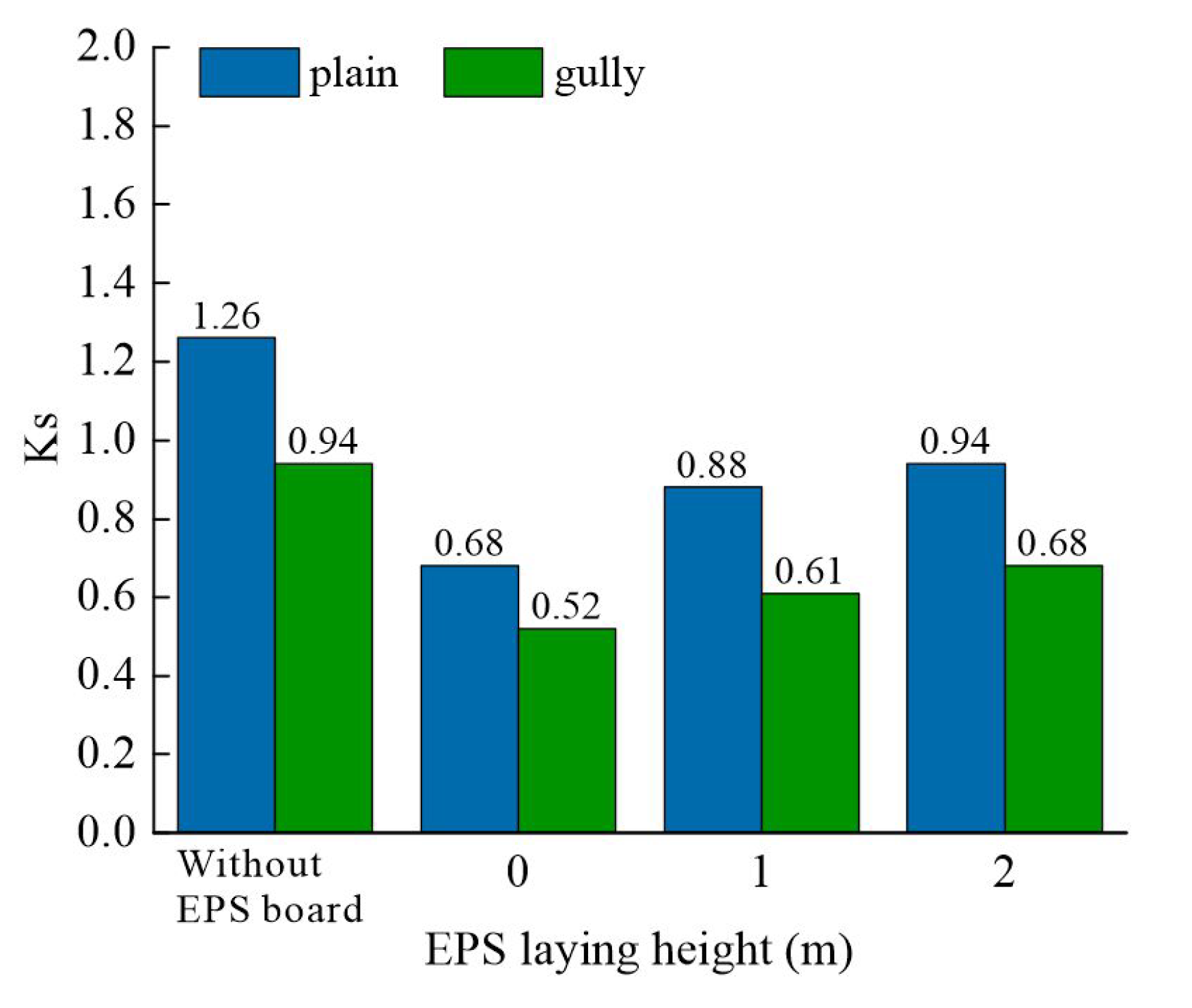
When the filling height is 20 m, the valley slope is 45°, and under flat terrain, the EPS board laying heights are 0, 1, and 2 m, as well as the case where no EPS board is laid, the variation law of the vertical soil pressure concentration coefficient at the culvert top is shown in Figure 14.
Figure 14 shows a positive correlation between the crown vertical earth pressure concentration factor and the EPS installation height: raising the EPS increases the factor and weakens the load reduction benefit. At any given height, the factor in valley terrain is markedly lower than in flat terrain, indicating substantial intrinsic unloading by the valley topography. In flat terrain, the factor grows with height; at an installation height of 2 m, it is 0.94, consistent with partial stress diffusion toward a more uniform pressure field. Accordingly, where feasible, the natural valley geometry should be preserved, and the most effective configuration is to place EPS directly on the culvert roof; if elevation is required, the installation height should not exceed 2 m.

4.3. Box Culvert Earth Pressure Under the Influence of EPS Board Laying Thickness

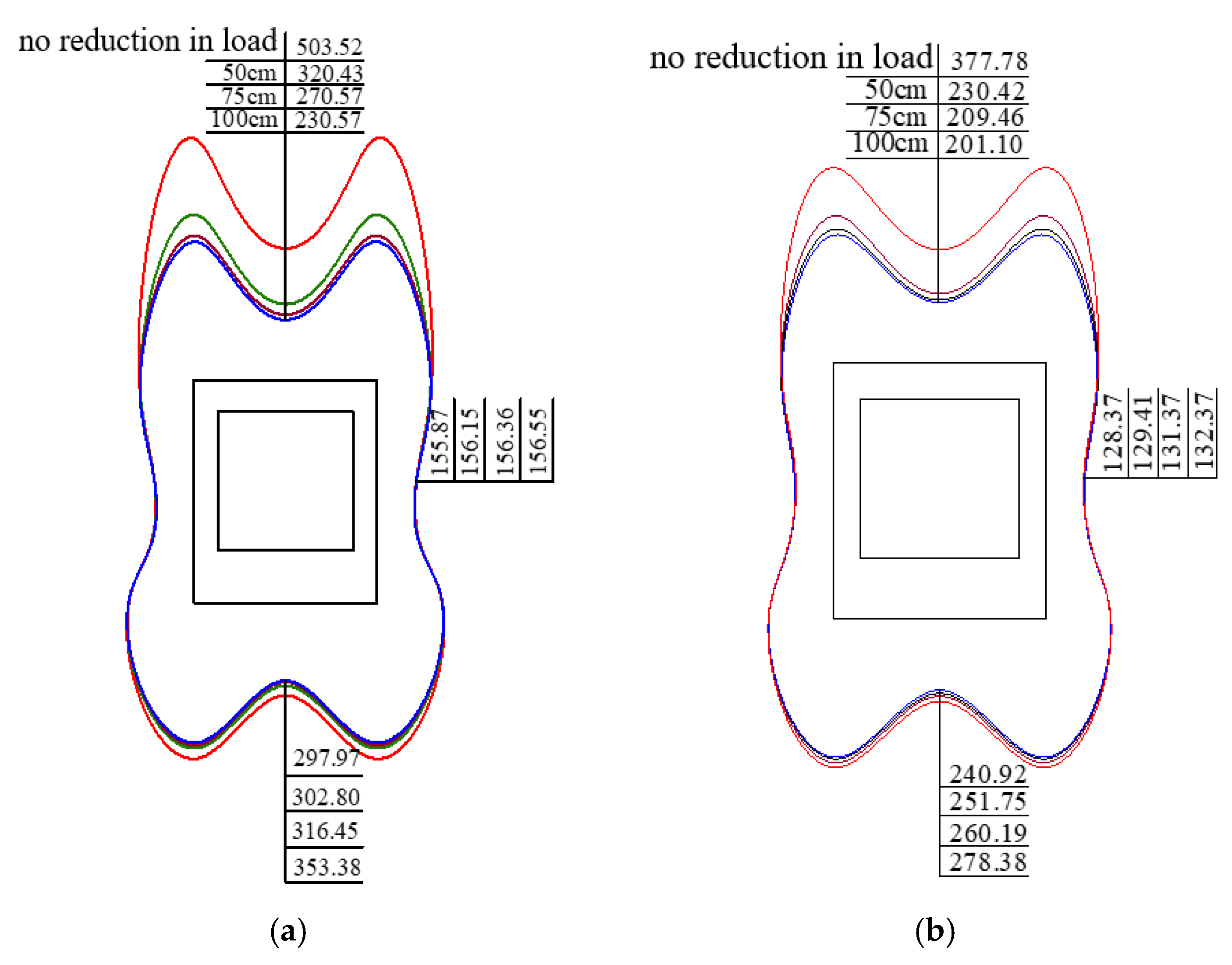
Under the conditions of a filling height of 20 m, flat terrain, and a gully width of B = 3D and gully slope of 45, the distribution law of the earth pressure around the culvert with EPS board laying thicknesses of 0, 50, 75, and 100 cm, respectively, is shown in Figure 15.
As shown in Figure 15, for EPS panel thicknesses of 0, 50, 75, and 100 cm, the vertical earth pressure on the culvert crown is saddle-shaped, with corner values exceeding midspan pressures. The lateral earth pressure on the sidewalls exhibits a figure-3-like profile, and the base reaction is omega-shaped. For a given EPS thickness, pressures around culverts embedded in valley terrain are lower than in flat terrain, indicating partial load relief by topography. Installing EPS panels further decreases the earth pressure around the culvert, with the largest reductions at the crown.

4.3.1. Vertical Earth Pressure on Culvert Top with the Changes of EPS Board Laying Thickness

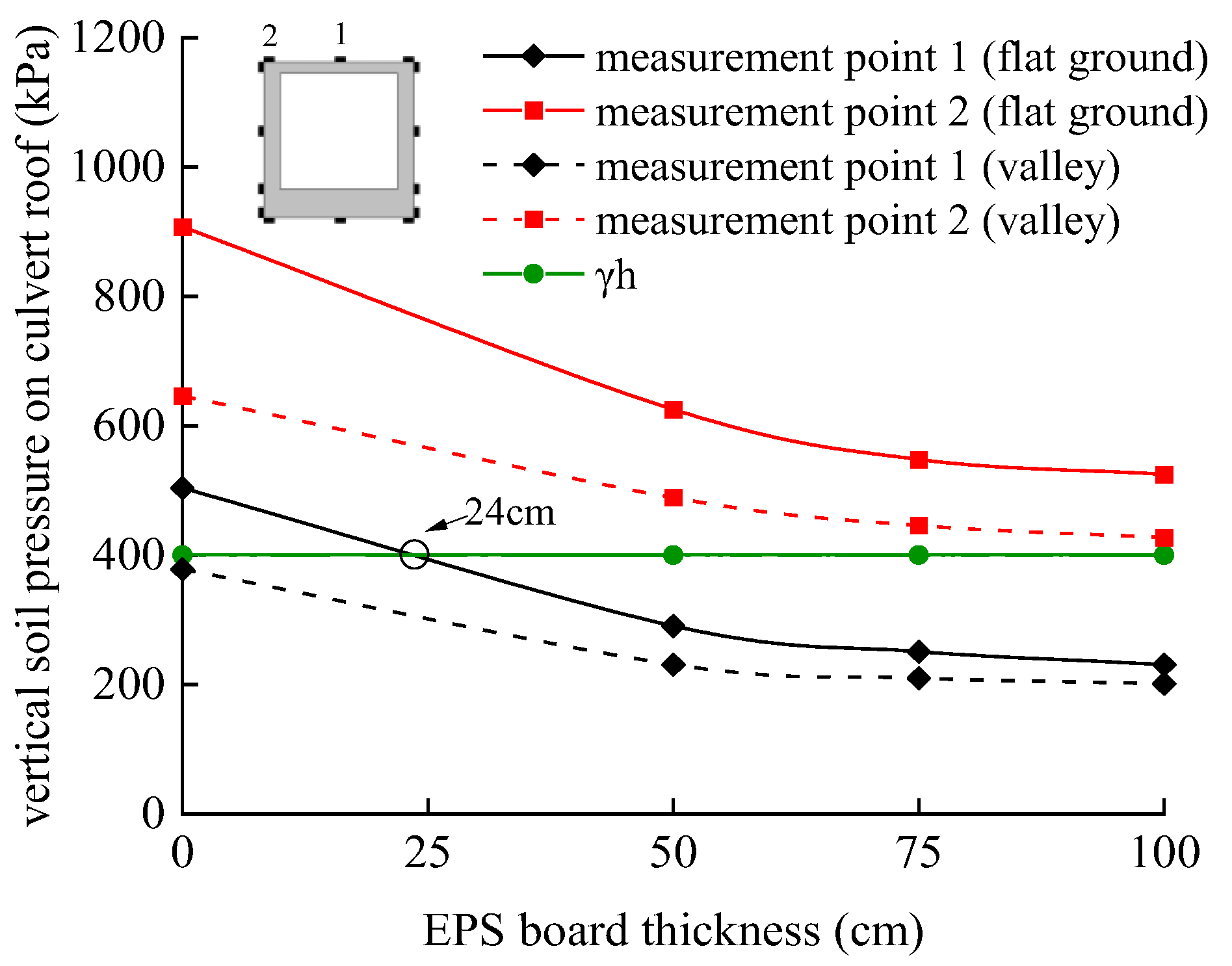
We evaluated the vertical earth pressure at two representative crown points (P1 and P2). For a constant fill height of 20 m, we examined two topographies—flat terrain and a 45° valley slope—and EPS panel thicknesses of 0, 50, 75, and 100 cm. The resulting crown pressure trends are shown in Figure 16.
As shown in Figure 16, installing EPS boards beneath the fill markedly reduces the crown vertical earth pressure in both valley and flat terrain relative to the no-EPS case. With increasing board thickness, the crown pressure decreases and then approaches a plateau. At a 50 cm thickness, the reductions at the culvert crown (midspan) are 213.1 kPa in flat terrain and 147.4 kPa in valley terrain—substantial decreases. The reduction stems from the compressibility of EPS, which absorbs part of the overburden, and from greater settlement of the inner soil column above the crown relative to the outer columns, which mobilizes upward drag (soil-arching) and further lowers crown pressure. Increasing the thickness from 75 to 100 cm yields only marginal additional reductions—19.9 kPa (flat) and 8.3 kPa (valley)—indicating diminishing returns beyond ~75 cm. For a given EPS configuration, valley terrain produces lower crown pressures than flat terrain at the midspan and at both ends. In valleys, the crown pressure is below the linear overburden pressure even without EPS; in flat terrain, it falls below the linear value only when the EPS thickness exceeds 24 cm. Accordingly, where feasible, the natural valley profile should be preserved, and an EPS thickness of ~75 cm offers an effective balance between load reduction and material use.

4.3.2. Concentration Coefficient of Vertical Earth Pressure on Culvert Top

At a fill height of 20 m, Figure 17 shows the variation in the crown vertical earth pressure concentration factor for both a 45° valley slope and flat terrain, evaluated for EPS panel thicknesses of 0, 50, 75, and 100 cm.
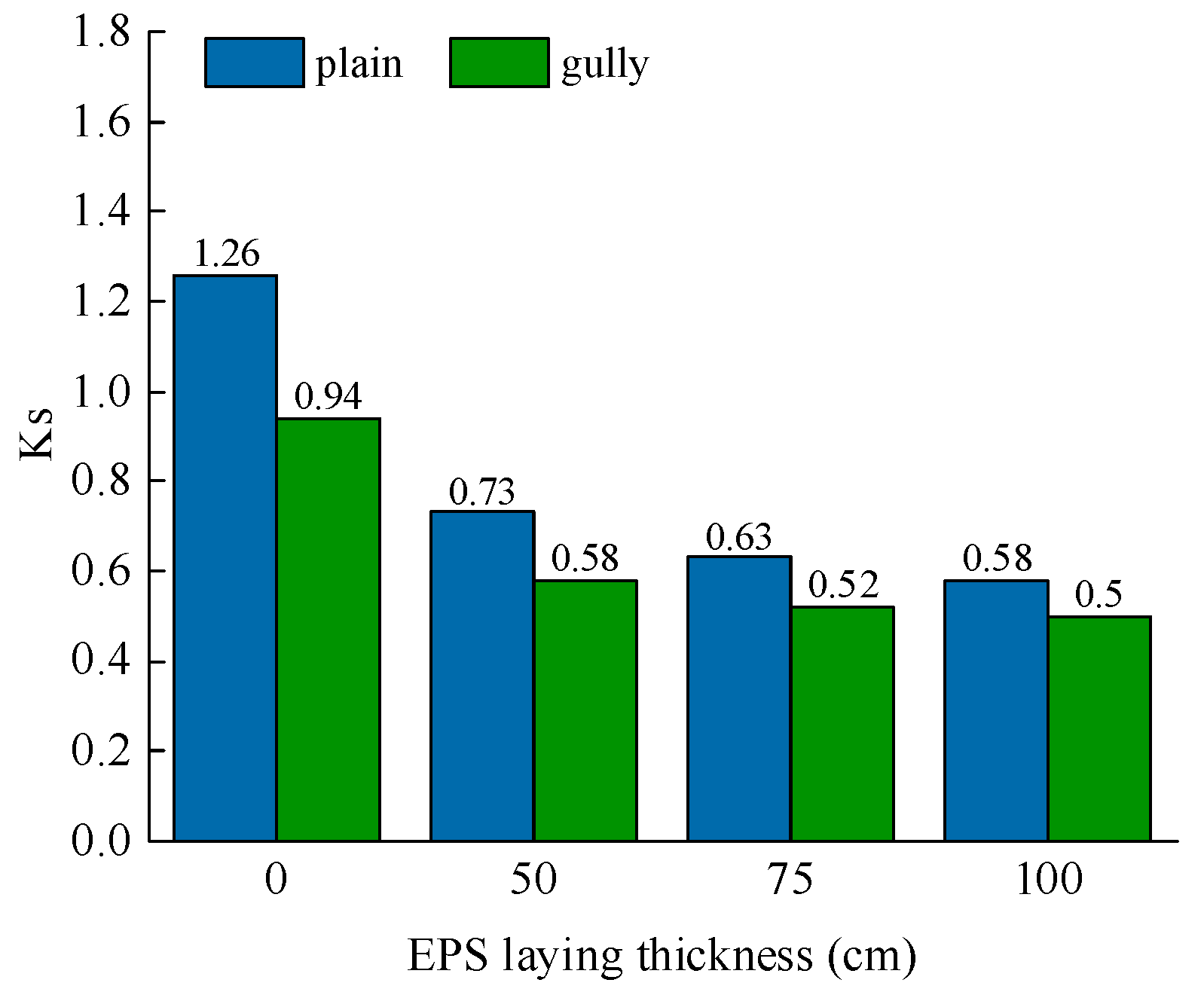
Figure 17 shows that the crown vertical earth pressure concentration factor (Ks) decreases with the EPS panel thickness: thicker panels deliver stronger load reduction. On flat terrain, Ks falls below 1 once the thickness exceeds 50 cm, indicating stress dispersion at the crown. Mechanistically, because EPS has a lower compression modulus than the surrounding fill, it undergoes larger deformation under the same surcharge, increasing settlement of the inner soil column above the culvert; when this exceeds that of the outer column, the outer column exerts an upward tensile effect on the inner column, reducing the crown pressure and producing stress dispersion. With a thickness of >50 cm, Ks at the crown decreases by 0.37 and 0.53 on flat and valley terrain, respectively, relative to culverts without EPS. Increasing the thickness from 75 cm to 100 cm further reduces the midspan crown pressure by 0.07 (flat) and 0.02 (valley), indicating diminishing returns beyond ~75 cm. At any given thickness, Ks in valley terrain is smaller than in flat terrain, confirming that valley topography enhances EPS-induced load reduction. We therefore recommend preserving the native valley geometry where feasible and installing EPS panels of 75 cm thickness to achieve effective load mitigation.

4.4. Comparison Between Centrifuge Test and Culvert Codes

To verify the accuracy of the centrifugal test method employed in this study for measuring the vertical earth pressure on the top of high-filled box culverts, the centrifugal test results were compared with the culvert design specifications of China, the United States, and Canada, as illustrated in the figure.
The AASHTO LRFD Bridge Design Specifications provide formulas for calculating the vertical earth pressure on culvert crowns under both embankment and trench conditions, as shown in Equations (1) and (2). These formulas apply to both reinforced-concrete box culverts and precast box culverts [32].
F e = 1 + 0.20 H B c
F t = C d B d 2 H B c
For embankment installations, when compacted backfill is used along both sides of the box section, Fe must not exceed 1.15; when uncompacted backfill is used, Fe must not exceed 1.40. For trench installations, if the trench width exceeds the horizontal span of the culvert by more than 1.0 foot, Ft must not exceed the values specified for embankment conditions.
The values for the vertical earth pressure coefficient for box culverts in Canada are shown in Table 5.
The design of culverts in China takes into account combinations of valley terrain and varying embankment heights, with the values for the earth pressure coefficient at the crown of the culvert shown in Table 6.
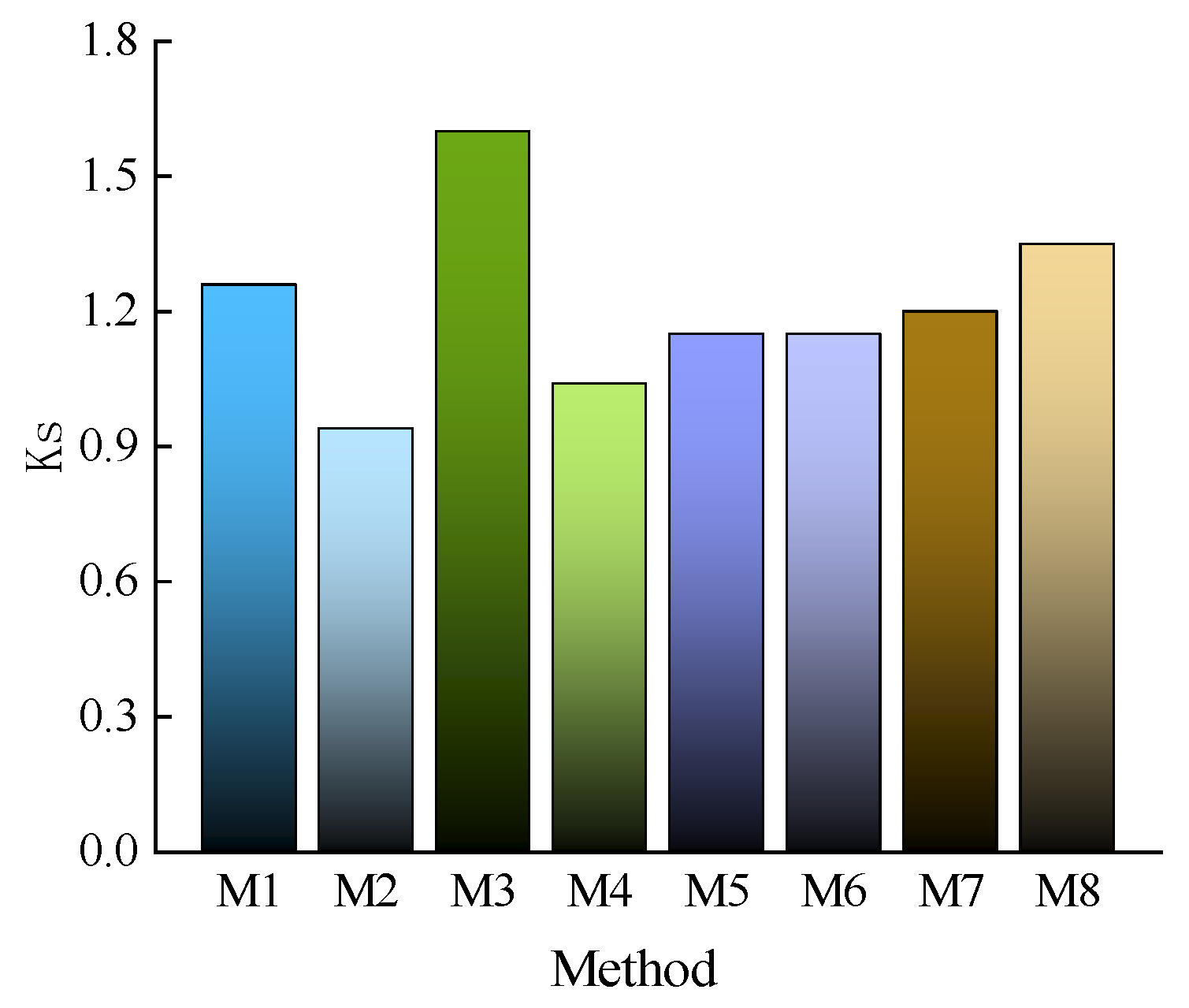
Among these specifications, the Chinese specification incorporates the influence of gully topographic parameters. In contrast, the American and Canadian culvert specifications only provide methods for determining the Ks value for covered and gully-buried culverts, without classifying parameter selection criteria for trapezoidal gully conditions. Therefore, the comparison was conducted using a gully width of 3D as a representative example, as shown in Figure 18.
Among them, M1 to M8 correspond to different methods, as detailed in Table 7.
As illustrated in Figure 18, the vertical earth pressure concentration coefficient (ks) beneath the culvert crown exhibits its maximum value under flat terrain conditions, while it is comparatively lower in trapezoidal valleys or trench-like topographies. The centrifuge test results obtained in this study are in close agreement with the values recommended by relevant design codes, suggesting that the experimental findings fall within a reasonable range and demonstrate favorable consistency with established engineering standards.

5. The Load Reduction Mechanism of EPS Boards for Box Culverts Under Gully Topography

Classical Marston–Spangler theory links crown loads directly to differential settlement between the “inner” and “outer” soil columns, identifying excessive settlement of the side fill as the root cause of stress concentration at the culvert crown. The trench condition and the induced-trench load reduction method are canonical cases that intentionally exploit this settlement contrast. Across these models, the mechanism governing the vertical earth pressure at the crown is explicitly tied to inner–outer settlement differentials.
For culverts embedded in valley terrain, however, the boundary conditions depart from the Marston–Spangler idealization. In a vertical-walled trench, the interface between the inner and outer soil columns is assumed to be a vertical plane projected from the culvert edges to the ground surface—a limit-equilibrium simplification. In practice, a potential inclined failure surface extends from the culvert edge to the surface (not necessarily at limit), which closely resembles the boundary created by gully topography. The valley width and side-slope angle modulate frictional resistance along this potential sliding surface; narrower and steeper valleys impose stronger confinement on the overburden above the crown.
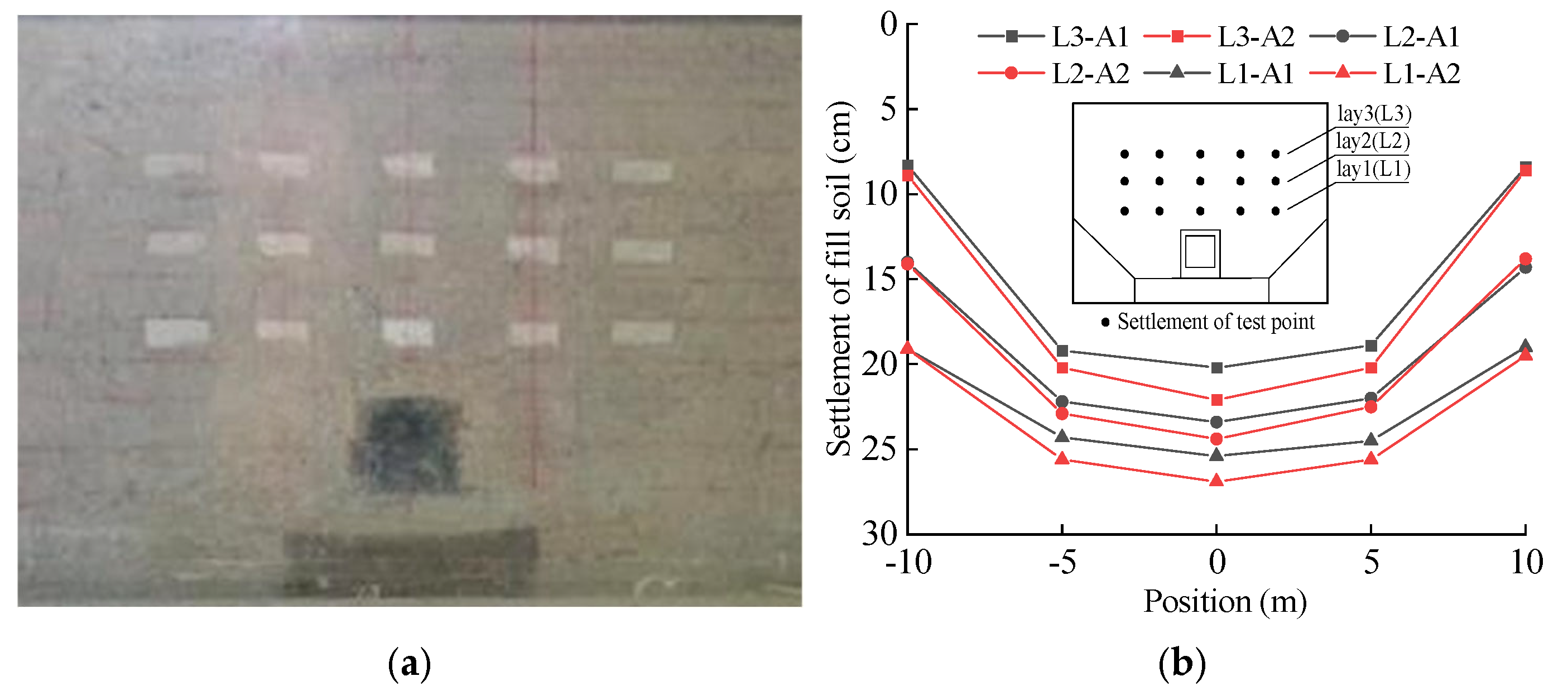
As shown in Figure 19, to elucidate the coupling between crown load and fill settlement, we characterized settlement evolution in centrifuge tests. Settlement targets were mounted on the exterior of the transparent sidewall, and three instrumented layers (L1, L2, L3) were embedded in the overburden above the crown. Pre- and post-test displacements delineate the settlement profile. Two cases were investigated: A1, a valley topography without load reduction, and A2, a valley topography with EPS-based load reduction.
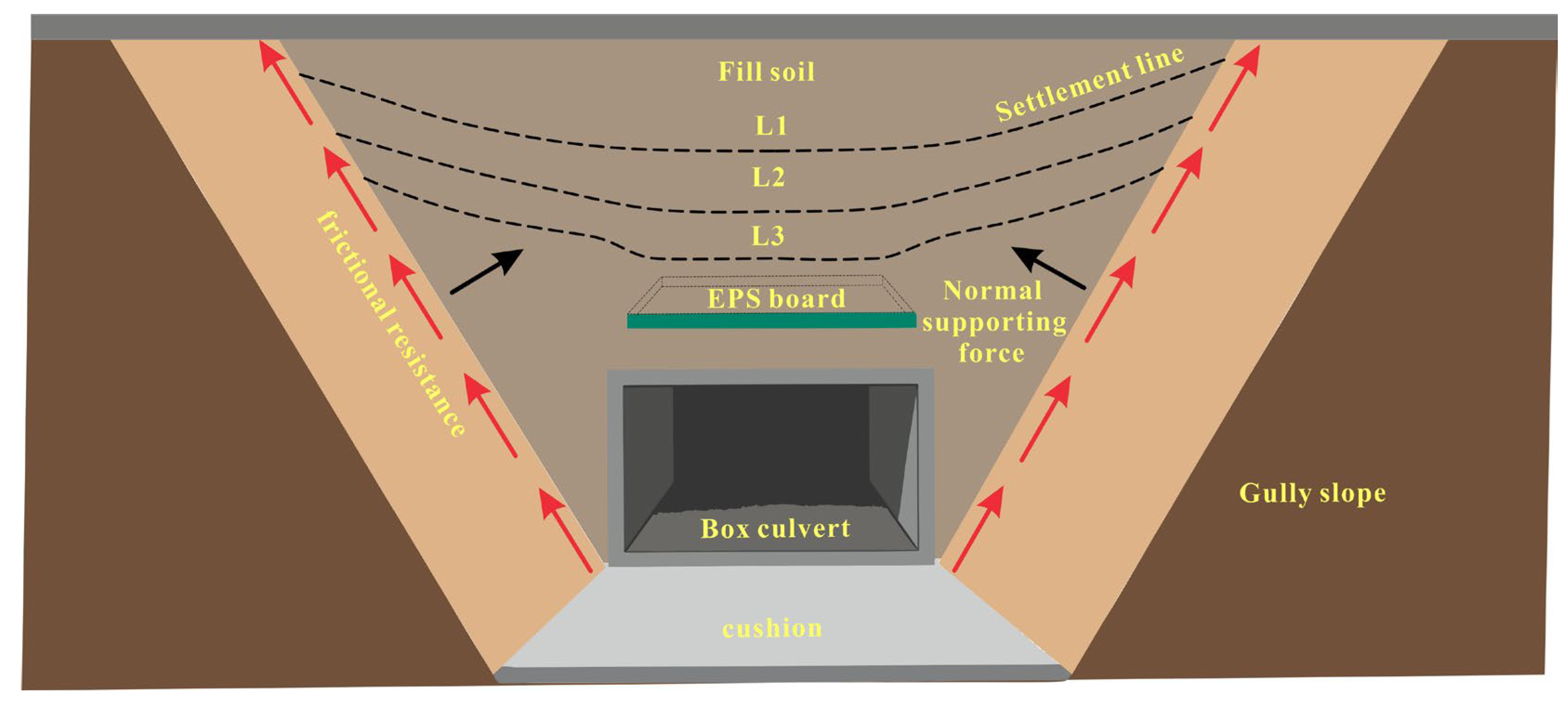
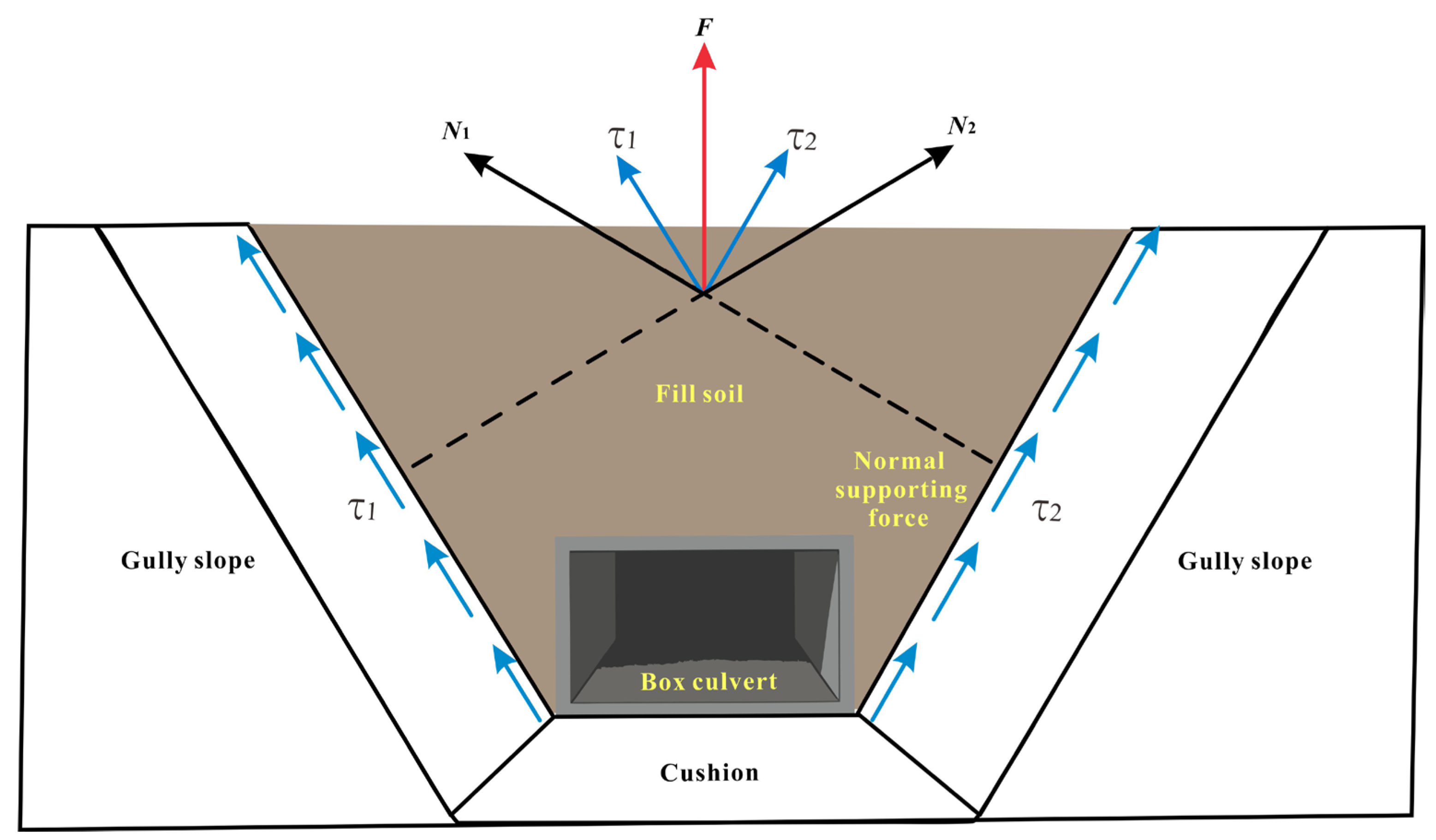
As shown in Figure 19, at a fill height of 20 m, the settlements recorded at valley boundary points without load reduction measures are markedly smaller than those for the buried-type culvert under the same condition. Thus, the valley topography itself confers a load alleviation effect by reducing side-fill settlement. Under valley conditions, installing EPS panels above the crown further decreases midspan settlement, amplifying the load reduction benefit. Accordingly, the combined mitigation provided by the valley geometry and EPS panels arises from three mechanisms (schematized in Figure 20 and Figure 21):
(1) Boundary frictional resistance. Valley slopes furnish interface shear resistance that acts against the development of potential slip surfaces. By increasing shear strength along the fill–slope contact, they suppress global sliding of the culvert–backfill system. Slope geometry (e.g., gradient, roughness) controls the spatial distribution of this resistance and hence the position and stability of potential slip surfaces. Cooperative deformation between slope soils and backfill also spreads concentrated stresses and reduces the risk of local voiding above the crown, with effectiveness governed by soil type, moisture content, and compaction quality.
(2) Boundary normal support. The valley flanks provide normal reactions along the boundary; the vertical component offsets part of the fill self-weight, while the horizontal component enhances lateral confinement within the gully.
(3) EPS-induced settlement redistribution. EPS panels placed above the crown compress under overburden, inducing additional settlement of the inner soil column. The resulting drag redistributes surcharge from above the EPS toward the side fills, thereby lowering the load transmitted to the crown.

6. Conclusions

Drawing on field investigations and laboratory constraints, we conducted centrifuge model tests on high-fill box culverts with varying EPS panel installation heights and thicknesses to characterize earth pressure responses in valley terrain. The principal findings are as follows:
(1) The vertical earth pressure at the culvert roof (crown) increases with EPS installation height, with a stronger effect at roof corners than at the midspan. As the EPS thickness increases, the crown pressure first decreases and then approaches a plateau. Increasing the thickness from 75 to 100 cm reduces the crown pressure by 19.9 kPa (flat terrain) and 8.3 kPa (valley terrain). Beyond 75 cm, additional reductions are marginal.
(2) Across installation heights, EPS panels reduce the earth pressure around the culvert, most effectively at the crown; the reduction ranking is crown > sidewalls > invert. The benefit diminishes with increasing installation height and stabilizes for heights >2 m. For practice, preserving original topography and placing EPS as near to the crown as feasible ensures adequate load reduction without material waste.
(3) Across thicknesses, a greater EPS thickness lowers the crown pressure and base reaction but slightly increases the lateral pressure on the sidewalls. For thicknesses >75 cm, further gains in load reduction are minor. In construction, a 75 cm panel generally achieves sufficient reduction while avoiding overuse of materials.
(4) The findings of this study indicate that both expanded polystyrene (EPS) boards and valley topography can substantially influence the concentration of vertical earth pressure on the crown of high-fill box culverts. Through the rational arrangement of the height and thickness of EPS boards, the magnitude of the load acting on the culvert crown can be effectively regulated. This effect is primarily due to the supporting and frictional resistance provided by the boundaries of the valley terrain, which facilitate the redistribution of the vertical load from the overlying soil column above the culvert toward the flanks, thereby enhancing the load reduction effect. The present research further elucidates effective load mitigation strategies for high-fill culverts and offers valuable design insights for similar engineering applications.

Author Contributions

Conceptualization, Z.F. and C.G.; methodology, W.W.; software, S.W.; validation, J.W. and X.W.; formal analysis, C.G.; investigation, J.W.; resources, W.W.; data curation, X.W.; writing—original draft preparation, J.W. and S.W.; writing—review and editing, C.G. and S.W.; visualization, W.W.; supervision, X.W.; project administration, Z.F.; funding acquisition, S.W. All authors have read and agreed to the published version of the manuscript.

Funding

This study was financially supported by the Science and Technology Plan Project of the Department of Transportation of Guangdong Province (Science & Technology-2013-02-010).

Institutional Review Board Statement

Not applicable.

Informed Consent Statement

Not applicable.

Data Availability Statement

Data is contained within the article.

Conflicts of Interest

Author Conglin Guo was employed by the company Shanxi Road and Bridge Construction Group Co., Ltd. Author Wei Wang was employed by the company China Railway Fist Survey and Design Institute Group Co., Ltd. The remaining authors declare that the research was conducted in the absence of any commercial or financial relationships that could be construed as a potential conflict of interest.

References

  1. Zhao, S.; Zhao, Z.; Yang, Z.; Ke, L.; Kitipornchai, S.; Yang, J. Functionally graded graphene reinforced composite structures: A review. Eng. Struct. 2020, 210, 110339. [Google Scholar] [CrossRef]
  2. Orton, S.L.; Loehr, J.E.; Boeckmann, A.; Havens, G. Live-load effect in reinforced concrete box culverts under soil fill. J. Bridge Eng. 2015, 20, 04015003. [Google Scholar] [CrossRef]
  3. Chen, B.; Song, D.; Mao, X.; Chen, E.J.; Zhang, J. Model test and numerical simulation on rigid load shedding culvert backfilled with sand. Comput. Geotech. 2016, 79, 31–40. [Google Scholar] [CrossRef]
  4. Allard, E.; El Naggar, H. Pressure distribution around rigid culverts considering soil–structure interaction effects. Int. J. Geomech. 2016, 16, 04015056. [Google Scholar] [CrossRef]
  5. Acharya, R.; Han, J.; Brennan, J.J.; Parsons, R.L.; Khatri, D.K. Structural response of a low-fill box culvert under static and traffic loading. J. Perform. Constr. Facil. 2016, 30, 04014184. [Google Scholar] [CrossRef]
  6. McGuigan, B.L.; Valsangkar, A.J. Centrifuge testing and numerical analysis of box culverts installed in induced trenches. Can. Geotech. J. 2010, 47, 147–163. [Google Scholar] [CrossRef]
  7. Abuhajar, O.; El Naggar, H.; Newson, T. Static soil culvert interaction the effect of box culvert geometric configurations and soil properties. Comput. Geotech. 2015, 69, 219–235. [Google Scholar] [CrossRef]
  8. Tafreshi, S.M.; Darabi, N.J.; Dawson, A.R. Combining EPS geofoam with geocell to reduce buried pipe loads and trench surface rutting. Geotext. Geomembr. 2020, 48, 400–418. [Google Scholar] [CrossRef]
  9. Song, D.; Chen, B.; Khan, A. Analytical solution of the vertical earth pressure on load-shedding culvert under high fill. Comput. Geotech. 2020, 122, 103495. [Google Scholar] [CrossRef]
  10. Garg, A.K.; Abolmaali, A. Finite-element modeling and analysis of reinforced concrete box culverts. J. Transp. Eng. 2009, 135, 121–128. [Google Scholar] [CrossRef]
  11. Yuan, Y.; Huang, H.; Ye, Y.; Li, M.; Sun, H. Performance coordination design method applied to replaceable artificial controllable plastic hinge for precast concrete beam-column joints. J. Build. Eng. 2022, 47, 103863. [Google Scholar] [CrossRef]
  12. Dalalbashi, A.; Eslami, A.; Ronagh, H.R. Plastic hinge relocation in RC joints as an alternative method of retrofitting using FRP. Compos. Struct. 2012, 94, 2433–2439. [Google Scholar] [CrossRef]
  13. Zheng, J.J.; Luo, D.P.; Ma, Q. Numerical analysis of slab culvert beneath imperfect ditch covered with geogrid layers. Appl. Mech. Mater. 2011, 71, 3338–3341. [Google Scholar] [CrossRef]
  14. Ma, Q.; Chen, Z.; Zheng, J.; Liu, Y.; Zeng, G. Earth pressure calculation of high fill culvert considering inclination of soil column interface. Iran. J. Sci. Technol. Trans. Civ. Eng. 2024, 48, 3573–3590. [Google Scholar] [CrossRef]
  15. Gong, Y.; Ma, Y.; Tan, G.; Bi, H.; Pang, Y.; Ma, C. Experimental study and numerical simulation on failure process of reinforced concrete box culvert. Adv. Civ. Eng. 2020, 1, 5423706. [Google Scholar] [CrossRef]
  16. Meng, Q.D.; Chen, B.G.; Wang, C.P.; Yan, T.F. Calculation method for soil pressure of rigid culverts under load reduction conditions, China. J. Civ. Eng. Manag. 2020, 37, 130–135+144. [Google Scholar] [CrossRef]
  17. Li, S.; Zhuo, B.; Wang, Q.C.; Ma, L.; Ning, G.X.; Jia, T. Calculation and soil arch effect analysis of combined load reduction by EPS board and geogrid on high fill loess open tunnel roof, China. China Railw. Sci. 2018, 39, 16–22. [Google Scholar] [CrossRef]
  18. Zhou, L.F.; Chen, B.G.; Jiao, J.J.; Shi, F. Influence of reinforced load reduction on earth pressure and parameters of culvert roof, China. J. Undergr. Space Eng. 2016, 12, 582–588. [Google Scholar] [CrossRef]
  19. Chen, B.G.; Song, D.B.; Wang, C.; He, Y.H. Study on the Time Effect of Load Reduction in High Fill Culverts, China. J. Water Resour. China 2015, 46, 117–123. [Google Scholar] [CrossRef]
  20. Gao, Q.; Chen, B.G.; Sen, W.U.; Yuan, S.; Sun, M.Y. Long-term stress characteristics and load reduction effect of high-fill box culverts with eps slabs. Rock Soil Mech. 2023, 44, 2151–2160. [Google Scholar] [CrossRef]
  21. Xie, Y.L.; Feng, Z.J.; Li, S.J.; Dong, Y.X.; Hao, Y.M.; Zhang, M.R.; Hu, H.B. Longitudinal load adjustment technology for high embankment culverts based on settlement control, China. Chin. J. Rock Mech. Eng. 2019, 41, 1790–1799. [Google Scholar] [CrossRef]
  22. Zhang, C.G.; Wu, K.; Kang, L.H.; Li, H.Y. Study on vertical earth pressure of unsaturated soil-induced load reduction culverts, China. J. Harbin Inst. Technol. 2023, 55, 80–87. [Google Scholar]
  23. Vaslestad, J.; Johansen, T.H.; Holm, W. Load reduction on rigid culverts beneath high fills: Long-term behavior. Transp. Res. Rec. 1993, 58–68. [Google Scholar]
  24. Vaslestad, J.; Yesuf, G.Y.; Johansen, T. Long-Term in-Situ Measurements of Concrete Culverts with High Fills. In Bearing Capacity of Roads, Railways and Airfields: Proceedings of the 8th International Conference on the Bearing Capacity of Roads, Railways and Airfields, Champaign, IL, USA, 29 June–2 July 2009; CRC Press: Boca Raton, FL, USA, 2009; pp. 697–706. [Google Scholar]
  25. Jiang, X.; Cui, Q.; Wang, C.; Wang, F.; Zhao, Y.X.; Hou, Y.J.; Zhuang, R.J.; Mei, Y.F.; Shi, G. A Model for Infrastructure Detection along Highways Based on Remote Sensing Images from UAVs. Sensors 2023, 23, 3847. [Google Scholar] [CrossRef]
  26. Hoang, T.V.; Huong, D.M.; Huy, T.D.; Ho, H.V. Application of Artificial Neural Network to Forecast the Water Level at Xuan Quan Culvert in Vietnam. In International Conference on Asian and Pacific Coasts; Springer: Singapore, 2020; pp. 695–701. [Google Scholar] [CrossRef]
  27. Najafzadeh, M.; Kargar, A.R. Gene-Expression Programming, Evolutionary Polynomial Regression, and Model Tree to Evaluate Local Scour Depth at Culvert Outlets. J. Pipeline Syst. Eng. Pract. 2019, 10, 04019013.1. [Google Scholar] [CrossRef]
  28. Gao, W. The application of machine learning in geotechnical engineering. Appl. Sci. 2024, 14, 4712. [Google Scholar] [CrossRef]
  29. Khetselius, O.Y.; Glushkov, A.V.; Stepanenko, S.M.; Svinarenko, A.A.; Buyadzhi, V.V. Nonlinear dynamics of the industrial city’s atmospheric ventilation: New differential equations model and chaotic ventilation. In Dynamical Systems Theory and Applications; Springer International Publishing: Cham, Switzerland, 2019; pp. 199–209. [Google Scholar]
  30. Beju, Y.Z.; Mandal, J.N. Expanded polystyrene (EPS) geofoam: Preliminary characteristic evaluation. Procedia Eng. 2017, 189, 239–246. [Google Scholar] [CrossRef]
  31. Horvath, J.S. The compressible inclusion function of EPS geofoam. Geotext. Geomembr. 1997, 15, 77–120. [Google Scholar] [CrossRef]
  32. American Association of State Highway and Transportation Officials. AASHTO LRFD Bridge Design Specifications, 9th ed.; LRFDBDS-9; AASHTO: Washington, WA, USA, 2020. [Google Scholar]
  33. CSA S6-14; Canadian Highway Bridge Design Code. Canadian Standards Association: Toronto, ON, Canada, 2016.
  34. JTG/T 3365-02-2020; Specifications for Design of Highway Culverts. People’s Transportation Press Co., Ltd.: Beijing, China, 2020.
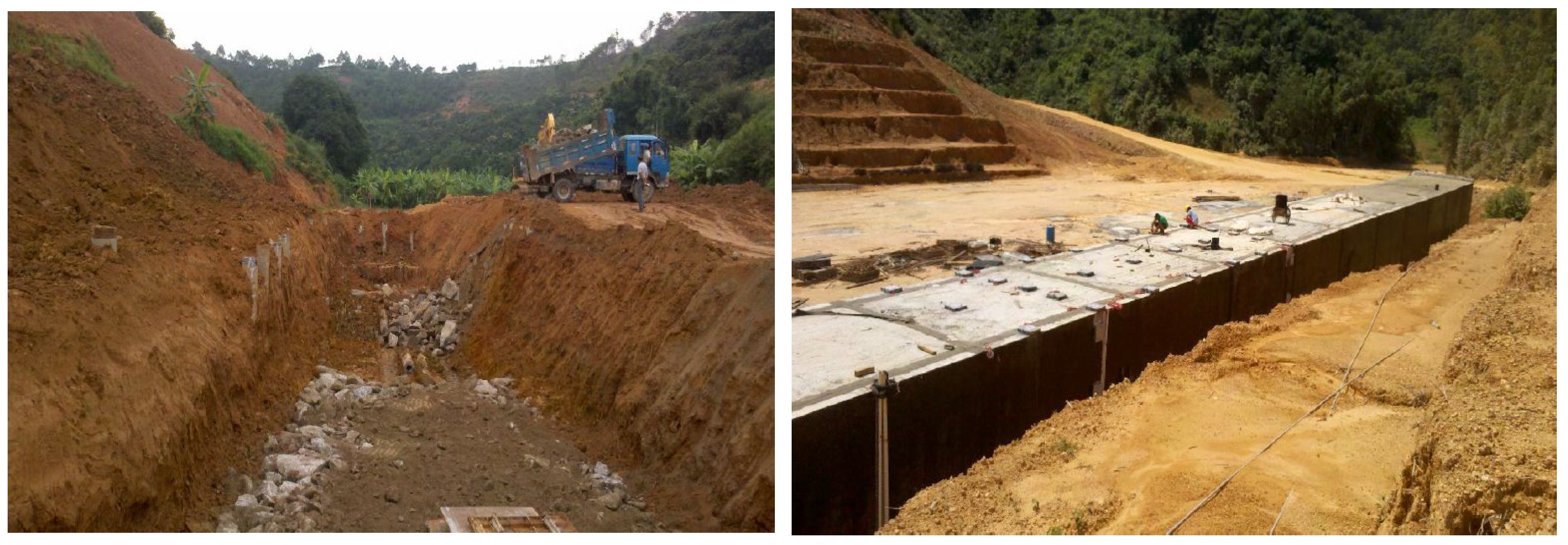
Figure 1. On-site culvert terrain and culvert filling.
Applsci 15 13169 g001
Figure 2. TLJ-3 geotechnical centrifuge.
Applsci 15 13169 g002
Figure 3. Layout of model box.
Applsci 15 13169 g003
Figure 4. Fill design: (a) model test fine sand samples; (b) filling process of fine sand in model test.
Applsci 15 13169 g004
Figure 5. EPS board design. (a) Stress–strain curve of EPS plate; (b) EPS board.
Applsci 15 13169 g005
Figure 6. Experiment: (a) direct shear test; (b) indoor limited compression test.
Applsci 15 13169 g006
Figure 7. Topographic simulation diagrams of the foundation and gullies. (a) Prefabricated foundation; (b) prefabricated side plate.
Applsci 15 13169 g007
Figure 8. Design drawings of box culvert model: (a) box culvert prototype (unit: cm); (b) box culvert model (unit: mm).
Applsci 15 13169 g008
Figure 9. Schematic diagram of layout position of miniature earth pressure box.
Applsci 15 13169 g009
Figure 10. Schematic diagram of earth pressure distribution around culvert under different fill heights (unit: kPa).
Applsci 15 13169 g010
Figure 11. Distribution law of earth pressure with filling height. (a) Vertical earth pressure at culvert top; (b) earth pressure at culvert side; (c) culvert base reaction.
Applsci 15 13169 g011aApplsci 15 13169 g011b
Figure 12. Distribution law of earth pressure around culvert under the influence of EPS board laying height: (a) flat terrain; (b) gully terrain.
Applsci 15 13169 g012
Figure 13. Variation law of vertical earth pressure on culvert top under the influence of EPS board laying height.
Applsci 15 13169 g013
Figure 14. Variation law of vertical earth pressure concentration coefficient at culvert top under the influence of EPS board laying height.
Applsci 15 13169 g014
Figure 15. Distribution law of the earth pressure around the culvert under the influence of EPS board laying thickness. (a) Flat terrain; (b) gully terrain.
Applsci 15 13169 g015
Figure 16. Variation law of vertical earth pressure on culvert top under the influence of EPS board laying thickness.
Applsci 15 13169 g016
Figure 17. Variation in vertical earth pressure concentration coefficient at the culvert top under the influence of the laying thickness of EPS slab.
Applsci 15 13169 g017
Figure 18. Comparison of results with the culvert codes.
Applsci 15 13169 g018
Figure 19. Monitoring and result analysis of soil settlement: (a) location of settlement measurement points for fill soil; (b) settlement results of fill soil.
Applsci 15 13169 g019
Figure 20. Schematic diagram of EPS load reduction mechanism in valley terrain.
Applsci 15 13169 g020
Figure 21. Stress and load reduction for fill soil on the top of valley culverts, where τ1 represents the friction force on the left side of the valley, τ2 represents the friction force on the right side of the valley, N1 is the normal supporting force on the right side of the valley, N2 is the supporting force on the left side of the valley, and F is the resultant force of all these forces.
Applsci 15 13169 g021
Table 1. Performance parameters of soil mechanics centrifuge.
PerformanceIndex
maximum bulk density60 g/cm3
acceleration range0~200 G
maximum load100 g load 600 kg
200 g load 300 kg
effective radius2.0 m
stability±0.1% F.S
model box size700 × 360 × 500 mm3
Table 2. Prototype model physical quantity similarity relation.
Physical QuantityDimensionSimilarity Ratio
Length LL1/50
Displacement μL1/50
Strain ε-1
Density ρML−31
Bulk density γML−350
Force FMLT−21/502
Acceleration aLT−250
Table 3. Physical and mechanical parameters of test soil.
Compression Modulus/MPaWater Content/%Dry Density/g/cm3Cohesion
/kPa
Internal Friction Angle/°
25152.13020
Table 4. Test condition.
Working Condition123
Change
parameter
Laying height of EPS load-reducing boardLaying thickness of EPS load-reducing plateFilling height
EPS board laying height h/(m)Non-EPS\0\1\20Non-EPS
EPS board laying thickness d/(cm)7550, 75, 100, no load reduction
filling height H/(m)20205~50
Valley width B3D3Dflat
Gully slope θ/(°)4545-
Table 5. The value of the concentrated coefficient of vertical soil pressure at the top of culverts in the Canadian Highway Bridge Design Code [33].
Installation MethodVertical Earth Pressure CoefficientHorizontal Earth Pressure Coefficient
Minimum ValueMaximum Value
Surface-mounted1.200.300.50
Buried trenching1.350.250.50
Table 6. The value of the concentrated coefficient of vertical soil pressure at the top of the culvert in the Chinese culvert design code [34].
Type of CulvertSlope0 < Bg/D ≤ 33 < Bg/D ≤ 10Bg/D > 10 or α = 0°
0.1 ≤ H/D < 11 ≤ H/D < 10H/D ≥ 100.1 ≤ H/D < 11 ≤ H/D < 10H/D ≥ 100.1 ≤ H/D < 11 ≤ H/D < 10H/D ≥ 10
Box culvert301.101.151.041.251.301.151.501.601.30
601.041.151.201.04
901.101.151.04
Table 7. The correspondence between various methods.
MethodSpecification
M1Centrifuge Model Test—Results Under Flat Ground
M2Centrifuge Model Test—Results Under Valley
M3Chinese Culvert Design Code—Results Under Flat Ground
M4Chinese Culvert Design Code—Results Under Valley
M5American Culvert Design Code—Results Under Flat Ground
M6American Culvert Design Code—Results Under Trench
M7Canadian Culvert Design Code—Results Under Flat Ground
M8Canadian Culvert Design Code—Results Under Trench
Disclaimer/Publisher’s Note: The statements, opinions and data contained in all publications are solely those of the individual author(s) and contributor(s) and not of MDPI and/or the editor(s). MDPI and/or the editor(s) disclaim responsibility for any injury to people or property resulting from any ideas, methods, instructions or products referred to in the content.