
Classification of Panamanian Bee Honey by Geographical Origin Based on Physico-Chemical and Aromatic Profiles: An Application Study Using Decision Tree Models

 ,
,  , and
, and
Abstract
1. Introduction
2. Problem Statement
3. Materials and Methods
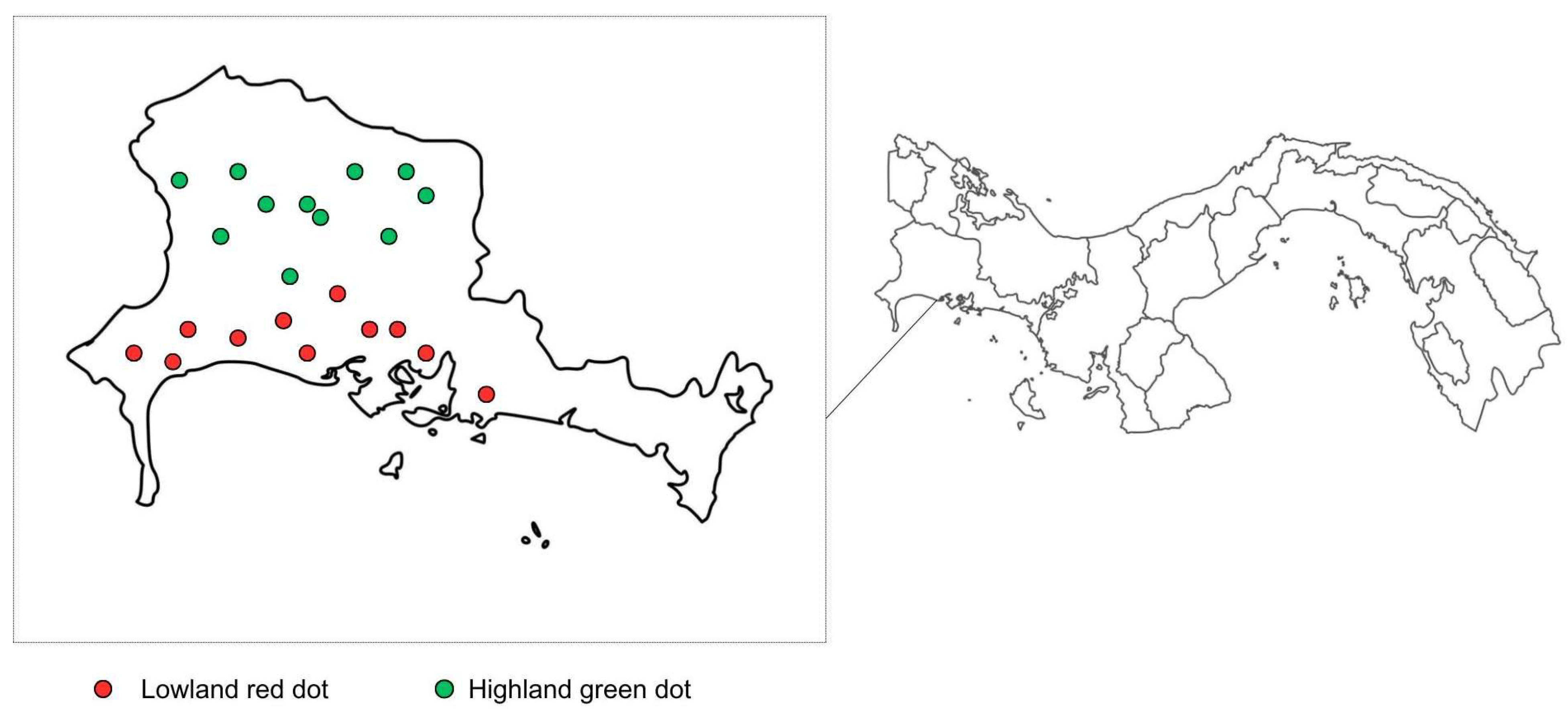
3.1. Sample Collections
- Sampling Logistics
3.2. Physico-Chemical Analysis
3.3. Instrumental Sensory Analysis—Aromatic Profile with Electronic Nose
4. Statistical Analysis
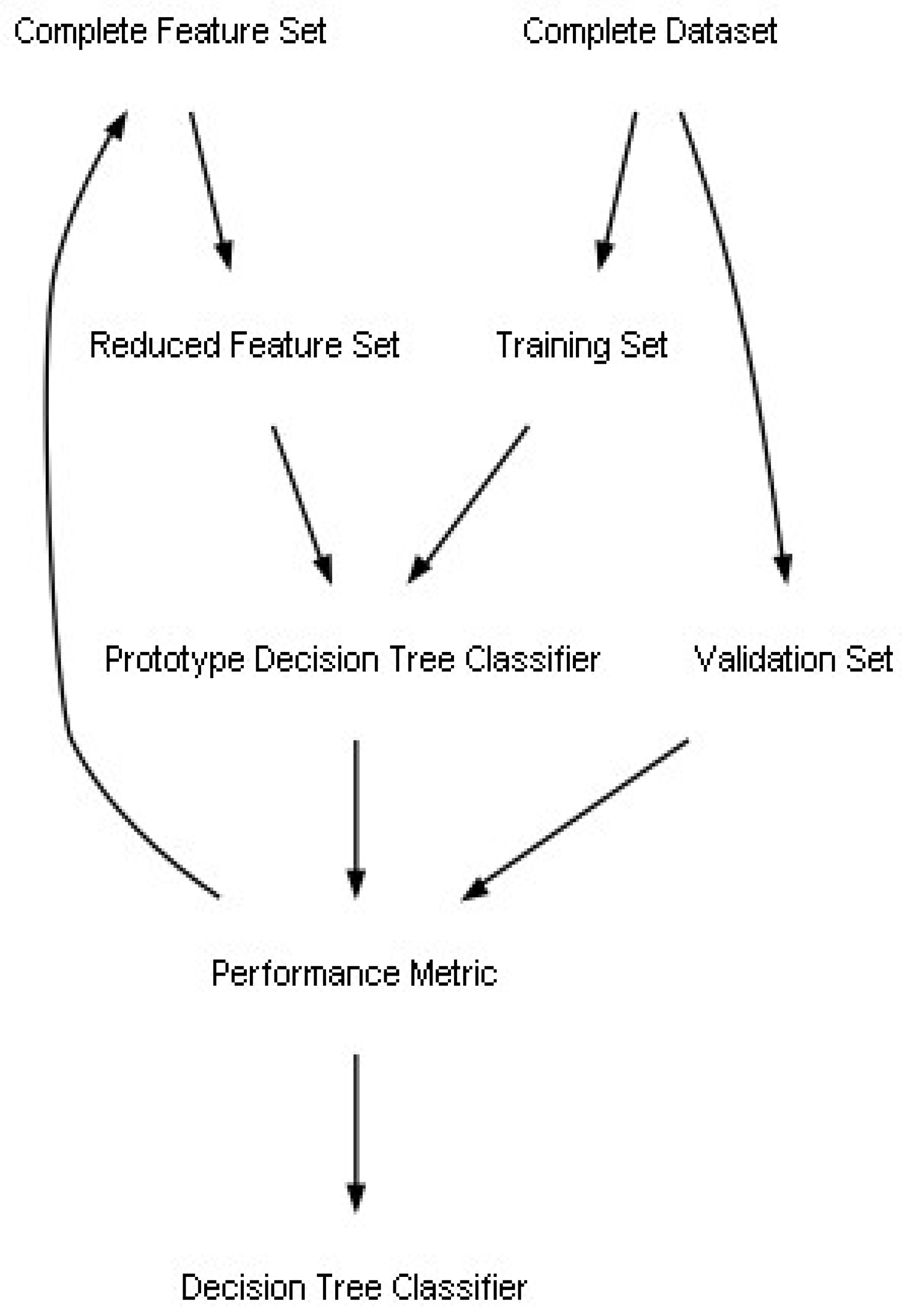
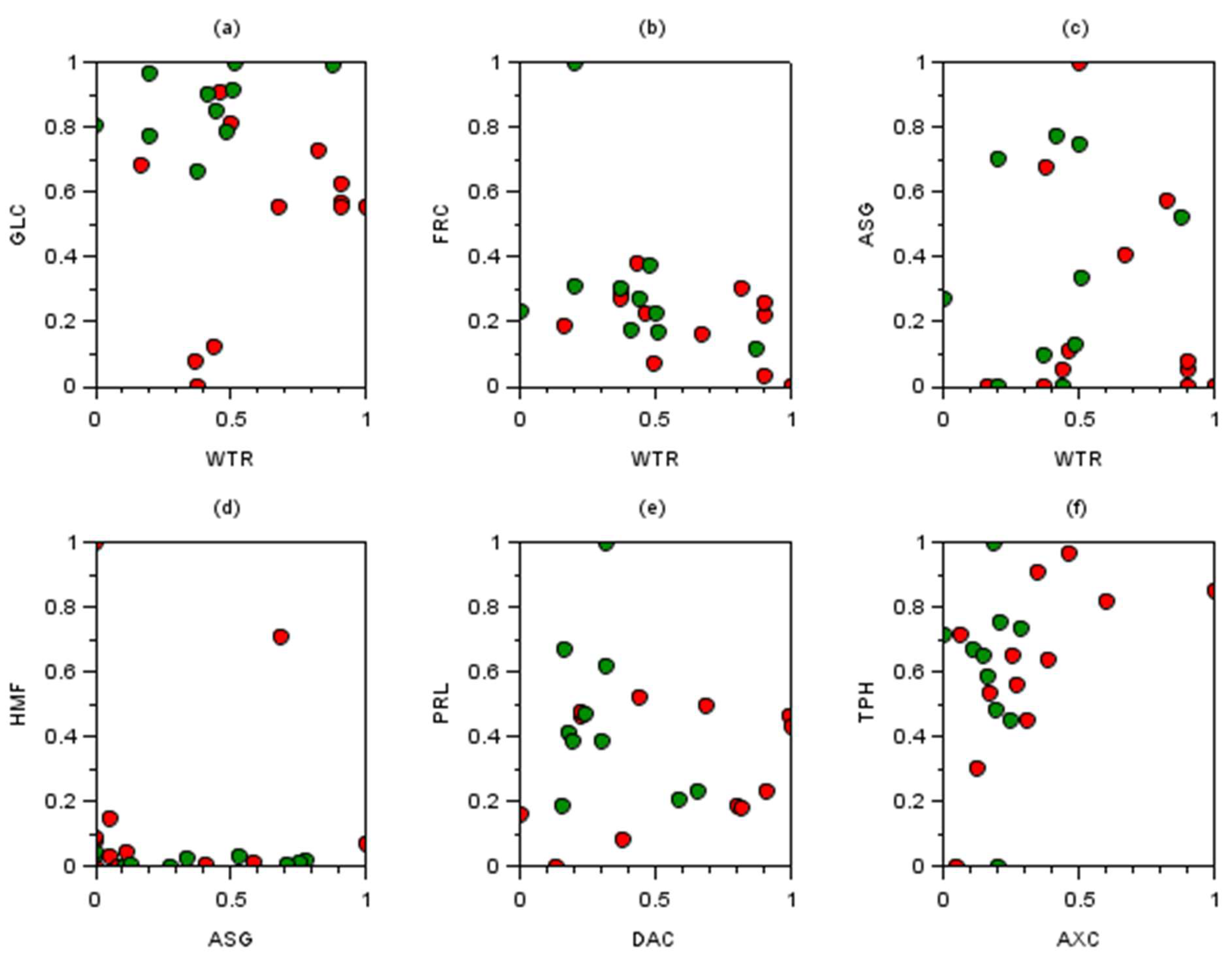
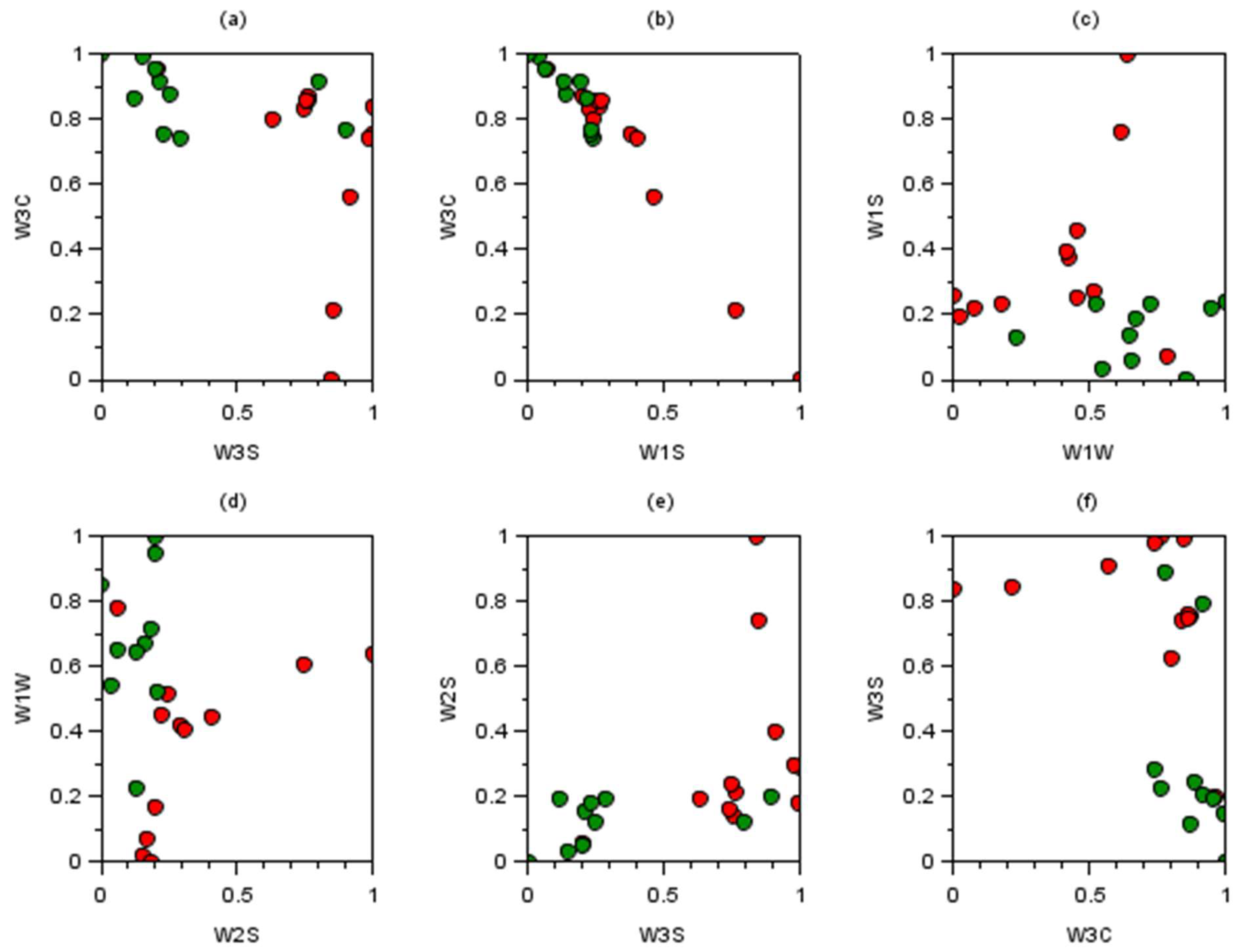
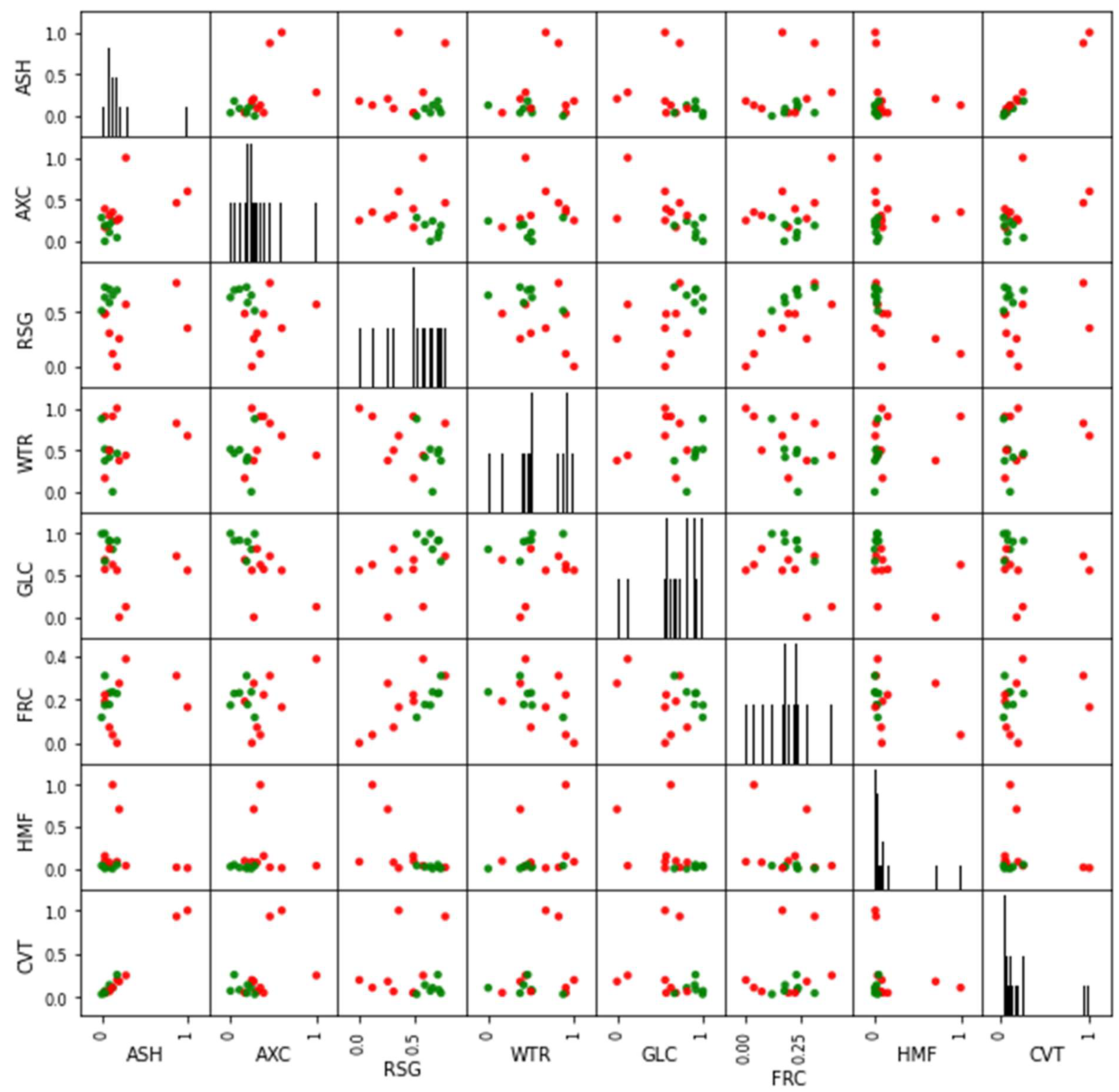
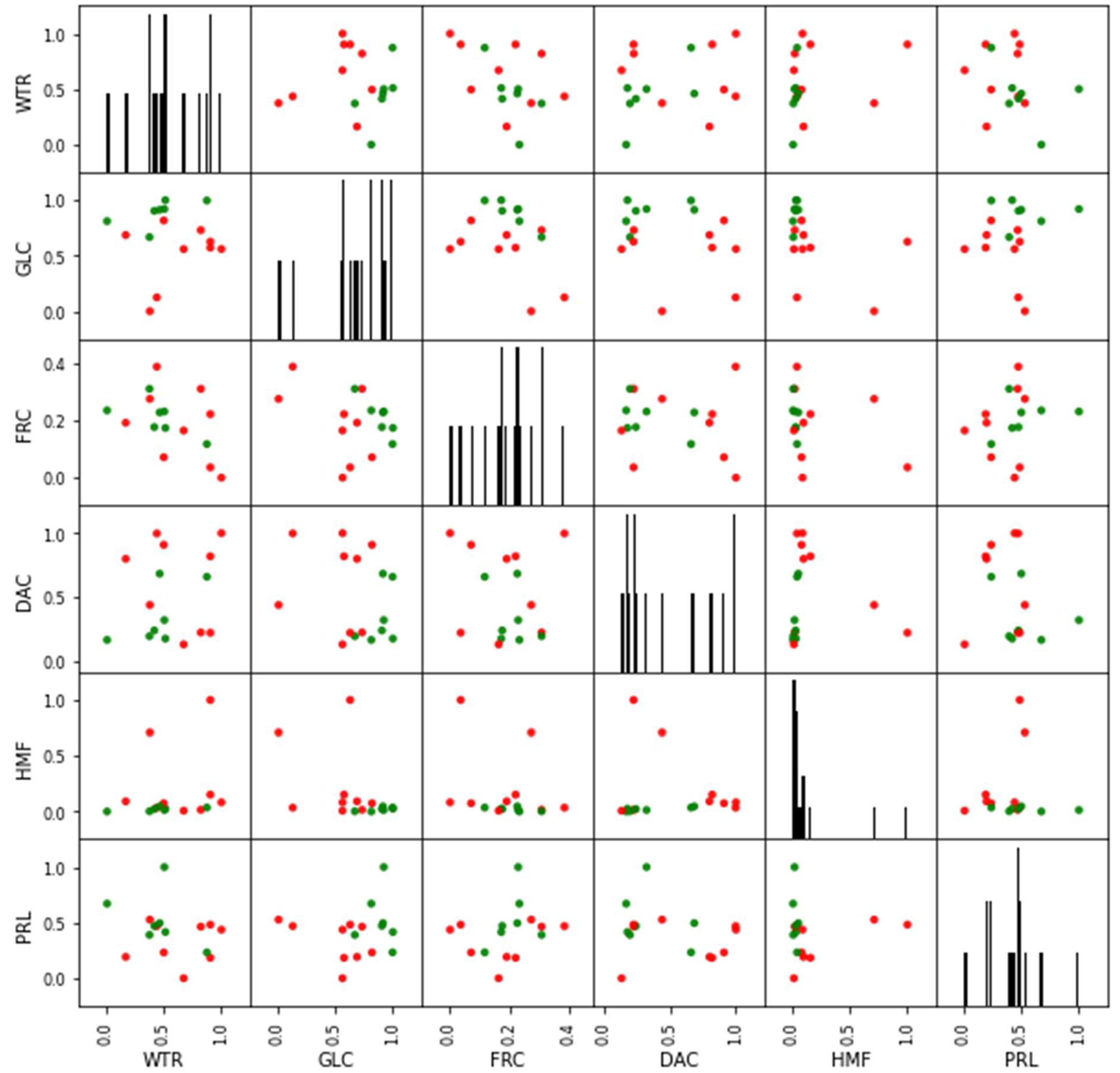
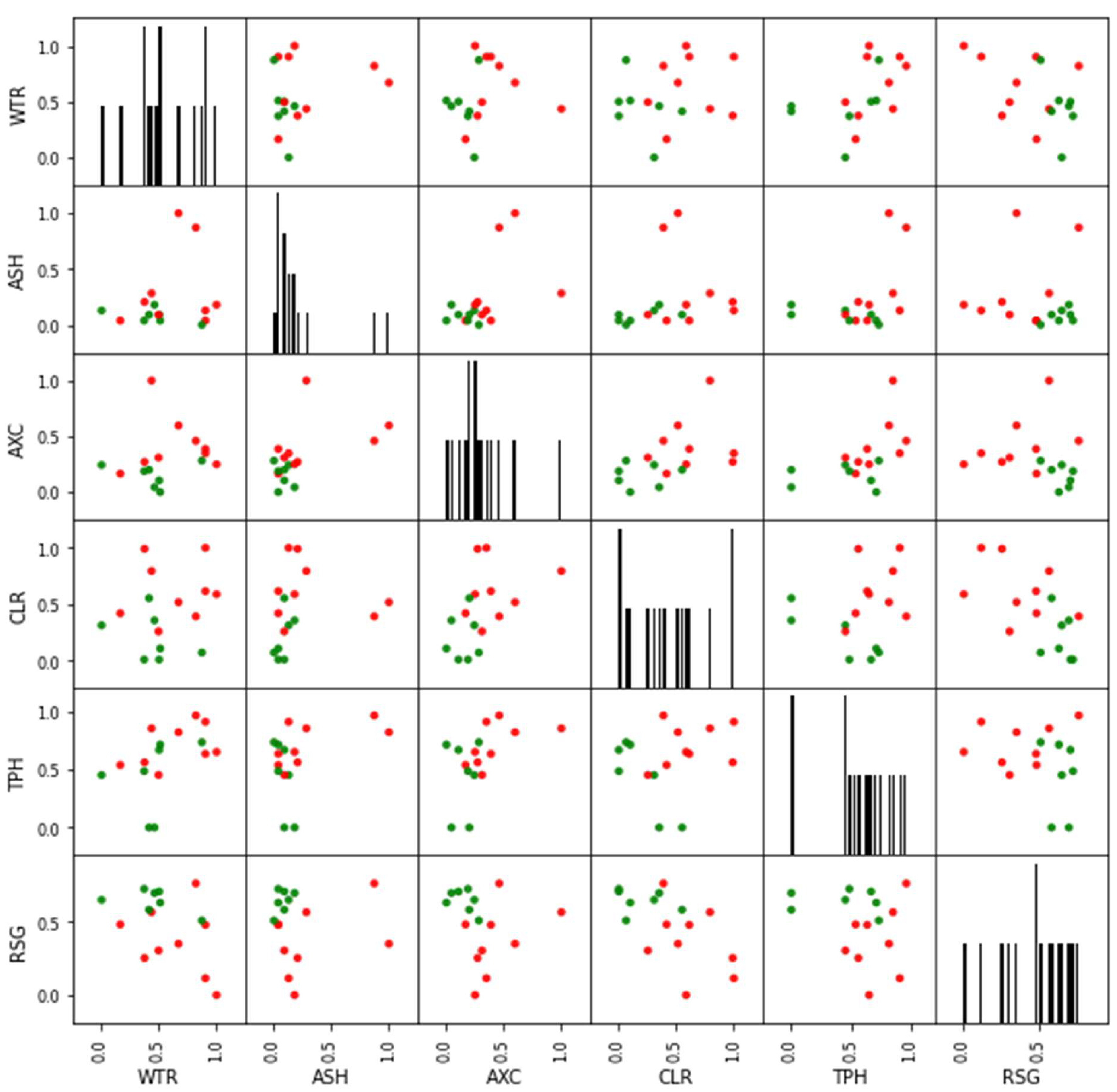
4.1. Feature Discovery for Honeybee from Panama Classification
4.2. Decision Tree Classifiers
4.2.1. DTC Based-On Physico-Chemical Features
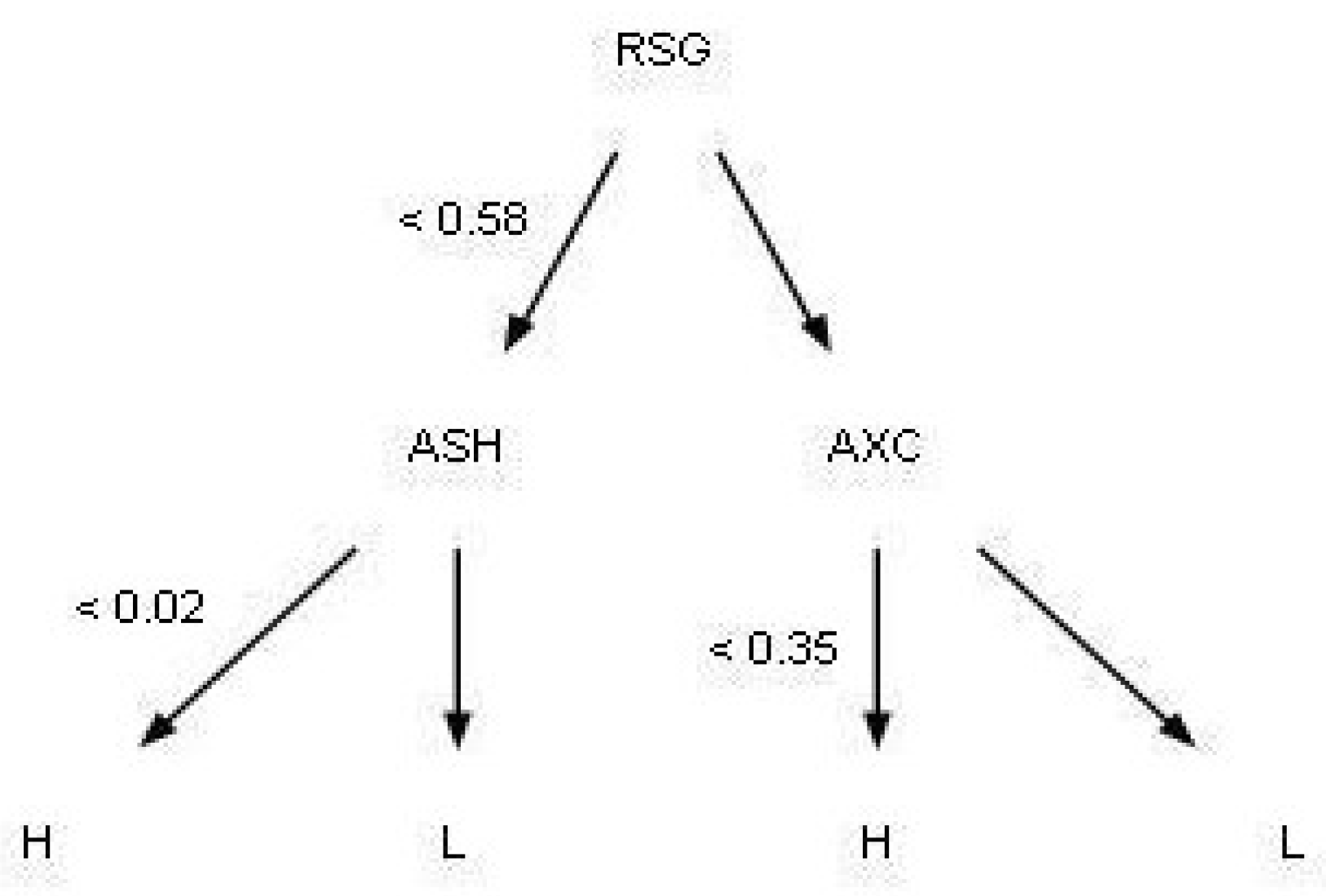
- First Layer: Root Node.
- Conditional Branching: Is the value of RSG below 0.58?
- If “yes”: Is the value of ASH below a certain threshold?
- If ASH < 0.02 then the honey sample is likely HL else LL.
- If “no”: Is the value of AXC below a certain threshold?
- If AXC < 0.35 then the honey sample is likely HL else LL.
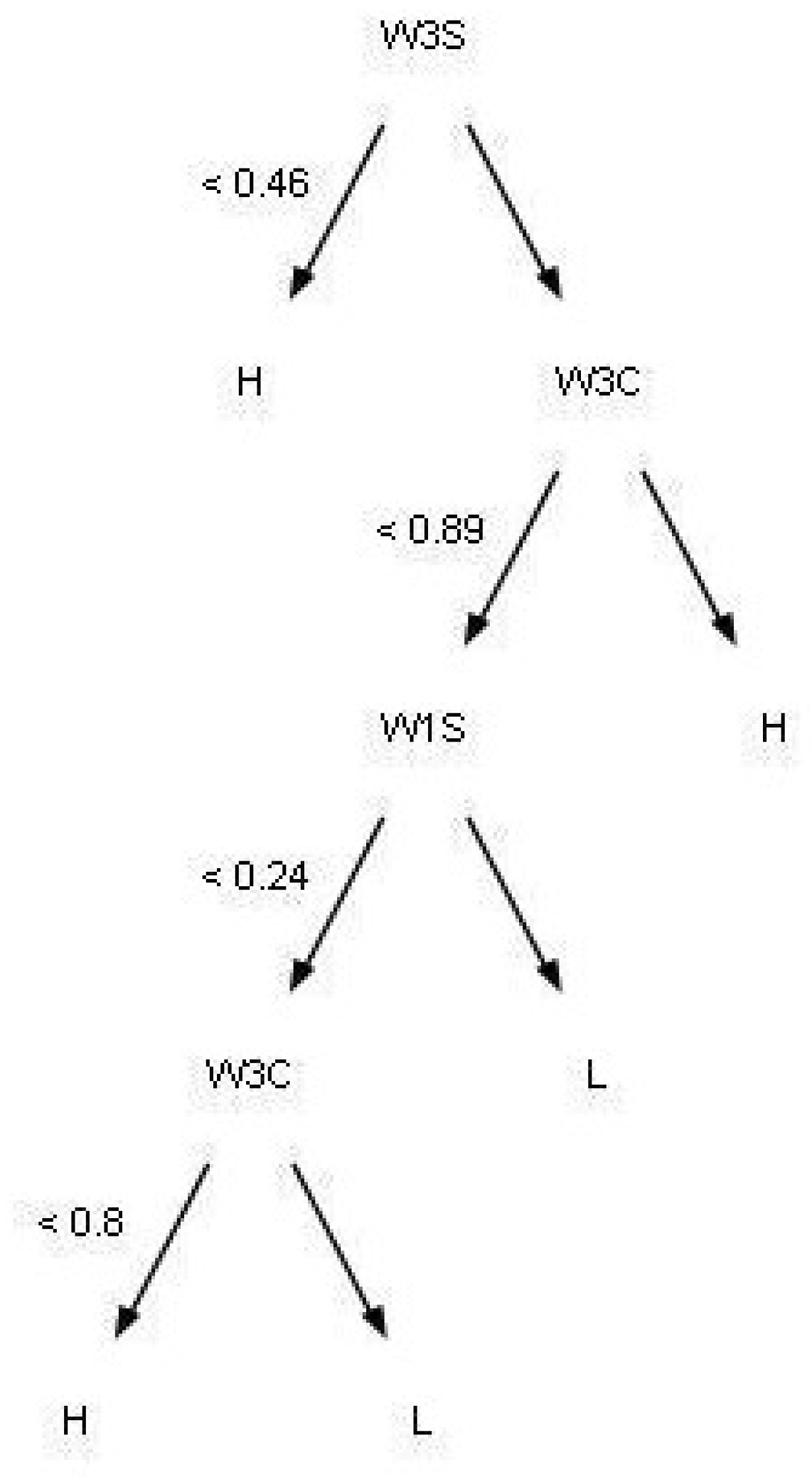
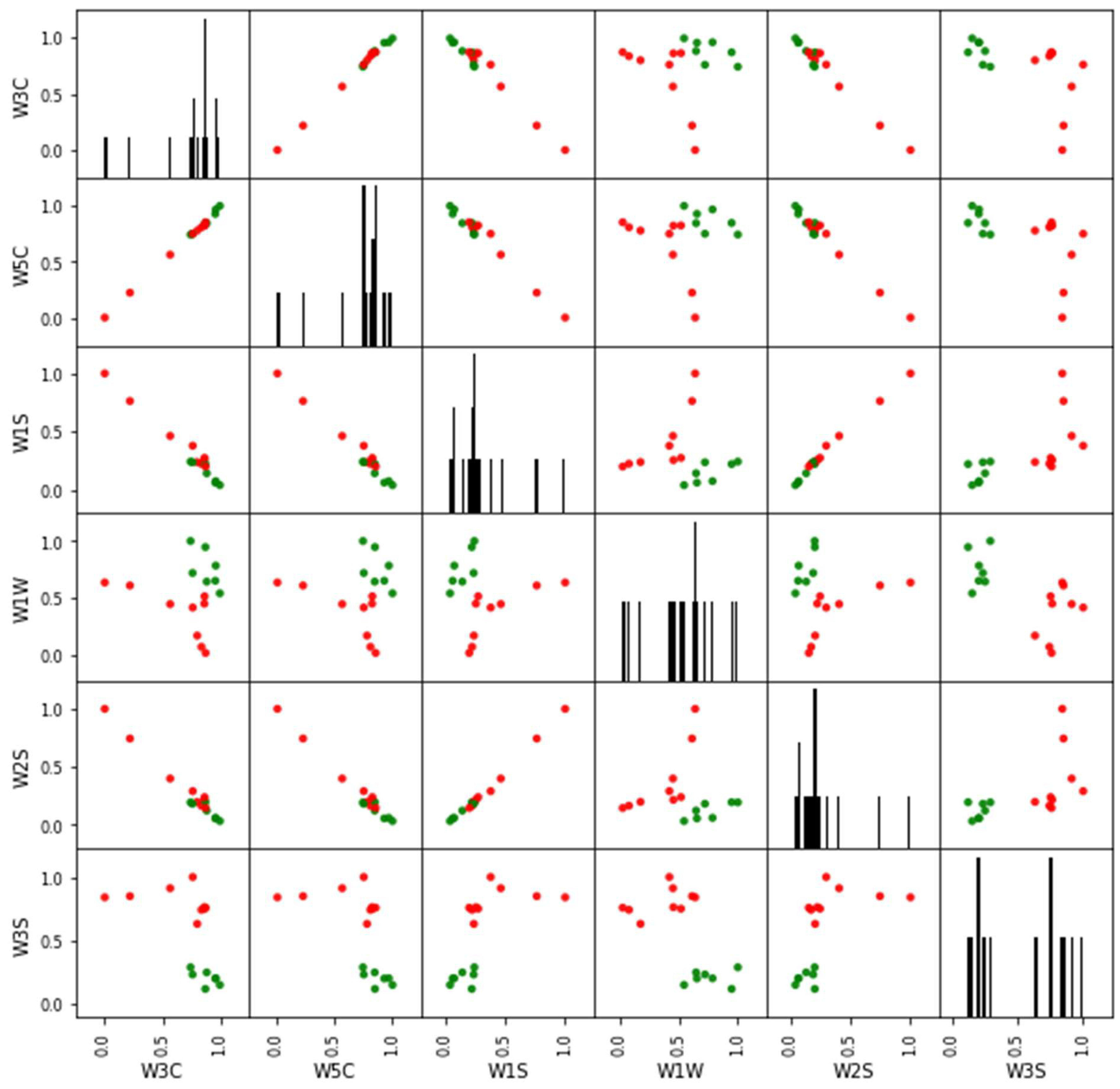
4.2.2. DTC Based-On e-Nose Features
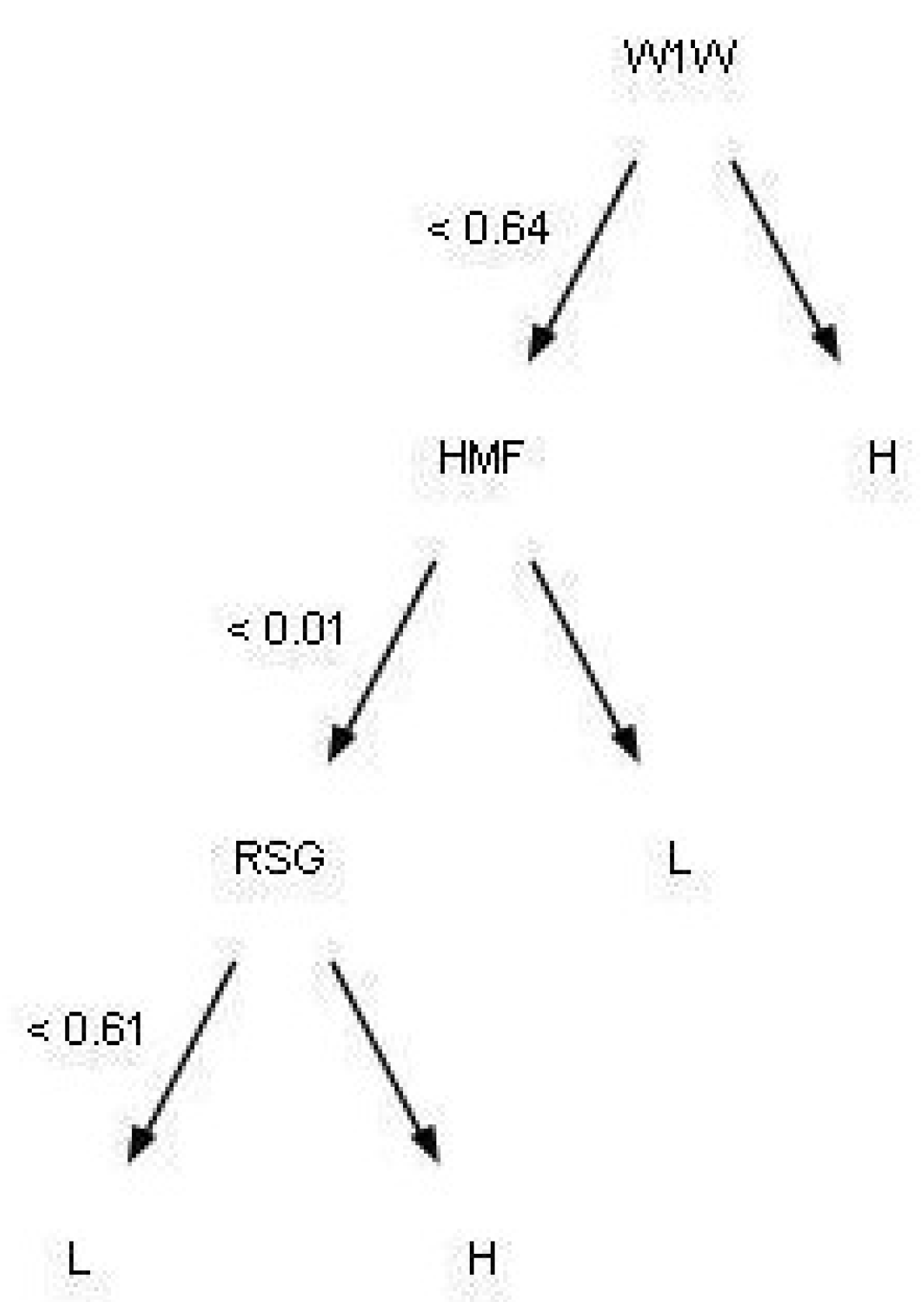
4.2.3. DTC Based-On Hybrid Features
5. Results
6. Discussion
Author Contributions
Funding
Data Availability Statement
Acknowledgments
Conflicts of Interest
Abbreviations
References
- Da Silva, P.M.; Gauche, C.; Gonzaga, L.V.; Costa, A.C.O.; Fett, R. Honey: Chemical composition, stability and authenticity. Food Chem. 2016, 196, 309–323, Elsevier Ltd. [Google Scholar] [CrossRef] [PubMed]
- Ruoff, K.; Luginbühl, W.; Künzli, R.; Iglesias, M.T.; Bogdanov, S.; Bosset, J.O.; von der Ohe, K.; von der Ohe, W.; Amadò, R. Authentication of the Botanical and Geographical Origin of Honey by Mid-Infrared Spectroscopy. J. Agric. Food Chem. 2006, 54, 6873–6880. [Google Scholar] [CrossRef] [PubMed]
- Ruiz-Matute, A.I.; Rodríguez-Sánchez, S.; Sanz, M.L.; Martínez-Castro, I. Detection of adulterations of honey with high fructose syrups from inulin by GC analysis. J. Food Compos. Anal. 2010, 23, 273–276. [Google Scholar] [CrossRef]
- Angiogi, R.; Morrin, A.; White, B. Advantages of a Multifaceted Characterization of Honey, Illustrated with Irish Honey Marketed as Heather Honey. ACS Food Sci. Technol. 2024, 4, 606–616. [Google Scholar] [CrossRef]
- Zuluaga, C.; Díaz, A.; Quicazán, M. Nariz Electrónica. Fundamentos, Manejo de Datos y Aplicación en Productos Apícolas (Primera Edición); Universidad Nacional de Colombia: Bogotá, Colombia, 2014. [Google Scholar]
- Mateo, F.; Tarazona, A.; Mateo, E.M. Comparative Study of Several Machine Learning Algorithms for Classification of Unifloral Honeys. Foods 2021, 10, 1543. [Google Scholar] [CrossRef]
- Maione, C.; Barbosa, F.; Barbosa, R.M. Predicting the botanical and geographical origin of honey with multivariate data analysis and machine learning techniques: A review. Comput. Electron. Agric. 2019, 157, 436–446. [Google Scholar] [CrossRef]
- Pacholczyk-Sienicka, B.; Ciepielowski, G.; Modranka, J.; Bartosik, T.; Albrecht, Ł. Classification of Polish Natural Bee Honeys Based on Their Chemical Composition. Molecules 2022, 27, 4844. [Google Scholar] [CrossRef]
- Sharin, S.N.; Sani, M.S.A.; Jaafar, M.A.; Yuswan, M.H.; Kassim, N.K.; Manaf, Y.N.; Wasoh, H.; Zaki, N.N.M.; Hashim, A.M. Discrimination of Malaysian stingless bee honey from different entomological origins based on physicochemical properties and volatile compound profiles using chemometrics and machine learning. Food Chem. 2021, 346, 128654. [Google Scholar] [CrossRef]
- Ahmed, E. Detection of honey adulteration using machine learning. PLoS Digit. Health 2024, 3, e0000536. [Google Scholar] [CrossRef]
- Mohammed, M.E.A. Factors Affecting the Physicochemical Properties and Chemical Composition of Bee’s Honey. Food Rev. Int. 2022, 38, 1330–1341. [Google Scholar] [CrossRef]
- James, G.; Witten, D.; Hastie, T.; Tibshirani, R. An Introduction to Statistical Learning; Springer: New York, NY, USA, 2013; Volume 103. [Google Scholar] [CrossRef]
- Justavino, A.M.; Gamboa, W.G. Situación actual y perspectivas de la apicultura en Panamá. Acta Académica 2020, 38, 77–93. [Google Scholar]
- Roubik, D.W. An apibotanical study of Panama: Harvest and pollen sources. J. Apic. Res. 1984, 23, 150–158. [Google Scholar]
- AOAC. Methods of Analysis; AOAC International: Washington, DC, USA, 2005. [Google Scholar]
- Bognadov, S.; Martin, P.; Lüllmann, C. Harmonized Methods of the European Honey Commission. Apidologie 2004, 35, S38–S81. [Google Scholar]
- Huang, D.; Boxin, O.U.; Prior, R.L. The chemistry behind antioxidant capacity assays. J. Agric. Food Chem. 2005, 53, 1841–1856. [Google Scholar] [CrossRef] [PubMed]
- Silici, S.; Sagdic, O.; Ekici, L. Total phenolic content, antiradical, antioxidant and antimicrobial activities of Rhododendron honeys. Food Chem. 2010, 121, 238–243. [Google Scholar] [CrossRef]
- Codex Alimentarius. Codex Standard for Honey; Codex Alimentarius: Rome, Italy, 2001. [Google Scholar]
- Alqarni, A.S.; Owayss, A.A.; Mahmoud, A.A.; Hannan, M.A. Mineral content and physical properties of local and imported honeys in Saudi Arabia. J. Saudi Chem. Soc. 2014, 18, 618–625. [Google Scholar] [CrossRef]
- Al-Farsi, M.; Amri, A.; Hadhrami, A.; Belushi, S. Color, flavonoids, phenolics and antioxidants of Omani honey. Heliyon 2018, 4, e00874. [Google Scholar] [CrossRef]
- Kavanagh, S.; Gunnoo, J.; Marques Passos, T.; Stout, J.C.; White, B. Physicochemical properties and phenolic content of honey from different floral origins and from rural versus urban landscapes. Food Chem. 2019, 272, 66–75. [Google Scholar] [CrossRef]
- Guler, A.; Garipoglu, A.V.; Onder, H.; Biyik, S.; Kocaokutgen, H.; Ekinci, D. Comparing Biochemical Properties of Pure and Adulterated Honeys Produced by Feeding Honeybees (Apis mellifera L.) Colonies with Different Levels of Industrial Commercial Sugars. Kafkas Univ. Vet. Fak. Derg. 2017, 23, 259–268. [Google Scholar] [CrossRef]
- Rivera-Mondragón, A.; Marrone, M.; Bruner-Montero, G.; Gaitán, K.; de Núñez, L.; Otero-Palacio, R.; Añino, Y.; Wcislo, W.T.; Martínez-Luis, S.; Fernández-Marín, H. Assessment of the quality, chemometric and pollen diversity of Apis mellifera honey from different seasonal harvests in Panama. Foods 2023, 12, 3656. [Google Scholar] [CrossRef]
- Sharma, K.; Sharma, K.; Kumar, R. A review of physico-chemical and biological properties of honey. J. Entomol. Zool. Stud. 2024, 12, 153–161. [Google Scholar] [CrossRef]
- Tafere, D.A. Chemical composition and uses of honey: A review. J. Food Sci. Nutr. Res. 2021, 4, 194–201. [Google Scholar] [CrossRef]
- Gürbüz, S.; Kıvrak, Ş. Comparative evaluation of machine learning models for discriminating honey geographic origin based on altitude-dependent mineral profiles. Appl. Sci. 2025, 15, 11859. [Google Scholar] [CrossRef]
- Zhang, X.-H.; Gu, H.-W.; Li, R.-J.; Qing, X.-D.; Nie, J.-F. A comprehensive review of the current trends and recent advancements on the authenticity of honey. Food Chem. X 2023, 19, 100850. [Google Scholar] [CrossRef]
- Prerna, C.; Shanfeng, H.; Matthew, P.; Sadaat, A.; Dominykas, B. Honey authentication using AI-based pollen analysis: A UK review. Br. Food J. 2025. advance online publication. [Google Scholar]
- Jović, M.; Ristivojević, P.; Lušić, D.; Milojković-Opsenica, D.; Trifković, J. Authenticity assessment of honeydew honey based on phytochemical profile. J. Food Meas. Charact. 2025, 19, 2449–2460. [Google Scholar] [CrossRef]



| Origin | Geographical Zone | Subregion | Altitude Range (m a.s.l) | Harvest Date |
|---|---|---|---|---|
| El Cabrito | Lowland | LL-1 | 5–191 | 14 February |
| El Cabrito | Lowland | LL-1 | 5–191 | 26 February |
| El Cabrito | Lowland | LL-1 | 5–191 | 3 April |
| Progreso | Lowland | LL-1 | 5–191 | 27 March |
| Alanje | Lowland | LL-1 | 5–191 | 15 February |
| Boca del Monte | Lowland | LL-1 | 5–191 | 9 April |
| San Carlitos | Lowland | LL-1 | 5–191 | 4 April |
| Macano | Lowland | LL-1 | 5–191 | 27 February |
| Bongo | Lowland | LL-2 | 191–378 | 10 February |
| Exquicito | Lowland | LL-3 | 378–565 | 12 April |
| Exquicito | Lowland | LL-3 | 378–565 | 11 April |
| Cochea | Highland | HL-1 | 939–1126 | 25 February |
| Rovira | Highland | HL-1 | 939–1126 | 10 March |
| Palmira | Highland | HL-1 | 939–1126 | 5 March |
| Bocalatún | Highland | HL-2 | 1126–1313 | 2 April |
| Aguacate | Highland | HL-2 | 1126–1313 | 7 March |
| Volcán | Highland | HL-2 | 1126–1313 | 7 March |
| Potrerillos | Highland | HL-3 | 1126–1313 | 20 February |
| Potrerillos | Highland | HL-3 | 1313–1500 | 30 March |
| Feria de Boquete | Highland | HL-3 | 1313–1500 | 16 April |
| Feria de Boquete | Highland | HL-3 | 1313–1500 | 16 April |
| Feria de Boquete | Highland | HL-3 | 1313–1500 | 6 April |
| Method | Reference |
|---|---|
| Water | AOAC 969.38B |
| pH | AOAC 962.19 |
| Free and total acidity | |
| Carbohydrates (glucose, sucrose, reduced sugars) | AOAC 983.22 |
| Ash | AOAC 920.18 |
| Conductivity | Harmonized methods of the European honey commission |
| Color | Direct measurement, Pfund C-221 colorimeter (Hanna instruments, USA) |
| Diastase | Harmonized methods of the European honey commission |
| HMF | Harmonized methods of the European honey commission |
| Phenols | Folin-Ciocalteu method |
| Antioxidant capacity | Trolox Equivalent Antioxidant Capacity Method |
| L-Proline | AOAC 979.20 |
| LL-1 | LL-2 | LL-3 | HL-1 | HL-2 | HL-3 | |
|---|---|---|---|---|---|---|
| Water (%) | 18.02 ± 0.90 | 17.61 ± 1.34 | 18.10 ± 1.54 | 16.90 ± 1.01 | 17.02 ± 0.39 | 17.59 ± 1.00 |
| pH | 4.08 ± 0.49 | 3.75 ± 0.02 | 3.78 ± 0.07 | 4.11 ± 0.29 | 3.81 ± 0.15 | 3.83 ± 0.11 |
| Free acidity (meq-kg) | 37.44 ± 14.05 | 38.62 ± 5.70 | 40.99 ± 6.79 | 30.95 ± 7.63 | 34.51 ± 8.73 | 35.63 ± 7.03 |
| Total acidity (meq-kg) | 40.06 ± 13.68 | 40.45 ± 5.52 | 42.74 ± 6.50 | 32.44 ± 7.67 | 36.63 ± 9.12 | 37.96 ± 6.94 |
| Ash (%) | 0.47 ± 0.30 | 0.16 ± 0.02 | 0.18 ± 0.06 | 0.21 ± 0.06 | 0.17 ± 0.03 | 0.18 ± 0.04 |
| Conductivity (µS/cm) | 1029.63 ± 714.72 | 332.67 ± 15.95 | 353.00 ± 51.12 | 493.00 ± 173.87 | 369.75 ± 114.00 | 382.38 ± 61.52 |
| Antioxidant capacity (mmol/kg) | 0.83 ± 0.51 | 0.60 ± 0.20 | 0.49 ± 0.26 | 0.25 ± 0.23 | 0.41 ± 0.03 | 0.42 ± 0.14 |
| Color (mm Pfund) | 82.88 ± 17.18 | 73.67 ± 10.02 | 68.83 ± 17.62 | 64.00 ± 7.47 | 60.75 ± 14.16 | 52.00 ± 1.58 |
| Glucose (%) | 25.98 ± 3.99 | 29.16 ± 1.54 | 28.07 ± 0.89 | 31.87 ± 1.19 | 30.53 ± 1.30 | 32.00 ± 1.16 |
| Fructose (%) | 41.05 ± 6.44 | 39.71 ± 3.58 | 42.61 ± 1.67 | 41.98 ± 1.52 | 44.51 ± 2.84 | 51.83 ± 17.72 |
| Apparent sucrose (%) | 1.58 ± 1.80 | 1.63 ± 2.62 | 0.21 ± 0.19 | 1.12 ± 0.54 | 1.02 ± 1.73 | 2.46 ± 1.32 |
| Reduced sugars (%) | 67.03 ± 5.05 | 68.87 ± 2.15 | 70.68 ± 0.99 | 73.85 ± 0.70 | 75.04 ± 1.97 | 76.54 ± 4.69 |
| Phenols (mg-100 g) | 261.06 ± 59.50 | 194.53 ± 30.71 | 178.29 ± 56.58 | 142.61 ± 121.20 | 185.83 ± 137.58 | 247.88 ± 15.91 |
| Diastase activity (DN) | 33.63 ± 19.49 | 50.16 ± 2.74 | 41.85 ± 11.72 | 26.65 ± 13.89 | 24.43 ± 9.17 | 29.30 ± 8.18 |
| HMF (mg/kg) | 19.65 ± 29.73 | 9.36 ± 3.11 | 7.44 ± 5.88 | 3.10 ± 1.77 | 3.37 ± 1.54 | 2.52 ± 0.98 |
| Proline (mg/kg) | 389.90 ± 115.25 | 302.91 ± 15.70 | 273.45 ± 35.57 | 499.23 ± 78.82 | 370.79 ± 82.99 | 519.12 ± 201.29 |
Disclaimer/Publisher’s Note: The statements, opinions and data contained in all publications are solely those of the individual author(s) and contributor(s) and not of MDPI and/or the editor(s). MDPI and/or the editor(s) disclaim responsibility for any injury to people or property resulting from any ideas, methods, instructions or products referred to in the content. |
© 2025 by the authors. Licensee MDPI, Basel, Switzerland. This article is an open access article distributed under the terms and conditions of the Creative Commons Attribution (CC BY) license (https://creativecommons.org/licenses/by/4.0/).
Share and Cite
De Gracia, A.; Díaz-Moreno, C.; Jiménez, N.; Guevara, R.; Galán, O. Classification of Panamanian Bee Honey by Geographical Origin Based on Physico-Chemical and Aromatic Profiles: An Application Study Using Decision Tree Models. Appl. Sci. 2025, 15, 13164. https://doi.org/10.3390/app152413164
De Gracia A, Díaz-Moreno C, Jiménez N, Guevara R, Galán O. Classification of Panamanian Bee Honey by Geographical Origin Based on Physico-Chemical and Aromatic Profiles: An Application Study Using Decision Tree Models. Applied Sciences. 2025; 15(24):13164. https://doi.org/10.3390/app152413164
Chicago/Turabian StyleDe Gracia, Ashley, Consuelo Díaz-Moreno, Nataly Jiménez, Roberto Guevara, and Omar Galán. 2025. "Classification of Panamanian Bee Honey by Geographical Origin Based on Physico-Chemical and Aromatic Profiles: An Application Study Using Decision Tree Models" Applied Sciences 15, no. 24: 13164. https://doi.org/10.3390/app152413164
APA StyleDe Gracia, A., Díaz-Moreno, C., Jiménez, N., Guevara, R., & Galán, O. (2025). Classification of Panamanian Bee Honey by Geographical Origin Based on Physico-Chemical and Aromatic Profiles: An Application Study Using Decision Tree Models. Applied Sciences, 15(24), 13164. https://doi.org/10.3390/app152413164