


Low-Cost Optical Displacement Measurement for SHM Applications Supported by CNN Object Detection



Abstract
1. Introduction
2. General Considerations
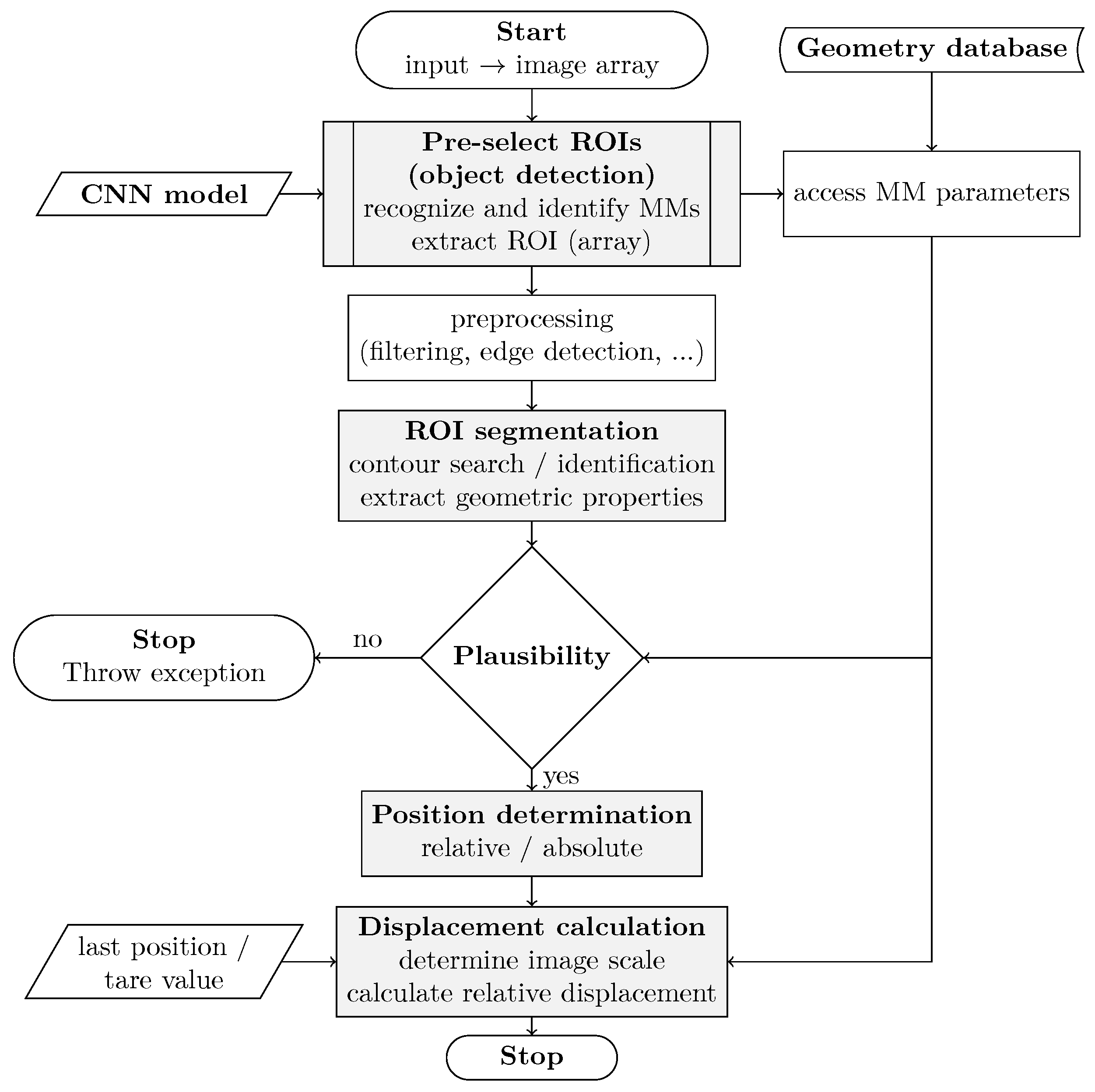
- Pre-selection of regions of interest (ROIs) based on object detection.
- ROI segmentation.
- Relative and absolute position determination.
- Displacement calculation.
2.1. Pre-Select ROIs Based on Object Detection
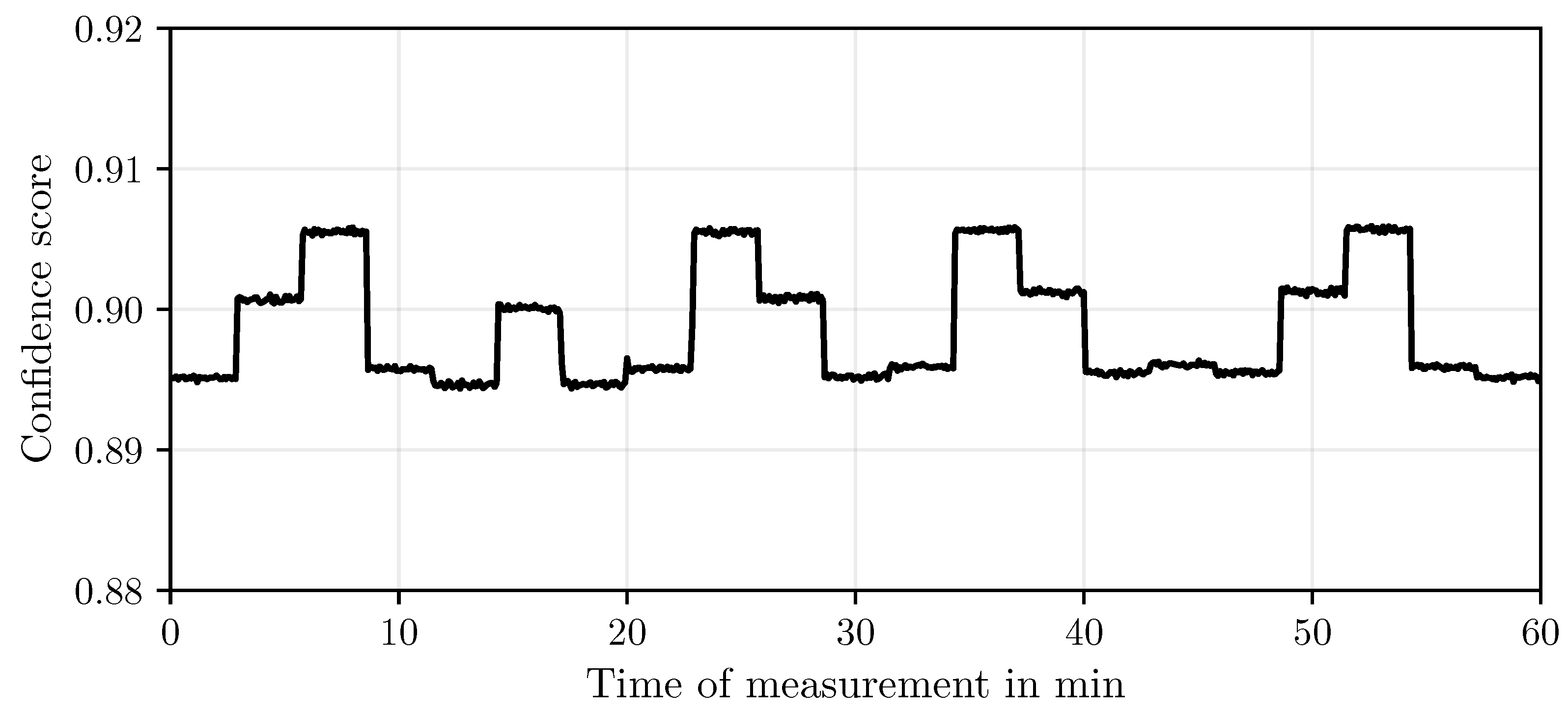
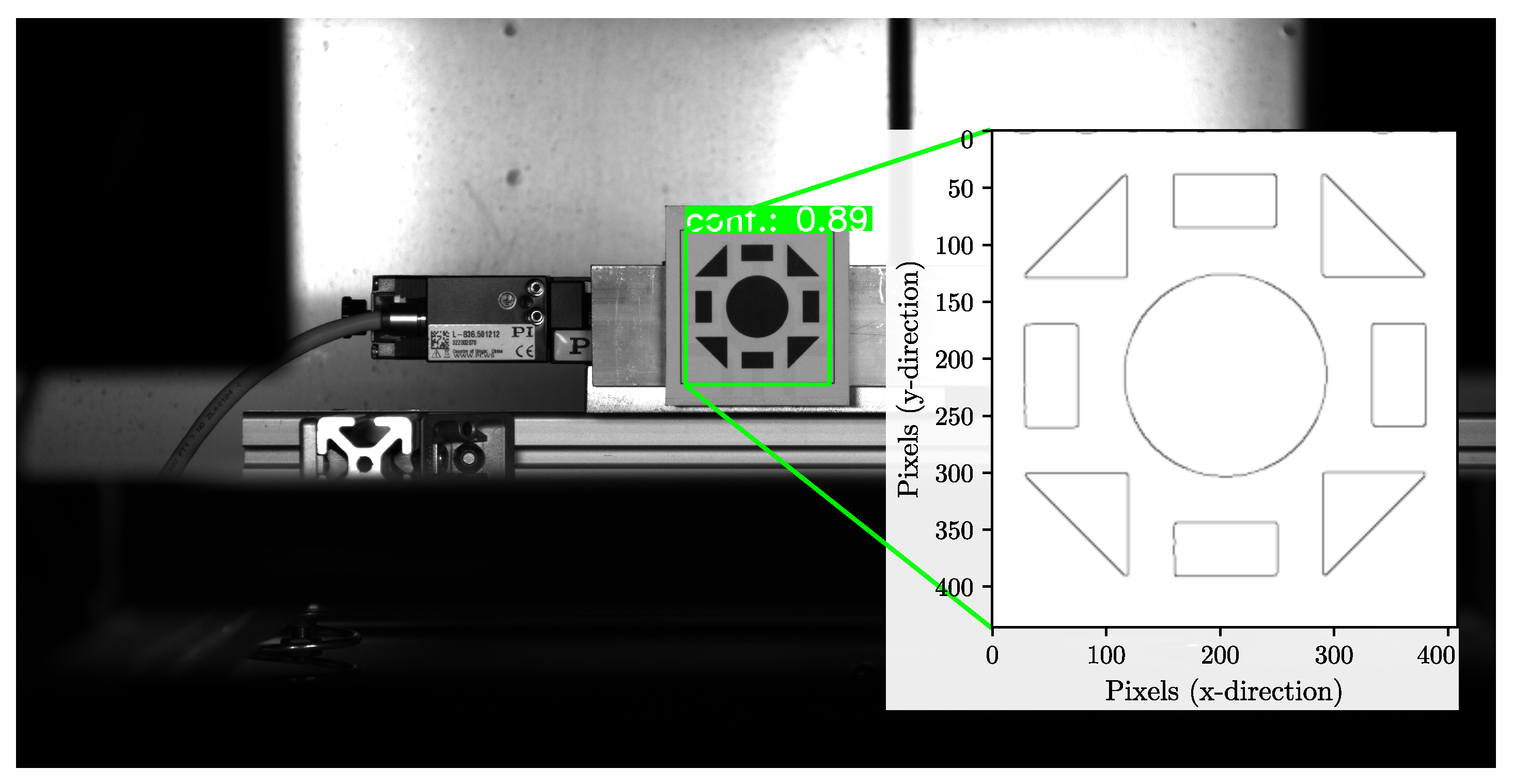
- IDs of detected objects,
- Associated confidence scores,
- Coordinates of bounding boxes, and
- Coordinates of centroids.
2.2. ROI Segmentation
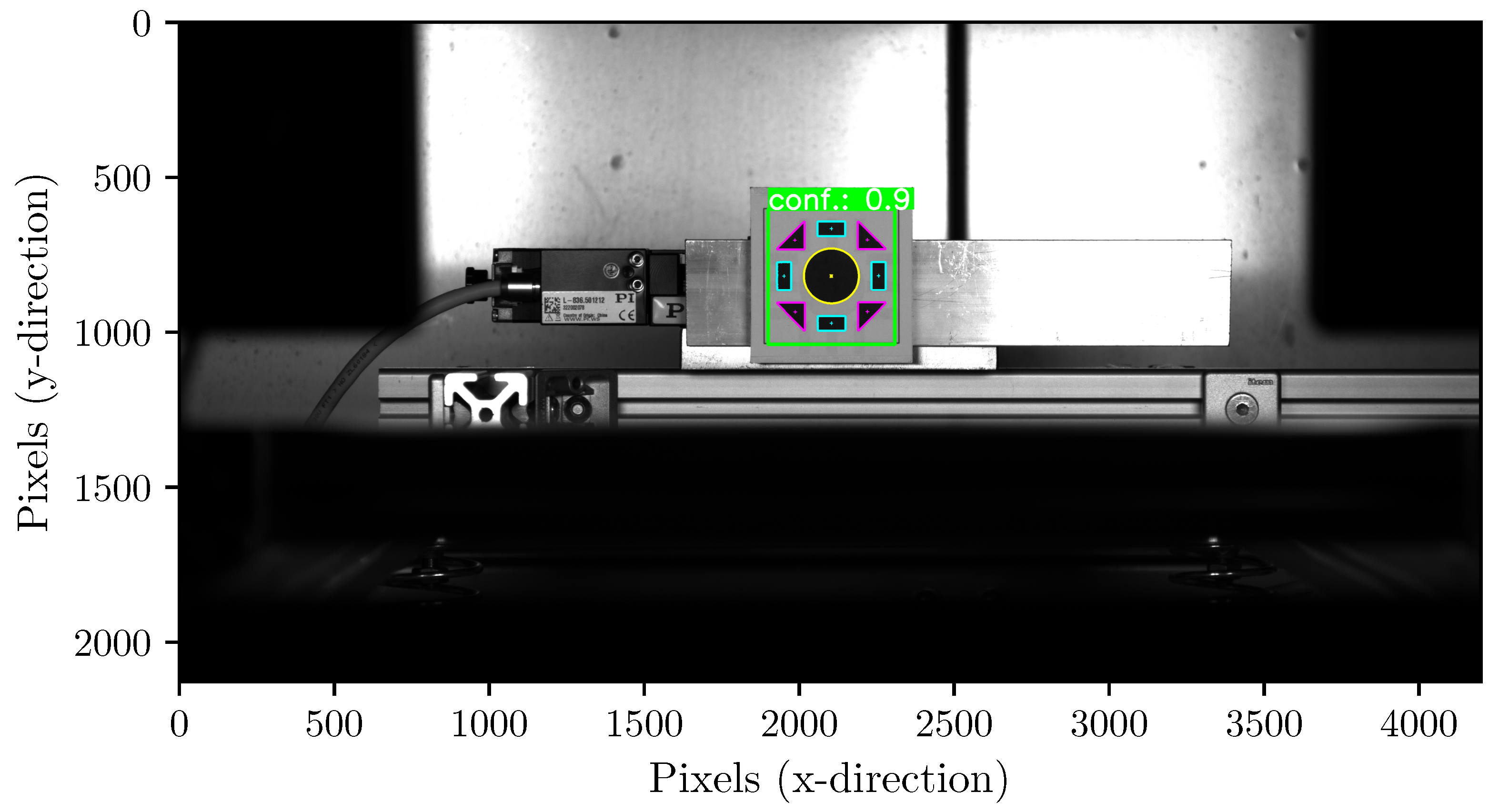
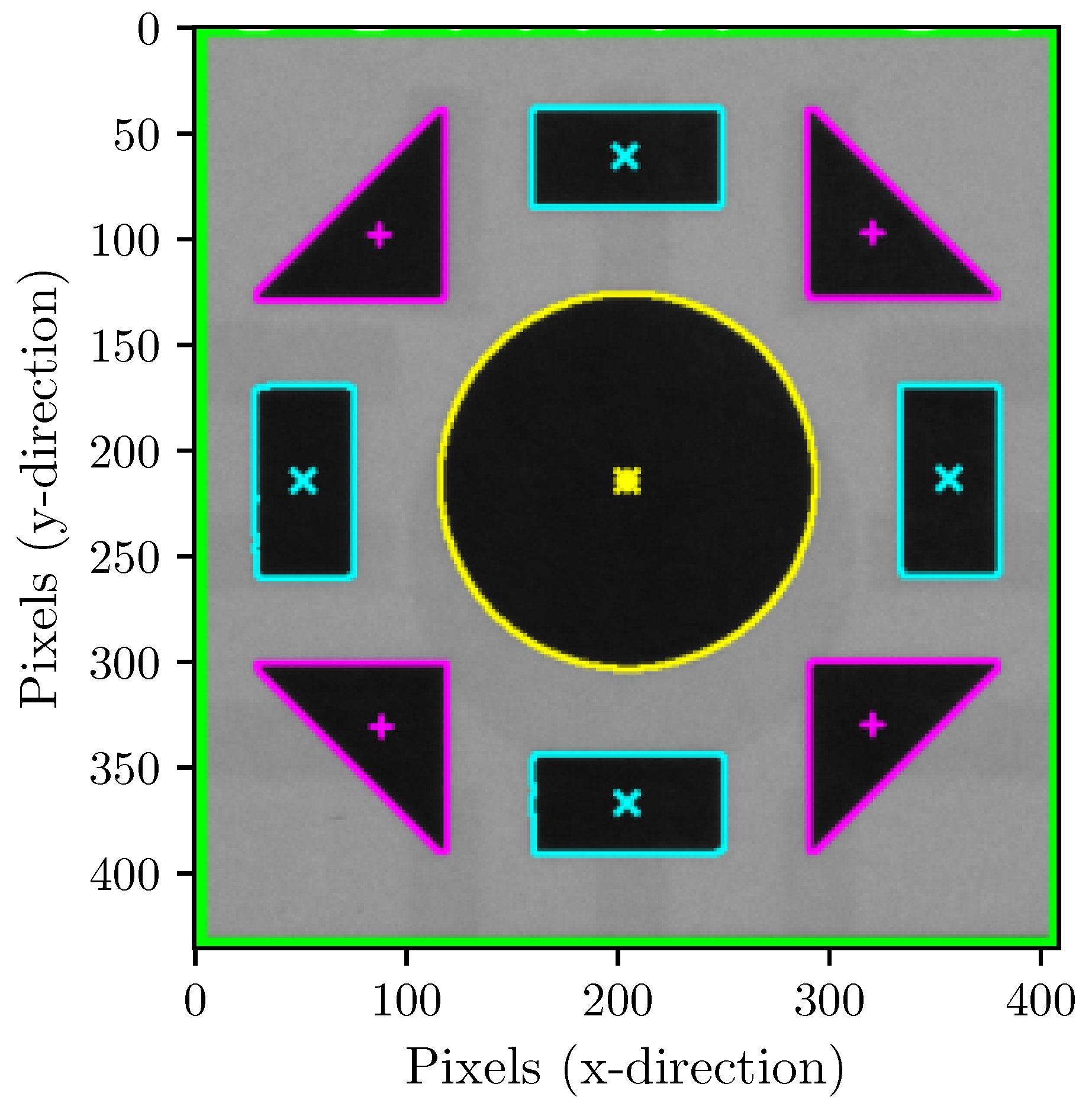
- Recognized contours,
- Classification of contours into geometric elements, and
- Geometric properties of the elements (e.g., coordinates of geometric centers, surface area).
2.3. Relative/Absolute Position Determination
2.4. Displacement Calculation
3. Experimental Investigations
3.1. Experimental Design
3.1.1. Measurement Motive
3.1.2. Test Setup
3.2. Minimal Implementation of the Algorithm
- ultralytics (8.3.99)
- torch (2.6.0+cu126)
- opencv-python (4.10.0.84)
- numpy (1.26.4)
3.2.1. CNN Object Detection
3.2.2. ROI Segmentation
- General
- Contours with an area smaller than 100 pixels were ignored to reduce noise-related false detections. This threshold should be adjusted according to the expected minimum size of the geometric shapes.
- Circles
- Circularity was calculated aswhere A is the area and P is the perimeter of the contour [57]. A perfect circle has a circularity of 1. Shapes with circularity above 0.85 were classified as circles, based on empirical tuning for the test setup.
- Polygons
- Triangles and rectangles were identified using the Ramer-Douglas-Peucker algorithm, implemented via approxPolyDP() [58,59], which approximates a curve by reducing the number of points. The approximation tolerance was set to 10% of the contour perimeter. The number of corners in each polygon was determined from the resulting array of approximated points. This method is robust for the current setup, though alternative corner detection algorithms may be preferred for different applications.
3.2.3. Relative/Absolute Position Determination
3.2.4. Image Scale Determination
- Area
- The simplest method is to compare the actual size of the geometric shapes on the MM with the size of the enclosed area of the classified contours:where is the contour area in pixels and A is the actual area of the corresponding shape.
- Circles
- Circular shapes can be used by comparing parameters such as radius, circumference, or area. Here, the radius was determined using the OpenCV function minEnclosingCircle() on contours classified as circles. The actual circle radius is 10 mm.
- Polygons
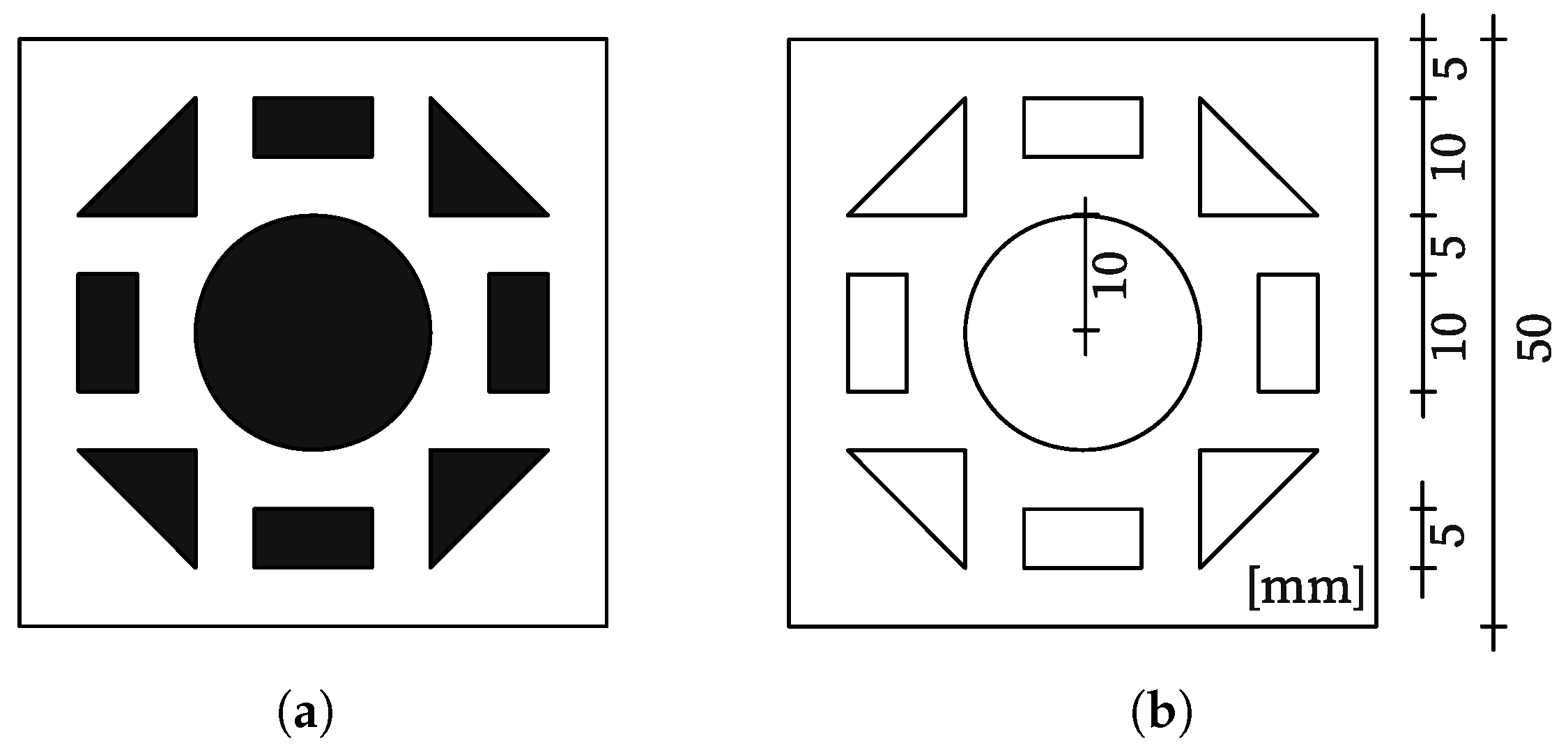
- In this approach, the image scale is determined by comparing the distances between centroids of the triangles and rectangles. The distances between the triangle centroids are 26.667 mm for adjacent elements and 37.712 mm for opposite elements. For rectangles, the distances are 24.749 mm for adjacent elements and 35 mm for opposite elements. The overall scale factor is calculated using the mean of all respective shape ratios.
3.2.5. Displacement Measurement
4. Results
4.1. Object Detection
4.2. Filtering and Edge Detection
4.3. Segmentation
4.4. Determination of Motive Position
4.5. Determination of the Image Scale
4.6. Displacement Measurement
5. Discussion
6. Conclusions
Author Contributions
Funding
Data Availability Statement
Conflicts of Interest
References
- Nithin, T.A. Real-time structural health monitoring: An innovative approach to ensuring the durability and safety of structures. I-Manag. J. Struct. Eng. 2022, 11, 43. [Google Scholar] [CrossRef]
- Brownjohn, J. Structural health monitoring of civil infrastructure. Philos. Trans. R. Soc. A Math. Phys. Eng. Sci. 2007, 365, 589–622. [Google Scholar] [CrossRef]
- Aktan, E.; Bartoli, I.; Glišić, B.; Rainieri, C. Lessons from Bridge Structural Health Monitoring (SHM) and Their Implications for the Development of Cyber-Physical Systems. Infrastructures 2024, 9, 30. [Google Scholar] [CrossRef]
- Farrar, C.R.; Worden, K. An introduction to structural health monitoring. Philos. Trans. R. Soc. A Math. Phys. Eng. Sci. 2007, 365, 303–315. [Google Scholar] [CrossRef]
- Rabi, R.R.; Vailati, M.; Monti, G. Effectiveness of Vibration-Based Techniques for Damage Localization and Lifetime Prediction in Structural Health Monitoring of Bridges: A Comprehensive Review. Buildings 2024, 14, 1183. [Google Scholar] [CrossRef]
- Anjum, A.; Hrairi, M.; Aabid, A.; Yatim, N.; Ali, M. Civil Structural Health Monitoring and Machine Learning: A Comprehensive Review. Fract. Struct. Integr. 2024, 18, 43–59. [Google Scholar] [CrossRef]
- Laflamme, S.; Ubertini, F.; Di Matteo, A.; Pirrotta, A.; Perry, M.; Fu, Y.; Li, J.; Wang, H.; Hoang, T.; Glisic, B.; et al. Roadmap on measurement technologies for next generation structural health monitoring systems. Meas. Sci. Technol. 2023, 34, 093001. [Google Scholar] [CrossRef]
- Gharehbaghi, V.R.; Noroozinejad Farsangi, E.; Noori, M.; Yang, T.Y.; Li, S.; Nguyen, A.; Málaga-Chuquitaype, C.; Gardoni, P.; Mirjalili, S. A Critical Review on Structural Health Monitoring: Definitions, Methods, and Perspectives. Arch. Comput. Methods Eng. 2022, 29, 2209–2235. [Google Scholar] [CrossRef]
- Hassani, S.; Dackermann, U. A Systematic Review of Optimization Algorithms for Structural Health Monitoring and Optimal Sensor Placement. Sensors 2023, 23, 3293. [Google Scholar] [CrossRef]
- Kot, P.; Muradov, M.; Gkantou, M.; Kamaris, G.S.; Hashim, K.; Yeboah, D. Recent Advancements in Non-Destructive Testing Techniques for Structural Health Monitoring. Appl. Sci. 2021, 11, 2750. [Google Scholar] [CrossRef]
- Palma, P.; Steiger, R. Structural health monitoring of timber structures–Review of available methods and case studies. Constr. Build. Mater. 2020, 248, 118528. [Google Scholar] [CrossRef]
- Dos Reis, J.; Oliveira Costa, C.; Sá da Costa, J. Strain gauges debonding fault detection for structural health monitoring. Struct. Control Health Monit. 2018, 25, e2264. [Google Scholar] [CrossRef]
- Bolandi, H.; Lajnef, N.; Jiao, P.; Barri, K.; Hasni, H.; Alavi, A.H. A Novel Data Reduction Approach for Structural Health Monitoring Systems. Sensors 2019, 19, 4823. [Google Scholar] [CrossRef] [PubMed]
- Weisbrich, M.; Holschemacher, K.; Bier, T. Comparison of different fiber coatings for distributed strain measurement in cementitious matrices. J. Sens. Sens. Syst. 2020, 9, 189–197. [Google Scholar] [CrossRef]
- Scuro, C.; Lamonaca, F.; Porzio, S.; Milani, G.; Olivito, R. Internet of Things (IoT) for masonry structural health monitoring (SHM): Overview and examples of innovative systems. Constr. Build. Mater. 2021, 290, 123092. [Google Scholar] [CrossRef]
- Kim, J.W.; Choi, H.W.; Kim, S.K.; Na, W.S. Review of Image-Processing-Based Technology for Structural Health Monitoring of Civil Infrastructures. J. Imaging 2024, 10, 93. [Google Scholar] [CrossRef]
- Dong, C.Z.; Catbas, F.N. A review of computer vision–based structural health monitoring at local and global levels. Struct. Health Monit. 2021, 20, 692–743. [Google Scholar] [CrossRef]
- Boursier Niutta, C.; Tridello, A.; Ciardiello, R.; Paolino, D.S. Strain Measurement with Optic Fibers for Structural Health Monitoring of Woven Composites: Comparison with Strain Gauges and Digital Image Correlation Measurements. Sensors 2023, 23, 9794. [Google Scholar] [CrossRef]
- Morgenthal, G.; Eick, J.F.; Rau, S.; Taraben, J. Wireless Sensor Networks Composed of Standard Microcomputers and Smartphones for Applications in Structural Health Monitoring. Sensors 2019, 19, 2070. [Google Scholar] [CrossRef] [PubMed]
- Mustapha, S.; Lu, Y.; Ng, C.T.; Malinowski, P. Sensor Networks for Structures Health Monitoring: Placement, Implementations, and Challenges—A Review. Vibration 2021, 4, 551–585. [Google Scholar] [CrossRef]
- Malik, H.; Khattak, K.S.; Wiqar, T.; Khan, Z.H.; Altamimi, A.B. Low Cost Internet of Things Platform for Structural Health Monitoring. In Proceedings of the 2019 22nd International Multitopic Conference (INMIC), Islamabad, Pakistan, 29–30 November 2019. [Google Scholar] [CrossRef]
- Kralovec, C.; Schagerl, M. Review of Structural Health Monitoring Methods Regarding a Multi-Sensor Approach for Damage Assessment of Metal and Composite Structures. Sensors 2020, 20, 826. [Google Scholar] [CrossRef] [PubMed]
- Sony, S.; Laventure, S.; Sadhu, A. A literature review of next-generation smart sensing technology in structural health monitoring. Struct. Control Health Monit. 2019, 26, e2321. [Google Scholar] [CrossRef]
- Feng, D.; Feng, M.; Ozer, E.; Fukuda, Y. A Vision-Based Sensor for Noncontact Structural Displacement Measurement. Sensors 2015, 15, 16557–16575. [Google Scholar] [CrossRef]
- Henke, K.; Pawlowski, R.; Schregle, P.; Winter, S. Use of digital image processing in the monitoring of deformations in building structures. J. Civ. Struct. Health Monit. 2015, 5, 141–152. [Google Scholar] [CrossRef]
- Ye, X.W.; Dong, C.Z.; Liu, T. A Review of Machine Vision-Based Structural Health Monitoring: Methodologies and Applications. J. Sens. 2016, 2016, 7103039. [Google Scholar] [CrossRef]
- Feng, D.; Feng, M.Q. Experimental validation of cost-effective vision-based structural health monitoring. Mech. Syst. Signal Process. 2017, 88, 199–211. [Google Scholar] [CrossRef]
- Chen, B.; Tomizuka, M. OpenSHM: Open Architecture Design of Structural Health Monitoring Software in Wireless Sensor Nodes. In Proceedings of the 2008 IEEE/ASME International Conference on Mechtronic and Embedded Systems and Applications, Beijing, China, 12–15 October 2008; pp. 19–24. [Google Scholar] [CrossRef]
- Basto, C.; Pelà, L.; Chacón, R. Open-source digital technologies for low-cost monitoring of historical constructions. J. Cult. Herit. 2017, 25, 31–40. [Google Scholar] [CrossRef]
- Xu, Q.; Wang, X.; Yan, F.; Zeng, Z. Non-Contact Extensometer Deformation Detection via Deep Learning and Edge Feature Analysis. In Design Studies and Intelligence Engineering; IOS Press: Amsterdam, The Netherlands, 2023. [Google Scholar] [CrossRef]
- Xu, Y.; Brownjohn, J.M.W. Review of machine-vision based methodologies for displacement measurement in civil structures. J. Civ. Struct. Health Monit. 2018, 8, 91–110. [Google Scholar] [CrossRef]
- Zhuang, Y.; Chen, W.; Jin, T.; Chen, B.; Zhang, H.; Zhang, W. A Review of Computer Vision-Based Structural Deformation Monitoring in Field Environments. Sensors 2022, 22, 3789. [Google Scholar] [CrossRef] [PubMed]
- Lee, J.; Lee, K.C.; Cho, S.; Sim, S.H. Computer Vision-Based Structural Displacement Measurement Robust to Light-Induced Image Degradation for In-Service Bridges. Sensors 2017, 17, 2317. [Google Scholar] [CrossRef] [PubMed]
- Ferraris, C.; Amprimo, G.; Pettiti, G. Computer Vision and Image Processing in Structural Health Monitoring: Overview of Recent Applications. Signals 2023, 4, 539–574. [Google Scholar] [CrossRef]
- Peters, J.F. Foundations of Computer Vision; Springer: Cham, Switzerland, 2017. [Google Scholar] [CrossRef]
- Pagire, V.; Chavali, M.; Kale, A. A comprehensive review of object detection with traditional and deep learning methods. Signal Process. 2025, 237, 110075. [Google Scholar] [CrossRef]
- Edozie, E.; Shuaibu, A.N.; John, U.K.; Sadiq, B.O. Comprehensive review of recent developments in visual object detection based on deep learning. Artif. Intell. Rev. 2025, 58, 277. [Google Scholar] [CrossRef]
- Sun, Y.; Sun, Z.; Chen, W. The evolution of object detection methods. Eng. Appl. Artif. Intell. 2024, 133, 108458. [Google Scholar] [CrossRef]
- Ahmed, M.; Hashmi, K.A.; Pagani, A.; Liwicki, M.; Stricker, D.; Afzal, M.Z. Survey and Performance Analysis of Deep Learning Based Object Detection in Challenging Environments. Sensors 2021, 21, 5116. [Google Scholar] [CrossRef]
- Bilous, N.; Malko, V.; Frohme, M.; Nechyporenko, A. Comparison of CNN-Based Architectures for Detection of Different Object Classes. AI 2024, 5, 2300–2320. [Google Scholar] [CrossRef]
- Aboyomi, D.D.; Daniel, C. A Comparative Analysis of Modern Object Detection Algorithms: YOLO vs. SSD vs. Faster R-CNN. ITEJ (Inf. Technol. Eng. J.) 2023, 8, 96–106. [Google Scholar] [CrossRef]
- Kumari, R.; Chandra, D. Real-time Comparison of Performance Analysis of Various Edge Detection Techniques Based on Imagery Data. Curr. J. Appl. Sci. Technol. 2023, 42, 22–31. [Google Scholar] [CrossRef]
- Li, P.; Wang, H.; Yu, M.; Li, Y. Overview of Image Smoothing Algorithms. J. Phys. Conf. Ser. 2021, 1883, 012024. [Google Scholar] [CrossRef]
- Chen, B.H.; Tseng, Y.S.; Yin, J.L. Gaussian-Adaptive Bilateral Filter. IEEE Signal Process. Lett. 2020, 27, 1670–1674. [Google Scholar] [CrossRef]
- Shreyamsha Kumar, B.K. Image denoising based on gaussian/bilateral filter and its method noise thresholding. Signal Image Video Process. 2013, 7, 1159–1172. [Google Scholar] [CrossRef]
- Das, S. Comparison of Various Edge Detection Technique. Int. J. Signal Process. Image Process. Pattern Recognit. 2016, 9, 143–158. [Google Scholar] [CrossRef]
- Magnier, B.; Abdulrahman, H.; Montesinos, P. A Review of Supervised Edge Detection Evaluation Methods and an Objective Comparison of Filtering Gradient Computations Using Hysteresis Thresholds. J. Imaging 2018, 4, 74. [Google Scholar] [CrossRef]
- Yang, D.; Peng, B.; Al-Huda, Z.; Malik, A.; Zhai, D. An overview of edge and object contour detection. Neurocomputing 2022, 488, 470–493. [Google Scholar] [CrossRef]
- Papari, G.; Petkov, N. Edge and line oriented contour detection: State of the art. Image Vis. Comput. 2011, 29, 79–103. [Google Scholar] [CrossRef]
- Harris, C.; Stephens, M. A Combined Corner and Edge Detector. In Proceedings of the Alvey Vision Conference, Manchester, UK, 31 August–2 September 1988; pp. 23.1–23.6. [Google Scholar] [CrossRef]
- Sánchez, J.; Monzón, N.; Salgado, A. An Analysis and Implementation of the Harris Corner Detector. Image Process. Line 2018, 8, 305–328. [Google Scholar] [CrossRef]
- Shi, J.; Tomasi. Good features to track. In Proceedings of the 1994 Proceedings of IEEE Conference on Computer Vision and Pattern Recognition, Seattle, WA, USA, 21–23 June 1994; pp. 593–600. [Google Scholar] [CrossRef]
- Förstner, W.; Gülch, E. A Fast Operator for Detection and Precise Location of Distict Point, Corners and Centres of Circular Features. In Proceedings of the ISPRS Intercommission Conference on Fast Processing of Photogrammetric Data, Interlaken, Switzerland, 2–4 June 1987. [Google Scholar]
- Illingworth, J.; Kittler, J. The Adaptive Hough Transform. IEEE Trans. Pattern Anal. Mach. Intell. 1987, PAMI-9, 690–698. [Google Scholar] [CrossRef]
- Lava, P.; Van Paepegem, W.; Coppieters, S.; De Baere, I.; Wang, Y.; Debruyne, D. Impact of lens distortions on strain measurements obtained with 2D digital image correlation. Opt. Lasers Eng. 2013, 51, 576–584. [Google Scholar] [CrossRef]
- Suzuki, S.; be, K. Topological structural analysis of digitized binary images by border following. Comput. Vis. Graph. Image Process. 1985, 30, 32–46. [Google Scholar] [CrossRef]
- Montero, R.S.; Bribiesca, E. State of the Art of Compactness and Circularity Measures. Int. Math. Forum 2009, 4, 1305–1335. [Google Scholar]
- Ramer, U. An iterative procedure for the polygonal approximation of plane curves. Comput. Graph. Image Process. 1972, 1, 244–256. [Google Scholar] [CrossRef]
- Douglas, D.H.; Peucker, T.K. Algorithms for the Reduction of the Number of Points Required to Represent a Digitized Line or its Caricature. In Classics in Cartography: Reflections on Influential Articles from Cartographica; John Wiley & Sons, Ltd.: Hoboken, NJ, USA, 2011; pp. 15–28. [Google Scholar] [CrossRef]
- Otsu, N. A Threshold Selection Method from Gray-Level Histograms. IEEE Trans. Syst. Man Cybern. 1979, 9, 62–66. [Google Scholar] [CrossRef]
- Canny, J. A Computational Approach to Edge Detection. IEEE Trans. Pattern Anal. Mach. Intell. 2009, PAMI-8, 679–698. [Google Scholar] [CrossRef]
- Rosenfeld, A.; Kak, A.C. Digital Picture Processing, 2nd ed.; Elsevier Science: Saint Louis, MO, USA, 2014; Volume 1. [Google Scholar]
- Xiong, P.; Wang, S.; Wang, W.; Ye, Q.; Ye, S. Model-Independent Lens Distortion Correction Based on Sub-Pixel Phase Encoding. Sensors 2021, 21, 7465. [Google Scholar] [CrossRef]
- Huai, J.; Shao, Y.; Jozkow, G.; Wang, B.; Chen, D.; He, Y.; Yilmaz, A. Geometric Wide-Angle Camera Calibration: A Review and Comparative Study. Sensors 2024, 24, 6595. [Google Scholar] [CrossRef]
- Pan, B.; Yu, L.; Wu, D.; Tang, L. Systematic errors in two-dimensional digital image correlation due to lens distortion. Opt. Lasers Eng. 2013, 51, 140–147. [Google Scholar] [CrossRef]
- Tsao, C.C.; Tseng, Y.C.; Chen, Y.S.; Chang, W.H.; Huo, L.T. Precision Low-Cost Compact Micro-Displacement Sensors Based on a New Arrangement of Cascaded Levers with Flexural Joints. Sensors 2022, 23, 326. [Google Scholar] [CrossRef] [PubMed]
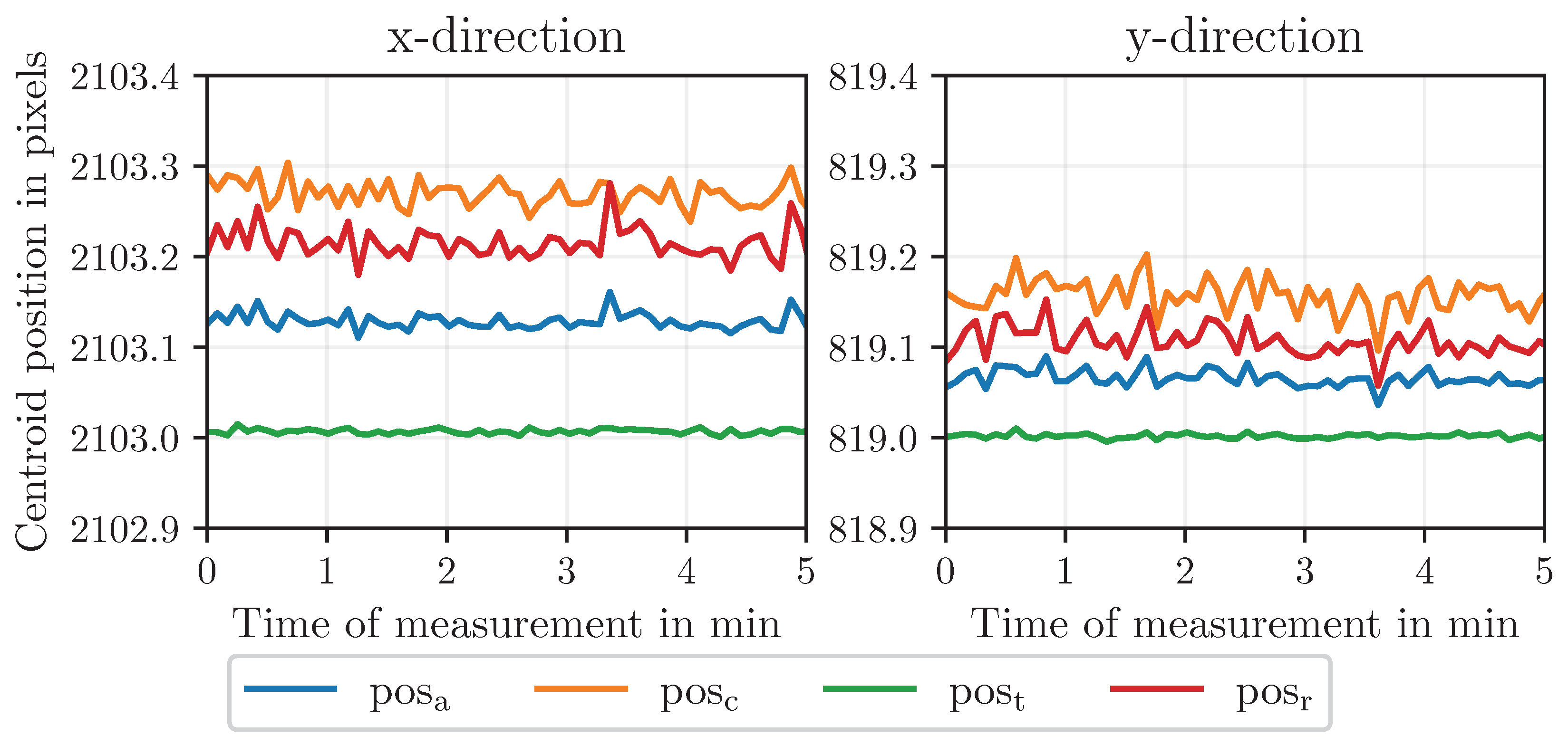

| Abbreviation | Description |
|---|---|
| posa | Arithmetic mean of all shape centroids |
| posc | Centroid of the circle |
| post | Arithmetic mean of the triangle centroids |
| posr | Arithmetic mean of the rectangle centroids |
| Abbreviation | Description |
|---|---|
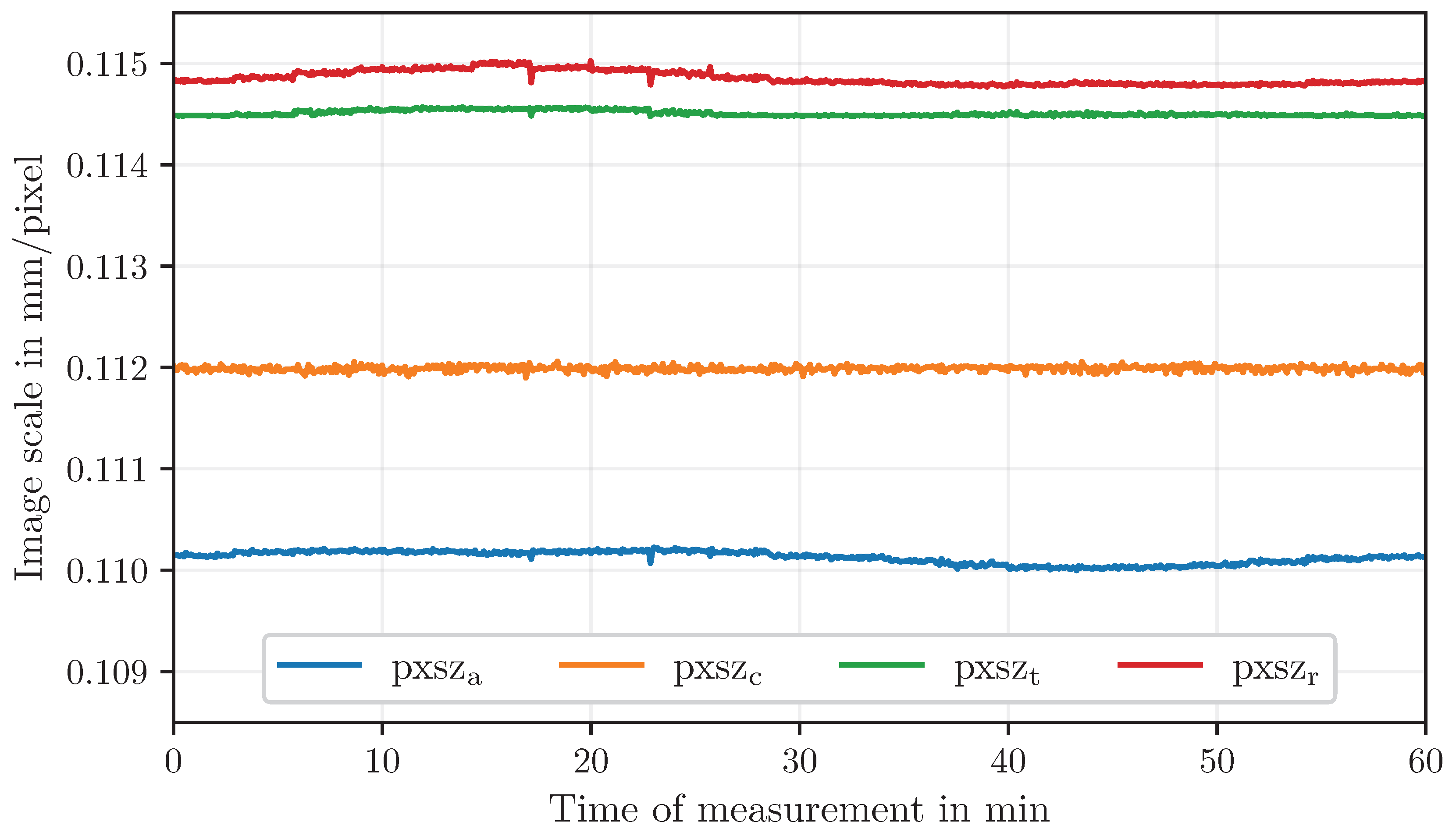
| pxsza | Image scale based on the total area of all shapes |
| pxszc | Image scale based on the circle radius |
| pxszt | Image scale based on distances between triangle centroids |
| pxszr | Image scale based on distances between rectangle centroids |
| Abbreviation | Position Determination | Image Scale Calculation |
|---|---|---|
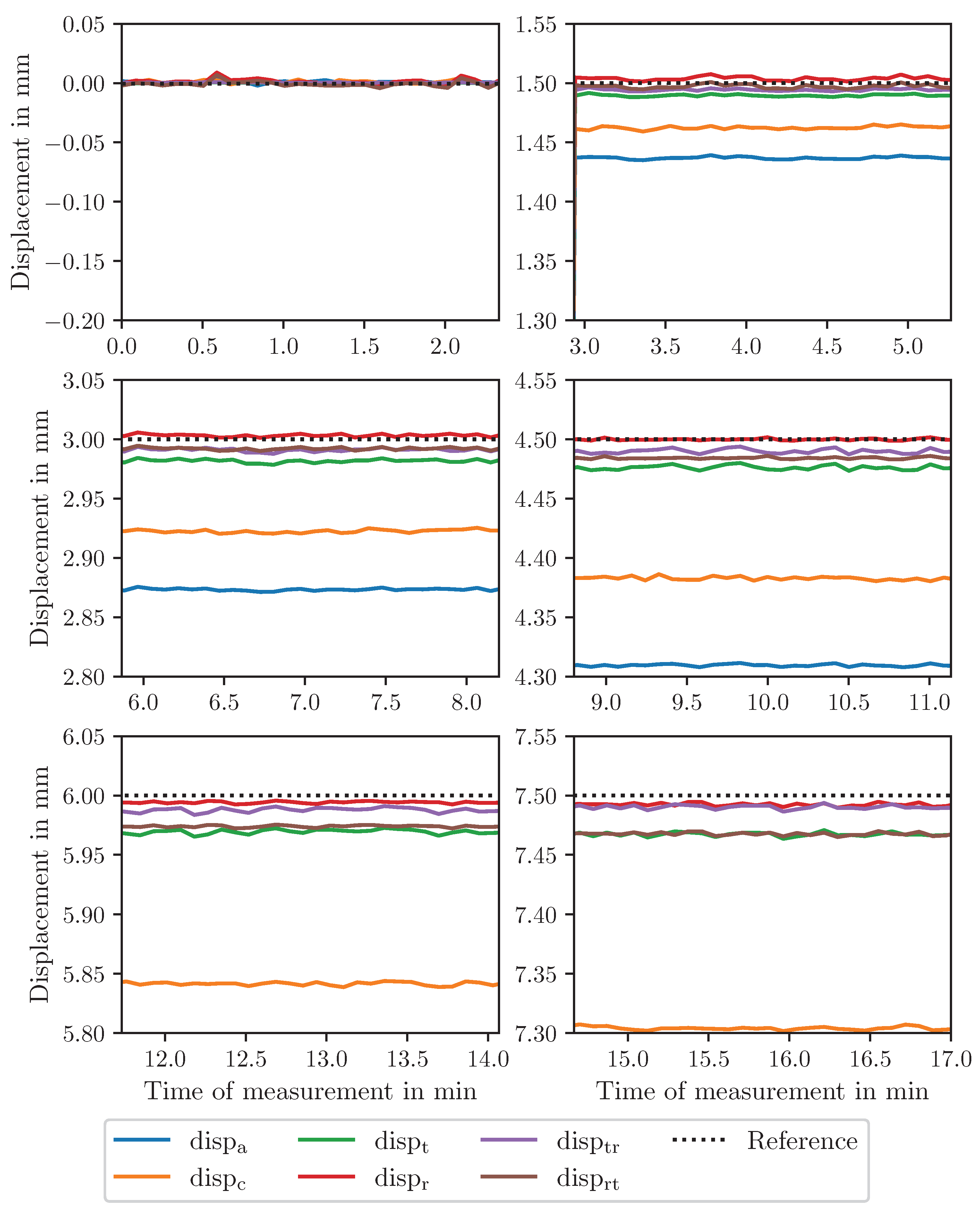
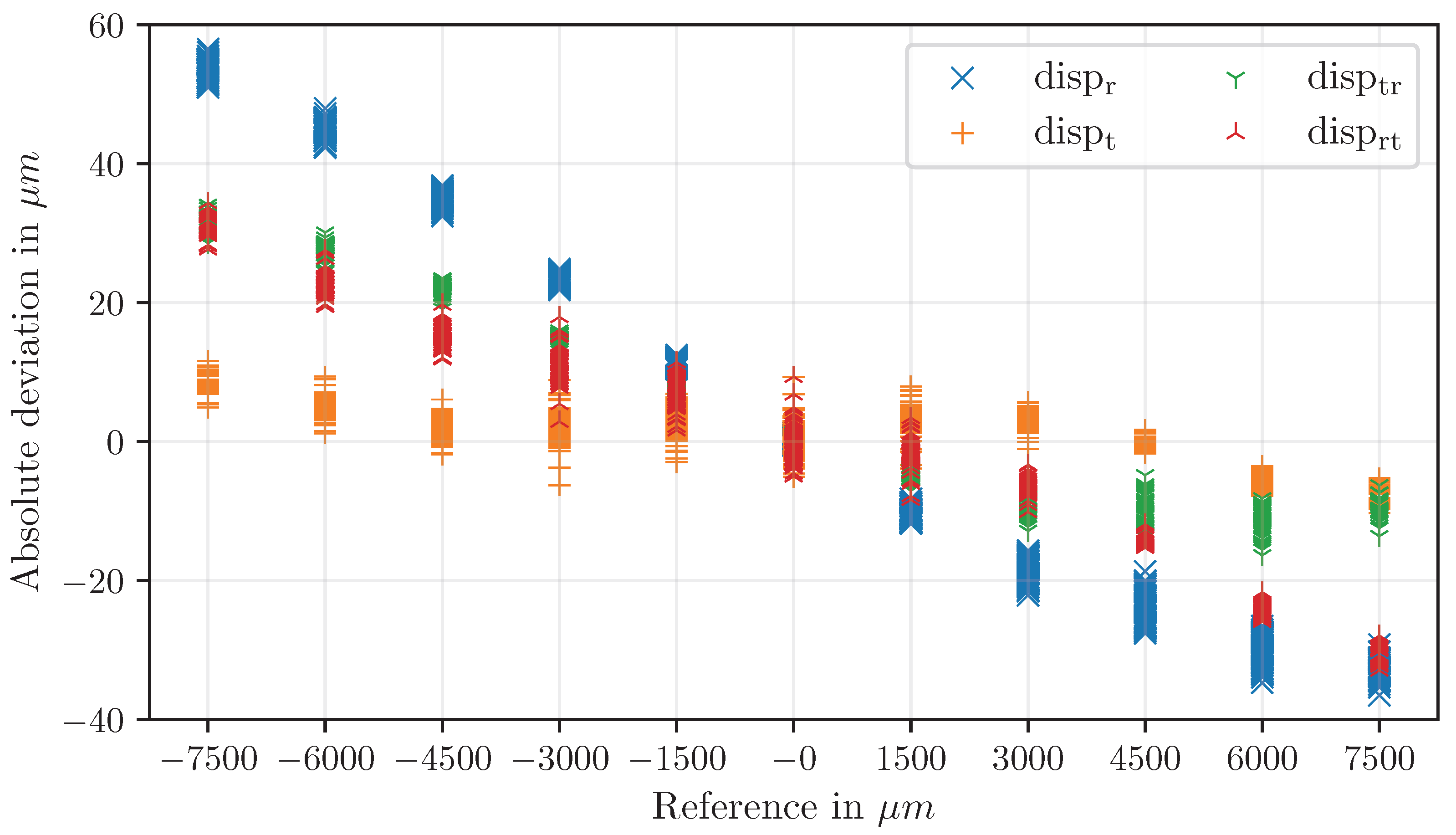
| dispa | posa | pxsza |
| dispc | posc | pxszc |
| dispt | post | pxszt |
| dispr | posr | pxszr |
| disptr | post | pxszr |
| disprt | posr | pxszt |
| Method | Mean in mm/px | Standard Deviation in mm/px |
|---|---|---|
| pxsza | 0.1101 | 6.1 × 10⁻⁵ |
| pxszc | 0.1120 | 2.5 × 10⁻⁵ |
| pxszr | 0.1149 | 6.7 × 10⁻⁵ |
| pxszt | 0.1145 | 2.6 × 10⁻⁵ |
| Shape | RMSE in Pixels | MAE in Pixels |
|---|---|---|
| Triangle | 17.16 | 9.38 |
| Rectangle | 10.22 | 5.96 |
| Left Edge Width in Pixelse | Right Edge Width in Pixels | |||
|---|---|---|---|---|
| Shape | Mean | Std. | Mean | Std. |
| Triangle | 8.43 | 1.06 | 7.26 | 0.98 |
| Rectangle | 7.49 | 0.99 | 7.34 | 0.90 |
Disclaimer/Publisher’s Note: The statements, opinions and data contained in all publications are solely those of the individual author(s) and contributor(s) and not of MDPI and/or the editor(s). MDPI and/or the editor(s) disclaim responsibility for any injury to people or property resulting from any ideas, methods, instructions or products referred to in the content. |
© 2025 by the authors. Licensee MDPI, Basel, Switzerland. This article is an open access article distributed under the terms and conditions of the Creative Commons Attribution (CC BY) license (https://creativecommons.org/licenses/by/4.0/).
Share and Cite
Messerer, D.; Holschemacher, K.; Weisbrich, M. Low-Cost Optical Displacement Measurement for SHM Applications Supported by CNN Object Detection. Appl. Sci. 2025, 15, 12938. https://doi.org/10.3390/app152412938
Messerer D, Holschemacher K, Weisbrich M. Low-Cost Optical Displacement Measurement for SHM Applications Supported by CNN Object Detection. Applied Sciences. 2025; 15(24):12938. https://doi.org/10.3390/app152412938
Chicago/Turabian StyleMesserer, Dennis, Klaus Holschemacher, and Martin Weisbrich. 2025. "Low-Cost Optical Displacement Measurement for SHM Applications Supported by CNN Object Detection" Applied Sciences 15, no. 24: 12938. https://doi.org/10.3390/app152412938
APA StyleMesserer, D., Holschemacher, K., & Weisbrich, M. (2025). Low-Cost Optical Displacement Measurement for SHM Applications Supported by CNN Object Detection. Applied Sciences, 15(24), 12938. https://doi.org/10.3390/app152412938