1. Introduction
Recent advancements in power supply technologies for unmanned aerial vehicles (UAV) have increasingly focused on WPT systems capable of delivering energy over long distances [
1]. In particular, numerous attempts have been made to extend flight duration by supplying power in real time using microwave- or laser-based transmission techniques during flight operations [
2,
3]. However, most reported systems are designed to operate within frequency ranges of several kilohertz to a hundred kilohertz while delivering tens to hundreds of watts [
4,
5]. Consequently, these systems are optimized not for beam-based long-range transfer but for stable power delivery within near-field environments, typically spanning a few tens of millimeters [
6].
Therefore, in practical UAV applications, implementing near-field wireless charging stations integrated with autonomous takeoff and landing functions must be prioritized. During the UAV landing process, positional and rotational misalignments often occur, significantly deteriorating the coupling characteristics and becoming a primary factor in reduced power transfer efficiency [
7,
8,
9]. To address this, several techniques such as segmented transmitter design [
10], active shielding [
11,
12], and magnetic flux redistribution have been proposed to enhance system robustness under misaligned conditions [
13,
14,
15,
16].
Despite these efforts, misalignment sensitivity fundamentally arises from the intrinsic field distribution characteristics of existing WPT mechanisms. Inductive wireless power transfer (IPT) delivers energy through magnetic flux linkage, whereas capacitive wireless power transfer (CPT) utilizes electric field coupling between capacitive plates. Consequently, the mutual inductance (L
m) in IPT exhibits strong dependence on lateral and angular displacement due to flux dispersion under misalignment, whereas the mutual capacitance (C
m) in CPT deteriorates when diagonal or lateral shifts reduce the effective coupling area between the plates. Because both IPT and CPT exhibit distinct limitations under misalignment, hybrid couplers that simultaneously utilize both coupling mechanisms have gained increasing attention for improving transfer stability [
17,
18,
19].
Hybrid coupling systems are designed to model each path independently and allow for dynamic switching of the dominant coupling mode depending on load or frequency. Even when the primary coupling weakens under specific conditions, even if one coupling path weakens under misalignment, the other can strengthen its contribution, enabling the system to respond more flexibly across diverse misalignment conditions. Such systems have been theoretically established in different WPT configurations and have been demonstrated in high-power and compact implementations [
20]. However, existing studies on hybrid coupling primarily focus on static alignment conditions, and research on dynamic coupling transitions and power transfer behavior under a range of misalignment scenarios remains limited [
21,
22,
23,
24].
In this paper, the present study proposes a hybrid field WPT coupler suitable for UAV near-field charging stations. The proposed structure integrates the magnetic coupling of a DD coil with the electric coupling of a symmetric SCP through an orthogonal arrangement, which is adopted to flexibly utilize the distinct misalignment responses of IPT and CPT, thereby improving the system’s resilience to positional and rotational deviations during UAV landing.
The coupling behavior of the transmitter and receiver is evaluated through both 3D full-wave analysis and equivalent circuit modeling, allowing for identification of coupling transition mechanisms. The analysis covers positional misalignments ranging from alignment to maximum offset of the coupler dimension, rotational angles from 0° to 90°, and a fixed transfer distance of 20 mm. These conditions were established for the study of the coupler and were specifically designed to analyze the behavior of the DD-SCP structure. This study also explains the characteristics of the DD-SCP structure by applying a mode decomposition method to the two resonant modes generated under strong coupling between the hybrid couplers. Finally, the proposed equivalent circuit model is validated by comparing its transmission coefficients with those obtained from an electromagnetic solver.
The major contributions of this study are as follows:
This paper analyzes a hybrid coupler that applies the orthogonal integration of DD coils and SCP. The study focuses on identifying the coupling characteristics of the configuration and clarifies how the magnetic and electric coupling mechanisms exhibit different behaviors under misalignment.
Transmission coefficients are evaluated under positional and rotational misalignment scenarios to examine how the hybrid coupler responds to changes in geometric alignment. The behavior of the inductive and capacitive coupling paths contributes to maintaining stable performance even under severe misalignment conditions.
High correlation between the simulation and equivalent circuit-based analytical results confirms the accuracy and physical validity of the proposed hybrid coupler and its corresponding PEC model.
The structure of this paper is as follows:
Section 2 introduces the equivalent circuit model and impedance matching network.
Section 3 presents misalignment-based charging scenarios and describes simulation models and analysis procedures.
Section 4 provides comparative simulation results and performance discussions.
Section 5 concludes the study and outlines future research directions.
2. Equivalent Circuit Analysis of Hybrid Coupler
Hybrid couplers exhibit simultaneous magnetic and electric coupling, with the dominant transfer path transitioning depending on the misalignment conditions during UAV landing.
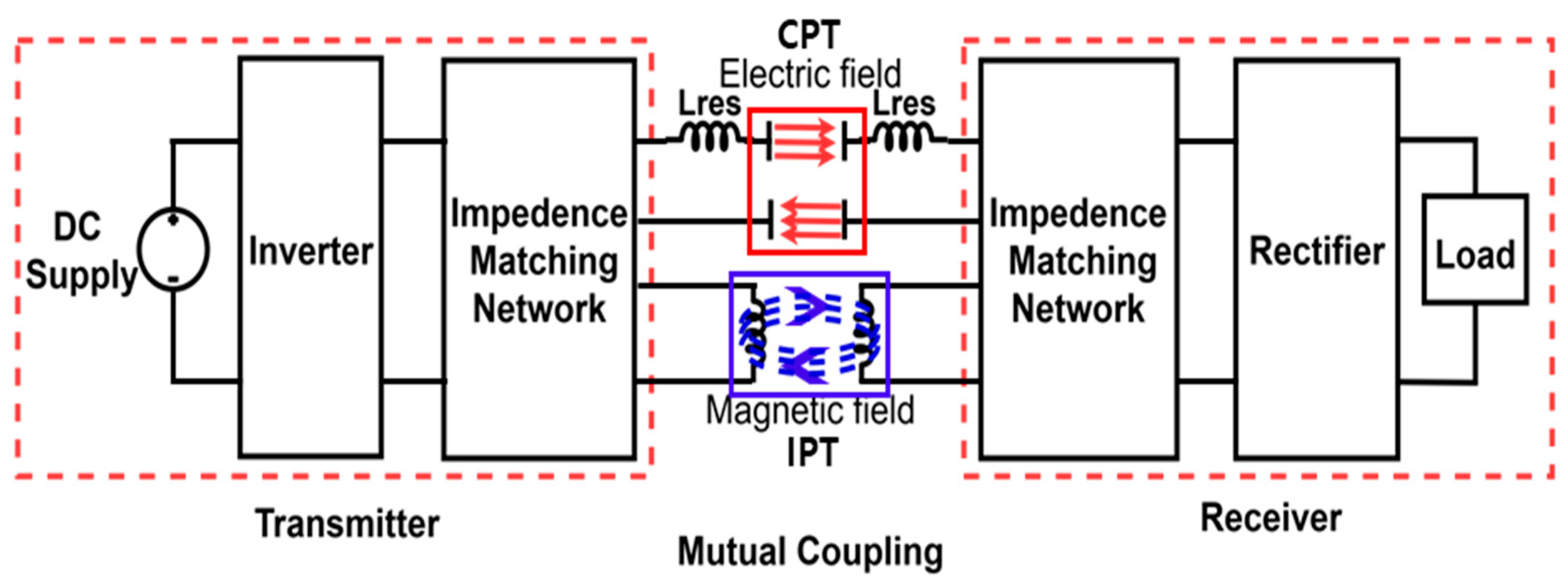
Figure 1 illustrates the basic structure of the hybrid-field coupler. Magnetic coupling tends to dominate when the gap between DD coils is small or magnetic flux is concentrated, whereas electric coupling becomes dominant when the gap between SCP is narrow or the plate area is large. Because both coupling mechanisms coexist within the same structure, the hybrid configuration enables one coupling path to remain effective when the other weakens under misalignment, thereby providing an inherent mechanism for maintaining power transfer capability across a wide range of operating conditions. In addition, the fundamental resonant characteristics of the coupler are determined by the intrinsic inductance of the DD coil and the capacitance of the SCP, allowing the hybrid structure to leverage its own self-inductance and self-capacitance properties without requiring additional resonant elements in many cases. The coupler transfers power by establishing magnetic coupling between IPT coils and electric coupling between SCP using an AC power source, and the overall resonant behavior can be further adjusted by incorporating auxiliary tuning components when necessary.
In such a coupling structure, reliance on 3D simulations alone makes it difficult to clearly interpret internal mechanisms such as transitions in the dominant coupling path, losses, and impedance matching behavior. Therefore, in this study, each coupling circuit is decomposed into sub-networks, and the complete equivalent circuit is constructed using transmission matrices. This model is then converted into S-parameters to analyze the frequency response. The amount of resonant frequency shift is used to estimate the mutual capacitance, allowing quantitative evaluation of the interaction between the two coupling paths. These derived parameters are applied to the equivalent circuit model as input values and are subsequently validated by comparison with 3D simulation results. Through this approach, the coupling path switching mechanism and energy transfer behavior of the proposed hybrid coupler can be physically interpreted.
This analytical procedure has been verified in numerous prior WPT studies, which reported high agreement between theoretical models and simulations. Notably, previous research has demonstrated that HFSS-based simulation results agree with experimental measurements within a margin of approximately 5% [
20]. In the present work, the same validated approach is employed to conduct comparative verification between the simulation and the equivalent circuit model without direct measurements.
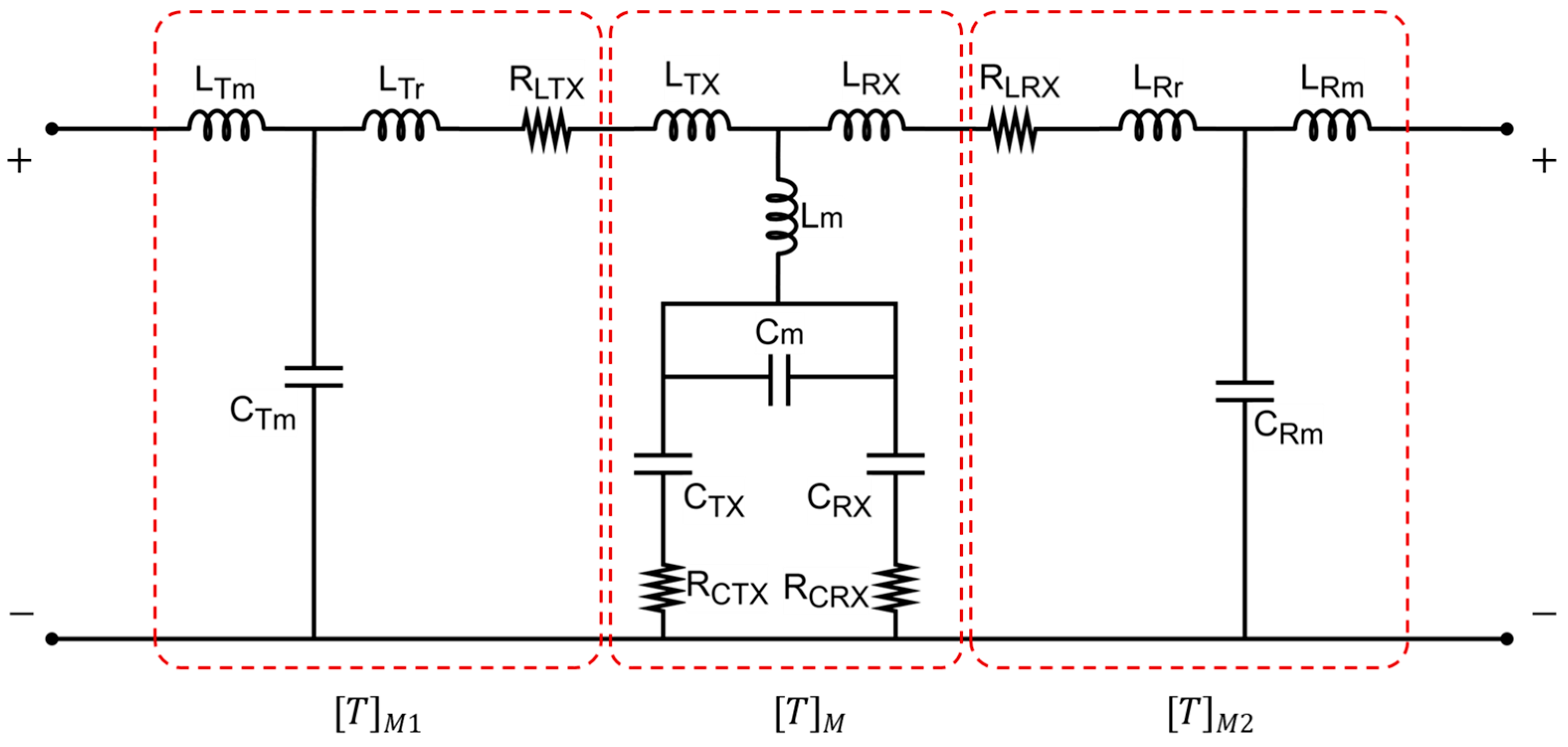
Figure 2 presents the two-port equivalent circuit of the proposed coupler. The hybrid coupler’s coupling paths are represented by the L
m of the DD coil and the C
m of the SCP structure, operating simultaneously, with the magnetic and electric fields interacting within the hybrid configuration. Due to the asymmetrical structure of the transmitter (Tx) and receiver (Rx), the resonant frequencies of each side differ. To align the resonance conditions, additional resonant inductors are inserted on both sides.
The overall circuit is decomposed into three sub-networks: the Tx circuit ([T]
M1), the Rx circuit ([T]
M2), and the mutual coupling branch ([T]
M), and the overall transfer characteristics are defined as the product of these transmission matrices. The loss resistance of the coupler is distributed across both the coils and plates. Specifically, the intrinsic resistance of the DD coil is included in [T]
M1 and [T]
M2, while that of the SCP structure is included in [T]
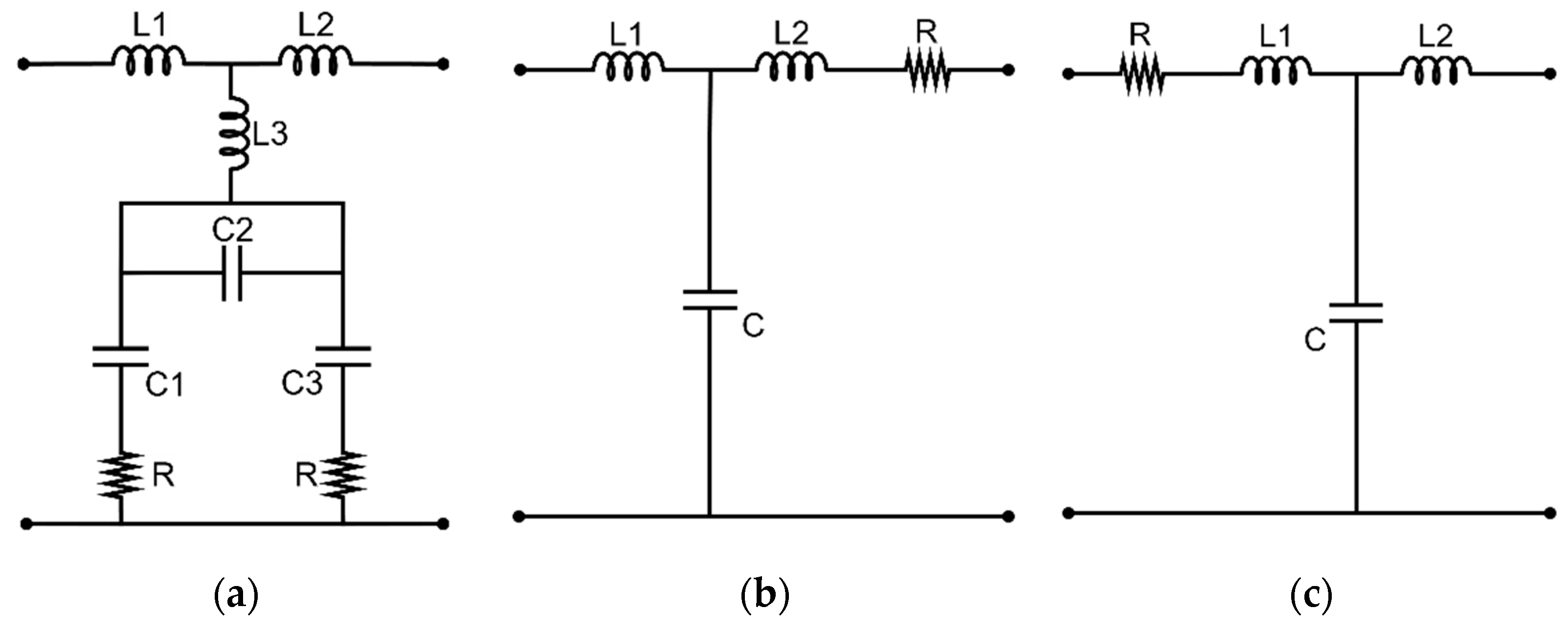
M. In this study, the entire circuit is analyzed by categorizing it into three sub-network types: [T]
M, [T]
M1, and [T]
M2. This classification allows the hybrid coupling behavior to be examined through independent sub-network representations, facilitating clearer analysis of each coupling path.
Figure 3 summarizes the composition of each circuit type. The transmission matrix for each type listed in
Figure 3 is sequentially defined based on the transmission matrices of the corresponding sub-networks.
In this study, the primary objective is to analyze the coupling characteristics of the hybrid DD–SCP structure. Accordingly, the equivalent circuit model serves as a theoretical tool to interpret the coupling behavior, not as an experimentally validated power loss model. The transmission matrix of each sub-network can be expressed as follows.
Table 1 defines the electrical parameters for each sub-network type along with their physical meanings. The listed values correspond to the components illustrated in
Figure 3 and serve as the basis for the calculations. The values in the table were obtained by first extracting the self-inductance and self-conductance through 3D full-wave simulation, after which the DD coil and SCP structures in the DD–SCP configuration were simulated separately to derive the mutual inductance L
m and C
m.
The overall transmission matrix of the circuit is obtained by multiplying the transmission matrices of the sub-networks in sequence, representing the complete transfer characteristics of the system through matrix multiplication.
By converting the derived T-parameters of the complete circuit into S-parameters, the frequency response of the circuit is theoretically analyzed, enabling a quantitative evaluation of the transmission and reflection characteristics of each coupling path.
If the coupler uses only one type of coupling, one of the coupling terms would be zero. Therefore, the resonant frequency equation is expressed as a formula, either Lm or Cm. However, the DD-SCP coupler has both Lm and Cm, which must be considered. Therefore, the resonance frequency equation includes both Lm and Cm.
Under strong coupling conditions, the DD-SCP coupler exhibits a well-known frequency splitting phenomenon. The single resonant frequency of each uncoupled resonator splits into two distinct frequencies when the transmitter and receiver are strongly coupled. These correspond to two resonant modes, a differential mode (DM) and a common mode (CM). In the mode decomposition framework, the coupled two-port network is analyzed by applying symmetric boundary conditions at the midpoint between the coupler’s coils and plates [
25].
For the DM, a short circuit is imposed at the symmetry plane, enforcing an anti-symmetric current distribution. Under this condition, Lm counteracts the self-inductance, and the Cm diminishes the net capacitance seen by each resonator. The two resonators’ fields oppose each other in DM, reducing the total stored magnetic flux and electric charge compared to an uncoupled case.
By contrast, CM corresponds to a symmetric, in-phase excitation of the two coupled resonators. In the mode decomposition analysis, an open circuit is placed at the symmetry plane to represent this condition. The transmitter and receiver currents oscillate in phase, so the mutual flux between coils adds to each coil’s own flux, and similarly, the electric fields between plates reinforce each other. The resonant frequency equations for each mode are given as follows: f
d is the resonant frequency for DM, and f
c is the resonant frequency for CM. The parameters C and L represent the self-capacitance and self-inductance of the coupler.
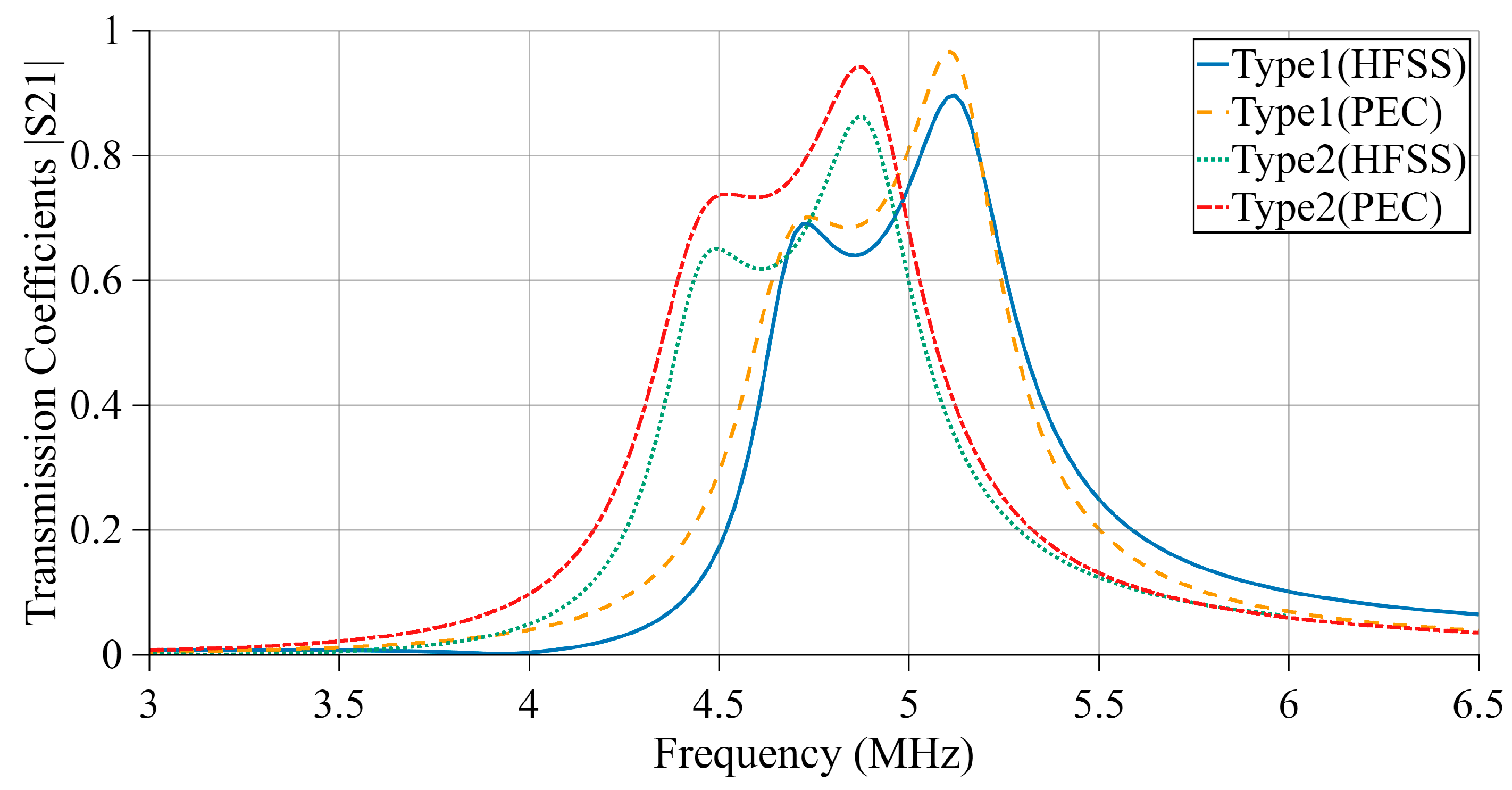
This dual-mode resonant behavior is also manifested in the S-parameter response obtained from electromagnetic simulations, where two distinct resonance peaks can be observed. These peaks indicate a coupling path transition phenomenon, in which the dominant energy transfer mechanism shifts depending on the operating frequency.
3. 3D Full-Wave Analysis for DD-SCP Hybrid Coupler
3.1. Charging Scenarios
In wireless charging systems, it is challenging to ensure that a UAV lands precisely at the designated charging position. In practical operating environments, factors such as wind disturbances, GPS inaccuracies, and sensor latency make it difficult for a UAV to land in a perfectly aligned state with the charging station. Such misalignments lead to a reduction in power transfer efficiency, which often necessitates repeated landing attempts or mechanical repositioning of the UAV to the optimal charging location. These additional procedures not only compromise time and energy efficiency but also undermine the long-term reliability of the system. Therefore, it is essential to design systems capable of accommodating landing position deviations. In this study, a set of misalignment-based charging scenarios reflecting such practical conditions was defined, and the corresponding electromagnetic analysis was conducted.
The considered scenarios encompass positional and rotational misalignments in the UAV’s near-field wireless charging environment, specifically along the x-axis, y-axis, diagonal direction, and rotational axis. All misalignment conditions were defined in a Cartesian coordinate system with the Tx center as the origin. Positional misalignment was quantified by defining the perfectly aligned state as 0% misalignment, and a displacement equivalent to the side length of the coupler as 100% misalignment. Rotational misalignment was defined as the angular deviation of the Rx coupler from the Tx axis, measured in the clockwise direction from 0° to 90°. These settings were chosen to evaluate performance under the most severe misalignment conditions that may occur during UAV landing.
The selected misalignment ranges are based on findings from previous studies. Prior research has reported that power transfer efficiency approaches zero when the relative position of the transmitter and receiver coils reaches a 100% offset. Furthermore, a significant drop in efficiency has been observed for rotational misalignments exceeding 45°. These studies collectively suggest that robust design of UAV wireless charging systems must account for positional offsets up to 100% and rotational angles beyond 45°. Accordingly, the proposed coupler was simulated and evaluated under these conditions to verify its performance under worst-case misalignment scenarios.
3.2. Simulation Models of DD-SCP Hybrid Coupler
To evaluate the performance of the proposed hybrid coupler under various misalignment conditions, 3D full-wave analysis was conducted using Ansys HFSS. The simulation environment was configured to reflect the UAV near-field wireless charging scenario, and variations in power transfer efficiency were analyzed for each misalignment case to quantitatively assess the system’s tolerance to misalignment.
The proposed coupler is designed to maintain stable power transfer efficiency under both positional and rotational misalignments. When used alone, the DD coil generates a dipole-shaped magnetic field formed by two D-shaped loops. A decoupling region with nearly zero Lm exists near the boundary between the loops, causing a significant reduction in magnetic coupling within that area. Similarly, in a standalone SCP structure, electric coupling is governed by the overlapping area and the separation gap of the plates. Depending on the alignment conditions, coupling cancellation regions may arise where power transfer is significantly weakened.
To address these limitations, the proposed hybrid structure integrates a DD coil and SCP in a stacked configuration. The winding axis of the coil and the major axis of the plates are arranged orthogonally to compensate for the coupling degradation observed in individual structures. When magnetic coupling is weakened due to misalignment along a particular axis, the electric coupling of the SCP compensates. Conversely, under diagonal or rotational misalignment, where electric coupling becomes less effective, the magnetic coupling of the DD coil enhances overall performance.
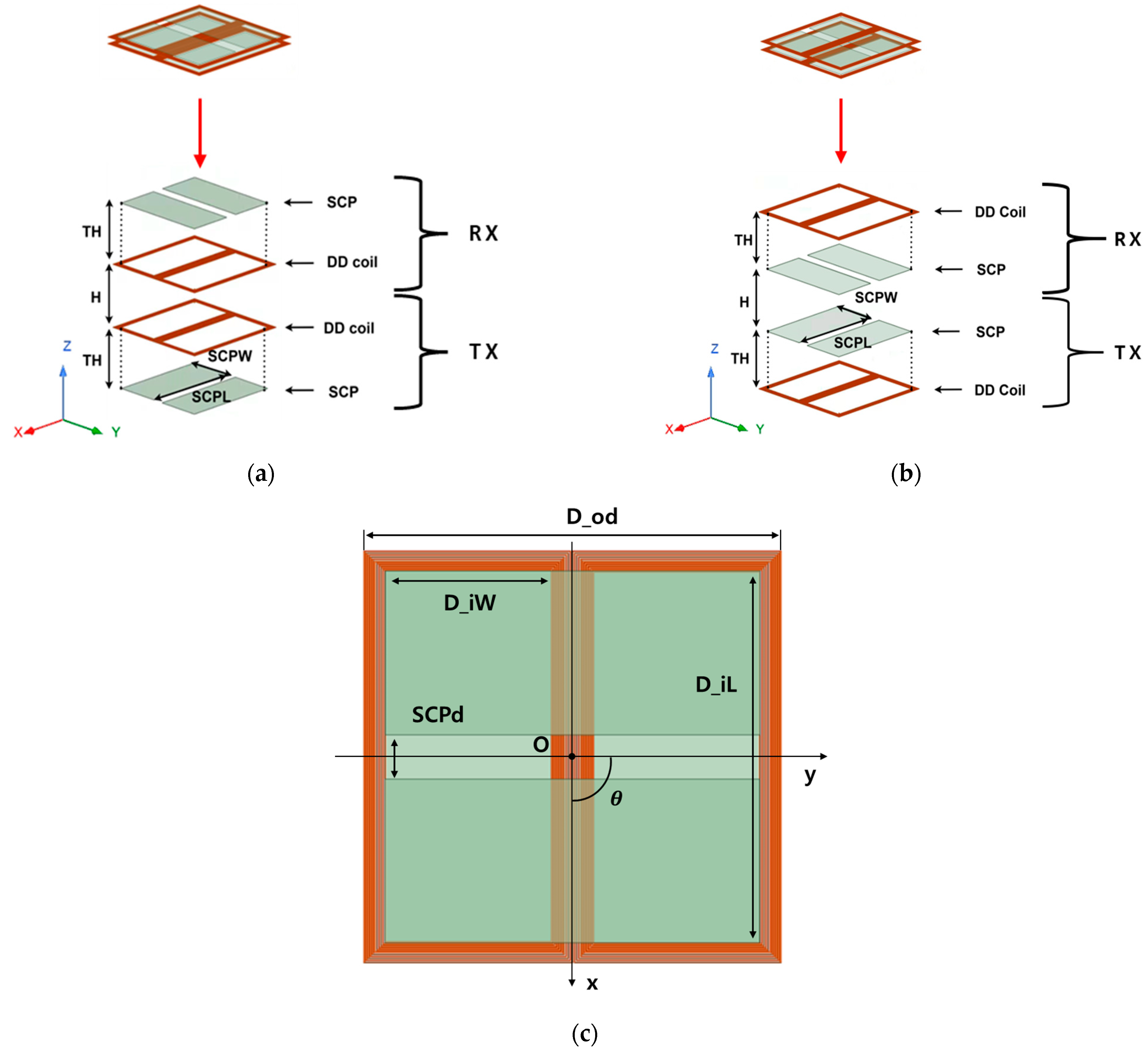
Figure 4a,b illustrate the overall configuration of the coupler, which consists of DD coils and SCP in a stacked arrangement, along with the reference coordinate system of the transmitter.
Figure 4c presents the top view of the coupler and illustrates the misalignment directions with respect to the central axis. The rotational scenario refers to the rotation angle measured from the y-axis toward the x-axis with respect to the origin. Two types of coupler models were simulated, Type 1 and Type 2, which are distinguished by whether the central layer contains the DD coil or the SCP, respectively. This structural difference not only influences the coupling characteristics of the electric and magnetic fields but also affects the power transfer path and impedance behavior.
Accordingly, each type may exhibit different performance in terms of transfer efficiency, impedance matching characteristics, and sensitivity to misalignment. In this study, the performances of both structures were compared to verify the coupling mechanism of the proposed hybrid coupler configuration.
The design specifications of the DD-SCP coupler are summarized in
Table 2, which outlines the key parameters and dimensions of each component.
In the simulation, the Tx and Rx couplers were arranged vertically, as illustrated in
Figure 4a,b. The Tx position was fixed, while the Rx was translated to analyze variations in power transfer efficiency under positional and rotational misalignment conditions. The DD-SCP coupler incorporated an impedance matching network in the form of an L-type circuit, tuned to minimize reflection loss at the target resonance frequency of 5 MHz under a reference impedance of 50 Ω. The input and output impedances of the Tx and Rx were extracted through simulation, and matching component values were determined by shifting the impedance point on the Smith chart. The effect of impedance matching was verified by comparing the transmission coefficient before and after matching.
Table 3 summarizes the simulation conditions that reflect various misalignment scenarios occurring during UAV landing, based on the coordinate system of the Tx coupler shown in
Figure 4c. The x and y directions refer to translations along the horizontal plane relative to the Tx’s center, corresponding to forward–backward (x-misalignment) and left–right (y-misalignment) deviations. A 0% misalignment indicates perfect alignment between the centers of the transmitter and receiver couplers, while a 100% misalignment represents the maximum displacement, equal to the length of one side of the coupler. The xy-misalignment scenario represents a diagonal displacement combining both x and y axis deviations. The rotation case refers to clockwise angular misalignment (0–90°) of the UAV about the Tx’s central
z-axis, representing scenarios in which the UAV’s landing orientation is not aligned with that of the Tx.
4. Results and Discussion
The DD-SCP coupler proposed in this study was designed to ensure stable power transfer efficiency under positional and rotational misalignment conditions in UAV near-field wireless charging stations. To validate this, variations in transmission efficiency were analyzed for each misalignment scenario, and it was investigated whether one coupling path could compensate when the efficiency of the other was degraded.
Figure 5 presents the transmission coefficient characteristics of each coupler type under ideal alignment conditions. All transmission coefficients were extracted based on the resonant frequency of 5 MHz under aligned conditions. For Type 1, the maximum transmission coefficient was 0.963 in the PEC model and 0.896 in the simulation. For Type 2, the values reached 0.941 and 0.862, respectively. Both coupler types exhibited similar frequency response profiles, confirming that the simulation results support the physical validity of the modeling approach. Additionally,
Table 4 summarizes the transmission coefficients before and after matching under aligned conditions for each type. These results demonstrate that the matching network operated effectively near the target resonant frequency and successfully enhanced the transmission coefficient characteristics. Furthermore, the DD-SCP structure exhibits a frequency splitting phenomenon resulting from the DM and CM, confirming that both coupling mechanisms exist simultaneously.
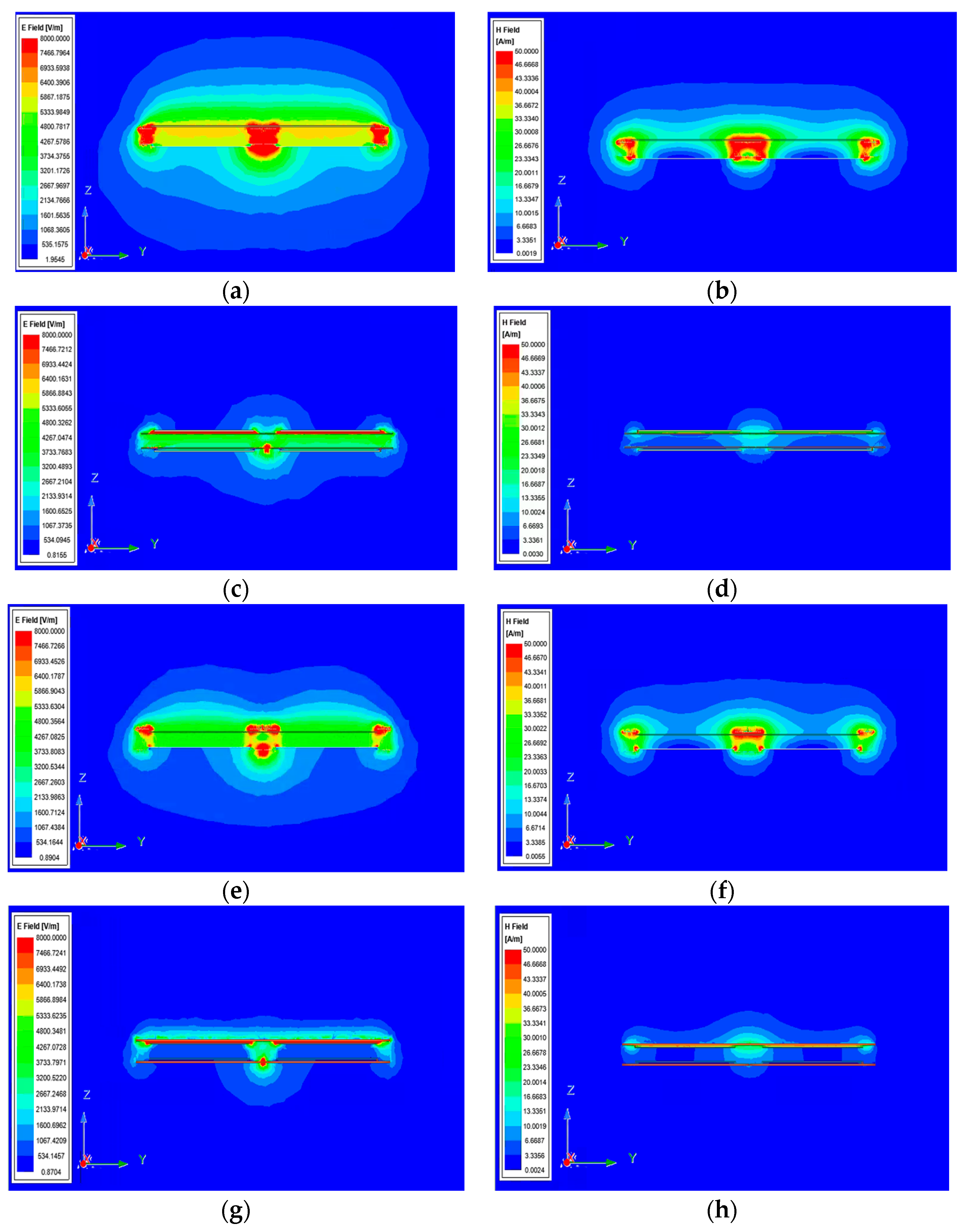
Figure 6 illustrates the electromagnetic field distributions of the DD-SCP coupler.
Figure 6a,b show the electric field distributions under aligned and 90° rotated conditions, respectively, while
Figure 6c, depict the corresponding magnetic field distributions.
Figure 6e–h presents the same set of electric and magnetic field distributions for Type 2. Compared to Type 2, Type 1 shows enhanced coupling intensity, evident from the stronger electric and magnetic field distributions. Under aligned conditions, both magnetic and electric fields are effectively established, with one coupling mode becoming relatively dominant depending on the spatial distribution. When rotational misalignment occurs, the spatial distributions of both coupling paths shift, revealing a complementary behavior in which the weakened coupling is compensated by the other.
In other words, although one field becomes dominant depending on the alignment, both inductive and capacitive couplings contribute to power transfer, thereby maintaining overall efficiency stability. The electromagnetic fields were plotted with respect to the TX’s central plane, enabling direct comparison of the spatial energy distribution between the magnetic coupling of the DD coil and the electric coupling of the SCP structure. Similar coupling behavior was observed in the Type 2 model. In the aligned state, both coupling modes coexist, and even as the dominant coupling weakens with increasing rotational misalignment, the other mode compensates, preserving efficient transmission. These results indicate that both coupler types offer a stable power transfer pathway under rotational misalignment and that the hybrid structure functions as a complementary coupling system in which the two mechanisms support each other when one is degraded.
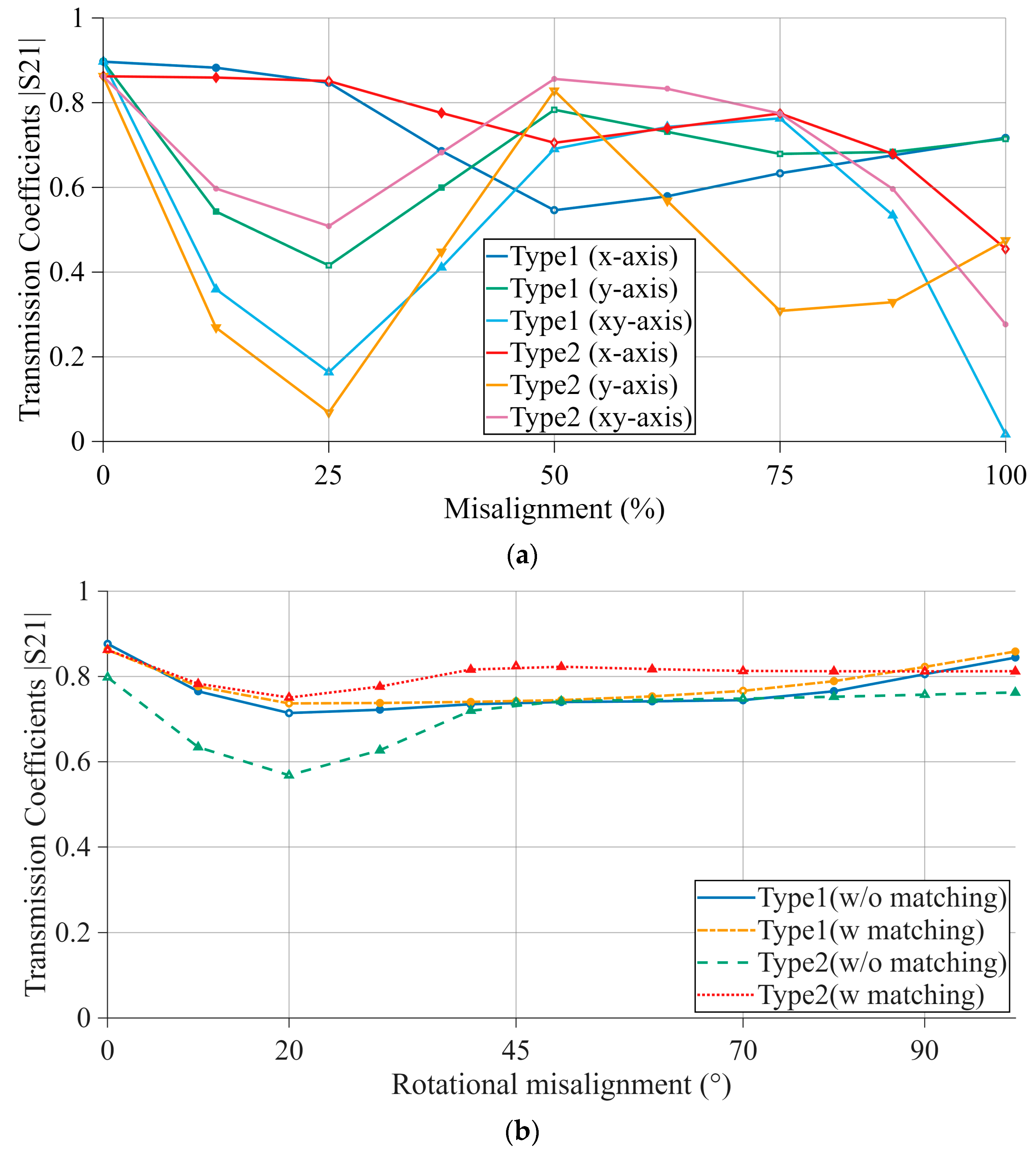
Figure 7a,b present the variations in transmission coefficients for each coupler type under positional and rotational misalignment conditions, with the impedance matching networks applied. Under alignment, both types maintained high transmission coefficients in the range of 0.80–0.89. As the degree of misalignment increased, the transmission coefficients sharply decreased in all directions because the center of the coupler fell into the cancellation regions of both the DD coil and the SCP structure, leading to a rapid deterioration in coupling strength.
Beyond the 25% misalignment point, an overall improvement in transmission levels was observed, accompanied by reduced fluctuation across the misalignment range. In particular, a comparison between Type 1 and Type 2 reveals that Type 2 exhibits greater instability along the y-axis displacement, whereas Type 1 maintains stable transmission characteristics. This contrast indicates that the field distribution generated by Type 2 is more sensitive to lateral (y-axis) deviation.
It should also be noted that the matching networks were designed and fixed based on the ideal alignment condition. Therefore, the reduction in transmission observed under misalignment includes not only the intrinsic degradation in magnetic and electric coupling but also the detuning effect caused by impedance variations when the coupler is displaced. The mismatched portions are expected to be mitigated through real time or adaptive matching techniques, suggesting additional room for improvement beyond the fixed-matching simulation results presented here.
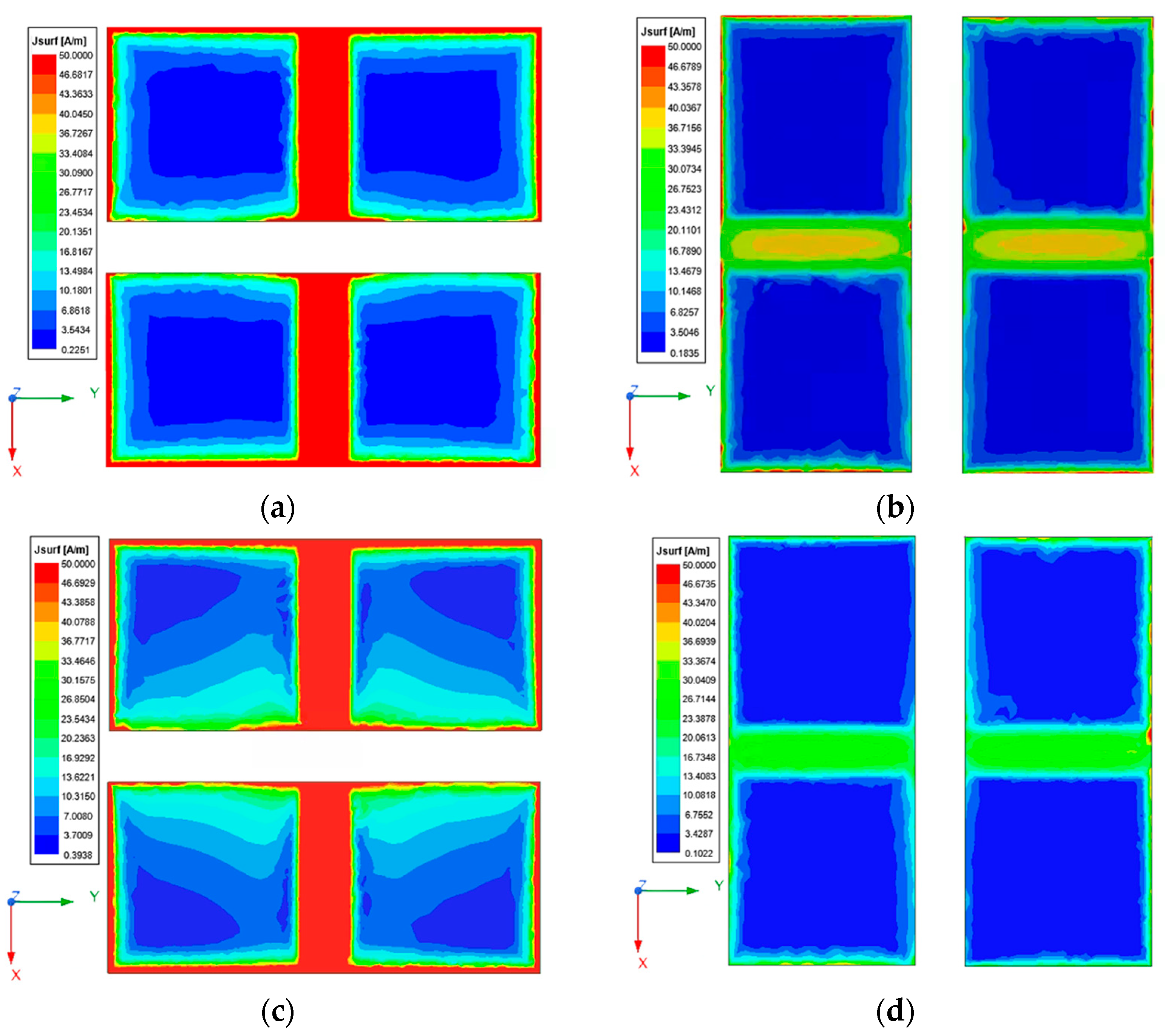
Figure 8a,c show the surface current density (Jsurf) distributions on the receiver coupler under a top view perspective, which differs from the electric field observation angles in
Figure 6a,e. In the aligned condition shown in
Figure 8a, a high current density is observed along the DD coil loops, indicating that coil currents form the dominant energy transfer path under this configuration. This concentration pattern aligns qualitatively with the strong electric field observed around the DD coils in
Figure 6a, supporting that DD-coil-based magnetic coupling plays a dominant role compared to SCP in the aligned condition.
Figure 8b,d correspond to the 90° rotated condition depicted in
Figure 6b,f and present Jsurf distributions under the same top view perspective. Due to the rotation, the relative alignment of the coils deteriorates, leading to a reduction in mutual inductance and consequently a significant decrease in current density around the coils. On the other hand, current density becomes more concentrated along the edges of the plates, rather than the center area. This shift qualitatively supports the transition of the dominant coupling path from DD coils to SCP under the rotated condition, demonstrating that electric-field-based coupling becomes more dominant as magnetic coupling weakens.
5. Conclusions
This study proposed a DD-SCP coupler for near-field UAV charging stations by integrating a DD coil and a SCP structure. The coupler was designed with orthogonal alignment between the DD coil and SCP to enable complementary coupling mechanisms. Depending on the alignment condition, either magnetic or electric coupling becomes dominant, and the hybrid structure allows one coupling path to compensate for the weakening of the other.
Comparative analyses using 3D full-wave simulations and equivalent circuit modeling showed that the application of impedance matching networks reduced reflection losses and improved the transmission coefficient by approximately 10–15% on average. Under positional misalignments ranging from 0% to 100% and rotational misalignments from 0° to 90°, the proposed coupler demonstrated a 20–30% wider misalignment tolerance range compared to single-mode IPT or CPT couplers. These results indicate that the hybrid design effectively maintains stable power transfer efficiency under various misalignment conditions typical of UAV landing scenarios.
However, a unified metric for quantitatively comparing the relative performance of IPT, CPT, and hybrid couplers under identical conditions remains to be established. As such, there are limitations in evaluating the individual contributions of each coupling mechanism. In particular, the present study evaluates the coupling behavior only through simulation-based S-parameter analysis without incorporating practical performance indicators such as conduction loss, dielectric loss, output power, or end-to-end power transfer efficiency. As a result, the comparative assessment between coupling modes remains limited to idealized electromagnetic responses, and a comprehensive evaluation framework that reflects realistic operating conditions is still lacking. Future work should include experimental prototypes, measurement-based efficiency characterization, and the development of standardized comparison metrics to more rigorously quantify the relative contributions and practical advantages of each coupling mechanism. In conclusion, the proposed hybrid coupler provides a robust solution for near-field UAV wireless charging applications under misaligned conditions and offers a foundational design approach for future hybrid WPT systems.