1. Introduction
The dynamic behavior of ribbon-type pontoon bridges under vehicle loading remains insufficiently understood, particularly in relation to wave formation and its effect on bridge draught. Previous studies on ribbon-type bridges, for example [
1,
2,
3], do not account for the occurrence of the front wave, which may explain the discrepancies observed between laboratory and numerical results. This gap limits the accuracy of design methods and simulation models for such structures.
Determination of structural loads is possible using numerical models. Obtaining reliable results, however, is contingent on taking into account all the phenomena that are important for the value of bending moments. One of them is water surface waves, which can be generated by the external environment and the crossing itself. This paper deals with the second subject, which is related to the deflection of the bridge under the weight of vehicles passing over it.
The main research problem of the paper is the experimental identification of the characteristics of the water wave process caused by the movement of vehicles on a ribbon-type pontoon bridge and their influence on determining its draught. This will allow for determining the validity of taking the phenomenon into account in the design process of such bridges and will be a source of data for the construction of an adequate simulation model.
Pontoon bridges are used in situations where water conditions place very high technical demands on conventional structures, making them very expensive, or where rapid construction of a crossing is required. Their design utilizes buoyancy to support the bridge deck and ensure its required load capacity, eliminating the need for supports fixed to the bed or banks.
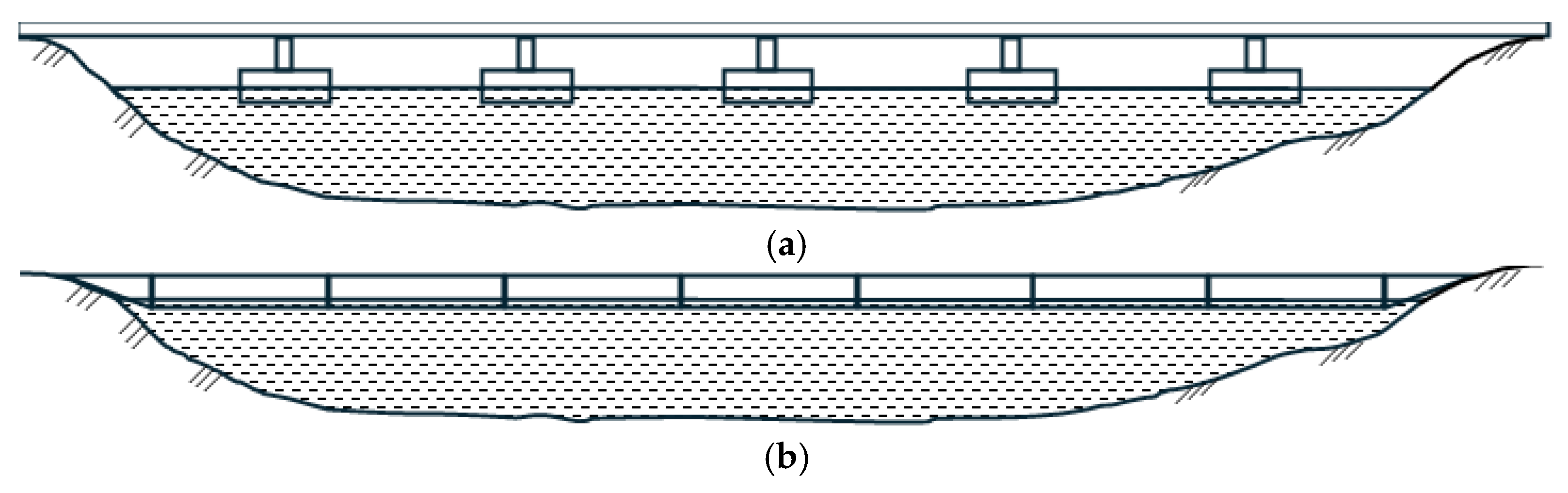
Pontoon bridges can be divided into two structure types (
Figure 1):
The first type is used for regular crossings (permanent structures). Such structures are irreplaceable, for example, in the fjords in Norway, where the width requires the use of spans, and the considerable depth does not allow for the use of permanent supports.
The ribbon-type structures are used to build crossings that can be deployed repeatedly in multiple locations. Their advantages include short assembly time, the possibility of repeated assembly and disassembly and ease of transport. This makes them particularly useful for quickly restoring road traffic during disaster relief.
Figure 1.
Pontoon bridge structure types: (a) with separate pontoons and (b) with interconnected pontoons (ribbon-type).
Figure 1.
Pontoon bridge structure types: (a) with separate pontoons and (b) with interconnected pontoons (ribbon-type).
Ribbon-type pontoon bridges place particularly high demands on designers. This is due to the desire to minimize the dimensions of the folded pontoons, as they must be of a size that allows for easy transport on roads. They should be transportable through tunnels, under viaducts or electric lines. On the other hand, it is expected that the pontoons will have the largest possible deck area when they are unfolded on the water. This results in the possibility of building a crossing from the smallest possible number of modules, of a size allowing efficient transport. At the same time, this ensures that the bridge achieves high load capacity and stability.
Such conditions generate a number of design challenges, often contradictory. Increasing the buoyancy force, with a limited cross-section of the bridge, is possible by increasing the length of the bridge section on which the vehicle loads are transferred—the working length. However, this causes an increase in the bending moment acting on the bridge structure. This, in turn, requires an increase in the strength of the cross-section and weight of the pontoon blocks. These requirements are contradictory, so the selection of design parameters must be preceded by determining their influence on the bending moment values. This is necessary to achieve the highest possible load capacity, ease of transport and speed of assembly.
The literature on pontoon bridges mainly presents studies on separate pontoon structures, with ribbon-type pontoon bridges being studied less frequently. The analysis of both groups aims to determine how the models used to study these structures are developed. The first group reviewed concerns studies dealing with separate pontoon structures.
Many analyses [
4,
5,
6,
7,
8,
9] focused on the hydrodynamic response of the structure to environmental wave excitation. Cui et al. [
9] and the authors of [
8] examined the hydrodynamic loads induced by irregular water waves, incorporating effects such as viscous damping, pontoon interactions and girder stiffness. The frequency-domain approach applied in [
8] enabled the analysis of long floating bridges. The study [
7] demonstrated that hydrodynamic interactions between pontoons significantly increase internal forces—bending moments by up to 89%, axial forces by 25% and shear forces by 126%—yet no validation was provided. However, these models did not consider vehicle loads, which limits their applicability to ribbon-type bridge conditions. Further studies combined experimental and numerical approaches. Laboratory investigations in [
6] confirmed the influence of pontoon interaction on bridge motion; however, they were limited to a single bridge configuration, which did not allow for comparison between different structural arrangements. Miao et al. [
10] cross-validated laboratory and numerical results to determine bridge motion under various wave conditions. Similarly, refs. [
4,
5] used measurement data from full-scale bridges to analyze the effect of environmental waves, showing that wave-induced loads dominate the structural response, while vehicle effects were negligible. However, these analyses excluded vehicle-induced hydrodynamics, and model validation remained limited. Collectively, these works improved understanding of pontoon hydrodynamics in environmental conditions but did not address dynamic loads from moving vehicles.
The second group of research focused on ribbon-type pontoon bridges subjected to vehicle loads [
1,
2,
3,
11,
12,
13,
14,
15,
16,
17,
18,
19]. Analytical models based on the Boundary Element Method (BEM) [
16,
17] enabled comparison of ribbon-type and separate-pontoon structures, but they neglected water waves and were only validated for static conditions. Dynamic simulations of a bridge subjected to moving vehicle loads were carried out using numerical models to investigate the influence of vehicle vibration characteristics [
12] and connection specification [
19], but omitting hydrodynamic wave effects. Other works [
11,
18] explored the combined effect of vehicle mass and environmental waves using analytical, numerical and laboratory models, with validation limited to static vehicle load.
The authors of [
15] utilized full-scale heave measurements to determine damping and elasticity parameters, building a numerical model for static and moving load cases. However, the front wave phenomenon was not identified and thus was not represented in the model. In [
2,
13], studies attempted integrated experimental–numerical analyses, and both laboratory and computational models were developed to assess bridge response under vehicle movement. The validation, based on pontoon block displacement measurements, showed an average error of approximately 24%. Also, laboratory and numerical analyses in refs. [
1,
3] revealed discrepancies between the draught of individual pontoons in physical and numerical tests. Specifically, the upward response predicted by the numerical models was consistently smaller than the one observed experimentally, although the authors did not provide quantitative values for these differences. The graphs presented in [
3] show that the difference between the maximum draught values determined by numerical and experimental methods varies with the vehicle speed at which the tests were carried out. This difference is the greatest at a speed of 21.6 km/h, amounting to 29%, and the smallest at 32.4 km/h, where it is 2%. The authors do not refer to the causes of this phenomenon.
Although [
1] is an earlier study, it remains one of the few that conducted dynamic laboratory investigations in this research area, and therefore represents an important methodological reference still cited in recent works (e.g., [
9,
10]). Laboratory results indicated greater variations and higher emergence values behind the vehicle. The front wave phenomenon has not been investigated in all laboratory studies of ribbon-type pontoon bridges [
1,
2,
13].
The publications presented in the literature [
1,
2,
13] often do not describe the method of scaling the results obtained from laboratory models constructed at a reduced scale. According to the literature [
20], dynamic studies concerning inertial phenomena should properly maintain the proportionality between gravitational and inertial forces. Satisfying this condition ensures the preservation of the Froude number in the applied model.
The literature clearly indicates a fundamental distinction in the types of loads analyzed for different pontoon bridge systems. When it comes to large communication bridges composed of separate pontoons, the research primarily focuses on environmental loads—including waves, currents and wind [
5]—which dominate the overall loading conditions. In contrast, for mobile ribbon-type pontoon bridges, studies mainly address dynamic loads induced by moving vehicles, as these have a decisive influence on the operational performance of such structures [
3]. These differences result, among other things, from significant differences in the mass per unit length result of the structure—for the ribbon-type pontoon bridge it is approximately 1.040 kg/m, while for the separate pontoon bridge Bergsøysund Bridge it is as much as 23.500 kg/m. The more than twenty-fold difference in displacement reflects the design specifics of both types of structures. Additionally, vehicle traffic on regular crossings, using separate pontoon bridges, is practically unlimited, while on ribbon-type bridges it is strictly limited and restricted by the permissible distance between vehicles on the bridge, their weight and their speed. Ribbon bridges are also unable to operate in unfavorable water conditions, due to current speed and wave height. The limitations for them are much greater than those for structures on separate pontoons.
This translates into differences in the modeling approach. In separate pontoon bridge studies, environmental impact analyses dominate, while in the literature on ribbon-type bridges, the main emphasis is placed on the analysis of the bridge response under the influence of loads from moving vehicles. Refs. [
3,
5,
6,
10,
18,
21] emphasize the significance of wave phenomena, which are included in their analyses as a crucial factor affecting bridge dynamics.
A significant problem identified in the literature review is the limited number of works containing the validation of numerical models. Four publications [
12,
17,
18,
19] do not present any data verifying the reliability of dynamic load simulations. In five papers [
3,
14,
16,
17,
19], only partial validation was performed, limited to measurements of the static bridge draught under the influence of a stationary vehicle. Four papers [
1,
2,
3,
13] included dynamic validation based on measurements of the bridge draught during vehicle passage.
Vehicle-induced wave phenomena were originally described in an early technical manual [
22], which documented the occurrence of waves generated by the movement of vehicles over pontoon bridges. The draught of subsequent pontoon blocks generates a wave, called a front or a bow, propagating along the axis of the crossing. Waves may cause changes in the distribution of local draught values of individual pontoon blocks and consequently affect the distribution of buoyancy forces on the section carrying loads from passing vehicles. This in turn will have an impact on the bending moments acting on the bridge structure.
In the literature, the analysis of the response of pontoon bridges is carried out on the basis of vertical displacements of pontoon blocks. No studies have taken into account the influence of the front wave in numerical models, which may be one of the reasons for the discrepancy between theoretical and experimental results. At the same time, the literature does not contain studies describing the characteristics of the front wave generated during vehicle movement on the bridge, which prevents a clear assessment of the impact of this phenomenon on the behavior of the structure.
The main research problem of this study concerns the lack of models that take into account the influence that vehicle-induced front waves have on pontoon bridge behavior. The objective is to determine whether this wave phenomenon significantly affects the bridge’s maximum draught, and consequently, whether it should be included in the formulation of numerical models.
The remainder of this paper is organized as follows.
Section 2 (Materials and Methods) presents the experimental setup and measurement methodology.
Section 3 (Results and Discussion) provides the analysis of the recorded water surface and pontoon displacements, as well as their dependence on vehicle mass and speed, followed by a discussion of the obtained results.
Section 4 (Conclusions) summarizes the main findings of the study.
2. Materials and Methods
The research was conducted using a laboratory model. This model, due to its direct physical representation, provides a reliable representation of phenomena occurring on an actual crossing. A geometric scale of 1:25 was adopted for the construction of the laboratory test stand. This scale was selected to model a crossing with a total length of 100 m, while being constrained by the 4.8 m length of the measurement pool. Due to the need to correctly reproduce wave phenomena in the model, the Froude number similarity criterion was applied, as recommended in [
20]. Consequently, the following scaling ratios were obtained:
mass 1:253;
time 1:5;
speed 1:5.
While designing the stand, the following assumptions were made regarding the water obstacle being reproduced:
no current (still water);
freshwater;
width > 100 m (equal to the length of the bridge);
depth > 4 m, which allows us to ignore the potential impact of the bed on the studied wave phenomenon;
the length and shape of the bank having no influence on the studied wave phenomenon.
In turn, with regard to vehicles crossing the bridge, the following was assumed:
they move in a straight line (along the longitudinal axis of the bridge);
they move at a constant speed up to 30 km/h (on the measuring section);
their weight is 30 tons and 60 tons.
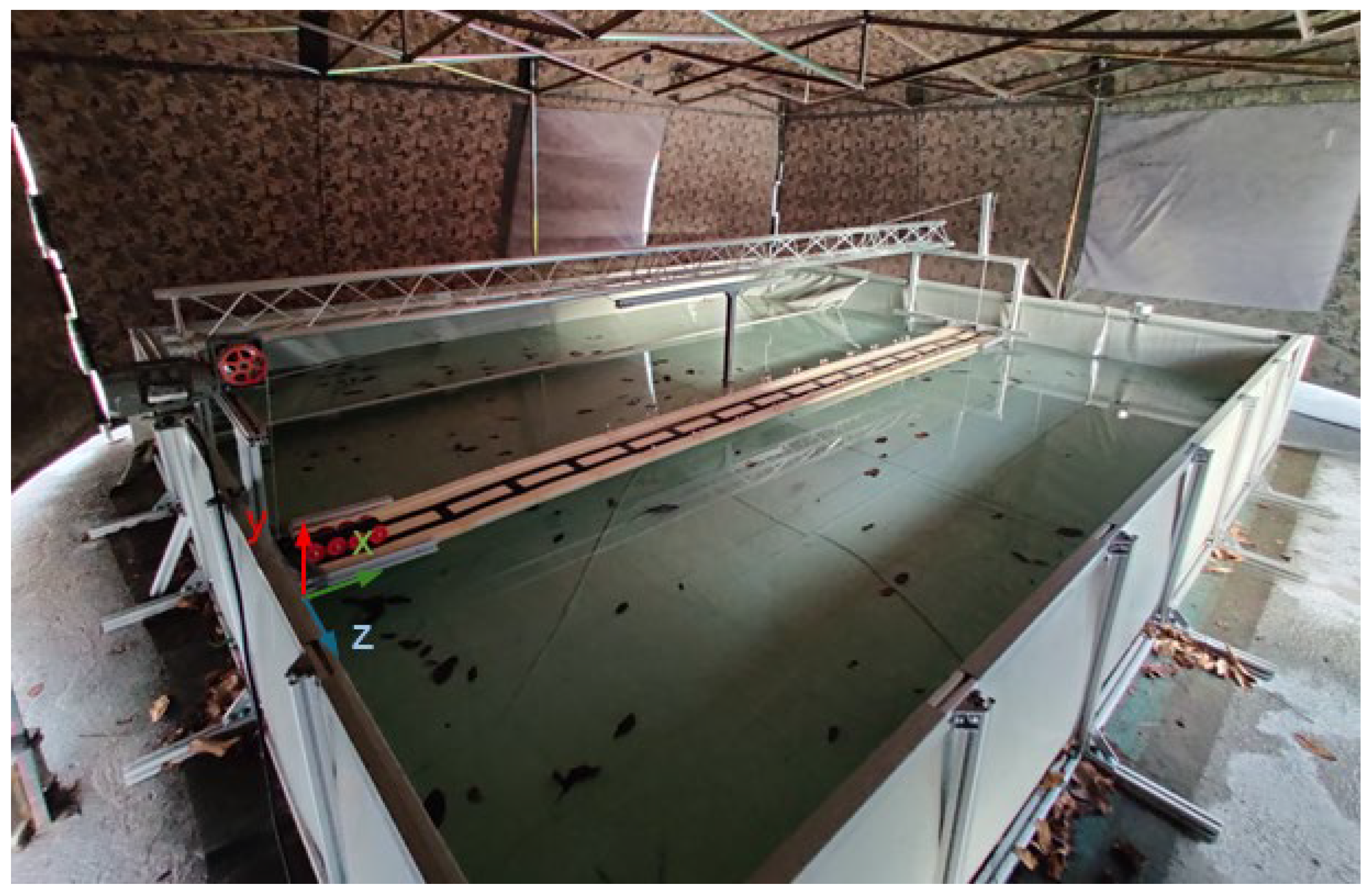
The pool used (
Figure 2) has dimensions of 4.8 m × 4 m × 0.4 m. The 4.8 m dimension represents the width while 0.4 m corresponds to the depth of the modeled water obstacle. In turn, the value of 4 m corresponds to its length, which ensures no wave reflection effect—analogous to reality. This value was determined experimentally, in such a way that the wave generated by the bridge did not reach the walls of the pool while the vehicle was moving on the measuring section.
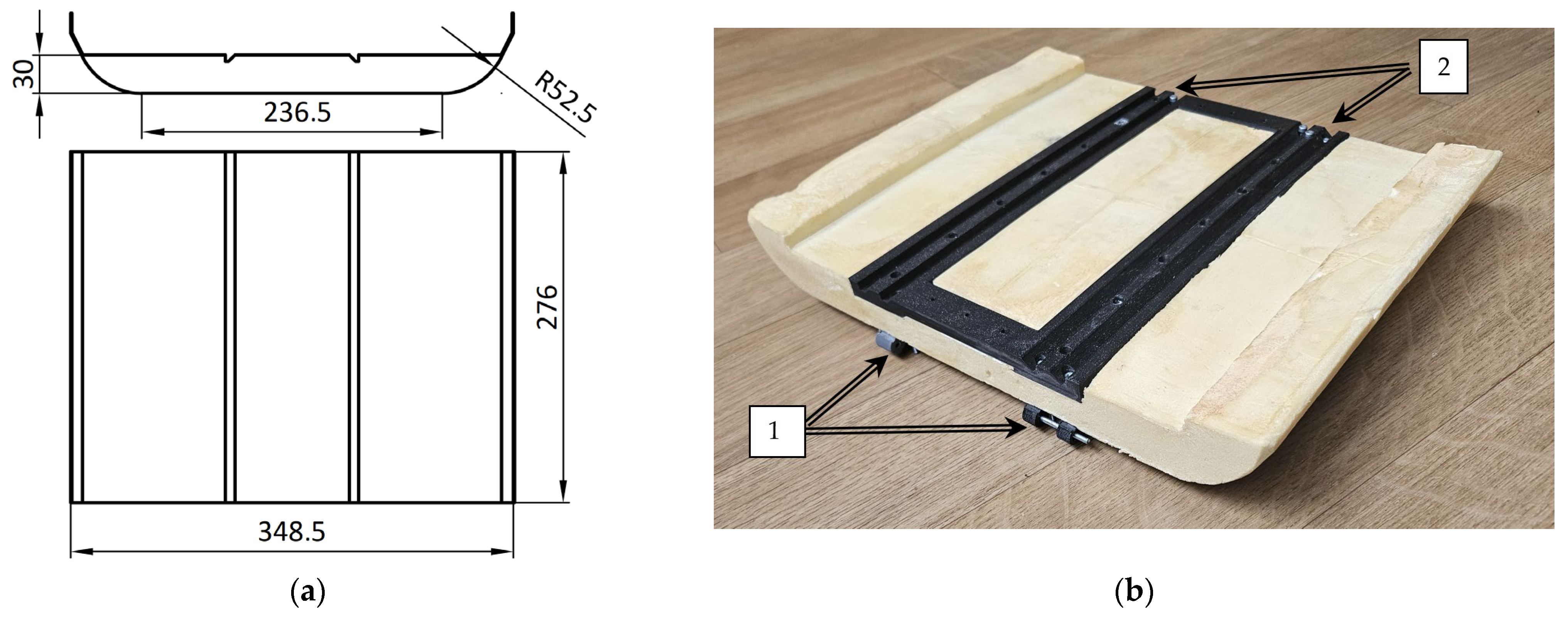
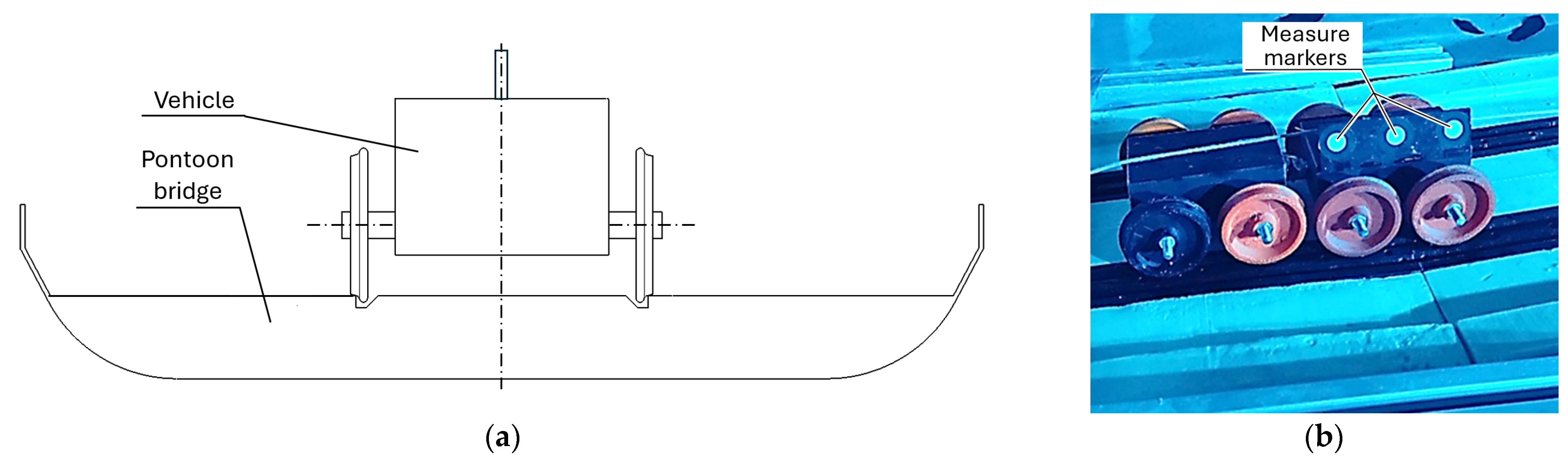
The bridge model is representative of similar constructions on the market and is made in accordance with the adopted geometric and mass scale. The joints connecting the pontoons, as in most commercial solutions, are located in their lower flange (
Figure 3b:1). On the upper surface of the pontoon block models, there are guide rails on which the tested vehicle moves (
Figure 3b:2). They ensure that the vehicle is held symmetrically in the bridge axis (
Figure 3a).
The joints connecting the pontoons allow them to rotate relative to each other, just like in a real structure. Downward rotation is free, while upward rotation is restricted by the pontoon sides (
Figure 4). The value of upward rotation restriction determines the deflection of the bridge under the weight of the vehicle being crossed. In the literature, laboratory research in [
1] demonstrated that static 50 t load caused 0.46 m maximum draught, while in full-scaled object research in [
23], 64.8 t static load caused 0.48 m maximum draught. In the applied model, the appropriate draught was achieved by selecting a suitable clearance in the joints. The clearance value was determined iteratively to achieve a comparable maximum static draught of 0.47 ± 0.01 m for a load of 60 t. The applied clearance value was
αₗᵢₘ = 2.3° ± 0.2°. A preliminary sensitivity analysis showed that a ± 0.2° change in
αₗᵢₘ caused a variation in maximum draught of less than 5%, confirming the robustness of the adopted parameter.
During the tests, the possibility of moving the bridge model was limited by using limiters blocking lateral displacements in the Z axis and a support keeping the beginning and end of the bridge on the water surface—protection of the outer bridge pontoons against sinking under the weight of the vehicle (ramp bay function). The restraint along the bridge’s X axis remained flexible, allowing for free bridge subsidence and the resulting changes in bridge length. This reflects the actual anchoring conditions of pontoon bridges.
The paper describes the tests of bridge loads generated by 30-ton and 60-ton vehicles. In both cases, their outer wheelbase is 4.25 m. Vehicle models consist of two identical, articulated members (
Figure 5). Both units have two driving axles, arranged symmetrically with respect to their center of gravity.
The axle spacing of the models is 170 mm and the weight is 3.48 kg for the 60-ton model and 1.74 kg for the 30-ton model. The models reflect the form of loads for real objects while maintaining the adopted scale.
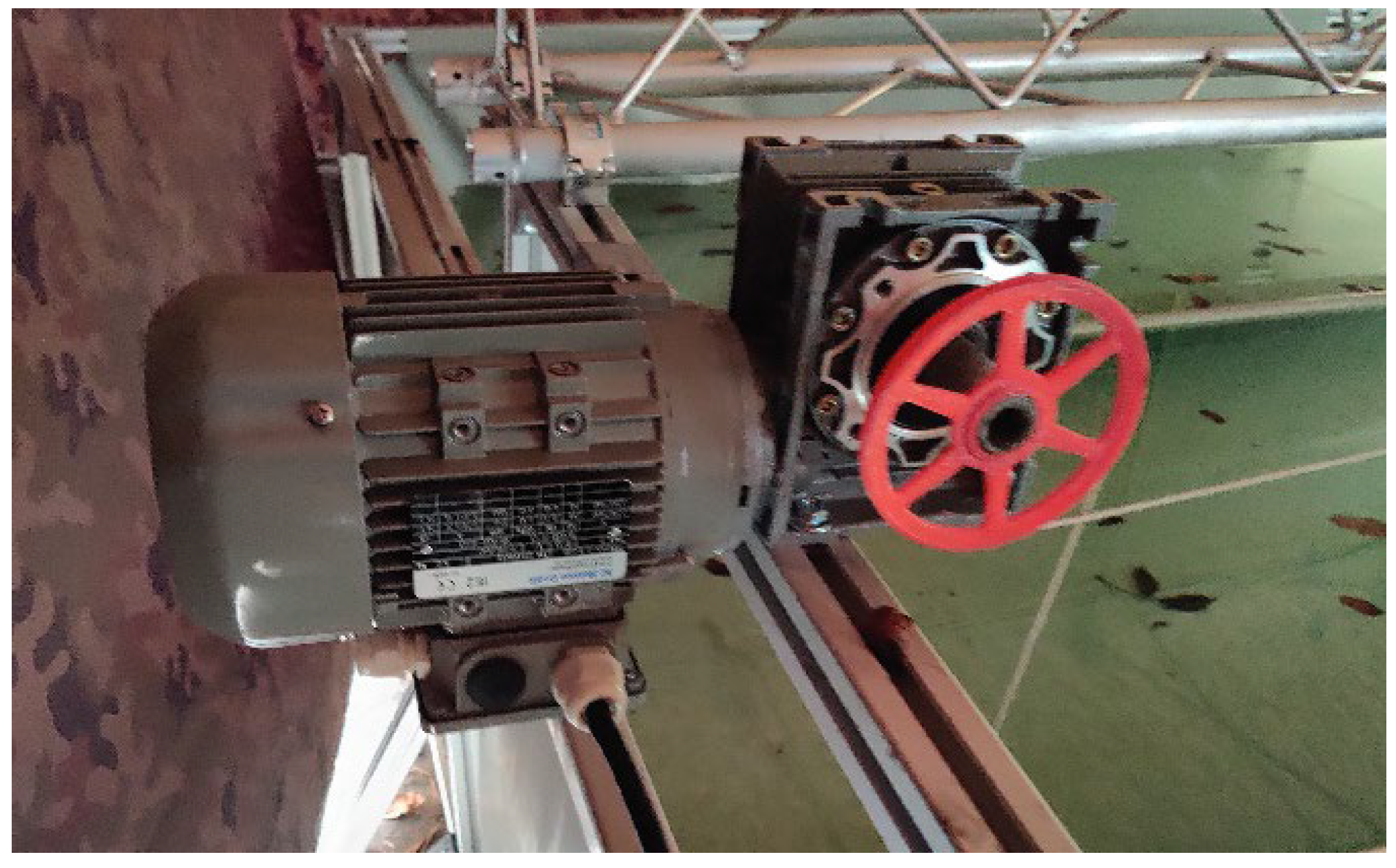
The movement of the models on the bridge was forced externally using an electrically rope drive (
Figure 6).
The system enables achieving and maintaining a prescribed speed equivalent to 0–30 km/h in the full-scale structure. The actual vehicle speed values on the measurement section were obtained based on data recorded by the measurement system. The data showed that the deviations in the vehicle forward speed occurring during the tests were small (90th percentile of deviations at the level of 0.88 km/h, median 0.36 km/h).
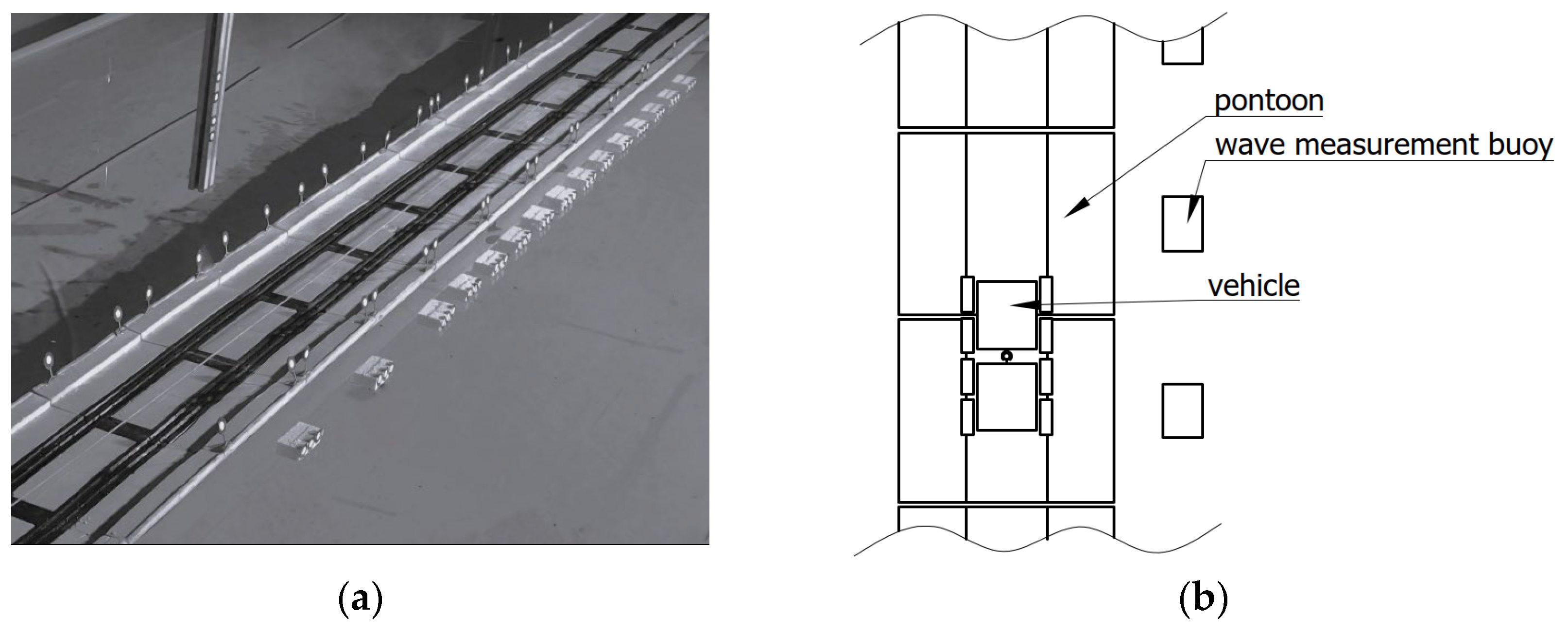
Measuring wave buoys were placed along the bridge. They were made of polystyrene foam with a density of 10 kg/m
3, which is approximately 1% of the density of water. They were immobilized using a tensioned elastic cord stretched parallel to the bridge. The tension of the cord was adjusted so that the buoys maintained their position in the horizontal directions (0x and 0y), while being allowed to move freely in the vertical direction (0z). The buoys were positioned at a distance of 50 mm from the bridge side (
Figure 7).
Measuring the position of the buoy allowed for the measurement of water movements and, consequently, the analysis of its wave characteristics.
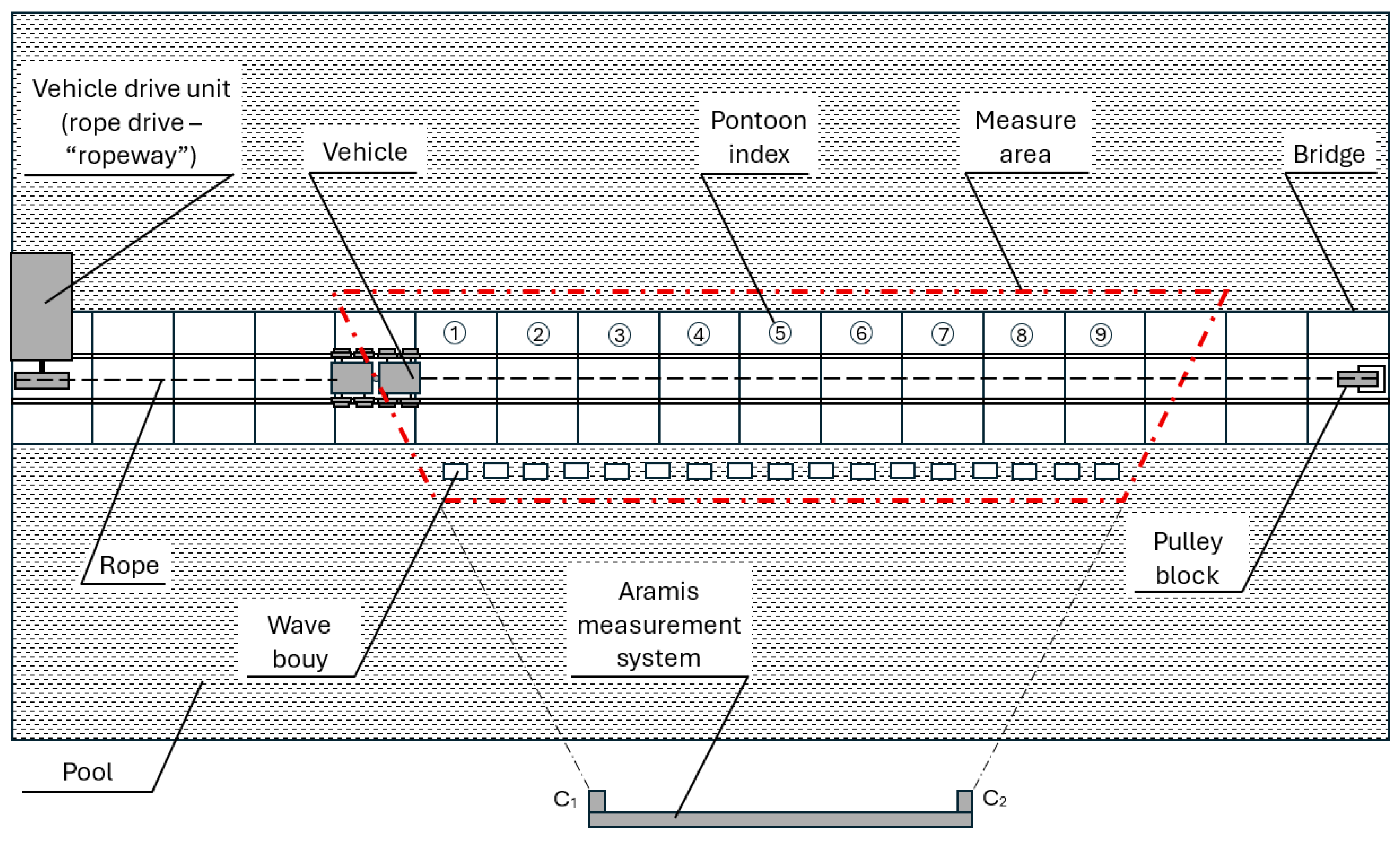
The diagram of the constructed laboratory stand is shown in
Figure 8.
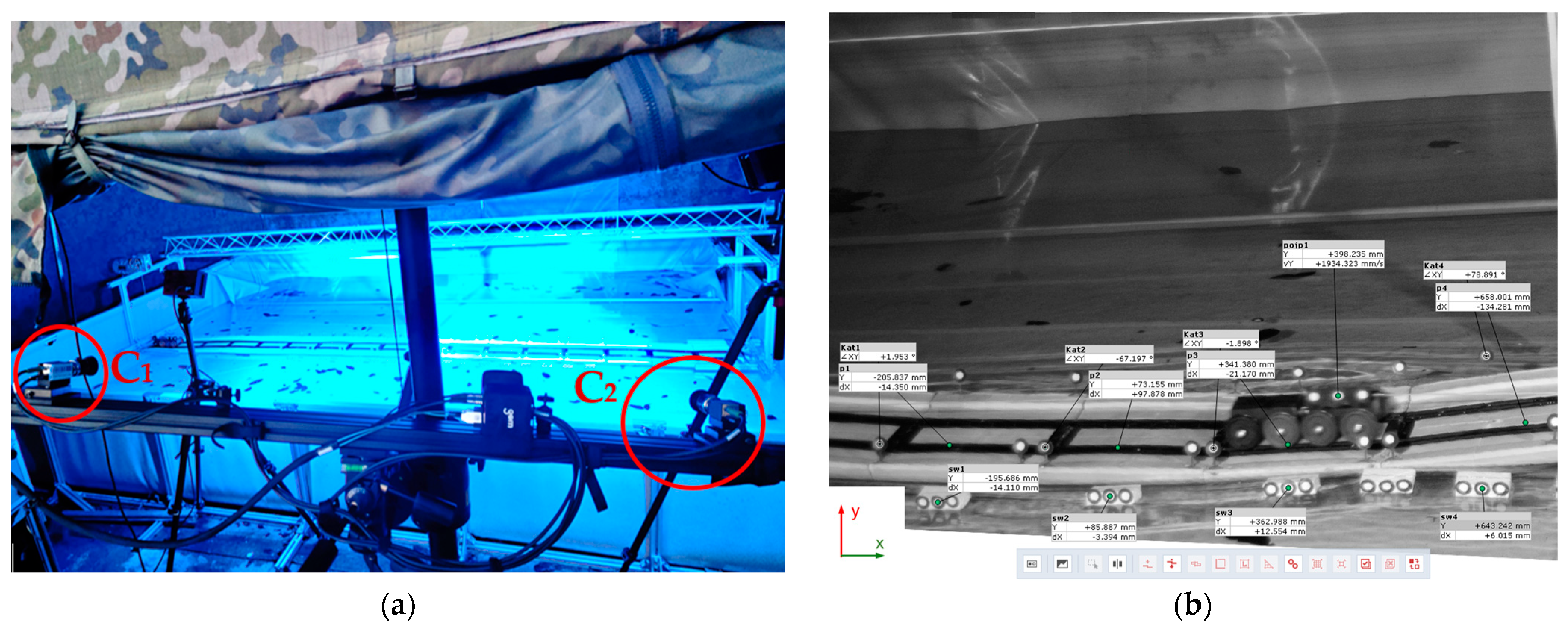
The ZEISS Aramis (Oberkochen, Germany) optical measuring system (
Figure 9) was used for the measurements. It is based on tracking markers placed on the surface of the tested elements and recording changes in their position as a function of time. The measurement accuracy using the system is at the level of 0.1 mm, which is approximately 0.5% of the average value of the amplitude of the displacement of the pontoons of the tested model. Measurements were taken at a frequency of 75 Hz, which is the maximum sampling frequency of the measurement system used. This frequency was sufficient to capture the essential features of the investigated phenomena, as the wave frequencies did not exceed 7.5 Hz. The system used requires a minimum of three markers on each tracked element. The measurement system was calibrated before tests using the standard calibration cross CC20, provided by the manufacturer. The calibration ensured proper camera alignment and measurement accuracy, with the residual error remaining within the manufacturer’s specified tolerance.
During the tests, changes in coordinates describing the position of the vehicle, pontoons and wave buoys on the measuring section were recorded. All values were determined in the same global coordinate system 0xyz, in which the 0x axis was related to the crossing axis and the 0y axis to the vertical direction (
Figure 2). This allowed for direct determination of the relationships between the coordinates of the objects being examined. The analysis used data recorded for objects located in the measurement area (
Figure 8), ensuring stable vehicle speed and no impact of the pool banks on the studied phenomena.
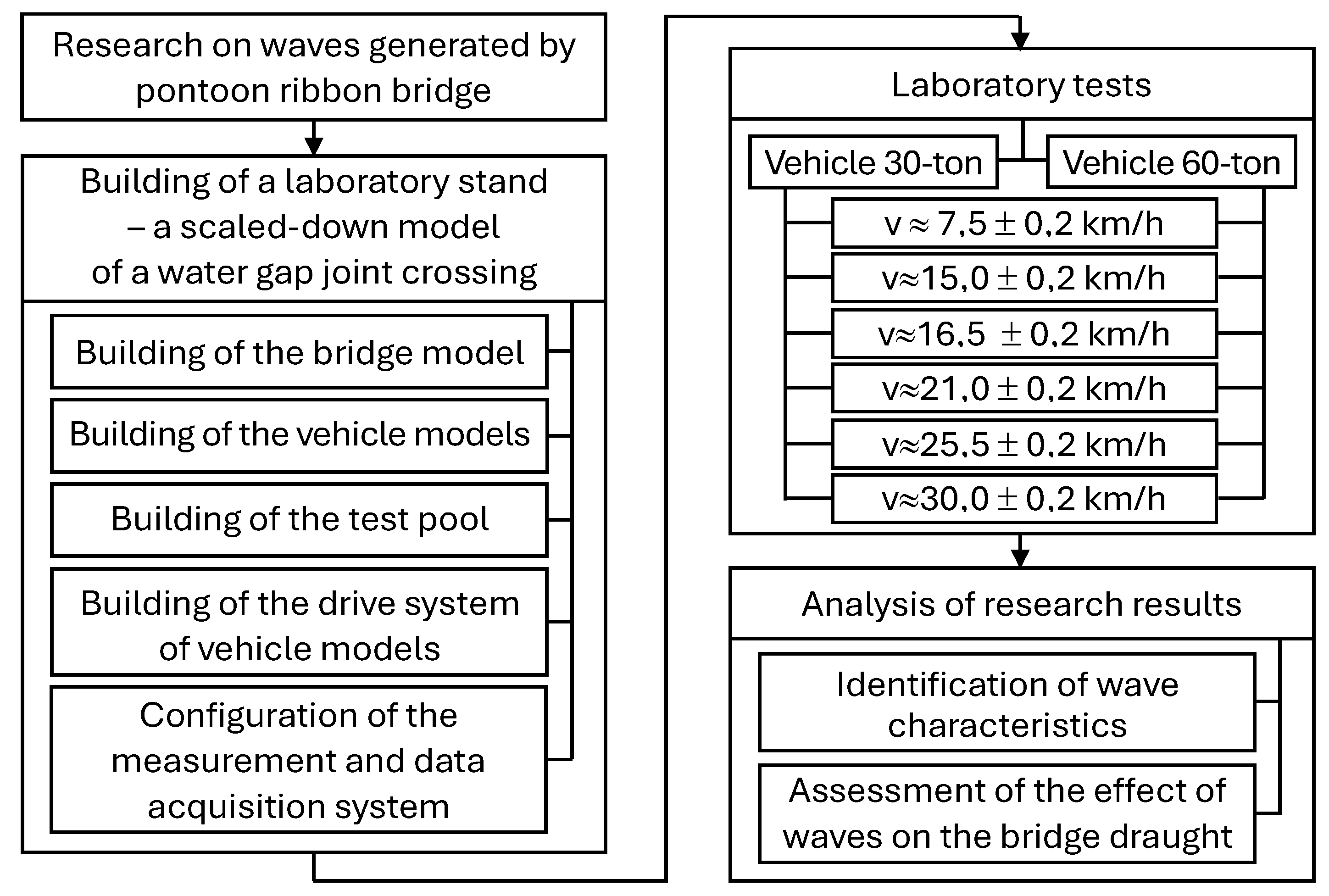
The test plan to demonstrate the effect of the front wave on the draught form of the pontoon bridge is shown in
Figure 10. The methodology illustrated was designed to investigate how the water environment responds to varying vehicle speeds and masses.
3. Results and Discussion
The measurement data were recalculated using the Froude number criterion and scale. Accordingly, all measured quantities (such as speed, length, mass and time scales) were recalculated based on the adopted geometric scale described in
Section 2. The results will be presented in values corresponding to a full-scale real object.
For the purposes of the analyses, it was necessary to prepare characteristics relating to the magnitude of vertical displacements of a given pontoon and its corresponding wave buoy to their distance from the vehicle. This required interconnection of the recorded time courses.
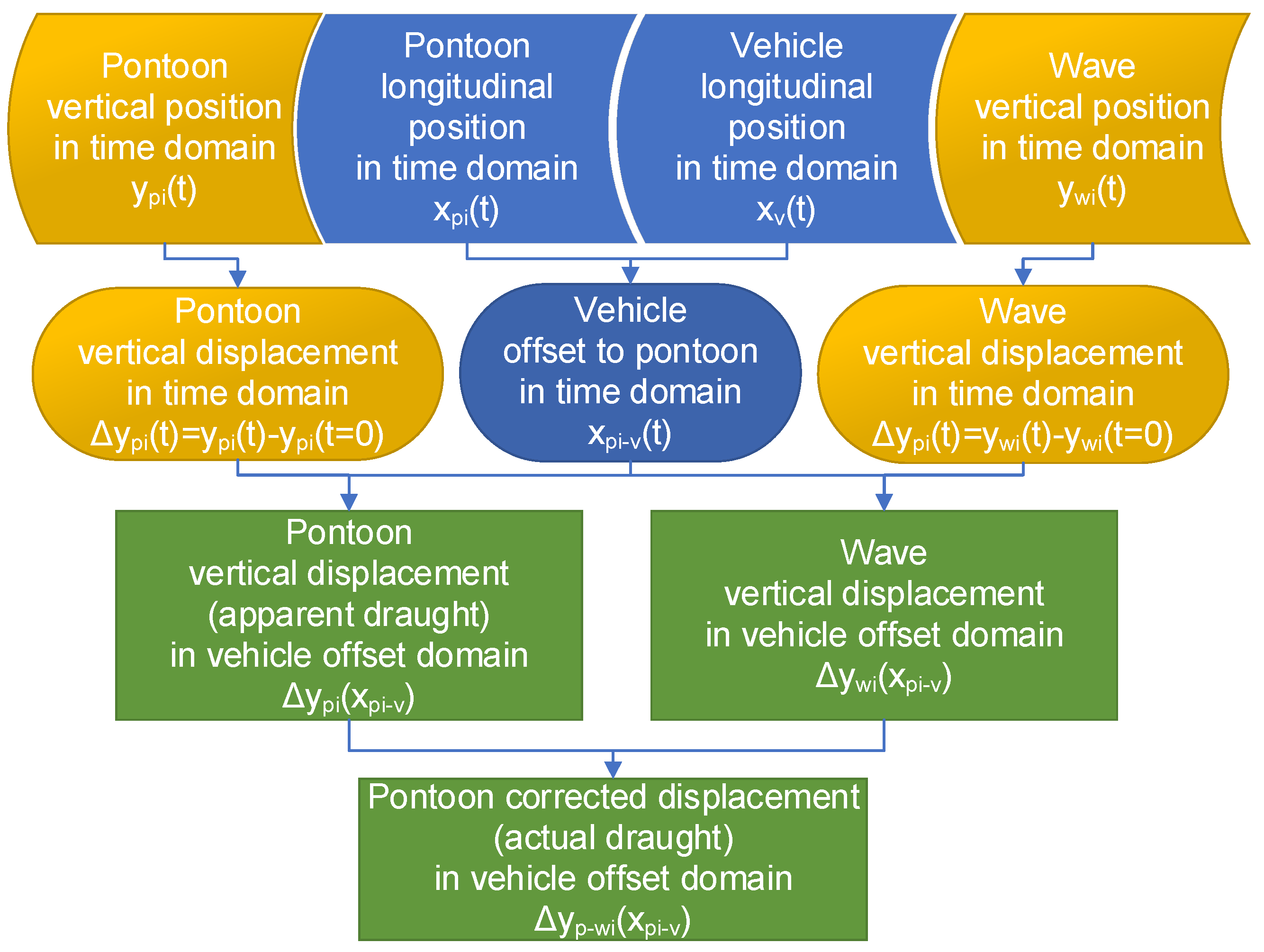
The vertical positions of the i-th pontoon pins ypi(t) and the water surface at the i-th pontoon location ywi(t), recorded during the measurements, were converted to obtain displacement values relative to the equilibrium position: Δypi(t) and Δywi(t). The displacements along the 0y axis were determined with respect to a reference measurement in which the bridge was not loaded with a vehicle, was in a state of static equilibrium and the water surface was free of waves.
Based on the time-domain records of the horizontal positions of the pontoon blocks xpi(t) and the vehicle xv(t). the vehicle-to-pontoon offsets xpi−v(t) were determined.
The vertical displacements Δypi(t) and Δywi(t) were expressed in the domain of vehicle-to-pontoon offsets, xpi−v(t), yielding the relationships Δypi(xpi−v) and Δywi(xpi−v). The Δypi(xpi−v) profiles were interpreted as measurements of draught neglecting wave effects—the apparent draught. Based on the difference between the vertical displacements of the pontoons and the water surface, the corrected pontoon draught values were determined and considered as actual draught. Δypi−wi(xpi−v).
The method of implementing this process is presented in accordance with the diagram shown in
Figure 11.
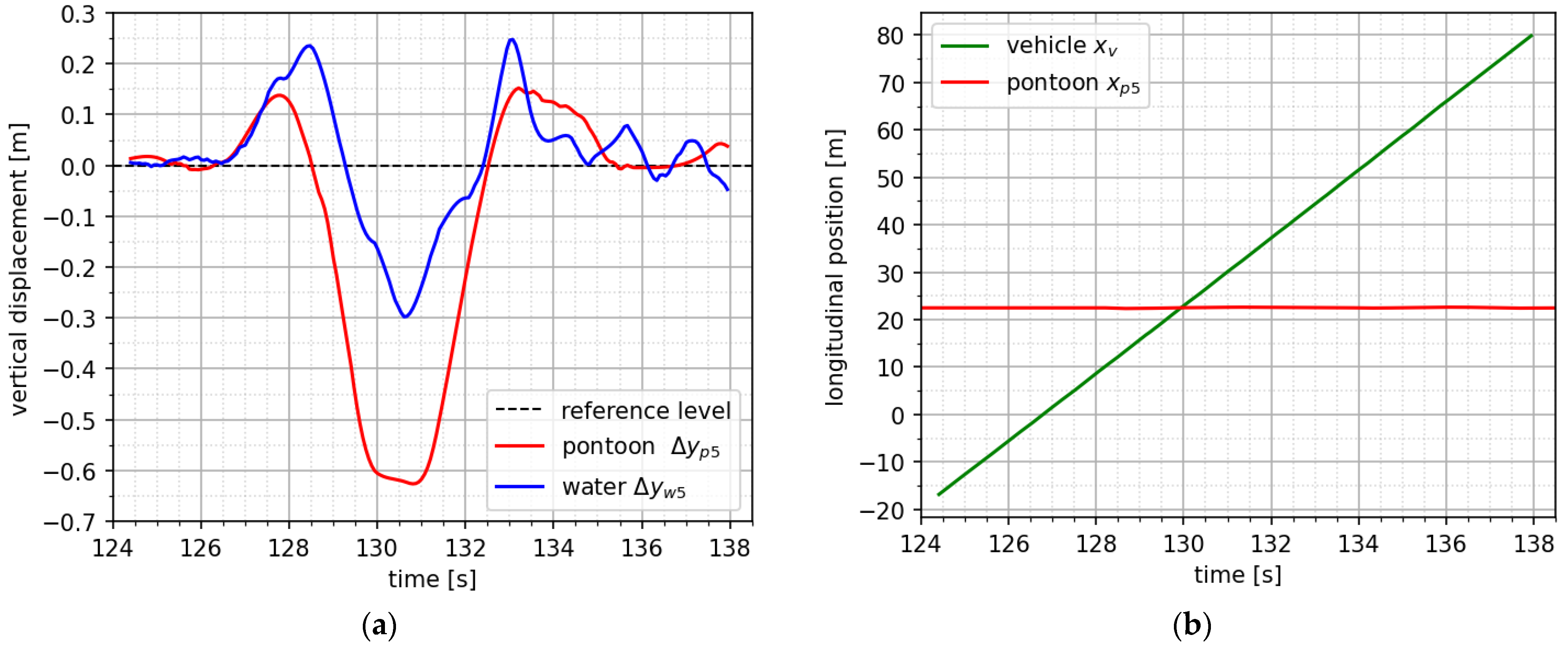
Example time histories of the pontoon
Δypi(
t) and water surface
Δywi(
t) displacements relative to the equilibrium position are presented in
Figure 12a. Example time histories of the horizontal positions of the pontoon blocks,
xpi(
t) and the vehicle
xv(
t), are shown in
Figure 12b.
In turn, measurements in the 0x axis were made relative to a common, global reference system (
Figure 12b). Based on them, the distance of the vehicle from the individual pontoon blocks was determined
xpi −
v(
t) =
xpi(
t) −
xv(
t).
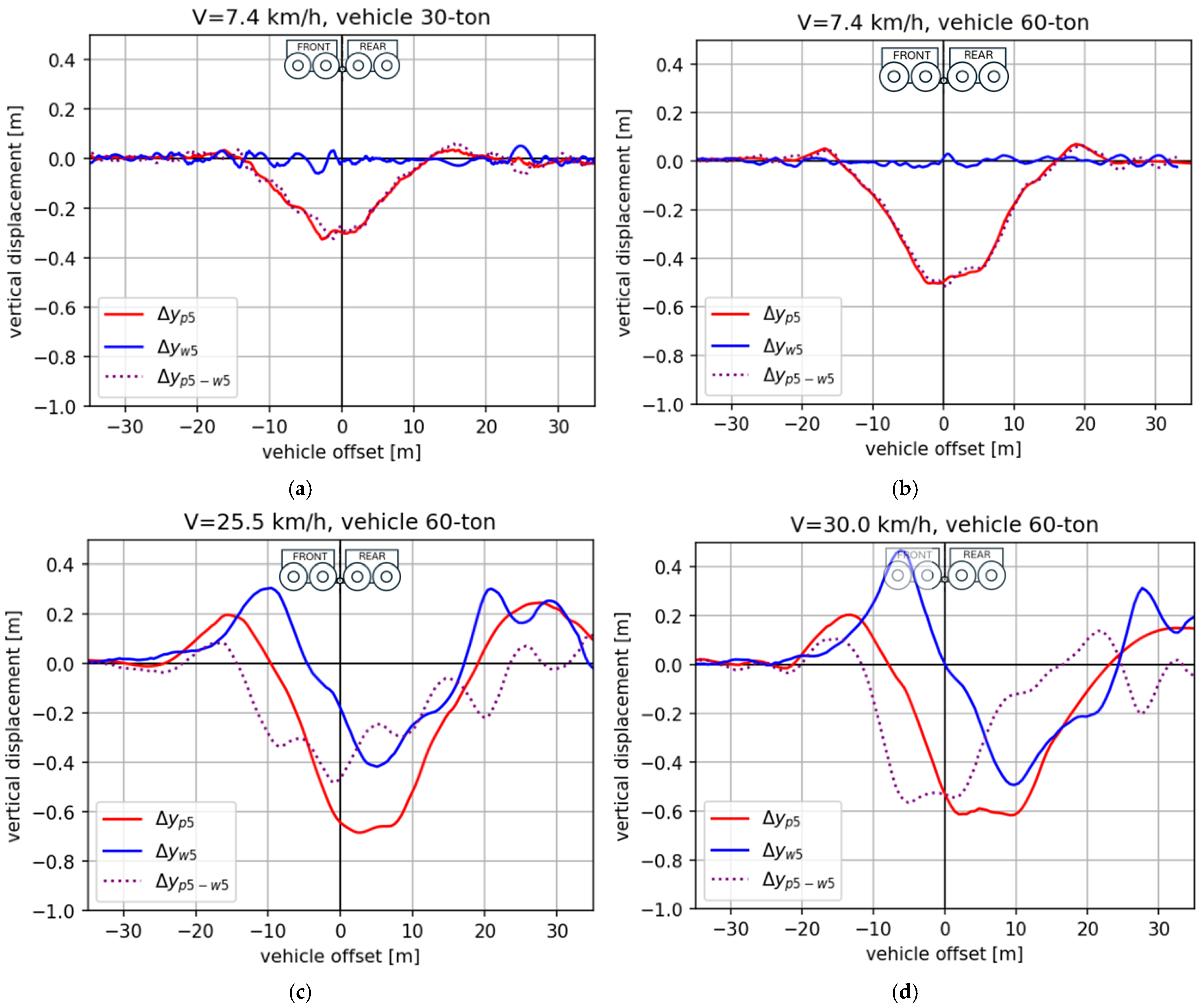
Example graphs showing the characteristics obtained after processing according to the scheme to
Figure 11 are presented in
Figure 13.
In the presented graphs, the coordinate “0” on the horizontal axis scale (0x) corresponds to the position of the vehicle above the center of the pontoon for which the measurement is carried out. Negative values on the 0x axis represent the shape of the bridge deflection and the wave form in front of the vehicle, and positive values represent the shape of the wave behind the vehicle. The “0” coordinate on the vertical 0y axis corresponds to the following:
the location of an undisturbed water surface for water wave characteristics;
the position of the pontoon block corresponding to the reference position, for the characteristics of the vertical displacements of the pontoon blocks;
reference position for the pontoon block, where the buoyancy force balances only its own weight (zero means no load from the crossing vehicle), used to determine the bridge’s draught characteristics due to external forces.
The test results were analyzed to determine the effect of water ripples on determining the maximum draught of the pontoons. This process was divided into two stages. First, the characteristic lengths and amplitudes of the occurring waves and their dependence on the vehicle speed and mass were identified. Changes in the position of the front wave relative to the vehicle were also analyzed. In the second stage, the actual and apparent draught curves of the bridge pontoons were determined and compared. The differences in maximum values were analyzed as a function of vehicle speed and mass and in the context of the influence of the front wave on them.
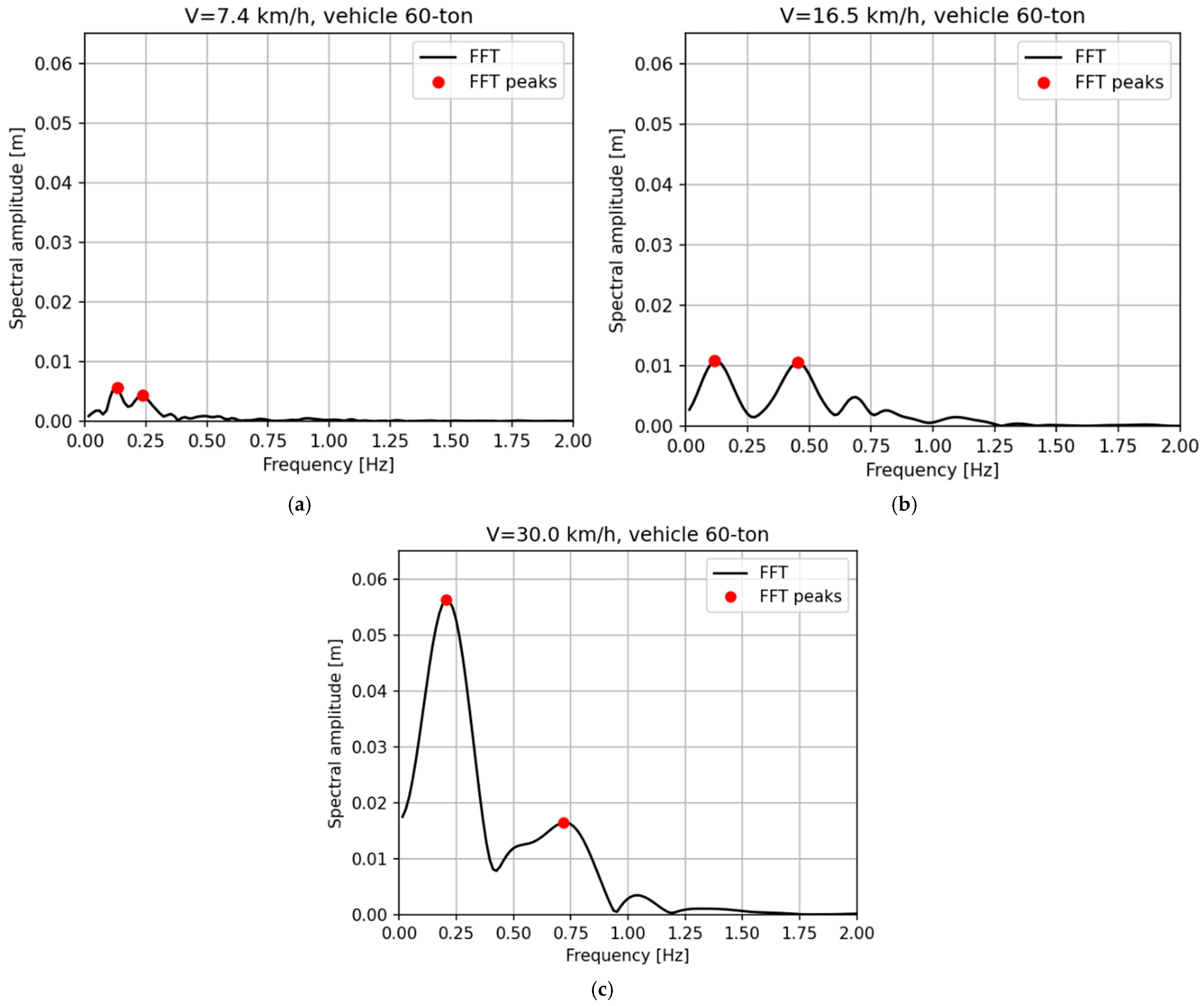
To identify the characteristic wavelengths, a spectral analysis of the waveforms [
Δyw5(
t)] obtained during the FFT tests was first performed. It allowed us to find the main frequencies, i.e., those at which the largest amplitudes appear. Sample results are presented in
Figure 14. The obtained characteristics indicate that two distinct amplitude peaks can be observed in the analyzed waveforms. It was found that the spectral amplitude values increase with increasing vehicle speed, and that for higher speeds, the peaks occur at higher frequencies. However, the FFT spectra alone did not provide a sufficiently clear picture of the overall trends.
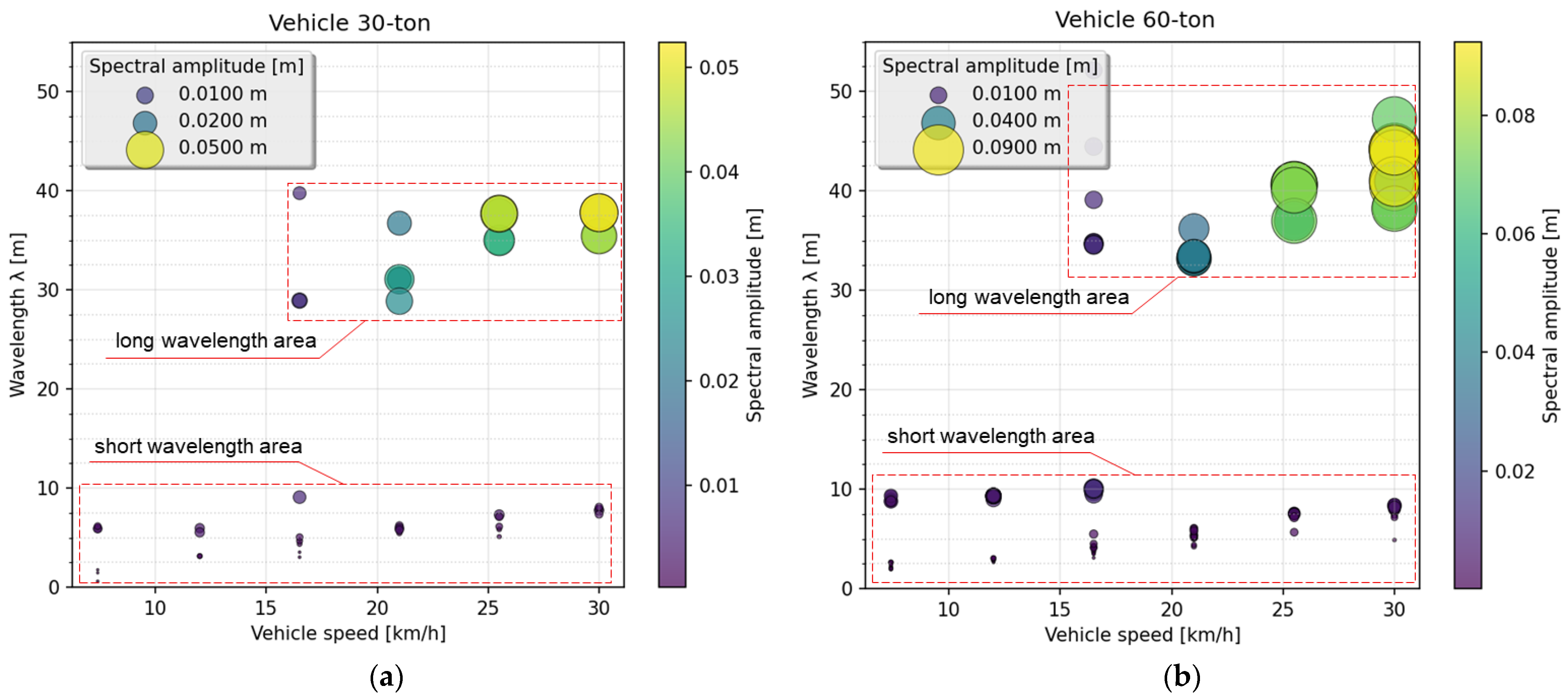
To further analyze the impact of vehicle speed and mass on the characteristics of waves generated by the bridge, a summary of data on their amplitude and length values for the identified characteristic frequencies was prepared. This is presented in
Figure 15. Information about the amplitude value was determined directly from the spectral analysis. The wavelength
λ was calculated knowing the frequency and speed of the wave, according to the following formula:
where
v—speed of the wave [m/s],
f—wave frequency [1/s].
The speed of the wave was assumed to be equal to the vehicle speed. This results from the direct relationship between these two parameters. It should be noted that the factor generating the analyzed waves is bridge deflection, moving along its longitudinal axis. Since the deflection is caused by the vehicle’s weight, its speed simultaneously determines the speed at which this deflection moves.
The circles in
Figure 15 represent two pieces of information. The coordinates of their centers indicate the relationship between velocity and wavelength (left scale). The diameter and color of the circles indicate the amplitude value (right scale and legend). The larger the diameter and lighter the color, the higher the amplitude.
The analysis of the results allows us to conclude that, similarly to the effect visible in frequencies, two wavelength regions can be distinguished, i.e., short wavelength and long wavelength. The first of these are waves with a wavelength of less than 10 m, which occur at any speed. It can be noted that from a speed of 21 km/h they are in the range of 6–8 m for both classes of vehicles. These values are close to the length of a single pontoon (6.9 m). In combination with the low value of the amplitudes, this leads to the conclusion that their source is the independent movements of individual pontoon blocks within the range of clearance occurring in the joints.
The second area includes waves with a length of approximately 30–50 m. They become visible only at a speed of 16.5 km/h, but their amplitude is then small. A significant increase occurs from a speed of 21 km/h. Comparison of the results for both vehicle classes shows their significant similarity in this range and an increasing tendency with speed. Analysis of the changes in wavelength from a speed of 21 km/h lead to similar conclusion This applies especially to the 60-ton vehicle. In this case, there is a clearly visible tendency for the wavelength to increase with vehicle speed (
Figure 15b). This relation allows for the identification of the long wavelength region as representing wave fronts.
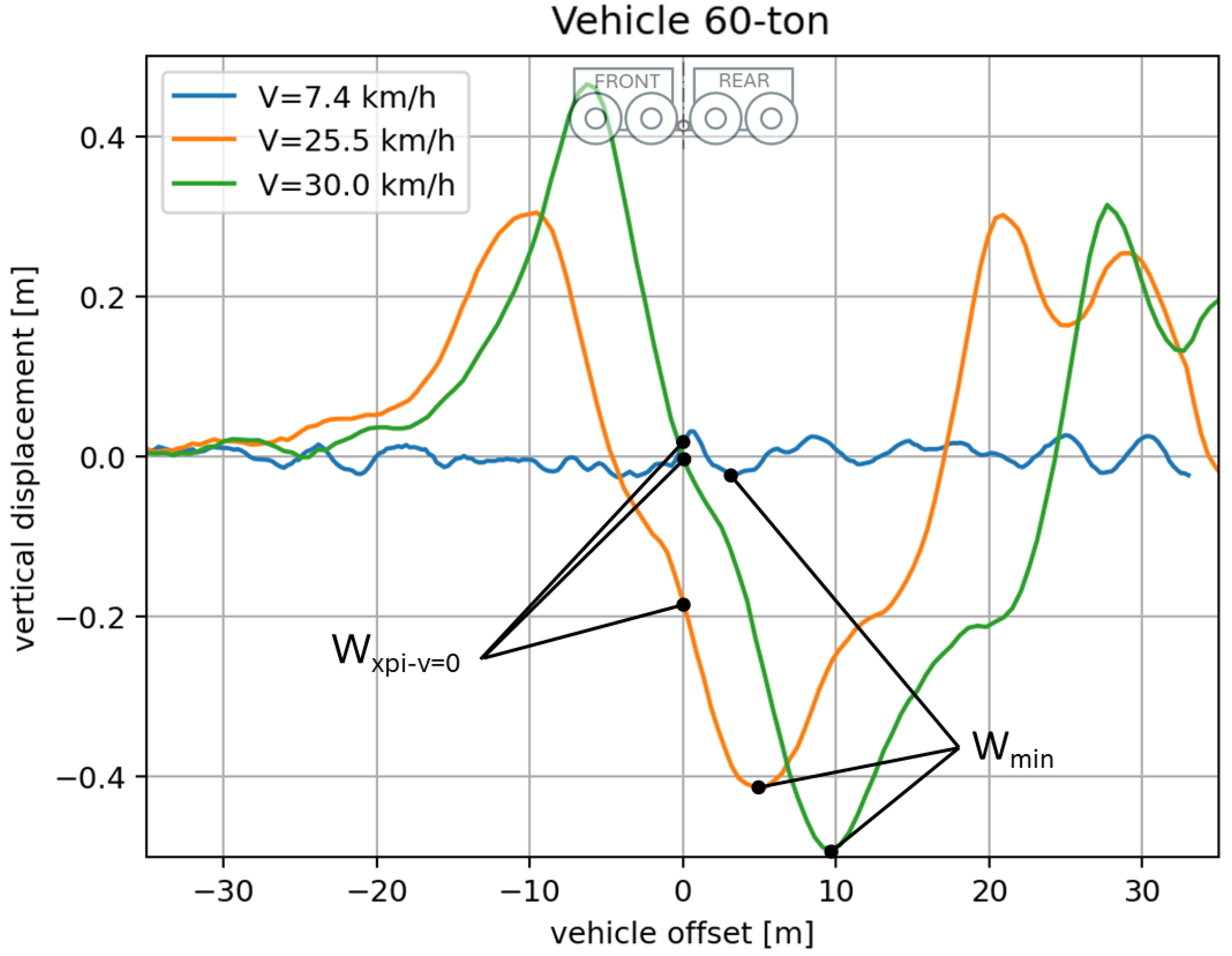
In the next stage of the analysis, the following characteristic points describing the wave profile Δywi(xpi − v) were determined:
the maximum values of the trough (
Figure 16:
Wmin);
the free-surface water level at the vehicle location (
Figure 16:
Wxpi−v=0).
The characteristic points were identified for each recorded wave form and subsequently subjected to further analysis. The displacement of the free water surface (
Δywi) at the wave trough points (
Wmin) was evaluated. The mean values and the 95% confidence intervals (CI) for the vehicle mass and speed are presented in
Table 1.
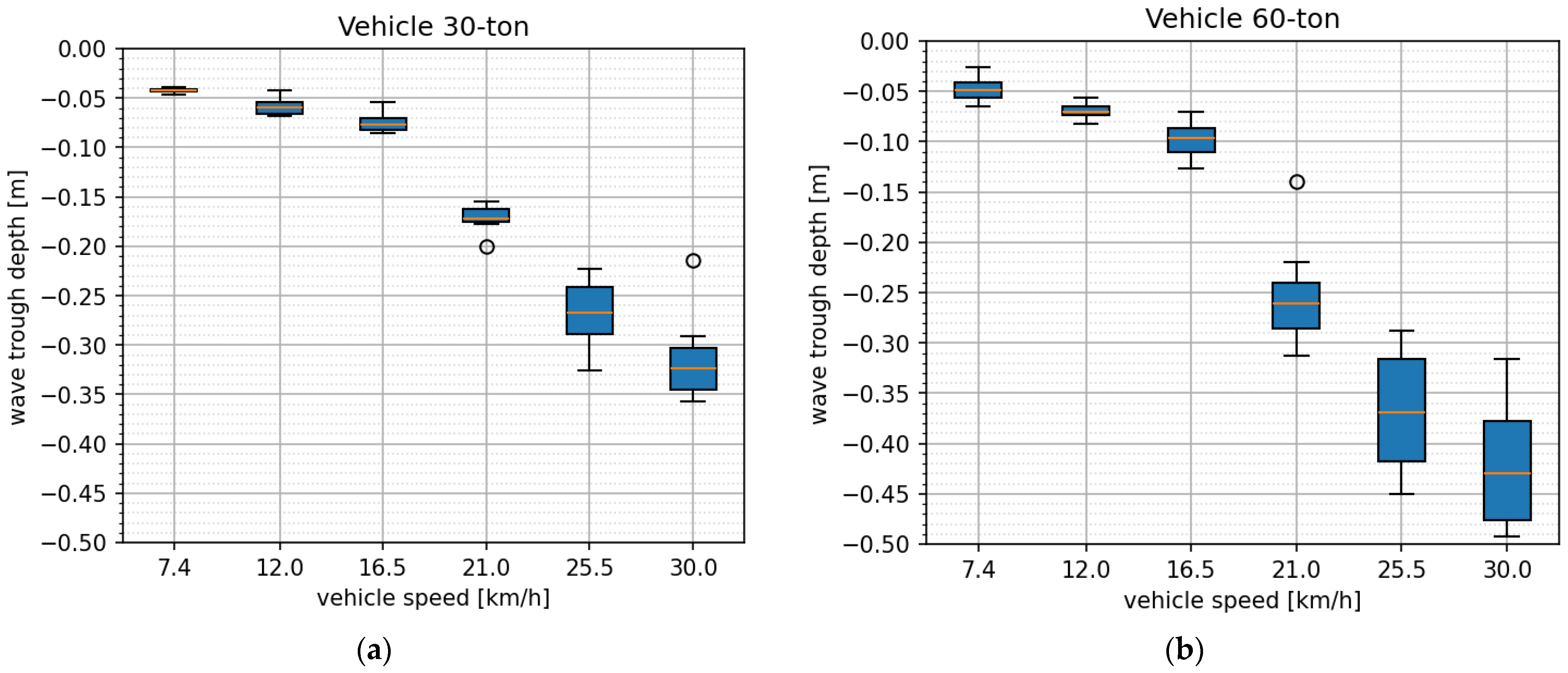
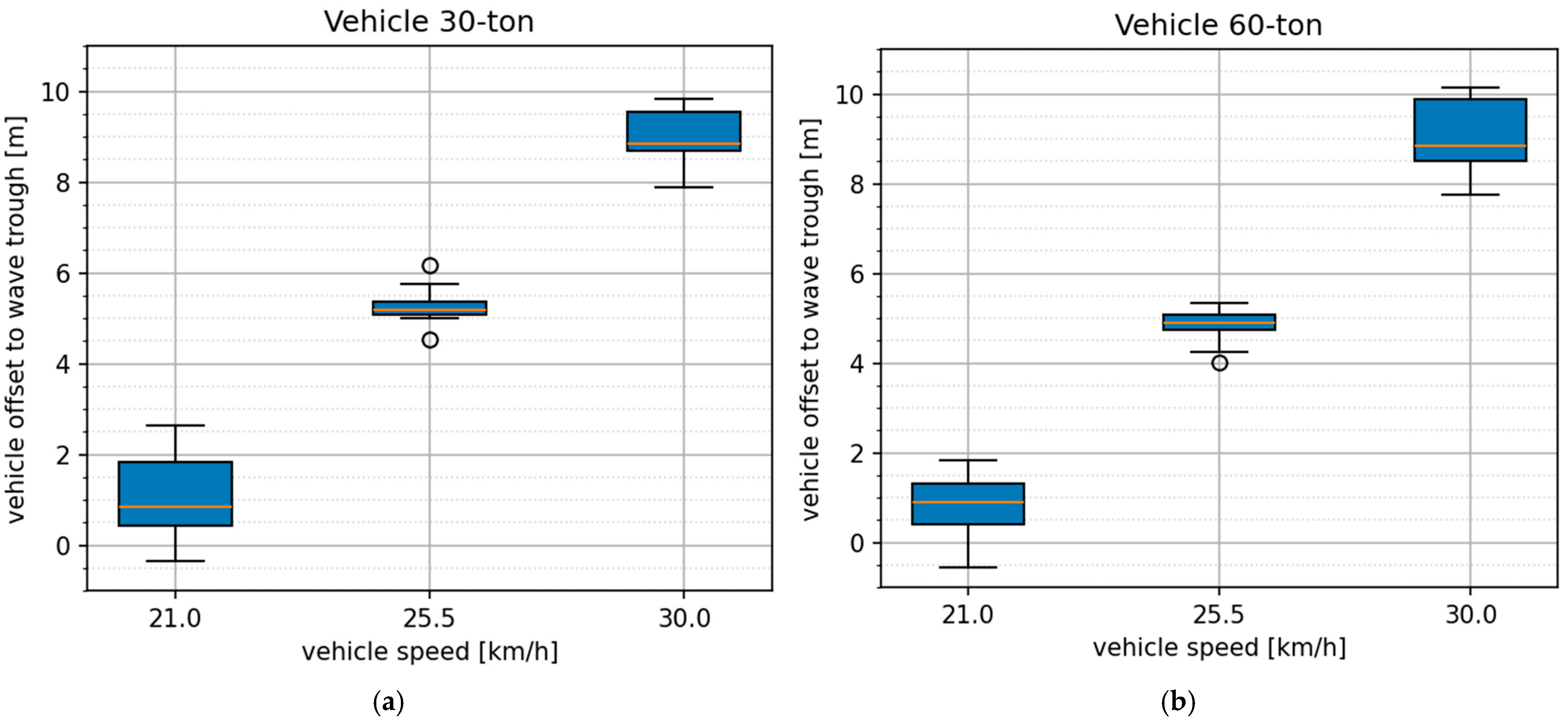
The obtained results are presented in
Figure 17 in the form of box plots, in which the following measurements are indicated:
Thick line inside the box: indicates the middle value—the median of the data distribution;
The box bounded by the lower and upper quartiles (Q1 and Q3) represents the range of values encompassing the middle 50% of observations (the so-called interquartile range, IQR);
The whiskers extend from the box boundaries to the minimum and maximum values within the range: from Q1 − 1.5∙IQR to Q3 + 1.5∙IQR;
Circles indicate outliers, indicating specific cases outside the range defined for the whiskers.
Figure 17.
Representation of the distribution of identified values of maximum wave trough depth as a function of vehicle speed: (a) 30-ton vehicle, (b) 60-ton vehicle.
Figure 17.
Representation of the distribution of identified values of maximum wave trough depth as a function of vehicle speed: (a) 30-ton vehicle, (b) 60-ton vehicle.
It can be seen that between the speed ranges of 7.4–16.5 km/h and 21–30 km/h there is a significant increase in the depth of the trough. Considering this effect in the context of the conclusions from the frequency analysis, it can be stated that it results from the appearance of a front wave, which starts to have high amplitude values from 21 km/h.
In turn, the analysis of waveforms in the lower velocity range, especially for the lowest value (
Figure 13), indicate that no dominant trough can be distinguished in them. There are several of them with similar depths and at different distances from the vehicle.
This confirms the conclusion drawn from the analysis of the spectral patterns, that their source is the independent movements of individual pontoon blocks within the range of clearances in the joints connecting them. This results in troughs of small depth, widely dispersed along the corresponding courses. However, no significant contribution of the front wave is observed there.
In the speed range of 21–30 km/h, where a clear form and increasing value of the front wave trough was observed, additional analysis was conducted. The offset from the vehicle to the wave trough points (
xp−vi) was evaluated. The mean values and the 95% confidence intervals (CIs) for the vehicle mass and speed are presented in
Table 2. Its purpose is to determine how the distance of the front wave trough from the vehicle changes. The obtained results are presented in
Figure 18.
Based on
Figure 18, it can be concluded that this parameter increases with vehicle speed. However, its values are similar for both vehicle classes. This indicates that the main factor in this change is speed. As a result of this effect, the water level changes at the location where the vehicle is currently located (
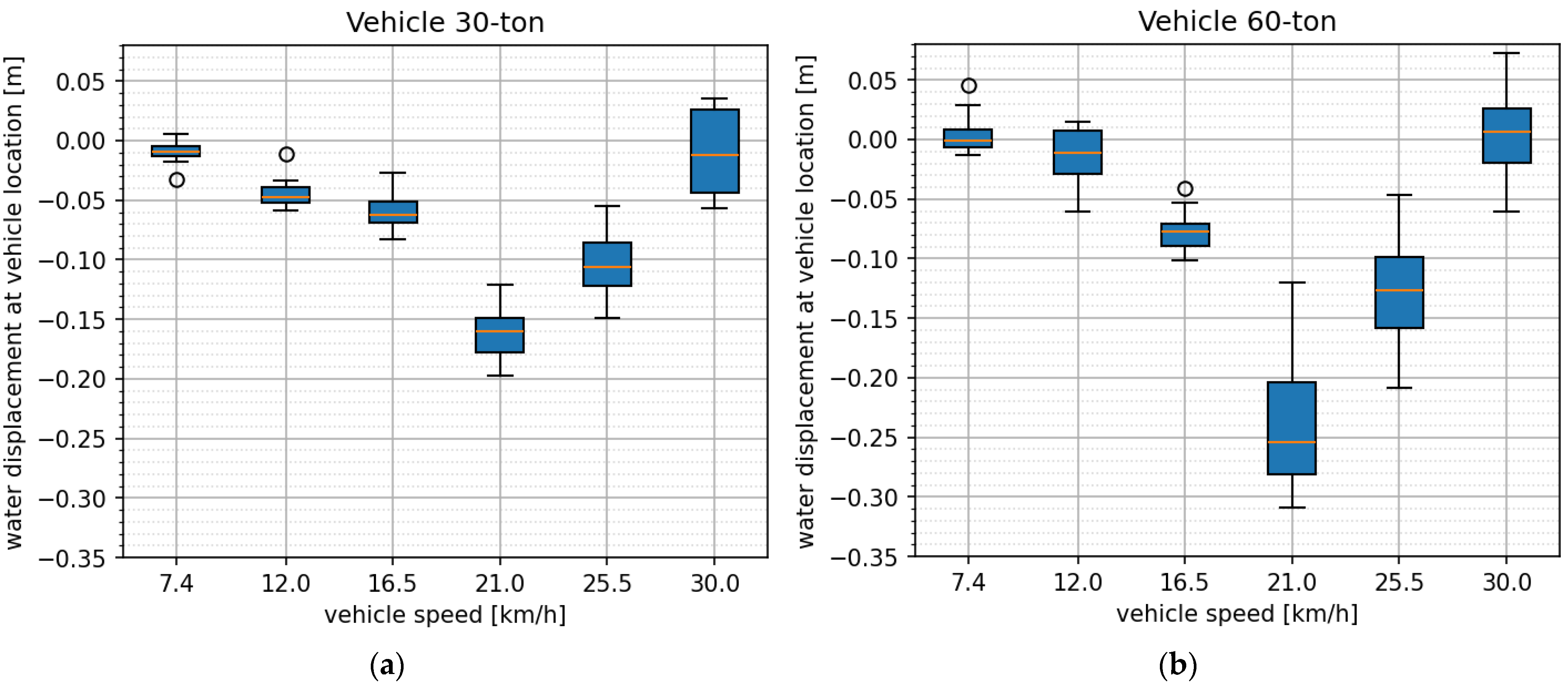
Figure 17:
Wxpi−v = 0). The displacement of the free water surface (
Δywi) at the vehicle location was evaluated. The mean values and the 95% confidence intervals (CI) for the vehicle mass and speed are presented in
Table 3. The results are presented in the form of boxplot in
Figure 19.
It should be noted that for the lowest and highest tested speed, the obtained values are very similar and close to zero. The greatest reduction in the water level occurred at a speed of 21 km/h. It can also be stated that for a 60-ton vehicle, the reduction was almost 60% greater than for a 30-ton vehicle.
The final stage of the analysis was to determine the effect of water waves on the maximum draught of the bridge pontoons. This was achieved by comparing the following draught characteristics:
Based only on the measurement of vertical displacements of pontoons (yDAP)—apparent draught;
Resulting from the difference between the vertical displacement of the pontoons and the water surface (yDAC)—actual draught.
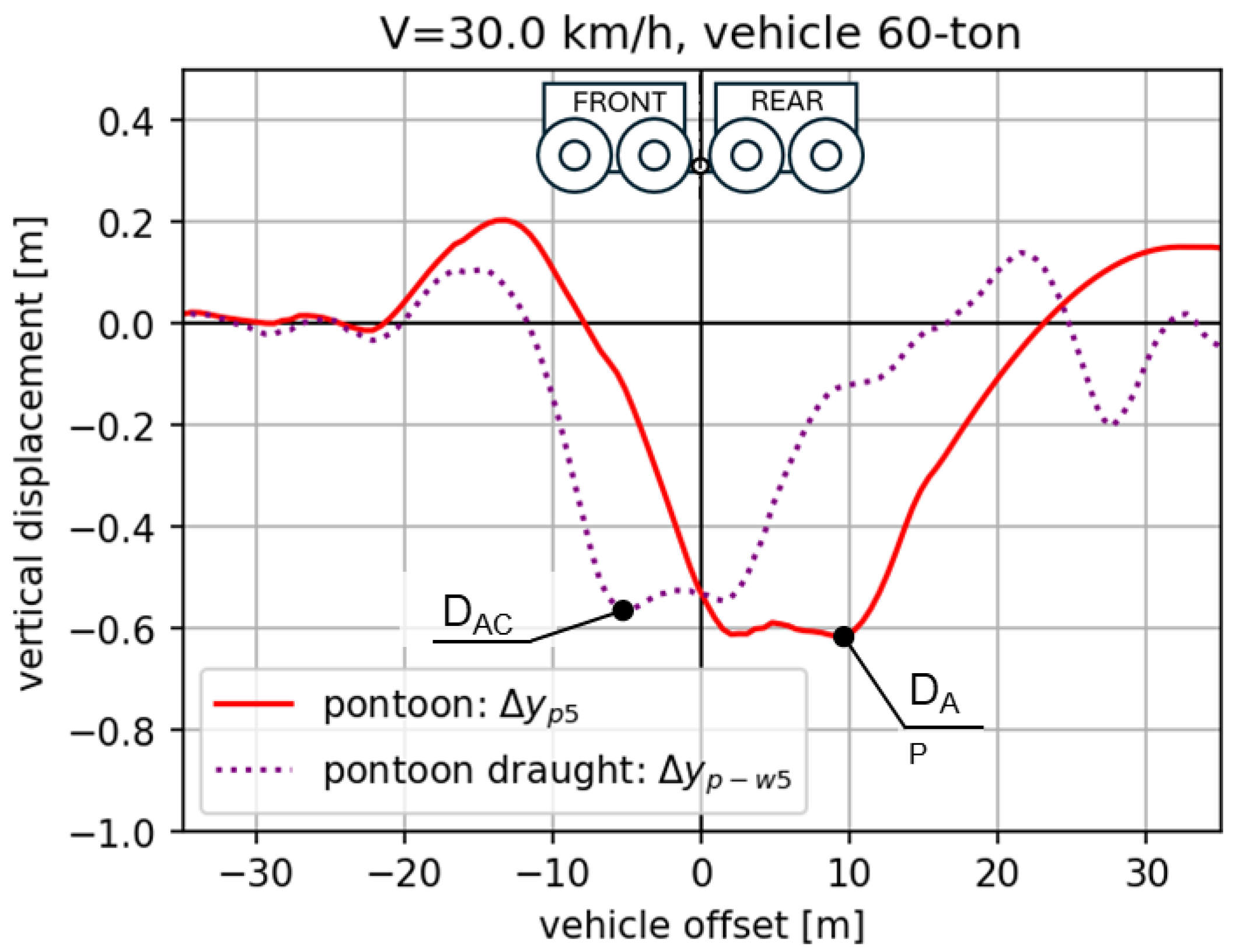
An example of their form is presented in
Figure 20. They also have points marked on them, indicating the locations of both the apparent
DAP and the actual
DAC draught troughs.
The apparent draught (
xDAP) and the actual draught (
yDAC) results obtained for both vehicle classes and all tested speeds were evaluated. The mean values and the 95% confidence intervals (CIs) for the vehicle mass and speed are presented in
Table 4 and
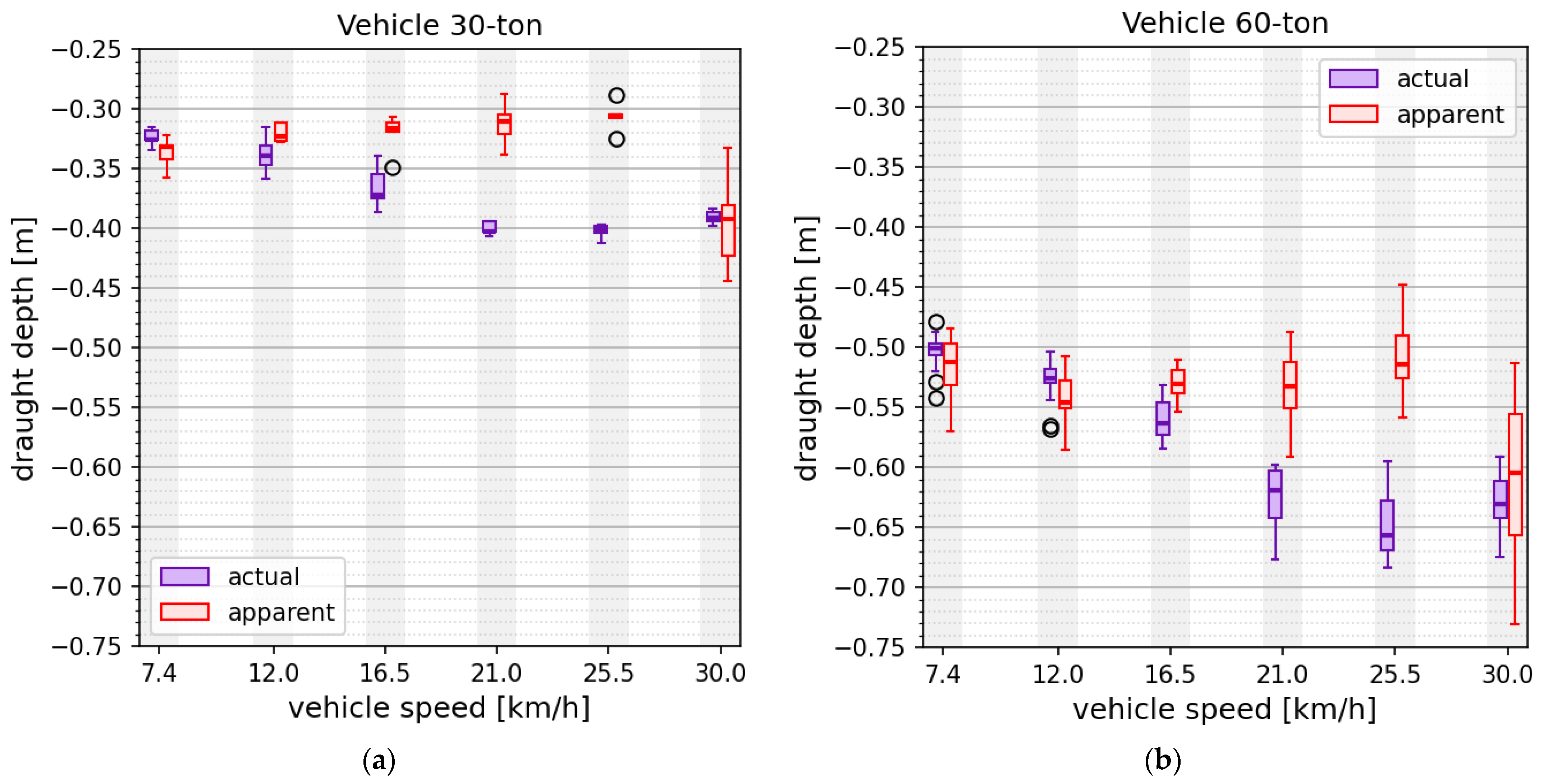
Table 5. A summary comparison of the actual and apparent draught in the form of a boxplot is presented in
Figure 21.
In order to determine the significance of the differences between the actual draught and apparent draught values, the Mann–Whitney test was performed. The significance level was
α = 0.05 and the obtained results are presented in
Table 6.
According to the test assumptions, the groups studied are significantly different if p-value < α. This condition is met for both classes of vehicles at speeds in the range of 16.5–25.5 km/h, with a statistically significant increase in draught depth value.
It is worth noting that the condition of significant differences is not fulfilled for the two lowest values and the highest value of speed of both vehicle classes. For 7.4 km/h and 12 km/h this is due to the absence of a front wave and the low depth of the wave troughs generated by the independent movements of individual pontoon blocks. However, for 30 km/h, where the front wave occurs and is characterized by the greatest trough depth, the low influence on the maximum draught results from its large displacement relative to the vehicle (
Figure 18). Both of these effects are taken into account by the parameter describing the water level at the vehicle location (
Figure 19).
The results clearly show that the waves generated by vehicles moving on a ribbon-type pontoon bridge influence the maximum draught of its pontoons. The effect is most evident for speeds between about 16.5 and 25.5 km/h, where the presence of the front wave causes a noticeable and statistically significant increase in draught depth, reaching up to 30%. At lower speeds, this influence is negligible due to the absence of a front wave, while at the highest speed it decreases because the wave trough shifts away from the vehicle. In summary, the findings confirm that the hydrodynamic effects produced by vehicle movement should be taken into account when determining the maximum draught of pontoon bridges.
The obtained results also allow us to note that the 60-ton vehicle generates 55–65% higher actual drag depth values than the 30-ton vehicle. Therefore, they are not proportional to the relationship between their masses.
4. Conclusions
This paper addresses the question of whether the waves caused by the movement of vehicles on a ribbon-type pontoon bridge have a significant impact on determining the maximum draught of its pontoons. This is important from the point of view of the hydrodynamic interactions acting on its structure and the internal forces generated in it [
7]. In addition, the authors wanted to determine how the parameters of these waves change with changes in the speed of the vehicles and their mass.
In [
22], which is a technical manual of one of the ribbon-type pontoon bridges, the authors mention a wave generated by the movement of vehicles on a bridge, which they call the front wave. The authors draw attention to its negative impact on this type of crossing over a water obstacle, but do not give any parameters of this wave, nor the level of its negative impact.
In the available publications on pontoon bridge research, the authors consider the waves generated by external environmental factors. There is, however, a lack of consideration of the phenomenon of the frontal wave in publications describing analytical and numerical models [
2,
3,
11,
12,
13,
14,
15,
16,
17,
18,
19]. At the same time, in the publications [
2,
13], in which the results of validation of numerical models are presented, the authors show their discrepancies, which reached 24% in the case of determining the displacements of the pontoon block. However, they did not identify the factors causing these discrepancies.
Thus, there is an identifiable research gap when it comes to the frontal wave phenomenon in ribbon pontoon bridges. The authors’ contribution to this area is the experimental identification of the characteristics of this wave as a function of the speed and mass of the vehicles and the determination of its effect on the maximum draft of the pontoons.
However, several methodological limitations should be acknowledged. The experiments were conducted at a laboratory scale, which may introduce scale effects, such as differences in viscous behavior compared to full-scale conditions. To reduce the negative impact of this limitation, a model of the crossing was constructed with dimensions as close to reality as possible. Tests were performed in still water, without currents or wind. However, it should be noted that to understand the phenomenon under analysis, the absence of any potentially confounding factors was desirable. Only one geometry and one method of connecting pontoon blocks were tested, which limits the generalization of the results to other configurations. Nevertheless, it should be emphasized that most ribbon-type pontoon bridges available on the market employ an analogous pontoon-connection system, and their geometry is also similar to that used in this study. The free-surface elevation was measured laterally, in the region adjacent to the tested bridge, which may not fully capture three-dimensional wave and motion effects. Finally, vehicle motion was driven by a cable system rather than real traction, which may alter dynamic responses compared to self-propelled movement. To minimize the negative effects of this difference, the measurements were performed at a stabilized driving speed, and the vehicle model was equipped with relatively large and rigid wheels.
The obtained results can be a source of data for building more reliable numerical models used in the research of pontoon bridges. They will also be a reference point for scientists who conduct identification studies on other models of laboratory pontoon bridges.
The results of the identification tests showed that the wavelength and amplitude of the waves generated by the bridge varied throughout the entire range of vehicle speeds tested. However, change in weight did not have a significant impact.
Due to the length, the authors distinguished two areas, which were called the area of short and long waves. This division is also indirectly related to the values of their amplitudes.
The shortwave area (
λ < 10 m) can be distinguished in the entire range of analyzed velocities (
v = 7.4–30 km/h). Changes in the length of the waves do not show a clear relationship with the speed and weight of the vehicle (
Figure 15). The same is true for amplitudes. It can also be argued that the troughs of this wave range are visible on the waveforms in front of and behind the vehicle (
Δyw5—
Figure 13a,b) and have similar depths. The combination of this information leads the authors to conclude that this length range does not represent the front wave. This is especially supported by the fact that there are troughs in front of and behind the vehicle. As the name suggests, the front wave should be on its frontal side. According to the authors, the source of waves of this length is the effect of mutual locking and unlocking of the joints between the pontoons.
The effect of short waves has no significant impact on the maximum draught of the pontoons. The ratio of the trough of these waves to the value of the maximum vertical displacement of the pontoon (apparent draught
Δyp5—
Figure 13a,b) does not exceed 4%.
The area of long waves (
λ < 30–50 m) can be distinguished from the speed of 16 km/h. Their amplitudes are several times higher than those of the waves from the short area, and the value of their amplitudes (
Figure 15) and the depth of the trough increases significantly with speed (
Figure 17a,b). It can also be stated that when the wave trough occurs (
Wmin—
Figure 16), its distance from the vehicle increases with speed. These features lead the authors to classify a wave in this length area as a frontal wave.
The influence of the front wave on the value of the actual draught of the pontoons in the studied laboratory model is variable. At the lowest (7.4 km/h) and highest (30 km/h) tested speeds is relatively small—approximately 3% for both vehicle weights (
Figure 21). The greatest effect of the front wave on the maximum actual draught was observed at a speed of 21 and 25 km/h. In both vehicles (30-ton and 60-ton), it increased by approximately 20–30%.
The increase and then decrease in the effect of the front wave on the actual maximum draught of the bridge pontoons is caused by the moving away of the front wave trough from the trough of the apparent draught of the pontoon. At a speed of 21 km/h this distance was about 1 m, and at 30 km/h it increased to 9 m. These values are similar for 60-ton and 30-ton vehicles. However, the front wave trough depth for the heavier vehicle is approximately 55–65% greater than for the twice-lighter vehicle.
A similar pattern of discrepancies between the laboratory measurements, which include the wave effects and the numerical simulations that neglect them, can be observed in the graphs presented in [
3], where the discrepancies reached 29% at a speed of 21.6 km/h and only 2% at 32.4 km/h. This consistency suggests that the differences reported in numerical simulations may result from the omission of the front wave phenomenon in the applied computational model.
Neglecting the front wave phenomenon in numerical analyses can lead to an underestimation of the maximum pontoon draught by more than 25%. Therefore, the research question posed in this study can be answered affirmatively—the waves generated by vehicle motion do have a significant impact on the draught of the pontoons, particularly within a specific range of vehicle speed.
Future work may focus on several directions, analyzing other aspects of the influence of the front wave on the bridge’s behavior, including the following:
Its effect on the bridge’s working length;
Its effect on the values and distribution of buoyancy forces along the bridge’s working length;
Its effect on the bridge’s bending moment.
Furthermore, the improvement of the simulation models by incorporating the front wave effect will support further, more realistic, numerical analyses in new research areas.