Article

Development of a Monitoring Method for Powered Roof Supports

1
Faculty of Geoengineering, Mining and Geology, Wroclaw University of Science and Technology, Na Grobli 15, 50-421 Wroclaw, Poland
2
KWK Ruda Ruch Bielszowice, ul. Halembska 160, 41-717 Ruda Śląska, Poland
3
Center of Hydraulics DOH Ltd., ul. Inwestycyjna 10, 41-940 Piekary Śląskie, Poland
4
Faculty of Organization and Management, Silesian University of Technology, 44-100 Gliwice, Poland
*
Author to whom correspondence should be addressed.
Appl. Sci. 2025, 15(23), 12828; https://doi.org/10.3390/app152312828
Submission received: 7 October 2025 / Revised: 16 November 2025 / Accepted: 27 November 2025 / Published: 4 December 2025

Abstract

The main objective of this study was to develop a comprehensive testing method for powered roof supports operating under real mining conditions and to establish guidelines for a monitoring system designed to record their geometric and operational parameters. The proposed methodology included analyses of load-bearing capacity limits, laboratory model tests, bench tests, and in situ investigations under actual working conditions. Based on these studies, a detailed testing procedure was developed, defining the sequence of experimental stages, the selection and calibration of sensors, their installation and servicing methods, as well as the integration of measuring equipment with the support structure. The key results demonstrate that the proposed method allows for reliable acquisition and interpretation of data concerning the operational behavior of powered roof supports. The findings enabled the identification of critical geometric and operational parameters influencing the stability, durability, and efficiency of the support system. The developed monitoring procedure, supported by both laboratory and field tests, provides a consistent and replicable framework for assessing the performance of roof supports in real-time mining operations. The conclusions confirm that the presented approach represents an innovative and systematic method for evaluating and monitoring powered roof supports under real conditions. The main contribution of this work lies in the formulation of universal guidelines for the design and implementation of monitoring systems, significantly improving the safety, reliability, and efficiency of mining processes.

1. Introduction

Despite the large and rapidly evolving economic changes that we have seen in recent years, in particular in the energy sector, coal continues to be the world’s primary energy resource. Its position is particularly important and significant for the economy. It should also be noted that coal is a strategic raw material for coke production and is widely used in other industries, such as chemistry [1,2,3].
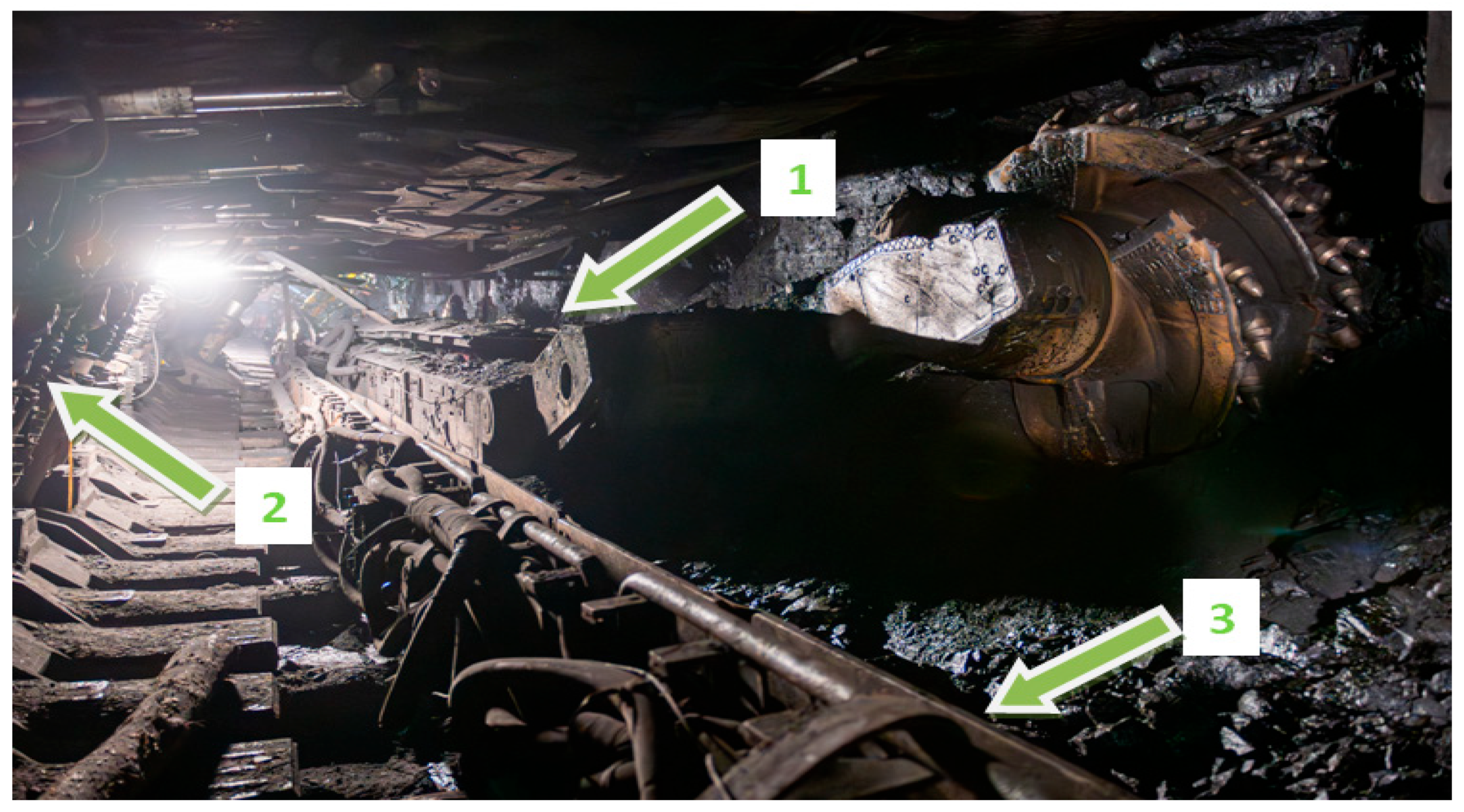
Conducting research on improving efficiency [4,5,6] and safety, as well as maintaining the continuity of mining production processes [7,8,9], is of vast importance. However, achieving these objectives is not straightforward. The mining production process, especially in underground mining, is very complex and dangerous [10,11,12]. This is mainly due to the unpredictable behavior of the environment in which it is carried out. Underground mining disrupts the equilibrium of the rock mass, generating numerous hazards that make the exploitation process unpredictable and very often dangerous [13,14]. For this reason, especially in the field of underground mining, great attention is paid to creating safe working conditions for the crew and the equipment used. Among these devices, of particular importance is the mechanized longwall complex, used in high-performance longwalls for direct cutting of the rock mass and transporting extracted material from the face zone [15,16,17]. These complexes, with the longwall shearer as the main cutting machine, are currently the dominant machine sets used in underground mining of rock mass in coal production [18,19,20]. The machines included in this complex must be characterized by the high quality of workmanship, reliability, and user-friendliness due to the very difficult environmental conditions in which they are operated [21,22,23]. Figure 1 shows a longwall excavation to illustrate the machines that make up the longwall complex.
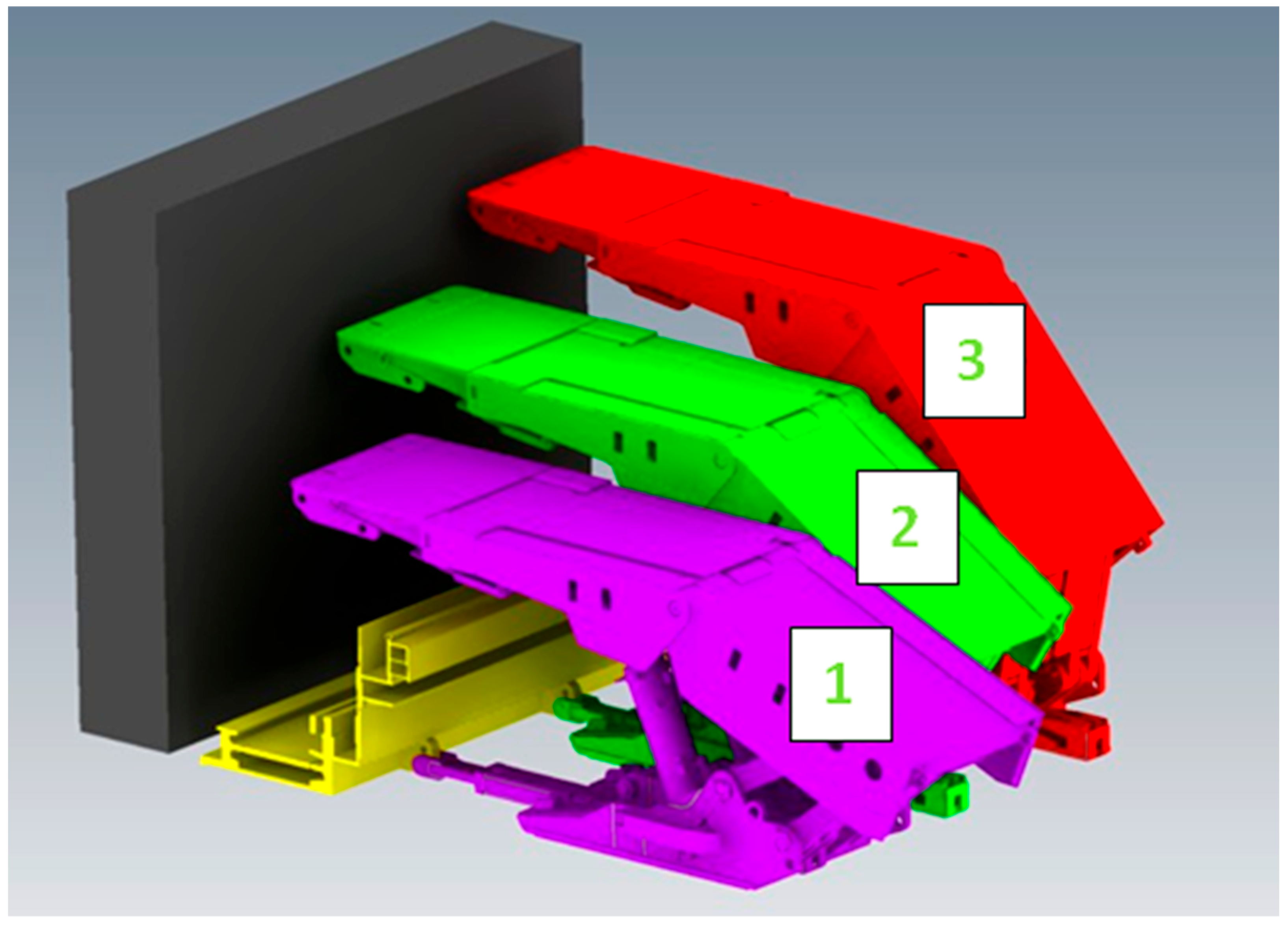
Among the machines that make up the mechanized longwall complex, the powered roof support is of particular importance. Its task is, on the one hand, to secure the operating space in which the excavation of the rock mass takes place, and on the other, to enable the movement of the excavating machine (shearer or plough), the longwall conveyor, and other associated equipment [24,25,26]. These main tasks mean that the entire extraction process, as well as the safety of the technical equipment and the crew involved, largely depend on the correct operation of this support. The role and importance of the support, therefore, have a key impact on the continuity of the extraction process, its safety, and its efficiency [27,28,29]. Figure 2 illustrates the operating cycle of the powered support, which has a significant impact on the efficiency of the support’s operation in the longwall excavation.
In the case of a powered support, which is built of independent sections (from several dozen to over one hundred fifty), the control and monitoring [30] of operating parameters of these sections, and thus the entire support, is very important [31,32,33]. The use of systems monitoring its operation is of significant importance for the entire coal production process in terms of safety and efficiency [34,35]. The monitoring technology of powered roof supports constitutes an integral component of modern systems for managing safety and reliability in underground mining operations [36,37]. Contemporary solutions are based on integrated measurement systems that continuously record the operating parameters of individual roof support sections in real time. The primary monitored quantities include hydraulic leg pressure, displacements of support elements, reaction forces of the roof support to rock mass pressure, as well as environmental parameters such as temperature and vibrations. The measurement data are collected using strain gauges, pressure transducers, displacement sensors, and data acquisition systems based on industrial communication buses [38,39,40].
The monitoring system enables the creation of so-called digital twins of the powered roof support, allowing for simulation and prediction of the structure’s behavior under variable geomechanical conditions. Real-time data analysis facilitates the detection of pre-failure states, automatic shutdown of overloaded sections, and supports decision-making by operators and maintenance engineers [37].
Optimization of sensor arrangement represents a crucial stage in the design of the monitoring system. This process involves numerical analysis of stress and strain distribution within the powered roof support structure using the Finite Element Method (FEM) and identification of areas that have the greatest influence on the system’s structural integrity. Based on simulation results, measurement points are determined to ensure maximum information gain with minimal signal redundancy. In practice, optimization algorithms (e.g., heuristic or genetic algorithms) are also applied to automatically determine the optimal sensor configuration while considering spatial, cost, and operational constraints [38,39,40].
As a result, modern monitoring systems for powered roof supports serve as advanced tools enhancing both operational safety and the efficiency of mineral extraction processes, thereby enabling the implementation of the Industry 4.0 paradigm in mining through the integration of intelligent diagnostic and predictive systems [40].
The interaction of individual sections and the entire support with the rock mass is also crucial. In particular, this applies to the roof and the floor, which have a significant impact on the formation of geomechanical phenomena and the efficiency of the mining process itself. The proper operation of powered supports is therefore fundamental to ensuring the continuity, safety, and efficiency of the entire mining production process [41,42,43]. There is a wide variety of powered roof supports currently used in Poland in terms of their mechanical parameters, construction, and methods of control and monitoring of operating parameters [44,45,46]. This means that practically every longwall is equipped with different sets of supports with different operating systems, which complicates and sometimes even limits effective supervision over the operation of such supports. This limits the possibilities for improving the operation process and optimizing operating parameters. The problem is, among other things, the lack of a comprehensive system for the ongoing assessment of the performance parameters of a powered support (its support capacity, stability, and interaction with the rock mass), monitoring the values of these parameters, and controlling its operation [47,48,49]. This situation very often causes disturbances in the implementation of the extraction process and adversely affects its efficiency and the safety of the crew [50,51,52].
The development of the system is particularly important because, as already mentioned, the deteriorating geological and mining conditions in which underground mining is carried out cause the powered support and the crew operating it to work in increasingly difficult environmental conditions [5,53,54]. These conditions hinder the effective use of the support’s potential, which often leads to problems in the underground extraction process. It is therefore fully justified to seek innovative solutions that would improve the operational efficiency of this support and better protect workers [55,56,57].
An important part of the work was the analysis of the current state of knowledge regarding the testing and control of the powered support and the possibilities of using diagnostic parameters for their more effective operation. The knowledge obtained allowed for developing a methodology for conducting research of this support, the basis of which was a combination of model and bench tests, as well as tests under real conditions. In addition, tests were also carried out on elements of the support section and research equipment. The complexity of the subject matter and the wide range of research necessary to achieve the adopted objectives forced an interdisciplinary approach to this issue. Extensive research has enabled the formulation of guidelines that should be met by the system monitoring the operating parameters of the support, including, in particular, the position of the sections during its operation. The research problem addressed in this work concerns the lack of a system for the ongoing assessment of the operating parameters of a powered support (its load-bearing capacity, stability, and interaction with the rock mass), monitoring the values of these parameters and controlling its operation, which often causes disruptions in the implementation of the exploitation process and negatively affects its efficiency and the safety of the crew. Another problem is the lack of a comprehensive method for testing powered roof supports, with the aim of establishing guidelines for the development of a system monitoring their operating parameters. These shortcomings clearly indicate a research gap that the current work should fill.

2. Materials and Methods

Monitoring the operational parameters of roof supports has long been a challenge for engineers and designers. A range of factors affecting the performance of supports in a longwall face necessitates the adoption of solutions that meet the needs of users and supervisory personnel, while also taking into account prevailing geological and mining conditions [58,59].
The conducted research was aimed at extending the currently used support pressure monitoring system to include geometric parameters in the development of its functionality.

2.1. Construction and Specification of Pressure, Inclination, and Position Sensors

Monitoring the operation of powered roof support sections requires an integrated sensor system capable of functioning under harsh underground conditions, characterized by high humidity, dust, mechanical vibrations, and limited space. The measurement system is designed to provide continuous and reliable supervision of the technical parameters of the support, enabling assessment of its operational efficiency and structural condition.
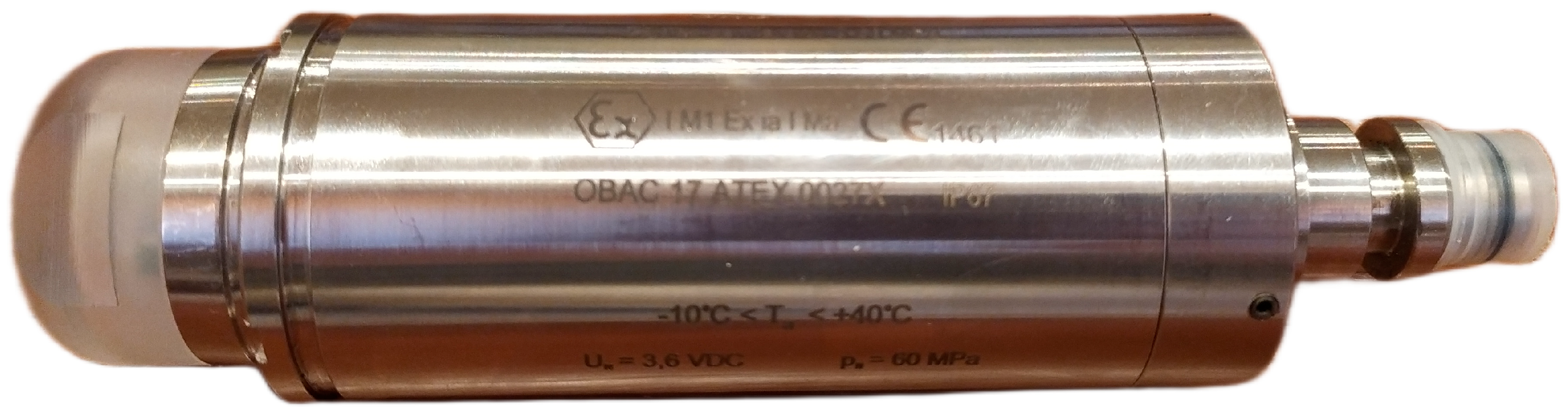
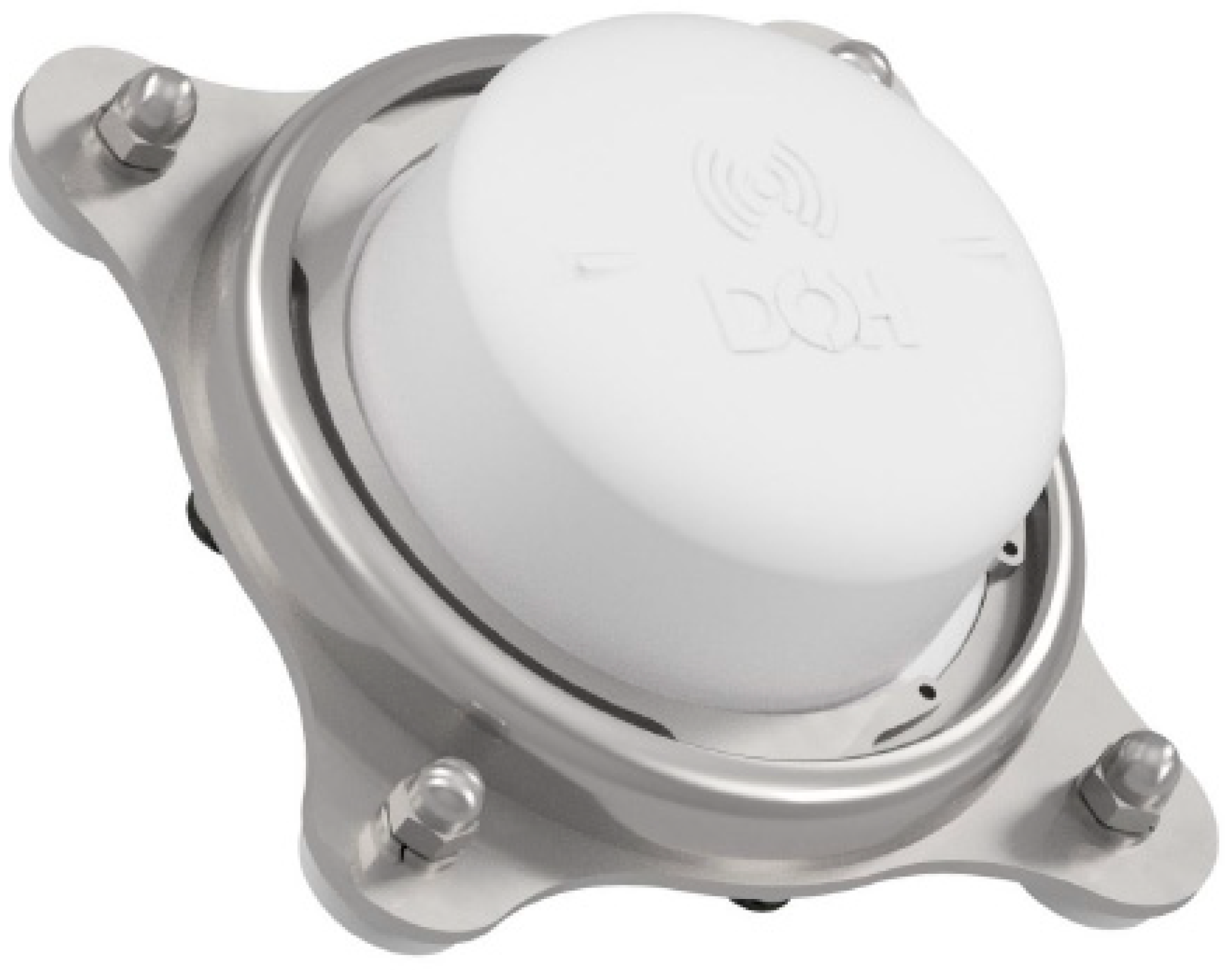
Figure 3 shows the pressure sensor used during the tests, as well as geometry sensors employed for measuring transverse and longitudinal inclinations and the operating height of the longwall roof support.
  • Application: Measurement of hydraulic pressure in cylinders and control valves of roof support sections.
  • Type: Strain gauge pressure transducer (Center of Hydraulics DOH Ltd., Piekary Śląskie, Poland)
  • Measuring Range: 0–60 MPa (typically up to 40 MPa for operational use)
  • Connection: STECKO DN-10
  • Communication: ISM 2.4 GHz
  • Operating Temperature Range: –10 to 40 °C
  • Weight (with battery): 690 g
  • Accuracy: ±0.25% of full scale
  • Output Signal: RS-485 (digital)
  • Enclosure Protection: IP67; certified for operation in methane- and coal-dust-hazardous areas (ATEX certified)
Figure 4 shows the geometry sensor used for monitoring the configuration of a powered roof support section. The sensor measures transverse and longitudinal inclinations as well as the operating height of the section, providing precise real-time data on the geometric parameters of the structure. This information is essential for assessing stability, alignment, and operational performance, enabling early detection of deviations and ensuring safe and efficient operation.
  • Application: Measurement of inclination angle and orientation of the roof support section during operation.
  • Type: MEMS inclinometers or gyroscopic sensors (Center of Hydraulics DOH Ltd., Piekary Śląskie, Poland)
  • Measuring Range: ±90°
  • Accuracy: 0.1° or better
  • Additional Features: Temperature compensation, vibration damping, integration capability with section control system.
The sensors shown in Figure 3 and Figure 4 were applied in both laboratory tests and real operational conditions, enabling the measurement of hydraulic pressure and geometric parameters of the powered roof support section.

2.2. Determination of the Calculation Method

To determine the geometrical parameters of the support, it was necessary to determine the angles between its interacting elements. For this purpose, sensors were used that, based on MEMS technologies, enabled the measurement of acceleration. The angle in a given area of the support’s operation was determined using the knowledge of acceleration [59,60,61].
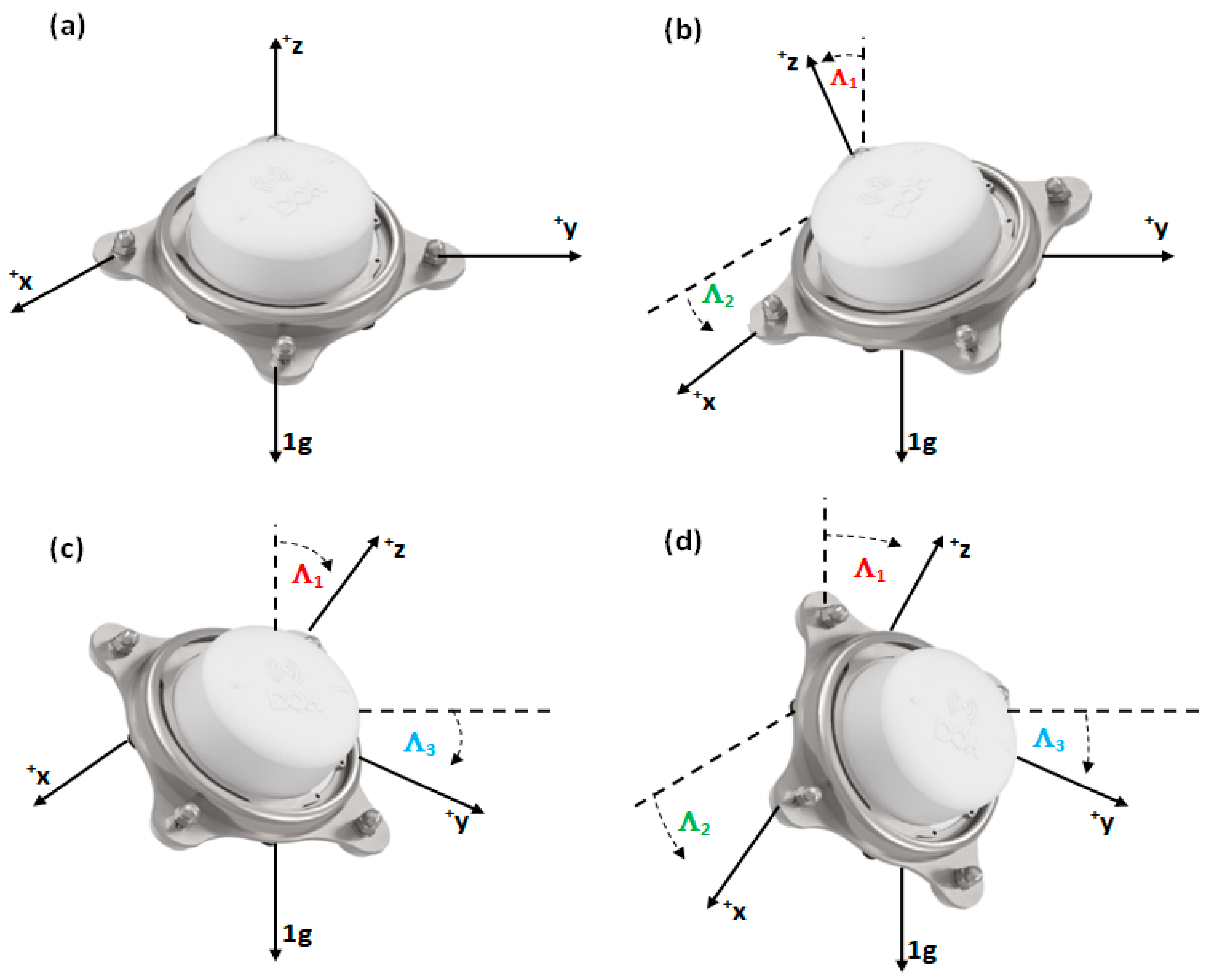
Accelerometers measure acceleration resulting from movement and the gravity of the Earth. The value of the acceleration created during the movement, measured by the sensors, allowed defining the operating angles of the various support elements [62,63,64,65]. The method of determining these inclination angles [66,67] is presented in Figure 5 and the following formulas [66,67].
The inclination angles were determined using the following formulas [66,67]:
Λ 1 = a r c t a n a x 2 + a y 2 a z
Λ 2 = a r c t a n a x a y 2 + a z 2
Λ 3 = a r c t a n a y a x 2 + a z 2
where
  • Λ—inclination angle, [°]
  • ay—gravitational acceleration in the Y-axis, [m/s2]
  • ax—gravitational acceleration in the X-axis, [m/s2]
  • az—gravitational acceleration in the Z-axis, [m/s2]
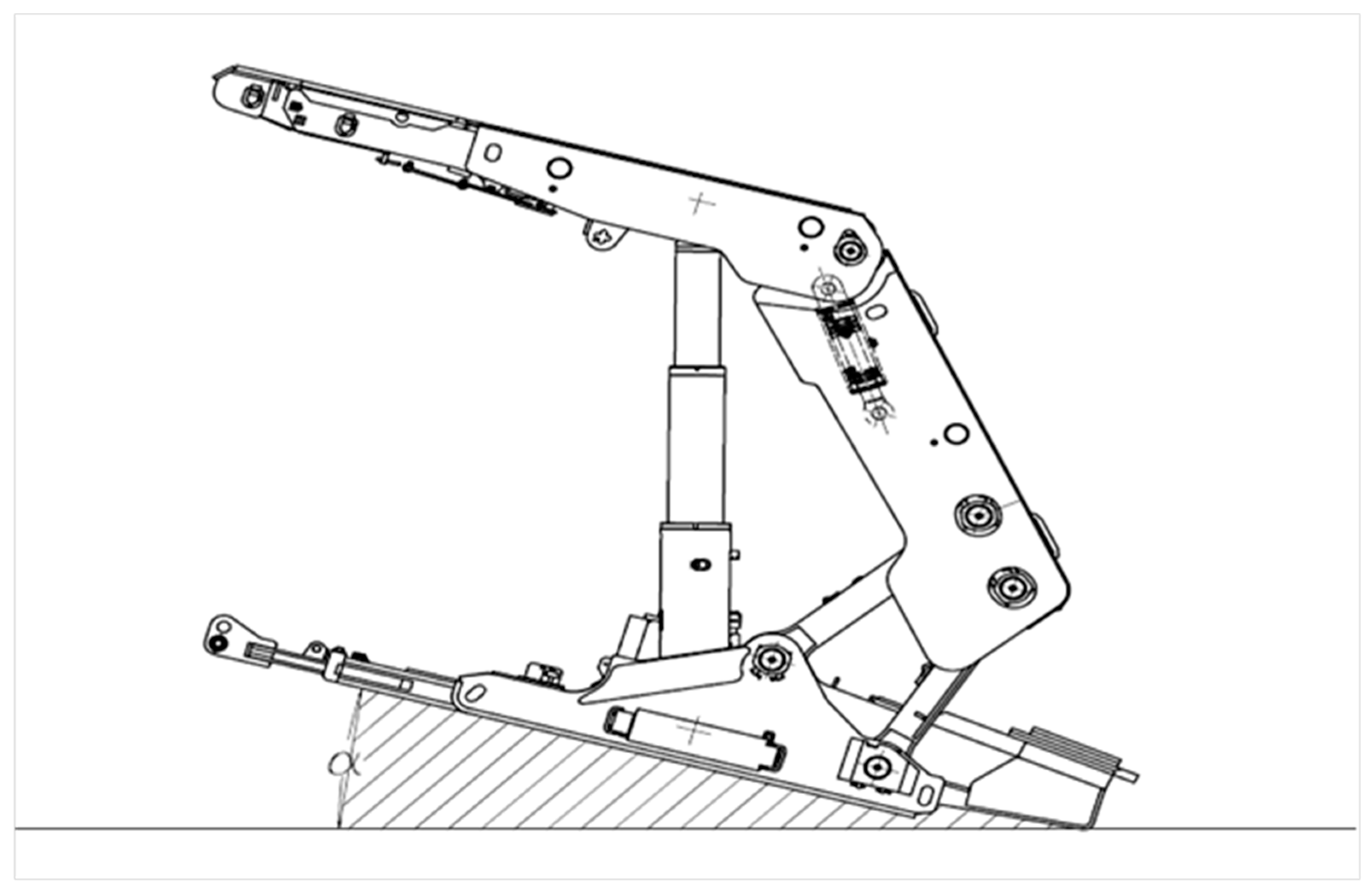
The use of MEMS accelerometers requires calibration. Calibration involved leveling the sensors during installation on the structural elements of the support. Before starting the measurements, the software cuts the angle α of the machine inclination, defining its inclination in point 0 (see Figure 6).
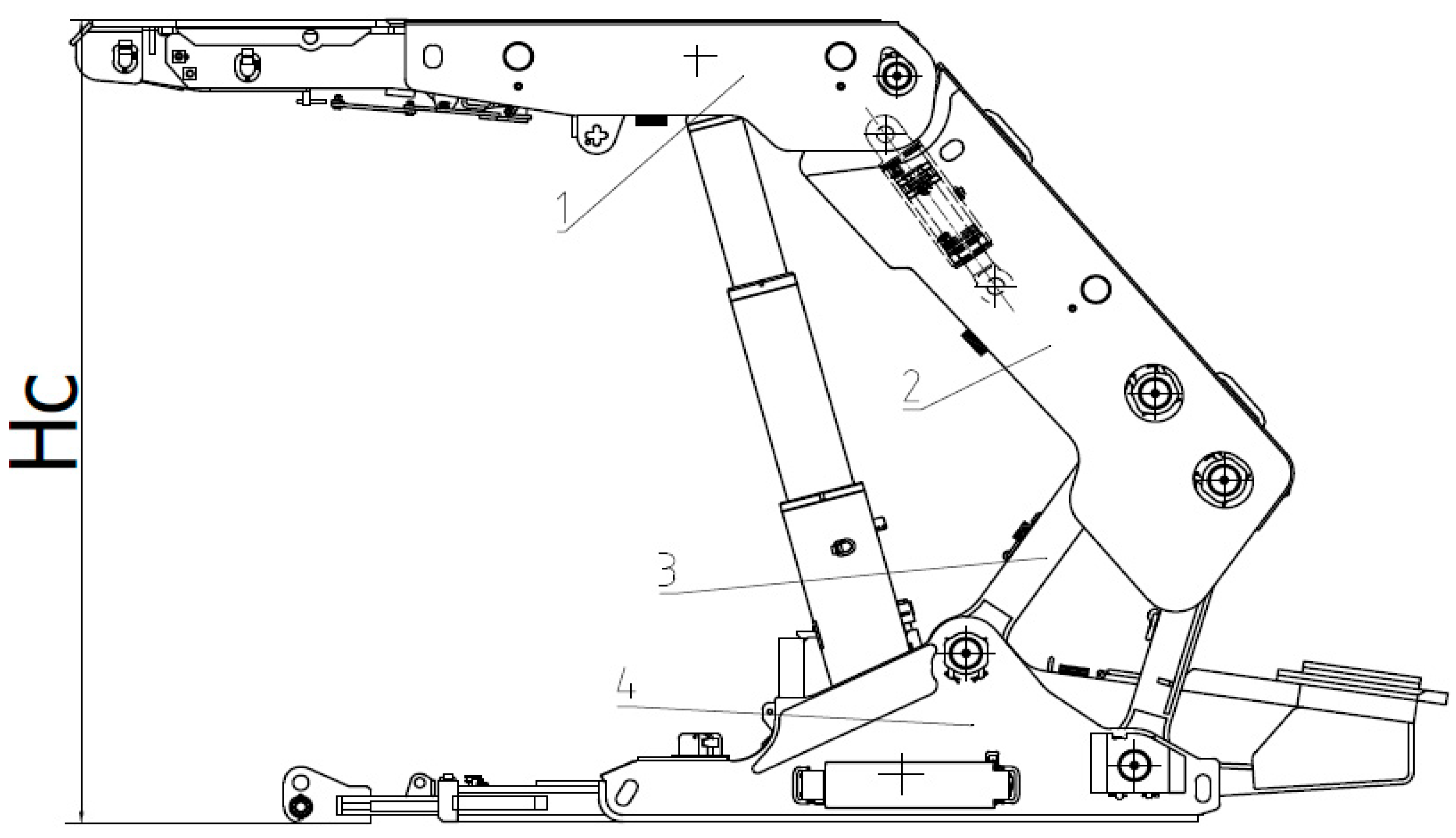
Once α is set, then the parameters of the output signals generated by the accelerometer (the output component and gain) can be determined. Knowing the angle and geometric properties of the support structure, the operating height range of individual elements was determined from the trigonometric functions on which the sensors were installed. The heights are determined by the following formula:
H n = l n · t g
where
  • H n —measured height (h1, h2, h3) [m]
  • l n —length of the section element, [m]
  • t g —angle of the given section element
Determining the total height of the support required adding three operating heights of the basic elements of the support defined by the following formula:
H c = h 1 + h 2 + h 3
where
  • Hc—height total, [m]
  • h1—height determined by the length of the canopy and the angle, [m]
  • h2—height determined by the length of the shield support and the angle, [m]
  • h3—height determined by the length of the lemniscates and the angle, [m]
The adopted order of procedure allowed determining the overall height of the support on the test bench and under real conditions (see Figure 7).
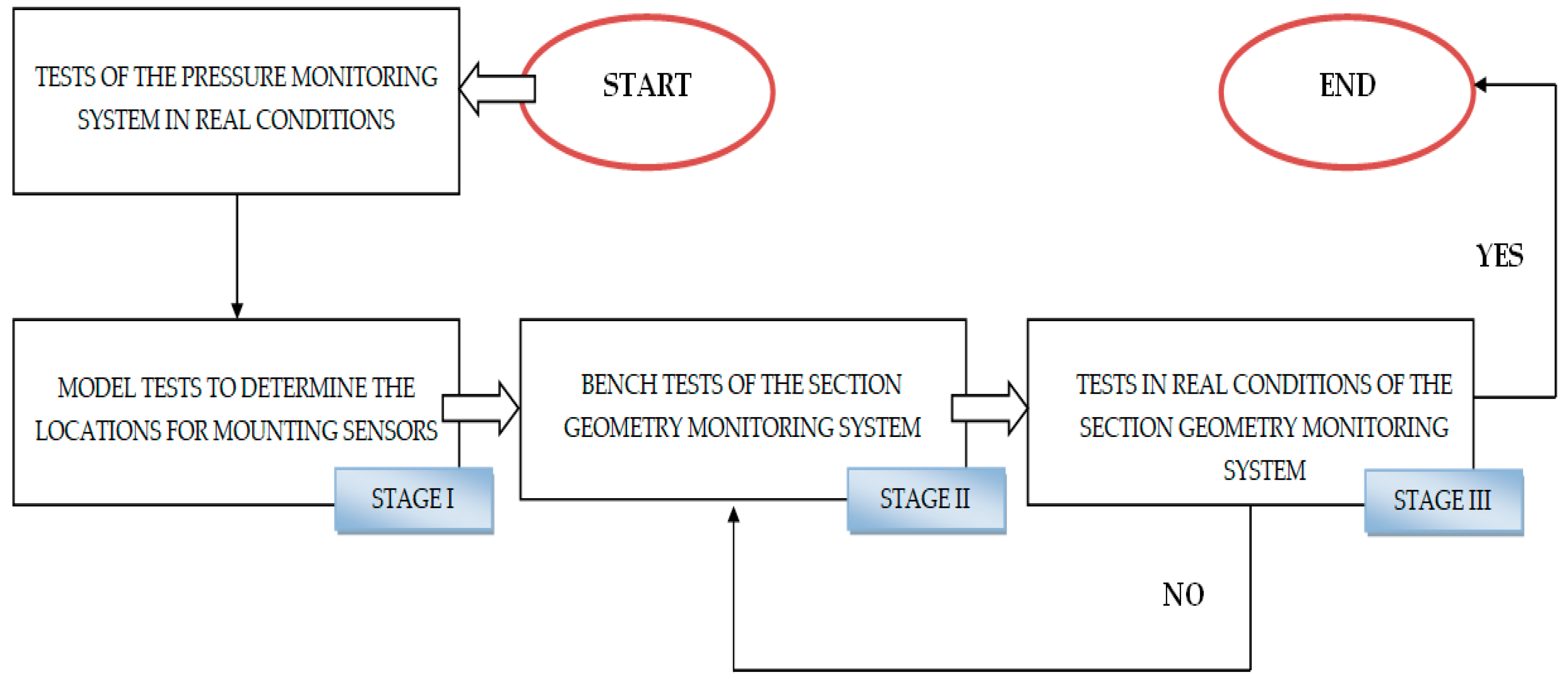
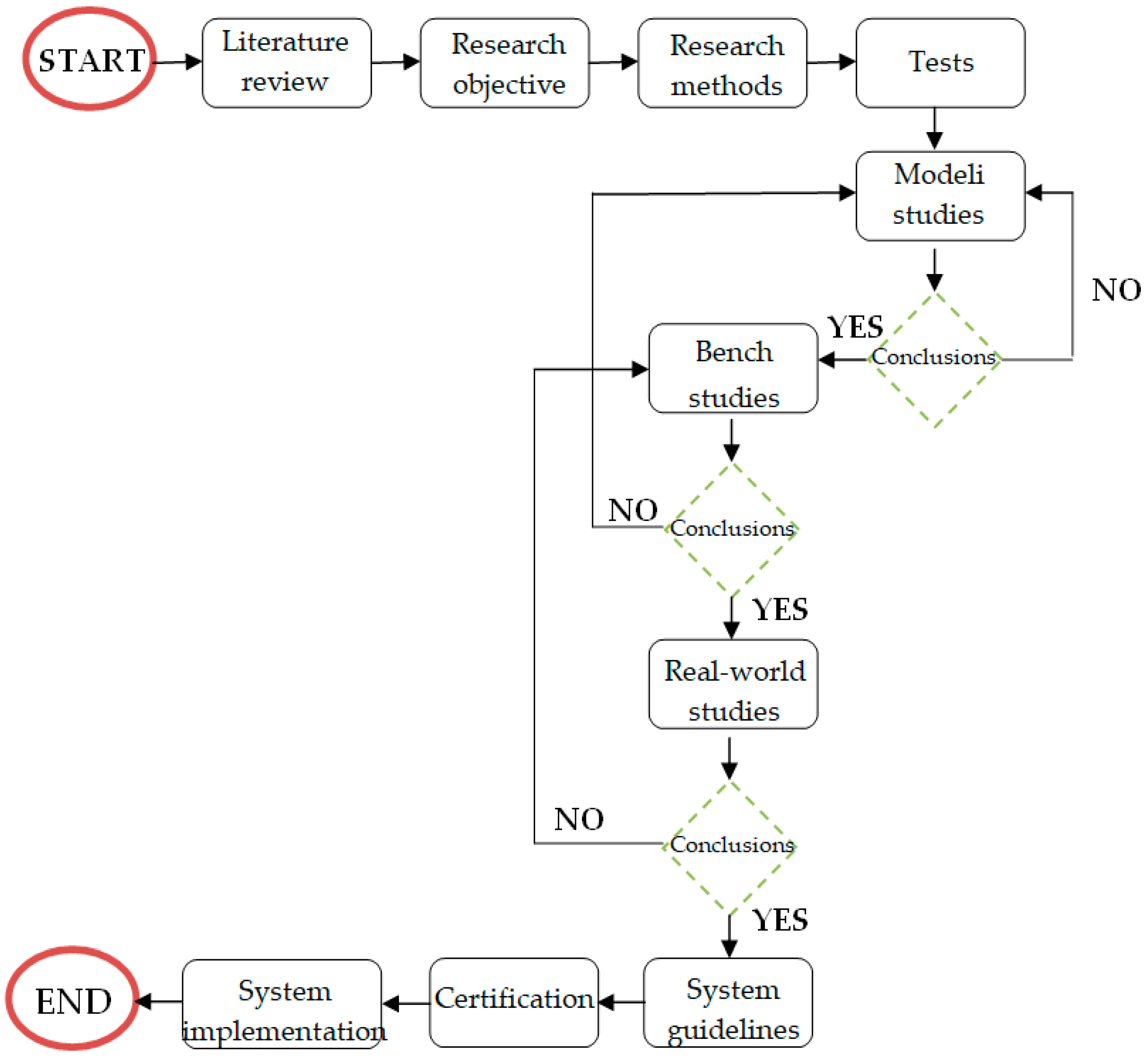
To systematize the research activities, a flowchart was developed presenting the subsequent stages of the research. Figure 8 illustrates the research procedure, from testing the pressure monitoring system, through model testing, bench testing, and field testing of the system geometry. This includes methods and tools, and finally the analysis and interpretation of the obtained results.
The presented scheme constitutes the methodological basis of the study and allows for a transparent presentation of the research process in its entirety.

3. Results

The adopted calculation method, which constitutes an integral part of the applied MEMS technology, allowed constructing a measuring and recording system. Before testing in real conditions, the measuring system required analyses based on computer simulations to determine the locations of its installation. Collisions with other components of the mechanized roof support have been excluded and the areas in the support structure exposed to the greatest stresses during its operation have been identified. In accordance with the developed research method, bench tests were carried out, which were the basis for testing the measuring system in the longwall face. The tests carried out resulted in determining the final locations of the sensors in the support structure and the correct operation of the measuring system.

3.1. Bench Tests

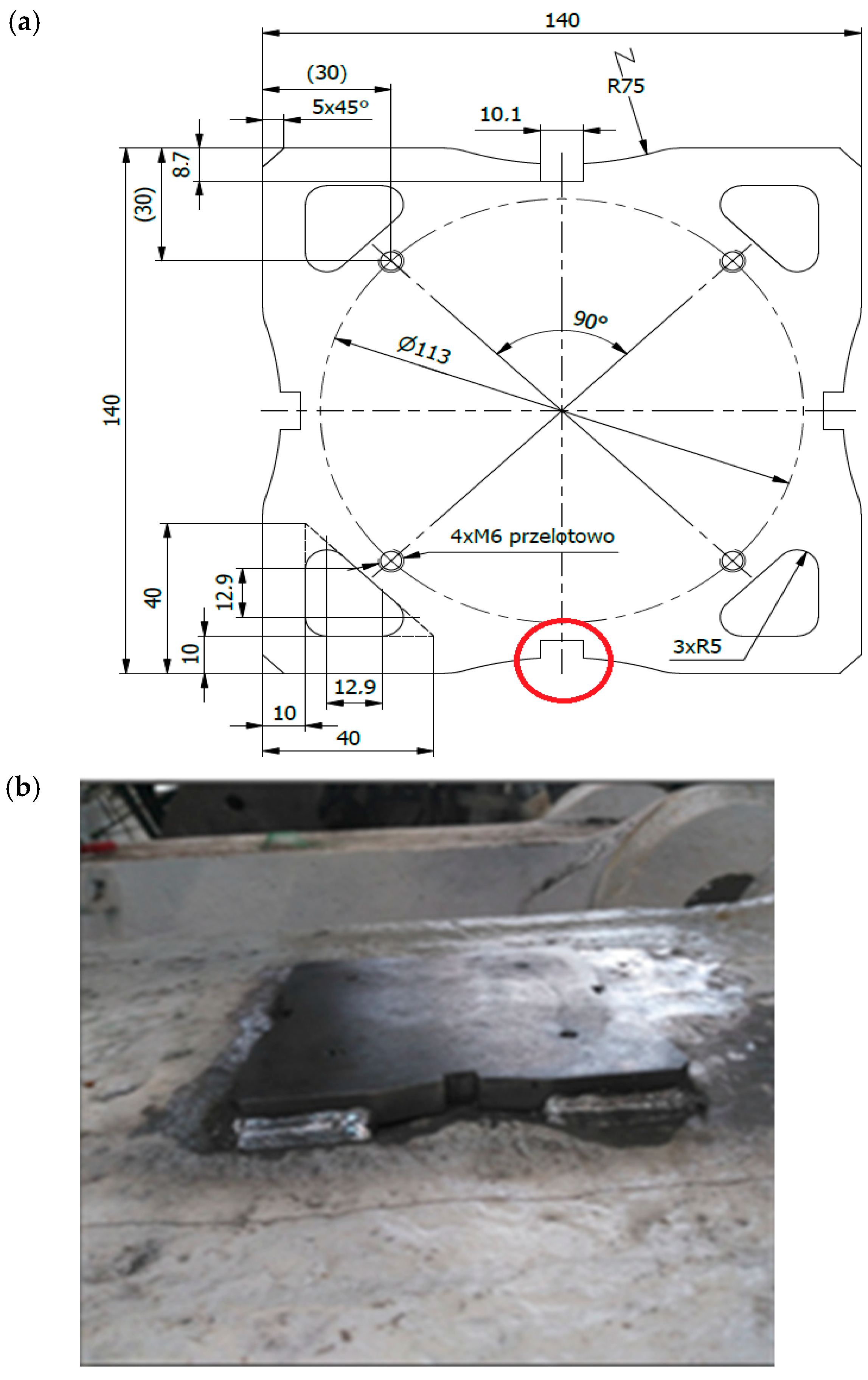
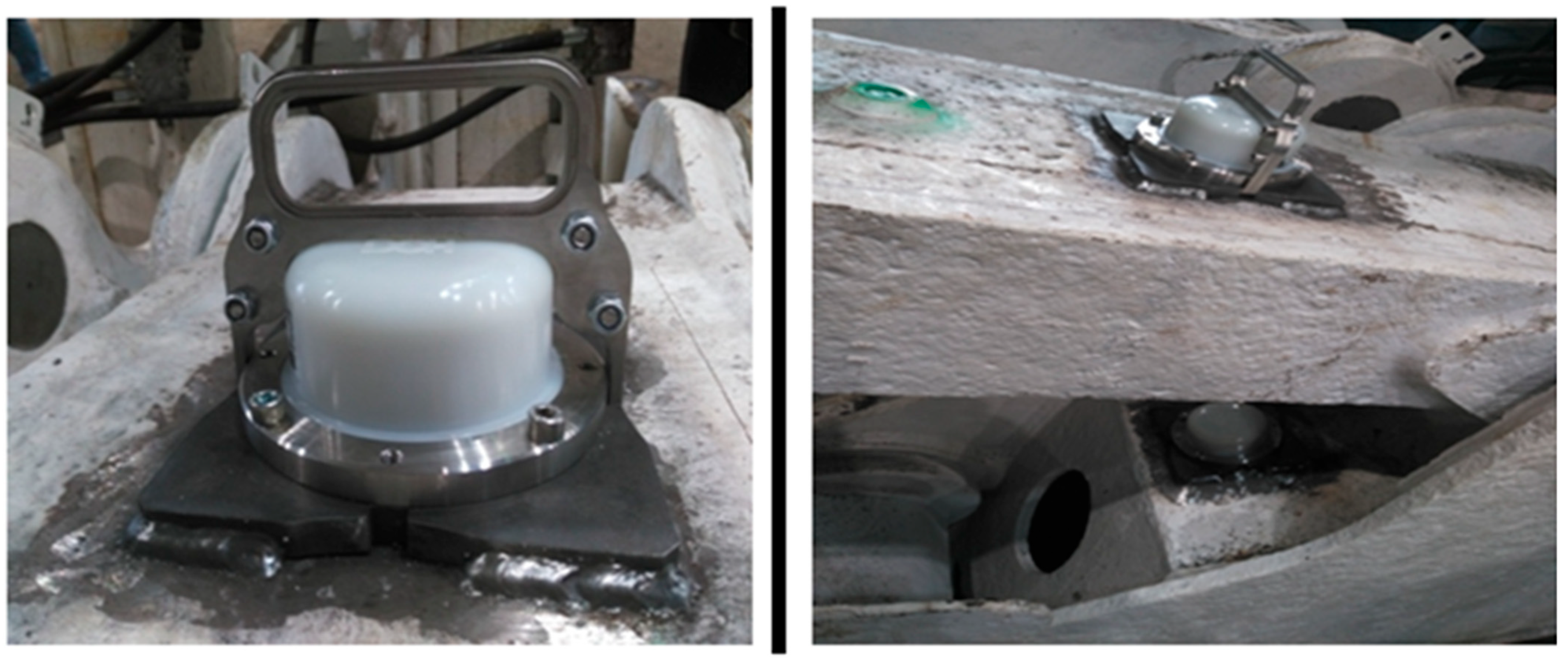
The bench tests constituted another series of tests to develop guidelines for the system monitoring the operating parameters of the powered support. The transition to real-condition testing depended on the results of the analysis. During the bench tests, an innovative method of mounting sensors was developed, which significantly reduced measurement error. The problem was solved by making special mounting brackets for this purpose. The innovative mounting brackets were designed taking into account the geometric parameters of the powered support section elements, which were the place of their installation. Figure 9 shows the bracket with geometric parameters.
The manufactured brackets required specialist installation. The installation of designed brackets is crucial for the proper calibration of the measuring system. Leveling the sensors that make up the measuring and recording system enables obtaining significantly more precise measurements and facilitates their installation.
The next step related to the calibration of the measuring system was the method of positioning the sensor housing, in which a measuring sensor using MEMS technology is installed. For this purpose, notches were made in the innovative mounting brackets (see Figure 9a) with the help of which, using a hand tool (see Figure 10), the positioning of the sensor is in accordance with the guidelines of the designers. The manual calibration of the sensor is illustrated in Figure 10.
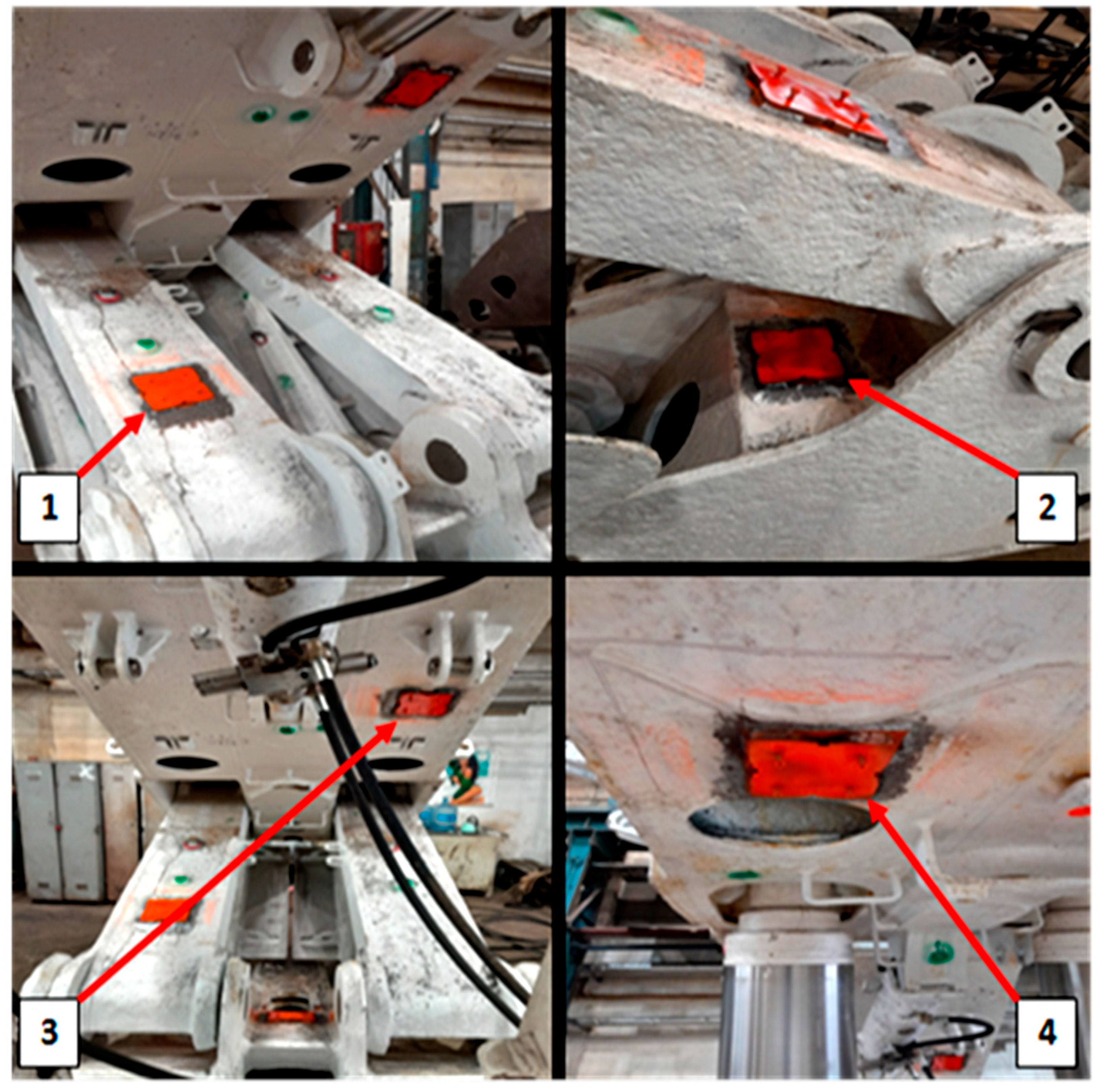
Based on the performed analyses and bench tests, the mounting locations of the brackets together with the sensors of the measuring system were determined. Figure 11 shows the view of the test bench with built-in innovative mounting brackets on the basic elements of the powered support section.
The location of the brackets is important for making accurate measurements of the support’s geometry. The position of the sensors, which are mounted on the designed brackets, results from the adopted method of calculating the geometrical parameters of the powered support.
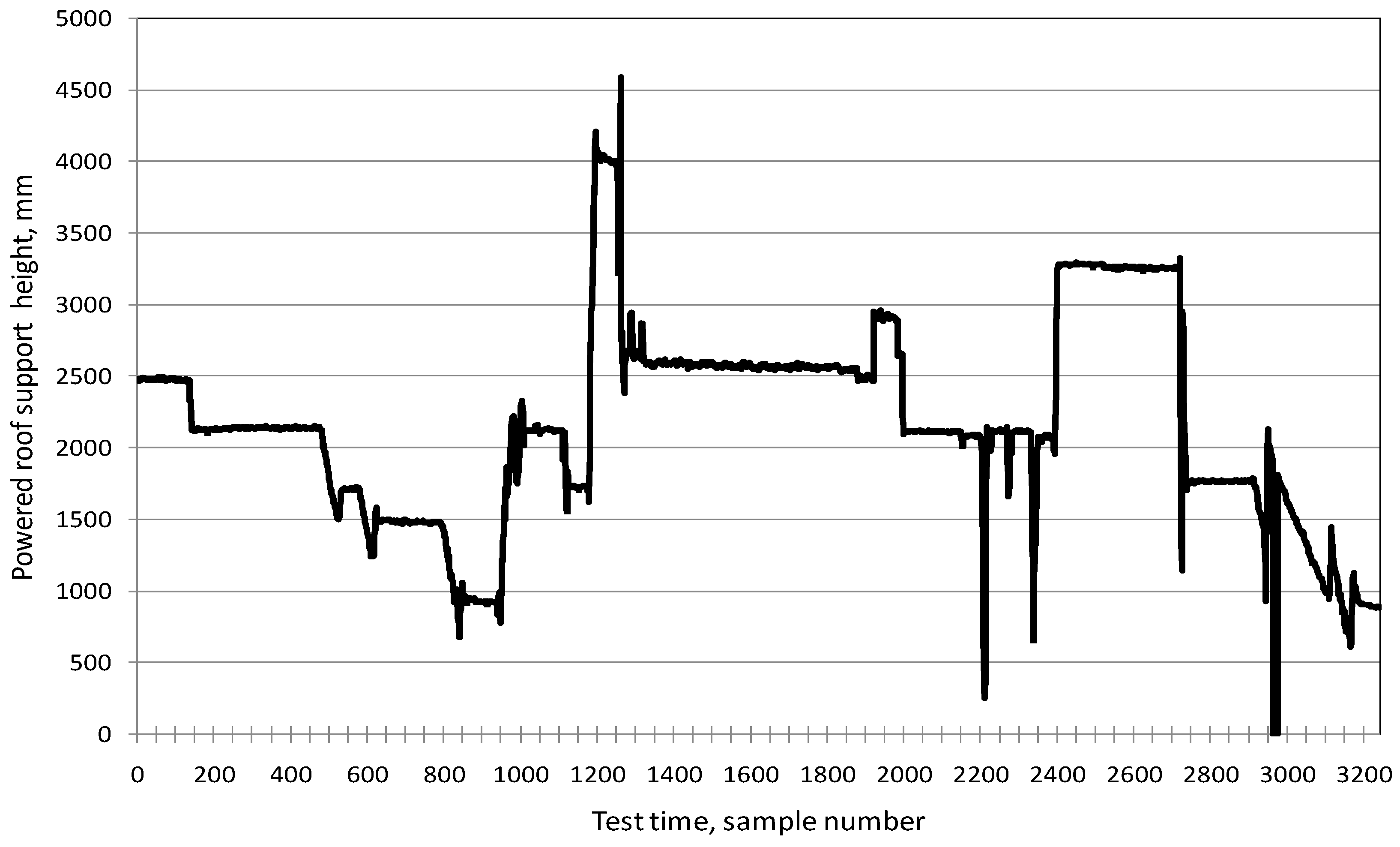
Monitoring the parameters of individual support elements enables determining the lateral, longitudinal, and operating height of the powered support. An example of changes in the operating height of the support determined on the test bench under surface conditions is shown in Figure 12.
The graph indicates the height of the support on the test bench during system tests. The variable operating cycle of the support reflects the actual operating conditions of the support and the longwall complex. The height change depends on the support operating cycle during coal mining. The support was controlled within the range from 4200 mm to 750 mm. In Figure 12, within the time range from 190 to 900, a gradual phase of roof support yielding can be observed. This area is characterized by a slow, stepwise yielding process, mainly resulting from operator tests and the operation of the support monitoring system. Under real mining conditions, this stage occurs much more dynamically.
An example of such yielding can be seen in the range from 1150 to 1200, followed by the expansion phase between 1200 and 1300. Subsequently, another yielding phase occurs, continuing up to a height of 2500 mm. In the range from 1300 to 1900, this stage can be interpreted as the support movement phase, since the section maintains a constant height during this period. Between 1900 and 2000, another expansion of the support takes place. In the further part of the figure, these phases repeat; however, their irregular variations result from the system testing process. Under actual operational conditions, these cycles are significantly more regular.
The measuring system, installed with the mounting brackets, was adapted for five support sections installed in the longwall face. The measuring system communicated wirelessly using sensors, a converter, an underground computer, and the mine’s network infrastructure.

3.2. Tests Under Real Conditions

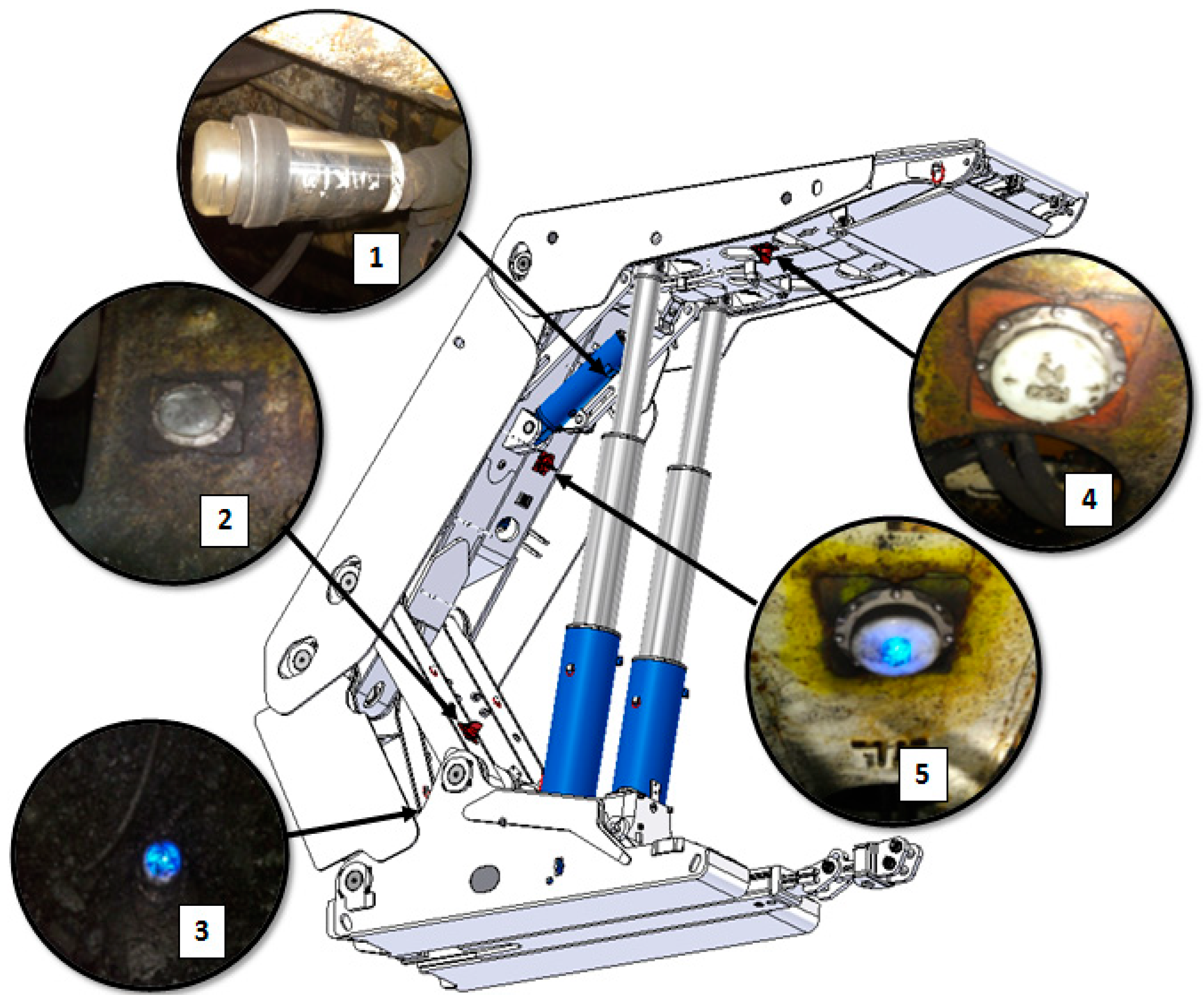
Bench testing of the powered support position monitoring system enabled the tests to be carried out under real conditions. This stage assumed the installation of a measuring and recording system in the longwall face. The longwall excavation was equipped with 96 powered support sections. Five sections were monitored. Three sections equipped with a measuring system were located next to each other, i.e., 34, 35, 36. The next installation location was sections 60 and 70. The sensors communicated wirelessly by measuring the inclination of the basic elements of the support and the height. According to the guidelines defined during the bench tests, the sensors were installed on the mounting brackets in the longwall face, as shown in Figure 13:
Data from the measurements were collected over a period of 66 days. The data was stored on a memory card installed in the pressure sensor, shown in Figure 13. Data from the memory card for a three-day period was initially read and presented in graphs (see Figure 14, Figure 15, Figure 16, Figure 17, Figure 18 and Figure 19). The graphs show changes in longitudinal and transverse inclinations of the tested sections.
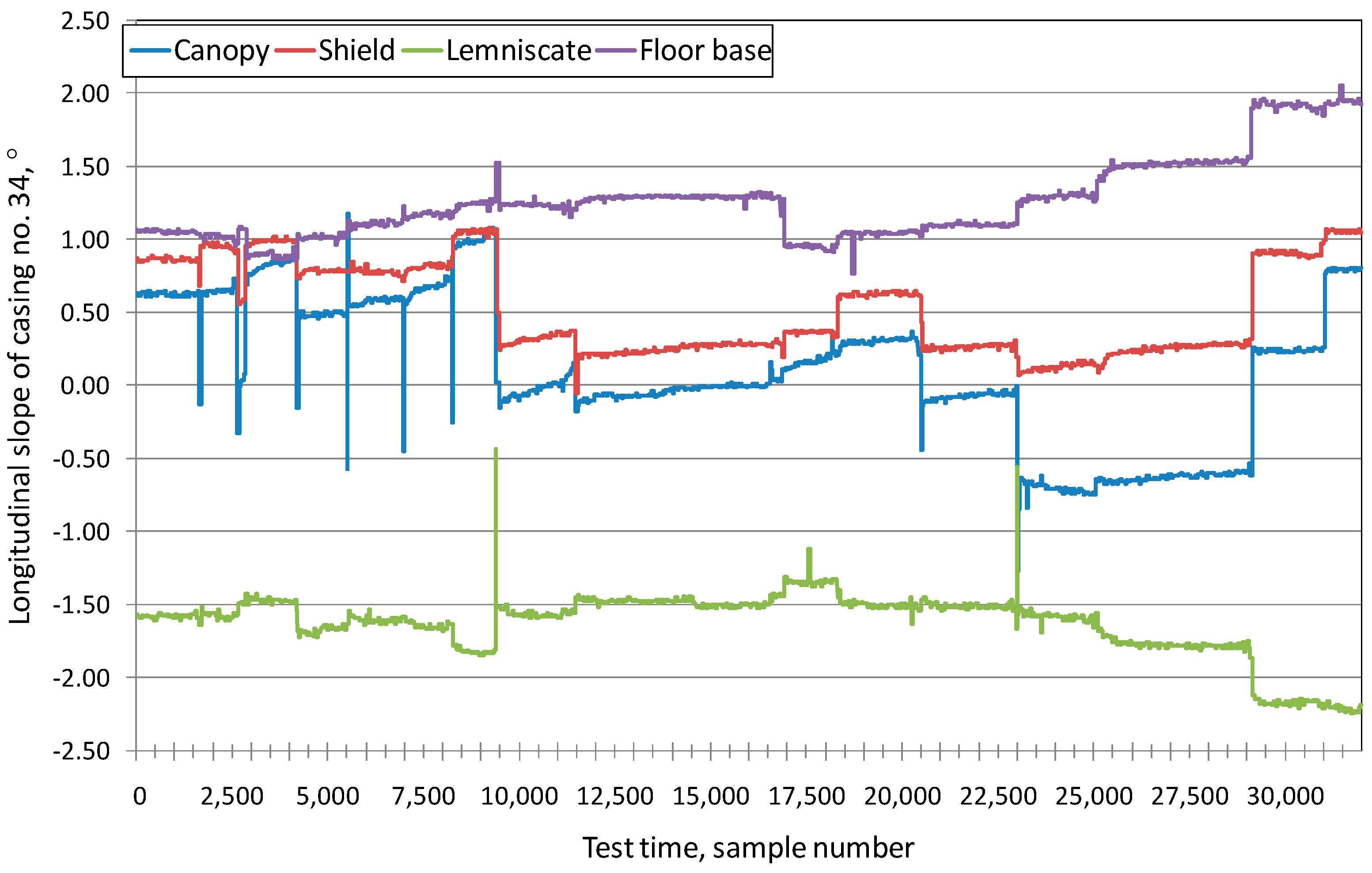
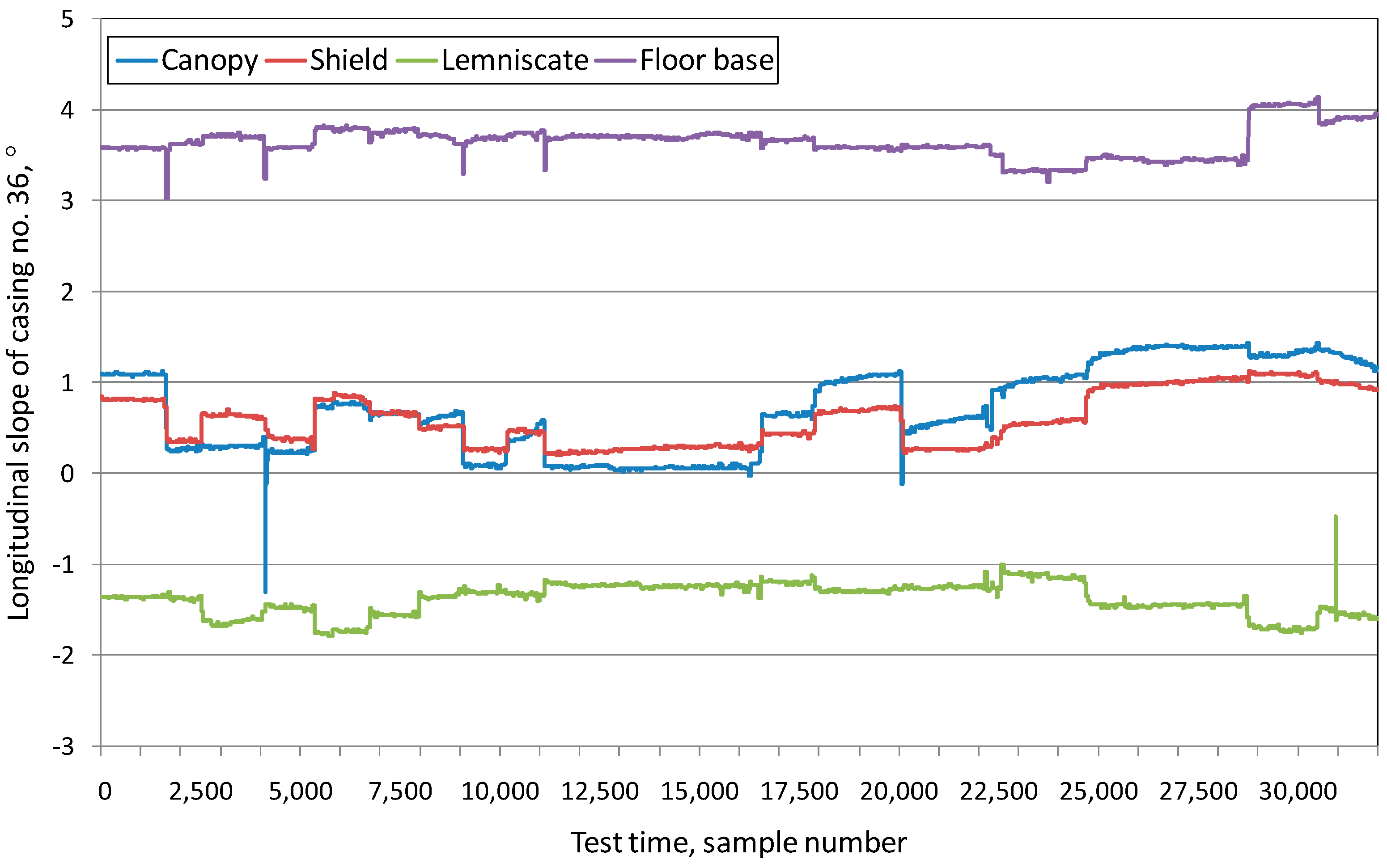
Figure 14 shows the changes in the longitudinal inclination of powered roof support No. 34 as a function of time. The angular values ranged from approximately −2° to +2°, which reflects small but noticeable displacements resulting from the cyclic operation of the support. The greatest variations were observed for the canopy and shield, while the floor base exhibited a tendency toward negative inclinations, indicating an adaptation of the structure to floor deformations. The obtained results confirm the proper functioning of the system and the capability of the sensors to accurately record geometric changes in the structure under real operating conditions.
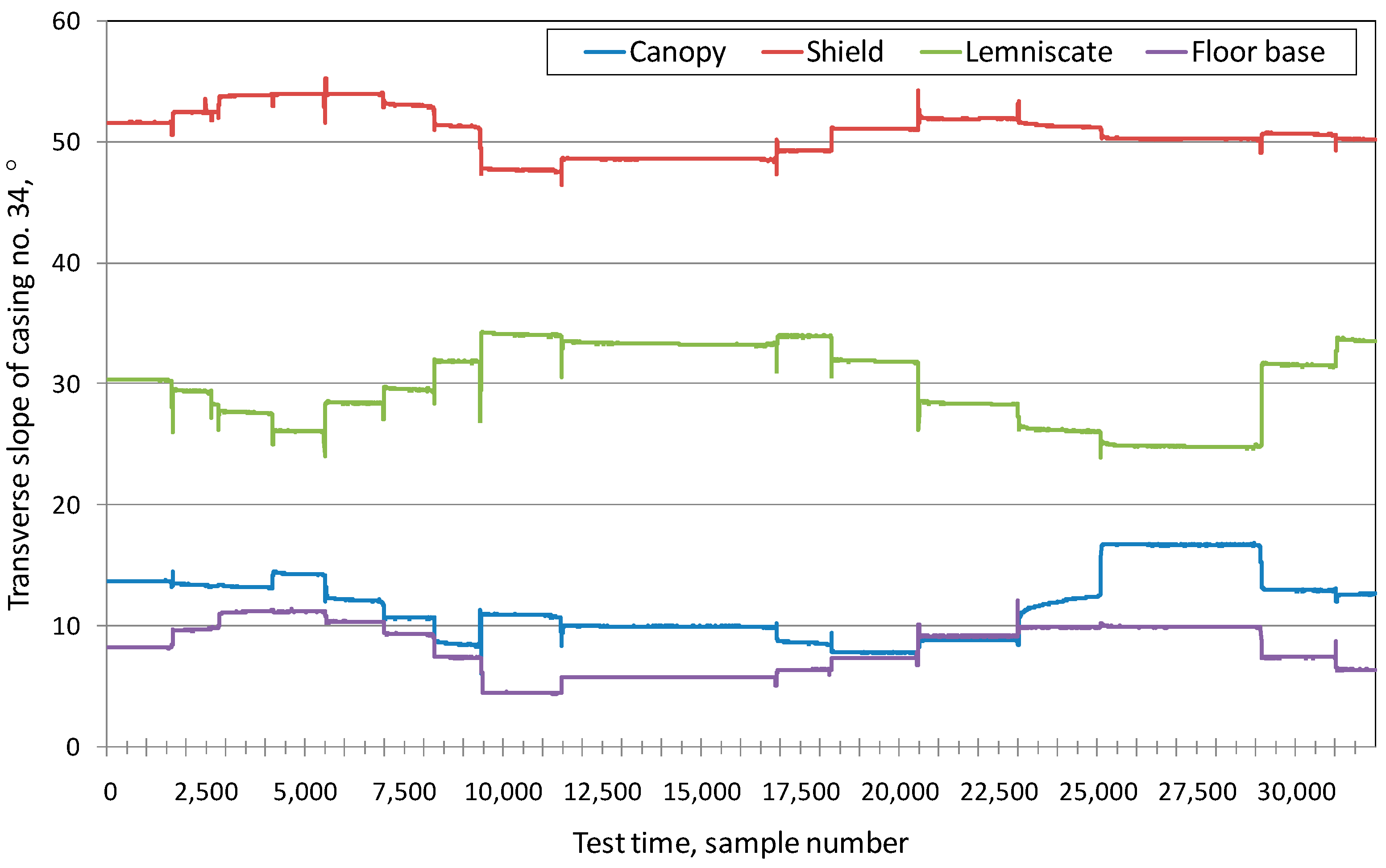
Figure 15 presents the changes in the transverse inclination of powered roof support No. 34 as a function of time for four configurations: canopy, shield, lemniscate, and floor base. The highest stability was observed for the shield configuration, which maintained values in the range of 50–55°, indicating good geometric resistance and minimal deformations. The lemniscate variant was characterized by medium inclination values (25–35°) and a decreasing trend, which may indicate gradual subsidence or stress redistribution. The canopy and base reached the lowest values (10–20° and 5–15°, respectively) with greater variability, suggesting local instabilities or a higher sensitivity of the system to load changes. The obtained results indicate that the shield configuration provides the highest cross-sectional stability, while the lemniscate may require structural reinforcement.
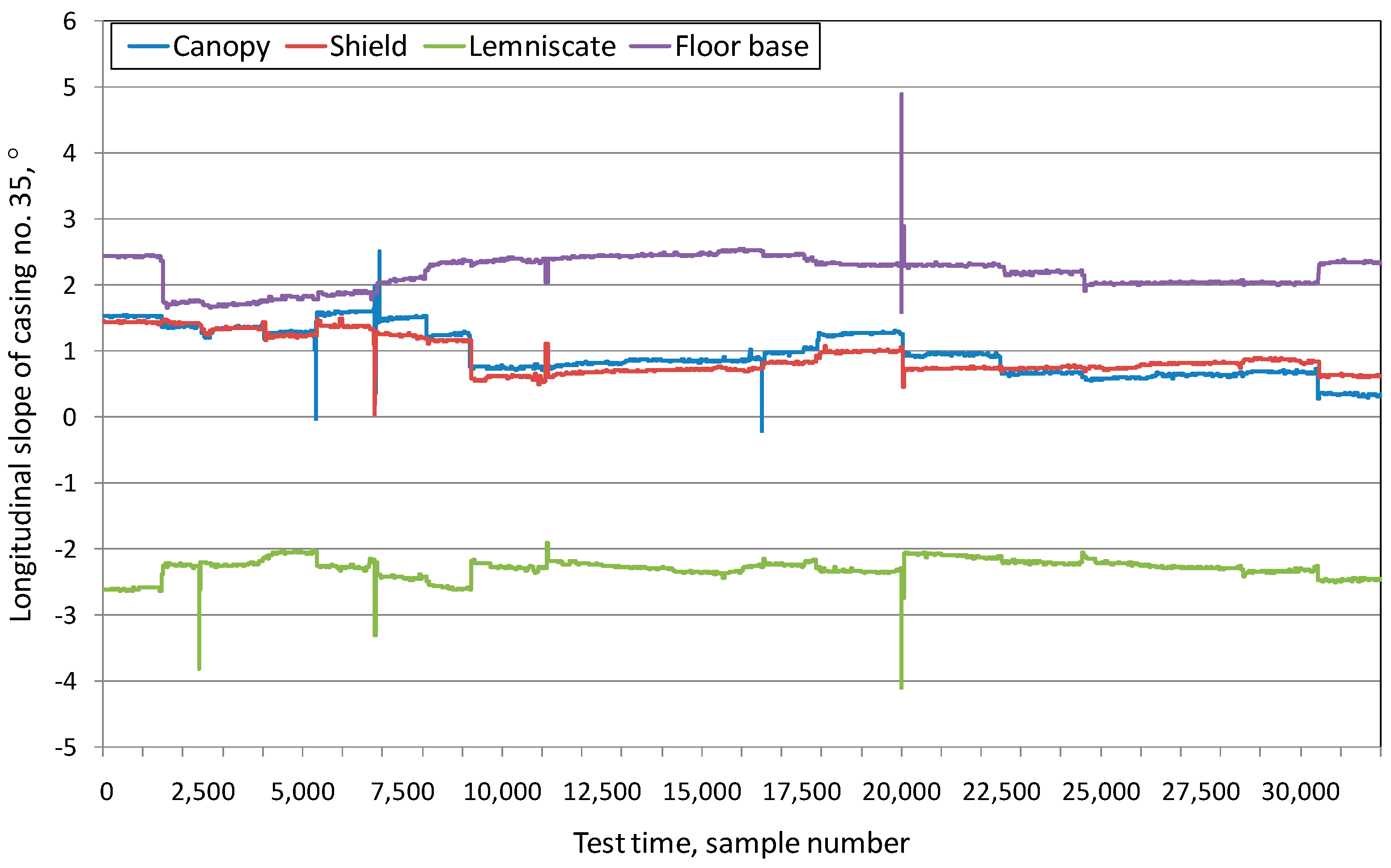
Figure 16 presents the changes in the longitudinal inclination of powered roof support No. 35 as a function of time for four configurations: canopy, shield, lemniscate, and floor base. The highest geometric stability was observed for the canopy and shield configurations, which maintained inclination values within the range of 0.5–1.5°. The floor base variant was characterized by a slightly higher inclination level (around 2°) and local fluctuations, which may indicate periodic disturbances within the structural system. In contrast, the lemniscate maintained negative values (approximately −2° to −3°), showing a tendency toward a stable but persistent deviation in the opposite direction. The obtained results confirm that the shield and canopy configurations ensure the most uniform longitudinal behavior of the powered roof support section, while the lemniscate exhibits a permanent geometric asymmetry that requires further causal analysis.
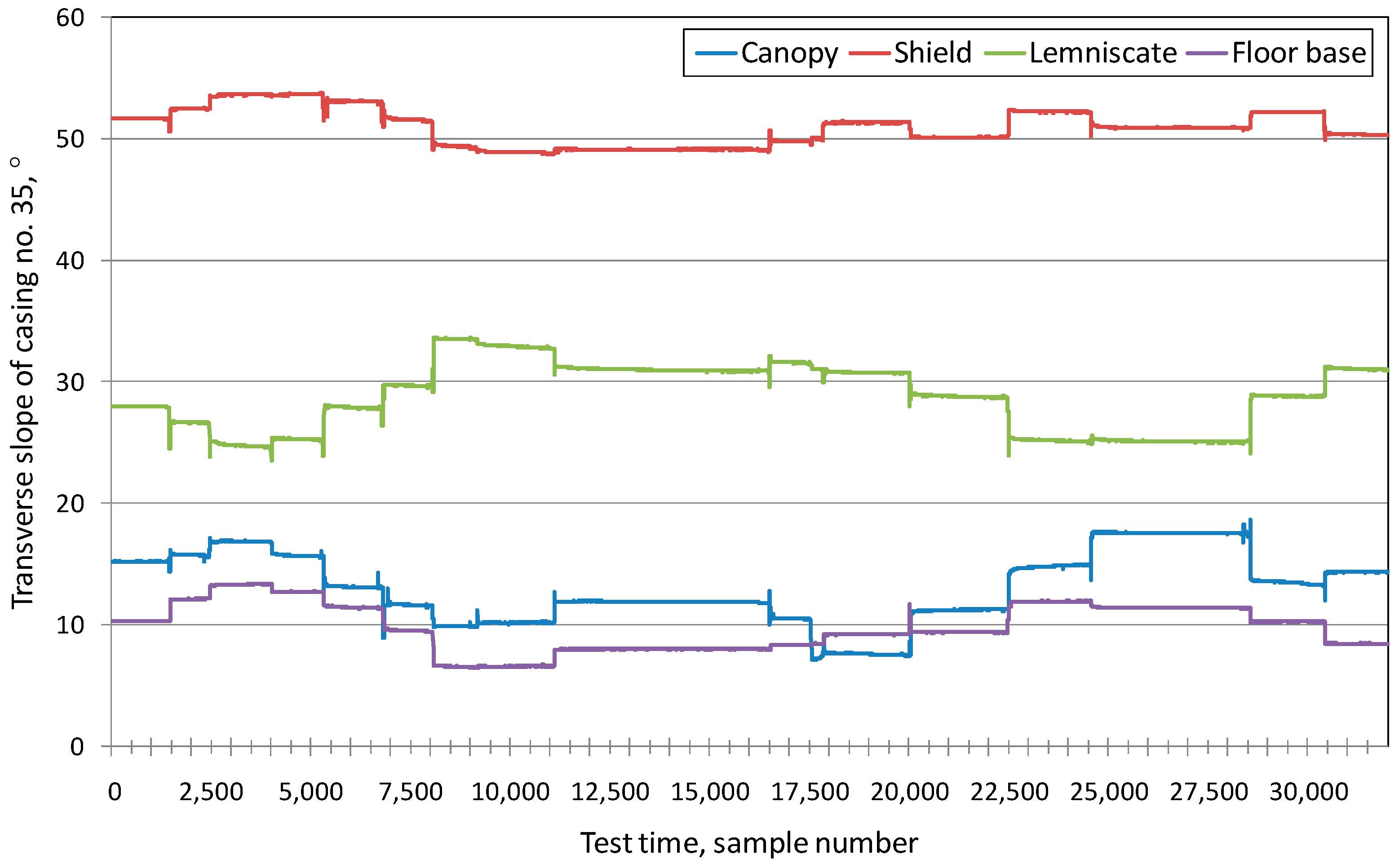
Figure 17 presents the changes in the transverse inclination of powered roof support No. 35 as a function of time for four configurations: canopy, shield, lemniscate, and floor base. The shield configuration maintains the highest inclination values (approximately 50–55°) with minimal fluctuations, indicating high geometric stability. The lemniscate exhibits medium values (25–35°) with a noticeable downward trend, suggesting gradual structural subsidence. The canopy and floor base variants are characterized by the lowest values (10–20° and 5–15°, respectively) and greater variability, which may reflect local instabilities or differences in floor stiffness. The obtained results confirm that the shield provides the greatest transverse stability among the analyzed configurations.
Figure 18 presents the changes in the longitudinal inclination of powered roof support No. 36 as a function of testing time for four analyzed configurations: canopy, shield, lemniscate, and floor base. The inclination values range from approximately –2.5° to 4.0°. The shield configuration remains within the range of about 0.5° to 1.5°, showing the smallest fluctuations over time, which confirms its highest longitudinal stability. The canopy configuration is characterized by larger variations, ranging from 2.5° to 4.0°, while the lemniscate remains at approximately −2.0° to −1.0°, with slight deviations. The floor base shows moderate variability within the range of 0° to 1.0°. These results indicate that the shield configuration provides the most stable operating conditions for the analyzed section.
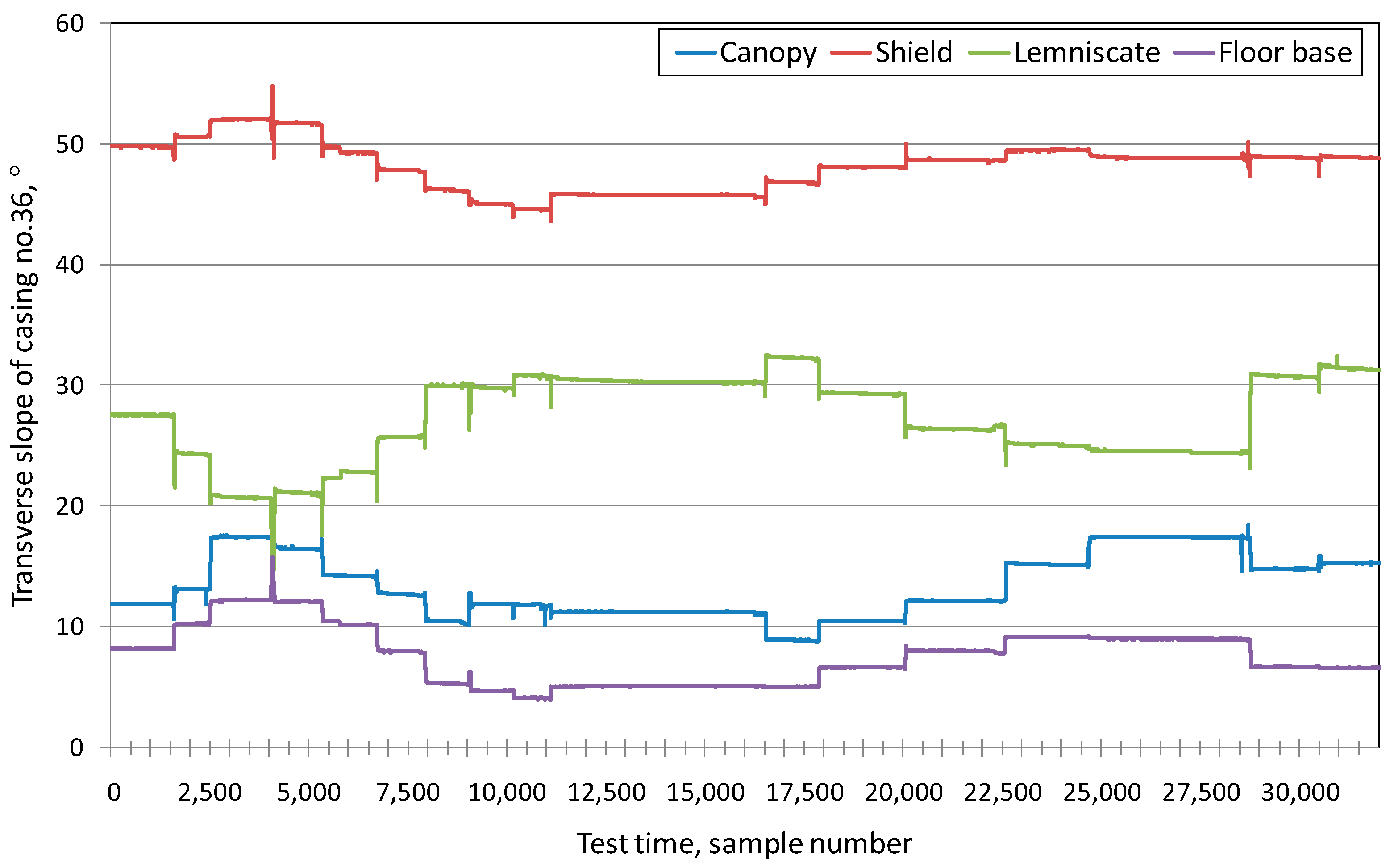
Figure 19 presents the changes in the transverse inclination of powered roof support No. 36 as a function of testing time for four analyzed configurations: canopy, shield, lemniscate, and floor base. The inclination angle values range from approximately 0° to 50°. The highest values are observed for the shield configuration (around 40–50°), indicating a significant tilt toward the roof. The lemniscate configuration remains within the range of 20–30°, while the canopy shows stable values at the level of 5–15°. The floor base is characterized by the smallest inclination, maintained within the range of 0–10°. The obtained results confirm that the shield configuration exhibits the greatest transverse inclination among the analyzed systems.
The graphs of the longitudinal (see Figure 14, Figure 16 and Figure 18) and transverse (see Figure 15, Figure 17 and Figure 19) inclination of the powered support section elements show the course of changes in the structure’s geometry during its operation. The figures present measurement results obtained from inclinometer sensors installed at key points within the section. The slope angles are defined relative to the horizontal plane, with positive values representing deviations in the direction of the roof slope, and negative values representing deviations in the opposite direction.
Analysis of the graphs shows that in the initial phase of the working cycle there is a slight increase in the longitudinal inclination resulting from the process of moving the section towards the ceiling. In subsequent stages, the inclination angle stabilizes, indicating that a state of equilibrium has been achieved between the forces acting on the actuators. Periodic fluctuations in the transverse inclination are noticeable, which may be the result of uneven support of the section on the ground or local deformations of the mining substrate. The combination of both graphs allows for a comprehensive assessment of the section’s behavior in operating conditions. The differences in the longitudinal (see Figure 14, Figure 16 and Figure 18) and transverse (see Figure 15, Figure 17 and Figure 19) slopes indicate the complex nature of the loads acting on the structure and the need to consider both vertical and lateral forces in the section’s stability analysis. The conclusions obtained from the analysis of the graphs constitute the basis for further assessment of the correct operation of the support section.
Longitudinal inclination (see Figure 14, Figure 16 and Figure 18) of the monitored elements ranged from 2° to 4°. The transverse inclination (see Figure 15, Figure 17 and Figure 19) was significantly different. This was due to the construction of a mechanized section. The lateral inclination for the floor base was from 4° to 11°, the canopy from 9° to 20°, the lemniscate from 20° to 35°, and the shield support from 47° to 53°. The inclination angles measured by the system allowed determining the operating height of the tested supports.
Based on the determined inclinations and operating angles of the support elements, the operating height of the analyzed sections was determined. Figure 20, Figure 21 and Figure 22 presents the graphs of the height changes in the three tested supports in the longwall excavation.
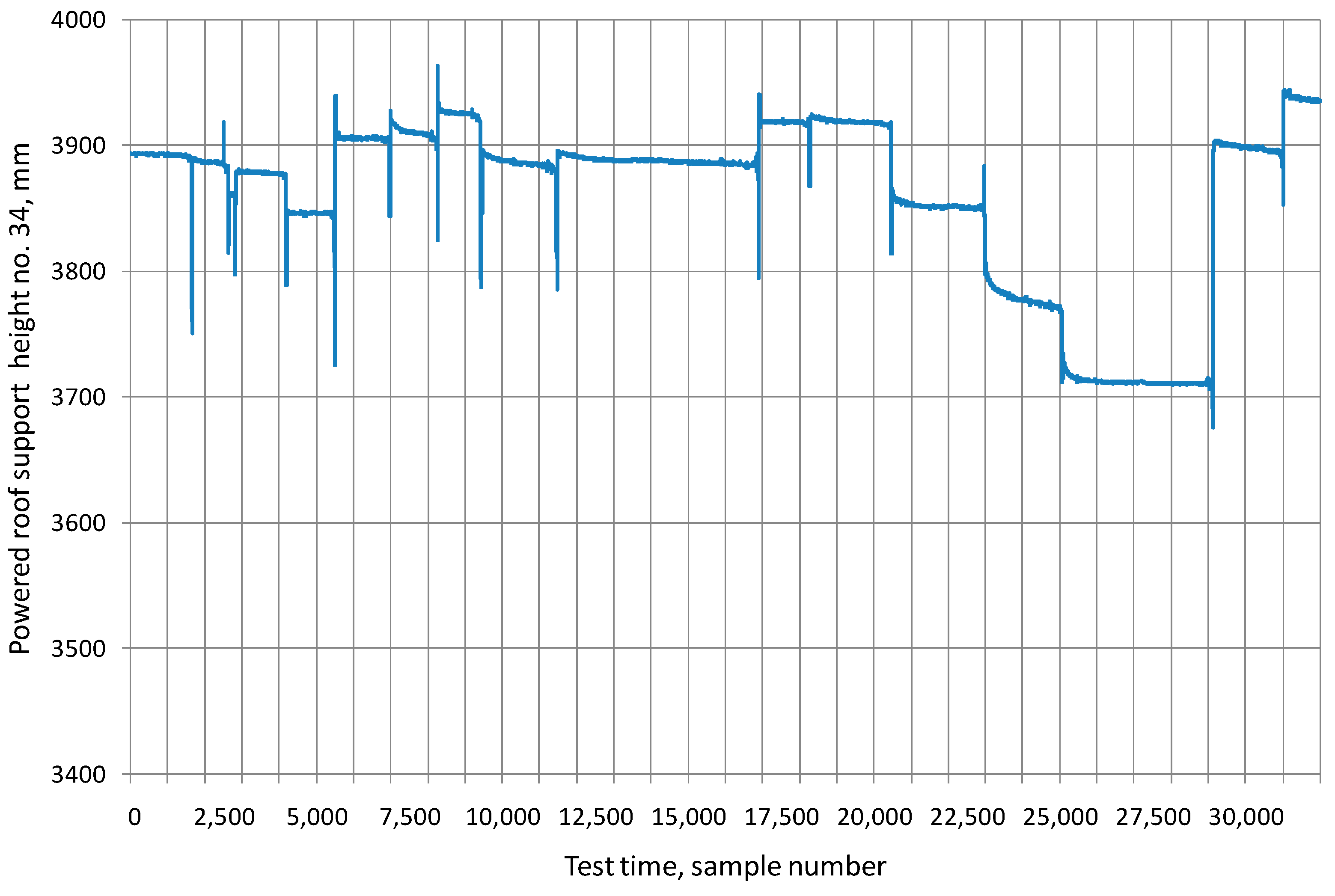
Figure 20 presents the changes in the variation in the operating height of the powered roof support over time for section No. 34. The height values remain within the range of approximately 3500 mm to 3950 mm, showing cyclic fluctuations associated with successive operating phases of the section. Periodic decreases in height correspond to the yielding phase, while rapid increases indicate the stage of expansion and subsequent advancing of the section toward the longwall face. Characteristic rises and drops in the curve reflect dynamic changes in loading and displacement during the operational cycle of the support.
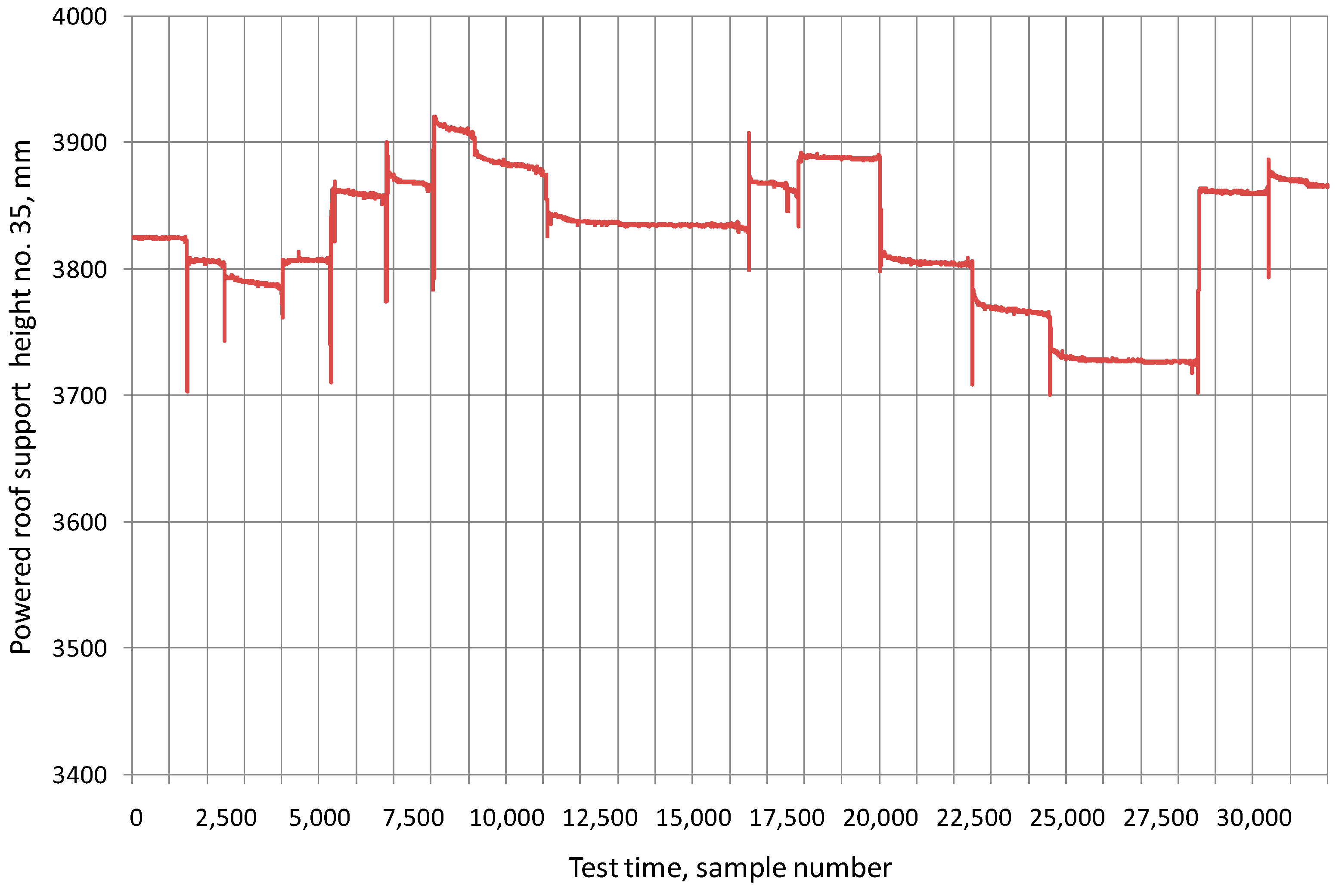
Figure 21 presents the changes in the signal trend and shows distinct working cycles of the support unit. The setting phases correspond to an increase in operating height up to approximately 3950 mm, indicating full leg extension and roof stabilization. The yielding (lowering) phases are marked by a rapid decrease in height to around 3700–3750 mm, resulting from the unloading and retraction of the support during face advance. The observed height variations reflect the typical cyclic behavior of powered roof supports under longwall mining conditions.
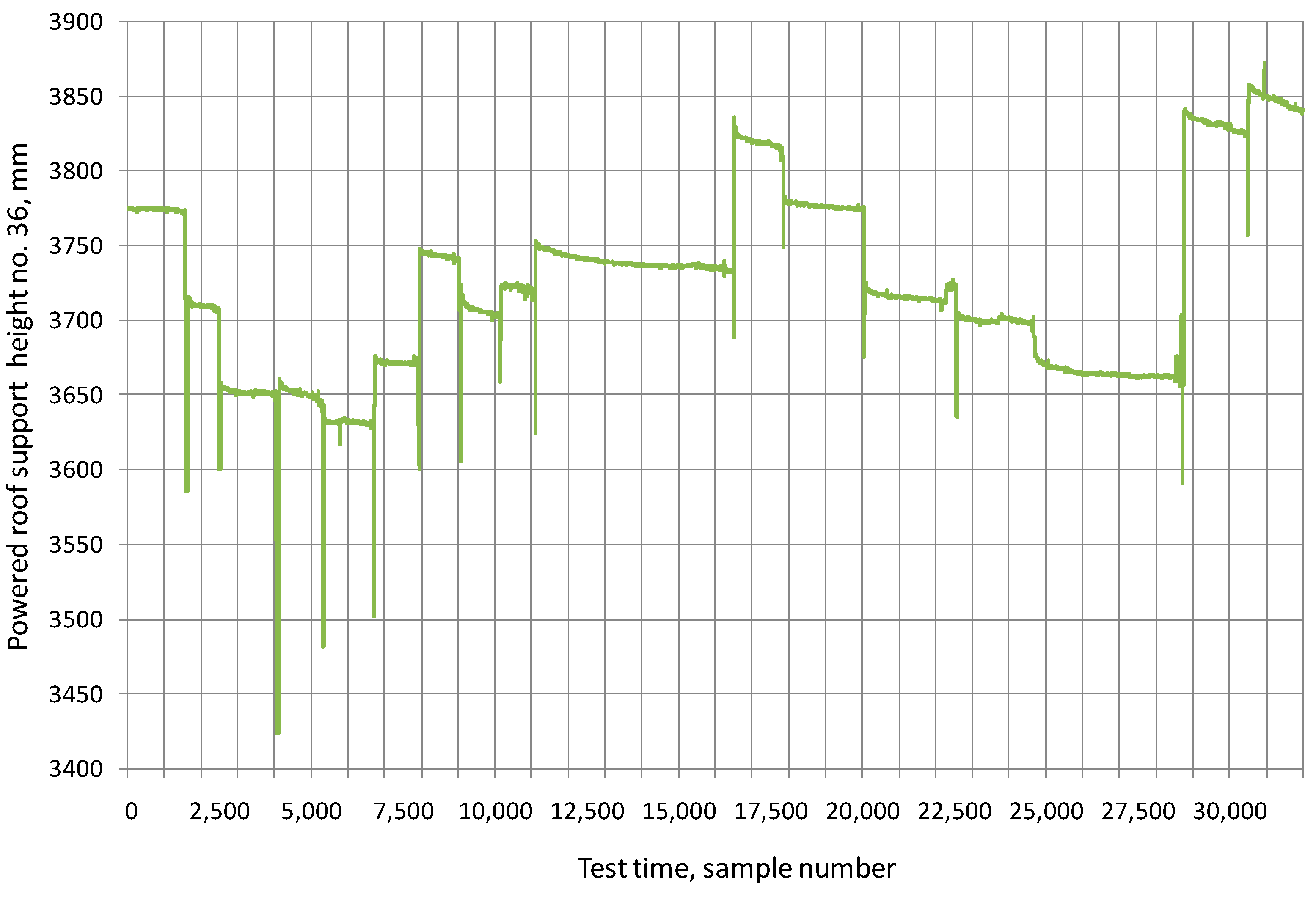
Figure 22 presents the changes in the chart and shows distinct working cycles of the support, including the setting phases, where the height increases up to approximately 3880–3900 mm, and the yielding phases, where it decreases to around 3550–3600 mm due to the retraction and unloading of the support. The recorded variations represent the typical cyclic behavior of the powered roof support during longwall face advancement.
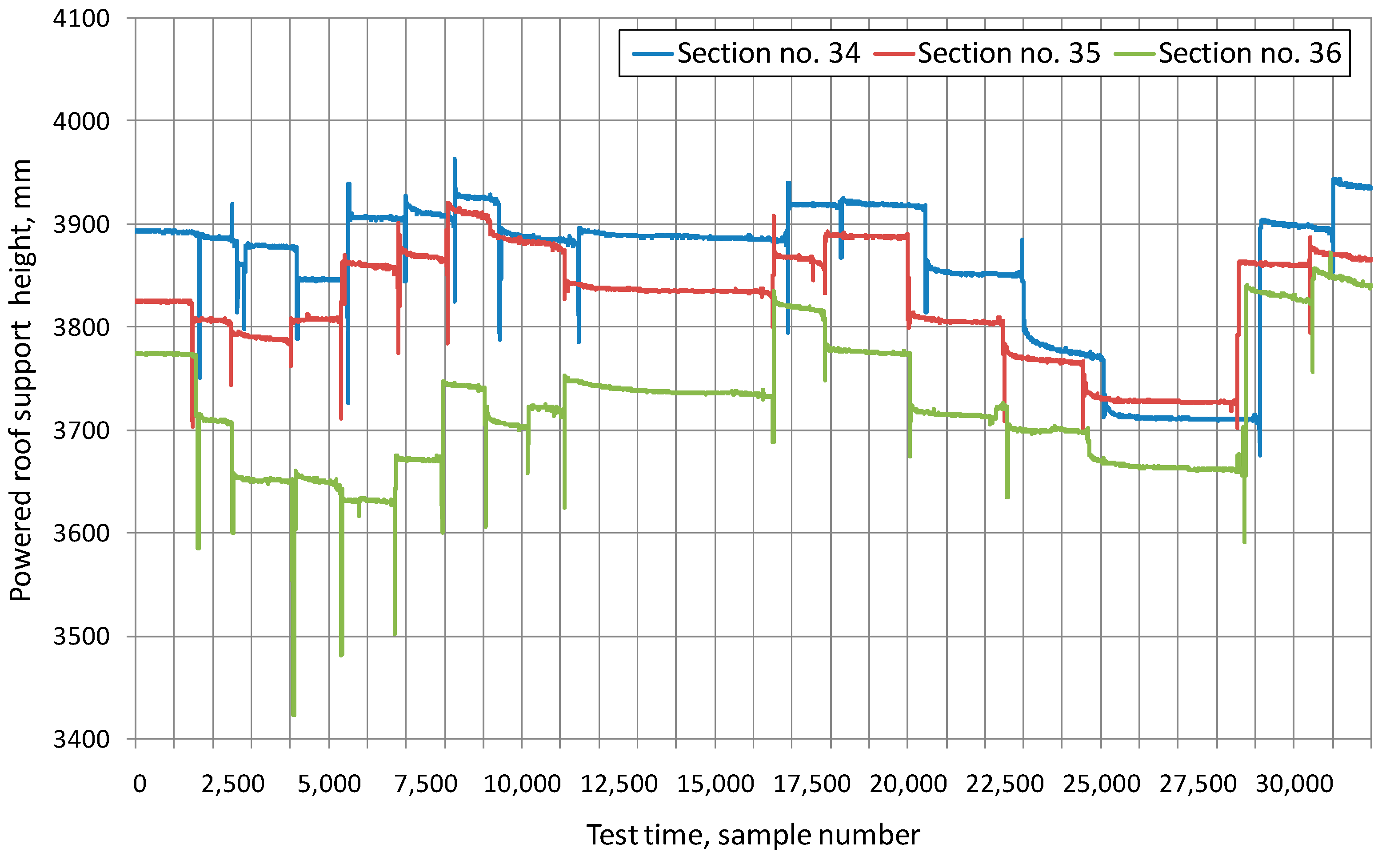
The height of section 34 ranged from 3920 mm to 3700 mm for a period of 3 days (see Figure 20). For section 35, the height was 3710 mm to 3910 mm (see Figure 21). Section 36 operated in the range from 3620 mm to 3880 mm (see Figure 22). To a large extent, the differences in the operating height of the support are influenced by the layers of surrounding rocks, which generate stresses affecting the elements of the powered support. The results of the powered support operations are shown in Figure 23, which shows the operating height of the monitored sections in the longwall excavation.
The height graph also shows the changes caused by the support moving in the direction of the coal seam. This process is carried out employing cyclic support movements, which are related to its operating cycle—stripping, moving towards the coal face, and re-extension. The re-extension allows the scraper conveyor to move toward the coal face and secures the roof of the excavation.
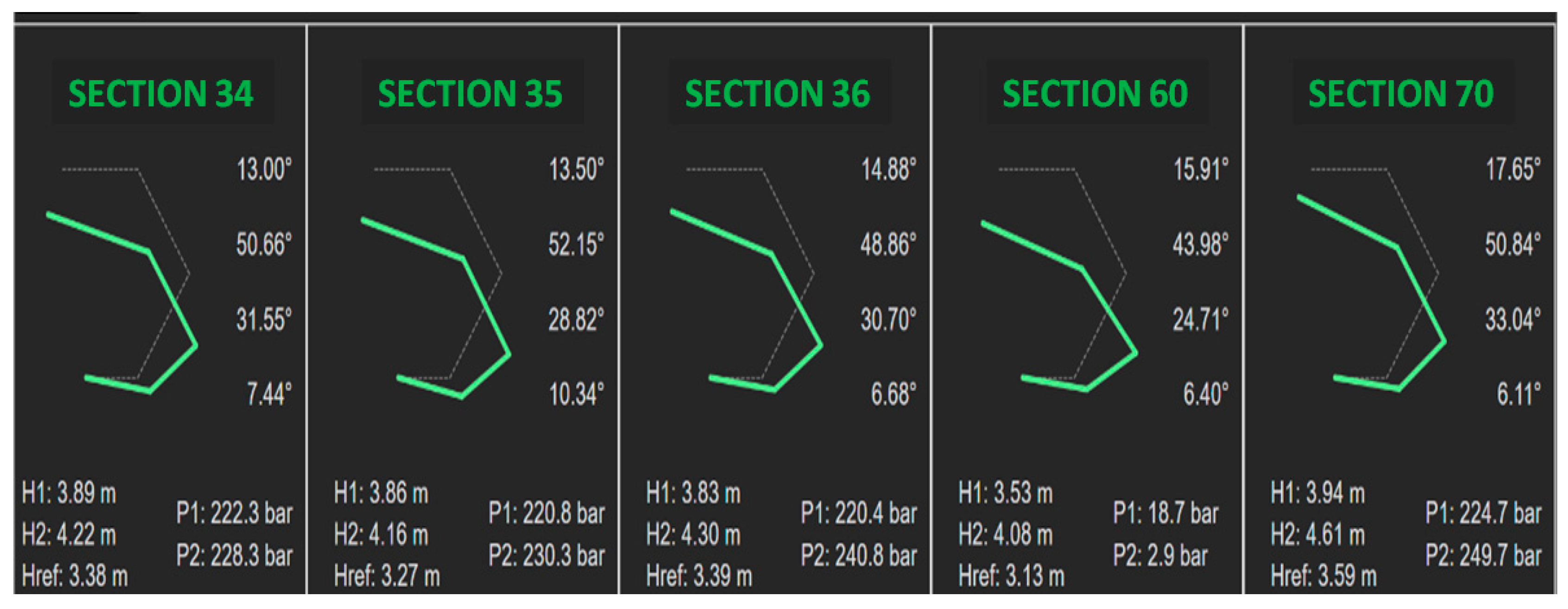
The research carried out in real conditions was aimed at connecting the measuring system to the system monitoring the operating parameters of the powered support. Information was transmitted directly to the surface via communication between sensors in the longwall face. A visualization station equipped with an underground computer was located in the longwall excavation, on which it was possible to visualize geometric parameters and pressure values in the props for five sections equipped with a measurement system. The sensors communicated wirelessly by transmitting information to the underground station, where the data was archived and analyzed. Data from the underground station was transferred using the underground infrastructure in the form of fiber optic cables and sent to the surface of the mining plant to the power-machine control room. Figure 24 shows the interface of the obtained data during the tests after connecting the sensors to the monitoring system.
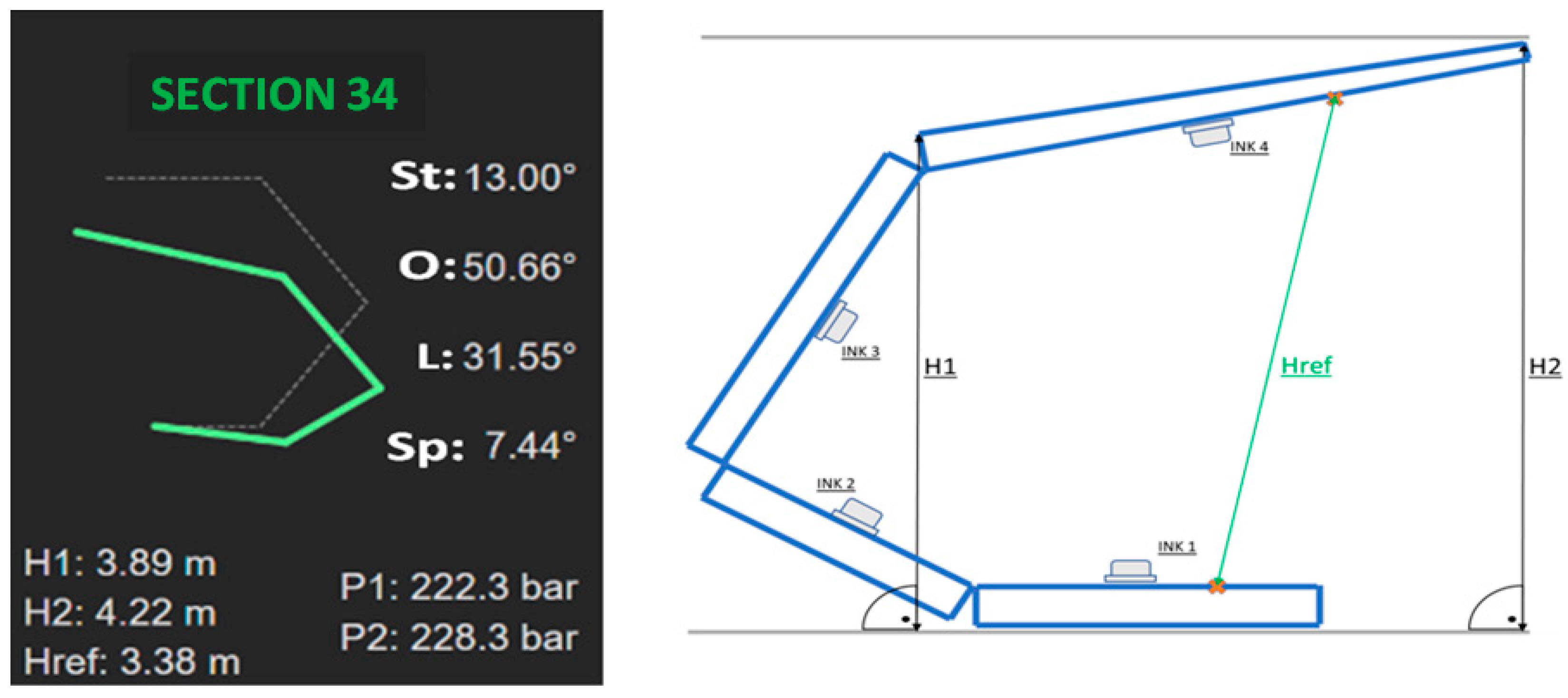
Figure 25 shows a description of the data displayed to the user from the system. For example, the interface for section 34 was shown along with the section height markings, which were analyzed for the purposes of the study.
The conducted research of the analyzed measuring system, which constitutes an integral part responsible for measuring geometric parameters in the powered support monitoring system, enabled the determination of height (see Figure 23) as well as the transverse and longitudinal inclinations of the support elements (see Figure 15, Figure 16, Figure 17, Figure 18 and Figure 19). The obtained data will serve as a basis for improving the support’s operating cycle in the future.
The developed system enables the quick identification of any type of deviation in the setting of each support section. The result of these activities is to ensure the optimal and safe operation of each section. Above all, obtaining quick information about irregularities in the setting of the section will limit the further process of deterioration of its cooperation with the rock mass and other machines in the complex.

4. Discussion

The article presents a developed and implemented method of testing powered supports in order to adapt them to the monitoring of their operating parameters. In addition, guidelines were also formulated for the development and implementation of a remote system for monitoring section operating parameters and diagnosing the condition of the support’s operation based on these data. The developed methodology can be considered a comprehensive method for testing powered supports to determine guidelines for the monitoring system (see Figure 26).
The created method was developed based on a defined methodology, which is a set of applied research methods by which the assumed objectives were achieved. Its application made it possible to identify diagnostic signals relevant for this monitoring, which in turn enabled work to be carried out to use these signals to monitor the operation of the section and thus the entire roof support (the issue of time uniformity—the integration of signal recording for all sections). The stability of the sections must also be examined; therefore, a new research approach to recording this signal had to be developed.
Thus, the developed testing method enables reliable recording of pressures and positions of the section components in order to use these parameters in the control system. This arrangement is therefore a practical result of implementing the developed guidelines. The results included the development of guidelines necessary for the construction and implementation of a system for monitoring the operating parameters of the powered support, providing a basis for actions limiting (or even eliminating) the participation of workers in the very dangerous frontal zone. The developed guidelines included structural aspects of the support sections, environmental impact on its operation and technical parameters of their operation and the entire longwall complex, as well as the technical and IT system for monitoring these parameters, which are crucial for the development and implementation of a remote support control system. The principles were defined based on model and bench tests as well as under real conditions. Such a comprehensive approach made it possible to determine guidelines for its application.
  • The sensors constituting the measuring recording system should be located on the canopy, the floor base, the lemniscates, and the shield support.
  • Innovative mounting brackets should be used to mount the sensors.
  • The mounting locations were determined, taking into account the areas most exposed to external forces under actual conditions.
  • The sensors are located for easy access during service maintenance related to a failure or replacement of the power supply batteries.
  • The installation of the sensors took into account the impact of the structural elements on the quality of the measurement system’s communication.
  • The sensors are visible to the crew for significantly improved visualization of light signals indicating the operating status of the support.
Despite their significant advantages, powered roof support monitoring systems have certain limitations that can impact the accuracy and reliability of the data obtained. The most important of these include the following:
-
Environmental working conditions—High temperature, humidity, dust, and the presence of vibrations in the excavation may negatively affect sensors and transmission cables, causing signal interference or failure of measuring devices.
-
Limited resistance of sensors to mechanical damage—In longwall operation conditions, system components are exposed to vibrations, impacts from rock fragments, and contact with structural elements, which may lead to their premature wear.
-
Data transmission and integration issues—In underground environments, ensuring stable wired or wireless communication is difficult, especially over longer distances. Integrating systems from different manufacturers can also be problematic due to inconsistent communication protocol standards.
-
The complexity of data interpretation—Analyzing the results requires specialized engineering knowledge and understanding the dynamics of the support section. In many cases, data filtering and pre-processing are necessary to eliminate errors resulting from measurement noise.
-
Implementation and maintenance costs—Advanced monitoring systems require significant capital expenditure, both at the installation stage and for subsequent maintenance, which may limit their use in smaller mining plants.
Despite these limitations, the use of powered roof support monitoring systems brings tangible benefits in terms of safety and efficiency of longwall operations. The most important of these are the following:
-
Assessment of the technical condition of the section—Ongoing measurement of parameters, such as pressure in cylinders, displacements, and inclination or load on the structure, enables early detection of irregularities and prevention of failures.
-
Increased crew safety—The system allows for the identification of potentially dangerous situations, such as excessive section deflection, loss of contact with the ceiling, or overloading of structural elements, enabling immediate response by operators.
-
Optimization of operating parameters—Real-time analysis of measurement data allows for the adjustment of support forces, travel speed, and synchronization of the operation of individual sections, which leads to improved stability and efficiency of the longwall system.
-
Supporting decision-making and diagnostic processes—Archiving monitoring data enables the creation of forecasting models, assessment of load trends, and identification of areas with an increased risk of rock mass deformation.
-
Cooperation with superior systems—Modern monitoring systems can be integrated with comprehensive longwall control systems, which allows for the automation of some operational processes and remote control of selected support functions.

5. Conclusions

Technical and IT data of the system for monitoring these parameters are crucial for the development and implementation of the solution in the operation of powered supports. The place of implementation was a longwall face in one of the mines, in which the built-in measuring system was subjected to tests. The built-in measuring and recording system for the purposes of tests conducted under real conditions constituted a complete system for monitoring geometric parameters and pressure values in the props of the powered support section in the longwall face. Based on the conducted model, bench, and operational tests, the proper operation and development of the roof monitoring system was determined. The results of these tests were the basis for determining the guidelines for its application in the operation of powered supports.
Based on the work carried out and the results obtained, the following conclusions can be formulated:
  • The analyzed spatial model of the powered support required the use of additional structural elements and the addition of material properties to increase strength. These factors were refined using numerical calculations. The locations most exposed to possible damage resulting from exceeding the permissible stress values have been determined. The conducted model tests (strength tests) indicated structural changes in order to achieve safety and quality requirements while reducing production costs, as well as identifying preliminary installation locations for installing sensors to monitor the powered roof parameters.
  • The powered support monitoring system is a tool for diagnosing and analyzing the operation of the support sections. The research made it possible to determine the height, as well as the transverse and longitudinal inclination of the support on the bench test, based on the obtained geometric parameters and the operating angles of the basic support elements.
  • Analysis based on model and bench tests showed no collision of the roof support elements with the system sensors. The measuring system was installed on the canopy, the floor base, the shield support, and the lemniscate.
  • The prepared measuring system allows for quick identification of any type of deviations in the setting of each support section. Above all, obtaining quick information about irregularities in the section setting will limit the further process of deterioration of its cooperation with the rock mass and other machines in the complex.
  • The conducted research determined the methodology, the operating procedure, and the installation of the measuring and recording system. This information constitutes guidelines for the development of the measuring and recording system. The obtained information about the geometry of the support section should allow the assessment of its operation and allow determining the relationship between this state and phenomena occurring in the rock mass.
  • The practical use of the system, provided that the sensors are denser in the longwall excavation and innovative mounting brackets are used, leads to significant changes in the way mining is carried out, reducing downtime and increasing the safety of the crew.
The development and competitiveness of the world economy and science necessitate the need for continuous improvement of the mining production process. This applies to both the technical and organizational/management solutions. The extensive work carried out in connection with the dissertation, which also included the implementation process of the developed solutions, indicates the need for further research to improve existing solutions and develop new ones. In this respect, it is justified to
-
Further improve the design methods for the mechanical components of powered support sections to enhance their ergonomics with a view to introducing remote control of their operation;
-
Conduct tests under real conditions in order to limit the number of sensors used to determine the geometric parameters of the roof support;
-
Improve the system in terms of its cooperation with other machines of the longwall complex;
-
Introduce artificial intelligence solutions for self-learning of the system in order to react and warn the user about changes occurring in the rock mass;
-
Improve the system in terms of determining the limit values of recorded system parameters that may adversely affect the operation of the roof support and the entire longwall complex in terms of safety;
-
Improve the quality of the sensor power supply so that there is no need to replace the battery under surface conditions.
The use of powered roof support monitoring systems represents a significant step towards improving operational safety and production efficiency in coal mining. Despite technical and environmental limitations, advances in measurement technologies and integration with mining automation systems allow for increasingly accurate representation of actual roof support operating conditions. In the future of mining, roof support monitoring is a key element of the so-called “smart longwall,” enabling comprehensive control and diagnostics of processes occurring in the mining area.

Author Contributions

Conceptualization, D.S. and K.T.; methodology, D.S.; software, J.B.; validation, K.T., D.S. and J.B.; formal analysis, J.B. and Ł.B.; investigation, K.T.; resources, K.T.; data curation, J.B.; writing—original draft preparation, K.T.; writing—review and editing, D.S.; visualization, K.T. and Ł.B.; supervision, D.S.; project administration, D.S.; funding acquisition, Z.K. All authors have read and agreed to the published version of the manuscript.

Funding

This research received no external funding.

Institutional Review Board Statement

Not applicable.

Informed Consent Statement

Not applicable.

Data Availability Statement

The original contributions presented in the study are included in the article, further inquiries can be directed to the corresponding author.

Conflicts of Interest

Author Łukasz Bazan was employed by the company Center of Hydraulics DOH Ltd. The remaining authors declare that the research was conducted in the absence of any commercial or financial relationships that could be construed as a potential conflict of interest.

References

  1. Zimroz, P.; Trybała, P.; Wróblewski, A.; Góralczyk, M.; Szrek, J.; Wójcik, A.; Zimroz, R. Application of UAV in Search and Rescue Actions in Underground Mine-A Specific Sound Detection in Noisy Acoustic Signal. Energies 2021, 14, 3725. [Google Scholar] [CrossRef]
  2. Wang, X.; Xu, J.; Zhu, W.; Li, Y. Roof pre-blasting to prevent support crushing and water inrush accidents. Int. J. Min. Sci. Technol. 2012, 22, 379–384. [Google Scholar] [CrossRef]
  3. Buyalich, G.; Buyalich, K.; Byakov, M. Factors Determining the Size of Sealing Clearance in Hydraulic Legs of Powered Supports. E3S Web Conf. 2017, 21, 3018. [Google Scholar] [CrossRef]
  4. Kawalec, W.; Suchorab, N.; Konieczna-Fuławka, M.; Król, R. Specific energy consumption of a belt conveyor system in a continuous surface mine. Energies 2020, 13, 5214. [Google Scholar] [CrossRef]
  5. Kumar, R.; Singh, A.K.; Mishra, A.K.; Singh, R. Underground mining of thick coal seams. Int. J. Min. Sci. Technol. 2015, 25, 885–896. [Google Scholar] [CrossRef]
  6. Bazaluk, O.; Slabyi, O.; Vekeryk, V.; Velychkovych, A.; Ropyak, L.; Lozynskyi, V. A Technology of Hydrocarbon Fluid Production Intensification by Productive Stratum Drainage Zone Reaming. Energies 2021, 14, 3514. [Google Scholar] [CrossRef]
  7. Kotwica, K.; Stopka, G.; Kalita, M.; Bałaga, D.; Siegmund, M. Impact of Geometry of Toothed Segments of the Innovative KOMTRACK Longwall Shearer Haulage System on Load and Slip during the Travel of a Track Wheel. Energies 2021, 14, 2720. [Google Scholar] [CrossRef]
  8. Grzesiek, A.; Zimroz, R.; Śliwiński, P.; Gomolla, N.; Wyłomańska, A. A Method for Structure Breaking Point Detection in Engine Oil Pressure Data. Energies 2021, 14, 5496. [Google Scholar] [CrossRef]
  9. Hebda-Sobkowicz, J.; Gola, S.; Zimroz, R.; Wyłomańska, A. Identification and Statistical Analysis of Impulse-Like Patterns of Carbon Monoxide Variation in Deep Underground Mines Associated with the Blasting Procedure. Sensors 2019, 19, 2757. [Google Scholar] [CrossRef] [PubMed]
  10. Peng, S.S.; Feng, D.; Cheng, J.; Yang, L. Automation in U.S. longwall coal mining: A state-of-the-art review. Int. J. Min. Sci. Technol. 2019, 29, 151–159. [Google Scholar] [CrossRef]
  11. Krauze, K.; Mucha, K.; Wydro, T.; Pieczora, E. Functional and Operational Requirements to Be Fulfilled by Conical Picks Regarding Their Wear Rate and Investment Costs. Energies 2021, 14, 3696. [Google Scholar] [CrossRef]
  12. Uth, F.; Polnik, B.; Kurpiel, W.; Baltes, R.; Kriegsch, P.; Clause, E. An innovate person detection system based on thermal imaging cameras dedicatefor underground belt conveyors. Min. Sci. 2019, 26, 263–276. [Google Scholar] [CrossRef]
  13. Ji, Y.; Ren, T.; Wynne, P.; Wan, Z.; Zhaoyang, M.; Wang, Z. A comparative study of dust control practices in Chinese and Australian longwall coal mines. Int. J. Min. Sci. Technol. 2016, 25, 687–706. [Google Scholar] [CrossRef]
  14. Prostański, D. Empirical Models of Zones Protecting Against Coal Dust Explosion. Arch. Min. Sci. 2017, 62, 611–619. [Google Scholar] [CrossRef]
  15. Ralston, J.C.; Reid, D.C.; Dunn, M.T.; Hainsworth, D.W. Longwall automation: Delivering enabling technology to achieve safer and more productive underground mining. Int. J. Min. Sci. Technol. 2015, 25, 865–876. [Google Scholar] [CrossRef]
  16. Bortnowski, P.; Gładysiewicz, L.; Król, R.; Ozdoba, M. Energy Efficiency Analysis of Copper Ore Ball Mill Drive Systems. Energies 2021, 14, 1786. [Google Scholar] [CrossRef]
  17. Borkowski, P.J. Comminution of Copper Ores with the Use of a High-Pressure Water Jet. Energies 2020, 13, 6274. [Google Scholar] [CrossRef]
  18. Khayrutdinov, M.M.; Golik, V.I.; Aleksakhin, A.V.; Trushina, E.V.; Lazareva, N.V.; Aleksakhina, Y.V. Proposal of an Algorithm for Choice of a Development System for Operational and Environmental Safety in Mining. Resources 2022, 11, 88. [Google Scholar] [CrossRef]
  19. Kawalec, W.; Błażej, R.; Konieczna, M.; Król, R. Laboratory Tests on e-pellets effectiveness for ore tracking. Min. Sci. 2018, 25, 7–18. [Google Scholar] [CrossRef]
  20. Janus, J.; Krawczyk, J. Measurement and Simulation of Flow in a Section of a Mine Gallery. Energies 2021, 14, 4894. [Google Scholar] [CrossRef]
  21. Baiul, K.; Khudyakov, A.; Vashchenko, S.; Krot, P.V.; Solodka, N. The experimental study of compaction parameters and elastic after-effect of fine fraction raw materials. Min. Sci. 2020, 27, 7–18. [Google Scholar] [CrossRef]
  22. Huang, P.; Spearing, S.; Ju, F.; Jessu, K.V.; Wang, Z.; Ning, P. Control Effects of Five Common Solid Waste Backfilling Materials on In Situ Strata of Gob. Energies 2019, 12, 154. [Google Scholar] [CrossRef]
  23. Wajs, J.; Trybała, P.; Górniak-Zimroz, J.; Krupa-Kurzynowska, J.; Kasza, D. Modern Solution for Fast and Accurate Inventorization of Open-Pit Mines by the Active Remote Sensing Technique-Case Study of Mikoszów Granite Mine (Lower Silesia, SW Poland). Energies 2021, 14, 6853. [Google Scholar] [CrossRef]
  24. Rajwa, S.; Janoszek, T.; Prusek, S. Influence of canopy ratio of powered roof support on longwall working stability—A case study. Int. J. Min. Sci. Technol. 2019, 29, 591–598. [Google Scholar] [CrossRef]
  25. Juganda, A.; Strebinger, C.; Brune, J.F.; Bogin, G.E. Discrete modeling of a longwall coal mine gob for CFD simulation. Int. J. Min. Sci. Technol. 2020, 30, 463–469. [Google Scholar] [CrossRef]
  26. Świątek, J.; Janoszek, T.; Cichy, T.; Stoiński, K. Computational Fluid Dynamics Simulations for Investigation of the Damage Causes in Safety Elements of Powered Roof Supports-A Case Study. Energies 2021, 14, 1027. [Google Scholar] [CrossRef]
  27. Adach-Pawelus, K.; Pawelus, D. Influence of Driving Direction on the Stability of a Group of Headings Located in a Field of High Horizontal Stresses in the Polish Underground Copper Mines. Energies 2021, 14, 5955. [Google Scholar] [CrossRef]
  28. Qiao, S.; Zhang, Z.; Zhu, Z.; Zhang, K. Influence of cutting angle on mechanical properties of rock cutting by conical pick based on finite element analysis. J. Min. Sci. 2021, 28, 161–173. [Google Scholar] [CrossRef]
  29. Doległo, L.; Stoiński, K.; Gil, J. Analityczna ocena wydajności objętościowej układu hydraulicznego stojaka zmechanizowanej obudowy ścianowej. Masz. Górnicze 2009, 4, 9–18. [Google Scholar]
  30. Jasiulek, D.; Skóra, M.; Jagoda, J.; Jura, J.; Rogala-Rojek, J.; Hetmańczyk, M. Monitoring the Geometry of Powered Roof Supports—Determination of Measurement Accuracy. Energies 2023, 16, 7710. [Google Scholar] [CrossRef]
  31. Wodecki, J.; Góralczyk, M.; Krot, P.; Ziętek, B.; Szrek, J.; Worsa-Kozak, M.; Zimroz, R.; Śliwiński, P.; Czajkowski, A. Process Monitoring in Heavy Duty Drilling Rigs-Data Acquisition System and Cycle Identification Algorithms. Energies 2020, 13, 6748. [Google Scholar] [CrossRef]
  32. Bardzinski, P.; Jurdziak, L.; Kawalec, W.; Król, R. Copper ore quality tracking in a belt conveyor system using simulation tools. Nat. Resour. Res. 2020, 29, 1031–1040. [Google Scholar] [CrossRef]
  33. Patyk, M.; Bodziony, P.; Krysa, Z. A Multiple Criteria Decision Making Method to Weight the Sustainability Criteria of Equipment Selection for Surface Mining. Energies 2021, 14, 3066. [Google Scholar] [CrossRef]
  34. Trzop, K.; Szurgacz, D. Tests Result of the Prototype Monitoring System for the Operating Parameters of the Powered Roof Support in Real Conditions. Civ. Environ. Eng. Rep. 2024, 34, 165–181. [Google Scholar] [CrossRef]
  35. Szurgacz, D.; Trzop, K.; Spearing, A.J.S.; Pokorny, J.; Zhironkin, S. Determining the pressure increase in the hydraulic cylinders of powered roof support based on actual measurements. Acta Montan. Slovac 2022, 27, 876. [Google Scholar]
  36. Gao, X.; Hu, Y.; Liu, S.; Yin, J.; Fan, K.; Yi, L. An AGCRN Algorithm for Pressure Prediction in an Ultra-Long Mining Face in a Medium-Thick Coal Seam in the Northern Shaanxi Area, China. Appl. Sci. 2023, 13, 11369. [Google Scholar] [CrossRef]
  37. Chen, N. Research on Hydraulic Support Attitude Monitoring Method Based on Electro-Hydraulic Control System of Fully Mechanized Mining Face. Sustainability 2023, 15, 2239. [Google Scholar] [CrossRef]
  38. Jiang, Y.; Chen, W.; Zhang, X.; Zhang, X.; Yang, G. Real-Time Monitoring of Underground Miners’ Status Based on Mine IoT System. Sensors 2024, 24, 739. [Google Scholar] [CrossRef]
  39. Wang, Q. Underground Mine Safety and Health: A Hybrid MEREC-CoCoSo Framework for Sensor Selection in Underground Mining. Sensors 2024, 24, 1285. [Google Scholar] [CrossRef]
  40. Ren, B. Research on an Intelligent Mining Complete System of a Fully Mechanized Coal Mining Face in Thin Coal Seam. Sensors 2023, 23, 9034. [Google Scholar] [CrossRef] [PubMed]
  41. Kruczek, P.; Gomolla, N.; Hebda-Sobkowicz, J.; Michalak, A.; Śliwiński, P.; Wodecki, J.; Stefaniak, P.; Wyłomańska, A.; Zimroz, R. Predictive Maintenance of Mining Machines Using Advanced Data Analysis System Based on the Cloud Technology. In Proceedings of the 27th International Symposium on Mine Planning and Equipment Selection-MPES 2018; Widzyk-Capehart, E., Hekmat, A., Singhal, R., Eds.; Springer: Cham, Switzerland, 2019. [Google Scholar] [CrossRef]
  42. Hu, S.; Ma, L.; Guo, J.; Yang, P. Support-surrounding rock relationship and top-coal movement laws in large dip angle fully-mechanized caving face. Int. J. Min. Sci. Technol. 2018, 28, 533–539. [Google Scholar]
  43. Ralston, J.C.; Hargrave, C.O.; Dunn, M.T. Longwall automation: Trends, challenges and opportunities. Int. J. Min. Sci. Technol. 2017, 27, 733–739. [Google Scholar] [CrossRef]
  44. Bajda, M.; Błażej, R.; Hardygóra, M. Optimizing splice geometry in multiply conveyor belts with respect to stress in adhesive bonds. Min. Sci. 2018, 25, 195–206. [Google Scholar] [CrossRef]
  45. Gładysiewicz, L.; Król, R.; Kisielewski, W.; Kaszuba, D. Experimental determination of belt conveyors artificial friction coefficient. Acta Mont. 2017, 22, 206–214. [Google Scholar]
  46. Woźniak, D.; Hardygóra, M. Method for laboratory testing rubber penetration of steel cords in conveyor belts. Min. Sci. 2020, 27, 105–117. [Google Scholar] [CrossRef]
  47. Bajda, M.; Hardygóra, M. Analysis of Reasons for Reduced Strength of Multiply Conveyor Belt Splices. Energies 2021, 14, 1512. [Google Scholar] [CrossRef]
  48. Buevich, V.V.; Gabov, V.V.; Zadkov, D.A.; Vasileva, P.A. Adaptation of the mechanized roof support to changeable rock pressure. Eurasian Min. 2015, 2, 11–14. [Google Scholar] [CrossRef]
  49. Babyr, N.V.; Korolev, A.I.; Neupokoeva, T.V. Enhancement of powered cleaning equipment with the view of mining and geological conditions. IOP Conf. Ser. Earth Environ. Sci. 2018, 194, 032004. [Google Scholar] [CrossRef]
  50. Klishin, V.I.; Klishin, S.V. Coal Extraction from Thick Flat and Steep Beds. J. Min. Sci. 2010, 46, 149–159. [Google Scholar] [CrossRef]
  51. Skrzypkowski, K.; Korzeniowski, W.; Zagórski, K.; Zagórska, A. Modified Rock Bolt Support for Mining Method with Controlled Roof Bending. Energies 2020, 13, 1868. [Google Scholar] [CrossRef]
  52. Jixiong, Z.; Spearing, A.J.S.; Xiexing, M.; Shuai, G.; Qiang, S. Green coal mining technique integrating mining-dressing-gas draining-backfilling-mining. Int. J. Min. Sci. Technol. 2017, 27, 17–27. [Google Scholar]
  53. Gabov, V.V.; Zadkov, D.A.; Stebnev, A.V. Evaluation of structure and variables within performance rating of hydraulically powered roof sup-port legs with smooth roof control. Eurasian Min. 2016, 2, 37–40. [Google Scholar]
  54. Wang, J.; Wang, Z. Systematic principles of surrounding rock control in longwall mining within thick coal seams. Int. J. Min. Sci. Technol. 2019, 29, 591–598. [Google Scholar] [CrossRef]
  55. Ji, Y.; Zhang, Y.; Huang, Z.; Shao, Z.; Gao, Y. Theoretical analysis of support stability in large dip angle coal seam mined with fully-mechanized top coal caving. Min. Sci. 2020, 27, 73–87. [Google Scholar]
  56. Babyr, N.; Babyr, K. To improve the contact adaptability of mechanical roof support. E3S Web Conf. 2021, 266, 03015. [Google Scholar] [CrossRef]
  57. Gabov, V.V.; Zadkov, D.A.; Babyr, N.V.; Xie, F. Nonimpact rock pressure regulation with energy recovery into the hydraulic system of the longwall powered support. Eurasian Min. 2021, 36, 55–59. [Google Scholar] [CrossRef]
  58. Ren, H.; Zhang, D.; Gong, S.; Zhou, K.; Xi, C.; He, M.; Li, T. Dynamic impact experiment and response characteristics analysis for 1:2 reduced-scale model of hydraulic support. Int. J. Min. Sci. Technol. 2021, 31, 347–356. [Google Scholar] [CrossRef]
  59. Buyalich, G.; Byakov, M.; Buyalich, K.; Shtenin, E. Development of Powered Support Hydraulic Legs with Improved Performance. E3S Web Conf. 2019, 105, 3025. [Google Scholar] [CrossRef]
  60. Frith, R.C. A holistic examination of the load rating design of longwall shields after more than half a century of mechanised longwall mining. Int. J. Min. Sci. Technol. 2015, 26, 199–208. [Google Scholar] [CrossRef]
  61. Zhao, X.; Li, F.; Li, Y.; Fan, Y. Fatigue Behavior of a Box-Type Welded Structure of Hydraulic Support Used in Coal Mine. Materials 2015, 8, 6609–6622. [Google Scholar] [CrossRef]
  62. Rudzki, P.; Krot, P. Dynamics control of powered hydraulic roof supports in the underground longwall mining complex. IOP Conf. Ser. Earth Environ. Sci. 2021, 942, 012014. [Google Scholar] [CrossRef]
  63. Zeng, Q.; Xu, P.; Meng, Z.; Ma, C.; Lei, X. Posture and Dynamics Analysis of Hydraulic Support with Joint Clearance under Impact Load. Machines 2023, 11, 159. [Google Scholar] [CrossRef]
  64. Zhang, Y.; Zhang, H.; Gao, K.; Zeng, Q.; Meng, F.; Cheng, J. Research on Intelligent Control System of Hydraulic Support Based on Position and Posture Detection. Machines 2023, 11, 33. [Google Scholar] [CrossRef]
  65. Leyko, J. General Mechanics; PWN: Warsaw, Poland, 2021; pp. 53–59. [Google Scholar]
  66. Analog Devices. Using an Accelerometer for Inclination Sensing; AN-1057 Aplication Note; Analog Devices, Inc.: Wilmington, MA, USA, 2010; pp. 1–8. [Google Scholar]
  67. Łuczak, S. Tilt measurements realised by means of MEMS accelerometers. Pomiary Autom. Robot. 2008, 12, 14–16. [Google Scholar]
Figure 1. Longwall, where 1—shearer, 2—powered roof supports, 3—conveyor.
Applsci 15 12828 g001
Figure 2. View of the operating cycle of the powered roof support, where 1—stripping powered roof support, 2—moving towards the coal face, 3—re-extension powered roof support.
Applsci 15 12828 g002
Figure 3. Pressure sensors.
Applsci 15 12828 g003
Figure 4. Geometry sensors.
Applsci 15 12828 g004
Figure 5. Inclination angles of the sensor, where (a) reference position, device with x, y axes in the horizon plane (field 0 g) and an axis perpendicular to the horizon (field 1 g) Λ1; (b) Λ2 angle between the gravity vector and the z axis and Λ2 angle between the horizon and the x axis of the accelerometer; (c) Λ3 angle between the horizon and the y axis; (d) inclination angles in three axes x, y, z.
Applsci 15 12828 g005
Figure 6. Cutting off angle α.
Applsci 15 12828 g006
Figure 7. Total height of the powered roof support, where 1—canopy, 2—shield, 3—lemniscates, 4—floor base, Hc—total height.
Applsci 15 12828 g007
Figure 8. Research procedure diagram.
Applsci 15 12828 g008
Figure 9. Mounting bracket, where (a)—geometric parameters of the plate, (b)—view of the mounting plate on the test bench—lemniscates, red circle—location of the device for manual calibration.
Applsci 15 12828 g009
Figure 10. Manual sensor calibration device.
Applsci 15 12828 g010
Figure 11. Mounting brackets on the test stand, where 1—mounting brackets lemniscates, 2—mounting brackets floor base, 3—mounting brackets shield, 4—mounting brackets canopy.
Applsci 15 12828 g011
Figure 12. Graph of changes in the operating height of the support on the test stand.
Applsci 15 12828 g012
Figure 13. Research stand in real conditions, where 1—memory card in the sensor, 2—sensor lemniscates, 3—sensor floor base, 4—sensor shield, 5—sensor canopy.
Applsci 15 12828 g013
Figure 14. Longitudinal slope of the section 34.
Applsci 15 12828 g014
Figure 15. Transverse slope of section 34.
Applsci 15 12828 g015
Figure 16. Longitudinal slope of section 35.
Applsci 15 12828 g016
Figure 17. Transverse slope of section 35.
Applsci 15 12828 g017
Figure 18. Longitudinal slope of section 36.
Applsci 15 12828 g018
Figure 19. Transverse slope of section 36.
Applsci 15 12828 g019
Figure 20. Operating height of the powered roof support during the conducted research—section 34.
Applsci 15 12828 g020
Figure 21. Operating height of the powered roof support during the conducted research—section 35.
Applsci 15 12828 g021
Figure 22. Operating height of the powered roof support during the conducted research—section 36.
Applsci 15 12828 g022
Figure 23. Height of the three sections tested.
Applsci 15 12828 g023
Figure 24. Monitoring system interface. Green line—actual state of powered roof support; Dashed line—initial (baseline) state of the powered roof support.
Applsci 15 12828 g024
Figure 25. Monitoring system interface for example section No. 34, where St—slope canopy; O—slope shield; L—slope lemniscates; Sp—slope floor base; H1, H2, Href—height measurement; P1—pressure value for the stand 1; P2—pressure value for the stand 2; Green line—actual state of powered roof support; Dashed line—initial (baseline) state of the powered roof support.
Applsci 15 12828 g025
Figure 26. Method of developing guidelines for the monitoring system.
Applsci 15 12828 g026
Disclaimer/Publisher’s Note: The statements, opinions and data contained in all publications are solely those of the individual author(s) and contributor(s) and not of MDPI and/or the editor(s). MDPI and/or the editor(s) disclaim responsibility for any injury to people or property resulting from any ideas, methods, instructions or products referred to in the content.