Preparation of Inclusion Complexes with Argan Oils and Their Application of Hair Treatment

Abstract
1. Introduction
2. Experimental
2.1. Reagents
2.2. Analytical Instruments
2.2.1. SEM and OM Conditions
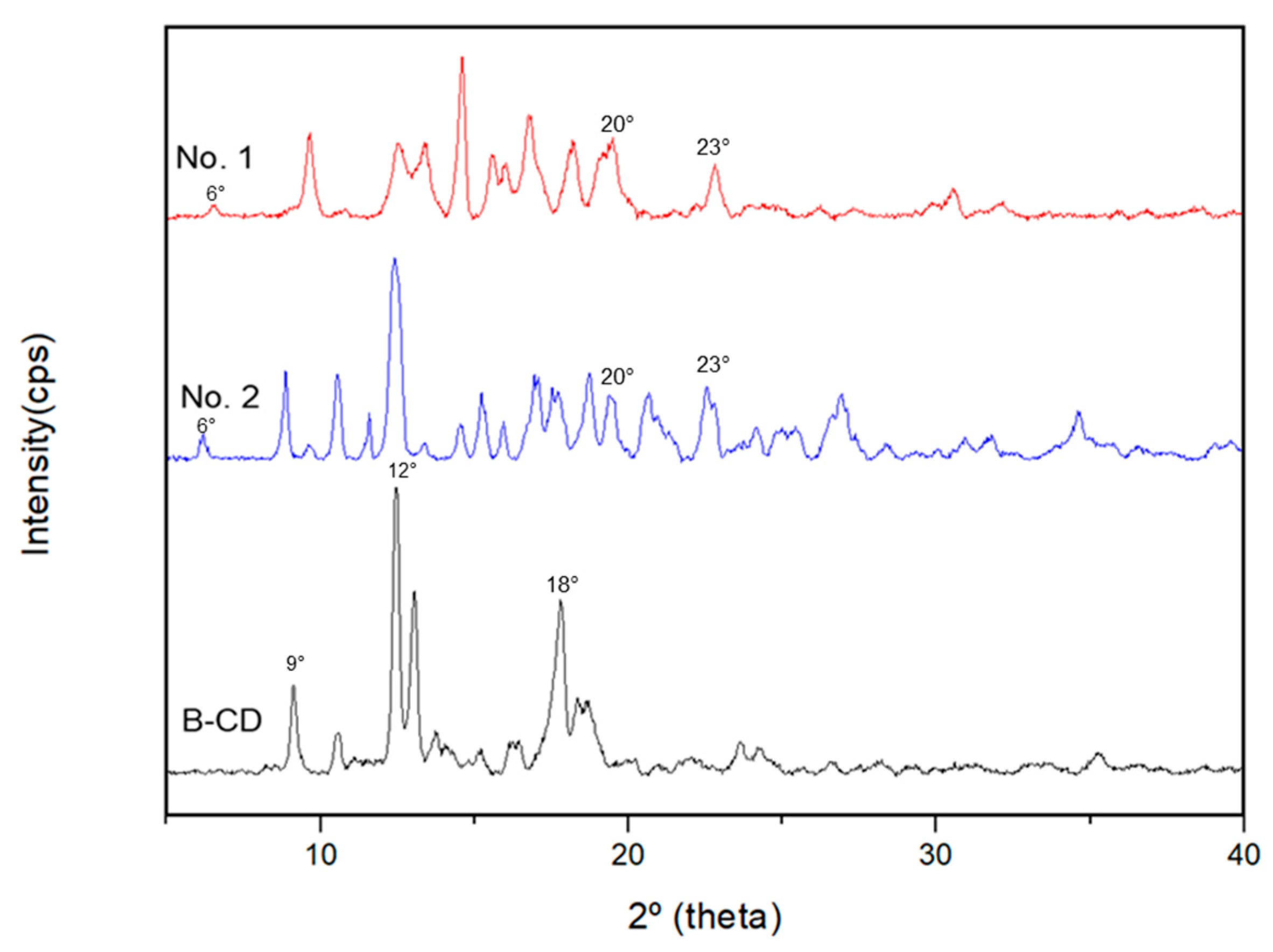
2.2.2. XRD Conditions
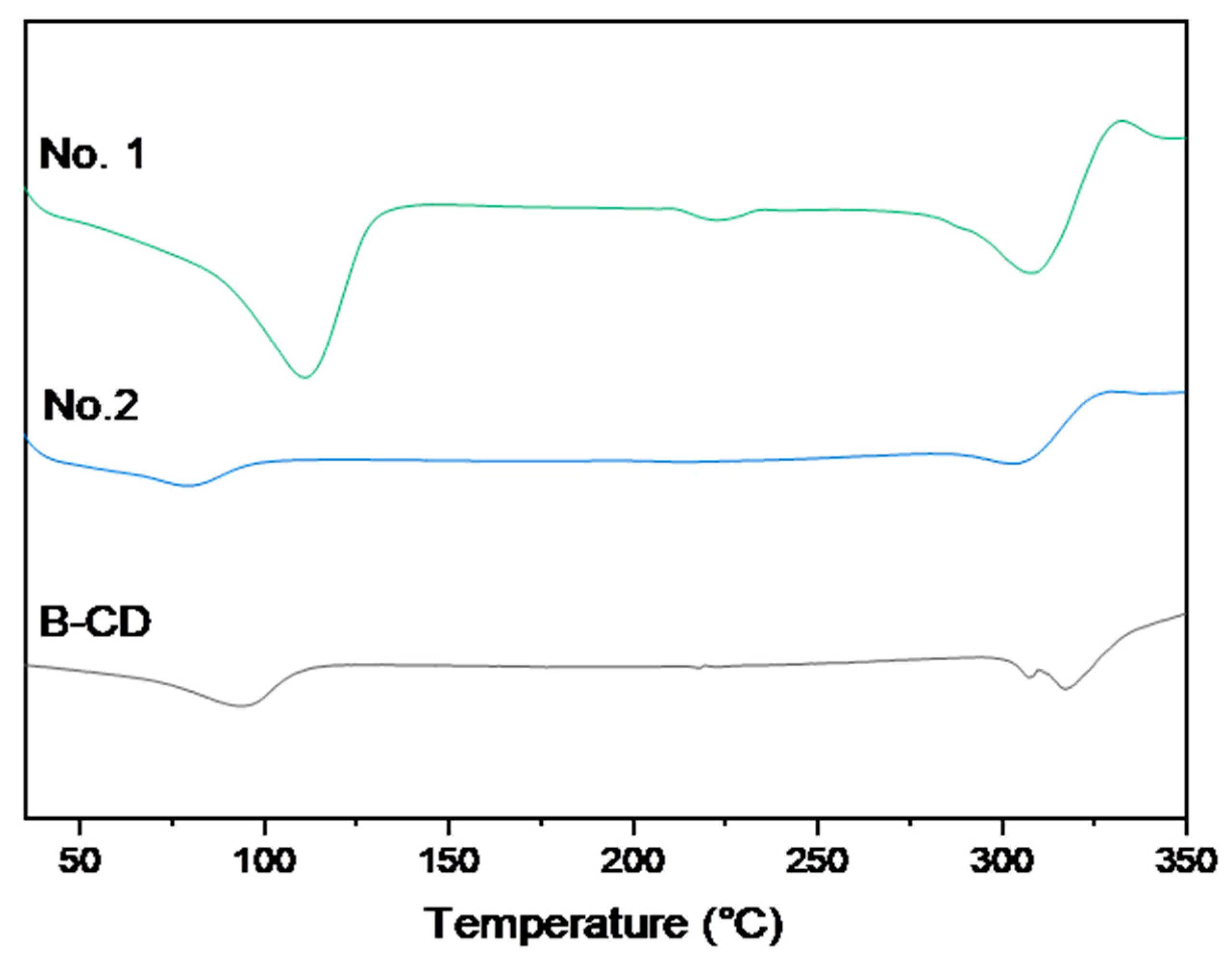
2.2.3. DSC Conditions
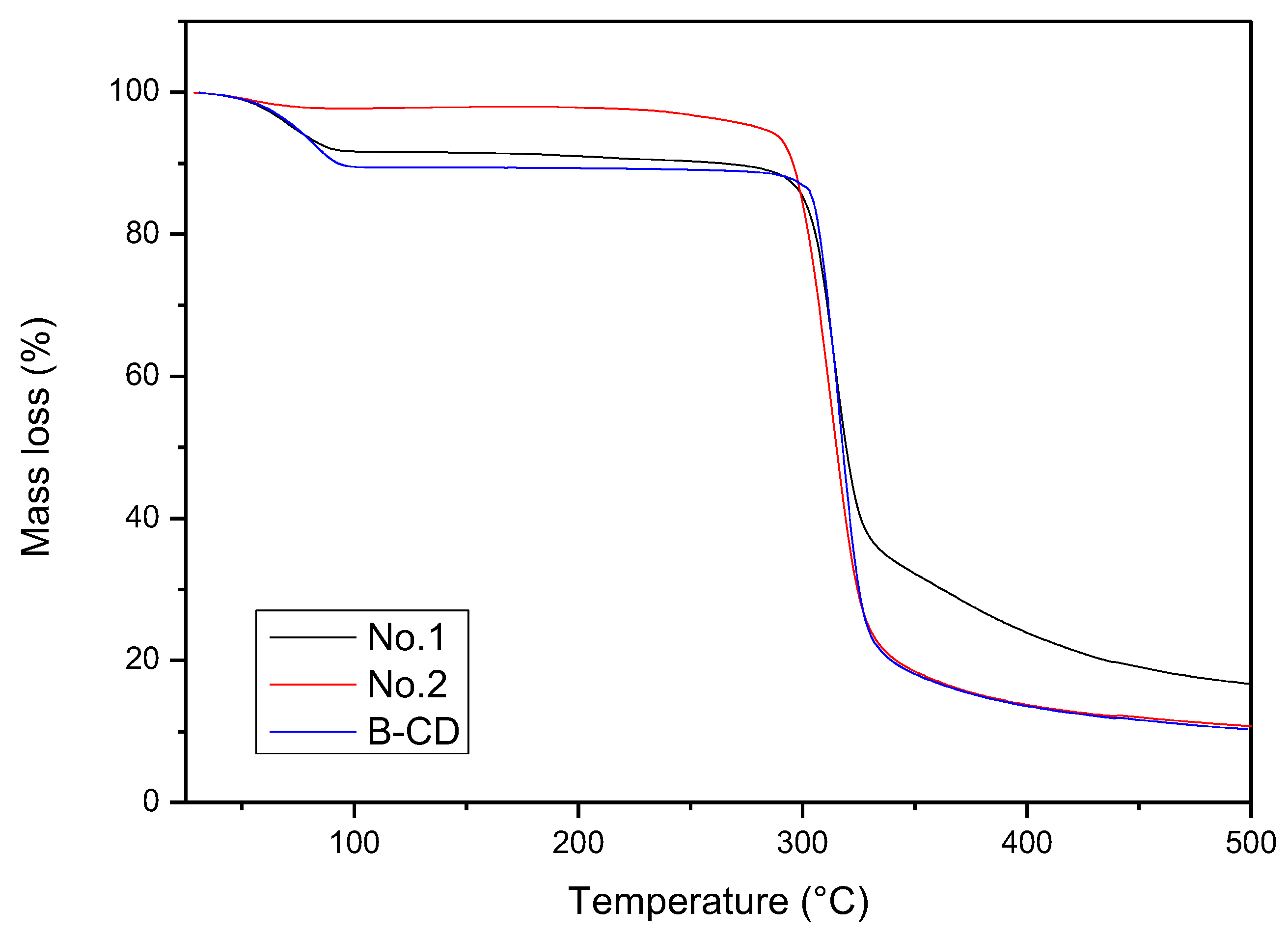
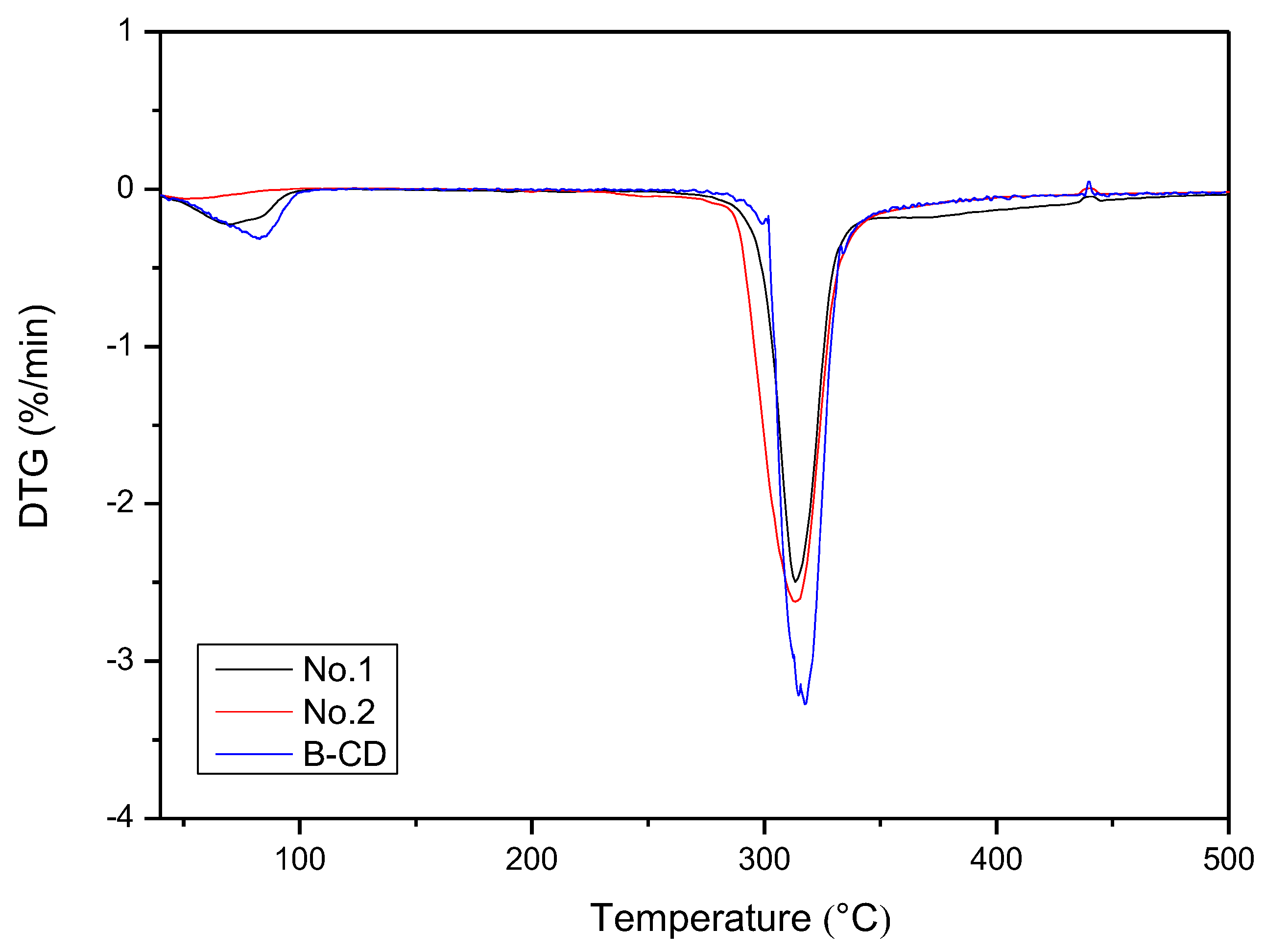
2.2.4. TGA/DTG Conditions
2.3. Preparation of Inclusion Complexes of Argan Oils into β-CD
2.4. Formulation of Hair Treatment Using the Prepared Inclusion Complexes
2.5. Entrapment Efficiency by UV–Vis
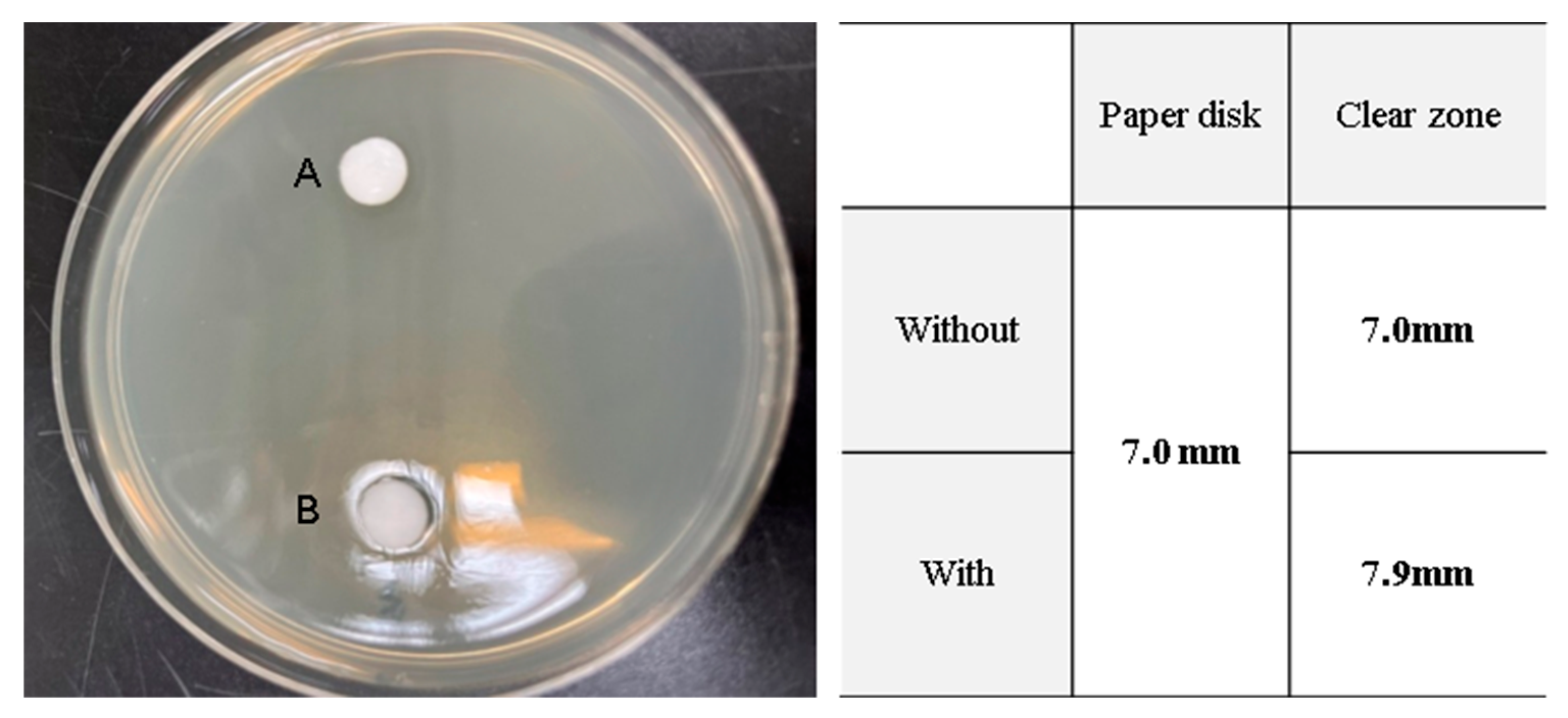
2.6. Antibacterial Assay
2.7. Texture Analysis
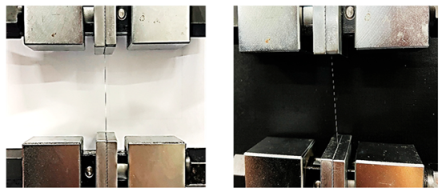
2.8. Tensile Strength Measurement
3. Results & Discussion
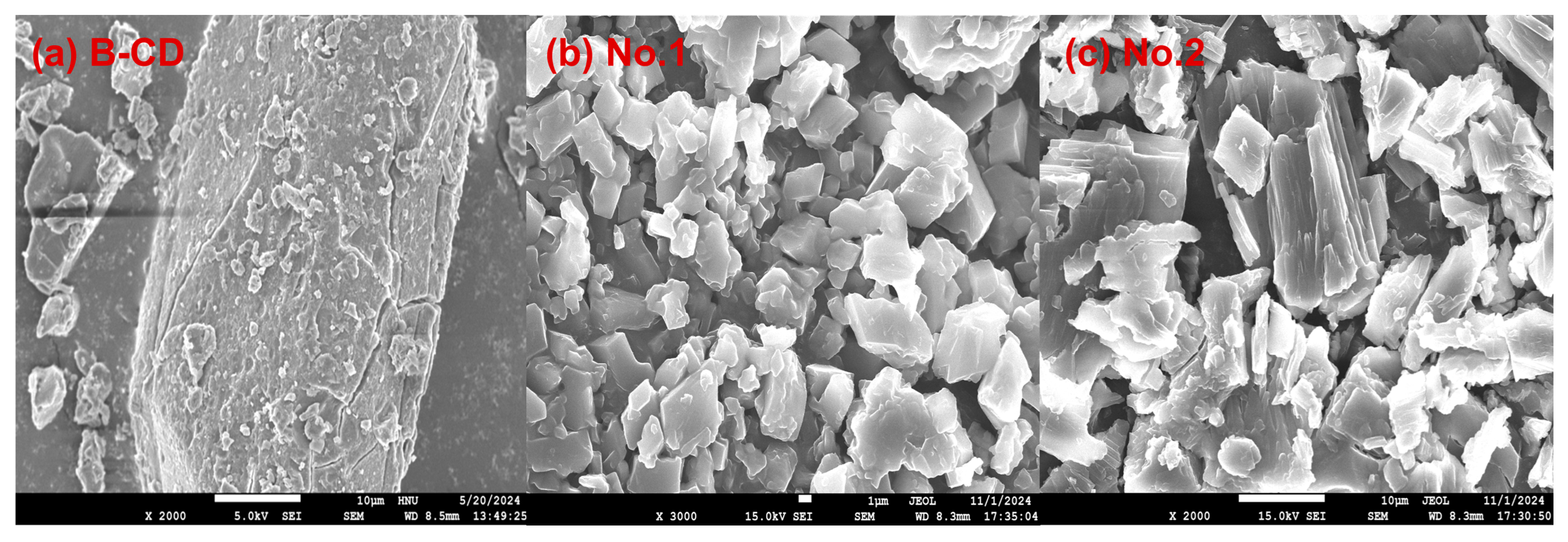
3.1. Characterization of Inclusion Complexes Prepared by Evaporation and Coprecipitation Methods
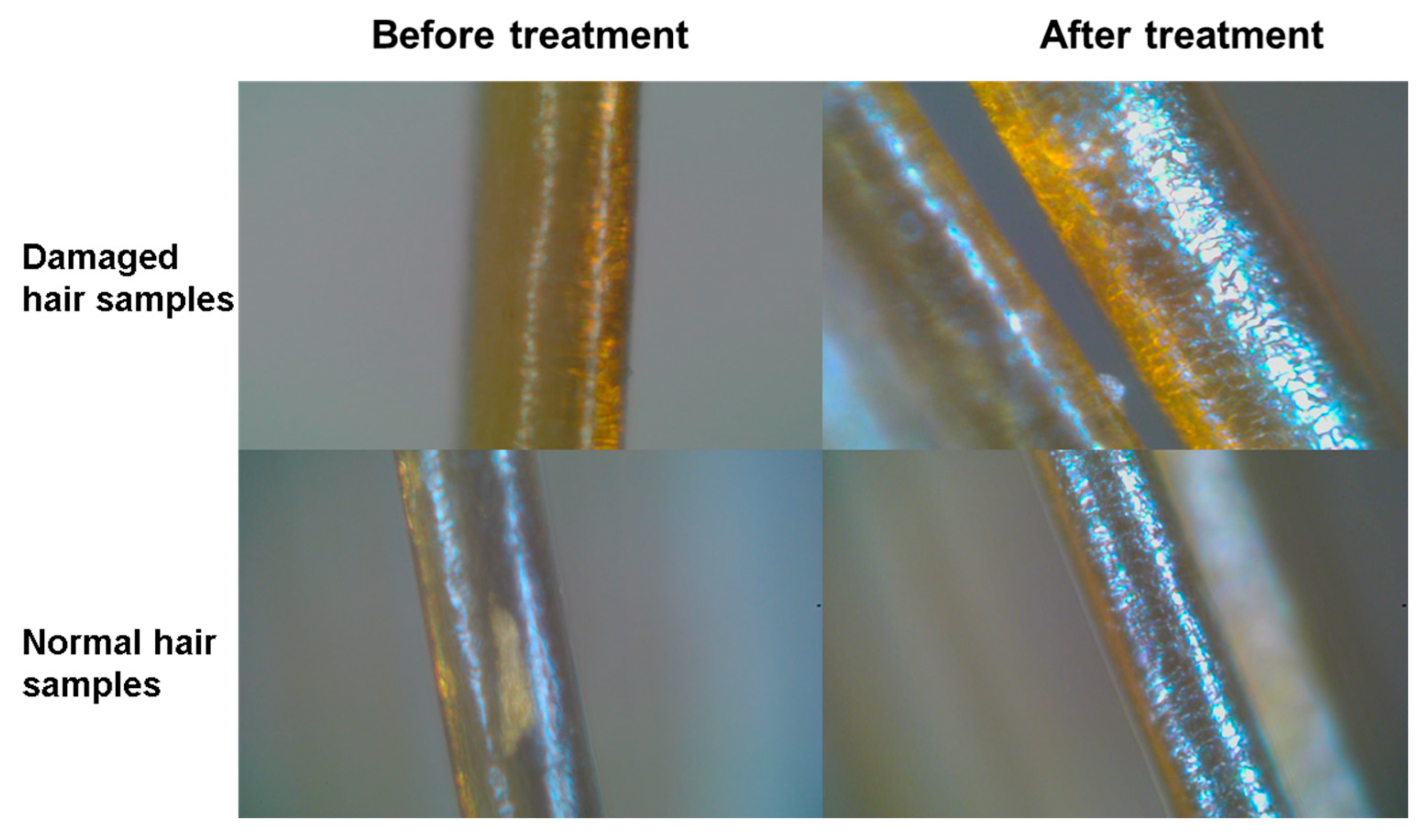
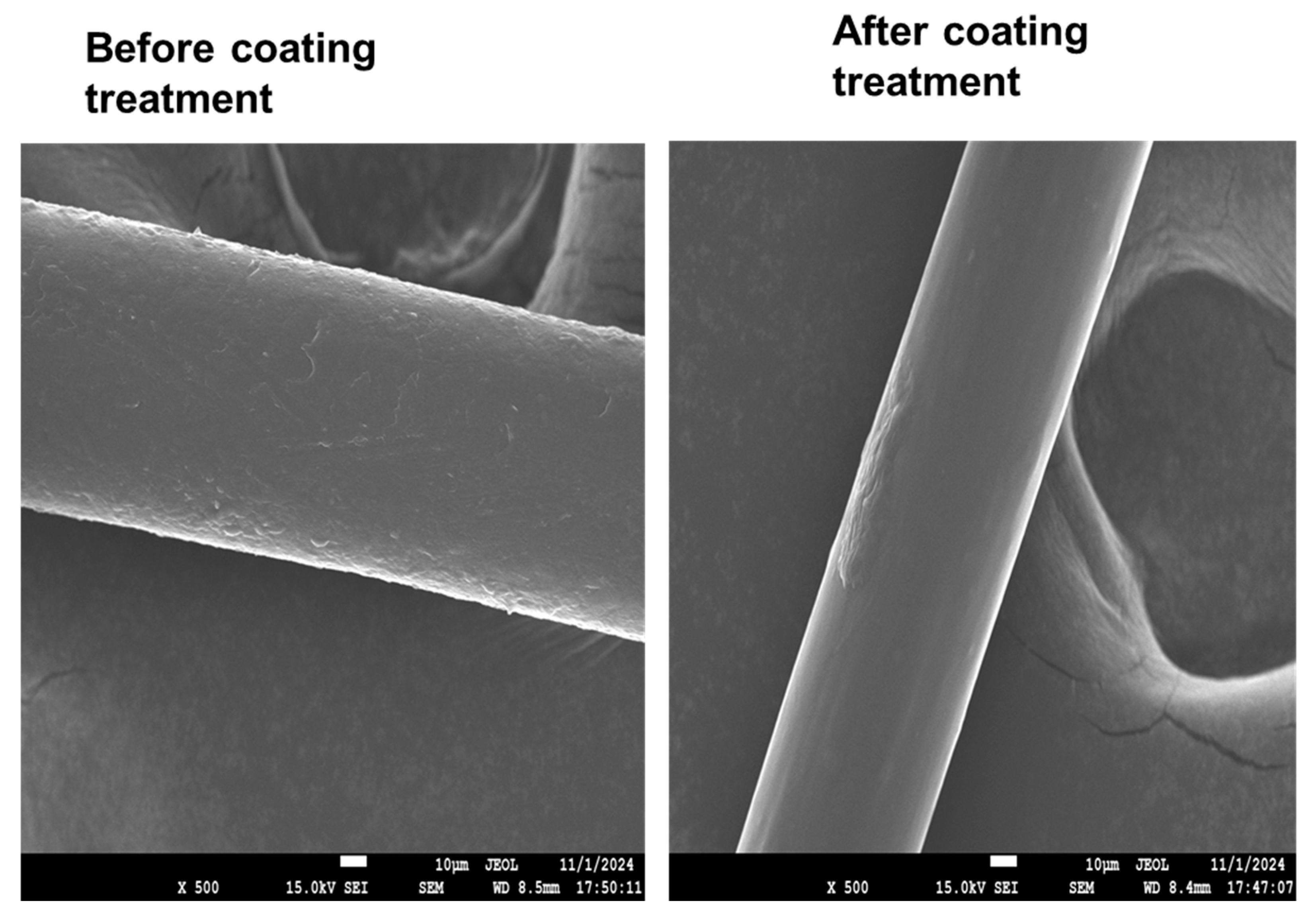
3.2. Characterization of the Hair Treatment with Inclusion Complexes and Its Application to Hair Samples
4. Conclusions
- (1)
- The formulated hair treatment has antibacterial effects for Staphylococcus aureus.
- (2)
- The formulated hair treatment showed hardness (456.424 g), fracturability (428.26 g), adhesiveness (−4021.403 g·s), springiness (0.974), and cohesiveness (0.868).
- (3)
- The formulated hair treatment possesses the good properties of hair surface coating, which is detected by OM and SEM analysis.
- (4)
- After coating the bleached hair sample, fracture time and stroke increased; tensile load values were affected by baseline offsets.
Author Contributions
Funding
Institutional Review Board Statement
Informed Consent Statement
Data Availability Statement
Acknowledgments
Conflicts of Interest
References
- Charrouf, Z.; Guillaume, D. Argan oil: Occurrence, composition, and impact on human health. Eur. J. Lipid Sci. Technol. 2008, 110, 632–636. [Google Scholar] [CrossRef]
- Gharby, S.; Charrouf, Z. Argan oil: Chemical composition, extraction process, and quality control. Front. Nutr. 2022, 8, 1251. [Google Scholar] [CrossRef] [PubMed]
- Matthäus, B.; Sakar, E.H.; Gharby, S. Oxidative stability of virgin and refined argan oil under accelerated aging conditions and shelf-life prediction at room temperature: A comparative study. Analytica 2023, 4, 500–512. [Google Scholar]
- Loftsson, T.; Brewster, M.E. Pharmaceutical applications of cyclodextrins. J. Pharm. Sci. 1996, 85, 1017–1025. [Google Scholar] [CrossRef] [PubMed]
- Astray, G.; Gonzalez-Barreiro, C.; Mejuto, J.C.; Rial-Otero, R.; Simal-Gandara, J. A review on the use of cyclodextrins in foods. Food Hydrocoll. 2009, 23, 1631–1640. [Google Scholar] [CrossRef]
- Marques, H.M.C. Essential oils–cyclodextrin complexes: An updated review. Flavour Fragr. J. 2010, 25, 313–326. [Google Scholar] [CrossRef]
- Licciardello, F.; Donsì, F. Cyclodextrins for flavor protection and odor masking in food systems. Int. J. Food Sci. Technol. 2021, 56, 49–58. [Google Scholar]
- Szejtli, J. Introduction and general overview of cyclodextrin chemistry. Chem. Rev. 1998, 98, 1743–1753. [Google Scholar] [CrossRef] [PubMed]
- Trotta, F.; Zanetti, M.; Camino, G. Thermal degradation of cyclodextrins. Polym. Degrad. Stab. 2000, 69, 373–379. [Google Scholar] [CrossRef]
- Giordano, F.; Novak, C.; Moyano, J.R. Thermal analysis of cyclodextrins and their inclusion compounds. Thermochim. Acta 2001, 380, 123–151. [Google Scholar] [CrossRef]
- Bae, E. Encapsulation of oregano essential oil into β-cyclodextrin inclusion complexes via co-precipitation method. In Proceedings of the 2025 Summer Symposium, Daejeon, Republic of Korea, 3–4 July 2025. [Google Scholar]
- Kotronia, M.; Kavetsou, E.; Loupassaki, S.; Kikionis, S.; Vouyiouka, S.; Detsi, A. Encapsulation of oregano (Origanum onites L.) essential oil in β-cyclodextrin (β-CD): Synthesis and characterization of the inclusion complexes. Bioengineering 2017, 4, 74. [Google Scholar] [CrossRef] [PubMed]
- Del Valle, E.M.M. Cyclodextrins and their uses: A review. Process Biochem. 2004, 39, 1033–1046. [Google Scholar] [CrossRef]
- Szente, L.; Szejtli, J. Cyclodextrins as food ingredients. Trends Food Sci. Technol. 2004, 15, 137–142. [Google Scholar] [CrossRef]
- Kurisawa, M.; Yokoyama, M.; Okano, T. Drug release behavior of hydrophobic drugs from hydrophilic cyclodextrin nanospheres. J. Control Release 2005, 104, 361–371. [Google Scholar]
- Shaikh, J.; Ankola, D.D.; Beniwal, V.; Singh, D.; Kumar, M.N.V.R. Nanoparticle encapsulation improves oral bioavailability of curcumin by at least 9-fold when compared to curcumin administered with piperine as absorption enhancer. Eur. J. Pharm. Sci. 2009, 37, 223–230. [Google Scholar] [CrossRef] [PubMed]
- Lu, Y.; Zhong, Y.; Zhu, Z.; Chen, J. Preparation and characterization of β-cyclodextrin inclusion complexes of lavender essential oil for antimicrobial applications. Molecules 2020, 25, 3851. [Google Scholar]
- Wang, J.; Zhang, L.; Zhang, Q.; Li, Y.; Xu, N. Preparation and evaluation of tea tree oil β-cyclodextrin inclusion complex-based hydrogels for antimicrobial wound dressing. J. Mol. Liq. 2021, 329, 115574. [Google Scholar]
- Li, X.; Zhang, H.; Zhao, W.; Li, W.; Chen, J. Cyclodextrin encapsulation of essential oils: A review on recent progress and applications. Carbohydr. Polym. 2022, 284, 119156. [Google Scholar]
- Mura, P.; Cirri, M.; Maestrelli, F.; Mennini, N.; Bragagni, M. Development of a novel delivery system consisting in montmorillonite–cyclodextrin–essential oil hybrid for antifungal oral therapy. AAPS PharmSciTech 2015, 16, 1010–1018. [Google Scholar]



| Method | Evaporation Method (No. 1) | Coprecipitation Method (No. 2) |
|---|---|---|
| β-cyclodextrin | 0.363 g | 5.000 g |
| Argan oil | 0.024 g | 0.882 g |
| Ethanol | – | 21.07 g |
| Water | 20.00 g | 33.33 g |
| Classification | Ingredients | Content (wt. %) |
|---|---|---|
| Solvent | Distilled water | 78.0 |
| Alcoholic compound | 1,3-Butylene glycol | 1.00 |
| Glycerin | 2.00 | |
| Hydroxyacetophenone | 0.50 | |
| 1,2-Hexanediol | 1.00 | |
| Stearyl alcohol | 4.00 | |
| BTMS25 (Behentrimonium Methosulfate + Cetearyl Alcohol) | 5.50 | |
| Organo-silicon compound | Dimethicone | 4.00 |
| Cyclopentasiloxane | 3.00 | |
| Inclusion complex | Argan oil powder | 1.00 |
| EE% | |
|---|---|
| No. 1 | 68.4 |
| No. 2 | 51.2 |
| Characteristic | Hardness (g) | Fracturability (g) | Adhesiveness (g·s) | Springiness | Cohesiveness |
|---|---|---|---|---|---|
| AVERAGE | 456.424 | 428.26 | −4021.403 | 0.974 | 0.868 |
| SD | 21.743 | 0 | 121.898 | 0.001 | 0.105 |
| CV (%) | 4.764 | 0 | −3.031 | 0.103 | 12.097 |
| Characteristic | Bleached Hair | Treated Bleached Hair |
|---|---|---|
| Fracture Time (s) | 8.40 | 98.14 |
| Fracture Stroke (mm) | 1.39 | 16.34 |
| Fracture Load (N) | −0.09 | −0.08 |
 | ||
Disclaimer/Publisher’s Note: The statements, opinions and data contained in all publications are solely those of the individual author(s) and contributor(s) and not of MDPI and/or the editor(s). MDPI and/or the editor(s) disclaim responsibility for any injury to people or property resulting from any ideas, methods, instructions or products referred to in the content. |
© 2025 by the authors. Licensee MDPI, Basel, Switzerland. This article is an open access article distributed under the terms and conditions of the Creative Commons Attribution (CC BY) license (https://creativecommons.org/licenses/by/4.0/).
Share and Cite
Lee, S.-B.; Roh, H.-C.; Choi, S.-H. Preparation of Inclusion Complexes with Argan Oils and Their Application of Hair Treatment. Appl. Sci. 2025, 15, 12724. https://doi.org/10.3390/app152312724
Lee S-B, Roh H-C, Choi S-H. Preparation of Inclusion Complexes with Argan Oils and Their Application of Hair Treatment. Applied Sciences. 2025; 15(23):12724. https://doi.org/10.3390/app152312724
Chicago/Turabian StyleLee, Si-Bin, Hee-Chan Roh, and Seong-Ho Choi. 2025. "Preparation of Inclusion Complexes with Argan Oils and Their Application of Hair Treatment" Applied Sciences 15, no. 23: 12724. https://doi.org/10.3390/app152312724
APA StyleLee, S.-B., Roh, H.-C., & Choi, S.-H. (2025). Preparation of Inclusion Complexes with Argan Oils and Their Application of Hair Treatment. Applied Sciences, 15(23), 12724. https://doi.org/10.3390/app152312724