Article

Integration of Qualitative and Quantitative Approaches for 3D Geostatistical Modeling of the Ciénaga De Oro Formation, Southern Sinú-San Jacinto Basin, Colombia


1
School of Petroleum Engineering, Faculty of Physicochemical Engineering, Industrial University of Santander, Bucaramanga 680002, Colombia
2
Department of Geology, Autonomous University of Barcelona, 08193 Barcelona, Spain
*
Author to whom correspondence should be addressed.
Appl. Sci. 2025, 15(23), 12374; https://doi.org/10.3390/app152312374
Submission received: 16 September 2025 / Revised: 2 November 2025 / Accepted: 13 November 2025 / Published: 21 November 2025
(This article belongs to the Section Earth Sciences)

Abstract

This study develops a three-dimensional (3D) geostatistical model of the Ciénaga de Oro Formation in the southern Sinú–San Jacinto Basin (Colombia), integrating structural, sedimentological, and petrophysical data to identify new hydrocarbon storage-prone zones. The structural model was constructed from seismic interpretation, well log correlation, and velocity models derived from VSP and check shots. Sedimentological models were generated by means of facies definition through field—outcrops description, well-log analysis, integrating computed tomography and digital rock analysis (Digital SCAL), complemented by automatic facies classification through a multi-layer perceptron (MLP) neural network. In this framework, Petrophysical properties, including porosity, permeability, density and clay volume, were interpolated using geostatistical sequential Gaussian simulation (SGS) and kriging, accounting for directional anisotropy (N45W), using the previously defined structural model as a basis. Analysis of the ANH-SSJ-La Estrella-1X and ANH-SSJ-Nueva Esperanza-1X wells revealed reservoir variability: clean sandstones associated with distributary channels exhibited the highest quality (Φ > 20%, K > 1000 mD), while heterolithic sandstones linked to delta-front mouth bars were identified as new secondary reservoir-prone zones (Φ > 10%, K > 10 mD). The proposed methodology provides a robust, integrated and replicable workflow for reservoir characterization in complex sedimentary environments and reduces exploration uncertainty, supporting both prospect evaluation and development planning.

1. Introduction

Fluvio-deltaic reservoirs are among the most heterogeneous siliciclastic systems in the subsurface, where rapid lateral facies transitions, variable sand-body connectivity, and multi-scale stratigraphic complexity generate significant uncertainty during reservoir characterization. Geological modeling in such settings requires the integration of structural, sedimentological and petrophysical datasets; however, most published workflows assume dense well control or high-resolution seismic datasets—conditions that are rarely met in frontier basins or at early stages of exploration [1,2].
The characterization of heterogeneous sedimentary systems represents a major challenge in the hydrocarbon industry, particularly in basins with complex depositional histories [3,4]. Such is the case of the Sinú–San Jacinto Basin, located in northern Colombia, which has recently appeared as one of the most attractive exploration areas due to its hydrocarbon potential. Evidence of this includes more than one hundred reported oil and gas seeps, the drilling of stratigraphic and development wells, and commercial oil and gas discoveries in blocks such as Merecumbé, as well as nearby discoveries in fields like Bullerengue, all within the framework of its complex tectono–sedimentary evolution.
Its strategic location in the Colombian Caribbean, combined with its proximity to port and transportation infrastructure, makes this basin a key region for the country’s energy supply and economic development [5]. In the southern part of this frontier basin, the Ciénaga de Oro Formation constitutes a key Oligocene–Lower Miocene unit, characterized by marine–deltaic deposits interbedded with high-quality reservoir sandstones and clay-rich intervals, displaying pronounced lithological and structural variability. Its geometry and property distribution are strongly influenced by compressional tectonics and depositional heterogeneity, which hinder accurate characterization [6].
These characteristics demand integrative approaches that combine qualitative and quantitative methods, essential for improving geological interpretation and reducing exploration uncertainty [4]. Traditional qualitative approaches, such as core description, facies classification using well logs [7,8], and seismic facies interpretation [7], provide robust geological context but lack the spatial continuity needed for volumetric prediction. In contrast, quantitative approaches such as machine learning–based facies classification, digital rock physics using computed tomography (CT) imaging [7,9,10], and geostatistical simulation workflows enable reproducible and data-driven modeling, yet are commonly applied in isolation.
Although earlier studies have addressed geological modeling in this formation using conventional methodologies [6], particularly in the adjacent Lower Magdalena Valley Basin [6,10], such models are still limited. They lack the integration of sedimentological and lithostratigraphic descriptions from well and outcrop samples with well log and seismic data through tools capable of generating advanced 3D geostatistical models into a single workflow suitable for fluvio-deltaic settings.
At the international level, integrated approaches combining qualitative and quantitative analyses have proven effective for optimizing reservoir property prediction in complex geological contexts [3,4,11,12,13,14,15]. However, in the Sinú–San Jacinto Basin, there is still a need for three-dimensional models that simultaneously incorporate structural, sedimentological, and petrophysical data within a robust geostatistical framework that accounts for anisotropy and spatial uncertainty.
In this context, the objective of the present study is to develop a three-dimensional (3D) geostatistical model of the southern sector of the basin by integrating qualitative and quantitative methods: structural, sedimentological, and petrophysical data, including the use of computed tomography in digital rock analysis to identify facies and reservoir-prone zones. This approach addresses the need for robust methodologies that combine well, seismic, and digital rock analysis (Digital SCAL), complemented by automatic facies classification through a multi-layer perceptron (MLP) neural network and geostatistical interpolation data to tackle subsurface heterogeneity and optimize resource exploration.
This study proposes an integrated workflow that combines seismic interpretation, structural modeling, facies classification through the integration of computed tomography and machine learning, and geostatistical simulation to characterize the Ciénaga de Oro Formation. The developed methodology seeks to reliably interpolate reservoir properties and facies distribution across the study area, with the aim of identifying high-potential hydrocarbon storage intervals and reducing uncertainty in exploration planning. This multiscale integration reduces subjectivity in facies assignment, improves small-scale facies discrimination, and quantifies spatial uncertainty through multiple equiprobable realizations—a configuration that, to our knowledge, has not been previously published for the Ciénaga de Oro Formation or for equivalent deltaic systems in northern South America.
A key methodological contribution of this work is the demonstration that the combined MLP + SGS workflow remains effective even under limited well control, thus enabling objective propagation of facies and petrophysical properties in low-data environments—a scenario common in emerging basins. This makes the proposed approach transferable to other poorly drilled or frontier basins, where traditional deterministic interpolation proves inadequate.
The results provide new constraints on the internal heterogeneity of the formation and highlight the reservoir relevance of distributary channel and delta-front sand bodies, while also proposing a transferable methodological framework for fluvio-deltaic systems with limited data availability.

2. Methodology

The characterization of the Ciénaga de Oro Formation was conducted through the integration of structural, sedimentological, and petrophysical models to develop a 3D geostatistical framework, aimed at reducing uncertainty in reservoir property estimation within a complex fluvio-deltaic depositional context.
This approach combines seismic, well-based computed tomography, and petrophysical data, employing digital rock analysis techniques as well as deterministic and stochastic tools that enable the representation of the spatial variability of facies and petrophysical properties [3,16].
The development of the integrated 3D geostatistical model for the Ciénaga de Oro Formation was conducted in three phases: (i) construction of the structural model, (ii) integration of sedimentological and petrophysical models, and (iii) geostatistical modeling. Each stage involved a technical analysis and justification of methodological decisions, along with validation of the results.

2.1. Structural Model Construction

This phase comprises four stages: (i) data acquisition, (ii) seismic interpretation and well-to-seismic tie, (iii) structural grid construction, and (iv) validation of results. The time-to-depth conversion was performed using velocity models derived from Vertical Seismic Profiles (VSP) and check shot surveys.
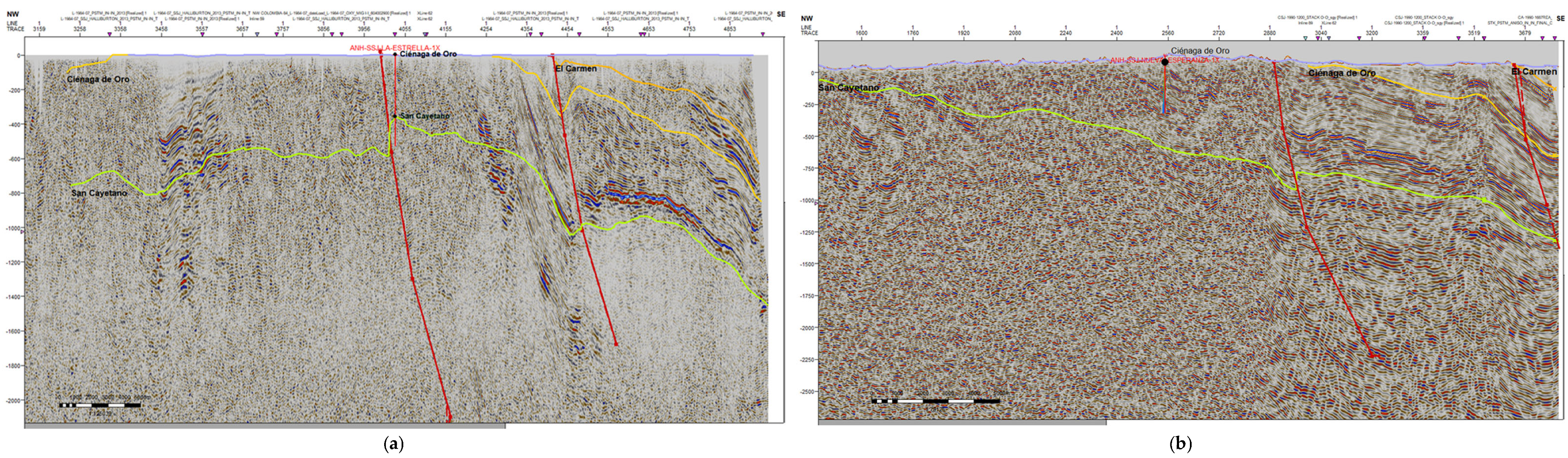
The structural interpretation was carried out on seismic lines, identifying key horizons corresponding to the tops of the San Cayetano, Ciénaga de Oro, and El Carmen formations, as well as the main active faults in the area. Fault identification was based on reflector continuity and displacement observed in seismic horizons.
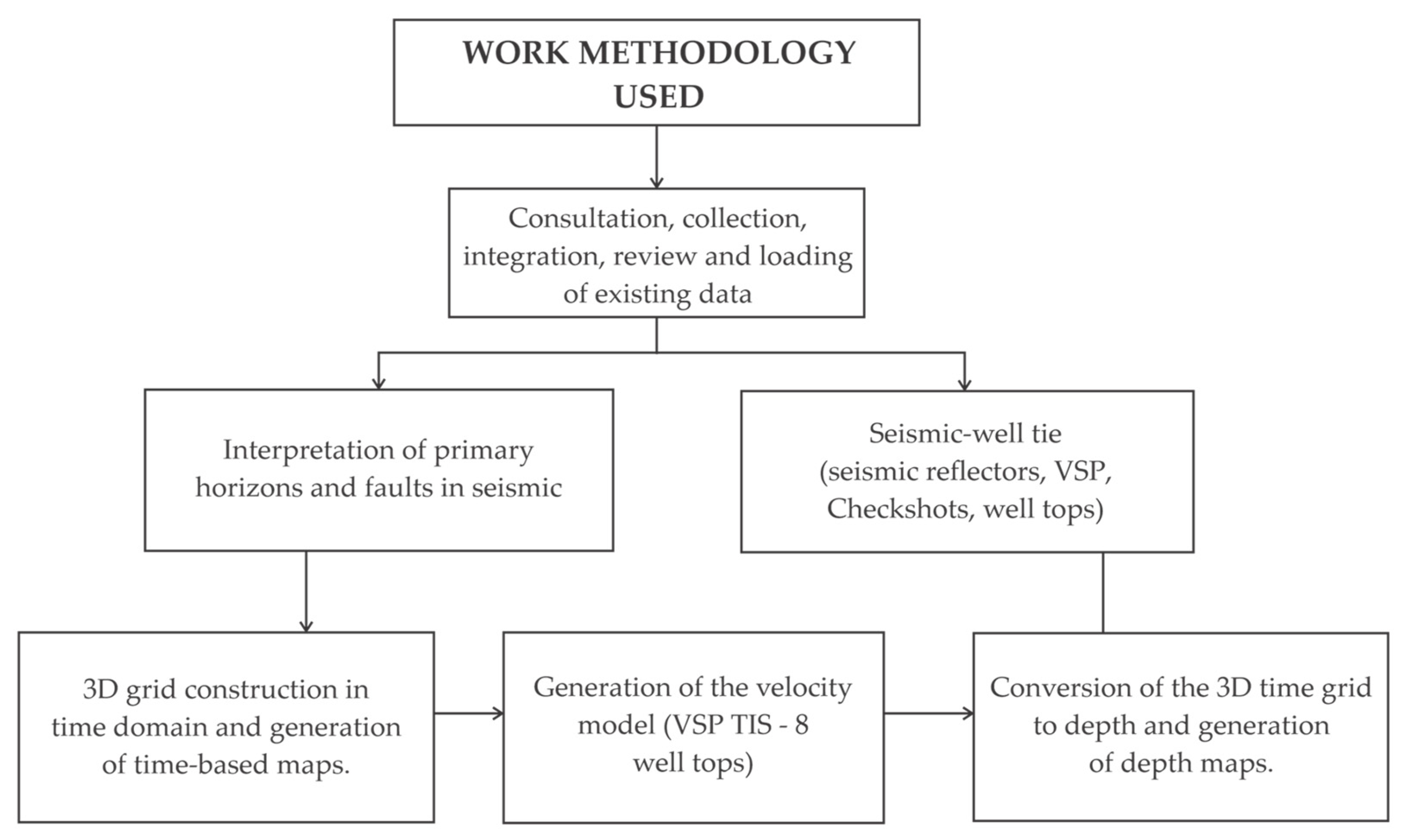
This workflow (Figure 1) was employed to ensure consistency between the seismic domain and well data, reducing vertical positioning errors and improving the accuracy of surface and fault delineation. The selection of VSP and check shot surveys as velocity calibrators is justified by their high reliability, even in structurally complex settings characterized by folding and faulting, such as the Sinú–San Jacinto Basin.

2.1.1. Data Acquisition and Preparation

The integration of seismic and well data enhances the accuracy of the time-to-depth conversion and reduces ambiguity in horizon interpretation [17]. For this purpose, the following datasets were compiled and digitized:
  • Conventional well logs (GR, RES, DEN/NEUT, sonic).
  • Formation tops of interest and well deviation surveys.
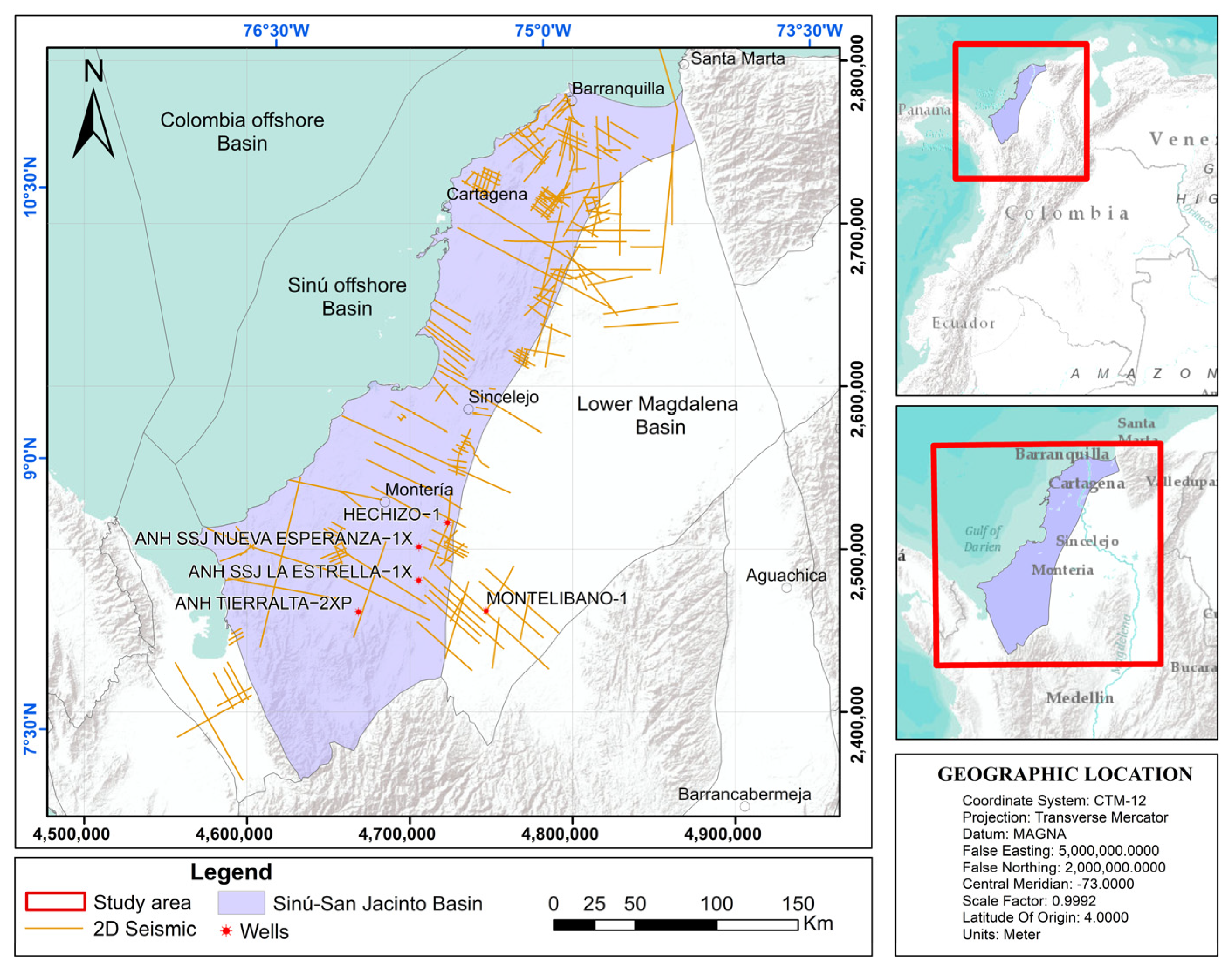
  • 2D seismic covering the study area (Figure 2).
  • Vertical Seismic Profiles (VSP) and check shot surveys.
  • Surface geology information and regional well data for stratigraphic correlation.

To establish the stratigraphic correlation, data from wells located near the study area were gathered (three wells for regional seismic-to-well tie and two wells within the area of interest). Table 1 summarizes the main datasets employed in the construction of the structural model.
Table 1. General information used for the construction of the structural model.
SpecializationSamplesObservations
5 wells, Tierra Alta, Montelibano, Hechizo, Nueva Esperanza and La Estrella3 wells for regional seismic tie, 2 wells located in the interest area
Electrical well logsGR, RES, DEN/NEUT and SONICConventional logs in the wells of the area of interest, VSP logs, check shots, and velocity models in the regional wells
Tomography187 Cores
Core descriptionPrevious InformationTops of the Ciénaga de Oro Formation and San Cayetano Formation
Seismic informationCSJ-1990-1295-DipCSJ-1990-4125-DipCSJ-1990-1735-StrikeCSJ-1990-1687-DipCSJ-1990-1470-Strike
OthersDrill reports, geological reports, etc.
Once the dataset was consolidated, the information from the two wells located within the study area was loaded. These wells were then projected onto the main regional correlation markers, among which the Paleocene unconformity stands out, considered a key datum horizon for structural interpretation.
Figure 2. Location of 2D seismic and wells in the Sinú–San Jacinto Basin.
Applsci 15 12374 g002

2.1.2. Seismic-to-Well Tie

To perform the seismic-to-well tie, VSP data from the Tierra Alta 2XP well, located approximately 40 km from the study area, were used. Based on this VSP, time–depth tables were generated for wells ANH-SSJ-La Estrella 1X and Nueva Esperanza 1X. After generating the check shot surveys for the wells within the study area, synthetic seismograms were constructed, enabling the seismic-to-well tie at the top of the San Cayetano Formation. This marker is clearly identifiable in depth in the ANH-SSJ-La Estrella 1X well and in two-way travel time (TWT) in the regional seismic line CA-1990-1470.
A 25 Hz Ricker wavelet was applied to simulate the seismic response. The reflectivity coefficient was calculated from the combination of velocity and density, using sonic and bulk density (RHOB) logs as inputs. These datasets allowed the generation of the synthetic seismogram and its calibration to the seismic trace extracted from the regional seismic line, ensuring the alignment between well information and the seismic volume. Finally, the seismic-to-well tie was visualized in the time domain to verify the accuracy of the data loading and matching.
The use of VSP and check shot data was preferred over velocity models derived solely from seismic correlations, as they provide higher reliability and reduce systematic errors in TWT–TVD conversion [18].

2.1.3. Structural Grid Construction

The first step involved the interpretation of horizons and faults. The tops of the San Cayetano, Ciénaga de Oro, and El Carmen formations were identified, correlated with well data, and validated with surface geology. A time grid (TWT) was generated and subsequently converted to depth using interval velocities derived from VSP and check shot data.
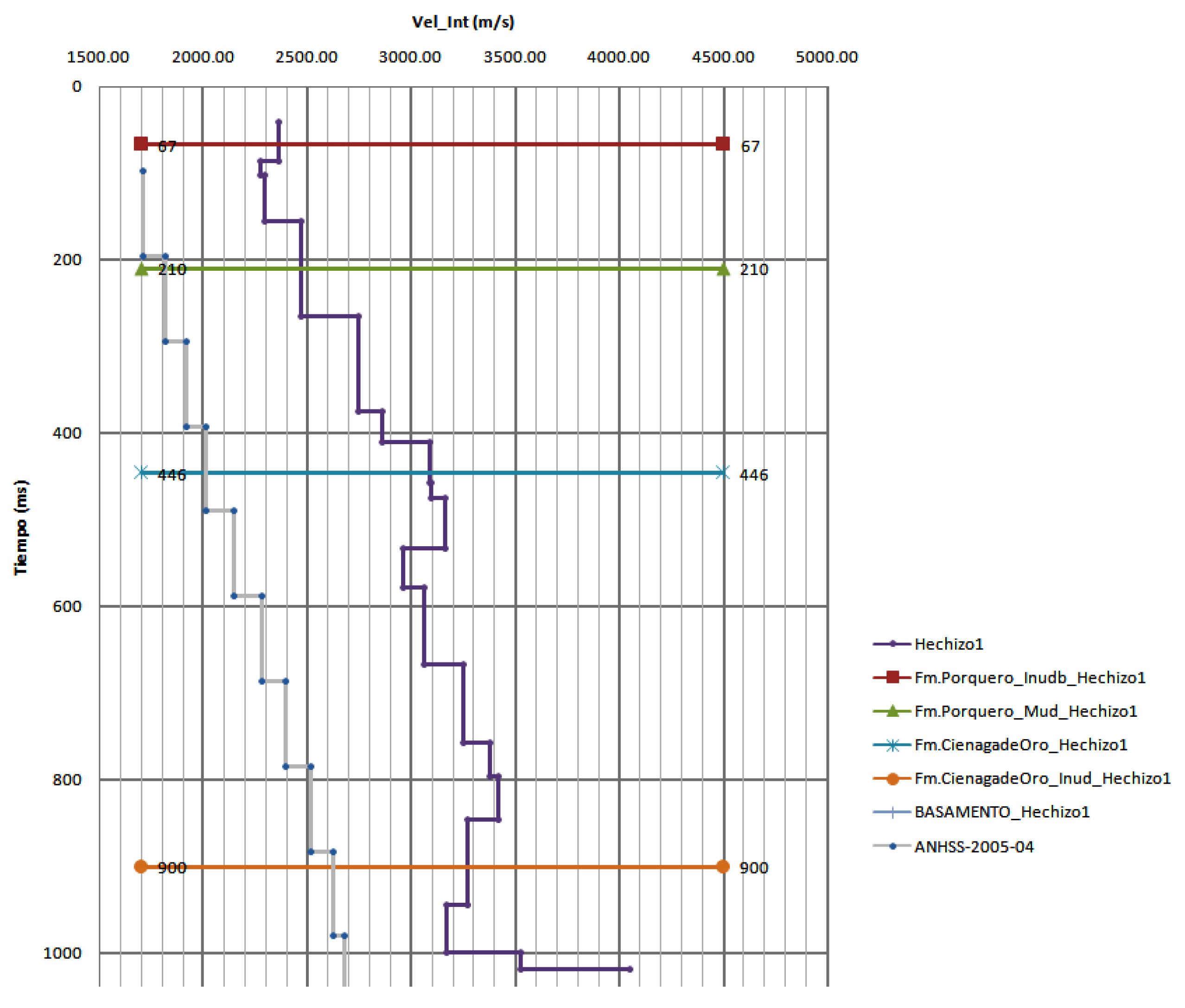
For the development of the isovelocity model, regional transect information, VSP data, and velocity functions from wells near the study area were integrated. Based on the VSP and check shot data, a bidirectional velocity model (TWT→TVD and TVD→TWT) was constructed. This model allowed the calculation of average interval velocities for each stratigraphic interval corresponding to key marker horizons of interest.
The time–depth curve obtained from the seismic-to-well tie at the La Estrella 1X well was used as a control point. Additionally, the top of the San Cayetano Formation was used to calibrate the model, adjusting the surface generated from the interpretation of the available 2D seismic lines. With this approach, the final velocity model was generated for application in both the structural grid and the time-domain surfaces (Figure 3).
Once the velocity model was generated, it was directly applied to the interpreted time surfaces, enabling the construction of structural depth maps at the tops of the target stratigraphic units. These depth-converted surfaces were calibrated against well tops, allowing for a precise delineation of the structural style and the displacement of the faults present in the study area.

2.1.4. Structural Model Validation

To ensure the consistency of the structural model, the interpreted surfaces were validated by comparison with well tops and the original seismic data. This validation process included the iterative adjustment of velocity parameters and the correlation of the interpreted horizons with regional stratigraphic markers, such as the Middle Miocene unconformity.

2.2. Sedimentological and Petrophysical Integration

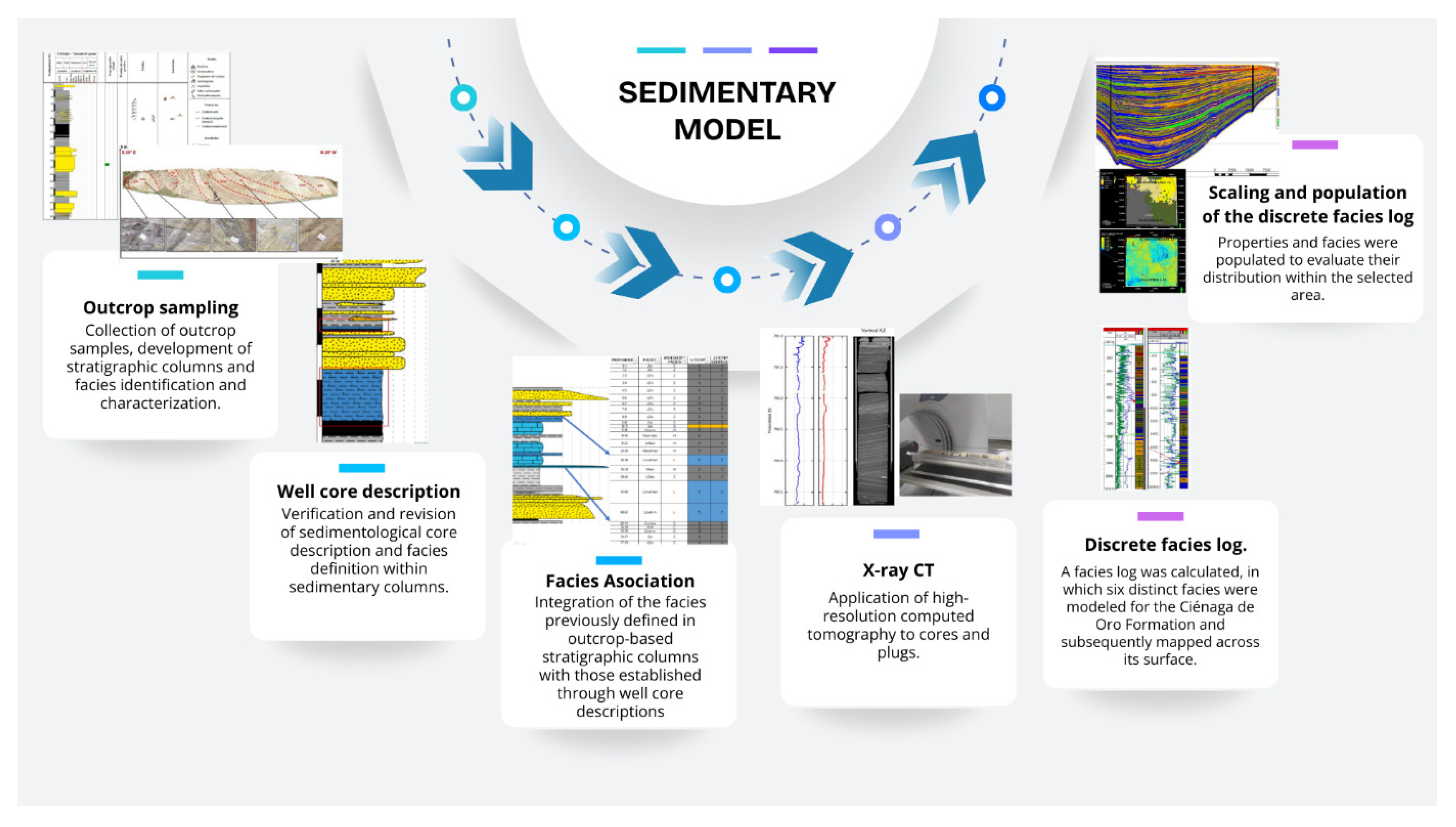
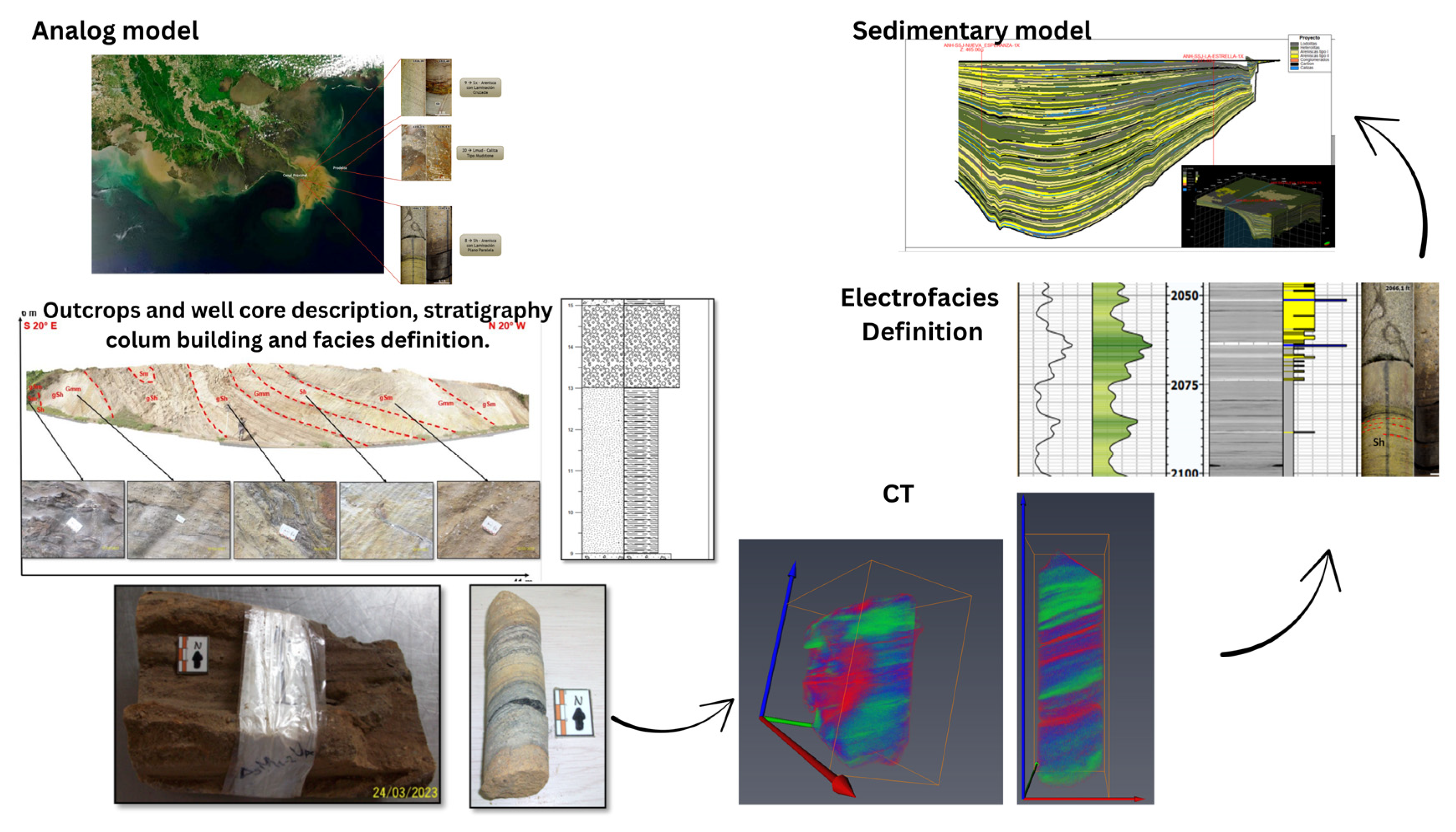
The construction of the sedimentary model was based on the integration of fieldwork, verification of well core descriptions, and stratigraphic columns. Subsequently, facies identified in outcrops and core descriptions were correlated, leading to the definition of facies associations for the Ciénaga de Oro Formation. In addition, an experimental and quantitative analysis was conducted by applying high-resolution computed tomography (CT) to validate the detailed characterization of rock samples and to assess their heterogeneity. Furthermore, CT acquisition enabled the derivation of curves of bulk rock density and photoelectric factor, which were used to estimate rock types and petrophysical properties (Figure 4).
With this dataset, previously trained neural networks were employed to predict petrophysical properties and classify rock types. These predictions were validated by comparison with experimental measurements and available well data. Finally, a 3D sedimentary model was constructed, incorporating facies associations and their spatial distribution through geostatistical methods, including variogram analysis and well-log upscaling.

2.2.1. Facies Model

Well logs were processed through quality control, baseline correction, and curve standardization. Shale volume (Vshale), porosity, and permeability were derived from sonic, density, and resistivity logs. Facies classification was carried out using a Multi-Layer Perceptron (MLP) neural network, with petrophysical properties as inputs and core/CT descriptions as training labels.
The MLP architecture included: (i) an input layer with four neurons (one per discrete variable), (ii) a hidden layer of 3–8 neurons, balancing learning capacity and overfitting risk, and (iii) an output layer assigning facies. Compared to k-NN or decision trees, MLP was selected for its ability to capture non-linear and multidimensional relationships in heterogeneous fluvial–deltaic environments [19,20], to improve classification under noisy or imbalanced datasets [19,21], and to integrate continuous and discrete predictors [22].
The network was trained using 70% of the data and validated with the remaining 30%, applying early stopping. Performance was evaluated with the F1-score, given the natural imbalance of facies. The resulting classification provided the input for the 3D geostatistical facies model of the Ciénaga de Oro Formation.

2.2.2. Petrophysical Properties Model

Well logs were subjected to a quality control workflow including depth consistency checks, detection and correction of outliers, and unit/format standardization [23,24].
  • Shale volume (Vshale): estimated from gamma ray (GR) logs using the Larionov model [7,25] equation for Tertiary rocks, and validated in selected intervals with core mineralogy and spectral gamma analysis.
V s h = 0.083 2 3.7 G R i n d e x 1
  • Porosity (Φ): Total porosity computed from density (RHOB) is more accurate than neutron based methods due to less environmental corrections, the following equation was used to calculate the porosity from density log (RHOB) [26].
D = R H O B m a R H O B l R H O B m a R H O B f
where
D =   Total porosity calculated from the density log
R H O B m a = Formation matrix density (2.65 & 2.71 g/cc)
R H O B f = Fluid density (1 g/cc)
R H O B l = Log value (g/cc)
Then, we proceed to calculate the effective porosity with the following equation:
P H I E =   D 1 v s h ,
where PHIE = Effective porosity.
  • Water saturation (Sw): To estimate the Water saturation the Indonesian equation was employed:
1 R t = m α R w + V s h 1 v h s / 2 R c l S w n 2
where
Rt = Formation resistivity (well log)
Rcl = clay resistivity.
Rw = water resistivity.
α   = tortuosity exponent.
m = Cementation exponent.
n = saturation exponent.
  =   Porosity .
Sw = Water saturation.
Vsh = Shale volume.
  • Hydraulic flow units (HFU): The Winland R35 method was developed to determine the pore throat radius (R35) based on the empirical correlation between porosity, permeability, and pore-throat size at 35% mercury saturation from capillary pressure tests. The relationship is expressed as:
L o g   R 35 = 0.732 + 0.588   ( log K ) 0.864   ( log ) ,
where
R35 = Pore throat size (µm)
K = Permeability (measured in laboratory)
  =   Porosity (measured in laboratory)
m = cementation factor.
Based on the porosity and permeability data, a rock typing model was established to identify intervals with similar lithological and petrophysical characteristics.
  • Hydraulic Flow Units (HFU) from Flow Zone Indicator (FZI): The HFU approach represents a widely used rock-typing methodology aimed at improving reservoir characterization and petrophysical modeling. It groups rocks with similar pore geometry and flow capacity, thereby reducing uncertainty in permeability prediction. The HFU concept is based on the assumption that the reservoir behaves as a bundle of capillary tubes, where fluid flow is governed by Darcy’s and Poiseuille’s laws.
0.0314 k e 1 1 S w i r r = 1 F s τ s g v e 1 e
FZI values were determined and correspond to each hydraulic flow unit.
  • Discrete facies: defined through integration of continuous petrophysical logs (RHOB, NPHI, resistivity, Vshale) with core and CT descriptions, allowing classification into lithological groups (shales, heterolithics, sandstones type I–II, limestones, coals).
All properties were normalized to minimize scale effects and facilitate subsequent geostatistical modeling [27].

2.2.3. Validation of Petrophysical Properties

The validation of derived petrophysical properties included:
  • Core data comparison: porosity and permeability estimated from logs were compared with laboratory core measurements, yielding correlation coefficients above 0.8 in key intervals.
  • Vertical consistency: lithological coherence and property trends were verified within each stratigraphic unit to avoid geologically unjustified abrupt transitions.
  • Statistical analysis: histograms and crossplots (Φe vs. K, Vshale vs. Φe) were evaluated to confirm consistency with known petrophysical trends of the Ciénaga de Oro Formation, in accordance with its depositional environment.
Finally, the validated properties were integrated into the geostatistical model as input variables for interpolation and stochastic simulation.

2.3. Geostatistical Modeling

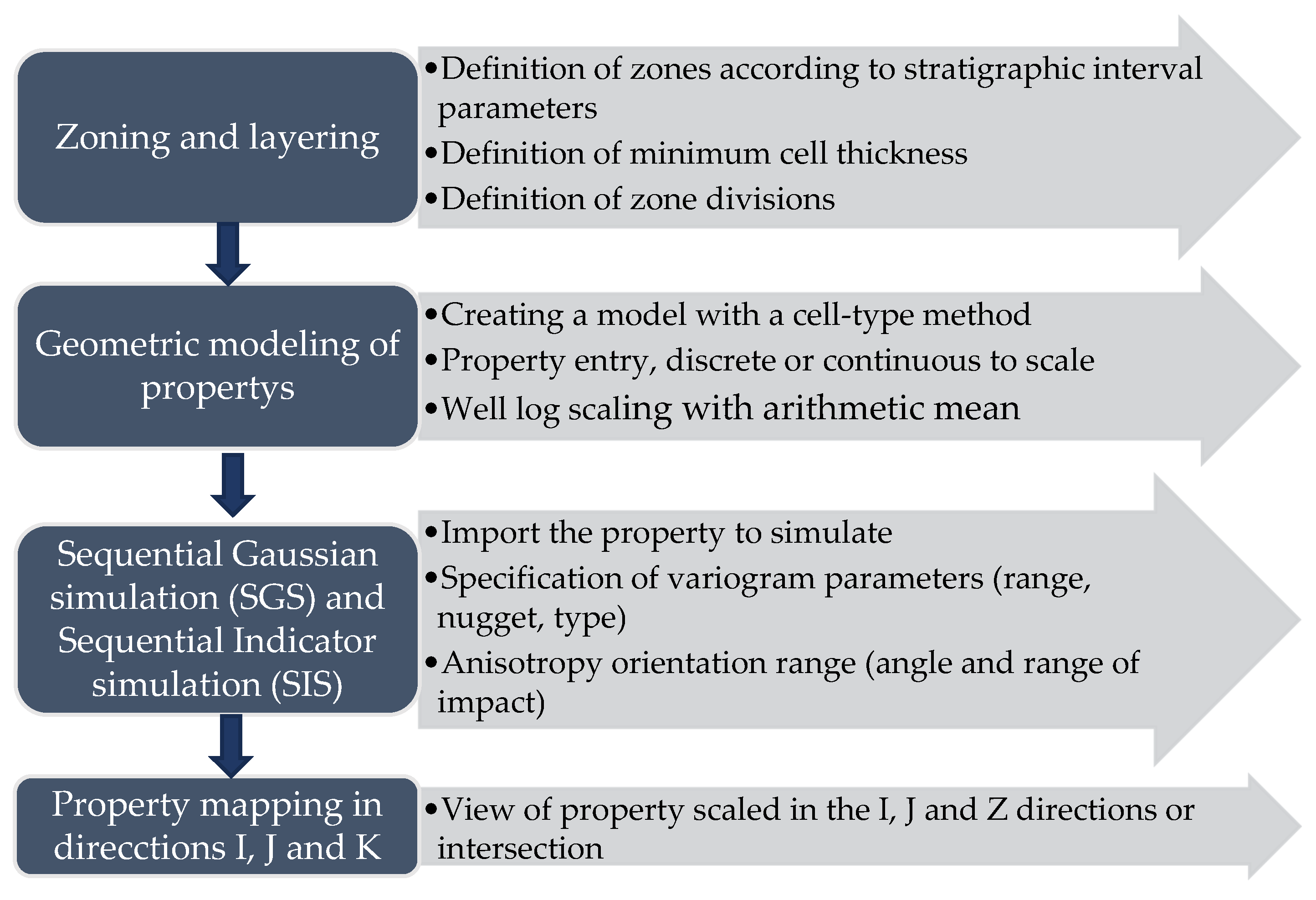
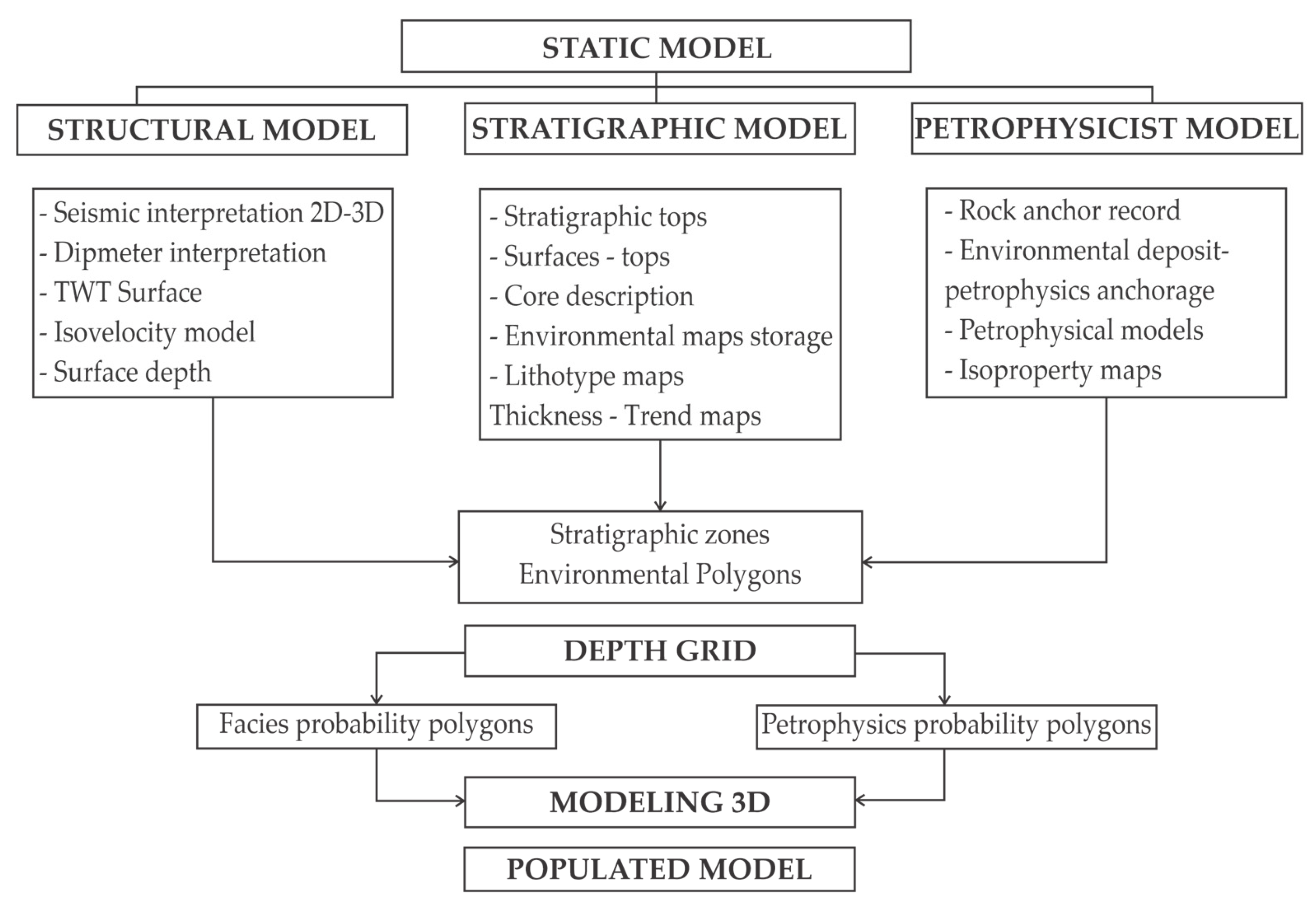
At each of the previous stages, a set of inputs was considered as fundamental for geostatistical modeling and 3D population. In this regard, the following diagram emphasizes the integration of qualitative and quantitative methods to generate a 3D geostatistical model in the study area, considering the previously described inputs (Figure 5).
The workflow for geostatistical modeling (Figure 6) included a detailed variographic analysis for each property (porosity, permeability, and Vshale), as well as for facies distribution. Omnidirectional and directional variogram models were fitted, considering a principal anisotropy of N45W, which is consistent with the dominant structural orientation.
For the distribution of continuous properties, Sequential Gaussian Simulation (SGS) was applied, whereas for discrete facies the indicator kriging approach was combined with sequential simulation to improve spatial realism and heterogeneity representation.
Technical justification of the geostatistical modeling tools:
  • Sequential Gaussian Simulation (SGS): selected for continuous properties (porosity, permeability, Vshale) because it preserves spatial variability and allows the generation of multiple equiprobable realizations, enabling uncertainty quantification and risk analysis [16].
  • Indicator Kriging: applied for categorical variables (facies), as it provides more stable estimates of class probabilities and minimizes unrealistic abrupt transitions in sedimentary bodies, particularly in heterogeneous deltaic systems [28,29].
  • Anisotropy (N45W): chosen after variographic validation, ensuring coherence between structural geometry (fault orientation, fold axes) and the spatial continuity of petrophysical properties, thus enhancing the geological consistency of the 3D model.

2.3.1. Structural Grid Definition

A 3D grid was defined with a maximum cell thickness of 15 ft, stratified into three main zones: San Cayetano, Ciénaga de Oro, and El Carmen. This thickness was selected to balance vertical detail with computational cost. Finer gridding would have increased resolution but at the expense of higher computational time and potential overfitting to the limited well data available [3].
The previously interpreted horizons were incorporated into the model through a smoothing process and defined as conformable surfaces, respecting the stratigraphic hierarchy. Structural parameterization was carried out based on the depositional framework, with the El Carmen horizon as the upper boundary and the San Cayetano unconformity as the base.
The adjustment of horizons to the structural framework enabled the generation of new surfaces consistent with the geometry of the study area. Finally, the structural grid was constructed from the arrangement of these horizons, ensuring the proper representation of intermediate zones between formations and coherence with the regional geological model.

2.3.2. Property Upscaling

To effectively integrate well log data into the three-dimensional geological model, continuous petrophysical properties—porosity, permeability, density, and shale volume—were upscaled using the arithmetic averaging method. Discrete lithofacies were classified into six representative categories: shale, heteroliths, Type I and Type II sandstones, limestone, and coal. Although arithmetic averaging tends to smooth local extremes and reduce the representation of heterogeneities, it was selected due to its numerical stability and robustness in datasets with limited spatial coverage. This approach minimizes potential bias arising from sparse well control [30].
The 3D grid was constructed with a minimum volumetric element corresponding to a vertical resolution not exceeding 4.5 m, achieving a balance between geological fidelity and computational efficiency. During property population, each grid cell was assigned a single lithofacies and its associated petrophysical attributes. Model initialization commenced with cells intersected by well trajectories, ensuring consistency between measured data and simulated properties throughout the modeled domain.

2.3.3. Upscaling of Discrete Facies and Rock Quality Logs

The discrete facies log, derived from petrophysical well data and previous computed tomography (CT) analyses on core samples, was used to constrain the lithological framework of the Ciénaga de Oro Formation. This log comprises a six-level classification representing the main lithotypes identified in the formation: shales, heteroliths, type I sandstones, type II sandstones, coals, and limestones. Such categorization integrates sedimentological observations and petrophysical signatures, enabling a more consistent link between core descriptions and log-based interpretations.
In parallel, a discrete rock quality log was generated using a Multi-Layer Perceptron (MLP) neural network approach. This parameterization expresses rock quality as a categorical quantitative variable, classified into six levels: very poor, poor, low–medium, medium, medium–high, and high. The MLP algorithm was selected for its capacity to capture non-linear relationships among petrophysical variables without relying on predefined weighting schemes, thereby minimizing subjective bias. Special emphasis was placed on the medium, medium–high, and high classes, which delineate sandy intervals of potential reservoir significance.

2.3.4. Continuous Petrophysical Property Logs

At this stage, the available and derived petrophysical logs porosity, permeability, shale volume (Vshale), and bulk density (RHOB) were treated as continuous variables for spatial integration. The arithmetic mean was employed as the upscaling operator, as it provides a stable and unbiased estimate of central tendency for continuous properties distributed over large and heterogeneous domains. This approach ensures internal consistency among grid cells and avoids artificial amplification of local extremes, which could distort reservoir-scale trends.
To constrain the spatial assignment of these properties within the 3D grid, two preferential conditions were defined: (1) their occurrence within type III sandstone facies, bounded by the top and base of Zone 2, and (2) their preferential alignment along a N45W directional anisotropy, consistent with the dominant structural grain of the study area. These constraints allowed the model to preserve both stratigraphic continuity and directional geological control during property interpolation.

2.3.5. Geostatistical Simulation

For the geomodeling of petrophysical and lithological properties—facies, porosity, permeability, bulk density, and shale volume (Vshale) the Schlumberger-Petrel (Houston, TX, USA) geomodeling workflow was implemented under an academic software license. This methodology integrates well-log interpretation, spatial upscaling, and stochastic interpolation to construct a three-dimensional geostatistical representation of the Ciénaga de Oro Formation. The resulting 3D model provides a coherent framework for analyzing the spatial distribution of reservoir and non-reservoir units, serving as a foundation for subsequent thermal and petroleum system modeling.

Variogram Analysis

Given the high heterogeneity and spatial complexity typical of fluvio-deltaic depositional systems, Sequential Gaussian Simulation (SGS) was selected for the geostatistical modeling of the Ciénaga de Oro Formation. This stochastic approach employs variograms to quantify spatial continuity and population variance under the assumption of local stationarity of the modeled properties. Variogram analysis therefore provides the statistical foundation for spatial interpolation and stochastic property simulation.
Two approaches were applied:
  • Experimental variogram: used to characterize lithofacies as a discrete variable. Through its calculation (lags, squared differences, and semivariances, the spatial dispersion of regionalized variables was quantified probabilistically. This analysis forms the basis of Kriging, enabling the estimation of properties in unsampled areas and the generation of distribution maps [28].
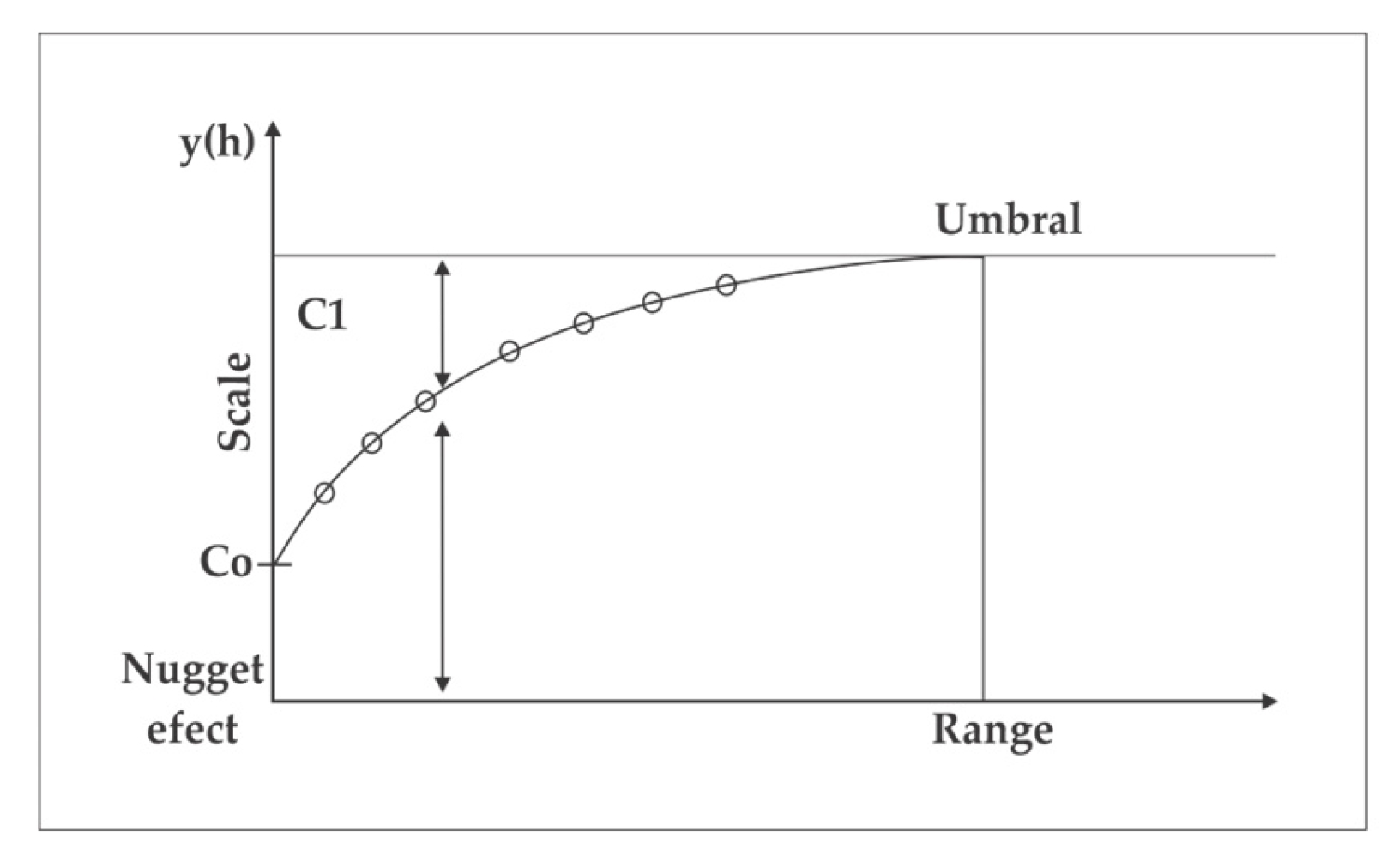
  • Spherical variogram: adopted for the modeling of Zone 2 (Ciénaga de Oro Formation), allowing the adjustment of areas with high heterogeneity. This model describes a curvilinear increase of semivariance at short distances, stabilizing at the sill once the range is reached) (Figure 7). Directional anisotropy associated with the sill value was also incorporated, which enabled conditioning spatial continuity to specific zones of the model.
Taken together, these variograms were essential to capture sedimentary heterogeneity, define preferential directionalities, and ensure the statistical representativeness of petrophysical properties in the 3D geostatistical model.
A key application of this modeling was the implementation of the anisotropy–sill relationship, which indicates that anisotropy was conditioned to a specific zone of the model. Based on this approach, variograms were constructed for the different properties or well logs considered in the data analysis.

Simulation and Interpolation

Sequential Gaussian Simulation (SGS) was applied to continuous properties, while Ordinary Kriging was used for deterministic interpolations. SGS was selected due to its ability to reproduce the natural variability of the system and generate equiprobable realizations [16], whereas Kriging was implemented to obtain smoothed estimates of key properties, useful for regional averages. Co-Kriging or multiple-point statistics (MPS) methods were not applied due to the limited availability of secondary variables with homogeneous quality.
For property interpolation in the model, the Kriging method was employed, focusing on spatial correlation and error minimization, thus providing accurate and reliable estimates based on the actual characteristics of the study area [16]. In addition to interpolation across the entire area, this method enabled the identification of specific zones with the most favorable petrophysical attributes, such as high porosity and low clay content.
Kriging is an unbiased linear estimator that ensures the sum of errors tends to zero and the squared deviations are minimized. Its objective is to estimate the values z for unsampled points x by performing a weighted sum of the neighboring sectors surrounding the point of interest x0. The general form of the Ordinary Kriging estimator is expressed as follows:
z x 0 = λ I z x i
This method involved the assignment of weights to the nearest neighbors, derived from a spatial analysis based on the experimental variogram. Such an approach ensured an unbiased linear estimator while minimizing the error variance.
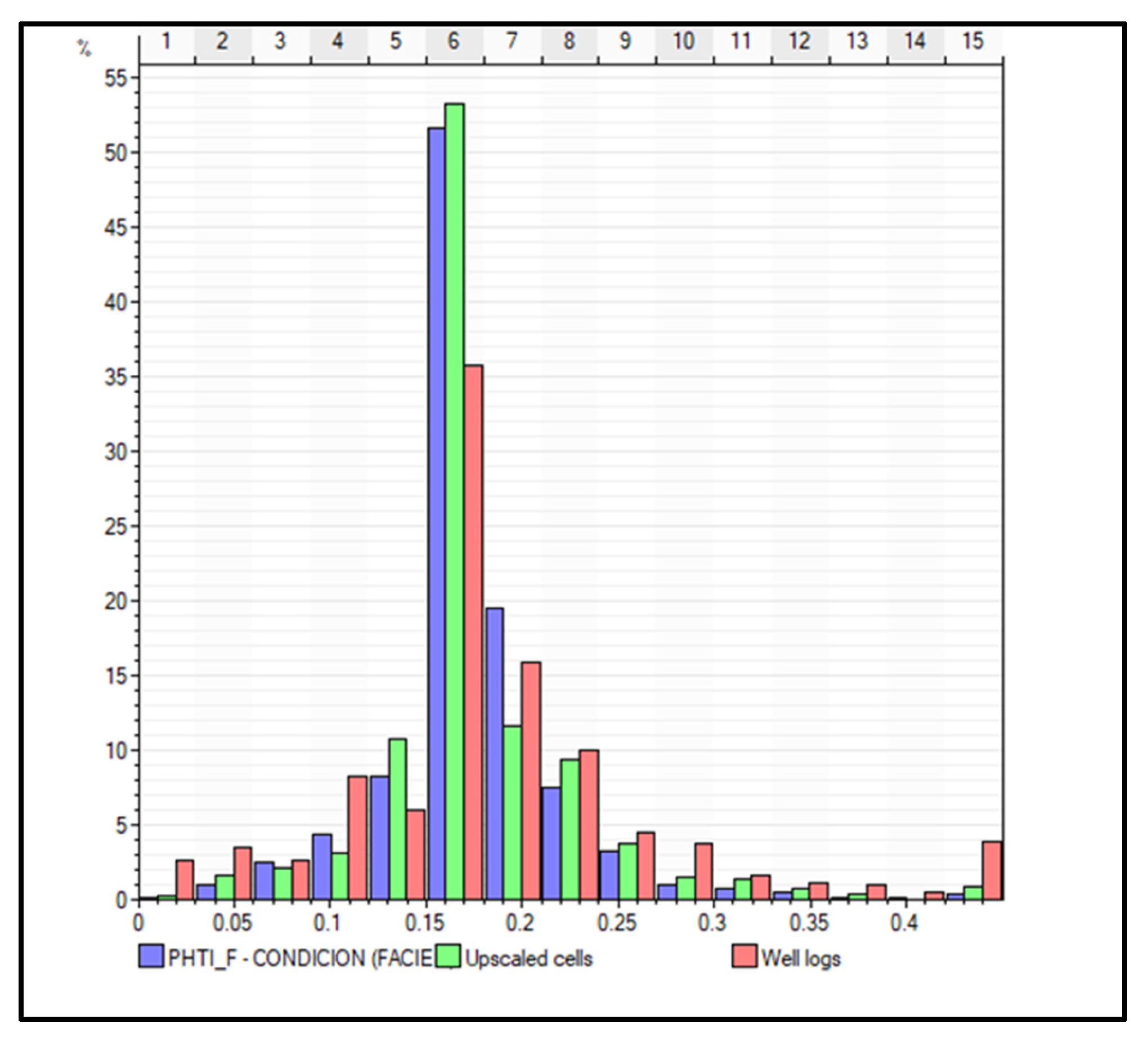
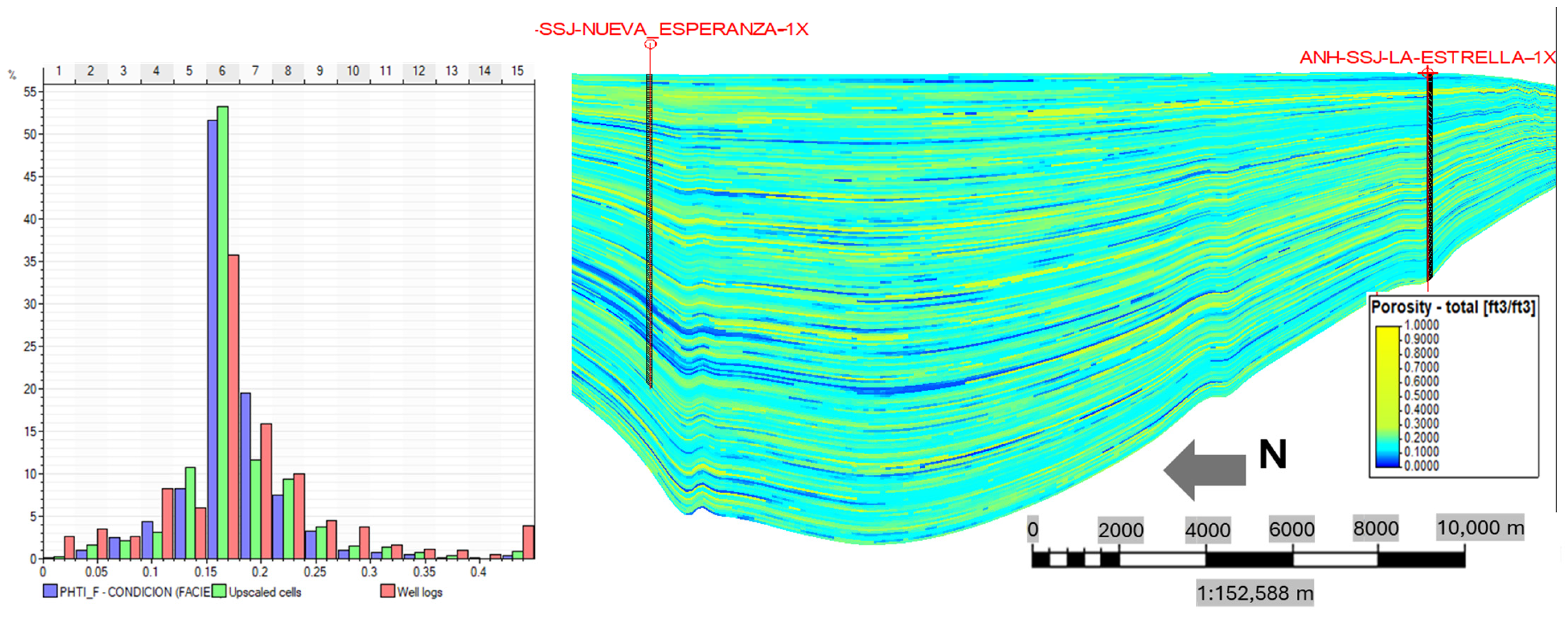
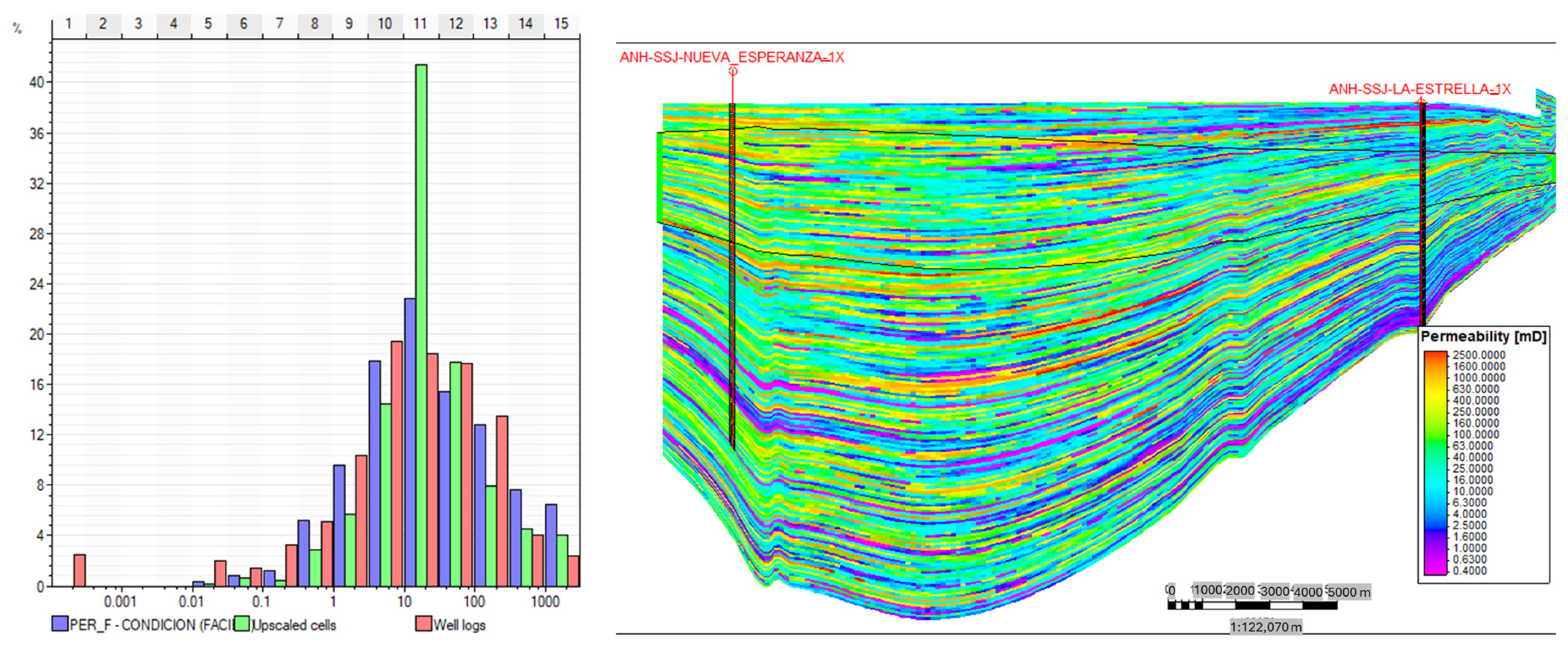
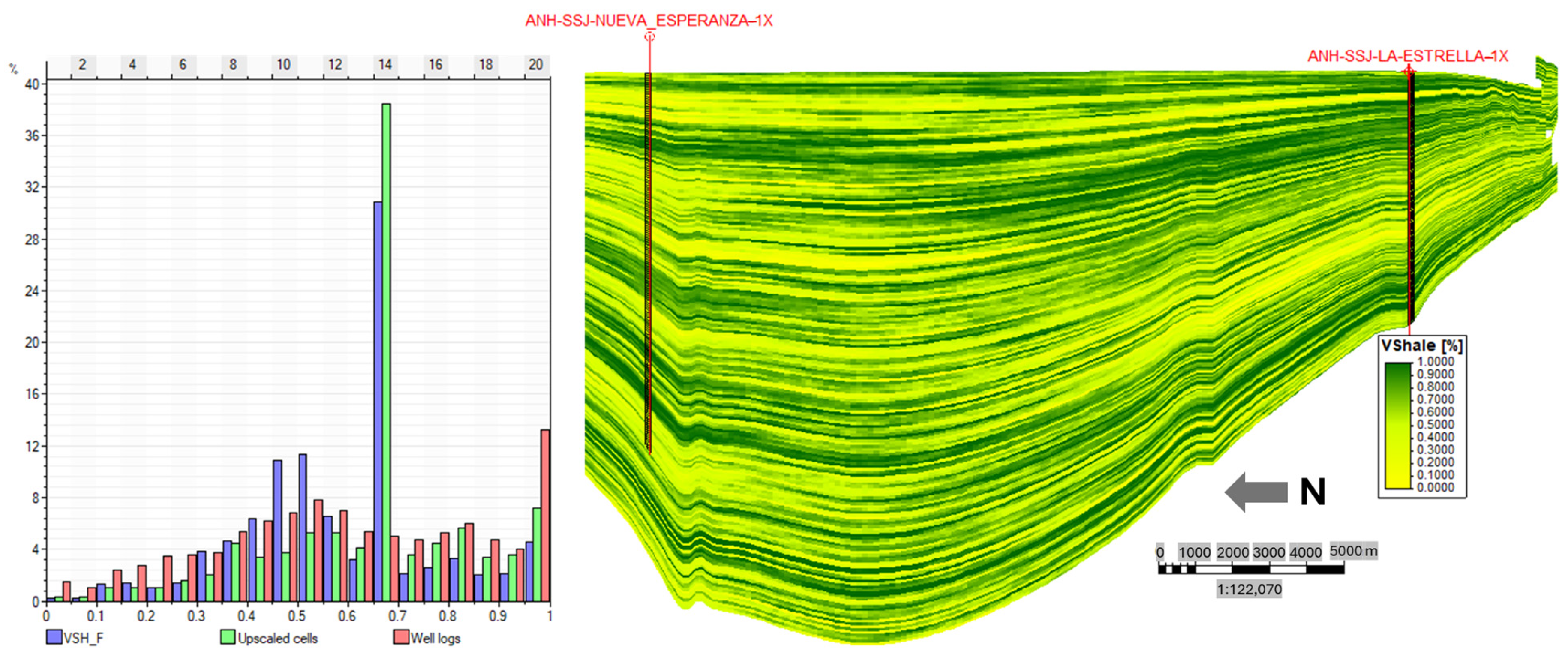
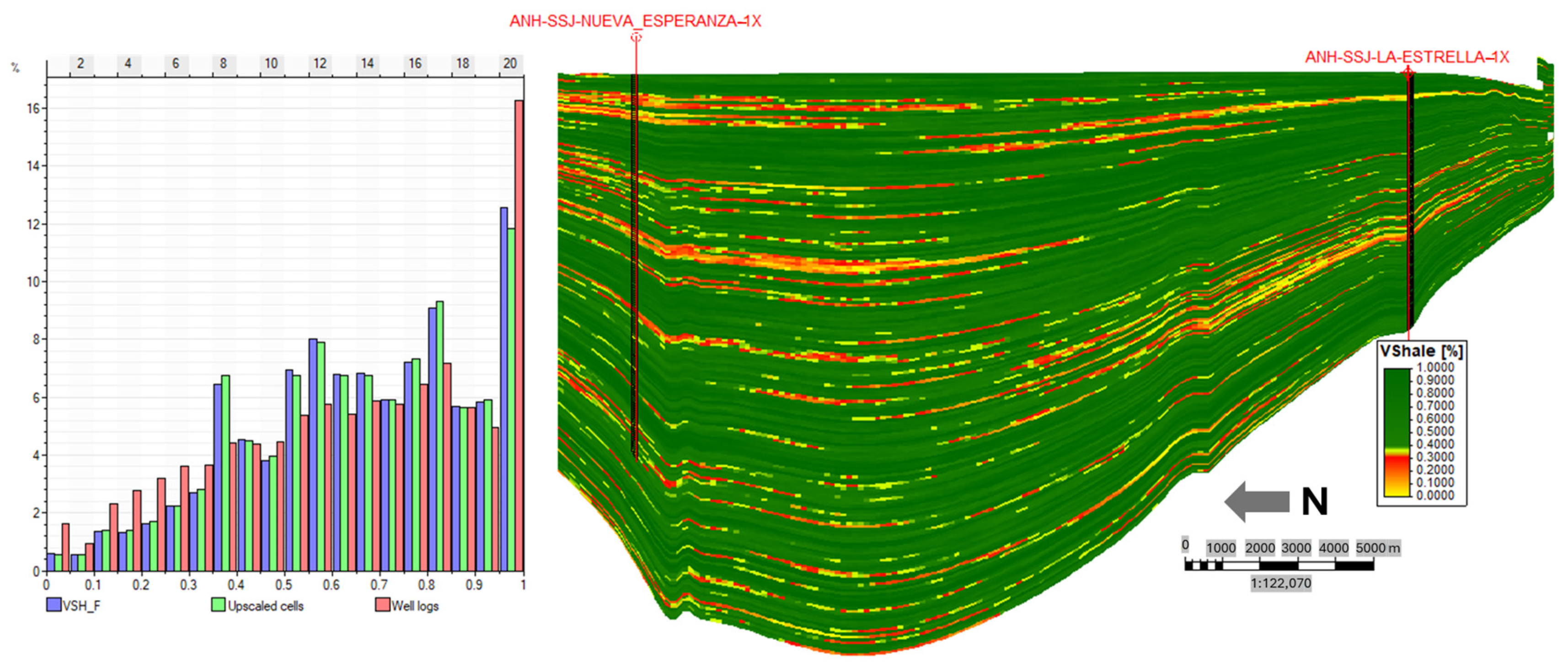
Finally, the quality of the model was evaluated by comparing the scaled values against the original well logs through histograms. Critical ranges of variation were identified, and it was verified that the modeled properties did not exceed the original well values, thereby avoiding overestimations and preserving the internal consistency of the model (Figure 8).

2.3.6. Validation and Quality Control of Geostatistical Modeling

Cross-validation was performed to evaluate the fit of the geostatistical models, and sequential Gaussian simulation (SGS) realizations and Kriged maps were compared with measured well data. The correlation between models and real data exceeded 85% for porosity and permeability.
Additionally, vertical and horizontal sections were generated to verify the geological consistency of the distributed facies and their correspondence with the sedimentological model. Histograms of original and scaled data were compared, ensuring that the simulation honored the well distributions without overestimating reservoir properties.
Although SGS and indicator Kriging showed satisfactory results, it was observed that well data density in some areas of the model limits the resolution of small-scale heterogeneities. Future work could incorporate methods such as co-Kriging (integrating seismic attributes) or multiple-point statistics (MPS) simulations to improve the representation of complex geometries.

3. Results

The results obtained from the structural, sedimentological, and petrophysical modeling of the Ciénaga de Oro Formation provide an integrated view of its subsurface architecture and reservoir characteristics. The combination of seismic interpretation, well-log analysis, and geostatistical simulation allowed the delineation of structural trends, depositional environments, and spatial variability of key petrophysical properties. This section presents the main outcomes of the 3D modeling workflow, emphasizing the consistency between field observations, digital rock analysis, and well-based interpretations, and highlighting new zones with potential hydrocarbon storage capacity within the Sinú–San Jacinto Basin.

3.1. Structural Model

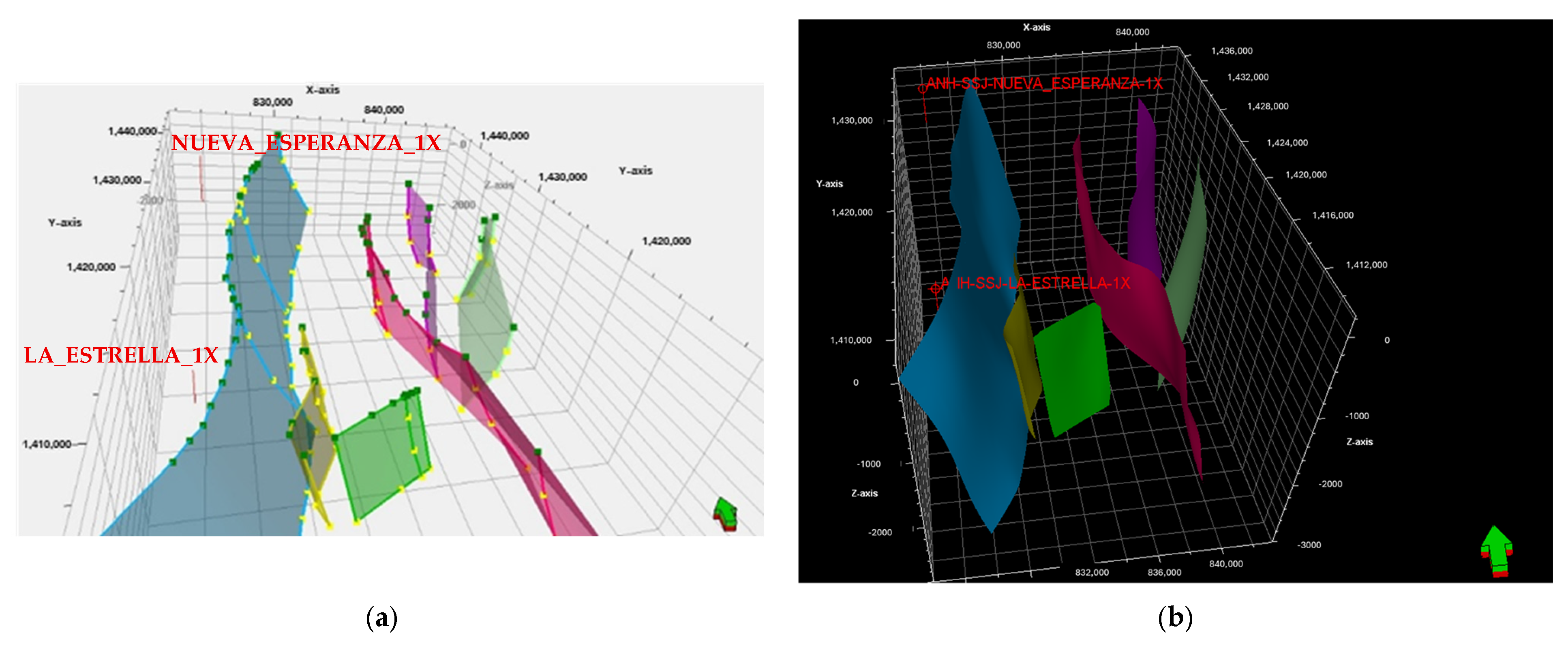
The 3D structural model of the Ciénaga de Oro Formation was built from the integration of 2D seismic data, well logs, and calibrated velocity models. Three key horizons were identified: the tops of the San Cayetano, Ciénaga de Oro, and El Carmen formations (Figure 9), which served as the main markers in the structural framework. In addition, the 3D geometry reveals a predominant South–North structural trend with subparallel secondary faults. The main fault (blue surface) was identified as the La Vara Fault, previously described and recognized in the area according to the literature. This fault acts as a structural boundary and, together with the secondary faults, generates block compartmentalization and likely conditions reservoir connectivity and fluid flow (Figure 10).

Horizon-to-Surface Conversion in TWT

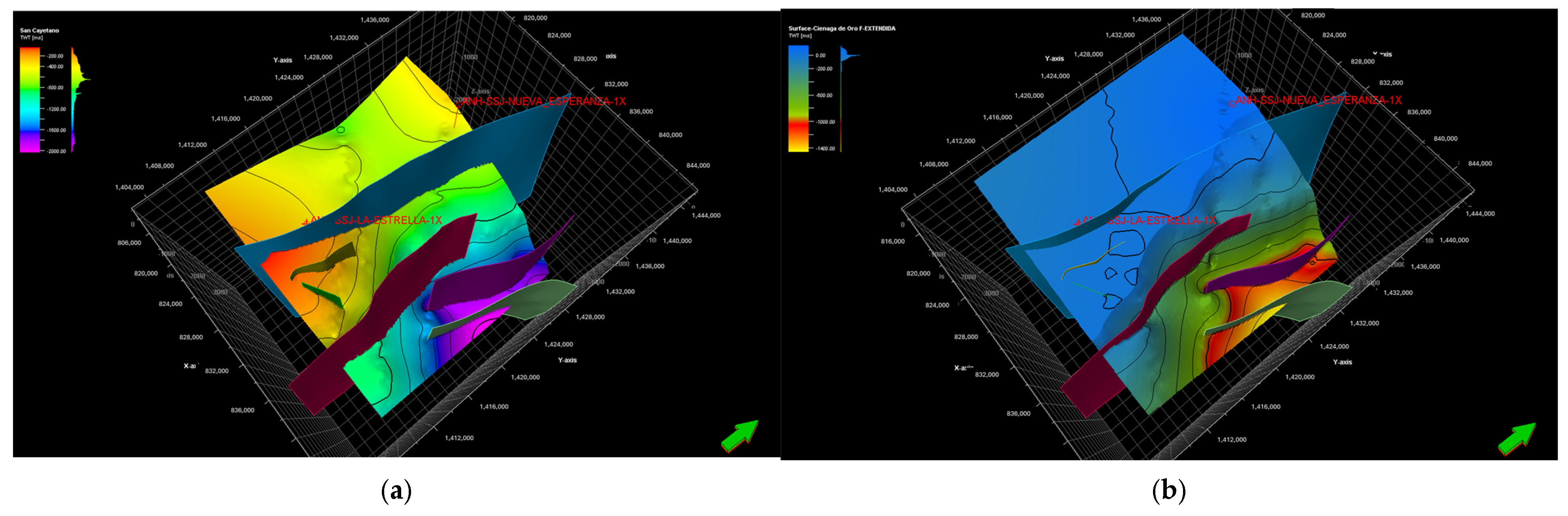
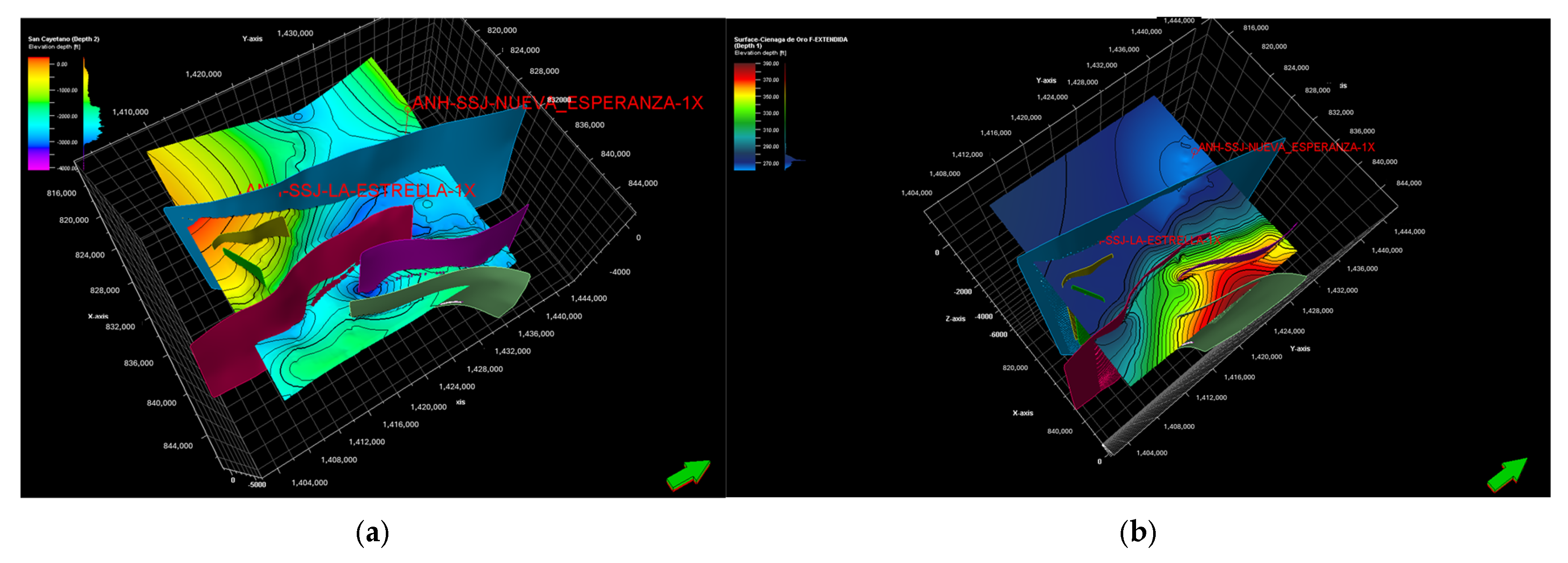
The generation of horizons was tied in time using top data derived from well descriptions. Figure 11 shows the interpreted horizons converted into time-domain surfaces: (a) San Cayetano Formation and (b) Ciénaga de Oro Formation. The Ciénaga de Oro Formation was established as the top of the geostatistical model.
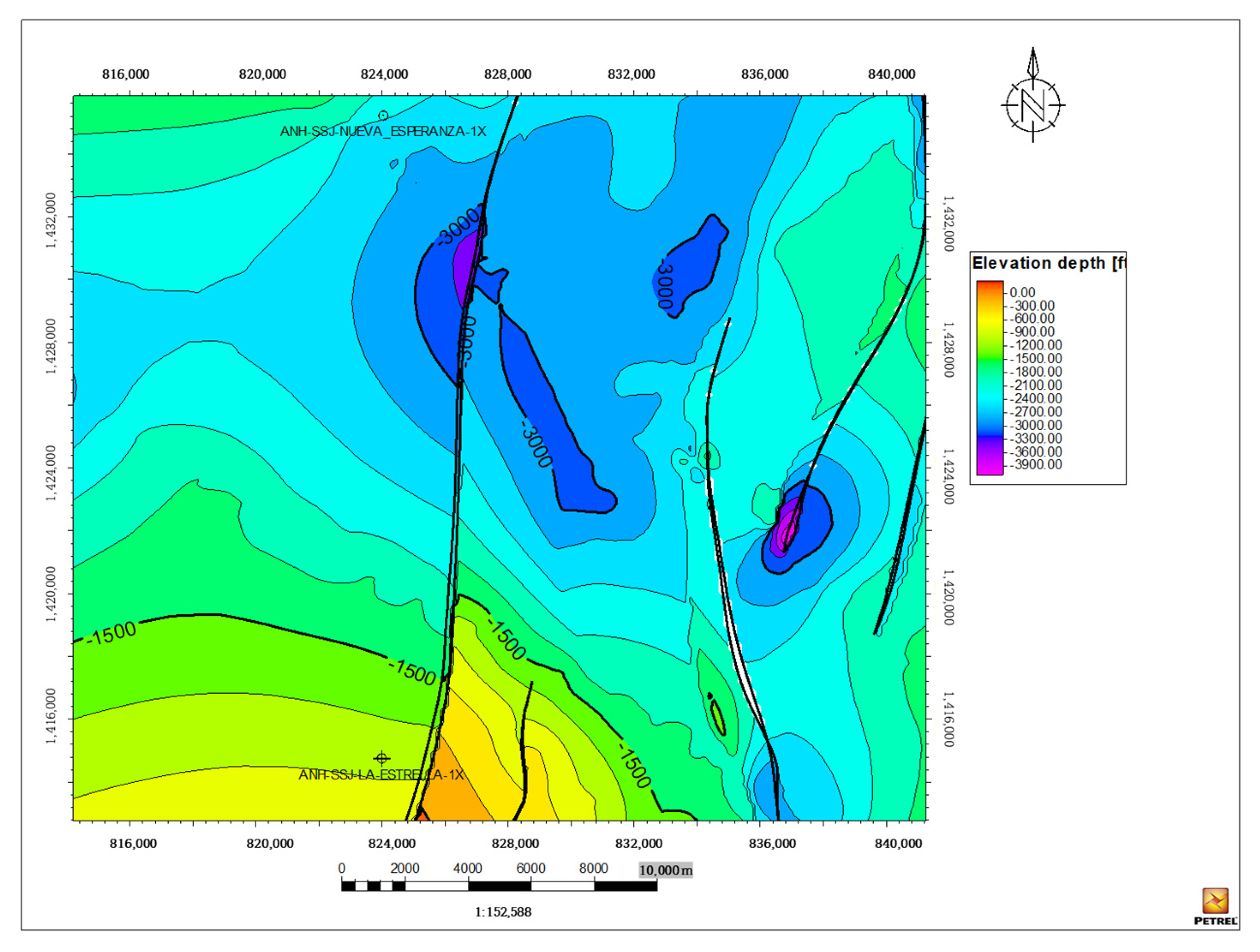
By converting the model to the depth domain, it was possible to generate structural maps of the surfaces corresponding to the tops of the formations of interest. Figure 12 shows the structural map at the top of the San Cayetano Formation, where a marked structural compartmentalization is controlled by subparallel fault systems with a predominant N–S orientation. In addition, anticline and syncline structures with NE–SW trends are recognized, both symmetrical and asymmetrical, some of them truncated against reverse faults.
Figure 13 shows the depth-converted top surfaces of the formations. Near well ANH−SSJ−Nueva Esperanza−1X, the top of the San Cayetano Formation reaches a depth of approximately 2500 ft, represented in green. Near well ANH−SSJ−La Estrella−1X, the surface lies at a depth of about 1500 ft, depicted in bluish gray (Figure 13a). In the case of the Ciénaga de Oro Formation, depths shallower than 270 ft are shown in blue (Figure 13b).
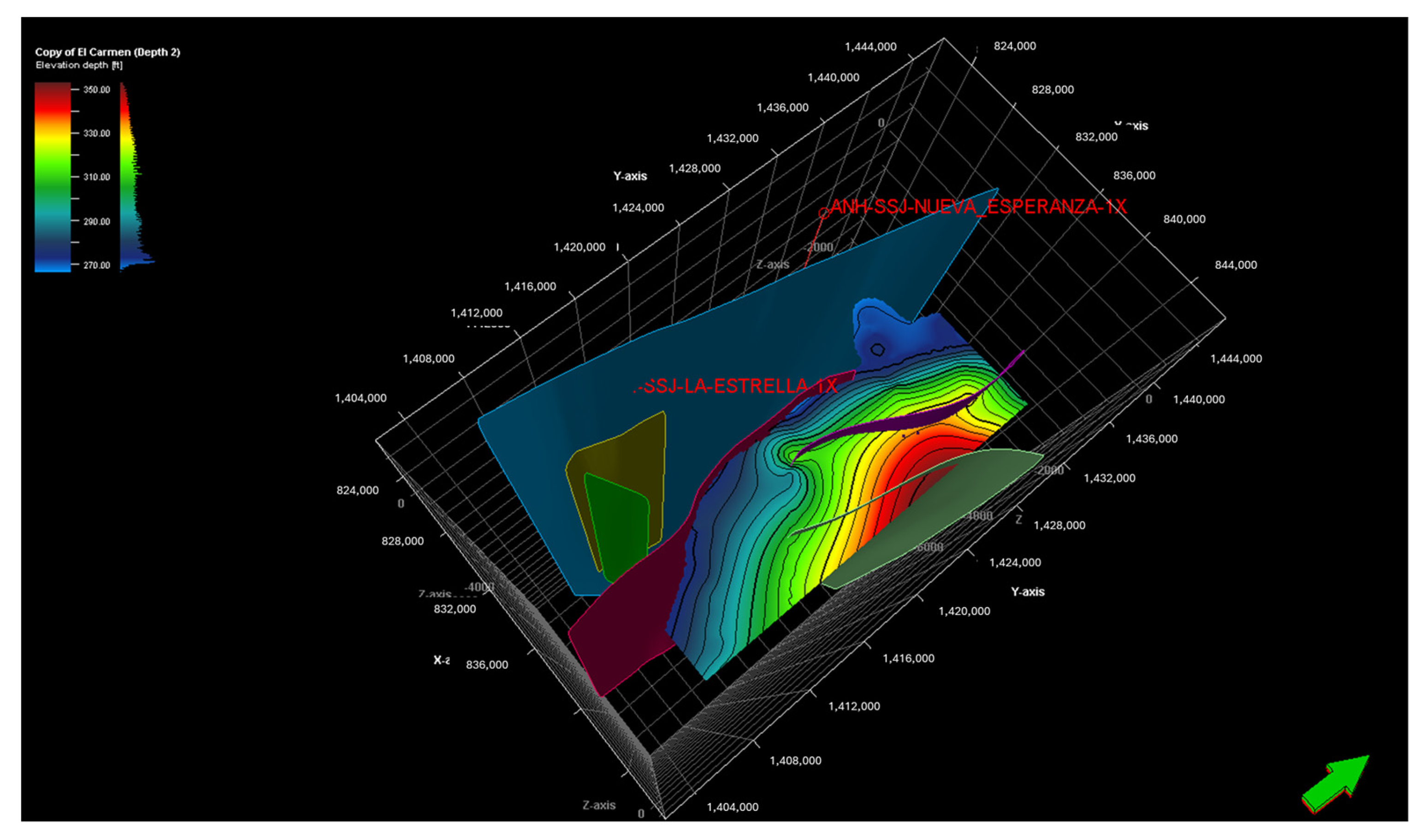
Figure 14 shows the top of the El Carmen Formation, which lies at depths shallower than 200 ft, with the contact located on the right side of the geostatistical cube. These results are consistent with well and horizon data, demonstrating a positive correlation between the original information and the time-to-depth conversion performed in the model, thereby validating its accuracy.
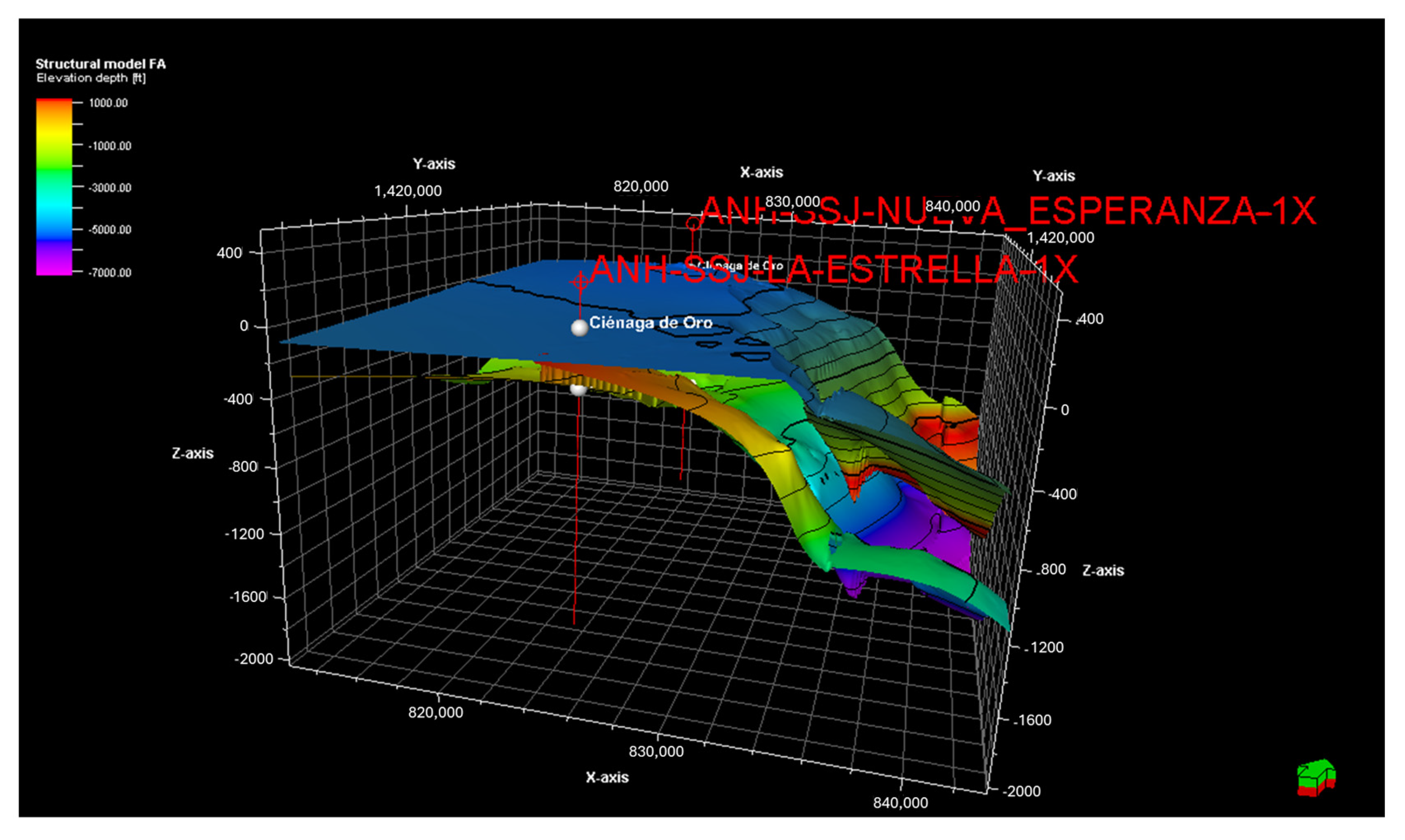
Figure 15 presents the structural depth surfaces model, which is used for geostatistical modeling and population according to the configuration of parameters, properties, and gridding. The depth-converted surfaces reveal lateral continuity of the units, locally disrupted by faulted blocks that could act as compartmentalized reservoirs.
In general terms, the area of interest is characterized by strike-slip and reverse faults, associated with a transpressive tectonic regime evidenced by regional-scale strike-slip faulting. The reverse faults interpreted from seismic data exhibit a preferential N 15° E orientation with eastward vergence, while the dominant strike-slip faults trend NW–SE. The associated transpressive tectonics generate a series of high-angle reverse faults with eastward vergence and strike-slip faults, as observed in surface geological data, upon which narrow and elongated folds have developed. The depocenter in this sector of the basin is located to the east of the study area.

3.2. Sedimentological and Petrophysical Model

The 3D sedimentological model of the Ciénaga de Oro Formation was constructed through the integration of outcrop-based facies descriptions, well-log data, and digital rock analysis using computed tomography (CT) (Figure 16). The correlation between these datasets enabled the identification of a fluvio-deltaic depositional system, characterized by the alternation of clastic facies deposited in distinct deltaic sub-environments, with preferential sediment input directed towards the NW.
In the field, stratigraphic columns revealed deposits associated with prodelta, delta-front, and delta-plain environments, dominated by interbedded fine- to medium-grained sandstones, siltstones, and coal-bearing intervals. These facies were correlated with well-log responses, including clay volume, density, and resistivity curves, which facilitated their extrapolation into the 3D model.
Digital rock analysis through CT scanning validated and complemented the definition of lithofacies by identifying internal textures, degree of bioturbation, and pore distribution. This approach allowed the differentiation between Type I sandstones (clean, highly connected, and associated with distributary channels and mouth bars) and Type II sandstones (moderately argillaceous and linked to delta-front environments).
The scaled sedimentary model highlights the influence of distributary-channel dynamics and mouth-bar deposition on reservoir architecture, while delta-plain and prodelta deposits appear as the main sealing and heterogeneity−controlling units within the system.

3.2.1. Sedimentological Description and Depositional Environment

In addition to integrating field facies descriptions and well log data, the Wax Lake Delta (Louisiana, USA) was used as an analog. This modern delta is widely documented in the literature as a representative example of fluvio-dominated deltaic systems [32]. Its choice as an analog is pertinent, as it supports the interpretation of a deltaic influence on the accommodation of a sedimentary thickness close to 2500 m, as described for the Ciénaga de Oro Formation.
Although modern, the Wax Lake Delta provides sedimentological criteria comparable to ancient deltaic systems, particularly with respect to the vertical and lateral organization of facies. Within the model, characteristic facies of delta-plain and proximal delta-front environments were identified, distributed according to the evolution and migration of delta lobes.
Facies of greatest reservoir interest are represented by clean sandstones and sandstones with relatively simple internal structures, including massive sandstones (Sm), massive conglomeratic sandstones (gSm), sandstones with planar lamination (Sh), cross-laminated sandstones (Sx), trough cross-bedded sandstones (St), massive matrix-supported conglomerates (Gmm), and matrix-supported conglomerates with planar-parallel lamination (Gmh).
This arrangement suggests a strong control exerted by distributary channel dynamics and mouth bars over reservoir architecture, confirming that proximal delta-front sub-environments represent the zones with the greatest hydrocarbon storage potential.

3.2.2. Facies Distribution

Integration of well logs, CT data, and laboratory analyses significantly reduced the uncertainty in defining electrofacies boundaries. Five main lithological associations were identified:
  • Mudstones: High gamma-ray and low shallow resistivity (RESS < 5 ohm·m).
  • Heteroliths: Moderate density (2.45–2.55 g/cc), average neutron values, and clay cutoffs on the VshGR curve within siliciclastic clusters.
  • Clean and clay-rich sandstones: Slightly higher densities (2.48–2.60 g/cc) and higher neutron responses, reflecting improved reservoir quality.
  • Coal: Low density (1.19–1.47 g/cc), high neutron values, and low PEF.
  • Limestones: Clusters on RHOB–NPHI crossplots with high density, low neutron, and high resistivity. Gamma-ray readings distinguish between mudstone-type limestones (Type B) and wackestone–packstone facies.

3.2.3. Petrophysical Properties

Automatic classification using a Multilayer Perceptron (MLP) defined six facies groups: mudstones, heteroliths, sandstone type I, sandstone type II, limestones, and coal.
  • Sandstone type I includes fine-grained, clayey, muddy, silty, and conglomeratic sandstones.
  • Sandstone type II represents clean sandstones with the best reservoir properties (high porosity and permeability), concentrated in the middle interval of the Ciénaga de Oro Formation, with net thicknesses up to 18 m in the ANH-SSJ-Nueva Esperanza-1X well.
  • Fine-grained facies (limestones, mudstones, and heteroliths) prevail at the contacts with the San Cayetano and El Carmen formations, where they likely function as vertical flow barriers.
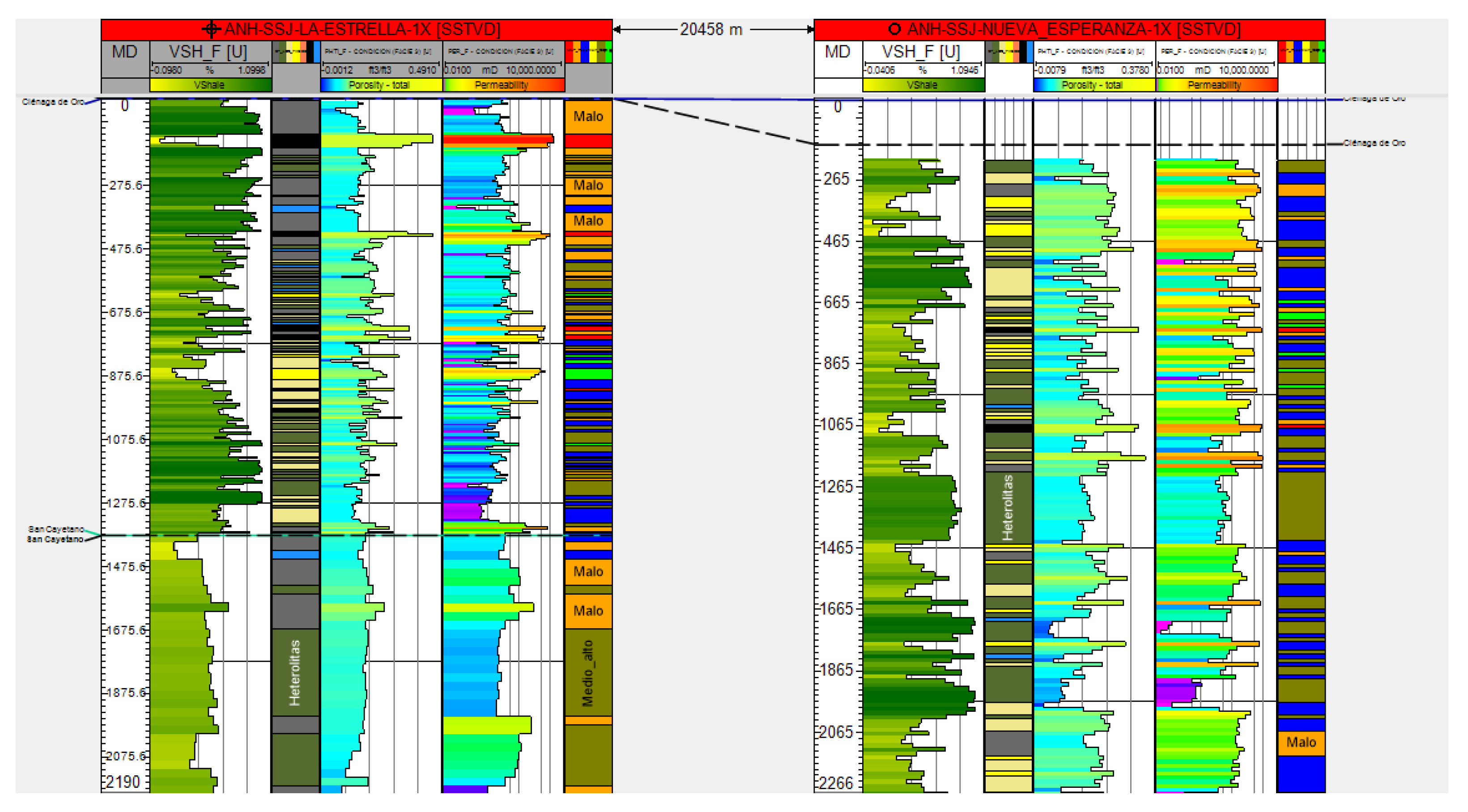
Figure 17 presents, from left to right, the facies classification, MLP-based facies prediction, and the petrophysical property logs of shale volume (Vsh), permeability, and porosity for wells ANH-SSJ−Nueva Esperanza−1X and ANH−SSJ−La Estrella−1X. The MLP classification highlights the correspondence between predicted facies and the petrophysical variations. These results validate the integration of digital rock analysis and machine learning approaches in capturing the heterogeneity of the Ciénaga de Oro Formation.
The 20 km distance between the wells poses challenges for correlating stratigraphic levels, suggesting that sand body connectivity may result from the migration of local deltaic distributary channels. Highlighted red boxes indicate intervals with bright yellow facies, classified by the MLP model as green, which correspond to high-quality hydrocarbon reservoirs. These intervals are characterized by low clay volumes (yellow), high permeability (green), and favorable porosity (blue).
In the northern well, ANH−SSJ−Nueva Esperanza−1X, the sandstone intervals are better developed, as shown in Figure 17 (left panel). This pattern suggests that sediment supply was sourced from the north of the study area, where shoreline processes were more pronounced.

3.3. Geostatistical Model

The visualization of the 3D model in map view and vertical sections highlights depositional trends oriented towards the northwest (NW) and the presence of two main high-quality reservoir zones (Zones 1 and 2).
  • Porosity and permeability distribution maps reveal a central corridor of enhanced reservoir quality, coinciding with the modeled deltaic progradation.
  • Cross-sectional views illustrate the spatial association between sandy facies and positive petrophysical anomalies, confirming the internal consistency of the model.

3.3.1. Petrophysical Properties and Facies Model

Kriging interpolation was applied to reproduce the spatial variability of reservoir properties, establishing relationships between porosity, permeability, and rock quality. Rock classification was defined as follows:
  • Moderate: porosity 10–15%, permeability 1–10 mD.
  • Good: porosity 15–20%, permeability 10–100 mD.
  • Very good: porosity 20–25%, permeability 100–1000 mD.
  • Excellent: porosity > 25%, permeability > 1000 mD.
These parameters delineated zones with the most favorable conditions for hydrocarbon accumulation within the 3D model.
Discrete Facies Log Modeling
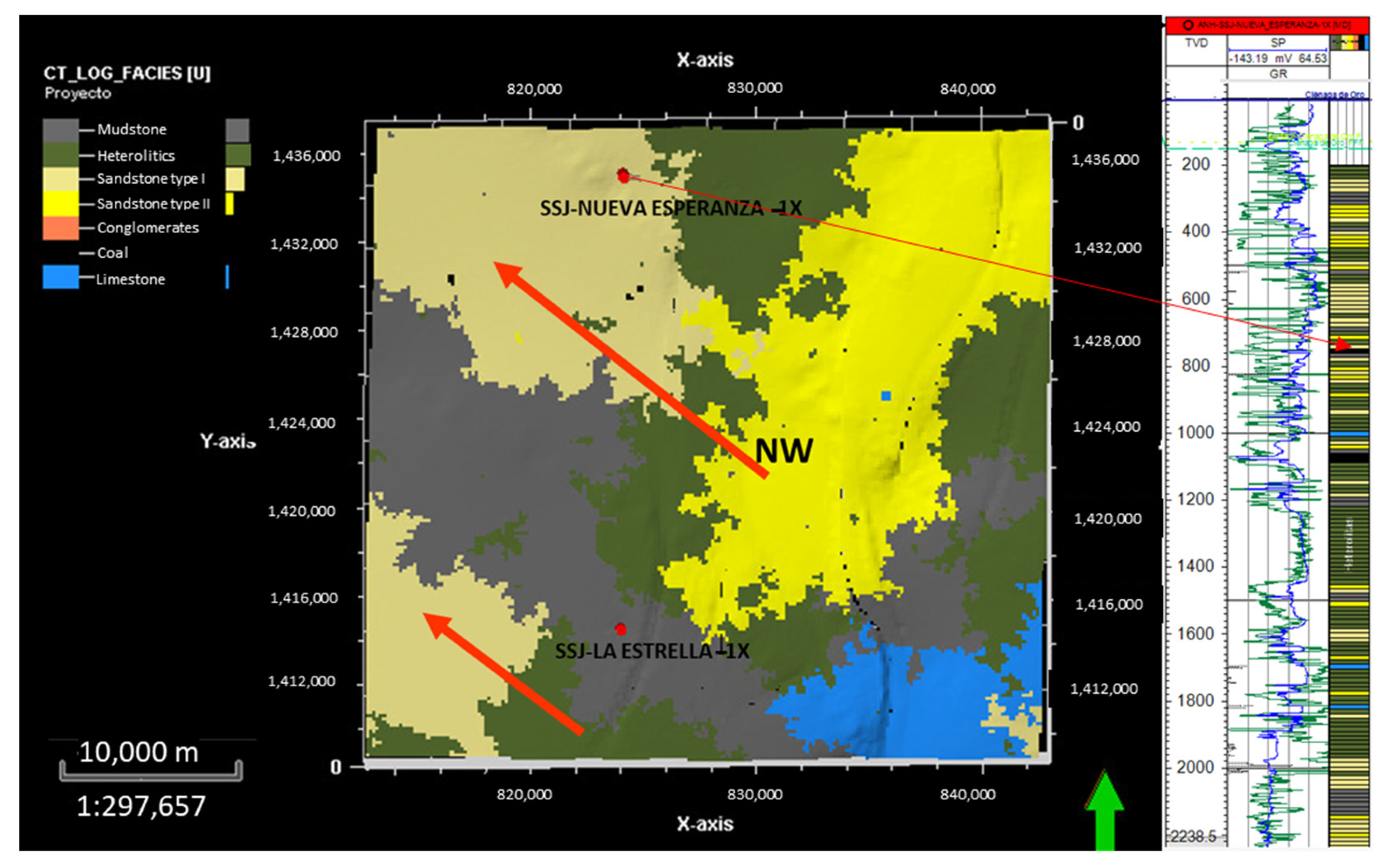
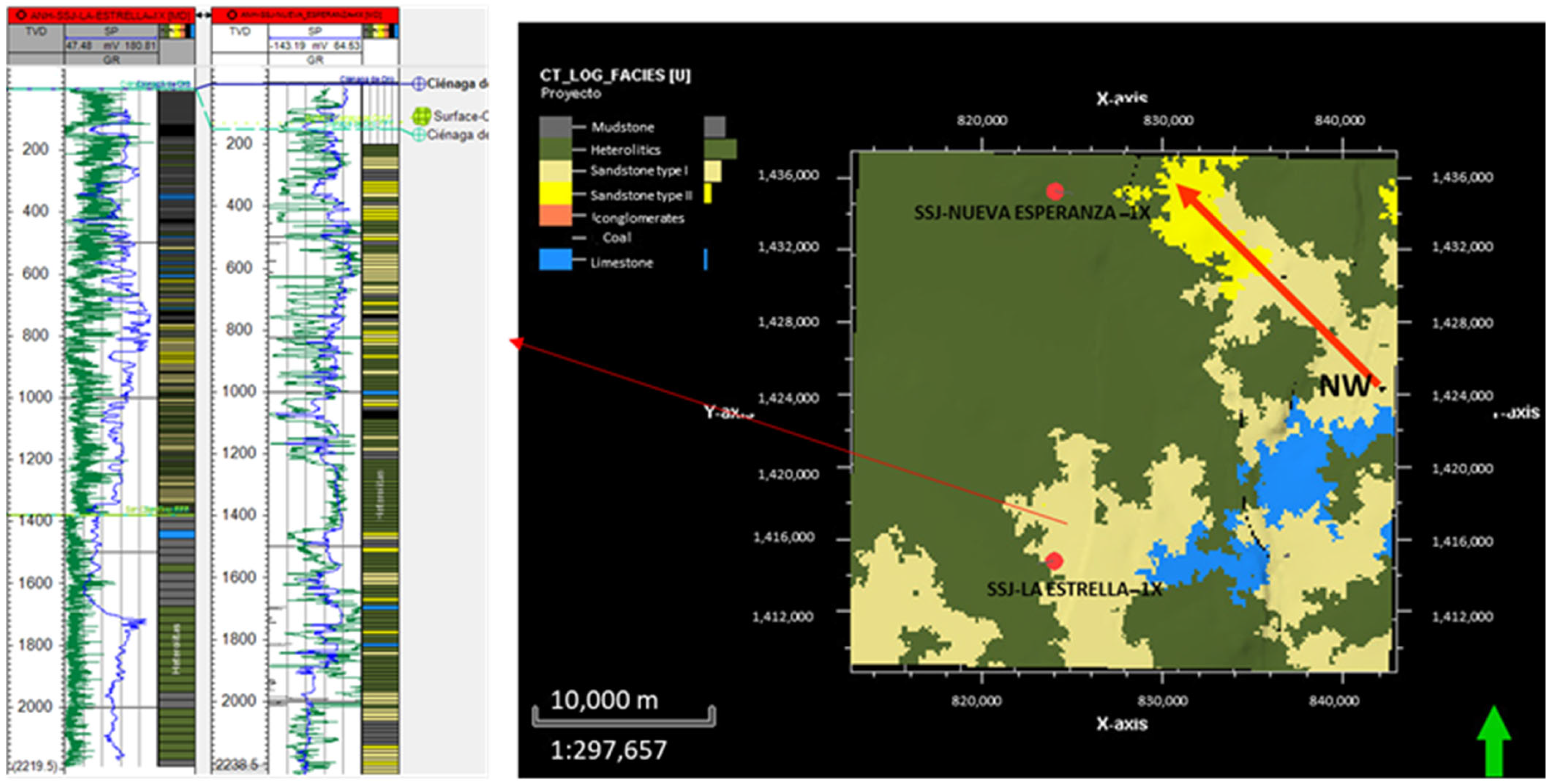
Figure 18 shows a map view integrating facies identified in both outcrop and well data, grouped into rock-type families represented by a single numeric value, as indicated in the legend. For instance, facies such as sandy mudstone, calcareous mudstone, mudstones, and claystones were consolidated into a single category depicted in gray. This grouping follows a preferential N45W orientation, which is particularly relevant for Zone 2 of interest.
At this depth, heterolithic facies (dark green) dominate, covering the largest portion of the area, while type II sandstones (bright yellow) are scarce but denote high-quality reservoir intervals. Near well ANH−SSJ−La Estrella−1X, type I sandstones are present but show limited reservoir quality. Calcareous facies occur in the eastern sector.
Near well ANH−SSJ−La Estrella−1X, type I sandstone facies are present; however, they do not exhibit optimal reservoir quality for hydrocarbons, with a recorded depth of approximately 882.86 ft at this location. Additionally, calcareous facies are observed in this map view, located toward the eastern sector of the study area.
Figure 19 shows that, at this stratigraphic level, heterolithic facies (dark green) no longer represent the dominant proportion of the area. Instead, type I and II sandstones predominate, particularly around 751 ft in well ANH−SSJ−Nueva Esperanza−1X, where type I sandstones are most abundant.
Additionally, a northwestward (NW) migration of facies was recognized. Notably, Type II sandstones exhibit a wider spatial distribution at this stratigraphic level, occupying a substantial portion of the modeled area and representing the most favorable conditions for reservoir development.
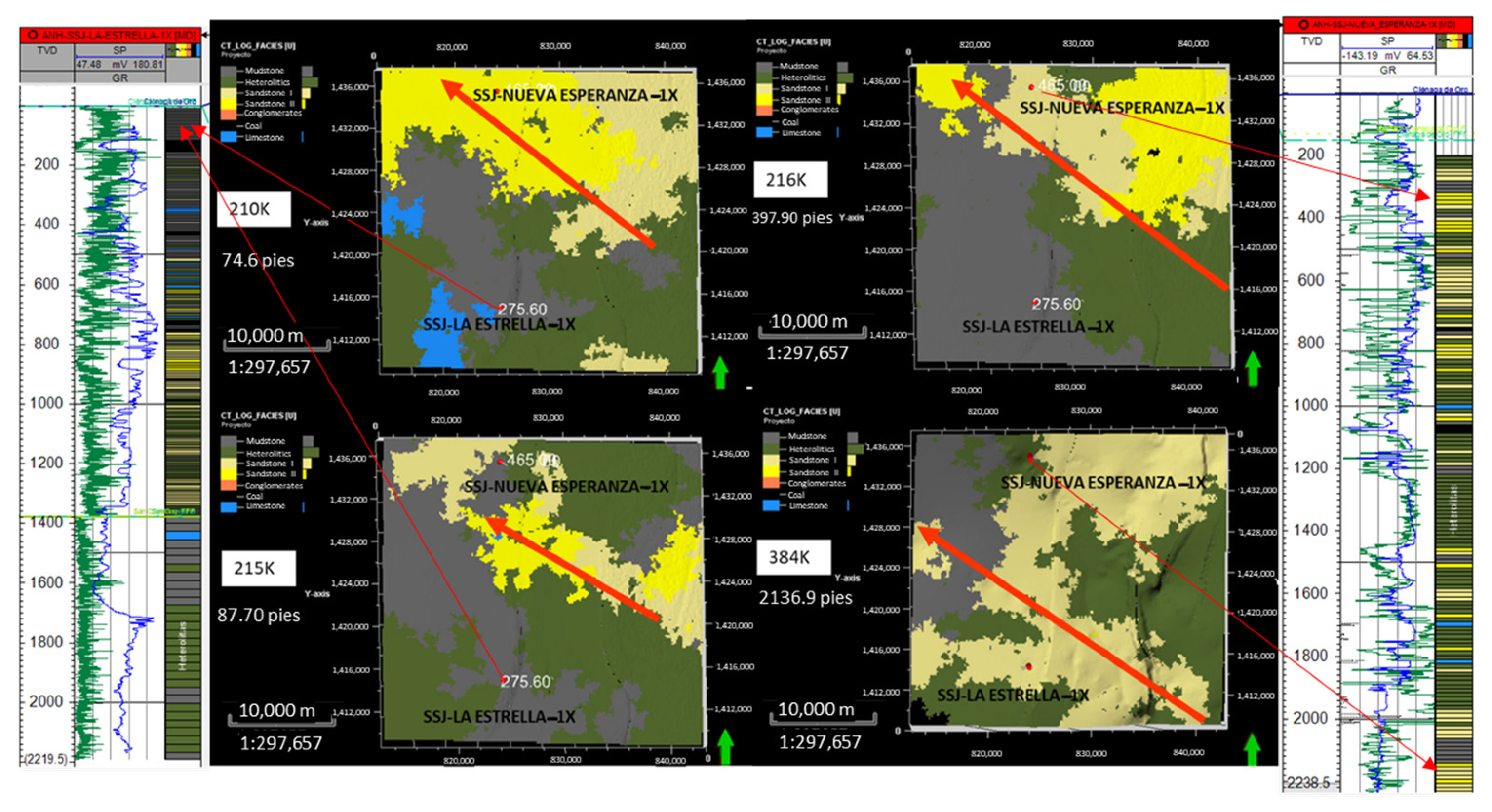
Figure 20 presents four map-view slices of the 3D facies cube. In the slice corresponding to position 210K, at a depth of 74.6 ft in well ANH−SSJ−La Estrella−1X, the occurrence of mudstone facies is observed. Similarly, in slice 215K, at a depth of 87.7 ft in the same well, the presence of mudstone facies is confirmed again.
In slice 216K, well ANH−SSJ−Nueva Esperanza−1X exhibits Type II sandstone facies at a depth of 397.9 ft. Finally, slice 384K, corresponding to a depth of 2136 ft, shows the occurrence of Type I sandstone facies.
The sedimentary deposit reveals a preferential depositional orientation toward the northwest (NW), highlighted by red arrows. In slice 210K, carbonate facies are identified in the southwestern (SW) sector, indicating a relative sea-level change in this area. Conversely, the northeastern (NE) sector displays a more pronounced development of facies transitions associated with sandstone deposits.
Vshale Modeling
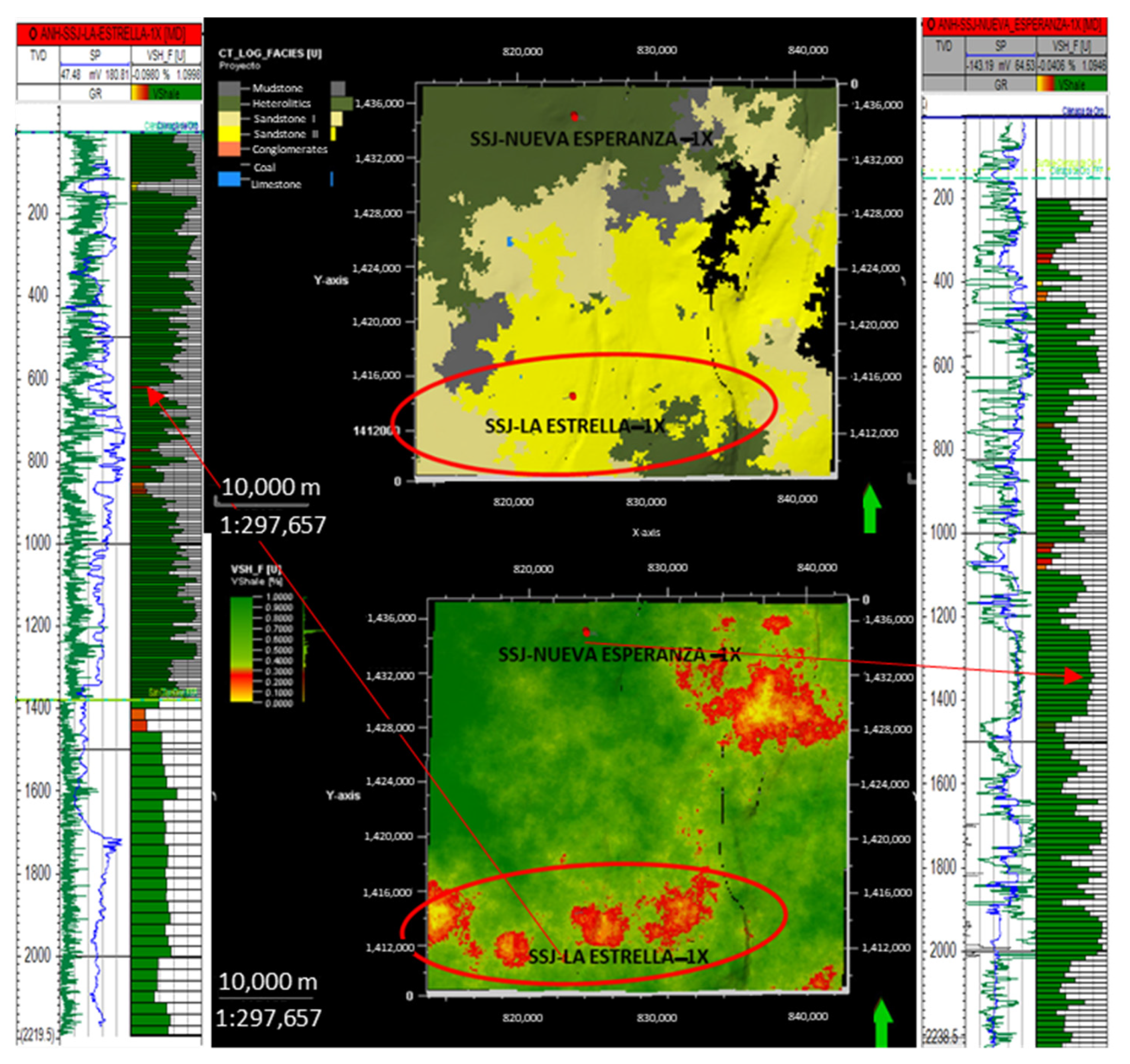
Figure 21 presents the map-view modeling of the shale volume log across the study area. The color scale depicts variations in shale content, ranging from dark green (high values) to bright yellow and red (low values), enabling the identification of zones most favorable for reservoir development.
At slice position 292K, the model reaches an approximate depth of 609.49 ft near well ANH−SSJ−La Estrella−1X and 1366.20 ft near well ANH−SSJ−Nueva Esperanza−1X. The figure highlights an oval-shaped area delineating a zone of low shale volume, spatially coincident with the occurrence of Type II sandstone facies, which are characterized by their favorable reservoir quality.
Total Porosity Modeling
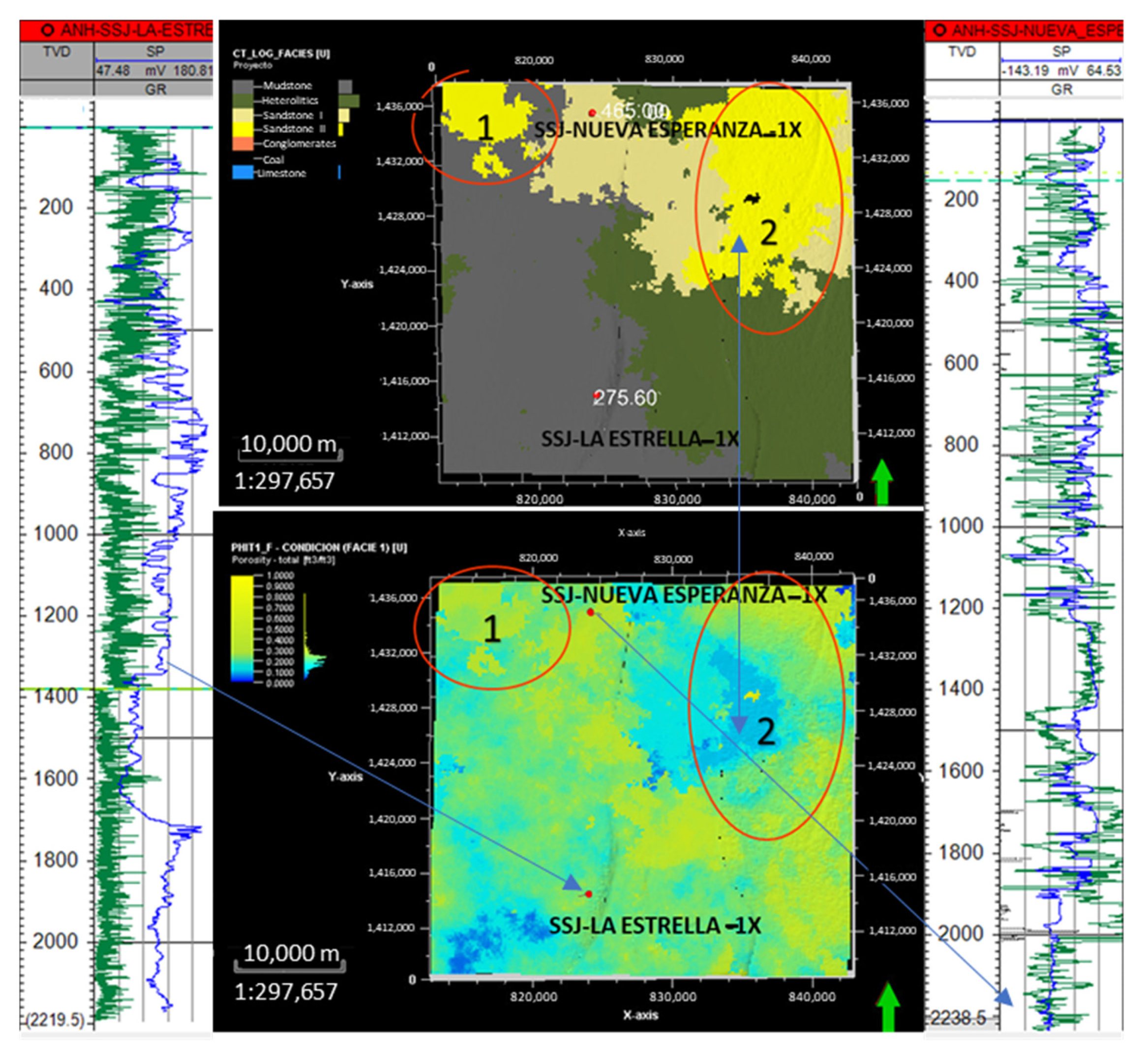
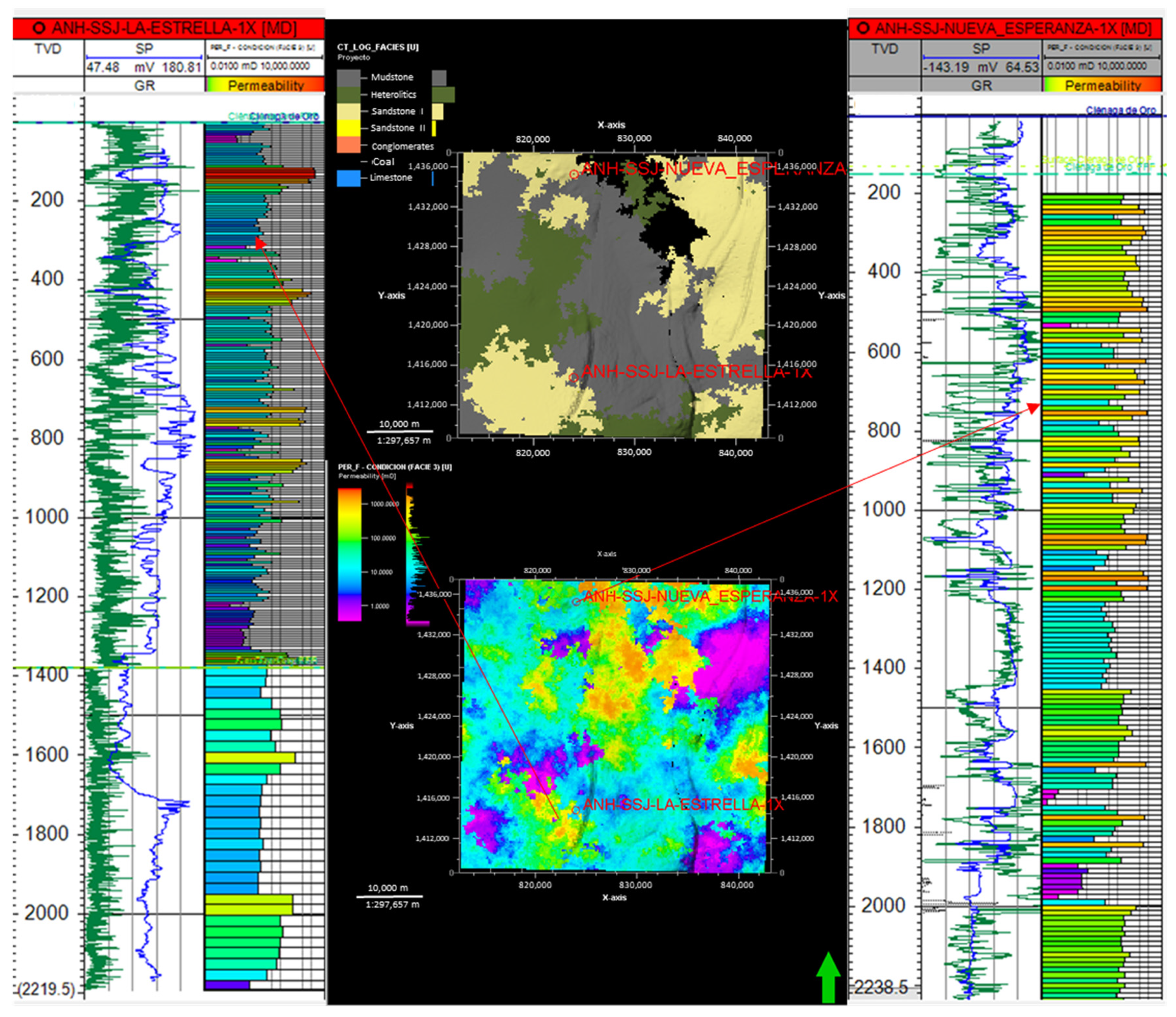
Figure 22 compares facies distribution with total porosity in a map-view model using three main colors to represent this property. Yellow areas indicate porosities greater than 20%, suggesting favorable conditions for fluid storage. In Oval 1, clean sandstone facies correlate with the yellow-highlighted zones in the porosity model.
In contrast, Sector 2 (highlighted in the figure) shows a facies modification in the central portion of the area, which introduces challenges for the interpolation process, as this region does not resolve as a zone of consistently high porosity. This behavior underscores the complexity of the relationship between facies architecture and porosity distribution within the model.
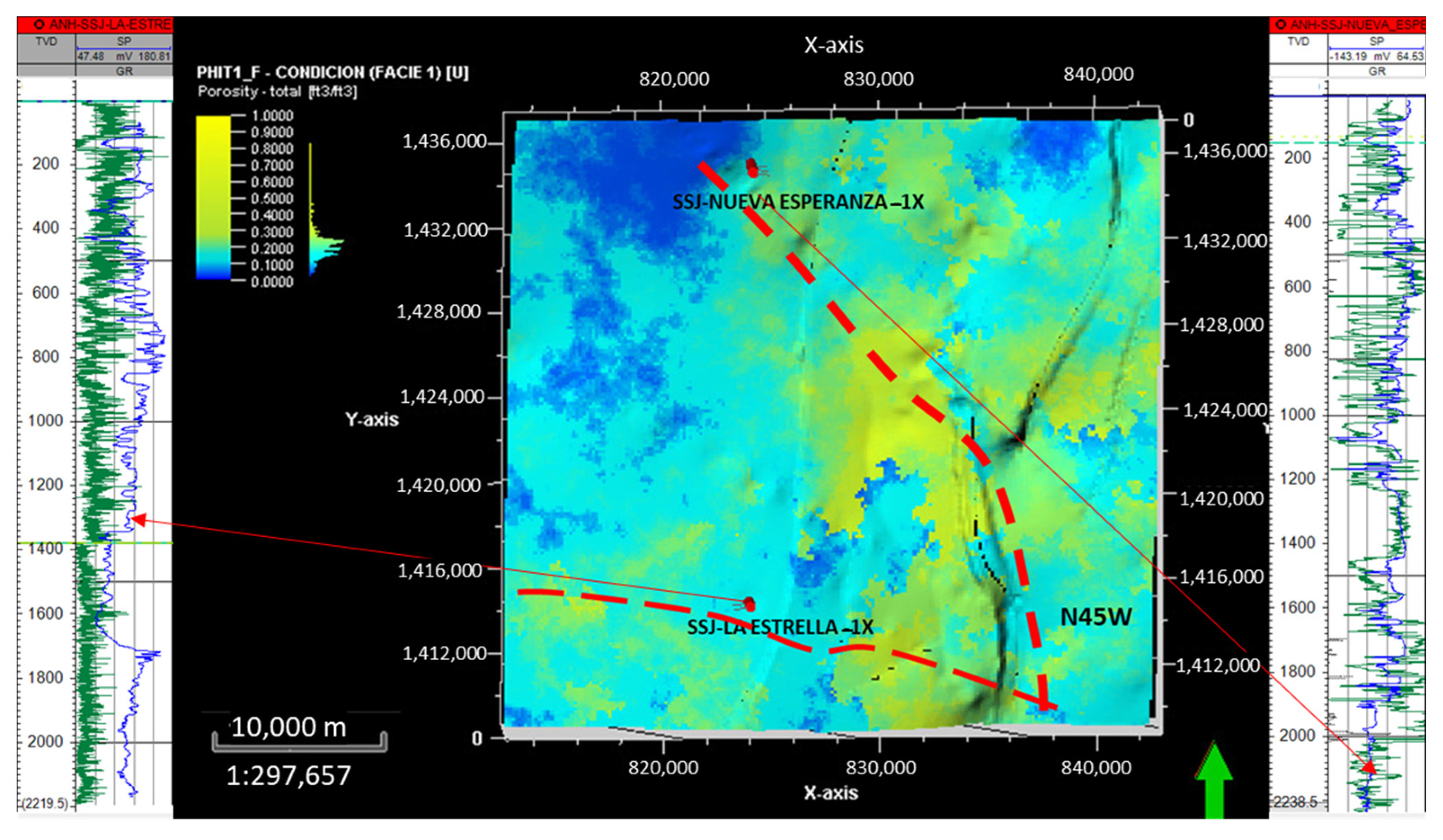
Figure 23 presents a map-view slice at position 392K, corresponding to a depth of approximately 2204 ft near well ANH−SSJ−Nueva Esperanza−1X and 1280.64 ft near well ANH−SSJ−La Estrella−1X. The inferred depositional trend of facies is highlighted with red lines, while bright yellow areas are associated with zones of relatively high porosity.
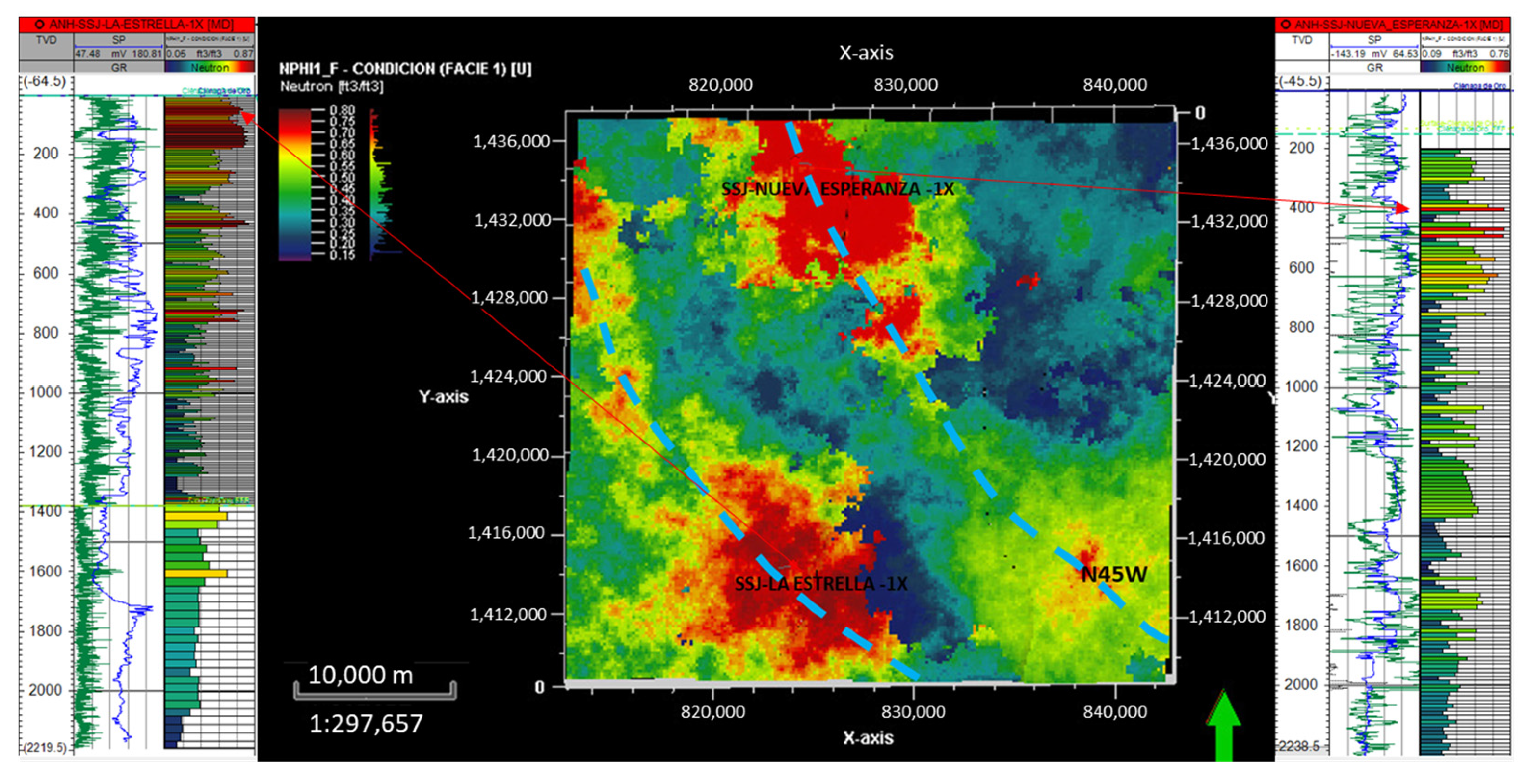
Figure 24 illustrates the modeled distribution of the neutron porosity log (NPHI), highlighting a trend of higher values associated with fine-grained sediments. Red-colored zones correspond to intervals with elevated neutron porosity, interpreted as areas with potential interest for hydrocarbon or water accumulation. This slice corresponds to position 216K in the 3D model, which correlates with a depth of approximately 391.81 ft near well ANH−SSJ−Nueva Esperanza−1X and 105.3 ft near well ANH−SSJ−La Estrella−1X.
Permeability Modeling
Figure 25 presents the modeled permeability distribution at a depth of 245 K. In well ANH−SSJ−La Estrella−1X (292.52 ft) and well ANH−SSJ−Nueva Esperanza−1X (771.12 ft), light blue zones indicate intermediate permeability associated with Type I sandstone facies. Higher permeability values are represented in red, corresponding to regions with values above 10 mD, whereas low−permeability intervals are shown in purple. According to the legend, favorable permeability zones also include light blue, green, and yellow, reflecting areas with enhanced flow potential.
The figure allows for a direct comparison between facies distribution and high-permeability zones. Orange colors indicate permeability values exceeding 1000 mD, classified as high-permeability zones. This analysis clearly demonstrates the spatial correlation between sandstone facies and areas with the greatest flow potential within the model.

3.3.2. Density Modeling

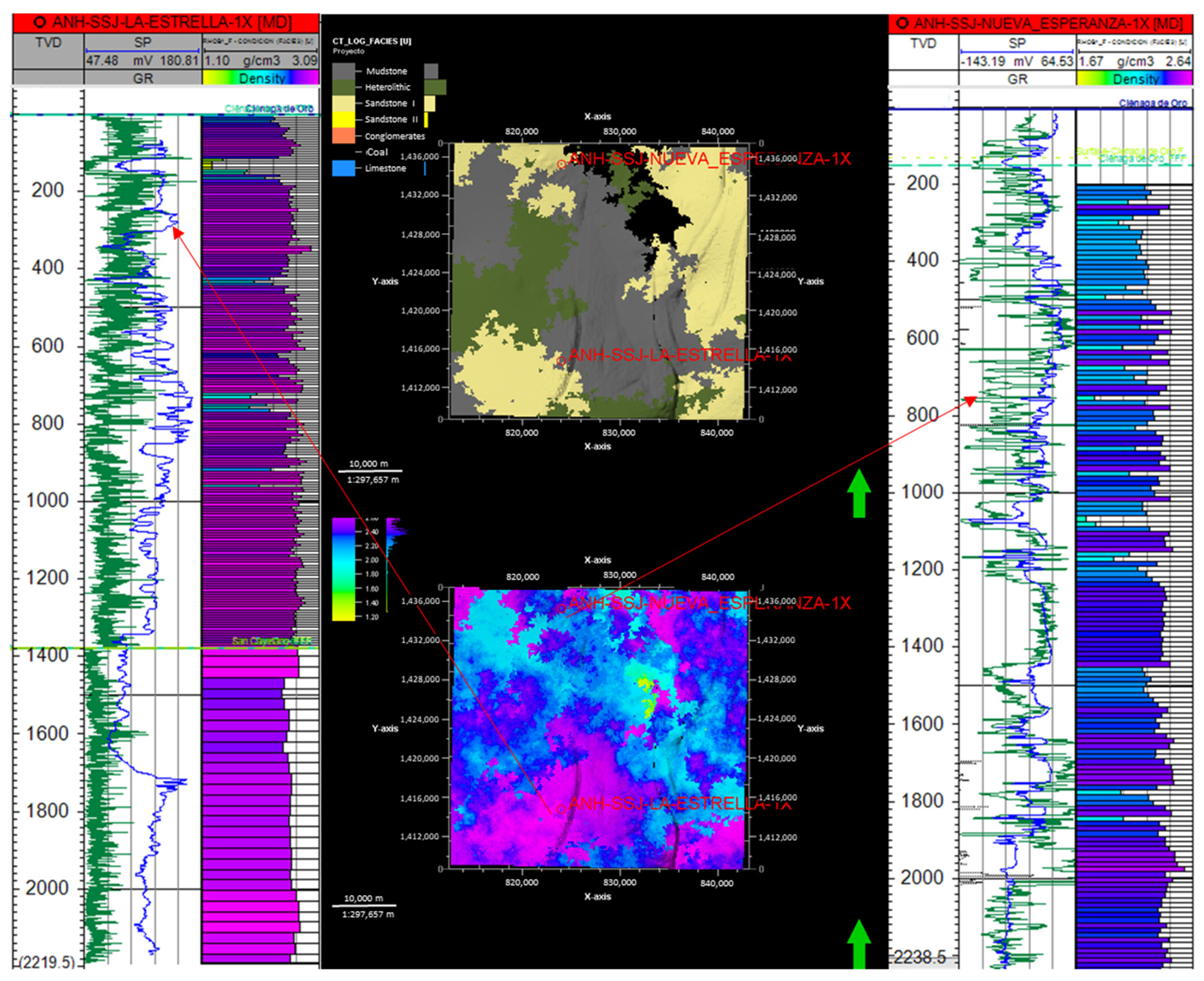
Figure 26 illustrates the spatial distribution of density within the model. Colors indicate different density ranges: yellow represents low-density zones, blue corresponds to intermediate-density areas, and purple highlights high-density regions.
At the ANH−SSJ−Nueva Esperanza−1X well, at a depth of 771.12 ft, intermediate density is observed, represented in blue, which corresponds to Type I sandstone according to the facies map shown in Figure 26. In contrast, at the ANH−SSJ−La Estrella−1X well, at a depth of 292.59 ft, the area is depicted in purple, indicating high density associated with mudstone or gray facies.

3.3.3. Rock Quality Modeling (MLP)

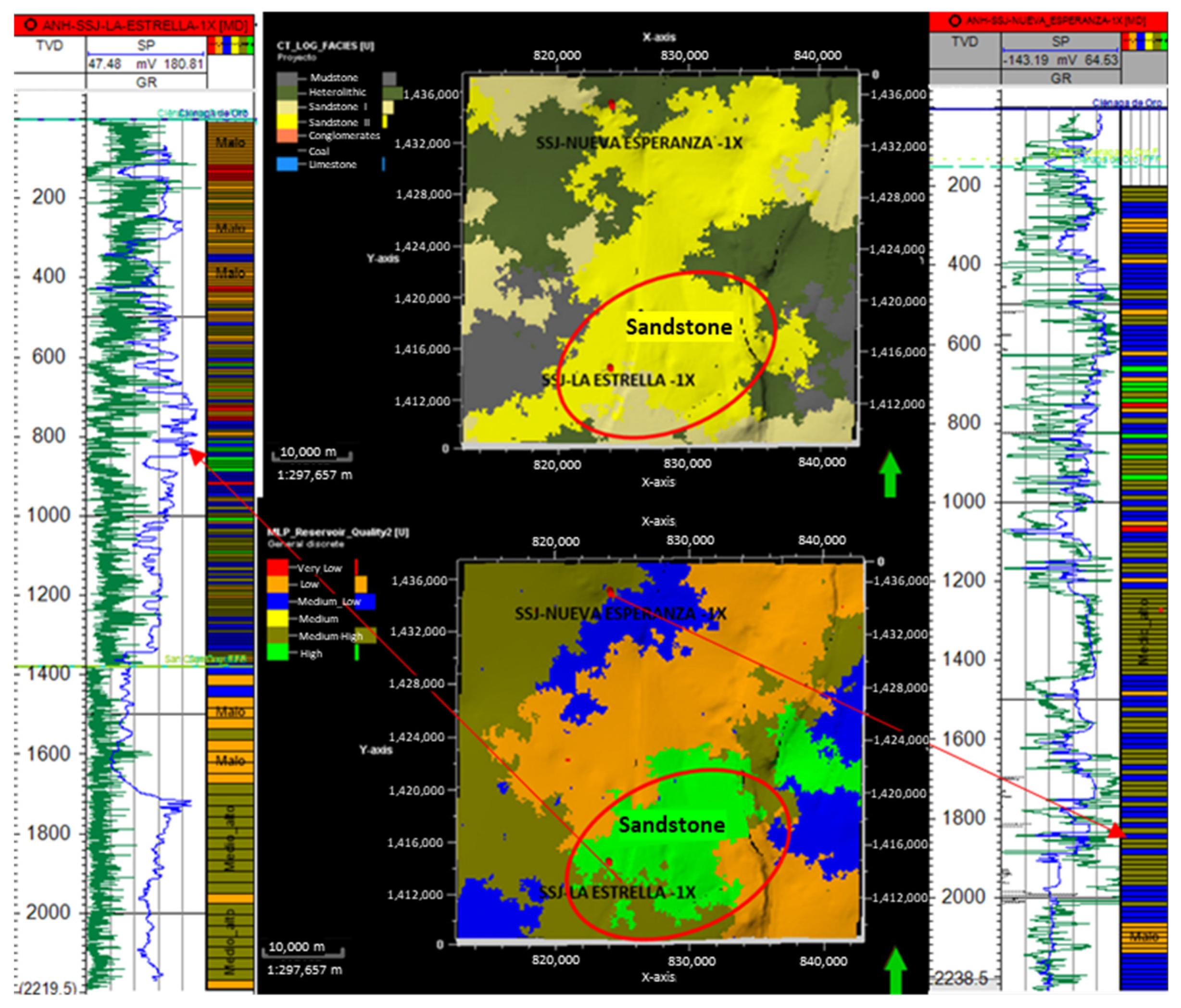
Figure 27 presents a plan view of the 3D model showing the interpretation of the discrete MLP record within the volume. This dataset integrates continuous petrophysical properties and facies information, allowing the classification of rock quality from very poor (red) to good (green). In the lower map, a bright green zone highlights high-quality rock, corresponding to Type II sandstone facies. This visualization emphasizes areas with optimal reservoir potential and supports the assessment of spatial variations in rock quality across the study area.
The map corresponds to a depth of 327K, equivalent to 857.10 ft in the ANH−SSJ−La Estrella−1X well. At this location, the yellow facies indicate the highest-quality Type II sandstones. In contrast, at the ANH−SSJ−Nueva Esperanza−1X well, at a depth of 1839.45 ft, rock quality is medium-high and associated with heterolithic facies, classified as sandstones with significant fine-grained content.

3.3.4. North–South Cross–Sections Between Wells

The following presents the results of the north–south cross-sections across the study area for facies and each petrophysical property analyzed. These N–S transects highlighted depositional trends and the zones most favorable as reservoirs. The preferential northwest-oriented deposition, observed in the models, is consistent with the current fluvio-deltaic sedimentation dynamics.
Vertical View of Facies Property
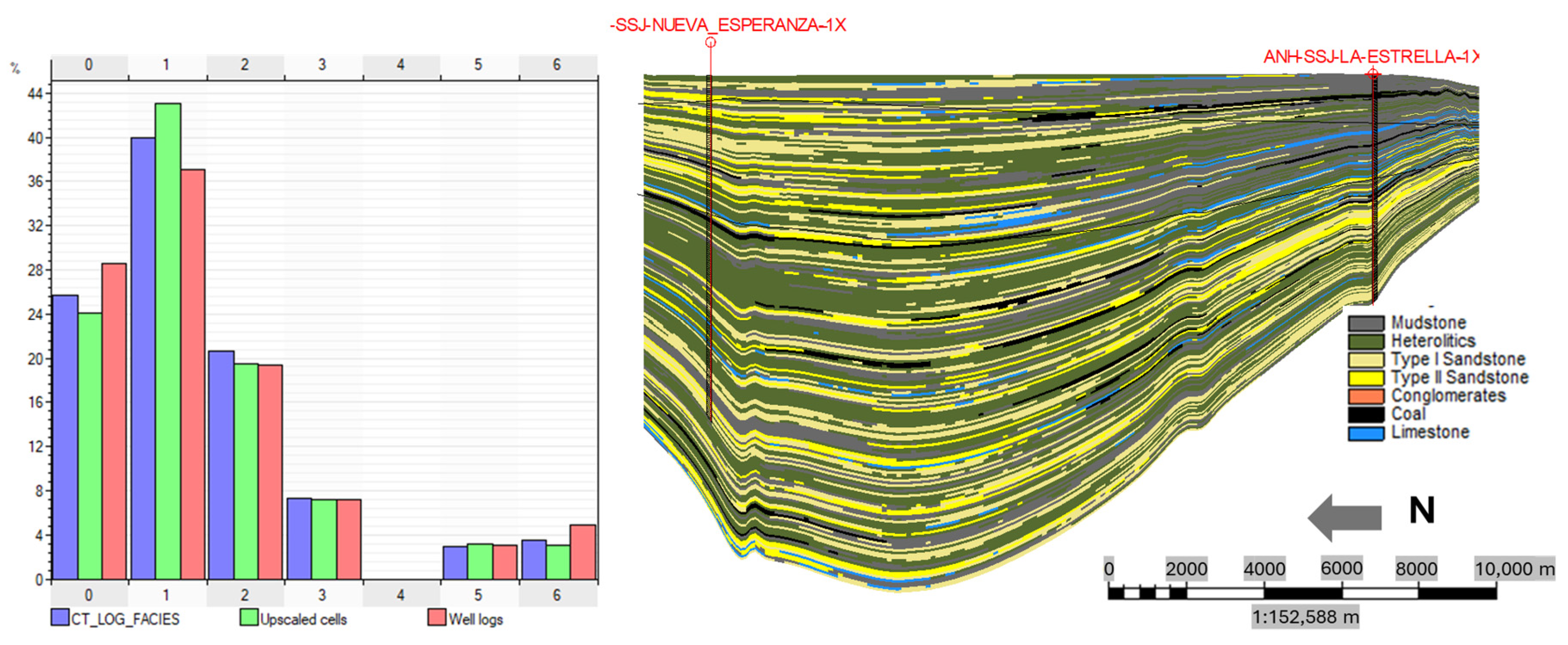
Figure 28 illustrates the variation in the Facies property up to the top of the Ciénaga de Oro Formation. In the ANH−SSJ−La Estrella−1X well, located at the southern end of the study polygon, fine-grained deposits dominated by mudstone are observed, alongside contributions of calcareous deposits.
It is important to note that conglomeratic facies show no significant occurrence within the Ciénaga de Oro Formation in either of the two analyzed wells; therefore, this lithology was excluded from the facies modeling. Conversely, sandy facies display greater thickness and development in the ANH−SSJ−Nueva Esperanza−1X well, located in the northern sector of the study area, emphasizing the marked sedimentary variability between both locations.
The facies change along the south–north direction can be attributed to episodes of sea-level fluctuations. These variations are most evident in the southern part of the study area, where the influence of a shallow marine environment favored the deposition of calcareous facies. In the north, continental sediment input was more dominant, explaining the more significant development of sandy facies near the ANH-SSJ-Nueva Esperanza-1X well. This sedimentary pattern reflects a transition between marine- and continental-controlled depositional environments across the study area.
Vertical View of Total Porosity
The porosity, permeability, and clay volume models reveal clear heterogeneity controlled by lithology and stratigraphic position. Porosity values above 20% correspond to Type II sandstone bodies, showing lateral continuity in a NE–SW orientation.
Figure 29 presents the vertical view of total porosity between the wells, where a more homogeneous distribution is observed compared to the facies model. This is because it includes facies that may be fractured or associated with coal deposits, which tend to exhibit good porosity.
Vertical View of Permeability
Figure 30 presents the permeability model, where consistent patterns between wells are observed for values below 5 mD, represented in blue and purple. However, some discrepancies are noted within the 5–30 mD range, while the rest of the model shows acceptable behavior.
It is important to note that neither the well data upscaling nor the volume upscaling exceed the original raw data values, ensuring model reliability. Zones represented in green, yellow, orange, and red, corresponding to higher permeabilities, display consistent behavior within the model and support the accuracy of the performed interpolation.
Vertical View of Clay Volume
As highlighted in Figure 31, the Vshale model illustrates the occurrence of shaly sands. The primary goal of interpolating this property is to assess and identify rocks with lower shale content, thereby highlighting sand intervals with economic potential.
  • Vshale: concentrations greater than 40% in muddy and heterolithic intervals, with a distribution consistent with channel architecture.
The visualization uses a color scale where dark green indicates high shale content, while yellow corresponds to cleaner rock. Additionally, Figure 32 applies a red filter to emphasize zones with less than 30% clay, enhancing the visibility of these intervals within the model.
Vertical View of Rock Quality (MLP)
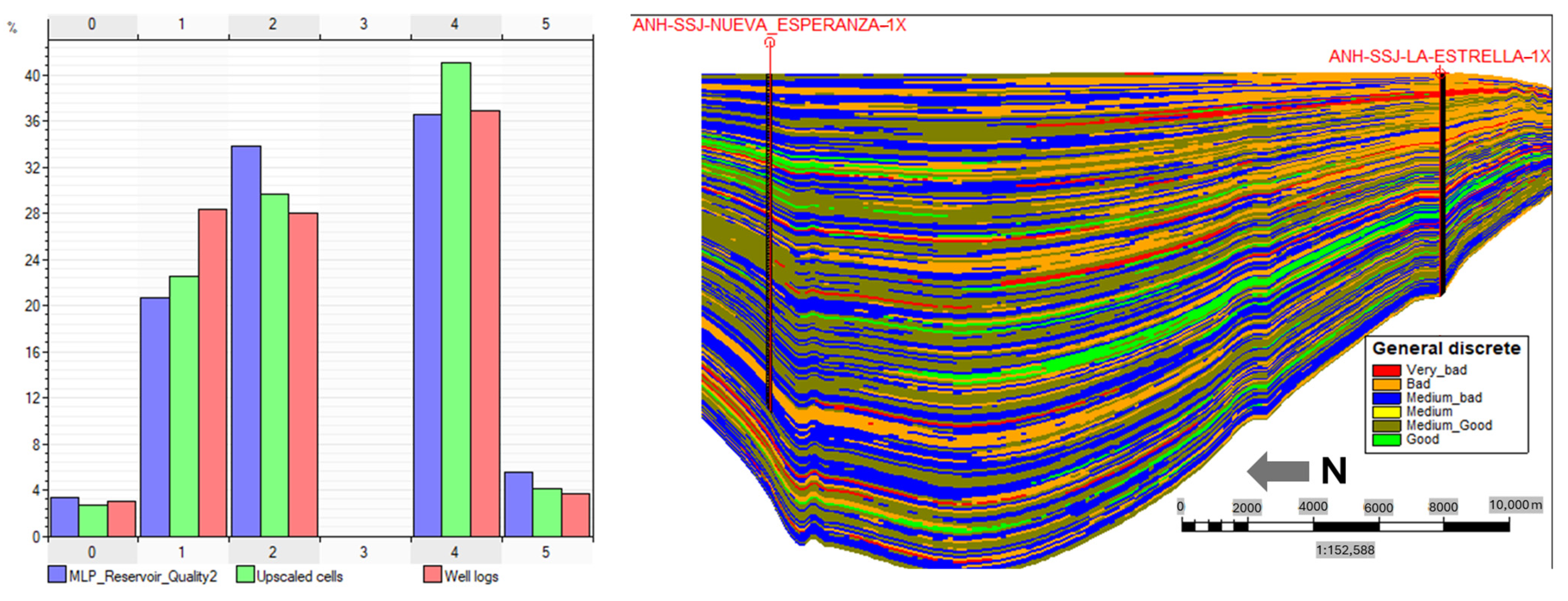
Figure 33 presents the south–north section between the analyzed wells, highlighting the distribution of rock quality from the highest to the lowest. The model is not conditioned exclusively to Facies 3, which represents clean sands, since the classification algorithm transforms continuous logs into discrete categories rather than discretized-to-discretized data.
This approach ensures that the final volume is not biased toward identifying only the best reservoirs, but instead assigns balanced weighting across all classifications, providing a uniform representation of facies within the model.

4. Discussion

The integration the main structural, sedimentological, and petrophysical findings obtained from the 3D modeling of the Ciénaga de Oro Formation leads to evaluate the depositional architecture, reservoir heterogeneity, and hydrocarbon potential within the Sinú–San Jacinto Basin. In addition, the methodological performance approach of the applied workflow—combining seismic interpretation, digital rock analysis, and geostatistical simulation—is critically analyzed in comparison with previous regional studies and analogous deltaic systems.

4.1. Structural Model Considerations

The structural configuration is characterized by NE–SW trending anticlines and synclines, both symmetric and asymmetric, with several folds truncated by reverse faults. The resulting 3D structural model of the Ciénaga de Oro Formation reflects a tectonic regime dominated by N–S oriented faults, consistent with the compressive to transpressional deformation that has affected the Sinú–San Jacinto Basin since the Miocene [33,34]. These structures define a series of uplifted and downthrown fault blocks, generating fault-bounded closures that locally enhance hydrocarbon trapping. Structural highs, particularly around the ANH–SSJ–La Estrella–1X well, represent potential zones for hydrocarbon accumulation and provide a robust framework for subsequent reservoir characterization.

4.2. Sedimentological and Petrophysical Findings

The integrated 3D sedimentological model of the Ciénaga de Oro Formation provides new insights into the fluvio-deltaic depositional architecture of the Sinú–San Jacinto Basin. Field-based facies descriptions, well-log correlations, and digital rock analysis through CT consistently indicate the presence of alternating clastic facies deposited in prodelta, delta-front, and delta-plain sub-environments. This multi-scale integration reduces uncertainty in facies prediction and strengthens previous regional characterizations of the formation.
The results corroborate that the Ciénaga de Oro Formation exhibits a high degree of lithological and petrophysical heterogeneity, consistent with its fluvio-deltaic nature and previous descriptions of the Sinú–San Jacinto Basin [6,35]. Facies classification through digital rock analysis and MLP neural networks distinguished six main lithofacies, highlighting Type II sandstones associated with distributary channel fill, exhibiting porosities above 20% and permeabilities greater than 1000 mD, in agreement with ranges reported in analogous deltaic reservoirs in Colombia and other tropical basins [36]. Heterolithic dirty sandstones related to delta-front mouth bars were identified as new zones with reservoir potential (rock quality 2: porosity > 10%, permeability > 10 mD) (Figure 34).
Integration with core descriptions and well logs confirms that lateral heterogeneity is controlled by channel migration dynamics and the stacking of deltaic lobes [37]. These processes explain the rapid alternation between sandy channel facies, heteroliths, and mudstones, producing discontinuous and highly compartmentalized reservoirs. This presents challenges for connectivity but also highlights exploration opportunities in zones with higher petrophysical quality.
One of the key outcomes is the differentiation between Type I sandstones (clean, highly connected, and associated with distributary channels and mouth bars) and Type II sandstones (moderately argillaceous and linked to delta-front settings). These results are consistent with the heterogeneity expected in fluvio-deltaic systems, where sediment supply and accommodation strongly influence sandstone quality and connectivity. Furthermore, the identification of delta-plain and prodelta facies as sealing and heterogeneity-prone units highlights their dual role: while reducing vertical connectivity, they also compartmentalize reservoir-quality intervals, creating stratigraphic traps that could be favorable for hydrocarbon accumulation.
The results are consistent with the proposed sedimentary evolution for the Oligocene–Lower Miocene interval in the basin, where progradational deltaic deposits create a mosaic of potential stratigraphic and combined traps [34]. This pattern, reinforced by structural compartmentalization, suggests that accurate identification of delta-front and even prodelta sand facies can expand the exploration window into intervals traditionally considered low-quality.
Overall, the sedimentological model demonstrates that reservoir quality in the Ciénaga de Oro Formation is not restricted to distributary channel sandstones, as traditionally assumed, but also occurs in heterolithic delta-front mouth bars and, locally, in prodelta sand-prone intervals. These finding challenges earlier interpretations that underestimated the reservoir potential of distal deltaic facies and provides a refined exploration strategy for the Sinú–San Jacinto Basin.

4.3. Geostatistical Model and Methodological Reflection

The geostatistical model highlighted facies heterogeneity within the formation, showing preferential northwestward (N45W) deposition, particularly relevant for Zone 2 of interest. Compared with other geostatistical modeling studies (e.g., ref [38]), the integrated methodology employed in this work presents several key advancements:
Incorporation of computed tomography data and automatic facies classification via MLP neural networks, demonstrating reduced classification bias in highly heterogeneous settings [3].
Explicit consideration of directional anisotropy (N45W) in variogram analysis and interpolation, enhancing the spatial coherence of the model.
Sequential Gaussian simulation and Kriging interpolation proved effective for property populating, although some limitations were observed in scaling data in areas with lower information density. Cross-validation between modeled and original data allowed identification of biases in specific zones, suggesting the potential benefit of additional approaches, such as dynamic analysis, to improve reservoir characterization. Furthermore, multivariate prediction techniques could complement the current work, especially in regions with sparse data coverage.
The spatial distribution of sandy facies indicates the presence of channels and progradational deltaic lobes toward the southwest, implying moderate-to-high lateral connectivity between sand bodies. However, the presence of normal faults with displacements up to 35 m could cause local compartmentalization, which should be evaluated in subsequent dynamic studies.
From an exploration perspective, the central portion of the model—where high porosity and permeability converge with significant net thicknesses—represents the primary target for future drilling. This pattern aligns with interpretations of high-quality trends reported by [39] for multistage fluvio-deltaic channel systems.
Nonetheless, this study focuses on static modeling and lacks dynamic validation or hydraulic connectivity tests, limiting predictions of long-term production behavior. Future studies should integrate flow modeling, uncertainty analysis at the basin scale, and expand the well database to improve statistical robustness in interpolations.
In summary, this work provides a replicable methodology for basins with complex structural and sedimentological characteristics, combining artificial intelligence tools, detailed structural modeling, and geostatistical techniques. The results are consistent with the literature and have direct implications for optimizing exploration strategies in the region.
In terms of scope, this study is restricted to a specific sector of the Ciénaga de Oro Formation in the southern part of the Sinú-San Jacinto Basin, operating at reservoir scale under a static modeling framework. The methodology and results are directly applicable to exploration planning and reservoir delineation in highly heterogeneous basins; however, predictions of production performance will require complementary future dynamic studies.
From a methodological perspective, the contribution of this study lies not in the introduction of new algorithms, but in the integrated and cross-scale application of existing techniques to a data-limited deltaic system. While Sequential Gaussian Simulation, kriging, and neural-network-based facies classification are well-established tools in reservoir modeling, their combined use alongside CT-based digital rock analysis provides a calibration framework that links pore-scale textures (µm), well-log responses (m), and 3D geostatistical realizations (km). This hybrid workflow reduces the bias commonly associated with well log-only electrofacies classification and improves the predictive reliability of facies and petrophysical distributions in settings where well control is scarce. Such integration has been rarely documented in fluvio-deltaic reservoirs of northern South America, where most previous studies rely on deterministic interpolation or single-scale modeling approaches [38]. Therefore, the present work demonstrates that coupling digital rock physics with supervised machine learning and geostatistical simulation is a viable strategy to constrain uncertainty in frontier basins, particularly when only one or two wells are available for model conditioning.

5. Conclusions

This study successfully integrated structural, sedimentological, and petrophysical models within a three-dimensional geostatistical framework for the Ciénaga de Oro Formation in the Sinú–San Jacinto Basin (Colombia). The methodology, based on seismic interpretation, seismic–well correlation, and geostatistical modeling, allowed for detailed and geologically consistent estimation of the spatial distribution of facies and petrophysical properties.

5.1. Structural Framework

The structural modeling of the Ciénaga de Oro Formation revealed a coherent and compartmentalized framework defined by east-verging longitudinal faults and well-differentiated stratigraphic horizons. This configuration reflects the tectonic influence of the Sinú–San Jacinto Basin, where compressional deformation controls the geometry and continuity of the reservoir units. The integration of calibrated velocity models proved essential to accurately constrain depth surfaces, providing a reliable basis for subsequent sedimentological and geostatistical modeling.

5.2. Sedimentology and Petrophysics

Results highlight Type II sand facies as the primary units with hydrocarbon storage potential, exhibiting porosities above 20% and permeabilities greater than 1000 mD, with the best development observed in the ANH-SSJ-Nueva Esperanza-1X well. Heterolithic dirty sands associated with delta-front mouth bars also represent new zones with reservoir potential (rock quality 2: porosity > 10%, permeability > 10 mD). Facies classification using Multi-Layer Perceptron (MLP) neural networks proved effective in complex sedimentary environments, reducing interpretative bias and improving the spatial coherence of lithofacies distribution.

5.3. Geostatistical Distribution of Reservoir Properties

The integration of Gaussian simulations and interpolation methods enabled mapping of reservoir properties throughout the 3D model (facies, V-shale, porosity, permeability, density, and rock quality), showing a clear correlation between facies and reservoir quality, with a preferential orientation of N45W, particularly relevant for Zone 2 of interest.

6. Applications and Recommendations

The methodology provides a precedent for future studies in the region and other similar basins. It is recommended to complement this work with dynamic analyses and flow simulations to further validate the identified reservoir quality. Additionally, incorporating additional data in areas with lower well density would improve model accuracy and reduce associated uncertainty.
The primary contribution of this study lies in formulating a replicable methodology for characterizing reservoirs in structurally complex basins. This approach serves as a valuable tool during early exploration phases, optimizing well placement and reducing uncertainty related to subsurface heterogeneity.
Identified limitations include low well density and the absence of dynamic validation. Consequently, future research should incorporate flow simulations, connectivity analysis, and integration of additional data to quantify uncertainty and validate the continuity of sand bodies.

Author Contributions

Conceptualization, H.E., O.O. and R.E.; methodology, H.E.; software, H.E.; validation, H.E., O.O. and R.E.; formal analysis, H.E.; investigation, H.E.; resources, H.E.; data curation, H.E.; writing—original draft preparation, H.E.; writing—review and editing, H.E., O.O. and R.E.; visualization, H.E.; supervision, O.O. and R.E.; project administration, H.E. All authors have read and agreed to the published version of the manuscript.

Funding

This research was funded by National Hydrocarbons Agency (ANH), Minciencias and the scientific committee of the project “Physical and Quality Stratigraphy of the Drill Cores Recovered by ANH in the Basins of the Lower Magdalena Valley, Cesar, and Ranchería” (Contract No. FP44842—454—2017, UIS—MINCIENCIAS). The APC was funded by Contract No. FP44842—454—2017, UIS—MINCIENCIAS.

Data Availability Statement

The datasets presented in this article are not immediately available because they are owned by ANH. Requests for access to the datasets should be directed to the corresponding entity: ANH, SGC, or the Petroleum Information Bank of Colombia.

Acknowledgments

Gratitude is expressed to the Industrial University of Santander for granting the study commission and providing the necessary resources and logistical support for the development of this research. Acknowledgment is also extended to the Research Group in Computed Tomography for Reservoir Characterization (GIT—UIS) and its director, Nicolás Santos, for the execution of laboratory tests and the accomplishment of the proposed objectives.

Conflicts of Interest

The authors declare that they have no known competing financial interests or personal relationships that could have appeared to influence the work reported in this paper.

Abbreviations

The following abbreviations are used in this manuscript:
UISUniversidad Industrial de Santander
GITGroup in Tomography for Reservoir Characterization
UABUniversidad Autónoma de Barcelona
MincienciasMinistry of Science
ANHNational Hydrocarbons Agency
SGCColombian Geological Survey
CTComputed Tomography
RHOBDensity Log in Well Logging
PEFPhotoelectric Effect
MLPMulti-layer perceptron

References

  1. Zuo, C.; Li, Z.; Dai, Z.; Wang, X.; Wang, Y. A Pattern Classification Distribution Method for Geostatistical Modeling Evaluation and Uncertainty Quantification. Remote. Sens. 2023, 15, 2708. [Google Scholar] [CrossRef]
  2. Hasnan, H.K.; Sheppard, A.; Hassan, M.H.A.; Knackstedt, M.; Abdullah, W.H. Digital core analysis: Improved connectivity and permeability characterization of thin sandstone layers in heterolithic rocks. Mar. Pet. Geol. 2020, 120, 104549. [Google Scholar] [CrossRef]
  3. Pyrcz, M.J.; Deutsch, C.V. Geostatistical Reservoir Modeling, 2nd ed.; Oxford University Press: New York, NY, USA, 2002; p. 448. [Google Scholar]
  4. Caers, J. Petroleum Geostatistic; Society of Petroleum Engineers: Dallas, TX, USA, 2005. [Google Scholar]
  5. Noguera, A.d.S.P.; Jiménez, M.d.M.C.; Aguilar, J.J.R. Container Traffic in the Colombian Caribbean: A Competitiveness Analysis of the Port of Santa Marta Through a Technical–Economic Combination Framework. Logistics 2025, 9, 84. [Google Scholar] [CrossRef]
  6. Manco-Garcés, A.; Marín-Cerón, M.I.; Sánchez-Plazas, C.J.; Escobar-Arenas, L.C.; Beltrán-Triviño, A.; Von-Quadt, A. Provenance of the Ciénaga de Oro Formation: Unveiling the tectonic evolution of the Colombian Caribbean margin during the Oligocene—Early Miocene. Bol. Geol. 2020, 42, 205–226. [Google Scholar] [CrossRef]
  7. Hussain, M.; Ahmed, N.; Chun, W.Y.; Khalid, P.; Mahmood, A.; Ahmad, S.R.; Rasool, U. Reservoir Characterization of Basal Sand Zone of Lower Goru Formation by Petrophysical Studies of Geophysical Logs. J. Geol. Soc. India 2017, 89, 331–338. [Google Scholar] [CrossRef]
  8. Akram, N.; Ahmed, N.; Khan, S.; Ehsan, M.; Gul, M.A.; Ahmad, M. Reservoir characterization by using petrophysical-electrofacies analysis and subsurface structural interpretation of the nandpur gas field, middle Indus basin, Pakistan. Himal. Geol. 2020, 41, 208–221. [Google Scholar]
  9. Sigmonin, J.G.B. Modelo petrofísico integrado, herramienta clave para la detección de yacimientos de gas condensado en capas delgadas y de baja permeabilidad. Cuenca del Valle Inferior del Magdalena, Colombia. Pac. Explor. Prod. 2016, 56, 256–276. [Google Scholar]
  10. Gómez-Ruiz, J.D.; Vargas-Jiménez, C.A.; Cómbita-Quigua, J.F. Modelamiento geológico para la estimación del potencial de almacenamiento de CO2 en un área ubicada al sur de la cuenca del Valle Inferior del Magdalena. Bol. Geol. 2025, 47, 93–103. [Google Scholar] [CrossRef]
  11. Zhang, J.; Liu, L.; Wang, R. Geostatistical Three-Dimensional Modeling of a Tight Gas Reservoir: A Case Study of Block S6 of the Sulige Gas Field, Ordos Basin, China. Energies 2017, 10, 1439. [Google Scholar] [CrossRef]
  12. Khalifa, A.E.; Moncef, Z.; Radwan, A.E. Integrated geological data, 3D post-stack seismic inversion, depositional modelling and geostatistical modelling towards a better prediction of reservoir property distribution for near-field exploration: A case study from the eastern Sirt Basin, Libya. Geol. J. 2023, 59, 381–404. [Google Scholar] [CrossRef]
  13. Sanei, M.; Ramezanzadeh, A.; Asgari, A. Building 1D and 3D static reservoir geomechanical properties models in the oil field. J. Pet. Explor. Prod. Technol. 2023, 13, 329–351. [Google Scholar] [CrossRef]
  14. Shiri, Y.; Moradzadeh, A.; Ghiavami-Riabi, R.; Chehrazi, A. Integration of 2D seismic and well log data for petrophysical modeling and gas reserve estimation in appraisal state of petroleum exploration. J. Seism. Explor. 2012, 21, 231–246. [Google Scholar]
  15. Ali, W.A.; Deaf, A.S.; Mostafa, T. 3D geological and petrophysical modeling of Alam El-Bueib Formation using well logs and seismic data in Matruh Field, northwestern Egypt. Sci. Rep. 2024, 14, 6849. [Google Scholar] [CrossRef]
  16. Deutsch, C.V.; Journel, A.G. GSLIB: Geostatistical Software Library and User’s Guide, 2nd ed.; Oxford University Press: Oxford, UK, 1997. [Google Scholar]
  17. Yilmaz, Ö. Seismic Data Analysis: Processing, Inversion, and Interpretation of Seismic Data; Society of Exploration Geophysicists: Tulsa, OK, USA, 2001. [Google Scholar]
  18. Sheriff, R.E.; Geldart, L.P. Exploration Seismology, 2nd ed.; Cambridge University Press: Cambridge, UK, 1995. [Google Scholar]
  19. Hornik, K.; Stinchcombe, M.; White, H. Multilayer feedforward networks are universal approximators. Neural Netw. 1989, 2, 359–366. [Google Scholar] [CrossRef]
  20. Hagan, M.T.; Demuth, H.B.; Beale, M.H.; De Jesús, O. Neural Network Design, 2nd ed.; Oklahoma State University: Stillwater, OK, USA, 2014. [Google Scholar]
  21. Abrahart, R.J.; See, L.M. Neural network modelling of non-linear hydrological relationships. Hydrol. Earth Syst. Sci. 2007, 11, 1563–1579. [Google Scholar] [CrossRef]
  22. Narayan, S.; Konka, S.; Chandra, A.; Abdelrahman, K.; Andráš, P.; Eldosouky, A.M. Accuracy assessment of various supervised machine learning algorithms in litho-facies classification from seismic data in the Penobscot field, Scotian Basin. Front. Earth Sci. 2023, 11, 1150954. [Google Scholar] [CrossRef]
  23. Asquith, G.; Krygowski, D.; Henderson, S.; Hurley, N. Basic Well Log Analysis; American Association of Petroleum Geologists: Tulsa, OK, USA, 2004; Volume 16. [Google Scholar]
  24. Ellis, D.V.; Singer, J.M. Well Logging for Earth Scientists, 2nd ed.; Springer: Berlin/Heidelberg, Germany, 2007. [Google Scholar]
  25. Larionov, V.V. Borehole Radiometry; Nedra: Moscow, Russia, 1969. [Google Scholar]
  26. Wyllie, M.R.J.; Gregory, A.R.; Gardner, L.W. Elastic Wave Velocities in Heterogeneous and Porous Media. Geophys. Soc. Explor. Geophys. 1956, 21, 41–70. [Google Scholar] [CrossRef]
  27. Zhao, T. Seismic facies classification using different deep convolutional neural networks. In Proceedings of the SEG International Exposition and Annual Meeting, Anaheim, CA, USA, 17 October 2018. [Google Scholar]
  28. Journel, A.G.; Huijbregts, C.J. Mining Geostatistics; Academic Press: Cambridge, MA, USA, 1978. [Google Scholar]
  29. Goovaerts, P. Geostatistics for Natural Resource Evaluation; Oxford University Press: Oxford, UK, 1997. [Google Scholar]
  30. Caers, J. Modeling Uncertainty in the Earth Sciences; John Wiley & Sons, Ltd.: Hoboken, NJ, USA, 2011. [Google Scholar]
  31. Obando, A.; Franco, H.; Villegas, A.; Betancur, J.; Echeverri, L. Variabilidad espacial de propiedades químicas y físicas en un typic udivitrands, arenoso de la región andina central colombiana. Rev. Fac. Nac. Agron. Medellín 2006, 59, 3217–3235. [Google Scholar]
  32. Mikhailov, V.N.; Mikhailova, M.V. Delta formation processes at the Mississippi River mouth. Water Resour. 2010, 37, 595–610. [Google Scholar] [CrossRef]
  33. Caro, H.D. Estilo estructural, diapirismo y episodios de acrecimiento del terreno Sinú-San Jacinto en el noroccidente de Colombia. Boletín Geológico 1984, 27, 2–29. [Google Scholar] [CrossRef]
  34. Flinch, J. Structural Evolution of the Sinu-Lower Magdalena Area (Northern Colombia). AAPG Bull. 2003, 79, 776–796. [Google Scholar]
  35. García Loaiza, A.M.; Guzmán Cardona, W.; Ramírez Cardona, C. Análisis Petrográfico y Diagenético a Partir de Núcleos de Perforación de Las Rocas Sedimentarias de la Cuenca Sinú—San Jacinto y el Área Especial Sinú de la ANH en el Departamento de Sucre. Bachelor’s Thesis, Universidad de Caldas, Manizales, Colombia, 2021. [Google Scholar]
  36. Falade, A.O.; Amigun, J.O.; Makeen, Y.M.; Kafisanwo, O.O. Characterization and geostatistical modeling of reservoirs in ‘Falad’ field, Niger Delta, Nigeria. J. Pet. Explor. Prod. Technol. 2022, 12, 1353–1369. [Google Scholar] [CrossRef]
  37. Celis, S.A.; Rodríguez-Tovar, F.J.; Giraldo-Villegas, C.A.; Pardo-Trujillo, A. Evolution of a fluvial-dominated delta during the Oligocene of the Colombian Caribbean: Sedimentological and ichnological signatures in well-cores. J. S. Am. Earth Sci. 2021, 111, 103440. [Google Scholar] [CrossRef]
  38. Khan, H.A.; Shahid, A.A.; Khan, M.J.; Zouaghi, T.; Alvarez, M.D.; Naqvi, S.D.M. Integration of Sequence Stratigraphic Analysis and 3D Geostatistical Modeling of Pliocene–Pleistocene Delta, F3 Block, Netherlands. Acta Geol. Sin. Engl. Ed. 2021, 97, 256–268. [Google Scholar] [CrossRef]
  39. Miall, A. Fluvial Depositional Systems; Springer: Berlin/Heidelberg, Germany, 2014. [Google Scholar]
Figure 1. General workflow for the construction of the structural model, serving as input data for the geostatistical model. Information used: 2D Seismic, vsp-check shots, sonic logs, dipmeter logs, .las logs, well tops.
Applsci 15 12374 g001
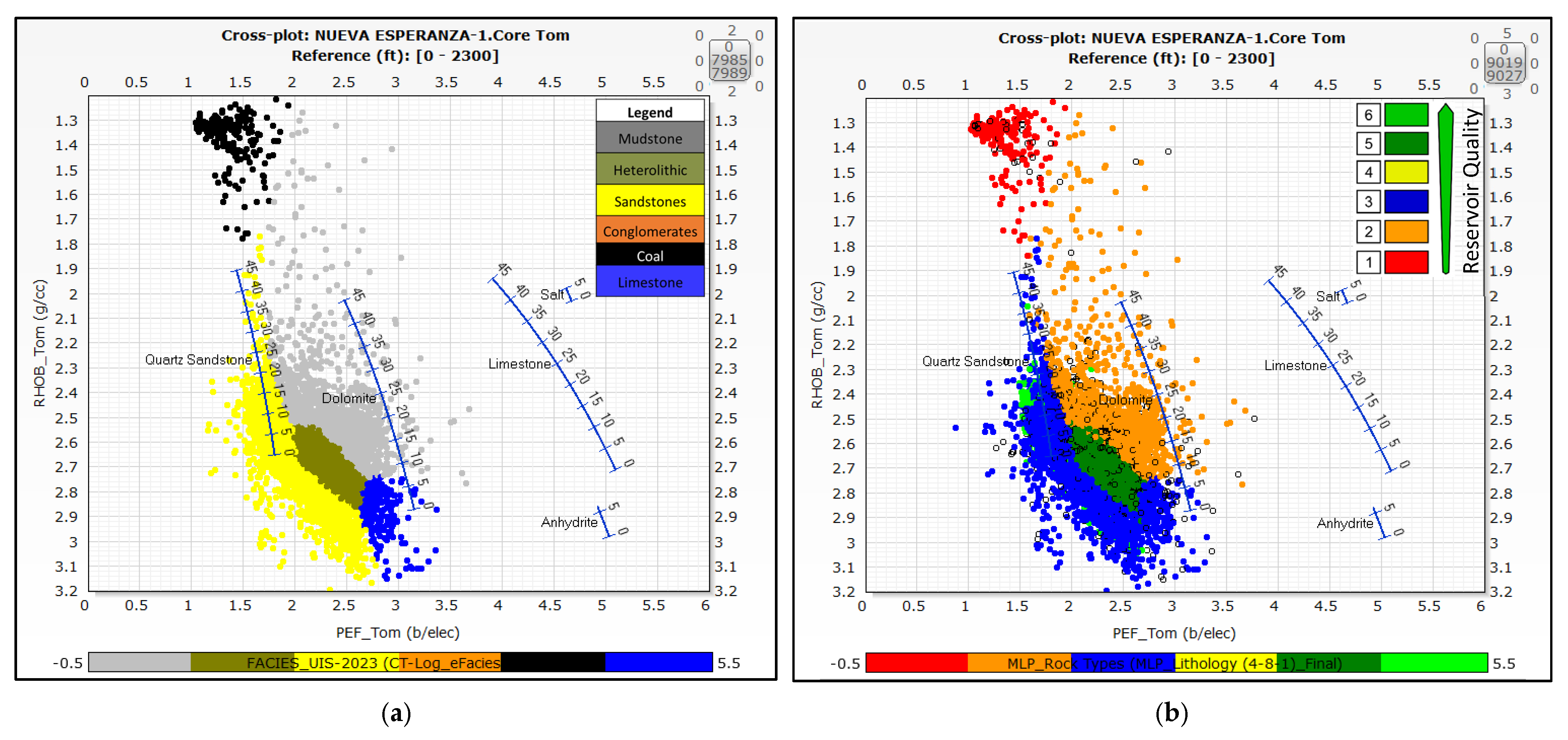
Figure 3. Interval velocity function at the Hechizo-1 well.
Applsci 15 12374 g003
Figure 4. Workflow for the generation of the sedimentological model.
Applsci 15 12374 g004
Figure 5. Conceptual map of the information required to complete the 3D model.
Applsci 15 12374 g005
Figure 6. Workflow for the development of the geostatistical model.
Applsci 15 12374 g006
Figure 7. Spherical variogram model illustrating the main parameters: nugget effect (C0), partial sill (C1), sill, and range. These parameters describe spatial continuity and variability of reservoir properties in geostatistical modeling. Adapted from [31].
Applsci 15 12374 g007
Figure 8. Example of a histogram view of scaling quality, showing the original data (pink), the properly scaled values (green), and the model-scaled values (purple).
Applsci 15 12374 g008
Figure 9. Interrelation of horizons and faults in regional seismic data. (a) Seismic line L−1984−07_MIG I−I, with well ANH-SSJ−La Estrella−1X. (b) Seismic line CSJ−1990−PSTMIN−IN−2013, with well ANH−SSJ−Nueva Esperanza−1X.
Applsci 15 12374 g009
Figure 10. Main interpreted faults in the study area displayed as (a) Pillar-grids and (b) Continuous fault surfaces.
Applsci 15 12374 g010
Figure 11. TWT surfaces associated with formation tops: (a). San Cayetano Formation. (b). Ciénaga de Oro Formation.
Applsci 15 12374 g011
Figure 12. Depth structural map at the top of the San Cayetano Formation.
Applsci 15 12374 g012
Figure 13. Depth-converted top surfaces and fault surfaces: (a) San Cayetano Formation. (b) Ciénaga de Oro Formation.
Applsci 15 12374 g013
Figure 14. Depth-converted top surface of the El Carmen Formation, showing fault surfaces.
Applsci 15 12374 g014
Figure 15. Depth-converted structural surfaces of the formations of interest delineated in the study area and Structural model validation by comparing structural surfaces with well tops.
Applsci 15 12374 g015
Figure 16. Three-dimensional sedimentological model constructed from outcrop facies descriptions, well-log correlations, and CT−based digital rock analysis, culminating in the scaled facies modeling results in Petrel.
Applsci 15 12374 g016
Figure 17. Rock property plots, from left to right: facies, rock quality, Vshale, permeability, and total porosity for the analyzed wells: Nueva Esperanza and La Estrella.
Applsci 15 12374 g017
Figure 18. Stratigraphic level in depth correlated with well logs, displayed in map view with facies properties near to well ANHSSJ−La Estrella−1X.
Applsci 15 12374 g018
Figure 19. Deep stratigraphic level correlated with well logs, displayed in map view with facies properties near well ANH−SSJ−Nueva Esperanza−1X.
Applsci 15 12374 g019
Figure 20. Deep stratigraphic level displayed in map view with facies properties.
Applsci 15 12374 g020
Figure 21. Stratigraphic level at depth 292K in map view showing the shale volume property.
Applsci 15 12374 g021
Figure 22. Stratigraphic level at depth (X ft) in map view showing the porosity property.
Applsci 15 12374 g022
Figure 23. Stratigraphic level at depth in map view (K 392) showing the porosity property.
Applsci 15 12374 g023
Figure 24. Plan view of the stratigraphic level at 105.23 ft depth in well ANH-SSJ-La Estrella-1X showing neutron porosity (NPHI).
Applsci 15 12374 g024
Figure 25. Plan view of facies and permeability distribution at the stratigraphic depth level.
Applsci 15 12374 g025
Figure 26. Distribution of density at the 245K depth level.
Applsci 15 12374 g026
Figure 27. Correlation of rock quality, gamma ray, and Sp logs at stratigraphic level 327K for wells ANH−SSJ−La Estrella−1X and ANH−SSJ−Nueva Esperanza−1X.
Applsci 15 12374 g027
Figure 28. South–North Facies Model, property population between wells, and histogram view for model quality of this property.
Applsci 15 12374 g028
Figure 29. South–North Total Porosity Model, property population between wells. Histogram view showing model quality for this property.
Applsci 15 12374 g029
Figure 30. South–North permeability model, property distribution between wells, with histogram view illustrating model quality for this property.
Applsci 15 12374 g030
Figure 31. Clay volume model with preferential classification highlighting low clay content in red, south–north orientation, property distribution between wells, with histogram view showing model quality.
Applsci 15 12374 g031
Figure 32. Clay volume model with preferential classification highlighting low clay content in red, south–north orientation, property distribution between wells, with histogram view of model quality.
Applsci 15 12374 g032
Figure 33. MLP model showing property distribution between wells, highlighting dark green and bright green zones corresponding to high-quality reservoir rock.
Applsci 15 12374 g033
Figure 34. Crossplot of PEF vs. RHOB: (a) eFacies and (b) MLP Rock Types for the ANH-SSJ-Nueva Esperanza-1X well, linking the identified facies with reservoir rock quality assessment.
Applsci 15 12374 g034
Disclaimer/Publisher’s Note: The statements, opinions and data contained in all publications are solely those of the individual author(s) and contributor(s) and not of MDPI and/or the editor(s). MDPI and/or the editor(s) disclaim responsibility for any injury to people or property resulting from any ideas, methods, instructions or products referred to in the content.