Multi-Objective Optimization Study on the Separation Stability of the Falling Body in Absolute Gravimeters

 ,
,
Abstract
1. Introduction
2. Multi-Objective Optimization Scheme for the Transmission System of Absolut Gravimeters
2.1. Hardware and Software Equipment Configuration for Absolute Gravimeter Transmission System Test
2.2. Selection of Output Objectives for the Transmission System of Absolute Gravimeters
2.2.1. Objective Function for Transmission Speed Accuracy
2.2.2. Objective Function for System Vibration
2.3. Selection of Input Parameters for the Transmission System of Absolute Gravimeters
2.3.1. Steel Belt Pre-Tightening Force
2.3.2. Acceleration of the Free-Fall Segment
2.3.3. Displacement of the Start-Up Segment
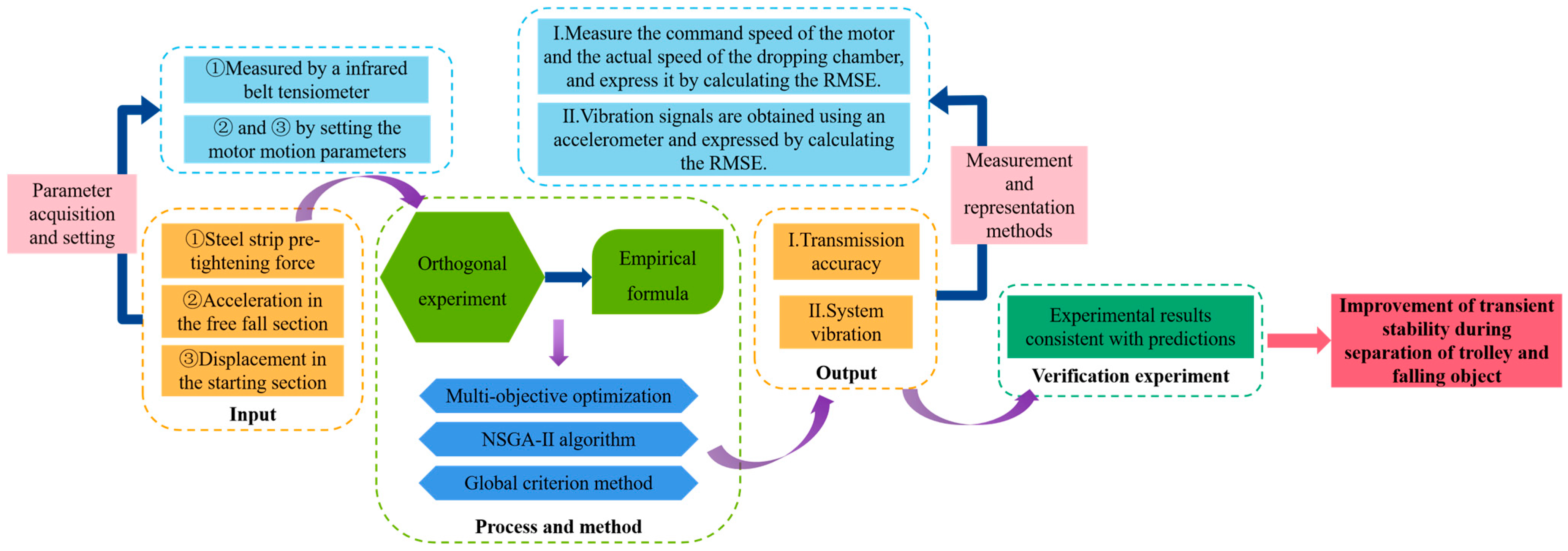
2.4. Overall Scheme for Multi-Objective Optimization of Parameter Adjustment in the Transmission System of Absolute Gravimeters
3. Optimization Methods for the Transmission System of Absolute Gravimeters
3.1. Multi-Objective Optimization
3.2. NSGA-II Algorithm
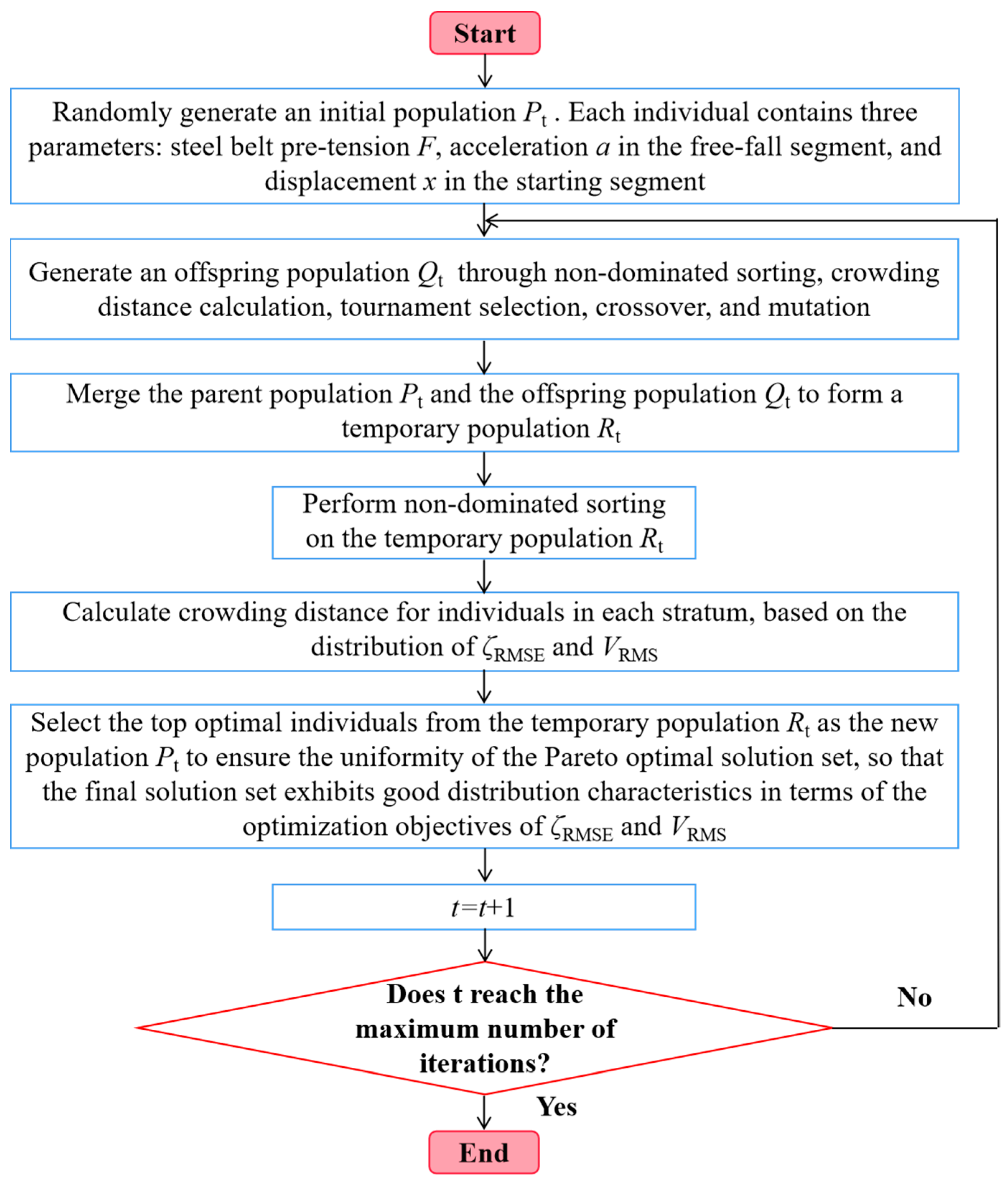
3.2.1. Core Principles and Execution Steps of the NSGA-II Algorithm
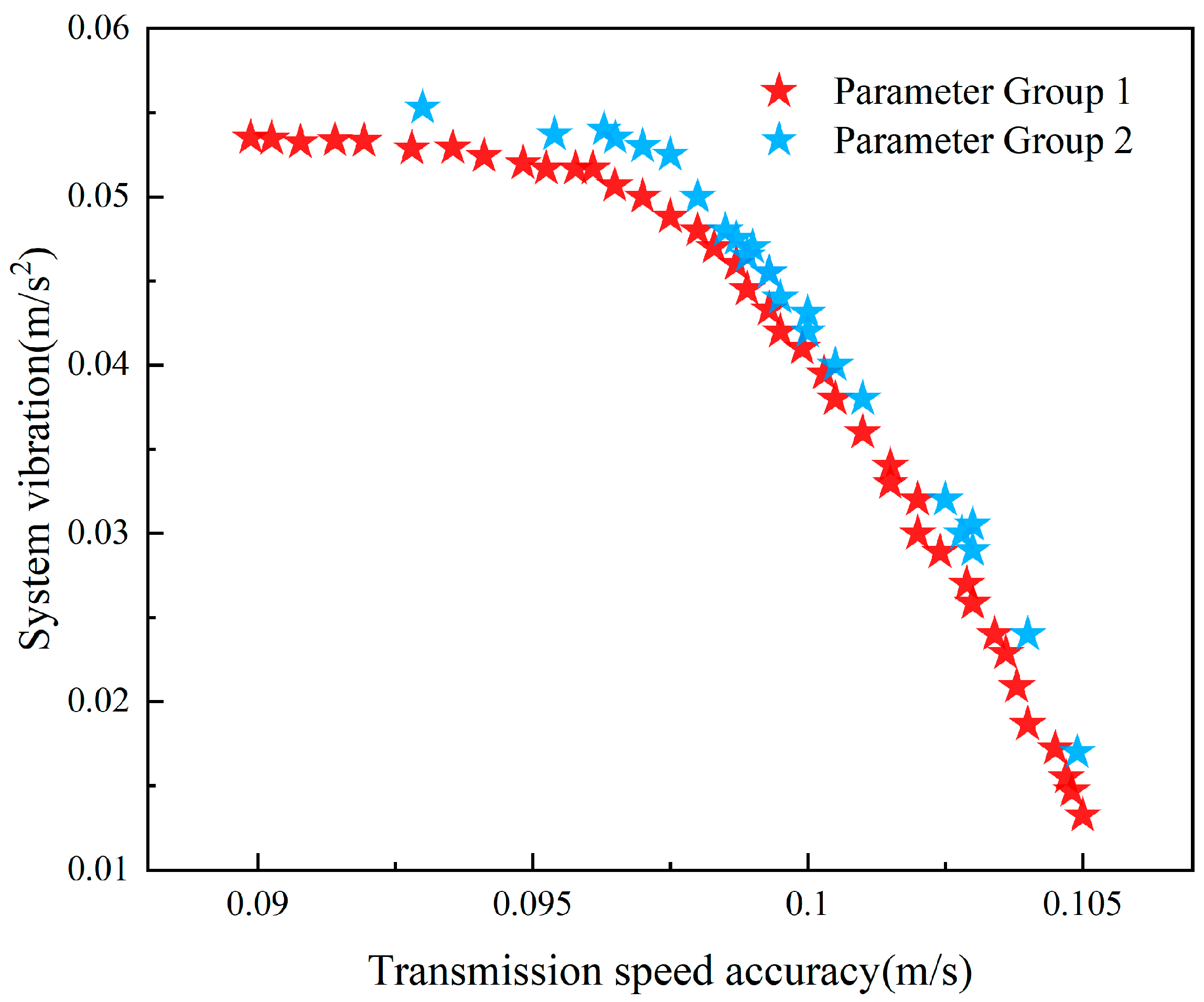
3.2.2. NSGA-II Parameter Adaptability Verification
- Design of NSGA-II Parameter Sets
- 2.
- Definition of Hypervolume Index and Evaluation of Solution Set Quality
- 3.
- Wilcoxon Signed-Rank Test
3.3. Comparison and Selection of Decision-Making Methods
3.3.1. Comparison of Multi-Objective Decision-Making Methods
3.3.2. Specific Procedure of the Global Criterion Method
3.4. Synergistic Advantages and Application Value of the Combined Optimization Method
4. Multi-Objective Optimization Experimental Process of the Transmission System of Absolute Gravimeters
4.1. Constraint Conditions of Input Parameters
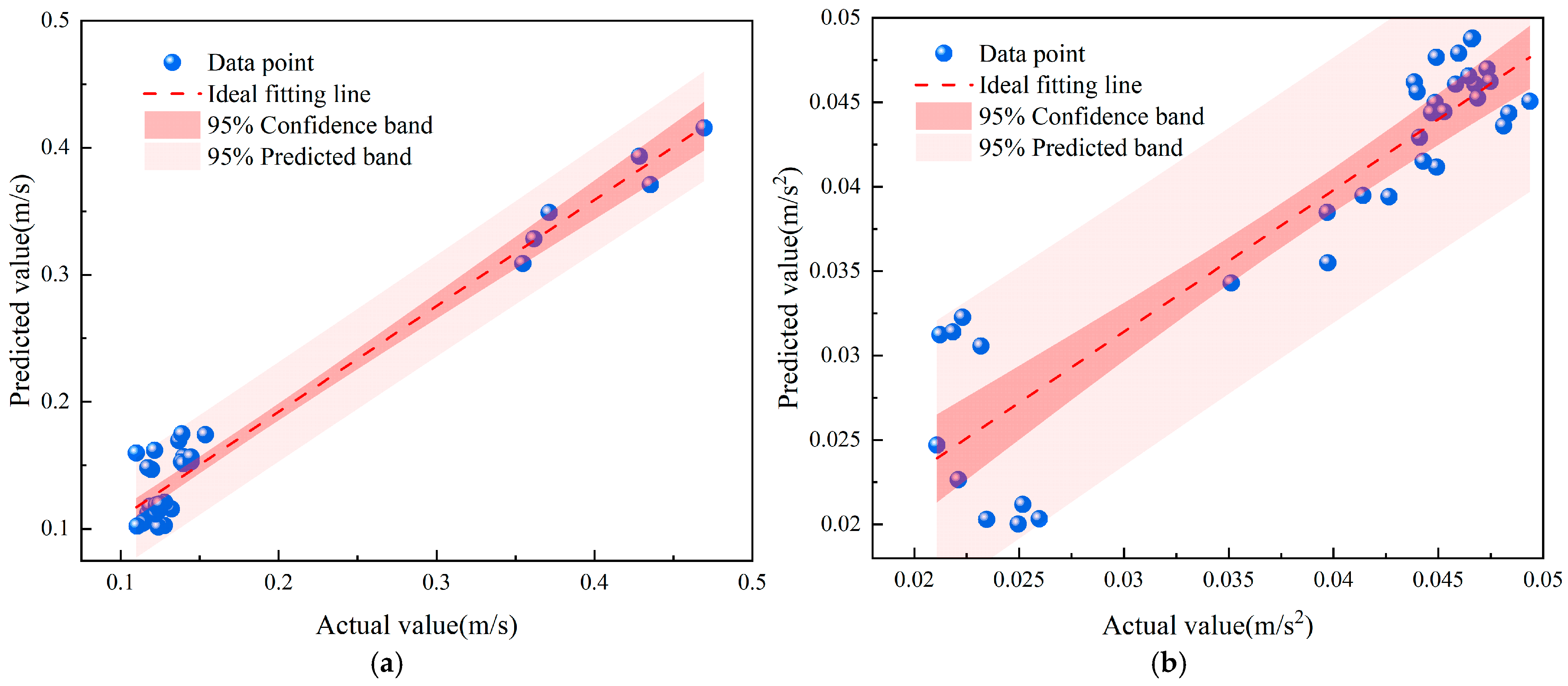
4.2. Acquisition of Sample Experimental Data and Model Establishment
4.3. Screening of Optimal Parameter Combinations Based on NSGA-II and Global Criterion Method
4.3.1. Multi-Objective Optimization of the NSGA-II Algorithm
4.3.2. Screening of Optimal Parameter Combinations via the Global Criterion Method
4.4. Multi-Objective Optimization Verification Experiment and Result Analysis of the Absolute Gravimeter Transmission System
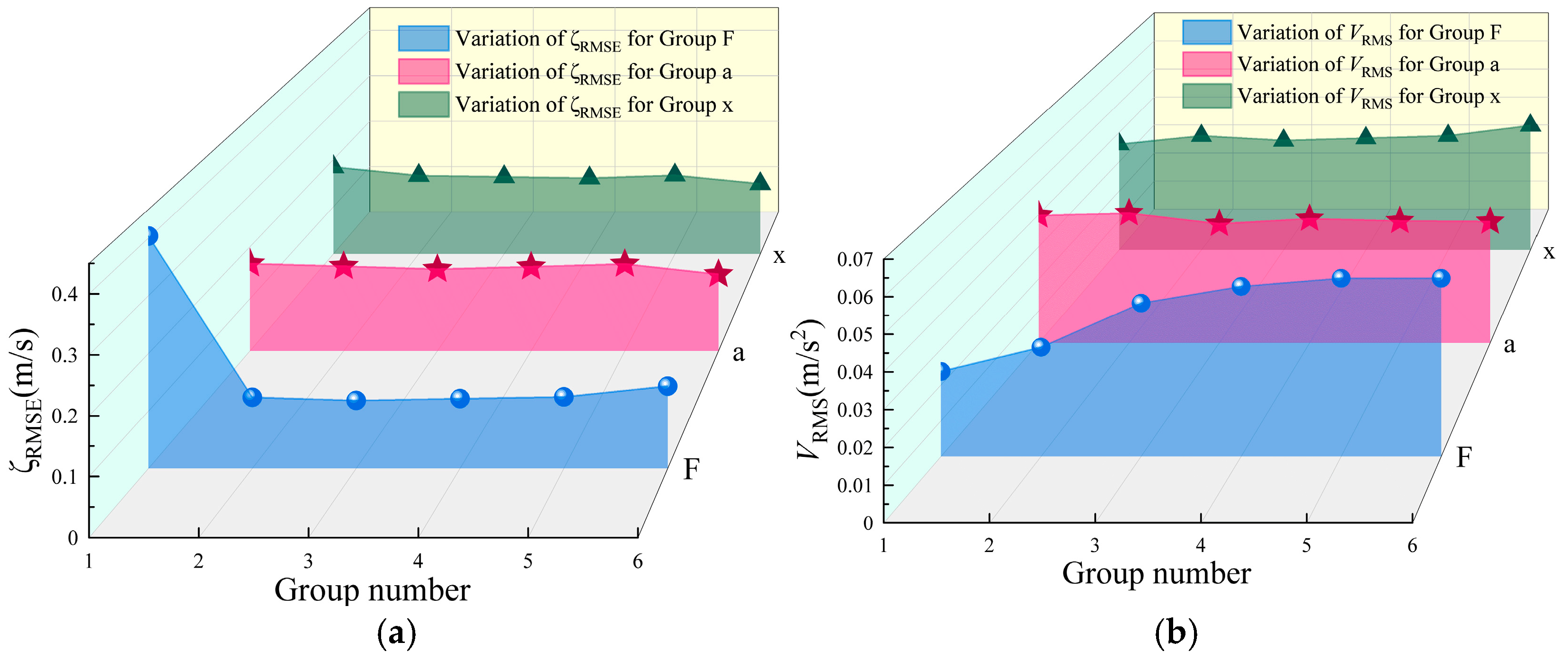
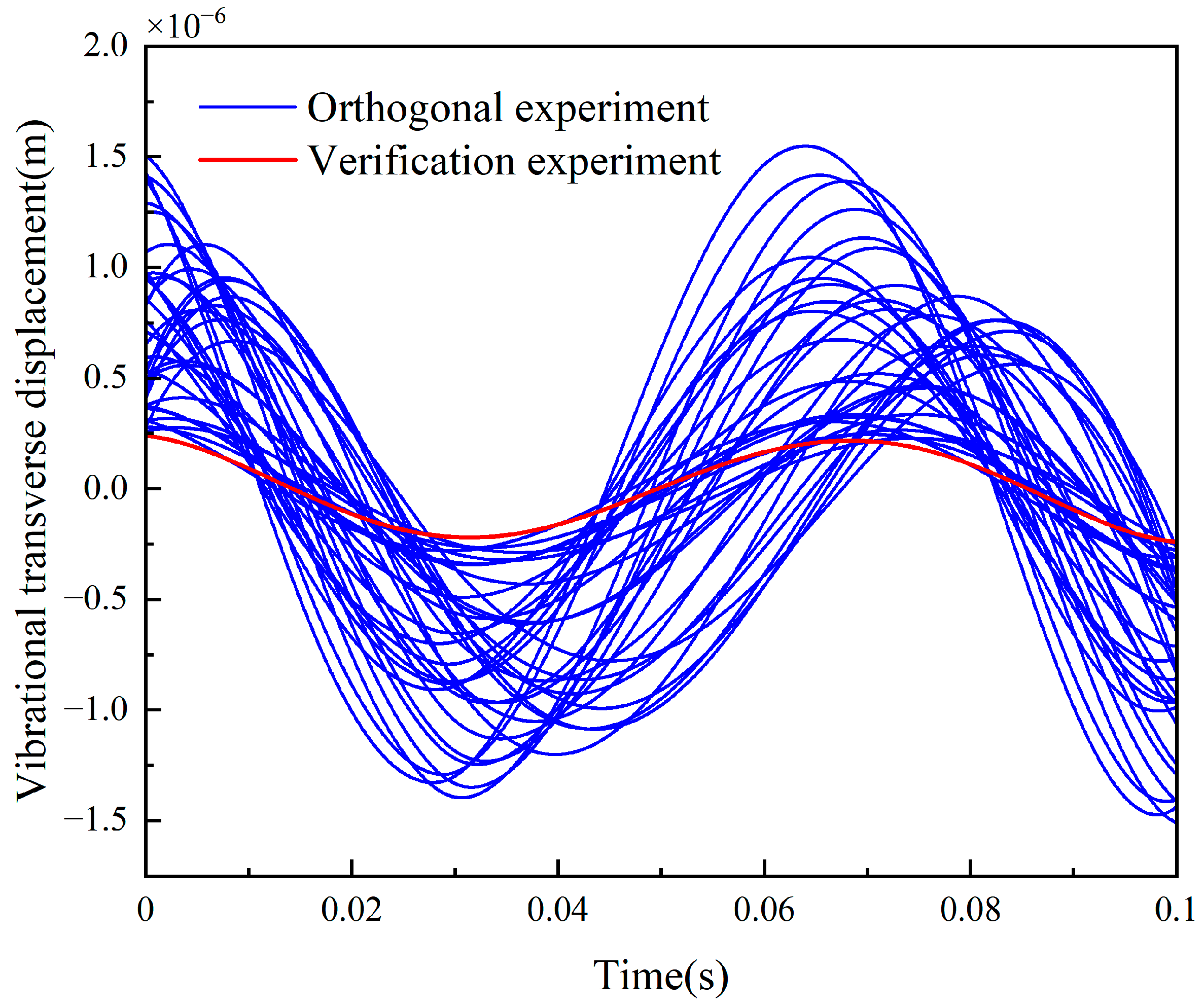
4.4.1. Influence of the Optimal Parameter Combination on Transmission Speed Accuracy and System Vibration
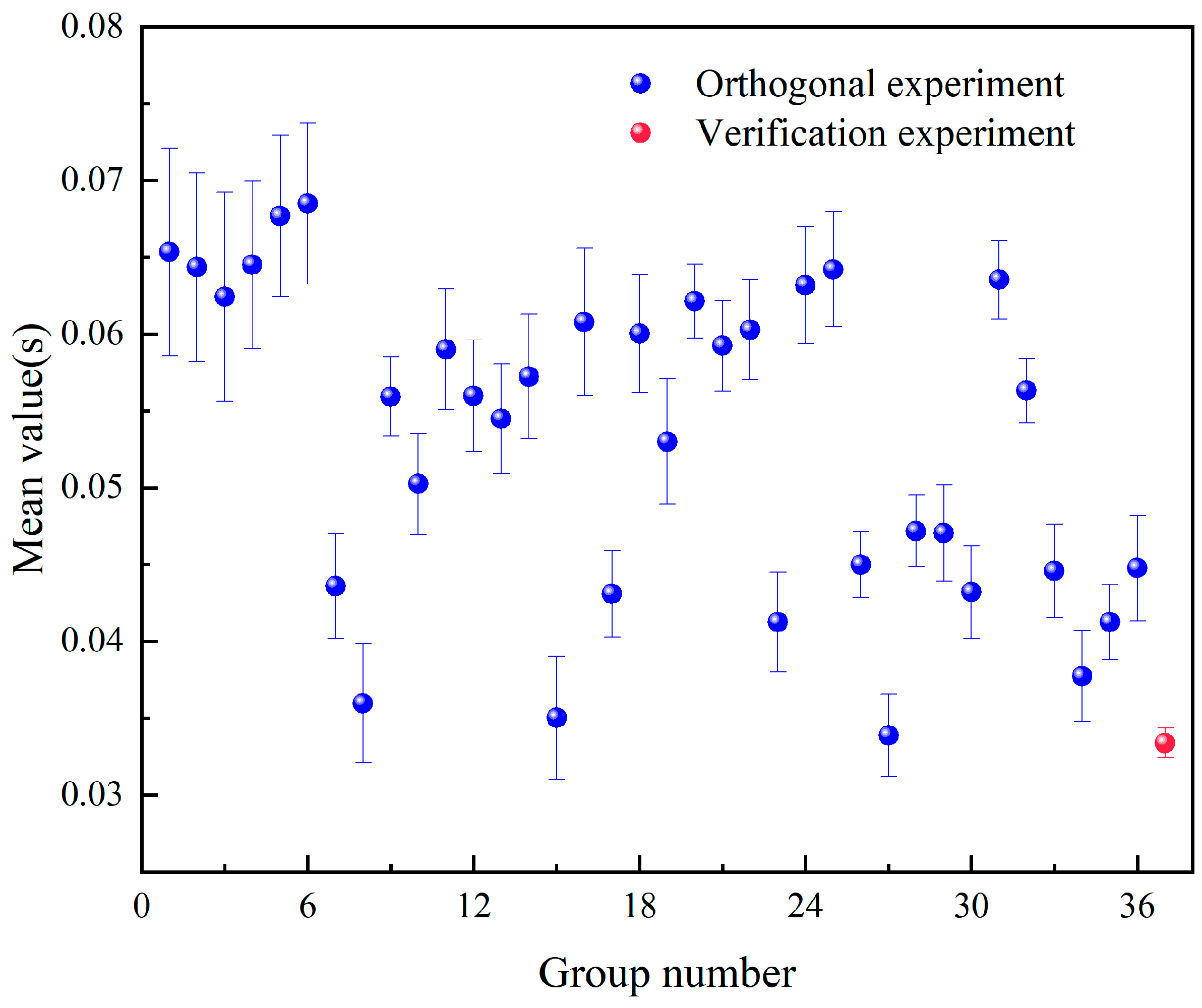
4.4.2. Results and Comparative Analysis of the Separation Time Between the Dropping Chamber and the Falling Body and Its Standard Deviation
5. Conclusions
- Establishment of parameter-performance coupling models with high goodness of fit: By analyzing the coupling relationships between three input parameters (steel belt pre-tightening force, acceleration of the free-fall segment, and displacement of the start-up segment) and two output objectives (transmission speed accuracy and system vibration), nonlinear objective function models were constructed. Among them, the coefficient of determination R2 of the transmission speed accuracy model reached 0.8976, and that of the system vibration model was 0.8395. These values indicate that the two models can explain 89.76% and 83.95% of the variance in the experimental data, respectively, verifying the high fitting accuracy of the models and providing a reliable data foundation for subsequent optimization.
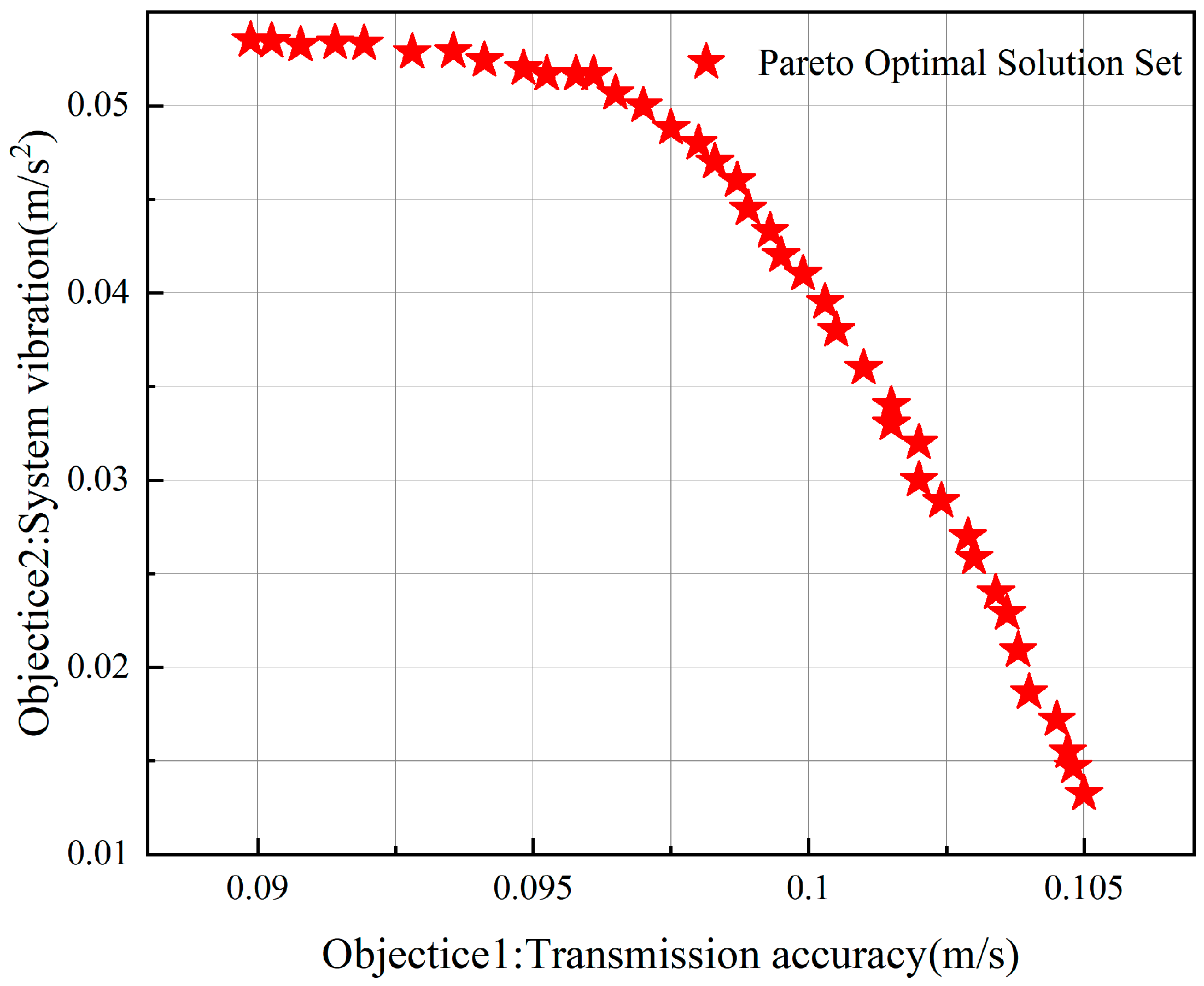
- With the goals of improving transmission speed accuracy and suppressing system vibration, the NSGA-II algorithm was applied to the parameter optimization of the absolute gravimeter’s transmission system for the first time. Specifically, two sets of NSGA-II algorithm parameters were designed; the Hypervolume index was used to quantify the quality of the generated solution sets, and the Wilcoxon signed-rank test (p < 0.0002) was combined to determine the optimal algorithm parameter set. On this basis, a Pareto optimal solution set reflecting the trade-off relationship between transmission speed accuracy and system vibration was generated. Further, the Global Criterion Method and Weighted Sum Method were compared: the former achieved smaller ζRMSE (0.090396 vs. 0.096142 m/s) and VRMS (0.0224 vs. 0.0317 m/s2) and more suitable for this study, showing obvious advantages. Combined with the Global Criterion Method, the optimal parameter combination was screened out, realizing the global balance of conflicting objectives.
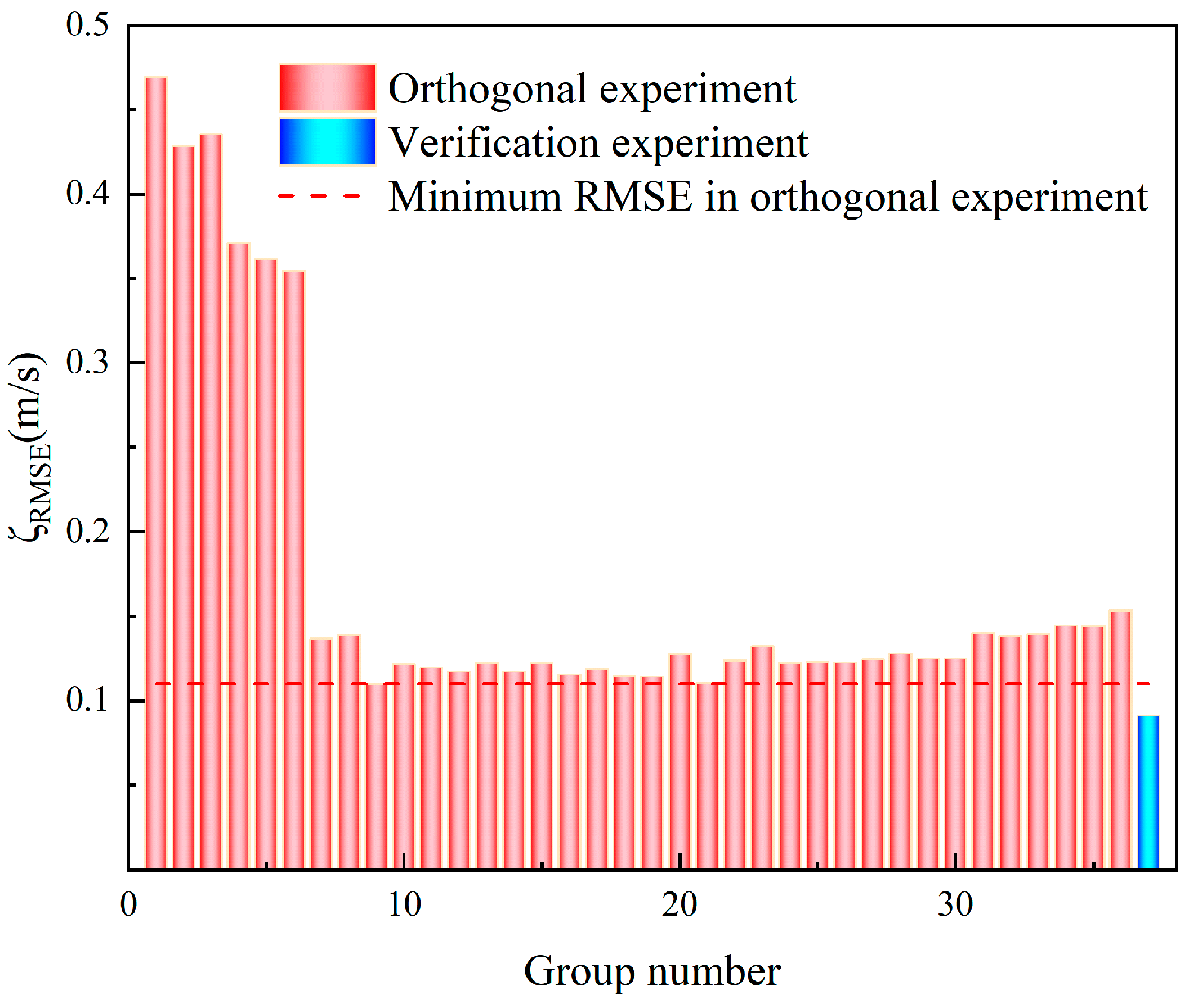
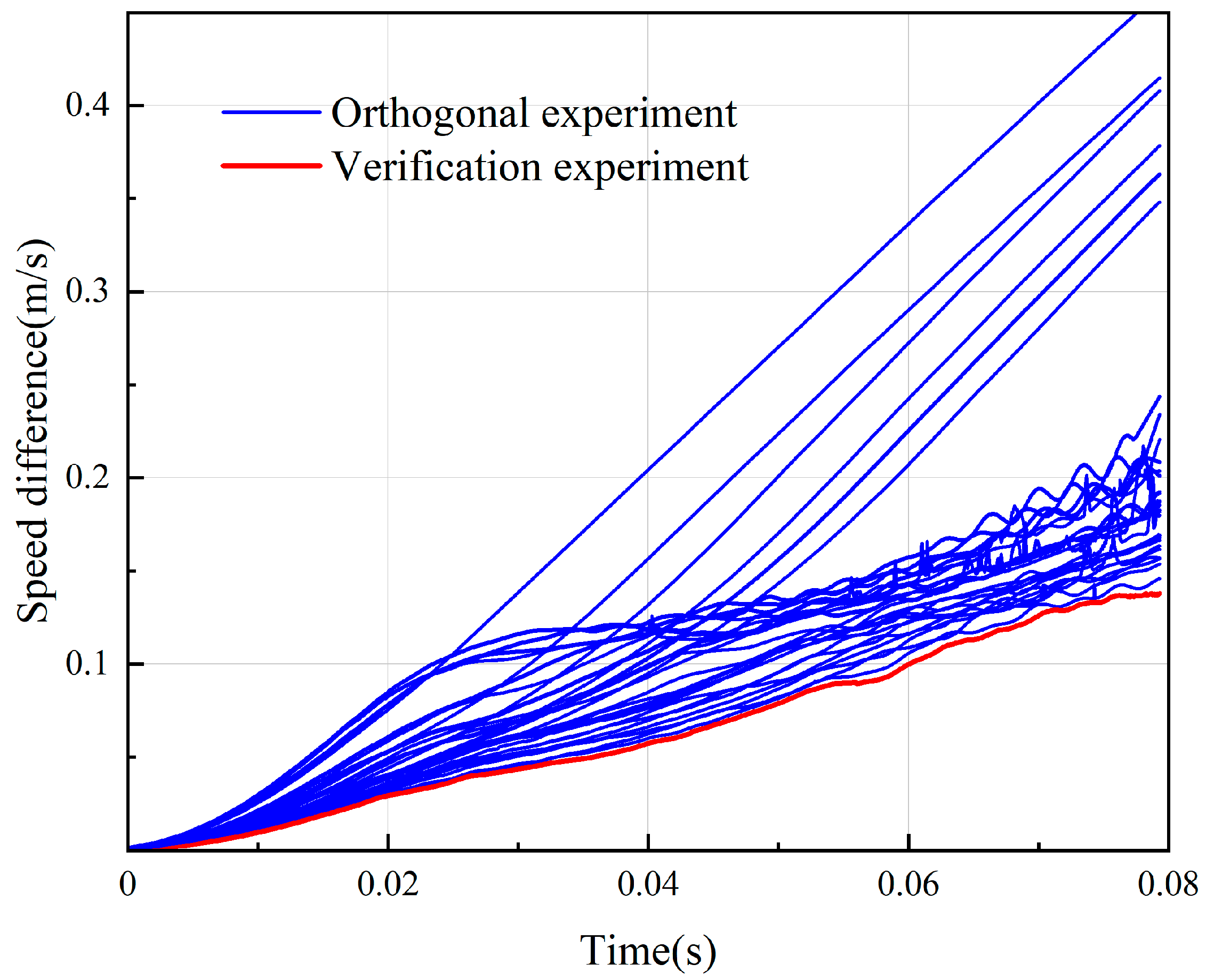
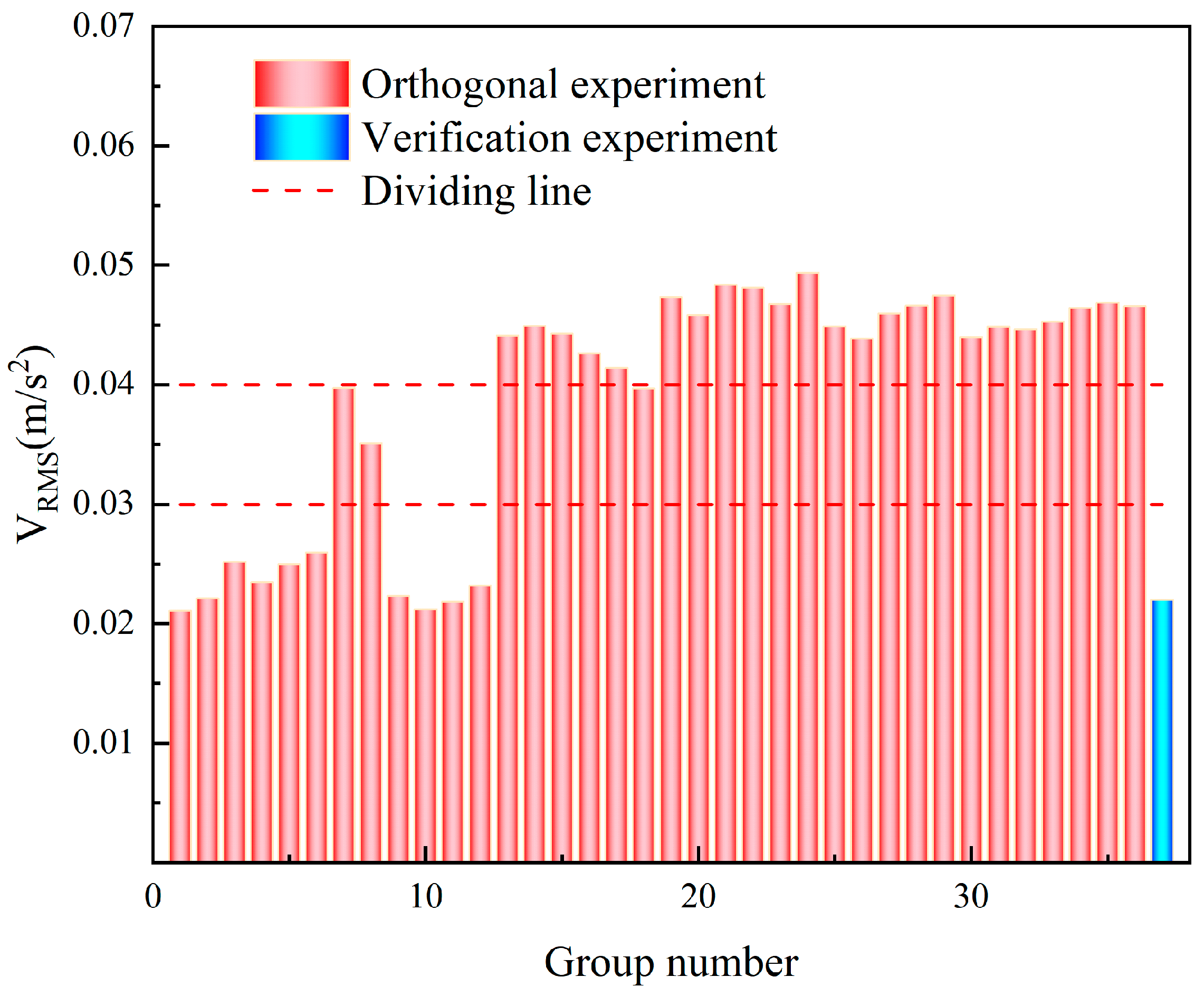
- Significant improvement in transmission system performance and separation stability: Experimental validation showed that after parameter optimization, for transmission speed accuracy. The measured ζRMSE was 0.09132 m/s, with a prediction accuracy of 98.99%. Compared with the minimum ζRMSE = 0.10995 m/s in the orthogonal experiment, this represents a reduction of 16.94%, significantly improving the consistency of motion transmission. For system vibration: The measured VRMS was 0.022 m/s2, with a prediction accuracy of 98.21%, which falls within the low-level vibration range and is much lower than the medium-level vibration threshold of most orthogonal experiment groups. For the separation moment between the carriage and the falling body: The standard deviation decreased from the minimum value of 0.00213 s in the orthogonal experiment to 0.00096 s, a reduction of approximately 45%. This directly confirms that the optimized parameters effectively suppress speed fluctuations and vibration disturbances during the separation process, laying a solid foundation for improving the measurement accuracy of gravitational acceleration.
Author Contributions
Funding
Institutional Review Board Statement
Informed Consent Statement
Data Availability Statement
Conflicts of Interest
Abbreviations
| NSGA-II | Nondominated Sorting Genetic Algorithm II |
| HV | Hypervolume |
| RMSE | Root Mean Square Error |
| RMS | Root Mean Square |
| SNR | Signal-to-Noise Ratio |
| BEC | Bose–Einstein condensate |
| VMD | Variational Mode Decomposition |
| SSA | Sparrow Search Algorithm |
| DDPG | Deep Deterministic Policy Gradient |
| FFT | Fast Fourier Transform |
| RH | Relative Humidity |
References
- Huang, P.W.; Tang, B.; Chen, X.; Zhong, J.Q.; Xiong, Z.Y.; Zhou, L.; Wang, J.; Zhan, M.S. Accuracy and stability evaluation of the 85Rb atom gravimeter WAG-H5-1 at the 2017 International Comparison of Absolute Gravimeters. Metrologia 2019, 56, 045012. [Google Scholar] [CrossRef]
- Van Camp, M.J.; De Viron, O.; Warburton, R.J. Improving the determination of the gravity rate of change by combining superconducting with absolute gravimeter data. Comput. Geosci. 2013, 51, 49–55. [Google Scholar] [CrossRef]
- Hu, M.; Zhang, W.M.; Zhong, M. Robust regression and its application in absolute gravimeters. Rev. Sci. Instrum. 2017, 88, 6203–6209. [Google Scholar] [CrossRef] [PubMed]
- Pan, Y.H.; Chen, Z.H.; Chen, S. Time-Varying Gravity Observation in Mainland China: Technical Exploration, Challenges and Application Prospects. J. Geod. Geodyn. 2024, 44, 959–971. [Google Scholar]
- Sun, H.P. Some reflections on the developing trend of gravimetry in China. Bull. Chin. Acad. Sci. 2024, 39, 881–890. [Google Scholar]
- Su, D.W.; Wang, Q.Y.; Zhang, C.; Yuan, Y.; Liu, S.; Li, C.; Ji, W. Gravity calibration at Zhongshan Station, Antarctica using a domestic absolute gravimeter. Metrol. Sci. Technol. 2021, 65, 36–41. [Google Scholar]
- Wu, S.Q.; Li, T.C. Technical Development of Absolute Gravimeter: Laser Interferometry and Atom Interferometry. Acta Opt. Sin. 2021, 41, 0102002. [Google Scholar] [CrossRef]
- Sun, H.P.; Sun, W.K.; Shen, W.B.; Shen, Z.; Zhu, Y.; Fu, S.; Wu, S.; Cui, X.; Chen, X. Research progress of Earth’s gravity field and its application in geosciences—A summary of Annual Meeting of Chinese Geoscience Union in 2020. Adv. Earth Sci. 2021, 36, 445–460. [Google Scholar]
- Su, D.W.; Jin, S.M.; Shen, H.P.; Pang, L.; Hu, R.; Tang, Y.H.; Xin, G.H.; Mi, M. Gravity Calibration in Tibet Region Using NIM-3C Absolute Gravimeter. China Metrol. 2024, 46, 132–137. [Google Scholar]
- Mou, Z.L.; Li, Q.M.; Feng, J.Y.; Wang, Q.Y.; Wu, S.Q.; Li, C.J.; Yao, J.M.; Hu, R. Research and Application of Motion Control Strategy for the Towing Vehicle of Absolute Gravimeter. Opt. Precis. Eng. 2025, 33, 2231–2241. [Google Scholar]
- Wang, J.P.; Hu, M.Z.; Zhou, M.K.; Cheng, Y.; Deng, X.B.; Zhang, M.H.; Xiao, C.; Li, Z.Y.; Wei, J.; Zhou, C.; et al. Cave Comparison Observation of Domestic Absolute Gravimeter. J. Geod. Geodyn. 2025, 1–12. [Google Scholar]
- Mou, Z.L.; Han, X.; Hu, R. Optimal zero-crossing group selection method of the absolute gravimeter based on improved auto-regressive moving average model. Chin. Phys. B 2023, 32, 405–412. [Google Scholar] [CrossRef]
- Xu, J.Y.; Su, D.W.; Wang, Q.Y. Design of Host System for Miniature Absolute Gravimeter. Acta Metrol. Sin. 2022, 43, 489–493. [Google Scholar]
- Fan, F.; Yang, P.X.; Wang, Q.Y.; Feng, J.Y.; Yao, J.M.; Hu, R.; Wu, S.Q. Research on Adjustment Method of Distance Between Center of Mass and Optical Center of Falling Body in Absolute Gravimeter. Acta Metrol. Sin. 2024, 45, 231–237. [Google Scholar]
- Yu, Y.; Hu, X.; Shi, W.J.; Ye, Z.W.; Lü, K.; Bao, F.; Wang, R.L.; Feng, J.Y. Measuring and adjusting the distance between the center of mass and optical center of a free-falling body in an absolute gravimeter. Metrologia 2022, 59, 045001. [Google Scholar] [CrossRef]
- Kren, P.; Pálinkás, V.; Hald, J. Experiment with simultaneous measurements at two optical wavelengths in the FG5X absolute gravimeter. Meas. Sci. Technol. 2024, 35, 035013. [Google Scholar] [CrossRef]
- Zhou, L.F.; Xu, H.; Geng, R.R.; Yao, Z.Y. Modeling and application research of absolute gravimeter driven by a V-shaped linear ultrasonic motor. Rev. Sci. Instrum. 2024, 95, 125002. [Google Scholar] [CrossRef]
- Yao, J.M.; Zhuang, W.; Feng, J.Y.; Wang, Q.Y.; Zhao, Y.; Wang, S.K.; Wu, S.Q.; Li, T.C. Effect of vibration noise with fixed phase on absolute gravimetry applying vibration isolator. Acta Phys. Sin. 2021, 70, 219101. [Google Scholar] [CrossRef]
- Rothleitner, C.; Andreas, B. High-accuracy determination of the beam divergence error in free-fall absolute gravimeters. Metrologia 2024, 61, 035003. [Google Scholar] [CrossRef]
- Hu, R.; Feng, J.Y.; Mou, Z.L.; Yin, X.L.; Li, Z.F.; Ma, H.R. Incipient fault diagnosis for the cam-driven absolute gravimeter. Rev. Sci. Instrum. 2022, 93, 054501. [Google Scholar] [CrossRef] [PubMed]
- Cassens, C.; Meyer-Hoppe, B.; Rasel, E.; Klempt, C. Entanglement-Enhanced Atomic Gravimeter. Phys. Rev. X 2025, 15, 011029. [Google Scholar] [CrossRef]
- Li, Z.L.; Wu, Q.; Zhang, Y. Design of an automatic zeroing system for the laser interferometer absolute gravimeter based on STM32. Seismol. Geomagn. Obs. Res. 2025, 46, 147–155. [Google Scholar]
- Lu, Q.; Gao, Z.F.; Zhong, X.B.; Dai, J.; Huang, Q.; Hu, S.Y. Transmission characteristics of finite-angle steel belts and the influence of pre-tension on output characteristics. Acta Armamentarii 2022, 43, 676–685. [Google Scholar]
- Lu, Z.Q. Research on Data-Driven Control Method for Linear Induction Motors. Master’s Thesis, University of Jinan, Jinan, China, 2024. [Google Scholar]
- Ramesh, H.; Arockia Edwin Xavier, S.; Muthu Pandi, S. Prediction of End-Milling Optimal Parameters Using ANN-Based NSGA-II Model. In Recent Trends in Mechanical Engineering; Springer: Singapore, 2023. [Google Scholar]
- Wang, Y.Q.; Qin, X.Y.; Jia, W.X.; Lei, J.; Wang, D.X.; Feng, T.M.; Zeng, Y.J.; Song, J. Multiobjective Energy Consumption Optimization of a Flying–Walking Power Transmission Line Inspection Robot during Flight Missions Using Improved NSGA-II. Appl. Sci. 2024, 14, 1637. [Google Scholar] [CrossRef]
- Yang, D.; Yang, S.; Han, M.; Liu, J. Multi-Target Trajectory Optimization of Dual-Arm Robot Based on NSGA-II Algorithm. In Proceedings of the 7th International Conference on Electrical, Mechanical and Computer Engineering (ICEMCE), Kuala Lumpur, Malaysia, 15–17 November 2023; pp. 579–584. [Google Scholar]
- Deb, K.; Pratap, A.; Agarwal, S.; Meyarivan, T. A fast and elitist multiobjective genetic algorithm: NSGA-II. IEEE Trans. Evol. Comput. 2002, 6, 182–197. [Google Scholar] [CrossRef]
- Hu, R.; Wu, S.Q.; Mou, Z.L.; Feng, J.Y.; Niu, X.B. Research on vibration characteristics of absolute gravimeters. J. Vib. Meas. Diagn. 2022, 42, 220–226+403. [Google Scholar]
- Taengtang, T.; Srinuanjan, K.; Kamoldilok, S. Proof of using fourier coefficients for root mean square calculations on periodic signals. Adv. Stud. Theor. Phys. 2013, 8, 21–25. [Google Scholar]
- Wang, X.D.; Zhang, Z.F.; Lü, C.; Hu, C.Y.; Wu, Z.W.; Yang, F. Research on vibration characteristics of partially liquid-immersed steel strips under tension. J. Vib. Shock 2025, 44, 148–157. [Google Scholar]
- Zhang, J.; Liang, J.; Gu, P.Y.; Zhou, C.S.; Liu, L.S. Noise analysis and control caused by self-excited vibration of CVT steel belts. Noise Vib. Control 2021, 41, 175–179. [Google Scholar]
- Xue, D.L.; Liu, K.; Zhong, X. Research on clamping force control system of metal belt continuously variable transmission based on slip. J. Mech. Transm. 2013, 37, 10–13. [Google Scholar]
- Fan, Q.S.; Yin, Y.J. Engineering Mechanics. In Engineering Mechanics, 6th ed.; Higher Education Press: Beijing, China, 2021; pp. 128–135. [Google Scholar]
- Gong, C.G.; Hu, T.L.; Ye, Y.X. Dynamic multi-objective optimization strategy of milling parameters based on digital twin. Comput. Integr. Manuf. Syst. 2021, 27, 478–486. [Google Scholar]
- Wang, Q.; Cai, K.C.; Qin, Z.Y.; Guan, Z.L. Multi-objective optimization of laminated structures for central cone based on NSGA-II genetic algorithm. Int. J. Heat Mass Transf. 2025, 253, 127531. [Google Scholar] [CrossRef]
- Ji, H.; Zhao, J.Y.; Chen, J.; Ge, R. NSGA-II Algorithm Based on Simplified Hypervolume. Softw. Eng. 2024, 27, 26–29. [Google Scholar]
- Lin, Y.D. Analysis of Energy Consumption Right Verification Data Based on Wilcoxon Signed-Rank Test. Chem. Eng. Equip. 2021, 187–189. [Google Scholar]
- Sadeghian, O.; Oshnoei, A.; Nikkhah, S.; Mohammadi-Ivatloo, B. Multi-objective optimisation of generation maintenance scheduling in restructured power systems based on global criterion method. IET Smart Grid 2019, 2, 203–213. [Google Scholar] [CrossRef]
- Pei, H. Modal Analysis and Structural Optimization Design of Bogie Frame. Master’s Thesis, Dalian Jiaotong University, Dalian, China, 2025. [Google Scholar]
- Wu, Q.; Guo, Y.G.; Teng, Y.T.; Chi, S.L.; Huang, D.L.; Fang, Y.Y.; An, H.L. A new falling body control method in the design of absolute gravimeters. Prog. Geophys. 2011, 26, 443–449. [Google Scholar]
- Yun, P.W.; Fu, H.D.; Zhang, H.T.; Sun, J.T.; Zhao, M.H.; Xie, J.X. Rapid design of high-end copper alloy processes combining orthogonal experiments, machine learning, and Pareto analysis. J. Mater. Res. Technol. 2025, 36, 1005–1016. [Google Scholar] [CrossRef]
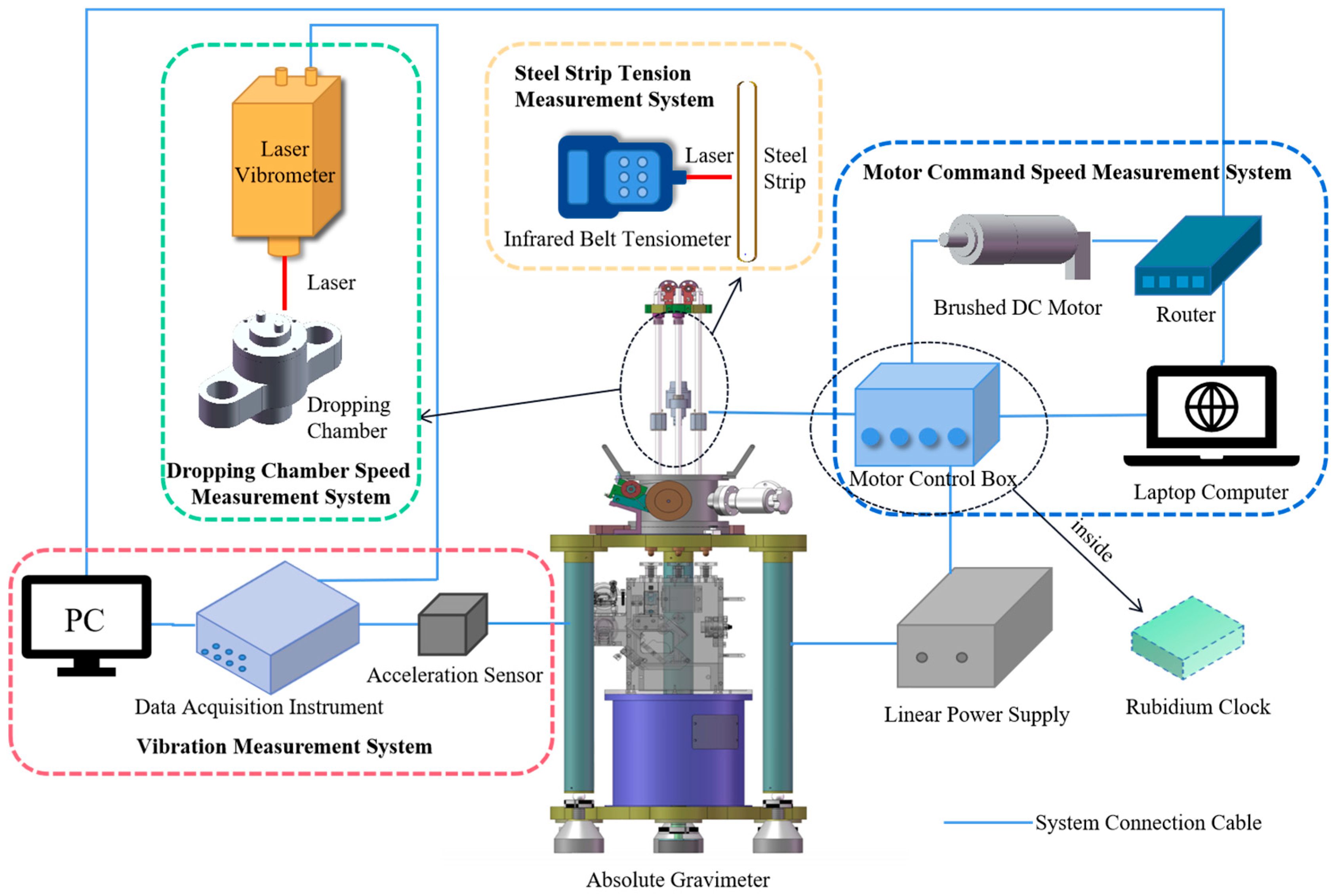




| Items | Type | Main Parameters |
|---|---|---|
| Laser vibrometer | PDV-100 | Speed resolution: 0.05 µm/s, Measurable frequency: 0–22 KHz Response time: 20 ns |
| Variable capacitance accelerometer | MSA1000A-02 | Sensitivity: 1000 ± 20 mV/g, Amplitude-frequency response bandwidth: DC~250 Hz Response time: <10 μs |
| Data acquisition instrument | INV3062C | Sampling frequency range: 0.4–216 kHz, Analysis bandwidth: 108 kHz Response time: 3.2 μs |
| Infrared belt tensiometer | TRUMMETER | Measuring frequency range: 10–800 Hz, Total error: <5% |
| Brushed DC motor | RE40 | Power supply voltage: 24 V DC, Rated power: 150 W, Maximum output speed: 7580 rpm Response time: 4.67 ms |
| Parameter Category | Parameter Group 1 | Parameter Group 2 |
|---|---|---|
| Maximum number of generations | 200 | 100 |
| Population size | 100 | 50 |
| Crossover rate | 0.8 | 0.7 |
| Mutation rate | 0.33 | 0.05 |
| Tournament selection size | 2 | |
| Mutation-crossover index | 20 | |
| Crossover distribution index | 20 | |
| Number | Parameter Group 1 | Parameter Group 2 |
|---|---|---|
| 1 | 0.633 | 0.336 |
| 2 | 0.618 | 0.298 |
| 3 | 0.627 | 0.314 |
| 4 | 0.598 | 0.321 |
| 5 | 0.631 | 0.329 |
| 6 | 0.574 | 0.303 |
| 7 | 0.65 | 0.349 |
| 8 | 0.551 | 0.279 |
| 9 | 0.624 | 0.311 |
| 10 | 0.646 | 0.341 |
| Overall Mean HV of 10 Runs | 0.6152 | 0.3181 |
| Number | Difference di | Absolute Value of Difference |di| | Ranking of Absolute Values |
|---|---|---|---|
| 1 | 0.297 | 0.297 | 4 |
| 2 | 0.32 | 0.32 | 10 |
| 3 | 0.313 | 0.313 | 8 |
| 4 | 0.277 | 0.277 | 3 |
| 5 | 0.302 | 0.302 | 6 |
| 6 | 0.271 | 0.271 | 1 |
| 7 | 0.301 | 0.301 | 5 |
| 8 | 0.272 | 0.272 | 2 |
| 9 | 0.313 | 0.313 | 9 |
| 10 | 0.305 | 0.305 | 7 |
| Evaluation Index | Global Criterion Method | Weighted Sum Method |
|---|---|---|
| Steel Belt Pre-Tightening Force F (N) | 381 | 395 |
| Acceleration of Free-Fall Segment a (m/s2) | 9.843 | 9.686 |
| Start-Up Segment Displacement x (m) | 0.00668 | 0.00652 |
| Transmission Speed Error ζRMSE (m/s) | 0.090396 | 0.096142 |
| System Vibration VRMS (m/s2) | 0.0224 | 0.0317 |
| Engineering Feasibility | Feasible | Feasible |
| Separation Stability Alignment | High | Low (Due to dimensional bias, both ζRMSE and VRMS are larger than those of the Global Criterion Method) |
| Constraint Conditions | Parameters |
|---|---|
| Fmin (N) | 260 |
| Fmax (N) | 500 |
| amin (m/s2) | 8.5 |
| amax (m/s2) | 10 |
| xmin (m) | 0.001 |
| xmax (m) | 0.007 |
| Level | Factor | ||
|---|---|---|---|
| Steel Belt Pre-Tightening Force F (N) | Acceleration a of the Free-Fall Segment (m/s2) | Displacement x of the Start-Up Segment (m) | |
| 1 | 260 | 8.5 | 0.001 |
| 2 | 308 | 8.8 | 0.0022 |
| 3 | 356 | 9.1 | 0.0034 |
| 4 | 404 | 9.4 | 0.0046 |
| 5 | 452 | 9.7 | 0.0058 |
| 6 | 500 | 10 | 0.007 |
| NO. | F (N) | a (m/s2) | x (m) | ζRMSE (m/s) | VRMS (m/s2) |
|---|---|---|---|---|---|
| 1 | 260 | 8.5 | 0.001 | 0.4695218901 | 0.021074809 |
| 2 | 260 | 8.8 | 0.0022 | 0.4285660989 | 0.022103241 |
| 3 | 260 | 9.1 | 0.0034 | 0.4353940113 | 0.025171448 |
| 4 | 260 | 9.4 | 0.0046 | 0.3713932018 | 0.023455221 |
| 5 | 260 | 9.7 | 0.0058 | 0.361714484 | 0.024956376 |
| 6 | 260 | 10 | 0.007 | 0.3546868134 | 0.025963425 |
| 7 | 308 | 8.5 | 0.0022 | 0.1367825637 | 0.03973679 |
| 8 | 308 | 8.8 | 0.001 | 0.1388296443 | 0.035127047 |
| 9 | 308 | 9.1 | 0.0046 | 0.1099496334 | 0.022308152 |
| 10 | 308 | 9.4 | 0.0034 | 0.1215822604 | 0.021228964 |
| 11 | 308 | 9.7 | 0.007 | 0.1196573419 | 0.021838822 |
| 12 | 308 | 10 | 0.0058 | 0.1171886885 | 0.02317646 |
| 13 | 356 | 8.5 | 0.0034 | 0.1222458525 | 0.04410457 |
| 14 | 356 | 8.8 | 0.0046 | 0.1172081411 | 0.04491678 |
| 15 | 356 | 9.1 | 0.001 | 0.1224549454 | 0.044287129 |
| 16 | 356 | 9.4 | 0.007 | 0.1157003434 | 0.042648994 |
| 17 | 356 | 9.7 | 0.0022 | 0.1185864652 | 0.041412421 |
| 18 | 356 | 10 | 0.0058 | 0.1145446001 | 0.03969556 |
| 19 | 404 | 8.5 | 0.0046 | 0.1142320237 | 0.047329401 |
| 20 | 404 | 8.8 | 0.0034 | 0.1276728608 | 0.04582126 |
| 21 | 404 | 9.1 | 0.007 | 0.1104015575 | 0.048367873 |
| 22 | 404 | 9.4 | 0.0058 | 0.1238544215 | 0.048121487 |
| 23 | 404 | 9.7 | 0.001 | 0.1322257499 | 0.046740286 |
| 24 | 404 | 10 | 0.0022 | 0.1222484351 | 0.049367167 |
| 25 | 452 | 8.5 | 0.0058 | 0.1229761742 | 0.044904866 |
| 26 | 452 | 8.8 | 0.007 | 0.1227337583 | 0.043856869 |
| 27 | 452 | 9.1 | 0.0022 | 0.1245951584 | 0.045968485 |
| 28 | 452 | 9.4 | 0.001 | 0.127957774 | 0.046623301 |
| 29 | 452 | 9.7 | 0.0034 | 0.1250385044 | 0.047477948 |
| 30 | 452 | 10 | 0.0046 | 0.1249009355 | 0.043981972 |
| 31 | 500 | 8.5 | 0.007 | 0.1399422938 | 0.044845252 |
| 32 | 500 | 8.8 | 0.0058 | 0.1386126858 | 0.044668067 |
| 33 | 500 | 9.1 | 0.0046 | 0.1396439595 | 0.045273426 |
| 34 | 500 | 9.4 | 0.0022 | 0.1446526793 | 0.046448084 |
| 35 | 500 | 9.7 | 0.0034 | 0.1445327634 | 0.046878643 |
| 36 | 500 | 10 | 0.001 | 0.1536037948 | 0.046577416 |
| Optimal Solution | Transmission System Parameters | Performance Indicators | |||
| F (N) | a (m/s2) | x (m) | ζRMSE (m/s) | VRMS (m/s2) | |
| 381 | 9.843 | 0.00668 | 0.090396 | 0.0224 | |
Disclaimer/Publisher’s Note: The statements, opinions and data contained in all publications are solely those of the individual author(s) and contributor(s) and not of MDPI and/or the editor(s). MDPI and/or the editor(s) disclaim responsibility for any injury to people or property resulting from any ideas, methods, instructions or products referred to in the content. |
© 2025 by the authors. Licensee MDPI, Basel, Switzerland. This article is an open access article distributed under the terms and conditions of the Creative Commons Attribution (CC BY) license (https://creativecommons.org/licenses/by/4.0/).
Share and Cite
Guo, L.; Li, C.; Peng, B.; Feng, J.; Yao, J.; Wang, D.; Mou, L.; Wu, S. Multi-Objective Optimization Study on the Separation Stability of the Falling Body in Absolute Gravimeters. Appl. Sci. 2025, 15, 11535. https://doi.org/10.3390/app152111535
Guo L, Li C, Peng B, Feng J, Yao J, Wang D, Mou L, Wu S. Multi-Objective Optimization Study on the Separation Stability of the Falling Body in Absolute Gravimeters. Applied Sciences. 2025; 15(21):11535. https://doi.org/10.3390/app152111535
Chicago/Turabian StyleGuo, Lu, Chunjian Li, Baoying Peng, Jinyang Feng, Jiamin Yao, Dong Wang, Lishuang Mou, and Shuqing Wu. 2025. "Multi-Objective Optimization Study on the Separation Stability of the Falling Body in Absolute Gravimeters" Applied Sciences 15, no. 21: 11535. https://doi.org/10.3390/app152111535
APA StyleGuo, L., Li, C., Peng, B., Feng, J., Yao, J., Wang, D., Mou, L., & Wu, S. (2025). Multi-Objective Optimization Study on the Separation Stability of the Falling Body in Absolute Gravimeters. Applied Sciences, 15(21), 11535. https://doi.org/10.3390/app152111535