Article

Evaluating the Performance of Different Rainfall and Runoff Erosivity Factors—A Case Study of the Fu River Basin


by
Wei Miao
1,2,
Qiushuang Wu
2,
Yanjing Ou
2,
Shanghong Zhang
2,
Xujian Hu
2,
Chunjing Liu
1,* and
Xiaonan Lin
3
1
China Institute of Water Resources and Hydropower Research, Beijing 100038, China
2
School of Water Resources and Hydropower Engineering, North China Electric Power University, Beijing 102206, China
3
Fujian Provincial Investigation, Design & Research Institute of Water Conservancy & Hydropower Co., Ltd., Fuzhou 350001, China
*
Author to whom correspondence should be addressed.
Appl. Sci. 2025, 15(21), 11353; https://doi.org/10.3390/app152111353
Submission received: 23 August 2025 / Revised: 12 October 2025 / Accepted: 16 October 2025 / Published: 23 October 2025

Abstract

The sediment yield resulting from storm erosion has become a focal point of research and a significant area of interest in the upper reaches of the Yangtze River amid changing environmental conditions. The issue of numerous types of erosivity factors (R) in storm erosion sediment yield models, with unclear applicability. This study examines two classical types of erosivity factors: the rainfall erosivity factor (EI30, Zhang Wenbo empirical formula, etc.) and runoff erosivity power. Four combinatorial forms of erosion dynamic factors, encompassing rainfall and runoff elements, were developed. Based on the rainfall, runoff and sediment data of four stations along the Fu River basin–Pingwu station, Jiangyou station, Shehong station and Xiaoheba station from 2008 to 2018, the correlation between different R factors and sediment transport in different watershed areas was studied, and the semi-monthly sediment transport model of heavy rainfall in the Fu River basin was constructed and verified. The results revealed a weak correlation between the rainfall erosivity factor and the sediment transport modulus, making it unsuitable for developing a sediment transport model. In smaller basin areas, the correlation between the combined erosivity factor and sediment transport modulus was strongest; conversely, in larger basins, the relationship between runoff erosivity power and the sediment transport model was most pronounced. The power function relationship between the erosivity factor and sediment transport modulus yielded a more accurate simulation of sediment transport during the verification period, particularly during rainstorms, surpassing that of SWAT. These findings provide a scientific basis for predicting sediment transport during storms and floods in small mountainous basins.

1. Introduction

In recent years, soil erosion has intensified globally, accelerating land degradation. This process not only undermines soil-related ecosystem services and constrains infrastructure development [1,2,3], but also causes substantial sediment deposition in rivers and reservoirs, thereby reducing their operational lifespans. The global sediment cycle has been profoundly altered: many rivers show declining sediment loads due to human activities such as dam construction [4,5,6,7,8], while in some regions sediment loads have increased under climatic drivers [9]. For example, the growing frequency of extreme weather events has further intensified the pressure on flood control and disaster prevention [3], especially in rainstorm-dominated basins where a few flood events often account for the majority of annual sediment transport [10,11,12]. Understanding these complex dynamics requires a multi-scale perspective [13]. In addition, cutting-edge automated mineralogical techniques, such as SEM-based intergranular volume quantification, have provided important insights into the composition and structure of sediment particles, which are crucial for accurately identifying sediment sources (source characterization) and understanding their transport behavior during model development [14,15]. Therefore, research on sediment transport processes in river basins is not only of great scientific significance but also essential for watershed management and the sustainable operation of hydraulic projects.
The SWAT model is widely used in flood control, sediment transport simulation, and other areas, making it an important tool for water resource management and soil conservation. Many studies use the SWAT model for hydrological simulation of river basins to predict soil erosion, thereby providing a scientific basis for the rational allocation of water resources and flood control. However, with the intensification of climate change, the frequency and intensity of extreme rainfall events have significantly increased, and the existing SWAT model still has limitations in simulating extreme rainfall and large basin scenarios. In particular, when facing large runoff volumes and heavy rainfall, the traditional modified MUSLE formula fails to adequately reflect the complex sediment loss processes, resulting in poor model performance under these extreme conditions. Taking the Fu River basin as an example, it is one of the main sediment sources in the upper reaches of the Three Gorges Reservoir. The Fu River basin has long been affected by extreme rainfall and geological disasters, resulting in significant fluctuations in sediment load. In particular, during extreme rainfall events in 2013, 2018, and 2020, the annual sediment load reached 3.81 × 10⁷ t, 5.17 × 10⁷ t, and 7.03 × 10⁷ t, respectively—far exceeding the multi-year average of 1.18 × 10⁷ t and accounting for more than 30% of the total sediment input into the Three Gorges Reservoir [16,17]. Researchers used the SWAT model to simulate sediment transport in the Fu River basin, and the results showed that the simulated fitted values were much lower than the actual sediment transport values, reflecting the shortcomings of the SWAT model under extreme conditions.
The limitations of the SWAT model in extreme scenarios highlight the need to refine the understanding of sediment transport processes under such conditions [18,19]. Erosion and sediment yield within a watershed are intricately linked to dynamic erosion factors and the conditions of the underlying surface. Rainfall-induced erosion and surface runoff not only serve as fundamental driving forces behind erosion and sediment yield but also act as primary carriers of sediment transport [20]. In a specific area, the conditions of the underlying surface can be regarded as constants over a defined time period. Currently, there are two primary types of dynamic erosion factors: the first is the rainfall erosivity factor, defined as the product of total kinetic energy E and maximum 30-minute rainfall intensity I30, as established by Wischmeier and Smith [21]. However, obtaining data on maximum 30-minute rainfall intensity is challenging in most regions. Consequently, numerous empirical R factor formulas have been developed across various areas, primarily for the nonlinear fitting of rainfall [22,23]. The R factor utilized in most basins across China is the rainfall erosivity derived from daily rainfall, as proposed by Zhang et al. (2002) [24]. The second type is the runoff erosivity factor, represented by the runoff erosion power introduced by Lu et al. (2009) [25]. Similar to the R factor in the modified universal soil loss equation (MUSLE), this factor encompasses two runoff characteristic parameters: flood peak flow modulus and runoff depth [25]. Lin (2022) employed the first type of factor to establish the relationship between surface rainfall and sediment load in the Fu River basin [26]. The results indicated that both power function and linear fitting exhibited comparable effects at Pingwu and Jiangyou stations upstream, while the power function demonstrated superior fitting performance at Shehong and Xiaoheba stations downstream.
Liu et al. (2023) used the runoff erosion power of the second factor to fit the sediment load of Beibei hydrological station of Jialing River control station [27], and found that the two satisfied the power function relationship. One type of these two factors only reflected rainfall erosivity, and the other reflected runoff erosion and sediment transport process influenced by runoff erosion, showing different fitting effects in different regions. These research results all indicate that the composition of the R factor plays a crucial role in simulating and predicting sediment transport in the watershed. Therefore, this study proposes a new erosion factor model calculation method (using the Fu River as an example). Based on daily rainfall, runoff, and sediment load data from four hydrological stations in the Fu River basin (Pingwu Station, Jiangyou Station, Shehong Station, and Xiaoheba Station) from 2008 to 2018, we integrated two classical types of erosivity factors and further developed a composite rainfall and runoff factor erosion model (R5R8). By analyzing the power function relationship between each hydraulic erosivity factor and sediment transport modulus, this model can more accurately simulate sediment transport during storm floods, providing a more reliable predictive tool for addressing hydrological and sedimentary dynamics under extreme climate change, with significant scientific and practical value.

2. Geological Background

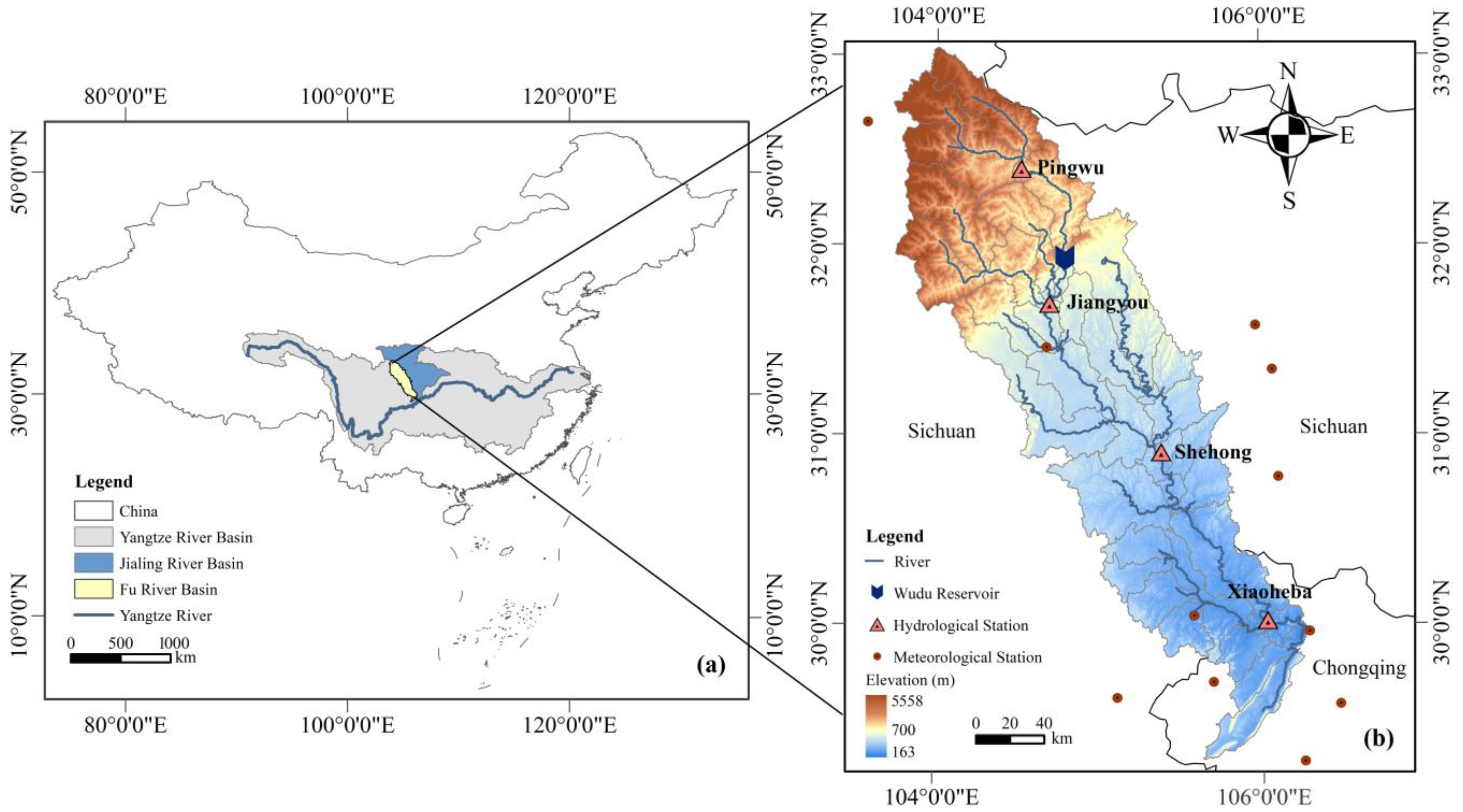
The Fu River, the largest tributary of the Jialing River in the upper Yangtze Basin, flows along the Jialing’s right bank. It originates from Xuebaoding in the Min Mountains of northeastern Sichuan Province and travels 670 km through several counties and municipalities in Sichuan and Chongqing before converging with the Jialing River at Hechuan District in Chongqing. The river basin covers an area of approximately 36,000 km2, spanning 103°53′–106°17′ E and 29°12′–33°06′ N. Topographically, the basin is characterized by higher elevations in the northwest and lower elevations in the southeast, as shown in Figure 1. The Longmenshan fault zone, which runs northeast-southwest in the upper reaches, marks a distinct transition in terrain, soil composition, and land use. Upstream of the fault, the mountainous terrain features steep slopes and abundant vegetation, with soils mainly consisting of leaching and unsaturated types. In contrast, the middle and lower reaches are dominated by agricultural land, forming a key agricultural zone in Sichuan Province, where loose lithologic soils are widespread. Climatically, the basin experiences a subtropical humid climate with annual precipitation ranging from 800 to 1400 mm, decreasing from southeast to northwest. In recent years, total annual rainfall has shown a declining trend, although high-intensity rainfall events remain frequent during the flood season.
More than one thousand small- to medium-sized reservoirs are present throughout the basin; notably low water heads characterize these medium-sized reservoirs [28]. Wudu Reservoir stands as the largest water conservancy project within this region with a storage capacity of approximately 5.72 × 10⁸ m3.
One of the main characteristics of the Fu River is its high sediment yield, making it a primary source of sediment flowing into the Three Gorges Reservoir [17]. In the mid-20th century, high population density coupled with rapid industrial and agricultural development led to significant erosion issues within the basin. Although since the late 20th century, initiatives such as the ‘Natural Forest Protection Project,’ ‘Grain for Green Project,’ and reservoir construction have contributed to a reduction in soil erosion within the Fu River basin to some extent, substantial sediment transport still occurred during flood seasons in 2013, 2018, and 2020 due to intense precipitation.

3. Materials and Methods

3.1. Data Collection

Due to the limited number of stations in the Fu River basin, model calibration and validation could not be performed across the entire basin. Therefore, this study used the China Meteorological Assimilation Driving Datasets for the SWAT Model (CMADS) as a substitute for observed meteorological station data. Temperature, pressure, humidity, and wind speed data from CMADS were derived through a three-dimensional variational method, while precipitation data were obtained by combining multi-satellite measurements with ground-based station data using nested assignment and bilinear interpolation [29]. The data used spans from 2008 to 2018, but EI30 data was only available for 2010–2013 and 2018, and was used solely for calculating the rainfall erosivity factor. Daily flow and sediment discharge data for the four stations from 2008 to 2018 were provided by the Annual Hydrological Report of the People’s Republic of China. Due to the lack of bed load data, only suspended sediment was considered. Data from April to October each year were used, as sediment measurements were paused during the winter months at some stations. The controlled watershed areas for the four stations were 0.60 × 10⁴, 1.15 × 10⁴, 2.37 × 10⁴, and 2.95 × 10⁴ km2, respectively.

3.2. Calculation Method of Erosion Dynamic Factor

3.2.1. Rainfall Erosivity Factor

Wischmeier proposed the classic rainfall erosivity index EI30 (MJ·mm·hm−2·h−1), defined as the product of the total kinetic energy (E) and the maximum 30-min rainfall intensity (I30), expressed as R1. However, due to the limited availability of long-term rainfall data required for EI30, various empirical estimation formulas have been developed [23]. Among them, this study adopted the Zhang Wenbo daily rainfall formula [24], recommended in the Guide for Dynamic Monitoring Technology of Soil Erosion (2022), to estimate rainfall erosivity (R2) as follows: where R2 (MJ·mm·hm−2·h−1) is the half-monthly rainfall erosivity; Pⱼ is the erosive rainfall (≥12 mm) on the j-th day within the half-month; k is the number of days in the half-month (15 for the first, remaining days for the second); and the parameters α = 0.3937 (May–September) and β = 1.7265 are taken from the Technical Guide. To maintain a consistent temporal scale, all rainfall factors (R) were calculated on a half-month basis, since individual rainfall–flood events generally last less than 15 days. Daily-scale R1 values were accumulated to the half-month scale, and soil loss (A) was expressed in t·hm−2. In addition, an empirical factor R3, based on the half-month maximum daily rainfall (Pmax) and total rainfall (Pm), was developed, with Pmax used to estimate I30, making R3 equivalent to the daily-scale EI30 [30]. The calculation formulas are given below:
R 1 = E I 30
R 2 = α j = 1 k P j β
R 3 = P m P max

3.2.2. Runoff Erosion Power

Because EI30 only characterized the erosion effect of raindrop splash erosion on soil, it could not reflect the effect of runoff erosion and runoff sediment transport. Therefore, Lu et al. proposed to use the product of runoff depth Hm and flood peak flow modulus Qmax to replace the rainfall erosivity factor, expressed by R4 [25]:
R 4 = H m Q max / A
where R4 is also called half-month average runoff erosion power (mm m3 s−1•km−2); R4 can better reflect the comprehensive influence of natural rainfall and underlying surface characteristics on rainstorm erosion and sediment yield [31]. Consulting the procedure of Lu et al. to dimensional analysis Equation (4) [25], and Equation (4) is transformed into
R 4 = C o n F V
where C o n = A / ( ρ g A 2 ) is a constant term; A is the flow area of the outlet section of the basin corresponding to the peak flow (m2); F = ρ g W represents runoff erosion force (N); V is the average flow velocity corresponding to the flood peak flow at the outlet section of the basin (m/s); ρ is the density of water (kg/m3); g is the acceleration of gravity (m/s2). Therefore, R4 has the dimension of power (N·m/s), reflecting both the cumulative and instantaneous effects of runoff on soil erosion and sediment transport. In the Fu River basin, the upstream mountainous areas are steep and have high flow velocities, where the flood peak flow dominates erosion and sediment transport; in the downstream plains, floods last longer and the total runoff is larger, making the cumulative water volume more influential. The dimensional conversion of R4 integrates both factors, representing the comprehensive erosion efficiency across the basin under varying topographic conditions.

3.2.3. Rainfall and Runoff Erosivity Factor

Rainfall erosivity reflects erosion driven by rainfall but does not account for underlying surface characteristics or the effects of runoff erosion and sediment transport. To address this, our study constructed four combined rainfall–runoff factors based on the concept of runoff erosion power. Rainfall characteristics were represented by the half-month total rainfall (P) and the maximum daily rainfall (Pmax), reflecting both rainfall amount and intensity. Runoff characteristics were represented half-month maximum daily average flow (Qmax) and the half-month runoff depth (Hm). The four resulting combined factors were defined as R5, R6, R7, and R8:
R 5 = P m Q max / A
R 6 = H m P max
R 7 = P max Q max / A
R 8 = H m P m
where R5 is the combination of rainfall and runoff peak (mm m3 s−1 km−2). We can also obtain the form of Equation (5) by dimensional analysis of R5, which comprehensively characterizes rainfall erosion and sediment transport efficiency by runoff. R6 is the combination of runoff depth and rainfall peak (mm2), reflecting runoff erosivity and rainfall intensity. It couples the total energy of runoff with the driving force of intense rainfall. R7 is the combination of runoff peak and rainfall peak (mm·m3·s−1·km−2), which is consistent with the unit of R4 and R5, and represents the coupled effect of peak rainfall intensity and peak runoff transport capacity. R8 is the combination of runoff depth and rainfall (mm2), which characterizes the combination of rainfall erosivity and runoff erosivity at the total event scale. The physical connotations of R5~R8 and R4 are similar, as both reflect the comprehensive response of underlying surface conditions in different watersheds to rainfall and runoff processes. The difference is that R5~R8 explicitly and directly couple rainfall and runoff characteristics, while R4 only indirectly reflects rainfall erosivity through its resultant runoff.
The statistical factors of sediment transport in this study were half-month maximum daily sediment concentration Cmax (kg/m3), half-month sediment transport Qs (×104 t), Wm is the half-month sediment transport modulus, Wm = 10Qs/B.

3.3. Evaluation Parameters

The model performance is evaluated using three primary metrics, as shown in Table 1: Nash-Sutcliffe Efficiency (ENS), Pearson Correlation Coefficient (ρ), and Coefficient of Determination (R2). ENS measures the agreement between model predictions and observed data, with values closer to 1 indicating better accuracy. Typically, ENS values between 0.5 and 0.65 are considered satisfactory, between 0.65 and 0.75 as good, and values above 0.75 reflect excellent fit. The Pearson Correlation Coefficient (ρ) quantifies the strength and direction of the linear relationship between predicted and observed values. A value close to 1 or −1 indicates a strong correlation, with values between 0.4 and 0.6 indicating moderate correlation, 0.6 to 0.8 indicating strong correlation, and values above 0.8 indicating very strong correlation. The Coefficient of Determination (R2) represents the proportion of variance in the observed data explained by the model, with values between 0.5 and 0.6 considered acceptable, between 0.6 and 0.7 as good, and values above 0.7 indicating a strong fit. These metrics provide important quantitative insights into model performance and guide further optimization.

4. Results and Analysis

4.1. The Relationship Between Different R Factors and Sediment Transport Modulus

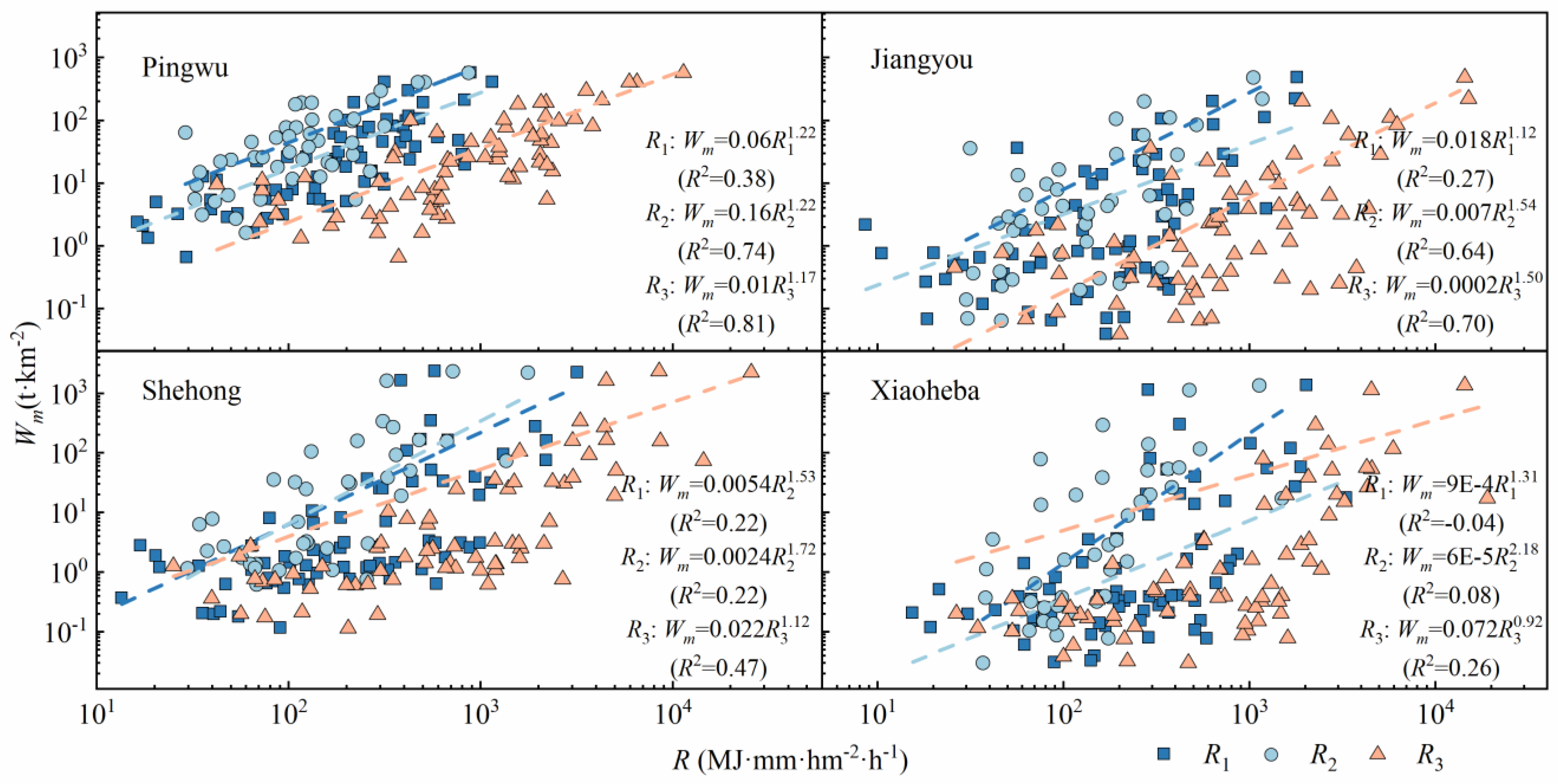
In this study, a power function was employed to model the relationship between rainfall erosivity factors R1, R2, R3, runoff erosivity factor R4, and rainfall and runoff erosivity factors R5 through R8 with sediment transport modulus Wm at the half-month scale across four stations in the Fu River basin. The temporal range corresponds to the data collected for this analysis. The results are presented in Figure 2, Figure 3 and Figure 4. As illustrated in Figure 2, the regression coefficients from the power function fitting of the three rainfall erosivity factors and sediment transport modulus were relatively low. The determination coefficients for R1 and Wm at all four stations ranged from 0.04 to 0.38, indicating an unacceptable fitting performance. This low fitting performance could be attributed to the aggregation of daily-scale I30 values into semi-monthly estimates. The temporal scale mismatch between daily rainfall intensities and sediment transport dynamics could reduce the sensitivity of R1 to sediment transport at this scale. Variations in statistical time scales contributed to poor correlations between factor R1 and Wm at each station—consistent with findings by Zhao Wenwu et al. (2007) [32]. Factors R2 and R3 exhibited similar determination coefficients with respect to Wm across all sites, ranging from 0.08 to 0.81; on one hand suggesting that these two factors could be interchangeable while also indicating differing predictive capabilities regarding sediment transport across various watershed areas. The fitting performance of the sediment transport modulus at Pingwu and Jiangyou stations was more favorable in smaller basin areas, whereas the fitting performance at Shehong and Xiaoheba stations in larger basins was considerably poor. This discrepancy can be attributed to several factors: the shorter river channels in small watersheds resulted in minimal influence from confluence processes on sediment transport, coupled with a strong correlation between slope sediment yield and outlet sediment transport rates. In contrast, larger river basins feature longer river channels, where the efficiency of runoff and sediment transport also significantly affects the accumulation of slope-derived sediments into the river.
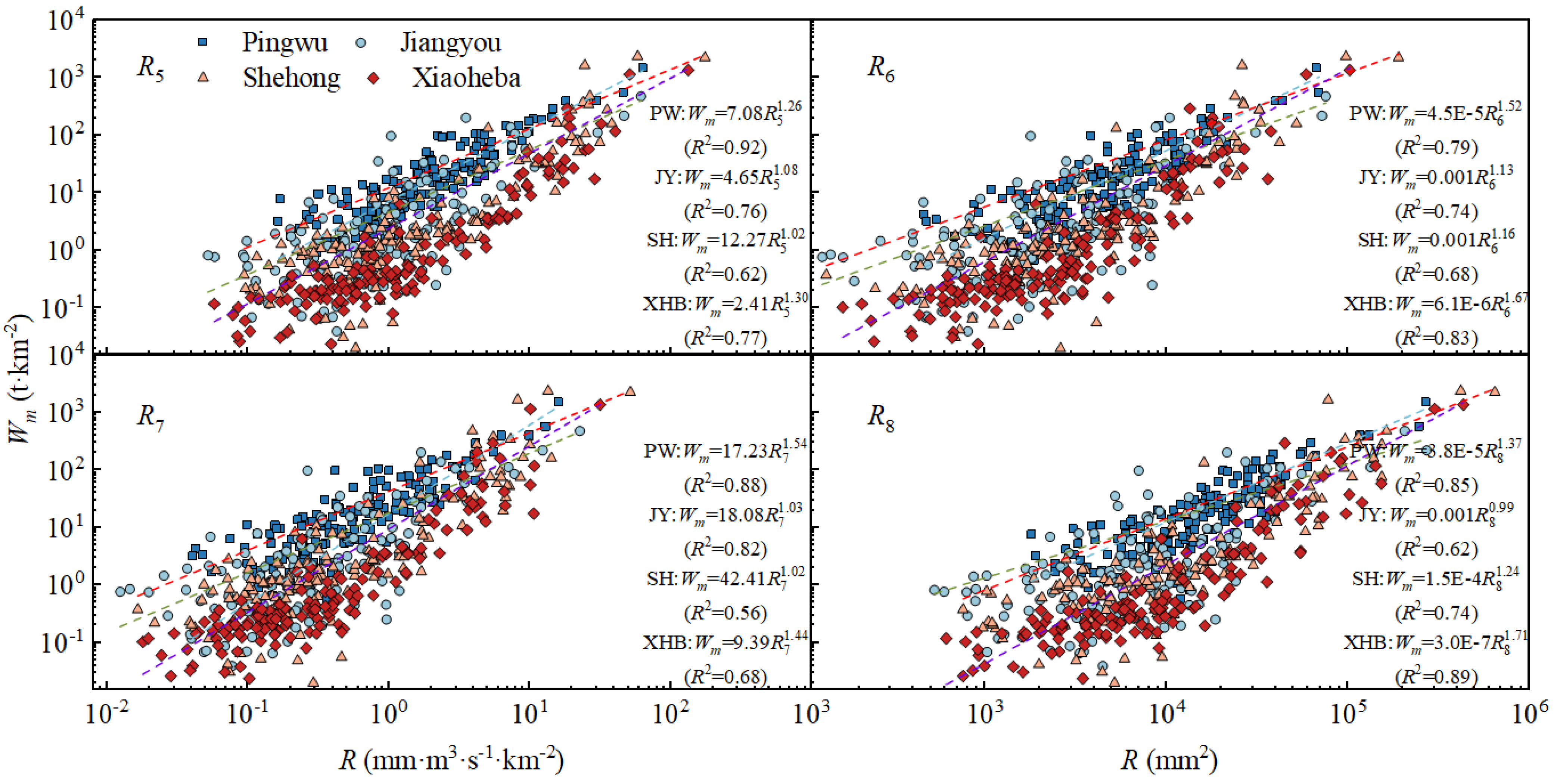
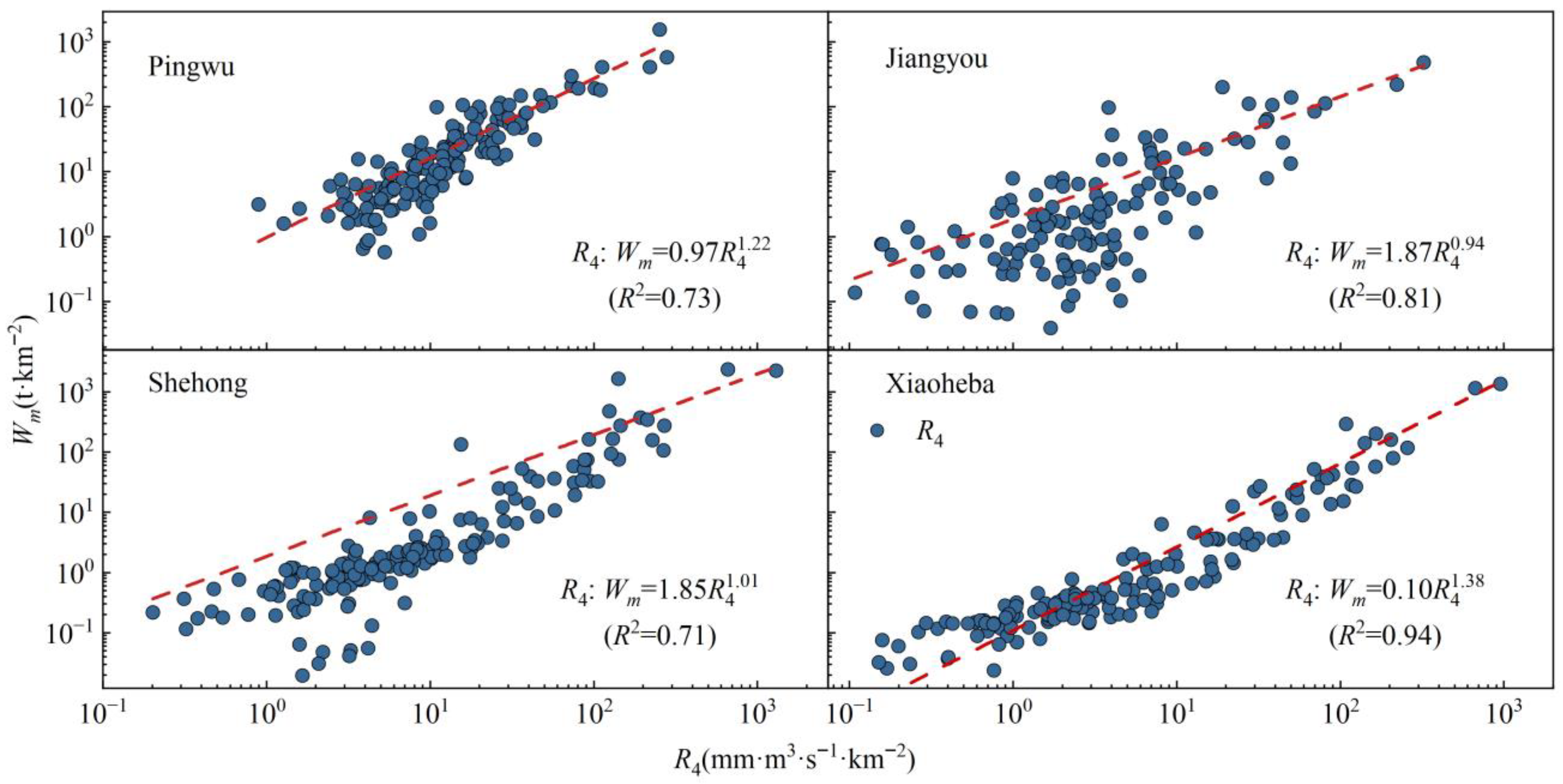
Figure 3 showed the fitting relationship between runoff erosion power and sediment transport modulus by power function. The coefficient of determination at the four stations was 0.71~0.94, which was the best at the Xiaoheba station with the largest basin area. The higher fitting performance at Xiaoheba station can likely be attributed to the larger basin area, where runoff power plays a more significant role in sediment transport. The larger volume of runoff and sediment load in such areas allows for better correlation with the sediment transport modulus, which is consistent with existing research [33]. Figure 4 was the fitting relationship between rainfall and runoff factor and sediment transport modulus by power function. The determination coefficients of the four factors were similar to 0.58~0.92. The R5 factor fitted relatively well and could be used as a representative factor of rainfall and runoff. The R5 factor performed best at the Pingwu station with the smallest basin area. Based on the above results, we could find that: first, simple rainfall factor only represented rainfall erosivity, it could not reflect the effect of runoff erosion and sediment transport, and could only be used for the stability of underlying surface in small watershed. Second, runoff erosion power and rainfall and runoff factor could reflect the erosivity of rainfall and runoff, the former was an indirect reflection of rainfall erosivity, the latter was a direct reflection. Rainfall and runoff factor had better fitting effect on sediment transport modulus in small watershed, while runoff erosion modulus had better fitting effect in large watershed. It also showed that rainfall erosivity was the main erosion force when the underlying surface of small watershed was stable. Third, the fitting effect of runoff erosion power on sediment transport modulus in different watershed areas was the best, which could be used as the better choice for sediment transport modulus fitting in most watersheds, while rainfall and runoff factor could only be used as the better choice for small watersheds less than 1 × 10⁴ km2. This result highlights the need to consider watershed size when selecting an appropriate sediment transport prediction model. Larger watersheds may require more complex models to account for runoff dynamics beyond just rainfall erosivity.
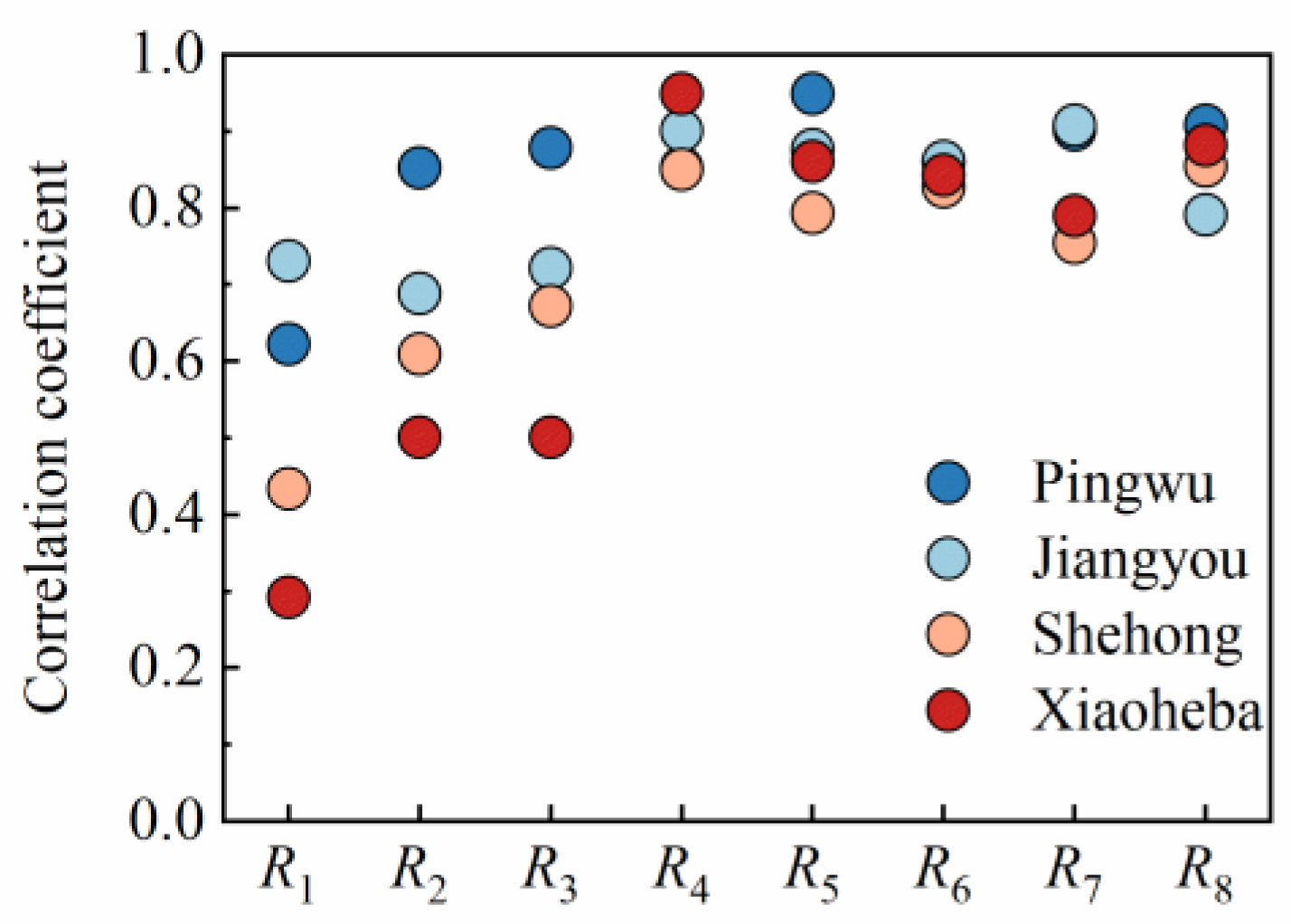
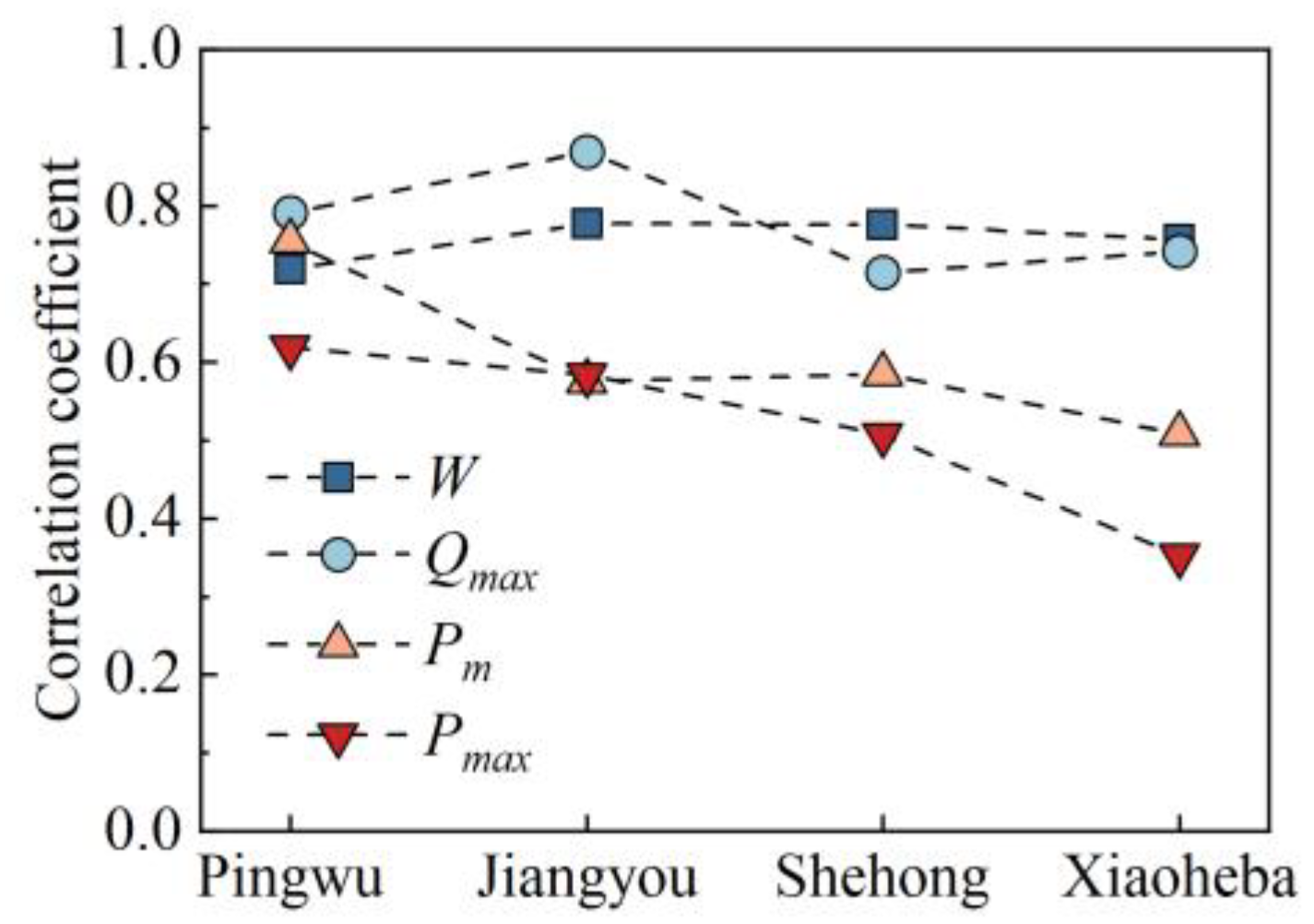
Given that the determination coefficient of nonlinear fitting is influenced by the number of iterations and convergence, some R factors exhibited non-convergence with Wm fitting at certain sites, with most fitted power exponents clustering around 1.To intuitively illustrate the differences in fitting performance among various R factors across different sites, this study employed Pearson correlation coefficients to assess the linear correlations between different types of R factors and Wm at four locations. The results are presented in Figure 5. Consistent with the determination coefficient findings, the correlation between R4~R8 factors and sediment transport modulus was stronger, while the correlation coefficients for R2 and R3 factors were comparable; additionally, a more robust correlation with sediment transport modulus was observed in smaller watersheds. This study also analyzed the relationship between the four single factors of rainfall, maximum daily rainfall, runoff and flood peak flow and the sediment transport modulus. The results were shown in Figure 6. It could be found that compared with single factor, the correlation between composite runoff or rainfall and runoff factor and sediment transport modulus was stronger. Compared with the two single factors of rainfall, the correlation between the two single factors of runoff and sediment transport modulus was stronger, that was, the comprehensive simulation effect of runoff erosion modulus was better.

4.2. Simulation of Sediment Discharge

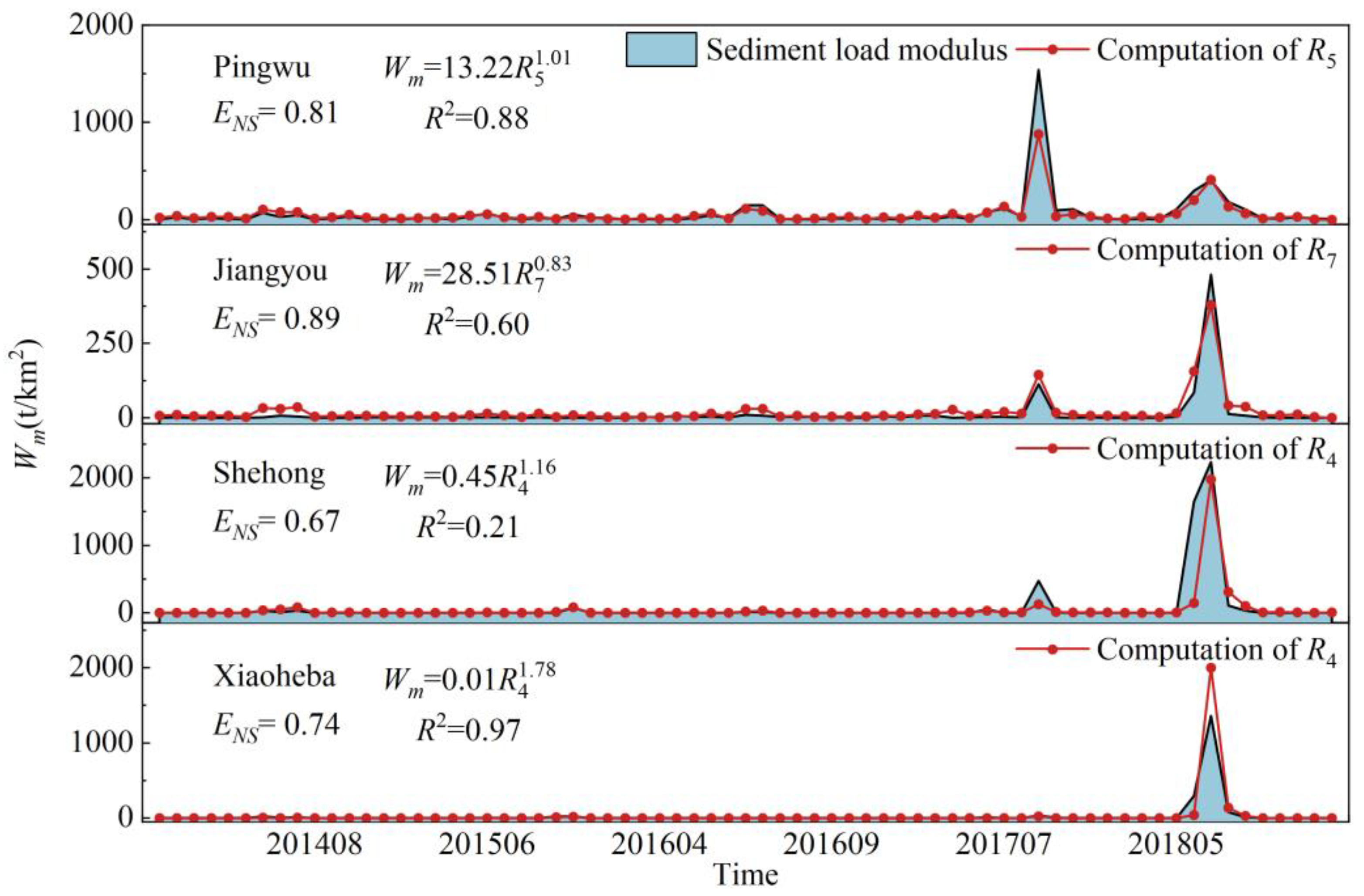
In this study, the 10 year rainfall, runoff and sediment data were divided into two periods: 2008~2013 and 2014~2018. The former period served as the model calibration period, while the latter was designated as the validation period. A power function was employed to fit the relationship between the periodic R factor and sediment transport modulus Wm for four stations in the Fu River basin, with optimal fitting R factors selected based on maximizing the determination coefficient. The results indicated that for Pingwu and Jiangyou stations—characterized by smaller watershed areas—the optimal fitting R factors were R5 and R7 respectively, both of which represent rainfall-runoff erosion factors. For the Shehong and Xiaoheba stations with large basin area, the optimal fitting R factor was the runoff erosion power R4 factor, which was consistent with the results of Section 4.1. The regression equation is illustrated in Figure 7. The overall regression models are highly significant, with p-values far below 0.001, indicating that the fitted relationships between R factors and sediment transport modulus are statistically robust. Using the constructed regression equations, predicted sediment transport modulus during the validation period was compared with observed values, showing fair correlation. The Nash efficiency coefficients for the four stations were 0.81, 0.89, 0.67, and 0.74, respectively. Deviations between predicted and observed values primarily occurred during extreme storm events. These deviations can be attributed to natural processes under extreme rainfall conditions, such as concentrated erosion of loose deposits and non-linear changes in sediment transport efficiency in large basins, which are not fully captured by the model based on regular rainfall–runoff relationships. Notably, during the two-and-a-half-month rainstorm flood events in 2017 and 2018, the fitting performance improved significantly, with errors lower than those observed in SWAT simulation results.

5. Discussion

This study evaluated the performance of different erosivity factors in simulating sediment transport modulus across watersheds of varying scales. Although the SWAT model, employing the MUSLE with a fixed runoff erosion power index of 0.56, yielded suboptimal simulations in our case, this discrepancy provides critical insight. Our calibrated power exponents for the Fu River Basin (ranging from 0.94 to 1.38) and those reported by Liu et al. (2023) [27] for other Upper Yangtze tributaries (0.71–1.07) deviate significantly from this default value. This discrepancy highlights that the quantitative relationship between erosive force and sediment yield is not universal, but is strongly influenced by the specific characteristics of a watershed, which echoes previous studies indicating a close link between sediment yield and watershed properties [34]. Therefore, calibrating the power exponent emerges as a prerequisite for achieving accurate simulations, a step as crucial as the selection of the R-factor type itself.
The applicability of different R-factors is governed by the dominant sediment transport mechanisms, which shift with watershed scale and geomorphology. In the small, mountainous upper reaches of the Fu River, the superior performance of composite factors like R5 and R7 can be attributed to the direct and rapid linkage between rainfall, runoff, and sediment supply. The abundance of loose seismic deposits in these areas means that hillslope erosion triggered by rainfall intensity (represented by factors like Pmax) is efficiently transported by concentrated flow (represented by Qmax), consistent with previous studies showing that earthquakes can significantly enhance sediment transport [35,36]. Here, the sediment response is primarily source-limited and controlled by short, intense events, which composite factors capture effectively. Conversely, in larger and topographically complex lower basins, the hydrological signal of rainfall is integrated and attenuated through infiltration, storage, and channel routing. Sediment dynamics shift to being transport-limited, dominated by in-channel processes such as scouring and redeposition. For example, in the Yarlung Tsangpo River Basin, sediment transport is influenced by factors other than rainfall, such as glacial meltwater and the proportion of unfrozen areas, which can affect the contribution of rainfall to sediment yield [37]. In this runoff-mediated complex sediment regime, the runoff erosion power (R4), which integrates total runoff volume and peak discharge, better characterizes the system.
The sediment transport process in watersheds is shaped by the complex interplay of natural and anthropogenic factors, including climate change, land-use alterations, and reservoir regulation [38,39,40], all of which collectively influence the intricate patterns of sediment movement. This study does not attempt to encompass all possible influencing factors but focuses on improving the core driving factors within hydrological models such as SWAT. Our results indicate that the selection of optimal R-factors exhibits significant spatial variability across different basins, posing a challenge to the conventional parameterization approaches in models like SWAT. A single fixed-factor approach is insufficient to capture the full spectrum of erosion and transport processes in diverse watersheds. To enhance model applicability, particularly for simulating storm-driven sediment transport in mountainous regions, we propose two improvements: first, the power exponent in MUSLE should be treated as a calibratable key parameter rather than a fixed constant; second, future model development should incorporate flexibility in the MUSLE module, allowing users to select from predefined R-factor algorithms (e.g., EI30, runoff erosion power, and the composite factors proposed herein) or even define custom algorithms.

6. Conclusions

According to the statistical values of rainfall, runoff and sediment transport in Pingwu station, Jiangyou station, Shehong station and Xiaoheba station in the Fujiang River basin from 2008 to 2018, this study selects two classical types of erosivity factors, the simple rainfall erosivity factor (EI30, Zhang Wenbo empirical formula, etc.) and the simple runoff erosion and sediment transport factor (runoff erosion power, etc.), and constructs a rainfall and runoff erosion factor including rainfall and runoff factors (four combinations of rainfall erosion factors). The power function relationship between each hydraulic erosivity factor and sediment transport modulus is analyzed, and the model is calibrated and verified at four stations. The main conclusions are as follows:
(1) Sediment transport is influenced by multiple complex factors. Focusing on the SWAT model’s core driver—the erosivity (R) factor—this study shows clear scale- and mechanism-dependent applicability. In small subwatersheds, where loose sediment is widely distributed following seismic events, composite rainfall–runoff factors (R5/R7) effectively capture both sediment generation and transport. In large watersheds, the runoff erosion power factor (R4), integrating total runoff and peak discharge, exhibits the strongest correlation and best overall performance;
(2) The power function relationship between erosivity factors and the sediment transport modulus demonstrates significant watershed-specific characteristics. The calibrated power exponents (0.94–1.38) deviate substantially from a fixed constant, indicating that treating it as a key calibratable parameter is essential for improving model accuracy;
(3) The storm runoff and sediment transport model based on the rate established on a regular basis can better simulate the erosion modulus during the verification period, especially during the rainstorm. The simulation results are better than the SWAT results.

Author Contributions

W.M.: Conceptualization, methodology, resources, and writing—original draft. Q.W.: Methodology, formal analysis, and writing—review & editing. Y.O.: Data curation and investigation. S.Z.: Conceptualization and supervision. X.H.: Supervision. C.L.: Data curation. X.L.: Supervision. All authors have read and agreed to the published version of the manuscript.

Funding

This work was supported by the National Natural Science Foundation of China (52109084, 52409095) and the Fundamental Research Funds for the Central Universities (2023MS066), and the Open Research Fund of the Key Laboratory of Sediment Science and Northern River Training, Ministry of Water Resources, China Institute of Water Re-sources and Hydropower Research (Grant No. IWHR-SEDI-2022-06).

Institutional Review Board Statement

Not applicable.

Informed Consent Statement

Not applicable.

Data Availability Statement

The raw data supporting the conclusions of this article will be made available by the authors on request.

Conflicts of Interest

Author Xiaonan Lin was employed by the Fujian Provincial Investigation, Design & Research Institute of Water Conservancy & Hydropower Co., Ltd. The remaining authors declare that the research was conducted in the absence of any commercial or financial relationships that could be construed as a potential conflict of interest.

References

  1. Borrelli, P.; Robinson, D.A.; Fleischer, L.R.; Lugato, E.; Ballabio, C.; Alewell, C.; Meusburger, K.; Modugno, S.; Schütt, B.; Ferro, V.; et al. An assessment of the global impact of 21st century land use change on soil erosion. Nat. Commun. 2017, 8, 2013. [Google Scholar] [CrossRef]
  2. Zhao, W.; Liu, Y.; Daryanto, S.; Fu, B.; Wang, S.; Liu, Y. Metacoupling supply and demand for soil conservation service. Curr. Opin. Environ. Sustain. 2018, 33, 136–141. [Google Scholar] [CrossRef]
  3. Papalexiou, S.M.; Montanari, A. Global and Regional Increase of Precipitation Extremes Under Global Warming. Water Resour. Res. 2019, 55, 4901–4914. [Google Scholar] [CrossRef]
  4. Syvitski, J.; Ángel, J.R.; Saito, Y.; Overeem, I.; Vörösmarty, C.J.; Wang, H.; Olago, D. Earth’s sediment cycle during the Anthropocene. Nat. Rev. Earth Environ. 2022, 3, 179–196. [Google Scholar] [CrossRef]
  5. Walling, D.E.; Fang, D. Recent trends in the suspended sediment loads of the world’s rivers. Glob. Planet. Change 2003, 39, 111–126. [Google Scholar] [CrossRef]
  6. Best, J. Anthropogenic stresses on the world’s big rivers. Nat. Geosci. 2019, 12, 7–21. [Google Scholar] [CrossRef]
  7. Yang, S.L.; Milliman, J.D.; Xu, K.H.; Deng, B.; Zhang, X.Y.; Luo, X.X. Downstream sedimentary and geomorphic impacts of the Three Gorges Dam on the Yangtze River. Earth Sci. Rev. 2014, 138, 469–486. [Google Scholar] [CrossRef]
  8. Guo, C.; Jin, Z.; Guo, L.; Lu, J.; Ren, S.; Zhou, Y. On the cumulative dam impact in the upper Changjiang River: Streamflow and sediment load changes. Catena 2020, 184, 104250. [Google Scholar] [CrossRef]
  9. Li, D.; Lu, X.; Overeem, I.; Walling, D.E.; Syvitski, J.; Kettner, A.J.; Bookhagen, B.; Zhou, Y.; Zhang, T. Exceptional increases in fluvial sediment fluxes in a warmer and wetter High Mountain Asia. Science 2021, 374, 599–603. [Google Scholar] [CrossRef]
  10. De Girolamo, A.M.; Pappagallo, G.; Lo Porto, A. Temporal variability of suspended sediment transport and rating curves in a Mediterranean river basin: The Celone (SE Italy). Catena 2015, 128, 135–143. [Google Scholar] [CrossRef]
  11. Bussi, G.; Dadson, S.J.; Bowes, M.J.; Whitehead, P.G. Seasonal and Interannual Changes in Sediment Transport Identified through Sediment Rating Curves. J. Hydrol. Eng. 2017, 22, 06016016. [Google Scholar] [CrossRef]
  12. Ran, Q.; Zong, X.; Ye, S.; Gao, J.; Hong, Y. Dominant mechanism for annual maximum flood and sediment events generation in the Yellow River basin. Catena 2020, 187, 104376. [Google Scholar] [CrossRef]
  13. Vercruysse, K.; Grabowski, R.C.; Rickson, R.J. Suspended sediment transport dynamics in rivers: Multi-scale drivers of temporal variation. Earth Sci. Rev. 2017, 166, 38–52. [Google Scholar] [CrossRef]
  14. Pszonka, J.; Schulz, B. SEM Automated Mineralogy applied for the quantification of mineral and textural sorting in submarine sediment gravity flows. Gospod. Surowcami Miner. 2022, 38, 105–131. [Google Scholar] [CrossRef]
  15. Pszonka, J.; Godlewski, P.; Fheed, A.; Dwornik, M.; Schulz, B.; Wendorff, M. Identification and quantification of intergranular volume using SEM automated mineralogy. Mar. Pet. Geol. 2024, 162, 106708. [Google Scholar] [CrossRef]
  16. Liu, S.W.; Miao, W.; Wang, Z.L.; Li, D.X. Study on sediment transport law of flood event in different areas of the Jialing River basin. Adv. Water Sci. 2022, 33, 38–47. [Google Scholar] [CrossRef]
  17. Xu, Q.X.Y.J. Study on characteristics and causes of sediment deposition in Three Gorges Reservoir in 2020. Yangtze River 2022, 53, 7–13. [Google Scholar] [CrossRef]
  18. Hao, J.X. Effects of Climate and Land Use and Land Cover Change on Streamflow and Sediment in Fu River Watershed. Master’s Thesis, Beijing Forestry University, Beijing, China, 2021. [Google Scholar]
  19. Li, P.Z. Study on Water-Sediment Change and Erosion Energy Spatial Distribution in Fujiang River Basin Based on SWAT Model. Master’s Thesis, Xi′an University of Technology, Xi′an, China, 2023. [Google Scholar]
  20. Lu, K.; Li, Z.; Li, P.; Ju, H. Prediction of watershed sediment transport for single rainstorm based on runoff erosion power. J. Chang. River Sci. Res. Inst. 2008, 3, 31–34. [Google Scholar]
  21. Wischmeier, W.H.; Smith, D.D. Predicting rainfall-erosion losses from cropland east of the Rocky Mountains. In Agricultural Research Service; U.S. Department of Agriculture: Washington, DC, USA, 1965; Volume 282. [Google Scholar]
  22. Efthimiou, N. Evaluating the performance of different empirical rainfall erosivity (R) factor formulas using sediment yield measurements. Catena 2018, 169, 195–208. [Google Scholar] [CrossRef]
  23. Ghosal, K.; Das Bhattacharya, S. A Review of RUSLE Model. J. Indian Soc. Remote Sens. 2020, 48, 689–707. [Google Scholar] [CrossRef]
  24. Zhang, W.B.; Liu, B.Y. Rainfall erosivity estimation using daily rainfall amounts. Sci. Geogr. Sin. 2002, 6, 705–711. [Google Scholar]
  25. Lu, K.X.; Ju, H.; Cheng, S.D. Study on a comparison of runoff erosion power and rainfall erosivity for single rainstorm event under different spatial scales. J. Northwest A F Univ. (Nat. Sci. Ed.) 2009, 37, 204–208, 214. [Google Scholar]
  26. Lin, X.L. Research on the Impact of Changing Underlying Surface and Heavy Rainfall on Watershed Soil Erosion. Master’s Thesis, North China Electric Power University, Beijing, Chia, 2022. [Google Scholar]
  27. Liu, S.; Wang, D.; Miao, W.; Wang, Z.; Zhang, P.; Li, D. Characteristics of runoff and sediment load during flood events in the Upper Yangtze River, China. J. Hydrol. 2023, 620, 129433. [Google Scholar] [CrossRef]
  28. Zhang, S.; Hu, X.; Miao, W.; Xu, Z. Analysis of the sediment sources of flood driven erosion and deposition in the river channel of the Fu River Basin. Int. J. Sediment Res. 2023, 38, 653–661. [Google Scholar] [CrossRef]
  29. Meng, X.; Liu, S.Y.; Wang, H.; Lei, X.H.; Liu, Z.H.; Zhao, Q.D. CMADS datasets and its application in watershed hydrological simulation: A case study of the Heihe River Basin. Pearl River 2016, 37, 1–19. [Google Scholar]
  30. Zhang, W.; Xie, B.; Liu, B.Y. Estimation of rainfall erosivity using rainfall amount and rainfall intensity. Geogr. Res. 2002, 3, 384–390. [Google Scholar]
  31. Zhang, Y.; Xu, G.; Li, Z.; Li, P.; Jia, L.; Wang, B. Simulation accuracy of runoff erosion power-sediment transfer model at different time scales. Res. Soil Water Conserv. 2020, 27, 1–7, 22. [Google Scholar] [CrossRef]
  32. Zhao, W.W.; Zhu, J.; Guo, W.W. Estimation of monthly rainfall erosivity based on rainfall amount and rainfall time: A case study in hilly and gully area of Loess Plateau in Northern Shaanxi. Sci. Soil Water Conserv. 2007, 6, 8–14, 42. [Google Scholar] [CrossRef]
  33. Jiang, K.; Mo, S.; Yu, K.; Li, P.; Li, Z. Analysis on the relationship between runoff erosion power and sediment transport in the Fujiang River basin and its response to land use change. Ecol. Indic. 2024, 159, 111690. [Google Scholar] [CrossRef]
  34. Fortesa, J.; Ricci, G.F.; García-Comendador, J.; Gentile, F.; Estrany, J.; Sauquet, E.; Datry, T.; De Girolamo, A.M. Analysing hydrological and sediment transport regime in two Mediterranean intermittent rivers. Catena 2021, 196, 104865. [Google Scholar] [CrossRef]
  35. Cheng, G.; He, X.; Chen, G.; Tao, H. Change in sediment load of the Yangtze River after Wenchuan earthquake. J. Mt. Sci. 2010, 7, 100–104. [Google Scholar] [CrossRef]
  36. Ding, H.; Li, Y.; Ni, S.; Ma, G.; Shi, Z.; Zhao, G.; Yan, L.; Yan, Z. Increased sediment discharge driven by heavy rainfall after Wenchuan earthquake: A case study in the upper reaches of the Min River, Sichuan, China. Quat. Int. 2014, 333, 122–129. [Google Scholar] [CrossRef]
  37. Wang, L.; Zhang, F.; Chen, Y.; Shi, X.; Zeng, C.; Wang, Y.; Qiangba, C.; Deji, B.; Awang, D.; Qiong, N. Investigating climate change impacts on runoff and sediment transport processes in the midstream of the Yarlung Tsangpo river based on hydrological simulation. Catena 2025, 254, 108920. [Google Scholar] [CrossRef]
  38. Dai, Z.; Mei, X.; Darby, S.E.; Lou, Y.; Li, W. Fluvial sediment transfer in the Changjiang (Yangtze) river-estuary depositional system. J. Hydrol. 2018, 566, 719–734. [Google Scholar] [CrossRef]
  39. Das, S.; Kandekar, A.M.; Sangode, S.J. Natural and anthropogenic effects on spatio-temporal variation in sediment load and yield in the Godavari basin, India. Sci. Total Environ. 2022, 845, 157213. [Google Scholar] [CrossRef] [PubMed]
  40. Binh, D.V.; Kantoush, S.; Sumi, T. Changes to long-term discharge and sediment loads in the Vietnamese Mekong Delta caused by upstream dams. Geomorphology 2020, 353, 107011. [Google Scholar] [CrossRef]
Figure 1. The general situation of the Fu River Basin and the location of hydrological stations. (a) Location map of the Fujiang River Basin; (b) Hydrological stations map.
Applsci 15 11353 g001
Figure 2. The power function relationship between rainfall erosivity factors R1, R2, R3 and sediment transport modulus Wm at each station in the Fu River Basin.
Applsci 15 11353 g002
Figure 3. The power function relationship between runoff erosion power R4 and sediment transport modulus Wm in each station of Fu River Basin.
Applsci 15 11353 g003
Figure 4. The power function relationship between rainfall and runoff erosion factor R5~R8 and sediment transport modulus Wm in each station in Fu River Basin.
Applsci 15 11353 g004
Figure 5. The correlation coefficient between different R factors and sediment transport modulus Wm at different stations.
Applsci 15 11353 g005
Figure 6. The correlation coefficient between rainfall, runoff and sediment factor and sediment transport modulus of each station in Fu River Basin.
Applsci 15 11353 g006
Figure 7. The relationship between sediment discharge and calculation results of each station in Fu River Basin from 2014 to 2018.
Applsci 15 11353 g007
Table 1. Evaluation metrics for model performance validation.
Evaluation ParametersFormulaEvaluation Criteria
ENS E N S = 1 i = 1 J Q m Q p 2 i = 1 J Q m Q a v g ¯ 2 (−∞, 1]
ρ ρ = cov X , Y σ X σ Y [−1, 1]
R2 R 2 = i = 1 J Q m Q a v g ¯ Q p Q p ¯ i = 1 J Q m Q a v g ¯ 2 × i = 1 n Q p Q p ¯ 2 2 [0, 1]
Disclaimer/Publisher’s Note: The statements, opinions and data contained in all publications are solely those of the individual author(s) and contributor(s) and not of MDPI and/or the editor(s). MDPI and/or the editor(s) disclaim responsibility for any injury to people or property resulting from any ideas, methods, instructions or products referred to in the content.