Article

Prediction of Sandstone-Type Uranium Deposits Based on Data from Oilfield Drilling and Its Mineralization Regularity: A Case Study of Jingchuan Uranium Deposit, SW Ordos Basin


1
Institute of Mineral Resources, Chinese Academy of Geological Sciences, Beijing 100037, China
2
School of Resources and Environmental Engineering, Hefei University of Technology, Hefei 230009, China
3
Tianjin Center, China Geological Survey, Tianjin 300170, China
4
North China Center of Geoscience Innovation, Tianjin 300170, China
*
Author to whom correspondence should be addressed.
Appl. Sci. 2025, 15(20), 11268; https://doi.org/10.3390/app152011268
Submission received: 30 June 2025 / Revised: 17 October 2025 / Accepted: 18 October 2025 / Published: 21 October 2025
(This article belongs to the Special Issue New Insights into Mineralization and Mining)

Abstract

A large-scale sandstone-type uranium deposit, recently discovered within the petroleum field of the Jingchuan area on the southwestern margin of the Ordos Basin, exemplifies a classic case of uranium exploration success achieved through the analysis of petroleum geological data including borehole logs. By synthesizing borehole radioactive logs and seismic surveys, we delineated target sandstone geometry, connectivity, and ore-controlling structures (e.g., paleochannels, redox interfaces). This study establishes a novel methodology for sandstone-type uranium exploration in petroliferous basins, unifying geophysical and geochemical datasets to define drill-validated targets. We integrated detailed core logging, petrography, and assay data to delineate the deposit’s geology. This included the host strata composition, ore-body morphology, mineralogy, and alteration assemblages. Our analysis identified the critical controls on mineralization: sandbody architecture, structural framework, and redox zonation. Based on these constraints, we constructed a genetic metallogenic model. Furthermore, we elucidated the mechanistic role of hydrocarbons in uranium mineralization and demonstrated the strategic potential of repurposing legacy oilfield data for synergistic uranium targeting. The Jingchuan uranium deposit provides both an exploration blueprint and theoretical foundations for uranium targeting in analogous sedimentary basins.

1. Introduction

Uranium resources, as critical strategic mineral assets, hold paramount importance in advancing global energy transition toward sustainable development, mitigating climate change impacts, and ensuring long-term energy security [1]. Sandstone-type uranium deposits have gained prominence worldwide due to their advantages such as large deposit size, low mining costs, and environmentally friendly mining processes [1,2]. Currently, sandstone-type uranium deposits account for approximately 60% of the global uranium production [3].
Petroleum, natural gas, and coal occur almost exclusively within sedimentary basins, predominantly those of the Mesozoic and Cenozoic Eras [4]. Advances in the geological exploration of sandstone-type uranium deposits have increasingly revealed spatial and temporal correlations between these deposits and oil/gas fields within sedimentary basins [5,6,7,8,9,10], suggesting a potential genetic relationship. This association is exemplified globally by deposits such as those in the Texas Coastal Plain (USA) [11], the Sabirsay mining district, Central Kyzylkum metallogenic province (Uzbekistan) [12], and within Qianjiadian (Songliao Basin) [13], Zaohuhao [14] and Dongsheng [6] (Ordos Basin), and Shihongtan (Turpan-Hami Basin) [13]. Notably, sandstone-type uranium deposits in North China’s basins frequently exhibit associations with hydrocarbons. Supporting evidence comes from fluid inclusion studies, which have identified abundant hydrocarbon inclusions within these uranium deposits [8,13]. Collectively, these findings indicate that hydrocarbons play a critical role in the mineralization processes of sandstone-type uranium deposits.
Traditional exploration for sandstone-type uranium deposits primarily relied on regional geological features (e.g., structural setting, stratigraphic evolution) and employed aerial geophysical surveys (magnetic, radiometric), ground gamma spectrometry, and radon emanometry to delineate prospective targets, followed by verification drilling [15]. However, this approach often resulted in a relatively low discovery rate. In contrast, the strategic reutilization of existing borehole data from coal and petroleum exploration offers a more efficient pathway. This methodology enables the rapid identification of prospective uranium zones and targets, significantly reducing exploration costs and shortening the discovery timeline [16]. Crucially, decades of intensive oil and gas exploration have generated vast archives of borehole data within petroleum companies, encompassing comprehensive wireline logs, detailed core descriptions from key intervals, and extensive 2D/3D seismic surveys acquired for structural and stratigraphic mapping. For instance, the Changqing Oilfield alone routinely drills over one million meters annually, providing an exceptional foundation for uranium exploration through data reutilization.
The Jingchuan uranium deposit, recently discovered on the southwestern margin of the Ordos Basin [17], represents an exemplary model for sandstone-type uranium exploration via the systematic integration and repurposing of legacy oilfield datasets (borehole logs, seismic). This study details the technical workflow for uranium prospectivity prediction based on integrated petroleum borehole and seismic data, elucidates the key geological characteristics of the Jingchuan deposit, and investigates the genetic links between hydrocarbons and uranium mineralization. Our findings provide novel exploration concepts applicable to analogous sedimentary basins.

2. A Method for Predicting Sandstone-Type Uranium Deposits Using Borehole and Seismic Data from Oil and Gas Fields

2.1. Feasibility and Technical Route

Historically, extensive exploration efforts targeting resources such as coal, petroleum, and natural gas have been conducted within sedimentary basins. However, due to sectoral fragmentation, these datasets have rarely undergone systematic integration or strategic reutilization. Significantly, the concept of leveraging big data from coal and petroleum exploration boreholes has recently been applied to strategic targeting and the evaluation of sandstone-type uranium deposits in key basins across northern China [16,18,19].
The fundamental objectives of sandstone-type uranium exploration—aligned with the unique metallogenic characteristics of sandstone-hosted uranium deposits—comprise:
(1) Identifying prospective regions through the integrated analysis of key regional geological data, specifically including tectonic evolution (e.g., basin formation processes and post-depositional tectonic activities that regulate sandbody preservation), sedimentary facies distribution (e.g., braided river or meandering river sandbodies, which serve as core ore-hosting media), paleohydrogeological conditions (e.g., redox zoning of groundwater systems, a critical factor for uranium precipitation), and the spatial scope of potential uranium source rocks (e.g., uranium-rich granites in peripheral mountain ranges or pre-depositional uranium-bearing strata); (2) Employing deposit-adapted technical methods to detect uranium mineralization and anomalies within favorable areas including ground gamma-ray spectrometry (for direct detection of uranium radiation anomalies), time-domain electromagnetic surveys (to map the continuity of ore-hosting sandbodies and identify redox interfaces), geochemical analyses (of uranium, Se, Mo, and V concentrations in soil, stream sediment, or groundwater to trace mineralization signals), and targeted exploratory drilling (to verify surface anomalies and confirm subsurface uranium enrichment); (3) Evaluating the local geological framework and critical exploration indicators—with a focus on core factors controlling sandstone-type uranium formation and distribution—to predict favorable tracts and assess regional metallogenic potential. Key controlling factors include the scale/connectivity of ore-hosting sandbodies, the stability of redox interfaces (the main site of uranium accumulation), the supply capacity of uranium-rich fluids, and post-mineralization preservation conditions; typical exploration indicators include sandbody thickness (>5 m in most cases), drill-core uranium anomaly intensity (>50 ppm), and synchronous anomalies of redox-sensitive elements; (4) Determining orebody dimensions (e.g., strike length, dip length, and average thickness) via drill-core logging and 3D geological modeling, clarifying grade distribution (e.g., average grade, grade continuity, and low-grade intercalations), and estimating potential resources in accordance with industry standards.
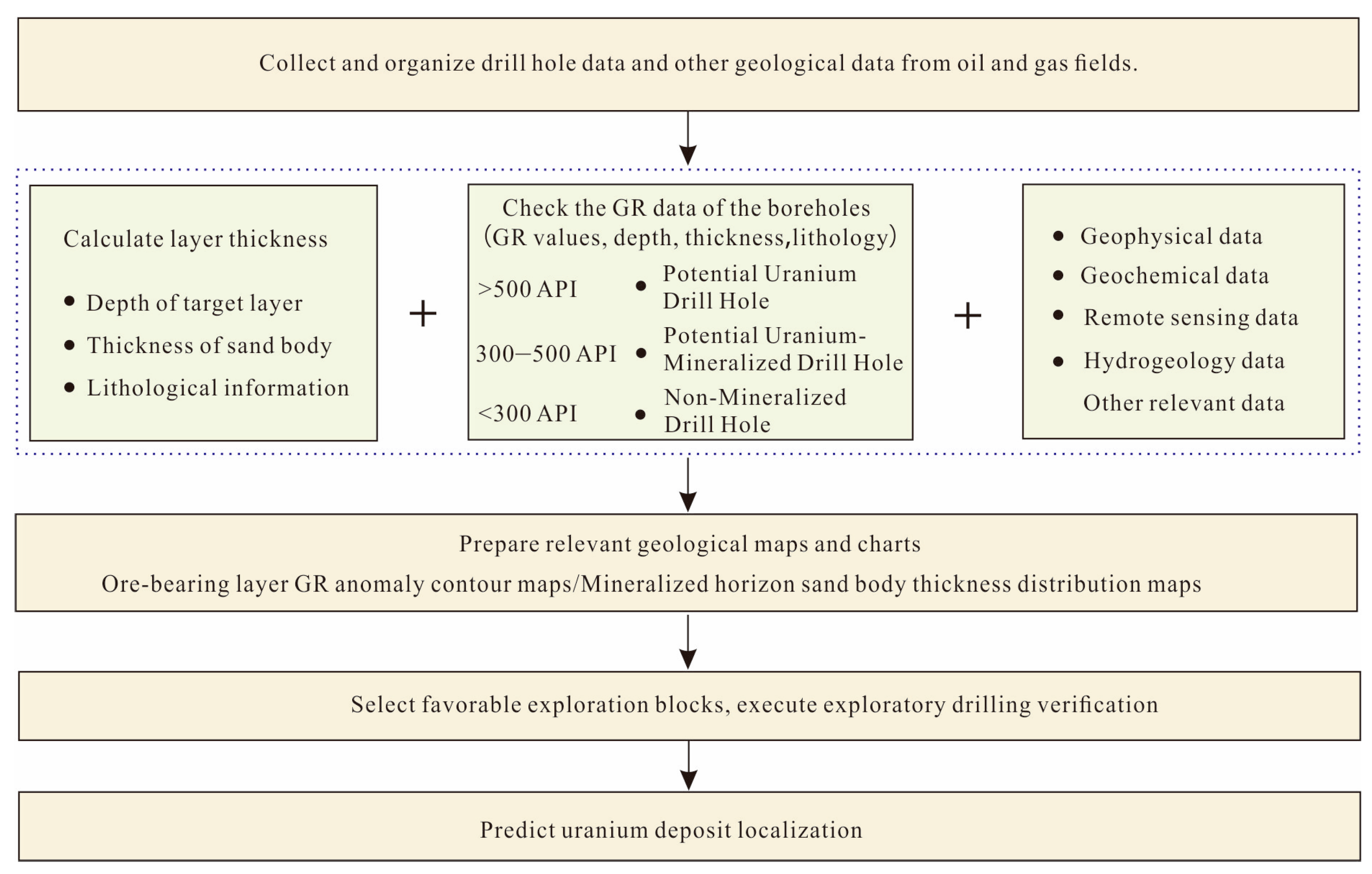
Figure 1 illustrates the workflow for sandstone-type uranium exploration utilizing the strategic reutilization of oilfield data.
Phase 1: Data acquisition and initial screening. This phase centers on standardizing oilfield data to filter out low-potential areas early. Borehole logs, seismic data, and related information from oilfield regions are systematically collected and standardized to consistent units/formats. Key parameters—including target horizon depth intervals, core lithology, and sandstone thickness—are compiled. Radioactive anomalies are identified by establishing region-specific threshold criteria based on stratigraphic background radiation levels, enabling the preliminary screening of anomalous boreholes and delineation of anomaly distributions via big-data analytics.
Phase 2: Integrated analysis and target delineation. Building on Phase 1’s findings, this phase validates mineralization potential via multi-disciplinary data to define high-confidence targets. Building upon the initial radioactive screening, geophysical, geochemical, hydrogeological, and remote sensing datasets are comprehensively analyzed. This integration facilitates the generation of thematic maps (e.g., radiation distribution, sandstone isopach, regional geology) and the systematic assessment of controlling factors such as tectonic setting, lithofacies distribution, lithology, paleoclimate/paleotopography, and paleohydrogeology. Prospective target areas are subsequently delineated. Overlap Phase 1 anomalies, favorable lithofacies, and fluid pathways.
Phase 3: Verification drilling. This phase confirms economic uranium mineralization through tailored drilling and post-drilling validation. Drilling: Re-enter anomalous oilfield boreholes (300–1000 m depth) or drill new wells in favorable zones (e.g., radon anomalies). Conduct wireline logging (natural gamma spectrometry for 238U quantification, neutron porosity logging); test cores for uranium grade (via inductively coupled plasma mass spectrometry [ICP-MS]), mineralogy (X-ray diffraction [XRD] for uraninite), and permeability. Mineralization is confirmed if core samples show an average uranium grade > 100 ppm.
Phase 4: Resource evaluation and upscaling. This phase converts confirmed mineralization into classified resources and expands discoveries toward medium-to-large deposits. Develop 3D geological models (e.g., via MRAS\3D mine) to define orebody dimensions (strike length, dip length, average thickness) and grade distribution (high-grade vs. low-grade zones). Follow-up drilling: Drill adjacent areas to expand orebody boundaries and verify grade continuity. Classify resources (inferred/indicated/measured) per standards.

2.2. Estimating Uranium Accumulation (Ua) Using Natural Gamma Ray (GR) Logs

Quantitative gamma logging is employed in uranium exploration to determine ore grade, thickness, and depth [20]. In contrast, coal and petroleum exploration utilize natural gamma (GR) and natural gamma-ray spectrometry (NGS) logging for source rock evaluation, the identification of high-radioactivity zones, and depositional environment assessment [21,22]. A critical incompatibility arises because GR/NGS data are recorded in API units or counts per second (cps), while quantitative gamma logging uses exposure rate units (nC/(kg·h)) or percent uranium (eU%). These divergent units and measurement scales preclude a direct comparison. Crucially, resource estimation for sandstone-type uranium deposits requires quantitative gamma data [23].
To address this challenge, Yu et al. developed specialized software for uranium accumulation (Ua) screening and calculation, establishing a robust correlation between natural gamma (GR) values and quantitative gamma measurements [23]. This correlation was derived through the comparative analysis of quantitative gamma logs from verification boreholes and GR logs from petroleum wells. The software automates the extraction and interpretation of vast coal and oilfield log datasets, enabling the determination of key parameters (grade, thickness, Ua) and lithology identification. This methodology provides essential support for predicting uranium reservoirs and evaluating resource potential within coal and petroleum exploration areas, significantly accelerating the resource assessment process.
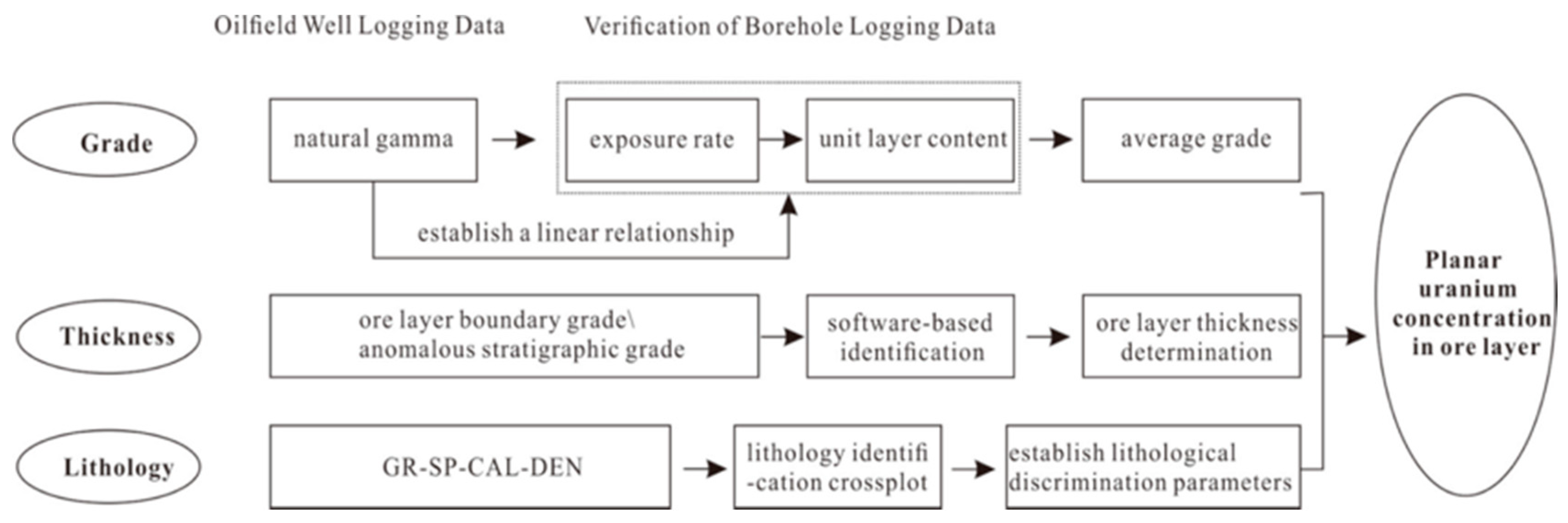
The Ua estimation workflow using GR data comprises three core components (Figure 2):
  • Establishing a correlation between GR response and uranium content to determine ore grade;
  • Automated detection of mineralized intervals exceeding the cut-off grade and calculation of their cumulative thickness using the Ua screening software;
  • Defining lithology discrimination parameters through the analysis of conventional log cross-plots.

2.3. Determination of Key Technical Indicators

Natural gamma-ray (GR) log data exhibit a quantifiable relationship with uranium content. By systematically screening GR logs from petroleum boreholes, radioactive anomalies are identified, and boreholes are classified based on the following key indicators:
Potential uranium borehole: Contains a GR anomaly at depths ≤ 1000 m meeting all criteria: anomaly thickness > 0.7 m; anomaly amplitude > 500 API (or >7 times local background). Anomaly lithology: sandstone or sandy mudstone (lithology may be waived if undetermined).
Potential uranium-mineralized borehole: Contains a GR anomaly at depths ≤ 1000 m meeting all criteria: anomaly thickness > 0.7 m; anomaly amplitude 300–500 API (or 3–5 times local background). Anomaly lithology: sandstone or sandy mudstone (lithology may be waived if undetermined).
Background borehole (non-anomalous): Exhibits any of the following at depths ≤ 1000 m: anomaly thickness < 0.7 m; anomaly amplitude < 300 API (or <3 times local background); anomaly amplitude > 300 API but hosted in mudstone.
Non-evaluable borehole: Lacks GR log coverage within the upper 1000 m, precluding definitive assessment for radioactive anomalies.
Note: Boreholes exceeding 1000 m depth require specific justification. Threshold values (API, background multiples) must be calibrated to regional geological background conditions.

2.4. Application Results

Employing the strategic reutilization of geological exploration data from coal and petroleum fields as the core methodology, this approach prioritized the discovery of in situ leachable sandstone-type uranium deposits within Mesozoic–Cenozoic uranium-prospective basins. Implementation has yielded significant outcomes, including the identification of numerous high-priority prospective zones and exploration targets, facilitating large-scale geological investigations and resource evaluations. Focusing on the Jingchuan uranium deposit in the Changqing Oilfield (SW Ordos Basin) as a representative example, through the screening more than 8000 oilfield drilling data, 1077 radioactive anomaly boreholes were systematically selected, and the uranium mineralization area were delineated to nearly 2000 km2. Six prospecting targets were newly discovered, and the drilling implementation rate, including industrial drilling, was nearly 60% [24]. Mineralization exhibited favorable characteristics (substantial thickness, high uranium accumulation [Ua], excellent permeability). Cumulative inferred resources reached the supergiant deposit scale, with the Jingchuan VI sector alone classified as giant-grade [17]. Critically, this methodology has been proven to be transferable, generating significant uranium discoveries in the Songliao and Erlian Basins.

3. Sampling and Methods

To characterize the mineralogical, petrological, and geochemical features of the Jingchuan uranium deposit (ore-hosting Luohe Formation sandstones), the following original experimental methods were implemented. All samples were collected from the mineralized interval of the Luohe Formation in the Jingchuan uranium deposit, ensuring direct relevance to the study’s core objectives.

3.1. Petrographic Analysis

A total of 12 sandstone samples were selected, all derived from the mineralized segment of the Luohe Formation in the Jingchuan uranium deposit. Samples were chosen to cover different orebody thicknesses and grade intervals to represent the overall mineralization characteristics.

3.2. Scanning Electron Microscopy

Eight fresh, unweathered sandstone samples were collected from high-grade mineralized zones (average U grade > 0.015%) to avoid artificial alteration. Samples were cut into 1 cm × 1 cm × 1 cm blocks and sputter-coated with a carbon layer to enhance electrical conductivity. The scanning electron microscope was a Nova Nano SEM450 model (FEI Company, Hillsboro, OR, USA), which is a field emission scanning electron microscope. The main objective was to observe the microscopic structure of uranium minerals, the surface texture of the ore within the sandstone, and the associated minerals.

3.3. Short-Wave Infrared (SWIR) Drill Core Scanning

A total of 900 m of drill cores from one exploration borehole (targeting the Luohe Formation) were scanned. To ensure uniform data coverage, sampling points were set at 10 cm intervals (consistent with the instrument’s precision and the need to capture fine-scale mineral variation), resulting in ~9000 valid spectral data points. The CMS350B core scanning system (Nanjing Center, China Geological Survey, Nanjing, China), which integrates an ASD TerraSpec® 4 spectrometer (Analytical Spectral Devices, Inc., Boulder, CO, USA) and an automatic mechanical mobile platform, was used.

3.4. Major Element Analysis

A total of 19 samples were analyzed including 5 mineralized sandstone samples (from the uranium-rich interval of the Luohe Formation) and 14 non-mineralized background samples. This design allowed for a comparison of the elemental differences between the mineralized and non-mineralized intervals. An X-ray fluorescence (XRF) spectrometer was used to determine the concentrations of the major oxides (SiO2, Al2O3, Fe2O3, FeO, CaO, MgO, Na2O, K2O, P2O5, TiO2).

4. Geological Characteristics and Main Mineralization Regularities of the Jingchuan Uranium Deposit

4.1. Regional Geological Characteristics

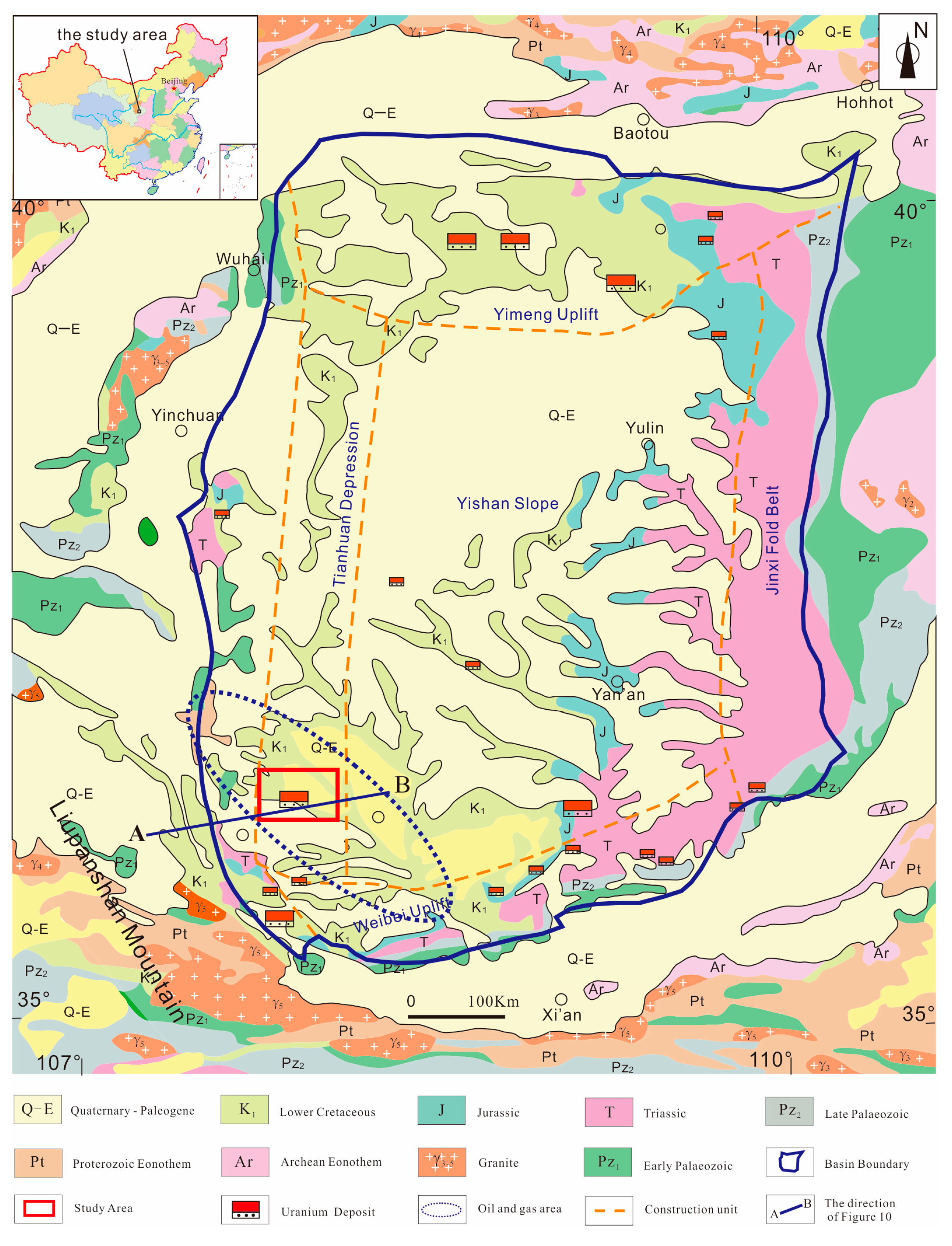
The Ordos Basin is a large polycyclic superimposed basin developed upon the North China Craton [25]. Encompassing an area of approximately 2.5 × 10⁵ km2 and exhibiting a roughly north–south orientation, it constitutes a significant multi-energy basin in China, hosting petroleum, natural gas, coal, uranium, and other resources [26]. The basin is bounded by the Lüliang Mountains to the east, the Liupanshan Mountains, Qilian Mountains, and Alxa Block to the west, the Qilian Mountains and Qinling Orogenic Belt to the south, and the Yinshan Uplift to the north (Figure 3). The basin features a distinct dual basement structure. The basement comprises an Archean to Paleoproterozoic crystalline metamorphic basement and Mesoproterozoic to Paleozoic marine limestone sequences [27]. These ancient basement rocks are exposed in the peripheral erosion source areas around the Ordos Basin, providing abundant source materials for the deposition of the basin cover and laying the foundation for initial uranium enrichment. The basin cover consists of Mesozoic to Cenozoic continental clastic sedimentary rocks [14] including the Triassic, Jurassic, Lower Cretaceous, Paleogene, Neogene, and Quaternary systems. The Triassic, Jurassic, and Lower Cretaceous systems constitute the main sedimentary sequences within the basin. Important hydrocarbon source rocks and significant oil and gas reservoirs are developed within the Triassic system. The Jurassic system hosts major coal-bearing strata and serves as the primary sandstone-type uranium ore-bearing layer in the northern basin. The Cretaceous system is widely exposed in the northern and southeastern parts of the basin and is also an important uranium-hosting stratum in the southwest. Paleogene and Neogene outcrops are sparsely distributed, while the Quaternary system covers extensive areas in the central and southern basin, forming loess landforms.
Based on basement characteristics and tectonic evolution, the basin is typically divided into six secondary structural units: the Western Thrust Belt, Tianhuan Sag, Yimeng Uplift, Yishan Slope, Weibei Uplift, and Jinxi Flexural Fold Belt [29] (Figure 3). These structural units exert a significant control over the distribution of sandstone-type uranium ore clusters within the Ordos Basin. For instance, important uranium ore clusters are developed within the Western Thrust Belt, Tianhuan Sag, Yimeng Uplift, and Weibei Uplift. Faults and folds are relatively well-developed along the basin margins, providing pathways for deep-seated fluids, which are highly conducive to uranium mineralization.

4.2. Geological Characteristics of the Jingchuan Uranium Deposit

4.2.1. Geological Structural Features

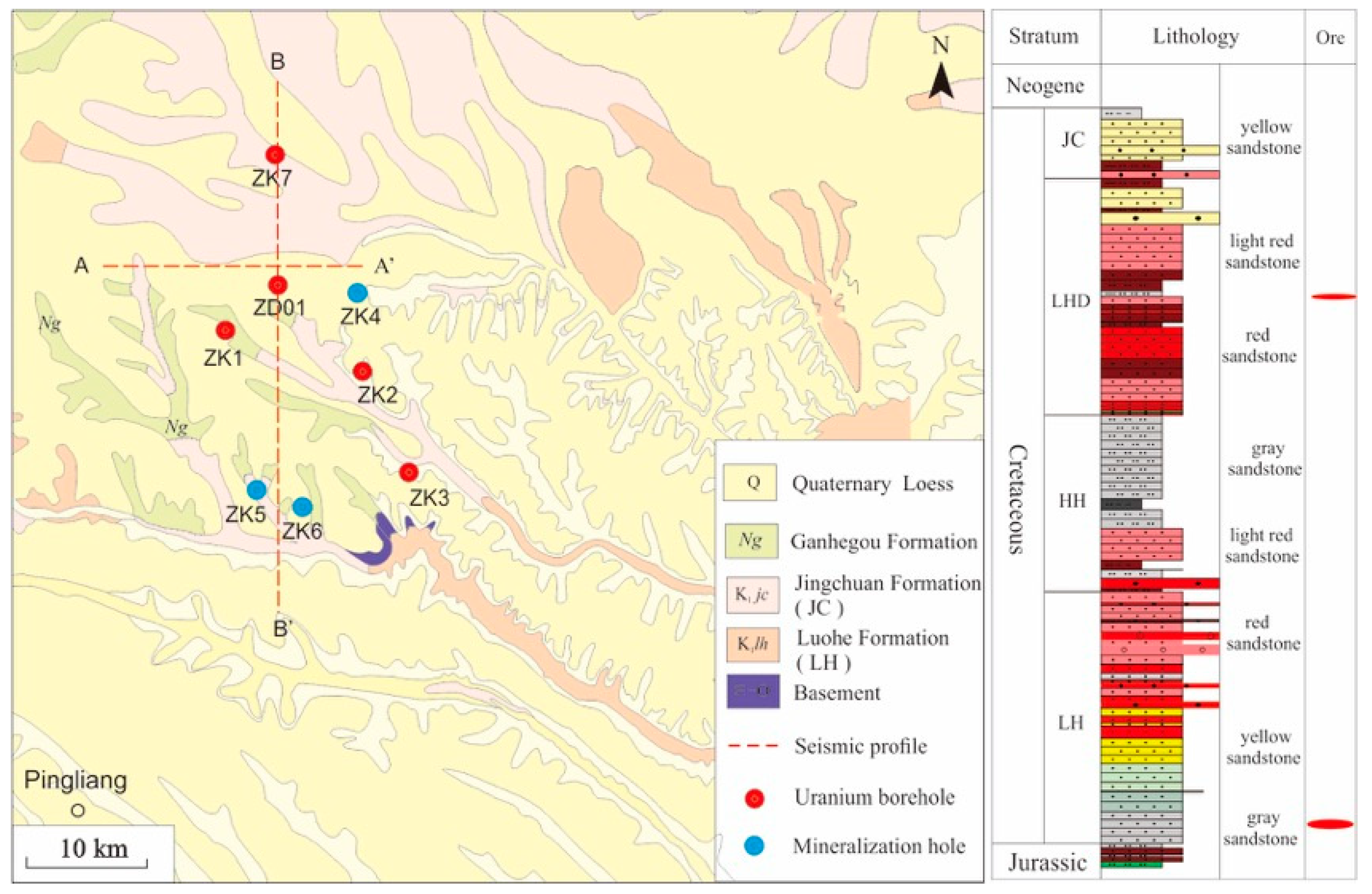
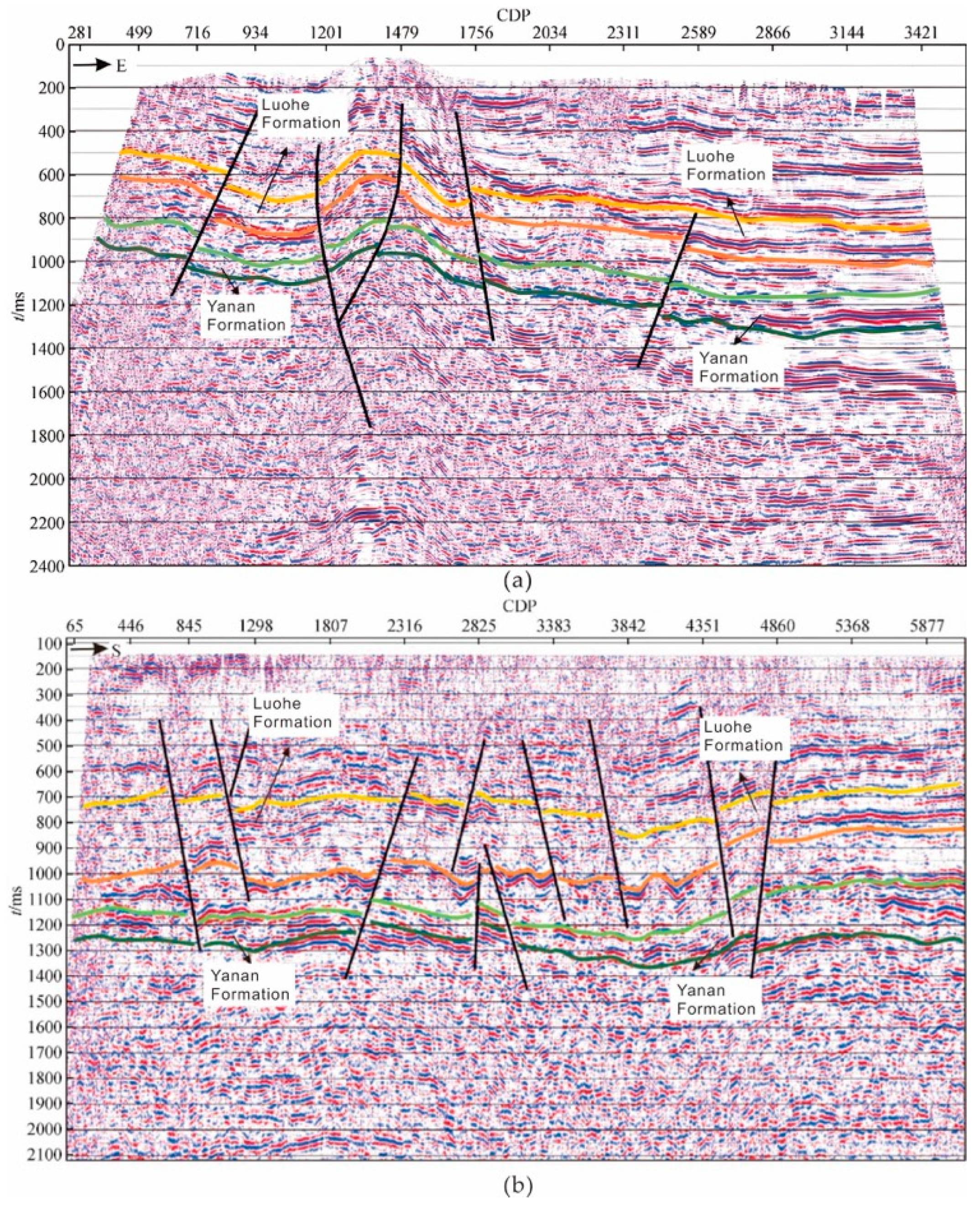
The Jingchuan uranium deposit is situated on the southwestern margin of the Ordos Basin (Figure 3). Tectonically, it lies on the southern edge of the Tianhuan Sag, adjacent to the Liupanshanshan Orogenic Belt (part of the southern Western Thrust Belt) to the west, and borders the Yishan Slope to the east [30]. The structural framework within the study area exhibits a predominantly NNW–SSE orientation (Figure 4), characterized by numerous thrust-nappe structures and folds [30]. Field observations, combined with seismic and gravity data interpretation, have revealed extensive fault development in the region(Figure 5) [31], dominated by NW-trending and approximately NNW–SSE striking faults. The uranium mineralized district of Jingchuan exhibits a spatial distribution concordant with the regional structure, forming an elongated rectangle striking roughly north–south. It measures over 60 km in length (N–S) and approximately 33 km in width (E–W) [32].
Since the Late Jurassic, multiple angular unconformities have been widely developed in the southwestern part of the basin [33], notably between the Upper Jurassic and Lower Cretaceous, the Lower Cretaceous and Oligocene, and the Neogene and Quaternary. The study area is located within the Qingyang Nosed Uplift [34], an important structural trap for oil and gas reservoirs. The main ore bodies of the Jingchuan deposit occur in a relatively stable sector within the Tianhuan Sag, where faulting along the western margin is extensively developed. This stable stratigraphic architecture provides thick, sandstone-type uranium-bearing sequences with favorable “mud-sand-mud” configurations. The faults interconnect different stratigraphic levels, facilitating fluid migration—particularly the upwelling of deep-seated reducing fluids—which further constrains the location of favorable uranium mineralization.

4.2.2. Stratum

The uranium-bearing strata in the study area belong to the Lower Cretaceous and can be subdivided, in ascending order, into the Yijun (K1y; abbrev. YJ), Luohe (K1l; abbrev. LH), Huanhe (K1h; abbrev. HH), Luohandong (K1lh; abbrev. LHD), and Jingchuan (K1jc; abbrev. JC) Formations. These units are dominated by aeolian, alluvial-fluvial, fluvial, and lacustrine sedimentary facies. Aeolian facies are primarily developed in the upper members of the LH and LHD Formations. The LH Formation sandstone exhibited the most extensive distribution and greatest thickness, and constitutes the primary uranium-bearing stratum.
No surface outcrops of the LH Formation occur within the study area; these are only encountered in deep boreholes. In the Jingchuan area, the LH Formation displayed a relatively stable distribution (Figure 4) and thicknesses ranging from 150 to 400 m [28]. Lithologically, it consists predominantly of brownish-red to purplish-red, very thick-bedded, fine- to coarse-grained sandstones, interbedded with medium-thin beds of pebbly sandstone, siltstone, and mudstone. At the basin scale, the LH sandbodies are characterized primarily by aeolian dunes, dominated by sandwave and collapse structures. Typical desert sedimentary features are evident including streak laminations, ventifacts, and large-scale, high-angle cross-bedding [35]. Locally, desert lake and wadi deposits are observed. In summary, based on lithology, color, and sedimentary structures, the aeolian depositional system of the LH Formation in the southwestern Ordos Basin can be interpreted as a multi-genetic sedimentary assemblage comprising both aeolian deposits and genetically associated aqueous deposits.

4.2.3. Ore Body Characteristics

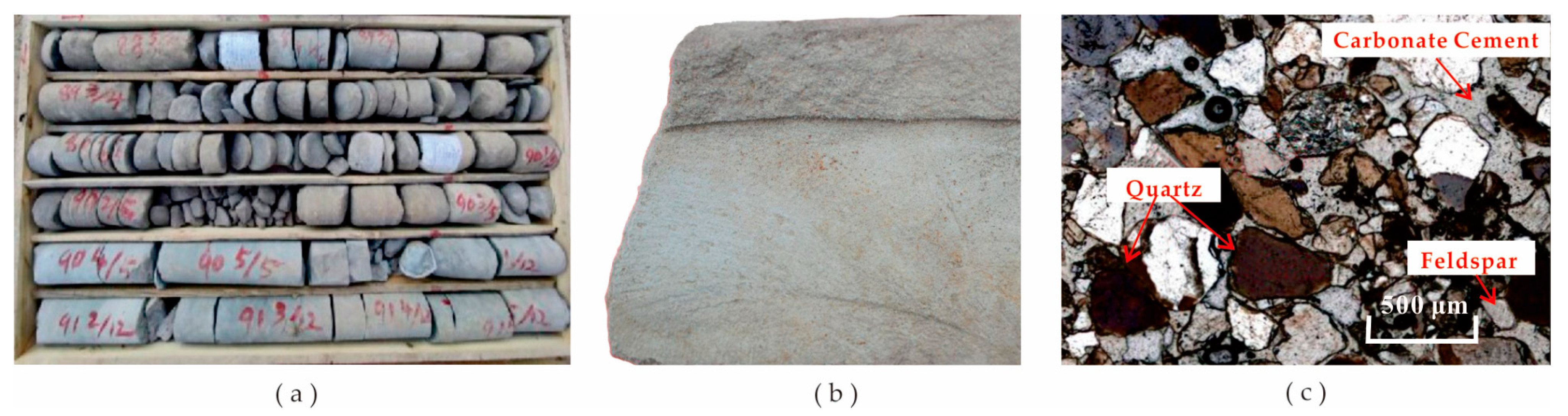
The Jingchuan uranium deposit hosts 1–3 ore bodies, with the thickest reaching over 50 m. The average ore grade exceeds 0.01%, and the uranium accumulation per unit area ranges from 3.05 to 9.78 kg/m2 [36]. The ore bodies are inferred to be predominantly tabular and single-layered, trending roughly NE–SW, aligning with the orientation of regional faults. The ore types are relatively uniform, primarily the sandstone-type. Uranium mineralization occurs mainly in light gray, grayish-white, and greenish-gray fine- to medium-grained sandstones (Figure 6a,b). Minor occurrences are found locally in pebbly sandstones and conglomerates. The ore generally exhibits a fine- to medium-grained sandy texture and massive structure. Most ore is friable, with overall high porosity predominantly between 10% and 25%. The uranium reservoir exhibits favorable permeability, mainly concentrated in the range of 10–1000 mD. Unlike many other sandstone-type uranium deposits, ore from Jingchuan contains very little carbonaceous debris and low pyrite content.
Vertical color zonation is evident in the LH Formation sandbodies, divided into three distinct units from top to bottom:
  • Upper unit: Reddish to light red and yellow oxidation zones.
  • Middle unit: Gray-dark gray reduction zones hosting uranium mineralization, overlain by oxidation–reduction transition facies.
  • Lower unit: Mottled red-gray mixed zones.
Ore-bearing sandstones within the second unit are primarily composed of gray medium-to fine-grained alkali feldspar litharenite. Clastic components consist of quartz, feldspar, and lithic fragments, exhibiting a subangular grain shape with moderate sorting and chaotic distribution. Quartz particles show clean surfaces with occasional secondary overgrowths. Feldspars are predominantly plagioclase with minor potassium feldspar and rare granitic components. Lithic fragments include volcanic, high-grade metamorphic, phyllite, schist, slate, metasandstone, and minor limestone materials, accompanied by sporadic biotite/muscovite flakes. Interstitial spaces are primarily filled with pore-filling cements (average 5–10%, lower than other domestic deposits) composed of ankerite, calcite, silica, and iron oxide cements.

4.3. Mineralization Patterns

4.3.1. Source of Ore-Forming Materials

For the Jingchuan deposit’s host Lower Cretaceous strata, prior provenance studies [25,26,37] have established that the sedimentary system was shaped by Mesozoic tectonic evolution of the Ordos Basin. Constrained by multiphase tectonic events, the basin’s Lower Cretaceous strata developed a unified sediment provenance system rather than fragmented sources. The primary sediment suppliers were the Cretaceous paleo-uplift in the western basin (which contributed weathered materials from underlying older strata) and, at the regional scale, the Alxa Block, North China Craton, and Qilian Orogenic Belt [38]. More importantly, this sediment provenance framework directly informs the identification of the ore-forming uranium source for the Jingchuan deposit. The western basin key sediment suppliers expose Paleoproterozoic uranium-rich granites. Weathering of these granites would have released detrital uranium and dissolved uranium into surface runoff, which was then transported into the Ordos Basin alongside clastic sediments [39]. Additionally, drill-core samples from the Jingchuan deposit’s LH Formation showed a positive correlation between the uranium concentrations and REE patterns that was similar to the Belt granites, confirming a genetic link between the sediment source and uranium input [32].

4.3.2. The Occurrence of Uranium Minerals

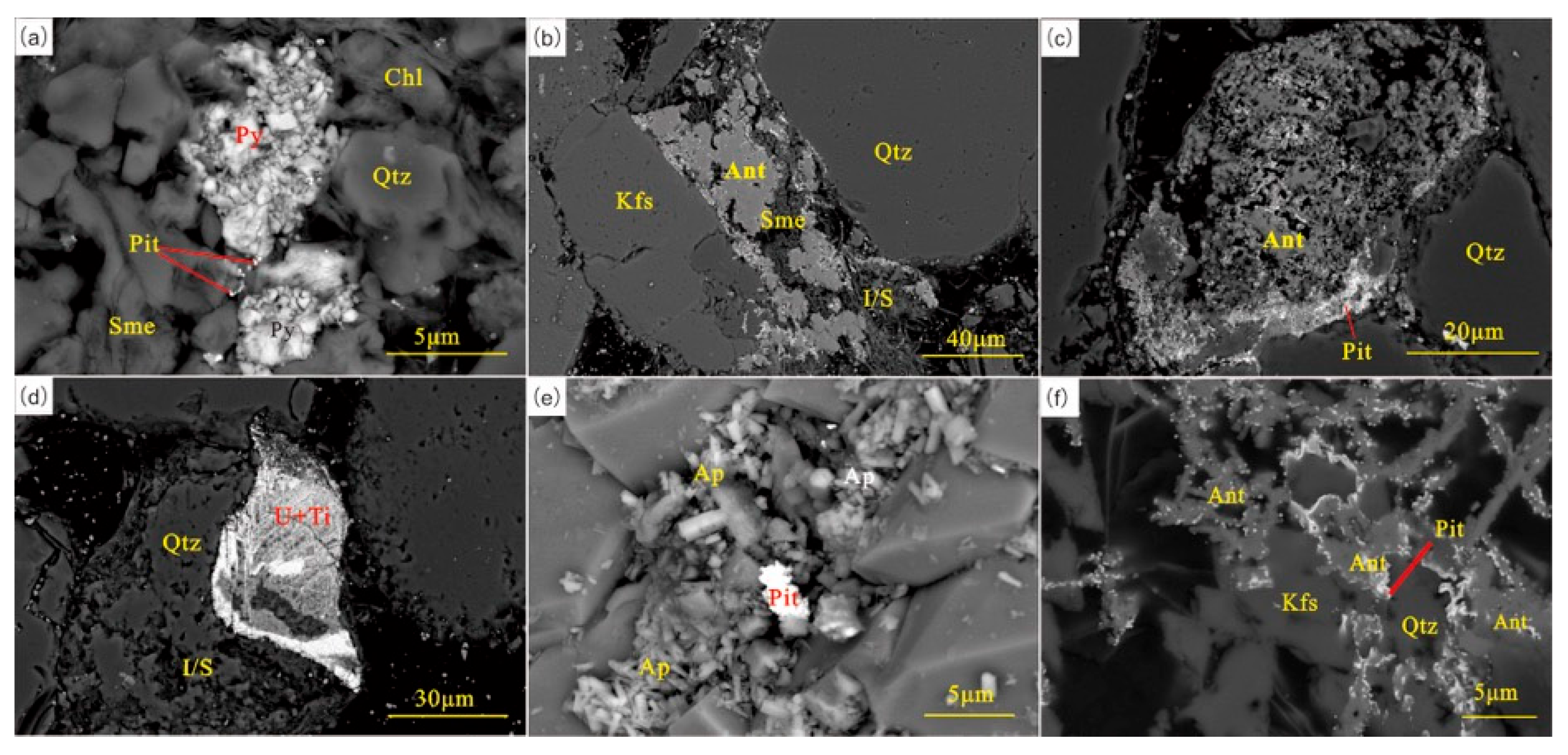
In the Jingchuan uranium deposit, the occurrence states of uranium can be categorized into two major types: uranium minerals and adsorbed uranium. Uranium minerals are predominantly uraninite, followed by titanium-bearing uranium minerals and minor pitchblende. Adsorbed uranium is mainly associated with clay minerals, with rare occurrences of organic matter adsorption. Scanning electron microscopy (SEM) observations of micro-morphologies and backscattered electron (BSE) images of uranium-bearing samples revealed typical paragenetic assemblages of uranium minerals(Figure 7), including:
  • Uraninite + rutile;
  • Uraninite + pyrite;
  • Uraninite/pitchblende + apatite;
  • Uraninite + calcite;
  • Uraninite + clay minerals.
Among these were uranium minerals associated with rutile and apatite dominate. Uraninite occurs as stellate or massive textures intergrown with rutile, with some uranium mineral grains observed rimming rutile edges. Uraninite forms ribbon-like textures along pyrite margins through replacement or fills fractures, typically postdating pyrite formation [40]. Stellate uraninite or pitchblende coexists with fine-grained apatite on particle debris surfaces and intergranular spaces. The porous and loose interstitial spaces in the sandstone matrix act as primary pathways for uranium-bearing ore-forming fluid migration and serve as favorable reservoirs for uranium precipitation and mineralization.
Additionally, Zhao et al. employed sequential chemical extraction methods to quantitatively investigate adsorbed uranium occurrence forms in the Jingchuan uranium deposit [28]. Results indicated carbonate-bound and residual states as predominant, with proportions of organic/sulfide-bound (22.73%) > Fe/Mn oxide-bound (1.78%) > exchangeable ions (trace). Consequently, uranium in the Jingchuan deposit primarily exists as both uranium minerals and adsorbed uranium, with mineral-bound uranium significantly outweighing the adsorbed forms.

4.3.3. Mineralization Age

Conventional whole-rock U-Pb dating has been the primary method for determining the mineralization age of sandstone-type uranium deposits. However, this approach typically yields the ages of detrital zircons rather than the epigenetic uranium mineralization event itself, and thus fails to accurately reflect the true timing of uranium ore formation [41]. To address this limitation, Zhao et al. employed in situ microanalytical techniques using fs-LA-MC-ICP-MS to date coarse-grained uranium minerals from the Jingchuan deposit, obtaining an age of ca. 0.4 Ma [28]. Furthermore, coffinite mineral dating in the Ningdong area of the Ordos Basin yielded ages ranging from 10.7 to 3.9 Ma [42], and microanalytical dating of pitchblende from the adjacent Guojiawan deposit also indicated an age of approximately 10 Ma. Collectively, these results indicate that uranium mineralization in this region occurred primarily during the Pliocene to Pleistocene epochs, postdating the development of the loess landscape. This mineralization phase corresponds to an interval of tectonic quiescence within the regional tectonic framework, particularly following the Himalayan orogeny after ca. 10 Ma [38]. Throughout the entire basin, uranium mineralization ages predominantly range from 110 to 6.2 Ma. Thus, the Miocene to Pleistocene epochs represent the principal period of uranium mineralization for the Jingchuan deposit, and more broadly for uranium mineralization in the southwestern Ordos Basin.

4.3.4. Mineral Composition

The uranium-bearing rock series is primarily of aeolian sedimentary origin. Influenced by the original aeolian depositional characteristics, the overall content of alteration minerals is relatively low. However, influenced by later fluid influx and mineralization processes, a series of alteration phenomena still developed. Microscopic studies and core spectral scanning have revealed that the main alteration minerals in the Jingchuan uranium deposit include iron oxides (hematite, limonite), carbonates (calcite, ankerite), gypsum, anatase, fine-grained apatite, clay minerals, and quartz overgrowths. Among these, the alteration minerals most closely associated with uranium mineralization are primarily iron oxides, gypsum, and apatite. The LH Formation sandstone generally contains very little organic matter, such as clay minerals and pyrite; however, where these do occur within mineralized sections, significant uranium enrichment is observed.
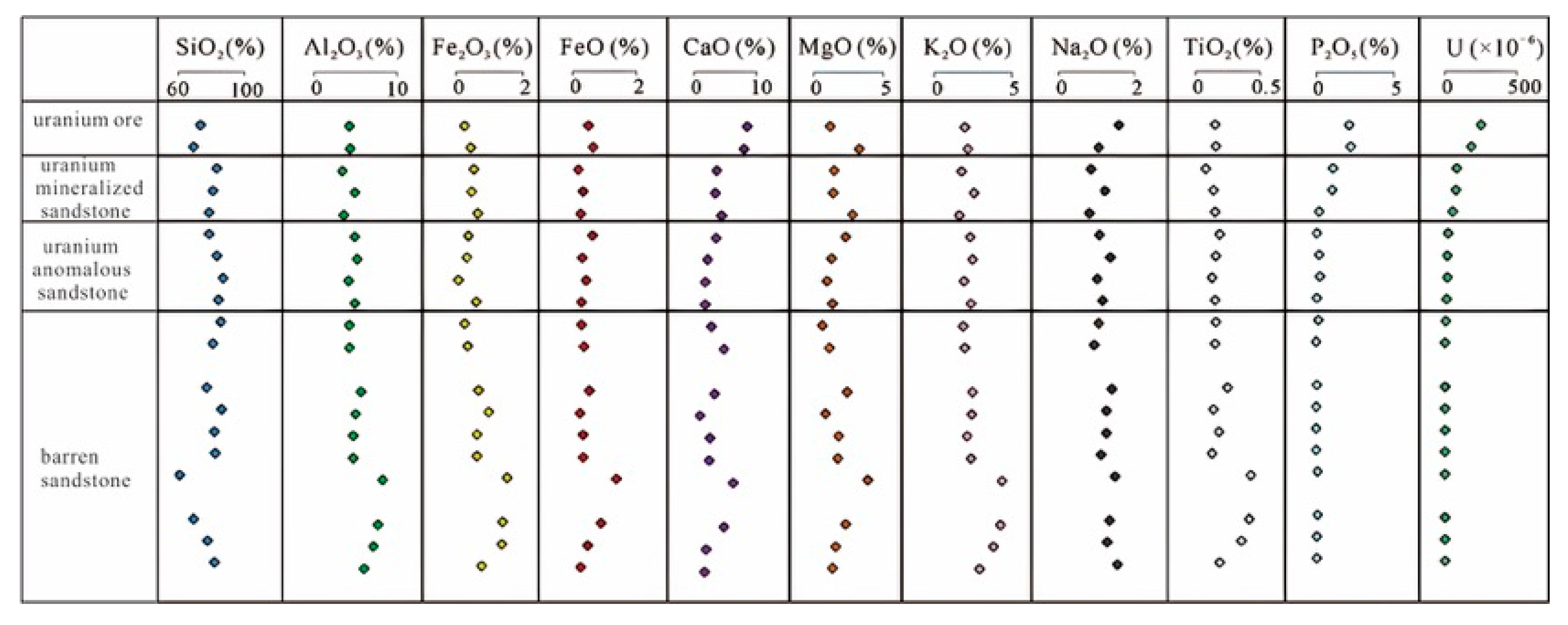
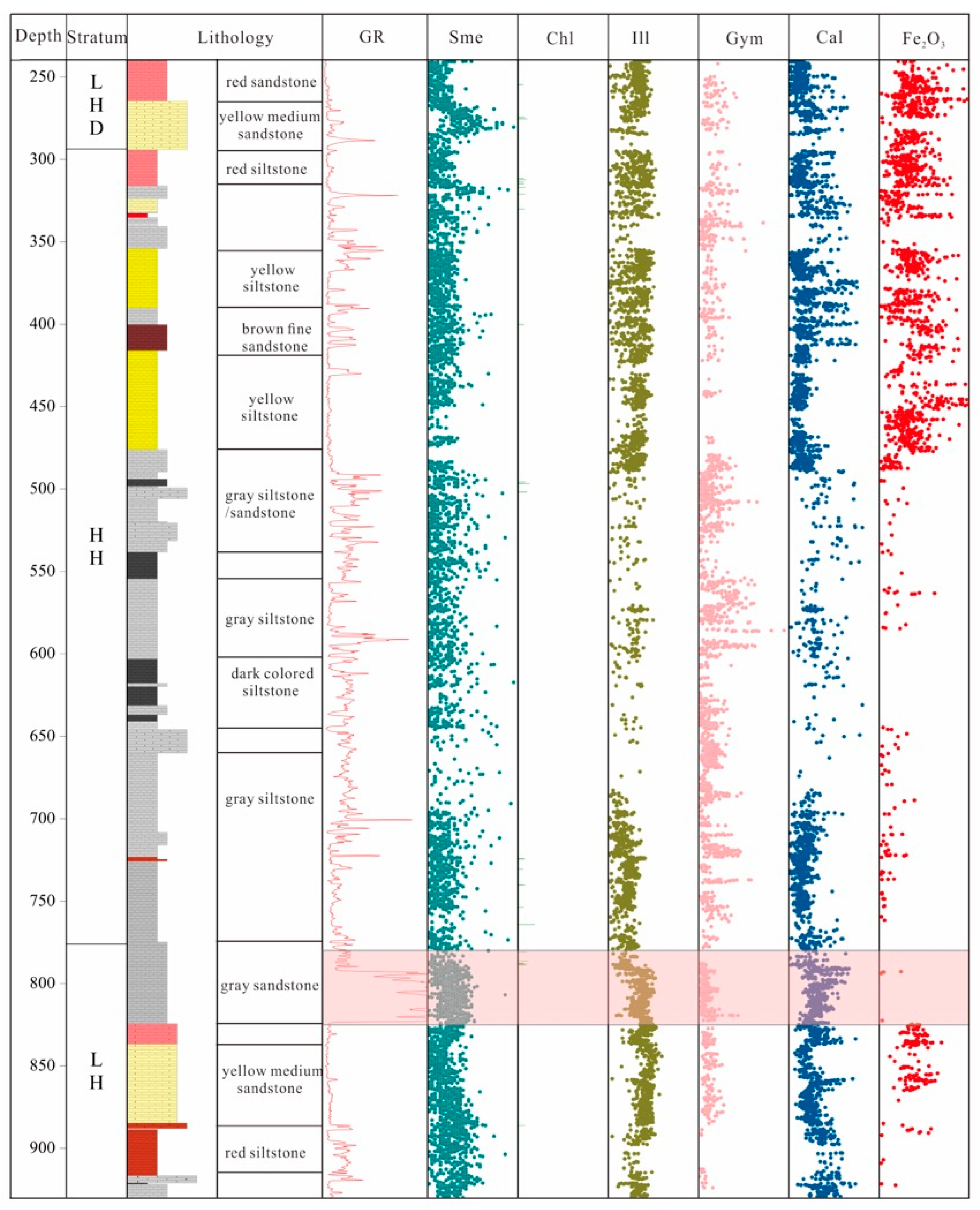
Mineral analysis of borehole cores in the study area using infrared spectral scanning technology identified that minerals within the LH Formation primarily included illite, chlorite, carbonates, gypsum, iron oxides, and montmorillonite (Figure 8). Compared with geological logging and other experimental methods, these results provide a more detailed depiction of the vertical distribution characteristics and relative abundances of various minerals throughout the stratigraphic profile. Although the LH Formation is overall a red, oxidized sequence, the most pronounced change within the uranium-mineralized intervals is bleaching alteration, where red sandstones are altered to gray and greenish-gray hues. Mineralogically, this is most prominently manifested by a reduction in ferric iron oxides. Acicular apatite is often associated with uranium minerals, which typically occur as disseminated grains or aggregates adsorbed onto the peripheries of apatite crystals. Elemental geochemical data also indicate a strong correlation between phosphorus and uranium (Figure 9). Pyrite occurs only locally near mineralized zones, predominantly as anhedral grains in banded, nodular, disseminated, massive, and colloidal forms. Colloidal pyrite shows the closest association with pitchblende [43]. Clay minerals primarily function as adsorbents during uranium mineralization. Both the core infrared spectral scanning (Figure 8) and X-ray diffraction (XRD) [43] results indicate that within the main uranium-mineralized intervals of the LH Formation at Jingchuan, clay minerals are dominated by illite and illite/smectite mixed-layer clay, with montmorillonite essentially absent. Chlorite content is slightly reduced within the mineralized zones.

4.3.5. Mineralization Model

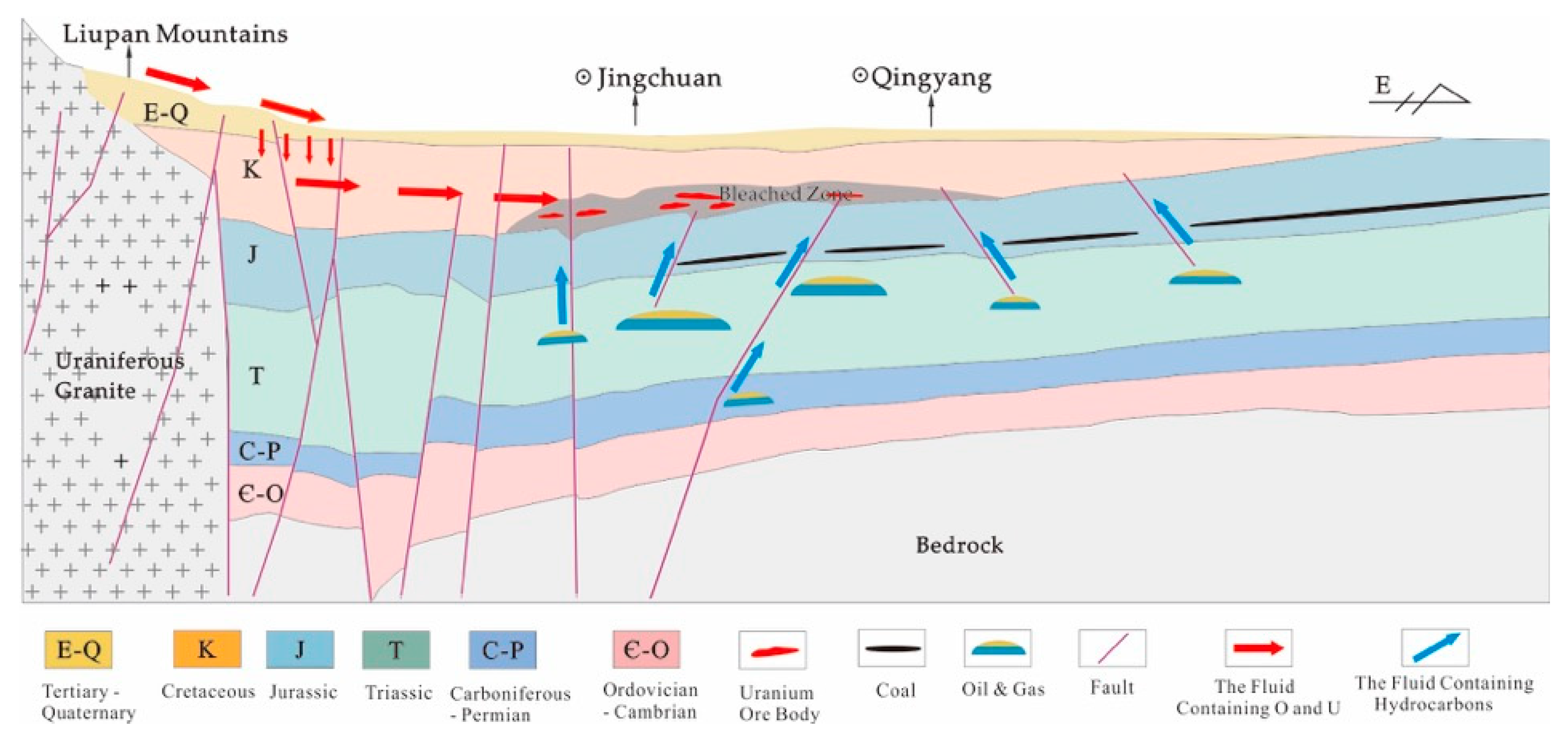
The metallogenic process of the Jingchuan sandstone-type uranium deposit can be divided into two stages through systematic research on ore-forming factors such as basin tectonic evolution, provenance-uranium source systems, structural triggering mechanisms, and fluid alteration processes during uranium mineralization (Figure 10). This established metallogenic model—which serves as a predictive exploration framework—is characterized by fluid-coupling mineralization. Overall, the mineralization process of the Jingchuan uranium deposit can be summarized as having happened in two stages: the original pre-enrichment stage and the fluid coupling mineralization stage. In the original pre-enrichment stage (late Jurassic–early Cretaceous), during basin subsidence in the Ordos Basin, sedimentary centers shifted westward, forming thick aeolian deposits of the LH Formation’s red oxidized sandstone in the study area. Concurrent subsidence enabled deep hydrocarbon source rocks to initiate hydrocarbon generation and accumulation. During the fluid-coupling mineralization stage (late cretaceous-present), intense tectonic compression along the western basin margin created fold-thrust structures, forming the Western Margin Thrust Belt and Tianhuan Depression. Uplift of the Liupanshan Mountains exposed uranium-rich source rocks to prolonged meteoric leaching, generating stable oxygenated uranium-bearing fluids that migrated basinward through the high-permeability of LH Formation aeolian sandstones.
Subsequent fault development triggered large-scale hydrocarbon expulsion from deep reservoirs. At fault zones, oxygenated uranium-bearing fluids interacted with reductant-rich hydrocarbon fluids, inducing redox reactions that precipitated uranium. Paleogene–Neogene tectonic movements further activated deep faults, enhancing fluid migration and interaction, ultimately resulting in large-scale uranium enrichment.
This model—integrating basin evolution, structural dynamics, and fluid coupling—provides critical exploration criteria (e.g., LH Formation host rocks, fault pathways, hydrocarbon reductants) for uranium prospecting in the southwestern Ordos Basin.

5. Relationship Between Oil-Gas Systems and Uranium Mineralization

5.1. Spatial Co-Distribution of Hydrocarbons and Uranium

Hydrocarbon accumulations and sandstone-type uranium deposits exhibit symbiotic relationships within sedimentary basins, often co-occurring in the same basin [5]. Most basins display a characteristic distribution pattern where hydrocarbons concentrate in central/deeper zones while uranium mineralization occurs in peripheral/shallower regions, indicating close spatial and temporal relationships [42].
Planar distribution:
Hydrocarbon fields predominantly occur in central uplift zones or thrust belts within basins, with some located along peripheral fault zones [44,45]. In contrast, sandstone-type uranium deposits are typically distributed along marginal slope belts and intra-basin uplifts—regions conducive to uranium migration/concentration that also serve as pathways for hydrocarbon migration and seepage. Examples include the Central Kyzylkum uranium province (Central Asia) occurring along slope margins of basin uplifts, and the Ordos Basin (China), where hydrocarbons concentrate in central-southern areas while uranium deposits populate peripheral uplifts and tectonic horsts.
Stratigraphic distribution:
Uranium-bearing reservoirs share structural similarities with hydrocarbon reservoirs, as both require permeable pathways for fluid migration and suitable host spaces for mineralization/accumulation [46,47]. However, hydrocarbon reservoirs generally underlie uranium-bearing strata. Sandstone-type uranium deposits typically occur at depths < 500 m (locally ≤800 m) in relatively young strata, whereas hydrocarbon reservoirs commonly exceed 1000 m depth. For instance, in the Ordos Basin, hydrocarbons mainly occur in the Triassic Yanchang and Lower Jurassic Yan’an Formations, while uranium mineralization primarily resides in the Middle Jurassic Zhiluo and Cretaceous LH Formations. Recent advances in uranium exploration leveraging hydrocarbon field data have revealed numerous co-located uranium-hydrocarbon occurrences, including the Qianjiadian uranium deposit (Songliao Basin) overlapping the Liaohe Oilfield operations in the Ningdong area (Ordos Basin), where the uranium mineralization in the Jurassic Zhiluo/Yan’an Formations (predominantly basal grey-white sandstones of Zhiluo Formation) exhibited hydrocarbon that showed in the drill cores [48], thereby demonstrating stratigraphic co-occurrence.
Fault systems serve as preferential pathways for the upward migration of hydrocarbon-bearing fluids (including oil and gas phases), facilitating post-genetic remobilization/modification of uranium mineralization through fluid–rock interaction. Hydrocarbons typically migrate via faults or unconformities into overlying/upper sandstone-type uranium targets, subsequently spreading laterally within sandstone bodies toward pressure-release zones.

5.2. Roles of Hydrocarbons in Uranium Mineralization: Adsorption and Reduction

Hydrocarbons influence sandstone-type uranium mineralization primarily through two mechanisms: adsorption and reduction.
Regarding hydrocarbon adsorption, as organic compounds, hydrocarbons exhibit significant adsorption capacity for uranium ions, particularly via bitumen and organic acids. This adsorptive enrichment facilitates uranium accumulation prior to the reduction of U6+ to U4+ [49,50]. The process operates through dual pathways. On the one hand, hydrocarbon surfaces contain active functional groups (–OH, –COOH, –C=O, –NH2, –OCH3) that immobilize uranium ions via ion exchange, complexation, and chemical bonding. This is evidenced by uranium-associated radiation anomalies in the organic-rich Chang 7 mudstones (key source rocks) of the Ordos Basin [51]. On the other hand, hydrocarbon-bearing fluids react with sandstone frameworks, dissolving feldspars and lithic fragments to generate new clay minerals (kaolinite, illite, smectite, chlorite). These authigenic clays subsequently adsorb uranium from the oxygenated groundwater, concentrating uranium minerals along clay boundaries [52]. At the Qianjiadian deposit, uranium distribution correlates with hydrocarbon-driven clay transformations, where adsorption–desorption dynamics enhance hydrocarbon concentration and fluid mobility [40].
With regard to the reduction effect of oil and gas, when oil and gas invade sandstone and undergo reduction reactions, it can increase the reduction capacity of the sandstone, which is conducive to the precipitation and enrichment of uranium. After deep oil and gas rise and enter the ore-bearing layer, they can continuously consume the free oxygen in the water-bearing ore-bearing layer, forming an oxygen-deficient environment. Under an oxygen-deficient condition, methane and other hydrocarbon compounds in the oil and gas can undergo oxidation–reduction reactions with the oxidized substances in the oxygen-containing and uranium-containing water. This has the effect of reducing the high-valent and activated uranium ions to a tetravalent and stable uranium mineral [53,54], generating compounds such as hydrogen sulfide and pyrite. These compounds represent a strong reduction environment, allowing the ore-bearing sandstone in the ore-bearing layer to accumulate more reduction substances, laying the foundation for the reduction and precipitation of uranium into ore. Thus, the understanding that ore-bearing layer oxygen-containing and uranium-containing fluids couple with deep-upward flowing hydrocarbon fluids to form ore has also been proposed [55]. In addition, when oil and gas invade red or mixed-colored sedimentary structures, the reduction effect can cause the red or mixed-colored sedimentary rocks to undergo decolorization alteration, making these unfavorable for uranium mineralization. Red sandbodies have reducibility and become the main ore-bearing rocks. Moreover, during the upward movement of the oil and the gas along fractures, it may extract metal uranium from the surrounding rocks. For example, in the Saihangaobi uranium deposit in the Erlian Basin, the uranium minerals are enclosed by hard asphalt, and no uranium minerals are seen on the surface or around the hard asphalt, indicating that the internal uranium minerals are mainly transported by oil and gas. In the deep part of the Jingchuan uranium mining area, the deep oil and gas also have the ability to carry uranium elements upward [56,57].

6. Conclusions

(1)
This study proposes an integrated exploration methodology for discovering sandstone-type uranium deposits within hydrocarbon fields by leveraging existing petroleum infrastructure data. Our approach systematically reevaluates oilfield borehole records and seismic datasets to identify uranium anomalies through comprehensive gamma-ray log screening. This enables precise target delineation for confirmatory drilling, establishing a data-driven pathway for uranium discovery in mature petroleum provinces.
(2)
Through a multivariate analysis of critical mineralization controls, including the uranium sources, host stratigraphy, structural frameworks, sedimentary architecture, facies distributions, redox interfaces, hydrocarbon reduction effects, and hydrogeological regimes, we established the first comprehensive metallogenic model for the Jingchuan uranium deposit. This model integrates regional geological characteristics with mineralization mechanisms to provide a predictive framework for uranium exploration in the southwestern Ordos Basin and analogous sedimentary basins globally.
(3)
Through systematic synthesis and the analysis of key ore-forming factors of the Jingchuan uranium deposit, including the uranium source, occurrence state of uranium mineralization, associated minerals, mineralization age, and alteration mineral assemblages, this study integrated comprehensive geological characteristics and mineralization regularities. These integrated analyses collectively enabled the establishment of a genetic metallogenic model specific to the Jingchuan uranium deposit, clarifying the processes of uranium source supply, transport, and precipitation.
(4)
The Jingchuan uranium deposit represents a paradigm-shifting case study where the comprehensive reevaluation of the petroleum exploration data revealed a major uranium accumulation. Our successful methodology demonstrates the strategic value of data repurposing in hydrocarbon provinces. Furthermore, this research advances our fundamental understanding of uranium mineralization processes by rigorously documenting hydrocarbon-mediated reduction mechanisms—a significant contribution to metallogenic theory.

Author Contributions

Conceptualization, B.Z. and K.X.; Methodology, Y.C. (Yinhang Chen); Software, S.W.; Investigation, Q.Z.; Resources, Y.C. (Yin Chen); Data curation, Q.Z.; Writing—original draft preparation, B.Z.; Writing—review and editing, Y.C. (Yin Chen); Funding acquisition, R.Y. All authors have read and agreed to the published version of the manuscript.

Funding

This research was funded by the Key Program of the National Natural Science Foundation of China (grant number 92162212) and the National Key R&D Program of China (grant numbers 2023YFC2906700 and 2018YFC0604200).

Institutional Review Board Statement

Not applicable.

Informed Consent Statement

Not applicable.

Data Availability Statement

The raw data supporting the conclusions of this article will be made. available by the authors on request.

Conflicts of Interest

The authors declare no conflicts of interest.

References

  1. Cuney, M.; Mercadier, J.; Bonnetti, C. Classification of sandstone-related uranium deposits. Earth Sci. 2022, 33, 236–256. [Google Scholar] [CrossRef]
  2. Jin, R.S.; Teng, X.M. Large scale sandstone-type uranium mineralization in northern China. North China Geol. 2022, 45, 42–57, (In Chinese with English Abstract). [Google Scholar]
  3. IAEA. Uranium 2024: Resources, Production and Demand; International Atomic Energy Agency: Vienna, Austria, 2025. [Google Scholar]
  4. Cheng, Y.H.; Wang, S.Y.; Jin, R.S.; Li, J.G.; Ao, C.; Teng, X.M. Global miocene tectonics and regional sandstone-style uranium mineralization. Ore Geol. Rev. 2019, 106, 238–250. [Google Scholar] [CrossRef]
  5. Liu, W.S.; Zhao, X.Q.; Shi, Q.P.; Zhang, Z.N. Research on relationship of oil-gas and sandstone-type uranium mineralization of northern China. China Geol. 2017, 44, 279–287, (In Chinese with English Abstract). [Google Scholar]
  6. Wu, B.L.; Liu, C.Y.; Yang, S.L.; Wang, M.; Li, Q.; Lin, Z.Y.; Zhang, X.R.; Li, Y.Q.; Zhang, W.Y.; Liu, M.Y.; et al. Mechanistic and progress of uranium mineralization by organic minerals (oil, gas and coal) in sedimentary basins. J. Northwest Univ. (Nat. Sci. Ed.) 2022, 52, 1044–1065, (In Chinese with English Abstract). [Google Scholar]
  7. Jiao, Y.Q.; Wu, L.Q.; Rong, H.; Zhang, F.; Yue, L.; Song, H.; Tao, Z.P.; Peng, H.; Sun, Y.H.; Xiang, Y. Sedimentation, diagenesis and uranium mineralization: Innovative discoveries and cognitive challenges in study of sandstone-type uranium deposits in China. J. Earth Sci.-China 2022, 47, 3580–3602, (In Chinese with English Abstract). [Google Scholar]
  8. Li, S.X.; Ou, G.X.; Han, X.Z.; Cai, Y.Q.; Zheng, E.J.; Li, X.G. Study on the relationship between oil-gas and ore-formation of the in-situ leachable sandstone-type uranium deposit in Yili basin. Acta Geol. Sin. 2006, 80, 112–118, (In Chinese with English Abstract). [Google Scholar]
  9. Quan, J.P.; Fan, T.L.; Xu, G.Z.; Li, W.H.; Chen, H.B. Effects of hydrocarbon migration on sandstone-type uranium mineralization in basins of northern China. China Geol. 2007, 34, 470–477, (In Chinese with English Abstract). [Google Scholar]
  10. Wang, F.F.; Liu, C.Y.; Qiu, X.W.; Guo, P.; Zhang, S.H.; Cheng, X.H. Characteristics and distribution of world’s identified sandstone-type uranium resources. Acta Geol. Sin. 2017, 91, 2021–2046, (In Chinese with English Abstract). [Google Scholar]
  11. Hall, S.M.; Van Gosen, B.S.; Zielinski, R.A. Sandstone-hosted uranium deposits of the Colorado Plateau, USA. Ore Geol. Rev. 2023, 155, 105353. [Google Scholar] [CrossRef]
  12. Mirkhodjaev, B.; Turesebekov, A.; Ahadov, K.; Askar, R.; Shukhrat, S. Geology and mineralogical-geochemical features of uranium ores of the deposit of Central Kyzylkum. AIP Conf. Proc. 2025, 3268, 030036. [Google Scholar]
  13. Si, Q.H.; Teng, X.M.; Zhu, Q.; Li, J.G.; Zhao, H.L.; Wang, G.M.; Tong, H.K.; Dang, H.L. The origin and migration laws of hydrocarbons in uranium-bearing Luohe formation, Pengyang area, SW Ordos Basin. Geol. J. 2024, 59, 2703–2719. [Google Scholar] [CrossRef]
  14. Yang, X.Y.; Ling, M.X.; Lai, X.D.; Sun, W.; Liu, C.Y. Uranium mineral occurrence of sandstone-type uranium deposits in the Dongsheng-Huanglong region, Ordos Basin. Acta Ecol. Sin. 2009, 83, 1167–1177, (In Chinese with English Abstract). [Google Scholar]
  15. Zhang, J.D.; Li, Y.L.; Jian, X.F. Situation and development prospect of uranium resources exploration in China. Eng. Sci. 2008, 10, 54–60, (In Chinese with English Abstract). [Google Scholar]
  16. Jin, R.S.; Miao, P.S.; Sima, X.Z.; Yu, R.A.; Cheng, Y.H.; Tang, C.; Zhang, T.F.; Ao, C.; Teng, X.M. New prospecting progress using information and big data of coal and oil exploration holes on sandstone-type uranium deposit in North China. China Geol. 2018, 1, 167–168. [Google Scholar] [CrossRef]
  17. Zhang, J.Y. Record of the Discovery of the Ordos-Style Large Uranium Deposit. China Mining News. Available online: https://epaper.zgkyb.com/#/detail (accessed on 21 January 2025).
  18. Wu, Z.J.; Han, X.Z. A new uranium exploring technical system for secondary development of coalfield data and its prospecting significance: A case study of the ZS coalfield, Erlian Basin. China Geol. 2016, 43, 617–628, (In Chinese with English Abstract). [Google Scholar]
  19. Feng, Z.B.; Nie, B.F.; Nie, F.J.; Li, J.; Xia, F.; Li, M.; Yan, Z.; He, J.; Cheng, R. Application progress of geophysical methods in exploration of sandstone-type uranium deposit. Geophys. Geochem. Explor. 2021, 45, 1179–1188, (In Chinese with English Abstract). [Google Scholar]
  20. Gao, W.L.; Kong, G.S.; Pan, H.P.; Lin, Z.Z.; Qiu, L.Q.; Feng, J.; Fang, S.N.; Deng, C.X.; Li, Y.; Liu, D.M. Geophysical logging in scientific drilling borehole and find of deep Uranium anomaly in Luzong basin. Chin. J. Geophys. 2015, 58, 4522–4533, (In Chinese with English Abstract). [Google Scholar]
  21. Chen, Z.H.; Cha, M.; Jin, Q. Application of natural gamma ray logging and natural gamma spectrometry logging to recovering paleoenvironment of sedimentary basin. Chin. J. Geophys. 2004, 47, 1145–1150, (In Chinese with English Abstract). [Google Scholar] [CrossRef]
  22. Liu, Y. The application of natural gamma spectrum logging in Chunguang oilfield. Chin. J. Eng. Geophys. 2018, 15, 299–308, (In Chinese with English Abstract). [Google Scholar]
  23. Yu, R.A.; Sun, D.P.; Zhou, X.X.; Deng, F.; Si, Q.H.; Hu, Y.X. Preliminary investigation of uranium resource evaluation method based on natural gamma logging data: A case study of the Pengyang uranium deposit in Ordos Basin. Coal Geol. Explor. 2022, 50, 144–152, (In Chinese with English Abstract). [Google Scholar]
  24. Cheng, Y.H.; Yu, R.A.; Tang, C.; Wang, J.Y.; Zhu, Q.; Xu, Z.L.; Zhao, H.L.; Si, Q.H.; Zeng, W.; Chen, L.L.; et al. New round strategic prospecting, Tianjin Center, China Geological Survey in action: Major breakthroughs in uranium prospecting achieved in multiple northern basins. China Geol. 2024, 51, 1–2. (In Chinese) [Google Scholar]
  25. Deng, J.; Wang, Q.F.; Gao, B.F.; Huang, D.H.; Yang, L.Q. Evolution of ordos basin and its distribution of various energy resources. Geoscience 2005, 19, 538–545, (In Chinese with English Abstract). [Google Scholar]
  26. Liu, C.Y.; Zhao, H.G.; Wang, F.; Chen, H. Attributes of the mesozoic structure on the west margin of the Ordos basin. Acta Geol. Sin. 2005, 79, 738–747, (In Chinese with English Abstract). [Google Scholar]
  27. Xue, C.J.; Xue, W.; Kang, M.; Tu, Q.J.; Yang, Y.Y. The Fluid Dynamic Processes and its uranium mineralization of sandstone-type in the Ordos basin, China. Geoscience 2008, 22, 1–8, (In Chinese with English Abstract). [Google Scholar]
  28. Zhao, H.L.; Li, J.G.; Miao, P.S.; Chen, L.L.; Zhang, B.; Zhu, Q.; Si, Q.H.; Chen, Y.; Hu, Y.X.; Guo, H. Mineralogical study of pengyang uranium deposit and its significance of regional mineral exploration in southwestern Ordos basin. Geotect. Metallog. 2020, 44, 607–618, (In Chinese with English Abstract). [Google Scholar]
  29. Ren, J.F.; Shi, P.P.; Zhang, T.; Wei, L.B.; Bao, H.P.; Wang, Q.P. Characteristics and exploration potential of ordovician subsalt gas-bearing system in the Ordos basin. Nat. Gas Geosci. 2024, 35, 435–448. [Google Scholar]
  30. Chen, Y.; Li, J.G.; Miao, P.S.; Chen, L.L.; Zhao, H.L.; Wang, C.; Yang, J. Relationship between the tectono-thermal events and sandstone-type uranium mineralization in the southwestern Ordos basin, northern China: Insights from apatite and zircon fission track analyses. Ore Geol. Rev. 2022, 143, 104792. [Google Scholar]
  31. Tan, S.J.; Yu, C.Q.; Nie, F.J.; Zhang, Y.; Qu, C.; Li, W.Q.; Fan, P.X. Exploring the relationship between shallow sandstone-type uranium deposits and deep oil and gas in the Pengyang area of the Ordos basin based on seismic data. Prog. Geophys. 2025, 40, 524–540, (In Chinese with English Abstract). [Google Scholar]
  32. Jin, R.S.; Zhu, Q. Supernormal enrichment mechanism and metallogenic process of sandstone type uranium deposit in the eolian sedimentary system in Jingchuan area, Ordos basin. Acta Geol. Sin. 2023, 97, 725–737, (In Chinese with English Abstract). [Google Scholar]
  33. Sun, J.B.; Chen, G.; Zhang, H.R.; Bai, G.J.; Li, X.D.; Li, X.P. Peak ages and sedimentary responses of the mesozoic-cenozoic tectonic events in Ordos basin. Northwest. Geol. 2006, 39, 91–96, (In Chinese with English Abstract). [Google Scholar]
  34. Li, W.H.; Gao, R.; Wang, H.Y.; Li, Y.K.; Li, H.Q.; Hou, H.S.; Xiong, X.S.; Guo, X.Y.; Xu, X.; Zou, C.Q.; et al. Crustal structure beneath the Liupanshan fault zone and adjacent regions. Chin. J. Geophys. 2017, 60, 2265–2278, (In Chinese with English Abstract). [Google Scholar]
  35. Qiao, D.W.; Kuang, H.W.; Liu, Y.Q.; Peng, N.; Liu, Y.X.; Xu, H.; Cui, L.W.; Li, Z.Q. Identification of eolian sandstone in cretaceous uraniferous sandstone in Ordos basin, China. Geotect. Metallog. 2017, 44, 648–666, (In Chinese with English Abstract). [Google Scholar]
  36. Ren, Y.S.; Yang, X.Y.; Miao, P.S.; Hu, X.; Chen, Y.; Chen, L.; Zhao, H. Mineralogical and geochemical research on Pengyang deposit: A peculiar eolian sandstone-hosted uranium deposit in the southwest of Ordos basin. Ore Geol. Rev. 2022, 141, 104571. [Google Scholar] [CrossRef]
  37. Zhang, B.; Miao, P.S.; Xiao, K.Y.; Li, J.G.; Zhao, H.L.; Chen, Y.; Tang, C.; Si, Q.H.; Zhu, Q. Quantitative Gold Resources Prediction in Xiahe–Hezuo Area Based on Convolutional Auto-Encode Network. Acta Geosci. Sin. 2023, 44, 897–908, (In Chinese with English Abstract). [Google Scholar]
  38. Chen, Y.; Li, J.G.; Miao, P.S.; Chen, L.L.; Zhao, H.L.; Wang, C. U-Pb ages and Hf isotopes of detrital zircons from the Cretaceous succession in the southwestern Ordos basin, northern China: Implications for provenance and tectonic evolution. J. Asian Earth Sci. 2021, 219, 104896. [Google Scholar] [CrossRef]
  39. Zhu, X.R.; Liu, L.; Jia, S.J.; Li, R.Q.; Gong, Y.D. Geochemical and provenance characteristics of eolian sandstone of Cretaceous Luohe Formation in Ordos basins: An example from outcrop in Longzhou, Jingbia. Glob. Geol. 2018, 37, 702–711, (In Chinese with English Abstract). [Google Scholar]
  40. Zhang, B.; Li, J.G.; Miao, P.S.; Zhao, L.; Si, Q.H.; Li, H.L.; Cao, M.Q.; Zhu, Q.; Wei, J.L. The occurrence state and origin of uranium in Qianjiadian uranium deposit, Kailu Basin. North China Geol. 2021, 44, 40–48, (In Chinese with English Abstract). [Google Scholar]
  41. Wen, S.B.; Zhu, Q.; Cheng, Y.H. Metallogenic epoch of sandstone type uranium deposits in the Ordos Basin and the temporal and spatial regularity of uranium enrichment. North China Geol. 2023, 46, 1–11, (In Chinese with English Abstract). [Google Scholar]
  42. Wang, F.F.; Liu, C.Y.; Niu, H.Q.; Zhou, N.C.; Li, X.H.; Luo, W.; Zhang, D.D.; Zhao, Y. In-situ chemical age of the sandstone-hosted uranium deposit in Ningdong area on the western margin of the Ordos Basin, North China. Acta Geol. Sin. 2018, 92, 406. [Google Scholar] [CrossRef]
  43. Zhu, Q.; Li, J.G.; Miao, P.S.; Zhang, B.; Zhao, H.L.; Si, Q.H.; Chen, Y.; Xiao, P. Characteristics of clay minerals in the Luohe formation in Zhenyuan area, Ordos basin, and its uranium prospecting significance. Geotect. Metallog. 2020, 44, 619–632, (In Chinese with English Abstract). [Google Scholar]
  44. Tang, C.; Sima, X.Z.; Zhu, Q.; Chen, Y.; Xiao, P.; Liu, X.X.; Zhao, L.J. Research on the relationship between oil gas and sandstone-type uranium mineralization in sedimentary basin. Contr. Geol. Miner. Resour. Res. 2017, 32, 286–294, (In Chinese with English Abstract). [Google Scholar]
  45. Cheng, Y.H.; Jin, R.S.; Cuney, M.; Petrov, V.A.; Miao, P.S. The strata constraint on large scale sandstone-type uranium mineralization in Meso-Cenozoic basins, northern China. Acta Geol. Sin. 2024, 98, 1953–1976, (In Chinese with English Abstract). [Google Scholar]
  46. Cheng, Y.H.; Jin, R.S.; Miao, P.S.; Wang, S.Y.; Teng, X.M. Two metallogenic models of sedimentary-hosted uranium deposit: Jingchuan and Tale types. J. Earth Sci. 2025, 50, 46–57, (In Chinese with English Abstract). [Google Scholar]
  47. Jiao, Y.Q.; Wu, L.Q.; Yang, Q. Uranium reservoir: A new concept in geology of sandstone-type uranium deposits. Geol. Sci. Technol. Inf. 2007, 26, 1–7, (In Chinese with English Abstract). [Google Scholar]
  48. Tuo, C.R.; Huang, Z.X. The Symbiotic mechanism of uranium and hydrocarbon in sedimentary basin. Contr. Geol. Miner. Resour. Res. 2016, 31, 529–537, (In Chinese with English Abstract). [Google Scholar]
  49. Liu, J.M. Dynamics of sedimentary basins and basin-fluid related ore-forming. Bull. Mineral. Petrol. Geochem. 2000, 19, 76–84, (In Chinese with English Abstract). [Google Scholar]
  50. Lecomte, A.; Michels, R.; Cathelineau, M.; Morlot, C.; Brouand, M.; Flotté, N. Uranium deposits of Franceville basin (Gabon): Role of organic matter and oil cracking on uranium mineralization. Ore Geol. Rev. 2020, 123, 103579. [Google Scholar] [CrossRef]
  51. Yang, H.; Zhang, W.; Wu, K.; Li, S.; Peng, P.; Qin, Y. Uranium enrichment in lacustrine oil source rocks of the Chang 7 member of the Yanchang formation, Ordos basin, China. J. Asian Earth Sci. 2010, 39, 285–293. [Google Scholar] [CrossRef]
  52. Zhang, J.J.; He, Z.B.; He, M.Y. Research on relationship of oil-gas and sandstone-type uranium mineralization. J. Southwest Univ. Sci. Technol. 2013, 28, 39–43, (In Chinese with English Abstract). [Google Scholar]
  53. Chen, H.B.; Xu, G.Z. Direct evidences for reduction of pitchblende by pitch in the Sawapuqi uranium deposit, Xinjiang. Bull. Mineral. Petrol. Geochem. 2007, 26, 245–248, (In Chinese with English Abstract). [Google Scholar]
  54. Akhter, S.; Yang, X.Y.; Pirajno, F. Sandstone type uranium deposits in the Ordos basin, Northwest China: A case study and an overview. J. Asian Earth Sci. 2017, 146, 367–382. [Google Scholar] [CrossRef]
  55. Li, J.G.; Zhang, B.; Jin, R.S.; Si, Q.H.; Miao, P.S.; Li, H.L.; Cao, M.Q.; Wei, J.L.; Chen, Y. Uranium mineralization of coupled supergene oxygen-uranium bearing fluids and deep acidic hydrocarbon bearing fluids in the Qianjiadian uranium deposit, Kailu basin. Geotecton. Metallog. 2020, 44, 576–589, (In Chinese with English Abstract). [Google Scholar]
  56. Wang, M.; Wu, B.L.; Li, Y.Q.; Liu, C.Y.; Hao, X.; Liu, M.Y.; Zhang, W.Y.; Li, Q.; Yao, L.H.; Zhang, X.R. Experimental study on possibility of deep uranium-rich source rocks providing uranium source in Ordos basin. Earth Sci. 2022, 47, 224–239, (In Chinese with English Abstract). [Google Scholar]
  57. Liu, C.; Fu, X.F.; Li, Y.C.; Wang, H.X.; Sun, B.; Hao, Y.; Hu, H.T.; Yang, Z.C.; Li, Y.L.; Gu, S.F.; et al. Can hydrocarbon source rock be uranium source rock?—A review and prospectives. Earth Sci. Front. 2024, 31, 284–298, (In Chinese with English Abstract). [Google Scholar]
Figure 1. Technical flowchart for uranium exploration utilizing oilfield data.
Applsci 15 11268 g001
Figure 2. Process of calculating the uranium content square meter by using natural gamma logging data.
Applsci 15 11268 g002
Figure 3. Regional geological map of the study area (adapted from [28]).
Applsci 15 11268 g003
Figure 4. Geological map and comprehensive stratigraphic columnar section of the Jingchuan uranium deposit (adapted from [28]; JC—Jingchuan Formation; LHD—Luohandong Formation; HH—Huanhe Formation; LH—Luohe Formation).
Applsci 15 11268 g004
Figure 5. Seismic profile interpretation section [31]. (a) A–A’ section shown in Figure 4; (b) B–B’ section shown in Figure 4.
Applsci 15 11268 g005
Figure 6. Photos of a typical ore-bearing sandbody (adapted from [37]). (a) Photo of a typical sandstone-type uranium ore body in mineralized sandstone; (b) uranium ore sample at hand specimen-scale; (c) mineral composition of uranium-bearing sandstone under microscopic observation.
Applsci 15 11268 g006
Figure 7. SEM morphological characteristics of uranium minerals and their paragenetic associations (adapted from [37]). (a) Pit intergrown with Py, rimmed by clay minerals; (b) pitchblende enveloped by Ant, Sme, and I/S; (c) pitchblende precipitated at the periphery of altered anatase; (d) granular Ti-bearing minerals (U + Ti) interstitial to detrital grains, interfacing with I/S; (e) stellate pitchblende aggregates surrounding prismatic Ap; (f) radiating pitchblende clusters bordering anatase crystals. Mineral abbreviations: Ant—anatase; Ap—apatite; Chl—chlorite; I/S—illite/smectite mixed-layer; Pit—pitchblende; Py—pyrite; Sme—smectite; U + Ti—uraniferous titanium phase.
Applsci 15 11268 g007
Figure 8. Hyperspectral mineral mapping (VNIR-SWIR) of the vertical sequences. GR: natural gamma ray; Sme: smectite; Chl: chlorite; Ill: illite; Gym: gypsum; Cal: carbonate; Red zone: uranium-mineralized horizon.
Applsci 15 11268 g008
Figure 9. The main element content comparison of Luohe Formation sandstone with different ore-bearing types in the Jingchuan area (data from [32]).
Applsci 15 11268 g009
Figure 10. Mineralization model of the Jingchuan uranium deposit (adapted from [37]).
Applsci 15 11268 g010
Disclaimer/Publisher’s Note: The statements, opinions and data contained in all publications are solely those of the individual author(s) and contributor(s) and not of MDPI and/or the editor(s). MDPI and/or the editor(s) disclaim responsibility for any injury to people or property resulting from any ideas, methods, instructions or products referred to in the content.