
A Review of Vessel Traffic Services Systems Operating in Poland in Terms of Their Compliance with International Legislation



Abstract
1. Introduction
- identification and monitoring of vessels;
- strategic vessel traffic planning;
- vessel traffic management;
- provision of information that can influence vessel traffic and assist in decision-making;
- support of navigational safety of ships by providing relevant navigational information;
- supporting related activities such as pilotage;
- search and rescue, maritime security, law enforcement, etc.
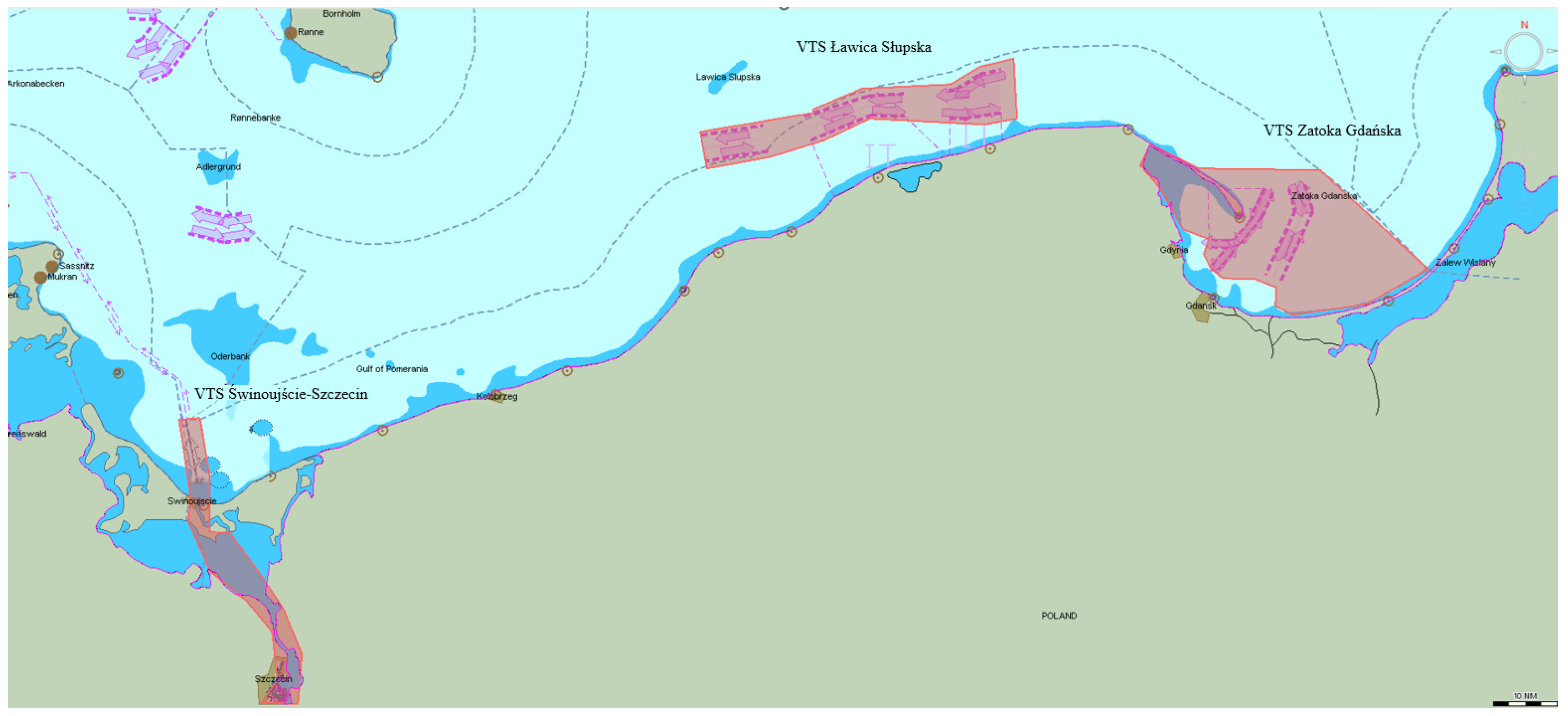
- VTS Zatoka Gdańska;
- VTS Ławica Słupska;
- VTS Świnoujście-Szczecin.
- An Information Service is provided by broadcasting information at fixed times and intervals or when deemed necessary by the VTS system or at the request of a vessel and may include, for example, reports on the position, identity and intentions of other traffic participants, waterway conditions, weather, hazards, or other factors that may affect the vessel movement;
- A Navigational Assistance Service is particularly important in difficult navigational or meteorological conditions or in the event of faults or deficiencies. This service is normally provided at the request of a vessel or by the VTS system when deemed necessary;
- A Traffic Organization Service refers to the operational management of traffic and planning of vessel movements to prevent congestion and the occurrence of dangerous situations and is particularly important during periods of heavy traffic or when the movement of special transport means may affect the traffic of other ships. This service may also include the establishment and operation of a traffic clearance system or VTS system nautical plans or both, regarding traffic priorities, space allocation, mandatory reporting in the VTS system area, routes to be followed, speed limits to be observed or other appropriate measures when deemed necessary.
2. Literature Review
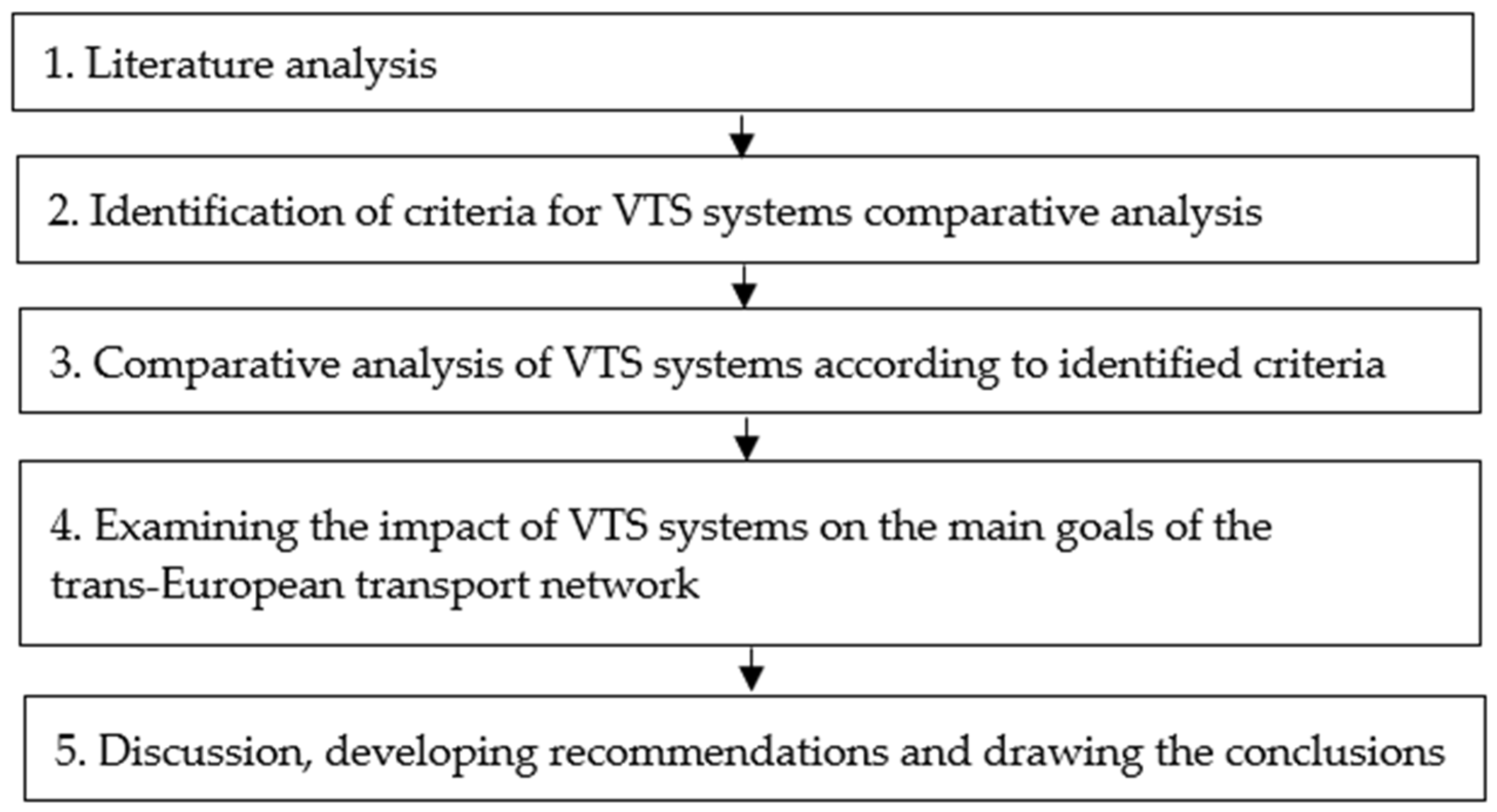
3. Research Methodology
- System location;
- Organization of the system;
- Technical infrastructure;
- Traffic management;
- Risks related to vessel traffic in the area covered by the system;
- Traffic management functions in relation to the implementation of Regulation (EU) No 1315/2013 [14];
- Possibilities of implementing the IMO Resolution Guidelines A.1158(32) [13].
4. Results
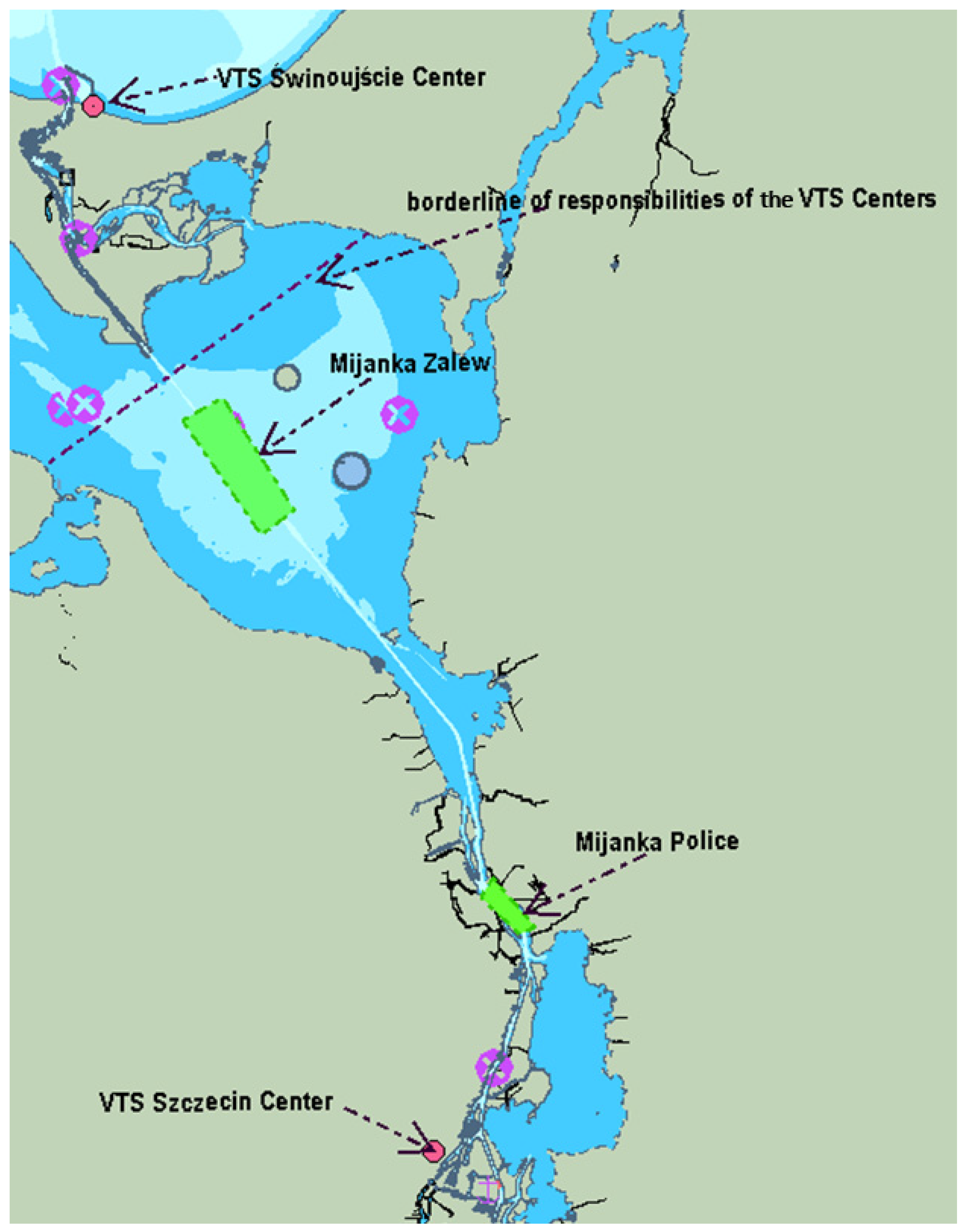
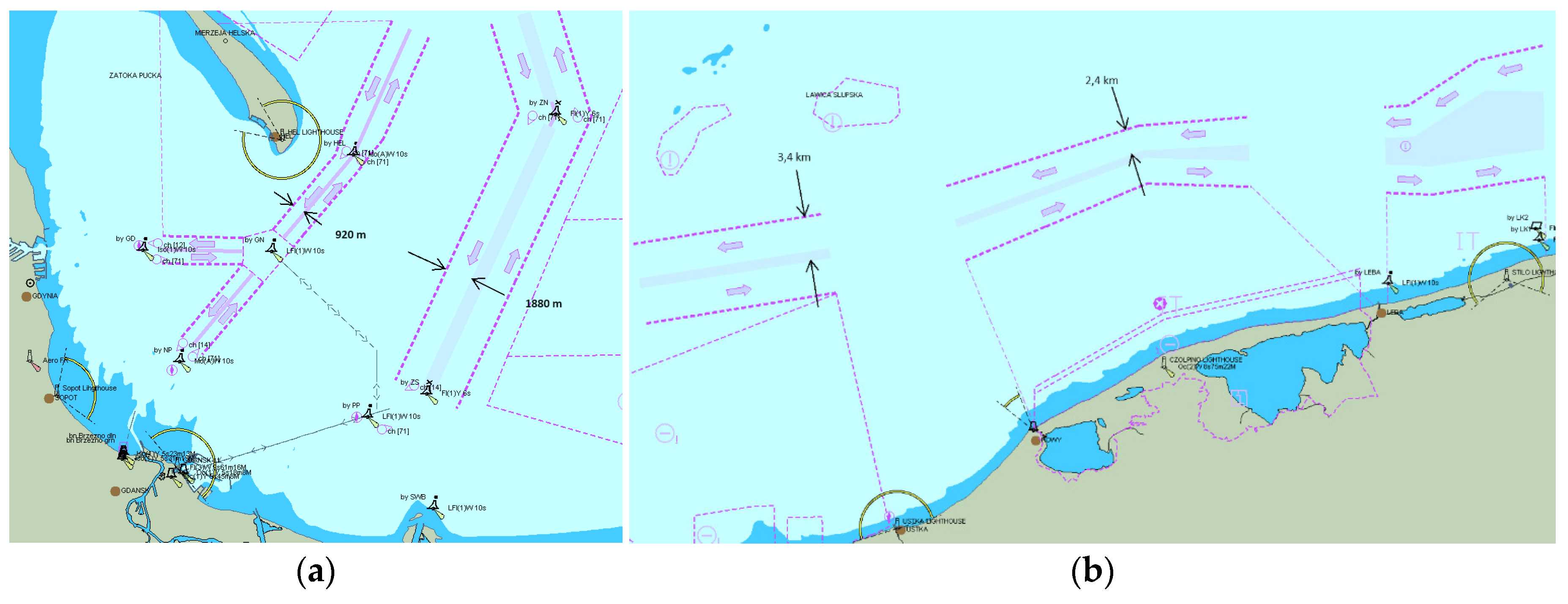
4.1. The VTS Systems’ Locations
4.2. Organization of the VTS Systems
4.3. Technical Infrastructure
- VTS radar system;
- Automatic Identification System (AIS);
- Very High Frequency (VHF) operational communication;
- Closed-Circuit Television (CCTV) systems;
- Radio Direction Finders (RDF);
- hydrometeorological equipment;
- VTS data management and information systems.
4.4. Traffic Management
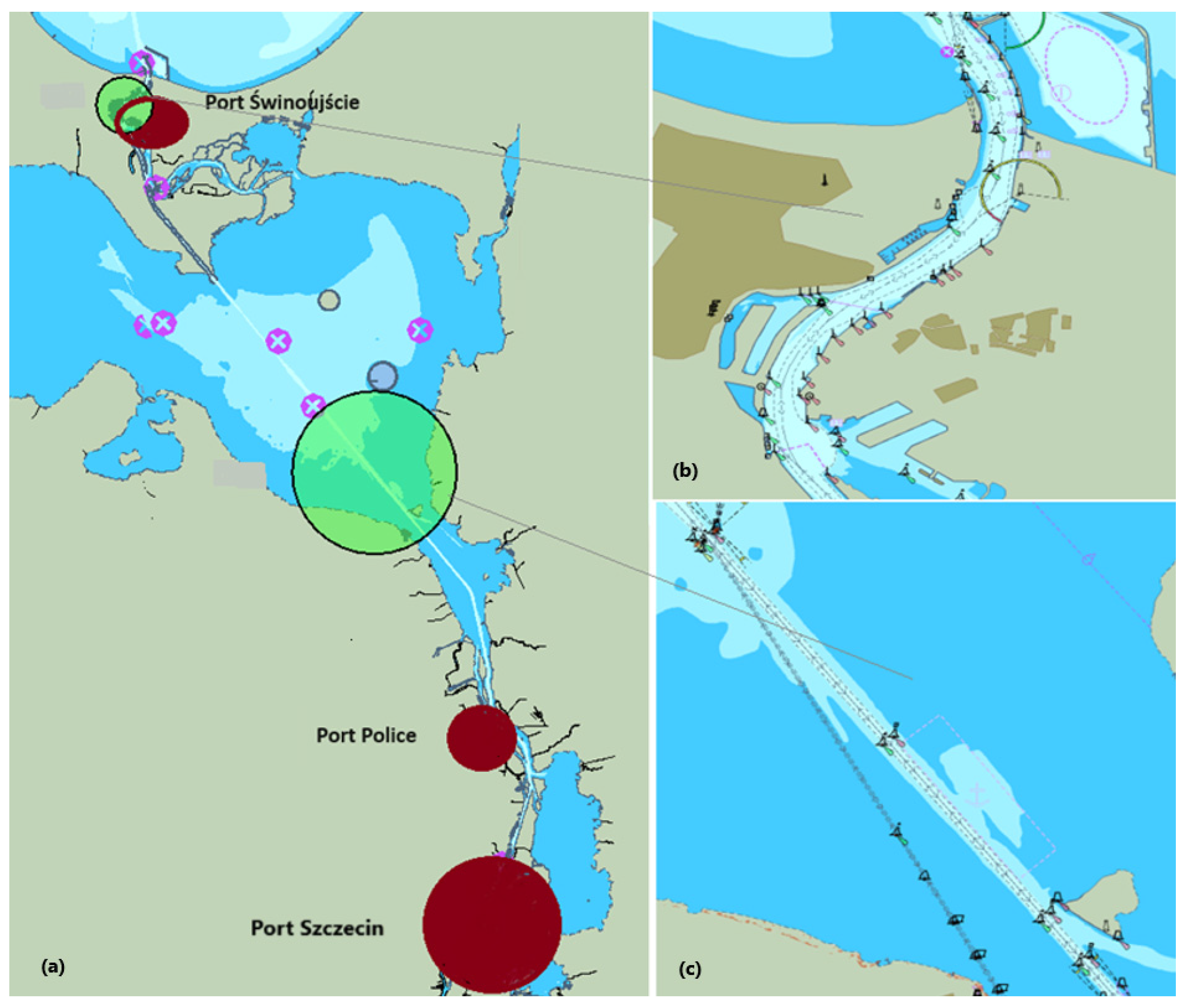
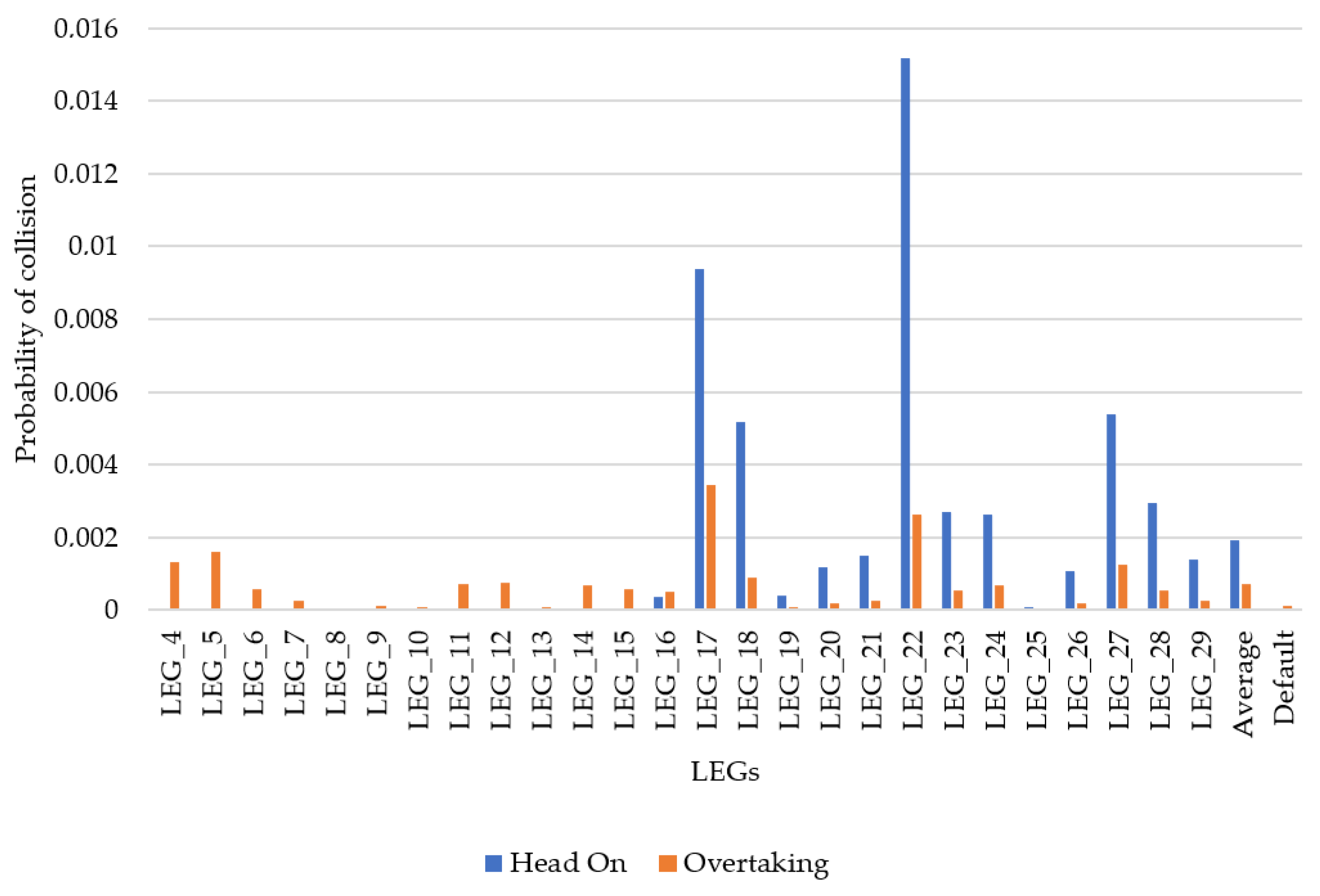
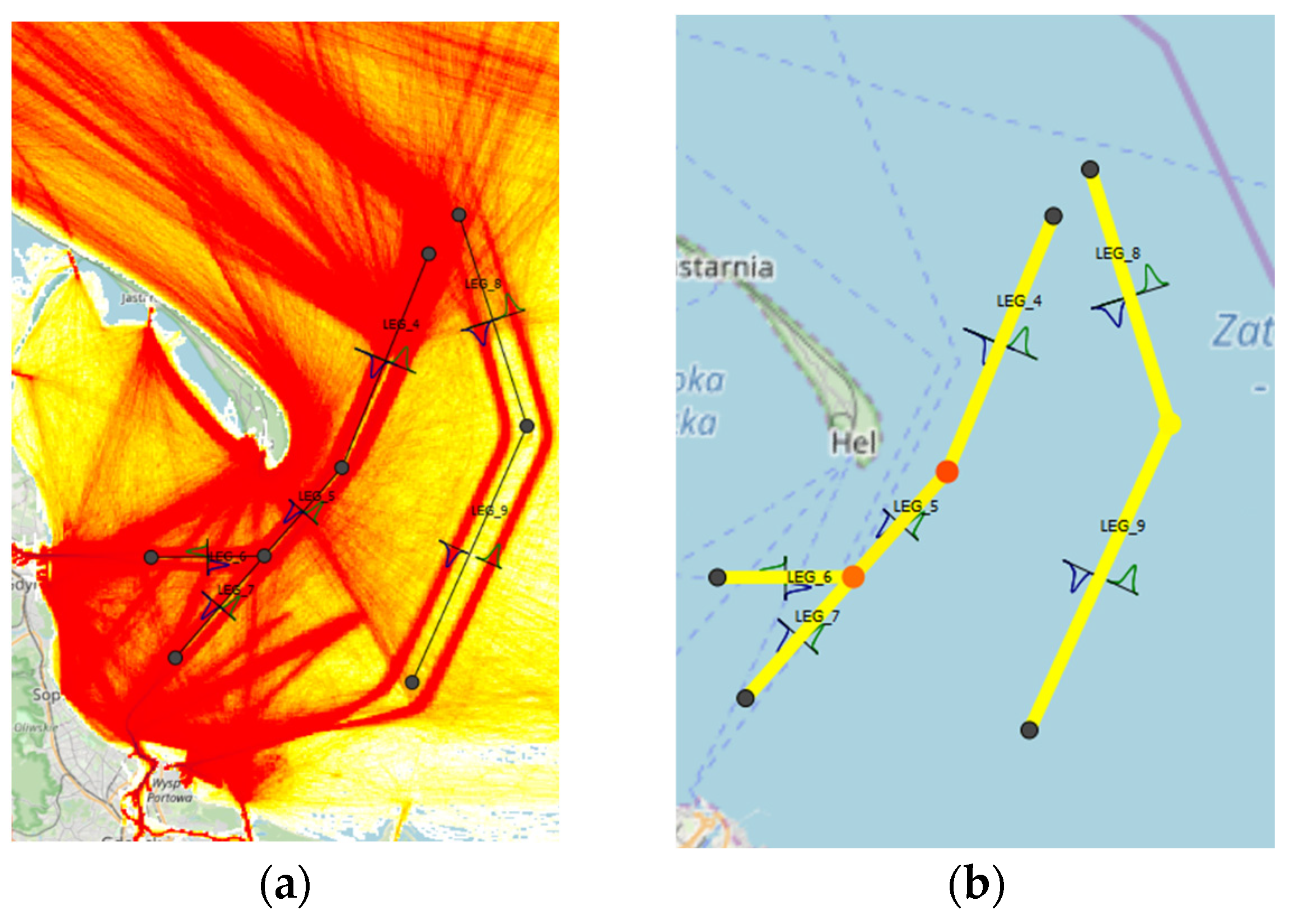
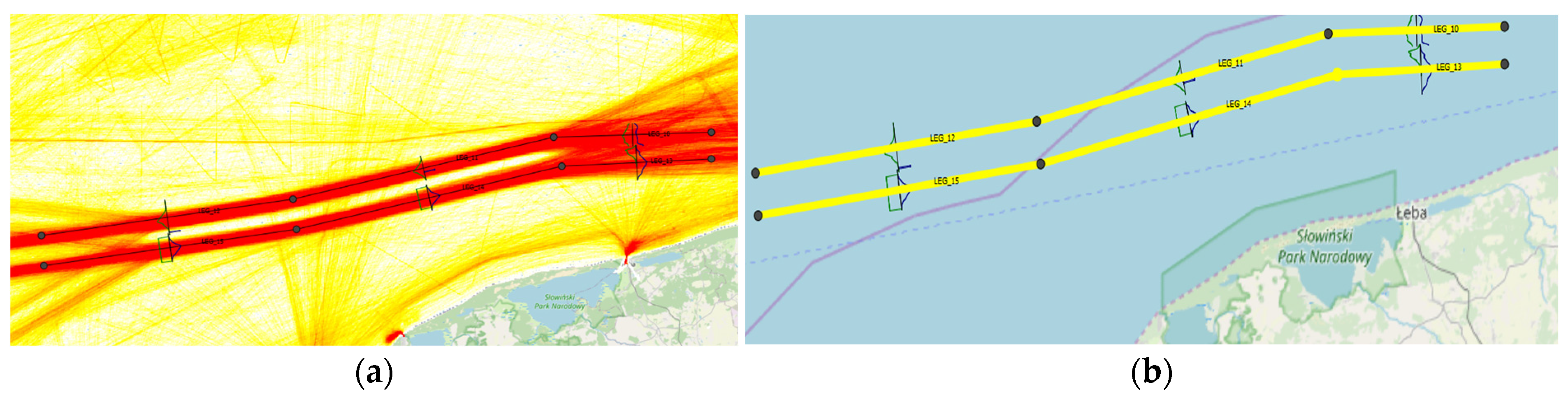
4.5. Risks Related to Vessel Traffic in the Area Covered by the VTS Systems
4.6. Traffic Management Functions in Relation to the Implementation of Regulation (EU) No. 1315/2013
- 0 points—no impact;
- 1 point—has an impact;
- 2 points—has a significant impact.
- The promotion of economically efficient, high-quality transport contributing to further economic growth and competitiveness;
- Efficient use of new and existing infrastructure;
- Cost-efficient application of innovative technological and operational concepts;
- Contribution to the objectives of low greenhouse gas emissions, low-carbon and clean transport, fuel security, reduction of external costs and environmental protection;
- Promotion of low-carbon transport with the aim of achieving by 2050 a significant reduction in CO2 emissions, which is in line with the relevant EU CO2 reduction targets;
- Ensuring safe, secure and high-quality standards for both passenger and freight transport;
- Supporting mobility, even in the event of natural or man-made disasters, and ensuring accessibility to emergency and rescue services;
- The establishment of infrastructure requirements, in particular, in the field of interoperability, safety and security, which will ensure quality, efficiency and sustainability of transport services.
4.7. Possibilities of Implementing the IMO Resolution Guidelines A.1158(32)
- Providing timely and relevant information on factors that may influence ship movements and assist onboard decision-making;
- Monitoring and managing ship traffic to ensure the safety and efficiency of ship movements;
- Responding to developing unsafe situations.
- YES—the activity is performed,
- NO—the activity is not performed,
- IN PART—the activity is performed in part.
- In the case of the VTS Zatoka Gdańska system, it should not be difficult. The implementation of new rules will require formal changes and provisions in internal documents and operational procedures.
- In the case of the VTS Ławica Słupska system, even though most of the tasks are not currently being carried out, the adaptation of this VTS system to the new rules should not be a problem. The movement of ships in TSS VTS Ławica Słupska is based on the “free passage” principle for transit through the territorial sea, which is regulated by the international UNCLOS Convention [62]. The implementation of activities resulting from Resolution [13] will involve updating internal documents and procedures of particular VTS systems.
- In the case of the VTS Świnoujście–Szczecin system, there is the current lack of possibilities to support vessels in dangerous situations with navigational assistance. Nowadays, due to the configuration and parameters of the fairway, as well as the capabilities of the navigation systems, the Maritime Office in Szczecin does not introduce such a service. Lack of vessel traffic support by this type of service is compensated by introduction of mandatory pilotage service on the approach to Świnoujście port and within the Świnoujście–Szczecin fairway.
5. Discussion
- 3—indicated considerable difficulty in performing functions or implementing changes;
- 2—indicated medium difficulty in performing functions or implementing changes;
- 1—indicated low difficulty in performing set functions or implementing changes.
- The provided assessments show the authors’ opinion on investigated issues, based on their knowledge and experience. In future research studies, the involvement of greater number of experts will be essential.
- Seven criteria were identified for the comparative analysis of the operation of the VTS systems. However, this limited number of criteria may impact the reliability of achieved results. Increasing the number of assessment criteria may be considered by authors when conducting future studies.
- While assessing the adjustment of the VTS systems operating in Poland to current regulations introduced by the IMO and European Parliament, two documents were analyzed. Selection of other EU regulations for the detailed analysis will be taken into account by authors in their future work.
- The assessment of risks related to vessel traffic in the area covered by the VTS systems was based only on the calculation of the probability of collisions related to default causation factors. More detailed analysis of vessel traffic risks is planned.
- The AIS data collected for the period 01.01.2021. to 30.09.2021. was used to analyze the probability of collision at each section of the described VTS systems. Repeating the study using year-round data can give a better overview of current changes in shipping safety in the areas managed by the VTS systems.
- The research study focuses on the assessment of VTS systems operating in Poland. Therefore, the comparative analysis of VTS systems operating in Poland and other countries will be considered.
6. Conclusions
- Decision-making processes related to traffic management,
- The framework of cooperation with allied services providers.
Author Contributions
Funding
Institutional Review Board Statement
Informed Consent Statement
Data Availability Statement
Acknowledgments
Conflicts of Interest
References
- Resolution A.857(20) Adopted on 27 November 1997 Guidelines for Vessel Traffic Services. International Maritime Organization, London. Available online: https://wwwcdn.imo.org/localresources/en/KnowledgeCentre/IndexofIMOResolutions/AssemblyDocuments/A.857(20).pdf (accessed on 15 April 2024).
- International Convention for the Safety of Life at Sea (SOLAS), International Maritime Organization, London. 1974. Available online: https://www.imo.org/en/KnowledgeCentre/ConferencesMeetings/Pages/SOLAS.aspx (accessed on 10 April 2024).
- IALA VTS Manual Edition 8.4 (June 2024). Available online: https://www.iala-aism.org/product/m0002/ (accessed on 4 June 2024).
- Jacyna, M.; Wasiak, M.; Lewczuk, K.; Chamier-Gliszczyński, N.; Dąbrowski, T. Decision problems in developing proecological transport system. Rocz. Ochr. Srodowiska 2018, 20, 1007–1025. [Google Scholar]
- Gołębiowski, P.; Żak, J.; Jacyna-Gołda, I. Approach to the Proecological Distribution of the Traffic Flow on the Transport Network from the Point of View of Carbon Dioxide. Sustainability 2020, 12, 6936. [Google Scholar] [CrossRef]
- Zabielska, A.; Jacyna, M.; Lasota, M.; Nehring, K. Evaluation of the efficiency of the delivery process in the technical object of transport infrastructure with the application of a simulation model. Eksploat. I Niezawodn. Maint. Reliab. 2023, 25, 1. [Google Scholar] [CrossRef]
- Ordinance No. 3 of the Director of the Maritime Office in Gdynia of April 28, 2008. (In Polish)
- Ordinance No. 4 of the Director of the Maritime Office in Gdynia of May 24, 2021, on amendments to the area of activity and tasks of the Vessel Traffic Services VTS Slupsk Bank. (In Polish)
- Port Regulations (2013) Ordinance No. 3 of the Director of the Maritime Office in Szczecin of July 26, 2013, Port Regulations. Available online: https://www.ums.gov.pl/po/2013/Zarz_3_2013.pdf (accessed on 10 April 2024).
- Act of 21 March 1991 on Maritime Areas of the Republic of Poland and Maritime Administration (Dz.U. 1991 nr 32 poz. 131). Available online: https://isap.sejm.gov.pl/isap.nsf/DocDetails.xsp?id=WDU19910320131 (accessed on 11 April 2024). (In Polish)
- VTS system software, managed by Maritime Office in Szczecin, Poland. 2024.
- National Maritime Safety System Stage I. Available online: https://www.umgdy.gov.pl/fundusz_europejski/krajowy-system-bezpieczenstwa-morskiego-ksbm-etap-i/ (accessed on 20 May 2024).
- Resolution A.1158(32) Adopted on 15 December 2021 (Agenda Item 12) Guidelines for Vessel Traffic Services, International Maritime Organization, London. Available online: https://wwwcdn.imo.org/localresources/en/KnowledgeCentre/IndexofIMOResolutions/AssemblyDocuments/A.1158%2832%29.pdf (accessed on 20 May 2024).
- Regulation (EU) No 1315/2013 Of the European Parliament and of the Council of 11 December 2013 on Union Guidelines for the Development of the Trans-European Transport Network and Repealing Decision No 661/2010/EU Text with EEA Relevance. Available online: http://publications.europa.eu/resource/cellar/f277232a-699e-11e3-8e4e-01aa75ed71a1.0006.03/DOC_1 (accessed on 20 May 2024).
- Cheng, X.; Sui, Z.; Wen, Y.; Han, D. An improved maritime traffic situation complexity model for intelligent maritime management in the inland ferry area. Comput. Electr. Eng. 2024, 119, 109612. [Google Scholar] [CrossRef]
- Ekici, C.V.; Öztürk, Ü.; Şenol, Y.E. A data-driven Ship Risk Profile model for Turkish Straits (TS-SRP) using Machine Learning. Ocean. Eng. 2024, 311, 119002. [Google Scholar] [CrossRef]
- Belcore, O.M.; Polimeni, A.; Di Gangi, M. Performance analysis for a maritime port with high-frequency services: An Italian case study. Case Stud. Transp. Policy 2024, 17, 101263. [Google Scholar] [CrossRef]
- Jankowski, D.; Möller, J.; Wiards, H.; Hahn, A. Decentralized Documentation of Maritime Traffic Incidents to Support Conflict Resolution. J. Mar. Sci. Eng. 2022, 10, 2011. [Google Scholar] [CrossRef]
- Formela, K.; Neumann, T.; Weintrit, A. Overview of definitions of maritime safety, safety at sea, navigational safety and safety in general. TransNav 2019, 13, 285–290. [Google Scholar] [CrossRef]
- Neumann, T. Development of ICT networks in maritime transport applications. Adv. Marit. Technol. Eng. 2024, 1, 61–69. [Google Scholar] [CrossRef]
- Szcześniak, J.; Weintrit, A. Europejskie systemy kontroli i śledzenia ruchu statków—geneza, zasady funkcjonowania oraz perspektywy rozwoju. Zesz. Nauk. Akad. Morskiej W W Gdyni 2012, 77, 78–92. Available online: https://sj.umg.edu.pl/sites/default/files/ZN183.pdf (accessed on 24 November 2024). (In Polish).
- Czermański, E.; Zaucha, J.; Oniszczuk-Jastrząbek, A.; Pardus, J.; Kiersztyn, A.; Czerwiński, D. Valuation of marine areas for merchant shipping: An attempt at shipping spatial rent valuation based on Polish Marine Areas. Front. Mar. Sci. 2024, 11, 1352598. [Google Scholar] [CrossRef]
- Paulauskas, V.; Filina-Dawidowicz, L.; Paulauskas, D. Navigation of Ships in Channel Bends under Special Conditions Using Sensors Systems. Sensors 2022, 22, 8783. [Google Scholar] [CrossRef] [PubMed]
- Czaplewski, K.; Świerczyński, S. A Method of Increasing the Accuracy of Radar Distance Measurement in VTS Systems for Vessels with Very Large Dimensions. Remote Sens. 2021, 13, 3066. [Google Scholar] [CrossRef]
- Jankovič, P.; Murtič, S.; Zorko, A. Water Traffic Management Systems in Ports for Logistics and Seaport Services. In Sustainable Business Management and Digital Transformation: Challenges and Opportunities in the Post-COVID Era, Proceedings of the SymOrg 2022, Belgrade, Serbia, 11–14 June 2022; Lecture Notes in Networks and Systems; Mihić, M., Jednak, S., Savić, G., Eds.; Springer: Cham, Switzerland, 2023; Volume 562. [Google Scholar] [CrossRef]
- Heikkilä, M.; Himmanen, H.; Soininen, O.; Sonninen, S.; Heikkilä, J. Navigating the Future: Developing Smart Fairways for Enhanced Maritime Safety and Efficiency. J. Mar. Sci. Eng. 2024, 12, 324. [Google Scholar] [CrossRef]
- Çağlayan, Ö.; Aymelek, M. An Integrated Multi-Criteria Decision Support Model for Sustainable Ship Queuing Policy Application via Vessel Traffic Service (VTS). Sustainability 2024, 16, 4615. [Google Scholar] [CrossRef]
- Hsieh, M.-H.; Xia, Z.; Chen, C.-H. Human-centred design and evaluation to enhance safety of maritime systems: A systematic review. Ocean. Eng. 2024, 307, 118200. [Google Scholar] [CrossRef]
- Crestelo Moreno, F.; Soto-López, V.; Menéndez-Teleña, D.; Roca-González, J.; Suardíaz Muro, J.; Roces, C.; Paíno, M.; Fernández, I.; Díaz-Secades, L.A. Fatigue as a key human factor in complex sociotechnical systems: Vessel Traffic Services. Front. Public Health 2023, 11, 1160971. [Google Scholar] [CrossRef]
- Carson-Jackson, J.; Fiorini, M.; Galloro, M. Educational Approaches for Personnel in Vessel Traffic Services. In Proceedings of the 2023 IEEE 10th International Workshop on Metrology for AeroSpace (MetroAeroSpace), Milan, Italy, 19–21 June 2023; pp. 568–573. [Google Scholar] [CrossRef]
- Zhang, F.; Liu, Y.; Du, L.; Goerlandt, F.; Sui, Z.; Wen, Y. A rule-based maritime traffic situation complex network approach for enhancing situation awareness of vessel traffic service operators. Ocean. Eng. 2023, 284, 115203. [Google Scholar] [CrossRef]
- Praetorius, G. Vessel Traffic Service (VTS): A maritime information service or traffic control system? Understanding everyday performance and resilience in a socio-technical system under change. Ph.D. Thesis, Department of Shipping and Marine Technology, Chalmers University Of Technology, Gothenburg, Sweden, 2014. Available online: https://www.researchgate.net/publication/265611557_Vessel_Traffic_Service_VTS_a_maritime_information_service_or_traffic_control_system_Understanding_everyday_performance_and_resilience_in_a_socio-technical_system_under_change (accessed on 20 October 2024).
- Nikghadam, S.; Vanga, R.; Rezaei, J.; Tavasszy, L. Cooperation between vessel service providers in ports: An impact analysis using simulation for the Port of Rotterdam. Marit. Transp. Res. 2023, 4, 100083. [Google Scholar] [CrossRef]
- Arslan, E.; Nas, S. Conflicts Encountered with Bridge Team from the Perspective of Vessel Traffic Service Operators: A Research Within E-Navigation Concept. Trans. Marit. Sci. 2022, 11, 247–259. [Google Scholar] [CrossRef]
- Malagoli, A.; Corradini, M.; Corradini, P.; Shuett, T.; Fonda, S. Towards a method for the objective assessment of cognitive workload: A pilot study in vessel traffic service (VTS) of maritime domain. In Proceedings of the 2017 IEEE 3rd International Forum on Research and Technologies for Society and Industry (RTSI), Modena, Italy, 11–13 September 2017; pp. 1–6. [Google Scholar] [CrossRef]
- Hasanspahić, N.; Frančić, V.; Vujičić, S.; Mandušić, M. Safety leadership as a means for safe and sustainable shipping. Sustainability 2021, 13, 7841. [Google Scholar] [CrossRef]
- Krystosik-Gromadzińska, A. Ergonomic assessment of selected workstations on a merchant ship. Int. J. Occup. Saf. Ergon. 2018, 24, 91–99. [Google Scholar] [CrossRef] [PubMed]
- Crestelo Moreno, F.; Roca Gonzalez, J.; Suardíaz Muro, J.; García Maza, J.A. Relationship between human factors and a safe performance of vessel traffic service operators: A systematic qualitative-based review in maritime safety. Saf. Sci. 2022, 155, 105892. [Google Scholar] [CrossRef]
- Fan, S.; Zhang, J.; Blanco-Davis, E.; Yang, Z.; Yan, X. Maritime accident prevention strategy formulation from a human factor perspective using Bayesian Networks and TOPSIS. Ocean. Eng. 2020, 210, 107544. [Google Scholar] [CrossRef]
- Luling, Z.; Zhengxiong, J.; Lvzhen, R.; Xingfeng, D. Economic Evaluation of Vessel Traffic Service (VTS) Based on Survey Data and I.O. Analysis. Am. J. Traffic Transp. Eng. 2021, 6, 139–146. [Google Scholar] [CrossRef]
- Filina-Dawidowicz, L.; Durczak, W. Decision-making issues in vessels traffic planning after the deepening of the Świnoujście—Szczecin fairway to 12.5 m. In Proceedings of the 40th International Business Information Management Association (IBIMA), Seville, Spain, 23–24 November 2022; pp. 539–549. [Google Scholar]
- Lee, S.; Lee, C.; Kim, G.; Na, H.; Kim, H.; Lee, J.; Park, M. A study of S-100 based product specifications from a software implementation point of view: Focusing on data model representation, similar features and symbols, and ECDIS and VTS software. J. Navig. 2022, 75, 1226–1242. [Google Scholar] [CrossRef]
- Torok, A.; Semenov, I.; Filina-Dawidowicz, L.; Durczak, W. The Impact of Information Distortions on Decision-Making: A Case Study in Land–Sea Transport Chain Planning. Sustainability 2024, 16, 5568. [Google Scholar] [CrossRef]
- Gucma, S.; Gralak, R.; Jesion, P.; Łempicki, M.; Przywarty, M. Analiza bezpieczeństwa eksploatacji statków na przebudowanym torze wodnym Świnoujście—Szczecin. Inżynieria Morska I Geotech. 2021, 6, 230–236. (In Polish) [Google Scholar]
- Mandal, S.; Nagarajan, V.; Sha, O.P. Navigational safety and traffic pattern analysis using AIS data on the western coast of India. Curr. Sci. 2018, 114, 2473–2481. Available online: https://www.jstor.org/stable/26495760 (accessed on 20 October 2024). [CrossRef]
- Liu, C.; Liu, J.; Zhou, X.; Zhao, Z.; Wan, C.; Liu, Z. AIS data-driven approach to estimate navigable capacity of busy waterways focusing on ships entering and leaving port. Ocean. Eng. 2020, 218, 108215. [Google Scholar] [CrossRef]
- Zhang, Z.G.; Yin, J.C.; Wang, N.N.; Hui, Z.G. Vessel traffic flow analysis and prediction by an improved PSO-BP mechanism based on AIS data. Evol. Syst. 2019, 10, 397–407. [Google Scholar] [CrossRef]
- Filina-Dawidowicz, L.; Durczak, W. Organization of Vessel Traffic on Dredged Świnoujście-Szczecin Fairway: VTS Operators’ Viewpoint on the Use of Infrastructure for Ships Passing. Eur. Res. Stud. J. 2023, XXVI, 152–169. [Google Scholar] [CrossRef]
- Filina-Dawidowicz, L.; Durczak, W. Factors Influencing Vessel Traffic Organization during the Dredging Works on Świnoujście-Szczecin Fairway. In Transport Means, Proceedings of the 27th International Scientific Conference, Palanga, Lithuania, 4–6 October 2023; Kaunas University of Technology: Kaunas, Lithuania, 2023; pp. 662–667. [Google Scholar] [CrossRef]
- Xiao, Z.; Fu, X.; Zhao, L.; Zhang, L.; Teo, T.K.; Li, N.; Zhang, W.; Qin, Z. Next-Generation Vessel Traffic Services Systems—From “Passive” to “Proactive”. IEEE Intell. Transp. Syst. Mag. 2023, 15, 363–377. [Google Scholar] [CrossRef]
- Zhang, X.; Li, J.; Zhu, S.; Wang, C. Vessel intelligent transportation maritime service portfolios in port areas under e-navigation framework. J. Mar. Sci. Technol. 2020, 25, 1296–1307. [Google Scholar] [CrossRef]
- International Maritime Organization, London. Resolution Msc.249(83), Adoption of a New Mandatory Ship Reporting System on the Approaches to the Polish Ports in the Gulf of Gdańsk (Adopted on 8 October 2007). International Maritime Organization, London. Available online: https://www.umgdy.gov.pl/wp-content/uploads/2022/01/IRM-IMO-MSC.24983-VTS-Zatoka-Gdanska.pdf (accessed on 10 April 2024).
- Maritime Office in Gdynia. Available online: https://www.umgdy.gov.pl/bezpieczenstwo-morskie (accessed on 20 October 2024).
- Maritime Office in Szczecin. Available online: https://www.ums.gov.pl/bezpieczenstwo-morskie/vessel-traffic-en (accessed on 20 October 2024).
- Maritime Office in Gdynia, internal data. 2022. (In Polish)
- Maritime Office in Szczecin, internal data. 2022. (In Polish)
- IWRAP MK II application, license Maritime Office in Szczecin. 2024.
- G1123 The Use of IALA Waterway Risk Assessment Program (IWRAP) Edition 2.1. June 2022; urn:mrn:iala:pub:g1123:ed2.1. Available online: https://www.iala.int/content/uploads/2021/08/Course-outline-IWRAP-MK-II_July-2021.pdf (accessed on 20 October 2024).
- Resolution A.1106(29) Adopted on 2 December 2015 (Agenda item 10). International Maritime Organization, London. Available online: https://wwwcdn.imo.org/localresources/en/OurWork/Safety/Documents/AIS/Resolution%20A.1106(29).pdf (accessed on 20 October 2024).
- Ministry of Infrastructure of the Republic of Poland. Available online: https://www.gov.pl/web/infrastruktura/transeuropejska-siec-transportowa-ten-t (accessed on 15 August 2024).
- European Commission. Trans-European Transport Network (TEN-T). Available online: https://transport.ec.europa.eu/transport-themes/infrastructure-and-investment/trans-european-transport-network-ten-t_en (accessed on 25 November 2024).
- United Nations. Available online: https://www.un.org/depts/los/convention_agreements/texts/unclos/unclos_e.pdf (accessed on 25 November 2024).
- G1111-1 Producing requirements for the core VTS system. Edition 1.0, December 2022, urn:mrn:iala:pub:g1111-1:ed1.0. Available online: https://www.iala.int/product/g1111-1/pdf (accessed on 25 November 2024).




| VTS System | Main Objective | Offered Services |
|---|---|---|
| VTS Zatoka Gdańska | To ensure the safety of navigation for vessels calling at ports located on the coast of the Gulf of Gdańsk. The operation of this VTS system is based on a ship reporting system and a virtual network of shipping lanes called the Traffic Separation Schemes (TSS) [2], the purpose of which is the safe distribution of ship traffic to ports in Gdynia, Gdańsk. |
|
| VTS Słupska Ławica | To model ship traffic in the area of the central coast of Poland in such a way as to protect the valuable sea areas of Słupska Ławica and, at the same time, ensure the safety of navigation for ships operating in this area. The operation of this VTS system is based on the TSS. |
|
| VTS Świnoujście-Szczecin | To ensure the safety of navigation for vessels calling at ports located in the lower section of the Oder River. The operation of this VTS system is based on a ship reporting system and a system of recommended shipping routes. |
|
| Name of VTS System | Reporting System? | TSS? | Location | Surroundings | Types of Traffic Served | Annual Average Number of Ships Serviced * |
|---|---|---|---|---|---|---|
| VTS Zatoka Gdańska | YES | YES | Internal sea waters, territorial sea waters | Adjacent border and territorial waters of the Russian Federation | Regular SOLAS vessels, auxiliary ships of harbor shipping, local passenger vessels | 8775 (regular SOLAS vessels) |
| VTS Ławica Słupska | NO | YES | Territorial sea waters | Territorial sea of the Polish Republic | Regular SOLAS vessels, auxiliary ships of harbor shipping, local passenger vessels, fishing vessels | 3600 (regular SOLAS vessels) |
| VTS Świnoujście-Szczecin | YES | NO | Internal sea waters, territorial sea waters | Adjacent border and territorial waters of the German Republic | Regular SOLAS vessels, auxiliary ships of harbor shipping, local passenger vessels, inland water vessels, internal port traffic | 10132 (regular SOLAS vessels) + 7000 inland water vessels |
| Name of VTS | Selected Decision- Making Participants | Selected Allied Services | Number of VTS Centers | Types of Services Provided | Selected Traffic Management Approaches |
|---|---|---|---|---|---|
| VTSZatoka Gdańska |
|
| 1 |
|
|
| VTS Ławica Słupska |
|
| 1 |
|
|
| VTS Świnoujście-Szczecin |
|
| 2 |
|
|
| Technical Infrastructure | VTS Zatoka Gdańska | VTS Ławica Słupska | VTS Świnoujście-Szczecin |
|---|---|---|---|
| Radar system | Yes | Yes | Yes |
| Coverage of radar system | full coverage | full coverage | full coverage |
| AIS system | Yes | Yes | Yes |
| Coverage of AIS system | full coverage | full coverage | full coverage |
| VHF communication system | Yes | Yes | Yes |
| Coverage of VHF system | full coverage | full coverage | full coverage |
| CCTV System | Yes | Yes | Yes |
| Coverage of CCTV system | full coverage | full coverage | full coverage |
| Radio Direction Finder | Yes | Yes | No |
| Hydro-meteo system (own weather stations) | Yes | Yes | Yes |
| Hydro-meteo system (integrated with the VTS application) | Yes | Yes | Yes |
| VTS data management and information system connected to the European SafeSeaNet server | Yes | Yes | Yes |
| Integrated VTS operators’ consoles | Yes | Yes | Yes |
| Total number of VTS system units (devices) | 37 | 19 | 57 |
| VTS System | Selected Features of Traffic Management |
|---|---|
| VTS Zatoka Gdańska |
|
| VTS Ławica Słupska |
|
| VTS Świnoujście-Szczecin |
|
| Condition | Causation Factor |
|---|---|
| Head on collisions | 0.5 × 10⁻⁴ |
| Overtaking collisions | 1.1 × 10⁻⁴ |
| Crossing collisions | 1.3 × 10⁻⁴ |
| Collisions in a bend situation | 1.3 × 10⁻⁴ |
| Collisions in a merging situation | 1.3 × 10⁻⁴ |
| Grounding, forgot to turn | 1.6 × 10⁻⁴ |
| VTS System | Probabilities of Collision Related to Default Causation Factor on Each LEG | |||
|---|---|---|---|---|
| Head on Collisions | Overtaking Collisions | |||
| LEGs for Which p > 0.5 × 10⁻⁴ | Calculated p Values | LEGs for Which p > 1.1 × 10⁻⁴ | Calculated p Values | |
| VTS Zatoka Gdańska | Not applicable | Not applicable | Leg 4 Leg 5 | 1.3 × 10⁻³ 1.6 × 10⁻³ |
| VTS Ławica Słupska | Not applicable | Not applicable | Leg 11 Leg 12 Leg 14 Leg 15 Leg 16 | 0.7 × 10⁻³ 0.7 × 10⁻³ 0.7 × 10⁻³ 0.6 × 10⁻³ 0.5 × 10⁻³ |
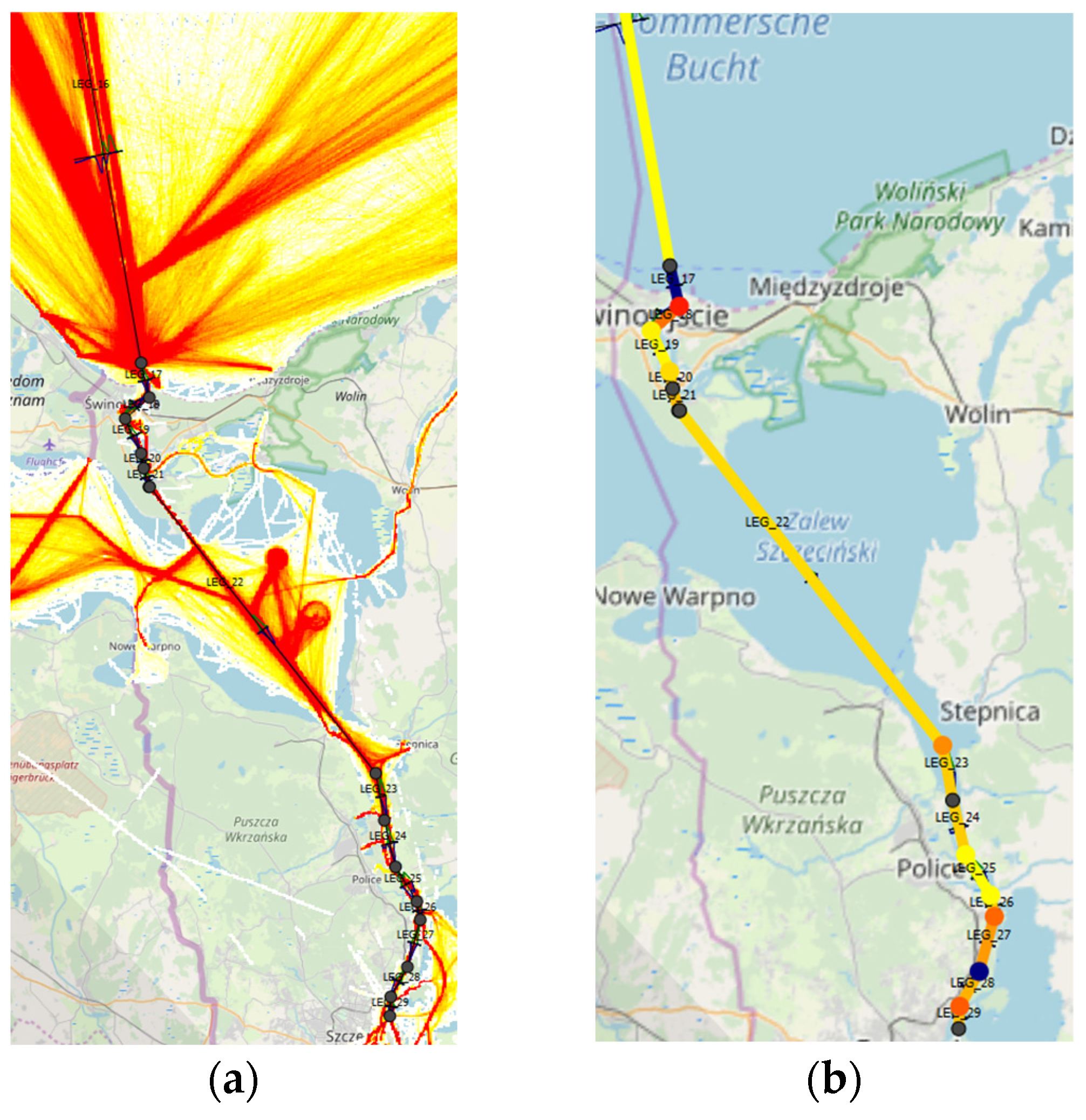
| VTS Świnoujście-Szczecin | Leg 17 Leg 18 Leg 19 Leg 20 Leg 21 Leg 22 Leg 23 Leg 24 Leg 26 Leg 27 Leg 28 Leg 29 | 9.4 × 10⁻³ 5.2 × 10⁻³ 0.4 × 10⁻³ 1.2 × 10⁻³ 1.2 × 10⁻³ 15.3 × 10⁻³ 2.7 × 10⁻³ 2.6 × 10⁻³ 1.1 × 10⁻³ 5.4 × 10⁻³ 2.9 × 10⁻³ 1.4 × 10⁻³ | Leg 17 Leg 18 Leg 20 Leg 21 Leg 22 Leg 23 Leg 24 Leg 26 Leg 27 Leg 28 Leg 29 | 3.4 × 10⁻³ 0.9 × 10⁻³ 0.2 × 10⁻³ 1.2 × 10⁻³ 2.6 × 10⁻³ 0.5 × 10⁻³ 0.7 × 10⁻³ 0.2 × 10⁻³ 1.2 × 10⁻³ 0.6 × 10⁻³ 0.3 × 10⁻³ |
| Categories | Category Indicator (TEN-T Task) | VTS Zatoka Gdańska | VTS ** Ławica Słupska | VTS Świnoujście–Szczecin | Total |
|---|---|---|---|---|---|
| Cohesion | Accessibility and connectivity of all regions of the union | 2 | 1 | 2 | 5 |
| Reduction of infrastructure quality gaps between member states | 2 | 1 | 2 | 5 | |
| Interconnection between transport infrastructure | 1 * | 0 | 2 | 3 | |
| Possessing a transport infrastructure that reflects the specific situations in different parts of the EU | 2 | 0 | 2 | 4 | |
| Efficiency | The removal of bottlenecks | 2 | 0 | 2 | 4 |
| The interconnection and interoperability of national transport networks | 2 | 1 | 2 | 5 | |
| Optimal integration and interconnection of all transport modes | 2 | 0 | 2 | 4 | |
| The promotion of economically efficient, high-quality transport, contributing to further economic growth and competitiveness | 2 | 2 | 2 | 6 | |
| Efficient use of new and existing infrastructure | 2 | 2 | 2 | 6 | |
| Cost-efficient application of innovative technological and operational concepts | 2 | 2 | 2 | 6 | |
| Sustainability | Development of all transport modes in a manner consistent with ensuring transport that is sustainable and economically efficient in the long term | 2 | 0 | 2 | 4 |
| Contribution to the objectives of low greenhouse gas emissions, low-carbon and clean transport, fuel security, reduction of external costs and environmental protection | 2 | 2 | 2 | 6 | |
| Promotion of low-carbon transport with the aim of achieving by 2050 a significant reduction in CO2 emissions, which is in line with the relevant EU CO2 reduction targets | 2 | 2 | 2 | 6 | |
| Increasing the benefits for its users | Meeting the mobility and transport needs of its users within the EU and in relations with third countries | 2 | 0 | 2 | 4 |
| Ensuring safe, secure and high-quality standards for both passenger and freight transport | 2 | 2 | 2 | 6 | |
| Supporting mobility, even in the event of natural or man-made disasters, and ensuring accessibility to emergency and rescue services | 2 | 2 | 2 | 6 | |
| The establishment of infrastructure requirements, in particular in the fields of interoperability, safety and security, which will ensure quality, efficiency and sustainability of transport services | 2 | 2 | 2 | 6 | |
| Total points per VTS system | 33 | 19 | 34 | 86 | |
| Group of VTS Systems Purposes | Purpose Assigned to the Specific Group | VTS Zatoka Gdańska | VTS Ławica Słupska | VTS Świnoujście−Szczecin | Comments |
|---|---|---|---|---|---|
| 1. Providing timely and relevant information on factors that may influence ship movements and assist onboard decision-making, including the following: | 1.1. Position, identity, intention and movements of ships | YES | YES | YES |
|
| 1.2. Maritime safety information | YES | YES | YES |
| |
| 1.3. Limitations of ships in the VTS area that may impose restrictions on the navigation of other ships | YES | NO | YES |
| |
| 1.4. Other information such as reporting formalities and ISPS code details | YES | YES | YES |
| |
| 1.5. Support for, and cooperation with, allied services | YES | YES | YES |
| |
| 2. Monitoring and managing ship traffic to ensure the safety and efficiency of ship movements, including the following: | 2.1. Planning ship movements in advance | YES | NO | YES |
|
| 2.2. Organizing ships under way | YES | NO | YES |
| |
| 2.3. Organizing space allocation | YES | NO | YES |
| |
| 2.4. Establishing a system of traffic clearances | YES | NO | YES |
| |
| 2.5. Establishing a s. ystem of voyage or passage plans | YES | NO | YES |
| |
| 2.6. Providing route advice | YES | NO | YES |
| |
| 2.7. Ensuring compliance with and enforcement of regulatory provisions for which they are empowered | YES | NO | YES |
| |
| 3. Responding to developing unsafe situations, including the following: | 3.1. A ship unsure of its route or position | YES | NO | IN PART |
|
| 3.2. A ship deviating from the route | YES | NO | IN PART |
| |
| 3.3. A ship requiring guidance to an anchoring position | YES | NO | IN PART |
| |
| 3.4. A ship that has defects or deficiencies, such as navigation or maneuvering equipment failure | YES | NO | IN PART |
| |
| 3.5. Severe meteorological conditions | YES | NO | IN PART |
| |
| 3.6. A ship at risk of grounding or collision | YES | NO | IN PART |
| |
| 3.7. Emergency response or support for emergency services | YES | NO | IN PART |
|
| Analyzed Regulations | VTS Zatoka Gdańska | VTS Ławica Słupska | VTS Świnoujście− Szczecin |
|---|---|---|---|
| Regulation (EU) No. 1315/2013 | 1 | Not considered | 2 |
| Resolution A.1158(32) | 1 | 3 | 3 |
| Total points per VTS | 2 | 3 | 5 |
| Area | Recommendations |
|---|---|
| Traffic management improvement |
|
| Reduction of risks related to vessel traffic in the areas covered by the VTS systems |
|
| Better collaboration with allied services providers |
|
| Adjusting VTS systems to TEN-T requirements |
|
Disclaimer/Publisher’s Note: The statements, opinions and data contained in all publications are solely those of the individual author(s) and contributor(s) and not of MDPI and/or the editor(s). MDPI and/or the editor(s) disclaim responsibility for any injury to people or property resulting from any ideas, methods, instructions or products referred to in the content. |
© 2025 by the authors. Licensee MDPI, Basel, Switzerland. This article is an open access article distributed under the terms and conditions of the Creative Commons Attribution (CC BY) license (https://creativecommons.org/licenses/by/4.0/).
Share and Cite
Durczak, W.; Filina-Dawidowicz, L. A Review of Vessel Traffic Services Systems Operating in Poland in Terms of Their Compliance with International Legislation. Appl. Sci. 2025, 15, 797. https://doi.org/10.3390/app15020797
Durczak W, Filina-Dawidowicz L. A Review of Vessel Traffic Services Systems Operating in Poland in Terms of Their Compliance with International Legislation. Applied Sciences. 2025; 15(2):797. https://doi.org/10.3390/app15020797
Chicago/Turabian StyleDurczak, Wojciech, and Ludmiła Filina-Dawidowicz. 2025. "A Review of Vessel Traffic Services Systems Operating in Poland in Terms of Their Compliance with International Legislation" Applied Sciences 15, no. 2: 797. https://doi.org/10.3390/app15020797
APA StyleDurczak, W., & Filina-Dawidowicz, L. (2025). A Review of Vessel Traffic Services Systems Operating in Poland in Terms of Their Compliance with International Legislation. Applied Sciences, 15(2), 797. https://doi.org/10.3390/app15020797