Systematic Review

A Systematic Literature Review of Building Information Modelling (BIM) and Offsite Construction (OSC) Integration: Emerging Technologies and Future Trends


1
Department of Built Environment Engineering, School of Future Environments, Auckland University of Technology, 55 Wellesley Street East, Auckland CBD, Auckland 1010, New Zealand
2
School of Civil Engineering, Pontificia Universidad Católica de Valparaíso, Avenida Brasil 2147, Valparaiso 2340000, Chile
3
Department of Civil and Environment Engineering, Universitat Politècnica de Catalunya, BarcelonaTech, C/Jordi Girona 1-3, 08034 Barcelona, Spain
*
Authors to whom correspondence should be addressed.
Appl. Sci. 2025, 15(18), 9981; https://doi.org/10.3390/app15189981
Submission received: 14 August 2025 / Revised: 3 September 2025 / Accepted: 8 September 2025 / Published: 12 September 2025

Abstract

This research conducts a systematic literature review of 189 peer-reviewed articles to explore integrating building information modelling (BIM) and offsite construction (OSC). It aims to identify emerging trends, methodologies, and technologies in BIM-OSC integration, focusing on construction stages, stakeholder roles, and BIM dimensions. The research highlights a growing interest in BIM-OSC, particularly in early construction stages, and emphasises 21 collaborative approaches and advanced technologies like artificial intelligence (AI), digital twins, the internet of things (IoT), blockchain, and 3D printing for sustainable development. Nine challenges identified include emerging technologies integration, standardised protocols, improved integration and interoperability of solutions, data management, costs, stakeholders, sustainability, geographical perspectives, and skills considerations. The findings offer a comprehensive roadmap for BIM-OSC implementation, contributing to construction innovation discourse and suggesting future research directions. This research advocates for the robust adoption of BIM and OSC to foster innovation and sustainability in the construction industry.

1. Introduction

The traditional construction industry has faced several persistent challenges that have hindered its growth and sustainability [1]. Inefficient workflows, rising costs, and significant environmental impacts are just a few of the industry’s challenges [2]. To address these issues, there is an increasing need for innovative solutions that offer a more sustainable construction approach. Two such solutions that have gained popularity in recent times are offsite construction (OSC) and building information modelling (BIM) [3,4].
OSC is a construction method representing a paradigm shift from traditional onsite building methods to a prefabricated, factory-based process [5]. This approach moves a significant proportion of the construction process into a controlled environment, where enhanced precision, reduced waste, and an overall acceleration in project timelines can be achieved [6]. OSC offers several benefits over traditional construction methods, including improved health and safety conditions for workers, as well as more efficient use of resources and materials [7].
BIM, on the other hand, is a revolutionary digital tool transforming how architects, engineers, and construction professionals approach building design and management [8]. BIM generates and manages digital representations of places’ physical and functional characteristics, enabling a highly collaborative and information-rich workflow [9]. Its capabilities extend beyond modelling, offering tools for clash detection and energy analysis, and integrating various construction disciplines into a cohesive framework [10]. The adoption of BIM has significantly enhanced collaboration, streamlined project management, and enabled a more informed decision-making process throughout a building’s lifecycle [11].
While each approach offers a set of advantages, their integration has the potential to fundamentally transform the construction landscape. Integrating BIM with OSC enables seamless coordination between design, manufacturing, and onsite assembly stages, ensuring real-time information flow and minimizing fragmentation [12].
Through BIM-enabled Design for Manufacture and Assembly (DfMA) frameworks, digital twins, IoT-enabled monitoring platforms, and immersive technologies such as VR and AR, BIM-OSC integration supports automated component design, optimizes prefabrication logistics, and facilitates just-in-time delivery for efficient assembly [3,4]. Moreover, the synchronization of 3D/4D/5D BIM dimensions with OSC processes enhances cost estimation, time planning, and stakeholder collaboration, ultimately improving project performance and sustainability outcomes.
However, the full benefits of BIM-OSC integration remain largely untapped, with industry practices and the academic literature lagging behind technological capabilities [13,14,15]. Integrating BIM with OSC requires a collaborative approach that aligns multiple stakeholders and processes to achieve unified project delivery goals [16].
This research aims to critically examine the current state of BIM and OSC in the construction industry. It identifies the emerging trends and methodologies, focuses on the construction stages in BIM-OSC research, and investigates the scope and application across different phases of construction projects. The research also analyses the construction stakeholders engaged in BIM-OSC research and evaluates the representation of BIM dimensions in the literature. Furthermore, it examines various technologies that interact with BIM and OSC, assessing their potential for innovation, identifying obstacles, and suggesting future research directions in the BIM-OSC domain.
This research focuses on the current integration of BIM and OSC with the goal of facilitating a more efficient, cost-effective, and environmentally friendly construction process. As the industry approaches a pivotal point of technological change, the findings from this research could serve as essential tools for construction professionals, policymakers, and scholars. It outlines a strategy for the widespread implementation of BIM and OSC, identifying the barriers to their integration and ways to address these challenges. The results enhance scholarly discussion, offering insights into the collaborative potential of BIM and OSC to improve project results. Additionally, the research has the potential to influence the future of construction technology, promoting a stronger adoption of BIM and OSC. It explores emerging trends and technologies that could align with BIM and OSC, potentially sparking a new era of innovation in the sector. The research makes a significant contribution to the conversation on construction innovation, providing insights that are relevant to various international settings and laying the groundwork for further scholarly and practical exploration worldwide.

2. Research Methodology

This research adopted a structured systematic literature review (SLR) approach, which is esteemed for its comprehensive ability to extract, analyse, and synthesise the existing literature in construction engineering and management [17,18]. The review was conducted in accordance with the Preferred Reporting Items for Systematic Reviews and Meta-Analyses (PRISMA 2020) guidelines to ensure transparency, reproducibility, and methodological rigor. This approach allows for an intricate understanding of the interplay between the BIM and OSC techniques. A completed PRISMA 2020 checklist is included in Appendix A.
The Scopus and Web of Science databases were chosen as the platforms for conducting the initial literature search due to their broad spectrum of subject categorisation and proven accuracy in search and retrieval [19,20]. Compared with other databases, Scopus strongly emphasises engineering disciplines, offering broader coverage in this area [21,22].
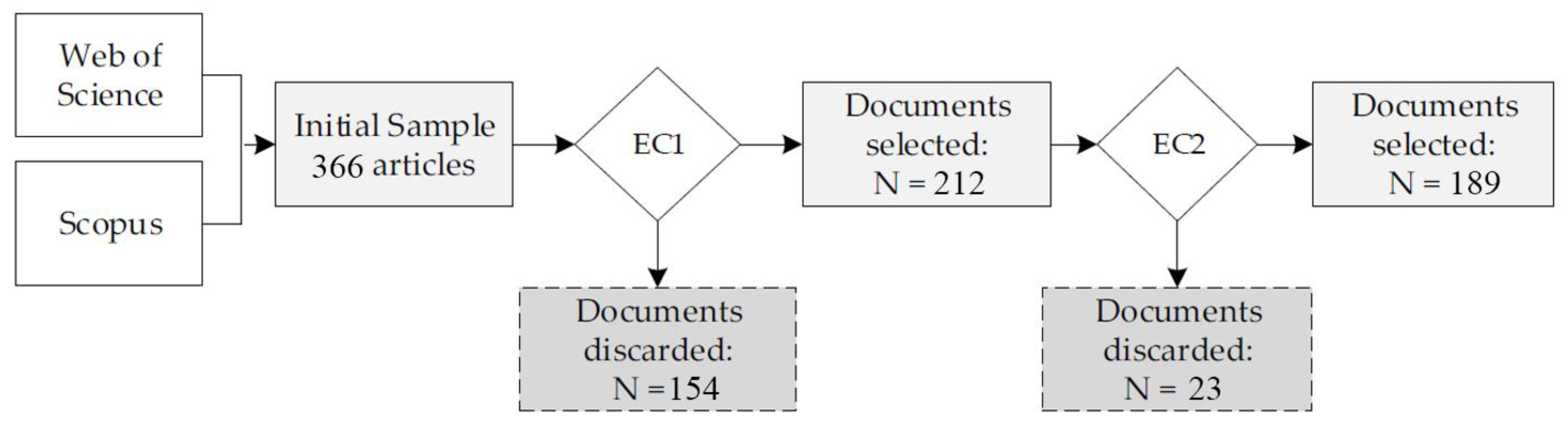
A Boolean search string was applied within the TITLE-ABS-KEY fields in the Scopus database. Specifically, the search string was constructed as follows: (TITLE-ABS-KEY (“BIM” OR “building information model*” OR “building information management”)) AND (TITLE-ABS-KEY (“offsite construction” OR “off-site construction” OR “off-site manufacturing” OR “off-site fabrication” OR “offsite production” OR “modern methods of construction” OR “prefabricate*” OR “precast construction” OR “pre-assembly” OR “prefab*” OR “construction mass production” OR “modularization” OR “modular construction” OR “modular building” OR “modular homes” OR “modular integrated construction” OR “modular homebuilding” OR “industrialized construction” OR “manufactured construction”)) AND (LIMIT-TO (DOCTYPE, “ar”) OR LIMIT-TO (DOCTYPE, “re”)) AND (LIMIT-TO (SRCTYPE, “j”)) AND (LIMIT-TO (LANGUAGE, “English”)). Figure 1 illustrates the systematic literature review process, detailing the stages of database searching where the keywords were defined, and articles were restricted to the English language to maintain a uniform standard for interpretation and analysis, a practice justified by English’s standing as the international lingua franca for scientific discourse [23,24]. Also, the research focused strictly on peer-reviewed journal articles to corroborate the rigor and quality of the reviewed literature, aligning with the stringent research standards commonly endorsed in engineering and construction. This initial search yielded 366 articles; details of the systematic review process are presented in Figure 1.
Furthermore, this study imposed additional refinement on the search results by selecting articles exclusively from the top 20 journals in each of the fields of building and construction, architecture, and civil and structural engineering, as classified by the Scimago journal rankings. This careful selection encompasses a total of 60 journals, ensuring that the review incorporates only the most reputable and impactful research. This refinement is backed by the notion that research published in high-impact journals often undergoes rigorous peer-review processes and tends to contribute significantly to both academic scholarship and practical application. This criterion has been applied in many journal articles [25,26]. Therefore, this additional criterion fortifies the research’s commitment to academic rigor and excellence in engineering and construction. A refined list of 212 articles was collected after this step. The top 20 journals were determined based on SJR scores, which reflect citation impact and scientific influence; journals ranked lower were excluded due to their significantly reduced visibility and research impact, ensuring the inclusion of only the most authoritative sources.
Following the initial selection, the research team divided into two independent groups to evaluate the 212 shortlisted articles. The relevance of each article was assessed based on its alignment with the research objectives of BIM-OSC integration, while quality was determined through methodological rigor and the scientific influence of the publishing journal, as indicated by the Scimago journal rankings (SJR). Through this intensive vetting process, the number of articles was further narrowed down to 189 for in-depth analysis (See Figure 2).
Then, qualitative content analysis was performed on these 189 remaining articles. Qualitative content analysis was employed in this study for its ability to delve deep into the complexities of textual data, revealing themes and patterns that a quantitative approach might overlook [27]. Qualitative content analysis ensures a rigorous and rich exploration of the research subject, aligning with established best practices for systematic literature reviews [28].
The research teams engaged in a double-layered validation process for added rigor. Notably, the groups switched tasks partway through the analysis to cross-validate each other’s findings, thereby ensuring higher reliability and validity in the data analysis. This approach of task-switching and mutual validation aligns with recommendations in the scholarly literature for enhancing the rigor and credibility of systematic reviews [29].
The classification of statistical data in Section 3.2, Section 3.3, Section 3.4 and Section 3.5 was determined through a combined approach: When studies explicitly defined their categories, these were adopted directly; otherwise, categories were derived through qualitative content analysis of the study objectives, methodologies, and findings, ensuring accuracy and consistency.

3. Results and Discussion

This section synthesises findings from an in-depth analysis of BIM and OSC integration. It starts with a bibliometric analysis that charts annual publications to track trends over time, providing a quantitative foundation for understanding this interdisciplinary field’s evolution (Section 3.1). Subsequent content analysis reviews various aspects of the literature, including the methodological approaches in studies (Section 3.2) and focuses on specific construction stages (Section 3.3). This review also assesses which stakeholders are highlighted and whose interests might be overlooked (Section 3.4). It evaluates the BIM dimensions explored in these studies (Section 3.5) and discusses emerging technologies at the intersection of BIM and OSC (Section 3.6). Finally, it addresses challenges and future directions, outlining key obstacles and potential research trajectories for BIM and OSC integration (Section 3.7).

3.1. Annual Publications

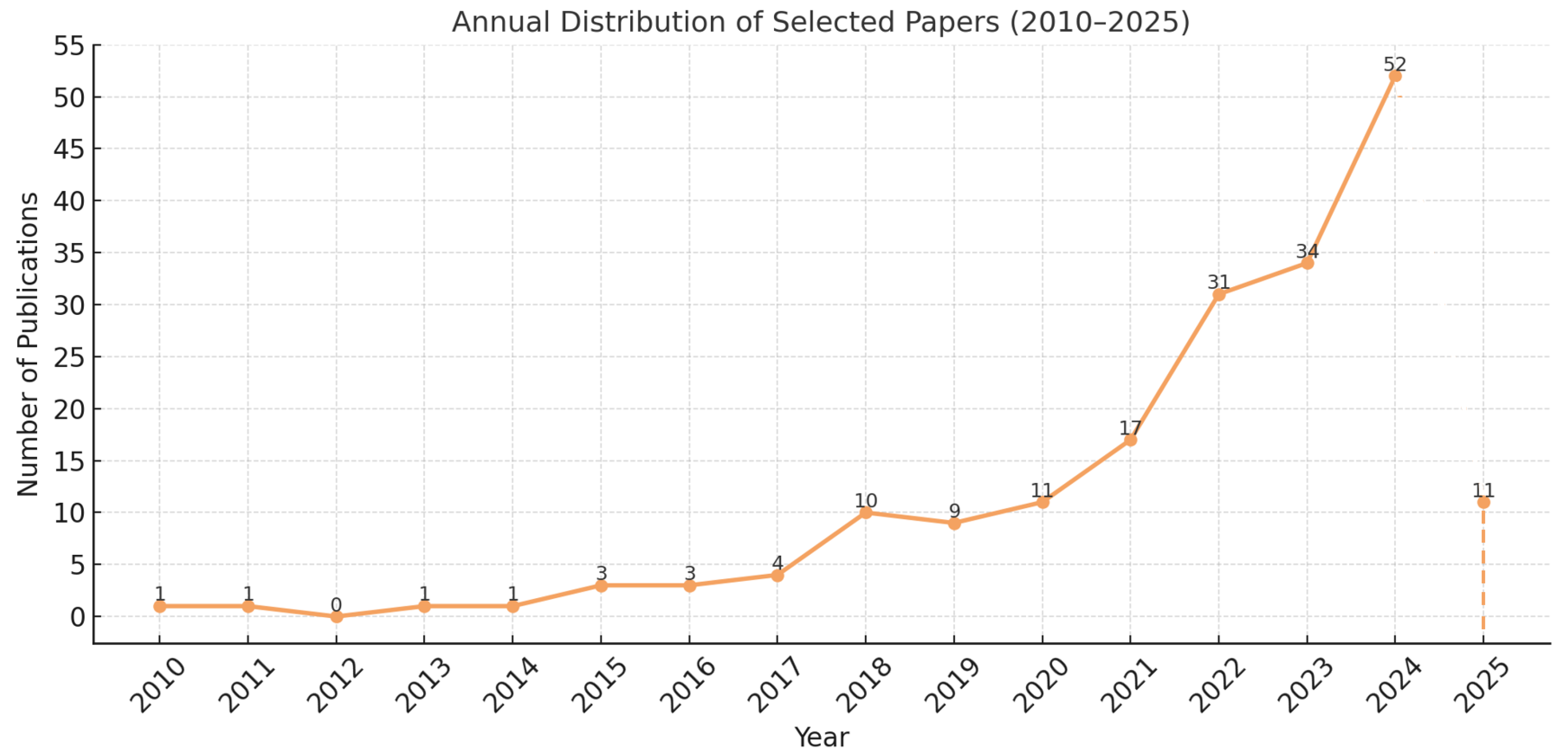
Figure 3 presents the annual distribution of the selected papers. It is observed that there was a steady level of productivity from 2010 to 2017. Subsequently, there has been an increasing trend from 2017 to 2022, culminating in a peak of 31 articles in 2022. The primary sources contributing to this trend include journals such as Automation in Construction, Buildings, Construction Innovation, and Smart and Sustainable Built Environment. With the inclusion of additional studies from 2023 onward, the publication count for 2023 reached 34 articles, surpassing the previous peak. Moreover, 2024 recorded the highest number to date, with 52 publications, while 2025 has already yielded 11 publications as of mid-year. These figures indicate a continued upward trajectory in research activity, confirming the growing academic interest in this domain and reinforcing the long-term significance of the topic.

3.2. Analysis of Methodological Approaches

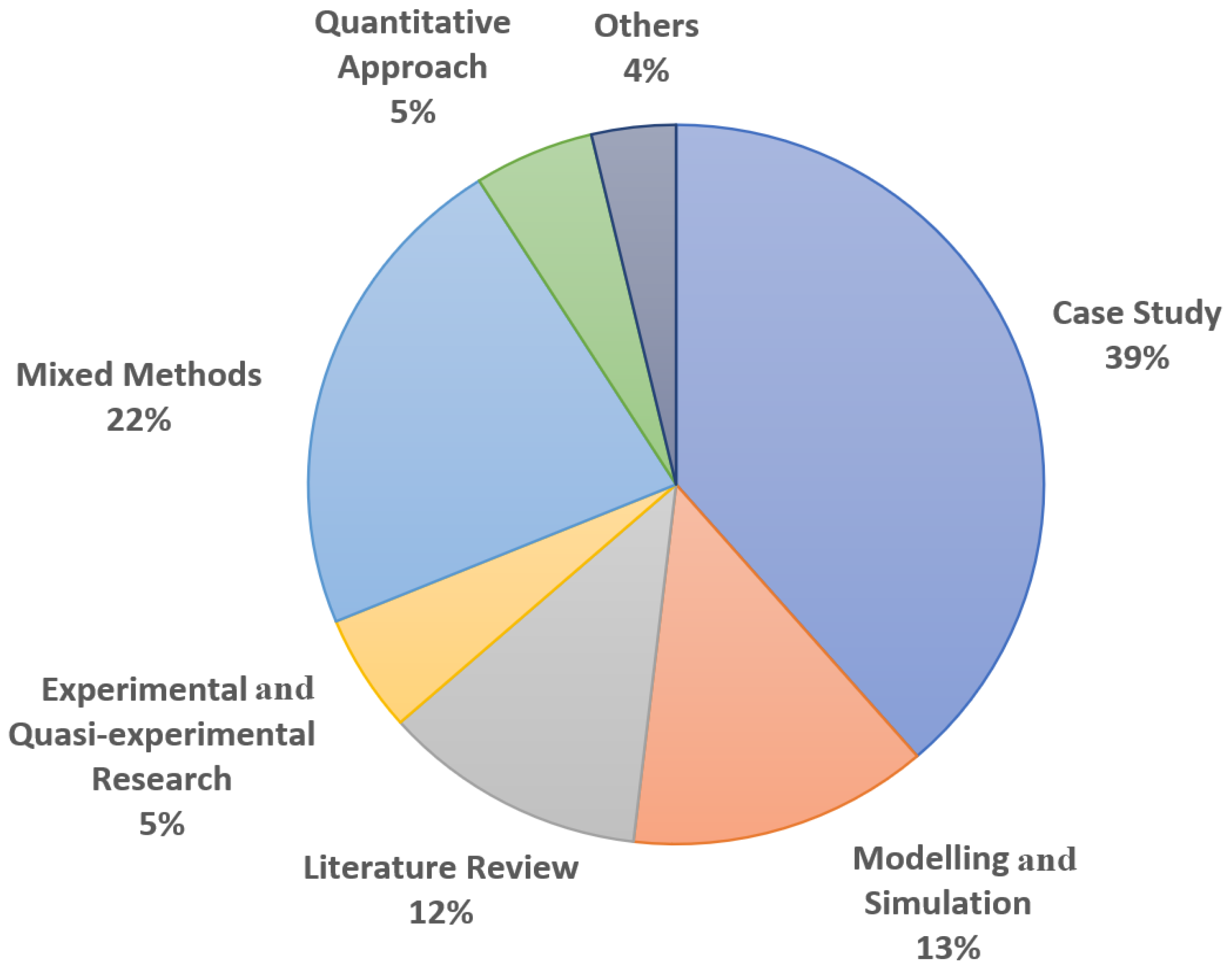
The subsequent analysis was designed to examine the methodologies adopted across the 189 selected articles. Figure 4 delineates six principal research methods: case study, modelling and simulation, literature review, experimental and quasi-experimental research, mixed methods, and quantitative approaches. Case studies were the most frequently utilised method, featured in 73 articles, constituting 39%. This prominent role of case studies is unsurprising given their ability to provide rich, contextual insights, as previously highlighted in the construction engineering literature [30,31]. The results are consistent with those of Ehwi, Oti-Sarpong [32], where case studies are the favoured method used in OSC.
Mixed methods emerged as the second most prevalent research approach, employed in 42 articles, accounting for 22% of the total. This methodology typically integrates both qualitative and quantitative techniques, thereby offering a more comprehensive and nuanced understanding of complex construction phenomena.
Modelling and simulation methods followed, appearing in 25 articles (13%). These methods are invaluable for forecasting and evaluating complex engineering scenarios, offering a robust theoretical underpinning to the practical applications in the field [33]. Literature reviews were identified in 22 articles, representing 12% of the selected studies. Literature reviews allow for comprehensive analyses of existing research, serving as both a synthesis and a critique [34]. It was observed that, while the integration of BIM and OSC has been the subject of previous reviews, these studies often adopt either a broad brush approach or focus primarily on quantitative analyses [14,35]. Such approaches, while valuable, frequently overlook the complexities of implementing BIM and OSC in real-world settings. This oversight is particularly evident in their limited exploration of diverse construction stages and stakeholder engagements.
Experimental and quasi-experimental research methods were present in 10 articles (5%), offering a means to test hypotheses under controlled or semi-controlled conditions [36]. Similarly, quantitative approaches were found in 10 articles (5%), generally emphasising statistical rigor and objectivity. Finally, other methodologies, which could not be neatly categorised, were used in seven articles 4%. For example, Bortolini, Formoso [37] adopted the design science research method to evaluate the effectiveness of the integration of BIM and OSC in site logistics planning and control.

3.3. Breakdown of Construction Stages

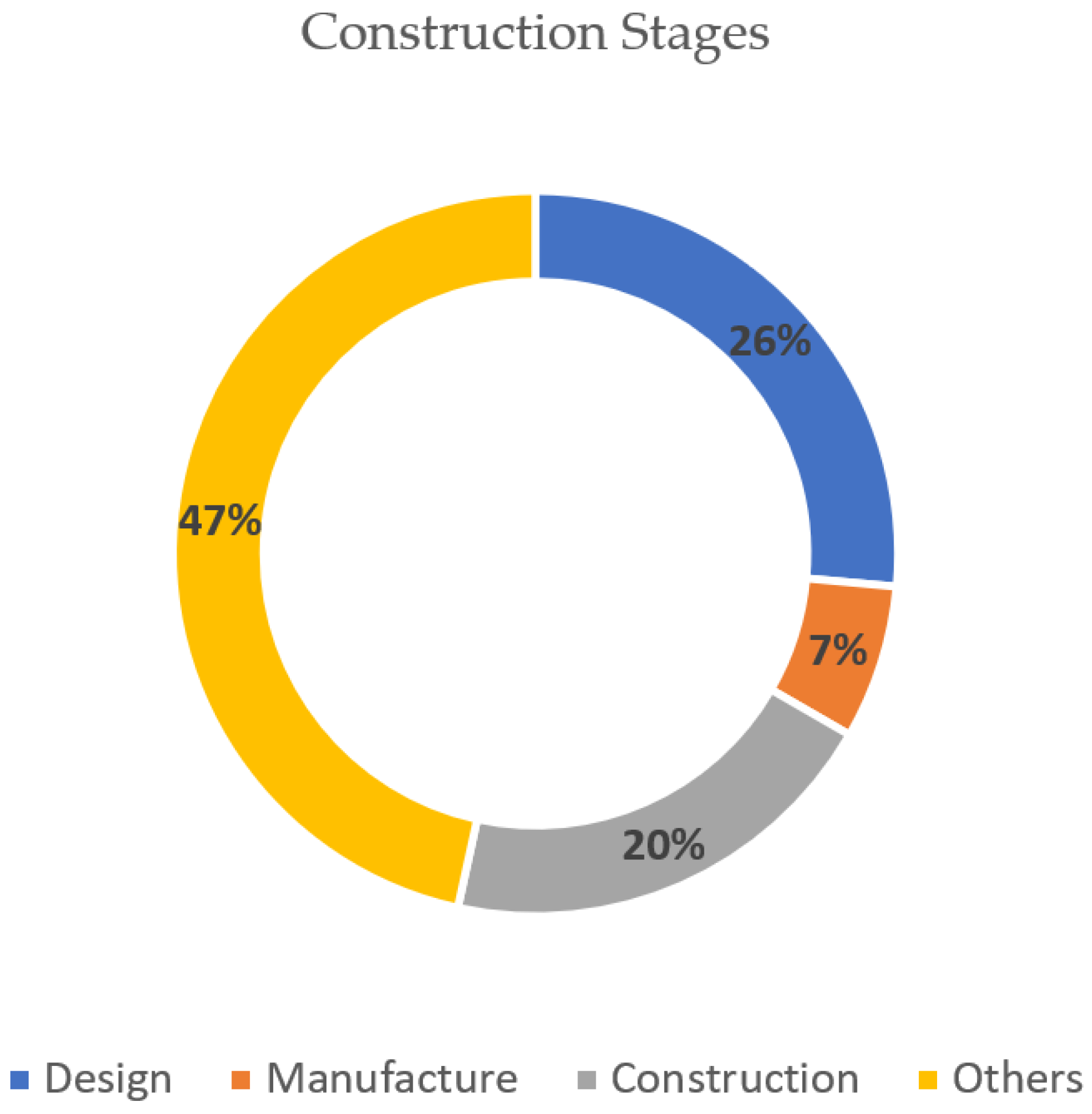
The following analysis directs attention to the construction stages that are the focus of the 189 articles reviewed. Figure 5 presents a breakdown of four construction stages: design, manufacture, construction, and others, encompassing articles covering two or more stages. These multi-stage studies form the majority of the ‘Others’ category, explaining why it accounts for a relatively high proportion in Figure 5. Dominating the distribution, the ‘Others’ category is represented in 88 articles, accounting for 47% of the total. These papers typically engage in multi-stage analysis, providing a more comprehensive view of the construction lifecycle, an approach that has gained traction in recent literature. Ezzeddine and García de Soto [38], for instance, focused on enhancing teamwork across various construction stages through implementing BIM and OSC. Gong, Xu [37] assessed the impacts of various factors, including technology, environment, economics, organisation, and recognition, across different stages of BIM-OSC integrated projects.
Next, the ‘Design’ stage garners substantial focus, covered in 50 articles or 26% of the sample. This prominence reflects the increasing attention on early planning and design in construction engineering for achieving successful projects [39]. An ontology and BIM-based Design for Manufacture and Assembly (DfMA) framework was developed by Qi and Costin [40] for OSC component design. Similarly, ref. [41] examined the application of the Random Forest algorithm for the automatic categorisation and coding of prefabricated elements. OSC components were also focused by Li, Li [42] to create a fine reinforcement model for prefabricated shear wall structures.
The ‘Construction’ stage is also notably covered, featuring in 38 articles and making up 20% of the corpus. Given that this stage is often where plans materialise into tangible outcomes, its scholarly attention is well-justified [43]. Lopez, Chong [44] identified barriers hindering timber OSC, primarily from the builders’ and suppliers’ perspectives. An IoT-enabled Smart BIM Platform was developed by Zhou, Shen [45] to support contractors/subcontractors in onsite assembly services.
The ‘Manufacture’ stage is less frequently examined, appearing in 13 articles or 7% of the body of work. This stage is crucial for prefabrication and component assembly, with significant implications for time and cost savings [46]. Zhou, Shen [45] developed a BIM-based framework that automates the assessment of machine capabilities for fabricating construction products, resulting in time saving for the manufacturing process. Automatic processes were also highlighted by Martinez, Ahmad [47] with the proposed framework to automate the supervision of light-gauge steel frame manufacturing, leveraging an industrial camera and BIM data to ensure quality and safety in a controlled factory environment.
The reviewed literature heavily emphasises early construction stages, overlooking the stages after ‘Construction’. This is surprising given the rise of integrated construction, which promotes a comprehensive view of construction throughout its lifecycle. As sustainability and circular economy principles gain prominence, attention to a building’s operation and end-of-life stages becomes vital. The scant focus on these stages in current studies suggests a significant research gap, especially when considering their role in sustainable construction.

3.4. Analysis of Stakeholders

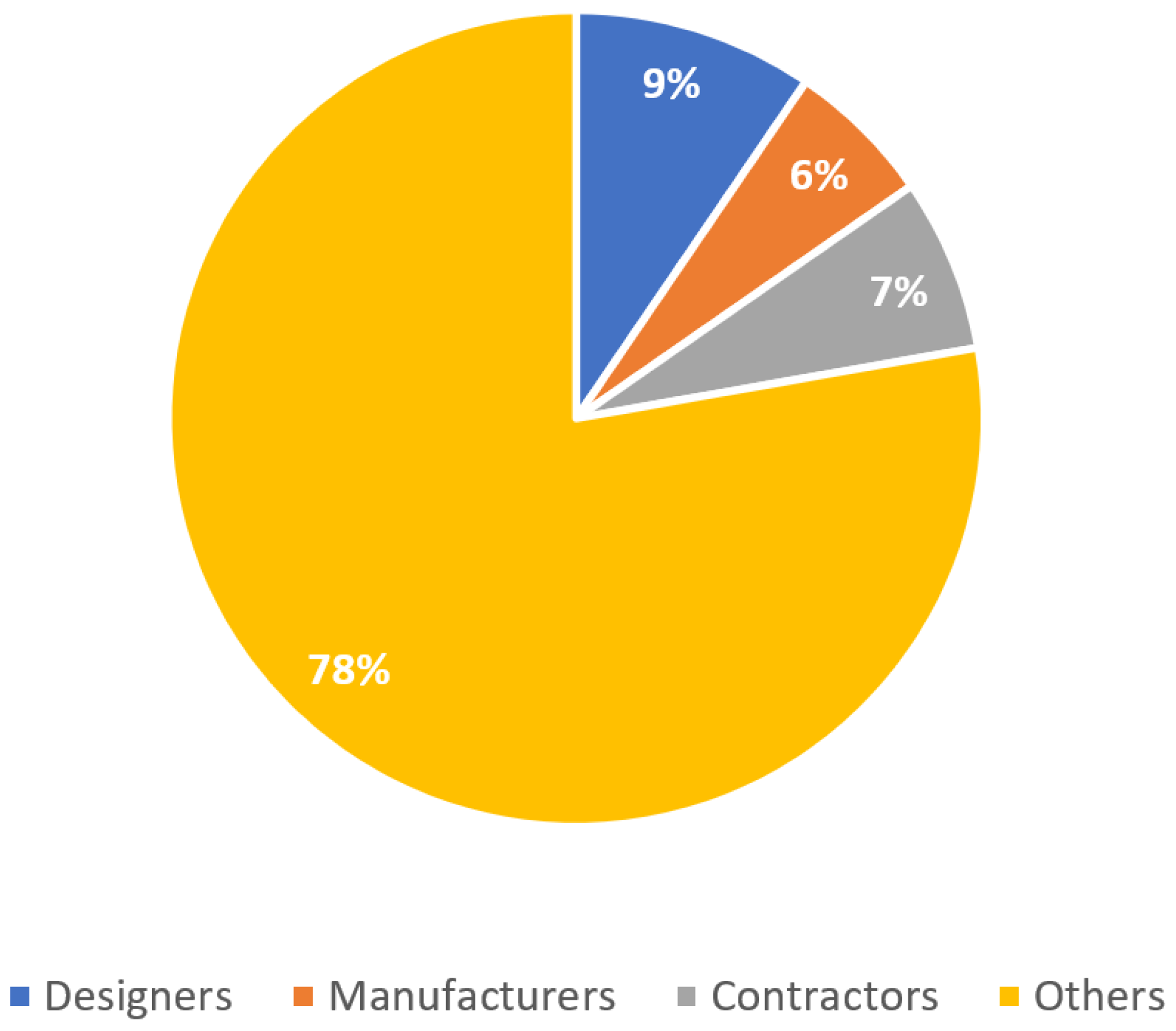
The subsequent analysis pivots towards the different stakeholders highlighted in the 189 articles examined. As illustrated in Figure 6, the study revealed four main stakeholders: designers, manufacturers, contractors, and others. ‘Others’, which represents a category comprising various stakeholders or a combination thereof, remarkably dominated the findings, being the subject of 147 articles and constituting a significant 78% of the total. This dominance might suggest that numerous studies prefer a holistic or multifaceted stakeholder viewpoint, which has seen rising endorsement in the recent literature. Five categories with 16 factors affecting BIM in OSC projects, which can be influenced by all stakeholders, were researched by Gong, Xu [37]. Abd Razak, Khoiry [48] highlighted the benefits of integrating BIM with DfMA for OSC and the need of collaboration among stakeholders (clients, developers, multidisciplinary designers, contractors/builders, and suppliers) along with the government support. Among different stakeholders’ influence, the government’s roles were also researched by Yang, Xiong [49], revealing that a well-structured government incentive scheme can support the growth of BIM and OSC.
Zooming in on specific roles, ‘Designers’ were the focal point in 18 articles, making up 9% of the selection. Their pivotal role in initiating and shaping projects explains the academic spotlight on them. The design and documentation of a complex glass reinforced-concrete façade were focused by Moya and Pons [50] to streamline the processes for designing and producing documents for curvilinear facades. According to Gan, Liu [51], modular structures’ aerodynamic design and wind comfort could be examined with a combined method using BIM and VR. Gan [52] created a thorough BIM-centric graph data structure to depict the fundamental attributes and interconnected components of modular structures, with the aim of devising and strategising design options for modular construction methodically.
‘Contractors’, responsible for the tangible realisation of construction projects, featured in 13 articles, thereby occupying 7% of the study corpus. Their hands-on involvement in project execution, from ground-breaking to completion, underscores their importance in construction. Both Tak, Taghaddos [53] and Huang, Pradhan [54] researched crane assembling using BIM in OSC projects. Their research delves into the complexities of assembly scheduling in crane-assisted precast construction, especially when considering building layout interference and crane lifting optimization. Building upon previously established systems, their research presents a framework/strategy that integrates both micro (objects) and macro (site) scales of operation in BIM-OSC projects. This holistic approach encompasses BIM-driven multi-crane visualisations, scheduling, safety monitoring, and space–time site evaluations to enhance onsite crane management.
Conversely, ‘Manufacturers’, who play a critical role in providing construction materials and components, appeared in 11 articles, accounting for 6% of the total. Their influence on construction projects’ efficiency, sustainability, and overall quality cannot be underestimated. Steel frame manufacturing was researched by Martinez, Ahmad [47] and An, Martinez [55]. While Martinez, Ahmad [47] proposed a framework to automatically oversee the pre-manufacturing of light-gauge steel frames, An, Martinez [55] developed a BIM-based 3D framework to assess the manufacturability of steel frame assemblies autonomously.
This analysis examines the diverse roles stakeholders have in BIM-OSC projects. The reviewed articles highlight the significance of collaboration in the construction industry. Effective teamwork among all participants is essential for the success of BIM-OSC projects.

3.5. BIM Dimensions

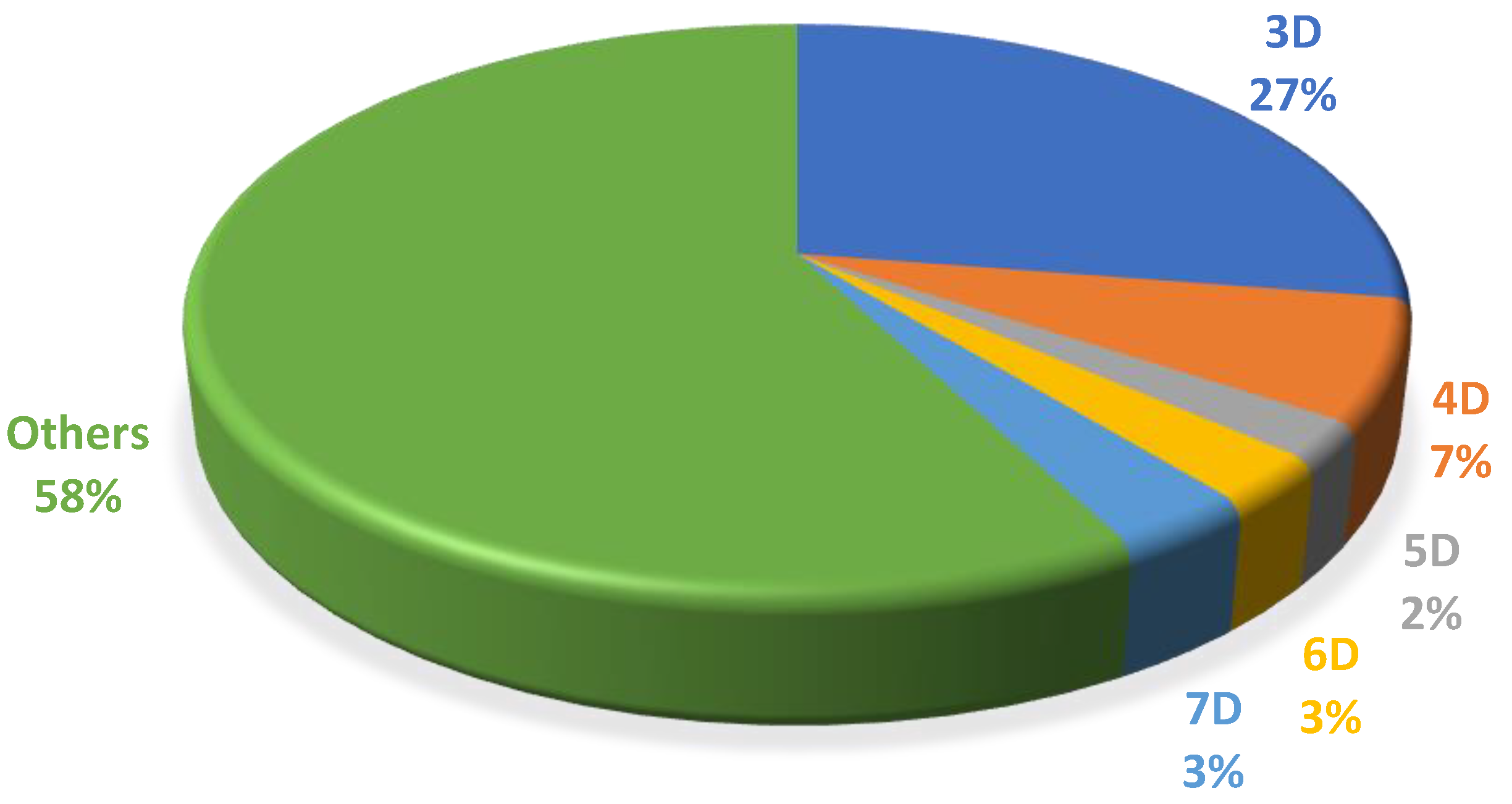
In the analysed articles, a predominant emphasis on 3D modelling was observed (See Figure 7). A staggering 52 out of 189 articles centred on using three-dimensional models, indicative of its foundational role in the BIM process. This emphasis on 3D modelling underscores its critical importance in capturing construction elements’ spatial relationships, geometry, and graphical data, especially within offsite construction contexts. Kang, Dong [56] detailed an automated design improvement method centred on the BIM platform for modular steel constructions, enabling seamless data interchange across different software tools. Noghabaei, Liu [57] proposed a technique for remote module compatibility checks, successfully identifying discrepancies across varied module situations. Shen, Xu [58] formulated a safety risk management system within the BIM framework using Revit software, optimizing health and safety measures for prefabricated structures.
The 4D dimension, which introduces the time aspect to BIM, was explored in 13 articles. Its relevance in BIM-OSC initiatives emphasises the value of project sequencing and scheduling, crucial for harmonising offsite component production with onsite construction. Wang, Guo [59] introduced an approach that leverages 4D BIM to proactively pinpoint and address potential workspace conflicts during the intricate phases of installing prefabricated building assemblies. This approach underscores the significance of foresight in the detailed design process, highlighting the potential to pre-emptively tackle challenges. Rashidi, Yong [36] explored the merger of 4D BIM with VR to bolster construction planning proficiency. The complexities of modular construction, which inherently involves both offsite and onsite activities, were addressed by Salama, Salah [60]. This research proposed a novel method tailored to track and manage these activities, especially accentuating the unique characteristics associated with modular construction.
The 5D dimension, concerning cost estimation, featured in four papers. Gbadamosi, Oyedele [61] proposed a framework that merged three key aspects of OSC (BIM, DfMA, and big data) to establish the Big data Design Options Repository. This system aims to connect BIM clients with pivotal manufacturer and supplier details, such as component costs and production timelines, thereby streamlining offsite construction delivery processes. Another investigation addressed the disparate outcomes on the benefits of multi-trade prefabrication (MTP) utilising BIM, including an economic analysis [62]. The research provided insights into the longer coordination times of MEP systems in MTP versus conventional methods due to the addition of offsite coordination activities. However, it highlighted that the overall project span was curtailed thanks to the concurrent execution of MTP and concrete tasks. Zhao, Liu [63] underscored the use of BIM with the Analytic Hierarchy Process to offer comprehensive project requirements, supplier profiles, and a ranking system for potential suppliers, in which cost is one of the main criteria.
In the sustainability-focused 6D dimension, five articles were reviewed. In sustainable construction, prefabricated structures have garnered significant attention for their potential environmental benefits. Tavares and Freire [64] assessed the environmental impacts of lightweight prefabricated houses, incorporating a holistic lifecycle assessment, underlining the importance of regional variations like climate and electricity mix. Notably, the research highlighted the substantial embodied impacts, particularly in Mediterranean and tropical climates, emphasising the need for varying insulation levels based on climatic conditions. They concluded that lightweight prefabricated structures, when compared to their conventional counterparts, potentially reduce overall lifecycle impacts in the building sector. Similarly, Li, Xie [65] delved into the merits of prefabricated concrete buildings (PCBs), advocating for their resource efficiency, quality enhancement, and reduced pollution footprint. This research focused on developing an exhaustive lifecycle accounting mechanism, harnessing the capabilities of BIM, to calculate the carbon emissions of PCBs precisely. It was revealed that such buildings considerably lessen carbon emissions, especially when contrasted with entirely cast-in-place structures.
Lastly, the 7D dimension, centred on facility management, was addressed in six articles. Daniotti, Masera [66] developed a comprehensive BIM-based toolkit aimed at streamlining the renovation of residential buildings, ensuring more efficient information flow and heightened building efficiency. Early findings from this ongoing project highlight the potential of BIM-centric approaches in revolutionising building refurbishments.
This analysis provides an overview of the evolving BIM dimensions, from the foundational role of 3D modelling to the sophisticated nuances of the 7D dimension. It is evident that BIM has increasingly anchored itself as an indispensable tool in modern construction, streamlining processes, enhancing efficiency, and promoting sustainable practices. The spectrum of research illustrates BIM’s multifaceted applications and its profound impact on various construction facets.

3.6. Advanced Technologies

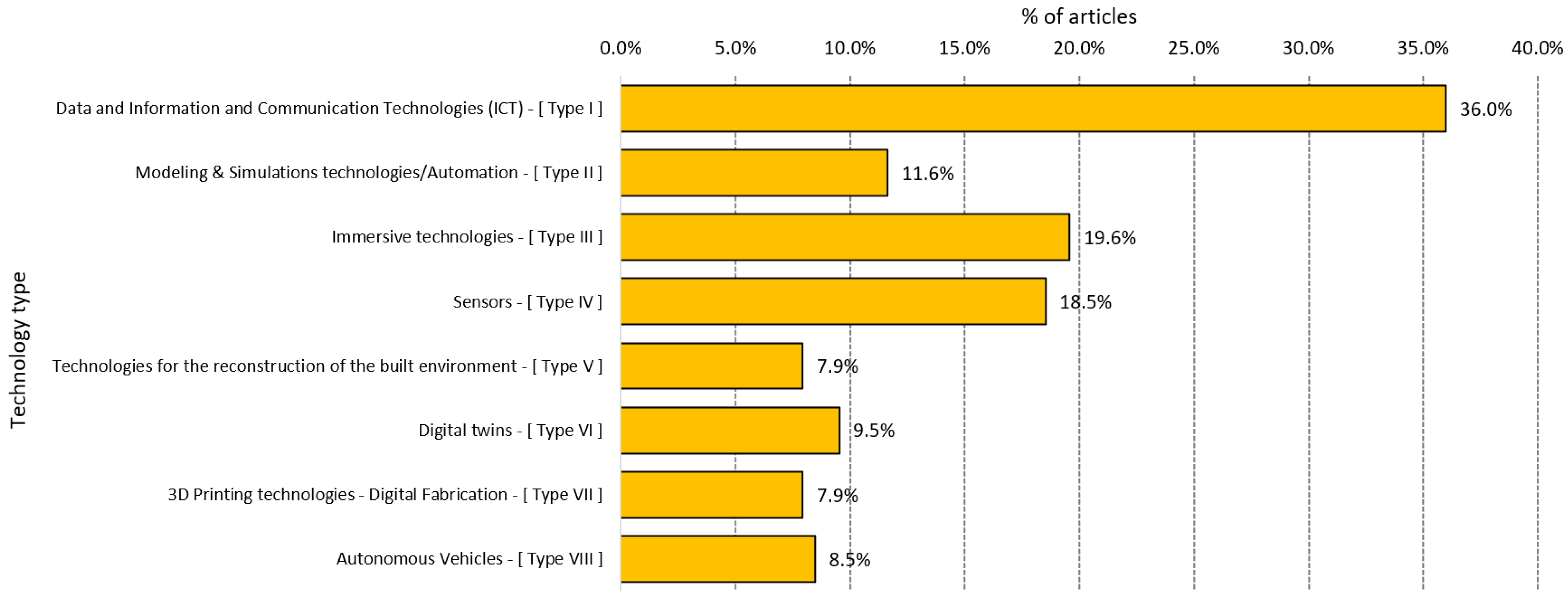
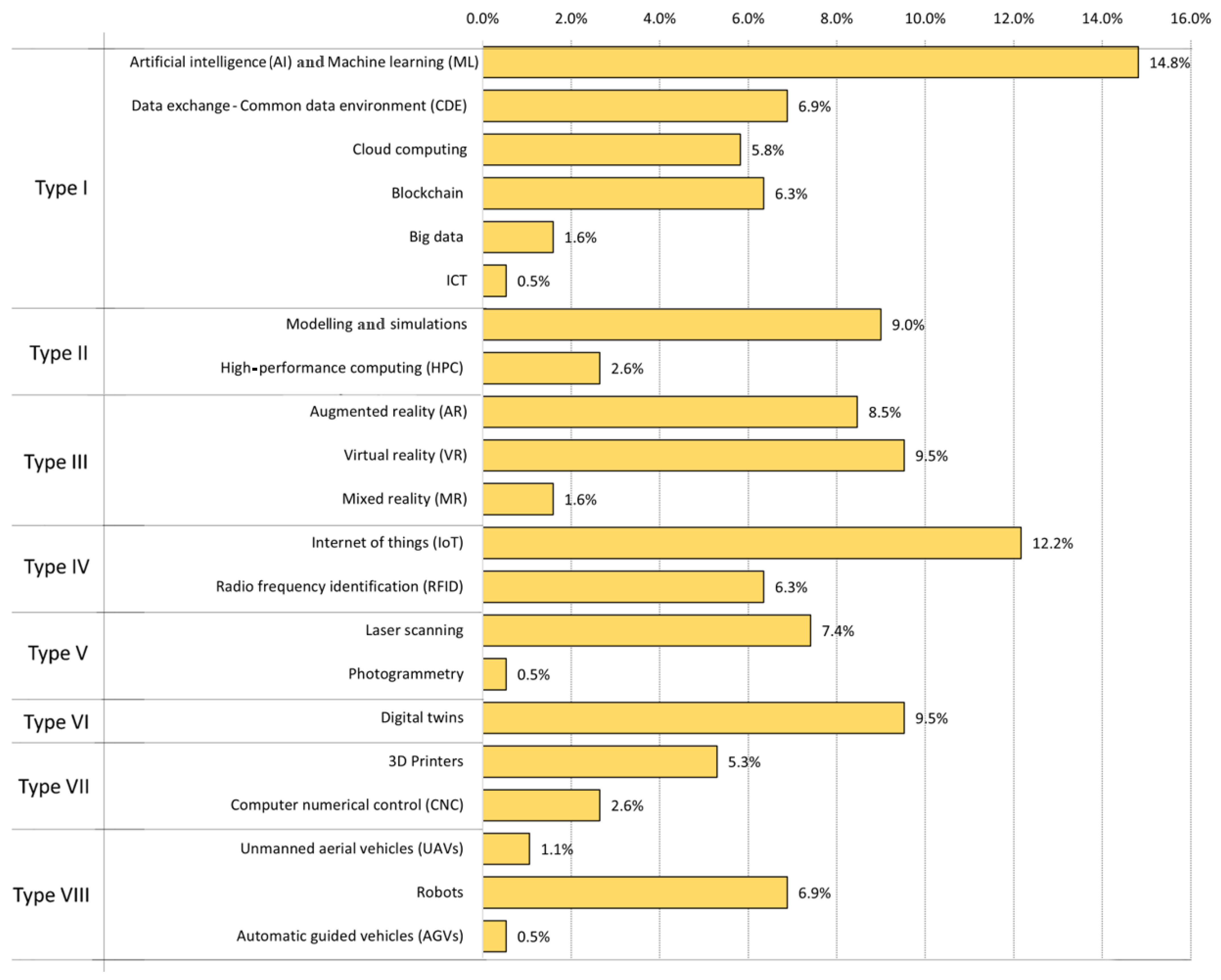
A total of 21 technologies were identified and classified into eight technology types, following classifications and recommendations from various authors within the context of emerging technologies in Construction 4.0 [67]. As shown in Figure 8, (I) Data and information and communication technologies (ICT) were discussed in 36.0% of the studies, (II) Modelling and simulations technologies and associated tools for BIM process automation were analysed in 11.6%, (III) Immersive technologies appeared in 19.6% of the studies, and (IV) Sensors were featured in 18.5%. Then, 7.9% of studies featured the use of (V) Technologies for the reconstruction of the built environment, and (VI) Digital twins were evident in 9.5% of the studies. Finally, (VII) 3D printing technologies and digital fabrication were examined in 7.9% of the studies, and (VIII) Autonomous vehicles in 8.5%.
Figure 9 shows in detail the technologies analysed in the investigations. Note that the percentages in Figure 8 do not necessarily correlate directly with the technology categories in Figure 7 because more than one technology is addressed in some articles. It is possible to see the prominent use of artificial intelligence (AI) and machine learning (ML), reflecting their growing role in optimizing processes and decision-making in prefabricated construction. Also, the significant analysis of modelling and simulation/automation technologies is also evident, focusing their use on the systematisation of the integration processes of BIM with prefabricated construction.
Additionally, augmented reality (AR) and virtual reality (VR) show notable adoption at high rates. This trend can be attributed to their ability to improve visualisation and planning in prefabricated construction, enabling better alignment of virtual models (BIM) with physical assembly processes. Additionally, internet of things (IoT) and laser scanning technologies stand out, primarily for their applications in real-time data capture and site monitoring, which are essential for creating accurate digital twins. These technologies collectively support the integration of real-world environments with digital models, enhancing efficiency and control in prefabricated construction projects.
Detailed in Table 1, these technologies span a broad spectrum, from data and ICT to autonomous vehicles. Significantly, they are not isolated tools but integral components of a cohesive system that collaborates seamlessly with BIM. This synergy primarily involves advanced 3D modelling and simulations, enriched with time and cost dimensions (4D and 5D BIM), tailored for diverse OSC applications. These technologies represent more than mere advancements; they are transformative forces in the construction sector. By enhancing project efficiency, precision, and environmental sustainability, they are redefining the construction landscape from the foundational stages of planning and design to the intricate processes of execution and management.
It is important to note that the 21 technologies identified across the eight categories are not isolated but highly complementary. For example, IoT-based sensors and laser scanning provide real-time data that feed into digital twins for dynamic project monitoring, while VR and AR enhance constructability verification by aligning BIM models with onsite assembly. Similarly, AI and big data analytics optimize prefabrication planning and decision-making. Collectively, these technologies form a synergistic ecosystem that strengthens BIM-OSC integration, improving efficiency, accuracy, and sustainability across all project phases.
These technologies predominantly focus on enhancing the efficiency of planning, design, fabrication, and assembly processes for prefabricated elements through the strategic use of BIM models.
Type I (Data and ICT) plays a pivotal role in OSC, primarily focusing on data generation, use, and exploitation. This category encompasses diverse technologies that facilitate the efficient handling and processing of construction data. These technologies are instrumental in enhancing communication, improving data management, and supporting decision-making processes in OSC, thereby contributing significantly to optimizing planning, design, and execution phases in construction projects.
Type II (Modelling and simulation technologies/automation) is central to enhancing the efficiency and accuracy of design, manufacturing, and installation processes in OSC. These technologies significantly improve logistical planning and control. They facilitate a more streamlined and efficient construction process, contributing to the overall project efficiency. HPC offers substantial advantages in precast construction. It enables efficient coordination of construction robots, real-time quality inspection, and performance optimization through advanced simulations. This technology is pivotal in enhancing planning and resource management, thereby improving construction projects’ precision, efficiency, and overall success.
Type III (Immersive technologies) plays a distinct role in enhancing construction processes. AR focuses on inspecting and verifying the correct layout of precast elements onsite, effectively linking information to and from BIM environments. This technology overlays digital information onto the real-world environment, aiding in precise placement and adherence to design specifications. Conversely, VR enhances 4D BIM planning through immersive, first-person simulations, providing deeper insights into assembly, layout, and logistics workflows. It allows stakeholders to navigate the construction environment virtually, aiding in planning and decision-making. MR combines the best of both worlds, superimposing virtual elements onto real environments for enhanced construction design communication. It facilitates effective visualisation and understanding of construction designs, improving communication among project stakeholders. These immersive technologies significantly contribute to the efficiency, accuracy, and success of construction projects, particularly in the design and planning stages.
Type IV (Sensors) encompasses IoT and RFID technologies, which play crucial roles in OSC. IoT technology is instrumental in enabling platforms for onsite assembly services, significantly enhancing the tracking and management of prefabricated elements during deployment. This technology provides real-time monitoring and data collection, which is essential for the efficient assembly and management of construction processes. Conversely, RFID technology is crucial for capturing the encoded data of components during onsite assembly in OSC. It enhances the tracking of materials and management of related processes, thus improving both the efficiency and accuracy of the assembly process. RFID provides real-time data on components and materials, optimizing the management and execution of OSC and ensuring a more streamlined and accurate construction workflow.
Type V (Technologies for the reconstruction of the built environment) is essential for maintaining the accuracy and integrity of construction projects. Laser scanning technology plays a key role in accurately reconstructing built elements, providing precise control and oversight of the construction site layout. This technology allows detailed comparisons between actual site conditions and the 3D models used in planning, ensuring projects adhere to their designs and specifications. Photogrammetry, meanwhile, is particularly effective in reconstructing maps and environments over large areas. Using photographs, often from drones, generates detailed maps and 3D models, essential for accurate construction and land surveying.
Type VI (Digital twins) embodies a transformative approach to managing construction projects. This technology offers an integrated and comprehensive view of projects, focusing on elements such as detailed 3D modelling, meticulous planning, and efficient logistics management. Digital twins act as dynamic, virtual counterparts of physical construction projects, facilitating real-time monitoring and decision-making. This technology significantly boosts the precision and efficiency of construction processes from design through to execution. By providing an overarching view of the project lifecycle, digital twins enhance coordination, resource management, and operational efficiency, playing a pivotal role in the success and optimization of construction projects.
Type VII (3D printing technologies and digital fabrication) is crucial in advancing OSC. This category includes transformative technologies like 3D printers, which facilitate the precise fabrication of complex building components directly from digital models, and CNC, which enables accurate machinery control for efficient material shaping and assembly. These technologies integrate seamlessly with BIM, enhancing the design, manufacturing, and assembly processes. They are instrumental in promoting a modular construction approach, significantly improving project efficiency, precision, and adaptability in the evolving construction landscape.
Type VIII (Autonomous vehicles) revolutionises OSC by enhancing efficiency and precision. UAVs facilitate critical site inspections and logistics planning. Robots automate and refine the manufacturing of prefabricated components, ensuring optimal modularisation. AGVs streamline the transport and placement of precast elements onsite. These technologies mirror the advancements seen in Type II (Modelling and automation), significantly improving the overall efficiency and accuracy of OSC processes.

3.7. Later Lifecycle Stages: Operation, Maintenance, Renovation, and Deconstruction

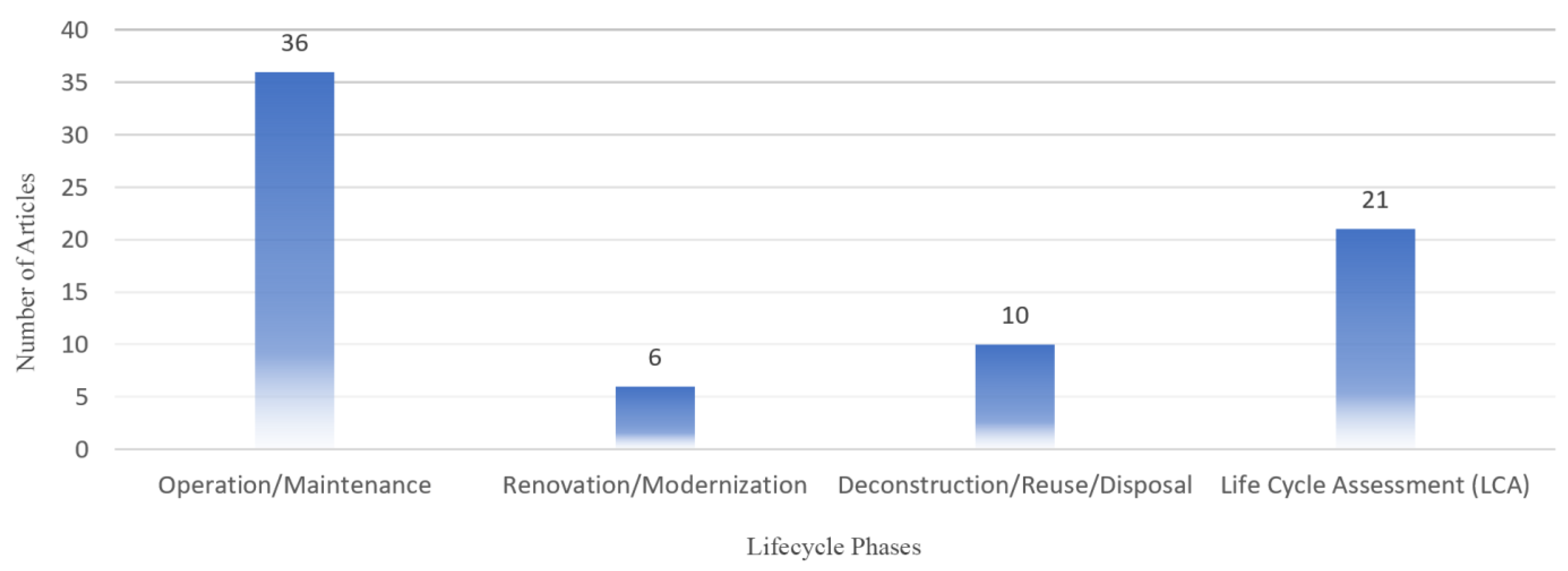
The literature reviewed reveals a marked imbalance in focus across building lifecycle stages. As illustrated previously (Figure 5), most studies focus on design (26%), manufacturing (7%), and construction (20%). In contrast, the later phases, operation, maintenance, renovation, and deconstruction, remain under-represented, despite their centrality in sustainability discourses.
From our dataset of 189 papers, only 36 studies explicitly address operation and maintenance [75,95,130,134,142,143,144,145], typically through 7D BIM and facility management approaches, predictive maintenance, or building condition monitoring systems. A smaller cluster of works [13,82,94] engages with renovation and modernisation, emphasising digital retrofit strategies and performance prediction models. Similarly, 21 papers investigate lifecycle assessment (LCA) in prefabricated construction [79,133,146], quantifying embodied carbon and highlighting the environmental trade-offs of offsite construction.
Research on deconstruction, reuse, and material disposal is particularly scarce: only 10 articles [137,143,144] address circular economy strategies such as material passports, adaptive reuse, and waste minimization. This confirms that the post-construction lifecycle remains a neglected area in BIM–OSC integration. Figure 10 below visualises this distribution, highlighting the significant research gap in later lifecycle stages.
While these aspects are essential for aligning BIM–OSC practices with circular economy principles and comprehensive lifecycle assessment, current scholarship remains heavily weighted towards early stages.

3.8. Challenges and Future Directions

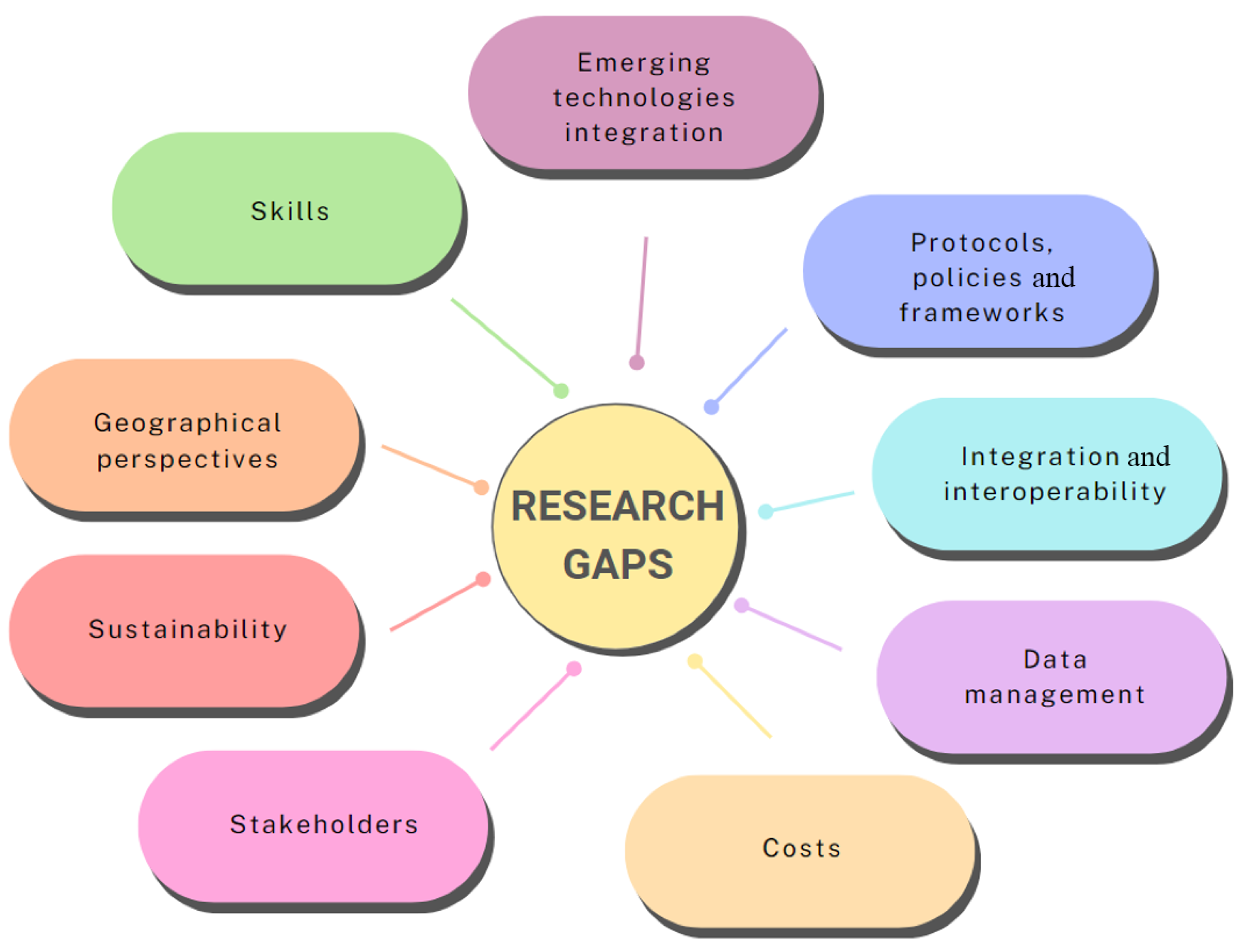
The research papers reviewed in this study highlight several challenges, paving the way for new research opportunities. Through analysis and categorisation of data extracted from the documents, nine key research topics have been identified (See Figure 11). To enhance clarity, Table 2 summarises these nine challenges along with their related future research directions.
The first topic (i) focuses on integrating emerging technologies in future OSC developments. Notably, generative design is emphasised as a transformative technology [40,42,52,56,147], offering significant potential to expand the range of modular designs through its automated configuration capabilities. Blockchain technology is identified as a critical tool for enhancing the supply chain of OSC projects [3,97,98,148]. Its application promises to improve transparency, trust, traceability, and security, while also boosting efficiency and quality control in supply chain processes. The roles of AR and VR are also highlighted as a catalyst for constructability verification [51,56,114,149] and dimensional control of elements [95]. These technologies extend the capabilities of 4D-BIM, facilitating its integration across various project types [36,142,150]. Furthermore, integrating the IoT is recommended to address the need for real-time data collection throughout the OSC lifecycle, particularly during the construction phase [82,117]. This integration is also seen as a means to enhance supply chain traceability, further contributing to the efficiency and effectiveness of OSC processes. Industrialized construction systems (ICSs) are critical in enhancing OSC by integrating prefabrication, modularisation, and automation. However, the reviewed literature provides limited insights into their integration with BIM-driven workflows. Future studies should explore how ICSs can improve production planning, quality control, and large-scale OSC implementation, enabling greater efficiency and sustainability.
The second topic (ii) addresses the development of protocols, policies, and frameworks essential for the construction industry. This includes establishing consistent and standardised methods for implementing forward design using BIM [48,69,149]. There is a pressing need for detailed instructions tailored for manufacturers and contractors [40,61,118,127,150,151,152,153,154,155,156,157], along with a standardised coding system for prefabricated building components based on BIM [41]. This topic also underscores the critical role of the public sector in providing regulations and guidelines for BIM application in OSC [13,103,137,157], and the importance of incentives to encourage its adoption [49]. Standardised ontology models and guidelines for safety risk assessment should be developed in OSC [58]. Furthermore, there is a need to develop a universally accepted standard data format to support CDE among stakeholders [157], and the standardisation of material types and sizes [104].
The third topic (iii) delves into the challenges of integration and interoperability of proposed solutions and their associated technologies [4,60,158,159,160,161,162,163], as well as their alignment with traditional construction workflows [68,69]. It also highlights the necessity of integrating project stakeholders in terms of data, applications, and processes [109,158,164]. Researchers suggested the optimization of the assembly process [54], task network [164], and site layout [53] to enhance efficiency. The application of lean principles is recommended to improve OSC performance [159,165,166], along with the use of simulation techniques [51].
Topic four (iv) emphasises enhancing data management from various angles. Abd Razak, Khoiry [48] advocated for integrating natural, cultural, and geospatial data to establish comprehensive guidelines for OSC. Barkokebas, Khalife [167] and Noghabaei, Liu [57] underscored the importance of accelerating and automating data collection during component compatibility checking processes. The volume and precision of data are also crucial for improving design and construction stages, and facilitating collaboration among stakeholders, with big data being a significant tool [14,50,61,62,136,168,169,170,171,172,173,174,175].
Regarding the fifth topic (v) on costs, researchers identify open challenges in evaluating the cost–benefits of various solutions [45,96,111,158,176,177,178]. The tax implications of carbon trading, particularly concerning concrete as a primary construction material, are highlighted by Yang, Xiong [49]. Additionally, other sustainability aspects that could lead to savings, such as safety, social, macroeconomic, and environmental factors, are discussed by Atta, Bakhoum [179], Krantz, Larsson [180], Ceranic, Beardmore [181], and Nekouvaght Tak, Taghaddos [182].
The sixth notable topic (vi) pertains to stakeholders involved in OSC projects. Research concerns focus on collaborative practices, supply chain coordination, and integration [63,137,183,184,185]. Since OSC aims to operate like a production line, enhancing stakeholder communication and ensuring more fluid, zero-latency business processes are crucial [3]. Furthermore, Khalili-Araghi and Kolarevic [184] proposed that virtual environments could significantly improve stakeholder interactions.
The seventh topic (vii) addresses sustainability challenges. This includes examining the carbon emissions of prefabricated concrete composite in building types [48,65,79,80,81,82,83,84,143,144,145,146,186,187], assessing the cost-effectiveness and environmental impact of offsite prefabrication versus traditional onsite construction methods [44], and understanding how carbon trading unit prices and carbon tax rates influence enterprise decision-making [49]. Researchers also called for extending the analysis of the sustainability effects of implementing OSC [182,188,189], and improving the accuracy of lifecycle assessment (LCA) [189]. It is also noteworthy that the majority of reviewed studies focused on early project phases, such as design, manufacturing, and construction, with limited attention given to later lifecycle stages, including operation, maintenance, and deconstruction. Although a number of studies address facility management and technical maintenance, a deeper analysis of building condition monitoring, modernisation, and renovation strategies remains limited in the current BIM-OSC literature. Furthermore, topics such as material reuse, waste disposal, and sustainable deconstruction have received minimal focus. Addressing these phases is crucial to achieving a truly sustainable BIM-OSC framework. Future research should explore integrating BIM and OSC with facility management systems, predictive maintenance, building condition monitoring, adaptive reuse models, renovation strategies, and sustainable end-of-life deconstruction, while aligning with circular economy principles and supporting comprehensive lifecycle assessments (LCA).
The eighth topic (viii) delves into the geographical aspects of OSC-BIM. It proposes expanding the geographical scope of development, noting that some studies are region-specific. Researchers suggested further investigating the barriers, strategies, and best practices of BIM implementation in the prefabrication industry across different regions to identify common challenges and effective solutions [70,157]. They also recommended studying the impacts of prefabricated buildings, considering factors like climate, electricity mix, and transport distances [64]. Comparative studies of material passport tools developed in various regions or countries are encouraged to analyse their similarities, differences, and potential improvements [178]. Additionally, there is a call to address local OSC-BIM integration issues, such as the lack of guidelines in Italy [188], the need for further research to facilitate the widespread replication of deep renovation practices across EU member states, and the limited adoption of OSC in Sri Lanka [190].
Finally, the ninth topic (ix) focuses on developing the specific skills necessary for managing OSC. This involves establishing training programs, educational initiatives, and collaborations between industry, academia, professional institutes, and government agencies to build the required expertise and knowledge base [13,108,191,192]. This approach aims to equip professionals with the competencies needed to effectively implement and manage OSC projects, ensuring their success and sustainability.

4. Conclusions

This research systematically reviewed 189 peer-reviewed articles to critically examine the integration of building information modelling (BIM) and offsite construction (OSC), with a focus on emerging technologies, methodologies, and future trends. The review highlights the growing academic and industrial interest in BIM-OSC integration, reflecting the sector’s ongoing transformation towards efficiency, sustainability, and digitalisation.
The findings reveal that BIM and OSC, when effectively integrated, offer significant potential to improve project planning, design, manufacturing, and onsite assembly. The study identifies 21 advanced technologies grouped into eight categories, including artificial intelligence, digital twins, IoT, immersive technologies, 3D printing, and autonomous systems. Importantly, these technologies are not isolated but work synergistically within BIM-OSC workflows, supporting real-time data exchange, automated prefabrication, constructability verification, and dynamic project monitoring. Such synergies strengthen collaboration between stakeholders and create a comprehensive digital ecosystem that drives innovation and precision across the entire construction lifecycle.
In addition, the review reveals nine key challenges affecting BIM-OSC adoption, including integration of emerging technologies, standardisation of protocols, data management, interoperability, sustainability, and skills development. Addressing these challenges is crucial for enabling holistic integration frameworks and unlocking the full benefits of BIM-OSC. The study also underscores the importance of stakeholder collaboration and the adoption of unified data environments to overcome fragmentation and ensure seamless project delivery.
This research contributes to both academia and practice by offering a comprehensive roadmap for leveraging BIM-OSC integration. For researchers, it consolidates existing knowledge, identifies gaps, and suggests directions for further investigation, particularly in real-world testing of integration frameworks and the scaling of emerging technologies across diverse geographical contexts. For practitioners and policymakers, it provides actionable insights into best practices, technological adoption strategies, and sustainability-driven approaches to optimize project performance.
Future research should focus on empirical validation of BIM-OSC integration frameworks through case studies and large-scale implementation in real projects. Furthermore, as technologies such as generative design, blockchain, AI, and digital twins continue to evolve, further investigation is needed to explore their interoperability and their potential to shape Construction 4.0. Such studies will be pivotal in developing adaptable, data-driven, and sustainable models that can transform construction into a fully integrated and intelligent ecosystem.
By synthesising these findings, this research provides a solid foundation for both academic exploration and industrial practice, paving the way towards more efficient, collaborative, and sustainable construction processes. The integration of BIM, OSC, and emerging technologies represents not only a significant opportunity but also a strategic imperative for reshaping the future of the built environment.
A key limitation identified in this review is the limited scholarly attention to the later stages of the building lifecycle. While design, manufacturing, and construction dominate the literature, comparatively fewer studies address operation, maintenance, renovation, or deconstruction. Yet, these phases are fundamental to sustainability, particularly in the context of circular economy practices and lifecycle assessment (LCA). Future research must, therefore, prioritize BIM–OSC integration for asset management, predictive maintenance, adaptive reuse, renovation strategies, and sustainable end-of-life processes. Such an expansion is crucial to ensure that BIM–OSC frameworks move beyond project delivery to encompass the whole lifecycle of the built environment.

Author Contributions

Conceptualization, D.T.D., E.A. and F.M.L.R.; methodology, D.T.D. and E.A.; software, D.T.D., E.A., F.M.L.R. and O.A.; validation, D.T.D., E.A., F.M.L.R. and O.A.; formal analysis, D.T.D., E.A., F.M.L.R. and O.A.; investigation, D.T.D., E.A., F.M.L.R. and O.A.; data curation, D.T.D., E.A., F.M.L.R. and O.A.; writing—original draft preparation, D.T.D., E.A., F.M.L.R. and O.A.; writing—review and editing, D.T.D., E.A., F.M.L.R. and O.A.; visualization, D.T.D., E.A., F.M.L.R. and O.A.; supervision, D.T.D., E.A., F.M.L.R. and O.A.; project administration, D.T.D., E.A., F.M.L.R. and O.A. All authors have read and agreed to the published version of the manuscript.

Funding

We are grateful to Pontificia Universidad Católica de Valparaíso (PUCV) and Auckland University of Technology (AUT) for their support through the Collaborative International Interuniversity Research, Innovation and Development Program (CIIRID: IDEA 039.372/2023). This funding has contributed significantly to our research endeavors.

Institutional Review Board Statement

Ethical review and approval were waived for this study because it involved only interviews to gather the opinions of a group of experts who provided informed consent prior to participation. All measures were implemented to ensure participant anonymity and safeguard their data in compliance with relevant policies.

Informed Consent Statement

Informed consent was obtained from all subjects involved in the study.

Acknowledgments

We thank Mohamed Wasif Kareemullah, Durvesh Udaykumar Shahasane, Erik Humberto Araya Aliaga, and Pedro Antonio Moraga Opazo for their contributions as research assistants during the initial phase of this project. Their dedication to screening research papers was instrumental in shaping the foundation of this study.

Conflicts of Interest

The authors declare no conflict of interest.

Appendix A. PRISMA 2020 Checklist

PRISMA 2020 Checklist ItemLocation in Manuscript
  • Identify the report as a systematic review.
Title page and Abstract
  • Rationale: Describe the rationale for the review in the context of existing knowledge.
Section 1 (Introduction)
  • Objectives: Explicitly state the aim: To systematically review BIM–OSC integration, emerging technologies, challenges, and future trends.
Section 1, (Introduction)
  • Eligibility criteria: Specify inclusion/exclusion criteria and how studies were grouped for synthesis.
Section 2: Research Methodology
  • Information sources.
Section 2
  • Search strategy: Present full search strategies for all databases, including filters/limits used.
Section 2
  • Selection process: State methods used to decide whether a study met inclusion criteria.
Section 2
  • Data collection process: Explain the qualitative content analysis approach, including cross-validation between groups to ensure rigor.
Section 2
  • Define extracted data: construction stages, BIM dimensions, technologies, stakeholder roles, challenges, and emerging trends.
Section 3
  • Synthesis methods
Section 3
  • Study selection: Report numbers of studies screened, assessed for eligibility, and included; and reasons for exclusion at each stage.
Section 2 (PRISMA Flow), Figure 2
  • Results of syntheses: Present results for all statistical syntheses conducted.
Section 3
  • Summary of main findings, limitations, implications for practice, and future research.
Section 4
  • Presentation of results and conclusions
Section 4

References

  1. Zhu, Z.; Ning, S. Corporate digital transformation and strategic investments of construction industry in China. Heliyon 2023, 9, 17879. [Google Scholar] [CrossRef]
  2. Abioye, S.O. Artificial intelligence in the construction industry: A review of present status, opportunities and future challenges. J. Build. Eng. 2021, 44, 103299. [Google Scholar] [CrossRef]
  3. Bakhshi, S. Integrated BIM and DfMA parametric and algorithmic design based collaboration for supporting client engagement within offsite construction. Autom. Constr. 2022, 133, 104015. [Google Scholar] [CrossRef]
  4. Cheng, Z.; Tang, S.; Liu, H.; Lei, Z. Digital Technologies in Offsite and Prefabricated Construction: Theories and Applications. Buildings 2023, 13, 163. [Google Scholar] [CrossRef]
  5. Ginigaddara, B.; Gajendran, T.; Beard, C. A critical review of quantity surveying education in an offsite construction perspective: Strategies for up-skilling. Constr. Innov. 2023, 25, 1058–1084. [Google Scholar] [CrossRef]
  6. Ofori-Kuragu, J.K.; Osei-Kyei, R. Mainstreaming pre-manufactured offsite processes in construction—Are we nearly there? Constr. Innov. 2021, 21, 743–760. [Google Scholar] [CrossRef]
  7. Wuni, I.Y.; Shen, G.Q.P. Holistic Review and Conceptual Framework for the Drivers of Offsite Construction: A Total Interpretive Structural Modelling Approach. Buildings 2019, 9, 117. [Google Scholar] [CrossRef]
  8. Vite, C.; Morbiducci, R. Optimizing the Sustainable Aspects of the Design Process through Building Information Modeling. Sustainability 2021, 13, 3041. [Google Scholar] [CrossRef]
  9. Alizadehsalehi, S.; Hadavi, A.; Huang, J.C. From BIM to extended reality in AEC industry. Autom. Constr. 2020, 116, 103254. [Google Scholar] [CrossRef]
  10. Al Hattab, M. The dynamic evolution of synergies between BIM and sustainability: A text mining and network theory approach. J. Build. Eng. 2021, 37, 102159. [Google Scholar] [CrossRef]
  11. Georgiadou, M.C. An overview of benefits and challenges of building information modelling (BIM) adoption in UK residential projects. Constr. Innov. 2019, 19, 298–320. [Google Scholar] [CrossRef]
  12. Obi, L.I. Establishing interrelationships and dependencies of critical success factors for implementing offsite construction in the UK. Smart Sustain. Built Environ. 2023, 14, 810–834. [Google Scholar] [CrossRef]
  13. Ginigaddara, B. Industry 4.0 driven emerging skills of offsite construction: A multi-case study-based analysis. Constr. Innov. 2022, 24, 747–769. [Google Scholar] [CrossRef]
  14. Yin, X. Building information modelling for off-site construction: Review and future directions. Autom. Constr. 2019, 101, 72–91. [Google Scholar] [CrossRef]
  15. Masood, R.; Lim, J.B.P.; González, V.A. Performance of the supply chains for New Zealand prefabricated house-building. Sustain. Cities Soc. 2021, 64, 102537. [Google Scholar] [CrossRef]
  16. Ortega, J.; Mesa, H.A.; Alarcón, L.F. The interrelationship between barriers impeding the adoption of off-site construction in developing countries: The case of Chile. J. Build. Eng. 2023, 73, 106824. [Google Scholar] [CrossRef]
  17. Souza, L.; Bueno, C. City Information Modelling as a support decision tool for planning and management of cities: A systematic literature review and bibliometric analysis. Build. Environ. 2022, 207, 108403. [Google Scholar] [CrossRef]
  18. Chakraborty, K. A systematic literature review and bibliometric analysis based on pricing related decisions in remanufacturing. J. Clean. Prod. 2021, 310, 127265. [Google Scholar] [CrossRef]
  19. Liu, H. Impacts of green roofs on water, temperature, and air quality: A bibliometric review. Build. Environ. 2021, 196, 107794. [Google Scholar] [CrossRef]
  20. Scott, D.J.; Broyd, T.; Ma, L. Exploratory literature review of blockchain in the construction industry. Autom. Constr. 2021, 132, 103914. [Google Scholar] [CrossRef]
  21. Gusenbauer, M. Search where you will find most: Comparing the disciplinary coverage of 56 bibliographic databases. Scientometrics 2022, 127, 2683–2745. [Google Scholar] [CrossRef]
  22. Mongeon, P.; Paul-Hus, A. The journal coverage of Web of Science and Scopus: A comparative analysis. Scientometrics 2016, 106, 213–228. [Google Scholar] [CrossRef]
  23. Akomea-Frimpong, I. Green finance for green buildings: A systematic review and conceptual foundation. J. Clean. Prod. 2022, 356, 131869. [Google Scholar] [CrossRef]
  24. Aigwi, I.E.; Duberia, A.; Nwadike, A.N. Adaptive reuse of existing buildings as a sustainable tool for climate change mitigation within the built environment. Sustain. Energy Technol. Assess. 2023, 56, 102945. [Google Scholar] [CrossRef]
  25. Newaz, M.T. A systematic review of contemporary safety management research: A multi-level approach to identifying trending domains in the construction industry. Constr. Manag. Econ. 2023, 41, 97–115. [Google Scholar] [CrossRef]
  26. Antony, J. Practical implications and future research agenda of lean manufacturing: A systematic literature review. Prod. Plan. Control. 2021, 32, 889–925. [Google Scholar] [CrossRef]
  27. Bhagwat, K.; Delhi, V.S.K. A systematic review of construction safety research: Quantitative and qualitative content analysis approach. Built Environ. Proj. Asset Manag. 2022, 12, 243–261. [Google Scholar] [CrossRef]
  28. Ben Mahmoud, B.; Lehoux, N.; Blanchet, P. Integration mechanisms for material suppliers in the construction supply chain: A systematic literature review. Constr. Manag. Econ. 2023, 42, 70–107. [Google Scholar] [CrossRef]
  29. Díaz-Oreiro, I. Standardized Questionnaires for User Experience Evaluation: A Systematic Literature Review. Proceedings 2019, 31, 14. [Google Scholar]
  30. Bygballe, L.E.; Endresen, M.; Fålun, S. The role of formal and informal mechanisms in implementing lean principles in construction projects. Eng. Constr. Archit. Manag. 2018, 25, 1322–1338. [Google Scholar] [CrossRef]
  31. Birchall, S.J.; MacDonald, S.; Baran, N.N. An assessment of systems, agents, and institutions in building community resilience to climate change: A case study of Charlottetown, Canada. Urban Clim. 2022, 41, 101062. [Google Scholar] [CrossRef]
  32. Ehwi, R.J. Offsite Manufacturing Research: A Systematic Review of Methodologies Used. Constr. Manag. Econ. 2022, 40, 1–24. [Google Scholar] [CrossRef]
  33. Hansen, P.; Liu, X.; Morrison, G.M. Agent-based modelling and socio-technical energy transitions: A systematic literature review. Energy Res. Soc. Sci. 2019, 49, 41–52. [Google Scholar] [CrossRef]
  34. Xiao, Y.; Watson, M. Guidance on Conducting a Systematic Literature Review. J. Plan. Educ. Res. 2019, 39, 93–112. [Google Scholar] [CrossRef]
  35. Abanda, F.H.; Tah, J.H.M.; Cheung, F.K.T. BIM in off-site manufacturing for buildings. J. Build. Eng. 2017, 14, 89–102. [Google Scholar] [CrossRef]
  36. Rashidi, A.; Yong, W.Y.; Maxwell, D.; Fang, Y. Construction planning through 4D BIM-based virtual reality for light steel framing building projects. Smart Sustain. Built Environ. 2023, 12, 1153–1173. [Google Scholar] [CrossRef]
  37. Gong, C. Factors impacting BIM application in prefabricated buildings in China with DEMATEL-ISM. Constr. Innov. 2023, 23, 19–37. [Google Scholar] [CrossRef]
  38. Ezzeddine, A.; Soto, B.G. Connecting teams in modular construction projects using game engine technology. Autom. Constr. 2021, 132, 103887. [Google Scholar] [CrossRef]
  39. El. Reifi, M.H.; Emmitt, S. Perceptions of lean design management. Archit. Eng. Des. Manag. 2013, 9, 195–208. [Google Scholar]
  40. Qi, B.; Costin, A. BIM and Ontology-Based DfMA Framework for Prefabricated Component. Buildings 2023, 13, 394. [Google Scholar] [CrossRef]
  41. Xu, Z. Automatic Classification and Coding of Prefabricated Components Using IFC and the Random Forest Algorithm. Buildings 2022, 12, 688. [Google Scholar] [CrossRef]
  42. Li, S.; Li, S.; Hu, J.; Shi, Y.; Li, H.; Chen, A.; Xie, W. Intelligent Modeling of Edge Components of Prefabricated Shear Wall Structures Based on BIM. Buildings 2023, 13, 1252. [Google Scholar] [CrossRef]
  43. Marnewick, C.; Labuschagne, L. A conceptual model for enterprise resource planning (ERP). Inf. Manag. Comput. Secur. 2005, 13, 144–155. [Google Scholar] [CrossRef]
  44. Lopez, R.; Chong, H.-Y.; Pereira, C. Obstacles Preventing the Off-Site Prefabrication of Timber and MEP Services: Qualitative Analyses from Builders and Suppliers in Australia. Buildings 2022, 12, 1044. [Google Scholar] [CrossRef]
  45. Zhou, J.X. Customization of on-site assembly services by integrating the internet of things and BIM technologies in modular integrated construction. Autom. Constr. 2021, 126, 103663. [Google Scholar] [CrossRef]
  46. An, S. BIM-based decision support system for automated manufacturability check of wood frame assemblies. Autom. Constr. 2020, 111, 103065. [Google Scholar] [CrossRef]
  47. Martinez, P.; Ahmad, R.; Al-Hussein, M. A vision-based system for pre-inspection of steel frame manufacturing. Autom. Constr. 2019, 97, 151–163. [Google Scholar] [CrossRef]
  48. Abd Razak, M.I. DfMA for a Better Industrialised Building System. Buildings 2022, 12, 794. [Google Scholar] [CrossRef]
  49. Yang, C.; Xiong, F.; Hu, Q.; Liu, R.; Li, S. Incentive Mechanism of BIM Application in Prefabricated Buildings Based on Evolutionary Game Analysis. Buildings 2023, 13, 1162. [Google Scholar] [CrossRef]
  50. Moya, Q.; Pons, O. Improving the design and production data flow of a complex curvilinear geometric Glass Reinforced Concrete façade. Autom. Constr. 2014, 38, 46–58. [Google Scholar] [CrossRef]
  51. Gan, V.J.L.; Liu, T.; Li, K. Integrated BIM and VR for Interactive Aerodynamic Design and Wind Comfort Analysis of Modular Buildings. Buildings 2022, 12, 333. [Google Scholar] [CrossRef]
  52. Gan, V.J.L. BIM-based graph data model for automatic generative design of modular buildings. Autom. Constr. 2022, 134, 104062. [Google Scholar] [CrossRef]
  53. Tak, A.N. BIM-based 4D mobile crane simulation and onsite operation management. Autom. Constr. 2021, 128, 103766. [Google Scholar] [CrossRef]
  54. Huang, L. BIM4D-based scheduling for assembling and lifting in precast-enabled construction. Autom. Constr. 2022, 133, 103999. [Google Scholar] [CrossRef]
  55. An, S. Automated verification of 3D manufacturability for steel frame assemblies. Autom. Constr. 2020, 118, 103287. [Google Scholar] [CrossRef]
  56. Kang, J.; Dong, W.; Huang, Y. A Bim-Based Automatic Design Optimization Method for Modular Steel Structures: Rectangular Modules as an Example. Buildings 2023, 13, 1410. [Google Scholar] [CrossRef]
  57. Noghabaei, M.; Liu, Y.; Han, K. Automated compatibility checking of prefabricated components using 3D as-built models and BIM. Autom. Constr. 2022, 143, 104566. [Google Scholar] [CrossRef]
  58. Shen, Y. Safety Risk Management of Prefabricated Building Construction Based on Ontology Technology in the BIM Environment. Buildings 2022, 12, 765. [Google Scholar] [CrossRef]
  59. Wang, Q. Labor crew workspace analysis for prefabricated assemblies’ installation. Eng. Constr. Archit. Manag. 2018, 25, 374–411. [Google Scholar] [CrossRef]
  60. Salama, T.; Salah, A.; Moselhi, O. Integrating critical chain project management with last planner system for linear scheduling of modular construction. Constr. Innov. 2021, 21, 525–554. [Google Scholar] [CrossRef]
  61. Gbadamosi, A.-Q. Big data for Design Options Repository: Towards a DFMA approach for offsite construction. Autom. Constr. 2020, 120, 103388. [Google Scholar] [CrossRef]
  62. Jang, S.; Lee, G. Process, productivity, and economic analyses of BIM–based multi-trade prefabrication—A case study. Autom. Constr. 2018, 89, 86–98. [Google Scholar] [CrossRef]
  63. Zhao, L.; Liu, Z.; Mbachu, J. Optimization of the Supplier Selection Process in Prefabrication Using BIM. Buildings 2019, 9, 222. [Google Scholar] [CrossRef]
  64. Tavares, V.; Freire, F. Life cycle assessment of a prefabricated house for seven locations in different climates. J. Build. Eng. 2022, 53, 104504. [Google Scholar] [CrossRef]
  65. Li, X.J.; Xie, W.J.; Xu, L.; Li, L.L.; Jim, C.Y.; Wei, T.B. Holistic life-cycle accounting of carbon emissions of prefabricated buildings using LCA and BIM. Energy Build. 2022, 266, 112136. [Google Scholar] [CrossRef]
  66. Daniotti, B. The Development of a BIM-Based Interoperable Toolkit for Efficient Renovation in Buildings: From BIM to Digital Twin. Buildings 2022, 12, 231. [Google Scholar] [CrossRef]
  67. Muñoz-La Rivera, F. Methodological-Technological Framework for Construction 4.0. Arch. Comput. Methods Eng. 2021, 28, 689–711. [Google Scholar] [CrossRef]
  68. Wu, L. Intelligent data-driven approach for enhancing preliminary resource planning in industrial construction. Autom. Constr. 2021, 130, 103846. [Google Scholar] [CrossRef]
  69. Feist, S. Semi-Supervised Clustering for Architectural Modularisation. Buildings 2022, 12, 303. [Google Scholar] [CrossRef]
  70. Wusu, G.E. A machine learning approach for predicting critical factors determining adoption of offsite construction in Nigeria. Smart Sustain. Built Environ. 2022, 13, 1408–1433. [Google Scholar] [CrossRef]
  71. Barkokebas, B.; Martinez, P.; Bouferguene, A.; Hamzeh, F.; Al-Hussein, M. Digitalization-based process improvement and decision-making in offsite construction. Autom. Constr. 2023, 155, 105052. [Google Scholar] [CrossRef]
  72. Wei, W.; Lu, Y.; Zhang, X.; Wang, B.; Lin, Y. Fine-grained progress tracking of prefabricated construction based on component segmentation. Autom. Constr. 2024, 160, 105329. [Google Scholar] [CrossRef]
  73. Ikudayisi, A.E.; Chan, A.P.C.; Darko, A.; Adedeji, Y.M.D. Integrated practices in the Architecture, Engineering, and Construction industry: Current scope and pathway towards Industry 5.0. J. Build. Eng. 2023, 73, 106788. [Google Scholar] [CrossRef]
  74. Yang, Y.; Zhang, S.; Hua, Y.; Wang, H. Mapping the digital transformation of AEC industry: Content analysis of digital public policy in China. Dev. Built Environ. 2025, 21, 100621. [Google Scholar] [CrossRef]
  75. Gan, J.; Li, K.; Li, X.; Mok, E.; Ho, P.; Law, J.; Lau, J.; Kwok, R.; Yau, R. Parametric BIM-Based Lifecycle Performance Prediction and Optimisation for Residential Buildings Using Alternative Materials and Designs. Buildings 2023, 13, 904. [Google Scholar] [CrossRef]
  76. Fang, Y.; Gao, S. Construction 4.0 technology and lean construction ambidexterity capability in China’s construction industry: A sociotechnical systems perspective. Constr. Innov. 2024. [Google Scholar] [CrossRef]
  77. Ametepey, S.O.; Aigbavboa, C.; Addy, H.; Thwala, W.D. A Bibliometric Review of the Trends of Construction Digitalization Research in the Past Ten Years. Buildings 2024, 14, 2729. [Google Scholar] [CrossRef]
  78. Ghansah, F.; Edwards, D. Digital Technologies for Quality Assurance in the Construction Industry: Current Trend and Future Research Directions towards Industry 4.0. Buildings 2024, 14, 844. [Google Scholar] [CrossRef]
  79. Liu, J.; Qiu, Z.; Wang, L.; Liu, P.; Cheng, G.; Chen, Y. Intelligent floor plan design of modular high-rise residential building based on graph-constrained generative adversarial networks. Autom. Constr. 2024, 159, 105264. [Google Scholar] [CrossRef]
  80. Jiang, S.; Yang, B.; Liu, B. Precast components on-site construction planning and scheduling method based on a novel deep learning integrated multi-agent system. J. Build. Eng. 2025, 102, 111907. [Google Scholar] [CrossRef]
  81. Sun, J.; Yi Man Li, R.; Deeprasert, J. The Impact of BIM Technology on the Lifecycle Cost Control of Prefabricated Buildings: Evidence from China. Buildings 2024, 14, 3709. [Google Scholar] [CrossRef]
  82. Loo, B.P.Y.; Wong, R.W.M. Towards a Conceptual Framework of Using Technology to Support Smart Construction: The Case of Modular Integrated Construction (MiC). Buildings 2023, 13, 372. [Google Scholar] [CrossRef]
  83. Jiang, Y.; Shu, J.; Ye, J.; Zhao, W. Virtual trail assembly of prefabricated structures based on point cloud and BIM. Autom. Constr. 2023, 155, 105049. [Google Scholar] [CrossRef]
  84. Meng, F.; Cao, X. An intelligent framework for rework risk identification in prefabricated construction processes based on compliance checking. Eng. Constr. Archit. Manag. 2024. [Google Scholar] [CrossRef]
  85. Zhou, D.; Chen, L.; Wei, G.; Zhang, J.; Guo, P.; Wang, H.; Zhao, J.; Huang, W. Technology Gap Analysis on the BIM-Enabled Design Process of Prefabricated Buildings: An Autoethnographic Study. Buildings 2024, 14, 3498. [Google Scholar] [CrossRef]
  86. Widanage, C.; Kim, K.P. Integrating Design for Manufacture and Assembly (DfMA) with BIM for infrastructure. Autom. Constr. 2024, 167, 105705. [Google Scholar] [CrossRef]
  87. Rangasamy, V.; Yang, J.-B. The convergence of BIM, AI and IoT: Reshaping the future of prefabricated construction. J. Build. Eng. 2024, 84, 108606. [Google Scholar] [CrossRef]
  88. Hwang, K.-E.; Kim, I.; Kim, J.I.; Cha, S.H. Client-engaged collaborative pre-design framework for modular housing. Autom. Constr. 2023, 156, 105123. [Google Scholar] [CrossRef]
  89. Kwok, T.W.; Chang, S. Comprehensive evaluation of digital technology’s effects on the supply chain of prefabricated construction. Eng. Constr. Archit. Manag. 2024. [Google Scholar] [CrossRef]
  90. Tang, K. Enhancing healthcare facility resilience: Utilizing machine learning model for airborne disease infection prediction. J. Build. Perform. Simul. 2024, 17, 679–694. [Google Scholar] [CrossRef]
  91. Solihin, W.; Liu, Z.; Lu, Y.; Wei, L. BIM-based automated rule-checking in the AECO industry: Learning from semiconductor manufacturing. Autom. Constr. 2024, 162, 105406. [Google Scholar] [CrossRef]
  92. Xu, J.; Zhang, Q.; Teng, Y.; Pan, W. Integrating IoT and BIM for tracking and visualising embodied carbon of prefabricated buildings. Build. Environ. 2023, 242, 110492. [Google Scholar] [CrossRef]
  93. Meshref, A.N.; Ibrahim, A. A dynamic approach for investigating design approaches to reducing construction waste in healthcare projects. J. Build. Eng. 2024, 95, 110092. [Google Scholar] [CrossRef]
  94. Kordestani, N.; Babaeian Jelodar, M.; Paes, D.; Sutrisna, M.; Rahmani, D. A comprehensive evaluation of factors influencing offsite construction and BIM integration in the construction industry. Eng. Constr. Archit. Manag. 2024. [Google Scholar] [CrossRef]
  95. Brandín, R.; Abrishami, S. IoT-BIM and blockchain integration for enhanced data traceability in offsite manufacturing. Autom. Constr. 2024, 159, 105266. [Google Scholar] [CrossRef]
  96. Larsen, K.E. Surveying and digital workflow in energy performance retrofit projects using prefabricated elements. Autom. Constr. 2011, 20, 999–1011. [Google Scholar] [CrossRef]
  97. Brandín, R.; Abrishami, S. Information traceability platforms for asset data lifecycle: Blockchain-based technologies. Smart Sustain. Built Environ. 2021, 10, 364–386. [Google Scholar] [CrossRef]
  98. Lee, D. Integrated digital twin and blockchain framework to support accountable information sharing in construction projects. Autom. Constr. 2021, 127, 103688. [Google Scholar] [CrossRef]
  99. Nguyen, D.-C.; Jeon, C.-H.; Roh, G.; Shim, C. BIM-based preassembly analysis for design for manufacturing and assembly of prefabricated bridges. Autom. Constr. 2024, 160, 105338. [Google Scholar] [CrossRef]
  100. Liu, Y.; Tao, X.; Das, M.; Gong, X.; Liu, H.; Xu, Y.; Xie, A.; Cheng, J.C.P. Blockchain-enabled platform-as-a-service for production management in off-site construction design using openBIM standards. Autom. Constr. 2024, 164, 105447. [Google Scholar] [CrossRef]
  101. Dong, Y.; Hu, Y.; Li, S.; Cai, J.; Han, Z. BIM-blockchain integrated automatic asset tracking and delay propagation analysis for prefabricated construction projects. Autom. Constr. 2024, 168, 105854. [Google Scholar] [CrossRef]
  102. Zhong, R.Y. Prefabricated construction enabled by the Internet-of-Things. Autom. Constr. 2017, 76, 59–70. [Google Scholar] [CrossRef]
  103. Piroozfar, P. Configuration platform for customisation of design, manufacturing and assembly processes of building façade systems: A building information modelling perspective. Autom. Constr. 2019, 106, 102914. [Google Scholar] [CrossRef]
  104. Minunno, R. Strategies for Applying the Circular Economy to Prefabricated Buildings. Buildings 2018, 8, 125. [Google Scholar] [CrossRef]
  105. Xu, Q.; Zhu, A.; Xu, G.; Shao, Z.; Zhang, J.; Zhang, H. FEM-based real-time task planning for robotic construction simulation. Autom. Constr. 2025, 170, 105935. [Google Scholar] [CrossRef]
  106. Anane, W.; Iordanova, I.; Ouellet-Plamondon, C. BIM-driven computational design for robotic manufacturing in off-site construction: An integrated Design-to-Manufacturing (DtM) approach. Autom. Constr. 2023, 150, 104782. [Google Scholar] [CrossRef]
  107. Malik, N.; Ahmad, R.; Al-Hussein, M. Generation of safe tool-paths for automatic manufacturing of light gauge steel panels in residential construction. Autom. Constr. 2019, 98, 46–60. [Google Scholar] [CrossRef]
  108. Wong Chong, O.; Zhang, J. Logic representation and reasoning for automated BIM analysis to support automation in offsite construction. Autom. Constr. 2021, 129, 103756. [Google Scholar] [CrossRef]
  109. Mitterhofer, M. An FMI-enabled methodology for modular building performance simulation based on Semantic Web Technologies. Build. Environ. 2017, 125, 49–59. [Google Scholar] [CrossRef]
  110. Guo, J.; Wang, Q.; Park, J.-H. Geometric quality inspection of prefabricated MEP modules with 3D laser scanning. Autom. Constr. 2020, 111, 103053. [Google Scholar] [CrossRef]
  111. Chen, Q. Using look-ahead plans to improve material flow processes on construction projects when using BIM and RFID technologies. Constr. Innov. 2020, 20, 471–508. [Google Scholar] [CrossRef]
  112. Zhu, A.; Pauwels, P.; Vries, B. Smart component-oriented method of construction robot coordination for prefabricated housing. Autom. Constr. 2021, 129, 103778. [Google Scholar] [CrossRef]
  113. Hernández, J.L. An IFC Interoperability Framework for Self-Inspection Process in Buildings. Buildings 2018, 8, 32. [Google Scholar] [CrossRef]
  114. Wang, J. Building information modeling-based integration of MEP layout designs and constructability. Autom. Constr. 2016, 61, 134–146. [Google Scholar] [CrossRef]
  115. Wang, M. A Systematic Review of Digital Technology Adoption in Off-Site Construction: Current Status and Future Direction towards Industry 4.0. Buildings 2020, 10, 204. [Google Scholar] [CrossRef]
  116. Khan, A. Integration of BIM and Immersive Technologies for AEC: A Scientometric-SWOT Analysis and Critical Content Review. Buildings 2021, 11, 126. [Google Scholar] [CrossRef]
  117. Zhao, Y.; Cao, C.; Liu, Z. A Framework for Prefabricated Component Hoisting Management Systems Based on Digital Twin Technology. Buildings 2022, 12, 276. [Google Scholar] [CrossRef]
  118. Li, X. Integrating Building Information Modeling and Prefabrication Housing Production. Autom. Constr. 2019, 100, 46–60. [Google Scholar] [CrossRef]
  119. Wang, Y.; Li, Y.; Zhuang, J. Research on the green development path of prefabricated building industry based on intelligent technology. Eng. Constr. Archit. Manag. 2024. [Google Scholar] [CrossRef]
  120. Luo, L.; Ding, Z.; Niu, J.; Zhang, L.; Liao, L. A Digital Project Management Framework for Transnational Prefabricated Housing Projects. Buildings 2024, 14, 2915. [Google Scholar] [CrossRef]
  121. Li, K.; Gan, V.J.L.; Li, M.; Gao, M.Y.; Tiong, R.L.K.; Yang, Y. Automated generative design and prefabrication of precast buildings using integrated BIM and graph convolutional neural network. Dev. Built Environ. 2024, 18, 100418. [Google Scholar] [CrossRef]
  122. Yan, G.; Yang, Y.; Zhang, H.; Li, Z.; Chen, S.; Zhao, X.; Sun, Z.; Fan, X.; Zhang, M.; Huang, L.; et al. A Review of Life Cycle Construction Process and Cutting-Edge Technology in Prefabricated MEP Installation Engineering. Buildings 2024, 14, 630. [Google Scholar] [CrossRef]
  123. Kordestani Ghalenoei, N.; Babaeian Jelodar, M.; Paes, D.; Sutrisna, M. Challenges of offsite construction and BIM implementation: Providing a framework for integration in New Zealand. Smart Sustain. Built Environ. 2024, 13, 780–808. [Google Scholar] [CrossRef]
  124. Liu, J.; Ergan, S.; Zhang, Q. An AprilTags-Based Approach for Progress Monitoring and Quality Control in Modular Construction. Buildings 2024, 14, 2252. [Google Scholar] [CrossRef]
  125. Kosbar, M.M.; Elbeltagi, E.; Mahdi, I.; Kassem, M.; Ehab, A. Off-Site Manufacturing: Determining Decision-Making Factors. Buildings 2023, 13, 2856. [Google Scholar] [CrossRef]
  126. Li, D. Automatic modeling of prefabricated components with laser-scanned data for virtual trial assembly. Comput.-Aided Civ. Infrastruct. Eng. 2021, 36, 453–471. [Google Scholar] [CrossRef]
  127. Sharif, M.M.; Haas, C.; Walbridge, S. Using termination points and 3D visualization for dimensional control in prefabrication. Autom. Constr. 2022, 133, 103998. [Google Scholar] [CrossRef]
  128. Kim, M.-K. Automated dimensional quality assurance of full-scale precast concrete elements using laser scanning and BIM. Autom. Constr. 2016, 72, 102–114. [Google Scholar] [CrossRef]
  129. Jang, D.-H.; Roh, G.-T.; Jeon, C.-H.; Shim, C.-S. Simulation-Based Optimization of Crane Lifting Position and Capacity Using a Construction Digital Twin for Prefabricated Bridge Deck Assembly. Buildings 2025, 15, 475. [Google Scholar] [CrossRef]
  130. Huang, M.Q.; Chen, X.L.; Ninić, J.; Bai, Y.; Zhang, Q.B. A framework for integrating embodied carbon assessment and construction feasibility in prefabricated stations. Tunn. Undergr. Space Technol. 2023, 132, 104920. [Google Scholar] [CrossRef]
  131. Abu-Aridah, D.; Henn, R.L. Construction 4.0 in Refugee Camps: Facilitating Socio-Spatial Adaptation Patterns in Jordan’s Zaatari Camp. Buildings 2024, 14, 2927. [Google Scholar] [CrossRef]
  132. Placzek, G.; Schwerdtner, P. A Global Snapshot of 3D-Printed Buildings: Uncovering Robotic-Oriented Fabrication Strategies. Buildings 2024, 14, 3410. [Google Scholar] [CrossRef]
  133. Nie, P.; Dahanayake, K.C.; Sumanarathna, N. Exploring UAE’s transition towards circular economy through construction and demolition waste management in the pre-construction stage–A case study approach. Smart Sustain. Built Environ. 2024, 13, 246–266. [Google Scholar] [CrossRef]
  134. Khan, M.; Dani, A.A.; Lim, J.B.P.; Roy, K. Appraising the Feasibility of 3D Printing Construction in New Zealand Housing. Buildings 2024, 14, 1084. [Google Scholar] [CrossRef]
  135. Hassan, N.M.; Alashwal, A. Developing a model for the implementation of designing out waste in construction. Archit. Eng. Des. Manag. 2025, 21, 154–170. [Google Scholar] [CrossRef]
  136. Isaac, S.; Bock, T.; Stoliar, Y. A methodology for the optimal modularization of building design. Autom. Constr. 2016, 65, 116–124. [Google Scholar] [CrossRef]
  137. Paskoff, C.; Boton, C.; Blanchet, P. BIM-Based Checking Method for the Mass Timber Industry. Buildings 2023, 13, 1474. [Google Scholar] [CrossRef]
  138. Montazeri, S.; Odo, N.; Naqvi, S.A.W.; Lei, Z. Integrating Design for Manufacturing and Assembly Principles in Modular Home Construction: A Comprehensive Framework for Enhanced Efficiency and Sustainability. Buildings 2024, 15, 103. [Google Scholar] [CrossRef]
  139. Gusmao Brissi, S. A review on the interactions of robotic systems and lean principles in offsite construction. Eng. Constr. Archit. Manag. 2022, 29, 383–406. [Google Scholar] [CrossRef]
  140. Zhu, A.; Pauwels, P.; De Vries, B. Component-based robot prefabricated construction simulation using IFC-based building information models. Autom. Constr. 2023, 152, 104899. [Google Scholar] [CrossRef]
  141. Liu, C.; Wu, J.; Jiang, X.; Gu, Y.; Xie, L.; Huang, Z. Automatic assembly of prefabricated components based on vision-guided robot. Autom. Constr. 2024, 162, 105385. [Google Scholar] [CrossRef]
  142. Ullah, H.; Zhang, H.; Huang, B.; Gong, Y. BIM-Based Digital Construction Strategies to Evaluate Carbon Emissions in Green Prefabricated Buildings. Buildings 2024, 14, 1689. [Google Scholar] [CrossRef]
  143. She, Y.; Udawatta, N.; Liu, C.; Tokede, O. Circular Economy-Related Strategies to Minimise Construction and Demolition Waste Generation in Australian Construction Projects. Buildings 2024, 14, 2487. [Google Scholar] [CrossRef]
  144. Lyu, Y.; Fomin, N.I.; Li, S.; Hu, W.; Xiao, S.; Huang, Y.; Liu, C. Life Cycle Carbon Emission Analysis of Buildings with Different Exterior Wall Types Based on BIM Technology. Buildings 2025, 15, 138. [Google Scholar] [CrossRef]
  145. Li, X.; Xie, W.; Yang, T.; Lin, C.; Jim, C.Y. Carbon emission evaluation of prefabricated concrete composite plates during the building materialization stage. Build. Environ. 2023, 232, 110045. [Google Scholar] [CrossRef]
  146. Davis, A.; Quintana-Gallardo, A.; Martí Audí, N.; Guillén Guillamón, I. The impact of lifespan assumptions in LCA: Comparing the replacement of building parts versus building layers—A housing case study. Energy Build. 2025, 326, 115050. [Google Scholar] [CrossRef]
  147. Esser, S.; Vilgertshofer, S.; Borrmann, A. Version control for asynchronous BIM collaboration: Model merging through graph analysis and transformation. Autom. Constr. 2023, 155, 105063. [Google Scholar] [CrossRef]
  148. Xu, Z.; Wang, J.; Zhu, H. A Semantic-Based Methodology to Deliver Model Views of Forward Design for Prefabricated Buildings. Buildings 2022, 12, 1158. [Google Scholar] [CrossRef]
  149. Li, S.; Shi, Y.; Hu, J.; Li, S.; Li, H.; Chen, A.; Xie, W. Application of BIM to Rebar Modeling of a Variable Section Column. Buildings 2023, 13, 1234. [Google Scholar] [CrossRef]
  150. Picard, L.; Blanchet, P.; Bégin-Drolet, A. On-site handling: Automated connecting device for modular construction used as lifting apparatus. Structures 2024, 63, 106318. [Google Scholar] [CrossRef]
  151. Yang, L.; Gao, X.; Chen, S.; Li, Q.; Bai, S. A 3D Parameterized BIM-Modeling Method for Complex Engineering Structures in Building Construction Projects. Buildings 2024, 14, 1752. [Google Scholar] [CrossRef]
  152. Xu, C.; Zheng, X.; Wu, Z.; Zhang, C. Automated Prefabricated Slab Splitting Design Using a Multipopulation Coevolutionary Algorithm and BIM. Buildings 2024, 14, 433. [Google Scholar] [CrossRef]
  153. Saliu, L.O.; Monko, R.; Zulu, S.; Maro, G. Barriers to the Integration of Building Information Modeling (BIM) in Modular Construction in Sub-Saharan Africa. Buildings 2024, 14, 2448. [Google Scholar] [CrossRef]
  154. Wang, P.; Wang, X.; Chen, W.; Li, Y.; Wang, J. Research on Integrated Design of Prefabricated Steel Frame Structures Based on BIM Technology with a Focus on Structural Safety. Buildings 2024, 14, 2341. [Google Scholar] [CrossRef]
  155. Villanueva, E.M.; Martinez, P.; Ahmad, R. Target-path planning and manufacturability check for robotic CLT machining operations from BIM information. Autom. Constr. 2024, 158, 105191. [Google Scholar] [CrossRef]
  156. Wang, S.; Chen, Q. Development of a Cloud-Based Building Information Modeling Design Configurator to Auto-Link Material Catalogs with Code-Compliant Designs of Residential Buildings. Buildings 2024, 14, 2084. [Google Scholar] [CrossRef]
  157. Ben Mahmoud, B. Barriers, Strategies, and Best Practices for BIM Adoption in Quebec Prefabrication Small and Medium-Sized Enterprises (SMEs. Buildings 2022, 12, 390. [Google Scholar] [CrossRef]
  158. Chen, Q. Exploiting digitalization for the coordination of required changes to improve engineer-to-order materials flow management. Constr. Innov. 2021, 22, 76–100. [Google Scholar] [CrossRef]
  159. Pan, W.; Pan, M. Rethinking lean synergistically in practice for construction industry improvements. Eng. Constr. Archit. Manag. 2022, 30, 2669–2690. [Google Scholar] [CrossRef]
  160. Bensalah, M.; Elouadi, A.; Mharzi, H. Overview: The opportunity of BIM in railway. Smart Sustain. Built Environ. 2019, 8, 103–116. [Google Scholar] [CrossRef]
  161. Babič, N.Č.; Podbreznik, P.; Rebolj, D. Integrating resource production and construction using BIM. Autom. Constr. 2010, 19, 539–543. [Google Scholar] [CrossRef]
  162. Lee, Y.-C.; Eastman, C.M.; Lee, J.-K. Validations for ensuring the interoperability of data exchange of a building information model. Autom. Constr. 2015, 58, 176–195. [Google Scholar] [CrossRef]
  163. Jin, R. Project-based pedagogy in interdisciplinary building design adopting BIM. Eng. Constr. Archit. Manag. 2018, 25, 1376–1397. [Google Scholar] [CrossRef]
  164. Bortolini, R.; Formoso, C.T.; Viana, D.D. Site logistics planning and control for engineer-to-order prefabricated building systems using BIM 4D modeling. Autom. Constr. 2019, 98, 248–264. [Google Scholar] [CrossRef]
  165. Yang, B. A novel construction scheduling framework for a mixed construction process of precast components and cast-in-place parts in prefabricated buildings. J. Build. Eng. 2021, 43, 103181. [Google Scholar] [CrossRef]
  166. Yuan, Z.; Sun, C.; Wang, Y. Design for Manufacture and Assembly-oriented parametric design of prefabricated buildings. Autom. Constr. 2018, 88, 13–22. [Google Scholar] [CrossRef]
  167. Barkokebas, B. A BIM-lean framework for digitalisation of premanufacturing phases in offsite construction. Eng. Constr. Archit. Manag. 2021, 28, 2155–2175. [Google Scholar] [CrossRef]
  168. Xiong, X.; Li, X.; Chen, S.; Chen, D.; Lin, J. Review and prediction: Carbon emissions from the materialization of residential buildings in China. Sustain. Cities Soc. 2025, 121, 106211. [Google Scholar] [CrossRef]
  169. Zhang, X.; Zhang, X. Automated component delivery management under uncertainty for prefabricated buildings to minimize cost and harmful emissions. Autom. Constr. 2024, 162, 105388. [Google Scholar] [CrossRef]
  170. Tan, Y.; Chen, L.; Huang, M.; Li, J.; Zhang, G. Automated geometric quality inspection for modular boxes using BIM and LiDAR. Autom. Constr. 2024, 164, 105474. [Google Scholar] [CrossRef]
  171. Ji, Y.; Lv, J.; Li, H.X.; Liu, Y.; Yao, F.; Liu, X.; Wang, S. Improving the performance of prefabricated houses through multi-objective optimization design. J. Build. Eng. 2024, 84, 108579. [Google Scholar] [CrossRef]
  172. Mansoori, S.; Harkonen, J.; Haapasalo, H. Productization and product structure enabling BIM implementation in construction. Eng. Constr. Archit. Manag. 2023, 30, 2155–2184. [Google Scholar] [CrossRef]
  173. Kim, H.; Roh, S.; Kim, J. Embodied carbon of BIM bridge models according to the application of off-site prefabrication: Precast concrete applied to superstructure and substructure. Dev. Built Environ. 2024, 20, 100550. [Google Scholar] [CrossRef]
  174. Pan, W.; Zhang, H.; Hei, S.; Huang, B.; He, R.; Chai, X.; Shao, Z. A Component-Design-Based Carbon Emission Calculation Method in the Life Cycle of a Prefabricated Building Structural Member System. Buildings 2024, 14, 3994. [Google Scholar] [CrossRef]
  175. Liu, Y. BIM-BVBS integration with openBIM standards for automatic prefabrication of steel reinforcement. Autom. Constr. 2021, 125, 103654. [Google Scholar] [CrossRef]
  176. Wang, L.; Wang, Q.; Dong, S.; Cao, Y.; Wang, L. Facilitating Circular Transition in the Construction Industry: Optimizing a Prefabricated Construction Site Layout Using a Novel BIM-Integrated SLP-GA Model. Buildings 2024, 14, 2841. [Google Scholar] [CrossRef]
  177. Zhao, X.; Yang, Q.; Yan, G.; Fan, X.; Yang, Y.; Zhang, H.; Chen, S. Length Optimization of MEP Pipeline Integrated Modular Based on Genetic Algorithm. Buildings 2024, 14, 3826. [Google Scholar] [CrossRef]
  178. Popovic, D.; Elgh, F.; Heikkinen, T. Configuration of flexible volumetric elements using product platforms: Information modeling method and a case study. Autom. Constr. 2021, 126, 103661. [Google Scholar] [CrossRef]
  179. Atta, I.; Bakhoum, E.S.; Marzouk, M.M. Digitizing material passport for sustainable construction projects using BIM. J. Build. Eng. 2021, 43, 103233. [Google Scholar] [CrossRef]
  180. Krantz, J. Assessing Embodied Energy and Greenhouse Gas Emissions in Infrastructure Projects. Buildings 2015, 5, 1156–1170. [Google Scholar] [CrossRef]
  181. Ceranic, B.; Beardmore, J.; Cox, A. Rapid deployment modular building solutions and climatic adaptability: Case based study of a novel approach to “thermal capacity on demand”. Energy Build. 2018, 167, 124–135. [Google Scholar] [CrossRef]
  182. Nekouvaght Tak, A. Evaluating industrial modularization strategies: Local vs. overseas fabrication. Autom. Constr. 2020, 114, 103175. [Google Scholar] [CrossRef]
  183. Chalhoub, J.; Ayer, S.K. Using Mixed Reality for electrical construction design communication. Autom. Constr. 2018, 86, 1–10. [Google Scholar] [CrossRef]
  184. Khalili-Araghi, S.; Kolarevic, B. Variability and validity: Flexibility of a dimensional customization system. Autom. Constr. 2020, 109, 102970. [Google Scholar] [CrossRef]
  185. Nguyen, B.N.; London, K.; Zhang, P. Stakeholder relationships in off-site construction: A systematic literature review. Smart Sustain. Built Environ. 2022, 11, 765–791. [Google Scholar] [CrossRef]
  186. Karamoozian, M.; Zhang, H. Pushing the boundaries of prefabricated shell building design with building information modeling (BIM) and ultra-high performance concrete (UHPC). Eng. Constr. Archit. Manag. 2025. [Google Scholar] [CrossRef]
  187. Im, C.; Kim, J.-I.; Kim, I.; Yu, J. Comparison of OSC (Off-Site Construction) Level Measurement Methods. Buildings 2024, 14, 1281. [Google Scholar] [CrossRef]
  188. Tan, T.; Mills, G.; Ma, X.; Papadonikolaki, E. Adoption Challenges of Building Information Modelling (BIM) and Off-Site Construction (OSC) in Healthcare Construction: Are They Fellow Sufferers? Eng. Constr. Archit. Manag. 2024, 31, 390–410. [Google Scholar] [CrossRef]
  189. Alfieri, E. A BIM-based approach for DfMA in building construction: Framework and first results on an Italian case study. Archit. Eng. Des. Manag. 2020, 16, 247–269. [Google Scholar] [CrossRef]
  190. Ji, Y. BIM-based life-cycle environmental assessment of prefabricated buildings. Eng. Constr. Archit. Manag. 2020, 27, 1703–1725. [Google Scholar] [CrossRef]
  191. Samarasinghe, T. Dependency Structure Matrix and Hierarchical Clustering based algorithm for optimum module identification in MEP systems. Autom. Constr. 2019, 104, 153–178. [Google Scholar] [CrossRef]
  192. Ginigaddara, B. Offsite construction skills evolution: An Australian case study. Constr. Innov. 2021, 22, 41–56. [Google Scholar] [CrossRef]
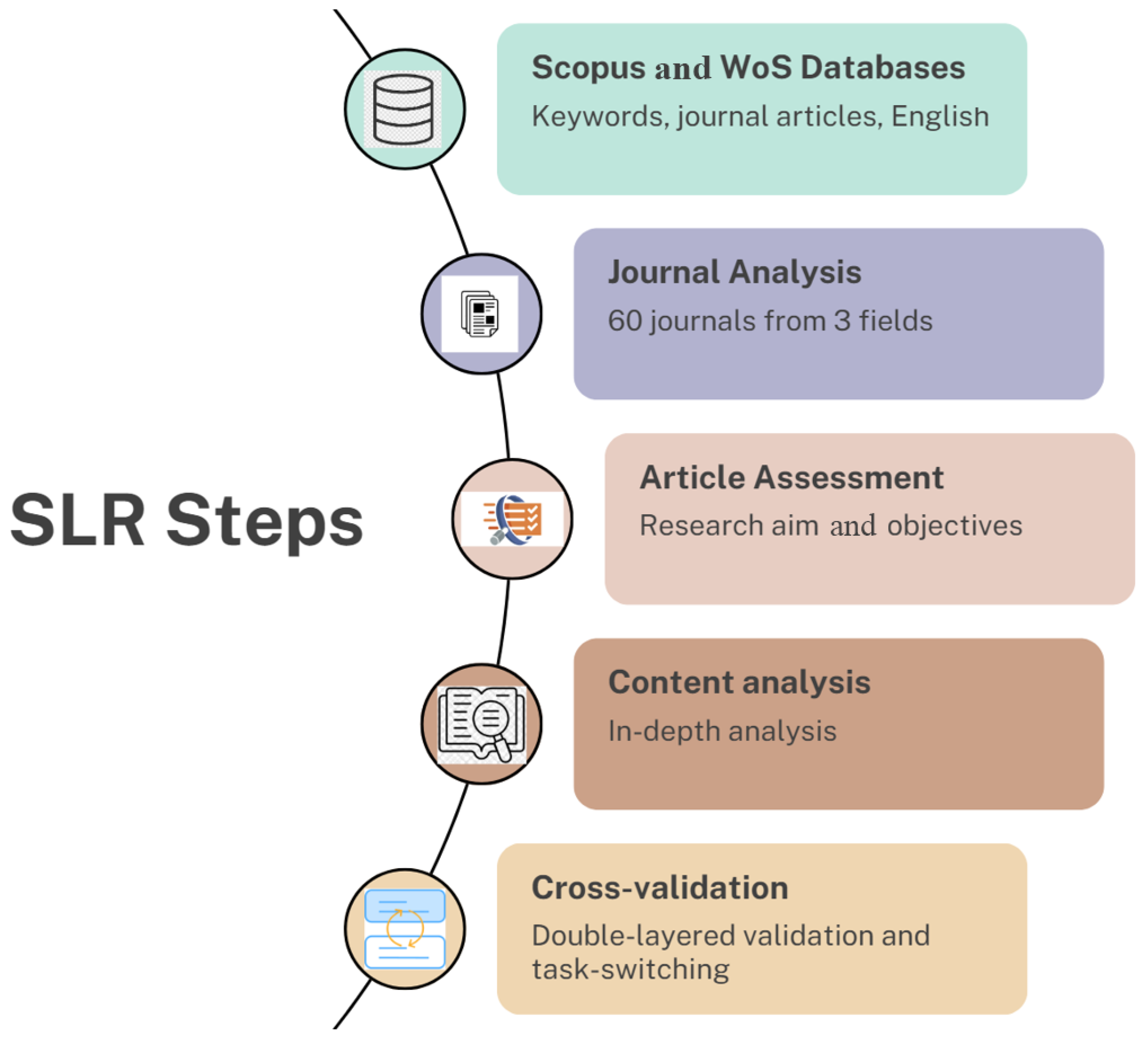
Figure 1. Systematic literature review process.
Applsci 15 09981 g001
Figure 2. Document selection flowchart.
Applsci 15 09981 g002
Figure 3. Annual distribution of BIM-OSC-related publications (2010–2025). Data for 2025 represents publications available up to the date of the literature search and should not be interpreted as a complete annual total.
Applsci 15 09981 g003
Figure 4. Research methodologies adopted in the articles.
Applsci 15 09981 g004
Figure 5. Construction stages focused on by the articles.
Applsci 15 09981 g005
Figure 6. Construction stakeholders focused on by the articles.
Applsci 15 09981 g006
Figure 7. BIM dimensions focused on by the articles.
Applsci 15 09981 g007
Figure 8. Frequency of technologies featured in reviewed papers.
Applsci 15 09981 g008
Figure 9. Frequency of technologies analysed in reviewed papers.
Applsci 15 09981 g009
Figure 10. Representation of lifecycle phases beyond construction in the BIM-OSC literature.
Applsci 15 09981 g010
Figure 11. Research gaps.
Applsci 15 09981 g011
Table 1. Technologies analysed in BIM-OSC studies.
Technology TypesTechnologiesDescriptionsReferences
Type I—Data and ICTAI and MLOptimizes resource planning, decision-making, and automation.[4,41,68,69,70,71,72,73,74,75,76,77,78,79,80,81,82,83,84,85,86,87,88,89,90]
Data exchange/(CDE)Ensures consistent, up-to-date project data across stakeholders and integrates diverse formats, enhancing collaboration and interoperability.[4,73,74,76,82,91,92,93,94,95]
Cloud computingEnables scalable, real-time data sharing and collaboration, ensuring stakeholders access the latest prefabrication and construction information.[4,73,74,76,82,91,92,93,94,95,96]
Blockchain Secures, tracks, and manages project data across its lifecycle, ensuring transparency and trust in OSC supply chains.[73,74,77,78,82,95,97,98,99,100,101]
Big data Handles large datasets generated by IoT-enabled OSC projects to support predictive analysis and improve decision-making.[74,78,96,102,103]
ICTCustomises design, manufacturing, and assembly through integrated digital configuration platforms.[103,104]
Type II—Modelling and simulation3D/4D/5D BIM ModellingEnhances visualisation, cost control, and project planning.[42,49,51,54,56,62,90,105,106,107,108]
HPCAccelerates design simulations and prefabrication modelling.[109,110,111,112]
Type III—Immersive technologiesVR/AR/MRSupports constructability verification, inspection, and design reviews.[4,14,62,73,74,78,86,87,106,113,114,115,116,117,118,119,120]
Type IV—Sensing and monitoringIoT SensorsEnables real-time tracking of prefabrication and onsite assembly.[9,73,74,76,77,78,82,86,87,89,92,97,98,102,117,118,119,120,121]
RFIDImproves material monitoring and component tracking.[14,49,71,81,82,92,115,119,121,122,123,124]
Type V—Reconstruction toolsLaser scanning Provides accurate 3D measurements for geometry verification.[14,78,83,86,89,96,99,110,113,115,122,124,125,126,127,128]
Photogrammetry Generates precise models from images for quality checks.[125]
Type VI—Digital twinsDigital twins Integrates real-time data with BIM for dynamic lifecycle monitoring.[66,73,74,76,77,78,86,98,117,120,123,129,130,131]
Type VII—3D Printing and fabrication3D PrintingProduces prefabricated components with higher precision.[14,82,87,131,132,133,134,135,136]
CNCAutomates precision manufacturing of modular components, reducing human error and enabling seamless assembly.[137,138]
Type VIII—Autonomous vehiclesUAVs (drones)Assists in site inspections, prefabricated element placement, and installation logistics with aerial monitoring.[129,139]
Robots Automates repetitive prefabrication tasks to enhance consistency, speed, and accuracy of modular manufacturing.[4,73,76,77,82,87,105,106,107,122,136,140,141]
Automatic guided vehicles (AGVs) Transports modular components between production, storage, and installation points, improving onsite efficiency and safety.[137]
Table 2. Summary of challenges and future research directions.
Challenge AreaFocus in Reviewed StudiesFuture Research Directions
i. Emerging TechnologiesIntegration of generative design, blockchain, AR/VR, IoT, and other Industry 4.0 tools.Develop holistic frameworks combining these technologies and test their real-world applications.
ii. Protocols and FrameworksLack of standardised protocols, coding systems, and regulatory policies for OSC-BIM.Establish international standards, shared ontologies, and common data formats for seamless implementation.
iii. Integration and InteroperabilityDifficulties integrating proposed solutions and emerging technologies with traditional workflows.Enhance cross-platform interoperability, adopt lean-driven approaches, and optimize assembly sequencing.
iv. Data ManagementChallenges in big data collection, compatibility checks, and secure data sharing.Explore blockchain, cloud computing, and big data analytics to automate and improve data precision.
v. CostsHigh costs and limited cost–benefit analyses for OSC-BIM solutions.Conduct lifecycle cost studies, assess macroeconomic impacts, and evaluate carbon trading policies.
vi. StakeholdersLimited collaboration between contractors, designers, manufacturers, and regulators.Develop collaborative platforms, virtual environments, and real-time shared ecosystems.
vii. SustainabilityLimited exploration of environmental and social impacts of BIM-OSC integration; focus is mostly on design, manufacturing, and construction phases, with limited research on operation, maintenance, and deconstruction.Expand comparative LCAs, assess carbon trading impacts, and explore BIM-OSC integration for facility management, predictive maintenance, adaptive reuse, and sustainable deconstruction to support whole-lifecycle sustainability.
viii. Geographical AspectsUneven adoption of OSC-BIM integration across regions.Investigate localized barriers, regional best practices, and develop scalable solutions.
ix. Skills DevelopmentLack of training and digital competencies among professionals managing OSC-BIM projects.Create training programs, industry–academia collaborations, and digital upskilling frameworks.
Disclaimer/Publisher’s Note: The statements, opinions and data contained in all publications are solely those of the individual author(s) and contributor(s) and not of MDPI and/or the editor(s). MDPI and/or the editor(s) disclaim responsibility for any injury to people or property resulting from any ideas, methods, instructions or products referred to in the content.