Article

“Habari, Colleague!”: A Qualitative Exploration of the Perceptions of Primary School Mathematics Teachers in Tanzania Regarding the Use of Social Robots


1
IDLab-AIRO, Ghent University—imec, 9000 Ghent, Belgium
2
Department of Computing Science Studies, Faculty of Science and Technology, Mzumbe University, Morogoro 67311, Tanzania
3
Centre for Anthropological Research on Affect and Materiality (CARAM), Ghent University, 9000 Ghent, Belgium
*
Author to whom correspondence should be addressed.
Appl. Sci. 2025, 15(15), 8483; https://doi.org/10.3390/app15158483
Submission received: 2 July 2025 / Revised: 24 July 2025 / Accepted: 29 July 2025 / Published: 30 July 2025
(This article belongs to the Special Issue Advances in Human–Machine Interaction)

Abstract

Featured Application

By leveraging an AI-powered social robot to enhance teaching and learning in primary schools in a low-resource setting, this study details the following: (1) the design of a conversational mathematics tutoring system, (2) users’ (teachers’) attitudes towards advanced technologies, (3) the importance of firsthand interactions with the system for its acceptance and adoption, (4) the positive features of the robot tutor and areas of improvement for effective interactions and tutoring, and (5) practicalities for the adoption of such technologies in schools. These can inform the design and adoption of similar human–robot interaction (HRI) systems, especially those intended for educational applications in low-resource settings.

Abstract

The education sector in Tanzania faces significant challenges, especially in public primary schools. Unmanageably large classes and critical teacher–pupil ratios hinder the provision of tailored tutoring, impeding pupils’ educational growth. However, artificial intelligence (AI) could provide a way forward. Advances in generative AI can be leveraged to create interactive and effective intelligent tutoring systems, which have recently been built into embodied systems such as social robots. Motivated by the pivotal influence of teachers’ attitudes on the adoption of educational technologies, this study undertakes a qualitative investigation of Tanzanian primary school mathematics teachers’ perceptions of contextualised intelligent social robots. Thirteen teachers from six schools in both rural and urban settings observed pupils learning with a social robot. They reported their views during qualitative interviews. The results, analysed thematically, reveal a generally positive attitude towards using social robots in schools. While commended for their effective teaching and suitability for one-to-one tutoring, concerns were raised about incorrect and inconsistent feedback, language code-switching, response latency, and the lack of support infrastructure. We suggest actionable steps towards adopting tutoring systems and social robots in schools in Tanzania and similar low-resource countries, paving the way for their adoption to redress teachers’ workloads and improve educational outcomes.

1. Introduction

As reported by the Tanzania National Bureau of Statistics [1], as of 2022, Tanzania had 19,261 primary schools, of which 17,181 (89.2%) were public schools (government-owned); 11,420,973 pupils enrolled in primary schools, with 10,872,508 (95.2%) being in public schools; and 198,872 teachers, of whom 172,156 (86.6%) worked in public schools. Analysing this further, the school–pupil ratio calculates to 1:633 in public schools and 1:264 in private schools; the school–teacher ratio is 1:10 in public schools and 1:12 in private schools. Most tellingly, the teacher–pupil ratio is 1:63 in public schools and 1:21 in private schools, which starkly contrasts with the 1:9.3 in Belgium and the 1:12.1 in the EU as a whole in 2021 [2]. Moreover, while the recommended teacher–pupil ratio in the Tanzanian context is 1:45 [3], the actual teacher–pupil ratio varies significantly between schools in rural and urban settings, reaching the extremes of 1:133 in remote rural settings [4].
The critical teacher–pupil ratios result in unmanageably large classes, which hinder the pupils’ performance, as elaborated by Mazana et al. [5]. Due to large classes, teachers cannot effectively offer personalised tutoring and feedback to each pupil, which is crucial to pupils’ learning [6]. Moreover, with a limited budget for the education sector compared to the large number of public schools, most schools have inadequate teaching aids [3]. This is a challenge that needs to be overcome as soon as possible, especially as the country has recently adopted a new competency-based curriculum [7].
The impact of the suboptimal learning environment on pupils can be witnessed in their performance in the national Primary School Leaving Examination (PSLE), which comprises a set of standardised examinations for each subject, taken by all pupils as a mandatory evaluation before advancing to secondary education. For example, in the 2023 PSLE, 51.17% and 65.65% pupils failed in mathematics and English language subjects, respectively, and similar values were experienced in 2022 [8]. In this study we focus on the mathematics subject, as it is core to the mastery of other science and technology subjects, thus making it key to excelling in Science, Technology, and Innovation (STI) [9,10]. With the current impact of STIs on nations’ gross domestic product (GDP), it is safe to say that quality mathematics education is essential to the economic development of any nation.
Among the state-of-the-art technological interventions that have proven effective in the education sector globally are social robots. Belpaeme et al. [11] provide an in-depth review of the use of social robots in education, concluding that there are largely positive cognitive and affective impacts on learners resulting from their use. Unanimously, studies agree that it is the physical presence of social robots that distinguishes them from similar virtual agents, giving them an edge in terms of results.
Moreover, we are currently experiencing an exponential evolution in the field of generative AI (artificial intelligence), marked by the advancement of Large Language Models (LLMs), with the iconic moment being the unveiling and public accessibility of OpenAI’s ChatGPT in 2022. LLMs have demonstrated a remarkable capability in generating human-like dialogue-based content with very high professional credibility [12]. As a result, researchers globally are incorporating LLMs into social robots intended for education to leverage their physical presence and the capabilities of LLMs, creating an effective and interactive intelligent tutoring system. Moreover, LLMs enable social robots to comprehend messages in a conversation, thereby providing more informative feedback and solving previous concerns about their abilities to provide deep levels of education [13]. A study by Verhelst et al. [14] gives an example of such an advancement. Our paper deals with this matter in the Tanzanian context. Social robots are a new concept in Tanzania, especially in the education sector, with most of such interventions being performed in the Global North, formerly called the developed countries [11,15,16].
The nucleus of the strength of LLMs lies in the availability of training data, from which they learn patterns and generate new content. Interestingly, Swahili—Tanzania’s national language and medium of instruction in public primary schools—only contributes to about 0.009% of the of the Common Crawl dataset, a key source in training OpenAI’s GPT models [17]. This poses an additional research question as to whether, despite that, OpenAI’s GPT can still generate relevant and contextualised Swahili-based content that can be used in teaching in primary schools and achieve anticipated results.
To address the knowledge gap, as well as assess the technology’s cross-cultural feasibility, this study seeks to answer the following research question: what are the perceptions of primary school mathematics teachers in Tanzania regarding the use of social robots in schools? Our exploration focuses on the general idea of using social robots in teaching as a way to alleviate heavy workloads, while also probing teachers’ insights on content generated by GPT-3.5 for the task at hand. Our focus on teachers is motivated by influential technology adoption models, such as the Technology Acceptance Model (TAM), the Unified Theory of Acceptance and Use of Technology (UTAUT), and the Robotic Process Automation (RPA) User Acceptance Model, which emphasise the pivotal role of users’ attitudes towards the technology in its adoption [18,19,20]. Similar studies appreciating the role of teachers have been conducted elsewhere [13,21]. However, the novelty of this intervention in Tanzania, the critical needs of its education sector, the status of Swahili as a low-resource language, and recent advancements in LLMs together warrant an in-depth, context-specific study.
The remainder of this paper is structured as follows. Section 2 presents the methodology, including the design of the contextualised social robot-based intelligent tutoring systems and the study setup. Section 3 reports the results, which are discussed in Section 4. Finally, Section 5 presents our conclusions, recommendations, and limitations.

2. Methodology

2.1. Study Context and Sampling

This study took place in primary schools in Tanzania. Even though the issue of crowded classrooms and suboptimal teacher–pupil ratios is more compelling in public schools [4,5], we included the private sector to differentiate our data. Thus, a total of six schools were engaged, five of which are public. The schools were in three regions: Dar es Salaam (two schools); Morogoro (three schools); and Tabora (one school). The regions were purposively selected based on three criteria: (1) being the most developed technologically and economically, thus painting the best-case scenario—Dar es Salaam [22,23]; (2) having both rural and urban settings, thus offering inclusivity—Morogoro [24]; and (3) being further inland, hence providing a varying context from Dar es Salaam, which is coastal, and having critical teacher–pupil ratios—Tabora [4]. Moreover, studies highlight cultural differences between coastal and inland regions that impact education practices [25]. Because our study focused on mathematics, purposive sampling was used to select the teachers, ensuring that we obtained the right respondents. As a result, a total of 13 mathematics teachers were chosen to participate in this study.

2.2. Data Collection

2.2.1. The Pilot Study

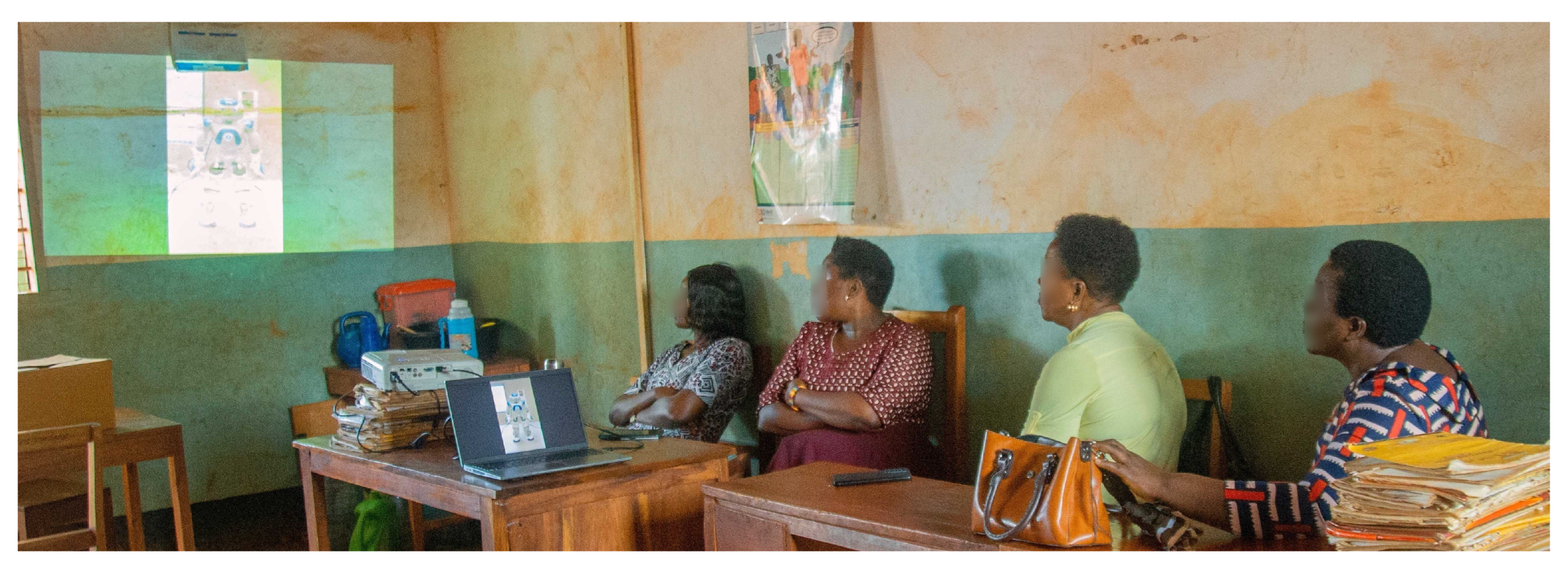
Despite our study being primarily qualitative, we administered a questionnaire to obtain demographic information about the teachers and further understand the context. Given how new the concept of social robots in education is in Tanzania, we first conducted a pilot study, where the teachers were shown two videos of an Aldebaran NAO robot interacting in a learning environment (Figure 1). In the first video, the NAO robot gave arithmetic exercises and provided feedback, while in the other the teaching was focused on interaction with a child on the autism spectrum (https://www.youtube.com/watch?v=bPrtsFocMoo, accessed on 12 January 2024; https://www.youtube.com/watch?v=2Ko8O-4sINw, accessed on 12 January 2024). This was followed by semi-structured interviews that aimed to solicit their views on the use of similar technologies in schools.

2.2.2. The Swahili-Speaking Social Robot Mathematics Tutor

In light of the findings of the pilot study, we decided to customise an actual, contextualised, Swahili-speaking NAO robot that could teach a mathematics topic. For demonstration purposes, we selected the topic of “The Place Values of Digits in Whole Numbers”, primarily because it is a foundational topic upon which other key mathematical concepts are built [26,27]. Moreover, it is a topic taught in many grades at the beginning of the academic year; thus, no matter when the study took place, pupils would be familiar with it.
We used OpenAI’s GPT-3.5 as our LLM of choice to facilitate comprehension and feedback generation. This decision was motivated by the fact that GPT models have proven successful in generating general knowledge-based and mathematics content even for more complex topics, but more specifically, GPT-3.5 is faster in generating responses, which is important given the slow and unstable Internet connectivity in Tanzania [28].
To enable natural, dialogue-based interaction, we leveraged the Microsoft Azure Speech Services (speech recognition and text-to-speech). These services enabled NAO to listen and speak in both Swahili and English. The selection of the Microsoft Azure Speech Services followed the fact that they support the Tanzanian variant of the Swahili language (https://ai.azure.com/explore/models/aiservices/Azure-AI-Speech/version/1/registry/azureml-cogsvc/tryout/texttospeech#voicegallery, accessed on 8 November 2023).
Moreover, mathematics is a subject that is best understood through visuals and illustrations. Unfortunately, the NAO robot, unlike Aldebaran’s PEPPER robot, does not have a screen attached to its torso. Therefore, we used the Python Kivy framework v2.2.1 to develop an application linked to the NAO robot, which would display the respective content and examples as the NAO narrates. Furthermore, we installed the application on a laptop with a touchscreen, which enabled pupils to interact with the robot by selecting menu options such as (1) begin session, (2) next question, and (3) end session. The application was also used as a platform for pupils to provide answers to questions posed by NAO, to which NAO provided appropriate feedback in the form of either praise or correction (and encouragement).
Additionally, to ensure that teachers understood that NAO’s capabilities were not limited to teaching the one math topic, we developed a second system that involved the NAO robot carrying out a conversation based on any topic. The system enabled interactions through voice, which is the natural way for humans to interact. To further personalise and contextualise the interactions, we included in the prompts context parameters such as the location (country: Tanzania), the person’s name and age, the language of interaction (Swahili or English), purpose of the interaction, the role to be assumed by NAO—who in this scenario plays the character of a teacher—and NAO’s female Swahili name—Mwajuma.
We also implemented a conversation history function that stores the utterances of both parties in the ongoing conversation. This enabled GPT-3.5 to provide responses tailored to the conversation and probe relevant topics to keep the conversation going. This approach has proven successful in a similar study [29]. Furthermore, we implemented a function that evaluates the tone of each user’s message to detect whether they wish to end the conversation. The evaluation was performed by GPT-3.5 after assessing the conversation history and the last response by the user and was supposed to answer either 1 (signifying continue with the conversation) or 0 (signifying end the conversation with a final polite closing remark).
  • Prompt to keep the dialogue going based on the conversation history (English version):
  • Keeping in mind that your name is Mwajuma and you are talking to Amani who is 8 years old. Amani lives in Tanzania, he/she is here to learn about volcanic mountains and you are their tutor. In conversation_language, provide the perfect and context-appropriate response based on the following conversation history: appended_conversation_history
  • Prompt to evaluate the continuation of the conversation (English version):
  • Answer the following dilemma with only “1” or “0”, without any additional explanation.
  • If I am Mwajuma (Amani’s tutor) in this conversation, and Amani responds with “Amani’s response” to my last message, should I interpret this as a sign to continue the conversation, provide further explanations (and examples), and teach him more to make him understand (answer ‘1’) or should I take it as a sign to end the conversation (answer ‘0’)? Here is the conversation history (NB: The conversation is in conversation_language): appended_conversation_history

2.2.3. NAO Robot in Schools

Once both systems were ready for demonstration, in the subsequent schools, the teachers interacted with an actual NAO robot. The demonstration had two parts: (1) the teacher conversing with NAO and (2) the teacher observing pupils being taught by NAO. In the first part, teachers had an average of 20 min of conversation with NAO, where they were encouraged to try out different conversational topics, from academic to general knowledge. Before starting, they could choose their language of preference between English and Swahili. This was because English is a medium of instruction in most private primary schools.
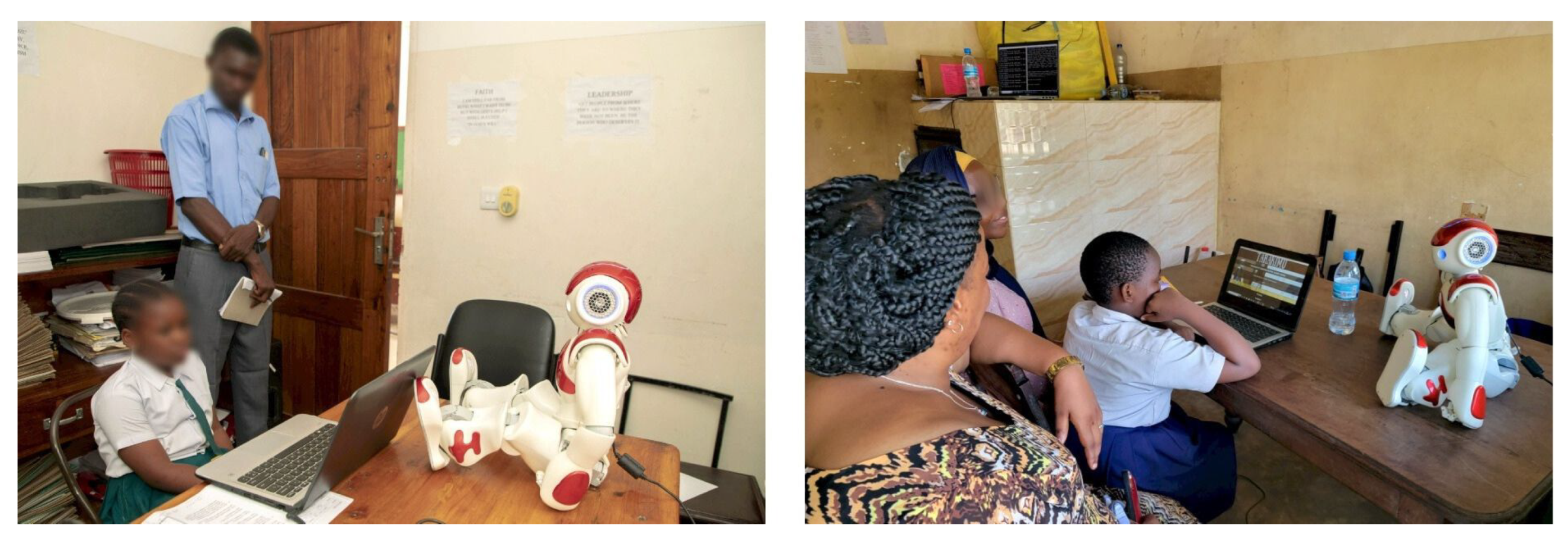
In the second part, teachers observed the NAO robot teaching pupils, where it introduced the topic, provided examples, gave exercises for assessment, and provided appropriate personalised feedback (Figure 2). Each teacher got to observe at least six pupils having such an interaction with the NAO robot, with each interaction lasting approximately 15–20 min. Moreover, the teachers were asked to note down key observations during the entire experience.
Thereafter, we administered semi-structured interviews about the entire experience and their opinions on using a NAO robot as a teacher in school. Moreover, using interviews enabled us to probe for more information, which added clarity and depth to our findings. Additionally, as the team was physically at the schools, observation was used to check the validity of some of the responses and determine the ground truth.

2.3. Data Analysis

The data from the interviews were thematically analysed. A hybrid mode was used, where we started by deductive analysis from the predefined themes, but we were flexible and inductively explored new themes that emerged. Based on our objective analysis and the existing literature, we identified the following themes as paramount to assess: effectiveness of the robot; role to be assumed by the robot [11]; attitude towards the use of the robot [18,19,20]; perceived benefits of using the robot [30]; perceived challenges of using the robot; enablers for the use of the robot; inhibitors for the use of the robot; and other possible applications of the robot.
Given the manageable number of participants, we manually coded the responses, categorising them into the predefined themes. For the inductive analysis, we first added a category labelled “Others”, where we placed all responses that did not fit directly into the initial framework. We then collaboratively reviewed and discussed the content within this category and mutually agreed on the inclusion and categorisation of new themes. While we did not apply a quantitative measure of intercoder agreement, we adopted a consensus-based approach, resolving differences through group discussions and negotiation.
Where relevant, we further sub-categorised the responses in terms of whether the respondents interacted with the actual NAO robot. Moreover, the demographic quantitative data were descriptively analysed to provide insights into the characteristics of the respondents.

2.4. Ethical Clearance

We obtained a research permit to conduct the study from the Tanzania President’s Office—Regional Administration and Local Government (permit number: AB.307/323/01/40), who is the custodian of all the public primary schools in Tanzania. For the private school, proper consent was sought from the school administration. All the participants were informed of the study and its objectives, and were required to sign consent forms before participating. Moreover, anonymity was considered in the data collection, storage, and analysis.

3. Results

3.1. Demographic Characteristics and Current Status

Of the 13 teachers who participated in this study, 61.5% were females and 38.5% were males. Moreover, about 75% worked in public schools, while 25% were from a private school. The majority of the teachers (46%) were between 41 and 50 years old, followed by those older than 50 years (24%). Age ranges of 21–30 and 31–40 years accounted for 15% each. Regarding the overall teaching experience, 23% had between 1 and 10 years of experience, 39% had 11–20 years, 23% had 21–30 years, and 15% had more than 30 years of experience. Furthermore, 31% of the teachers had worked for over 10 years in the current school, while the others had worked for less. Additionally, about 39% had a bachelor’s degree, 15% had an ordinary diploma, and 46% had an ordinary certificate as their highest academic qualification.
The teachers were also required to indicate the average number of pupils in their classes, where public schools had an average of 92 pupils per class, while the private school had an average of 35 pupils. Moreover, all the teachers in the private school taught no more than 2 subjects, while 70% of those in public schools taught 3–5 subjects, with only 30% teaching 2 subjects or less. In the same vein, all the teachers in the private school taught in two grades, while 23% of those in public schools taught in three grades or more.
We also assessed the teachers’ readiness to adopt various technologies for teaching and learning. All the teachers owned smartphones, with 77% also having laptops. Moreover, 61.5% confirmed having used technology for teaching and learning, while the rest never had. When prompted to elaborate on the technologies that they have used, some mentioned Microsoft Word and Excel to prepare teaching notes and reports and their smartphones to access the Internet and search for teaching materials and exercises. Online libraries, specifically the Tanzania Institute of Education (TIE) library, were identified as helpful in offering teaching materials. Lastly, we assessed their awareness of the concepts of AI and social robots. Only 38.5% were aware of AI, and 53.9% were aware of social robots.
For the purpose of this study, it is important to note that 69.2% of the teachers had an actual interaction with the NAO robot and observed as it taught pupils, while 30.8% only saw videos. We will differentiate the data for the topics where live presence appears determinant.

3.2. Qualitative Results

The qualitative results from the interviews shed light on the teachers’ perceptions regarding various aspects of the NAO robot assuming the role of a mathematics teacher and being used at their schools. We group their views into themes, as follows.

3.2.1. Effectiveness of the Robot as a Teacher

In this theme, the contrast of opinions between the teachers who only saw videos and those who interacted with an actual NAO robot is significant; thus we report their views separately. On one hand, those who only saw videos were hesitant to affirm that NAO was an effective teacher because of the following: (1) In one of the videos, NAO was giving the learner an elementary arithmetic exercise with interactive feedback; thus the teachers thought that the robot was only suitable for such elementary topics and could not deliver on more complex ones. (2) In both videos, the robot offered one-to-one tutoring and support; hence the teachers could not imagine it teaching in a big class. Some of their interesting quotes, translated from their original Swahili, include the following:
“In the first video, we see it teaching basic concepts, specifically addition and subtraction. Can it really teach advanced topics such as algebra and geometry?"
“Can it be audible in a class of 100 pupils? Also, sometimes when you ask a question in class several pupils shout the answer at once, with some providing incorrect ones. How can the robot deal with such a situation? Based on these videos, it might be effective just for one-to-one tutoring."
Despite their reservations, the teachers offered insightful comments about the role and adoption of the NAO robot. They recommended it for pupils with special needs, such as children with learning difficulties, as the tailored one-to-one tutoring might help their understanding. In some public schools, such pupils are present in dedicated classes.
On the other hand, the teachers who actually interacted with the NAO robot and observed it as it taught pupils were generally positive about its effectiveness as a teacher. Their opinions were also influenced by the fact that they witnessed an objective improvement in the pupils’ performance as a result of NAO’s tutoring. Pre- and post-tests were administered before and after the intervention, respectively, and were marked and graded by the teachers. In addition to the objective attribute of performance increase, subjective commendations for the robot’s personality and teaching methods were also presented, such as the offering of personalised feedback to pupils; its calm demeanor; its patience even when pupils got the questions wrong; the use of innovative teaching techniques; and the constant (but correct) variations in the topic introduction, examples, exercises, and feedback. Here are some of their views:
  • On personalised feedback:
    “The robot addressed the pupils individually and by name, which is good practice. Also, it praised them when they did well, which is a motivation to them."
  • On its personality and demeanor:
    “It was always patient, even when some pupils kept getting the questions wrong. It did not intimidate them at all."
  • On its teaching methods and techniques:
    “I have learnt something new, that in a large class, instead of having pupils use abacuses (counting frames) in turns as I currently do, I can teach them to use a table to identify place values and achieve the same."
    “I liked that it gives the pupils exercises after introducing the topic to test their understanding."
    “It knows how to deliver the concepts and techniques to the pupils. For example, it constantly reminded them to use the right-left method in determining the place values of digits, which helped the pupils."
Nevertheless, the teachers also identified some weaknesses and limitations observed during both their personal interactions with NAO and the pupils’ tutoring. These shortcomings include the following: the perceived complexity in setting up the system; latency in processing and providing feedback (as the system used cloud services); mispronunciation of some Swahili words by NAO; obvious mistakes in NAO’s narrations, especially when correcting a pupil who had got the question wrong, where sometimes it also made a mistake and said an incorrect place value as the correct answer, despite the screen (serving as NAO’s blackboard) showing otherwise (it is noteworthy that this was only experienced in public primary schools where the interactions had to be in Swahili); and limited mobility of the robot and physical engagement of the pupils, although this can be attributed to our setup, which prioritised content over physical interaction.
“There are times that the robot makes mistakes, such as using the English language while the medium of instruction is Swahili, mismatch between what is seen on the screen and what it narrates, and even providing wrong feedback. This could confuse the learner."
“I was shocked that time when the robot spoke an unintelligible sentence, which was neither Swahili nor English. We should be careful that this does not happen with pupils."
“It should be more adaptive. For example, during an exercise, it should be able to switch back and reintroduce the topic to the pupil if they keep getting questions wrong. Simply offering personalised corrections and tips may not be enough."
“The dependability on internet connectivity for its operation is not ideal, especially as we have a low and unstable connection. The delay in feedback leads to a diminishing of interest."

3.2.2. The Role to Be Assumed by the Robot

The teachers were also asked about the appropriate role for the robot. In this theme, both groups agreed that the right role for the robot would be as a teaching assistant (msaidizi wa mwalimu). Moreover, all the teachers agreed that it would be suitable for offering personalised one-to-one tutoring, especially for late bloomers.

3.2.3. Attitude Towards the Use of the Robot in Class

The majority of teachers (75%) who only saw videos were sceptical about the practical applicability of the robot in the classroom; hence their attitudes were unfavourable. They echoed their views and concerns as described in Section 3.2.1. For those who expressed a positive attitude, their views were supported with claims like the following:
“This is just like any other teaching technology, so if given proper training, support, and an enabling environment, I will use it."
Furthermore, the teachers who interacted with the NAO robot were generally willing to use the robot in class. When probed further, they offered varying motivations and uses for the NAO robot. The most recurring uses were as an assistant in lesson planning and preparation of teaching materials; as a teaching assistant to further improve pupils’ understanding; and for additional personalised tutoring to late bloomers. Some of their quotes included the following:
“The robot could give me new ideas, examples, and enrich my understanding when I am preparing for class. It can also show me new tricks to help pupils understand better."
“After I have taught a topic in class, the robot can also interact with pupils to reinforce the concepts."
“The robot will enhance pupils’ performance as the experience will make them love the subject. You have seen how excited they are, gathered at the windows just to catch a glimpse of the robot. If effectively channeled and used as motivation, this enthusiasm can make them love the subject and improve the learning experience."
Moreover, while being positive about the robot and its effectiveness, teachers in the private school revealed an unanticipated motive behind their positive attitude. Drawing from the highly competitive market, they believed that having a robot at their school would give them an added advantage, portraying them as more technologically advanced than their competitors. Thus, they were more enthusiastic about the idea compared to their counterparts in public schools.
Nevertheless, while their attitudes were positive, some cautions were provided regarding the practicalities of having the robot in class. These are highlighted in Section 3.2.5 and Section 3.2.7. Also, one teacher shared a thought-provoking insight:
“If the robot can teach the class independently and successfully, some people in the society might question the role of a human teacher."

3.2.4. Perceived Benefits of Using the Robot in Teaching

In addition to NAO’s effectiveness and the teachers’ attitudes towards its adoption in schools, we were also curious about the benefits they believe such a move might have. While most of the replies reiterated what was already described in the preceding themes, two teachers—both of whom had interacted with NAO—provided additional benefits emanating from the time that would be freed up by having NAO as an assistant. The following quotes describe this better:
“I sometimes have to organise independent remedial sessions for pupils who still lag after class sessions, which is overwork. However, since the robot does not get tired, it can be useful for the late bloomers as it can teach them the same concept repeatedly for as long as necessary."
“With the robot teaching pupils in class, I can get time to carry out other endeavors, such as pursuing further education and qualifications for career development."

3.2.5. Perceived Challenges of Using the Robot in Teaching

The teachers were also asked about any foreseen practical challenges to using and adopting the NAO robot in school. On this, no significant differences were observed between the two groups. Insufficient technical knowledge of both teachers and pupils to set up and use the robot and its accompanying systems (the screen as a blackboard), the need to buy Internet packages (subscriptions) as the setup demands Internet connectivity, slow and unsteady Internet connection, power outages, the need for testing the robot before a session and supervising it while it teaches (due to the observed shortcomings), the unpredictability of children in terms of initiating topics that might be unethical or considered taboos, ensuring its safety when interacting with children in the class, its small size and voice not being ideal for a big class, its inability to enforce discipline and good conduct in a big class, and the NAO robot being expensive were highlighted as potential challenges. Interestingly, some teachers proposed solutions and hope regarding some of these challenges, such as the following:
“For the visibility of both the robot and the content on the screen, we can place the robot on a table or podium and also have a projector connected. Moreover, we can connect it to a speaker to make it audible in the large class."
“The issue of pupils being playful, distracted, and misbehaving during a session as an effect of the robot will likely be a phase at the beginning, which will pass as they get used to it. It will not be a surprise if some pupils are even fearful or not confident enough to interact with it at first, but this will not last."
Moreover, all the teachers emphasised the need for training and creating awareness to give them the basic knowledge to set up and use the robot.

3.2.6. Enablers for the Use of the Robot in Schools

In this theme, we explored the current conditions in schools and the education system that might be perceived as enablers for social robots in schools. In addition to the responses we obtained from the teachers, we also identified some of the enablers through observation. After compilation, the list of enablers includes having electricity currently installed in schools; fibre-based networks being extended to the neighbourhoods (this was exclusively for schools based in Dar es Salaam), though not yet installed at the schools; the government’s demonstrated support of the use of technology in teaching and learning (for example, all the teachers in the public schools confirmed having been given a tablet to use in teaching); and security in schools through the presence of several offices with lockable gates.
“We currently have no internet installed at our school (in Dar es Salaam), but a fiber-based network is just a few meters away and similar networks are also being extended all over the city. It is just a matter of time before we have it installed at the school as well."

3.2.7. Inhibitors for the Use of the Robot in Schools

We also explored the factors that might impede the use and adoption of social robots in schools. Just like with the enabling factors, we supplemented the teachers’ views with our observations. In the end, the identified inhibiting factors include possible resistance from parents due to cultural barriers and limited understanding of the technology; though all the selected schools had electricity installed, in most of the public schools it was not extended to the classrooms; lack of a network installed in schools, along with insufficient school budgets to enable subscriptions to Internet packages; and the current audit practice that demands assessments and exams to be marked and graded manually (pen-on-paper). Regarding the restrictions posed by the audit practice, one teacher elaborated:
“I have seen that the robot can determine whether the pupil has got the question right or wrong, which is good. However, when we are being audited for quality assurance, the auditors demand to see pupils’ exercise books and evaluate the exercises that we give them, as well as check if we mark them effectively. I do not think they will understand if I simply tell them that the robot administered and graded the exercise."

3.2.8. Other Possible Applications of the Robot

We were also curious to know in what other ways the teachers thought the robot might be useful. After thoroughly comparing their daily teaching sessions in terms of workload, marking daily exercises was nominated as the most important activity for which assistance from the robot is essential.
“After each session, I have to give pupils an exercise to determine whether they understood the topic. This exercise has to be marked, and feedback provided. Imagine doing this daily in a class of one hundred pupils. If the robot can help us mark and grade the pupils’ exercises it will be a relief. Introducing the topic and solving examples is fine, as you only do it once before the entire class, but marking is done in each exercise book individually, which is tiresome."
Furthermore, we sought to determine other mathematics topics that they think the robot should teach. Basic arithmetic operations (addition, subtraction, multiplication, and division) were the most requested topics, with all the teachers agreeing that they are the backbone of other mathematics topics and concepts and are a challenge to pupils at all levels. Other identified topics were fractions, geometry, and algebra. We also asked them to suggest other subjects apart from mathematics in which the robot might be of assistance. About 75% of the teachers suggested English language, followed by science, Swahili language, and geography.

3.2.9. Reception by the Community

Teachers were also invited to share their perspectives on how the broader community might perceive the concept of pupils—potentially including their own children—being taught by a robot in school. This was treated as an additional theme, as the limited sample does not lend to generalising at the societal level. Nonetheless, the majority anticipated a positive reception, albeit contingent upon certain prerequisites. In particular, they emphasised the need for community sensitisation to the motives and perceived benefits of technology in the classroom in leveraging the pupils’ performance.
“As science and technology advance, we also must adapt. But, publicising the technology and raising awareness is inevitable. Once the community is aware then it will likely be positively received."
“Parents might be skeptical at first, but once they see their children’s performance improving, they will be supportive of the idea."
Nonetheless, the teachers expressed caution regarding the potential influence of cultural and religious differences, which may pose challenges to the acceptance of the robot in certain contexts. Despite these concerns, there was unanimous agreement that community awareness represents the most effective strategy for addressing such barriers.

4. Discussion

4.1. The Contrast in Opinions Based on Whether the Teachers Interacted with the Robot

Our results show that teachers who interacted with the NAO robot and observed its teaching had more constructive insights to offer, especially regarding its effectiveness and adoption. This is partly because AI and social robots are still new concepts in Tanzania, particularly in the education sector. Thus, videos have limited use when eliciting feedback from teachers and should only be considered when a live demonstration is impractical. This echoes similar studies, where respondents lacking face-to-face experience with a social robot, despite being presented with a descriptive medium, report more negative views regarding the use of robots [21]. Accordingly, this highlights the critical role of direct, comprehensive user interaction with technology in fostering its acceptance, adoption, and long-term viability. As outlined in technology acceptance frameworks such as the TAM, UTAUT, and the RPA User Acceptance Model, limited exposure to a technology adversely affects users’ perceptions of its usefulness and ease of use, thereby hindering adoption.

4.2. The Robot’s Effectiveness as a Teacher

Notwithstanding the reservations of the teachers who only saw the videos, both groups unanimously agree that the robot is effective in a one-to-one tutoring setting. This concurs with similar studies where social robots being used in such a setting achieved positive cognitive learning outcomes [14,31]. The observed improvement in pupils’ performance as a result of our intervention further corroborates this. In addition, the robot is perceived as valuable for remedial sessions for struggling pupils and those with special needs, as underscored by Smakman et al. [13], courtesy of its patience, unlimited examples and exercises, and tailored feedback.
Moreover, this study highlights the good qualities that the NAO robot demonstrated as a teacher, which are believed to have led to its effectiveness. These qualities include the offering of personalised feedback and interaction; calmness; patience throughout the learning curve; and adaptive and innovative teaching methods, which incorporate variations in the topic introduction, examples, exercises, and feedback. Thus, as recommended by the domain experts, intelligent tutoring systems should embody these qualities to enhance their effectiveness.

4.3. Quality of the Interaction and Areas for Improvement

Furthermore, as this is a novel study on the use of a social robot as a teacher in the Tanzanian context, we have presented shortcomings of the technology, as experienced and perceived by the teachers. Most of the weaknesses emanate from the contextual uniqueness of Tanzania. For example, factual incorrectness in the feedback provided to pupils, language code-switching, and at times unintelligible responses were all exclusively experienced in the context where the language had to be Swahili. Thus, these can be attributed to the prevailing insufficiency of Swahili training data in AI models. Nevertheless, it is noteworthy that, while these shortcomings have a critical impact, their occurrences were minimal. Similarly, the issue of mispronunciation in the speech generated by Microsoft Azure Speech Services (Text-to-Speech) is likely also attributable to Swahili being a low-resource language.
Though crucial, the issue of perceived complexity in setting up the system is temporary, as what we demonstrated was still a prototype and not market-ready. This was also noted by teachers in other studies, demanding that the tutoring systems are plug-and-play [13]. Moreover, latency in feedback from the robot, which was stated to significantly impact the learners’ interest in the sessions, is a critical issue that needs to be resolved. This is in line with other studies that seek to manage the latency in conversations to enhance human–robot interactions [29,32,33]. In our context, the latency was largely caused by the low bandwidth and unstable Internet connection, especially in rural areas.

4.4. The Practicalities of Adopting Robots in Schools

This study also outlines the practical considerations for adopting social robots in Tanzanian schools. A key enabler is access to power, which, encouragingly, was available in over 50% of schools as of 2018 [34]. Additionally, the government’s consistent support for information systems across major sectors, as reflected in the United Nations E-Government Development Index, further strengthens the foundation for adoption [35].
Nonetheless, further steps are necessary to ensure effective adoption. These include allocating budgets for robot procurement and infrastructure (electrical power and Internet), extending electricity access to classrooms—initially through providing electricity and Internet to dedicated classrooms, leveraging the national fibre network for school connectivity, revising educational policies to accommodate technology-mediated assessments, and fostering community awareness to build public support.

4.5. Teacher’s Attitudes

Generally, the teachers demonstrated a positive attitude towards using the NAO social robot in schools. They appreciated the assistance it can offer to alleviate some of their workload related to high pupil–teacher ratios, its innovative teaching methods, and its overall effectiveness. The root of the observed scepticism was not informed by their attitudes towards technology in the classroom but rather by the aforementioned technical problems of the robot prototype. Thus, with the ever-growing availability of training data leading to the improvement of localised LLMs, and government support enabling the adoption of intelligent tutoring systems, there is a high likelihood of adopting this and similar technologies.

4.6. Regarding the Community

The varying cultures, religious beliefs, and even exposure to technology within the country have long been proven to affect different aspects of life and technology adoption [36,37,38]. Our results also stress that this might affect the adoption of social robots as teaching agents in schools. As parents and the community are important stakeholders, obtaining their buy-in is crucial to the adoption and uptake. Thus, this study further emphasises the importance of creating awareness and securing stakeholders’ support as key to any project’s success. Even in the Global North, negative public perception has been identified as a risk for the adoption of social robots in education [13,21].
Finally, our limited sample did not exhibit any significant variations in opinions based on gender, age groups, education level, or work experience. Private schools are better equipped to adopt technology, especially through having more support infrastructure, fuelled by the competition in the private education market. Similar studies further describe the contrast in terms of teaching aids, infrastructure, and access to technology [39,40].

5. Conclusions, Recommendations, and Limitations

This study examined the perspectives of primary school mathematics teachers in Tanzania concerning the integration of social robots into classroom practice. While the teachers expressed overall optimism regarding the potential of such technologies to alleviate their workload, they also articulated several reservations. In particular, ensuring the quality and effective delivery of instructional content will require targeted research efforts to expand Swahili-language training data and to further refine LLMs and speech processing services for the particular linguistic and cultural context. Furthermore, enhancing human–robot interaction necessitates addressing issues related to conversation latency, especially in rural settings, and mitigating dependence on continuous Internet connectivity. In this regard, experimentation with offline LLM implementations may offer a way forward.
Equally important is the role of government in establishing an enabling environment through the provision of adequate infrastructure, sustainable operational budgets, and clear policy guidelines for the deployment of intelligent tutoring systems. As social robots represent an emergent educational technology, comprehensive public awareness will also be essential to facilitate their acceptance and effective adoption. By presenting the considered perspectives of teachers, who constitute critical stakeholders in this endeavour, this study contributes insights into the practical challenges and opportunities associated with implementing social robots in schools situated in low-resource contexts, a dimension that remains insufficiently explored in the literature.
It is important to acknowledge certain limitations inherent in this study. For instance, the qualitative setup of our study limited the breadth of coverage, potentially constraining the generalisability of the findings. Future research could therefore benefit from broader surveys that encompass more diverse samples within Tanzania and in other countries with comparable educational contexts. Moreover, the findings presented here are based on the deployment of a NAO social robot with GPT-3.5 and Microsoft Azure Speech Services. Alternative hardware, more advanced LLMs, or new speech technologies may yield different outcomes. Finally, as this study focused exclusively on mathematics instruction, further research is needed to assess the applicability and impact of social robots across other subject areas.

Author Contributions

Conceptualisation, E.P.R., K.S. and T.B.; methodology, E.P.R., K.S. and T.B.; software, E.P.R.; validation, E.P.R.; formal analysis, E.P.R.; investigation, E.P.R.; resources, K.S. and T.B.; data curation, E.P.R.; writing—original draft preparation, E.P.R.; writing—review and editing, K.S. and T.B.; supervision, K.S. and T.B.; funding acquisition, K.S. and T.B. All authors have read and agreed to the published version of the manuscript.

Funding

This research was funded by VLIR-UOS through Ghent University’s Global Minds Fund–Explore and/or Valorise project titled: “Improving the Mathematics Learning Experience for Disadvantaged Primary School Students in Tanzania Through the Use of Intelligent Agents”.

Institutional Review Board Statement

This study was approved by the Tanzanian President’s Office – Regional Administration and Local Government (PO-RALG), reference AB.307/323/01/40, 25 January 2024. Informed consent was obtained from all subjects involved in this study. Permission was granted by the PO-RALG to publish the results (reference AB.307/323/01/228), 12 June 2024.

Data Availability Statement

The data used in this study cannot be publicly shared due to respondents’ confidentiality and terms of the research permit. Further inquiries can be directed to the corresponding author.

Acknowledgments

We are extremely grateful to VLIR-UOS for funding this research. We also thank the participants for their time and invaluable inputs that enriched our study. Lastly, we register our appreciation to the Government of Tanzania for the research permits and constant support throughout our research.

Conflicts of Interest

The authors declare no conflicts of interest.

Abbreviations

The following abbreviations are used in this article:
AI    Artificial Intelligence
HRI    Human–Robot Interaction
LLM    Large Language Model
GPT    Generative Pre-trained Transformer
TAM    Technology Acceptance Model
UTAUT    Unified Theory of Acceptance and Use of Technology
RPA    Robotic Process Automation

References

  1. National Bureau of Statistics. Tanzania in Figures; National Bureau of Statistics: Dodoma, Tanzania, 2022. [Google Scholar]
  2. European Commission: Directorate-General for Education. Education and Training Monitor 2023: Belgium. 2023. Available online: https://op.europa.eu/webpub/eac/education-and-training-monitor/en/country-reports/belgium.html (accessed on 25 September 2024).
  3. Ndimbo, W.H. Competencebased Learning Environment Support for Pupils’ Learning in Mpwapwa District Primary Schools. Asian J. Educ. Soc. Stud. 2022, 37, 73–88. [Google Scholar] [CrossRef]
  4. Ndijuye, L.G. Early learning attainments of children of naturalized citizens of refugee backgrounds in the sub-Saharan region: Evidence from Tanzania. Child Dev. Perspect. 2023, 17, 67–73. [Google Scholar] [CrossRef]
  5. Mazana, M.Y.; Montero, C.S.; Casmir, R.O. Assessing Students’ Performance in Mathematics in Tanzania: The Teacher’s Perspective. Int. Electron. J. Math. Educ. 2020, 15, em0589. [Google Scholar] [CrossRef]
  6. Koenka, A.C.; Anderman, E.M. Personalized feedback as a strategy for improving motivation and performance among middle school students. Middle Sch. J. 2019, 50, 15–22. [Google Scholar] [CrossRef]
  7. MoEST. Curriculum for Primary Education, Standard I–VI. 2023. Available online: https://www.tie.go.tz/uploads/documents/sw-1724244732-MTAALA%20ELIMU%20%20YA%20MSINGI-FINAL.pdf (accessed on 15 January 2025).
  8. Baraza la Mitihani la Tanzania. Taarifa ya Matokeo ya Mtihani wa Kumaliza Elimu ya Msingi (PSLE) Uliofanyika Septemba. 2023. Available online: https://www.moe.go.tz/sites/default/files/PRESS%20PSLE%202023%20final_231123_121622_1.pdf (accessed on 25 September 2024).
  9. Sun, X.; Yang, Y. Advanced Mathematics in Vocational Universities. J. Contemp. Educ. Res. 2022, 6, 13–18. [Google Scholar] [CrossRef]
  10. Olasoji, O.V.; Felicity, U.U.; Onoh, D.O. The Role of Mathematics Education in Achieving Sustainable Development Goals (SDGs). ESUT J. Educ. EJE 2023, 6, 247–255. [Google Scholar]
  11. Belpaeme, T.; Kennedy, J.; Ramachandran, A.; Scassellati, B.; Tanaka, F. Social robots for education: A review. Sci. Robot. 2018, 3, 5954. [Google Scholar] [CrossRef] [PubMed]
  12. Lubowitz, J.H. ChatGPT, An Artificial Intelligence Chatbot, Is Impacting Medical Literature. Arthroscopy 2023, 39, 1121–1122. [Google Scholar] [CrossRef]
  13. Smakman, M.; Vogt, P.; Konijn, E.A. Moral considerations on social robots in education: A multi-stakeholder perspective. Comput. Educ. 2021, 174, 104317. [Google Scholar] [CrossRef]
  14. Verhelst, E.; Demeester, T.; Janssens, R.; Belpaeme, T. Adaptive Second Language Tutoring Using Generative AI and a Social Robot. In Proceedings of the IEEE Computer Society, Boulder, CO, USA, 11–15 March 2024; pp. 1080–1084. [Google Scholar] [CrossRef]
  15. Lim, V.; Rooksby, M.; Cross, E.S. Social Robots on a Global Stage: Establishing a Role for Culture During Human–Robot Interaction. Int. J. Soc. Robot. 2021, 13, 1307–1333. [Google Scholar] [CrossRef]
  16. Papakostas, G.A.; Sidiropoulos, G.K.; Papadopoulou, C.I.; Vrochidou, E.; Kaburlasos, V.G.; Papadopoulou, M.T.; Holeva, V.; Nikopoulou, V.A.; Dalivigkas, N. Social robots in special education: A systematic review. Electronics 2021, 10, 1398. [Google Scholar] [CrossRef]
  17. Common Crawl Foundation. Statistics of Common Crawl Monthly Archives: Distribution of Languages. 2024. Available online: https://commoncrawl.github.io/cc-crawl-statistics/plots/languages (accessed on 9 January 2025).
  18. Davis, F.D. Perceived Usefulness, Perceived Ease of Use, and User Acceptance of Information. Source MIS Q. 1989, 13, 319–340. [Google Scholar] [CrossRef]
  19. Venkatesh, V.; Morris, M.G.; Davis, G.B.; Davis, F.D. User Acceptance of Information Technology: Toward a Unified View. Quarterly 2003, 27, 425–478. [Google Scholar] [CrossRef]
  20. Wewerka, J.; Dax, S.; Reichert, M. A User Acceptance Model for Robotic Process Automation. In Proceedings of the 2020 IEEE 24th International Enterprise Distributed Object Computing Conference (EDOC), Eindhoven, The Netherlands, 5–8 October 2020; pp. 97–106. [Google Scholar] [CrossRef]
  21. Kennedy, J.; Lemaignan, S.; Belpaeme, T. The Cautious Attitude of Teachers Towards Social Robots in Schools. In Robots 4 Learning Workshop at IEEE RO-MAN 2016. 2016. Available online: https://core.ac.uk/download/pdf/84595376.pdf (accessed on 23 July 2025).
  22. Monstadt, J.; Schramm, S. Toward The Networked City? Translating Technological ideals and Planning Models in Water and Sanitation Systems in Dar es Salaam. Int. J. Urban Reg. Res. 2017, 41, 104–125. [Google Scholar] [CrossRef]
  23. Mramba, N.; Apiola, M.; Sutinen, E.; Haule, M.; Klomsri, T.; Msami, P. Empowering Street Vendors through Technology: An Explorative Study in Dar es Salaam, Tanzania. In Proceedings of the 2015 IEEE International Conference on Engineering, Technology and Innovation/International Technology Management Conference (ICE/ITMC), Belfast, UK, 22–24 June 2015; pp. 1–9. [Google Scholar]
  24. Mtewele, G.C. The Influence of Traditional Customs and Practices on Girls’ Secondary Education in Morogoro Region in Tanzania a Case Study. Master’s Thesis, University of Oslo, Oslo, Norway, 2012. [Google Scholar]
  25. Mbwete, R.I.; Kitali, L.J. The Role of Education in Empowering Girl Child along the Coastal Areas of Tanzania: A Case of Salale Ward in Kibiti District Council. Int. J. Soc. Sci. Humanit. Res. 2022, 10, 434–445. [Google Scholar] [CrossRef]
  26. Nataraj, M.S.; Thomas, M.O.J. Developing the Concept of Place Value. Math. Essent. Res. Essent. Pract. 2007, 2, 523–532. [Google Scholar]
  27. Schmittau, J.; Vagliardo, J.J. Using Concept Mapping in the Development of the Concept of Positional System. In Concept Maps: Theory, Methodology, Technology. Proceedings of the Second International Conference on Concept Mapping; Universidad de Costa Rica: San José, Costa Rica, 2006; pp. 590–597. [Google Scholar]
  28. Plevris, V.; Papazafeiropoulos, G.; Rios, A.J. Chatbots Put to the Test in Math and Logic Problems: A Comparison and Assessment of ChatGPT-3.5, ChatGPT-4, and Google Bard. AI 2023, 4, 949–969. [Google Scholar] [CrossRef]
  29. Pinto-Bernal, M.; Biondina, M.; Belpaeme, T. Designing Social Robots with LLMs for Engaging Human Interaction. Appl. Sci. 2025, 15, 6377. [Google Scholar] [CrossRef]
  30. Marangunić, N.; Granić, A. Technology acceptance model: A literature review from 1986 to 2013. Univers. Access Inf. Soc. 2015, 14, 81–95. [Google Scholar] [CrossRef]
  31. Kennedy, J.; Baxter, P.; Belpaeme, T. The Robot Who Tried Too Hard: Social Behaviour of a Robot Tutor Can Negatively Affect Child Learning. In Proceedings of the Tenth Annual ACM/IEEE International Conference on Human-Robot Interaction, Portland, OR, USA, 2–5 March 2015; pp. 67–74. [Google Scholar] [CrossRef]
  32. Pelikan, H.; Hofstetter, E. Managing Delays in Human-Robot Interaction. ACM Trans. Comput.-Hum. Interact. 2023, 30, 1–42. [Google Scholar] [CrossRef]
  33. Wigdor, N.; de Greeff, J.; Looije, R.; Neerincx, M.A. How to Improve Human-Robot Interaction with Conversational Fillers. In Proceedings of the 2016 25th IEEE International Symposium on Robot and Human Interactive Communication (RO-MAN), New York, NY, USA, 26–31 August 2016; pp. 219–224. [Google Scholar]
  34. Cowling, N. Percentage of Schools by Main Source of Electricity in Tanzania as of 2018. 2024. Available online: https://www.statista.com/statistics/1179694/percentage-of-schools-by-main-source-of-electricity-in-tanzania/ (accessed on 24 January 2024).
  35. United Nations. E-Government Survey 2020. 2020. Available online: https://publicadministration.un.org/egovkb/en-us/Reports/UN-E-Government-Survey-2020 (accessed on 3 September 2024).
  36. Rumanyika, J.D.; Mashenene, R.G. Impediments of e-commerce adoption among small and medium enterprises in Tanzania: A review. Int. J. Inf. Technol. Bus. Manag. 2014, 32, 45–55. [Google Scholar]
  37. Shitima, C.M. Intersectionality and an Intra-household Analysis of the Freedom to make Decisions on the Use of Household Products: Evidence from Rural Tanzania. J. Int. Women’s Stud. 2018, 19, 207–223. [Google Scholar]
  38. Stroeken, K. Simplex Society; Springer Nature: Cham, Switzerland, 2024. [Google Scholar] [CrossRef]
  39. Lindsjö, K. Contextualizing the quality of primary education in urban and rural settings: The case of Iringa Region, Tanzania. Norsk Geogr. Tidsskr. 2018, 72, 234–247. [Google Scholar] [CrossRef]
  40. Mpapalika, J.; Katera, L. The Impact of the COVID-19 Pandemic on Educational Inequalities in Tanzania. Occas. Pap. Ser. 2023, 85. Available online: https://southernvoice.org/wp-content/uploads/2023/09/COVID-19-pandemic-Education-Tanzania-Mpapalika-and-Katera-2023.pdf (accessed on 3 September 2024).
Figure 1. Teachers watching a video of a NAO robot teaching arithmetic.
Applsci 15 08483 g001
Figure 2. Teachers observing as the NAO robot tutors a pupil.
Applsci 15 08483 g002
Disclaimer/Publisher’s Note: The statements, opinions and data contained in all publications are solely those of the individual author(s) and contributor(s) and not of MDPI and/or the editor(s). MDPI and/or the editor(s) disclaim responsibility for any injury to people or property resulting from any ideas, methods, instructions or products referred to in the content.