

Adaptive Fuzzy Sliding Mode Control and Dynamic Modeling of Flap Wheel Polishing Force Control System


Abstract
1. Introduction
2. Polishing Equipment Structure
3. Polishing Pressure Calculation Model
4. Nonlinear Dynamic Model of Polishing Pressure Control System
5. AFSMC Design
5.1. Traditional SMC
5.2. Fuzzy System
5.3. Adaptive Fuzzy Sliding Mode Controller
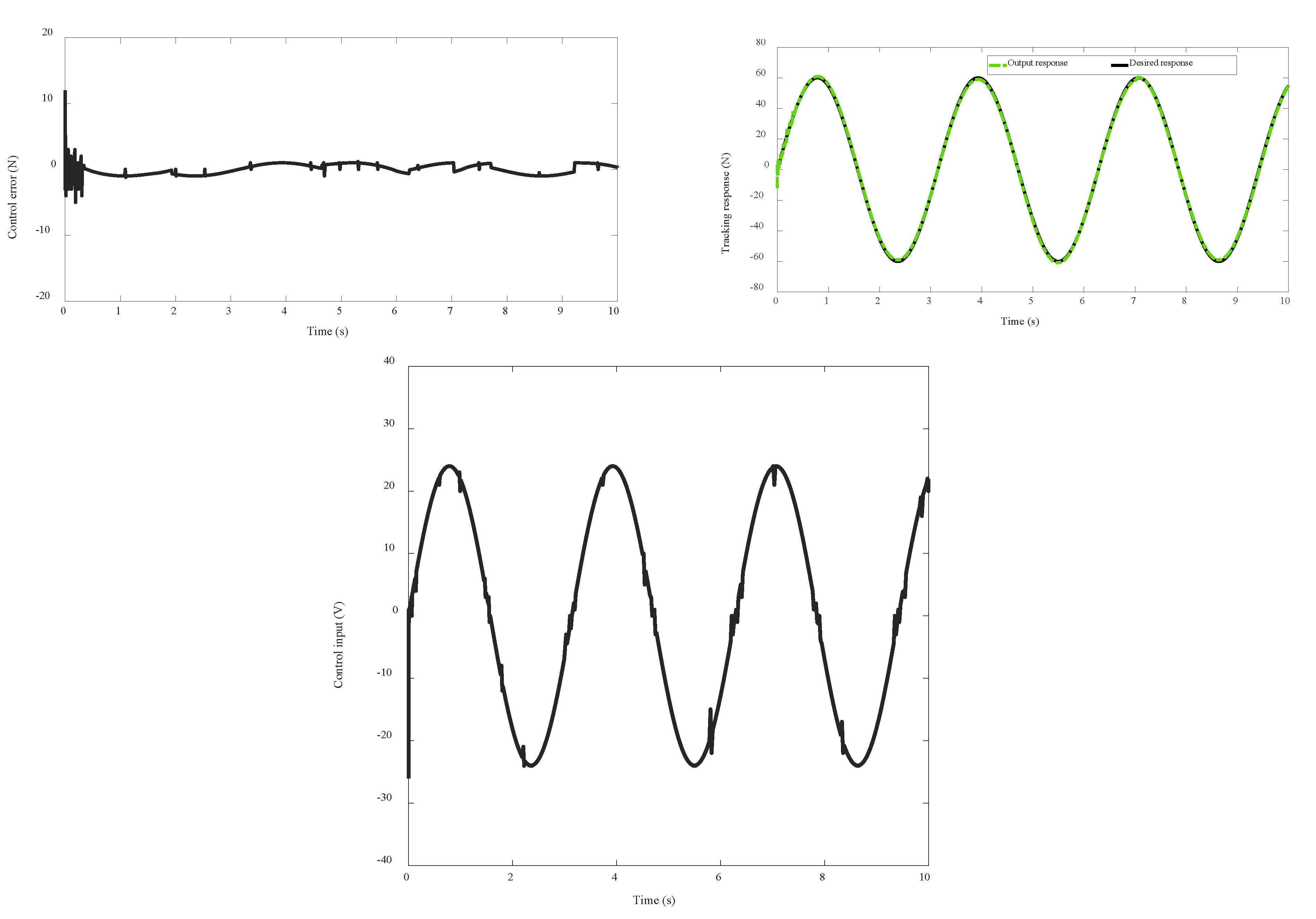
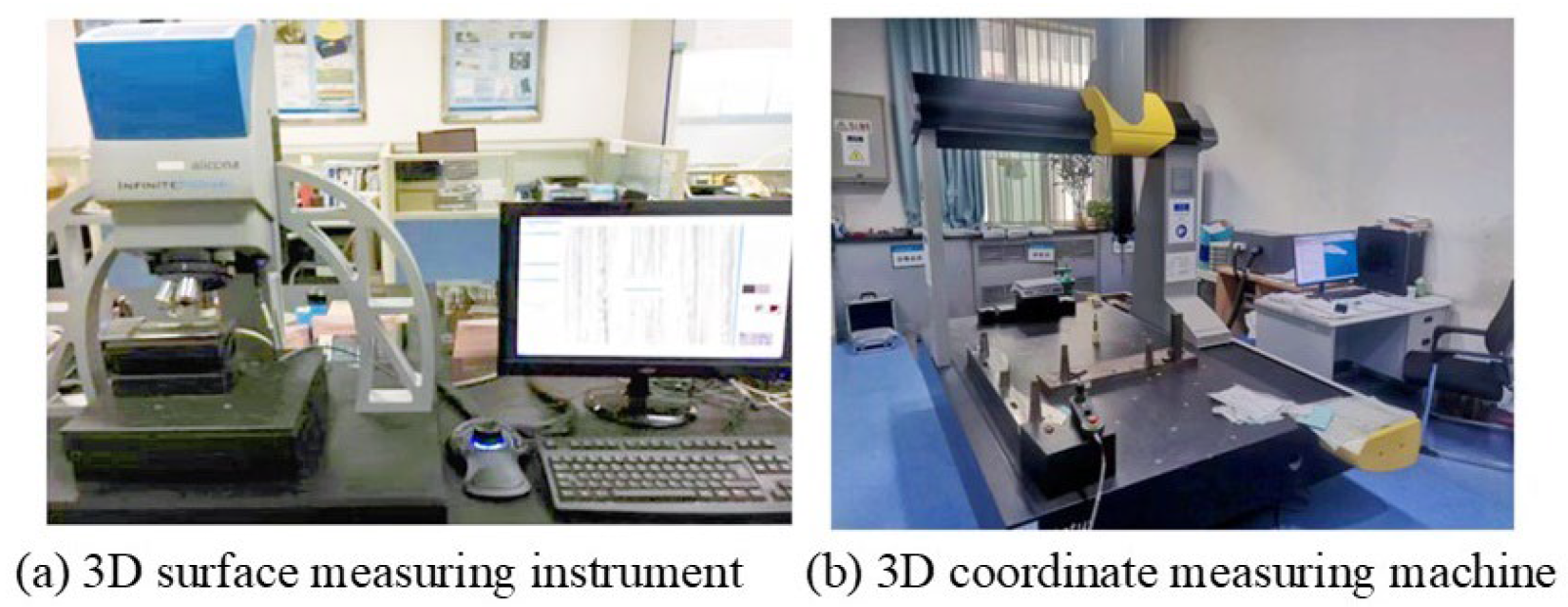
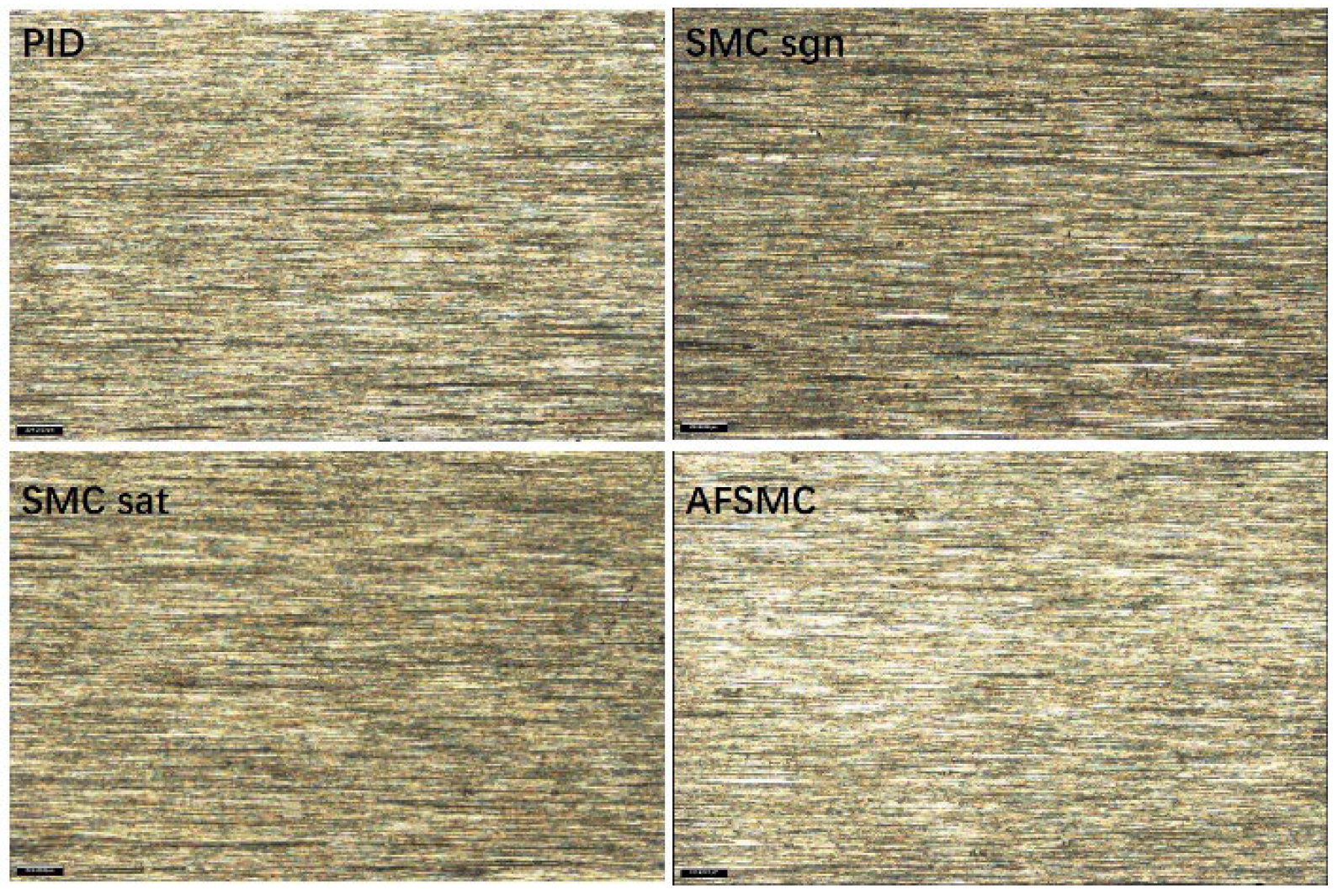
6. Simulation Analysis and Experimental Verification
7. Conclusions
Author Contributions
Funding
Institutional Review Board Statement
Informed Consent Statement
Data Availability Statement
Conflicts of Interest
References
- Mogullapally, V.; Kumar, S.; Rajeevalochanam, B.A.; Rao, R. A study on design optimization for compressor blisks. Int. J. Turbo Jet. Eng. 2022, 40, 143–153. [Google Scholar] [CrossRef] [Scilit]
- Dev, S.; Ramkumar, K.D.; Arivazhagan, N.; Rajendran, R. Investigations on the microstructure and mechanical properties of dissimilar welds of inconel 718 and sulphur rich martensitic stainless steel, AISI 416. J. Manuf. Process 2018, 32, 685–698. [Google Scholar] [CrossRef] [Scilit]
- McAndrew, A.R.; Colegrove, P.A.; Bühr, C.; Flipo, B.C.; Vairis, A. A literature review of Ti-6Al-4V linear friction welding. Prog. Mater. Sci. 2018, 92, 225–257. [Google Scholar] [CrossRef] [Scilit]
- Wang, X.D.; Zhang, Y. Research on blade grouping method for array machining. Proc. Inst. Mech. Eng. Part B J. Eng. Manuf. 2021, 235, 1437–1446. [Google Scholar]
- Alcaraz, J.Y.; Zhang, J.; Nagalingam, A.P.; Gopasetty, S.K.; Toh, B.L.; Gopinath, A.; Ahluwalia, K.; Ang, M.G.W.; Yeo, S. Numerical modeling of residual stresses during vibratory peening of a 3-stage Blisk—a multi-scale discrete element and finite element approach. J. Mater. Process. Tech. 2021, 299, 117383. [Google Scholar] [CrossRef] [Scilit]
- Yuvaraj, H.K.; Gopasetty, S.K.; Nagalingam, A.P.; Sheng, B.G.R.; Gopinath, A.; Yeo, S.H. Effect of In-trough and Out-of-trough fixturing in vibro-polishing. Proc. Inst. Mech. Eng. Part B J. Eng. Manuf. 2023. [Google Scholar] [CrossRef] [Scilit]
- Chen, Z.; Shi, Y.Y.; Lin, X.J. Evaluation and improvement of material removal rate with good surface quality in TC4 blisk blade polishing process. J. Adv. Mech. Des. Syst. 2018, 12. [Google Scholar] [CrossRef] [Scilit]
- Zhang, J.-Y.; Yao, C.-F.; Cui, M.-C.; Tan, L.; Sun, Y.-Q. Three-dimensional modeling and reconstructive change of residual stress during machining process of milling, polishing, heat treatment, vibratory finishing, and shot peening of fan blade. Adv. Manuf. 2021, 9, 430–445. [Google Scholar] [CrossRef] [Scilit]
- Li, J.; Guan, Y.; Chen, H.; Wang, B.; Zhang, T. Robotic polishing of unknown-model workpieces with constant normal contact force control. IEEE-Asme T. Mech. 2023, 28, 1093–1103. [Google Scholar] [CrossRef] [Scilit]
- Shi, Y.; Zheng, D.; Hu, L.; Wang, Y.; Wang, L. NC polishing of aspheric surfaces under control of constant pressure using a magnetorheological torque servo. Int. J. Adv. Manuf. Tech. 2012, 58, 1061–1073. [Google Scholar] [CrossRef] [Scilit]
- Xie, F.; Chong, Z.; Liu, X.-J.; Zhao, H.; Wang, J. Precise and smooth contact force control for a hybrid mobile robot used in polishing. Robot. Cim.-Int. Manuf. 2023, 83, 102573. [Google Scholar] [CrossRef] [Scilit]
- Dong, Y.; Ren, T.; Hu, K.; Wu, D.; Chen, K. Contact force detection and control for robotic polishing based on joint torque sensors. Int. J. Adv. Manuf. Tech. 2020, 107, 2745–2756. [Google Scholar] [CrossRef] [Scilit]
- Ding, Y.F.; Zhao, J.C.; Min, X.P. Impedance control and parameter optimization of surface polishing robot based on reinforcement learning. Proc. Inst. Mech. Eng. Part B J. Eng. Manuf. 2022, 237, 216–228. [Google Scholar] [CrossRef] [Scilit]
- Liu, J.; Zhang, J.; Li, J.; Yang, S.; Qiao, Z.; Ju, C.; Zhao, X. Research on fuzzy impedance force control technology of robot-assisted abrasive cloth wheel polishing blade. Int. J. Adv. Manuf. Tech. 2023, 127, 2537–2551. [Google Scholar] [CrossRef] [Scilit]
- Zhang, G.; Yang, G.; Deng, Y.; Chen, C.; Zhu, R.; Yang, K. Modeling and force control of a pneumoelectric end-effector for robotic continuous contact operations. Int. J. Adv. Manuf. Tech. 2022, 121, 1219–1234. [Google Scholar] [CrossRef] [Scilit]
- Zhou, H.; Ma, S.; Wang, G.; Deng, Y.; Liu, Z. A hybrid control strategy for grinding and polishing robot based on adaptive impedance control. Adv. Mech. Eng. 2021, 13. [Google Scholar] [CrossRef] [Scilit]
- Xu, D.; Hu, T.T. Modelling and vibration control of magnetorheological-based polishing tool for robotic polishing process. Mech. Syst. Signal. Pr. 2023, 195, 110290. [Google Scholar] [CrossRef] [Scilit]
- Fan, C.; Hong, G.S.; Zhao, J.; Zhang, L.; Zhao, J.; Sun, L. The integral sliding mode control of a pneumatic force servo for the polishing process. Precis. Eng. 2019, 55, 154–170. [Google Scholar] [CrossRef] [Scilit]
- Lopez-Sanchez, I.; Moreno-Valenzuela, J. PID control of quadrotor UAVs: A survey. Annu. Rev. Control. 2023, 56, 100900. [Google Scholar] [CrossRef] [Scilit]
- Coskun, M.Y.; Itik, M. Intelligent PID control of an industrial electro-hydraulic system. Isa T 2023, 139, 484–498. [Google Scholar] [CrossRef] [Scilit]
- Al-Dhaifallah, M. Fuzzy fractional-order PID control for heat exchanger. Alex Eng. J. 2023, 63, 11–16. [Google Scholar] [CrossRef] [Scilit]
- Pussente, G.A.N.; de Aguiar, E.P.; Marcato, A.L.M.; Pinto, M.F. UAV Power Line Tracking Control Based on a Type-2 Fuzzy-PID Approach. Robotics 2017, 12, 60. [Google Scholar] [CrossRef] [Scilit]
- Jiang, B.P.; Karimi, H.R.; Li, B. Adaptive sliding mode control of Markov jump systems with completely unknown mode information. Int. J. Robust. Nonlin. 2023, 33, 3749–3763. [Google Scholar] [CrossRef] [Scilit]
- Musarrat, M.N.; Fekih, A.; Rahman, M.A.; Islam, M.R.; Muttaqi, K.M. Event-Triggered SMC-Based FRT Approach for DFIG-Based Wind Turbines Equipped with DVR With High-Frequency Isolation. IEEE J. Em. Sel. Top. P 2023, 11, 2661–2671. [Google Scholar] [CrossRef] [Scilit]
- Yim, J.; You, S.; Lee, Y.; Kim, W. Chattering Attenuation Disturbance Observer for Sliding Mode Control: Application to Permanent Magnet Synchronous Motors. IEEE Trans. Ind. Electron. 2023, 70, 5161–5170. [Google Scholar] [CrossRef] [Scilit]
- Castillo, I.; Freidovich, L.B. Describing-function-based analysis to tune parameters of chattering reducing approximations of Sliding Mode controllers. Control Eng. Pract. 2020, 95, 104230. [Google Scholar] [CrossRef] [Scilit]
- Gong, S.; Li, X.; Han, J.; Sun, Y.; Xu, G.; Jiang, Y.; Huang, S. Sliding Mode Control-Based Decoupling Scheme for Quad-Active Bridge DC-DC Converter. IEEE J. Em. Sel. Top. P 2022, 10, 1153–1164. [Google Scholar] [CrossRef] [Scilit]
- Zhao, Y.; Qiao, W.; Wu, L. An adaptive Quasi-sliding-mode rotor position observer-based sensorless control for interior permanent magnet synchronous machines. IEEE Trans. Power Electron. 2013, 28, 5618–5629. [Google Scholar] [CrossRef] [Scilit]
- Huang, C.F.; Liao, T.L.; Chen, C.Y.; Yan, J.J. The design of quasi-sliding mode control for a permanent magnet synchronous motor with unmatched uncertainties. Comput. Math. Appl. 2012, 64, 1036–1043. [Google Scholar] [CrossRef] [Scilit]
- Wang, A.; Jia, X.; Dong, S. A new exponential reaching law of sliding mode control to improve performance of permanent magnet synchronous motor. IEEE Trans. Magn. 2013, 49, 2409–2412. [Google Scholar] [CrossRef] [Scilit]
- Wang, Z.; Wang, X.; Yang, G.; Sun, Q.; Ma, Y. Robust Bounded Control for Fuzzy Mechanical Systems: Fuzzy Optimal Design and Inequality Constraint Reorganize. IEEE T Fuzzy Syst. 2023, 31, 2605–2616. [Google Scholar] [CrossRef] [Scilit]
- Roohi, M.; Zhang, C.; Taheri, M.; Basse-O’connor, A. Synchronization of Fractional-Order Delayed Neural Networks Using Dynamic-Free Adaptive Sliding Mode Control. Fractal. Fract. 2023, 7, 682. [Google Scholar] [CrossRef] [Scilit]
- Ma, X.; Sun, F.; Li, H.; He, B. Neural-network-based sliding-mode control for multiple rigid-body attitude tracking with inertial information completely unknown. Inf. Sci. 2017, 400, 91–104. [Google Scholar] [CrossRef] [Scilit]
- Qi, W.; Zhang, N.; Zong, G.; Su, S.-F.; Yan, H.; Yeh, R.-H. Event-Triggered SMC for Networked Markov Jumping Systems with Channel Fading and Applications: Genetic Algorithm. IEEE T Cybern. 2023, 53, 6503–6515. [Google Scholar] [CrossRef] [Scilit] [PubMed]
- Enrico, C.; Alberto, B.; Paola, F. The applicability of the Hertzian Formulas to point contacts of spheres and spherical caps. Lubricants 2022, 10, 233. [Google Scholar]
- Wang, W.; Liu, F.; Liu, Z.; Yun, C. Prediction of depth of cut for robotic belt grinding. Int. J. Adv. Des. Manuf. Technol. 2017, 91, 699–708. [Google Scholar] [CrossRef] [Scilit]
- Xu, X.H.; Zhu, D.H. Application of novel force control strategies to enhance robotic abrasive belt grinding quality of aero-engine blades. Chin. J. Aeronaut. 2019, 32, 2368–2382. [Google Scholar] [CrossRef] [Scilit]
- Huai, W.B.; Shi, Y.Y. An adaptive flexible polishing path programming method of the blisk blade using elastic grinding tools. J. Mech. Sci. Technol. 2019, 33, 3487–3495. [Google Scholar] [CrossRef] [Scilit]
- Qi, J.D.; Chen, B.; Zhang, D.H. Compensation for absolute positioning error of industrial robot considering the optimized measurement space. Int. J. Adv. Robot. Syst. 2020, 17. [Google Scholar] [CrossRef] [Scilit]
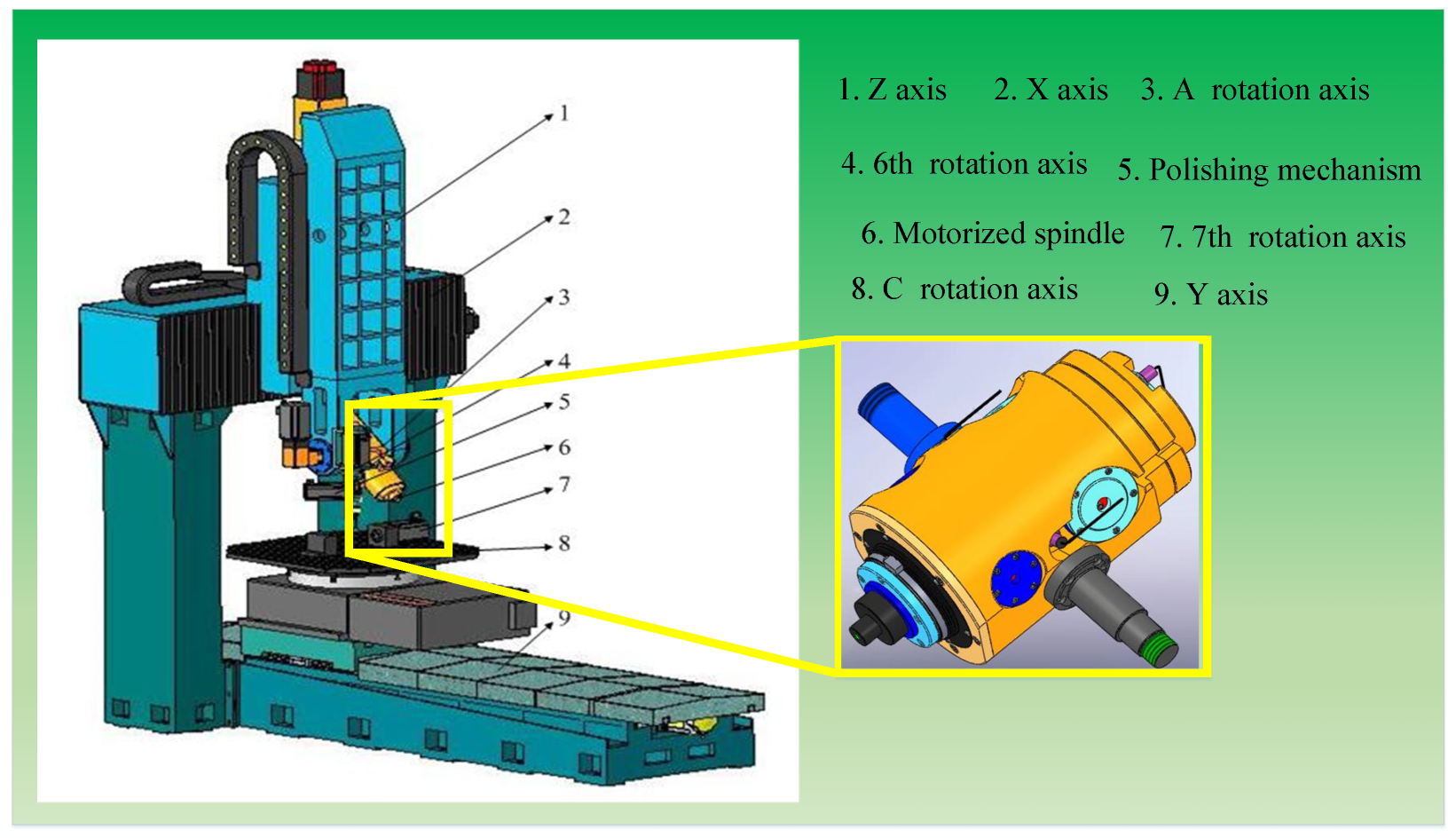
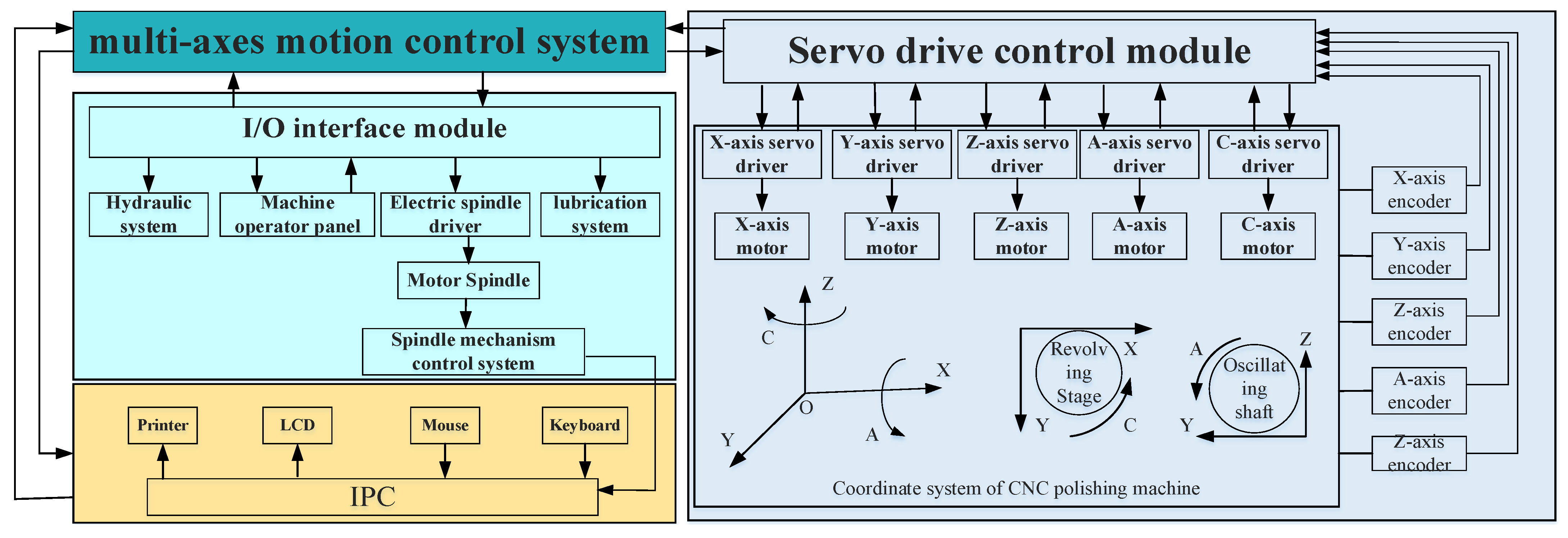
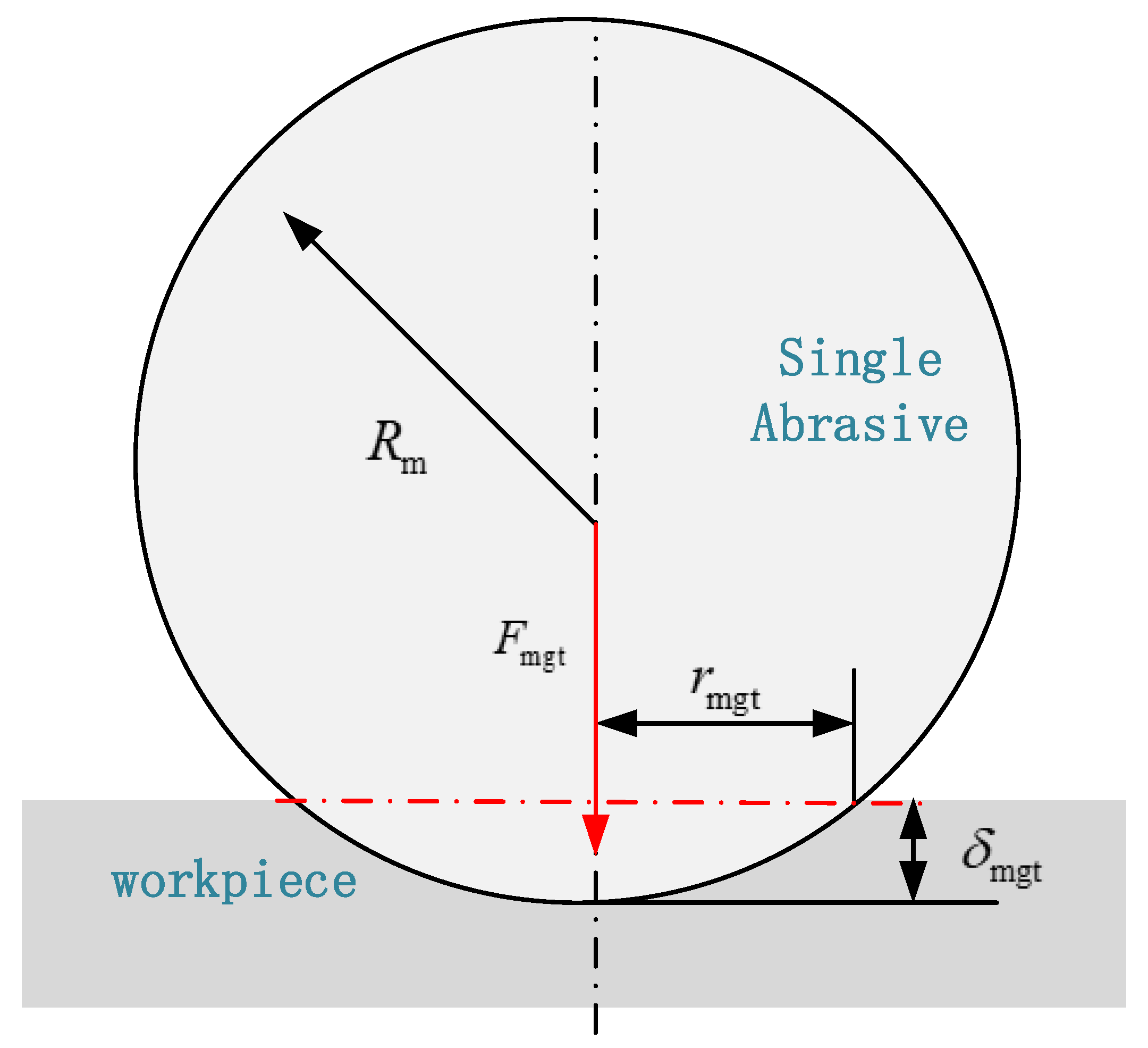
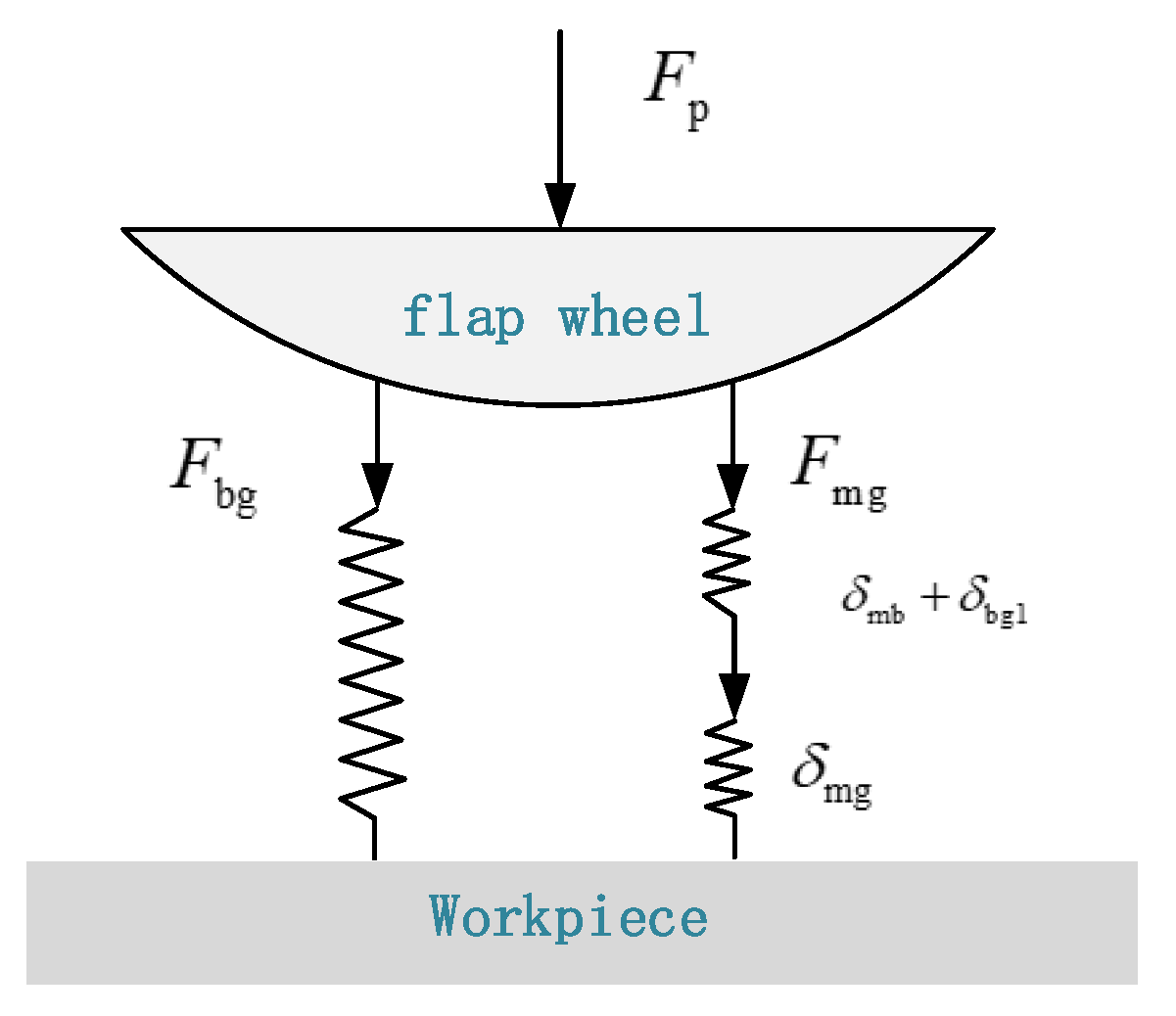
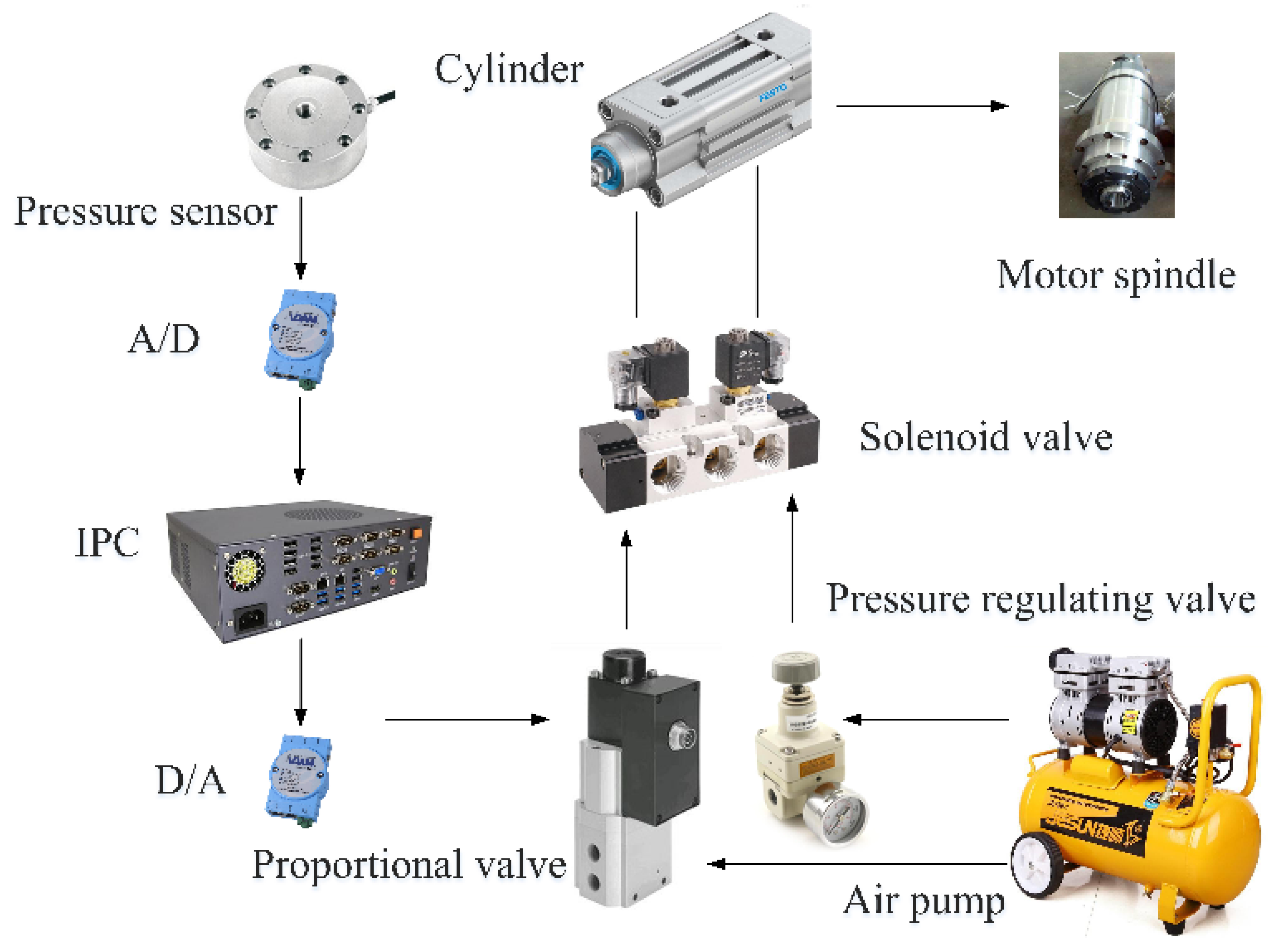
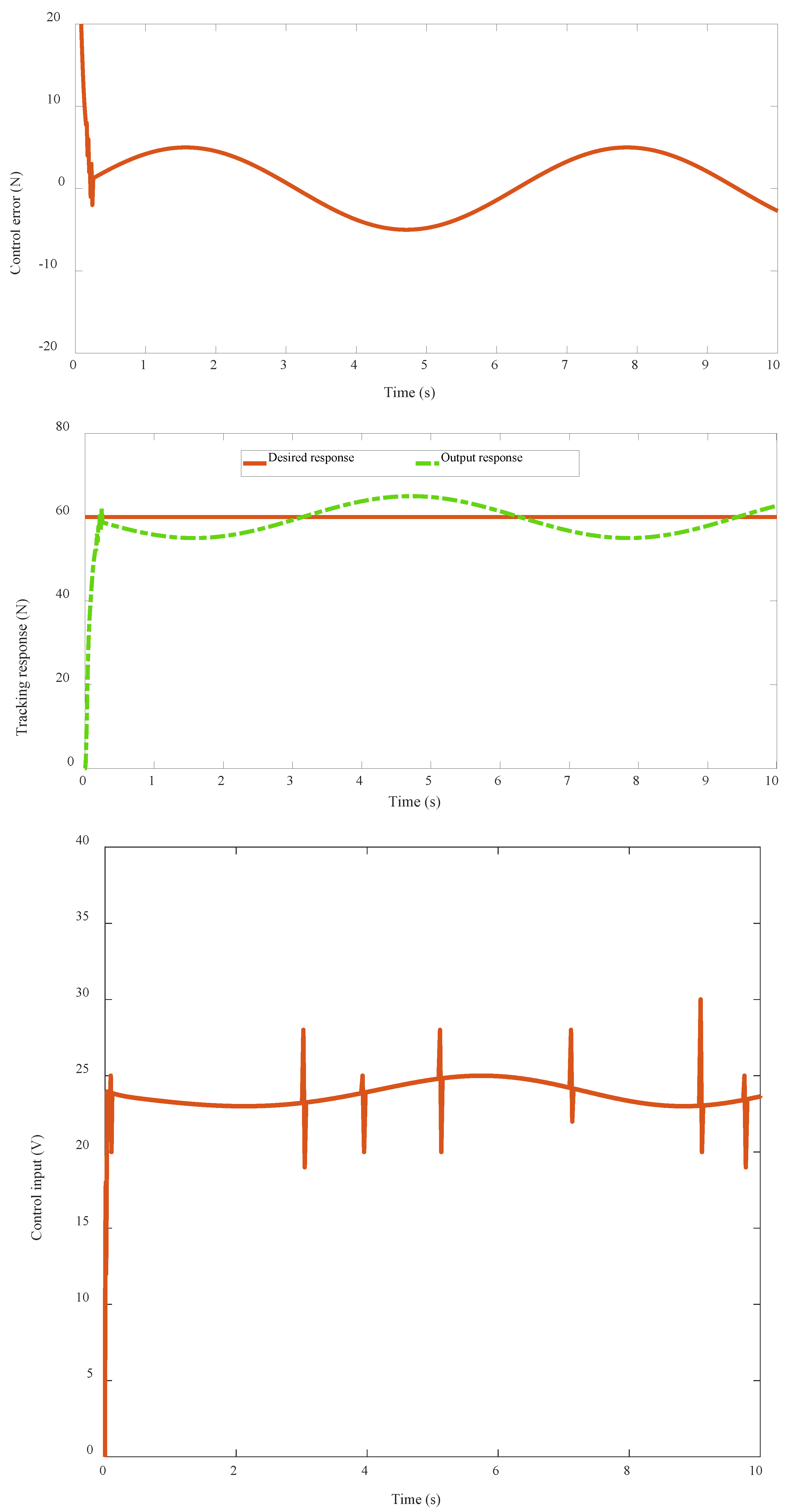
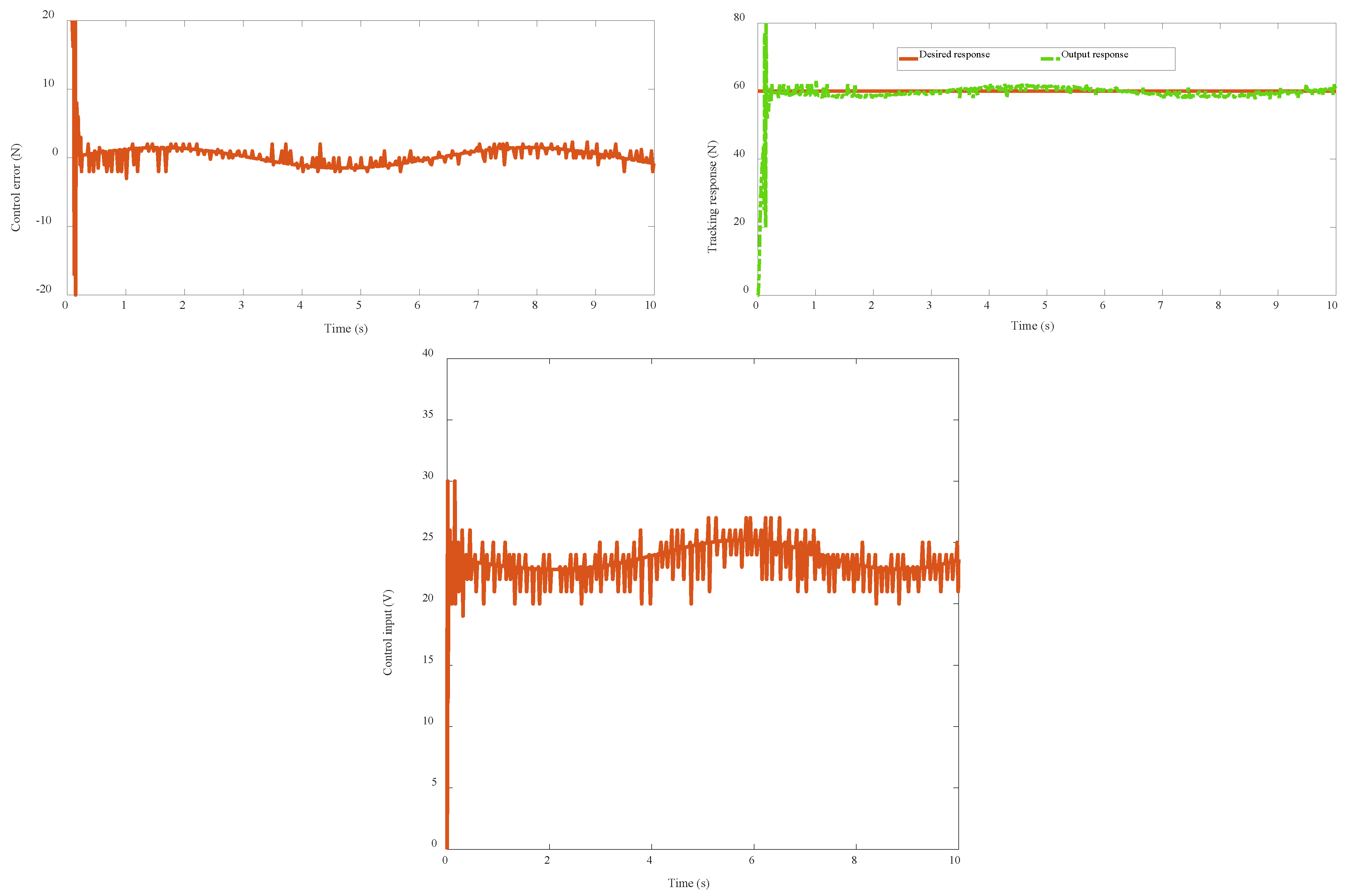
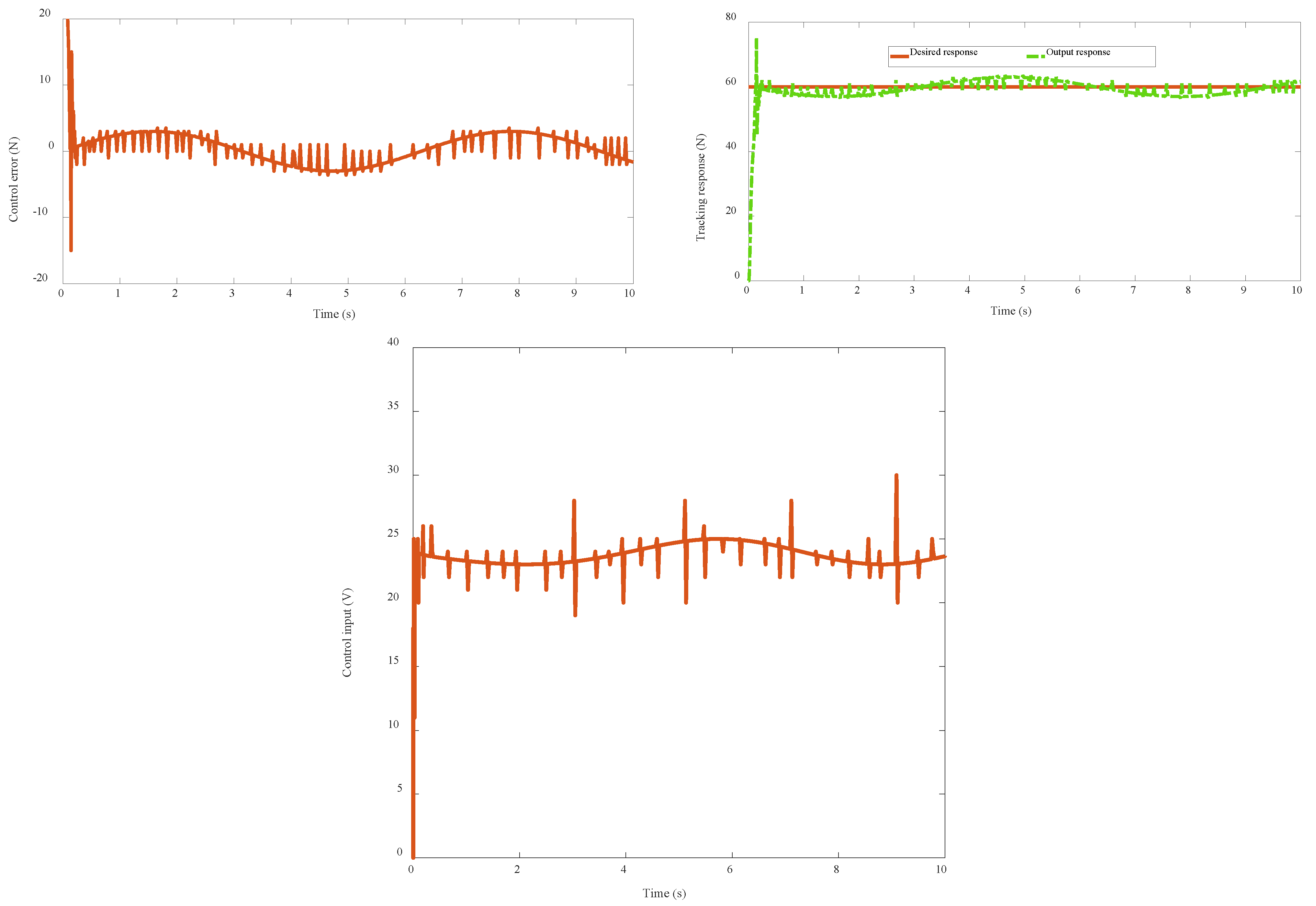
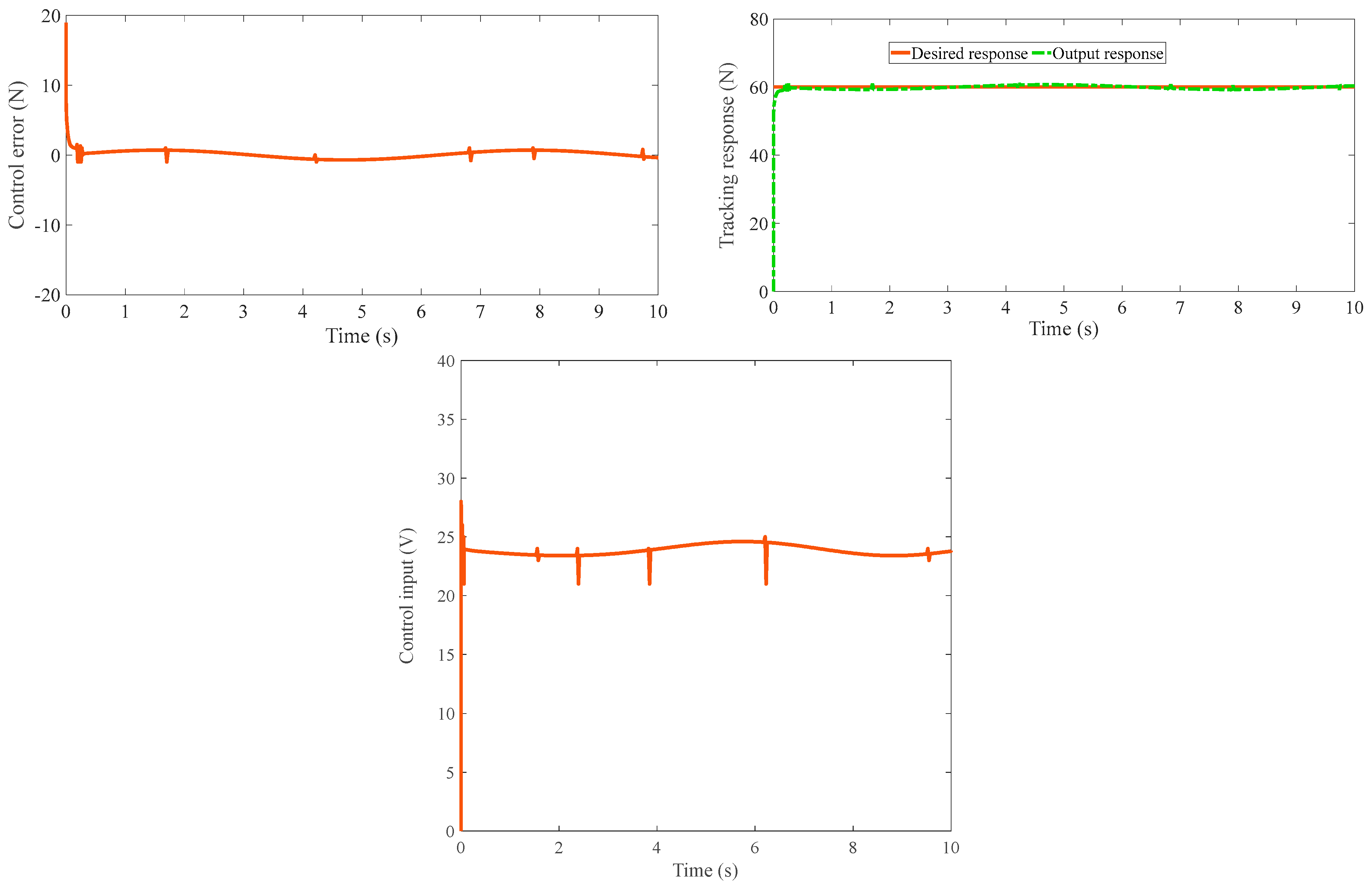
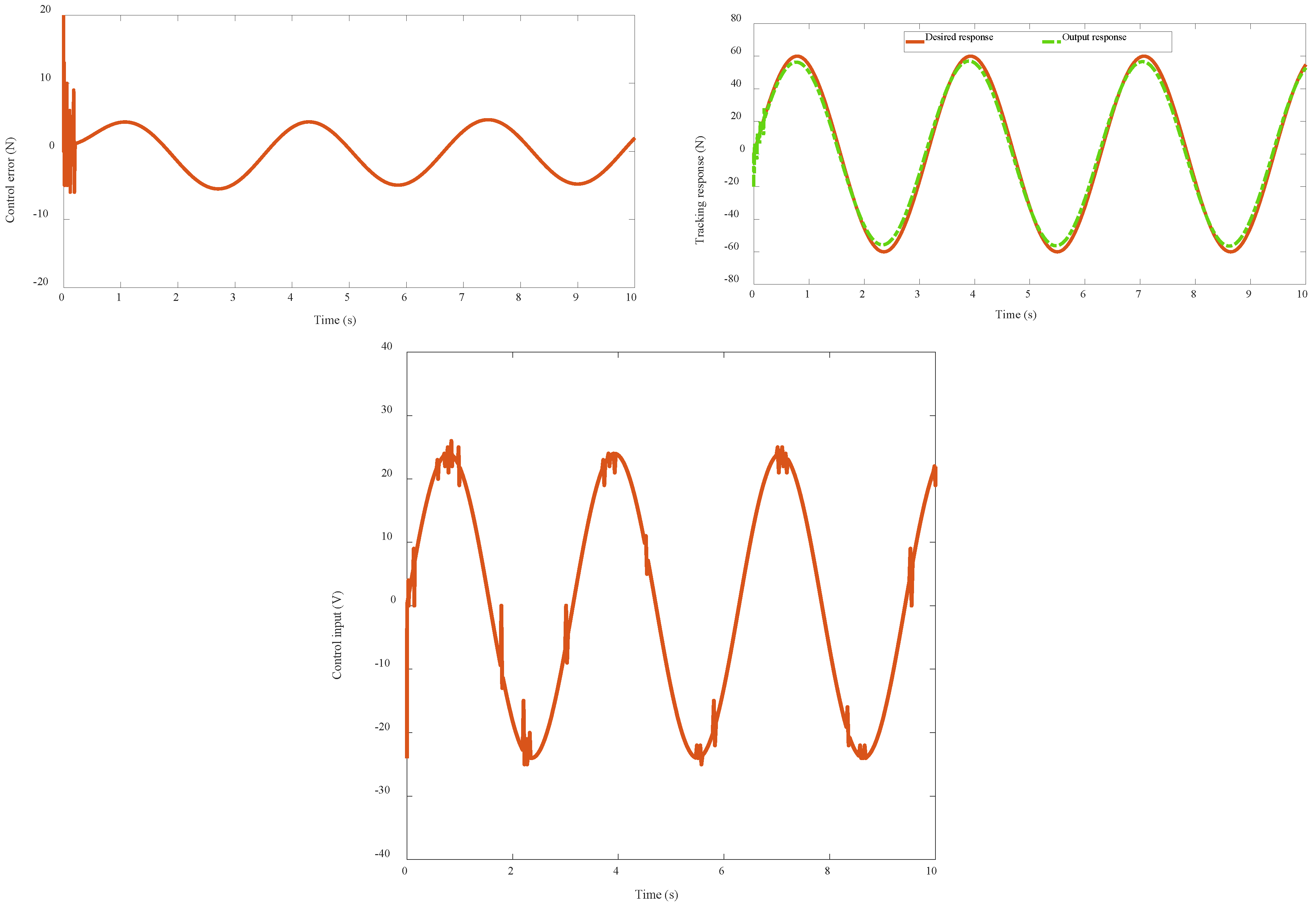
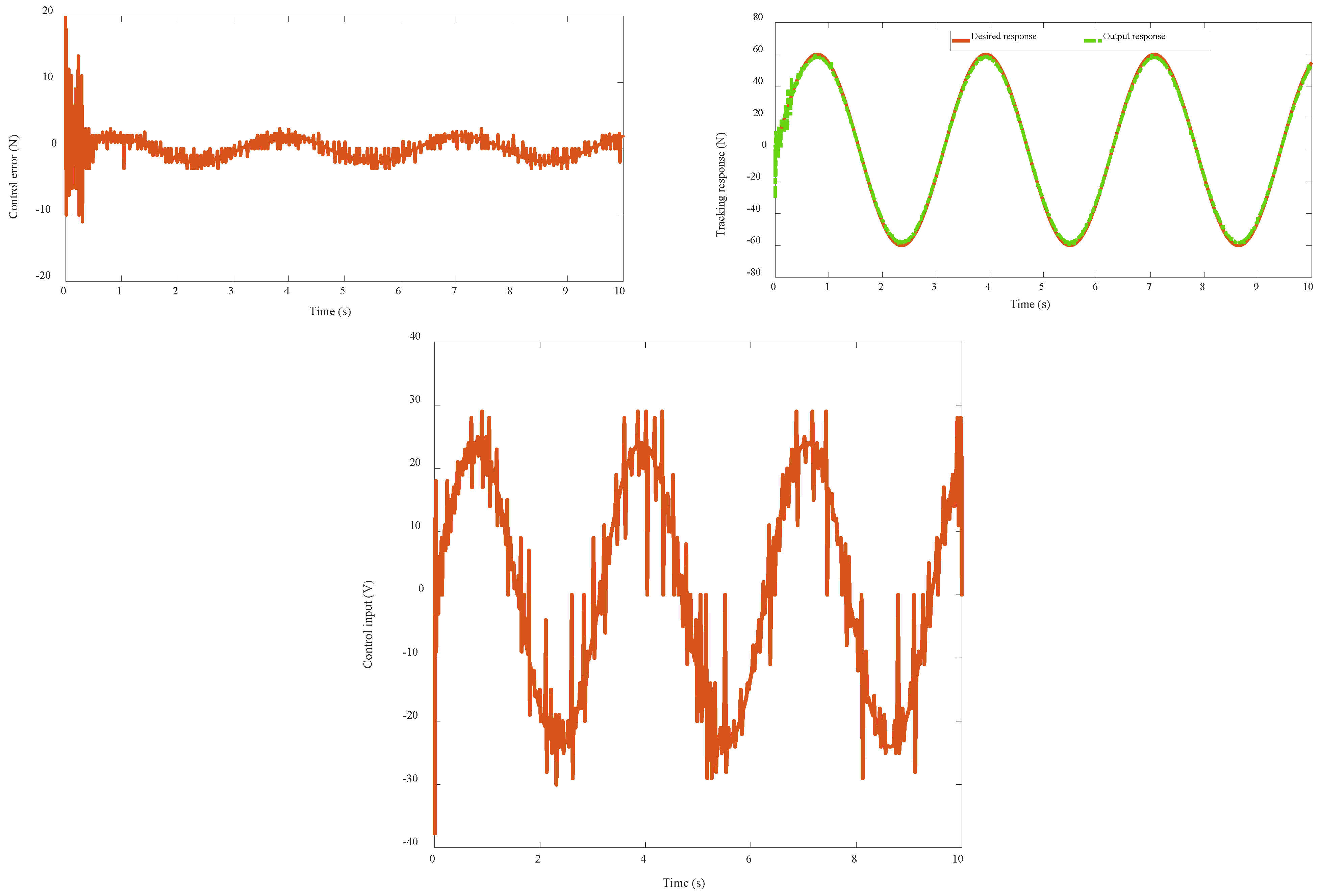
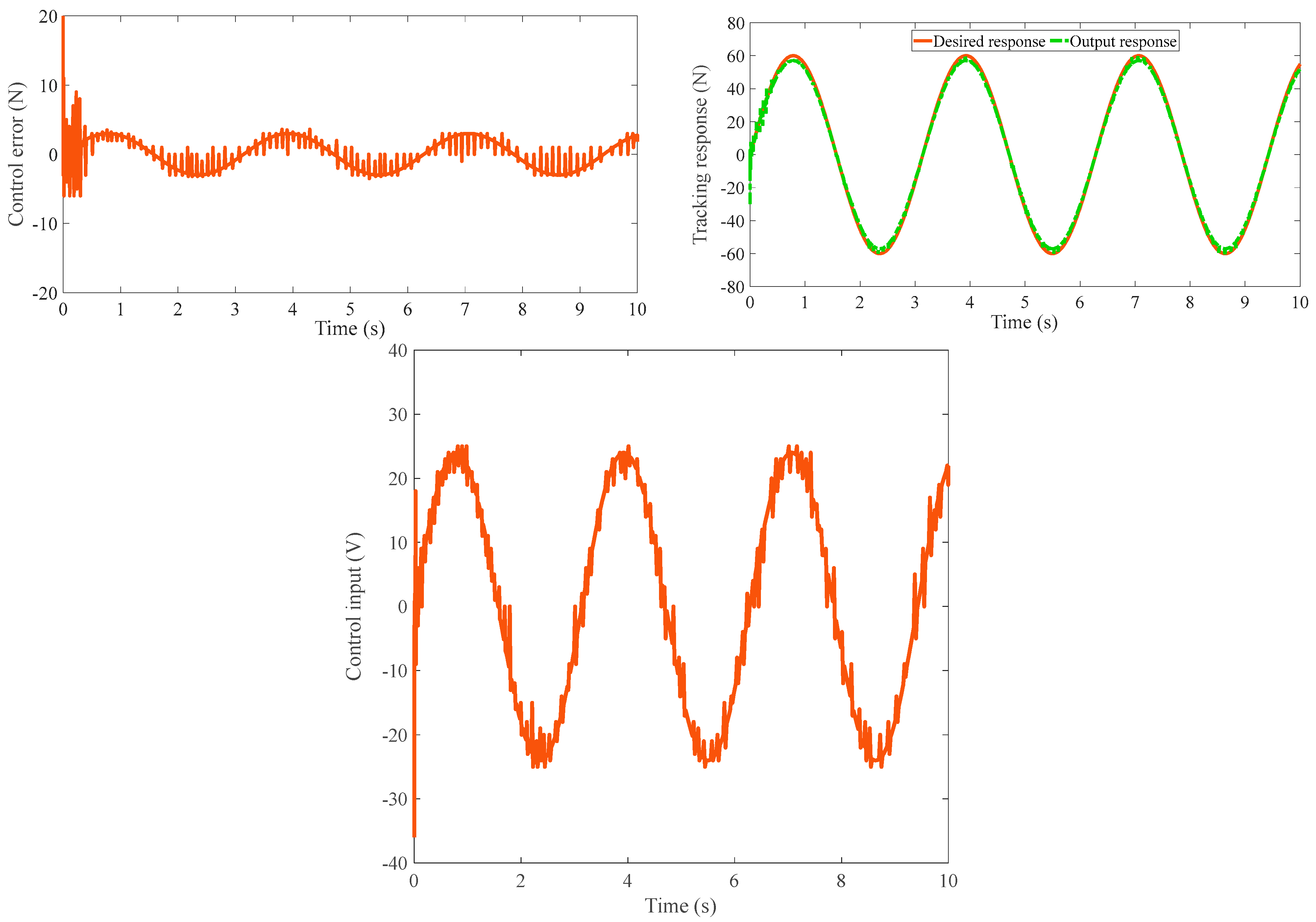
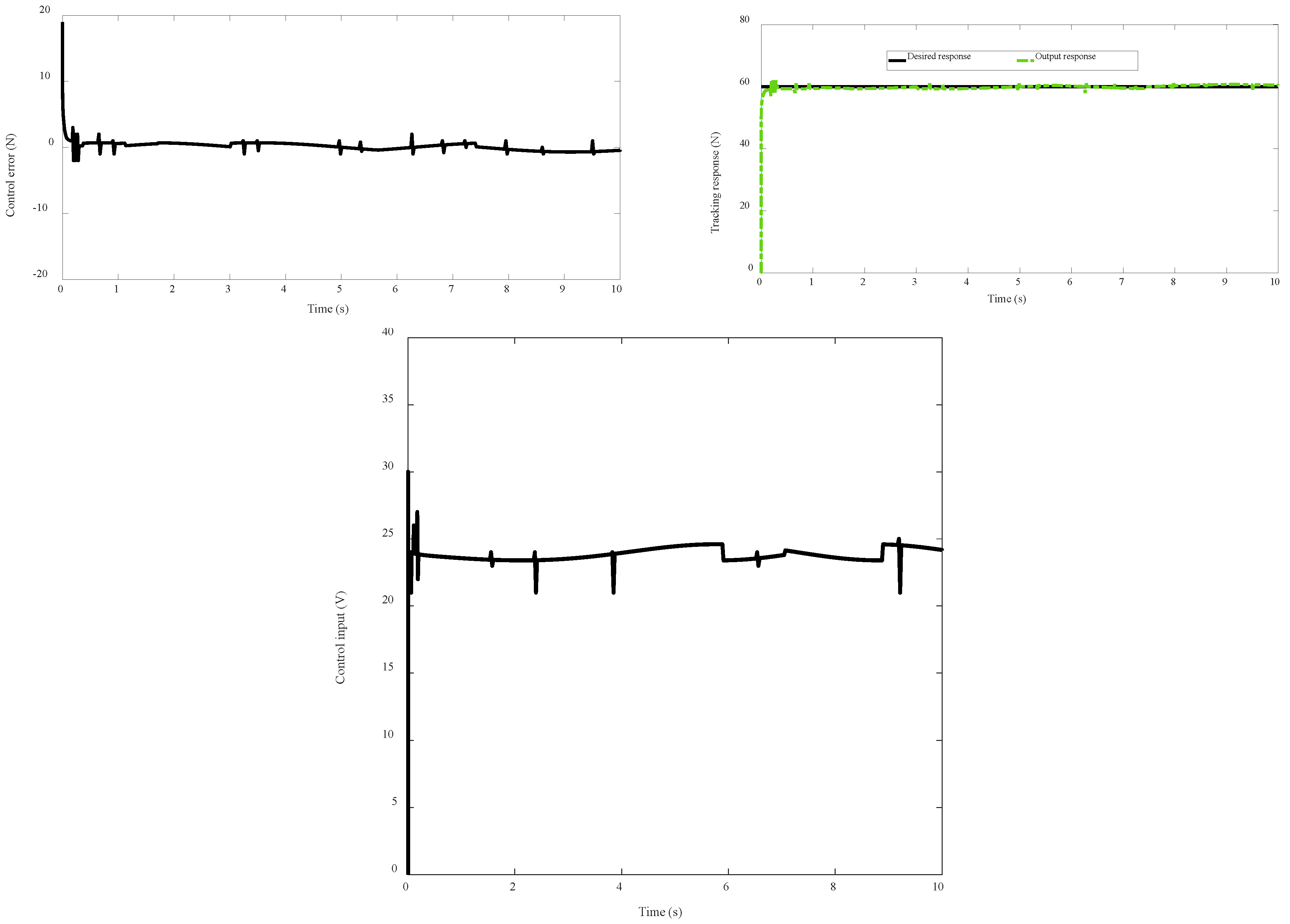
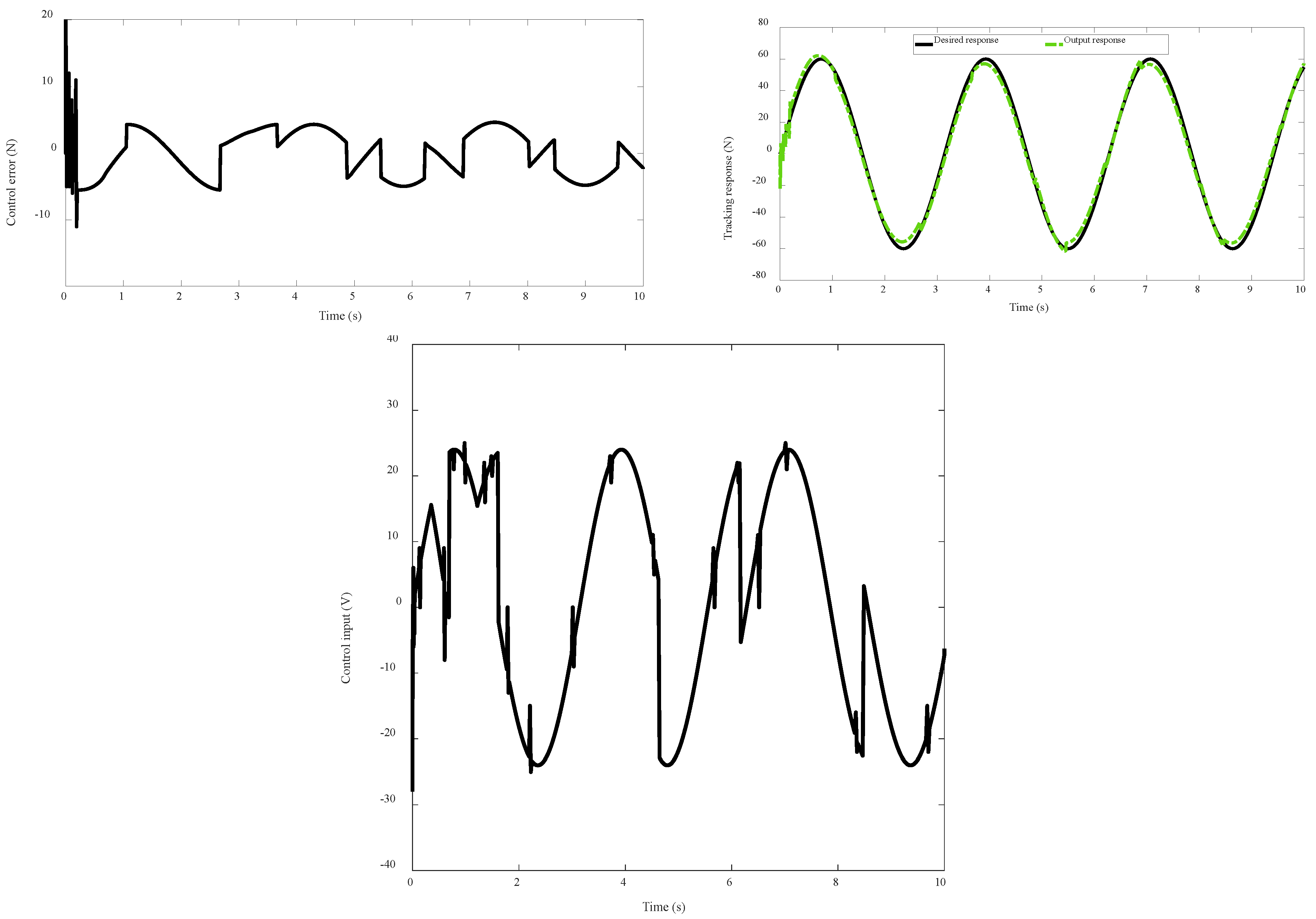
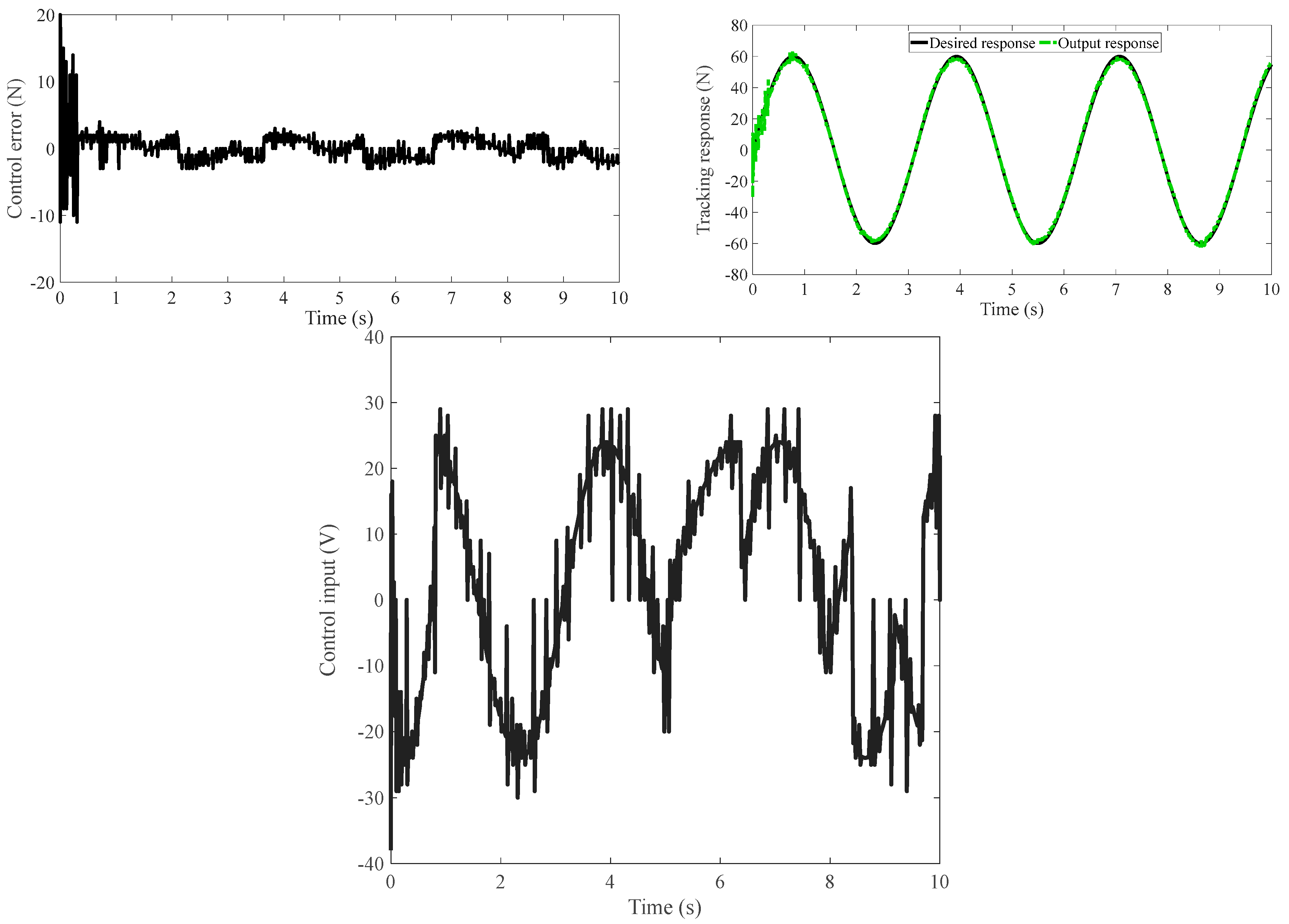
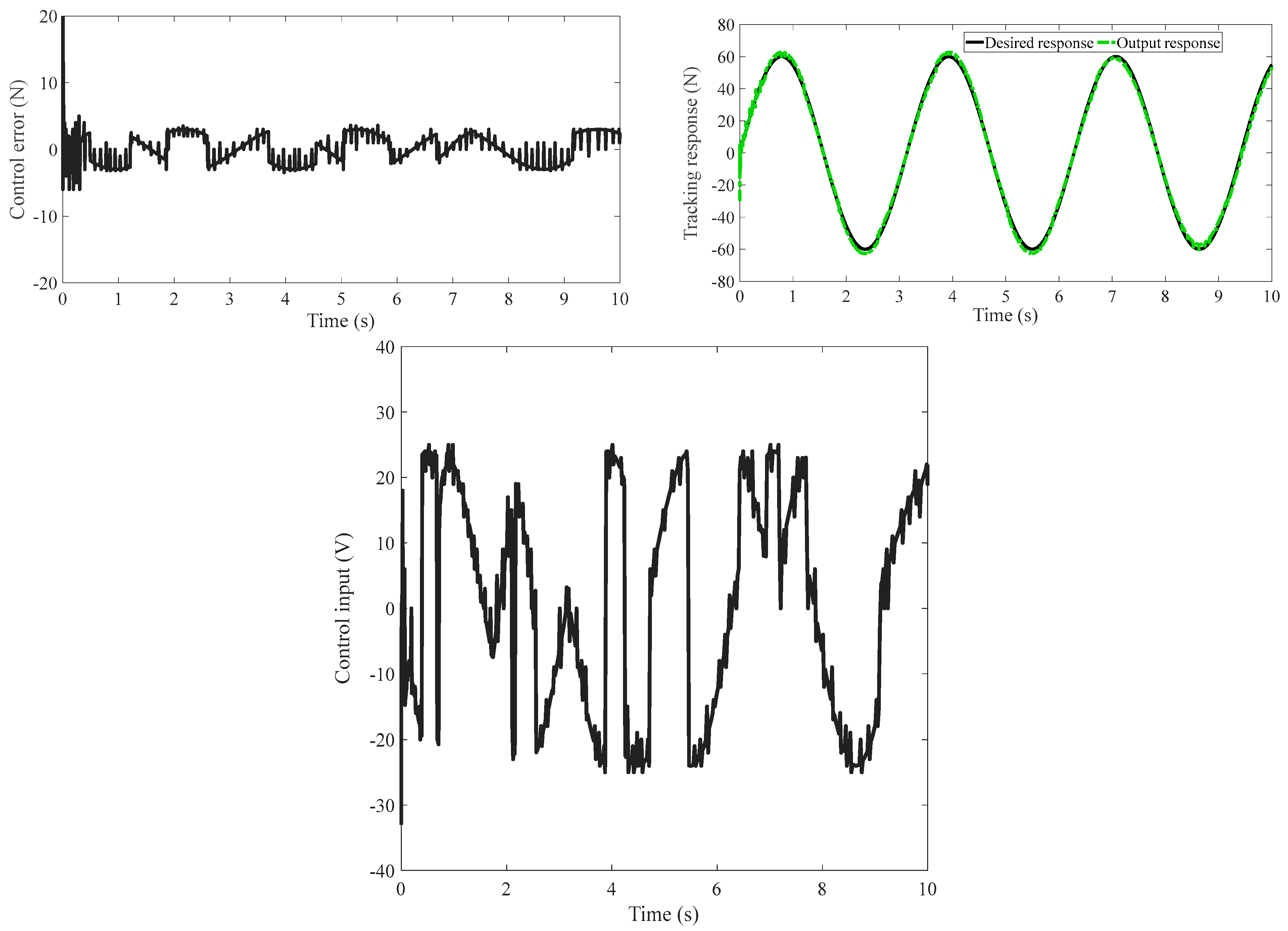
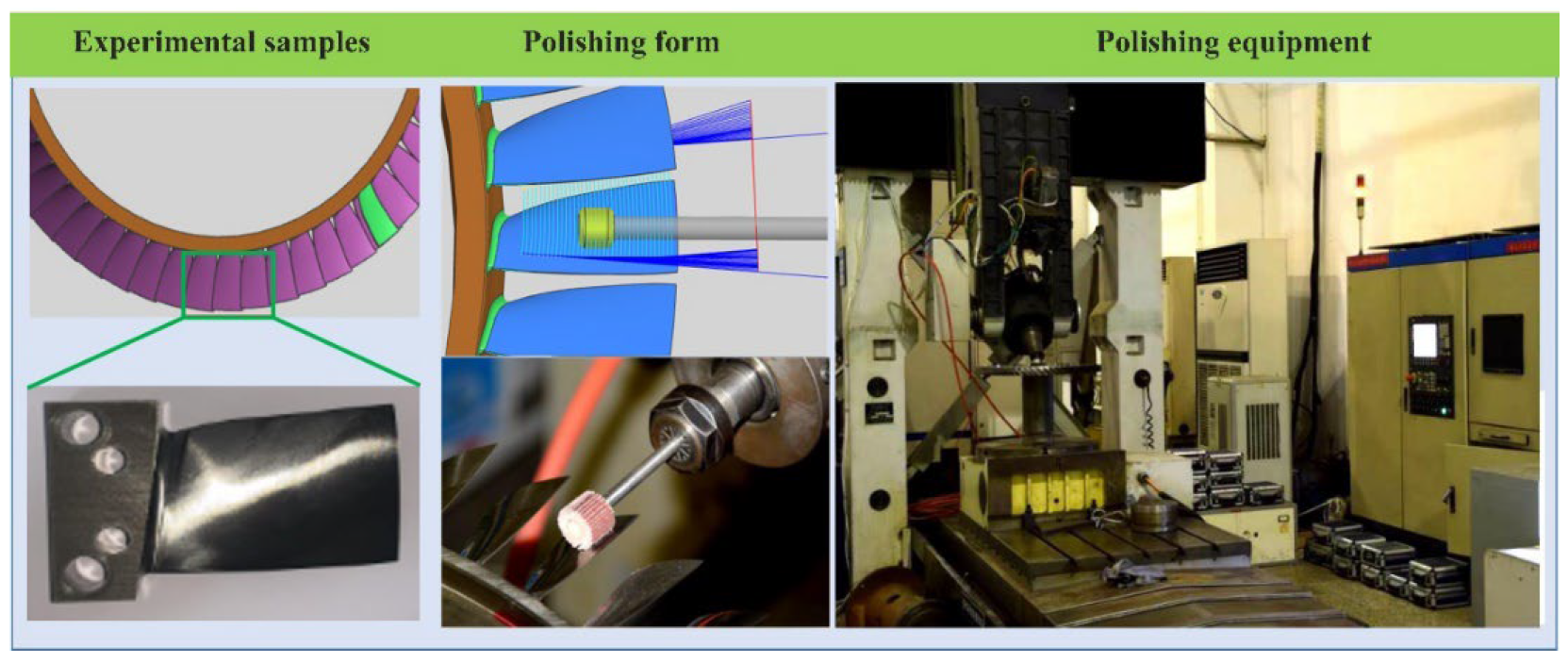

| Axis Positioning Accuracy of X/Y/Z (µm) | Stroke of X/Y/Z-Axis (mm) | Dimension of Polished Workpiece (mm) |
|---|---|---|
| 7.046/22.704/9.468 | 1000/1600/1000 | Φ20~Φ100 |
| Maximum speed of A/C-axis motor (r/min) | Machine tool structure | Dimensions of polishing machines (mm) |
| 16.6/11.1 | Gantry and five-axis linkage | 3300 × 3150 × 1800 |
| Maximum speed of spindle (r/min) | Rotating Angle of A/C-axis | Maximum speed of X/Y/Z-axis motor (r/min) |
| 24,000 | −5°~95°/±360° | 3000/3000/3000 |
| Response | PID | SMC | AFSMC | |||
|---|---|---|---|---|---|---|
| Sgn(s) | Sat(0.02) | |||||
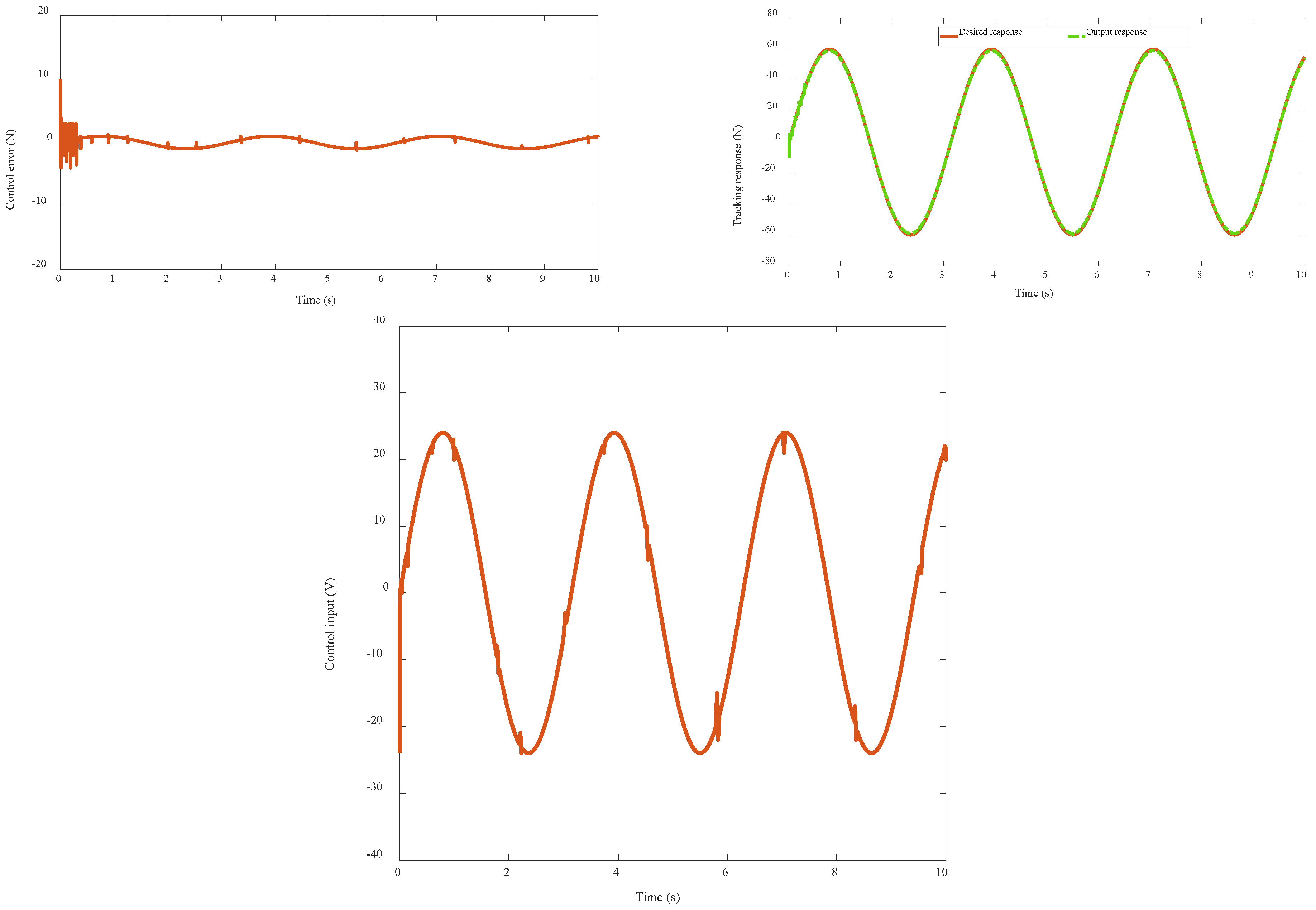
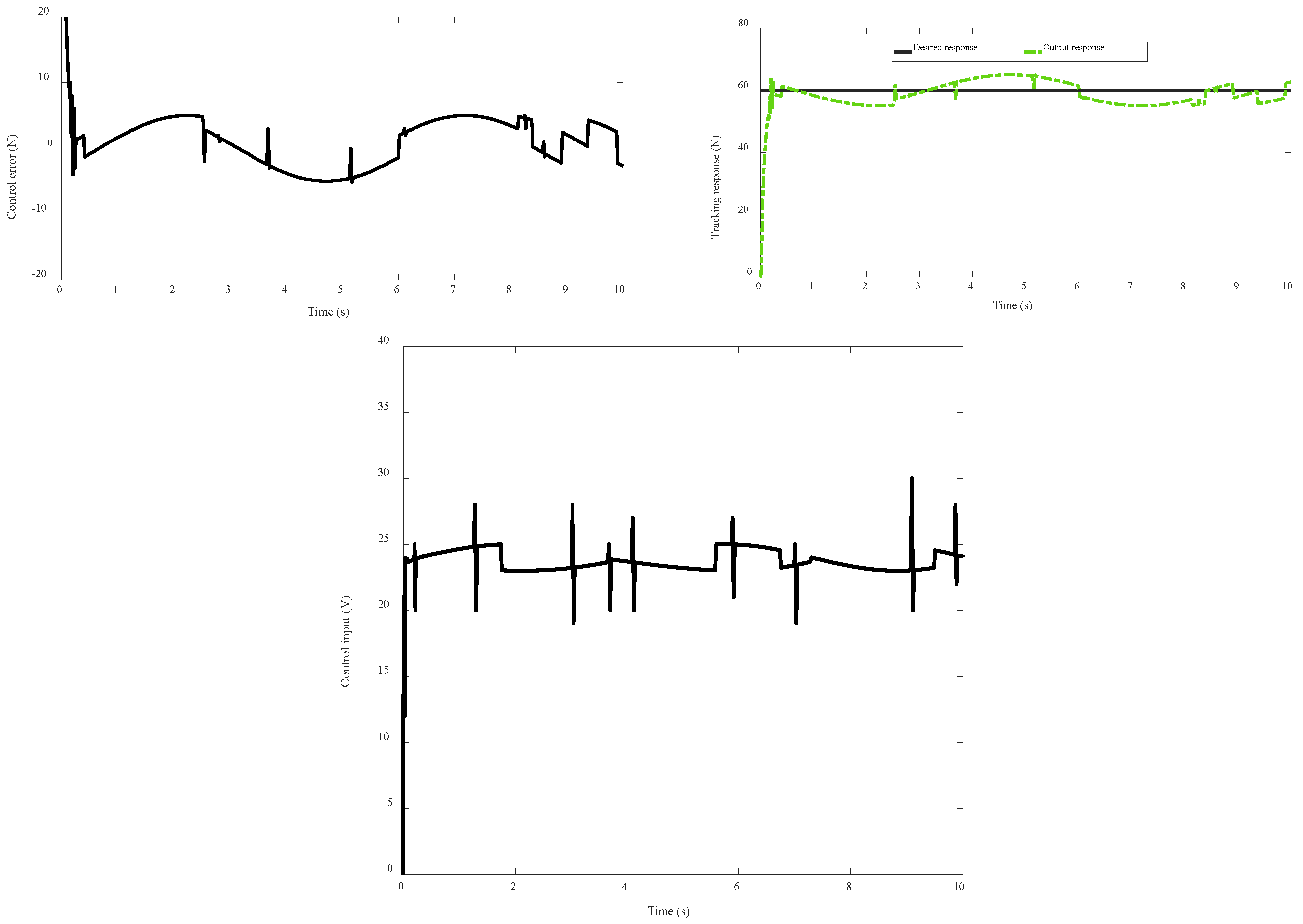
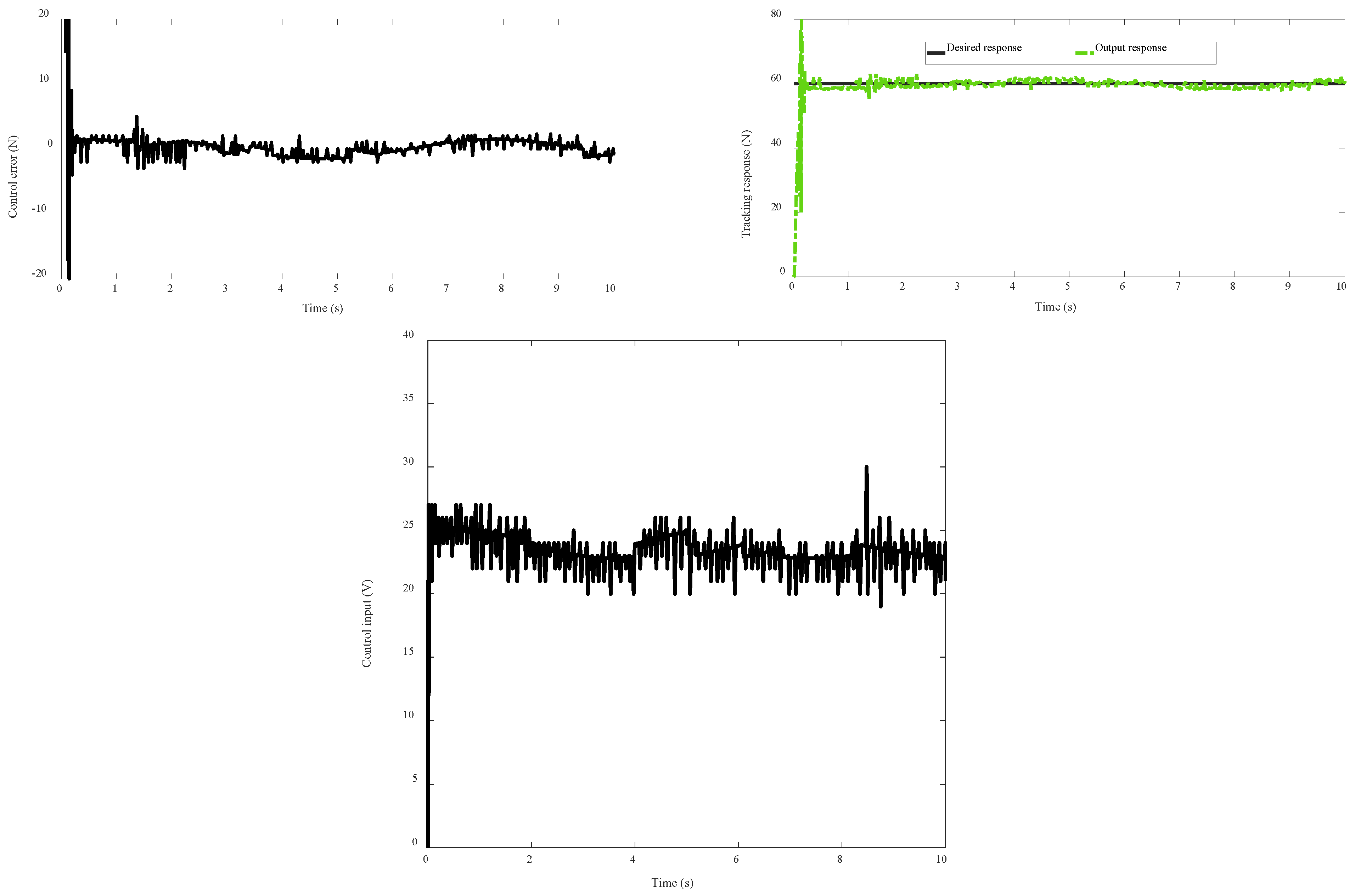
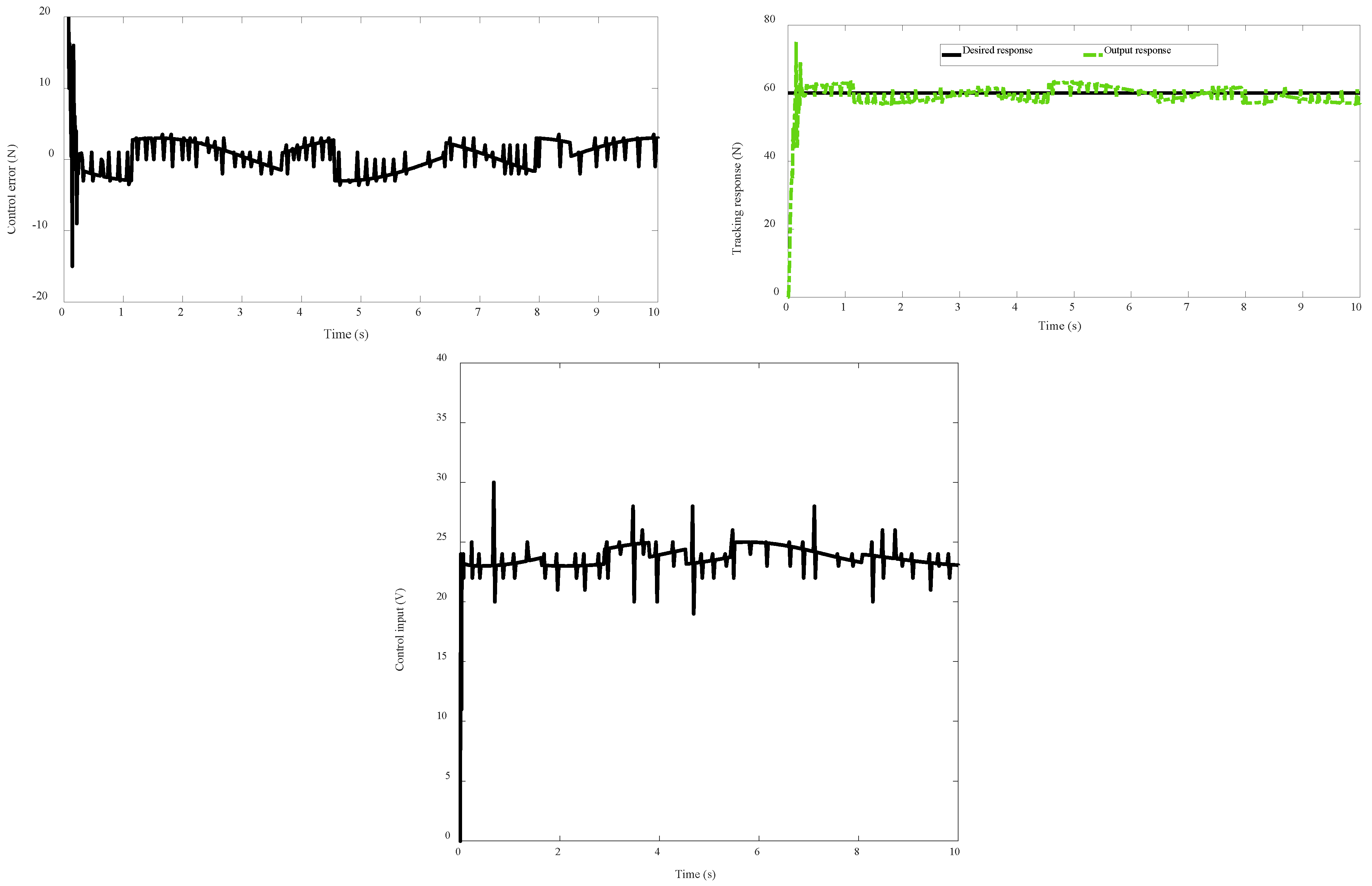
| simulation result | Control error | Step Sin | 5.12 5.48 | 1.97 2.12 | 3.02 3.23 | 1.12 1.21 |
| Chattering extent | Small | Large | Moderate | Smaller | ||
| experimental result | Control error | Step Sin | 5.26 5.83 | 2.15 2.34 | 3.14 3.46 | 1.28 1.37 |
| Chattering extent | Small | Large | Moderate | Smaller | ||
Disclaimer/Publisher’s Note: The statements, opinions and data contained in all publications are solely those of the individual author(s) and contributor(s) and not of MDPI and/or the editor(s). MDPI and/or the editor(s) disclaim responsibility for any injury to people or property resulting from any ideas, methods, instructions or products referred to in the content. |
© 2024 by the authors. Licensee MDPI, Basel, Switzerland. This article is an open access article distributed under the terms and conditions of the Creative Commons Attribution (CC BY) license (https://creativecommons.org/licenses/by/4.0/).
Share and Cite
Hong, Q.; Zhou, T.; Qi, J. Adaptive Fuzzy Sliding Mode Control and Dynamic Modeling of Flap Wheel Polishing Force Control System. Appl. Sci. 2024, 14, 2153. https://doi.org/10.3390/app14052153
Hong Q, Zhou T, Qi J. Adaptive Fuzzy Sliding Mode Control and Dynamic Modeling of Flap Wheel Polishing Force Control System. Applied Sciences. 2024; 14(5):2153. https://doi.org/10.3390/app14052153
Chicago/Turabian StyleHong, Qi, Tianyi Zhou, and Junde Qi. 2024. "Adaptive Fuzzy Sliding Mode Control and Dynamic Modeling of Flap Wheel Polishing Force Control System" Applied Sciences 14, no. 5: 2153. https://doi.org/10.3390/app14052153
APA StyleHong, Q., Zhou, T., & Qi, J. (2024). Adaptive Fuzzy Sliding Mode Control and Dynamic Modeling of Flap Wheel Polishing Force Control System. Applied Sciences, 14(5), 2153. https://doi.org/10.3390/app14052153

