Article

An Estimation Method of River Dry Runoff Alteration after Upper New Reservoirs Storage

1
College of Water Resource & Hydropower, Sichuan University, Chengdu 610065, China
2
Sichuan Port and Shipping Investment Group Co., Ltd., Chengdu 610094, China
3
Key Laboratory of Port, Waterway & Sedimentation Engineering Ministry of Communications, PRC, Nanjing Hydraulic Research Institute, Nanjing 210029, China
4
Sichuan Communication Surveying & Design Institute Co., Ltd., Chengdu 610017, China
5
Yellow River Institute of Hydraulic Research, Yellow River Conservancy Commission, Zhengzhou 450003, China
*
Author to whom correspondence should be addressed.
Appl. Sci. 2024, 14(2), 560; https://doi.org/10.3390/app14020560
Submission received: 19 October 2023 / Revised: 5 January 2024 / Accepted: 6 January 2024 / Published: 9 January 2024
(This article belongs to the Section Environmental Sciences)

Abstract

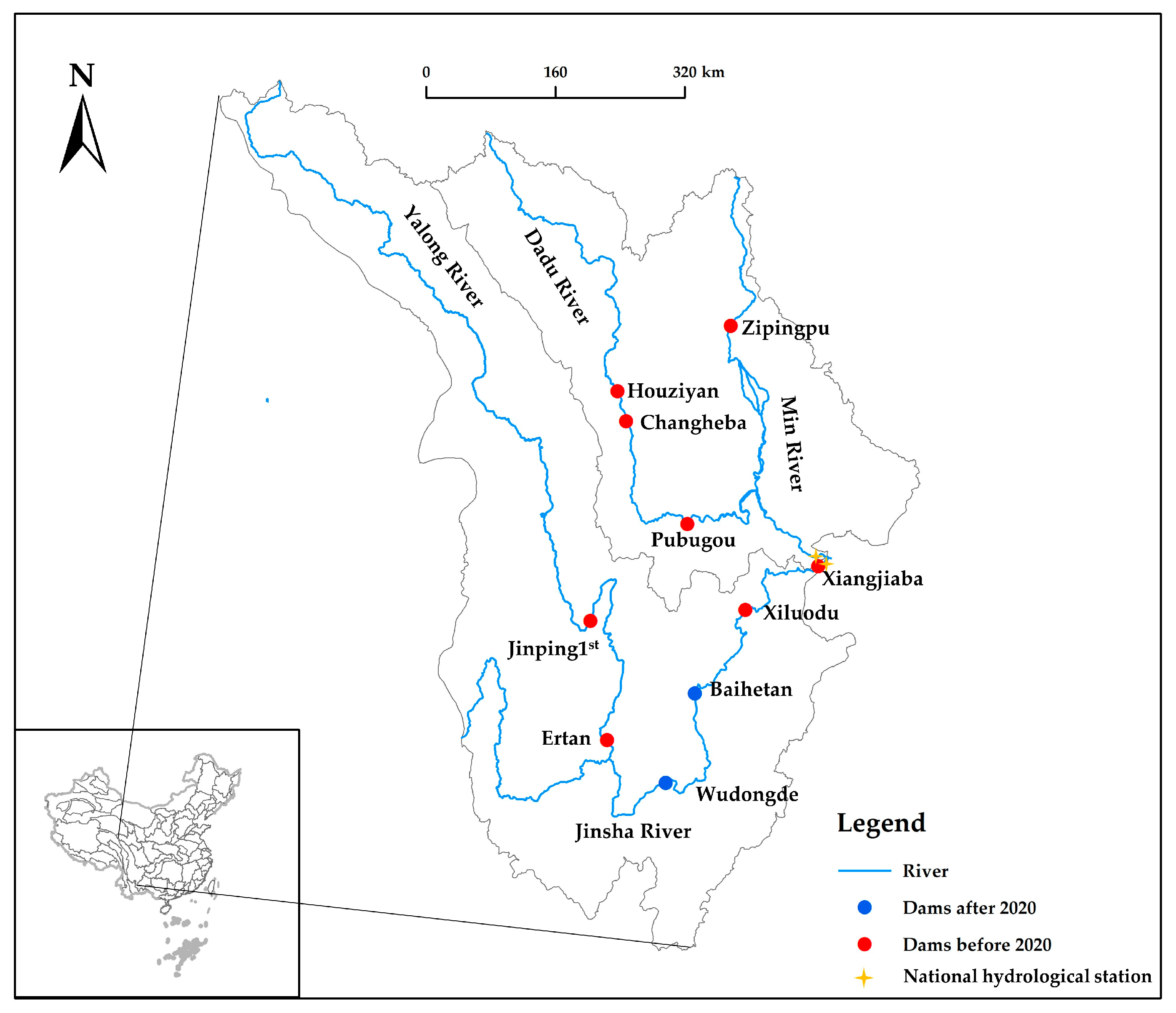
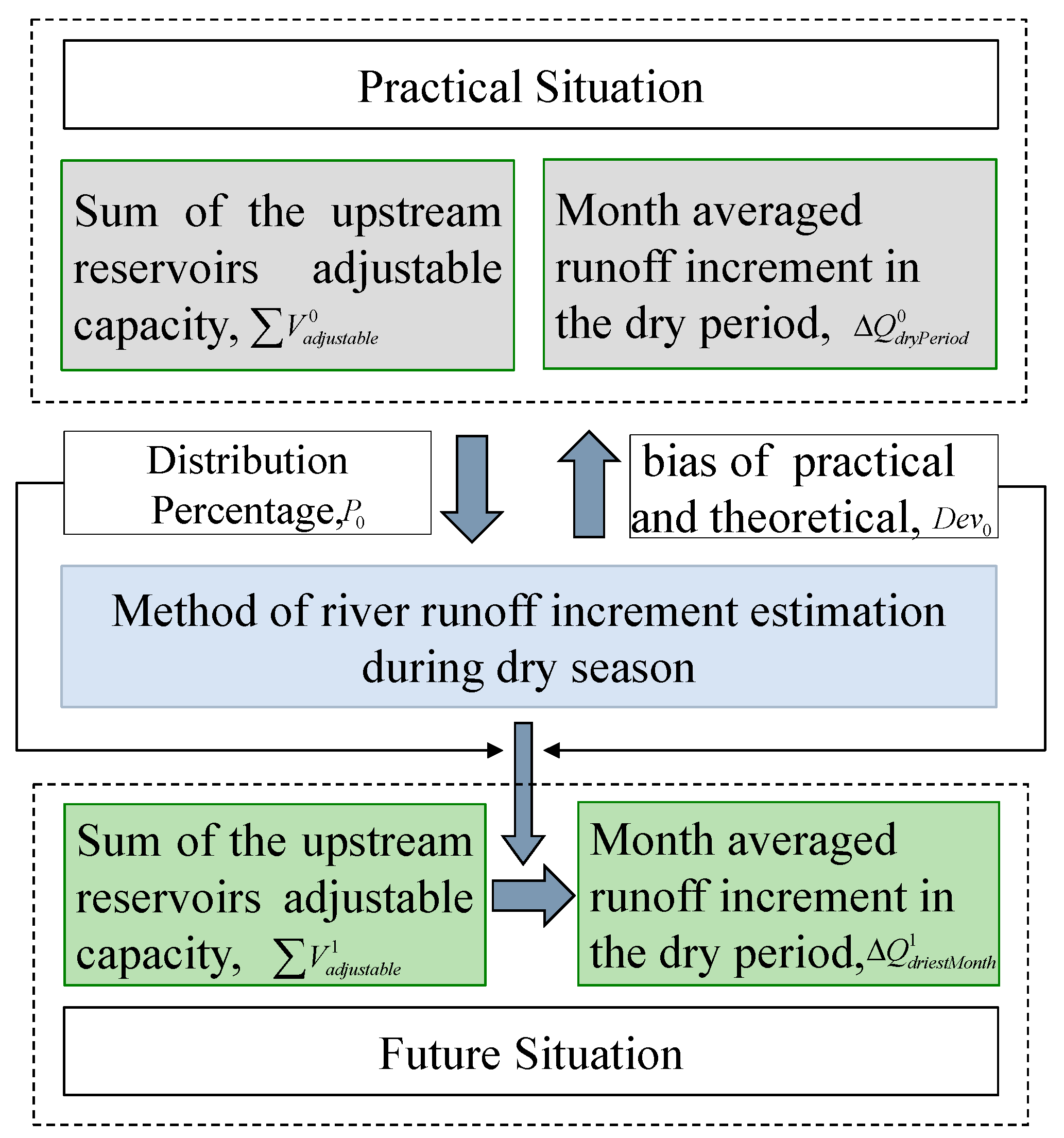
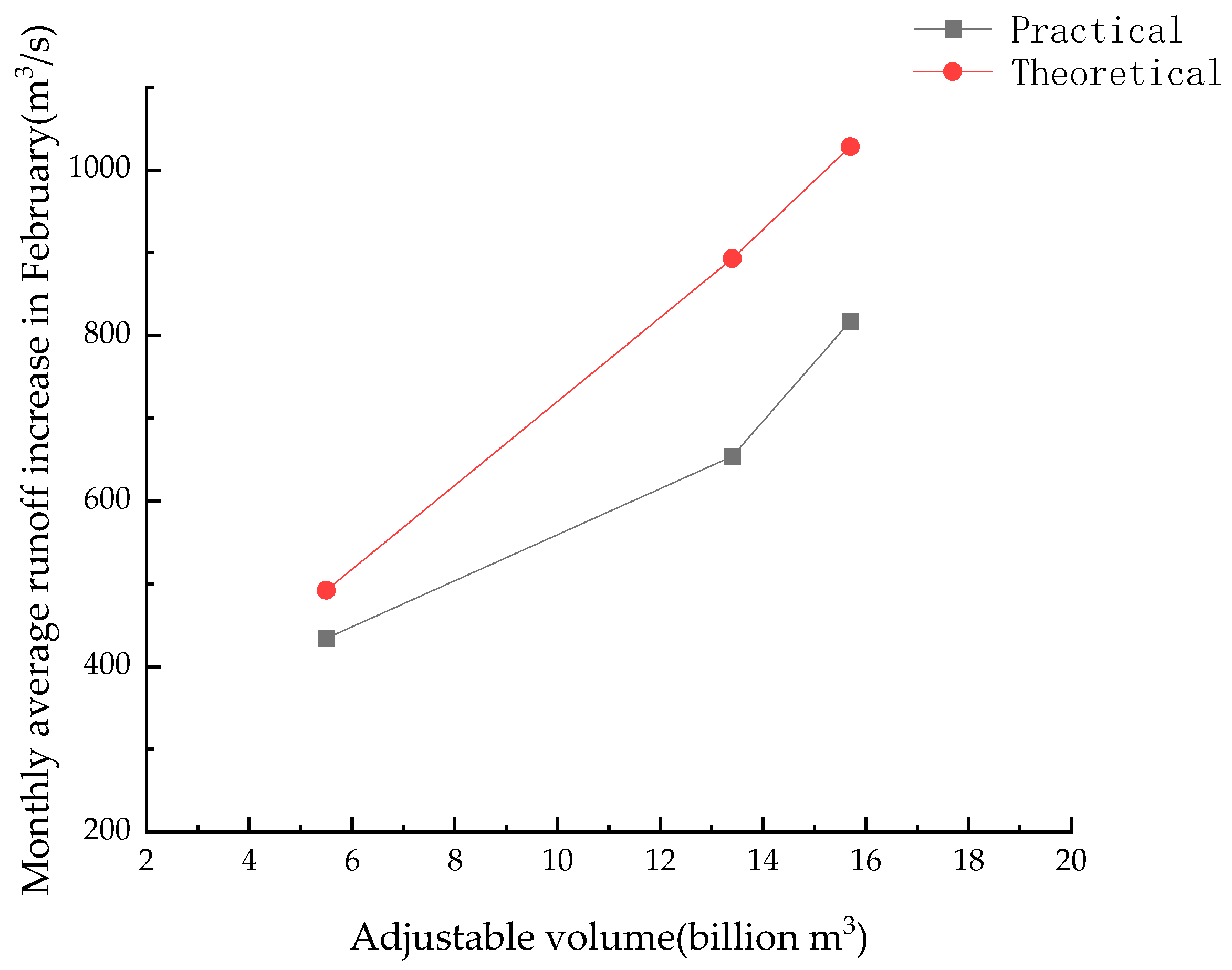
The impact of reservoirs on downstream river hydrological characteristics is always a focal point in relevant studies exploring the relationship between rivers and dams. Anticipating river runoff patterns following the construction of new dams is crucial for the design of riverine engineering projects, particularly during dry periods. This paper presents a semi-theoretical estimation method based on the correlation between hydrological alterations and reservoir operation. The method incorporates differences in runoff increment distribution and the discrepancy between theoretical and practical results. It was validated and applied in the sub-basins of the upper reaches of the Yangtze River, namely the Jinsha River and Min River. The runoff increment during the driest month for the Jinsha River and the Min River is 817 m3/s and 434 m3/s, respectively. The estimated prediction biases were within 30% of the practical runoff increments observed in the Jinsha River and Min River, which is an acceptable range considering the inherent variability in such studies. Since the construction of the Wudongde and Baihetan dams in 2021, the average runoff during the driest month and the navigation assurance runoff at a 95% probability were predicted to be 2866 m3/s and 2174 m3/s, respectively. Therefore, the method developed in this paper provides a reasonable and straightforward tool for researchers, which can help prevent future engineering invalidation and minimize resource costs. Moreover, in the application process, this method requires careful consideration of the characteristics of the studied river section and the operation of the reservoir group. It relies on measured data to determine the differences between theoretical and actual runoff rather than simply generalizing to all watersheds.
Keywords: runoff increment estimation during the dry season; runoff alteration; reservoir storage; Yangtze River basin runoff increment estimation during the dry season; runoff alteration; reservoir storage; Yangtze River basin