1. Introduction
Because of the requirement for only the boundary information of structural uncertain parameters, the non-probabilistic convex model is more applicable for managing issues with limited information than the probability model. Non-probabilistic convex models mainly include interval models [
1,
2], ellipsoid models [
3,
4,
5], parallelepiped models [
6,
7], and super-ellipsoid models [
8,
9]. In recent years, several reliability methods based on non-probabilistic convex models have been developed for evaluating the safety degree of structures with convex models. These models principally include the robust reliability index of Ben-Haim et al. [
10,
11] and Qiu et al. [
12]; the non-probabilistic safety factor of Ben-Haim and Elishakoff [
13]; the non-probabilistic reliability index of Guo et al. [
14,
15], Cao and Duan [
16], Jiang et al. [
17], and Meng et al. [
18]; and the non-probabilistic reliability of Wang et al. [
19,
20] and Jiang et al. [
21]. Due to the perfect similarity with their probabilistic counterparts, the non-probabilistic reliability index and reliability have gained more attention and have been applied to reliability analysis and the reliability-based design optimization of structures.
Most of the abovementioned studies were focused on the reliability of an individual component. However, a structural system generally consists of a set of interconnected components. The task of system reliability is to provide a methodology to determine or at least estimate the safety degree of an entire system and to build a bridge between the reliability of a component and the reliability of the system. By representing uncertain parameters as interval variables, Guo et al. proposed a system reliability measure based on the minimum non-probabilistic reliability index of all possible failure modes [
22]. Likewise, Wang et al. subsequently suggested a system safety measure based on the non-probabilistic set-theoretic model [
23]. These preceding studies focused on series systems and ignored the dependence between the component states. Jiang et al. formulated a Monte Carlo simulation (MCS) for both series and parallel systems [
21] in which the dependence described above could be further considered. Liu et al. [
24] proposed a method for calculating system non-probabilistic reliability index by using the Kriging model instead of a time-consuming simulation. Gong et al. [
25] proposed a non-probabilistic systematic reliability method (NSRM) for the reliability assessment of series-parallel systems where an equivalence-based approach is used to determine the equivalent limit state functions of parallel subsystems. In a recent work of the authors of this paper, a non-probabilistic reliability bounds method (NRBM) for series systems was proposed [
26]. The NRBM could provide the analytical solution to estimate the system reliability and therefore had a higher efficiency than the MCS. Nevertheless, it should be emphasized that the NRBM still had some drawbacks. First, its precision depended on the specific order of components. Second, there was no guarantee that it would yield the narrowest possible bounds of the non-probabilistic failure degree.
In this paper, a novel linear programming-based non-probabilistic reliability bounds method (LPNRBM) is proposed to overcome the above drawbacks. This method is both old and new. That is, the method is chronologically old because its probabilistic version was proposed by Song and Der Kiureghian [
27] in 2003. However, the method has been revised to investigate the reliability of a series system with convex model uncertainty, which inevitably has some non-probabilistic characteristics. The main innovations of the proposed method lie in the following aspects. First, it is independent of the ordering of the components and can provide the narrowest possible bounds for the given information. Second, under the same circumstances it has a higher efficiency than its probabilistic counterpart because of the removal of zero design variables in the LP model. This method can be theoretically applied to series and parallel systems. However, after an investigation of some examples of parallel systems, it is found that their bounds are generally too broad to be of practical use. Thus, this study focuses on series systems.
The remainder of this paper is structured as follows. A brief review of the NRBM is given in
Section 2. The LPNRBM is proposed in
Section 3. Three numerical examples are given to illustrate the feasibility and validity of the proposed method in
Section 4, and conclusions are summarized in
Section 5.
2. Review of the NRBM
A series system with
components, each of which can be defined by a performance function, is considered:
where
denotes an
n-dimensional vector with uncertain variables. The failure surface
is the boundary between the safe and failure domains. In other words,
and
indicate that the structure is in a safe state and a failure state, respectively. In this paper, a multidimensional ellipsoid is used to describe the uncertainty domain of
:
where
represent the midpoint of the ellipsoid, and
denotes an
characteristic matrix. Each variable
has a range of values, namely the marginal interval
.
The vector will be first mapped into the normalized vector using a linear transformation, which may geometrically involve translation, scaling, and rotation, through which the ellipsoid becomes the sphere , and the performance function can be rewritten as its normalized form . This type of treatment makes it easy to conduct subsequent system reliability analysis. This is because of the following two reasons: first, a dimensionless variable is produced, which can facilitate the measurement of reliability; second, it is more convenient to compute the volumes related to system reliability in space than in space.
In a series system, the entire system fails if any of its components fail. Similar to the probabilistic reliability of a series system, the non-probabilistic reliability of a series system
can be defined as the ratio of the volume inside the safe domain to the volume of the entire convex model:
where
and
denote the multidimensional volume of the part of the convex model inside the safe domain and the volume of the entire convex model, respectively. Correspondingly, the non-probabilistic failure degree
can be defined as follows:
It can be seen that
.
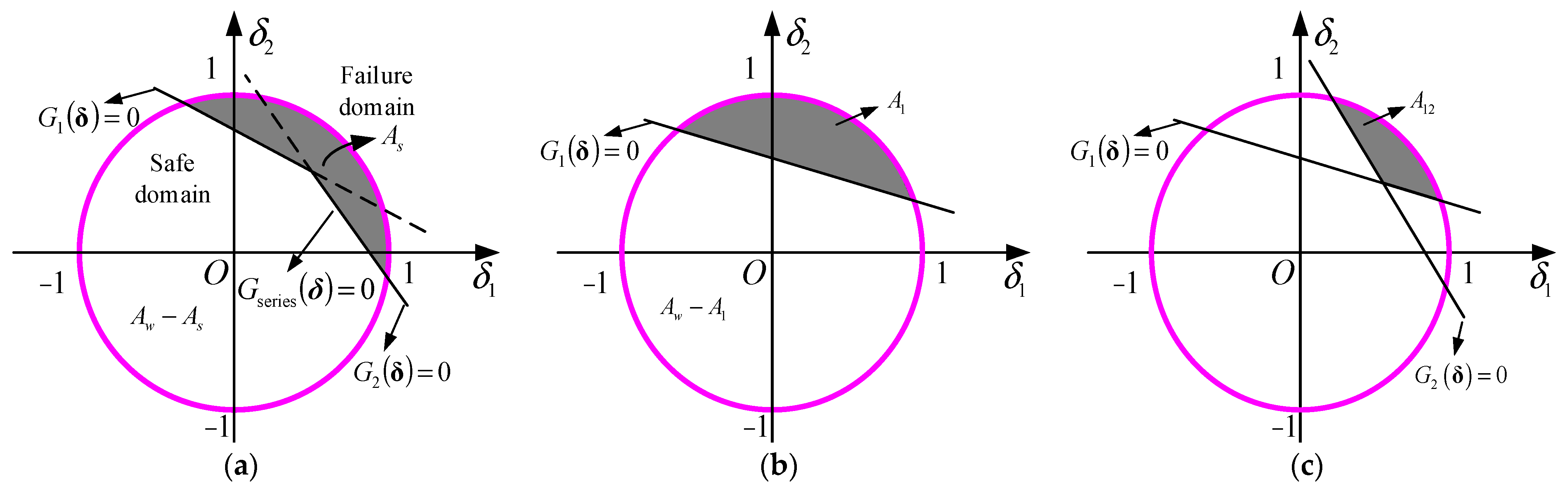
Figure 1a presents the two-dimensional case of
.
Due to the dependence between the components, a precise system reliability prediction is generally impossible for all the component reliabilities. In our recent work, we proposed an NRBM for series systems that employs a unicomponent non-probabilistic failure degree and a bicomponent non-probabilistic joint failure degree, as follows:
where
and
denote the unicomponent non-probabilistic failure degree and the bicomponent non-probabilistic joint failure degree, respectively.
and
represent the multidimensional volume of the part of the convex model in the failure domain (
) and that for the joint failure domain (
and
), respectively.
Figure 1b,c respectively provide the diagrams of
and
.
Compared with the traditional MCS, the proposed NRBM achieves a balance between efficiency and accuracy and is therefore more applicable to practical engineering problems. However, as mentioned previously, the NRBM has two main limitations. First, the NRBM has an ordering-dependent problem, which makes its computation more expensive. For instance, for a 20-component system, ordering alternatives are considered to obtain the best possible bounds. Second, the NRBM provides bounds without theoretical verification. In the next section, we propose a novel LPNRBM to overcome the two problems listed above.
3. Proposed LPNRBM
Our proposed LPNRBM includes three parts: (a) the establishment of the LP model, (b) the identification of zero design variables, and (c) the removal of zero design variables from the LP model.
3.1. Establishment of LP Model
Similar to Song’s method, the sample space of the component states can also be grouped into
mutually exclusive and collectively exhaustive (MECE) events, each of which is denoted by
and represented as a distinct intersection of the failure events
and their complements
.
Figure 2 schematically shows the
MECE events of a tricomponent series system in a three-dimensional space. Each of the MECE events corresponds to a non-probabilistic measure, which is defined as the ratio of its corresponding multidimensional volume to the multidimensional volume of the entire convex model.
The LP model can be formulated as follows. The non-probabilistic measures of the MECE events
are regarded as the design variables, the non-probabilistic failure degree of the series system serves as the objective function, and the unicomponent non-probabilistic failure degree and the bicomponent non-probabilistic joint failure degree that are generally computed are considered the linear equality constraints. Moreover, some additional inequality or equality constraints, i.e., all design variables are non-negative and their sum equals 1, are also considered. The LP model can be given as follows:
where
is a vector whose elements are either 0 or 1,
is a vector collecting all the design variables,
and
denote the coefficient matrices, and
and
denote the coefficient vectors. For example, as shown in
Figure 2, for this tricomponent system it can be found that the following equations hold.
Thus, the LP model can be formulated as follows:
According to the LP model in Equation (6), the minimum and maximum of the objective function obtained are treated as the lower and upper bounds of the system non-probabilistic failure degree, respectively.
It should be noted that the LP model has a main limitation; that is, the size of the LP problem increases exponentially with the number of components. For instance, the LP problem involves 1024 and 1,048,576 design variables in the cases of the number of components being 10 and 20, respectively. In the following, we identify some zero design variables and remove them to overcome this limitation.
3.2. Identification of Zero Design Variables
According to the different positions between the convex model and the failure surfaces, there are generally more zero design variables in the LP problem. The identification of these zero design variables reduces the size of the LP problem, thus providing more possible compact bounds. However, for a system with numerous components, it is relatively difficult or even impossible to identify all zero design variables.
It should be noted that all the MECE events can be treated as subsets of small sets of components. For example, for a six-component system, the MECE event is the subset of , as well as that for , which implies that should be empty if or are empty. Given the above relationship, the complex m-component system can be decomposed into simple bicomponent systems and into simple tricomponent systems, through which the subsequent identification of zero design variables will be easy to perform. For better understanding, we first concentrate on a bicomponent system and then deal with a tricomponent system.
3.2.1. Identification of Zero Design Variables for the Bicomponent System
As shown in
Figure 3a, a bicomponent system generally involves four MECE events, namely
,
,
, and
, which may theoretically be empty. However, here we only consider the cases of
shown in
Figure 3b and
shown in
Figure 3c, where
denotes an empty set. The reasons for this is that (1) the system will completely fail when the event
is empty, (2)
and
can be regarded as the same type of events due to their symmetry, and (3)
and
are non-empty and unequal, and hence,
and
cannot occur simultaneously.
Without losing any generality, it is assumed that the two performance functions of the bicomponent system are given by the following:
where
,
,
, and
are given constants. The corresponding correlation angle
is given by the following:
According to Ref. [
26], as shown in
Figure 3b, the event
is empty when
satisfies the following:
Thus, the design variables whose MECE events are the subsets of should be zero.
Similarly, as shown in
Figure 3c, the event
is empty when
satisfies the following:
To identify more zero design variables, a total of bicomponent systems need to be investigated.
3.2.2. Identification of Zero Design Variables for the Tricomponent System
In this section, for simplicity, we focus on the tricomponent systems for which any two components have the relationship shown in
Figure 3a. The proposed identification method consists of two parts: determining the tricomponent systems and identifying the zero design variables.
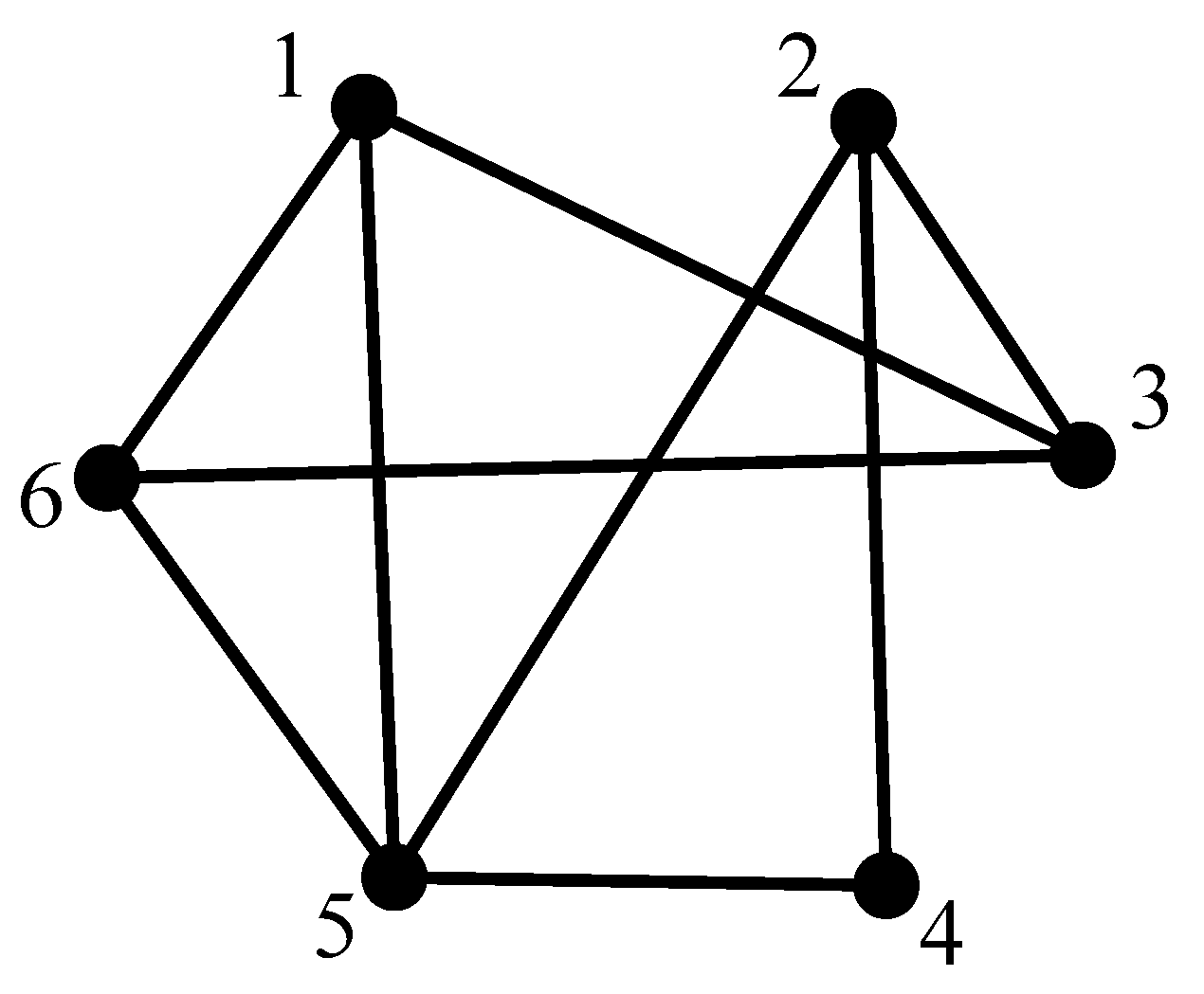
The procedure for determining the above tricomponent systems is illustrated below. As shown in
Figure 4, each node represents a component, and each branch connecting any two nodes denotes the fact that the two components represented by the two nodes have the relationship shown in
Figure 3a. The figure is separable, and each mode may have a different number of branches. Thus, the tricomponent systems that we concentrate on are represented by all the triangles consisting of three different branches.
As also shown in
Figure 2, a tricomponent system generally involves eight MECE events, namely
,
,
,
,
,
,
, and
. Similarly, we only investigate the following three cases, namely
,
, and
. This is because (1)
implies that the system is in an entirely failure state, (2)
,
, and
, as well as
,
, and
, can also be treated as the same type of events, and (3) these three MECE events are sufficient to show all the empty events in the different position relationships of the tricomponent subsystems.
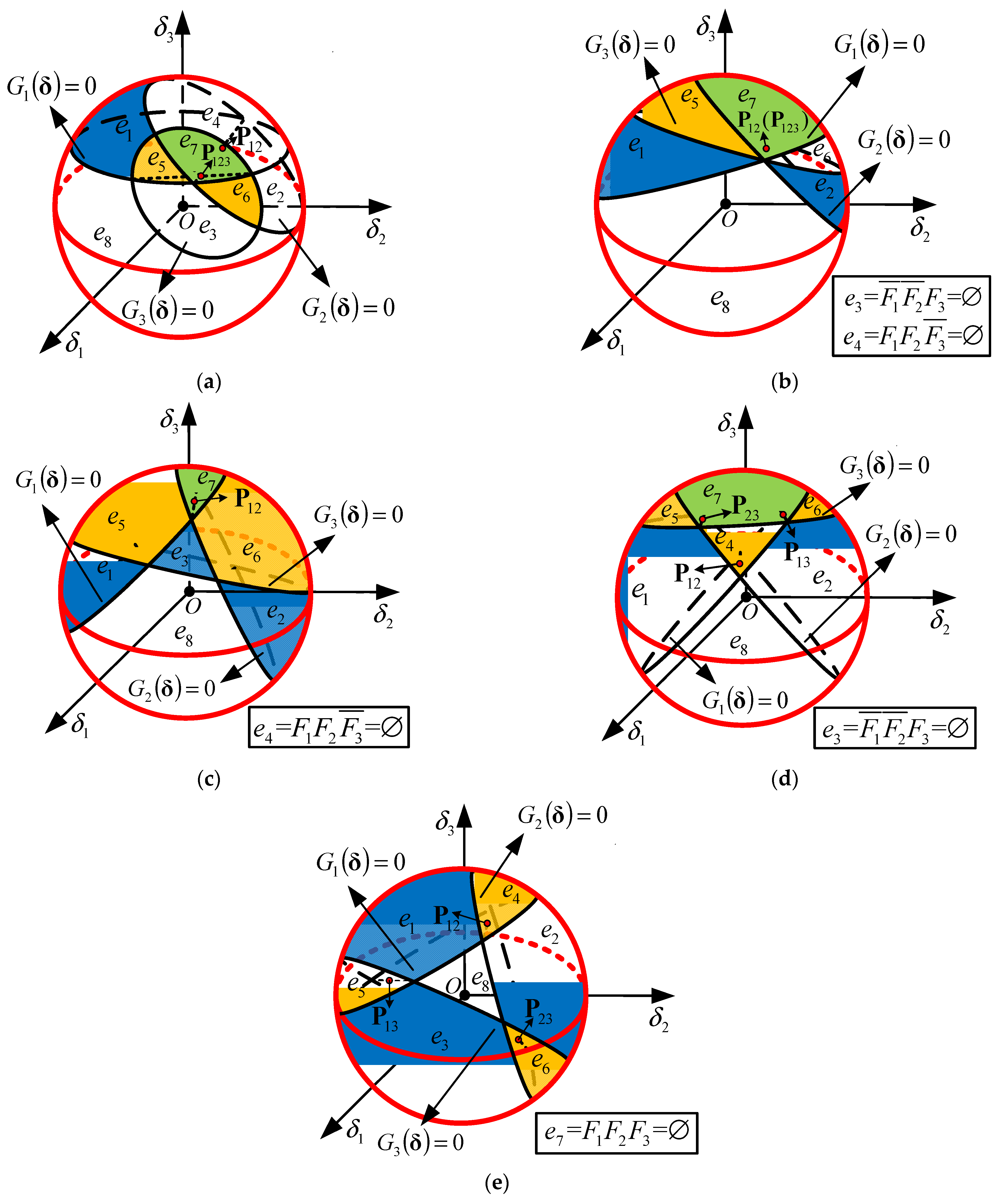
As shown in
Figure 5, the tricomponent systems can be fully demonstrated in a three-dimensional structural system.
For the three performance functions of the tricomponent system, two performance functions with the maximum correlation angle are also given by Equation (9), while the third performance function is given by the following:
where
and
are given constants. The corresponding correlation angles
,
, and
are given by the following:
The five cases in
Figure 5 can be identified by the four special points
,
,
, and
.
is the point at the intersection of three failure surfaces,
,
, and
, and the closest point to the origin. Similarly,
is the point that is located at the intersection of two failure surfaces,
and
, and has the minimum distance to the origin.
According to Ref. [
28], the coordinates of
,
,
, and
are as follows:
In general, and exist. If those failure surfaces are parallel to each other, and do not exist and can be seen at infinity but do not affect the subsequent identification.
The five cases in
Figure 5 can be identified by these special points and the relative positions between the failure surfaces. Taking
Figure 5a as an example, the point
is in the unit sphere, and the point
does not coincide with the point
. There are no empty events in the system. The recognition criterion is as follows:
Similarly,
Table 1 shows the identification of the remaining cases and the empty events they produce.
Design variables whose MECE events are subsets of the identified empty events should be zero. Additionally, the number of subsystems mentioned above is not greater than .
3.3. Removal of Zero Design Variables from the LP Model
Assume that there are
zero design variables in the LP model. Because the zero design variables have no practical significance, these zero design variables can be ignored, and the remaining design variables can be renumbered according to the original order. Following the removal of the zero design variables, the coefficient matrices
and
, as well as the coefficient vectors
and
, need to be readjusted according to the remaining design variables. Thus, the LP model after removing the zero design variables can then be obtained as follows:
where the vector
has
elements,
is a vector collecting all the design variables after abandoning the zero design variables,
and
denote the coefficient matrices, and
and
denote the coefficient vectors.
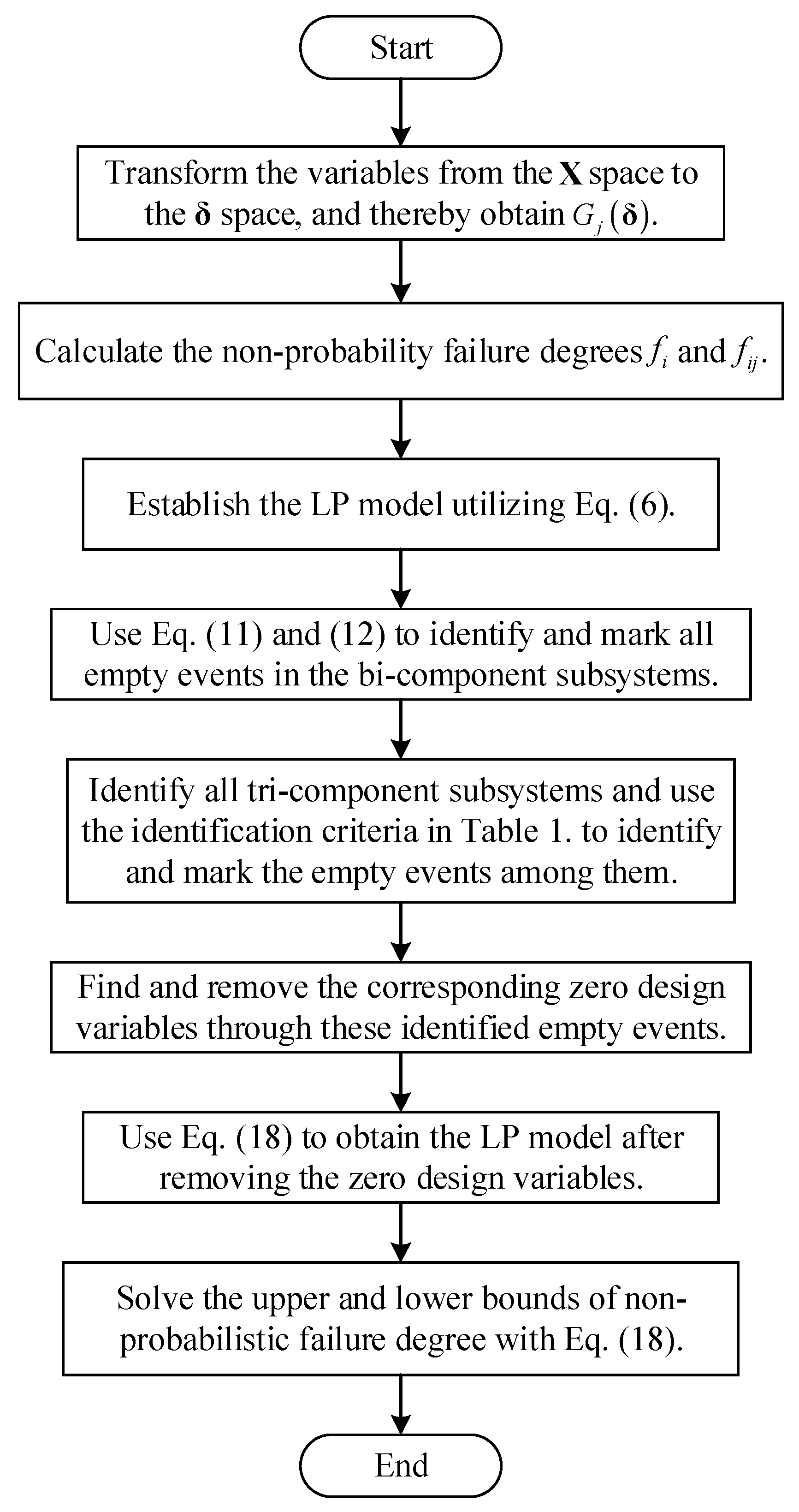
3.4. Flowchart of the LPNRBM
Figure 6 illustrates the process of the proposed method.
4. Numerical Example
In this section, three numerical examples, comprising one mathematical example and two structural example, are investigated. The system reliability analysis for these problems is then conducted with the proposed method. To evaluate its accuracy, the proposed method is compared to the NRBM and the MCS. Accuracy is evaluated by the maximum relative error , where and are the upper and lower bounds of the non-probabilistic failure degree, respectively, and is the exact solution of the non-probabilistic failure degree obtained through accurate calculation or MCS.
4.1. Numerical Example 1
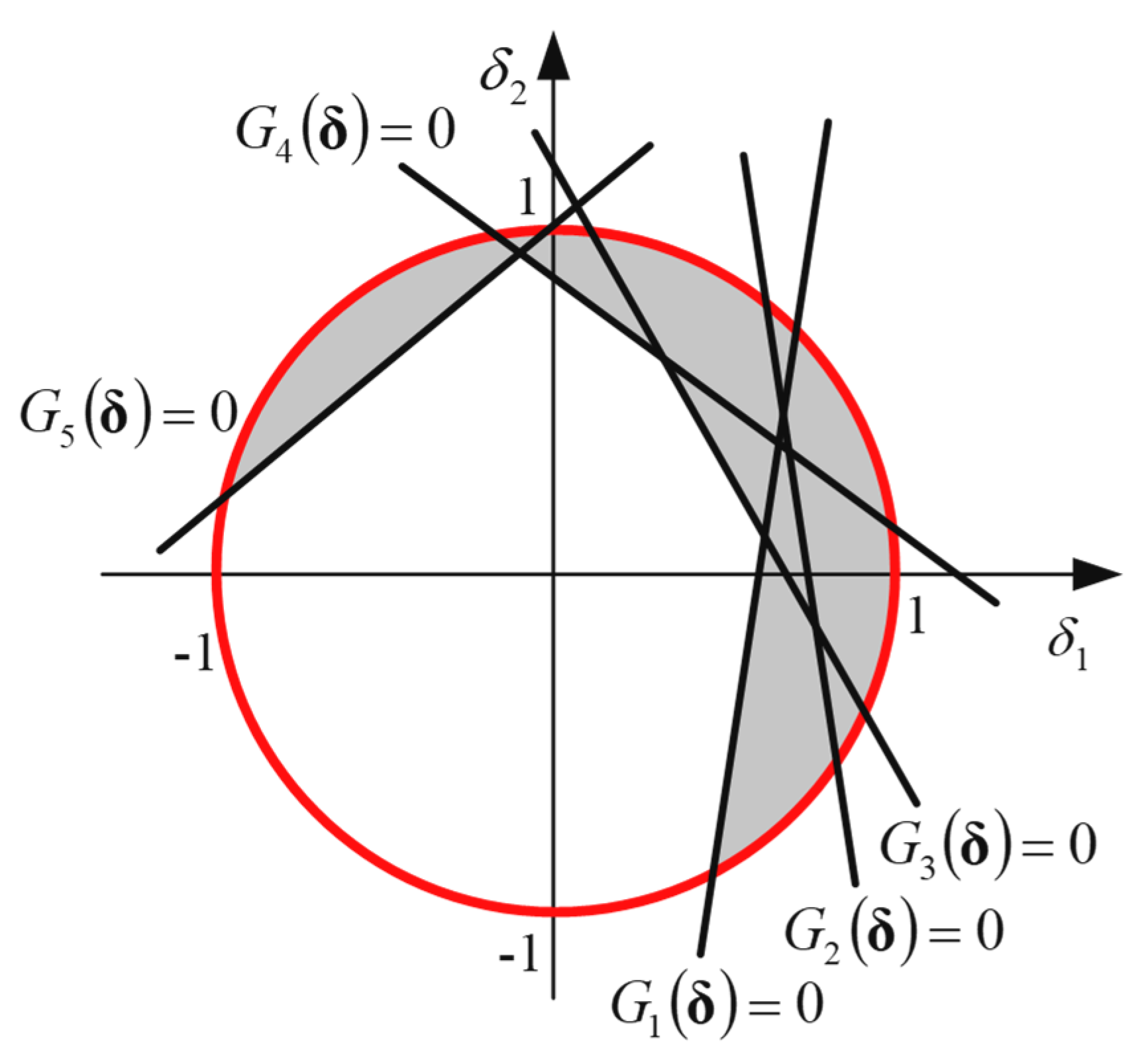
A five-component series system in
space is considered, for which each component can be defined by a performance function as follows:
where
and
denote the uncertain variables in
space. The two-dimensional ellipsoid model of the uncertainty domain is shown as follows:
The system is divided into
MECE events.
Table 2 shows the MECE events and their corresponding design variables.
The empty events in the subsystem are identified using the method proposed in this paper. First, the empty events of all bicomponent subsystems are identified and marked. Then, based on the bicomponent subsystem, the tricomponent subsystems are found.
As shown in
Figure 7, there are four tricomponent subsystems:
,
,
, and
.
Table 3 lists the empty events in these subsystems alongside their corresponding zero design variables and the identification criteria.
Since this example is two-dimensional, a schematic of this five-component series system is shown in
Figure 8, from which it can be observed that the proposed identification criteria are in line with the actual situation. In
Table 3, it can be seen that a total of 19 zero design variables can be removed.
Table 4 shows the non-probabilistic reliability analysis results of the proposed method, NRBM, and exact solution.
Table 4 shows that the LPNRBM can provide narrower bounds than the NRBM, that is, the former has a greater lower bound and a smaller upper bound than the latter (their maximum relative errors are respectively 0% and 5.6307%). This indicates that even though the NRBM considers all
possible component-sorting alternatives, it cannot provide the best possible bounds based on the existing information. By contrast, the LPNRBM exhibits markedly higher precision than the NRBM and does not rely on ordering to offer the best possible bounds for the existing information. The proposed method reaches the limit of the bounds method, namely the exact solution in this example. For bounds on a system with a non-probabilistic failure degree, narrower bounds mean a higher accuracy. Thus, for this example, the LPNRBM may be a better choice.
4.2. Numerical Example 2
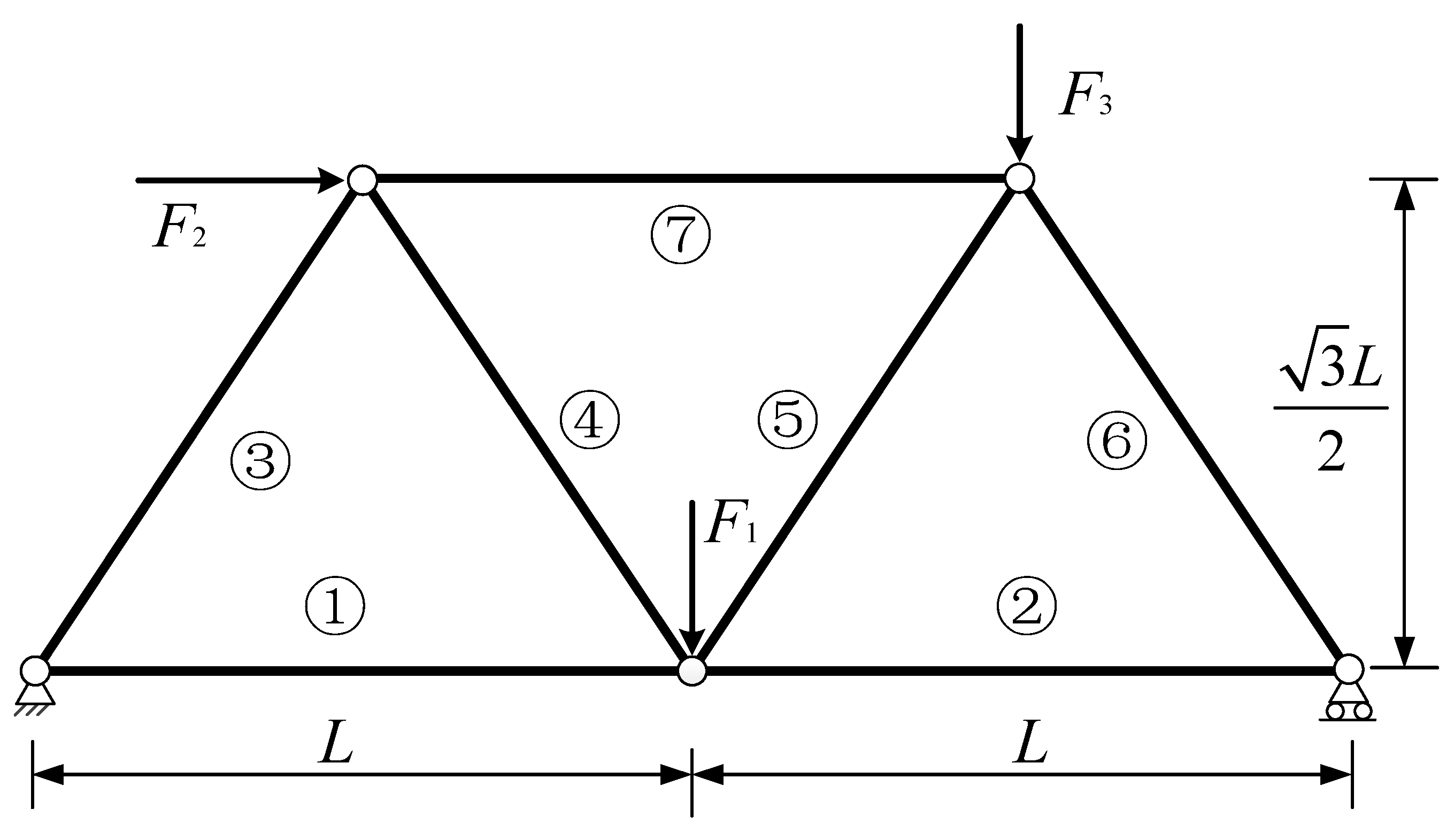
In
Figure 9, a gate-shaped frame problem [
29] is modified and used as example 2. The length of each bar is
, and the cross-section areas
(for
i = 1, 2, 3, 4, 5, 6, 7) are
,
,
,
,
,
, and
, respectively. Three concentrated loads,
,
, and
, are uncertain interval variables with the marginal intervals
,
, and
, respectively.
Without considering the buckling failure, the structure can be regarded as a seven-component series system. The corresponding seven performance functions can be expressed as follows:
where
is the yield strength of the seven bars with the value of
. The uncertainty domain can be expressed as follows:
Table 5 shows the empty events and identification criteria in bicomponent and tricomponent subsystems.
After the above identification, 82 zero design variables have been removed.
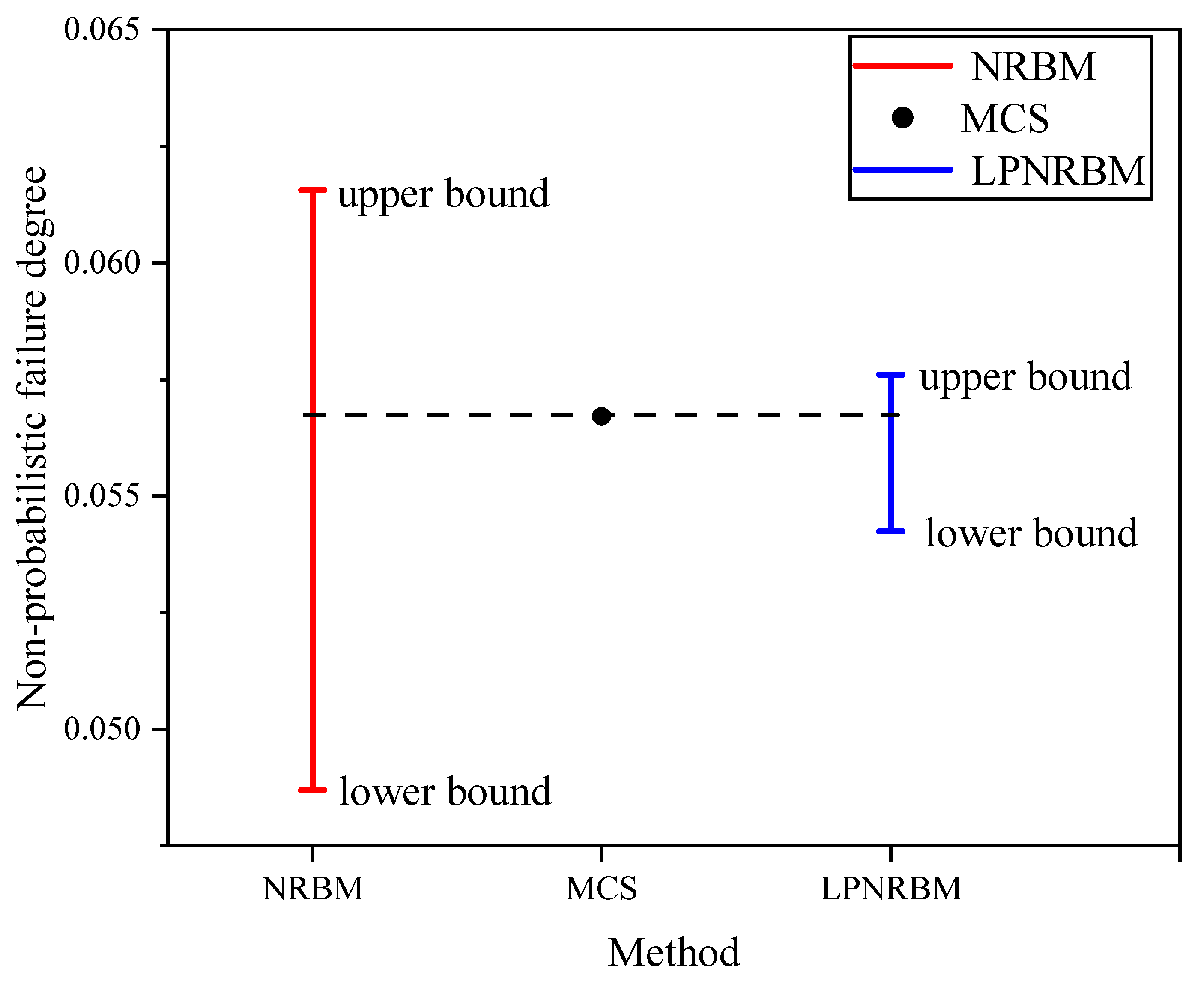
Table 6 and
Figure 10 show the non-probabilistic reliability analysis results of the proposed method, NRBM, and MCS with
samples.
It can be seen from
Table 6 and
Figure 10 that the LPNRBM can also provide a greater lower bound and a smaller upper bound than the NRBM. For this example, it should be pointed out that even if the NRBM considers all possible
component-sorting alternatives, its maximum relative error still reaches 14.18%. For practical engineering problems, this error cannot be ignored. In other words, the NRBM may no longer apply to this engineering problem due to its accuracy. However, the bounds given by the LPNRBM for the condition of existing information always maintain a low error level.
4.3. Numerical Example 3
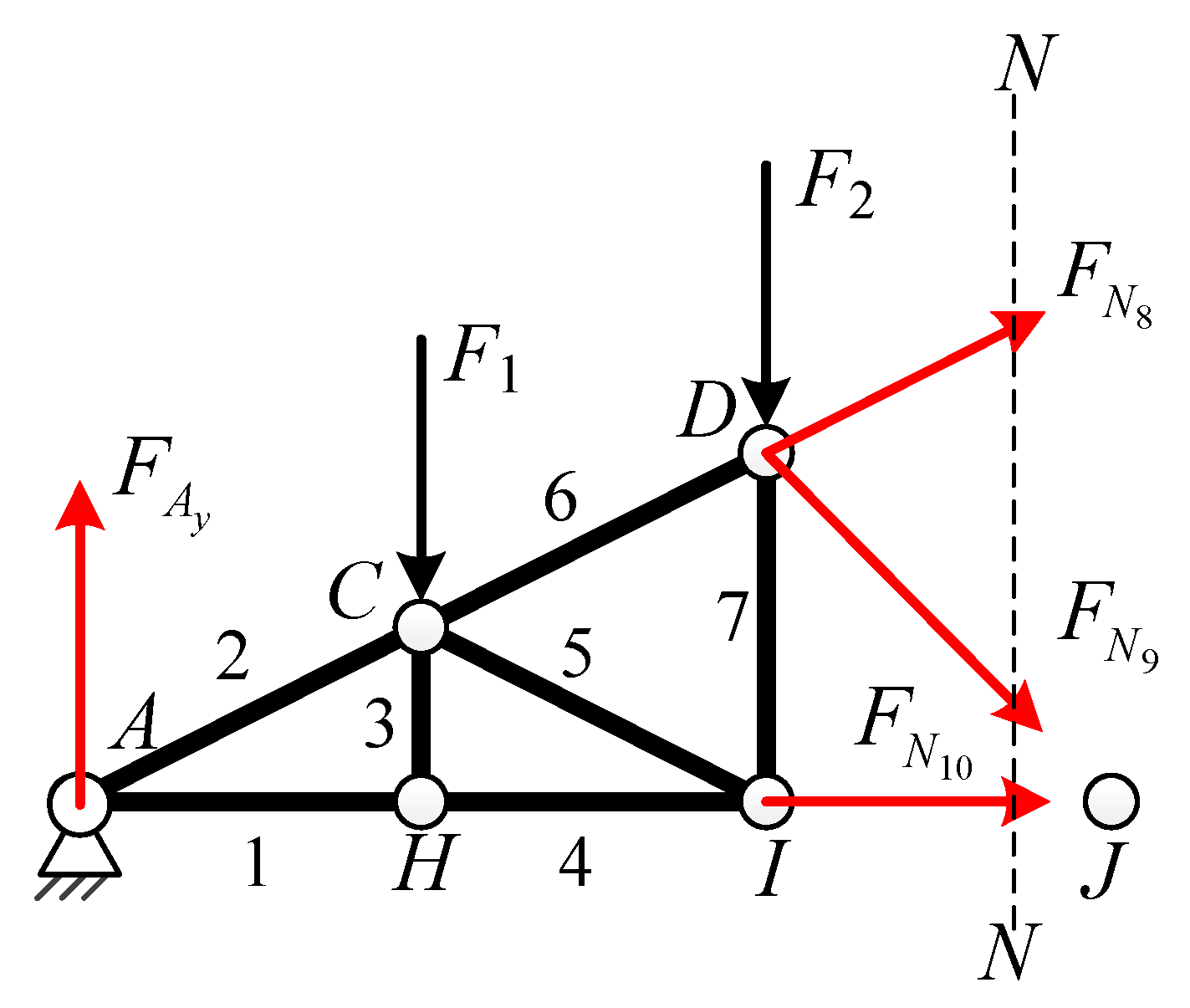
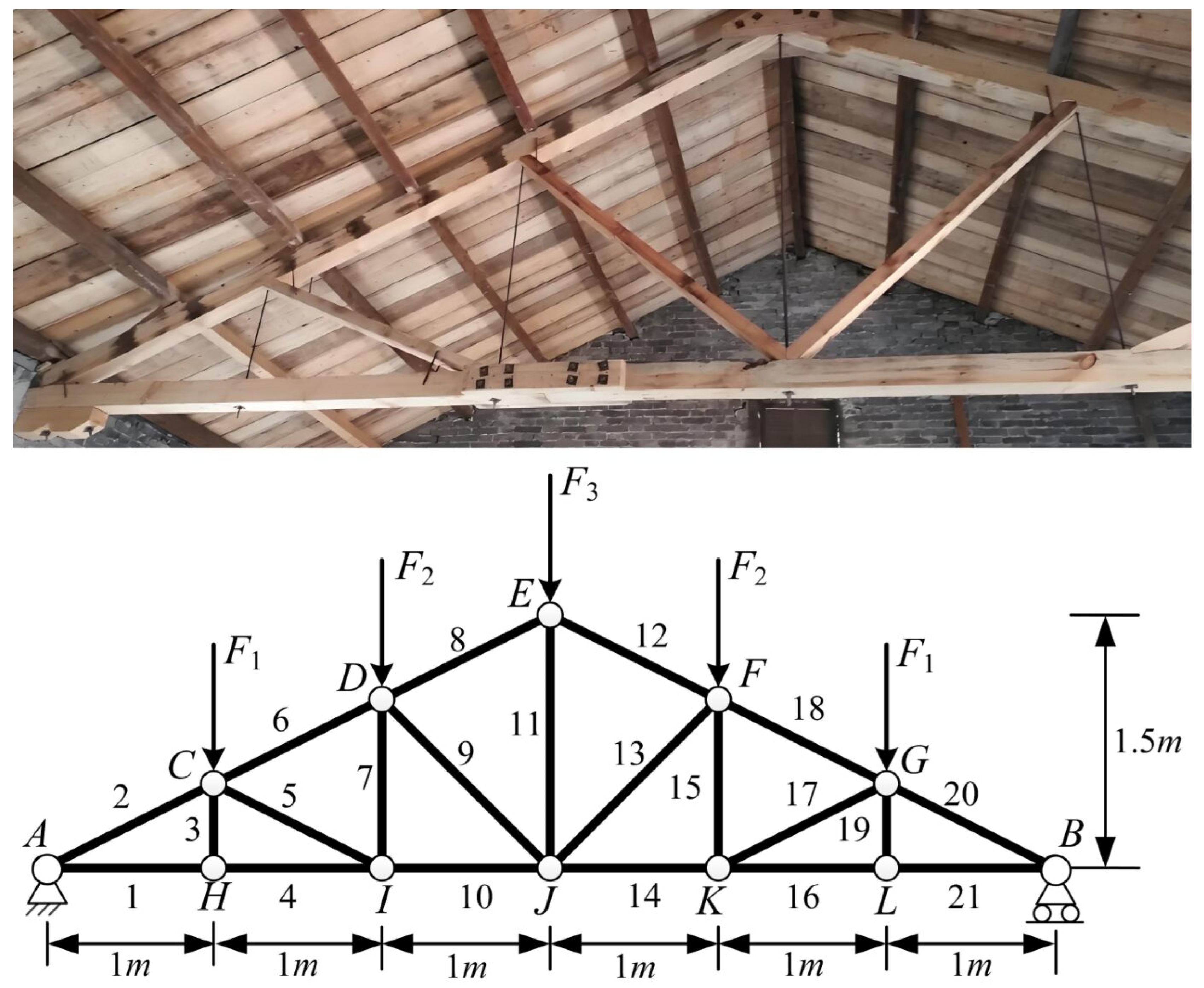
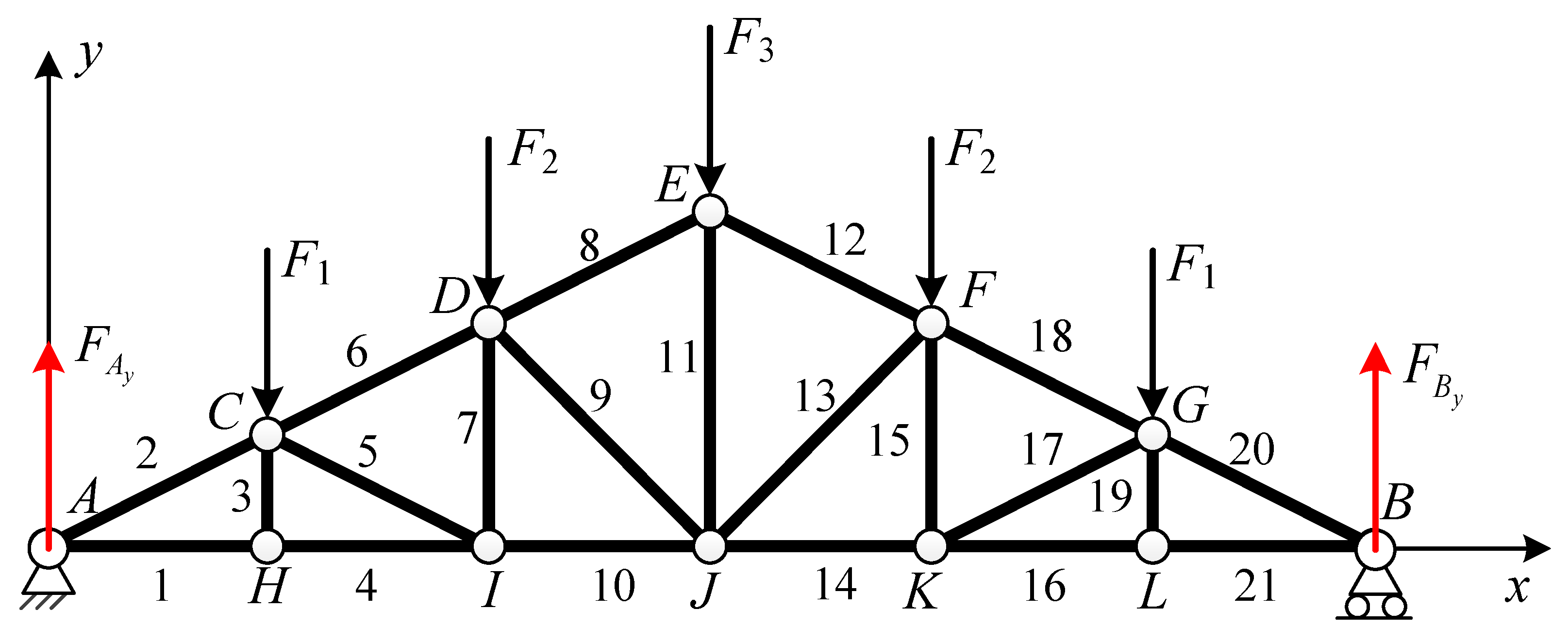
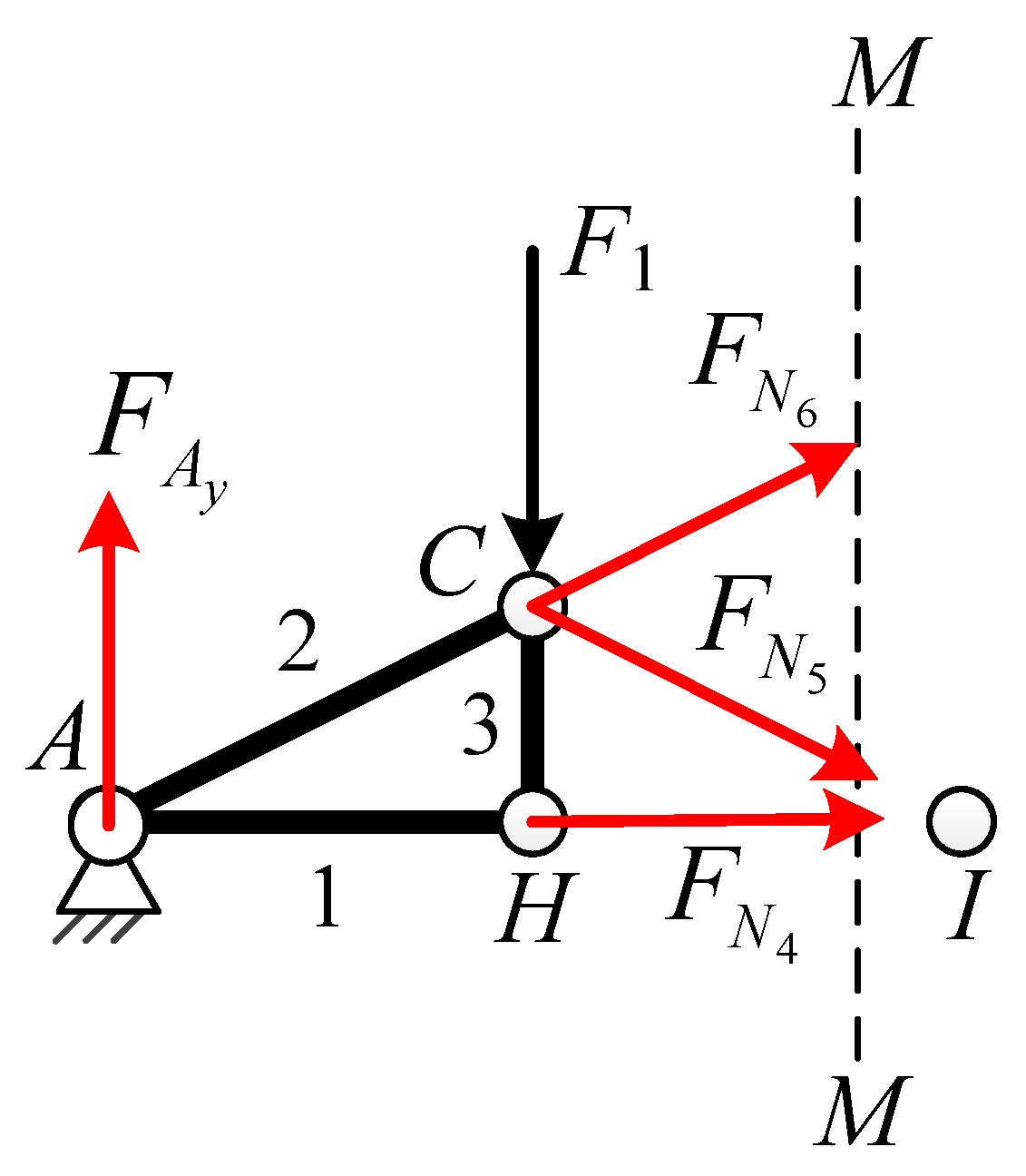
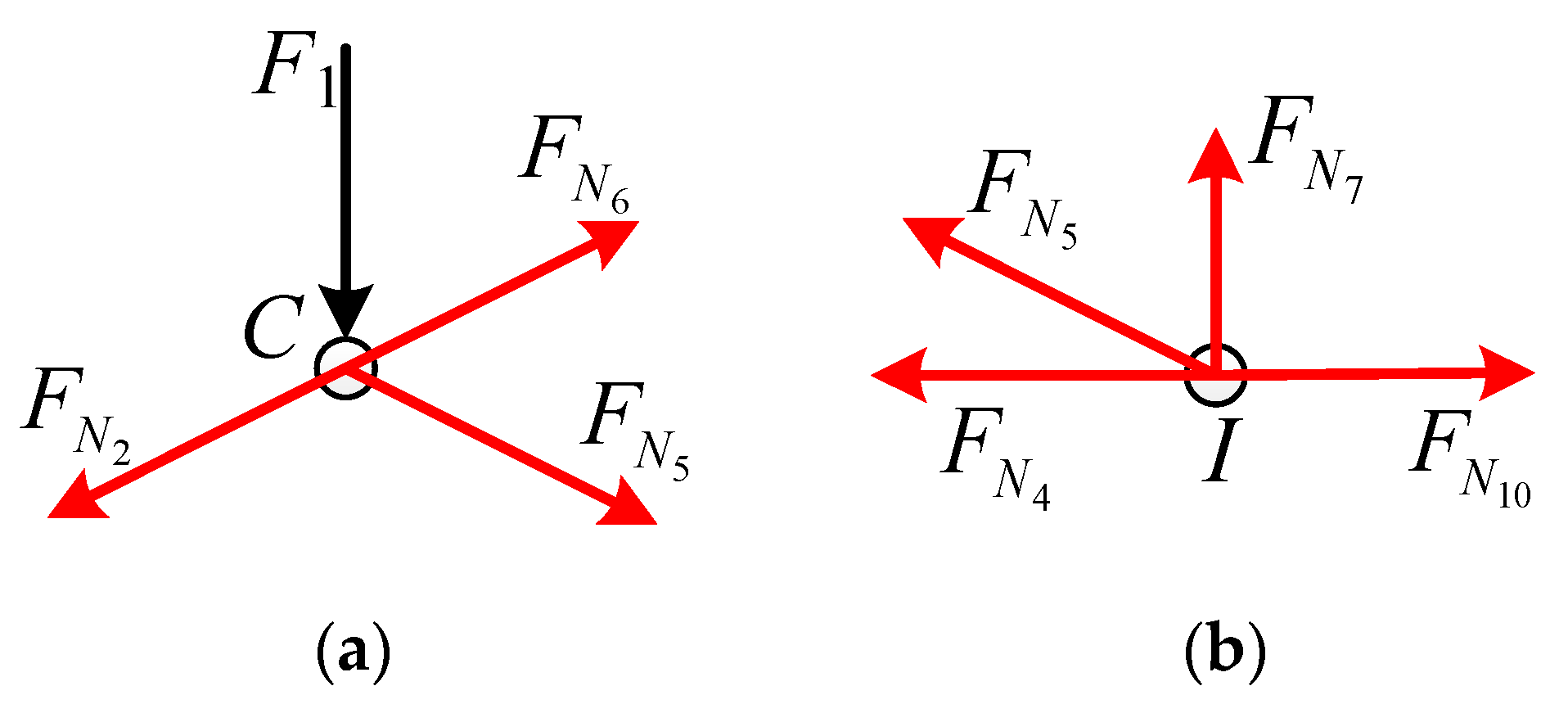
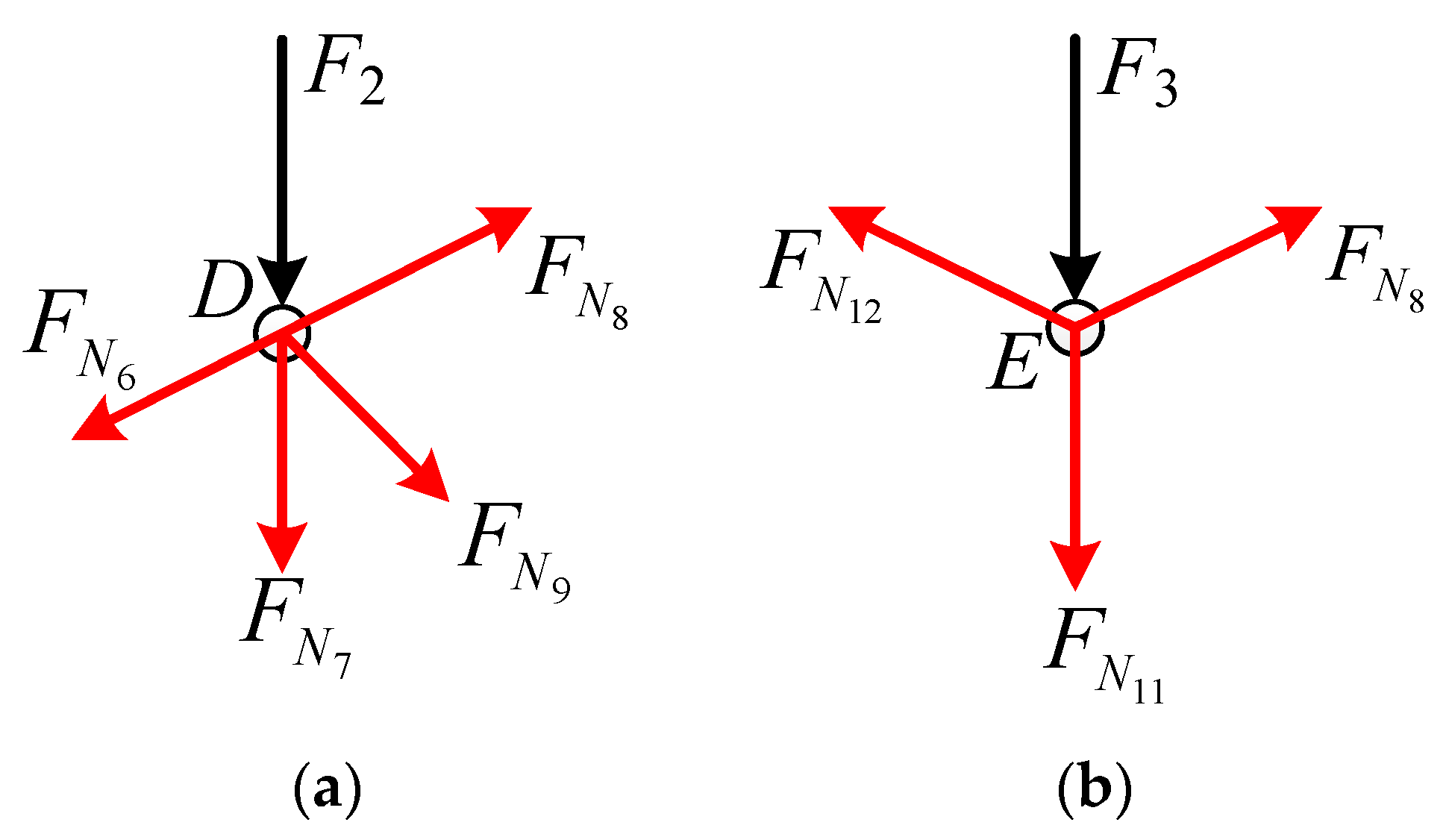
The wooden roof truss structure of a specific residential building shown in
Figure 11 is investigated. Considering the symmetry of the structure, we only analyze bars 1–11. The maximum load limits
, as well as the loads
,
, and
, are treated as uncertain variables, and their distribution parameters are given in
Table 7.
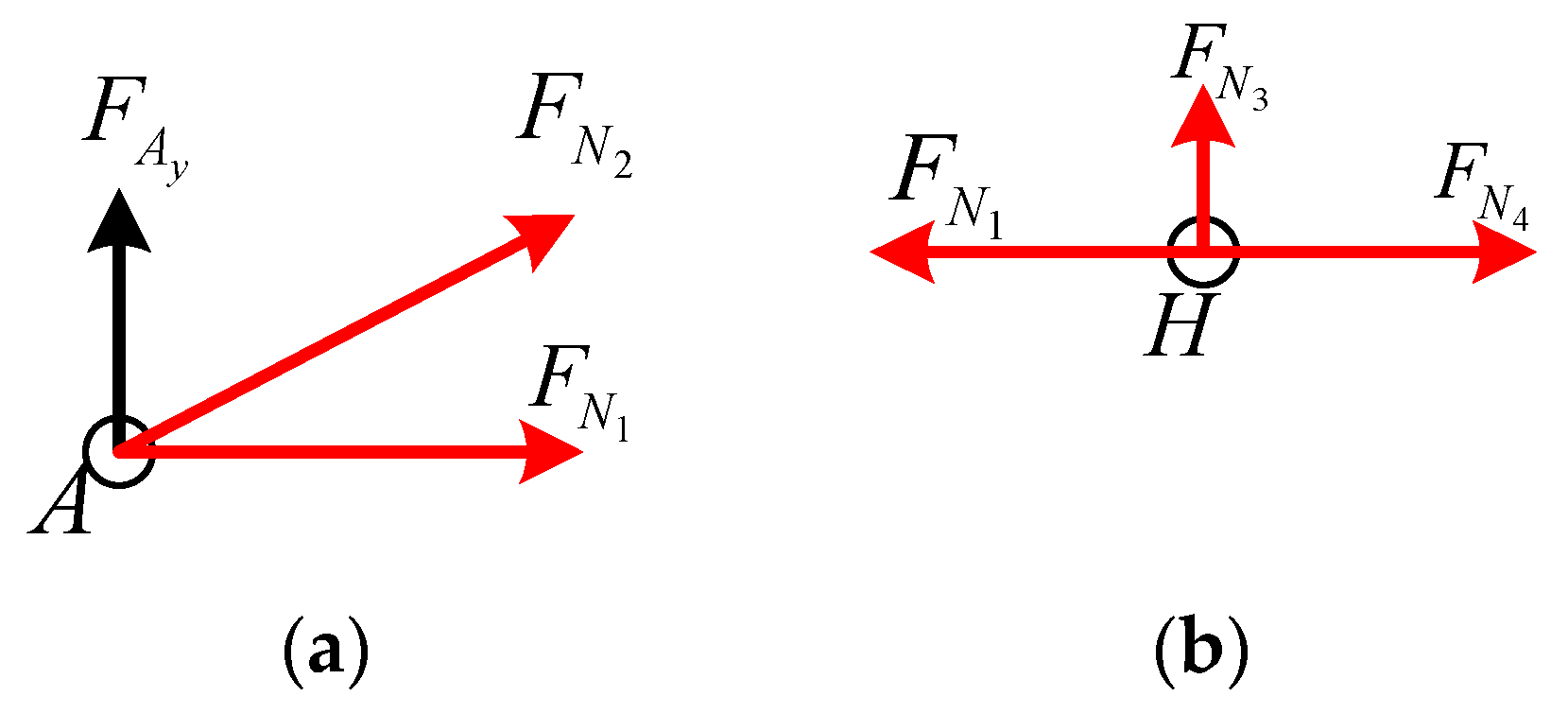
Without considering the buckling failure, the structure can be regarded as a ten-component series system since it is statically determinate. The performance functions of the structure, whose determination can be found in
Appendix A, can be expressed as follows:
Noting that the internal force of bar 3 is zero, the structure actually only involves ten performance functions.
The uncertainty domain can be denoted by the following:
Table 8 shows the empty events and identification criteria in bicomponent and tricomponent subsystems.
For this example, 977 zero design variables have been removed.
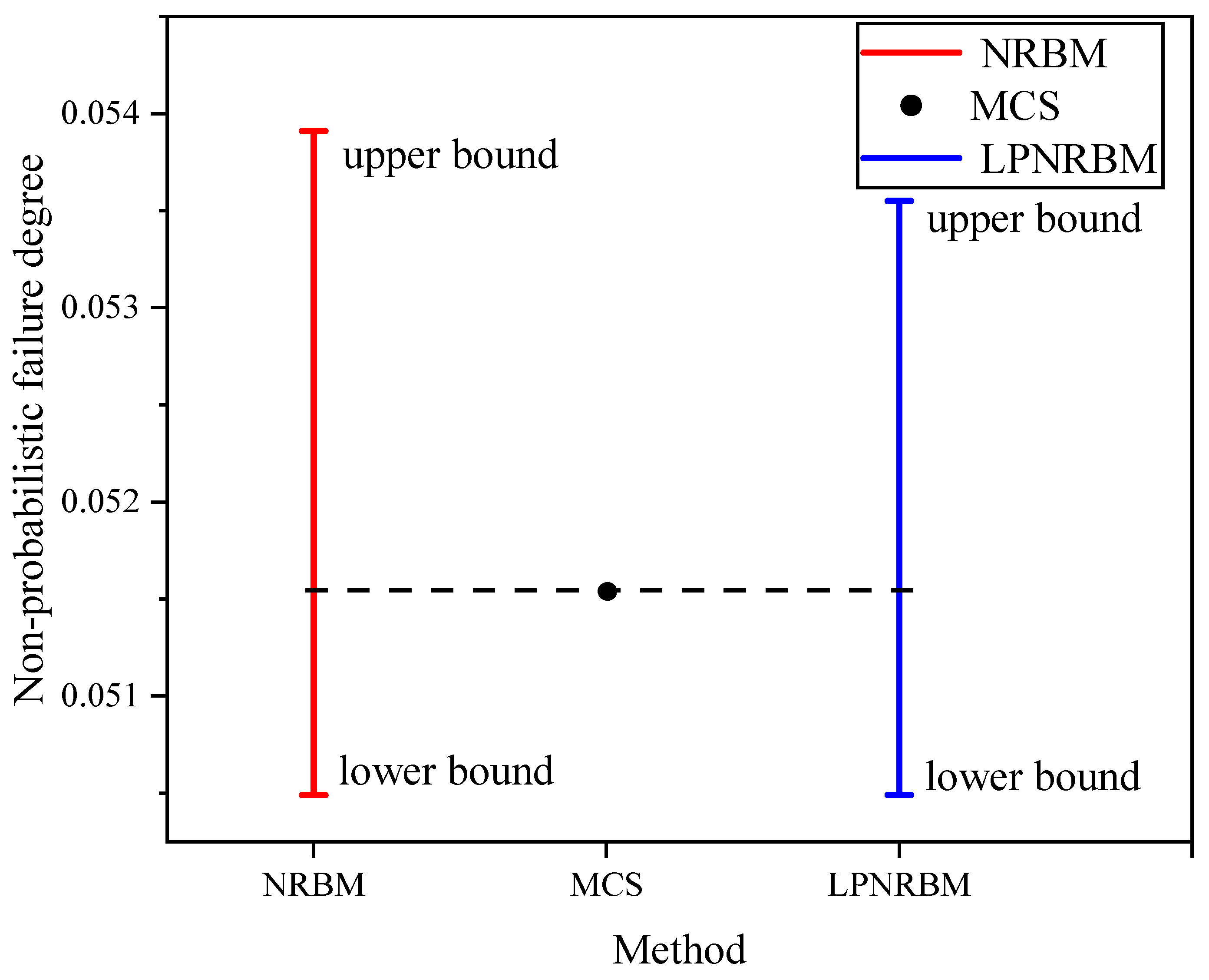
Table 9 and
Figure 12 give the non-probabilistic reliability analysis results of the proposed method, NRBM, and MCS with
samples.
From
Table 9 and
Figure 12, it can be seen that the LPNRBM has the same lower bound as, but a smaller upper bound than, the NRBM (their maximum relative errors are respectively 3.9143% and 4.5991%). This also indicates the superiority of the LPNRBM over the NRBM.
5. Conclusions
In this paper, an LPNRBM is proposed to estimate the non-probabilistic failure degree of series systems. The proposed method consists of three main parts: the construction of an LP model, the identification of zero design variables, and the removal of zero design variables from the LP model. The results for three numerical examples show that the proposed method can not only provide the narrowest possible interval of the non-probabilistic failure degree of series systems for the given information, but also overcome the ordering-dependency problem existing in the NRBM.
As stated in
Section 3.2, the LPNRBM can identify most but not all zero design variables so that it is an approximate but effective method instead of a precise one. Moreover, it is worth noting that according to the division of the sample space in this research, the number of design variables increases exponentially with the increase in the number of components. Although this research overcomes this problem to some extent by removing some zero design variables, the method is still limited for engineering problems with numerous components. Therefore, a potential idea for future work is to consider dividing the sample space in other ways.