Article

Machine Learning-Based Fatigue Level Prediction for Exoskeleton-Assisted Trunk Flexion Tasks Using Wearable Sensors


by
Pranav Madhav Kuber
1,
Abhineet Rajendra Kulkarni
2 and
Ehsan Rashedi
1,*
1
Department of Industrial and Systems Engineering, Rochester Institute of Technology, Rochester, NY 14623, USA
2
Department of Computer & Information Science & Engineering, University of Florida, Gainesville, FL 32611, USA
*
Author to whom correspondence should be addressed.
Appl. Sci. 2024, 14(11), 4563; https://doi.org/10.3390/app14114563
Submission received: 28 April 2024 / Revised: 24 May 2024 / Accepted: 24 May 2024 / Published: 26 May 2024
(This article belongs to the Special Issue Advances in Digital Technology Assisted Industrial Design)

Abstract

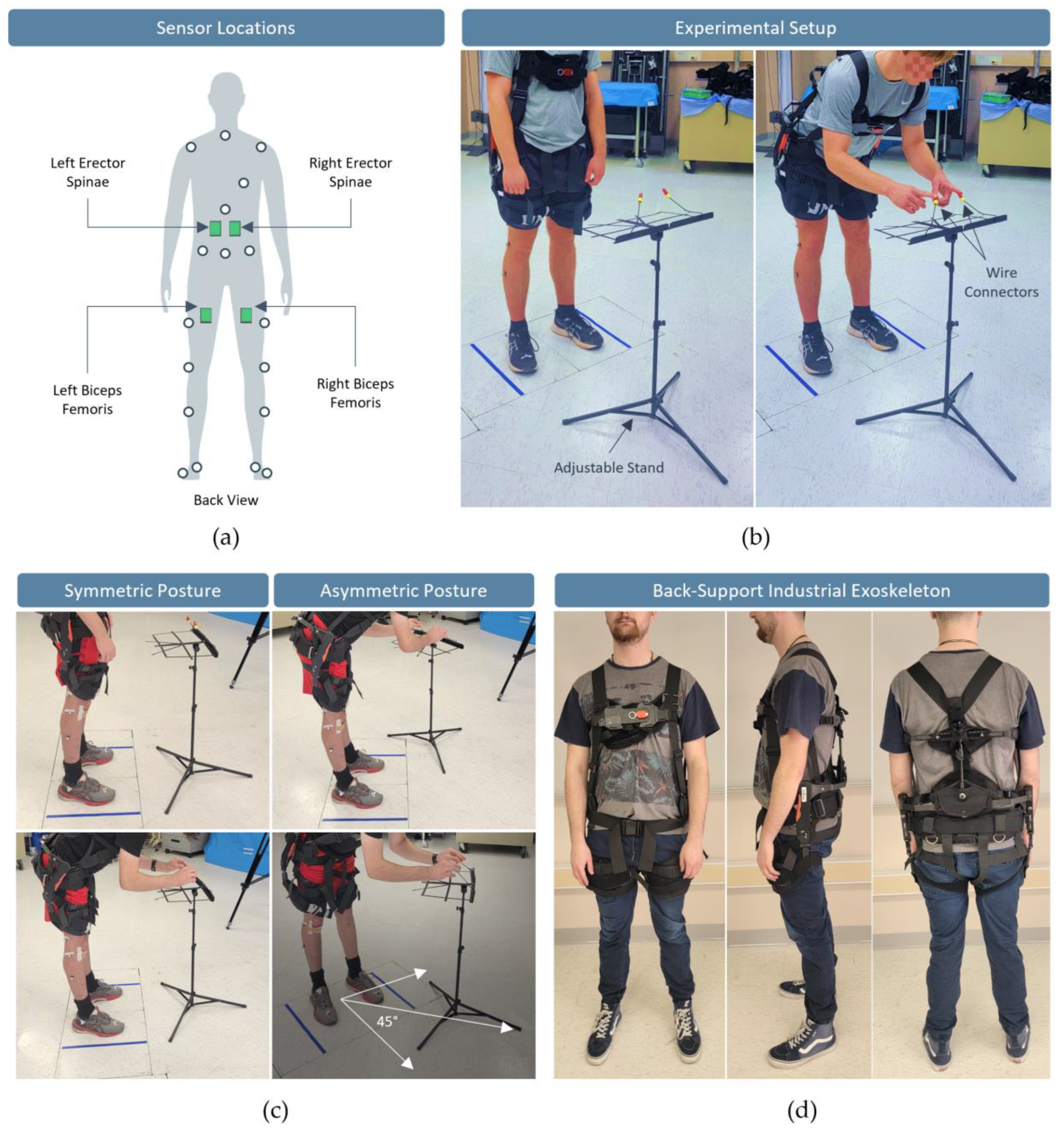
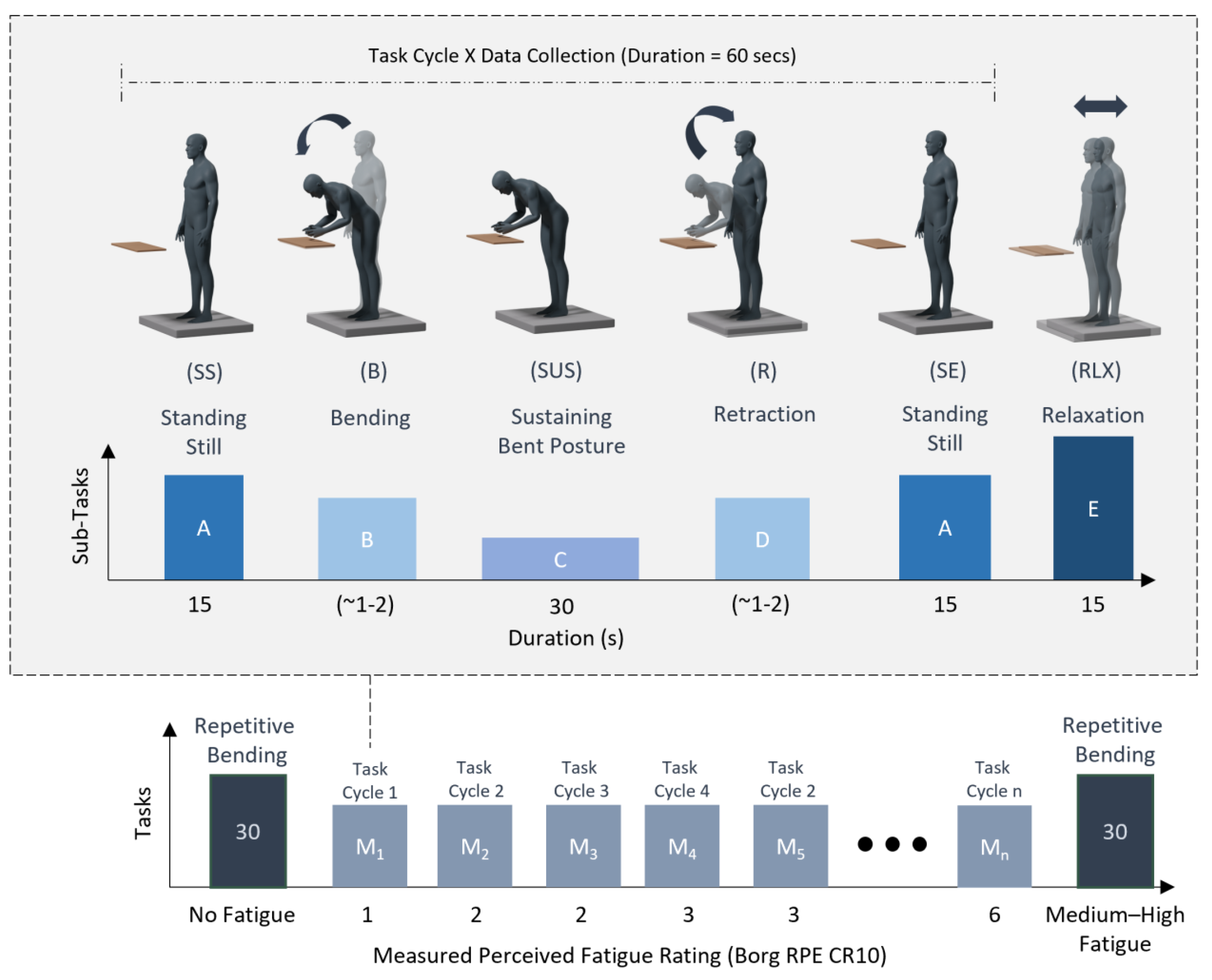
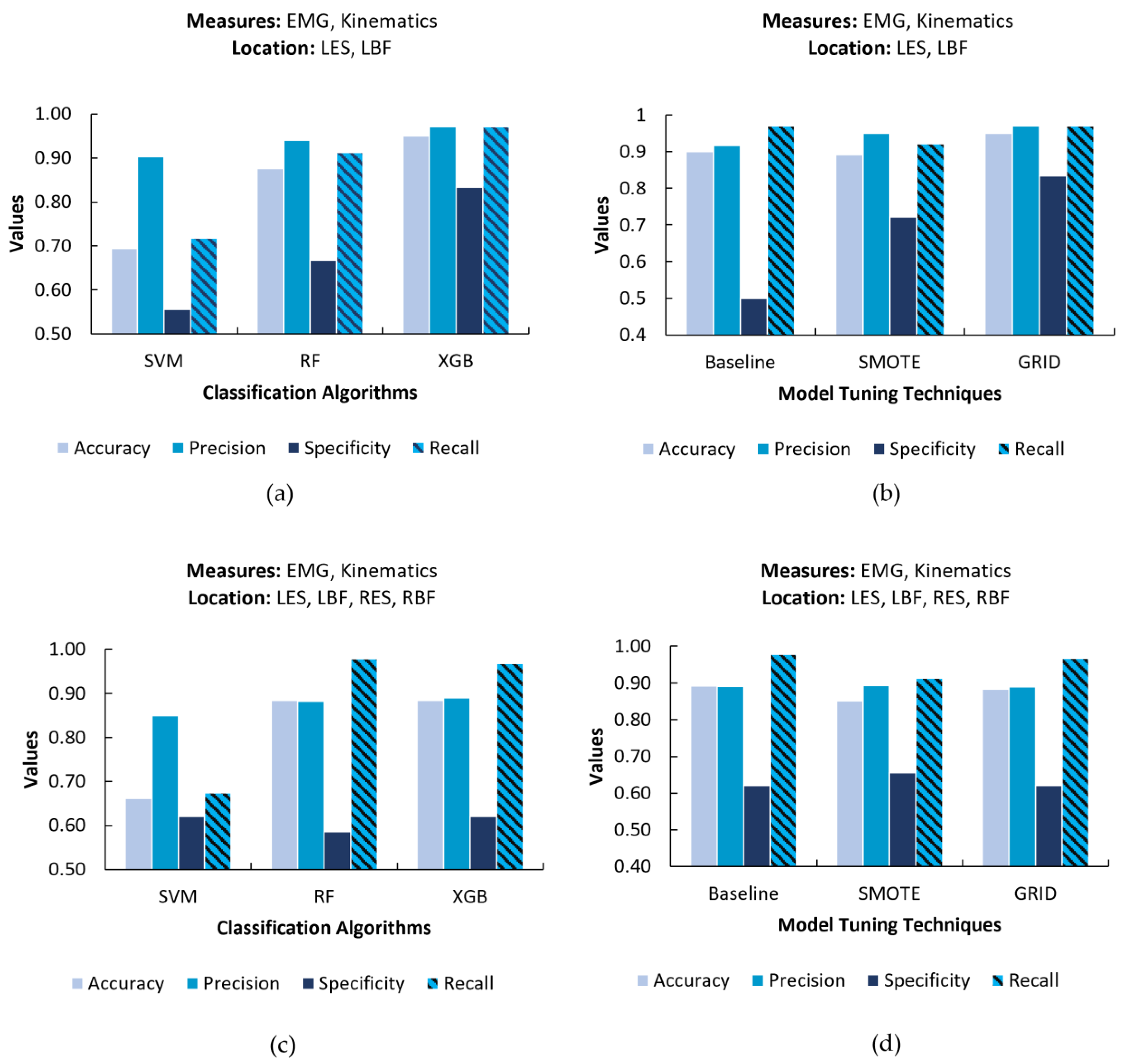
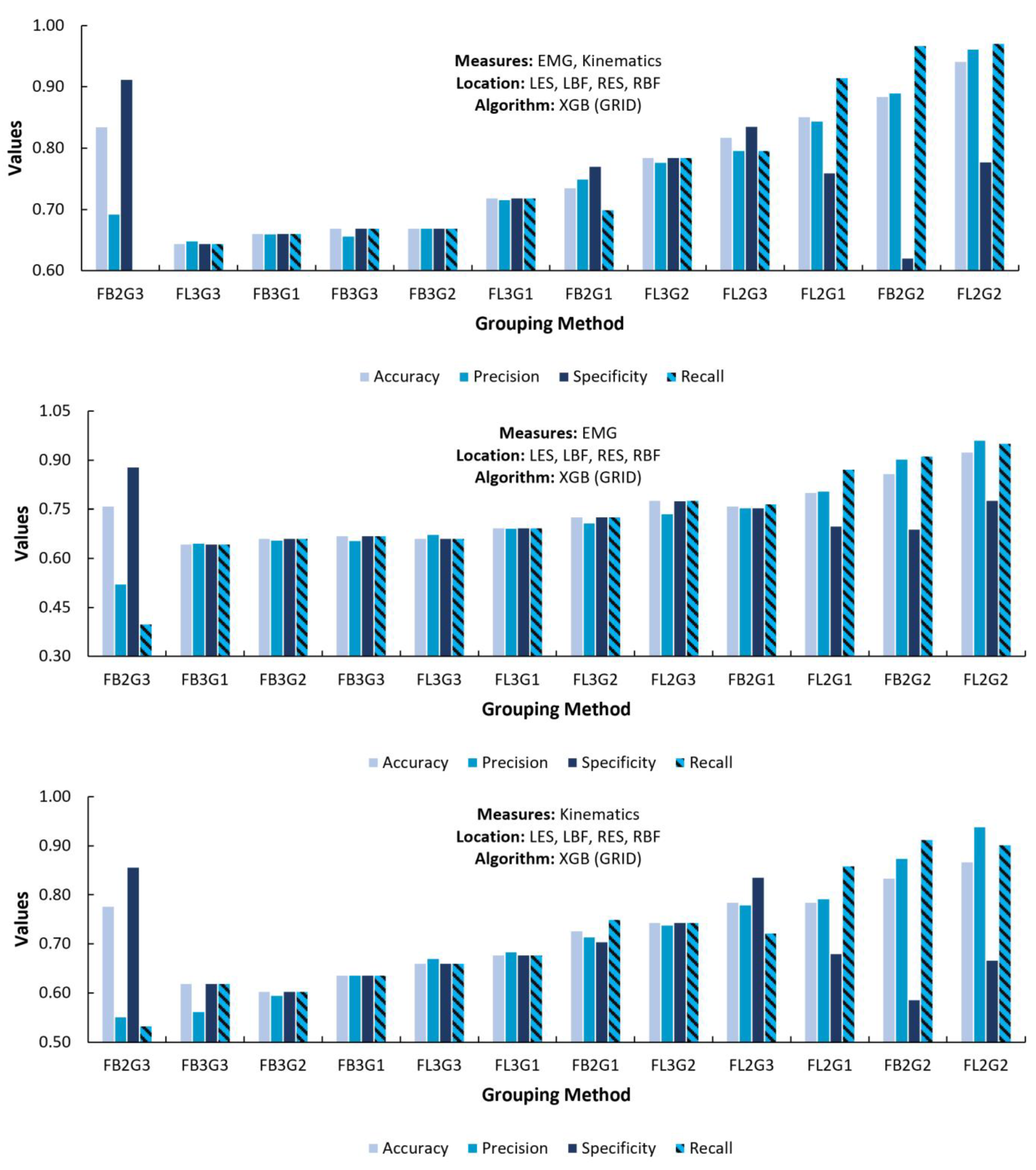
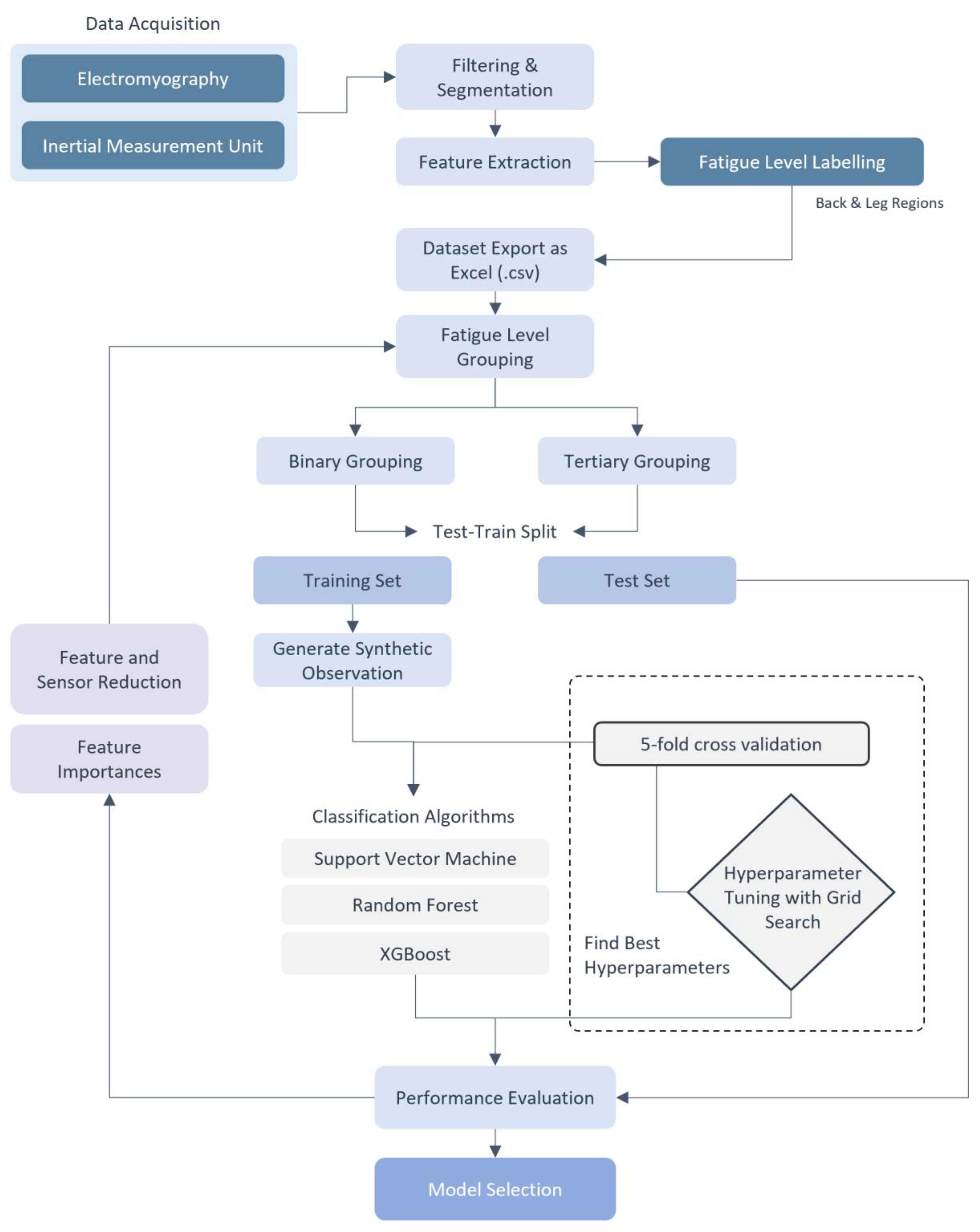
Monitoring physical demands during task execution with exoskeletons can be instrumental in understanding their suitability for industrial tasks. This study aimed at developing a fatigue level prediction model for Back-Support Industrial Exoskeletons (BSIEs) using wearable sensors. Fourteen participants performed a set of intermittent trunk-flexion task cycles consisting of static, sustained, and dynamic activities, until they reached medium-high fatigue levels, while wearing BSIEs. Three classification algorithms, Support Vector Machine (SVM), Random Forest (RF), and XGBoost (XGB), were implemented to predict perceived fatigue level in the back and leg regions using features from four wearable wireless Electromyography (EMG) sensors with integrated Inertial Measurement Units (IMUs). We examined the best grouping and sensor combinations by comparing prediction performance. The findings showed best performance in binary classification of leg and back fatigue with 95% (2 EMG + IMU sensors) and 82% (single IMU sensor) accuracy, respectively. Tertiary classification for back and leg fatigue level prediction required four sensor setups with both EMG and IMU measures to perform at 79% and 67% accuracy, respectively. The efforts presented in our article demonstrate the feasibility of an accessible fatigue level detection system, which can be beneficial for objective fatigue assessment, design selection, and implementation of BSIEs in real-world scenarios.
Keywords: ergonomics; evaluation; wearable assistive device; human muscle fatigue; muscle activity; motion analysis; signal processing; machine learning ergonomics; evaluation; wearable assistive device; human muscle fatigue; muscle activity; motion analysis; signal processing; machine learning