Article

Prediction of Kiwifruit Sweetness with Vis/NIR Spectroscopy Based on Scatter Correction and Feature Selection Techniques


College of Natural Resources and Environment, Northwest A&F University, Xianyang 712100, China
*
Author to whom correspondence should be addressed.
Appl. Sci. 2024, 14(10), 4145; https://doi.org/10.3390/app14104145
Submission received: 1 April 2024 / Revised: 7 May 2024 / Accepted: 9 May 2024 / Published: 14 May 2024

Abstract

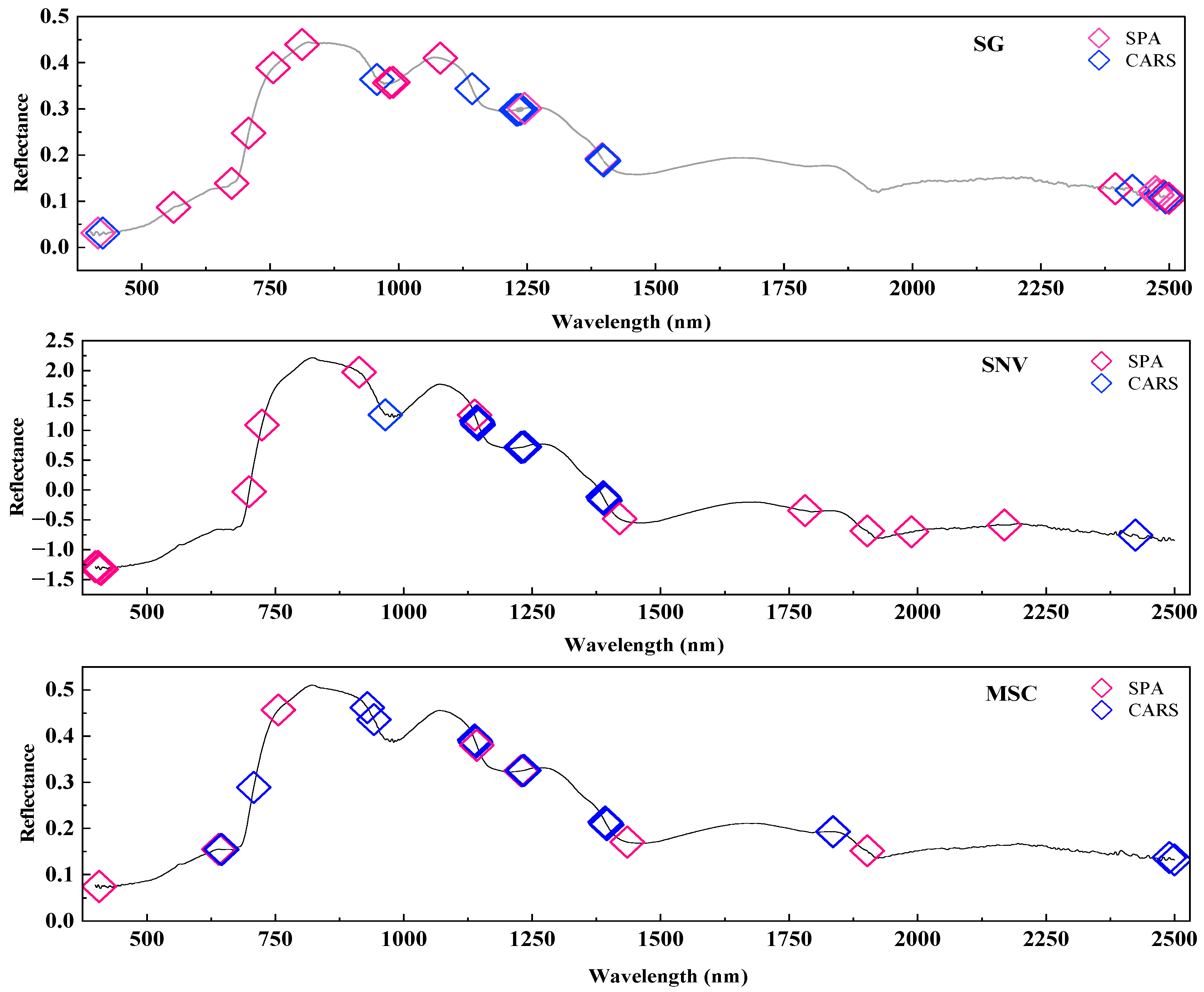
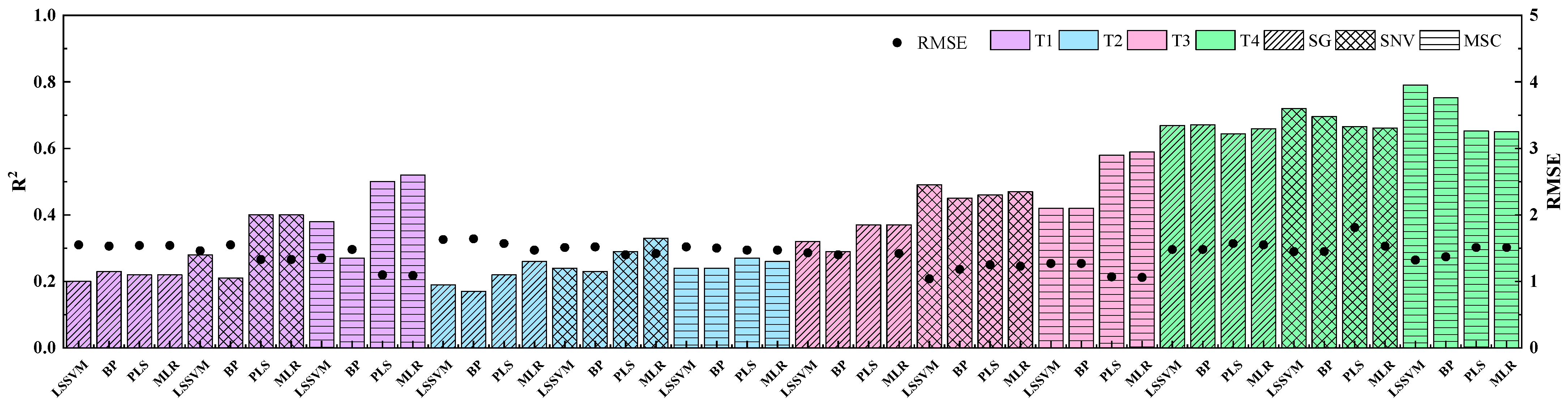
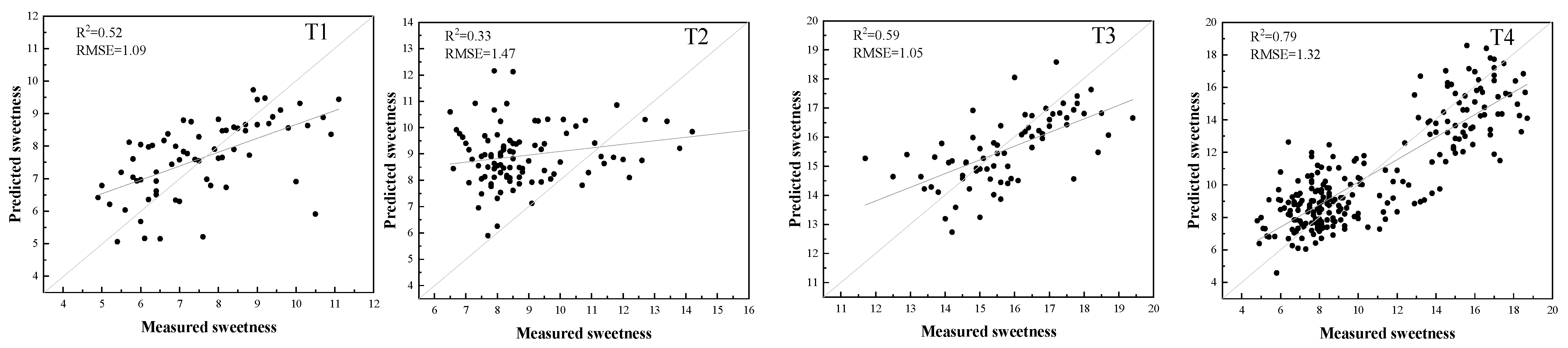
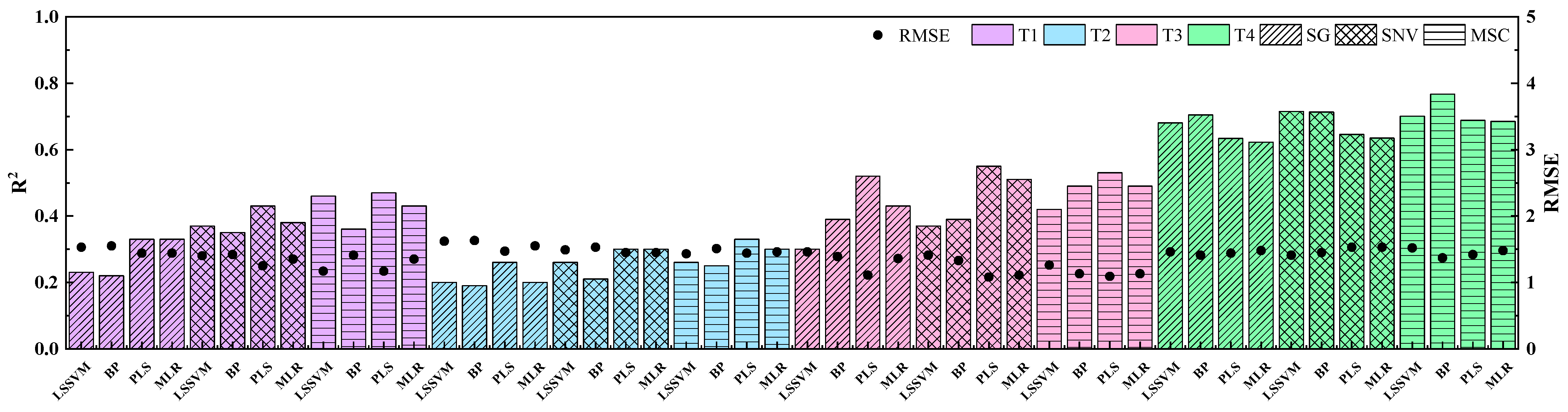
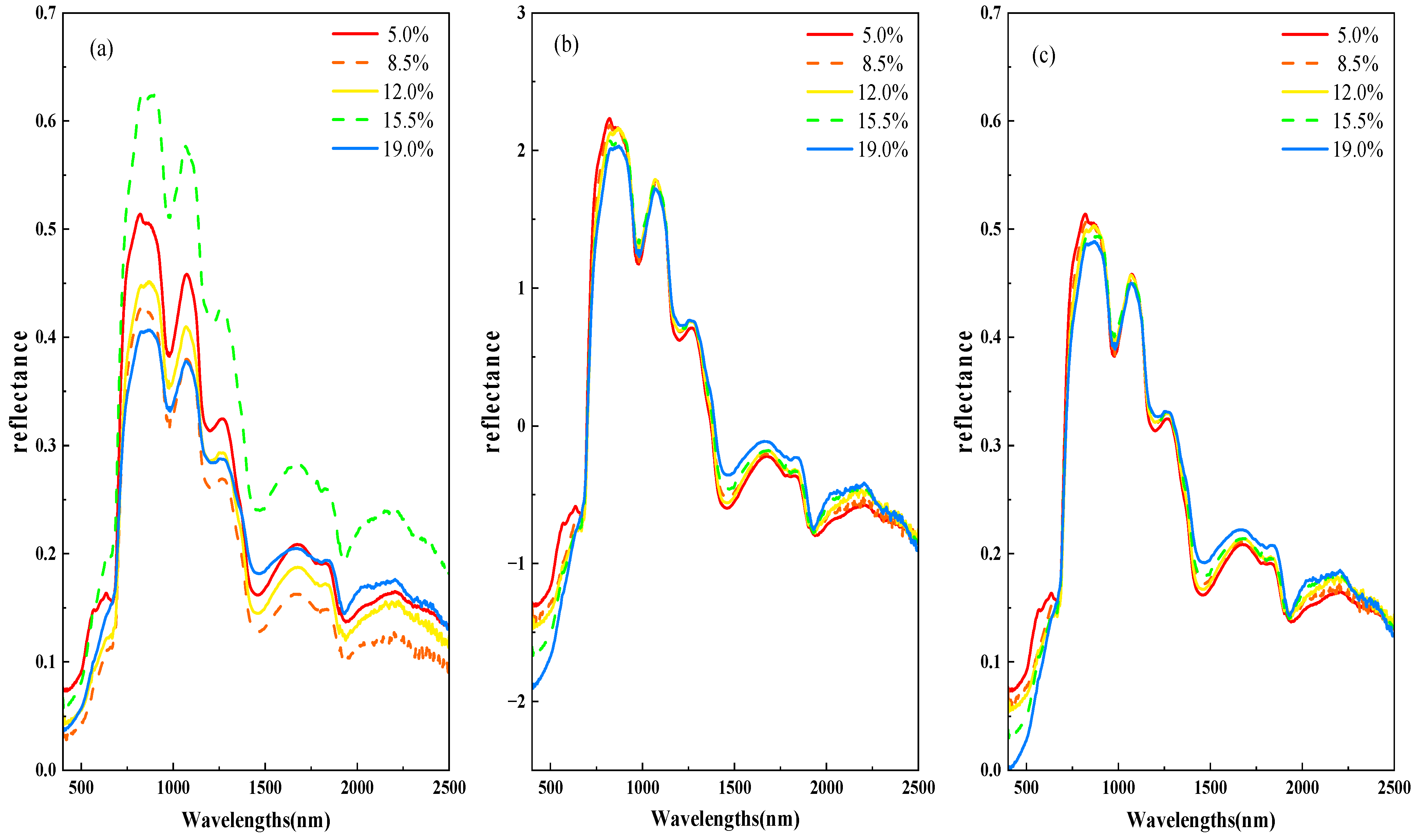
The sweetness is an important parameter for the quality of Cuixiang kiwifruit. The quick and accurate assessment of sweetness is necessary for farmers to make timely orchard management and for consumers to make purchasing choices. The objective of the study was to propose an effective physical method for determining the sweetness of fresh kiwifruit based on fruit hyperspectral reflectance in 400–2500 nm. In this study, the visible and near-infrared spectral (Vis/NIR) reflectance and sweetness values of kiwifruit were measured at different time periods after the fruit matured in 2021 and 2022. The multiplicative scatter correction (MSC) and standard normal variable (SNV) transformation were used for spectral denoising. The successive projections algorithm (SPA) and competitive adaptive reweighted sampling (CARS) methods were employed to select the most effective features for sweetness, and then the features were used as the inputs of partial least squares (PLS), least squares support vector machine (LSSVM), back propagation neural network (BP), and multiple linear regression (MLR) models to explore the best way of sweetness predicting. The study indicated that the most sensitive features were in the blue and red regions and the 970, 1200, and 1400 nm. The sweetness estimation model constructed by using the data of the whole harvest period from August to October performed better than the models constructed by each harvest period. Overall results indicated that hyperspectral reflectance incorporated with MSC-SPA-LSSVM could explain up to 79% of the variability in kiwifruit sweetness, which could be applied as an alternative fast and accurate method for the non-destructive determination of the sweetness of kiwifruit. This research could partially provide a theoretical basis for the development of nondestructive instrumentation for the detection of kiwifruit sweetness.
Keywords: non-destructive determination; spectral denoising; least squares support vector machine (LSSVM) non-destructive determination; spectral denoising; least squares support vector machine (LSSVM)