Article

Focusing on Driving Modes Rather Than Drivers: Toward More Precise and Efficient Car-Following Behavior Modeling

1
Key Laboratory of Road and Traffic Engineering, Ministry of Education, Tongji University, Shanghai 200092, China
2
Hangzhou Hikvision Digital Technology Co., Ltd., Hangzhou 310051, China
*
Author to whom correspondence should be addressed.
Appl. Sci. 2023, 13(9), 5665; https://doi.org/10.3390/app13095665
Submission received: 5 April 2023 / Revised: 27 April 2023 / Accepted: 2 May 2023 / Published: 4 May 2023
(This article belongs to the Section Transportation and Future Mobility)

Abstract

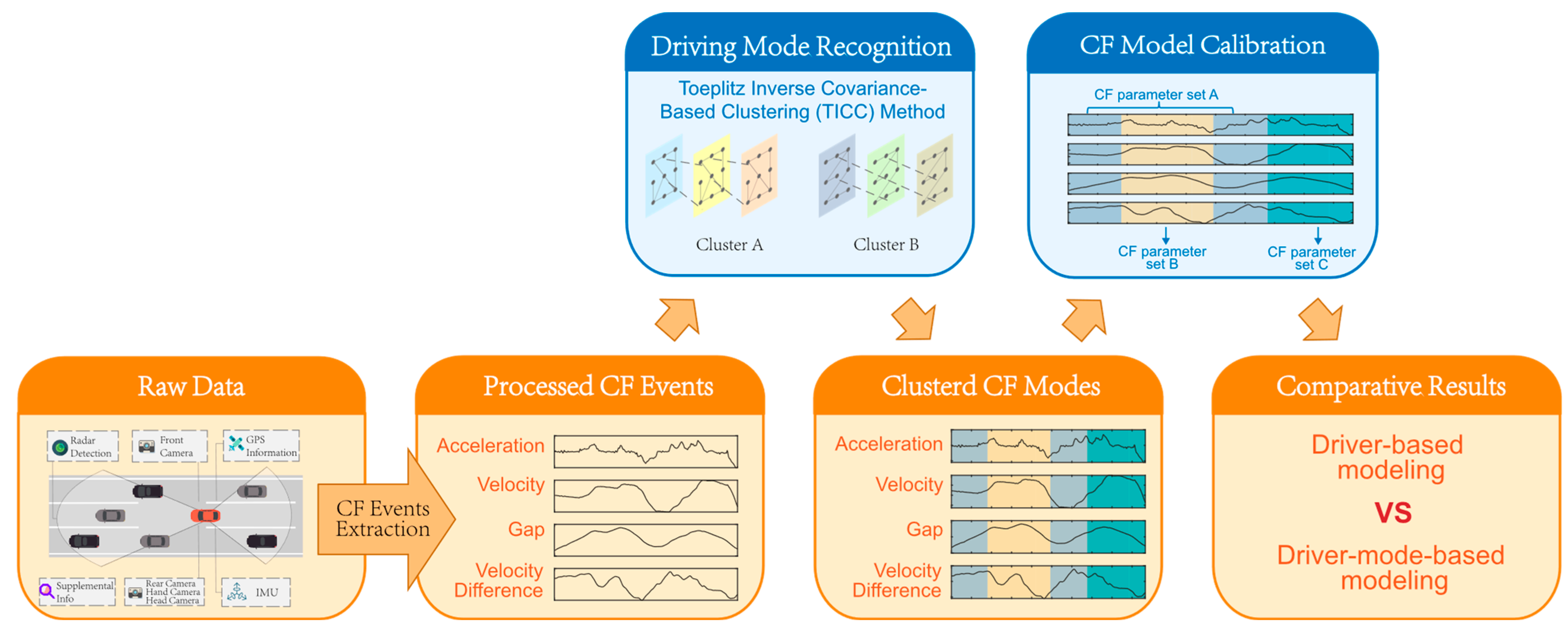
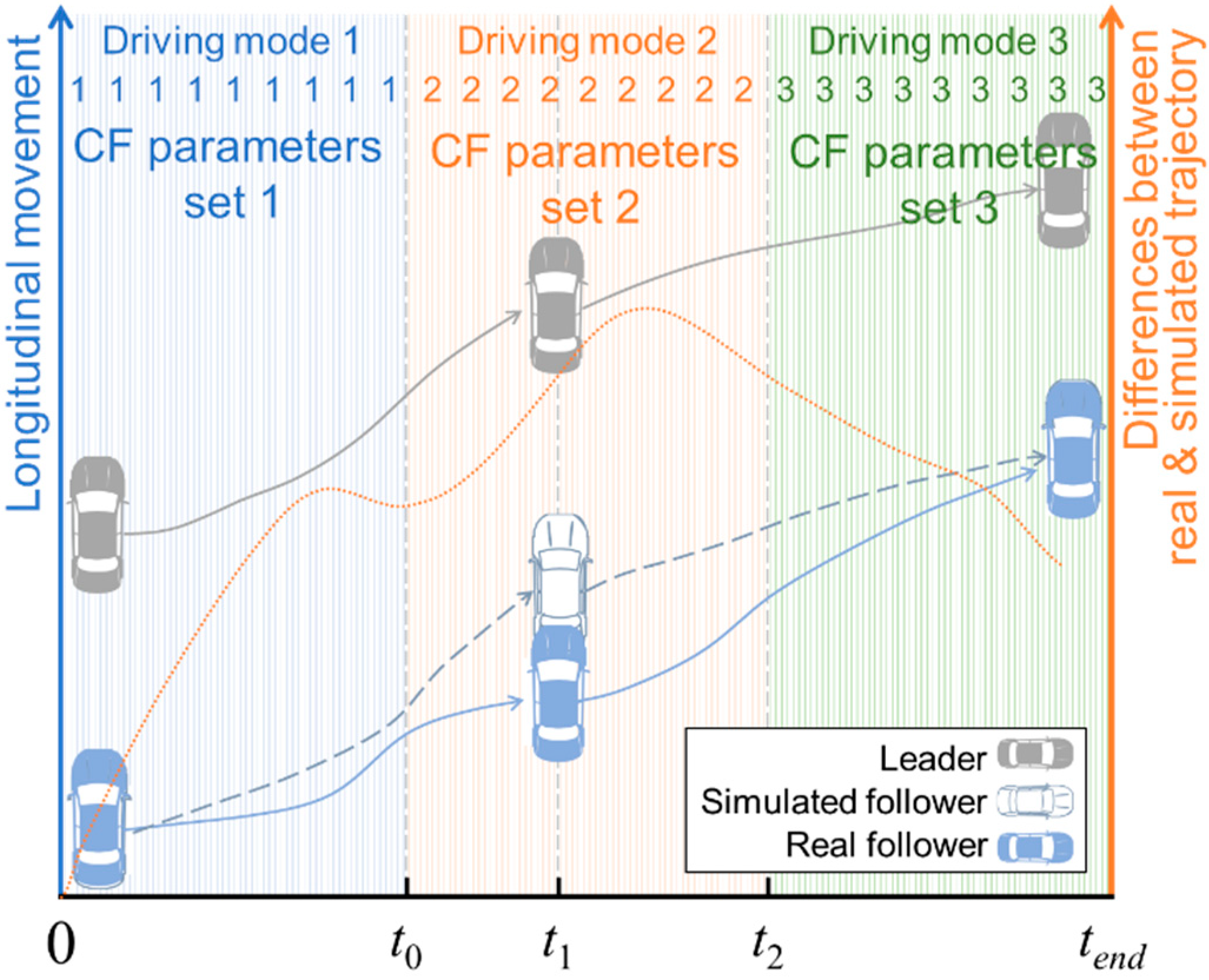
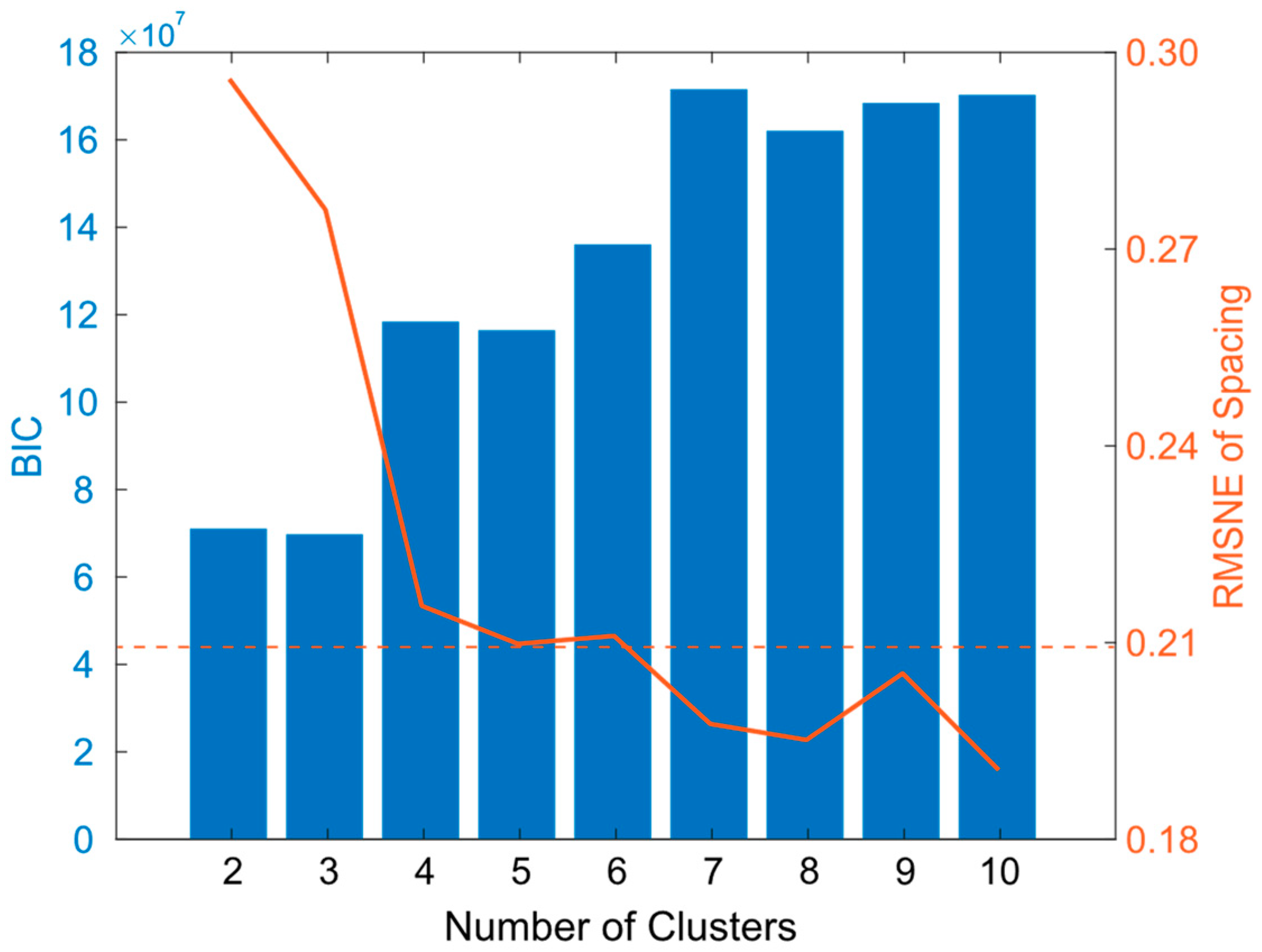
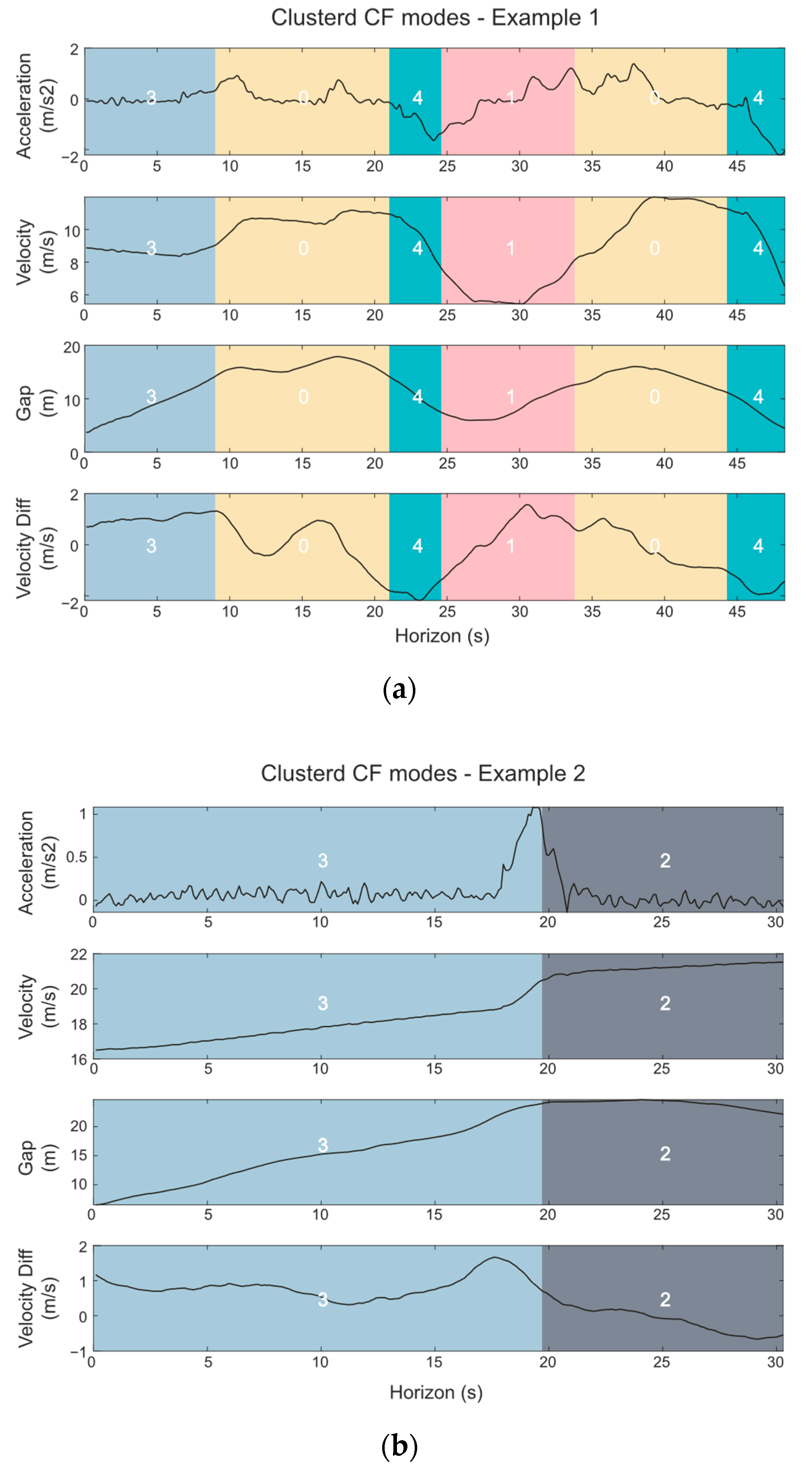
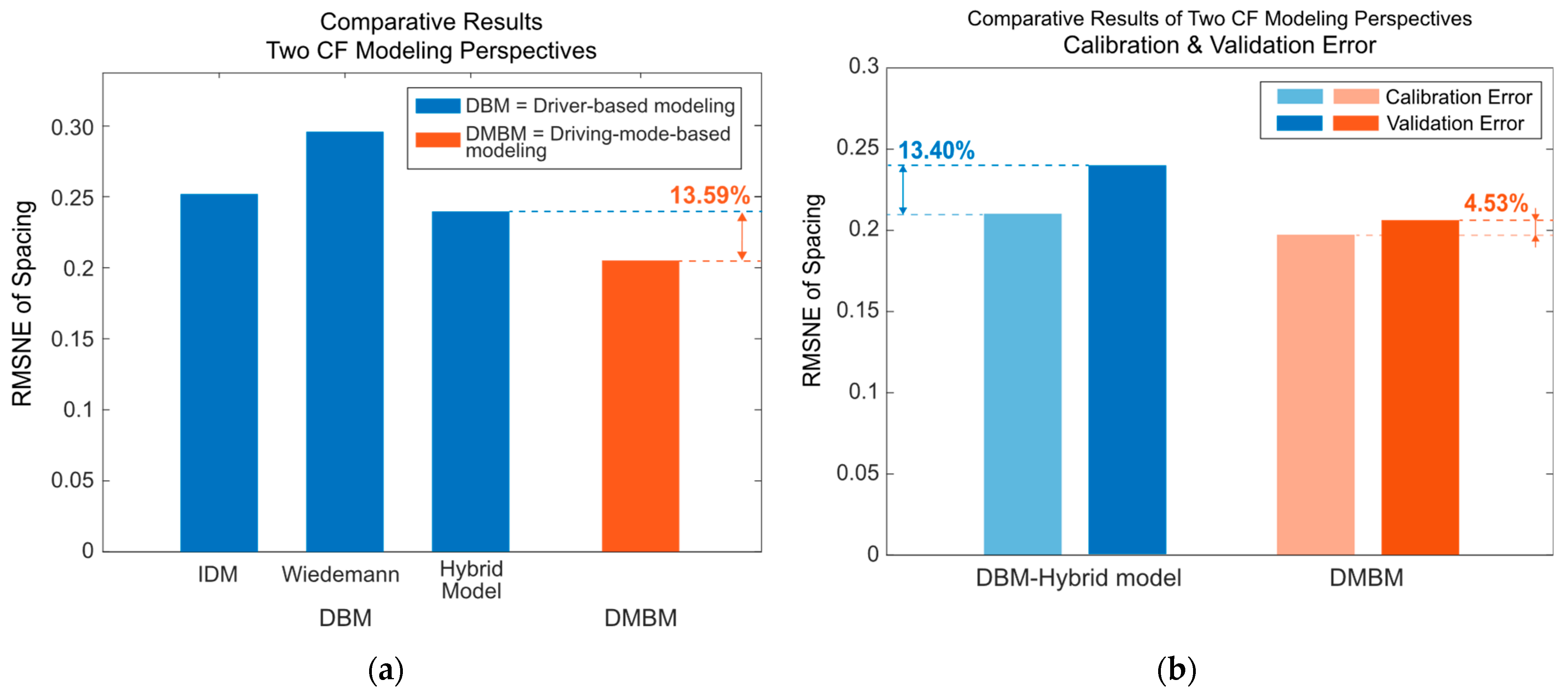
Car-following (CF) behavior is one of the most important driving behaviors. Accurately understanding and modeling CF behavior is essential for traffic flow simulation and user-acceptable advanced driving assistance systems (ADASs). In previous decades, CF models were calibrated based on drivers or trajectories, with short-term changes ignored. Recent studies have indicated that these changes could be caused by occasional irritations or regular switches of driving modes, but there is still a lack of specific understanding of driving modes and how these modes affect simulation accuracy in the reproduction of CF behavior. This paper explored the existence of driving modes and the quantified modeling influence of driving modes. Specifically, we first extracted 4000 high-resolution CF events of 40 drivers from large-scale naturalistic driving data for the discovery of underlying driving modes. Then, we introduced a novel multivariate time series method, Toeplitz Inverse Covariance-based Clustering (TICC), to achieve the segmentation and classification extraction of different driving modes. Finally, calibrated by the CF dataset, the proper cluster number of the driving mode was determined, and a comparison of driving-mode-based modeling (DMBM) and driver-based modeling (DBM) was conducted. The results showed that the driving process could be viewed as five core driving modes, and the DMBM has the potential to bring upwards of a 13% accuracy improvement with fewer parameters.
Keywords: driving mode; car-following behavior; naturalistic driving data; multivariate time series clustering driving mode; car-following behavior; naturalistic driving data; multivariate time series clustering