Article

Prediction Modeling of Ground Subsidence Risk Based on Machine Learning Using the Attribute Information of Underground Utilities in Urban Areas in Korea

Department of Geotechnical Engineering Research, Korea Institute of Civil Engineering and Building Technology, Goyang-si 10223, Republic of Korea
*
Author to whom correspondence should be addressed.
Appl. Sci. 2023, 13(9), 5566; https://doi.org/10.3390/app13095566
Submission received: 10 April 2023 / Revised: 24 April 2023 / Accepted: 26 April 2023 / Published: 30 April 2023
(This article belongs to the Special Issue The Application of Machine Learning in Geotechnical Engineering)

Abstract

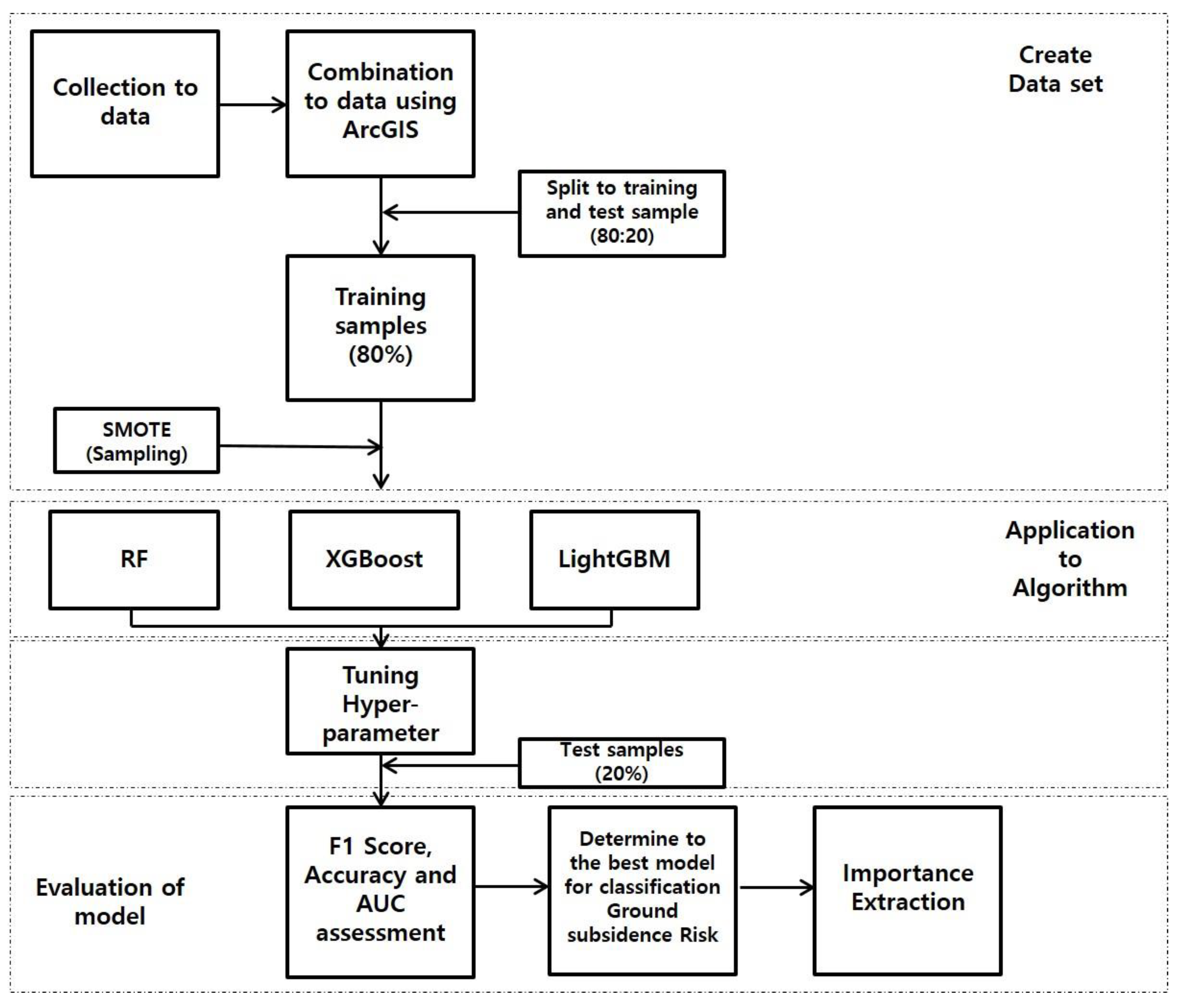
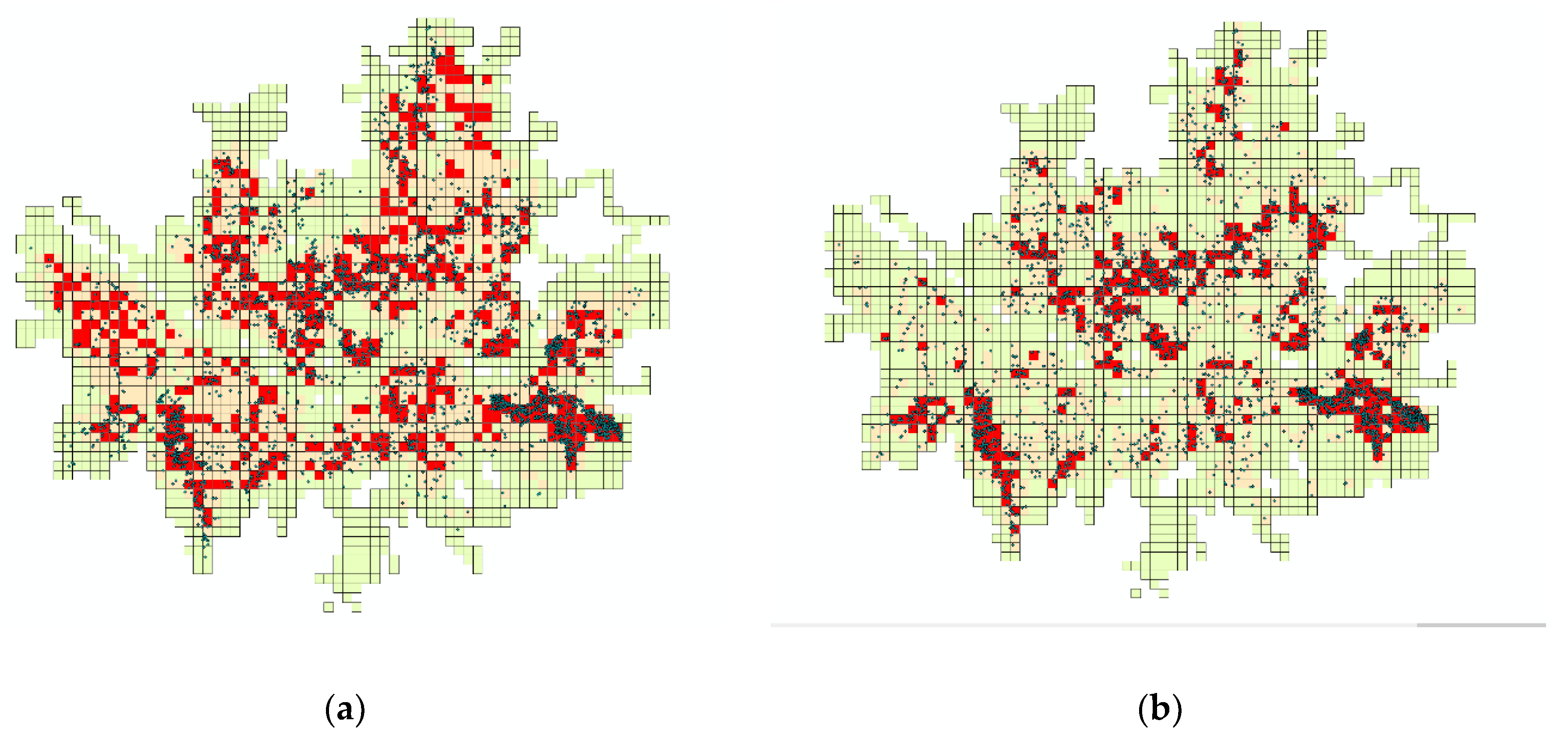
As ground subsidence accidents in urban areas that occur due to damage to underground utilities can cause great damage, it is necessary to predict and prepare for such accidents in order to minimize such damage. It has been reported that the main cause of ground subsidence in urban areas is cavities in the ground formed by damage to underground utilities. Thus, in this study, attribute information and historical ground subsidence information of six types of underground utility lines (water supply, sewage, power, gas, heating, and communication) were collected to develop a ground subsidence risk prediction model based on machine learning. To predict the risk of ground subsidence in the target area, it was divided into a grid with a square size of 500 m × 500 m, and attribute information of underground utility lines and historical information of ground subsidence included in the grid were extracted. Six types of underground utility lines were merged into single-type attribute information, and the risk of ground subsidence was categorized into three levels using the number of ground subsidence occurrences to develop a dataset. In addition, 12 datasets, which were developed based on the conditions of certain divided ranges of attribute information and risk levels, and 12 additional datasets, which were developed using the Synthetic Minority Oversampling Technique to resolve the imbalance of data, were built. Then, factors that represented significant correlations between input and output data were singled out and were then applied to the RandomForest, XGBoost, and LightGBM algorithms to select a model that produced the best performance. By classifying the ground subsidence risk levels through the selected model, it was found that density was the most important influencing factor used in the model. A risk map of ground subsidence in the target area was made through the model; the map showed the trend of well-predicted risk levels in the area where ground subsidence was concentrated.
Keywords: ground subsidence; machine learning; ground subsidence risk prediction model; risk map ground subsidence; machine learning; ground subsidence risk prediction model; risk map