Article

Assessing Dynamic Changes, Driving Mechanisms and Predictions of Multisource Vegetation Remote Sensing Products in Chinese Regions


1
Faculty of Land Resources Engineering, Kunming University of Science and Technology, Kunming 650093, China
2
Key Laboratory of Geospatial Information Integration Innovation for Smart Mines, Kunming 650093, China
3
Spatial Information Integration Technology of Natural Resources, Universities of Yunnan Province, Kunming 650211, China
4
School of Surveying and Land Information Engineering, Henan Polytechnic University, Jiaozuo 454000, China
5
State Environmental Protection Key Laboratory of Satellite Remote Sensing, Aerospace Information Research Institute, Chinese Academy of Sciences, Beijing 100101, China
6
School of Geomatics and Spatial Information, Shandong University of Science and Technology, Qingdao 266590, China
7
College of Marine Sciences, Shanghai Ocean University, Shanghai 201306, China
*
Authors to whom correspondence should be addressed.
These authors contributed equally to this work.
Appl. Sci. 2023, 13(9), 5229; https://doi.org/10.3390/app13095229
Submission received: 3 March 2023 / Revised: 14 April 2023 / Accepted: 19 April 2023 / Published: 22 April 2023
(This article belongs to the Special Issue Advances in Geospatial Techniques on Ecosystem Monitoring)

Abstract

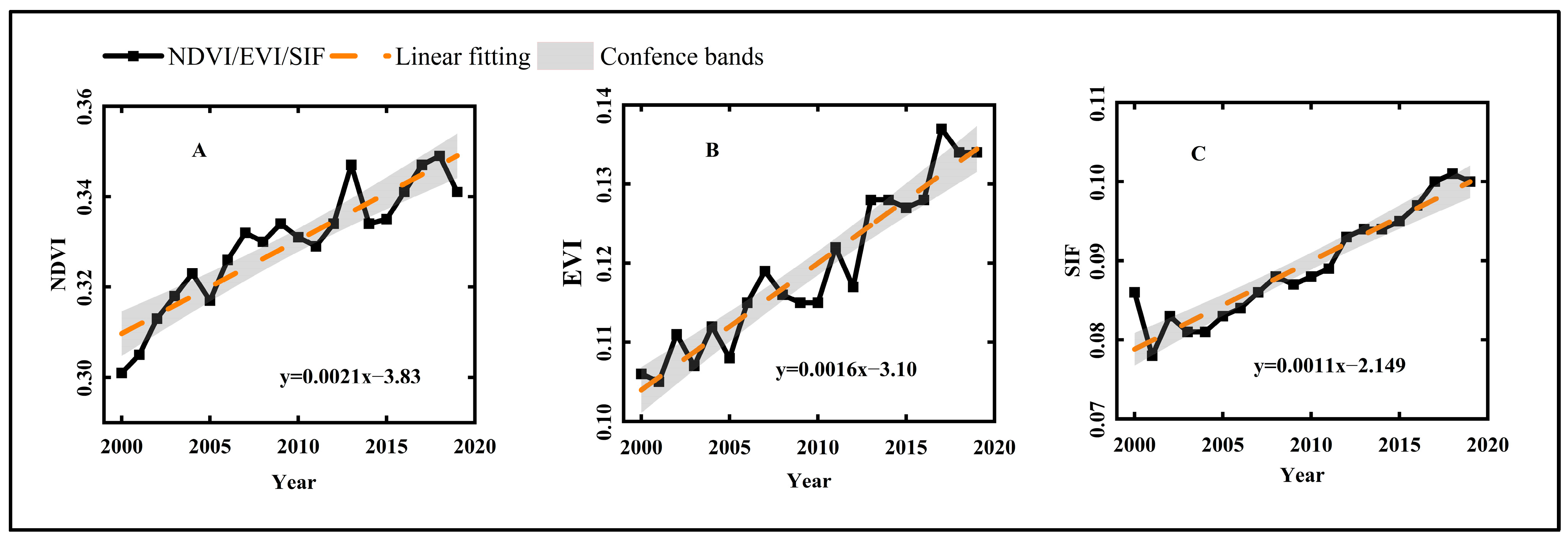
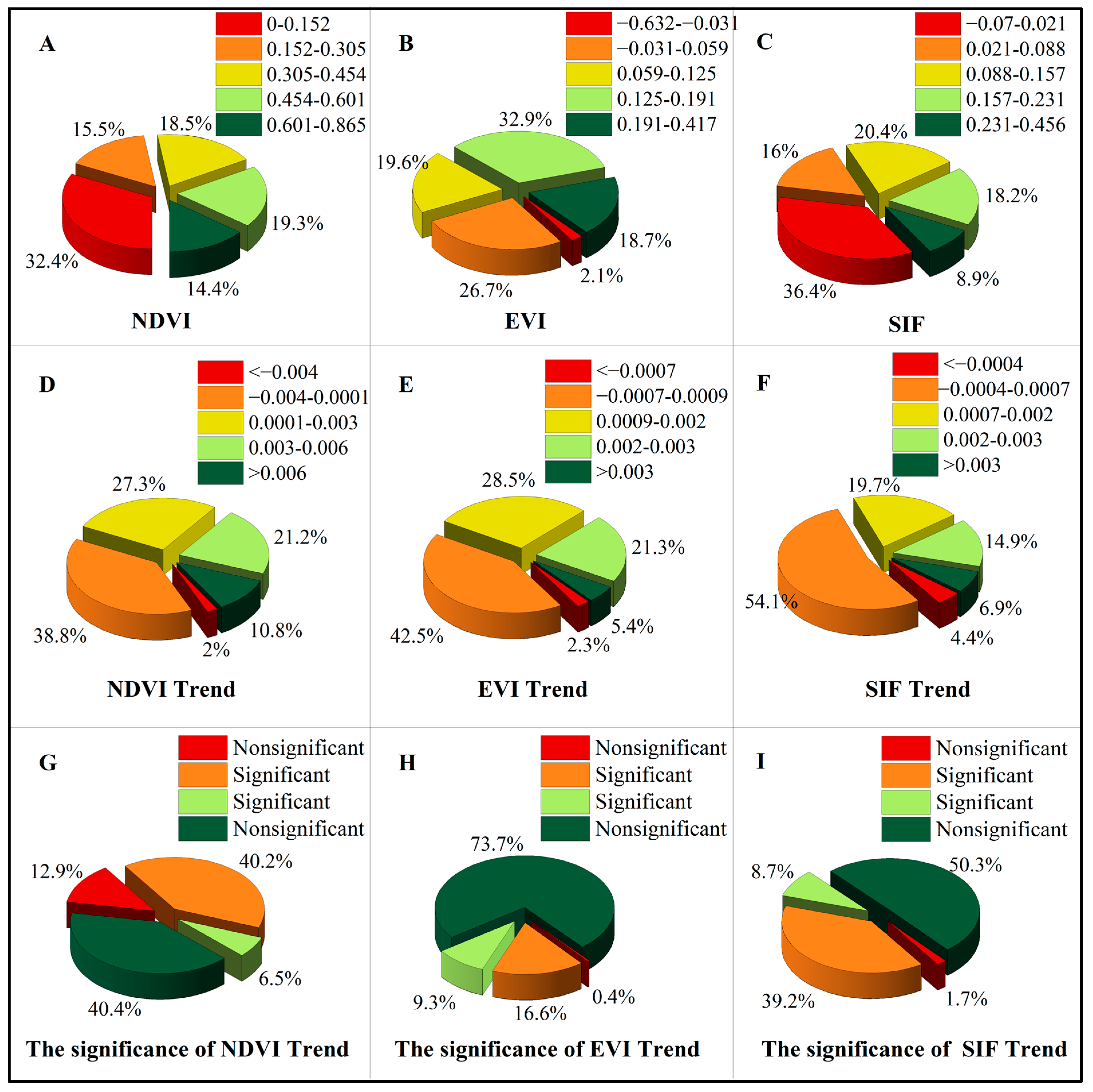
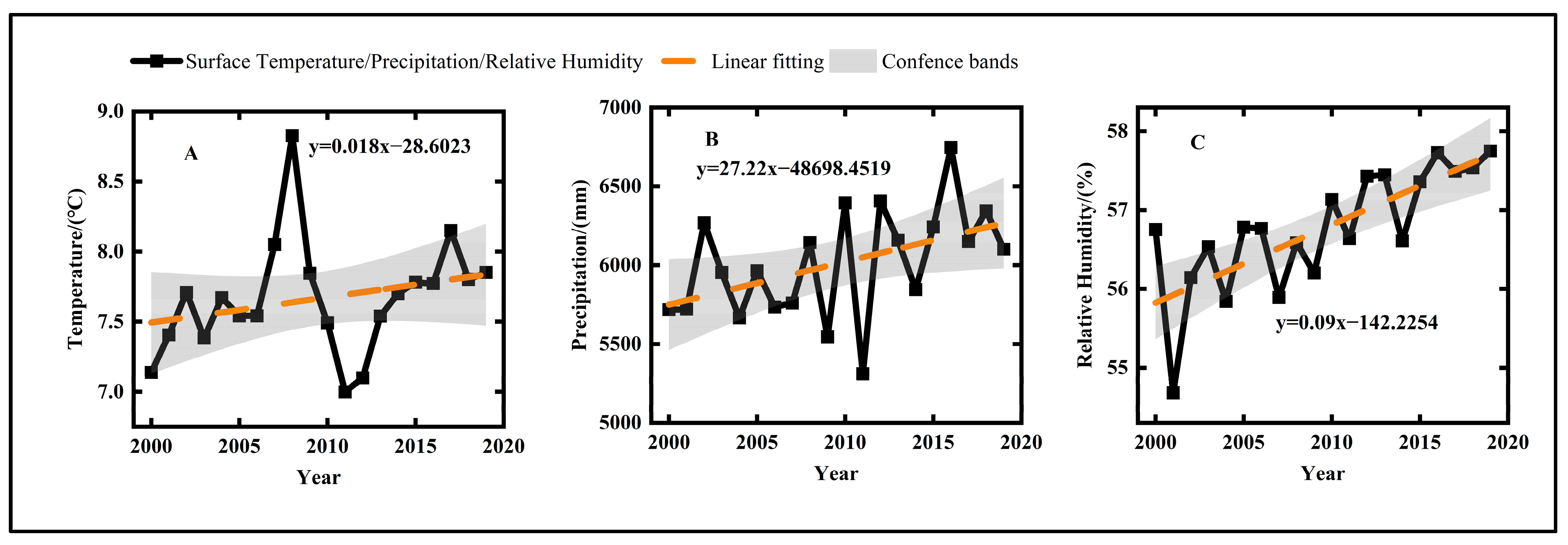
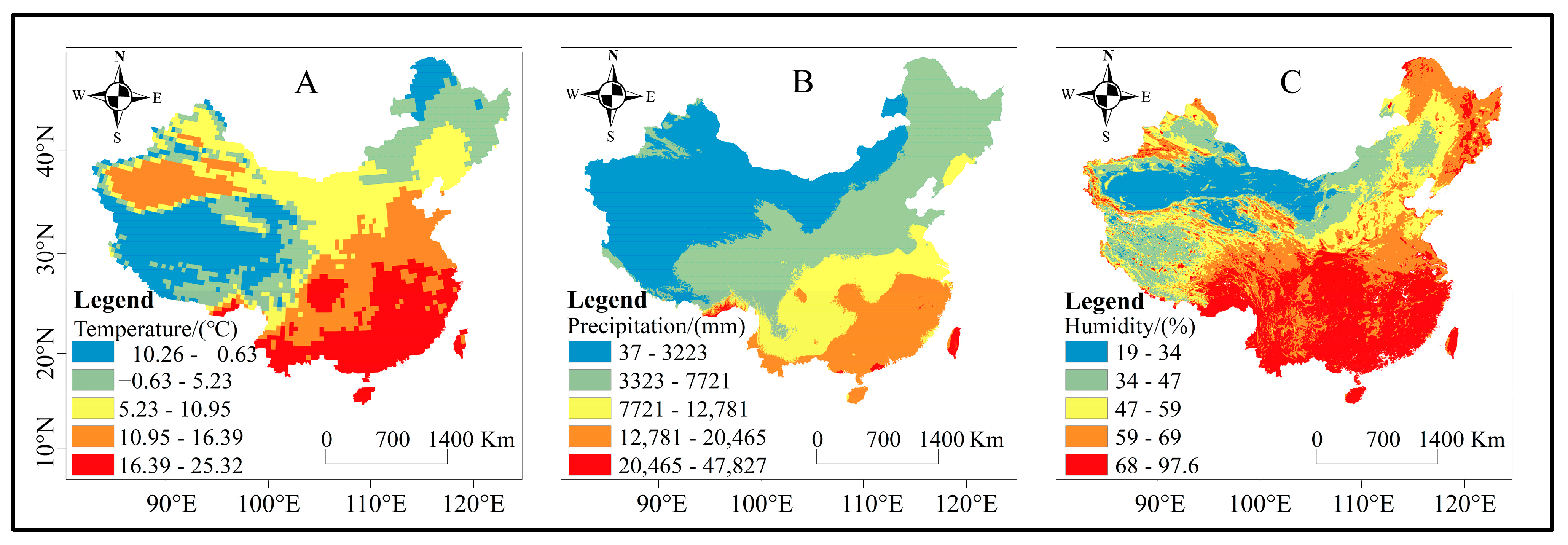
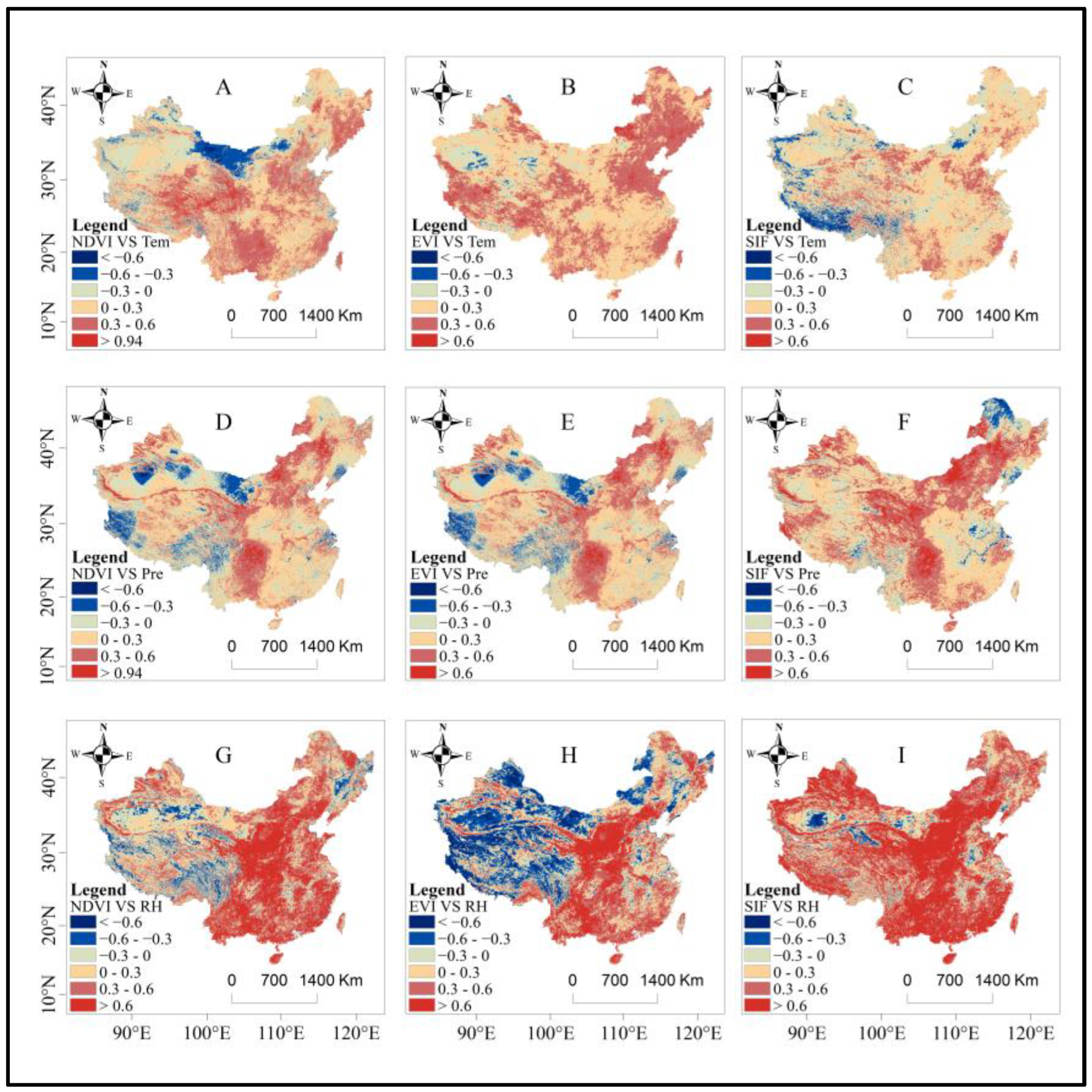
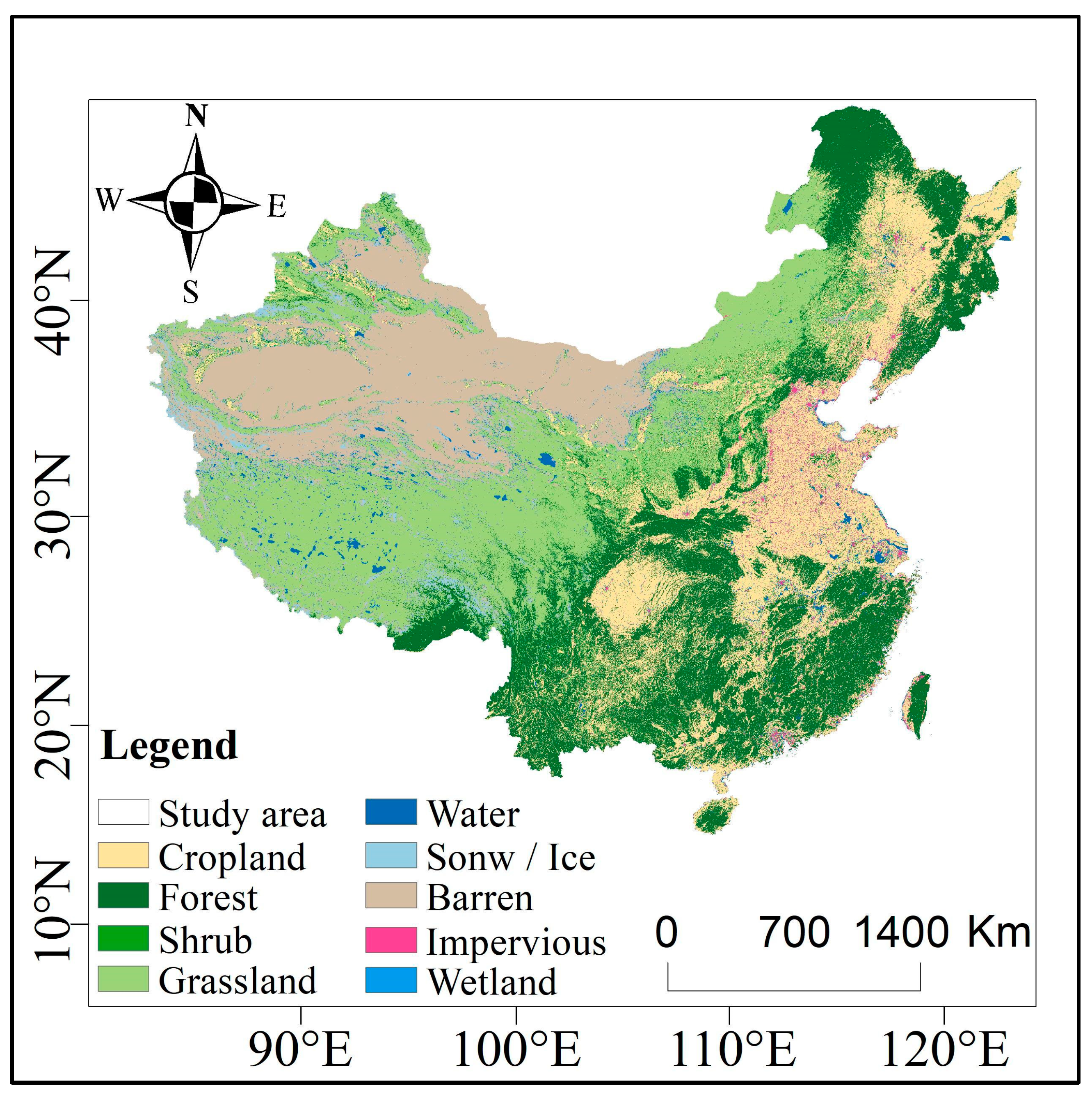
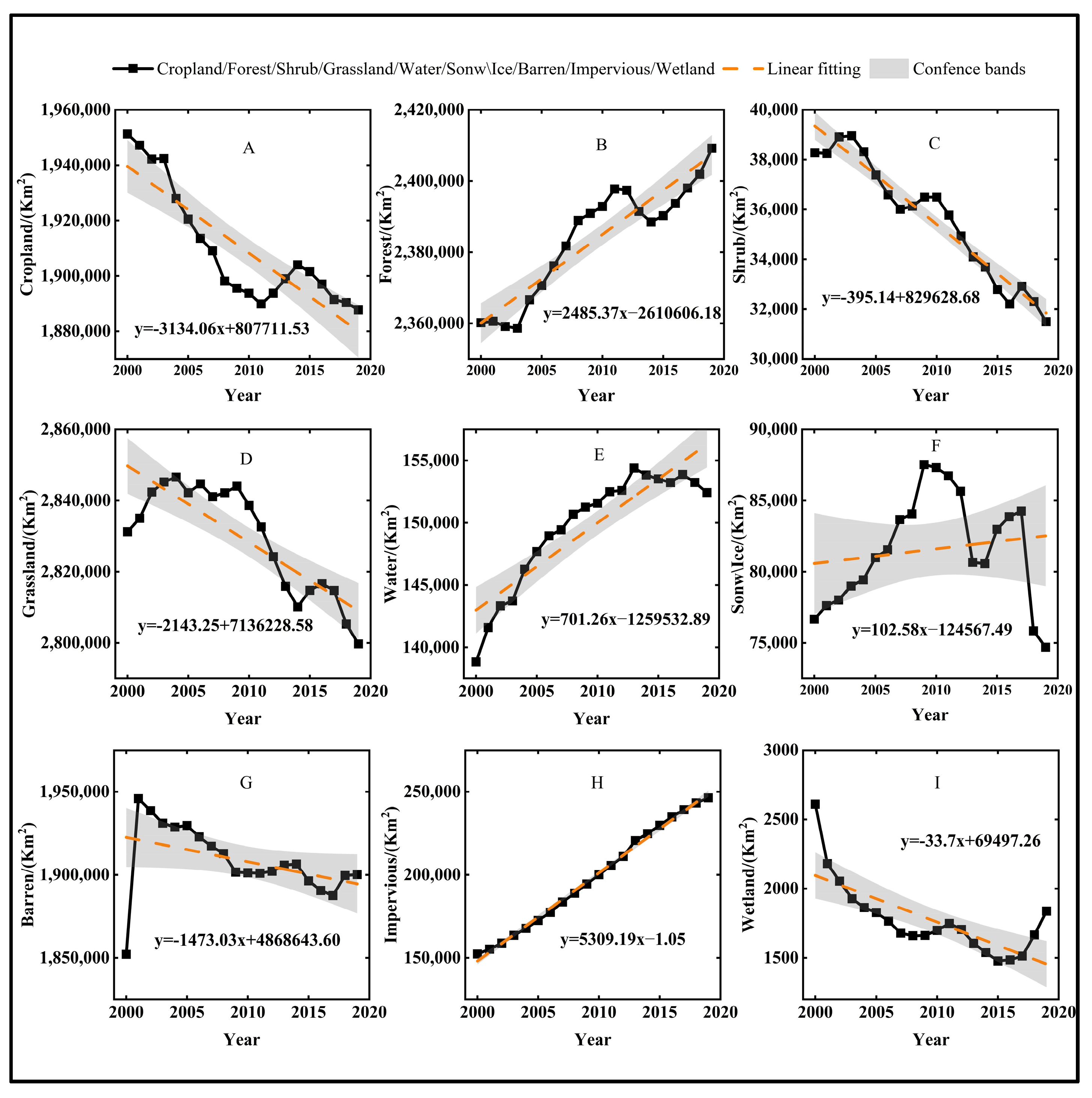
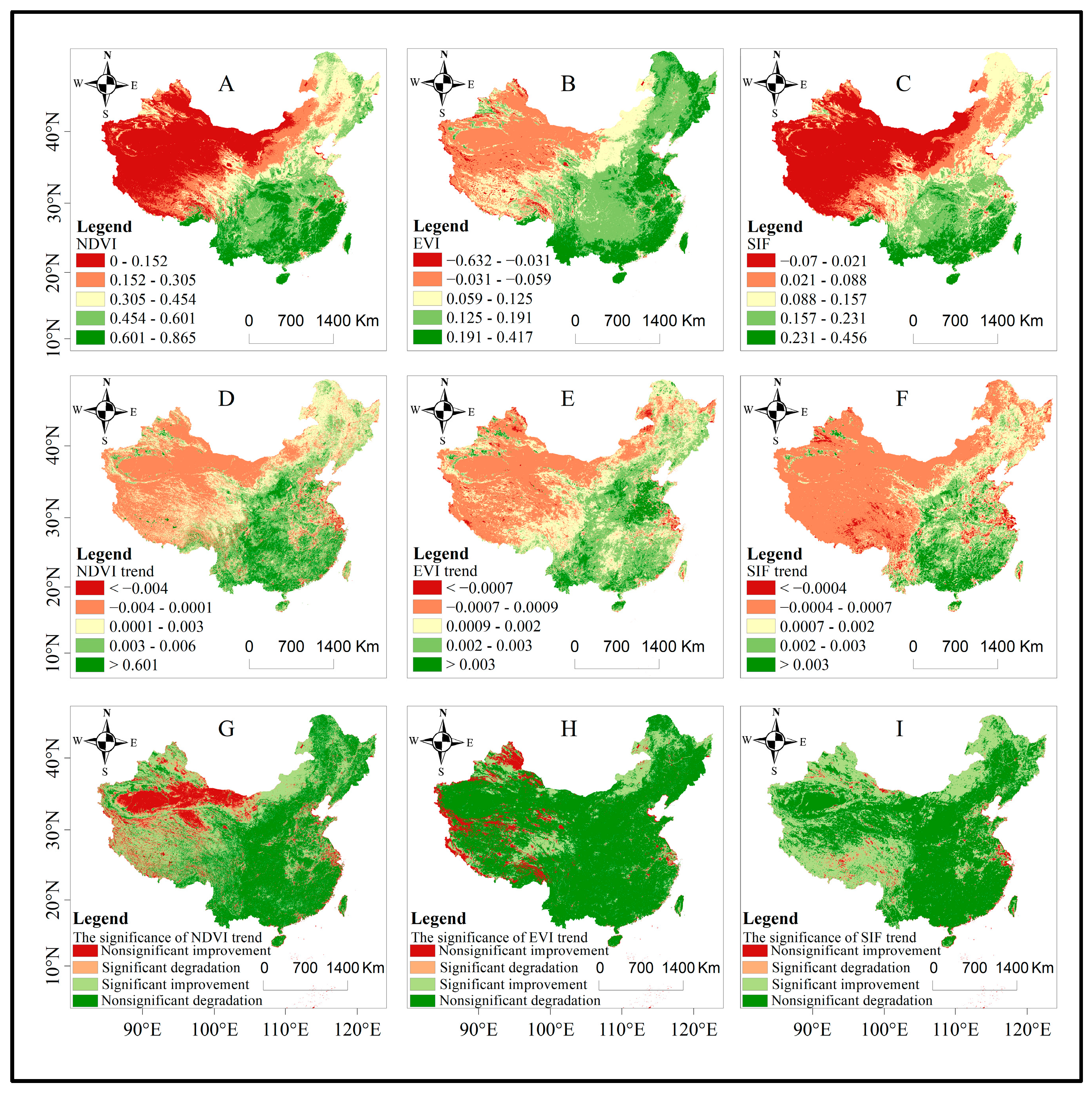
Terrestrial vegetation, a critical component of the Earth’s land surface, directly impacts the planet’s material and energy balance. This study investigated the dynamics of terrestrial vegetation in China from 2000 to 2019 using three remote sensing products (NDVI, EVI, and SIF) and explored the driving mechanisms behind these changes. We considered three meteorological factors, nine land use types, and two socio-economic factors while employing mathematical models to analyze the data. Additionally, we used the CA–Markov model to predict the spatial distribution of vegetation remote sensing products for 2020–2025. Our findings indicate the following: (1) Throughout the study period, the vegetation indices, NDVI, EVI, and SIF, all exhibited increasing trends. The SIF showed a more direct response to vegetation cover changes and was less influenced by other driving factors. The SIF outperforms the NDVI and EVI in detecting vegetation trend changes, particularly regarding sensitivity. (2) Vegetation cover changes are driven by multiple meteorological factors, such as temperature, precipitation, and relative humidity. These factors exhibit a strong spatial correlation with the distribution of vegetation remote sensing products. Among these factors, the SIF shows a higher sensitivity to temperature compared to the NDVI and EVI, while the NDVI and EVI display greater sensitivity to precipitation and relative humidity. (3) Within the study area, land use types reveal a gradient from northwest to southeast, which is consistent with the spatial distribution of the vegetation remote sensing products. For green vegetation types, the three remote sensing products exhibit varying sensitivity levels, with the SIF demonstrating the highest sensitivity to green vegetation types. (4) Overall, the future vegetation outlook in China is promising, especially in the southeastern regions where significant vegetation improvement trends are evident. However, the vegetation conditions in some northwestern areas remain less favorable, necessitating the reinforcement of ecological construction and improvement measures. Additionally, a significant positive correlation exists between population size, GDP, and vegetation remote sensing products. This study highlights the variability in the dynamics and driving mechanisms of terrestrial vegetation remote sensing products in China and employs the CA–Markov model for predicting future vegetation patterns. Our research contributes to the theoretical and technical understanding of remote sensing for terrestrial vegetation in the Chinese context.
Keywords: NDVI (Normalized Difference Vegetation Index); EVI (Enhanced Vegetation Index); SIF (Solar-Induced Chlorophyll Fluorescence); spatiotemporal variation; driving factors; CA-Markov model NDVI (Normalized Difference Vegetation Index); EVI (Enhanced Vegetation Index); SIF (Solar-Induced Chlorophyll Fluorescence); spatiotemporal variation; driving factors; CA-Markov model