Article

Effects of Different Numerical Methods on the Fracture Prediction Accuracy for Cortical Bone Structure under Bending Load

1
Department of Traffic Engineering, Yangzhou Polytechnic Institute, Yangzhou 225127, China
2
Department of Aerospace Engineering, Jilin Institute of Chemical Technology, Jilin 132022, China
3
Department of Engineering Mechanics, Jilin University, Changchun 130022, China
*
Author to whom correspondence should be addressed.
Appl. Sci. 2023, 13(6), 3998; https://doi.org/10.3390/app13063998
Submission received: 20 February 2023 / Revised: 18 March 2023 / Accepted: 20 March 2023 / Published: 21 March 2023
(This article belongs to the Special Issue Biomechanics in Rehabilitation Engineering)

Abstract

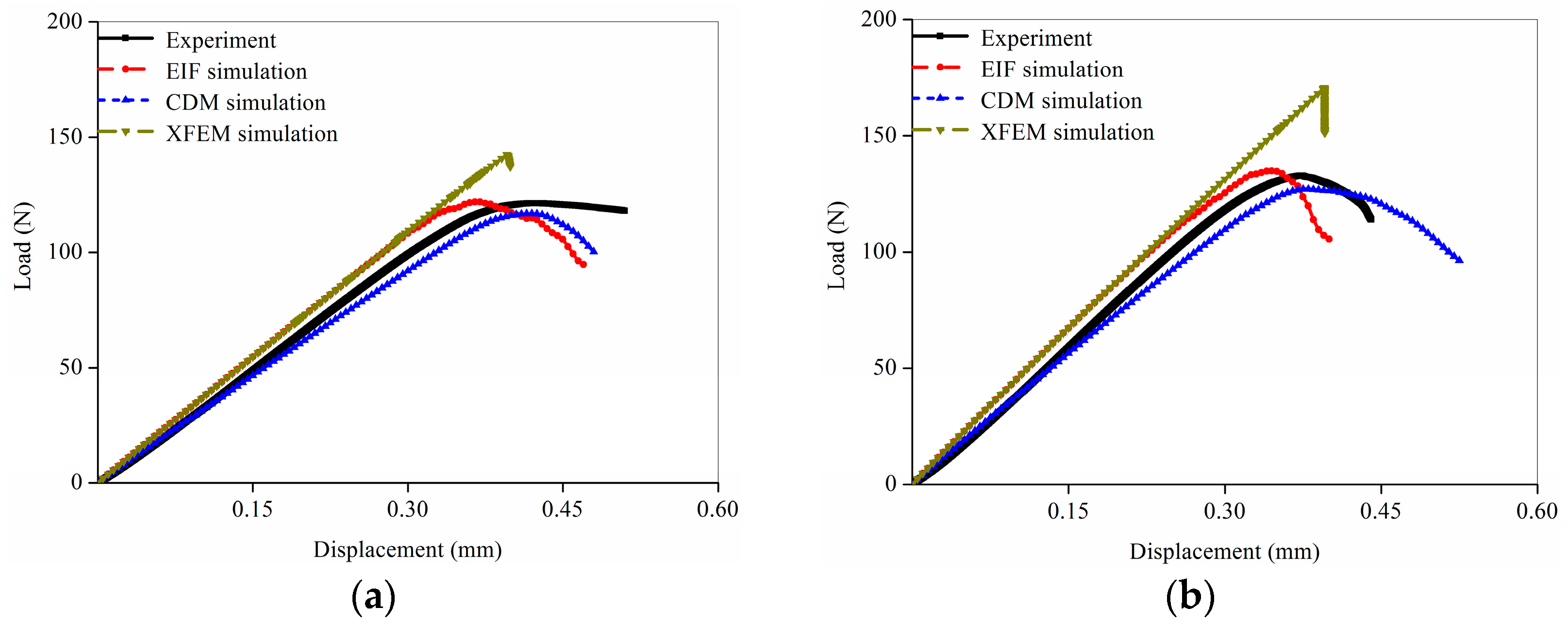
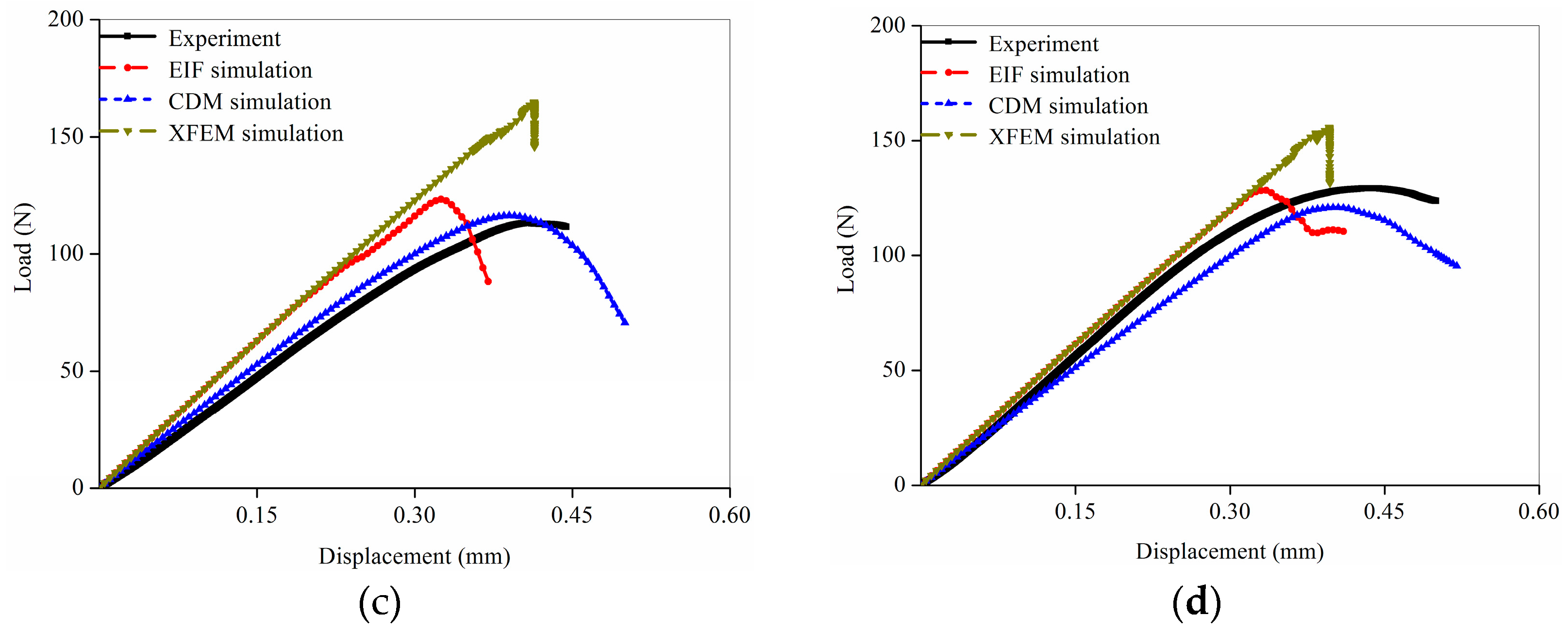
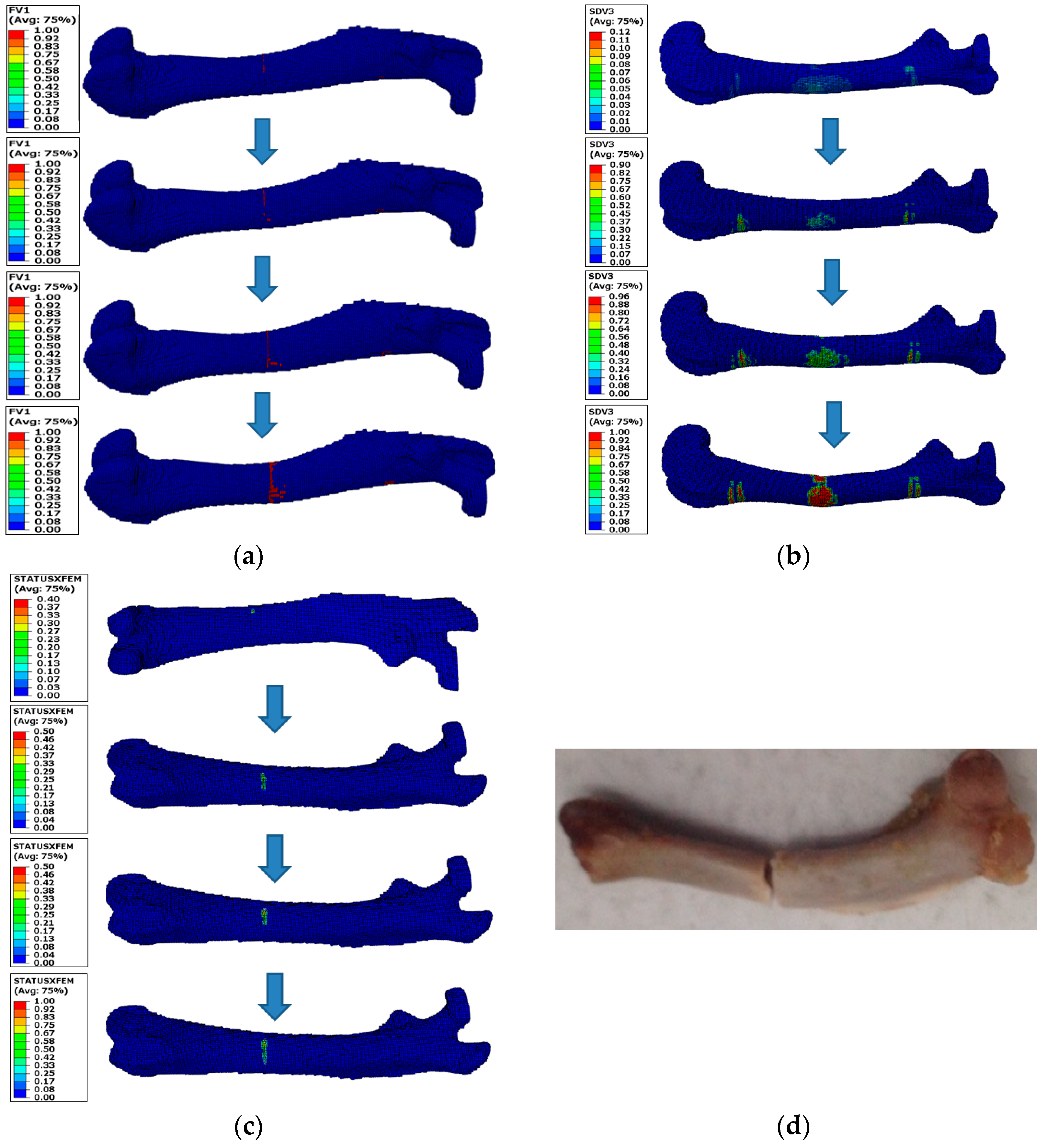
Three numerical methods, including element instantaneous failure, continuum damage mechanics, and extended finite element methods, are mainly used to simulate the fracture in cortical bone structure. Although many simulations focus on the cortical bone fracture, few have investigated the differences in prediction accuracy among the three numerical methods. The purpose of this study was to evaluate the prediction accuracy and applicability of the three numerical methods in simulating cortical bone fracture under bending load. The rat femur samples were first used to perform the three-point bending experiment. Then, the three numerical methods were respectively used to conduct fracture simulation on the femoral finite element models. Each result was compared with the experimental data to determine the prediction accuracy. The results showed that fracture simulation based on the continuum damage mechanics method was in better agreement with the experimental results, and observable differences in the failure processes could be seen in the same model under the three simulations due to various element failure strategies. The numerical method that was suitable for simulating cortical bone fracture under bending load was determined; meanwhile, the variations in the failure simulations were observed, and the cause of the variations in the predicted results using different numerical methods was also discussed, which may have potential to improve the prediction accuracy of cortical bone fracture.
Keywords: cortical bone; fracture; element instantaneous failure; continuum damage mechanics; extended finite element method cortical bone; fracture; element instantaneous failure; continuum damage mechanics; extended finite element method