Article

Denoising Method for Seismic Co-Band Noise Based on a U-Net Network Combined with a Residual Dense Block

Hebei Key Laboratory of Seismic Disaster Instrument and Monitoring Technology, Institute of Disaster Prevention, Langfang 065201, China
*
Author to whom correspondence should be addressed.
Appl. Sci. 2023, 13(3), 1324; https://doi.org/10.3390/app13031324
Submission received: 16 November 2022 / Revised: 12 January 2023 / Accepted: 14 January 2023 / Published: 19 January 2023
(This article belongs to the Section Earth Sciences)

Abstract

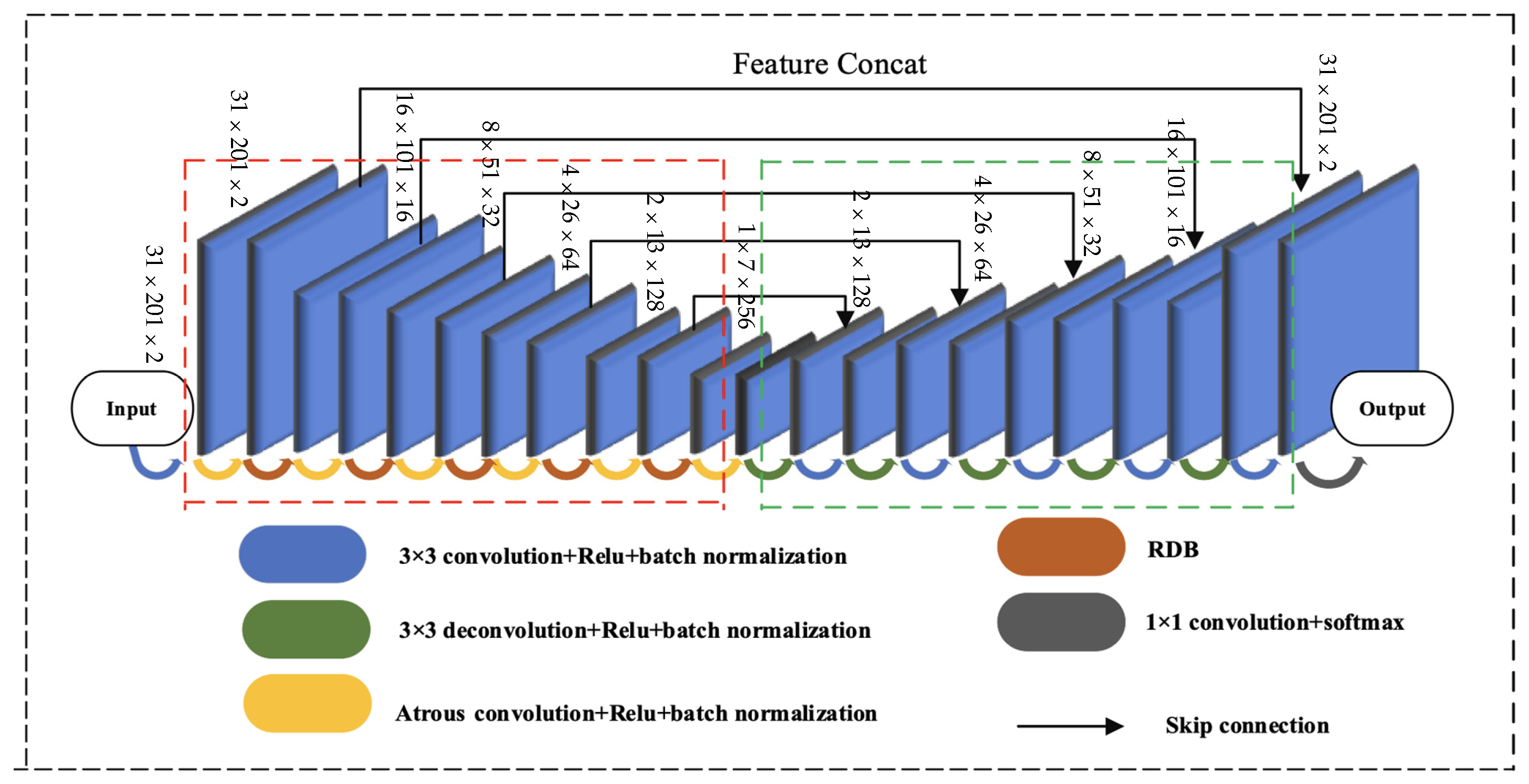
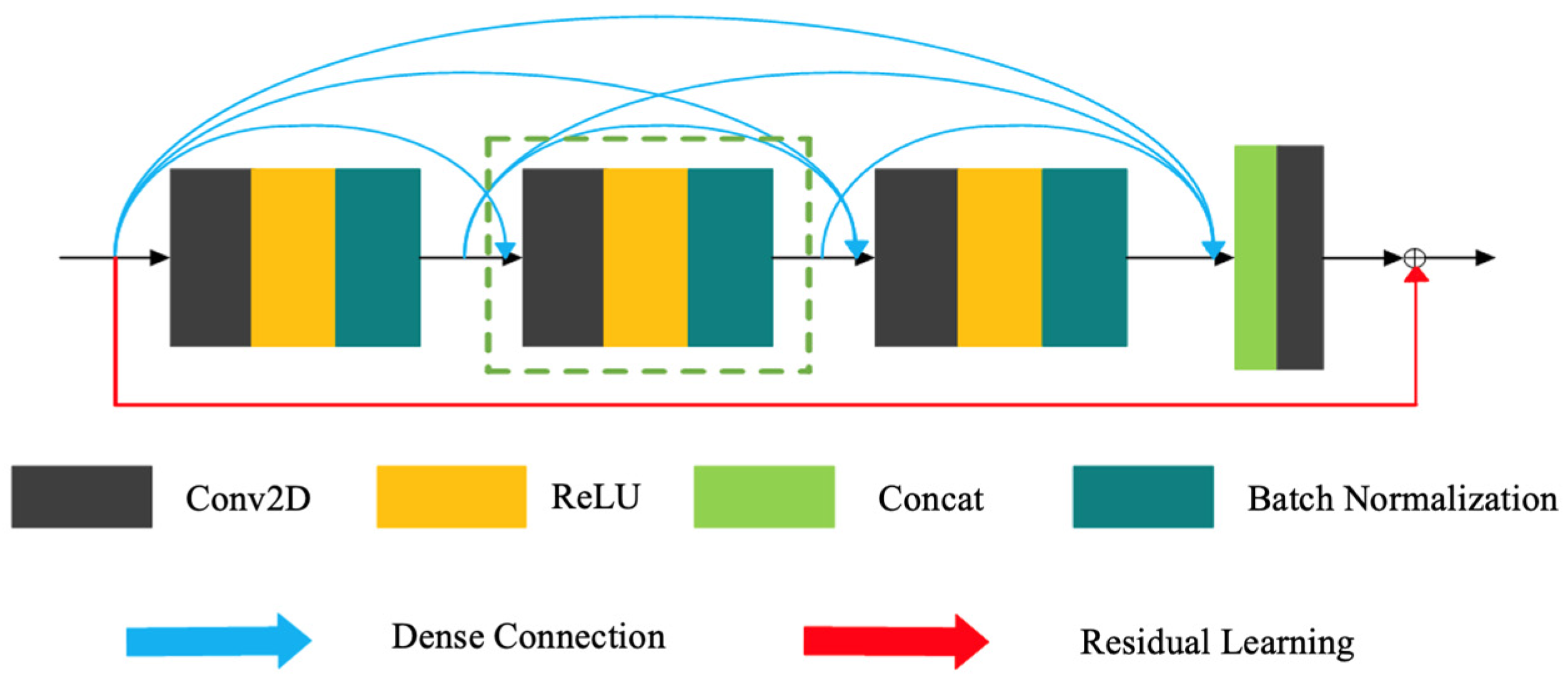
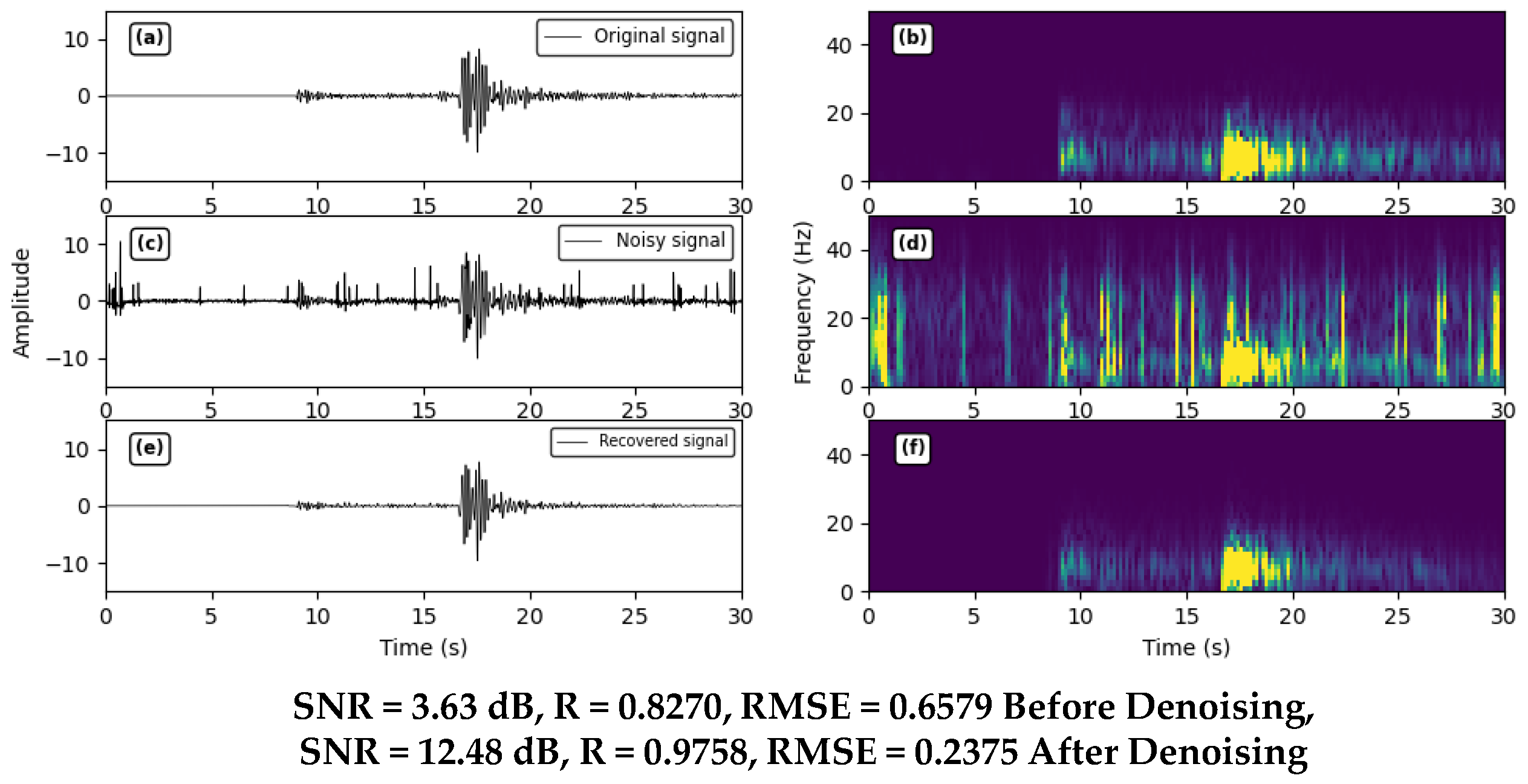
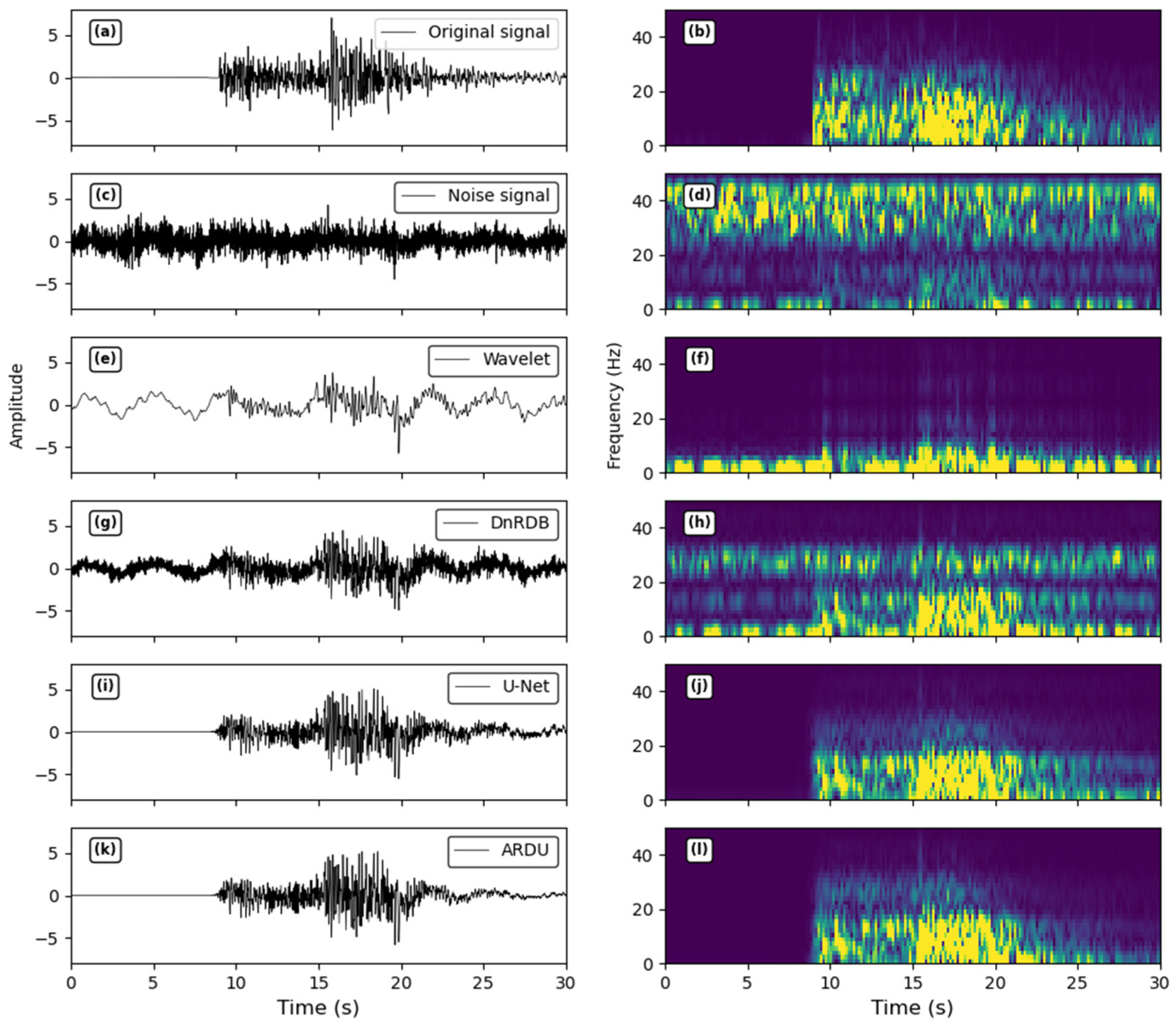
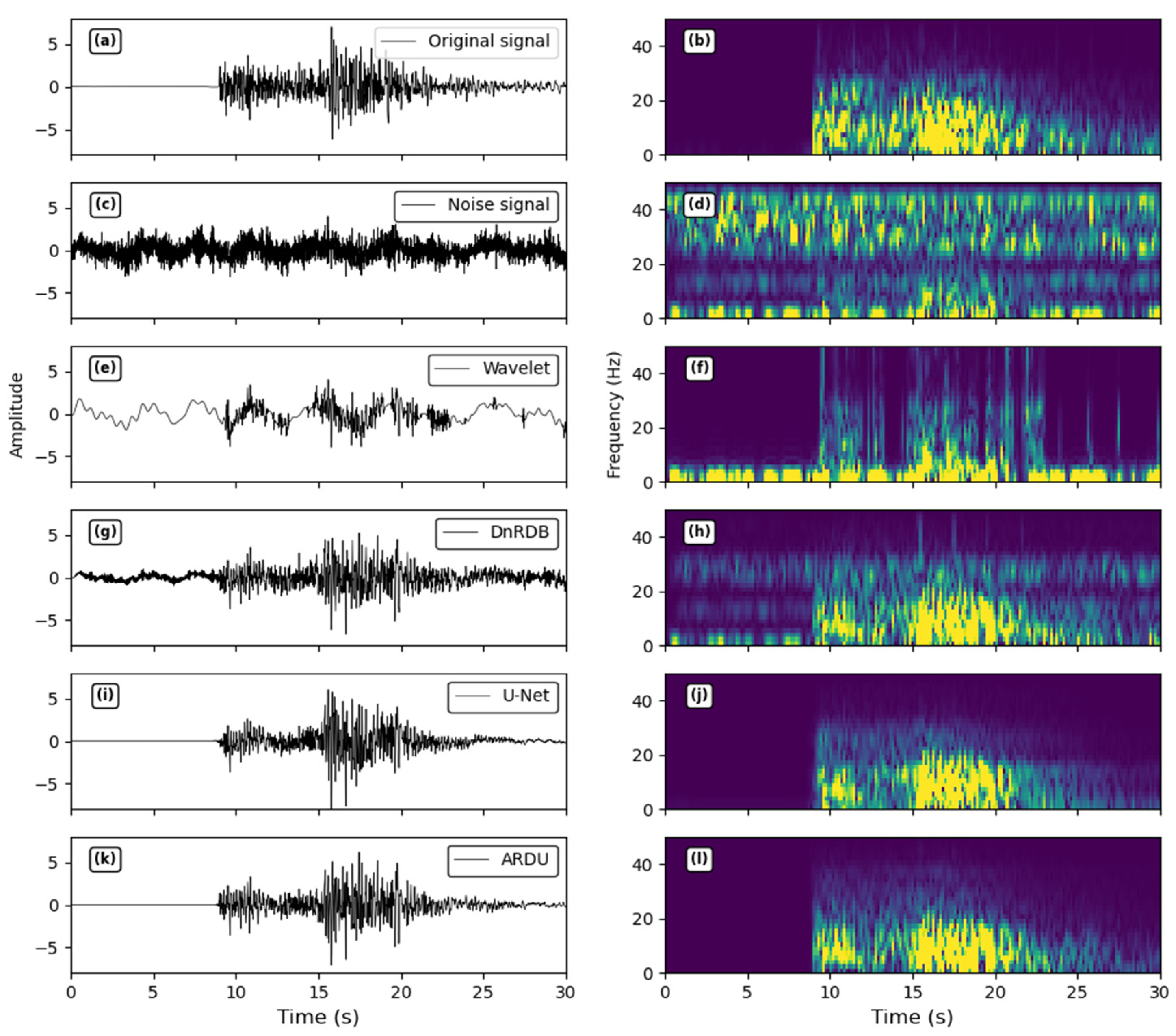
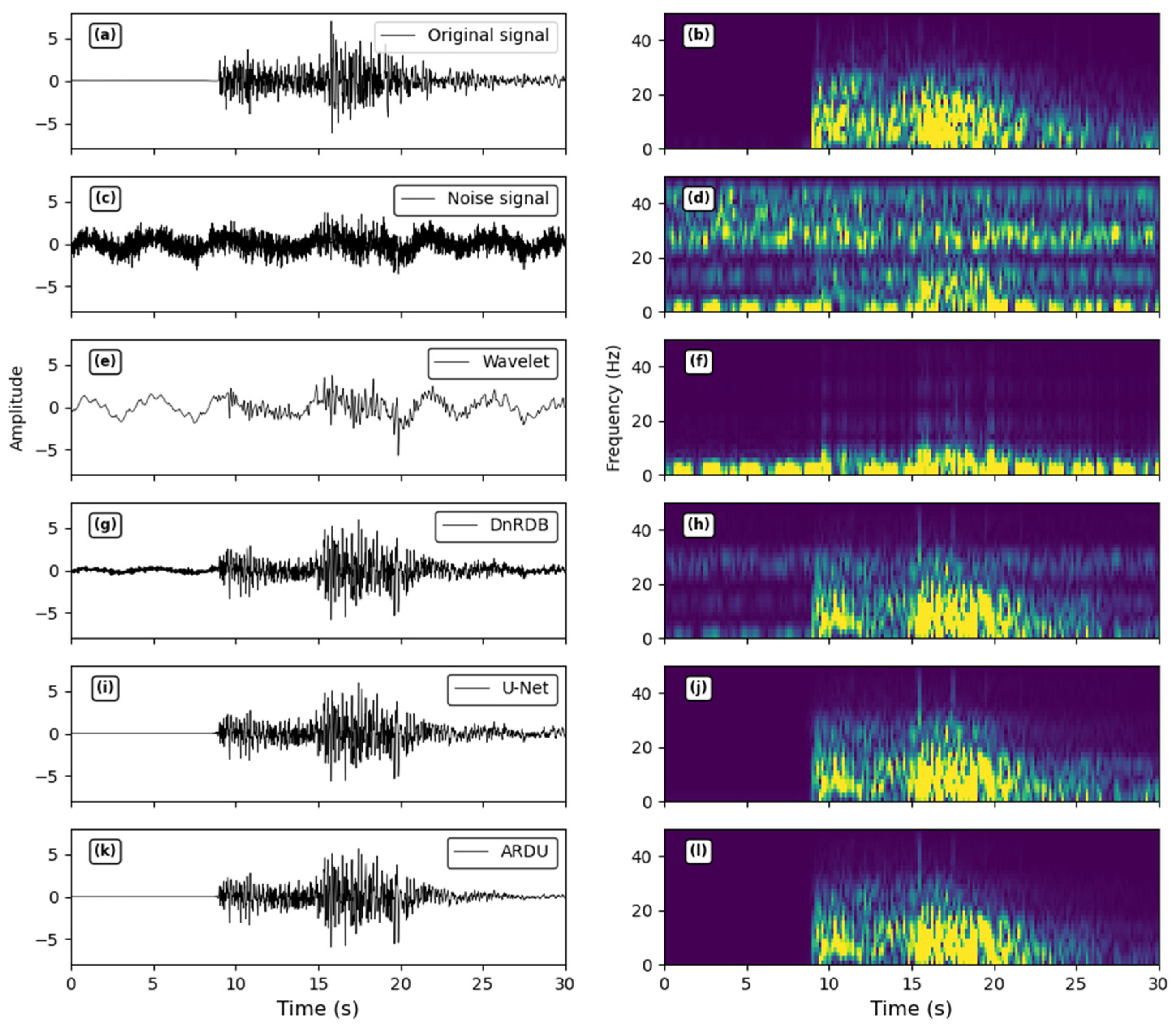
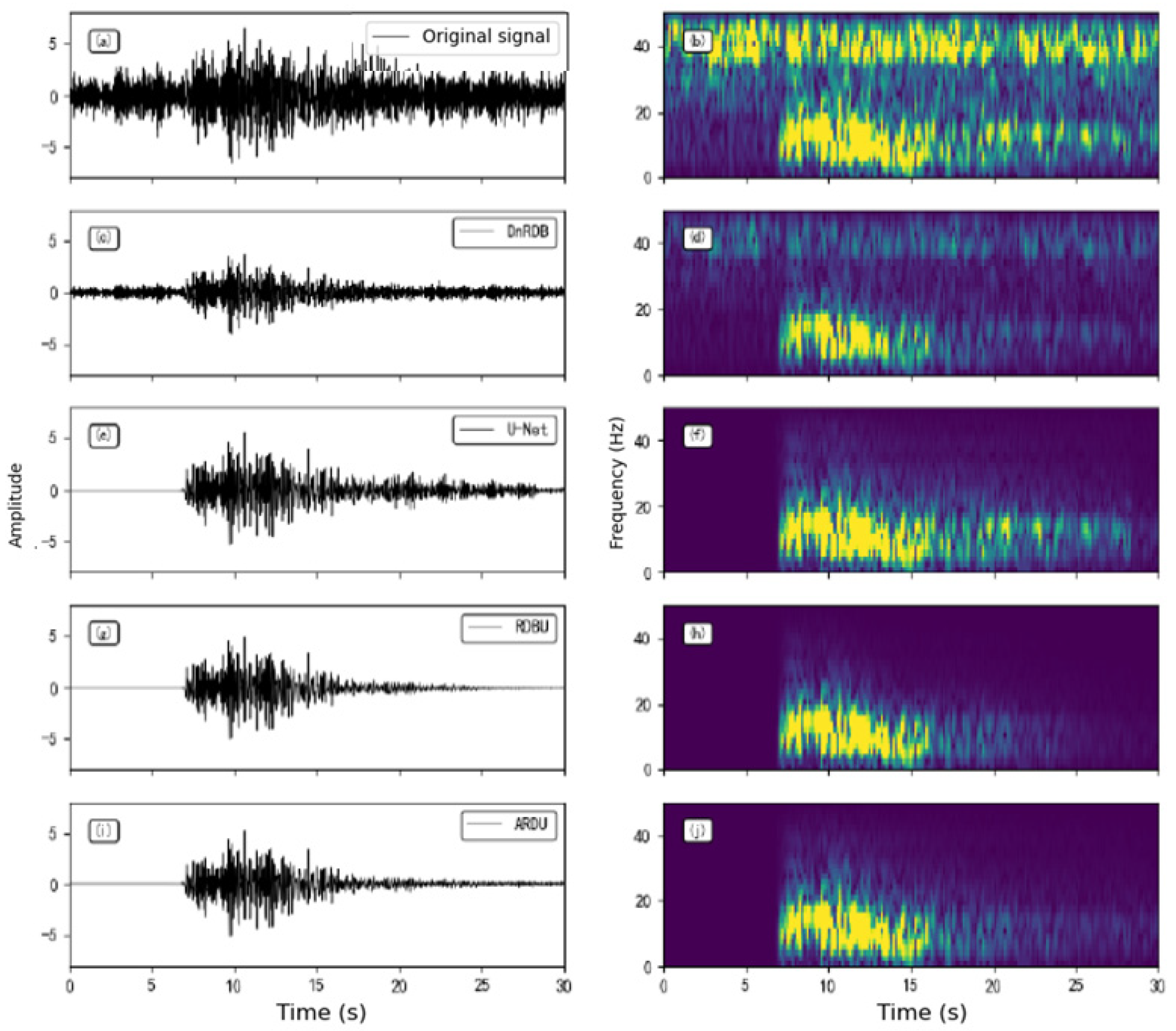
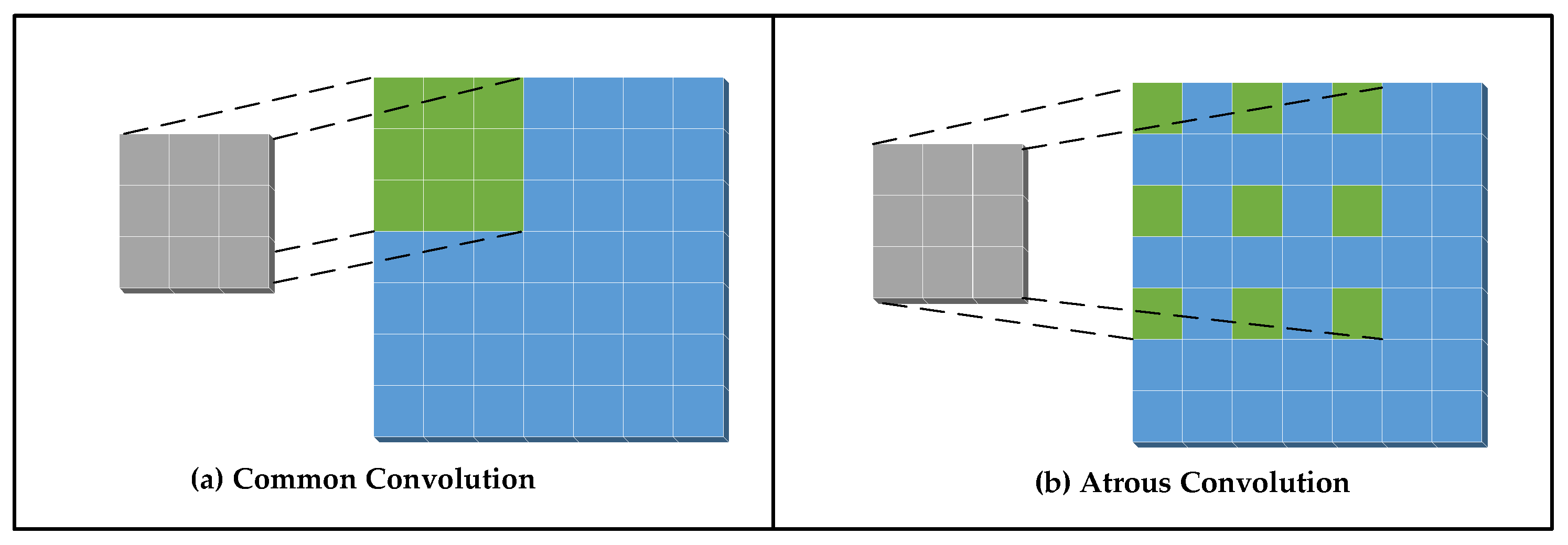
To address the problem of waveform distortion in the existing seismic signal denoising method when removing co-band noise, further improving the signal-to-noise ratio (SNR) of seismic signals and enhancing their quality, this paper designs a seismic co-band denoising model Atrous Residual Dense Block U-Net (ARDU), which uses a U-shaped convolutional neural network (U-Net) as a basic framework and combines atrous convolution and the residual dense block (RDB). In the ARDU model, atrous convolution is connected with residual dense blocks to form the feature extraction unit of the model encoder. Among them, the residual dense blocks can deepen the network’s depth and enhance the feature extraction ability of the network on the premise of mitigating the gradient-vanishing and gradient-exploding problem. Atrous convolution can enlarge receptive fields, reduce waveform distortion, and protect effective signals without increasing network parameters. To test the denoising performance of the ARDU model, the Stanford Global Seismic dataset was used to construct a training set and a test set and the model was trained and tested on it. The experimental results of the ARDU model for different types of seismic co-band noise showed that this model can effectively remove seismic co-band noise, protect effective signals, improve the SNR of seismic signals, and enhance the quality of seismic signals. To further verify the denoising effect of the model, this model was compared with the wavelet threshold denoising U-Net model and the denoising residual dense block (DnRDB) model, and the results showed that the ARDU model has the best SNR, r (correlation coefficient), and root-mean-square error (RMSE) and the least distortion of the seismic signal waveform.
Keywords: denoising; co-band noise; residual dense block; atrous convolution; waveform distortion denoising; co-band noise; residual dense block; atrous convolution; waveform distortion