Perforation Characteristics of Three-Layer Steel Plates Subjected to Impact with Different Shapes and Velocities of Reactive Fragments

Abstract
1. Introduction
2. Numerical Simulation Methods
2.1. Numerical Simulation Models and Parameters
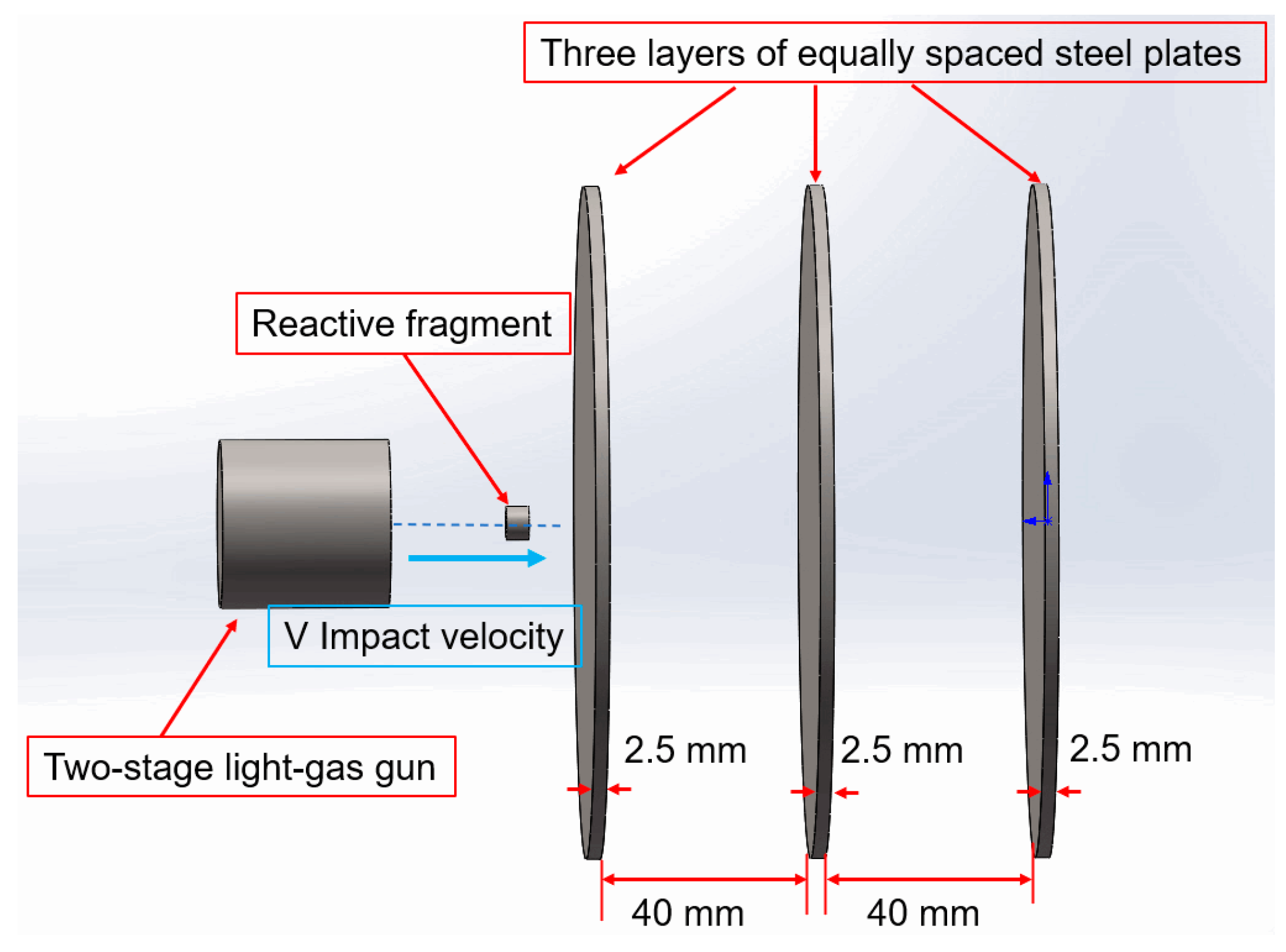
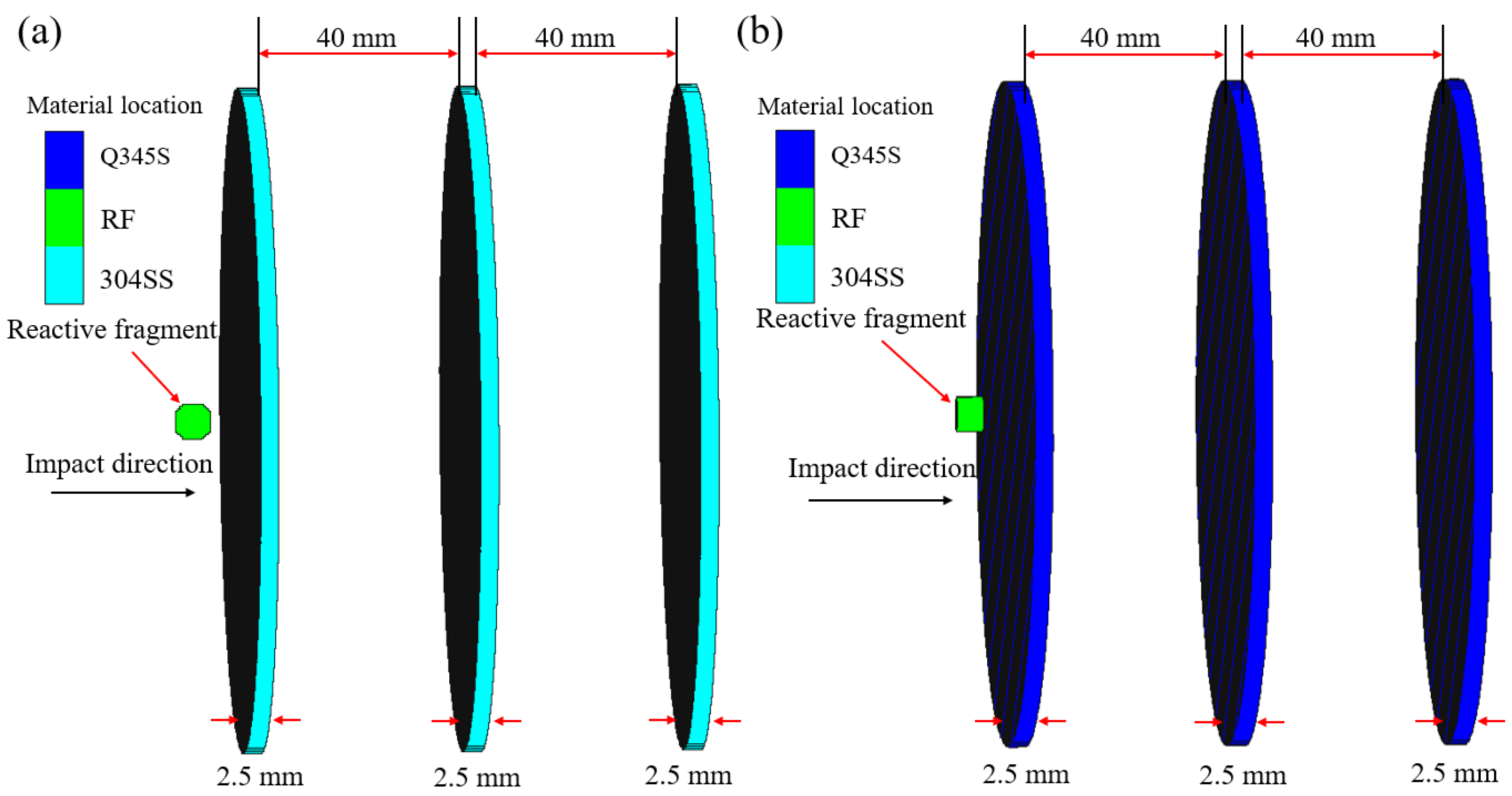
2.1.1. Numerical Simulation Models
2.1.2. Numerical Simulation Parameters
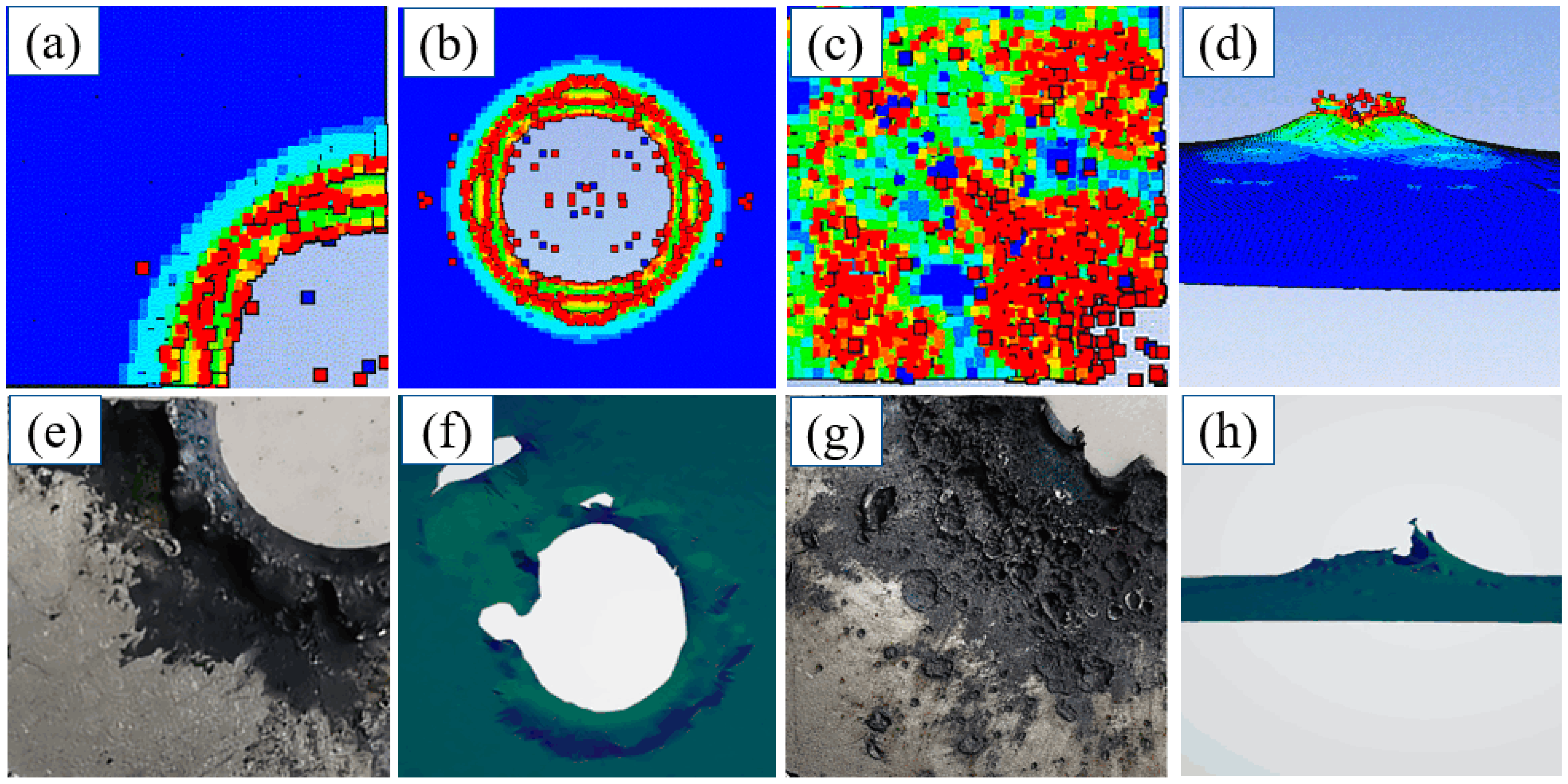
2.2. Numerical Validation
2.3. Simulated Working Conditions
3. Results and Discussion
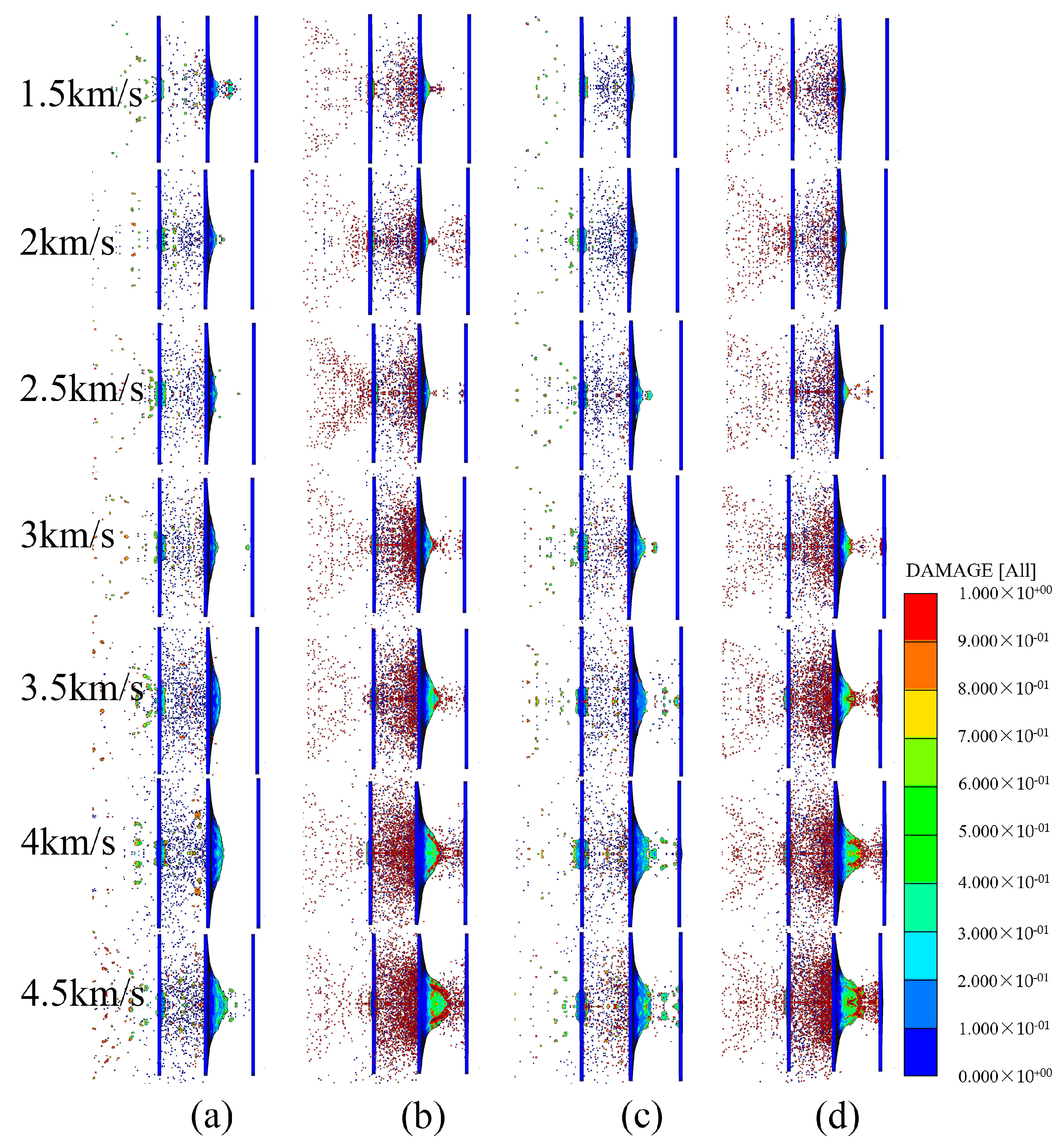
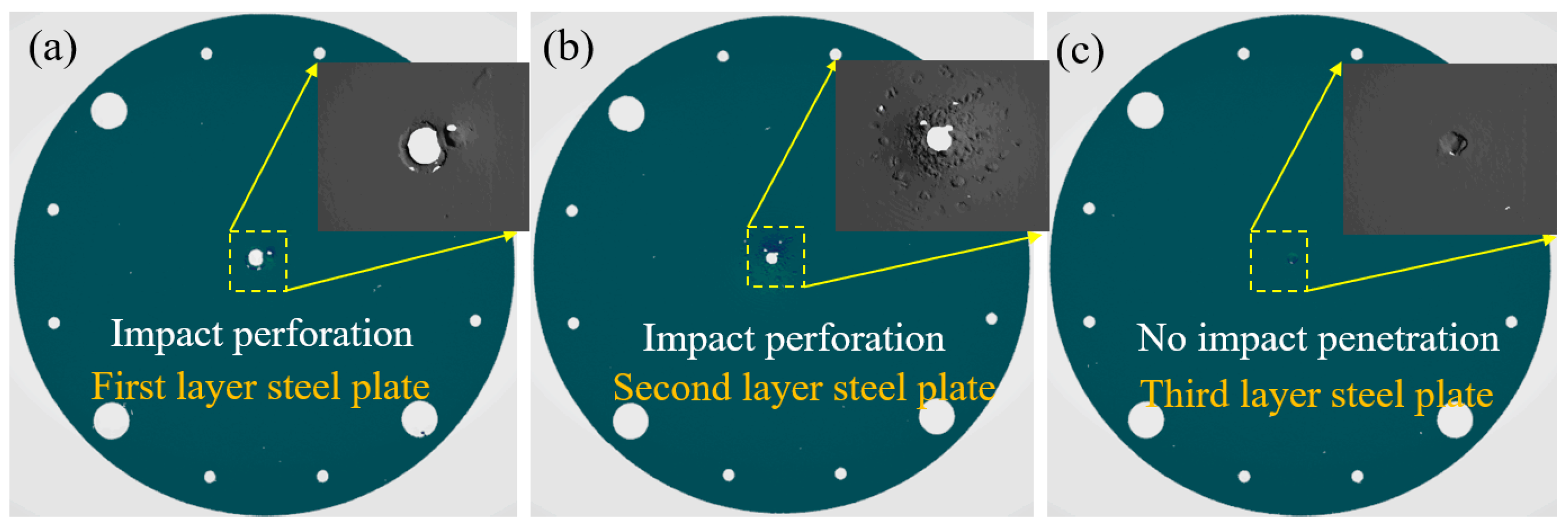
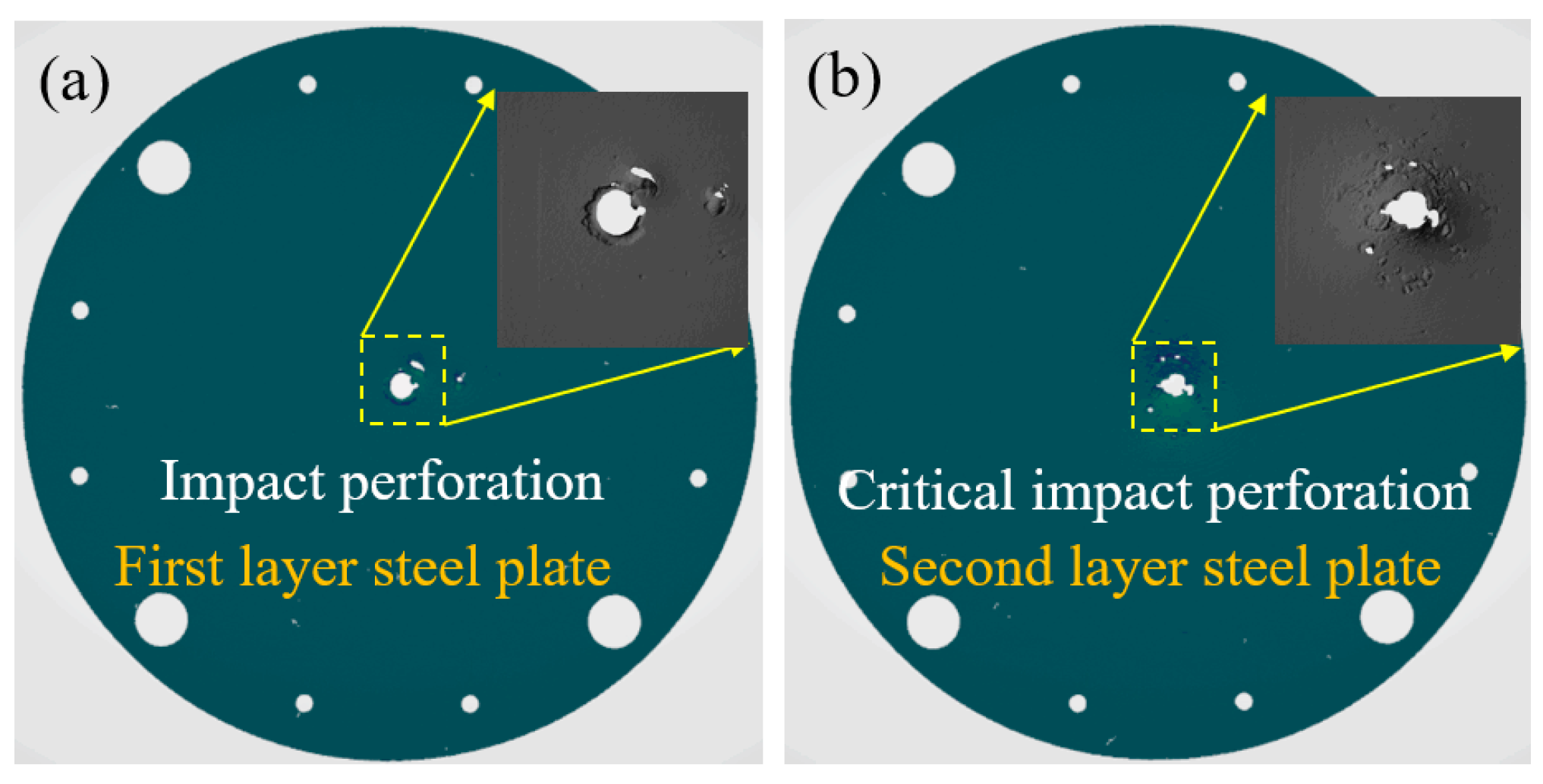
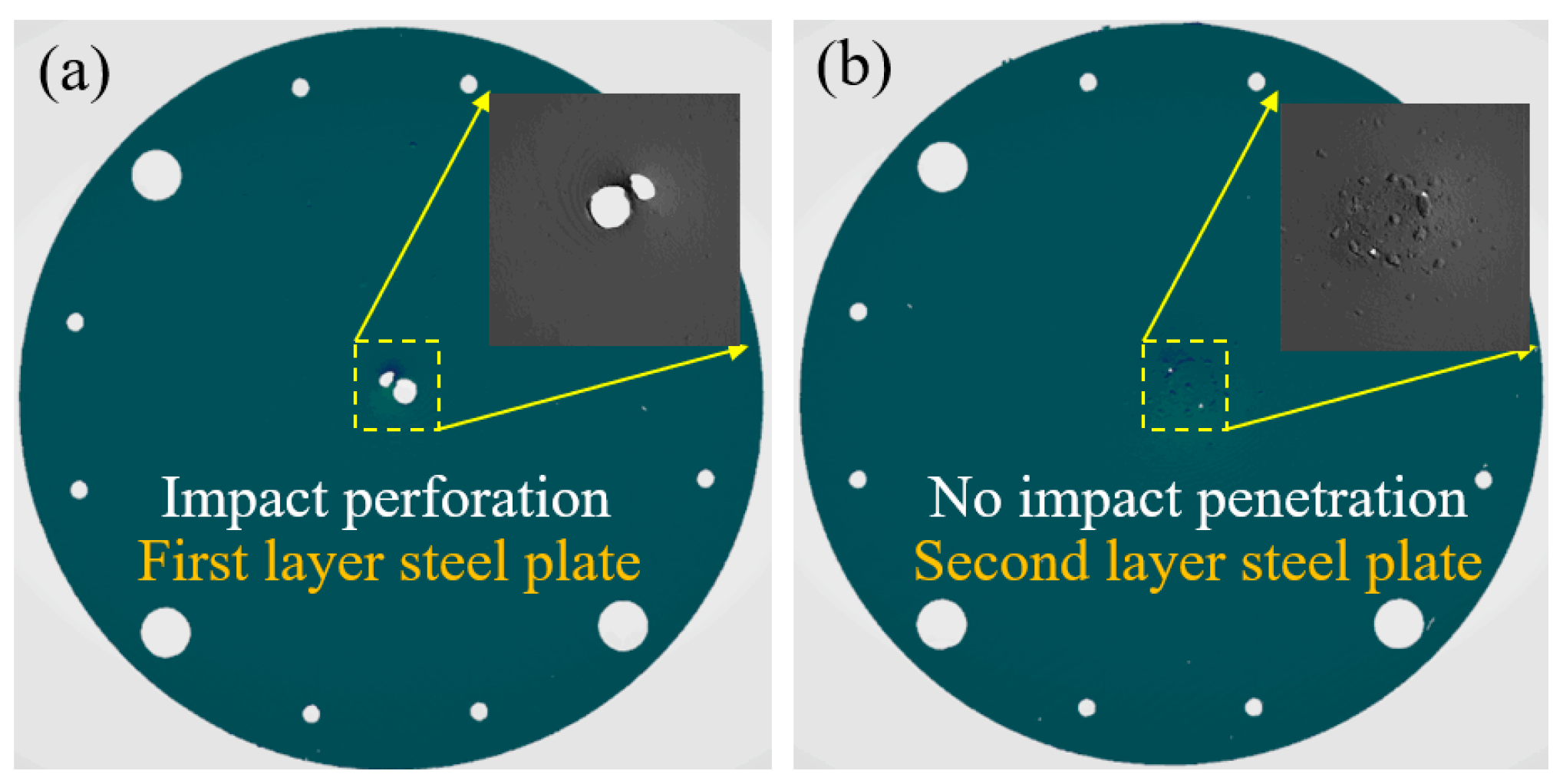
3.1. Simulation Results of Three-Layer Steel Plates under Different Impact Conditions
3.2. Perforation Diameter Analysis
3.2.1. Impact Process on Velocity Vector of Reactive Fragment and MIS.STRESS of Steel Plate
- (1)
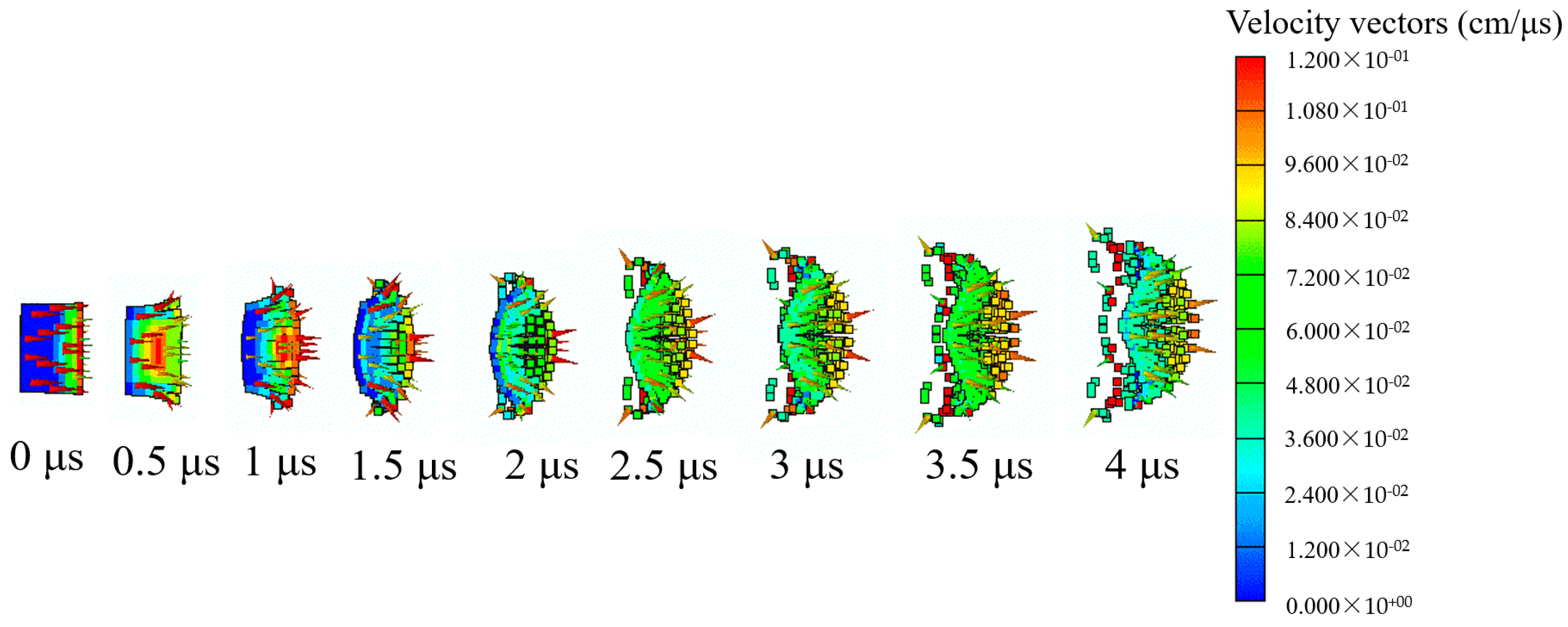
- Impact process on velocity vector of reactive fragment
- (2)
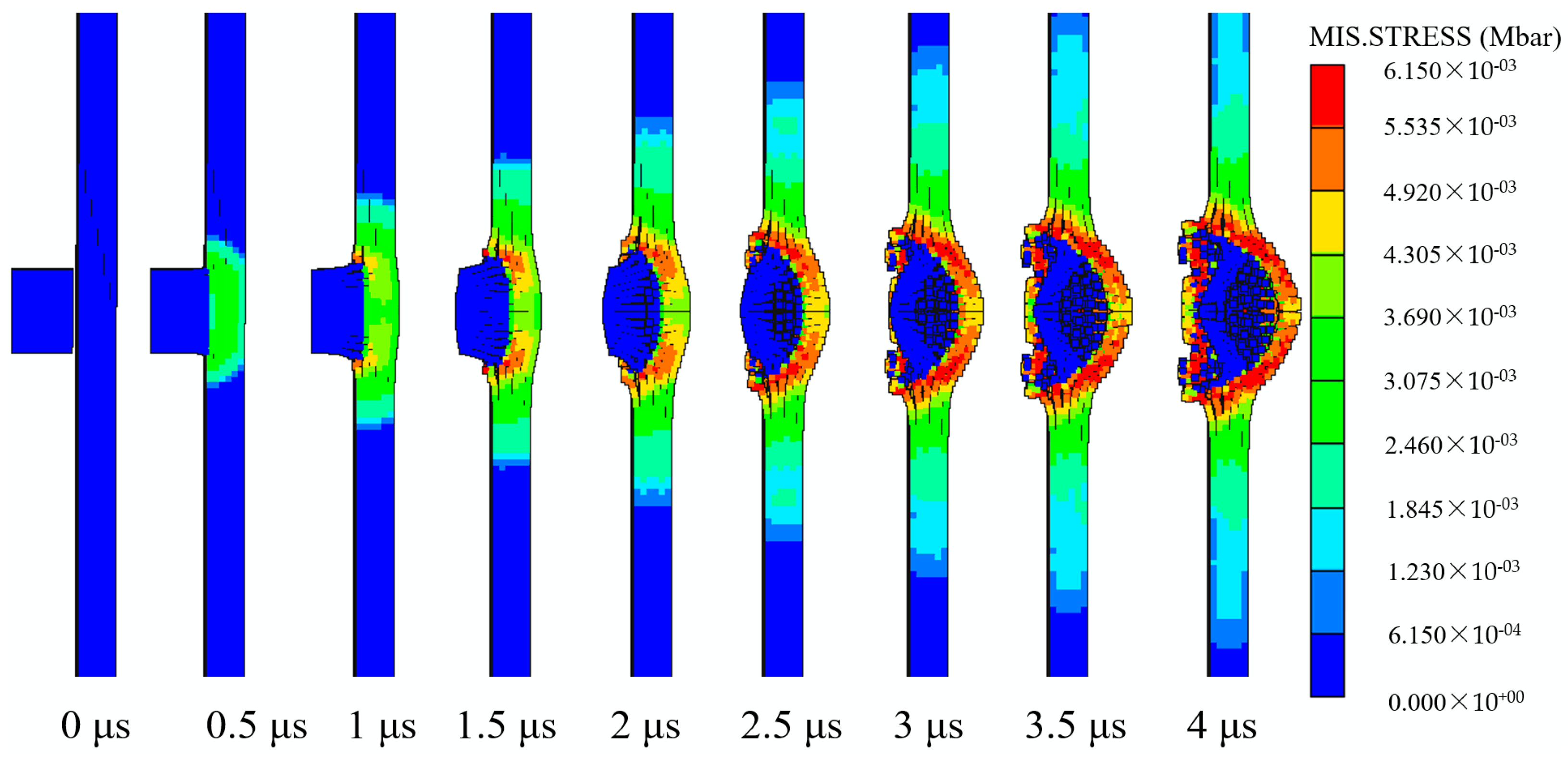
- Impact process on MIS.STRESS of steel plate
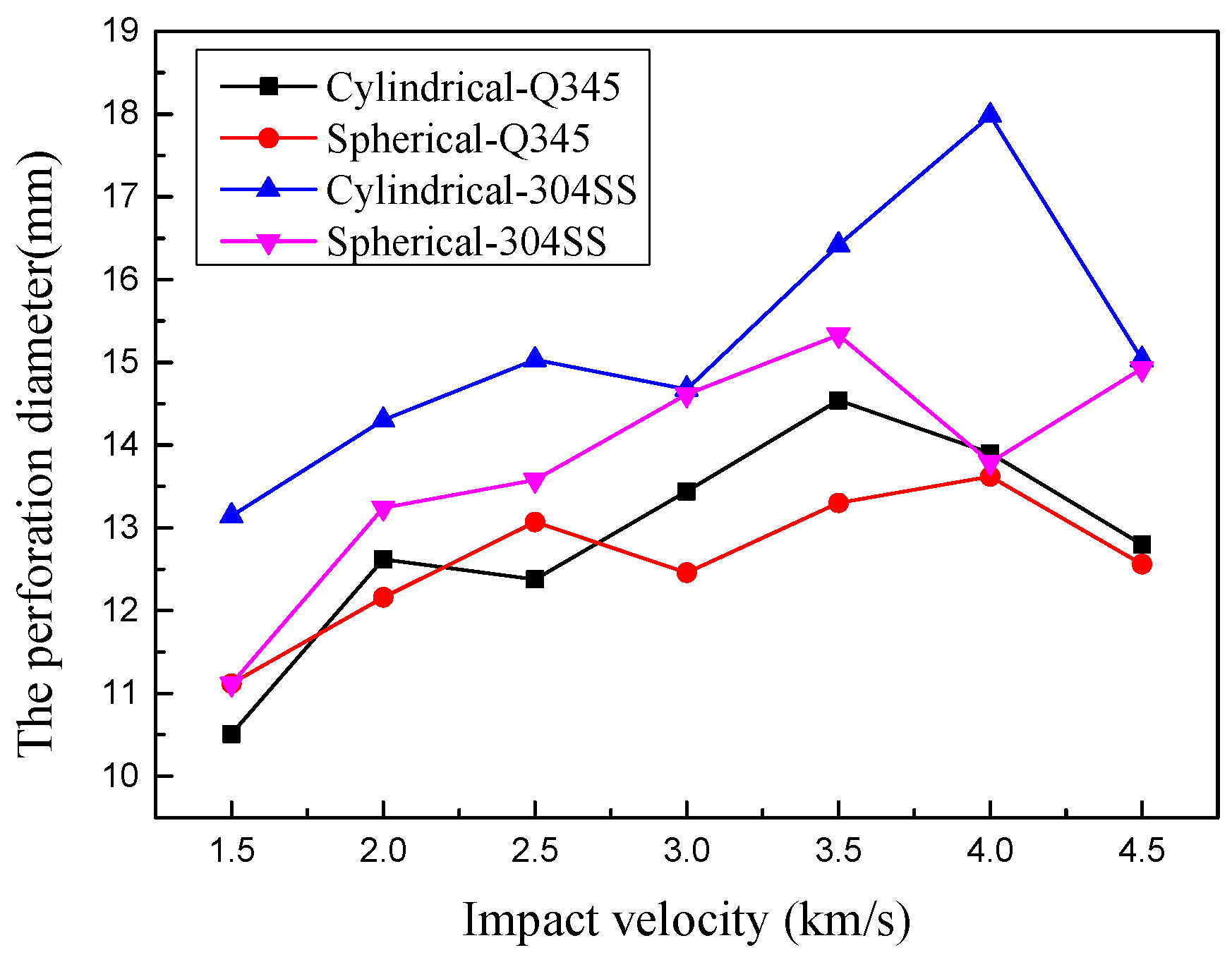
3.2.2. Impact of Velocity on Perforation Diameter
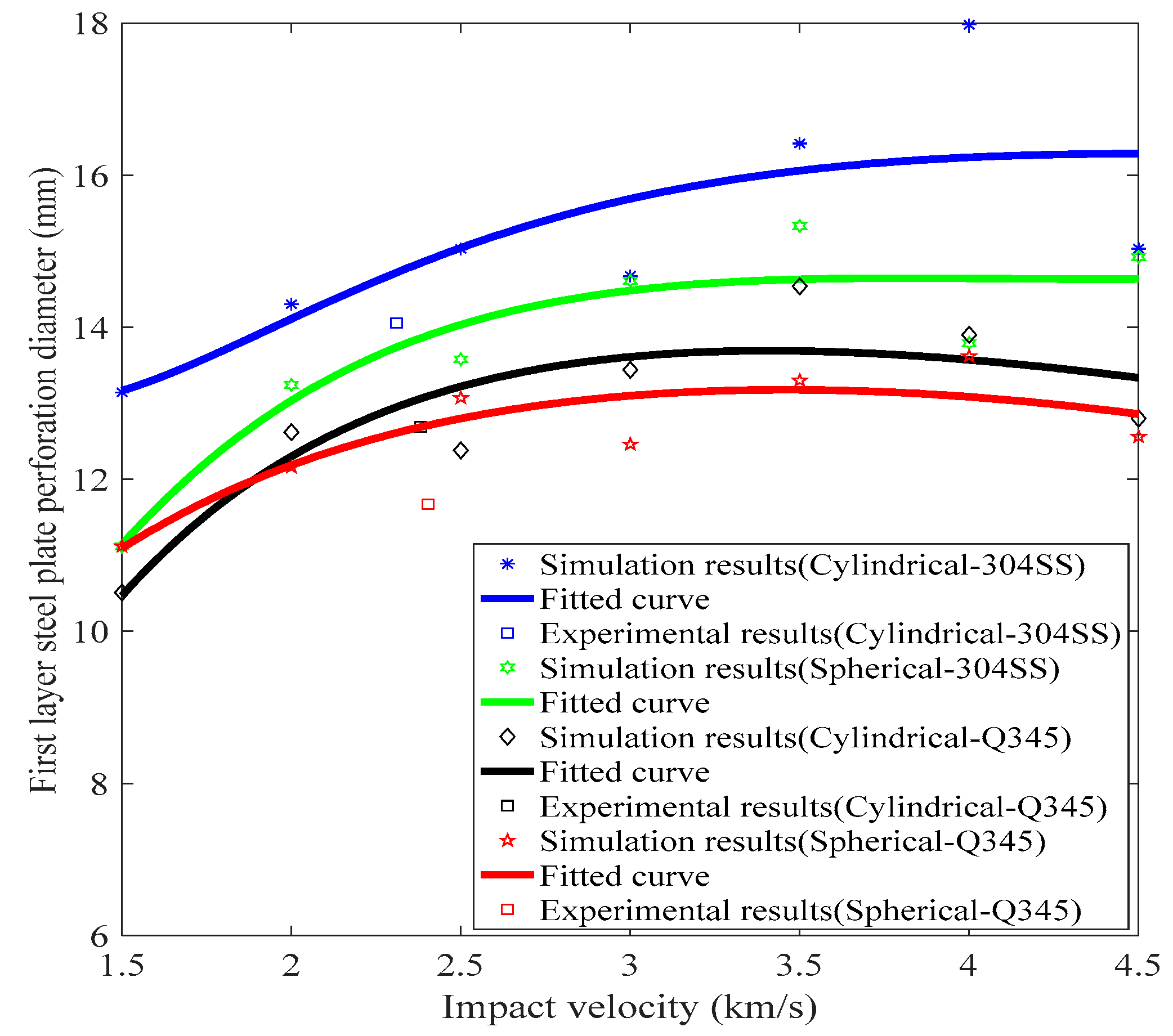
3.2.3. Quantitative Analysis Method for Perforation Diameter
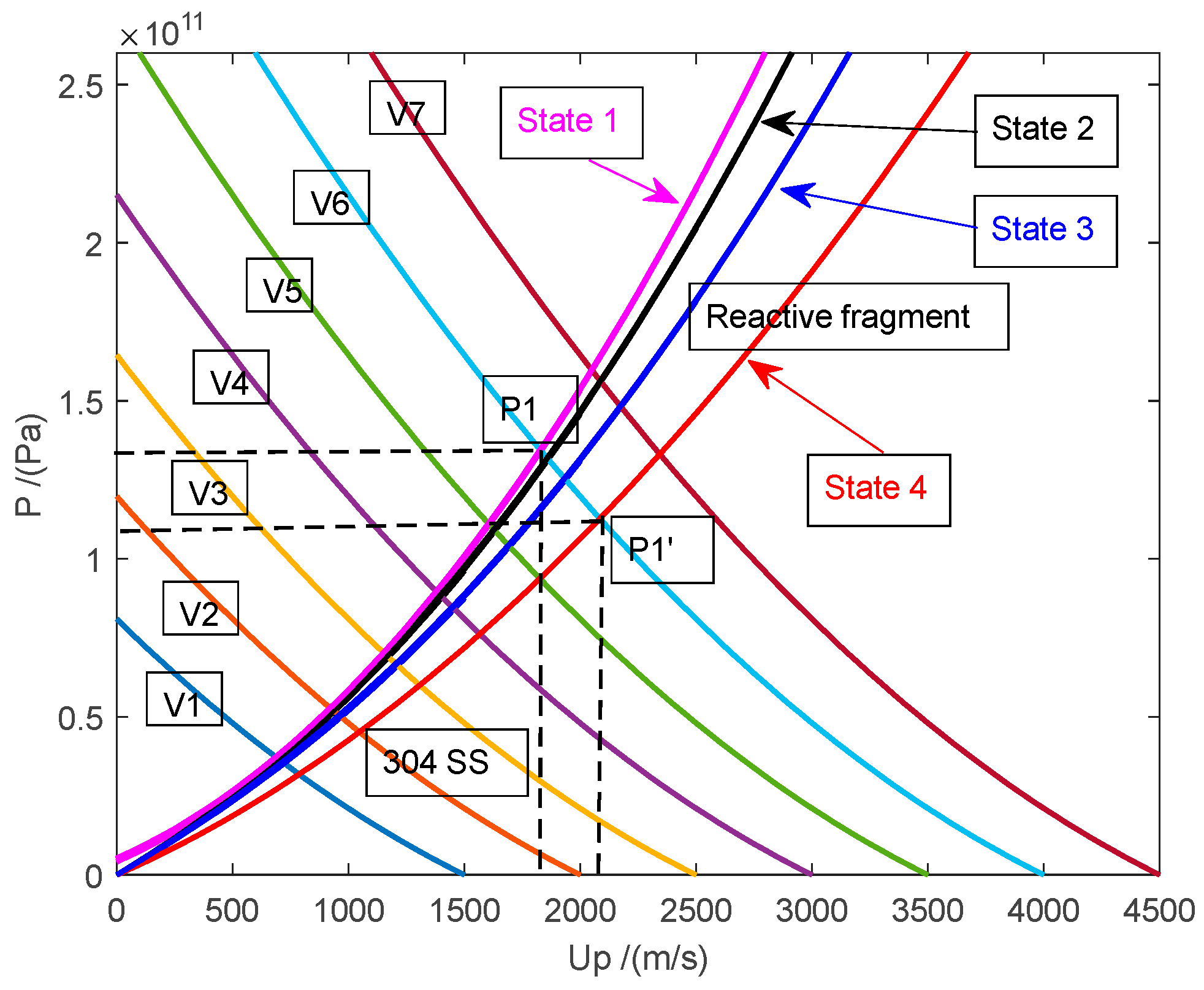
3.3. Theoretical Analysis of Shock Wave Pressure on Steel Plates at Different Impact Velocities
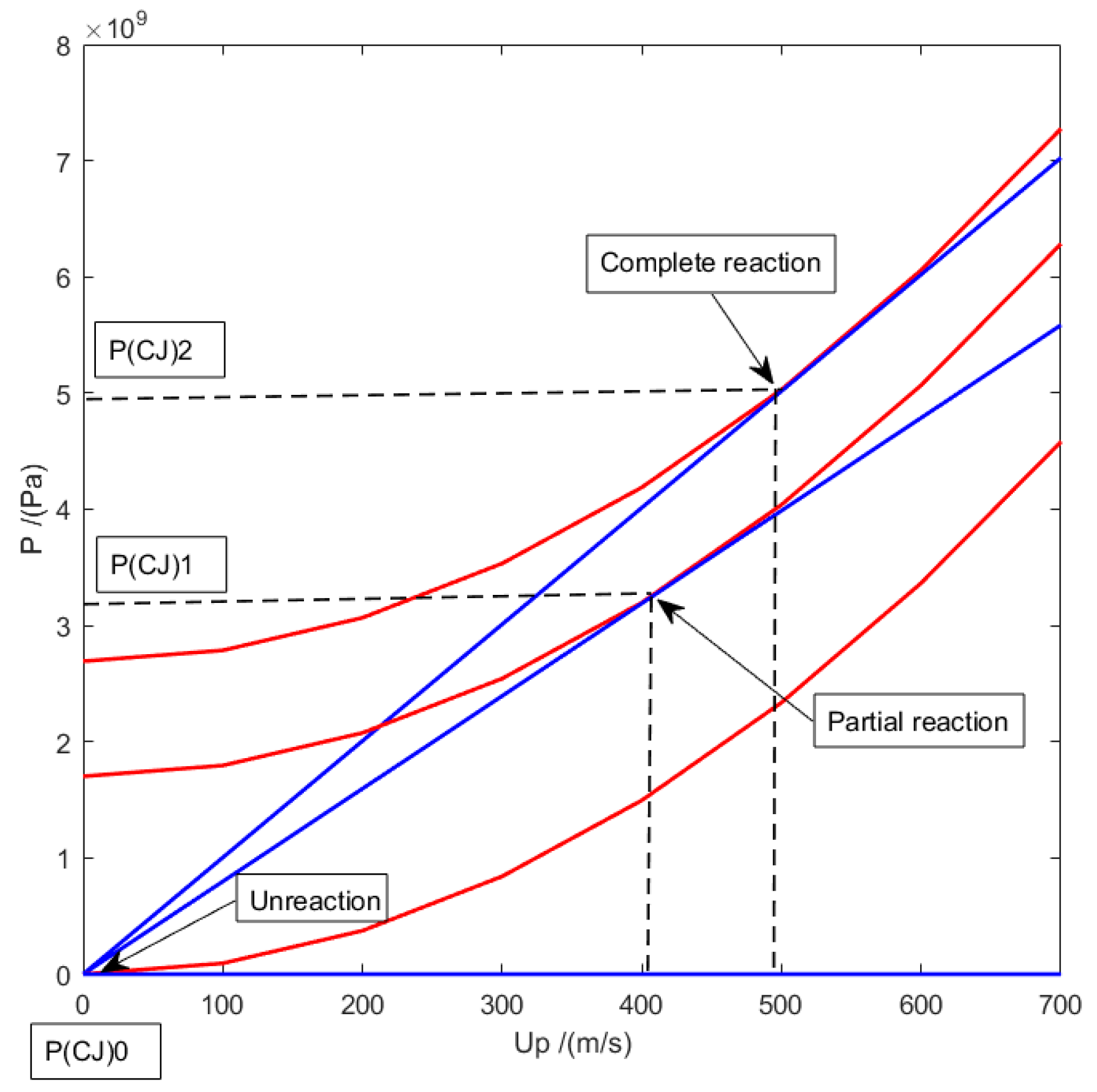
3.4. PCJ Analysis of Impact Process
4. Conclusions
- (1)
- The results of the numerical simulation and the experimental results were in good agreement, demonstrating the accuracy of the SPH simulation method in simulating the properties of steel plates under impact. The Z–A strength model and parameters chosen in this study can better reflect the physical change process of Q345S or 304SS plates under the impact of reactive fragments.
- (2)
- The damage failure characteristics of the steel plate were significantly influenced by the shape of the reactive fragments, the impact velocity, and the type of steel plate. The quick prediction of the perforation diameter of a 2.5 mm thick steel plate affected by reactive fragments at varied velocities was made possible by the fitting equation of the perforation diameter of the first layer of the steel plate based on the method of quantitative analysis.
- (3)
- The impedance matching approach was used to examine the pressure variation trend in the steel plates and their behavior under various velocity impact situations. The pressure-added value produced by the impact-induced chemical reaction of reactive fragments rose as the impact velocity rose.
Author Contributions
Funding
Institutional Review Board Statement
Informed Consent Statement
Data Availability Statement
Conflicts of Interest
References
- Piekutowski, A.; Poormon, K.; Christiansen, E.; Davis, B. Performance of Whipple shields at impact velocities above 9 km/s. Int. J. Impact Eng. 2011, 38, 495–503. [Google Scholar] [CrossRef] [Scilit]
- Palmieri, D.; Faraud, M.; Destefanis, R.; Marchetti, M. Whipple shield ballistic limit at impact velocities higher than 7 km/s. Int. J. Impact Eng. 2001, 26, 579–590. [Google Scholar] [CrossRef] [Scilit]
- Hernandez, V.; Murr, L.; Anchondo, I. Experimental observations and computer simulations for metallic projectile fragmentation and impact crater development in thick metal targets. Int. J. Impact Eng. 2006, 32, 1981–1999. [Google Scholar] [CrossRef] [Scilit]
- Tiamiyu, A.; Szpunar, J.; Odeshi, A. Strain rate sensitivity and activation volume of AISI 321 stainless steel under dynamic impact loading: Grain size effect. Mater. Charact. 2019, 154, 7–19. [Google Scholar] [CrossRef] [Scilit]
- Xiao, Y.; Dong, H.; Zhou, J.; Wang, J. Studying normal perforation of monolithic and layered steel targets by conical projectiles with SPH simulation and analytical method. Eng. Anal. Bound. Elem. 2017, 75, 12–20. [Google Scholar] [CrossRef] [Scilit]
- Banerjee, A.; Dhar, S.; Acharyya, S.; Datta, D.; Nayak, N. Numerical Simulation of Ballistic Impact of Armour Steel Plate by Typical Armour Piercing Projectile. Procedia Eng. 2017, 173, 347–354. [Google Scholar] [CrossRef] [Scilit]
- Wang, C.; Wang, H.; Shankar, K.; Hazell, P.J. Dynamic failure behavior of steel wire mesh subjected to medium velocity impact: Experiments and simulations. Int. J. Mech. Sci. 2021, 216, 106991. [Google Scholar] [CrossRef] [Scilit]
- Petrudi, A.M.; Vahedi, K.; Rahmani, M.; Petrudi, M.M. Numerical and analytical simulation of ballistic projectile penetration due to high velocity impact on ceramic target. Frat. Integrità Strutt. 2020, 14, 226–248. [Google Scholar] [CrossRef] [Scilit]
- Dhote, K.; Verma, P. Investigation of hole formation by steel sphere impacting on thin plate at hypervelocity. Thin-Walled Struct. 2018, 126, 38–47. [Google Scholar] [CrossRef] [Scilit]
- Elveli, B.S.; Vestrum, O.; Hauge, K.O.; Berstad, T.; Børvik, T.; Aune, V. Thin steel plates exposed to combined ballistic impact and partially confined airblast loading. Eng. Fail. Anal. 2023, 144, 226–248. [Google Scholar] [CrossRef] [Scilit]
- Xiao, Y.; Dong, H.; Zhan, H.; Zhu, A. Numerical study on the perforation of steel plates by multiple projectiles. Eng. Comput. 2018, 35, 2629–2651. [Google Scholar] [CrossRef] [Scilit]
- Kılıç, N.; Ekici, B. Ballistic resistance of high hardness armor steels against 7.62 mm armor piercing ammunition. Mater. Des. 2013, 44, 35–48. [Google Scholar] [CrossRef] [Scilit]
- Wang, H.-F.; Xie, J.-W.; Ge, C.; Guo, H.-G.; Zheng, Y.-F. Experimental investigation on enhanced damage to fuel tanks by reactive projectiles impact. Def. Technol. 2020, 17, 599–608. [Google Scholar] [CrossRef] [Scilit]
- Zhang, X.; Wang, Z.; Yin, J.; Yi, J.; Wang, H. Damage Mechanism of PTFE/Al Reactive Charge Liner Structural Parameters on a Steel Target. Materials 2021, 14, 3701. [Google Scholar] [CrossRef] [Scilit] [PubMed]
- Luo, P.; Wang, Z.; Jiang, C.; Mao, L.; Li, Q. Experimental study on impact-initiated characters of W/Zr energetic fragments. Mater. Des. 2015, 84, 72–78. [Google Scholar] [CrossRef] [Scilit]
- Khan, M.A.; Wang, Y.; Yasin, G.; Malik, A.; Nazeer, F.; Khan, W.Q.; Zhang, H.; Ahmed, T. Microstructure characteristic of spray formed 7055 Al alloy subjected to ballistic impact by two different steel core projectiles impact. J. Mater. Res. Technol. 2019, 8, 6177–6190. [Google Scholar] [CrossRef] [Scilit]
- Xu, F.Y.; Yu, Q.B.; Zheng, Y.F.; Lei, M.A.; Wang, H.F. Damage effects of double-spaced aluminum plates by reactive material projectile impact. Int. J. Impact Eng. 2017, 104, 13–20. [Google Scholar] [CrossRef] [Scilit]
- Xu, L.Y.; Wen, H.M. A theoretical and numerical study on the perforation of thin metallic plates by high speed long rods. Mech. Based Des. Struct. Mach. 2021, 51, 2355–2381. [Google Scholar] [CrossRef] [Scilit]
- Rosenberg, Z.; Kositski, R. The hole diameter in metallic plates impacted by hypervelocity projectiles. Int. J. Impact Eng. 2017, 102, 147–155. [Google Scholar] [CrossRef] [Scilit]
- Guo, Q.; Sun, D.; Jiang, L.; Yang, W.; Han, X.; Chen, G.; Wu, G. Damage behavior of Ti–6Al–4V wire mesh reinforced 5A06 alloy matrix composites under high speed impact. Mater. Sci. Eng. A 2012, 534, 277–281. [Google Scholar] [CrossRef] [Scilit]
- Chen, Y.; Hua, J.; Fan, D.; Liu, Q.; Lu, Y.; Liu, T.; Cai, Y. High-speed projectile perforation of nickel-based Inconel 718 superalloy plates: Experiments and modeling. Thin-Walled Struct. 2023, 192, 111181. [Google Scholar] [CrossRef] [Scilit]
- Xie, W.; Yang, F.; Meng, S.; Scarpa, F.; Wang, L. Perforation of needle-punched carbon-carbon composites during high-temperature and high-velocity ballistic impacts. Compos. Struct. 2020, 245, 112224. [Google Scholar] [CrossRef] [Scilit]
- Cheon, J.-M.; Choi, Y. Effect of projectile incident angle on penetration of steel plates. Int. J. Precis. Eng. Manuf. 2016, 17, 1721–1727. [Google Scholar] [CrossRef] [Scilit]
- Guo, Q.; Sun, D.; Jiang, L.; Wu, G.; Chen, G. Residual microstructure and damage geometry associated with high speed impact crater in Al2O3 and TiB2 particles reinforced 2024 Al composite. Mater. Charact. 2012, 66, 9–15. [Google Scholar] [CrossRef] [Scilit]
- Børvik, T.; Hopperstad, O.S.; Langseth, M.; Malo, K.A. Effect of target thickness in blunt projectile penetration of Weldox 460 E steel plates. Int. J. Impact Eng. 2003, 28, 413–464. [Google Scholar] [CrossRef] [Scilit]
- Schonberg, W.P.; Mohamed, E. Analytical hole diameter and crack length models for multi-wall systems under hypervelocity projectile impact. Int. J. Impact Eng. 1999, 23, 835–846. [Google Scholar] [CrossRef] [Scilit]
- Anderson, C.E., Jr. An overview of the theory of hydrocodes. Int. J. Impact Eng. 1987, 5, 33–59. [Google Scholar] [CrossRef] [Scilit]
- Liu, M.B.; Liu, G.R. Smoothed Particle Hydrodynamics (SPH): An Overview and Recent Developments. Arch. Comput. Methods Eng. 2010, 17, 25–76. [Google Scholar] [CrossRef] [Scilit]
- Groenenboom, P.H. Numerical simulation of 2D and 3D hypervelocity impact using the SPH option in PAM-SHOCK™. Int. J. Impact Eng. 1997, 20, 309–323. [Google Scholar] [CrossRef] [Scilit]
- Gingold, R.A.; Monaghan, J.J. Smoothed particle hydrodynamics: Theory and application to non-spherical stars. Mon. Not. R. Astron. Soc. 1977, 181, 375–389. [Google Scholar] [CrossRef] [Scilit]
- Palmer, G.; Ching, E.; Ihme, M.; Allofs, D.; Gülhan, A. Modeling Heat-Shield Erosion due to Dust Particle Impacts for Martian Entries. AIAA Science and Technology (SciTech) Forum and Exposition. J. Spacecr. Rocket. 2020, 57, 857–875. [Google Scholar] [CrossRef] [Scilit]
- Zhang, C.-B.; Di, D.-N.; Chen, X.-W.; Wen, K. Characteristics structure analysis on debris cloud in the hypervelocity impact of disk projectile on thin plate. Def. Technol. 2019, 16, 299–307. [Google Scholar] [CrossRef] [Scilit]
- Ren, S.; Zhang, Q.; Wu, Q.; Long, R.; Liang, H.; Gong, L. A debris cloud model for hypervelocity impact of the spherical projectile on reactive material bumper composed of polytetrafluoroethylene and aluminum. Int. J. Impact Eng. 2019, 130, 124–137. [Google Scholar] [CrossRef] [Scilit]
- Rodriguez-Millan, M.; Garcia-Gonzalez, D.; Rusinek, A.; Abed, F.; Arias, A. Perforation mechanics of 2024 aluminium protective plates subjected to impact by different nose shapes of projectiles. Thin-Walled Struct. 2018, 123, 1–10. [Google Scholar] [CrossRef] [Scilit]
- Verma, P.; Dhote, K. Characterising primary fragment in debris cloud formed by hypervelocity impact of spherical stainless steel projectile on thin steel plate. Int. J. Impact Eng. 2018, 120, 118–125. [Google Scholar] [CrossRef] [Scilit]
- Roy, S.K.; Trabia, M.; O’toole, B.; Hixson, R.; Becker, S.; Pena, M.; Jennings, R.; Somasoundaram, D.; Matthes, M.; Daykin, E.; et al. Study of Hypervelocity Projectile Impact on Thick Metal Plates. Shock. Vib. 2016, 2016, 1–11. [Google Scholar] [CrossRef] [Scilit]
- Zerilli, F.; Armstrong, R. Constitutive equation for HCP metals and high strength alloy steels. Am. Soc. Mech. Eng. Aerosp. Div. 1995, 48, 121–126. [Google Scholar]
- Fountzoulas, C.; Gazonas, G.; Cheeseman, B. Computational modeling of tungsten carbide sphere impact and penetration into high-strength-low-alloy (HSLA)-100 steel targets. J. Mech. Mater. Struct. 2007, 2, 1965–1979. [Google Scholar] [CrossRef] [Scilit]
- Nunziato, J.W.; Kipp, M.E.; Setchell, R.E.; Walsh, E.K. Shock Initiation in Heterogeneous Explosives; No. SAND-81-2173; Sandia National Labs: Albuquerque, NM, USA, 1982. [Google Scholar]
- Steinberg, D.J.; Cochran, S.G.; Guinan, M.W. A constitutive model for metals applicable at highstrain rate. J. Appl. Phys. 1980, 51, 1498–1504. [Google Scholar] [CrossRef] [Scilit]
- Lee, E.L.; Hornig, H.C.; Kury, J.W. Adiabatic Expansion of High Explosive Detonation Products; Laboratory at Livermore, University of California Radiation: Livermore, CA, USA, 1968. [Google Scholar] [CrossRef] [Scilit]
- McQueen, R.G.; Marsh, S.P.; Taylor, J.W.; Fritz, J.N.; Carter, W.J. Chapter VII—The Equation of State of Solids from Shock Wave Studies. High-Veloc. Impact Phenom. 1970, 293, 293–417. [Google Scholar]
- Johnson, G.R.; Cook, W.H. Fracture characteristics of three metals subjected to various strains, strain rates, temperatures and pressures. Eng. Fract. Mech. 1985, 21, 31–48. [Google Scholar] [CrossRef] [Scilit]
- Cui, T.; Qin, Q.; Yan, W.; Wang, T.; Zhang, J. Ballistic Resistance of Novel Amorphous-Alloy-Reinforced Perforated Armor. Acta Mech. Solida Sin. 2020, 34, 12–26. [Google Scholar] [CrossRef] [Scilit]
- Islam, R.I.; Chakraborty, S.; Shaw, A.; Reid, S. A computational model for failure of ductile material under impact. Int. J. Impact Eng. 2017, 108, 334–347. [Google Scholar] [CrossRef] [Scilit]
- Yu, L.H.; Meyers, M.A. Shock synthesis and synthesis-assisted shock consolidation of suicides. J. Mater. Sci. 1991, 26, 601–611. [Google Scholar] [CrossRef] [Scilit]
- Batsanov, S.S. Detonation Transformation in Materials; Springer: Singapore, 2018; pp. 153–195. [Google Scholar]



| Y0 (Mbar) | C1 | C3 | C4 | C5 | n | G (Mbar) |
|---|---|---|---|---|---|---|
| 3.45 × 10⁻³ | 0.01033 | 0.00698 | 4.15 × 10⁻⁴ | 0.00266 | 0.289 | 0.8 |
| Y0 (Mbar) | C2 | C3 | C4 | G (Mbar) |
|---|---|---|---|---|
| 2.05 × 10⁻³ | 0.0089 | 0.0028 | 1.15 × 10⁻⁴ | 0.85 |
| Γ | S | C (km/s) |
|---|---|---|
| 1.86 | 1.29 | 3.96 |
| G0 (Mbar) | Y0 (Mbar) | Tm (K) | G′p | G′T (Mbar/K) | β | n | Y′p |
|---|---|---|---|---|---|---|---|
| 0.81 | 0.00236 | 1900 | 1.793 | −0.04 | 0.9 | 0.1 | 0.0191 |
| I (/μs) | a | b | c | d | e | g |
|---|---|---|---|---|---|---|
| 400 | 0.0396 | 0.566 | 0.333 | 0.667 | 0.222 | 0.667 |
| x | y | z | Figmax | FG1max | FG2min | G1 |
| 3.6 | 2.9 | 2.6 | 0.6 | 0.8 | 0.82 | 150 |
| G2 | A (Mbar) | B (Mbar) | R1 | R2 | W | |
| 500 | 0.106802 | 0.03513 | 0.49 | 0.27 | 0.02 |
| Material Name | D1 | D2 | D3 | D4 | D5 |
|---|---|---|---|---|---|
| Q345S | 0.123 | 0.236 | −2.43 | 0.058 | 0.8856 |
| 304SS | 0.47 | 1.31 | −2.36 | 0.012 | 0.8856 |
| Reactive fragment | 1.355 | 1.833 | −1.93 | 0.015 | 1.868 |
| Experiment Number | Fragment Shape | Steel Plate Material | V (km/s) | Total Area of First-Layer Steel Plate Perforation (mm2) | Error % | |
|---|---|---|---|---|---|---|
| Simulation | Experiment | |||||
| 1 | Spherical | Q345S | 2.40 | 127 | 107 | 18.6 |
| 2 | Cylindrical | Q345S | 2.38 | 122 | 126 | −3.2 |
| 3 | Cylindrical | 304SS | 2.31 | 153 | 155 | −1.3 |
| Object | Physical Quantities | Symbols | Units | Dimensions |
|---|---|---|---|---|
| Reactive fragment | Diameter | dp | mm | L |
| Cylindrical length | lp | mm | L | |
| Sound velocity | cp | km/s | LT−1 | |
| Density | ρp | g/cm3 | ML−3 | |
| Kinetic energy | Ek | kJ | L2MT−2 | |
| Chemical energy released | Qs | kJ | L2MT−2 | |
| Yield strength | Yp | GPa | L−1MT−2 | |
| Impact velocity | V | km/s | LT−1 | |
| Steel plate | Thickness | Tt | mm | L |
| Sound velocity | ct | km/s | LT−1 | |
| Density | ρ | g/cm3 | ML−3 | |
| Yield strength | Yt | GPa | L−1MT−2 |
| Shape of Reactive Fragments | Material of Steel Plate | A | B | C | D | E | F |
|---|---|---|---|---|---|---|---|
| Cylindrical | Q345 | 10.6052 | 0.7148 | −0.1040 | 0.7951 | −0.7334 | −0.1631 |
| Cylindrical | 304SS | 19.1378 | 3.4247 | 0.9822 | −0.4941 | 0.1122 | −0.5479 |
| Spherical | Q345 | 6.3527 | 0.8689 | −0.0003 | 2.3834 | 0.9713 | 0.5260 |
| Spherical | 304SS | 9.5401 | 1.4532 | −0.2560 | 0.5421 | 3.4162 | 2.0337 |
Disclaimer/Publisher’s Note: The statements, opinions and data contained in all publications are solely those of the individual author(s) and contributor(s) and not of MDPI and/or the editor(s). MDPI and/or the editor(s) disclaim responsibility for any injury to people or property resulting from any ideas, methods, instructions or products referred to in the content. |
© 2023 by the authors. Licensee MDPI, Basel, Switzerland. This article is an open access article distributed under the terms and conditions of the Creative Commons Attribution (CC BY) license (https://creativecommons.org/licenses/by/4.0/).
Share and Cite
Sun, H.; Ma, Y.; Cai, Q. Perforation Characteristics of Three-Layer Steel Plates Subjected to Impact with Different Shapes and Velocities of Reactive Fragments. Appl. Sci. 2023, 13, 13314. https://doi.org/10.3390/app132413314
Sun H, Ma Y, Cai Q. Perforation Characteristics of Three-Layer Steel Plates Subjected to Impact with Different Shapes and Velocities of Reactive Fragments. Applied Sciences. 2023; 13(24):13314. https://doi.org/10.3390/app132413314
Chicago/Turabian StyleSun, Huanteng, Yunzhu Ma, and Qingshan Cai. 2023. "Perforation Characteristics of Three-Layer Steel Plates Subjected to Impact with Different Shapes and Velocities of Reactive Fragments" Applied Sciences 13, no. 24: 13314. https://doi.org/10.3390/app132413314
APA StyleSun, H., Ma, Y., & Cai, Q. (2023). Perforation Characteristics of Three-Layer Steel Plates Subjected to Impact with Different Shapes and Velocities of Reactive Fragments. Applied Sciences, 13(24), 13314. https://doi.org/10.3390/app132413314