Article

Finite Element Model of Scoliosis Brace with Increased Utility Characteristics

1
Institute of Biomedical Engineering, Doctoral School of Bialystok University of Technology, Wiejska 45A, 15-351 Bialystok, Poland
2
Institute of Biomedical Engineering, Faculty of Mechanical Engineering, Bialystok University of Technology, Wiejska 45C, 15-351 Bialystok, Poland
*
Author to whom correspondence should be addressed.
Appl. Sci. 2023, 13(24), 13273; https://doi.org/10.3390/app132413273
Submission received: 13 October 2023 / Revised: 12 November 2023 / Accepted: 13 December 2023 / Published: 15 December 2023

Abstract

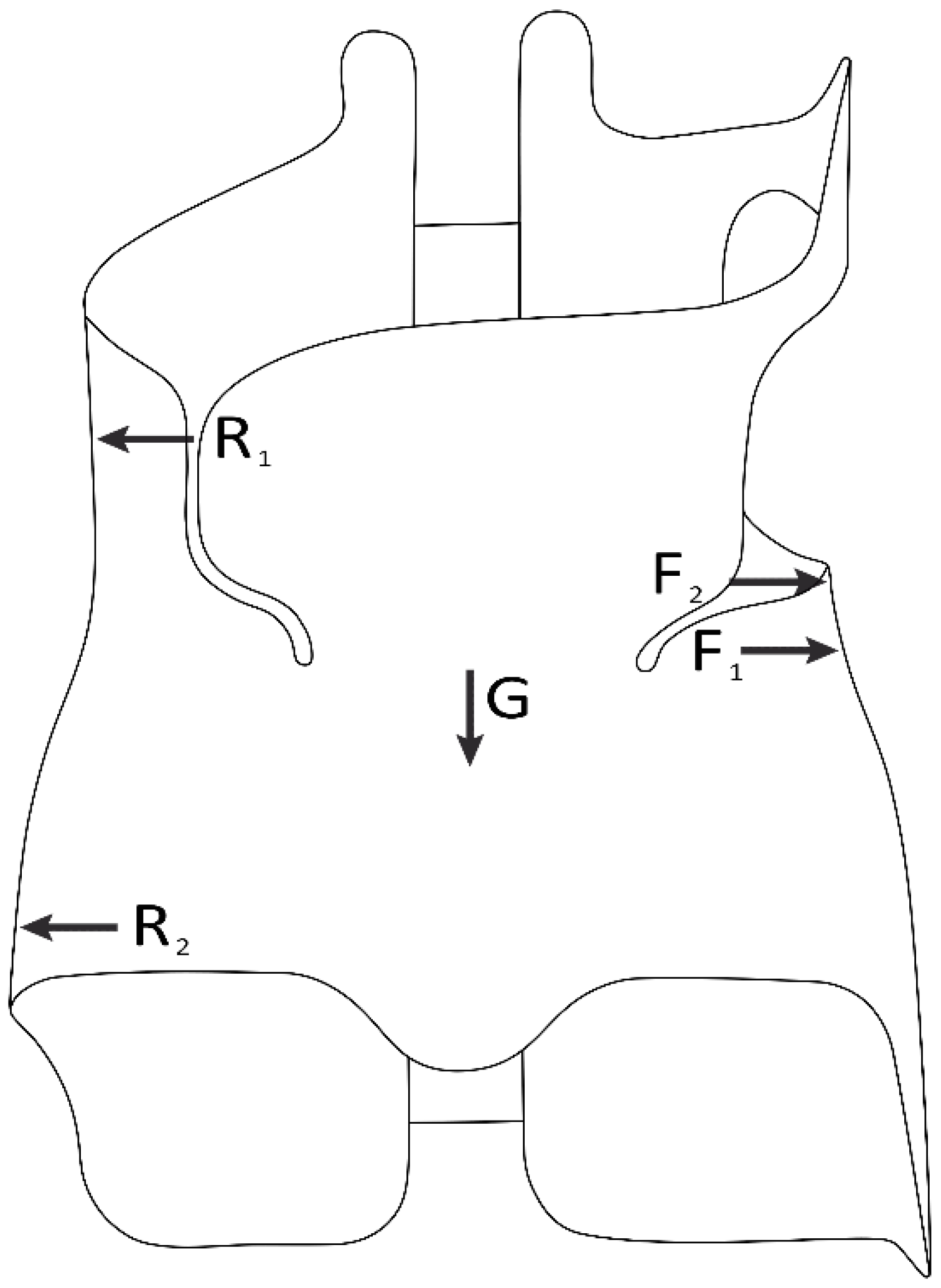
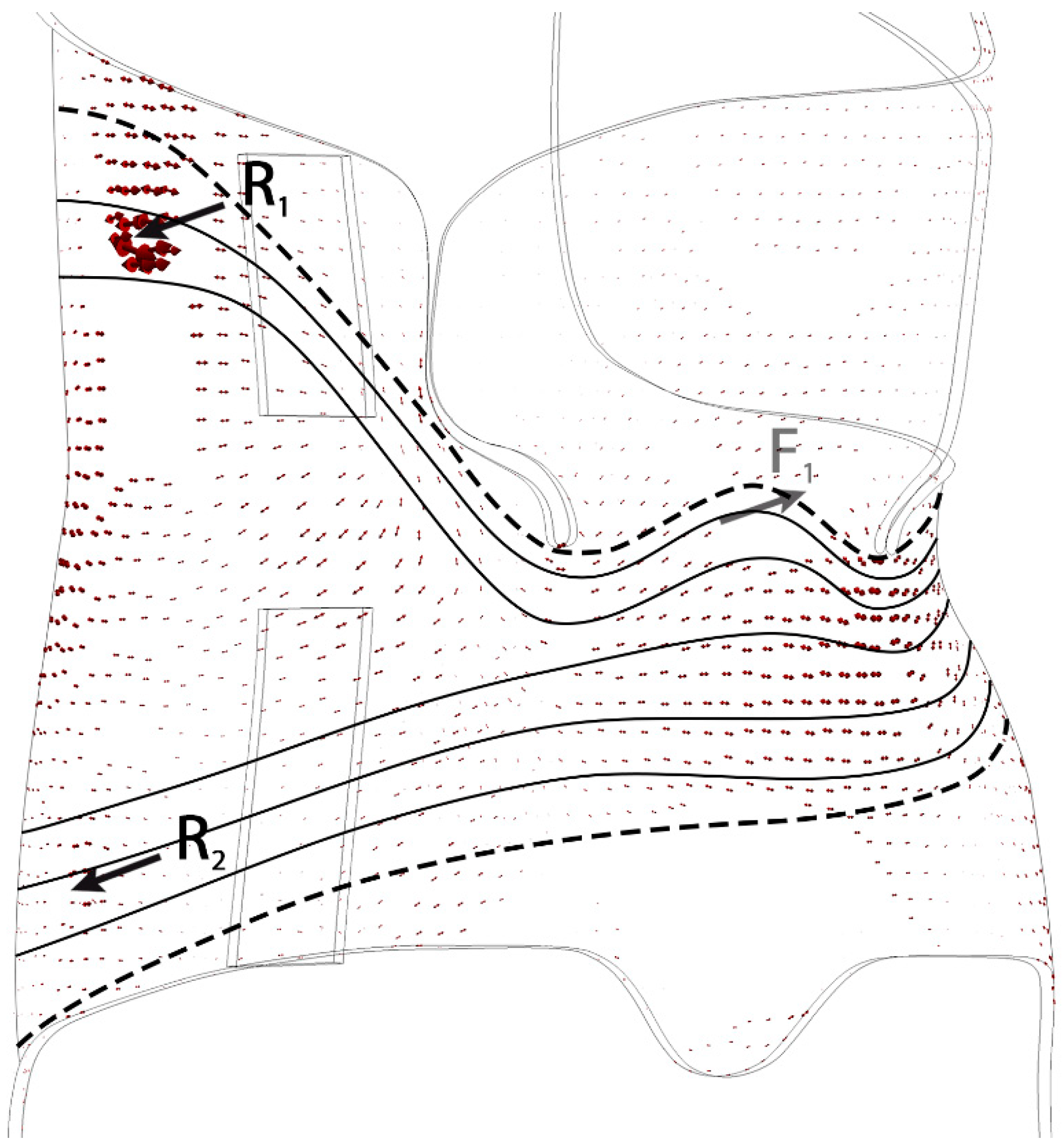
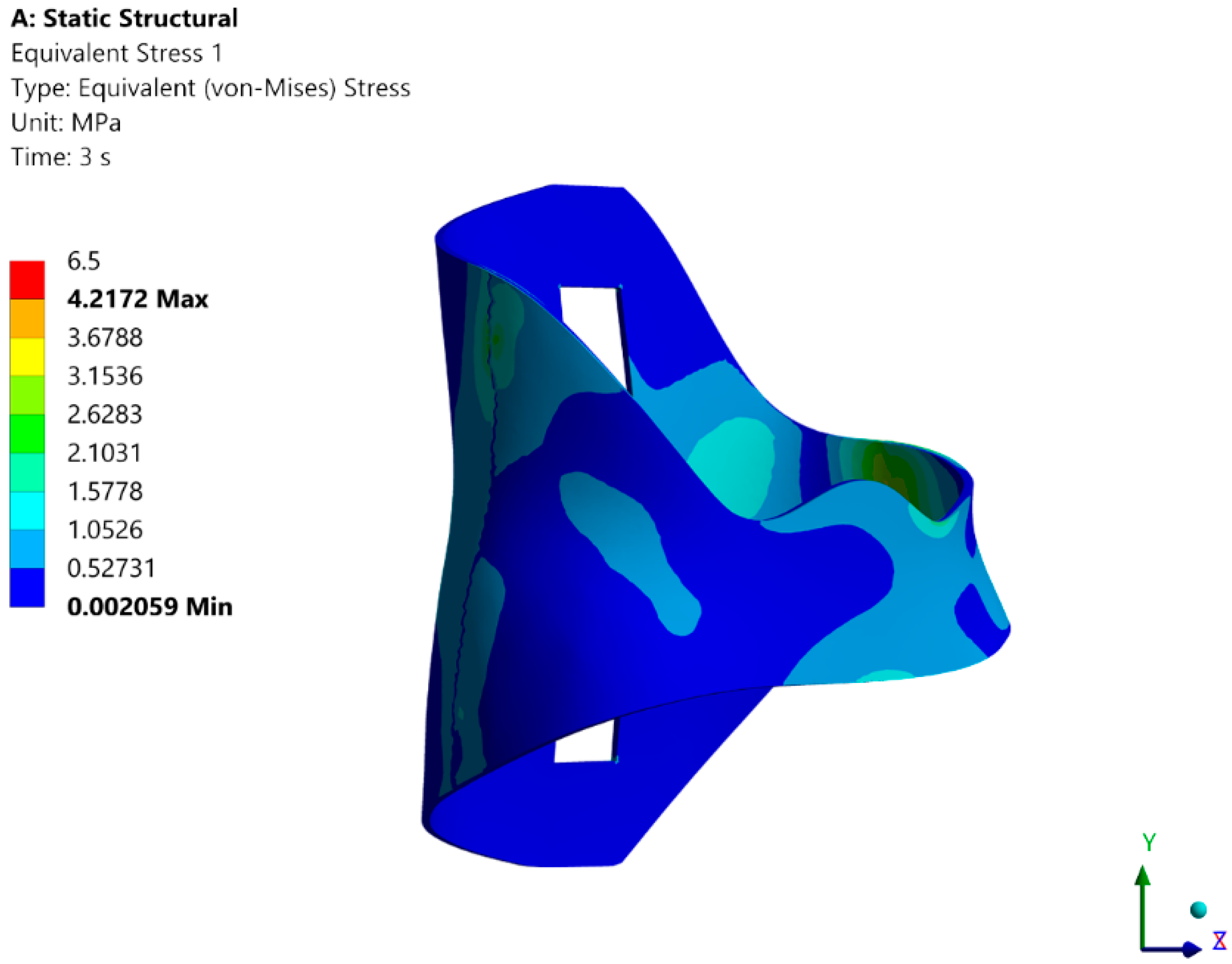
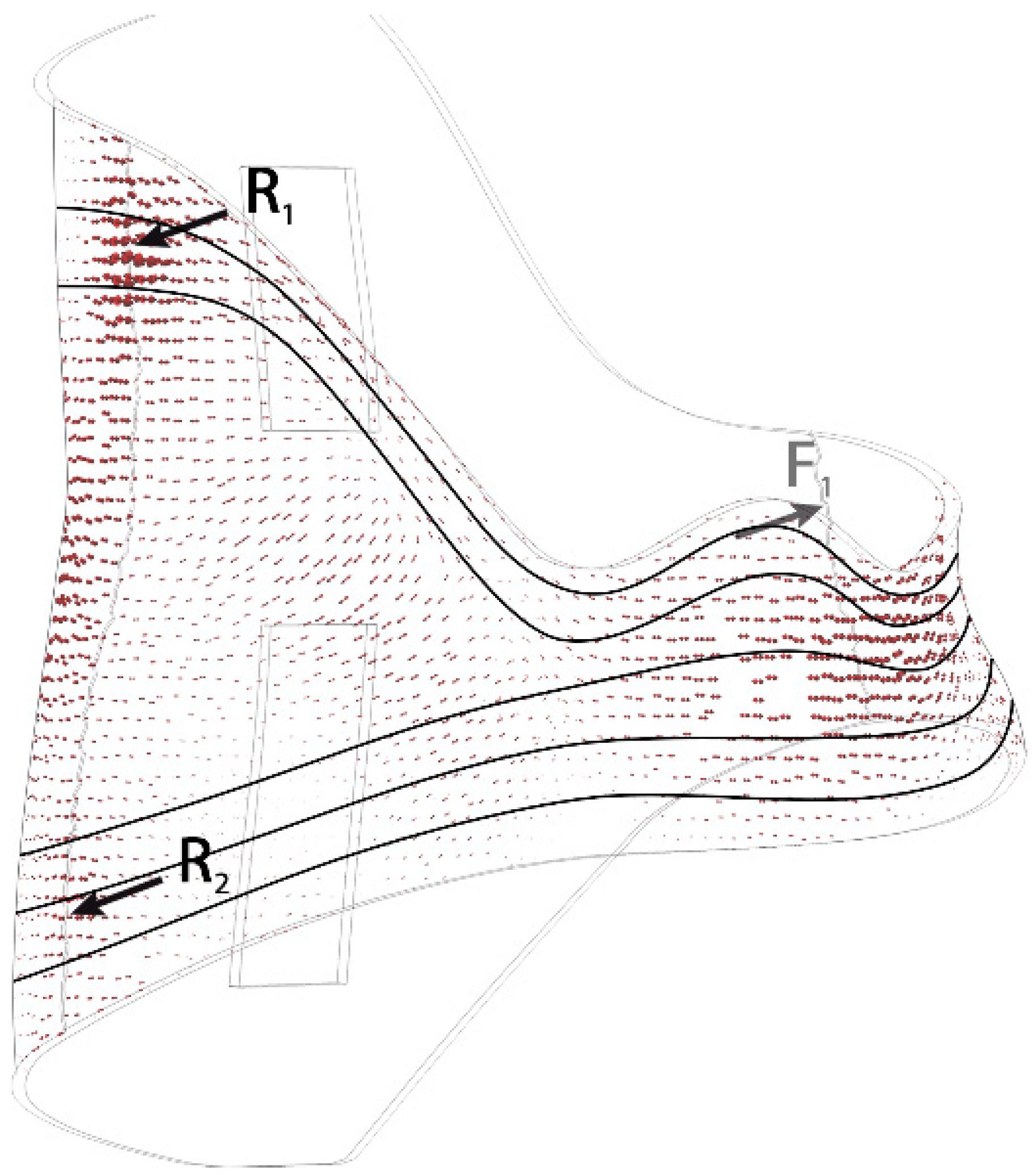
Orthoses are of critical importance in the field of medical biomechanics, particularly in the correction of spinal deformities. The objective of the current research was to improve the utility characteristics of the scoliosis brace without compromising its corrective capabilities. The orthotic shell of the Boston brace was used as the basis for this investigation. The finite element method (FEM) was used to evaluate the distribution of corrective forces through the device. The flow of force lines within the orthotic shell was determined by mapping the paths of maximum principal stresses. Areas of the device that had a negligible effect on overall stiffness were identified and material from these areas was eliminated. Minor modifications were then made to the redesigned shell to maintain its corrective stiffness. As a result of these changes, the weight of the braces was reduced without compromising its corrective stiffness. When subjected to corrective forces, the shell’s displacement patterns in the transverse plane showed minimal changes from the original model, confirming that its corrective capacity remained largely intact. This research presents an innovative methodology for orthotic design and demonstrates that structural optimization based on the mapping of maximum principal stress pathways can significantly improve device functionality. The approach outlined here holds promise for future advances in the design of various orthotic devices, thereby contributing to the advancement of the field.
Keywords: FEM; orthosis; principal stress vector; principal stress trajectories; force flow lines FEM; orthosis; principal stress vector; principal stress trajectories; force flow lines