Article

Fault Detection Method for Wind Turbine Generators Based on Attention-Based Modeling
School of Electronic and Electrical Engineering, Shanghai University of Engineering and Technology, Shanghai 201620, China
*
Author to whom correspondence should be addressed.
Appl. Sci. 2023, 13(16), 9276; https://doi.org/10.3390/app13169276
Submission received: 18 July 2023 / Revised: 4 August 2023 / Accepted: 11 August 2023 / Published: 15 August 2023
(This article belongs to the Special Issue Advances and Challenges in Wind Turbine Mechanics)

Abstract

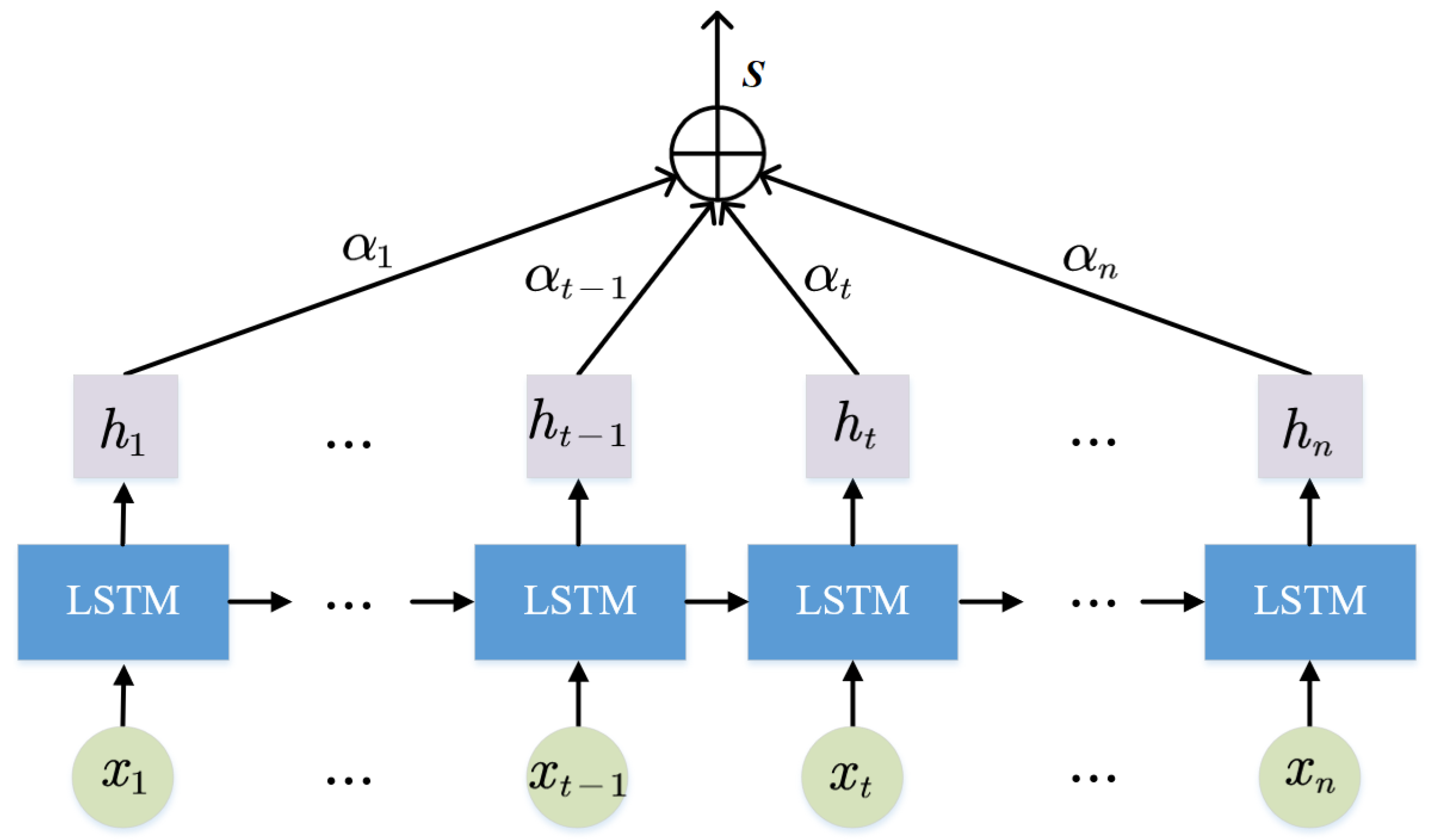
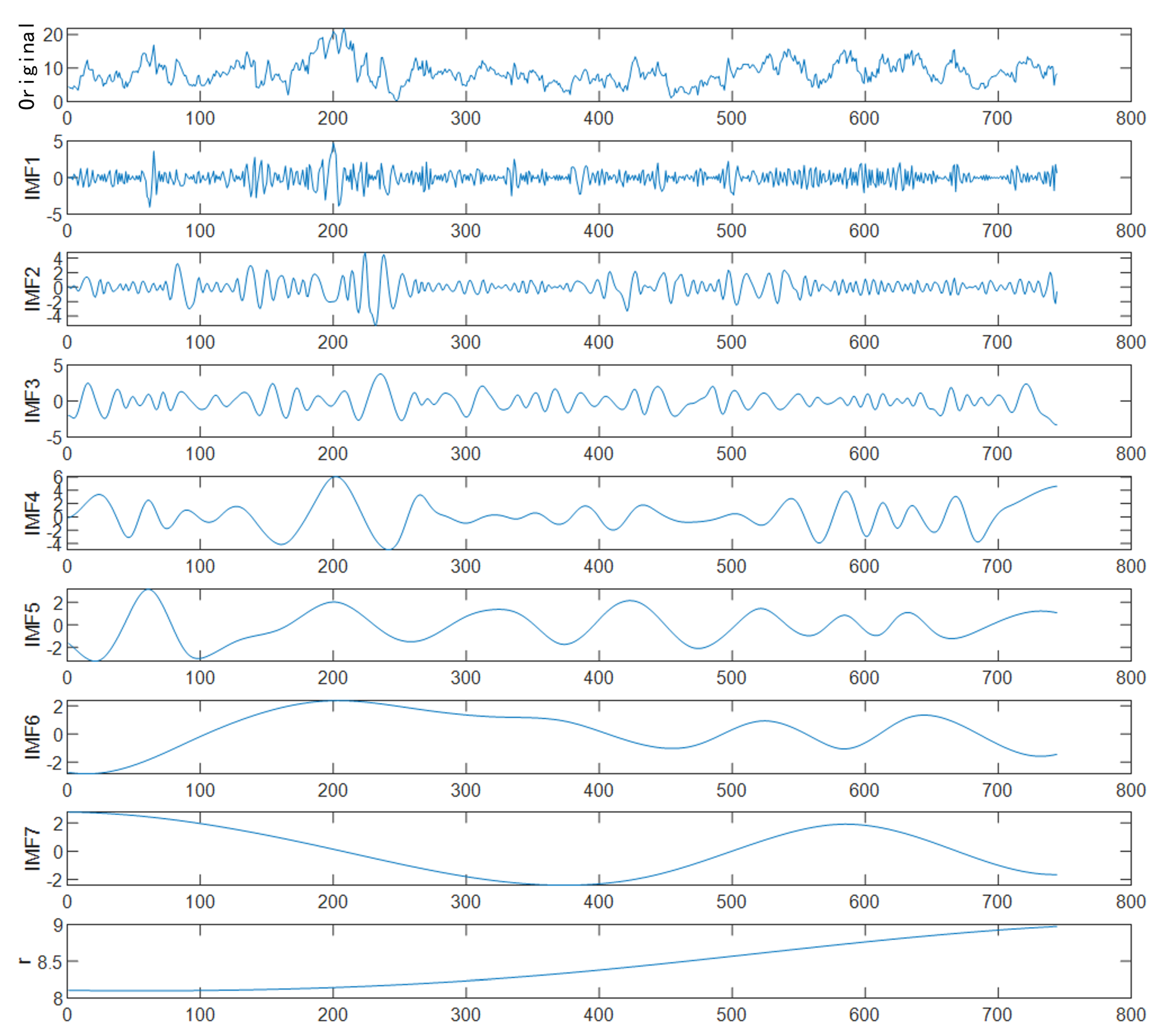
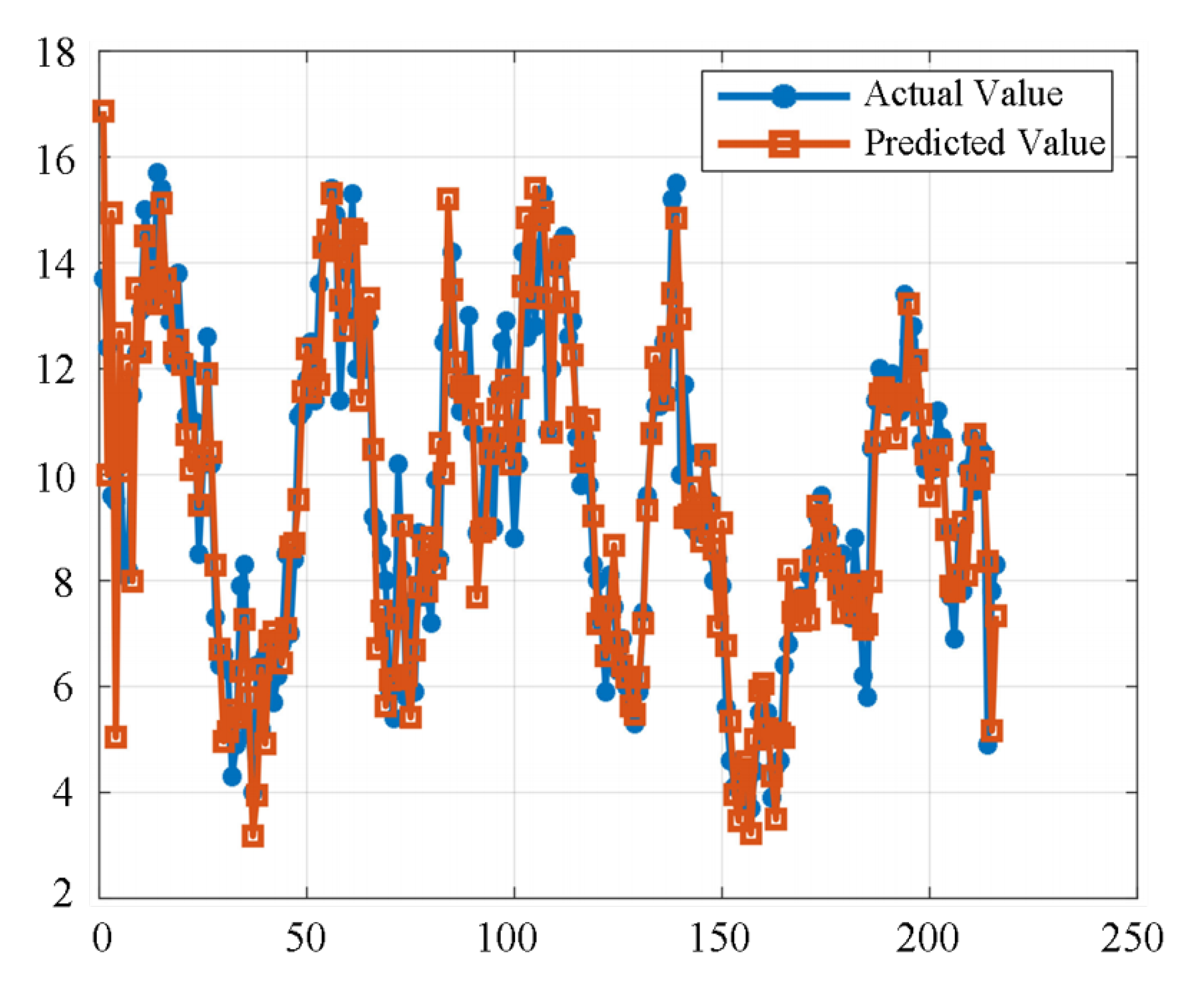
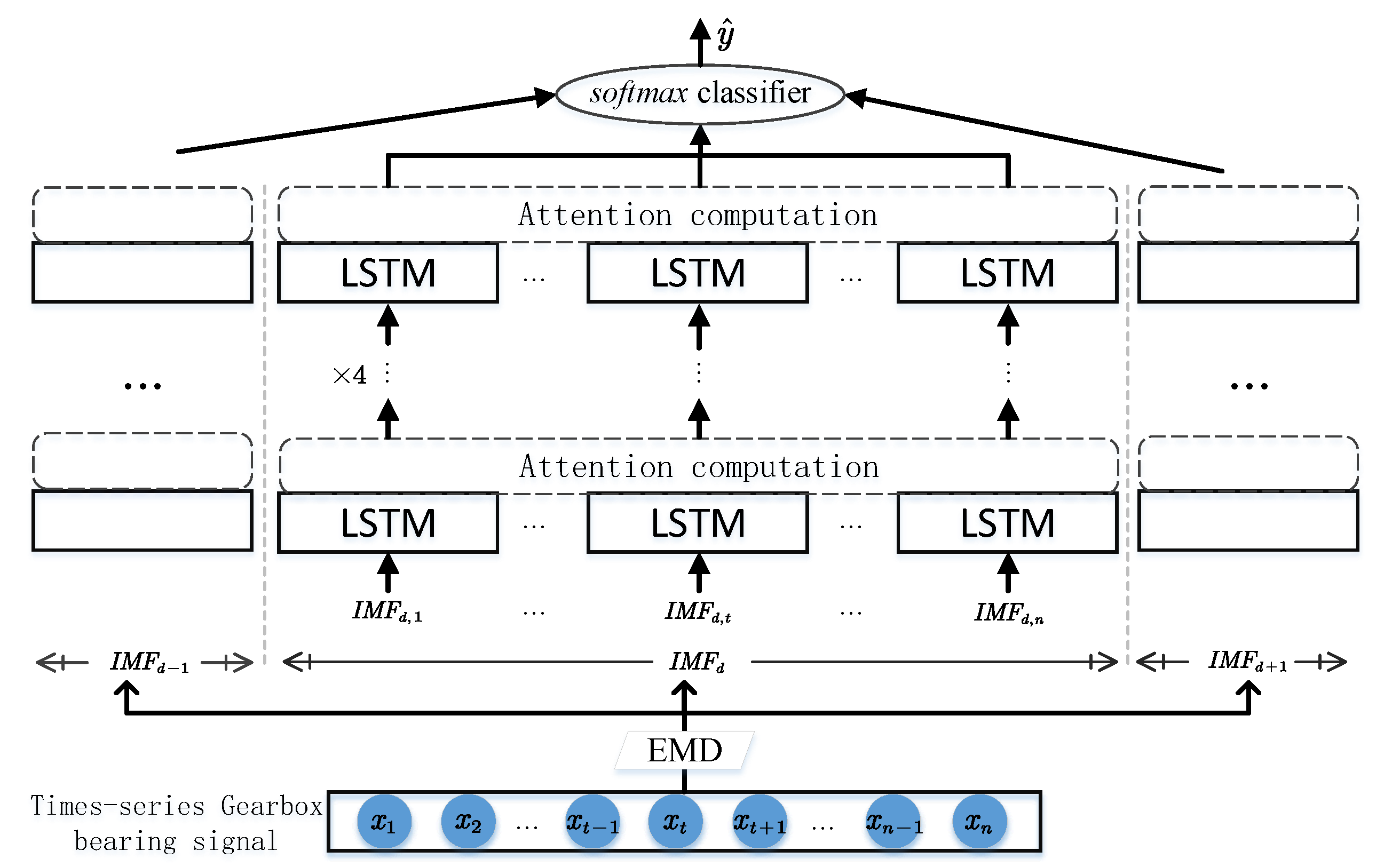
Aiming at the problem that existing wind turbine gearbox fault prediction models often find it difficult to distinguish the importance of different data frames and are easily interfered with by non-important and irrelevant signals, thus causing a reduction in fault diagnosis accuracy, a wind turbine gearbox fault prediction model based on the attention-weighted long short-term memory network (AW-LSTM) is proposed. Specifically, the gearbox vibration signal is decomposed by empirical modal decomposition (EMD), to contain seven different frequency components and one residual component. The decomposed signal is passed through a four-layer LSTM network, to extract the fault features. The attention mechanism is introduced, to reweight the hidden states, in order to strengthen the attention to the important features. The proposed method captures the intrinsic long-term temporal correlation of timing gearbox signals through a long short-term memory network, and resorts to recursive attentional weighting, to efficiently distinguish the contribution of different frames and to exclude the influence of irrelevant or interfering data on the model. The results show that the proposed AW-LSTM wind turbine gearbox fault prediction model has an inference time of 36 s on two publicly available wind turbine fault detection datasets, with a root mean square error of 1.384, an average absolute error of 0.983, and an average absolute percentage error of 9.638, and that the AW-LSTM prediction model is able to efficiently extract the characteristics of wind turbine gearbox faults, with a shorter inference time and better fault prediction.
Keywords: fault prediction; gearbox; wind turbine; vibration signal fault prediction; gearbox; wind turbine; vibration signal