Article

Augmented Reality in a Lean Workplace at Smart Factories: A Case Study

ALGORITMI Research Centre/LASI, University of Minho, Campus of Azurém, 4800-058 Guimarães, Portugal
*
Author to whom correspondence should be addressed.
Appl. Sci. 2023, 13(16), 9120; https://doi.org/10.3390/app13169120
Submission received: 3 April 2023 / Revised: 27 July 2023 / Accepted: 27 July 2023 / Published: 10 August 2023

Abstract

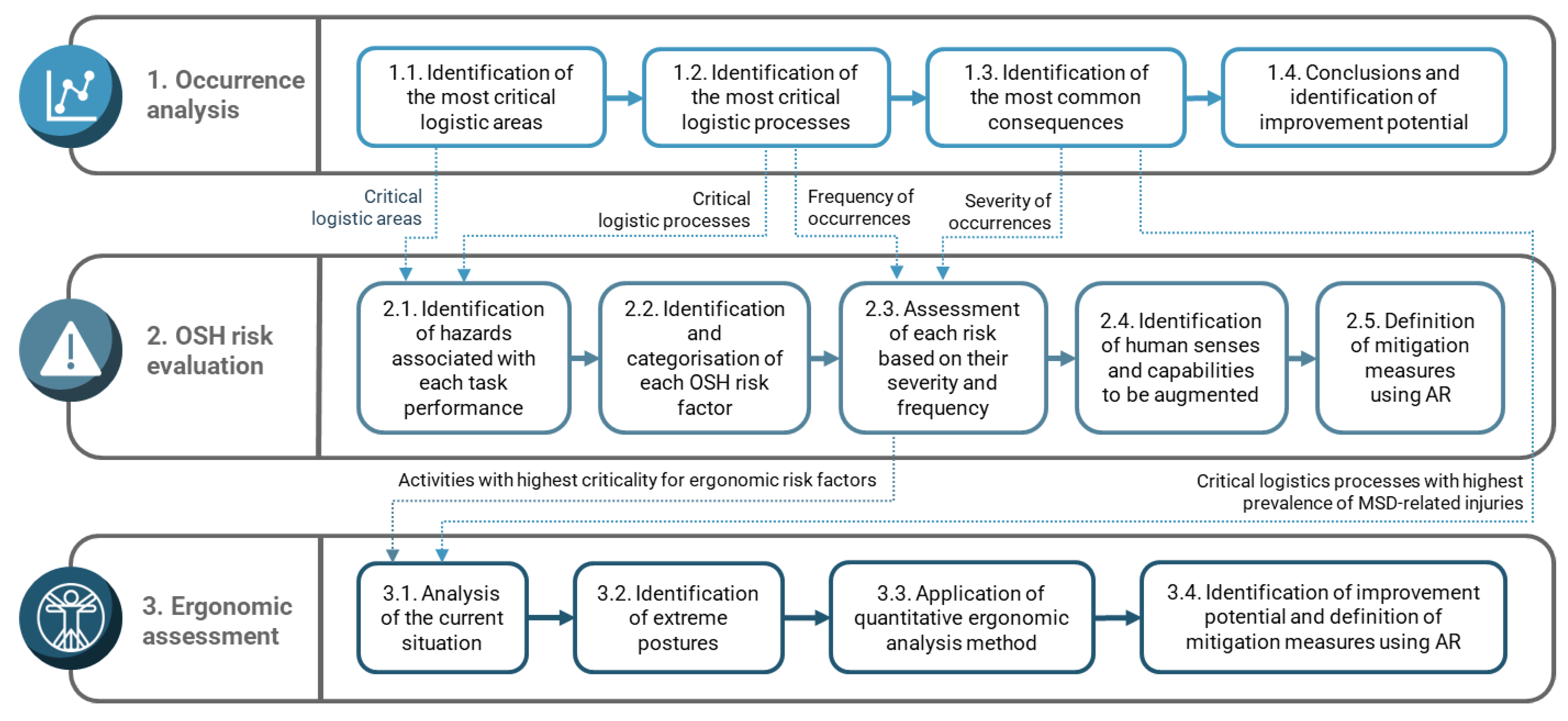
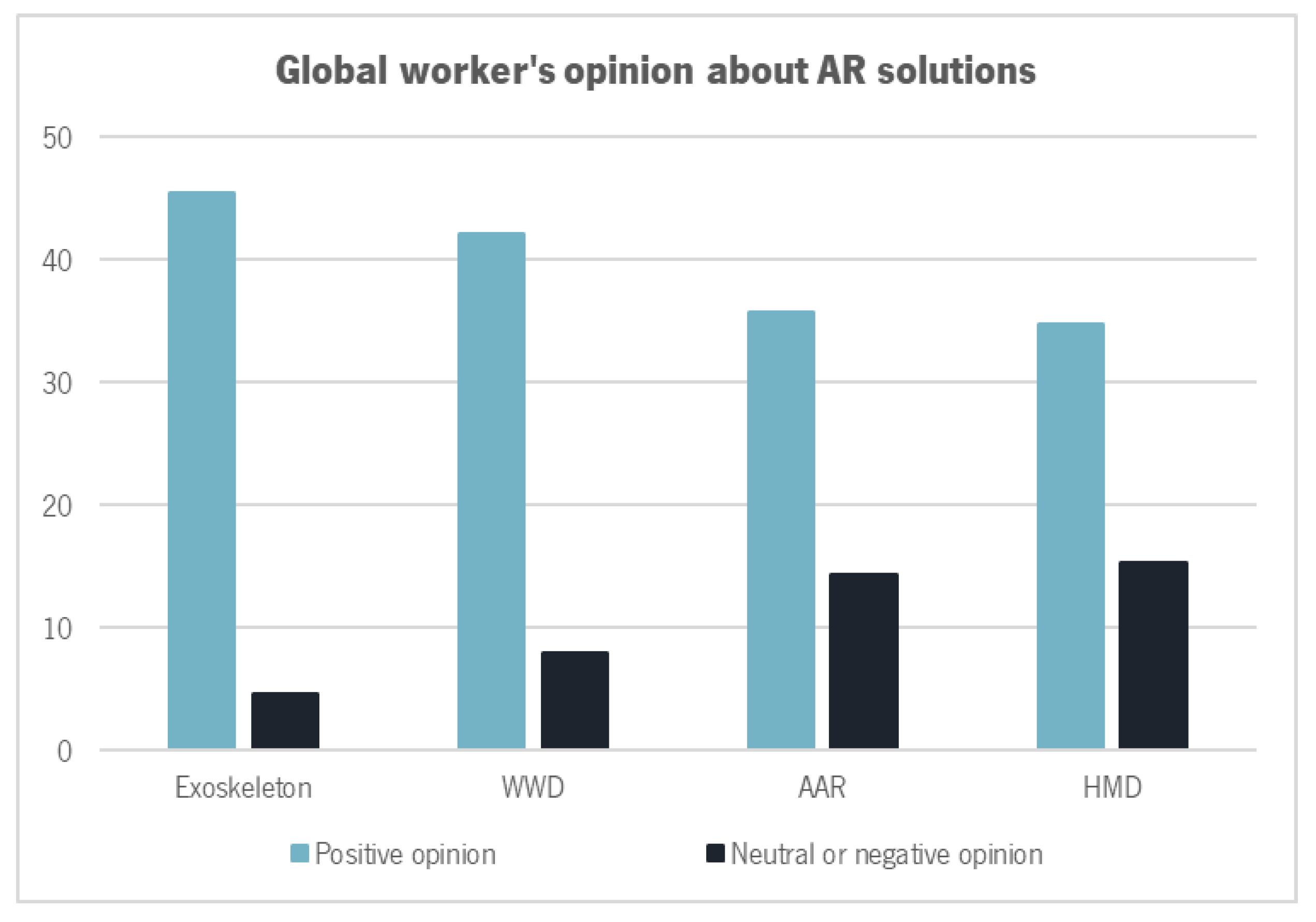
The last few years have seen a massive transformation of the global industrial landscape, thanks to the emergence of Industry 4.0 and the disruptive technologies it enables, such as Augmented Reality (AR). This paper presents the result of a project with the primary focus on enhancing the operators’ working conditions and the further definition of the most suitable AR for each material handling and motion process. To achieve this, a methodology called Risk Assessment for Ergonomics and Safety in Logistics (RAES-Log) was developed in order to analyse and define AR implementation requirements, in order to mitigate existing risks and improve ergonomic conditions. Utilizing a human-centric approach consistent with Lean Thinking and Industry 5.0 vision, the main aim was to reduce human effort during task performance. Furthermore, the potential for creating waste-free and more efficient workspaces was explored, as well as the possibility of Human Augmentation (HA) to enhance workers’ capabilities and senses. The workers’ opinions and acceptance of the proposed AR solutions resulting from the RAES-Log methodology in a case study were collected and analysed. The overall feedback was positive and it is expected a lower prevalence of work-related Musculoskeletal Disorders (MSD), less lost time days, and lower injury severity, as well as increased process efficiency, operator motivation, well-being and engagement in continuous improvement processes.
Keywords: augmented reality; human augmentation; Industry 4.0; Industry 5.0; lean thinking; human factors; ergonomics; musculoskeletal disorders; occupational safety and health; human-centric systems augmented reality; human augmentation; Industry 4.0; Industry 5.0; lean thinking; human factors; ergonomics; musculoskeletal disorders; occupational safety and health; human-centric systems