Article

Estimation of Methane Gas Production in Turkey Using Machine Learning Methods

by
Güler Ferhan Ünal Uyar
1,
Mustafa Terzioğlu
2,
Mehmet Kayakuş
3,*,
Burçin Tutcu
2,
Ahmet Çoşgun
4,
Güray Tonguç
5 and
Rüya Kaplan Yildirim
6
1
Department of Business Administration, Faculty of Economics and Administrative Sciences, Akdeniz University, Antalya 07058, Turkey
2
Accounting and Tax Department, Korkuteli Vocational School, Akdeniz University, Antalya 07800, Turkey
3
Department of Management Information Systems, Faculty of Manavgat Social Sciences and Humanities, Akdeniz University, Antalya 07600, Turkey
4
Department of Mechanical Engineering, Faculty of Engineering, Akdeniz University, Antalya 07058, Turkey
5
Department of Management Information Systems, Faculty of Applied Sciences, Akdeniz University, Antalya 07058, Turkey
6
Management and Organization Department, Aydin Vocational School, Adnan Menderes University, Aydın 09010, Turkey
*
Author to whom correspondence should be addressed.
Appl. Sci. 2023, 13(14), 8442; https://doi.org/10.3390/app13148442
Submission received: 16 May 2023 / Revised: 18 June 2023 / Accepted: 20 July 2023 / Published: 21 July 2023
(This article belongs to the Topic Clean Energy Technologies and Assessment)

Abstract

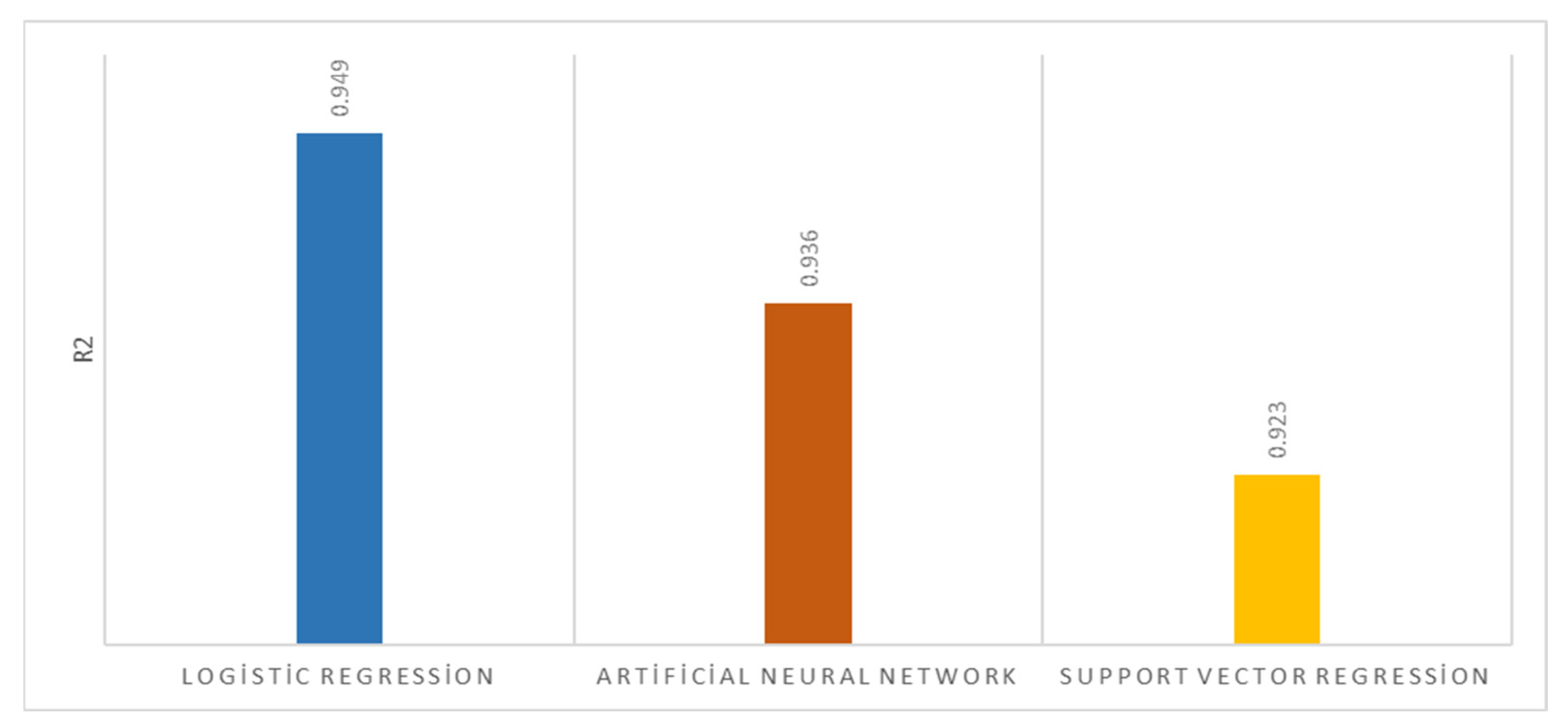
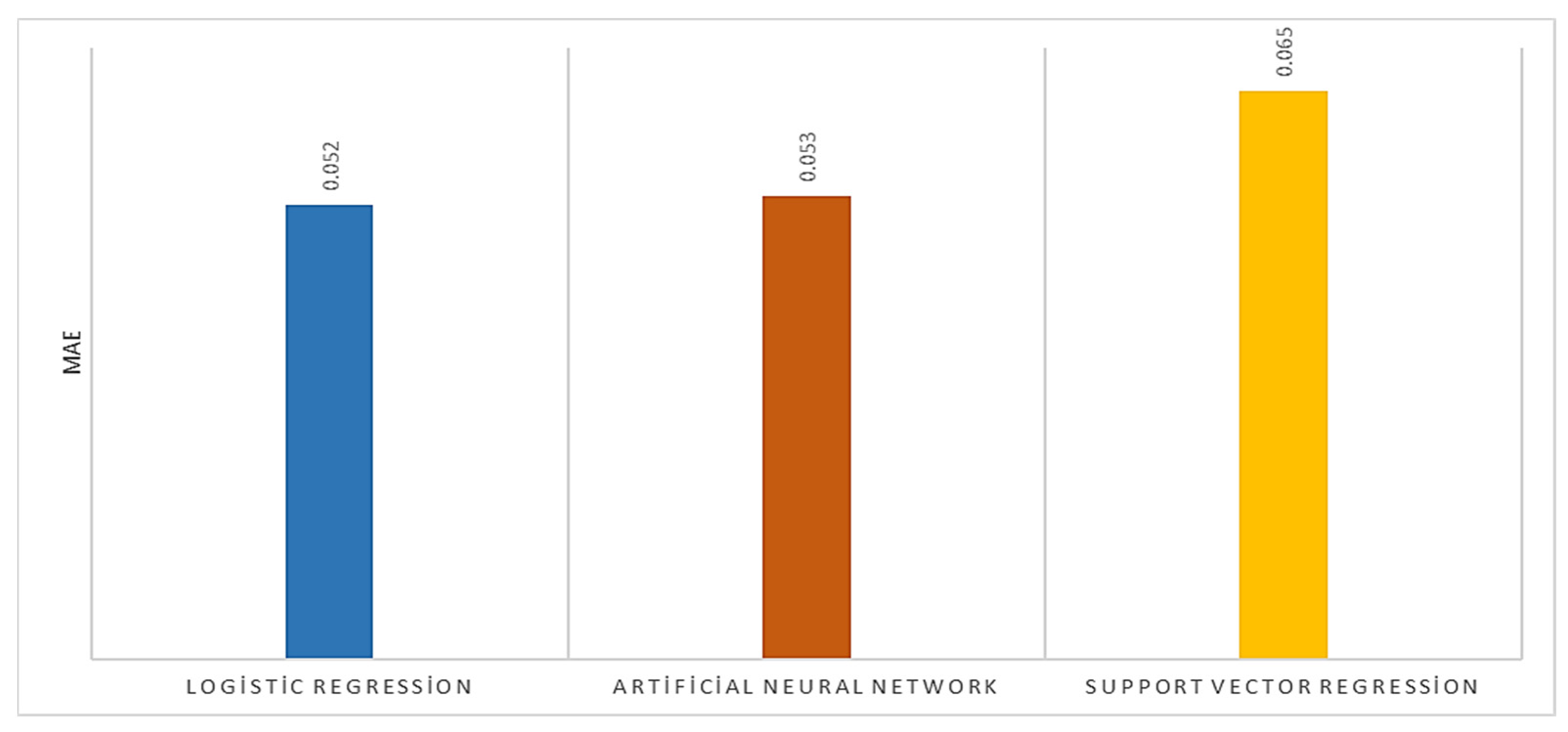
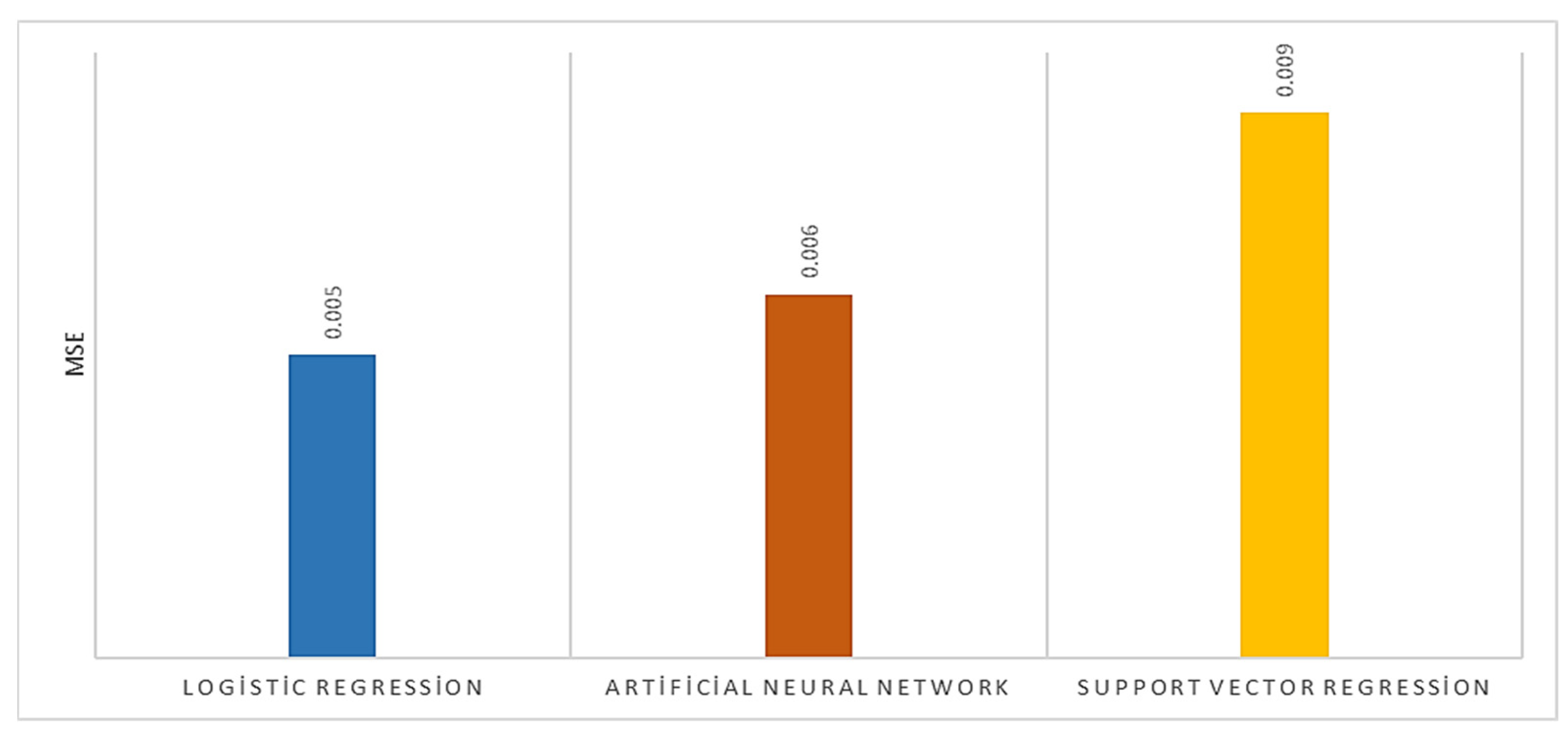
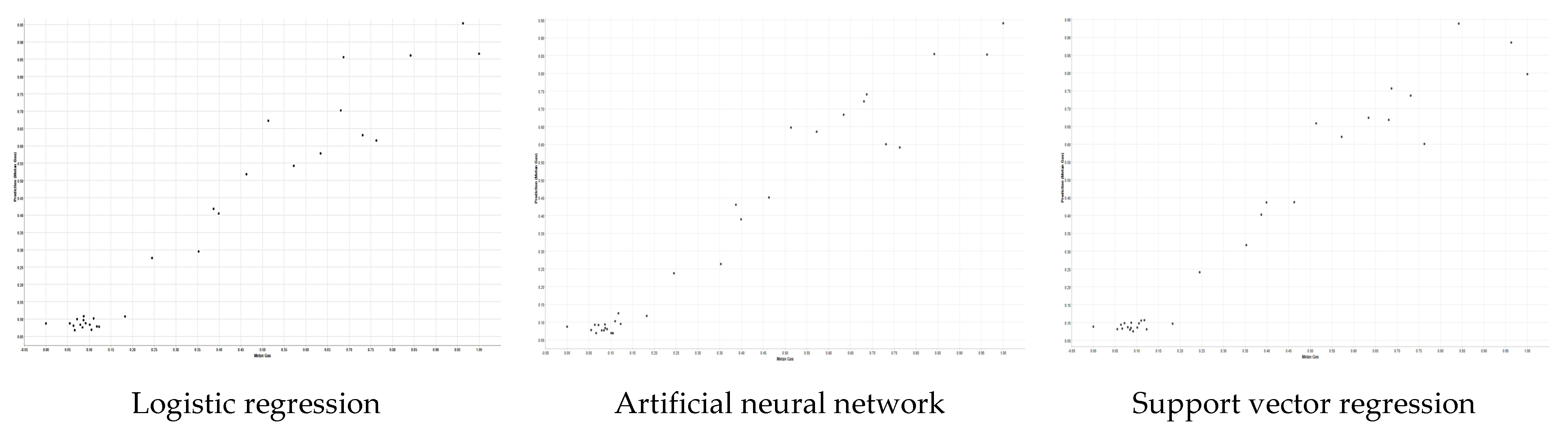
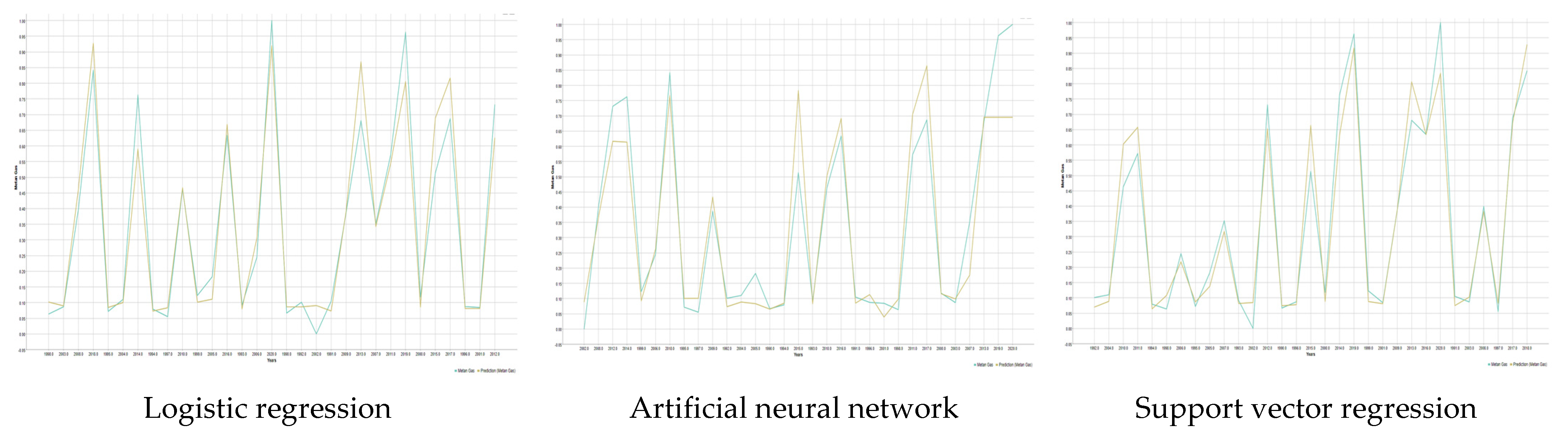
Methane gas emission into the atmosphere is rising due to the use of fossil-based resources in post-industrial energy use, as well as the increase in food demand and organic wastes that comes with an increasing human population. For this reason, methane gas, which is among the greenhouse gases, is seen as an important cause of climate change along with carbon dioxide. The aim of this study was to predict, using machine learning, the emission of methane gas, which has a greater effect on the warming of the atmosphere than other greenhouse gases. Methane gas estimation in Turkey was carried out using machine learning methods. The R2 metric was calculated as logistic regression (LR) 94.9%, artificial neural networks (ANNs) 93.6%, and support vector regression (SVR) 92.3%. All three machine learning methods used in the study were close to ideal statistical criteria. LR had the least error and highest prediction success, followed by ANNs and then SVR. The models provided successful results, which will be useful in the formulation of policies in terms of animal production (especially cattle production) and the disposal of organic human wastes, which are thought to be the main causes of methane gas emission.
Keywords: methane gas; global warming; economy; environment; machine learning methane gas; global warming; economy; environment; machine learning