Article

Maximizing the Capacity of Edge Networks with Multicasting

1
School of Computer and Information Engineering, Henan Normal University, Xinxiang 453007, China
2
Smart Business and Internet of Things Technology Henan Provincial Engineering Laboratory, Xinxiang 453007, China
*
Author to whom correspondence should be addressed.
Appl. Sci. 2023, 13(14), 8424; https://doi.org/10.3390/app13148424
Submission received: 2 July 2023 / Revised: 17 July 2023 / Accepted: 19 July 2023 / Published: 21 July 2023
(This article belongs to the Section Computing and Artificial Intelligence)

Abstract

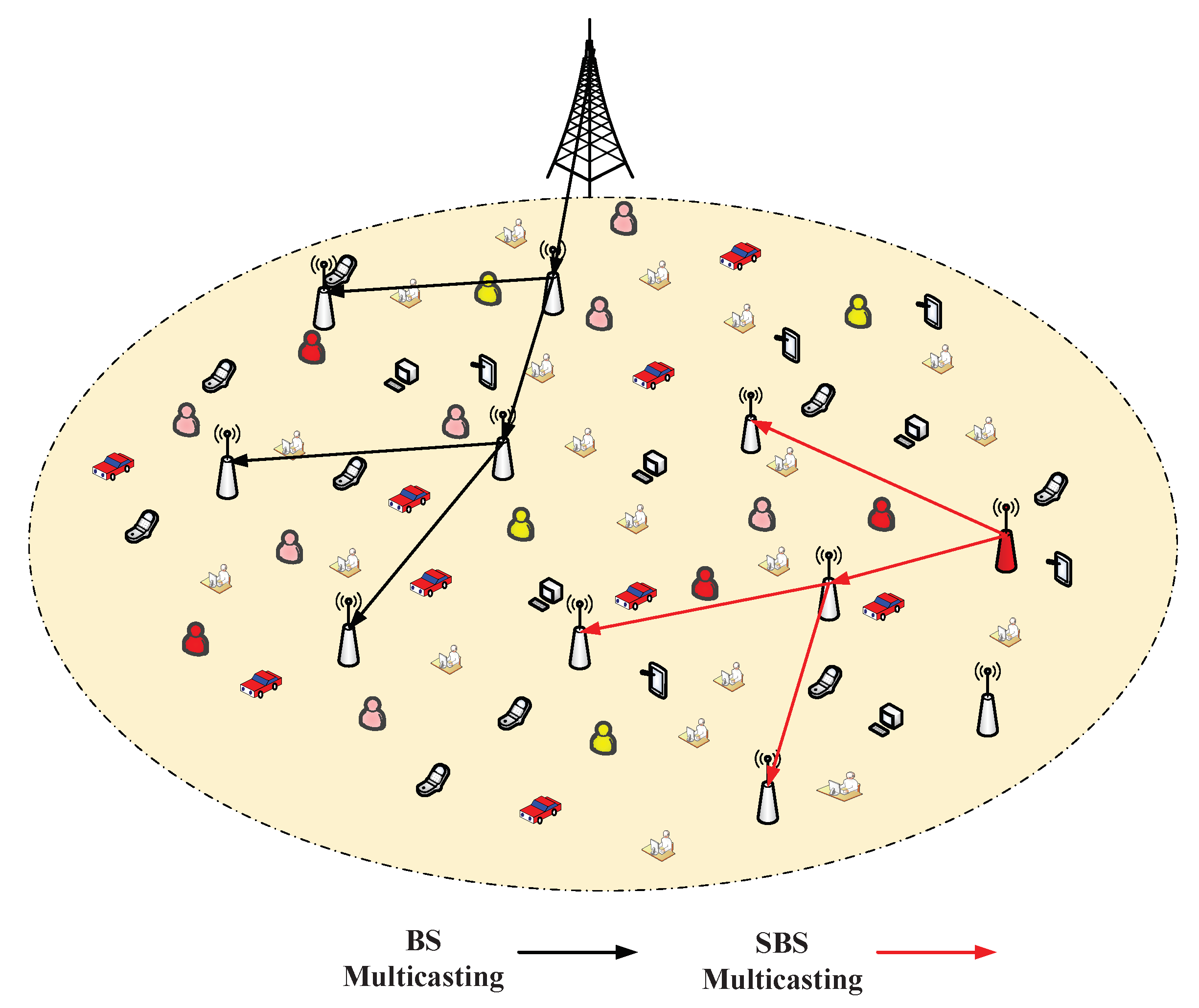
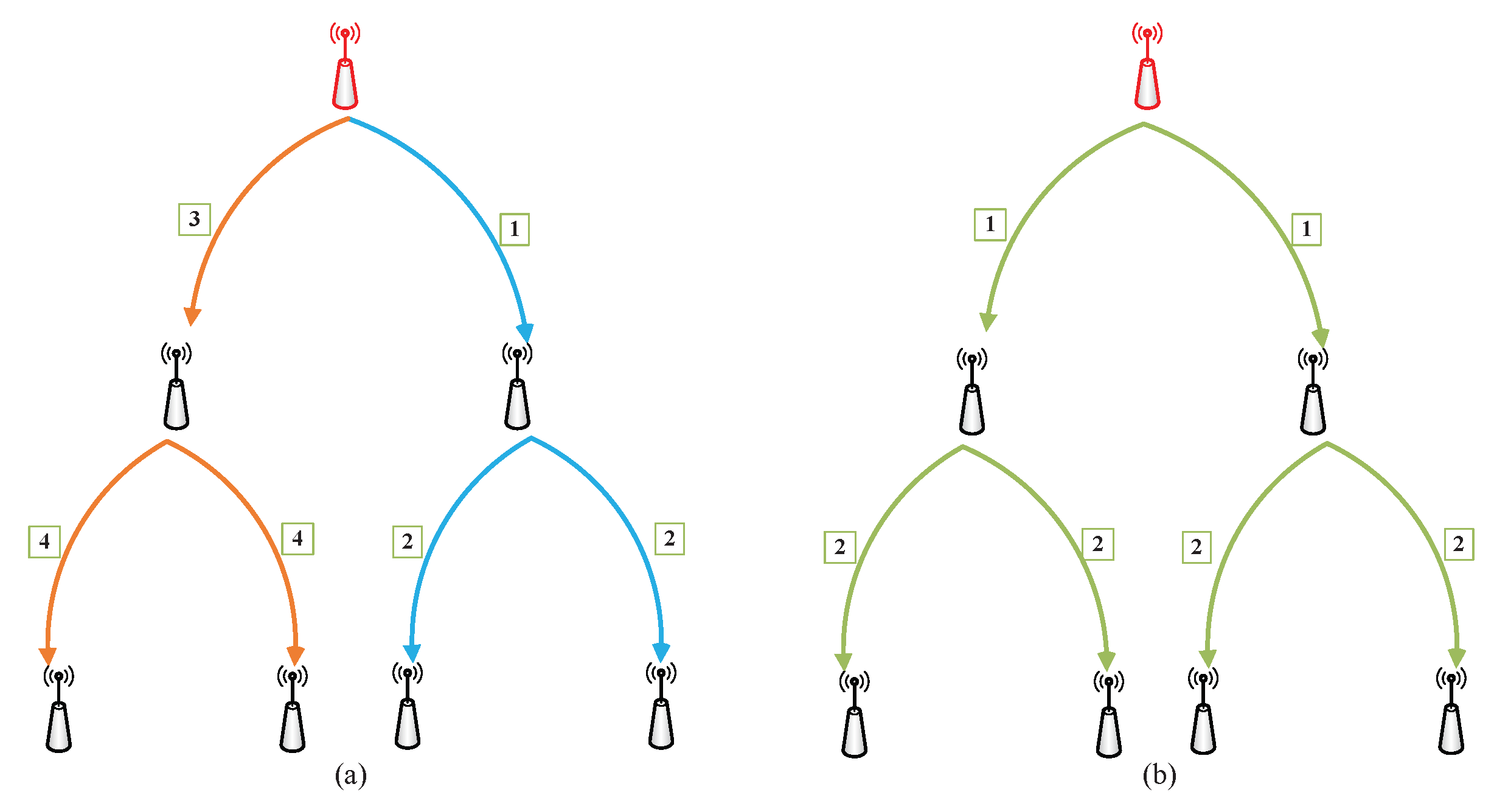
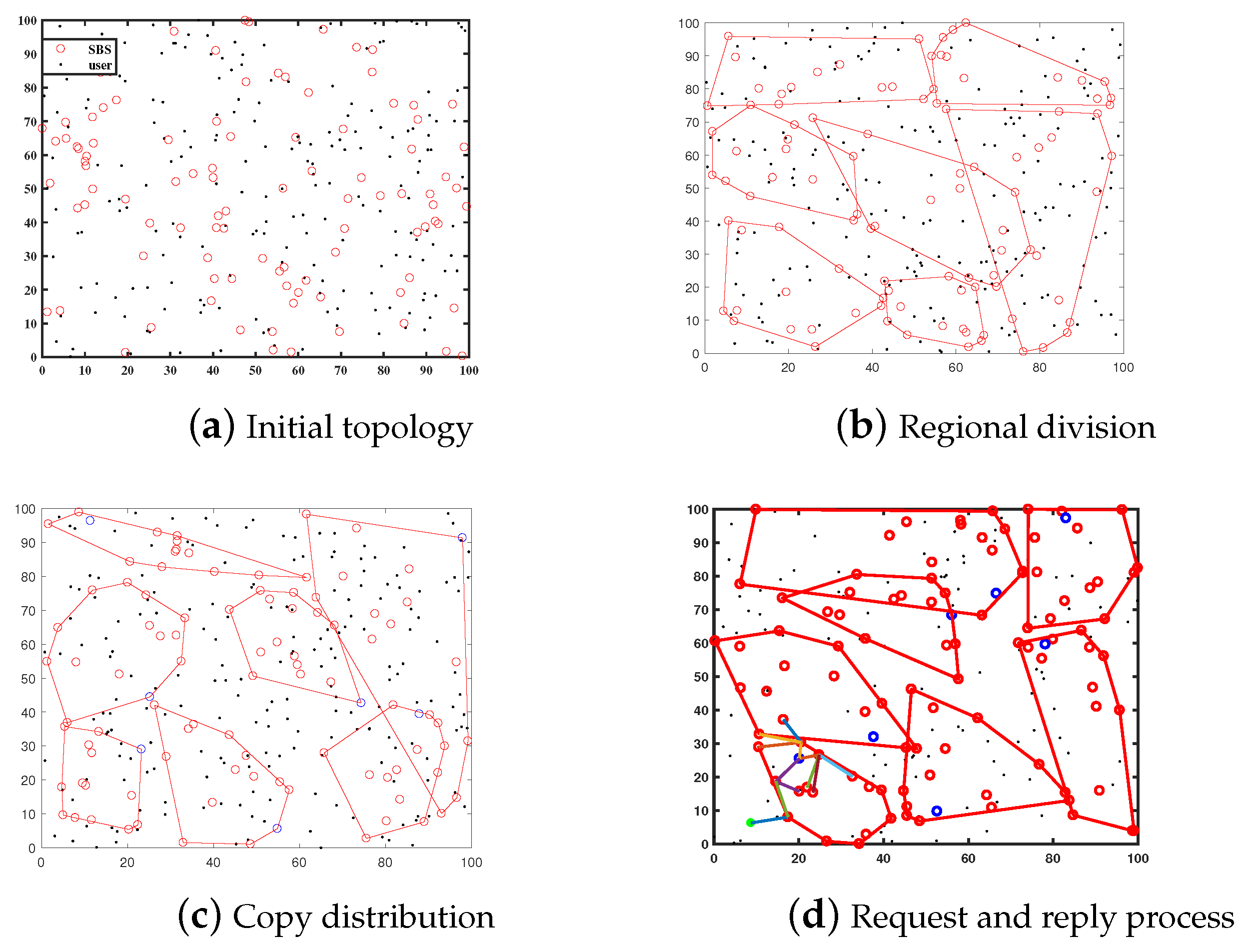
Edge networks employ local computing and caching resources to process data, thus alleviating the bandwidth pressure on backbone networks and improve users’ quality of experience. System capacity is one of the key metrics to evaluate the performance of edge networks. However, maximizing system capacity in edge scenarios faces challenges due to the dynamical user sessions and the changing content popularity. This study reports on the influence of multicast communication on the capacity of edge caching networks. When large amounts of content are requested simultaneously or over a short period, one-to-one unicast transmission will consume copious network resources due to repetitious transmission. To solve this problem, this study used the one-to-many multicast scheme to realize cooperative transmission between edge servers. First, multiple copies of the content are distributed to multiple small base stations (SBSs) based on the content’s popularity and the SBSs’ cache sizes. Second, a multicast tree is constructed by using, as the root node, the SBS that stores the content. Third, the content is transmitted along the path of the multicast tree to each end-user. Finally, a simulation platform is constructed to analyze the performance of the two transmission schemes. The results of simulating on edge caching networks show that multicast communication responds well to users’ requests even when the requested content requires sudden transmission, is highly popular or is requested often within short time. This system’s capacity has been significantly improved compared to the classical methods.
Keywords: content copy; cooperative transportation; multitasking; edge caching networks content copy; cooperative transportation; multitasking; edge caching networks