Article

A Low-Complexity Deep Learning Model for Predicting Targeted Sequencing Depth from Probe Sequence

1
School of Microelectronics, Tianjin University, Tianjin 300072, China
2
Frontier Science Center for Synthetic Biology (Ministry of Education), Tianjin University, Tianjin 300072, China
*
Author to whom correspondence should be addressed.
Appl. Sci. 2023, 13(12), 6996; https://doi.org/10.3390/app13126996
Submission received: 5 May 2023 / Revised: 30 May 2023 / Accepted: 6 June 2023 / Published: 9 June 2023
(This article belongs to the Special Issue Machine Learning in Bioinformatics: Latest Advances and Prospects)

Abstract

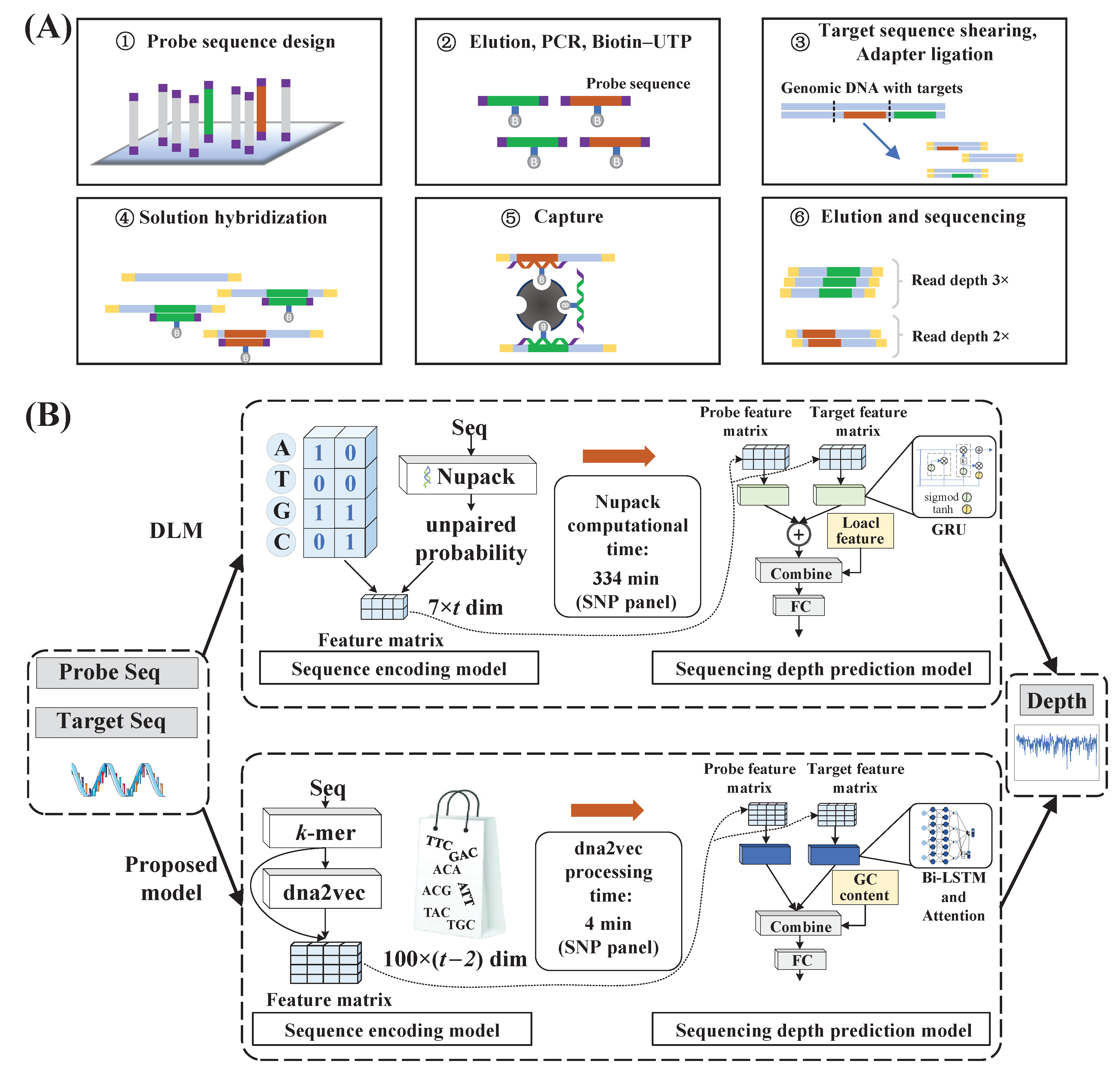
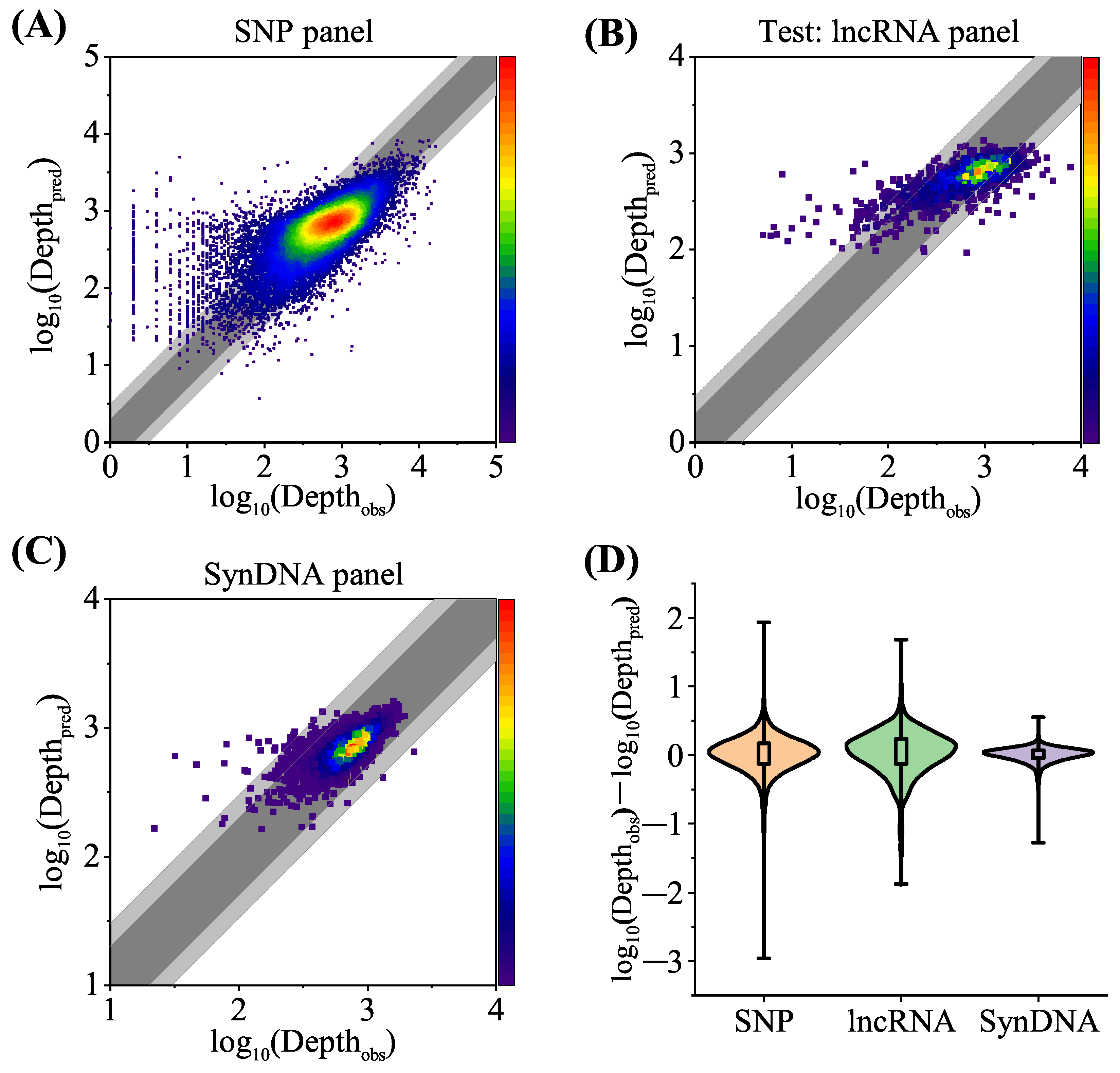
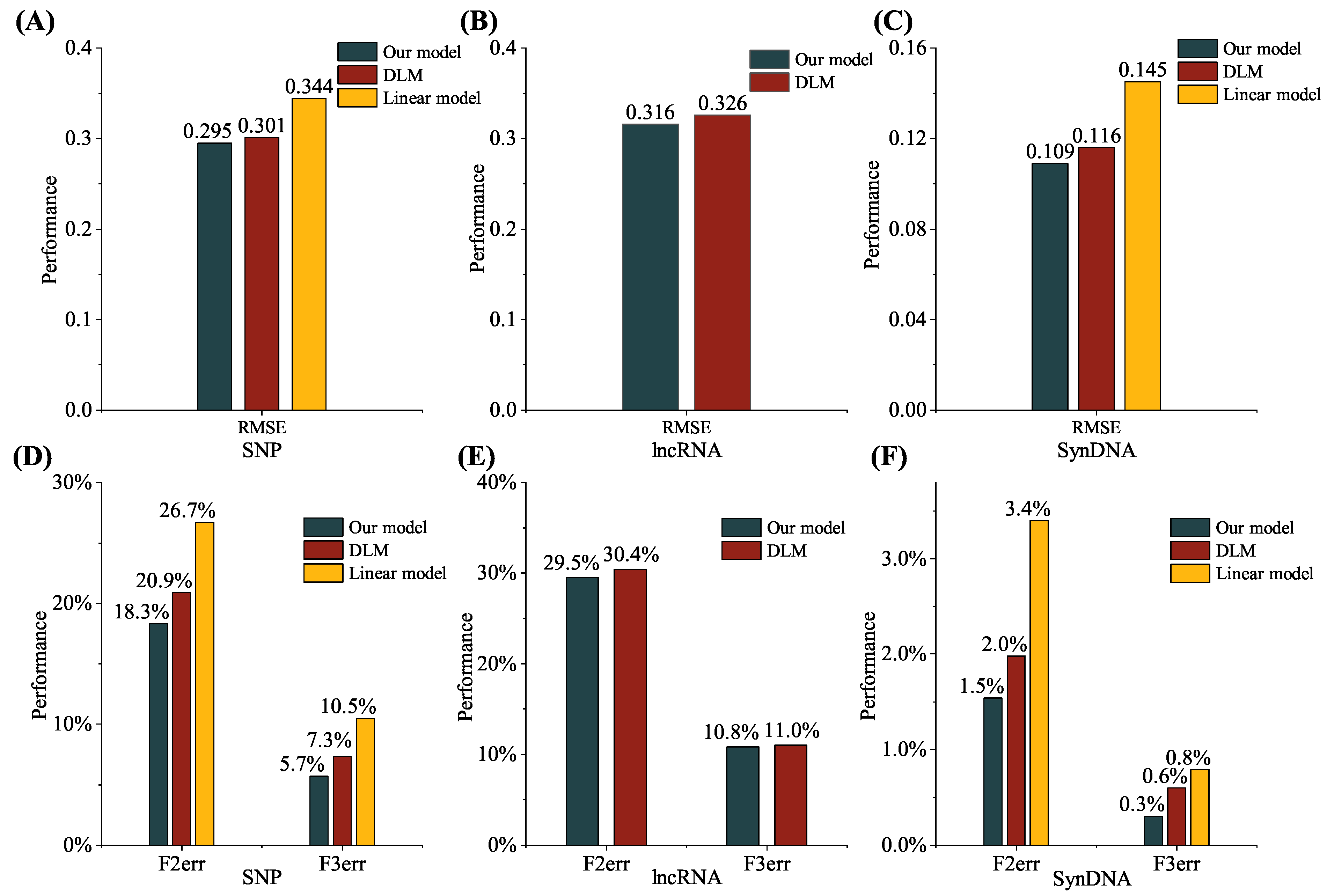
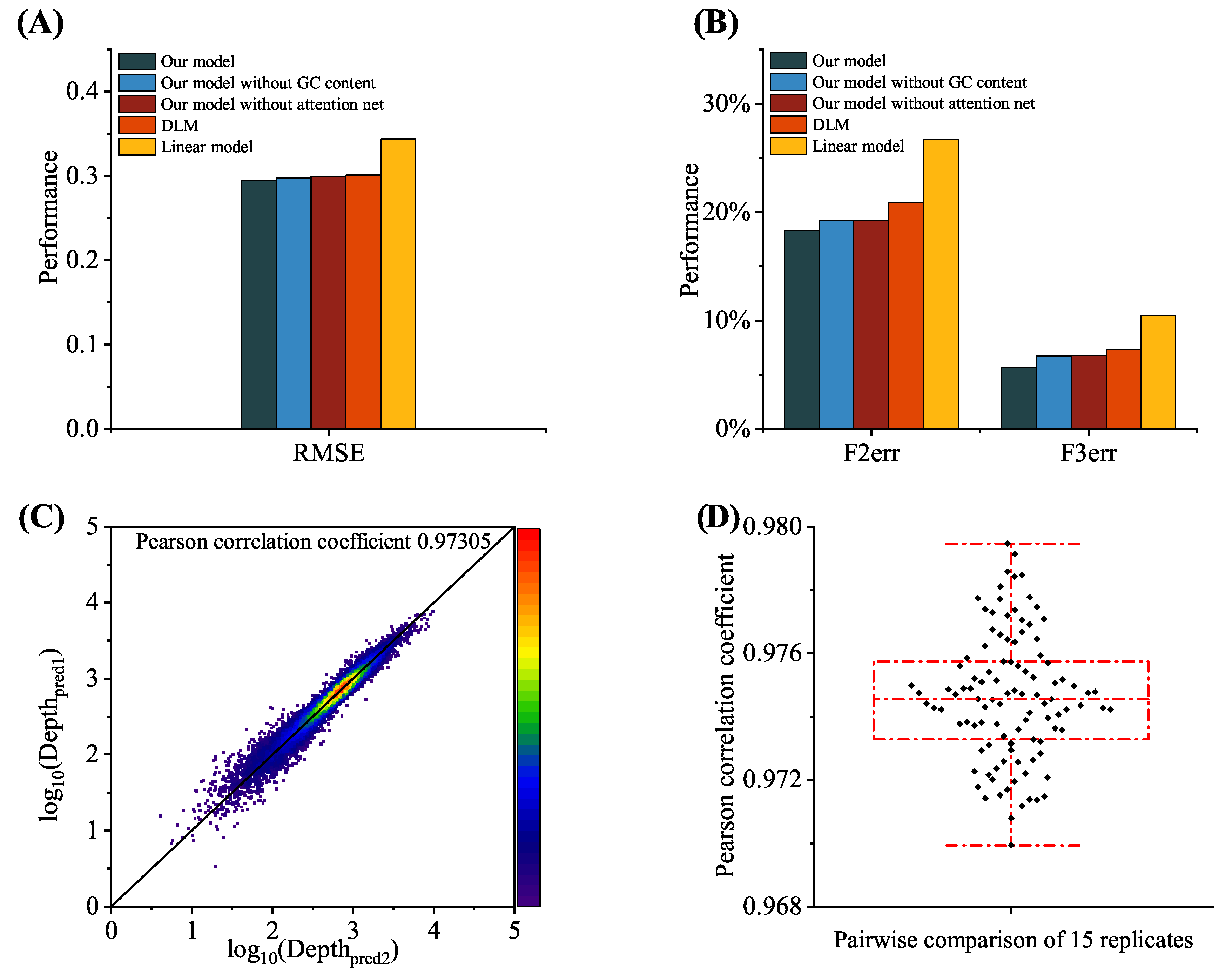
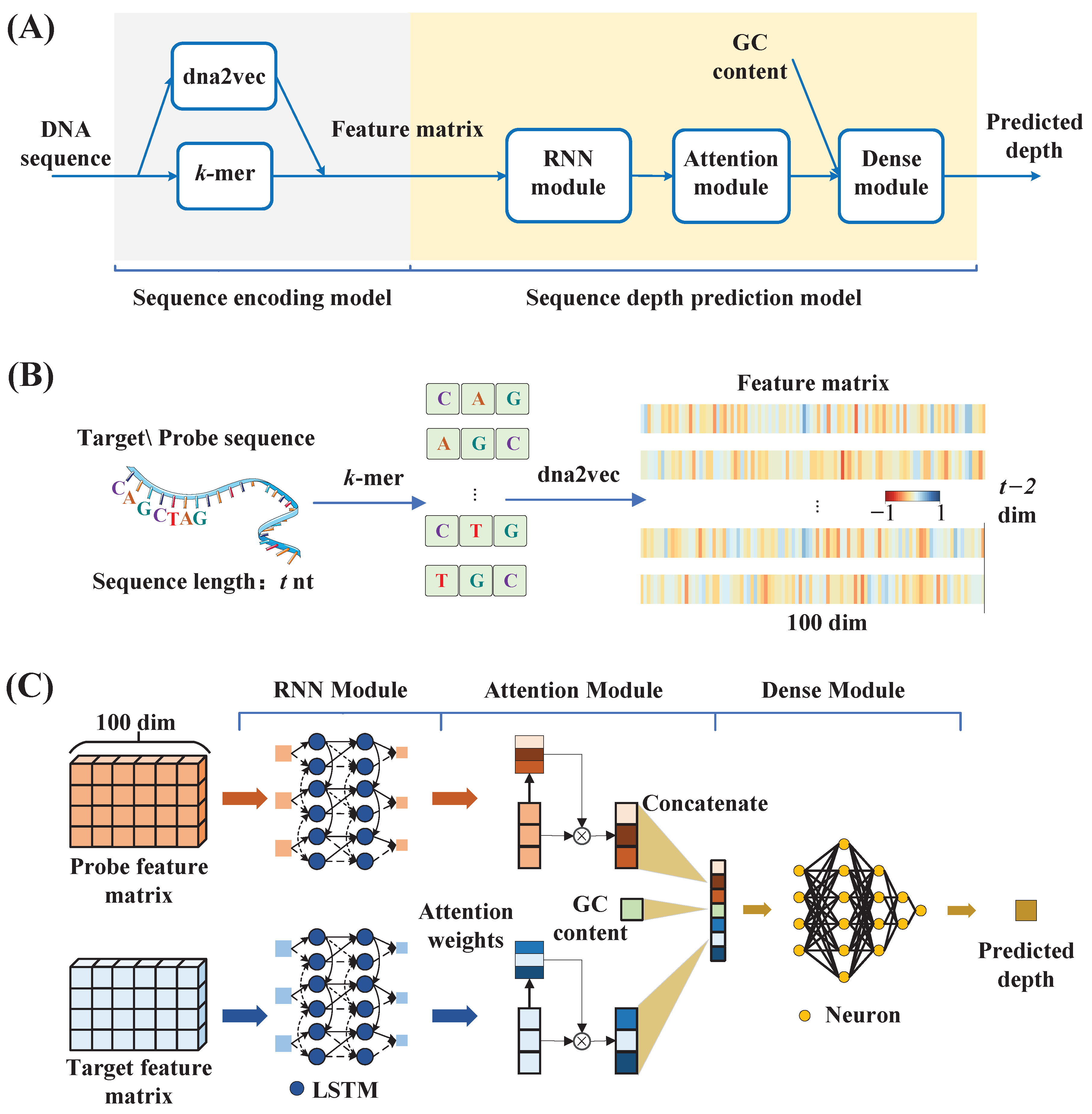
Targeted sequencing has been widely utilized for genomic molecular diagnostics and the emerging DNA data storage paradigm. However, the probe sequences used to enrich regions of interest have different hybridization kinetic properties, resulting in poor sequencing uniformity and setting limitations for the large-scale application of the technology. Here, a low-complexity deep learning model is proposed for prediction of sequencing depth from probe sequences. To capture the representation of probe and target sequences, we utilized a sequence-encoding model that incorporates k-mer and word embedding techniques, providing a streamlined alternative to the intricate computations involved in biochemical feature analysis. We employed bidirectional long short-term memory (Bi-LSTM) to effectively capture both long-range and short-range interactions within the representation. Furthermore, the attention mechanism was adopted to identify pivotal regions in the sequences that significantly influence sequencing depth. The ratio of the predicted sequencing depth to the actual sequencing depth was in the interval of 1/3—3 as the evaluation metric of model accuracy. The prediction accuracy was 94.3% in the human single-nucleotide polymorphism (SNP) panel and 99.7% in the synthetic DNA information storage sequence (SynDNA) panel. Our model substantially reduced data processing time (from 334 min to 4 min of CPU time in the SNP panel) and model parameters (from 300 k to 70 k) compared with the baseline model.
Keywords: targeted sequencing; sequencing depth; bidirectional long short-term memory network; attention mechanism targeted sequencing; sequencing depth; bidirectional long short-term memory network; attention mechanism