Article

Assessment of Compressive and Flexural Properties and Stacking Strength of Expanded Polystyrene Boxes: Experimental and Simulation Study


1
Faculty of Industrial Engineering, Mechanical Engineering and Computer Science, University of Iceland, Hjardarhagi 2-6, IS-107 Reykjavik, Iceland
2
Faculty of Food Science and Nutrition, University of Iceland, Aragata 14, IS-102 Reykjavik, Iceland
3
Matis ohf., Vinlandsleid 12, IS-113 Reykjavik, Iceland
4
Sæplast Iceland ehf., Gunnarsbraut 12, IS-620 Dalvik, Iceland
*
Author to whom correspondence should be addressed.
Appl. Sci. 2023, 13(10), 5852; https://doi.org/10.3390/app13105852
Submission received: 10 March 2023 / Revised: 25 April 2023 / Accepted: 7 May 2023 / Published: 9 May 2023

Abstract

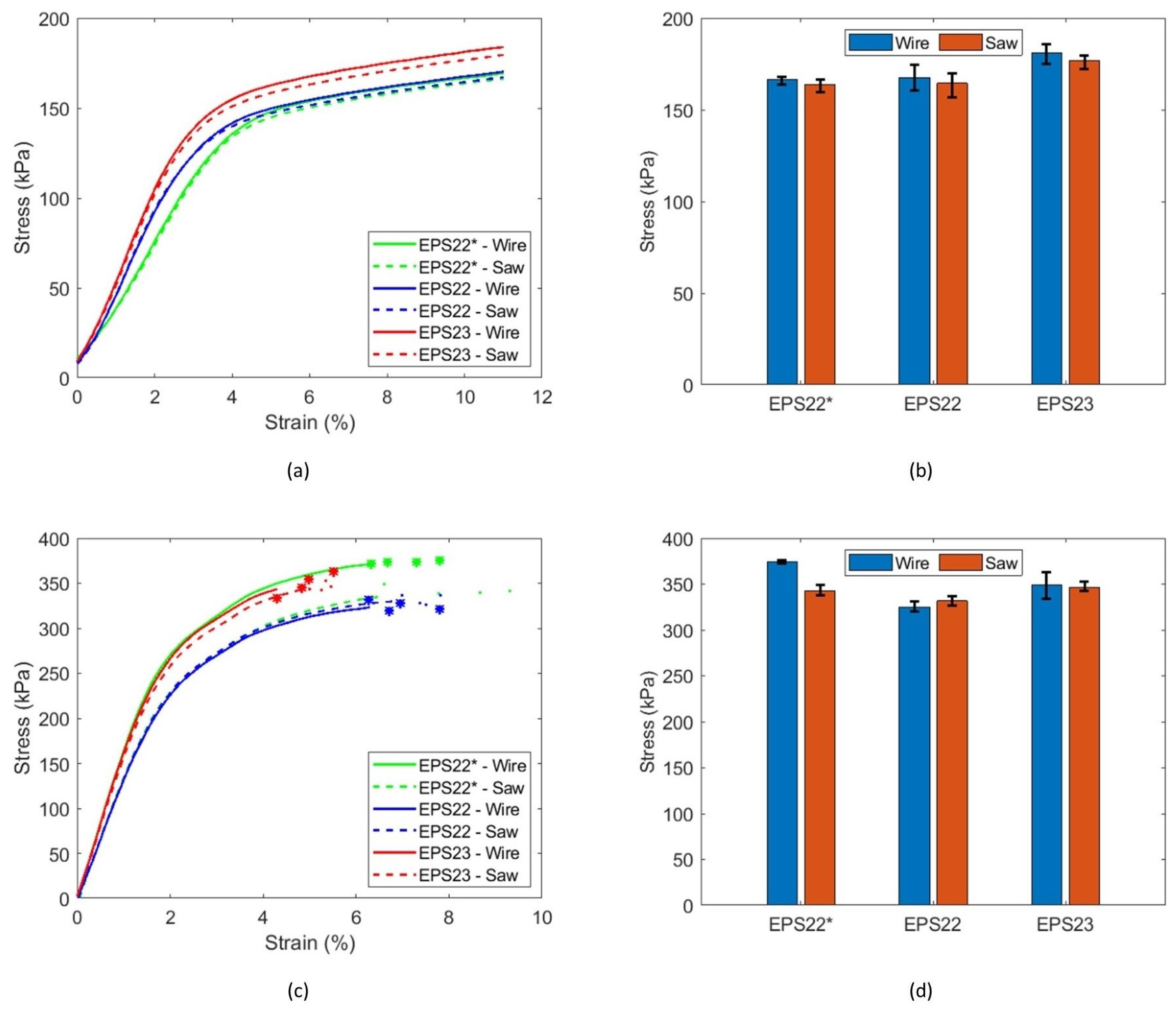
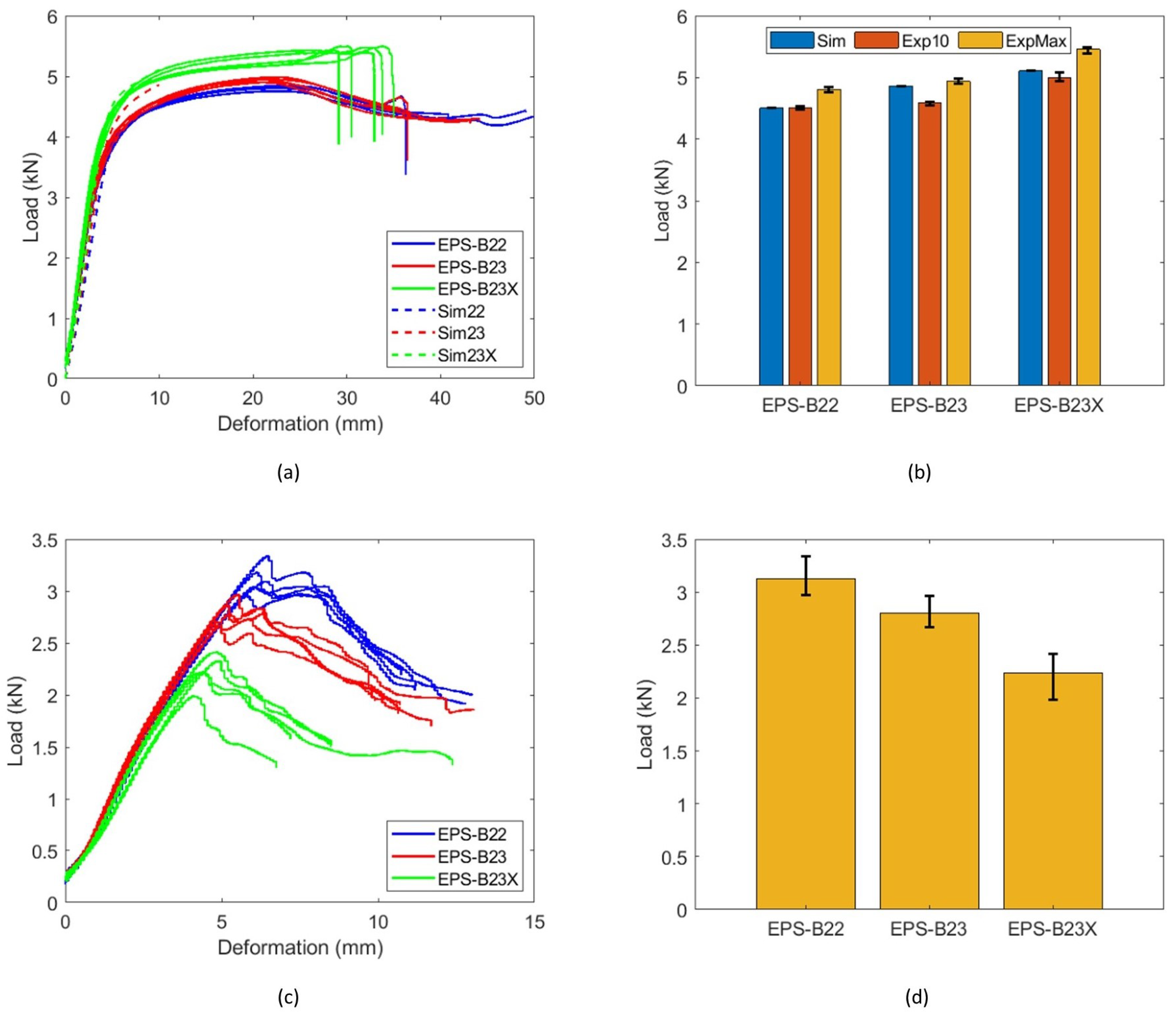
Expanded polystyrene (EPS) boxes are used for the packaging of perishable and vulnerable goods during transportation; for instance, fresh fish fillets. It is important to minimize the weight and cost of the packaging materials while maximizing strength to avoid damage to the packaging and the product itself. EPS boxes have to withstand considerable loading, which arises due to rough handling and stacking during transport. This work focused on the compressive and flexural properties and stacking strength of 3 kg capacity EPS boxes with densities of 22 and 23 kg/m3, by combining experiments and simulation. Material properties were obtained from the compression test, and the behavior of EPS boxes under stacking load was investigated through both experiments and finite element simulations. The influences of density and different sample preparation methods on material properties and stacking strength were investigated. The results indicated that, with the density increasing by 1 kg/m3, the initial modulus rises 10–15% and the compressive strength increases by 7–8% in the compression test, while in the flexure test, the rupture stress increases by 3–7%. Additionally, an increase of around 2% was observed for the specimens cut with a hot wire compared to those cut with a table saw. However, because the failure mechanism for a box as a whole differs from that of small units in the compression and flexure tests, density has less of an impact on stacking strength. Finally, a good agreement was obtained between the simulation and stacking strength test results.
Keywords: expanded polystyrene; compression test; flexure test; material properties; stacking strength; FEM; food packaging expanded polystyrene; compression test; flexure test; material properties; stacking strength; FEM; food packaging