
You are currently viewing a new version of our website. To view the old version click .
Applied Sciences
  • Article
  • Open Access

3 January 2023

Improving the Safety and Security of Software Systems by Mediating SAP Verification

and
Department of Information systems, College of Computer and Information Sciences, Jouf University, Sakaka 72347, Saudi Arabia
*
Authors to whom correspondence should be addressed.
This article belongs to the Special Issue Reliability and Safety of Software Systems

Abstract

Security and performance (SAP) are two critical NFRs that affect the successful completion of software projects. Organizations need to follow the practices that are vital to SAP verification. These practices must be incorporated into the software development process to identify SAP-related defects and avoid failures after deployment. This can only be achieved if organizations are fully aware of SAP verification activities and appropriately include them in the software development process. However, there is a lack of awareness of the factors that influence SAP verification, which makes it difficult for businesses to improve their verification efforts and ensure that the released software meets these requirements. To fill this gap, this research study aimed to identify the mediating factors (MFs) influencing SAP verification and the actions to promote them. Ten MFs and their corresponding actions were identified after thoroughly reviewing the existing literature. The mapping of MFs and their corresponding actions were initially evaluated with the help of a pilot study. Mathematical modeling was utilized to model these MFs and examine each MF’s unique effect on software SAP verification. In addition, two case studies with a small- and a medium-sized organization were used to better understand the function these MFs play in the process of SAP verification. The research findings suggested that MFs assist software development organizations in their efforts to integrate SAP verification procedures into their standard software systems. Further investigation is required to support the understanding of these MFs when building modern software systems.

1. Introduction

The relevance of software systems to modern civilization generates prodigious concerns about several essential quality attributes. Software developers commonly describe such qualities as NFRs. Security, performance, reliability, maintainability, usability, and scalability are all defined by NFRs [1,2]. They constrain the system’s design across backlogs. NFRs, or system qualities, are as vital as functional requirements. They ensure that the system is useful and effective. Systems that fail to fulfill any of these requirements may fail to meet internal business, user, or market expectations [3,4]. These NFRs may result in substantial legal penalties if they are not adhered to. All NFRs are equally significant and must be addressed; however, a single study will not be able to handle all of them. As a result, the goal of this research was to discuss only two NFRs, namely security and performance. We must understand the MFs for SAP verification to effectively address SAP needs.
Security is defined as “the condition of being free from danger or peril” [5]. The use of methods/techniques to analyze, mitigate, and defend software systems against vulnerabilities is known as software security. These methods guarantee that software continues to operate and is protected against threats [5,6]. Security considerations must be made at every level of the software development process. The primary objective is to find faults and problems as early as feasible. Software performance is another critical component of daily operations, yet many of the issues arise from the software’s actual code, not from external variables. Software performance difficulties are often introduced by engineers who were unaware that they would exist. In other cases, problems are not obvious because they are not caused by the code itself but by how the code responds to something else [7]. Although security and performance are two different NFRs, they are somehow related to each other. Security is a performance indicator that is affected by threats that impact the performance of individual components of software during service rendering [8]. Both security and performance illustrate the software’s efficiency, implying that performance and security are indicators of the software’s development level.
Even though various technologies facilitate software development, this is a human-centered activity that is prone to errors. Software systems must adhere to SAP; to achieve this, software development companies include quality assurance activities throughout the product life cycle to analyze these qualities, hence avoiding SAP difficulties after software release [9]. The general motive for this research effort was as follows: (1) understanding the significance of SAP requirements for software systems and the need to include SAP verification in the development process, and (2) identifying the SAP MFs and their role in software success. Security and performance verification are actions that seek flaws in these two distinct quality axes. Different verification procedures and methodologies may be employed alone or in combination, each with its own advantages and drawbacks for SAP verification.
Various SAP verification methods are out there, but software systems still have flaws. Performance difficulties are a major concern in several businesses, such as telecoms, and attacks are also increasing rapidly on various systems, such as on news-reporting systems [10]. Some of the possible causes for this issue are (1) inefficient verification methods, (2) software businesses failing to apply adequate verification procedures, or (3) a perceived split between academia and industry. Automated attack scripts, the availability of attack knowledge, and worldwide interconnectedness have made it simpler to attack software systems. To better address the SAP requirements of the software, there is a need to understand the MFs of SAP and the ways to address these MFs efficiently.

1.1. Research Approach and Contribution

The study’s overall goal was to discover the MFs for SAP verification and their influence on software success. The following were the specific objectives:
  • A thorough literature review to extract the MFs for software SAP;
  • Identifying the verification practices for SAP and the techniques used to implement these practices;
  • Analyzing the impact of identified verification practices on SAP individually;
  • Validate the findings with the help of case studies.

1.2. Paper Organization

The next part delves into software SAP verification criteria based on the current research in the area under investigation. Section 3 discusses some existing studies to provide the current state-of-the-art. Section 4 extracts the mediating factors for SAP verification from the existing literature. Section 5 elaborates on the proposed methodology. Section 6 presents the case study findings and is followed by Section 7, which presents the results and recommendations for future research. Table 1 shows the list of abbreviations used in this study for a better understanding.
Table 1. List of abbreviations used.

2. Background

SAP are key NFRs that need to be paid attention to for achieving a quality software product. In this section, we will analyze both these NFRs’ roles in software quality and the techniques used to ensure it.

2.1. Software Security Verification

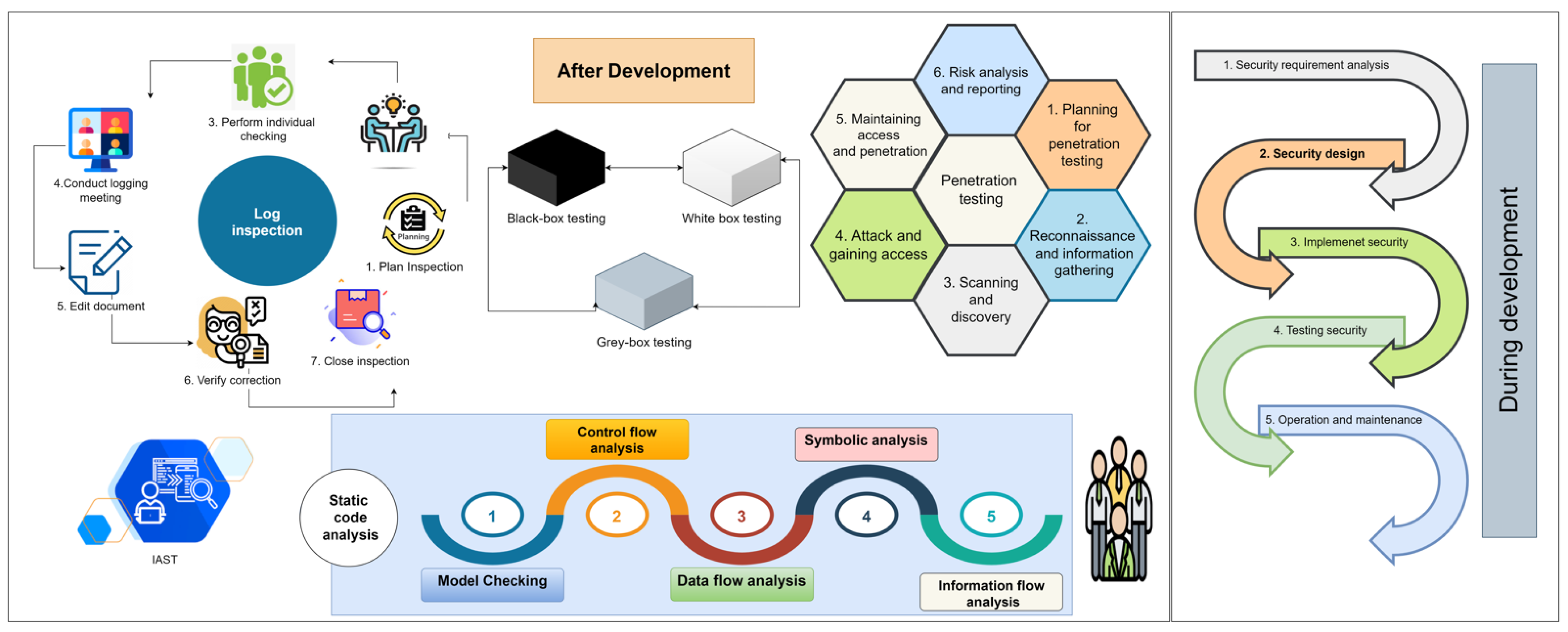
Software security has always been an afterthought during the testing phase of development. In contrast, modern approaches, such as agile, include continuous testing throughout all stages of the SDLC. Every day, hackers and cybercriminals are coming up with new methods to take advantage of software flaws. Security should be a priority throughout the SDLC, allowing developers and stakeholders to identify and resolve possible security concerns early on in the process [11,12]. Therefore, it is necessary to adopt the concept of SSDLC, as shown in Figure 1.
Figure 1. An insight into security verification.
The security verification of software, also known as security assurance, spins around the following main techniques, as shown in Figure 1:
  • Log inspection;
  • Static code analysis;
  • Profound penetration testing before release;
  • Interactive application security testing (IAST).
The complete concepts of security adoption and verification are better elaborated in Figure 1. According to Figure 1, organizations need to adopt SSDLC practices during development, which include security requirement analysis, security design, security implementation, security testing, and operation and maintenance. Once software development is complete, it needs security verification before release; this includes applying essential security verification techniques, as mentioned above. Below, we describe the concept of SSDLC and key SVTs.

2.1.1. SSDLC

SSDLC involves incorporating security best practices into an existing SDLC for achieving secure software. The SSDLC procedure demands concerted labor at each level of the SDLC, from requirement collection through deployment and maintenance [13]. SSDLC involves a mind change on the part of the development team, focusing on security at each step of the project rather than merely on functionality. Security vulnerabilities may be addressed in the SDLC pipeline well before deployment to production with a dedicated effort. This minimizes the possibility of detecting security vulnerabilities in software and seeks to lessen the consequences if detected [14]. The purpose of SSDLC is not to replace conventional security checks but rather to integrate security into software development duties and empower them to build safe apps from the start.

2.1.2. Security Verification Technique

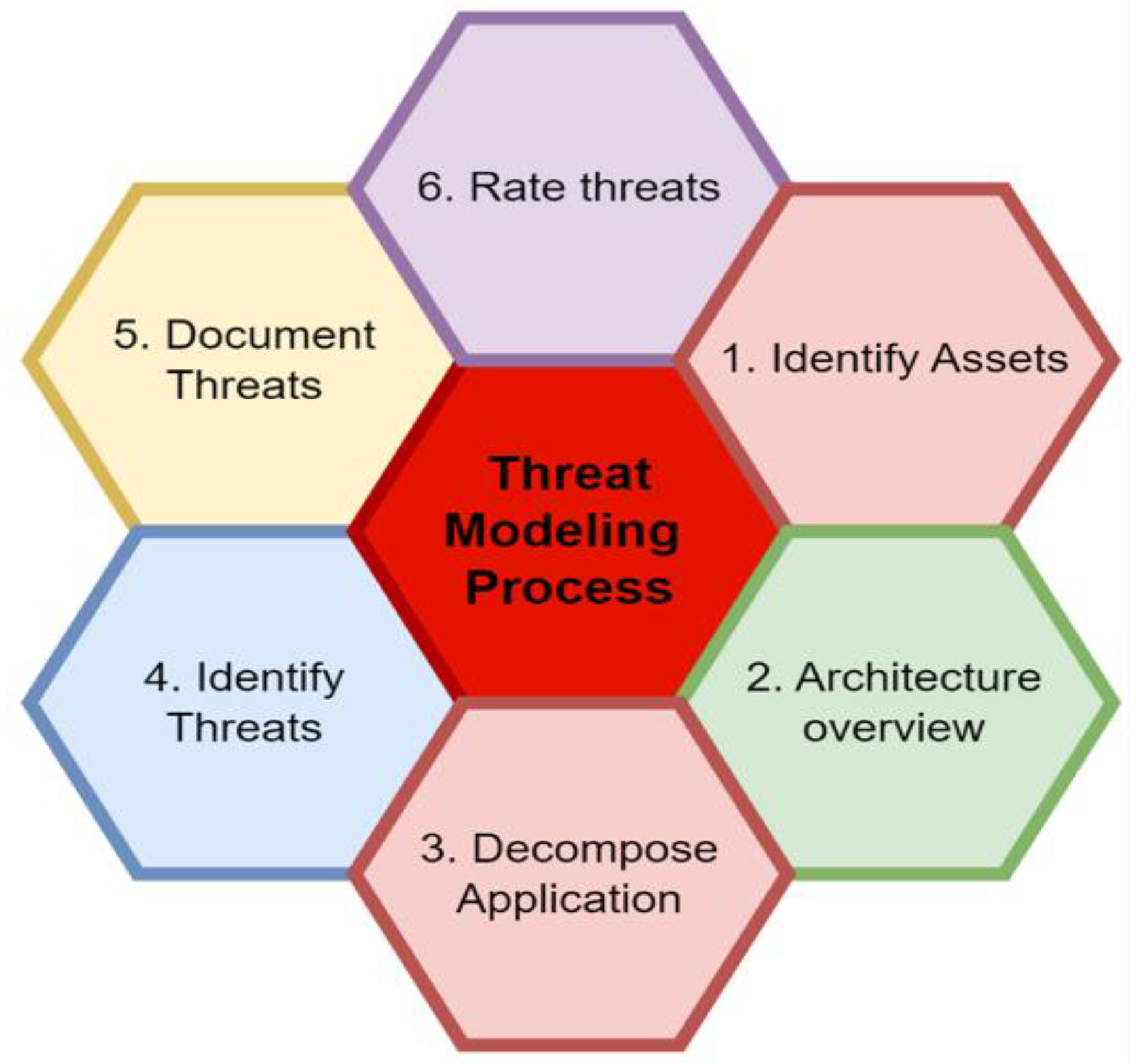
Security verification refers to the technical verification of the application before deployment. Security verification aims to identify security breaches and to verify that the developed software meets security requirements [10,15]. Security verification is also necessary to maintain a business’s reputation and prevent sensitive data loss. In order to establish security requirements, organizations first need to understand the threat and risk modeling technique/process. Figure 2 elaborates on the threat-modeling process for better identification of risks and their associated severity.
Figure 2. Threat-modeling process.
Below, we briefly discuss the commonly used security verification techniques.
Log Inspection
This SVT is used to discover software failures and faults. Log inspection is a systematic process that consists of seven activities, as shown in Figure 1. These activities include planning the inspection, holding kick-off meetings, performing individual checking, conducting log meetings, editing the document, verifying corrections, and inspection closure [8,10,16]. The verification team is responsible for performing log inspections.
Penetration Testing
The penetration test is often performed using a failure-based approach, with test cases designed to investigate known flaws found in popular security vulnerability repositories. Another penetration test approach is experience-based, in which a security expert plays the role of a malicious user attempting to access the system [17,18]. It is a systematic process consisting of six steps, as mentioned in Figure 1. Penetration testing is performed either manually or with the help of automated tools. Arachni, SQL Injection ME, OWASP ZAP, XSS ME, Meta Exploit, NMAP, Burp Suite, and Whatweb are the most-often-used tools for automated penetration testing.
Static Code Analysis
Using static code analysis (SCA) before executing a program is a debugging method. To achieve this task, one must compare a code set to one or more sets of coding rules. It resolves source code flaws that might lead to vulnerabilities. SCA may be performed manually by examining each line of code or automatically using automated techniques, but primarily, SCA is performed in an automated way [10,19]. HP Fortify SCA and Brakeman are common standard tools used for static code analysis.
Interactive Application Security Testing (IAST)
IAST solutions assist firms in uncovering and managing security risks associated with runtime application vulnerabilities. IAST uses software instrumentation to monitor an application’s behavior and performance. IAST solutions put agents and sensors in operating applications and analyze all application interactions to find vulnerabilities in real-time.

2.2. Software Performance Verification

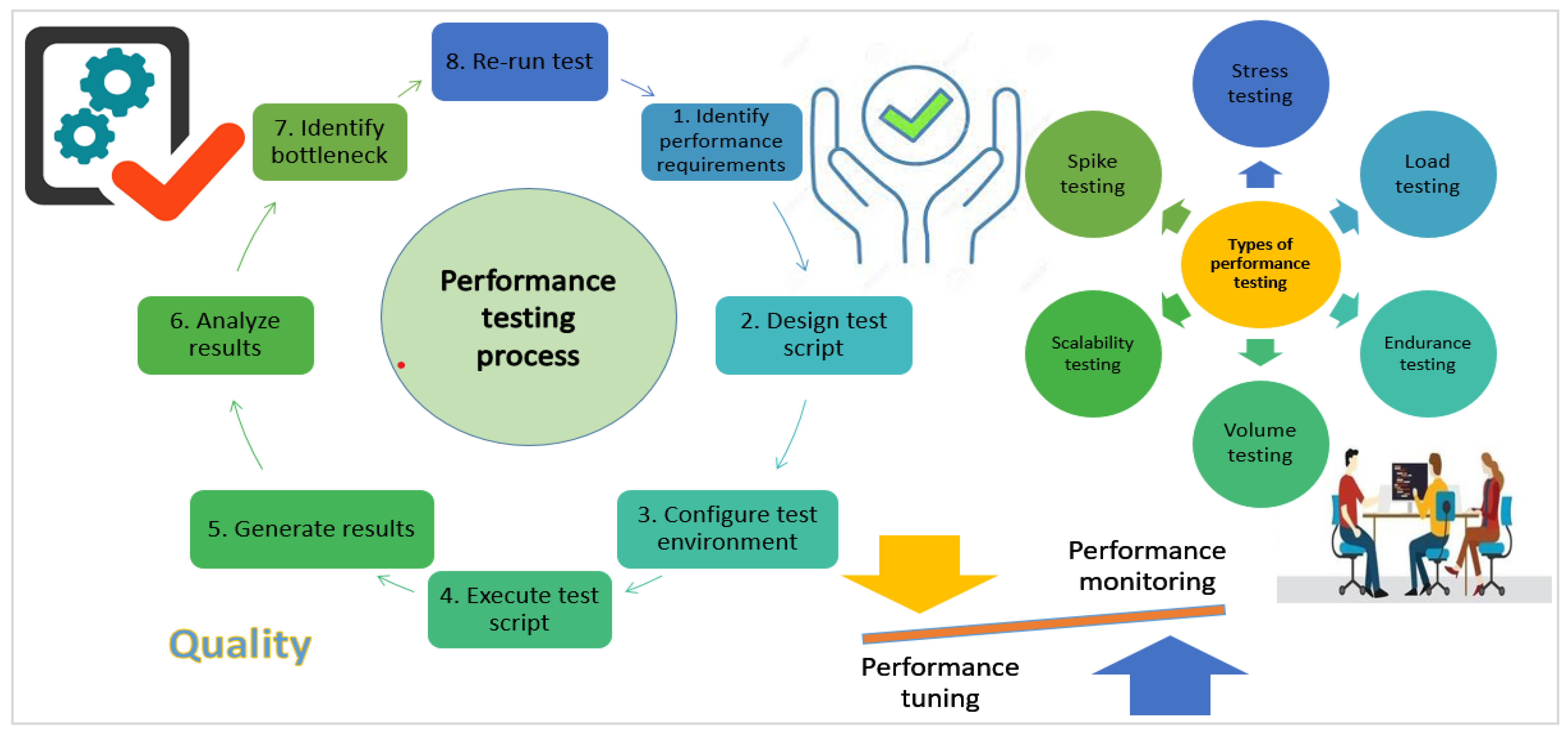
The effectiveness of a software system in terms of time restrictions and resource allocation is measured by its performance. Response time, throughput, and utilization are the traditional performance measures. The response time is the time it takes a job from start to finish to transit a certain route inside the system. Throughput is the number of tasks a certain section of the system can carry out in a given time. The proportion of time that a certain element of the system is actively functioning for is referred to as utilization [20]. The success criteria for the testing procedure must first be established before performance testing can begin. Target metrics become the main focus when preparing and creating performance test cases. Therefore, measurements constitute the basis for performance testing. Monitoring the appropriate indicators may assist in identifying areas that need greater attention and determining how to improve them [21]. Figure 3 provides the common performance testing types and a complete step-by-step performance verification process.
Figure 3. An insight into performance verification.

2.2.1. Performance Verification Techniques

To determine if performance is sufficient, an organization must first set milestones. Then, it should measure the metrics that fall within these milestones and estimate the outcome by comparing the actual and projected results. Metrics help an organization in the following ways:
  • They serve as a foundation for the testing;
  • They aid in the tracking of a project’s progress;
  • A QA team may use metrics to describe and quantify a problem to discover a solution;
  • Metrics tracking over time helps the organization to compare test results and evaluate the effect of code changes.
Which performance metrics do a QA team need to track? It depends on the nature of the software under testing. Some commonly used parameters in performance metrics include response time, request per second, user transactions, error rate, wait time, average load time, peak response time, concurrent users, throughput, CPU utilization, memory utilization, and total user sessions. Performance metrics need to be used very carefully; some principles of using performance metrics effectively are listed as follows:
  • Assemble an exhaustive set of performance criteria by first identifying the specific business goals of your customer;
  • A feature must be given an appropriate measure of success for it to be considered successful;
  • If a software user receives a high performance, reliability, and functionality level, metrics should reflect this;
  • Track metrics over time by doing repeated performance tests;
  • Run each software item through its paces one at a time. Perform database, service, and other checks.
Once the milestone is set, the organization may apply various manual and automated ways to evaluate software performance. Below, we discuss some of the standard techniques of performance verification.
Log Inspection
Log inspection or monitoring helps to detect malicious behavior, collect events across different platforms, inspect error and informational events, and create and maintain audit trails [22]. Thus, it is a valuable measure of evaluating software performance.
Response Time Test
The response time verification technique measures the time between a user’s request and a server’s, application’s, website’s, or device’s response. For example, if a user asks an application to load a particular web page, the response time is how long it takes the program to respond. Response time assists developers in assessing if software and websites are functional and responsive enough to be delivered as a final product [23]. A faster response time ensures customer satisfaction and higher ratings for software or websites. Slower response times may indicate faults, hardware difficulties, or connection concerns. The response time verification consists of four main steps: identifying response time parameters, performing response time tests, recording the findings, and identifying errors or successes.
Resource Consumption Test
Another crucial performance verification technique of an application’s performance, in addition to log inspection and response times, is resource consumption. A performance test is a technique to keep track of how active particular computer system resources are [22,24]. The critical consideration of resource consumption includes four main elements: CPU, memory, disk, and network.
Throughput
The number of transactions created over time during a test is referred to as “throughput”. It is also known as the maximum capacity that an application can support. Before beginning a performance test run, it is typical to set a throughput target, requiring the application to handle a certain number of requests per hour [25]. The formula for the throughput is as given in Equation (1)
Throughput =   ( number   of   requests ) ( total   time )    
After obtaining an overview of related terms, in the next section we provide the existing studies on software SAP verification in order to obtain a picture of the current state-of-the-art.

4. Mediating Factors for SAP Verification

The SAP-moderating factors may be seen as suggestions that must be taken into account during SAP verification. To identify these MFs, we searched throughout the formal and grey literature and identified the following ten factors that serve as MFs for SAP verification.

4.1. SAP Verification Planning and Methodology

SAP verification is usually not well planned, due to which the software team must reprioritize verification activities multiple times, increasing time and effort. The planning phase includes requirement prioritization, dependency identification, and time and budget for performing SAP verification activities. Further, a well-planned and transparent methodology for performing SAP verification should be defined to smoothly execute the verification process [8,10,29].

4.2. Suitable Environment for SAP Verification

Organizations need to configure the environment to make it suitable for performing SAP verification. A proper environment is inevitable for verification since it comprises both the settings of the infrastructure responsible for system operation as well as the configuration of the system itself [8,10,29].

4.3. Organizational Support

Organizational views of SAP verification often harm this activity. Among these perceptions is the notion that SAP verification wastes resources. Typically, businesses worry about their systems’ security and effectiveness only when something goes wrong. Another time when companies prioritize SAP is prior to a significant release when a security or performance failure might negatively affect the organization’s image [26,29]. This shows that organizations should prioritize SAP verification to produce high-quality software and to maintain their reputation.

4.4. Defining Complete SAP Requirements/Document Security Policy

A lack of SAP requirements precludes the verification from fulfilling its intended function (that is, determining if the program fulfills its requirements) since it is impossible to know whether the verification findings are valid without an oracle. Incomplete requirements also strain other teams (e.g., analysts, architects, and developers) since the verification team must constantly contact them [8,29,30]. Therefore, SAP requirements should be completely specified during the requirement-engineering phase along with test cases.

4.5. Software Team Awareness

SAP verification is not only the job of the QA team; instead, it is the responsibility of the whole development team. Programmers must be aware of the inherent flaws in the technology employed in software development and the coding patterns that lead to errors. They must be provided training for this so that they may avoid using faulty technology and increase their ability to write error-free code. Managers must also receive training to see SAP verification efforts as an investment rather than an expenditure. Furthermore, training may expose managers to the issues that a software product with inadequate SAP might cause, e.g., loss of customers and high infrastructure costs [8,19,30,31]. Consequently, managers will see the value of adding SAP verification operations in the product life cycle and allocating money and time for them.

4.6. Cross-Functional Teams

A single team does not carry out verification operations in isolation. It necessitates collaboration between many teams with a variety of abilities. Due to the requirement of installing servers, restoring database backups, and dealing with certain low-level technologies, infrastructure, database, and technical teams must collaborate. The identification of the technologies utilized to construct the program and how such technologies may impact the verification findings requires cross-team collaboration [10,29,32]. Meetings involving the performance architect, domain experts, marketing stakeholders, and developers may regularly assist in enhancing team relationships and, as a result, SAP verification.

4.7. Suitable Techniques of SAP Verification/Tool Support

Ad-hoc verification obstructs the creation of criteria for selecting test cases and the establishment of a definition of done. A suitable verification approach naturally provides these requirements. For example, using tools without understanding exactly what approach is being used creates uncertainty regarding the tool’s detection capabilities. Additionally, the quantity of false-positive flaws found by security tools might be an issue; analyzing all the problems reported involves significant additional labor [12,16,29]. Therefore, selecting suitable techniques for SAP verification is necessary for efficiently performing SAP.

4.8. SAP Monitoring and Audit/Define Measure

Monitoring verification operations helps to verify that the software development team members adhere to SAP’s best practices. Additionally, it enables the team to identify unusual activity, such as privilege misuse and the impersonation of another user. The software development team must identify essential metrics that are meaningful and relevant to the project’s requirements [22,26,29,33]. Metrics that are well-defined aid in assessing the SAP position over time.

4.9. Allocation of Time and Budget to SAP Verification

SAP verification operations are often neglected when a development project’s timeframe or budget is shortened. This may affect the system’s quality since the product owner may terminate the verification process before all activities are completed, reducing the verification coverage [29,34,35]. As a result, the duration and budget for SAP operations should be determined at the start of the project when the SAP verification policy is documented.

4.10. Encourage Reusability

Reusing knowledge and artifacts enables SAP verification processes to be more agile. Reusing functional test cases in performance tests may be advantageous since they reflect real-world use situations. Additionally, test cases for earlier systems’ parameters may be adapted, decreasing effort and time. For example, the necessary reaction time for a scenario may be established using a comparable production system scenario [10,29,36].
Now, we analyze the impact of the above-mentioned MFs/recommendations/best practices on SAP verification activities in the subsequent sections.

5. Proposed Methodology

This study aimed to optimize software SAP verification by identifying and analyzing the factors that serve as MFs and indirectly help to improve SAP verification. Before proceeding toward finding the impact of the identified MFs on SAP verification, there is a need to identify the actions that may promote the identified MFs. Table 3 lists the MFs of software SAP and actions/measures for promoting these MFs from the existing literature on software SAP.
Table 3. MFs and the corresponding actions to promote these MFs.
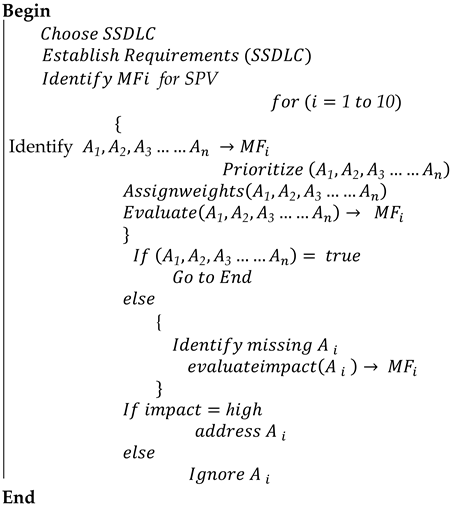
Once the MFs and the corresponding actions to promote these MFs were defined, a methodology was proposed to evaluate the SAP verification process. Algorithm 1 describes the overall working of the proposed methodology.
According to Algorithm 1, the organization first needs to choose the SSDLC. The choice of SSDLC depends on various factors, including the nature of the project, budget, and time constraints. Once the methodology is defined and the requirements for the SSDLC are established, the MFs for SAP need to be identified. The proposed methodology identified ten MFs from both the scientific and grey literature. Next, what actions are required to accomplish these MFs need to be determined. In our case, we extracted the MFs and their corresponding actions from the existing published literature to ensure their correctness and effectiveness [8,26,29,35]. Once the MFs and their corresponding actions are identified, the next step is to prioritize these actions according to the nature and complexity of the project. For prioritization, every action is assigned a numeric weightage based on its importance for the project. Next, the organization needs to evaluate each action’s impact on MFs, as shown in Equation (5). If the impact of an action on the identified MF is high, it will be adapted; otherwise, it may be ignored. Below, we present the proposed methodology using mathematical modeling. The idea of mathematical modeling was taken from [37,38].
Algorithm 1: Working of the proposed Methodology
Let MF denote mediating factors; A1, A2, A3 …… An are actions to promote the MF; SPV
refers to SAP verification,
Applsci 13 00647 i001
The objective function of this study was to optimize SPV, as mentioned in Equation (2):
O F = M a x ( S A P )     I m p r o v i n g   S P V
where   S P V = f ( M F 1 ,   M F 2 , M F 3 M F 10 )    
M F i = j = 1 n A j W j
where wj is the weight assigned to each Aj and Aj represents the actions mentioned in Table 3
To maximize the overall SAP, appropriate actions need to be taken for improving each MF; this can be accomplished by satisfying Equation (5):
M F i = 1 n j = 1 n A j W j T v   ( M F i )
where Tv is the threshold value corresponding to each MFi depending on the nature of the project and other constraints, i.e., time, budget, team skills, etc. Wj represents the weight assigned to different actions based on the priority of that action for a particular MF and n represents the number of actions corresponding to each MFi.
The accumulative SPV can be computed as mentioned in Equation (6):
A c c ( S P V ) = ( 1 n j = 1 5 A j W j + 1 n j = 1 5 A j W j + 1 n j = 1 6 A j W j + 1 n j = 1 4 A j W j + 1 n j = 1 3 A j W j + 1 n j = 1 6 A j W j + 1 n j = 1 7 A j W j + 1 n j = 1 3 A j W j + 1 n j = 1 4 A j W j 1 n j = 1 6 A j W j ) ) A c c ( T v )    
To evaluate the impact of a particular MFi on SPV, the partial derivatives can be found w.r.t. a particular MFi. Equation (7) represents the impact of a specific MFi on SPV by taking the partial derivatives of Equation (5), as given in Equation (7):
M F i ( S P V ) = M F i ( M F 1 ,   M F 2 , M F 3 M F 10 )     where   1 i 10          
For optimization, a threshold value is needed to determine whether the optimization is achieved or not. The comfort index, Ci, in this case is calculated using the formula mentioned in Equation (8):
C i = i = 1 10 ( T v i ( e i M F i ) 2 )
where ei represents the differences between the actual values and estimated values of MFi.
To evaluate the impact of a particular MF, software organizations need to assign it a weight first. The weight assignment depends on the MF’s importance for a particular project, the time used to implement that MF, and the expected ROI. For example, to accomplish MF1, an organization needs to take five actions. Next, all these actions need to be prioritized, and each action should be assigned a weight based on its priority.

6. Evaluation of Proposed Methodology Using Case Study

Once the MFs for SAP verification are defined along with actions to promote it, there is a need to evaluate the suggested MFs and promoting actions. To do so, we performed two case studies in real settings. A case study is an effective assessment method that gives sufficient information about a real-world situation [39]. Because the proposed MFs are for the software sector, a case study was an acceptable research approach in this study. We performed two case studies in this study to assess the suggested technique. The primary goal of these case studies was to demonstrate that the discovered MFs and related actions may be employed in a real-world setting and to demonstrate the feasibility of employing these actions to enhance SAP verification.
To carry out the case study, we talked with personnel from various software companies, informed them about the identified practices, and encouraged them to participate in our research. They were instructed to undertake these activities to examine their SAP verification methods using the six-scale evaluation mentioned in Table 4. These evaluation scales are already used in existing reputable studies [40,41] for the evaluation of their proposed approach. The respondents involved in both case studies completed the assessment at their office and emailed the findings and comments to us. We evaluated the received information using the formula mentioned in Equation (5). The same evaluation method has also been adopted by researchers in existing scientific studies [6,42,43].
Table 4. Definition of evaluation scales.

6.1. Results of an Analysis for an Organization A

Organization A is an IT firm established in Pakistan that operates in 14 countries throughout Asia, Oceania, Europe, and North America. It is one of the few top IT firms offering comprehensive services to organizations by combining cutting-edge methods with in-depth technological research and the expertise of industry leaders. Its customers vary from startups to Fortune 500 companies and government agencies, and it serves them all with cutting-edge technology solutions in the realm of new media. Its services are reliable, safe, and of high quality, allowing businesses of all kinds to flourish. With the goal of growing its company and establishing itself as one of the top web development firms, it partners with other established businesses.
Organization A offers a wide range of services, including website design and development, mobile and desktop app development, enterprise software development, digital marketing and e-commerce solutions, information technology and research-based consultancy, SharePoint development, user interface design, optimization, and search engine optimization. The respondents of the case study were asked to first rank/weight each MF’s action based on the importance of that action for the organization; the value of weight was from 0–1, where one means highly important and zero refers to “not at all important”. Once the weight was assigned to each action corresponding to each MF, the respondents were further asked to evaluate these actions according to its use in their organization (as mentioned in Table 4). If the management of the organization was fully committed to using MFs and their corresponding practices for SAP verification throughout the organization, then the evaluation score was 10, otherwise it varied depending on its implementation in the organization. Once all the actions were assigned weights and evaluated by the participants, the weighted average of each MF was calculated using the formulae mentioned in Equation (5). Table 5 shows the results of MF1 as evaluated by the respondents of Organization A for a better understanding of the proposed methodology. “W” in Table 5 refers to the average value of the weights assigned to each action by all the respondents, and “X” refers to the average evaluation by all the respondents for a particular action.
Table 5. MF1 evaluation by Organization A.
Evaluation (MF1) =   i = 1 5 w i x i 5   = 39.6 / 5 = 7.92 8
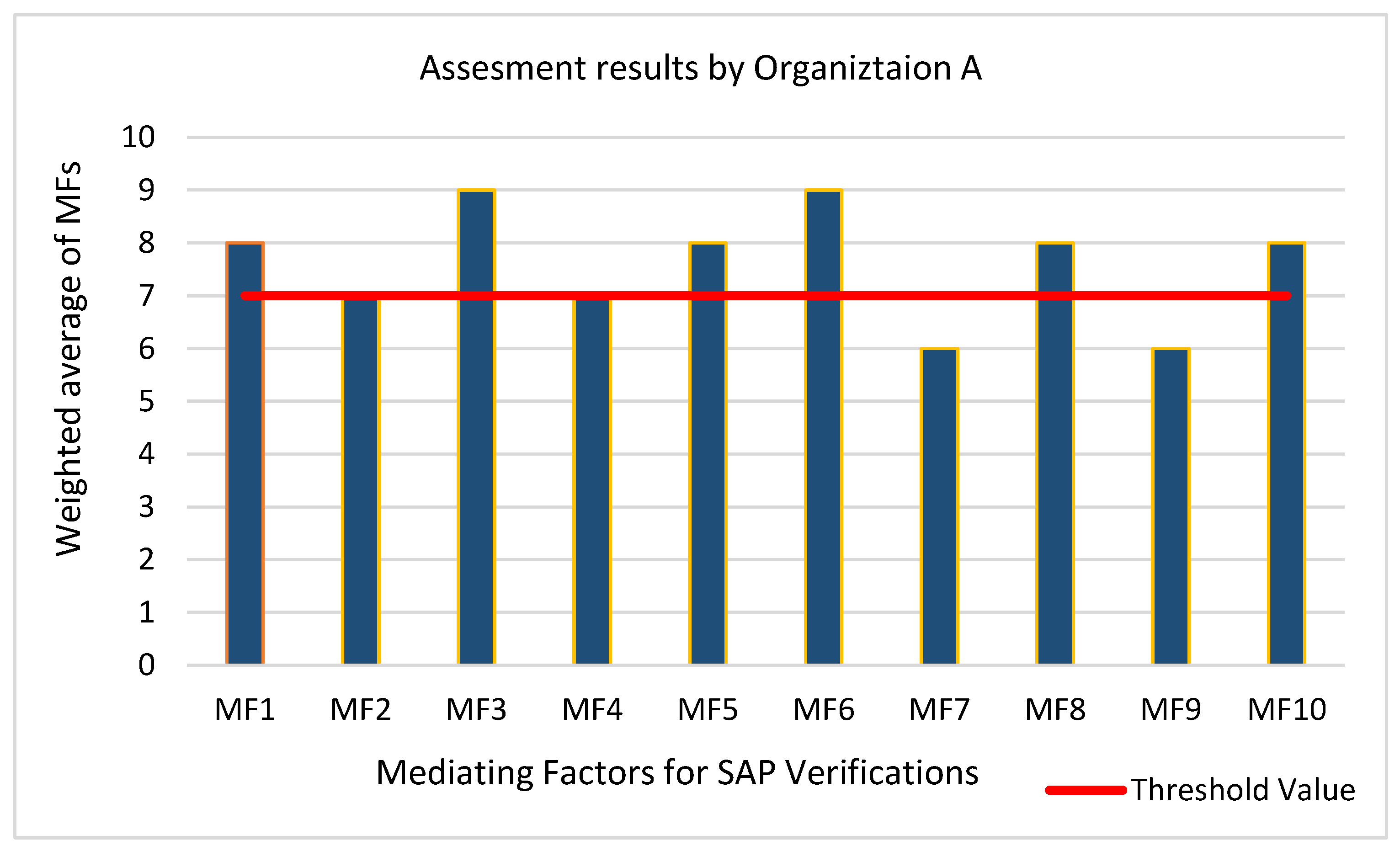
Figure 4 shows the assessment results of Organization A for each MF and its corresponding practices.
Figure 4. Assessment results by Organization A for the identified MFs.
The findings/key points identified during the assessment process were as follows:
  • The company is committed to implementing SAP’s MFs. It has already implemented most of the specified practices since the computed values for most of the MFs were greater than or equal to the threshold value.
  • Respondents said that the customer is usually unaware of the security needs of the product, due to which documenting the SAP verification requirement is a challenge.
  • The organization is deficient in MF7 and MF9, indicating that management should offer tools for SAP verification and provide time and resources for SAP verification.

6.2. Results of an Analysis for an Organization B

Organization B is a frontrunner in the software engineering industry. It provides startups, small- and medium-sized businesses, and enterprises with top-tier custom software development services. It has more than 200 employees and is considered among the well-known companies in Pakistan. This company has exercised caution and forethought in disclosing the material because of the importance of the industry to the economy and the special nature of the information at hand.
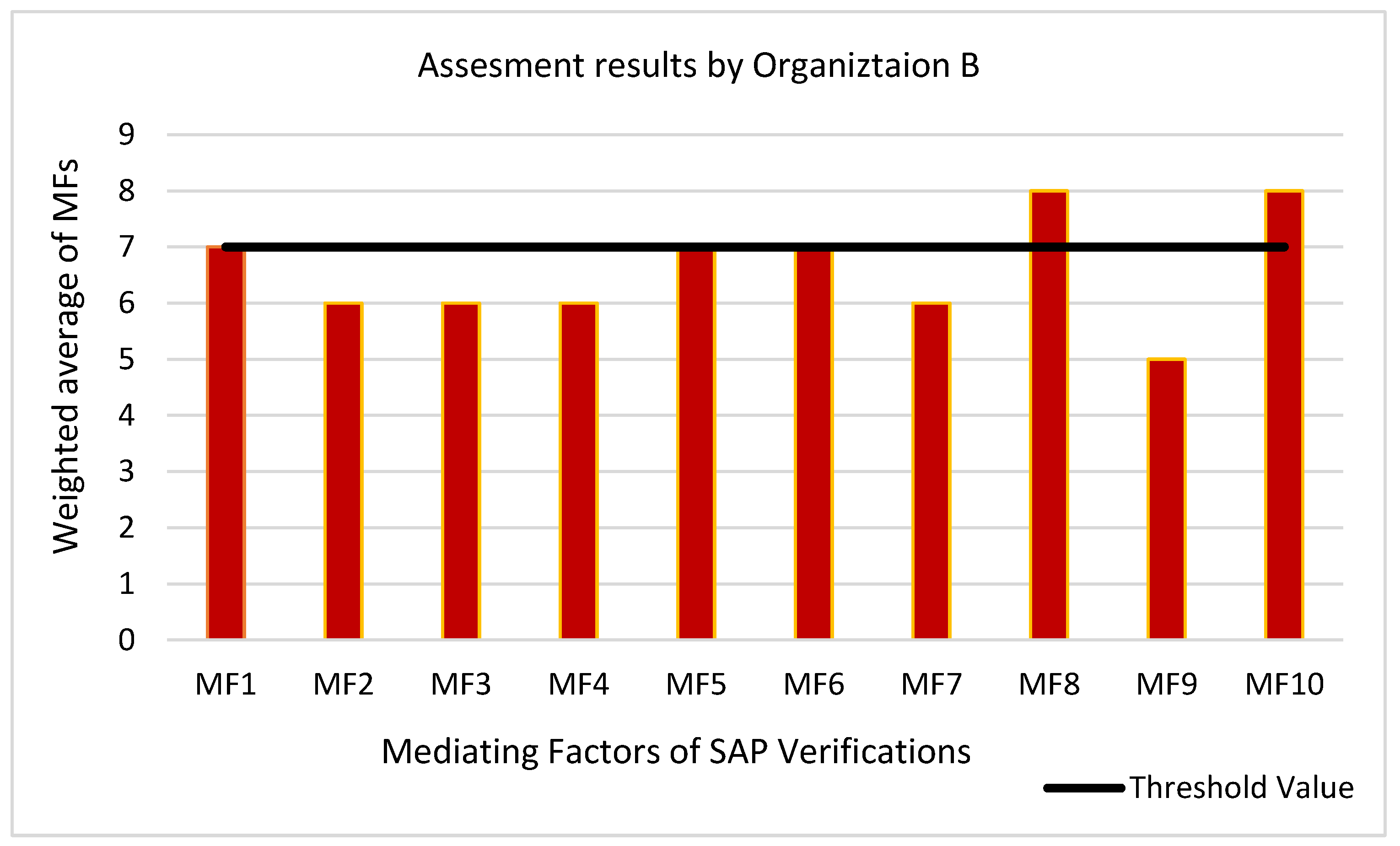
Organization B presented us with its assessment of MFs and related actions, as illustrated in Figure 5. The responders from Organization B were given identical instructions to those given to Organization A. The weighted total of actions for each MF was calculated using the formulae in Equation (5). Each MF had the same threshold value specified. The important findings derived from organization B’s responses are described below.
Figure 5. Assessment results by Organization B for the identified MFs.
  • Most of the MFs have not been adapted by Organization B, as the weighted sum of most of these MFs was less than the threshold values.
  • The respondents told us that organizations do not provide tool support, time and budget allocation, and training to the employees while they expect secure and quality products.
  • SAP requirements are not documented properly, which hinders the process of SAP verification.
  • The customer is not actively involved in documenting and testing security requirements.
  • There is a need to adapt the mentioned practices to promote SAP culture in the organization.

6.3. Case Study Participants’ Recommendations/Feedback

The case study allowed us to assess the applicability of the suggested SAP verification practices in a real-world setting. A summary of the responses received from case study participants is as follows
  • The participants were able to understand the proposed methodology without any assistance; they only asked for an explanation of some of the mentioned practices
  • The mentioned MFs and their corresponding actions helped them to assess the current SAP verification level of their organizations
  • The management team showed interest in implementing the mentioned practices in their organizations and considered them suitable for achieving a secure and quality product.

6.4. Findings and Implications

The results from both case studies showed that the identified MFs and their corresponding actions were applicable in the software industry, and medium-sized organizations (such as Organization A in our case) are already using these actions. If we analyze the statistics of Figure 4, eight out of ten practices have already been used by Organization A at an optimum, as the aggregated value of the MF was more than the set threshold value. Organization B also uses all the MFs and their corresponding actions, although not at an adequate level. There is a need to provide awareness about these MFs and complementary measures to organizations so that they can incorporate security and performance in their developed products. This study will provide them with a roadmap to address SAP verification issues.

6.5. Threats to Validity

This section discusses the challenges to the validity of our investigation and how they might be mitigated to boost confidence in the findings of our study.

6.5.1. Construct Validity

An essential limitation of the proposed methodology was assigning the practices/actions to the MF. We completed the task based on our own experience and the knowledge gathered from the literature research. To ensure construct validity, the MFs and their corresponding practices were evaluated iteratively by two university professors with sufficient expertise in teaching a software SAP course.

6.5.2. External Validity

It cannot be assured that the findings and conclusions of this research will be relevant to all software development businesses. Specifically, we performed case studies in just two firms to evaluate our suggested technique. As a result, generalizations about the applicability of the suggested approach should be made with care when drawing results.

6.5.3. Internal Validity

A fair picture of the current procedures utilized to enhance SAP verification was gathered via a literature review, which yielded MFs and the actions that corresponded with them. Because some sources lacked adequate or clear information on our MFs, objectivity was required in selecting sources and extracting data. The sources were thoroughly vetted and chosen based on a set of quality criteria to counteract this danger. We are worried about the veracity of the findings since the participants in our case study assessed the organization’s procedures. The evaluation may be subjective since the assessor must pay close attention to the given criteria to obtain accurate findings. Participants’ prior knowledge of software SAP and their position within the company are also important considerations.

7. Conclusions and Future Work

The main goal of this research was to identify the MFs that improve software SAP. Once the MFs were identified, the next step was to identify the actions that might help to achieve these MFs. To identify MFs and their corresponding actions, both the formal and grey literature were used. The identified MFs and their promoting actions were modeled mathematically, and a case study with two small- and medium-sized organizations was conducted to validate the proposed methodology. The outcomes of these studies confirmed the usability of our proposed approach in a real-world environment. This work is expected to help software organizations increase the SAP verifications of their products and improve their SAP verification process. They can use the suggested MFs to assess the maturity of their SAP verification process. The study findings will also increase developers’ level of awareness about SAP verification. The findings of this research will be relevant for all software development businesses as they have the liberty to weight/rank the actions corresponding to each MFs according to the importance for their organization.
This study may be improved in several ways. Researchers may pursue the following open research directions:
  • This approach might be tailored to the demands of various organizations based on their facilities and methods.
  • The proposed technique might be modified to include special features linked to the technologies such as IoT, big data, Blockchain, and cloud computing.
  • The suggested technique might be published publicly and updated with new academic and industrial practices.
  • The evaluation process might be automated in the future to reduce the burden from user’s shoulders and to remove biasedness.
  • This study considered SAP as a set of unrelated metrics, which is not always correct. SAP, by its nature, tends to bear contradictions. For instance, the more cryptographically secure a software is, the less its performance metrics’ values. In the future, this issue may be addressed.
  • Further evaluation cases may be added to strengthen the findings.

Author Contributions

Conceptualization, M.F.A. and M.H.; Data curation, M.F.A. and M.H.; Formal analysis, M.F.A. and M.H.; Methodology, M.F.A. and M.H.; Supervision, M.H.; Writing—original draft, M.F.A. and M.H.; Writing—review and editing, M.F.A. and M.H. All authors have read and agreed to the published version of the manuscript.

Funding

This work was funded by the Deanship of Scientific Research at Jouf University under grant No (DSR2022-NF-03).

Institutional Review Board Statement

Not applicable.

Data Availability Statement

Will be furnished on request.

Conflicts of Interest

The authors declare no conflict of interest.

References

  1. Arbain, A.F.; Jawawi, D.N.A.; Kadir, W.; Ghani, I. Case study on non-functional requirement change impact traceability for Agile software development. Int. J. Adv. Sci. Eng. Inf. Technol. 2020, 10, 34–40. [Google Scholar] [CrossRef]
  2. Rahman, M.S.; Reza, H. Systematic mapping study of non-functional requirements in big data system. In Proceedings of the 2020 IEEE International Conference on Electro Information Technology (EIT), Chicago, IL, USA, 31 July 2020–1 August 2020; pp. 25–31. [Google Scholar]
  3. Alwadi, A.; Nahhas, A.; Bosse, S.; Jamous, N.; Turowski, K. A Modernized Model for Performance Requirements and their Interdependencies. In Proceedings of the 2019 IEEE/ACS 16th International Conference on Computer Systems and Applications (AICCSA), Abu Dhabi, United Arab Emirates, 3–7 November 2019; pp. 1–8. [Google Scholar]
  4. Alwadi, A.; Nahhas, A.; Bosse, S.; Jamous, N.; Turowski, K. Toward a performance requirements model for the early design phase of IT systems. In Proceedings of the 2018 Sixth International Conference on Enterprise Systems (ES), Limassol, Cyprus, 1–2 October 2018; pp. 9–16. [Google Scholar]
  5. Mirakhorli, M.; Galster, M.; Williams, L. Understanding software security from design to deployment. ACM SIGSOFT Softw. Eng. Notes 2020, 45, 25–26. [Google Scholar] [CrossRef]
  6. Humayun, M.; Jhanjhi, N.; Almufareh, M.F.; Khalil, M.I. Security Threat and Vulnerability Assessment and Measurement in Secure Software Development. Comput. Mater. Contin. 2022, 71, 5039–5059. [Google Scholar] [CrossRef]
  7. Yuce, B.; Schaumont, P.; Witteman, M. Fault attacks on secure embedded software: Threats, design, and evaluation. J. Hardw. Syst. Secur. 2018, 2, 111–130. [Google Scholar] [CrossRef]
  8. Yarza, I.; Agirre, I.; Mugarza, I.; Cerrolaza, J.P. 2022. Safety and security collaborative analysis framework for high-performance embedded computing devices. Microprocess. Microsyst. 2022, 93, 104572. [Google Scholar] [CrossRef]
  9. Aruna, E.; Reddy, A.R.M.; Sunitha, K. Secure SDLC Using Security Patterns 2.0. In IOT with Smart Systems; Springer: Berlin/Heidelberg, Germany, 2022; pp. 699–708. [Google Scholar]
  10. Ribeiro, V.V.; Cruzes, D.S.; Travassos, G.H. A perception of the practice of software security and performance verification. In Proceedings of the 2018 25th Australasian Software Engineering Conference (ASWEC), Adelaide, SA, Australia, 26–30 November 2018; pp. 71–80. [Google Scholar]
  11. Khan, R.A.; Khan, S.U.; Khan, H.U.; Ilyas, M. Systematic Literature Review on Security Risks and its Practices in Secure Software Development. IEEE Access 2022, 10, 5456–5481. [Google Scholar] [CrossRef]
  12. Rodriguez, M.; Piattini, M.; Ebert, C. Software verification and validation technologies and tools. IEEE Softw. 2019, 36, 13–24. [Google Scholar] [CrossRef]
  13. Fujdiak, R.; Mlynek, P.; Mrnustik, P.; Barabas, M.; Blazek, P.; Borcik, F.; Misurec, J. Managing the secure software development. In Proceedings of the 2019 10th IFIP International Conference on New Technologies, Mobility and Security (NTMS), Canary Islands, Spain, 24–26 June 2019; pp. 1–4. [Google Scholar]
  14. Kamal, A.H.A.; Yen, C.C.Y.; Hui, G.J.; Ling, P.S. Risk Assessment, Threat Modeling and Security Testing in SDLC. arXiv 2020, arXiv:2012.07226. [Google Scholar]
  15. Varela-Vaca, Á.J.; Rosado, D.G.; Sánchez, L.E.; Gómez-López, M.T.; Gasca, R.M.; Fernández-Medina, E. CARMEN: A framework for the verification and diagnosis of the specification of security requirements in cyber-physical systems. Comput. Ind. 2021, 132, 103524. [Google Scholar] [CrossRef]
  16. Zhu, J.; He, S.; Liu, J.; He, P.; Xie, Q.; Zheng, Z.; Lyu, M.R. Tools and benchmarks for automated log parsing. In Proceedings of the 2019 IEEE/ACM 41st International Conference on Software Engineering: Software Engineering in Practice (ICSE-SEIP), Montreal, QC, Canada, 27 May 2019; pp. 121–130. [Google Scholar]
  17. Khan, S.; Parkinson, S. Discovering and utilising expert knowledge from security event logs. J. Inf. Secur. Appl. 2019, 48, 102375. [Google Scholar] [CrossRef]
  18. Dieber, B.; White, R.; Taurer, S.; Breiling, B.; Caiazza, G.; Christensen, H.; Cortesi, A. Penetration testing ROS. In Robot Operating System (ROS); Springer: Berlin/Heidelberg, Germany, 2020; pp. 183–225. [Google Scholar]
  19. Hong, K. Performance, Security, and Safety Requirements Testing for Smart Systems through Systematic Software Analysis. Doctoral Dissertation, University of Michigan Library, Ann Arbor, MI, USA, 2019. [Google Scholar]
  20. Ismail, A.A.; Hamza, H.S.; Kotb, A.M. Performance evaluation of open source iot platforms. In Proceedings of the 2018 IEEE global conference on internet of things (GCIoT), Alexandria, Egypt, 5–7 December 2018; pp. 1–5. [Google Scholar]
  21. Mandrioli, C.; Maggio, M. Testing self-adaptive software with probabilistic guarantees on performance metrics. In Proceedings of the 28th ACM Joint Meeting on European Software Engineering Conference and Symposium on the Foundations of Software Engineering, Piraeus, Greece, 19–28 August 2020; pp. 1002–1014. [Google Scholar]
  22. Almeida, F.; Carneiro, P. Performance metrics in scrum software engineering companies. Int. J. Agil. Syst. Manag. 2021, 14, 205–223. [Google Scholar] [CrossRef]
  23. Guo, J.; Yang, D.; Siegmund, N.; Apel, S.; Sarkar, A.; Valov, P.; Czarnecki, K.; Wasowski, A.; Yu, H. Data-efficient performance learning for configurable systems. Empir. Softw. Eng. 2018, 23, 1826–1867. [Google Scholar] [CrossRef]
  24. Bengtsson, M.; Alfredsson, E.; Cohen, M.; Lorek, S.; Schroeder, P. Transforming systems of consumption and production for achieving the sustainable development goals: Moving beyond efficiency. Sustain. Sci. 2018, 13, 1533–1547. [Google Scholar] [CrossRef] [PubMed]
  25. Ferme, V.; Pautasso, C. A declarative approach for performance tests execution in continuous software development environments. In Proceedings of the 2018 ACM/SPEC International Conference on Performance Engineering, Berlin, Germany, 9–13 April 2018; pp. 261–272. [Google Scholar]
  26. Ribeiro, V.; Cruzes, D.S.; Travassos, G.H. Understanding Factors and Practices of Software Security and Performance Verification. In Proceedings of the 19th Brazilian Symposium on Software Quality, Sbcopenlib, Brazil, December 2020, Sbcopenlib, Brazil, 1–4 December 2020; pp. 11–20. [Google Scholar]
  27. Zhioua, Z.; Short, S.; Roudier, Y. Static code analysis for software security verification: Problems and approaches. In Proceedings of the 2014 IEEE 38th International Computer Software and Applications Conference Workshops, Vasteras, Sweden, 21–25 July 2014; pp. 102–109. [Google Scholar]
  28. Cortellessa, V.; Trubiani, C.; Mostarda, L.; Dulay, N. An architectural framework for analyzing tradeoffs between software security and performance. In Proceedings of the International Symposium on Architecting Critical Systems, Prague, Czech Republic, 23–25 June 2010; pp. 1–18. [Google Scholar]
  29. Ribeiro, V.V.; Cruzes, D.S.; Travassos, G.H. Moderator factors of software security and performance verification. J. Syst. Softw. 2022, 184, 111137. [Google Scholar]
  30. Hong, D.K. Requirements Testing and Verification for Smart Systems through Systematic Software Analysis. 2019. Available online: http://www.hongkedavid.com/academic/phd-defense-ke.pdf (accessed on 10 December 2022).
  31. Assal, H.; Chiasson, S. Security in the software development lifecycle. In Proceedings of the Fourteenth Symposium on Usable Privacy and Security (SOUPS 2018), Baltimore, MD, USA, 12–14 August 2018; pp. 281–296. [Google Scholar]
  32. Robey, D.; Khoo, H.M.; Powers, C. Situated learning in cross-functional virtual teams. Tech. Commun. 2000, 47, 51–66. [Google Scholar] [CrossRef]
  33. Ghilic-Micu, B.; Mircea, M.; Stoica, M. The audit of business intelligence solutions. Inform. Econ. 2010, 14, 66. [Google Scholar]
  34. Mao, M.; Humphrey, M. Scaling and scheduling to maximize application performance within budget constraints in cloud workflows. In Proceedings of the 2013 IEEE 27th International Symposium on Parallel and Distributed Processing, Cambridge, MA, USA, 20–24 May 2013; pp. 67–78. [Google Scholar]
  35. Sudhakar, G.P.; Farooq, A.; Patnaik, S. Soft factors affecting the performance of software development teams. Team Perform. Manag. Int. J. 2011, 17, 187–205. [Google Scholar] [CrossRef]
  36. Kessel, M.; Atkinson, C. Integrating reuse into the rapid, continuous software engineering cycle through test-driven search. In Proceedings of the 2018 IEEE/ACM 4th International Workshop on Rapid Continuous Software Engineering (RCoSE), Gothenburg, Sweden, 29 May 2018; pp. 8–11. [Google Scholar]
  37. Xu, Y.; Liu, Z.; Zhang, C.; Ren, J.; Zhang, Y.; Shen, X. Blockchain-based trustworthy energy dispatching approach for high renewable energy penetrated power systems. IEEE Internet Things J. 2021, 9, 10036–10047. [Google Scholar] [CrossRef]
  38. Rogachev, A. Economic and mathematical modeling of food security level in view of import substitution. Asian Soc. Sci. 2015, 11, 178. [Google Scholar] [CrossRef]
  39. Rashid, Y.; Rashid, A.; Warraich, M.A.; Sabir, S.S.; Waseem, A. Case study method: A step-by-step guide for business researchers. Int. J. Qual. Methods 2019, 18, 1609406919862424. [Google Scholar]
  40. Al-Matouq, H.; Mahmood, S.; Alshayeb, M.; Niazi, M. A maturity model for secure software design: A multivocal study. IEEE Access 2020, 8, 215758–215776. [Google Scholar] [CrossRef]
  41. Niazi, M.; Cox, K.; Verner, J. A measurement framework for assessing the maturity of requirements engineering process. Softw. Qual. J. 2008, 16, 213–235. [Google Scholar] [CrossRef]
  42. Niazi, M.; Saeed, A.M.; Alshayeb, M.; Mahmood, S.; Zafar, S. A maturity model for secure requirements engineering. Comput. Secur. 2020, 95, 101852. [Google Scholar] [CrossRef]
  43. Niazi, M.; El-Attar, M.; Usman, M.; Ikram, N. An empirical study identifying high perceived value requirements engineering practices in global software development projects. In Proceedings of the 7th International Conference on Software Engineering Advances (ICSEA), Lisbon, Portugal, 18–23 November 2012; pp. 283–288. [Google Scholar]
Disclaimer/Publisher’s Note: The statements, opinions and data contained in all publications are solely those of the individual author(s) and contributor(s) and not of MDPI and/or the editor(s). MDPI and/or the editor(s) disclaim responsibility for any injury to people or property resulting from any ideas, methods, instructions or products referred to in the content.

Article Metrics

Citations

Article Access Statistics

Multiple requests from the same IP address are counted as one view.