Article

Driver Drowsiness Detection by Applying Deep Learning Techniques to Sequences of Images
Computer Science and Engineering Department, Universidad Carlos III de Madrid, 28911 Leganés, Spain
*
Author to whom correspondence should be addressed.
Appl. Sci. 2022, 12(3), 1145; https://doi.org/10.3390/app12031145
Submission received: 2 December 2021 / Revised: 7 January 2022 / Accepted: 19 January 2022 / Published: 22 January 2022
(This article belongs to the Special Issue Application of Artificial Intelligence, Deep Neural Networks)

Abstract

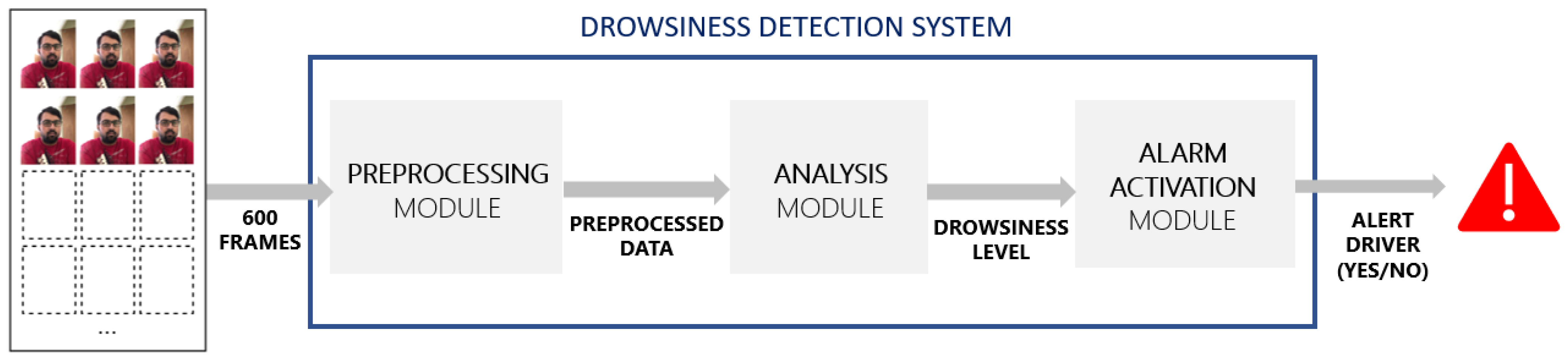
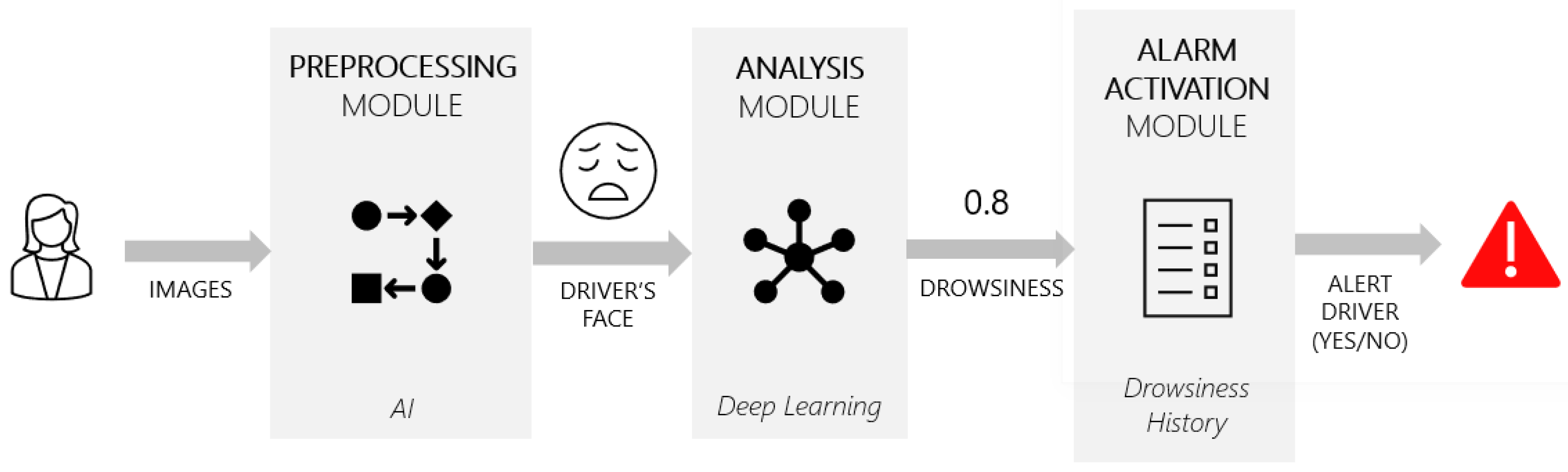
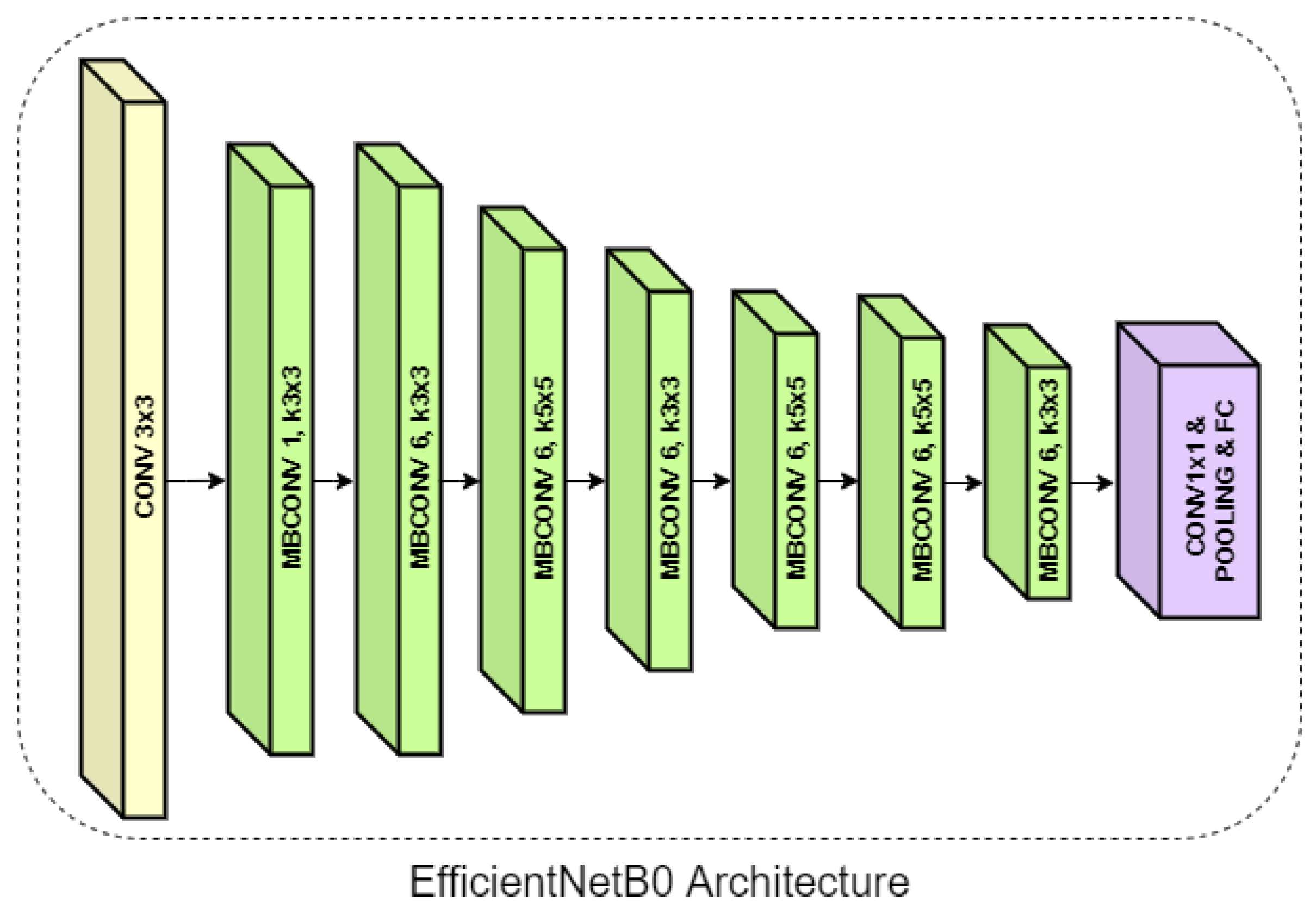
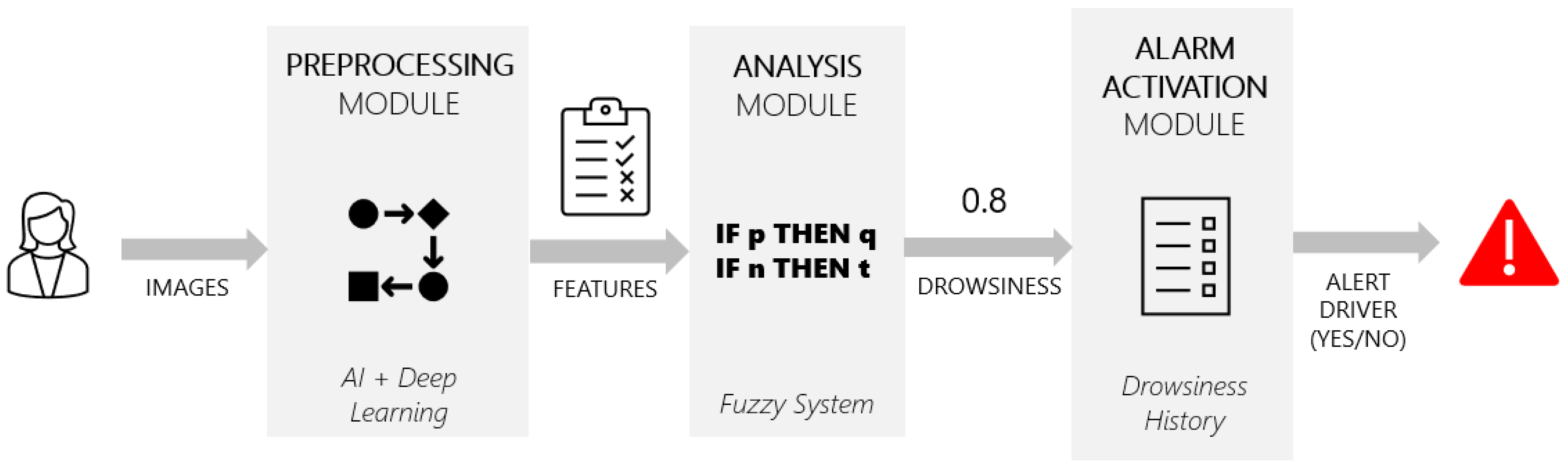
This work presents the development of an ADAS (advanced driving assistance system) focused on driver drowsiness detection, whose objective is to alert drivers of their drowsy state to avoid road traffic accidents. In a driving environment, it is necessary that fatigue detection is performed in a non-intrusive way, and that the driver is not bothered with alarms when he or she is not drowsy. Our approach to this open problem uses sequences of images that are 60 s long and are recorded in such a way that the subject’s face is visible. To detect whether the driver shows symptoms of drowsiness or not, two alternative solutions are developed, focusing on the minimization of false positives. The first alternative uses a recurrent and convolutional neural network, while the second one uses deep learning techniques to extract numeric features from images, which are introduced into a fuzzy logic-based system afterwards. The accuracy obtained by both systems is similar: around 65% accuracy over training data, and 60% accuracy on test data. However, the fuzzy logic-based system stands out because it avoids raising false alarms and reaches a specificity (proportion of videos in which the driver is not drowsy that are correctly classified) of 93%. Although the obtained results do not achieve very satisfactory rates, the proposals presented in this work are promising and can be considered a solid baseline for future works.
Keywords: ADAS; drowsiness; deep learning; convolutional neural networks; recurrent neural networks; fuzzy logic; computer vision ADAS; drowsiness; deep learning; convolutional neural networks; recurrent neural networks; fuzzy logic; computer vision