Composition Component Influence on Concrete Properties with the Additive of Rubber Tree Seed Shells

 ,
,  ,
,  ,
,  ,
,  ,
,  ,
,  ,
,  and
and
Abstract
1. Introduction
1.1. Background
1.2. Rationale
- (1)
- For the first time, the properties of concrete using the RT seed shell were investigated in terms of TS in twisting, deformability and other structural features, which has not been previously performed and is not known in the literature;
- (2)
- We present the development of a concrete formulation modified by local replacement of CA with RT seed shells to improve concrete performance;
- (3)
- As a result of the theoretical and experimental studies, the relationship between the initial recipe–technological parameters and the indicators of the resulting concretes based on the shell of the RT seeds was determined.
1.3. Research Significance
2. Materials and Methods
3. Results
3.1. Investigation of the Influence of the Amount of Added RSS instead of CA on the Strength–Strain Features of Concrete
3.2. Investigation of the Microstructure of Hardened Concrete with Local Replacement of CA with RT Seed Shells
4. Discussion
- -
- Comparison of test results of concrete with local replacement of CA with the results achieved for the control composition;
- -
- A series of mechanical experiments;
- -
- Numerical processing, including performing mathematical calculations to predict consequences and determine mathematical dependencies.
5. Conclusions
- (1)
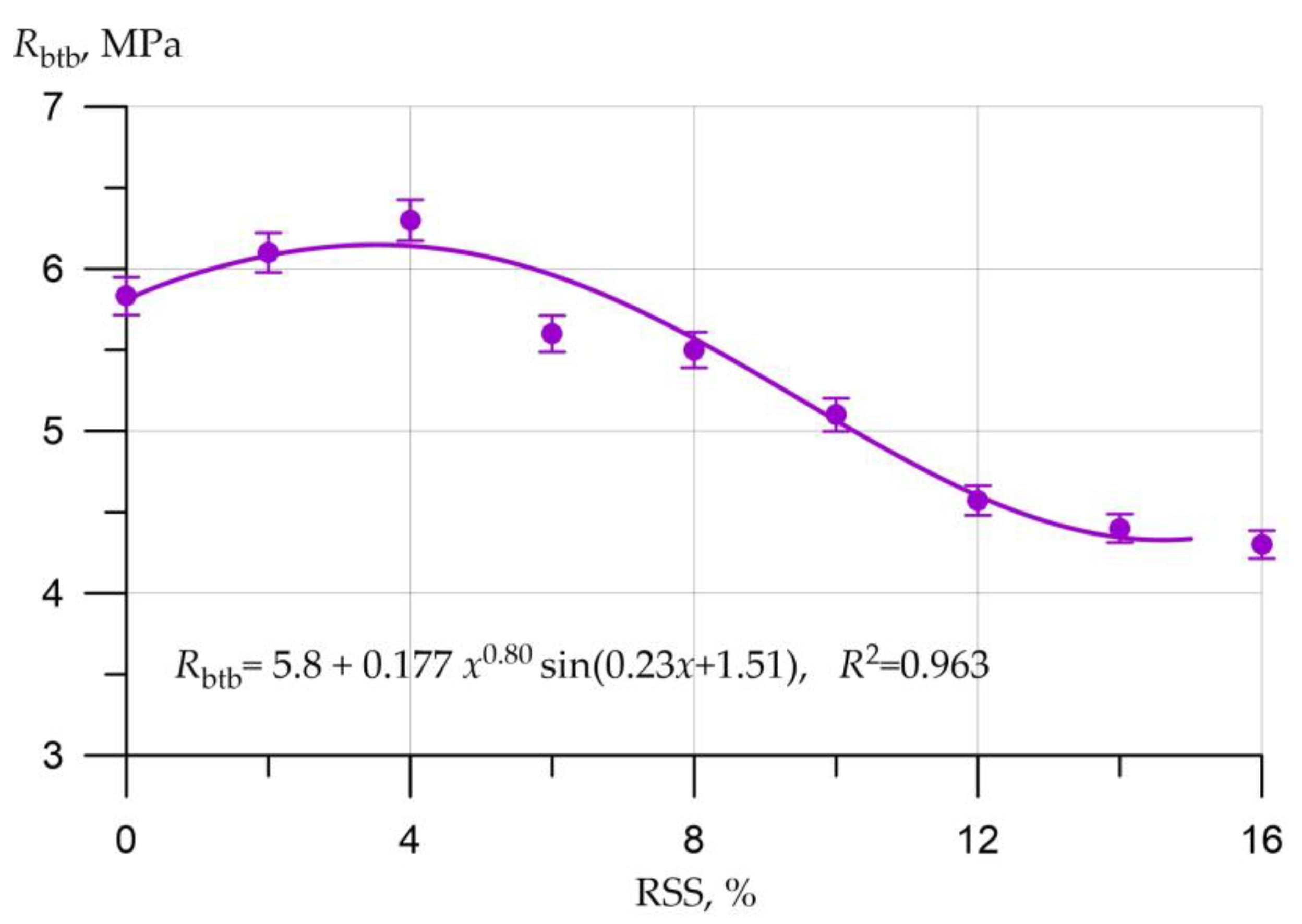
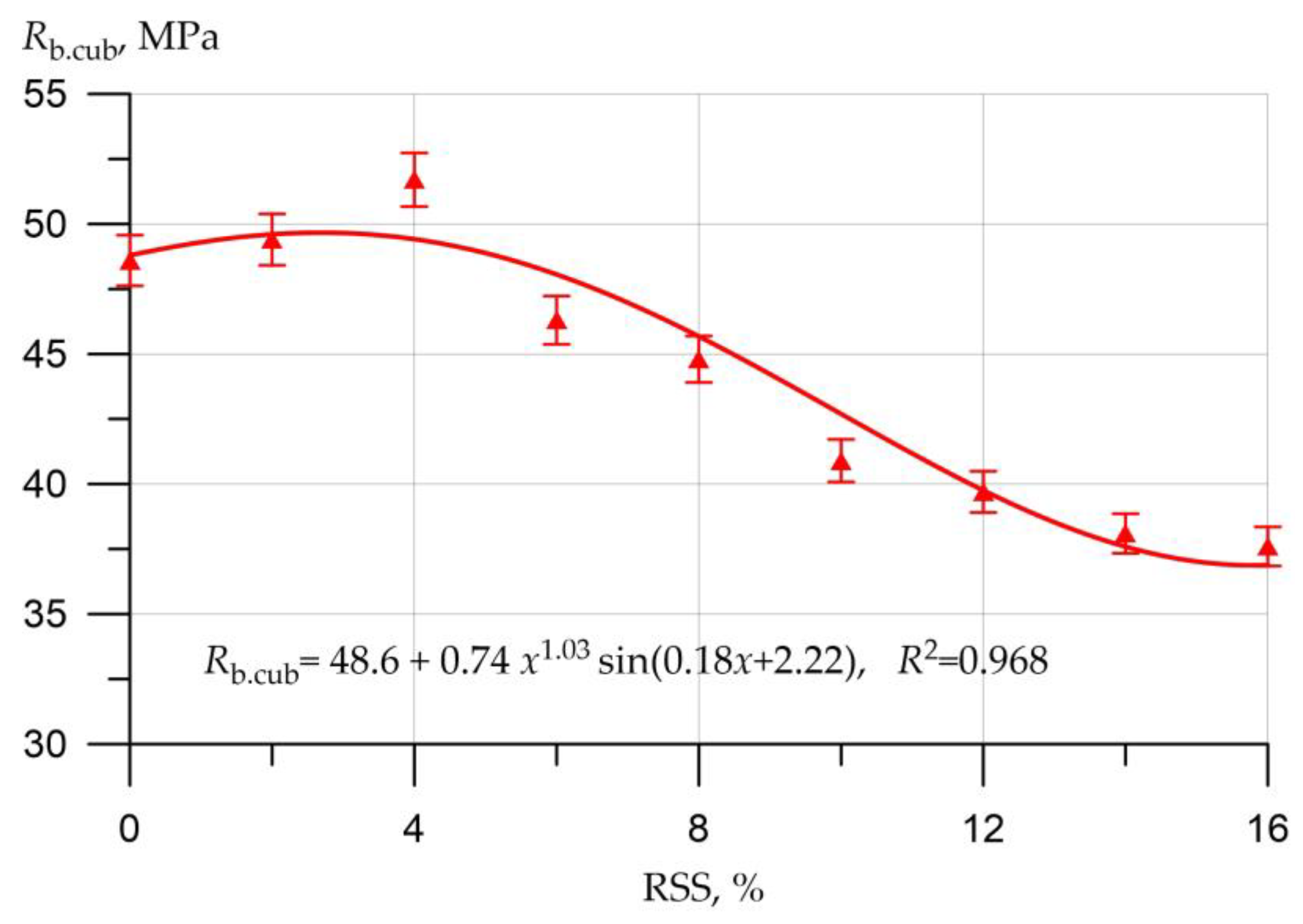
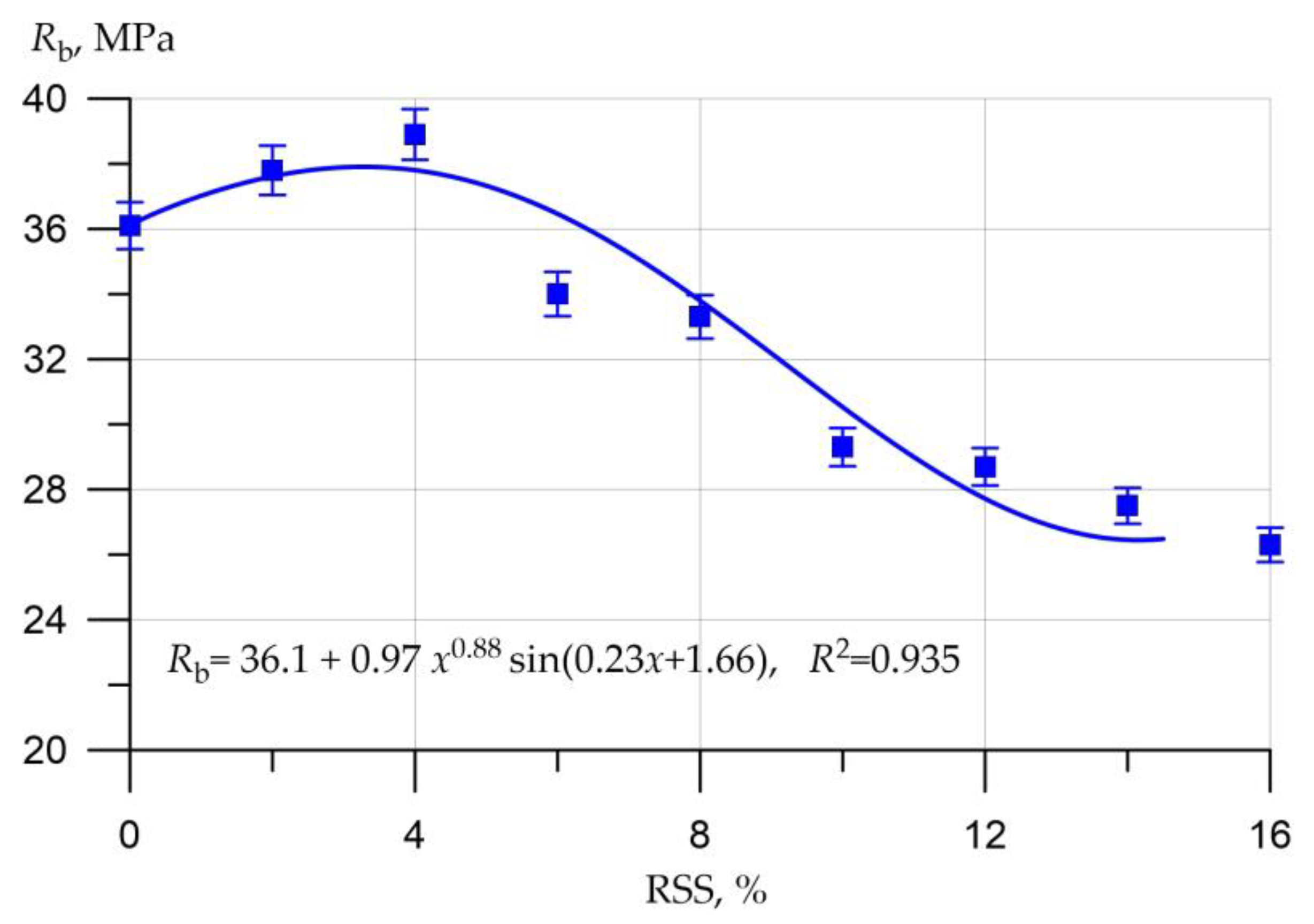
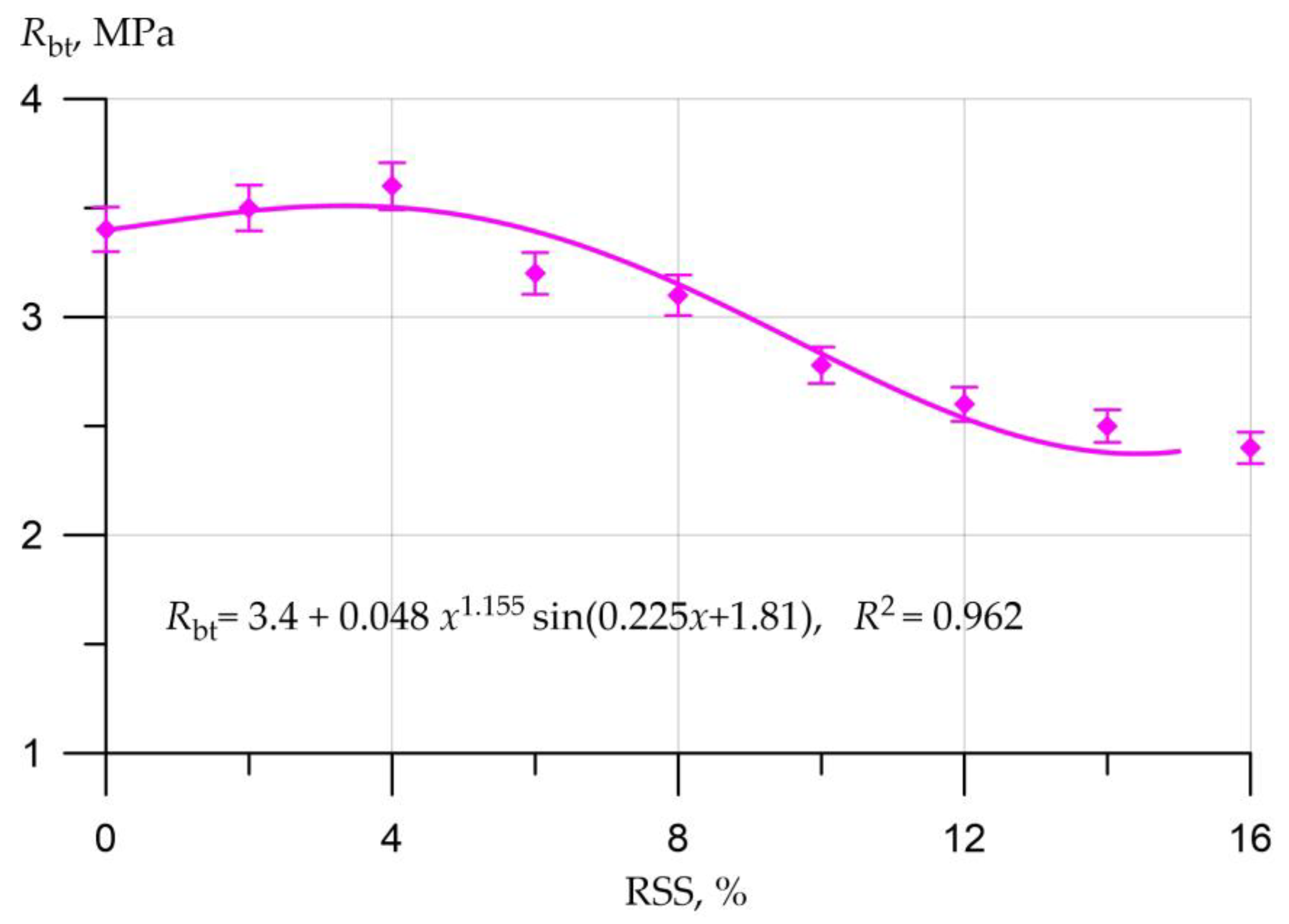
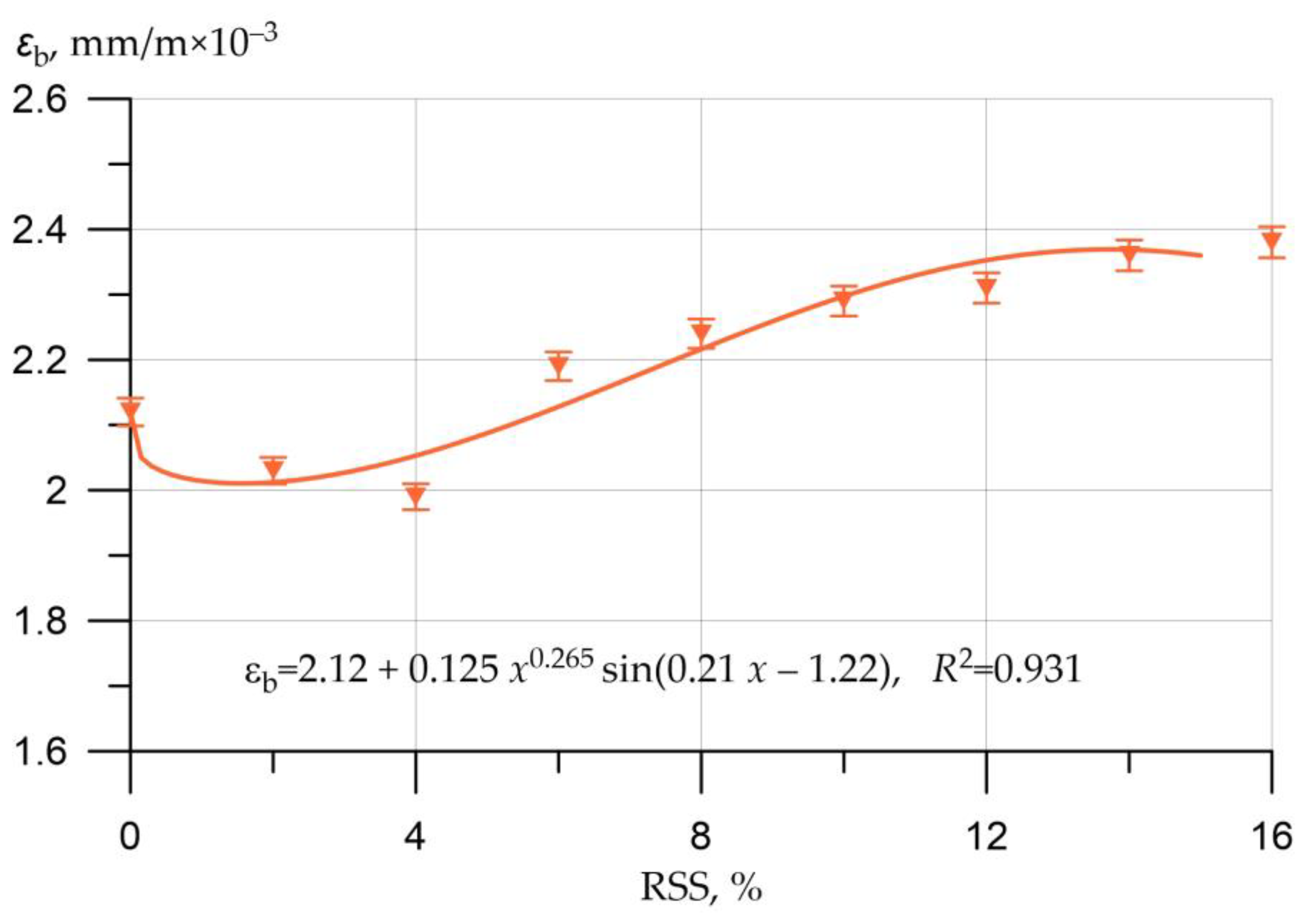
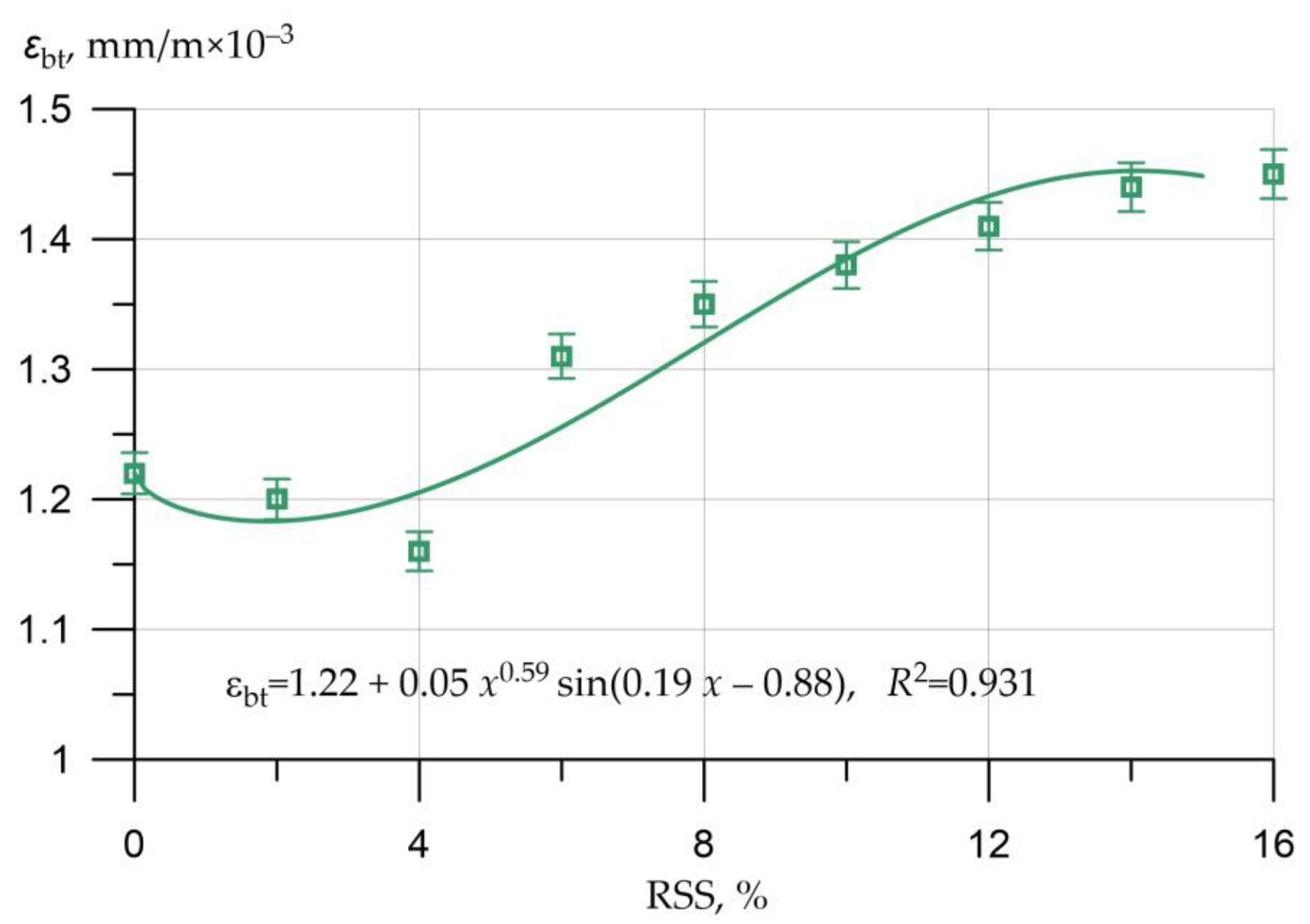
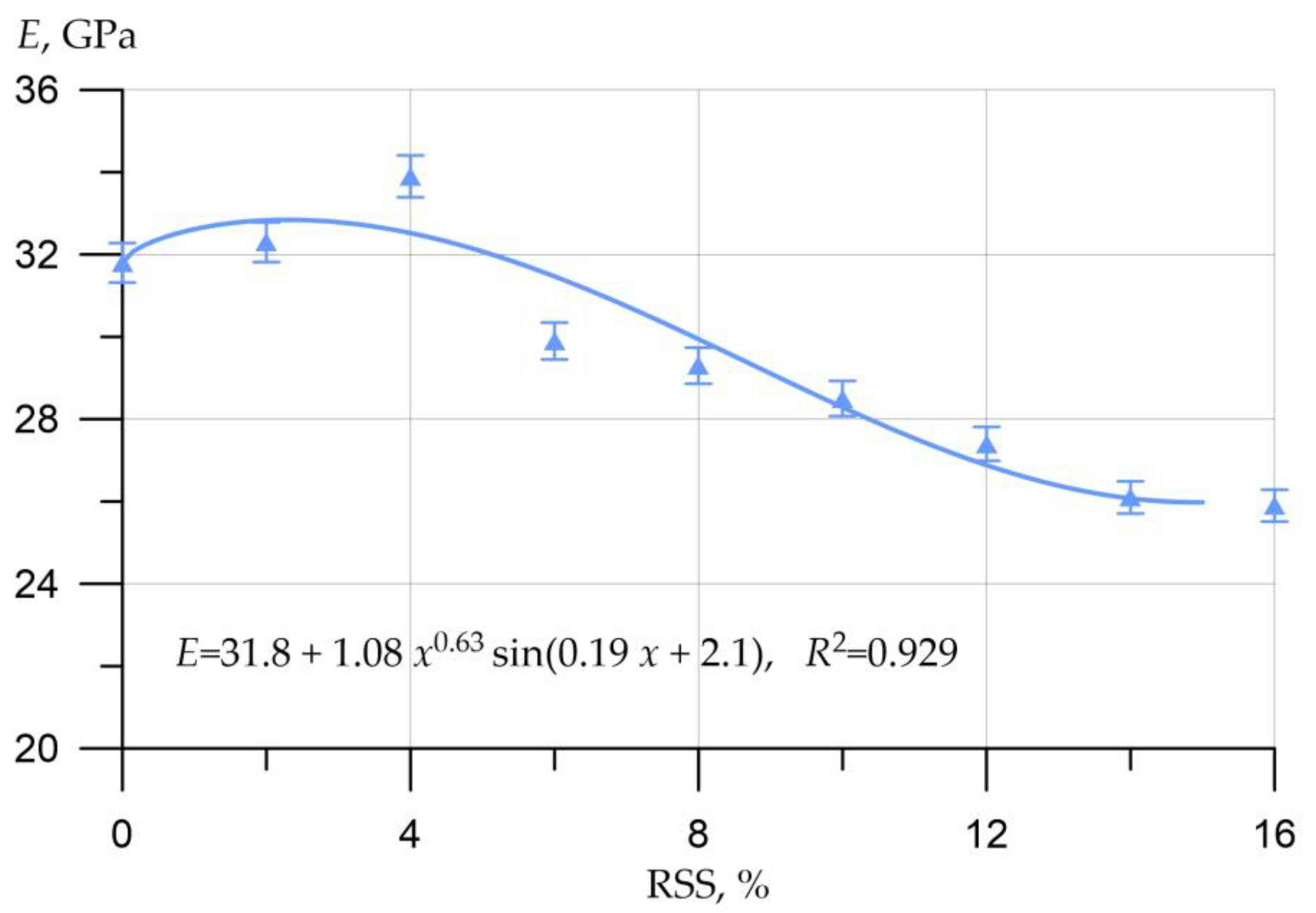
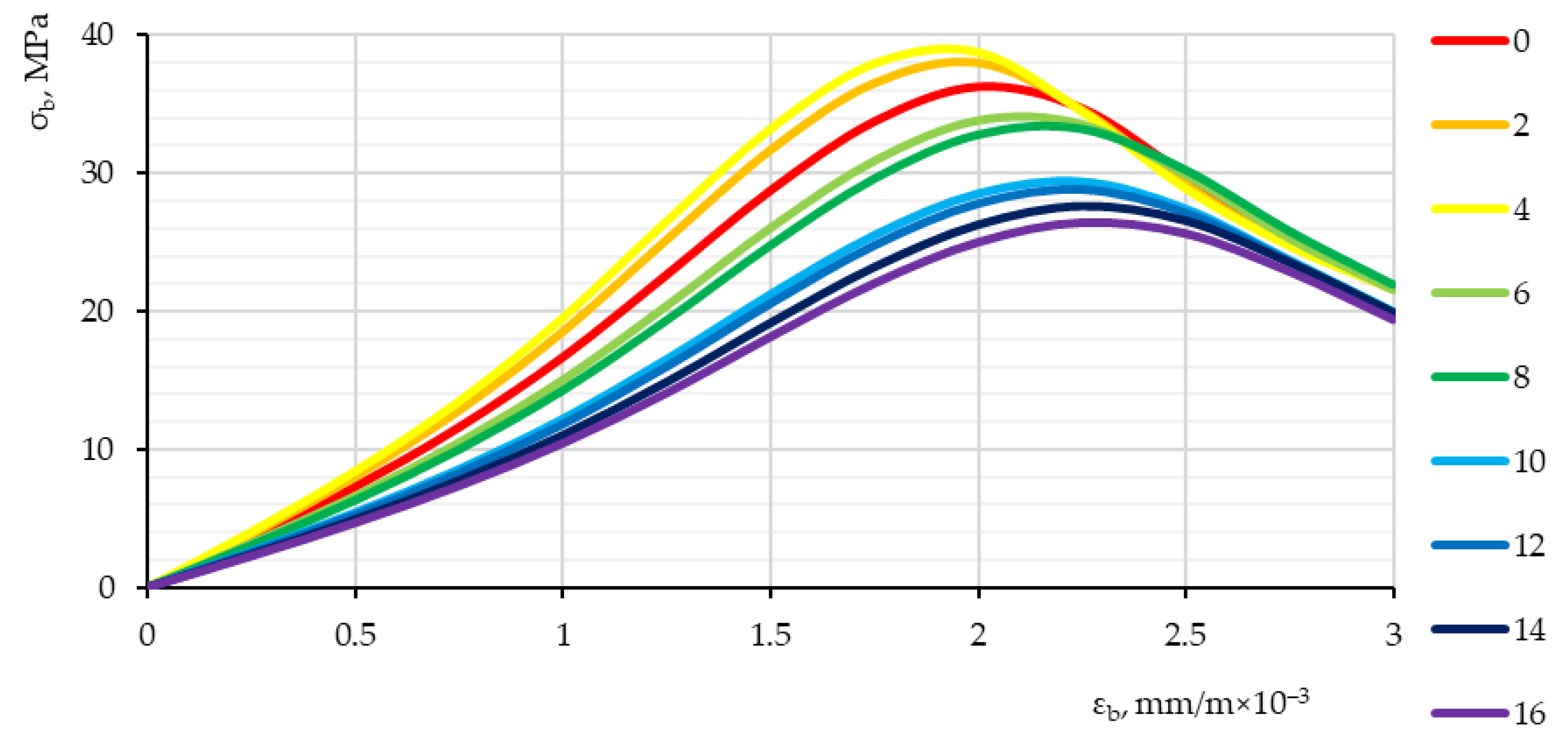
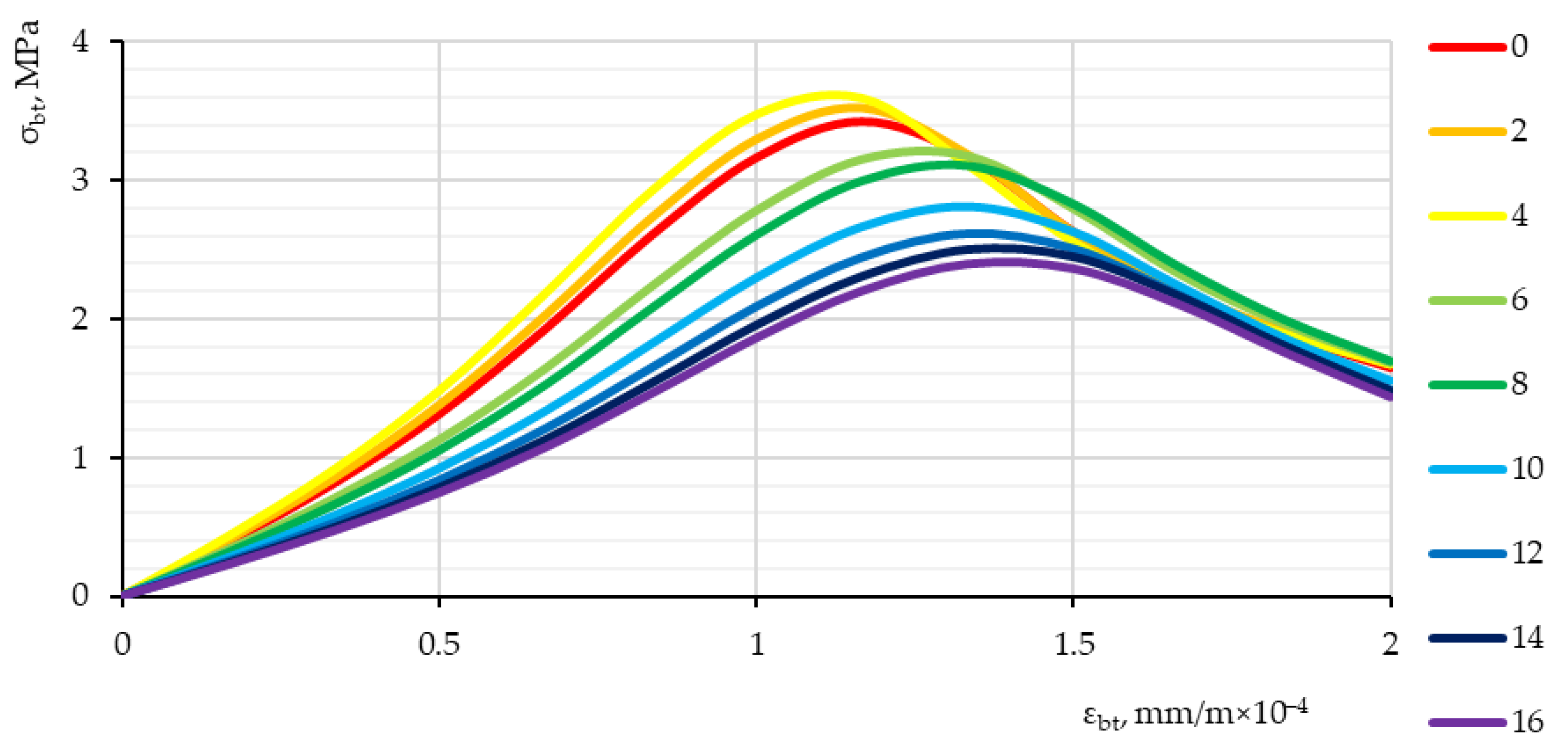
- Improvements in concrete performance were observed when CA was replaced by volume with RT seed shells at a rate of 4%. The strength values at this RSS dosage were CS—51.7 MPa, axial CS—38.9 MPa, axial TS—3.6 MPa, TS in twisting—6.3 MPa, and the values of deformations during compression and tension were respectively equal to 1.99 mm/m × 10−3 and 1.16 mm/m × 10−4. The modulus of elasticity was 33.9 GPa.
- (2)
- The increase in the strength of concrete, as well as changes in deformability, according to the results of our examination of the “stress-strain” figures were: for CS 6%, for axial CS 8%, for axial TS 6% and for TS in twisting 8%
- (3)
- Changes in deformability included an increase in the elastic modulus of 7%, and a reduction in strains under compression of 6% and strains under tension of 5%.
- (4)
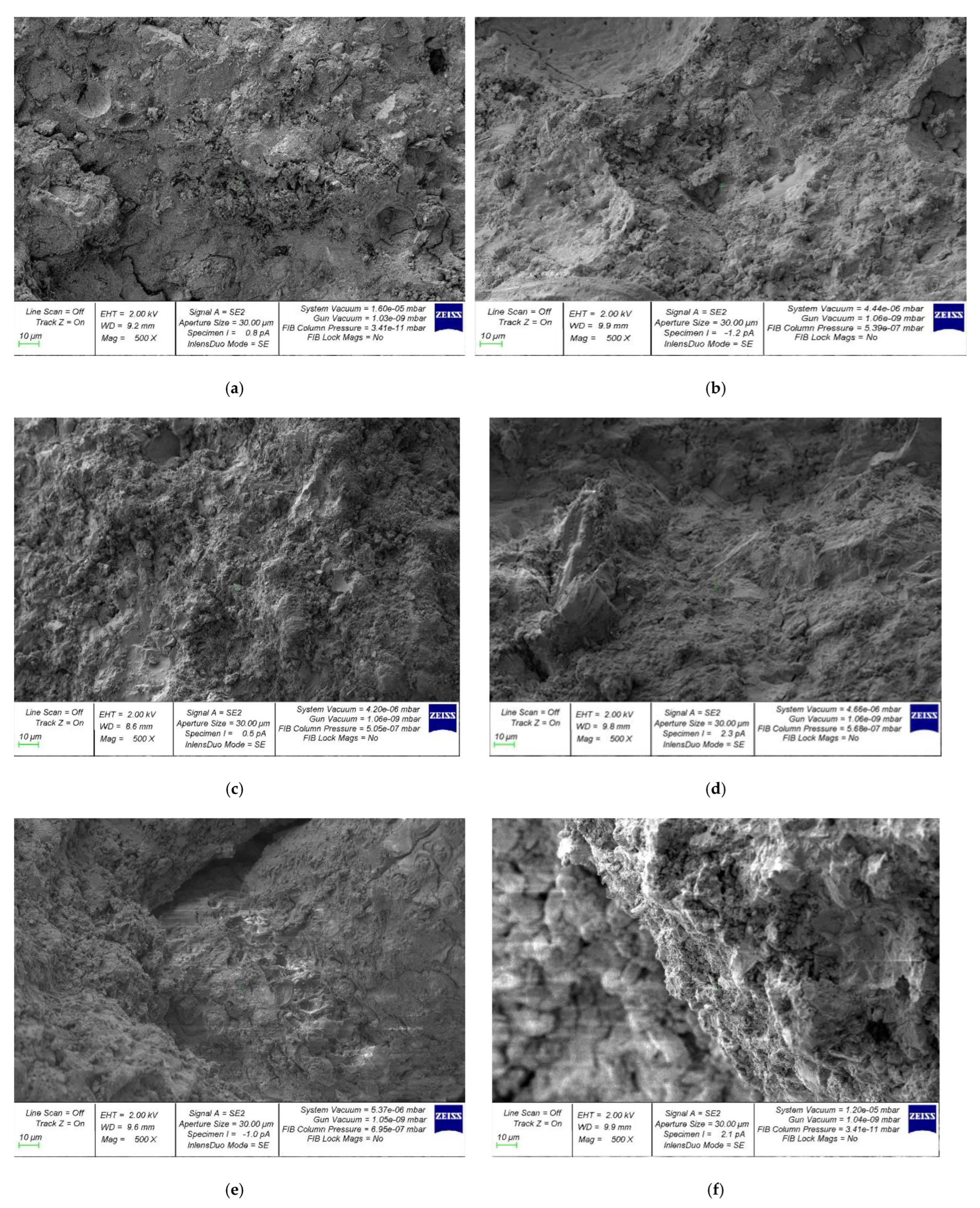
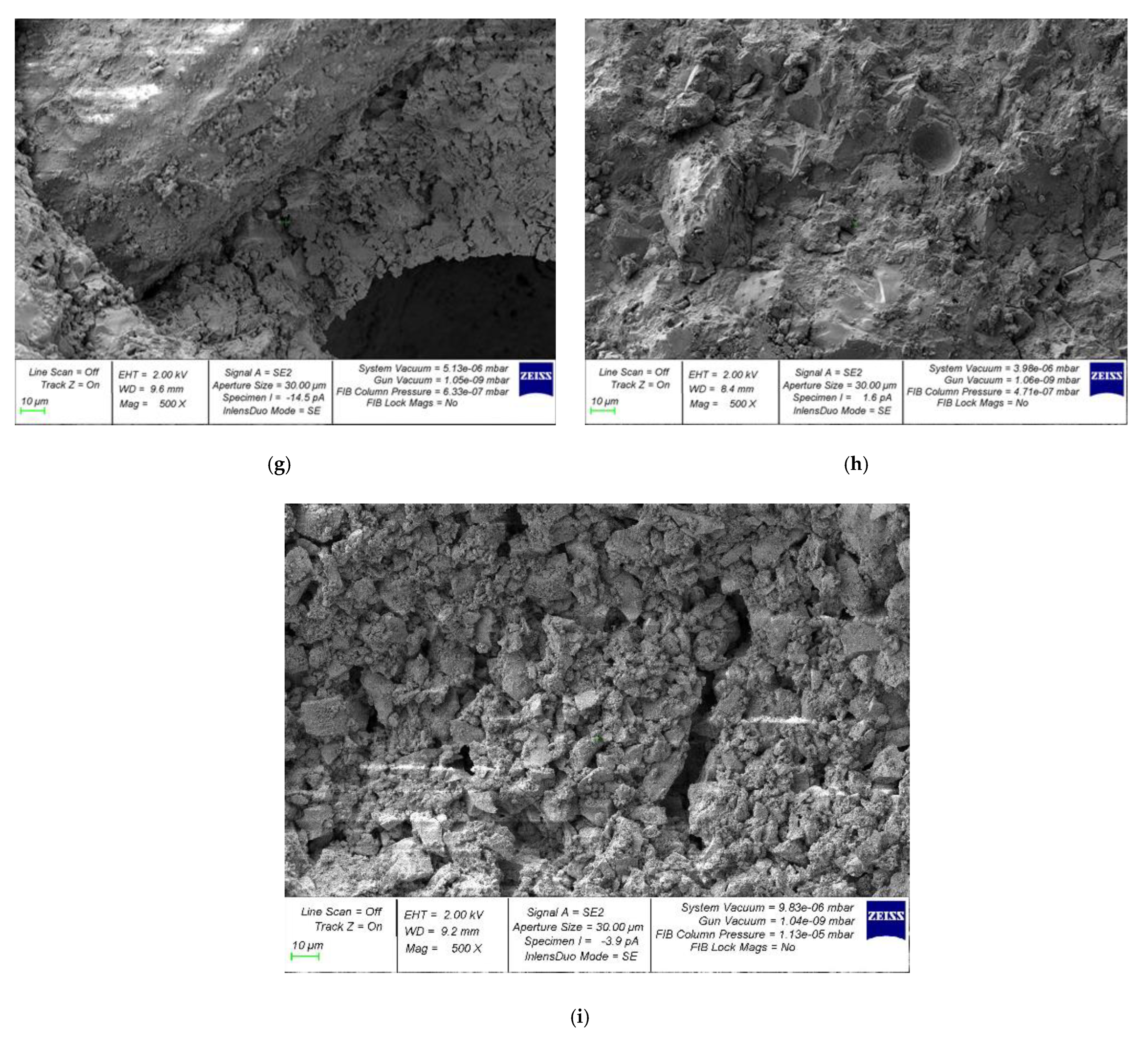
- The microstructure of hardened concrete samples with partial replacement of CA with RT seed shells in the amount of 2%, 4% and 6% is the most dense, with the fewest pores and microcracks in comparison with the structure of the sample of the control composition, as well as samples with the replacement of CA with RT seed shells in the amount of more than 6%.
- (5)
- According to our preliminary estimates, the expedient and effective replacement of CA with RT seed shells leads to a reduction in the consumption of mineral CA by up to 8%.
- (6)
- The achieved results established good compatibility of data and the opportunity of analysis of the technology in manufacturing situations. Future research is planned to study the influence of replacing CA with RT seed shells on the physical features of concrete, such as thermal insulation and resistance to cyclic influences, as well as its cost and the development of a cost-effective production technology.
Author Contributions
Funding
Institutional Review Board Statement
Informed Consent Statement
Data Availability Statement
Acknowledgments
Conflicts of Interest
Abbreviations
| CA | coarse aggregate |
| CS | compressive strength |
| RCS | reinforced concrete structure |
| RSS | rubber seed shell |
| RT | rubber tree |
| TS | tensile strength |
References
- Aksoylu, C.; Özkılıç, Y.O.; Hadzima-Nyarko, M.; Işık, E.; Arslan, M.H. Investigation on Improvement in Shear Performance of Reinforced-Concrete Beams Produced with Recycled Steel Wires from Waste Tires. Sustainability 2022, 14, 13360. [Google Scholar] [CrossRef] [Scilit]
- Çelik, A.İ.; Özkılıç, Y.O.; Zeybek, Ö.; Özdöner, N.; Tayeh, B.A. Performance Assessment of Fiber-Reinforced Concrete Produced with Waste Lathe Fibers. Sustainability 2022, 14, 11817. [Google Scholar] [CrossRef] [Scilit]
- Abbas, S.; Ishaq, M.A.A.; Kazmi, S.M.S.; Munir, M.J.; Ali, S. Investigating the Behavior of Waste Alumina Powder and Nylon Fibers for Eco-Friendly Production of Self-Compacting Concrete. Materials 2022, 15, 4515. [Google Scholar] [CrossRef] [Scilit] [PubMed]
- Joyklad, P.; Yooprasertchai, E.; Rahim, A.; Ali, N.; Chaiyasarn, K.; Hussain, Q. Sustainable and Low-Cost Hemp FRP Composite Confinement of B-Waste Concrete. Sustainability 2022, 14, 7673. [Google Scholar] [CrossRef] [Scilit]
- Karalar, M.; Özkılıç, Y.O.; Deifalla, A.F.; Aksoylu, C.; Arslan, M.H.; Ahmad, M.; Sabri, M.M.S. Improvement in Bending Performance of Reinforced Concrete Beams Produced with Waste Lathe Scraps. Sustainability 2022, 14, 12660. [Google Scholar] [CrossRef] [Scilit]
- Ouppamong, T.; Gunun, N.; Tamkhonburee, C.; Khejornsart, P.; Kaewpila, C.; Kesorn, P.; Kimprasit, T.; Cherdthong, A.; Wanapat, M.; Polyorach, S.; et al. Fermented Rubber Seed Kernel with Yeast in the Diets of Tropical Lactating Dairy Cows: Effects on Feed Intake, Hematology, Microbial Protein Synthesis, Milk Yield and Milk Composition. Vet. Sci. 2022, 9, 360. [Google Scholar] [CrossRef] [Scilit]
- Gunun, N.; Ouppamong, T.; Khejornsart, P.; Cherdthong, A.; Wanapat, M.; Polyorach, S.; Kaewpila, C.; Kang, S.; Gunun, P. Effects of Rubber Seed Kernel Fermented with Yeast on Feed Utilization, Rumen Fermentation and Microbial Protein Synthesis in Dairy Heifers. Fermentation 2022, 8, 288. [Google Scholar] [CrossRef] [Scilit]
- Jirimali, H.; Singh, J.; Boddula, R.; Lee, J.-K.; Singh, V. Nano-Structured Carbon: Its Synthesis from Renewable Agricultural Sources and Important Applications. Materials 2022, 15, 3969. [Google Scholar] [CrossRef] [Scilit]
- Liu, J.; Zhao, L.; Cai, H.; Zhao, Z.; Wu, Y.; Wen, Z.; Yang, P. Antioxidant and Anti-Inflammatory Properties of Rubber Seed Oil in Lipopolysaccharide-Induced RAW 267.4 Macrophages. Nutrients 2022, 14, 1349. [Google Scholar] [CrossRef] [Scilit]
- Ramli, S.F.; Aziz, H.A.; Omar, F.M.; Yusoff, M.S.; Halim, H.; Kamaruddin, M.A.; Ariffin, K.S.; Hung, Y.-T. Influence of Particle Size and Zeta Potential in Treating Highly Coloured Old Landfill Leachate by Tin Tetrachloride and Rubber Seed. Int. J. Environ. Res. Public Health 2022, 19, 3016. [Google Scholar] [CrossRef] [Scilit] [PubMed]
- Šourková, M.; Adamcová, D.; Vaverková, M.D. The Influence of Microplastics from Ground Tyres on the Acute, Subchronical Toxicity and Microbial Respiration of Soil. Environments 2021, 8, 128. [Google Scholar] [CrossRef] [Scilit]
- Kumar, S.S.; Rajan, K.; Mohanavel, V.; Ravichandran, M.; Rajendran, P.; Rashedi, A.; Sharma, A.; Khan, S.A.; Afzal, A. Combustion, Performance, and Emission Behaviors of Biodiesel Fueled Diesel Engine with the Impact of Alumina Nanoparticle as an Additive. Sustainability 2021, 13, 12103. [Google Scholar] [CrossRef] [Scilit]
- Ramli, S.F.; Aziz, H.A.; Omar, F.M.; Yusoff, M.S.; Halim, H.; Kamaruddin, M.A.; Ariffin, K.S.; Hung, Y.-T. Reduction of COD and Highly Coloured Mature Landfill Leachate by Tin Tetrachloride with Rubber Seed and Polyacrylamide. Water 2021, 13, 3062. [Google Scholar] [CrossRef] [Scilit]
- Nun-Anan, P.; Hayichelaeh, C.; Boonkerd, K. Effect of a Natural Processing Aid on the Properties of Acrylonitrile-Butadiene Rubber: Study on Soybean Oil Fatty Acid from Seed Crop. Polymers 2021, 13, 3459. [Google Scholar] [CrossRef] [Scilit] [PubMed]
- Hu, Y.; Zhu, G.; Zhang, J.; Huang, J.; Yu, X.; Shang, Q.; An, R.; Liu, C.; Hu, L.; Zhou, Y. Rubber Seed Oil-Based UV-Curable Polyurethane Acrylate Resins for Digital Light Processing (DLP) 3D Printing. Molecules 2021, 26, 5455. [Google Scholar] [CrossRef] [Scilit] [PubMed]
- Cujbescu, D.; Găgeanu, I.; Persu, C.; Matache, M.; Vlăduț, V.; Voicea, I.; Paraschiv, G.; Biriș, S.Ș.; Ungureanu, N.; Voicu, G.; et al. Simulation of Sowing Precision in Laboratory Conditions. Appl. Sci. 2021, 11, 6264. [Google Scholar] [CrossRef] [Scilit]
- Mokti, N.; Borhan, A.; Zaine, S.N.A.; Mohd Zaid, H.F. Development of Rubber Seed Shell–Activated Carbon Using Impregnated Pyridinium-Based Ionic Liquid for Enhanced CO2 Adsorption. Processes 2021, 9, 1161. [Google Scholar] [CrossRef] [Scilit]
- Wang, J.; Xu, C.; Xu, Y.; Wang, Z.; Qi, X.; Wang, J.; Zhou, W.; Tang, H.; Wang, Q. Influencing Factors Analysis and Simulation Calibration of Restitution Coefficient of Rice Grain. Appl. Sci. 2021, 11, 5884. [Google Scholar] [CrossRef] [Scilit]
- Borhan, A.; Yusuf, S. Activation of Rubber-Seed Shell Waste by Malic Acid as Potential CO2 Removal: Isotherm and Kinetics Studies. Materials 2020, 13, 4970. [Google Scholar] [CrossRef] [Scilit] [PubMed]
- Tang, J.; Zhang, J.; Lu, J.; Huang, J.; Zhang, F.; Hu, Y.; Liu, C.; An, R.; Miao, H.; Chen, Y.; et al. Preparation and Properties of Plant-Oil-Based Epoxy Acrylate-Like Resins for UV-Curable Coatings. Polymers 2020, 12, 2165. [Google Scholar] [CrossRef] [Scilit]
- Okubo, T.; Ikeda, T.; Saruta, J.; Tsukimura, N.; Hirota, M.; Ogawa, T. Compromised Epithelial Cell Attachment after Polishing Titanium Surface and Its Restoration by UV Treatment. Materials 2020, 13, 3946. [Google Scholar] [CrossRef] [Scilit] [PubMed]
- Medeiros, A.M.S.; Bourgeat-Lami, E.; McKenna, T.F.L. Styrene-Butadiene Rubber by Miniemulsion Polymerization Using In Situ Generated Surfactant. Polymers 2020, 12, 1476. [Google Scholar] [CrossRef] [Scilit]
- Marques, L.; Martinez, G.; Guidelli, É.; Tamashiro, J.; Segato, R.; Payão, S.L.M.; Baffa, O.; Kinoshita, A. Performance on Bone Regeneration of a Silver Nanoparticle Delivery System Based on Natural Rubber Membrane NRL-AgNP. Coatings 2020, 10, 323. [Google Scholar] [CrossRef] [Scilit]
- Falowo, O.A.; Ojumu, T.V.; Pereao, O.; Betiku, E. Sustainable Biodiesel Synthesis from Honne-Rubber-Neem Oil Blend with a Novel Mesoporous Base Catalyst Synthesized from a Mixture of Three Agrowastes. Catalysts 2020, 10, 190. [Google Scholar] [CrossRef] [Scilit]
- Sihombing, J.L.; Gea, S.; Wirjosentono, B.; Agusnar, H.; Pulungan, A.N.; Herlinawati, H.; Yusuf, M.; Hutapea, Y.A. Characteristic and Catalytic Performance of Co and Co-Mo Metal Impregnated in Sarulla Natural Zeolite Catalyst for Hydrocracking of MEFA Rubber Seed Oil into Biogasoline Fraction. Catalysts 2020, 10, 121. [Google Scholar] [CrossRef] [Scilit]
- Borhan, A.; Yusup, S.; Lim, J.W.; Show, P.L. Characterization and Modelling Studies of Activated Carbon Produced from Rubber-Seed Shell Using KOH for CO2 Adsorption. Processes 2019, 7, 855. [Google Scholar] [CrossRef] [Scilit]
- Romuli, S.; Karaj, S.; Müller, J. Physical Properties of Jatropha curcas L. Fruits and Seeds with Respect to Their Maturity Stage. Appl. Sci. 2019, 9, 1802. [Google Scholar] [CrossRef] [Scilit]
- Winoto, V.; Yoswathana, N. Optimization of Biodiesel Production Using Nanomagnetic CaO-Based Catalysts with Subcritical Methanol Transesterification of Rubber Seed Oil. Energies 2019, 12, 230. [Google Scholar] [CrossRef] [Scilit]
- Adam, I.K.; Abdul Aziz, A.R.; Heikal, M.R.; Yusup, S.; Firmansyah; Ahmad, A.S.; Zainal Abidin, E.Z. Performance and Emission Analysis of Rubber Seed, Palm, and Their Combined Blend in a Multi-Cylinder Diesel Engine. Energies 2018, 11, 1522. [Google Scholar] [CrossRef] [Scilit]
- Abbas, S.N.; Qureshi, M.I.; Abid, M.M.; Tariq, M.A.U.R.; Ng, A.W.M. An Investigation of Mechanical Properties of Concrete by Applying Sand Coating on Recycled High-Density Polyethylene (HDPE) and Electronic-Wastes (E-Wastes) Used as a Partial Replacement of Natural Coarse Aggregates. Sustainability 2022, 14, 4087. [Google Scholar] [CrossRef] [Scilit]
- Khanzada, F.A.; Nazir, K.; Ishtiaq, M.; Javed, M.F.; Kashif-ur-Rehman, S.; Aslam, F.; Musarat, M.A.; Usanova, K.I. Concrete by Preplaced Aggregate Method Using Silica Fume and Polypropylene Fibres. Materials 2022, 15, 1997. [Google Scholar] [CrossRef] [Scilit] [PubMed]
- Ahmad, F.; Jamal, A.; Mazher, K.M.; Umer, W.; Iqbal, M. Performance Evaluation of Plastic Concrete Modified with E-Waste Plastic as a Partial Replacement of Coarse Aggregate. Materials 2022, 15, 175. [Google Scholar] [CrossRef] [Scilit]
- Ahmed, S.; Mahaini, Z.; Abed, F.; Mannan, M.A.; Al-Samarai, M. Microstructure and Mechanical Property Evaluation of Dune Sand Reactive Powder Concrete Subjected to Hot Air Curing. Materials 2022, 15, 41. [Google Scholar] [CrossRef] [Scilit] [PubMed]
- Diotti, A.; Cominoli, L.; Plizzari, G.; Sorlini, S. Experimental Evaluation of Recycled Aggregates, Washing Water and Cement Sludge Recovered from Returned Concrete. Appl. Sci. 2022, 12, 36. [Google Scholar] [CrossRef] [Scilit]
- Nafees, A.; Javed, M.F.; Khan, S.; Nazir, K.; Farooq, F.; Aslam, F.; Musarat, M.A.; Vatin, N.I. Predictive Modeling of Mechanical Properties of Silica Fume-Based Green Concrete Using Artificial Intelligence Approaches: MLPNN, ANFIS, and GEP. Materials 2021, 14, 7531. [Google Scholar] [CrossRef] [Scilit]
- Raja, K.C.P.; Thaniarasu, I.; Elkotb, M.A.; Ansari, K.; Saleel, C.A. Shrinkage Study and Strength Aspects of Concrete with Foundry Sand and Coconut Shell as a Partial Replacement for Coarse and Fine Aggregate. Materials 2021, 14, 7420. [Google Scholar] [CrossRef] [Scilit]
- Kočí, V.; Kočí, J.; Fořt, J.; Fiala, L.; Šál, J.; Hager, I.; Černý, R. Utilization of Crushed Pavement Blocks in Concrete: Assessment of Functional Properties and Environmental Impacts. Materials 2021, 14, 7361. [Google Scholar] [CrossRef] [Scilit] [PubMed]
- Garcia-Troncoso, N.; Xu, B.; Probst-Pesantez, W. Development of Concrete Incorporating Recycled Aggregates, Hydrated Lime and Natural Volcanic Pozzolan. Infrastructures 2021, 6, 155. [Google Scholar] [CrossRef] [Scilit]
- Taqa, A.A.; Al-Ansari, M.; Taha, R.; Senouci, A.; Al-Zubi, G.M.; Mohsen, M.O. Performance of Concrete Mixes Containing TBM Muck as Partial Coarse Aggregate Replacements. Materials 2021, 14, 6263. [Google Scholar] [CrossRef] [Scilit]
- Muthusamy, K.; Nordin, N.; Vesuvapateran, G.; Ali, M.; Annual, N.M.; Harun, H.; Ullap, H. Exploratory Study of Rubber Seed Shell as Partial Coarse Aggregate Replacement in Concrete. Res. J. Appl. Sci. Eng. Technol. 2014, 7, 1199–1202. [Google Scholar] [CrossRef] [Scilit]
- Raksritong, D.; Tonnayopas, D.; Taweepreda, W.; Masniyom, M. Green Lightweight Concrete Made from Natural Para Rubber Product. Key Eng. Mater. 2013, 594–595, 460–464. [Google Scholar]
- Moradi, N.; Tavana, M.H.; Habibi, M.R.; Amiri, M.; Moradi, M.J.; Farhangi, V. Predicting the Compressive Strength of Concrete Containing Binary Supplementary Cementitious Material Using Machine Learning Approach. Materials 2022, 15, 5336. [Google Scholar] [CrossRef] [Scilit]
- Ahmad, J.; Zhou, Z.; Majdi, A.; Alqurashi, M.; Deifalla, A.F. Overview of Concrete Performance Made with Waste Rubber Tires: A Step toward Sustainable Concrete. Materials 2022, 15, 5518. [Google Scholar] [CrossRef] [Scilit]
- Zadehmohamad, M.; Bazaz, J.B.; Riahipour, R.; Farhangi, V. Physical modeling of the long-term behavior of integral abutment bridge backfill reinforced with tire-rubber. Geo-Engineering 2021, 12, 36. [Google Scholar] [CrossRef] [Scilit]
- Han, Q.; Wang, N.; Zhang, J.; Yu, J.; Hou, D.; Dong, B. Experimental and Computational Study on Chloride Ion Transport and Corrosion Inhibition Mechanism of Rubber Concrete. Constr. Build. Mater. 2021, 268, 121105. [Google Scholar] [CrossRef] [Scilit]
- Su, D.; Pang, J.; Huang, X. Experimental Study on the Influence of Rubber Content on Chloride Salt Corrosion Resistance Performance of Concrete. Materials 2021, 14, 4706. [Google Scholar] [CrossRef] [Scilit] [PubMed]
- Roychand, R.; Gravina, R.J.; Zhuge, Y.; Ma, X.; Mills, J.E.; Youssf, O. Practical Rubber Pre-Treatment Approch for Concrete Use—An Experimental Study. J. Compos. Sci. 2021, 5, 143. [Google Scholar] [CrossRef] [Scilit]
- Schmidt, M.; Fehling, E.; Geisenhanslüke, C. Ultra High Performance Concrete (UHPC). In Proceedings of the International Symposium on Ultra High Performance Concrete, Kassel, Germany, 13–15 September 2004; University of Kassel; 884p. Available online: https://www.uni-kassel.de/upress/online/frei/978-3-89958-086-0.volltext.frei (accessed on 15 November 2022).
- Mubarik, S.; Qureshi, N.; Sattar, Z.; Shaheen, A.; Kalsoom, A.; Imran, M.; Hanif, F. Synthetic Approach to Rice Waste-Derived Carbon-Based Nanomaterials and Their Applications. Nanomanufacturing 2021, 1, 109–159. [Google Scholar] [CrossRef] [Scilit]
- Beskopylny, A.N.; Stel’makh, S.A.; Shcherban’, E.M.; Mailyan, L.R.; Meskhi, B.; Smolyanichenko, A.S.; Beskopylny, N. High-Performance Concrete Nanomodified with Recycled Rice Straw Biochar. Appl. Sci. 2022, 12, 5480. [Google Scholar] [CrossRef] [Scilit]
- Shcherban’, E.M.; Stel’makh, S.A.; Beskopylny, A.N.; Mailyan, L.R.; Meskhi, B.; Varavka, V.; Beskopylny, N.; El’shaeva, D. Enhanced Eco-Friendly Concrete Nano-Change with Eggshell Powder. Appl. Sci. 2022, 12, 6606. [Google Scholar] [CrossRef] [Scilit]
- Beskopylny, A.N.; Stel’makh, S.A.; Shcherban, E.M.; Mailyan, L.R.; Meskhi, B.; Shilov, A.A.; Beskopylny, N.; Chernil’nik, A. Enhanced Performance of Concrete Dispersedly Reinforced with Sisal Fibers. Appl. Sci. 2022, 12, 9102. [Google Scholar] [CrossRef] [Scilit]
- Beskopylny, A.N.; Stel’makh, S.A.; Shcherban’, E.M.; Mailyan, L.R.; Meskhi, B.; Smolyanichenko, A.S.; Varavka, V.; Beskopylny, N.; Dotsenko, N. Influence of Electromagnetic Activation of Cement Paste and Nano-Modification by Rice Straw Biochar on the Structure and Characteristics of Concrete. J. Compos. Sci. 2022, 6, 268. [Google Scholar] [CrossRef] [Scilit]
- GOST 18105 Concretes. Rules for Control and Assessment of Strength. Available online: https://docs.cntd.ru/document/1200164028 (accessed on 14 October 2022).
- GOST 10180 Concretes. Methods for Strength Determination Using Reference Specimens. Available online: https://docs.cntd.ru/document/1200100908 (accessed on 14 October 2022).
- GOST 24452 Concretes. Methods of Prismatic, Compressive Strength, Modulus of Elasticity and Poisson’s Ratio Determination. Available online: https://docs.cntd.ru/document/9056198 (accessed on 14 October 2022).
- Beskopylny, A.N.; Stel’makh, S.A.; Shcherban’, E.M.; Mailyan, L.R.; Meskhi, B.; El’shaeva, D.; Varavka, V. Developing Environmentally Sustainable and Cost-Effective Geopolymer Concrete with Improved Characteristics. Sustainability 2021, 13, 13607. [Google Scholar] [CrossRef] [Scilit]
- Beskopylny, A.N.; Stel’makh, S.A.; Shcherban’, E.M.; Mailyan, L.R.; Meskhi, B. Nano modifying additive micro silica influence on integral and differential characteristics of vibrocentrifuged concrete. J. Build. Eng. 2022, 51, 104235. [Google Scholar] [CrossRef] [Scilit]
- Beskopylny, A.N.; Shcherban’, E.M.; Stel’makh, S.A.; Mailyan, L.R.; Meskhi, B.; El’shaeva, D. The Influence of Composition and Recipe Dosage on the Strength Characteristics of New Geopolymer Concrete with the Use of Stone Flour. Appl. Sci. 2022, 12, 613. [Google Scholar] [CrossRef] [Scilit]
- Shcherban’, E.M.; Stel’makh, S.A.; Beskopylny, A.; Mailyan, L.R.; Meskhi, B.; Shuyskiy, A. Improvement of Strength and Strain Characteristics of Lightweight Fiber Concrete by Electromagnetic Activation in a Vortex Layer Apparatus. Appl. Sci. 2022, 12, 104. [Google Scholar] [CrossRef] [Scilit]






| Technological Operation | Description |
|---|---|
| Dosing | At the dosing stage, the concrete components were measured; the components were weighed on a VLTE-2100 balance (NPP Gosmetr, St. Petersburg, Russia). The accuracy is 0.05 g. |
| Loading concrete mix components | The components were loaded into the concrete mixer in the following order: water, cement, additive, sand, CA (battered stone and RT seed shell). |
| Mixing | The components were mixed in the concrete mixer until a homogeneous mass was obtained. |
| Molding | The mixture was poured into sample molds, then formed on the laboratory vibratory platform and compressed to the desired state. |
| Storage | The samples were placed in a normal hardening chamber, where they were kept for 1 day; then, they were removed from the molds and hardened for another 27 days. |
| RSS, % | ∆, % | ||||||
|---|---|---|---|---|---|---|---|
| Rb,cub, MPa | Rb, MPa | Rbtb, MPa | Rbt, MPa | εbR, mm/m × 10−3 | εbtR, mm/m × 10−4 | E, GPa | |
| 0 | 0 | 0 | 0 | 0 | 0 | 0 | 0 |
| 2 | 2 | 5 | 5 | 3 | −4 | −2 | 2 |
| 4 | 6 | 8 | 8 | 6 | −6 | −5 | 7 |
| 6 | −5 | −6 | −4 | −6 | 3 | 7 | −6 |
| 8 | −8 | −8 | −6 | −9 | 6 | 11 | −8 |
| 10 | −16 | −19 | −13 | −18 | 8 | 13 | −10 |
| 12 | −18 | −20 | −22 | −24 | 9 | 16 | −14 |
| 14 | −22 | −24 | −25 | −27 | 11 | 18 | −18 |
| 16 | −23 | −27 | −26 | −29 | 12 | 19 | −19 |
Publisher’s Note: MDPI stays neutral with regard to jurisdictional claims in published maps and institutional affiliations. |
© 2022 by the authors. Licensee MDPI, Basel, Switzerland. This article is an open access article distributed under the terms and conditions of the Creative Commons Attribution (CC BY) license (https://creativecommons.org/licenses/by/4.0/).
Share and Cite
Beskopylny, A.N.; Shcherban’, E.M.; Stel’makh, S.A.; Meskhi, B.; Shilov, A.A.; Varavka, V.; Evtushenko, A.; Özkılıç, Y.O.; Aksoylu, C.; Karalar, M. Composition Component Influence on Concrete Properties with the Additive of Rubber Tree Seed Shells. Appl. Sci. 2022, 12, 11744. https://doi.org/10.3390/app122211744
Beskopylny AN, Shcherban’ EM, Stel’makh SA, Meskhi B, Shilov AA, Varavka V, Evtushenko A, Özkılıç YO, Aksoylu C, Karalar M. Composition Component Influence on Concrete Properties with the Additive of Rubber Tree Seed Shells. Applied Sciences. 2022; 12(22):11744. https://doi.org/10.3390/app122211744
Chicago/Turabian StyleBeskopylny, Alexey N., Evgenii M. Shcherban’, Sergey A. Stel’makh, Besarion Meskhi, Alexandr A. Shilov, Valery Varavka, Alexandr Evtushenko, Yasin Onuralp Özkılıç, Ceyhun Aksoylu, and Memduh Karalar. 2022. "Composition Component Influence on Concrete Properties with the Additive of Rubber Tree Seed Shells" Applied Sciences 12, no. 22: 11744. https://doi.org/10.3390/app122211744
APA StyleBeskopylny, A. N., Shcherban’, E. M., Stel’makh, S. A., Meskhi, B., Shilov, A. A., Varavka, V., Evtushenko, A., Özkılıç, Y. O., Aksoylu, C., & Karalar, M. (2022). Composition Component Influence on Concrete Properties with the Additive of Rubber Tree Seed Shells. Applied Sciences, 12(22), 11744. https://doi.org/10.3390/app122211744