Article

A Pragmatic Approach to Modeling Combinations of Plant Operational States in Multi-Unit Nuclear Power Plant Probabilistic Safety Assessment


Risk Assessment Research Team, Korea Atomic Energy Research Institute, 111 Daedeok-daero, 989beon-gil, Yuseong-gu, Daejeon 34057, Korea
*
Author to whom correspondence should be addressed.
Appl. Sci. 2022, 12(22), 11486; https://doi.org/10.3390/app122211486
Submission received: 25 October 2022 / Revised: 8 November 2022 / Accepted: 10 November 2022 / Published: 12 November 2022
(This article belongs to the Section Energy Science and Technology)

Abstract

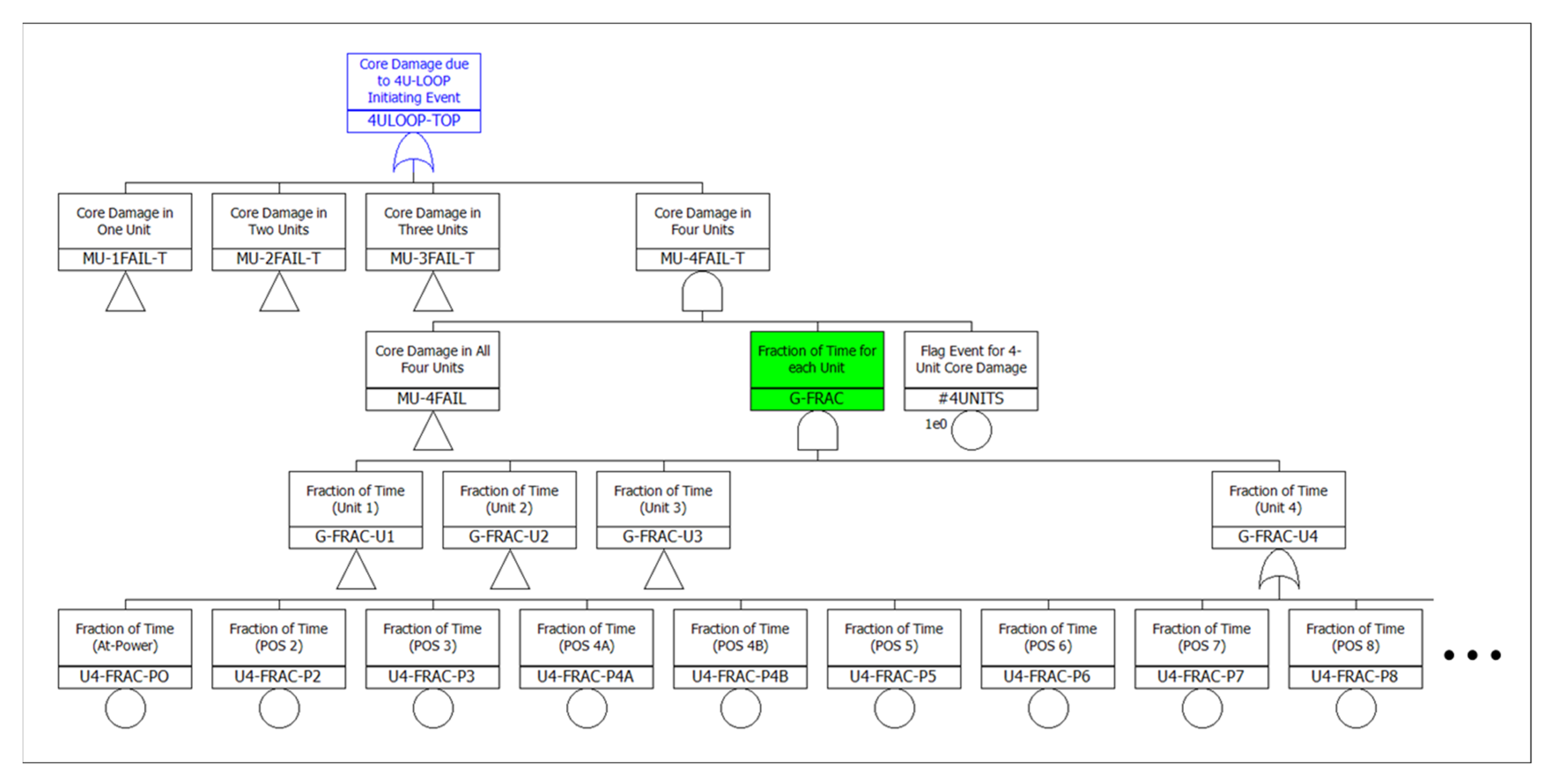
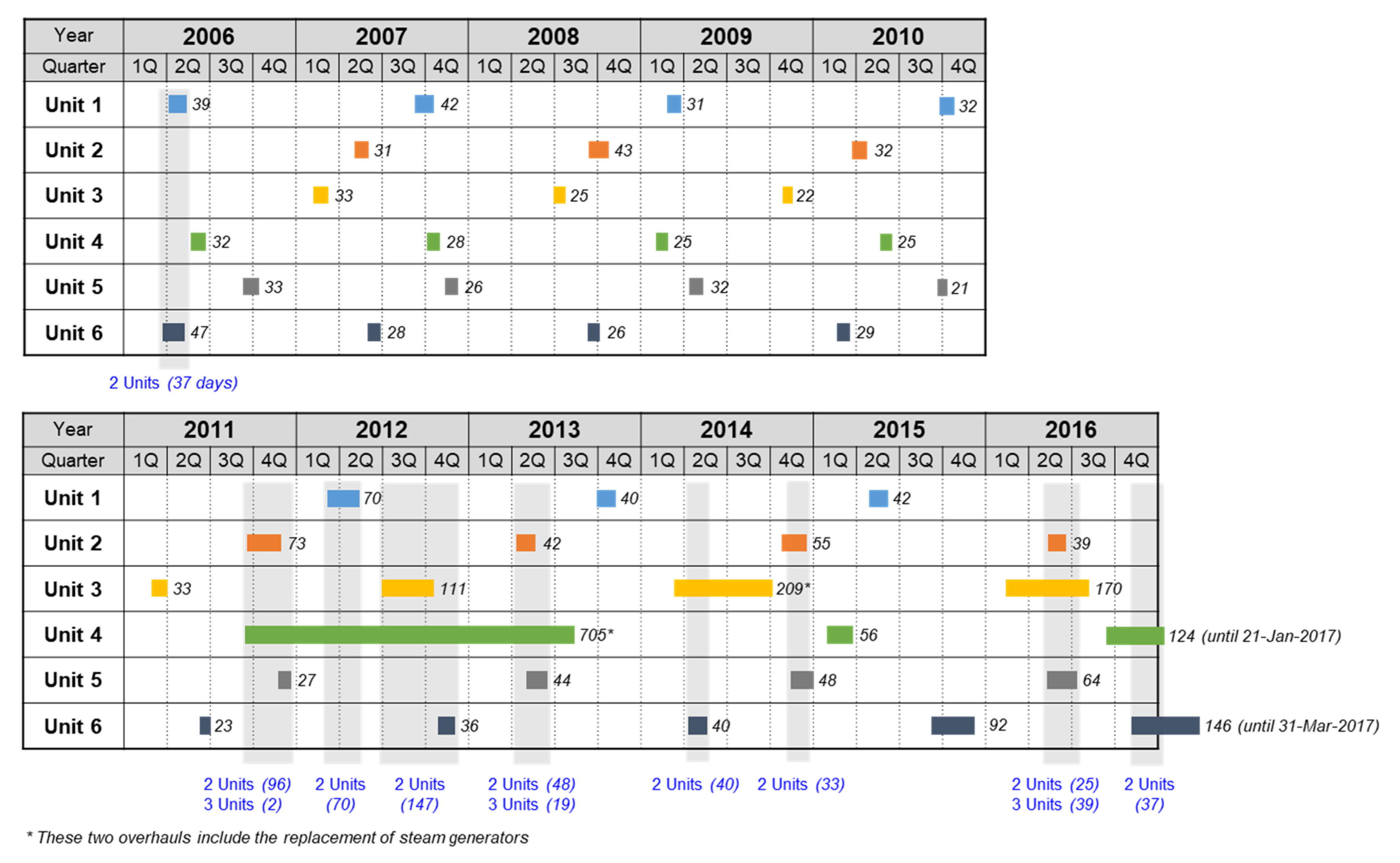
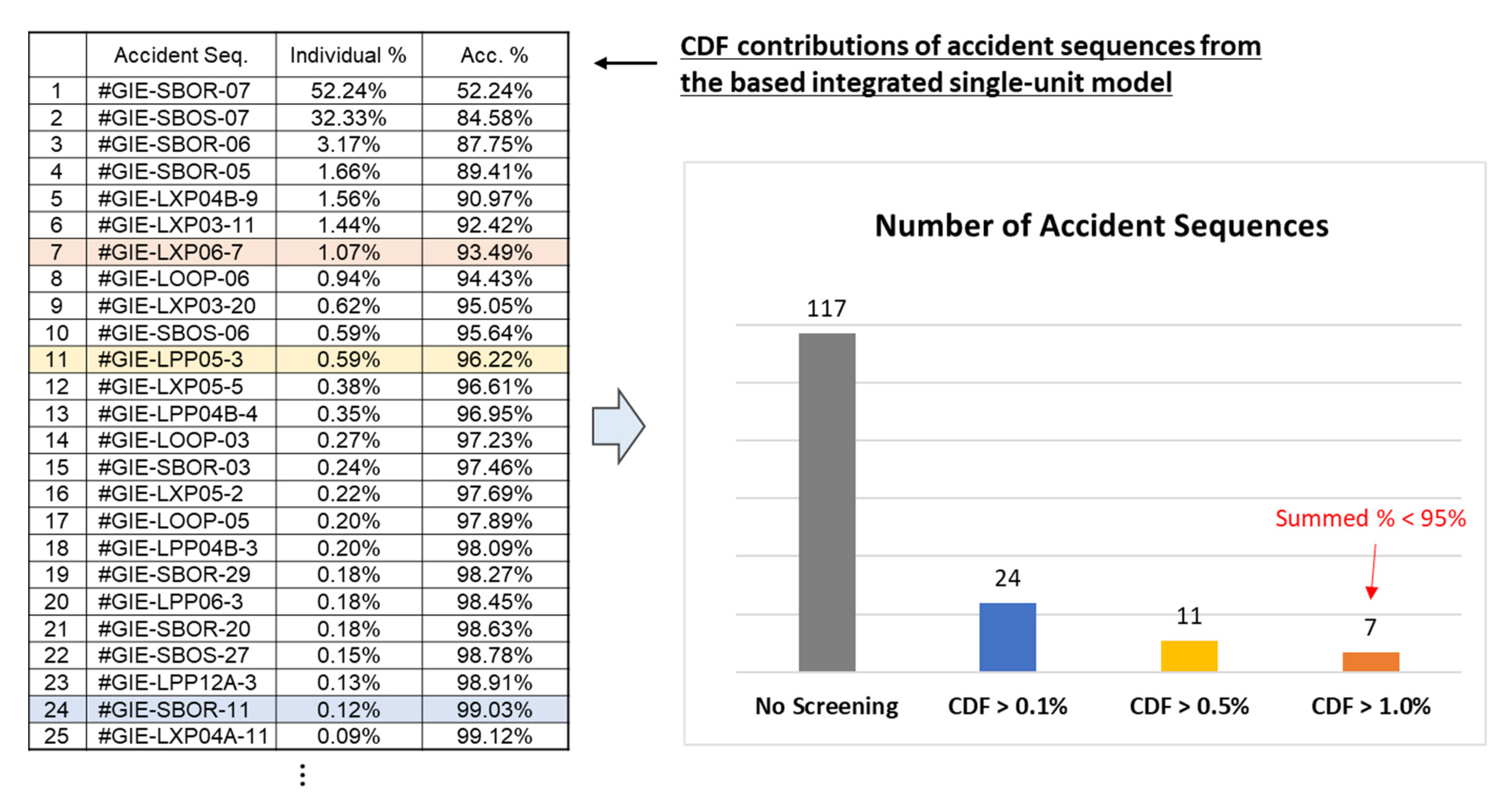
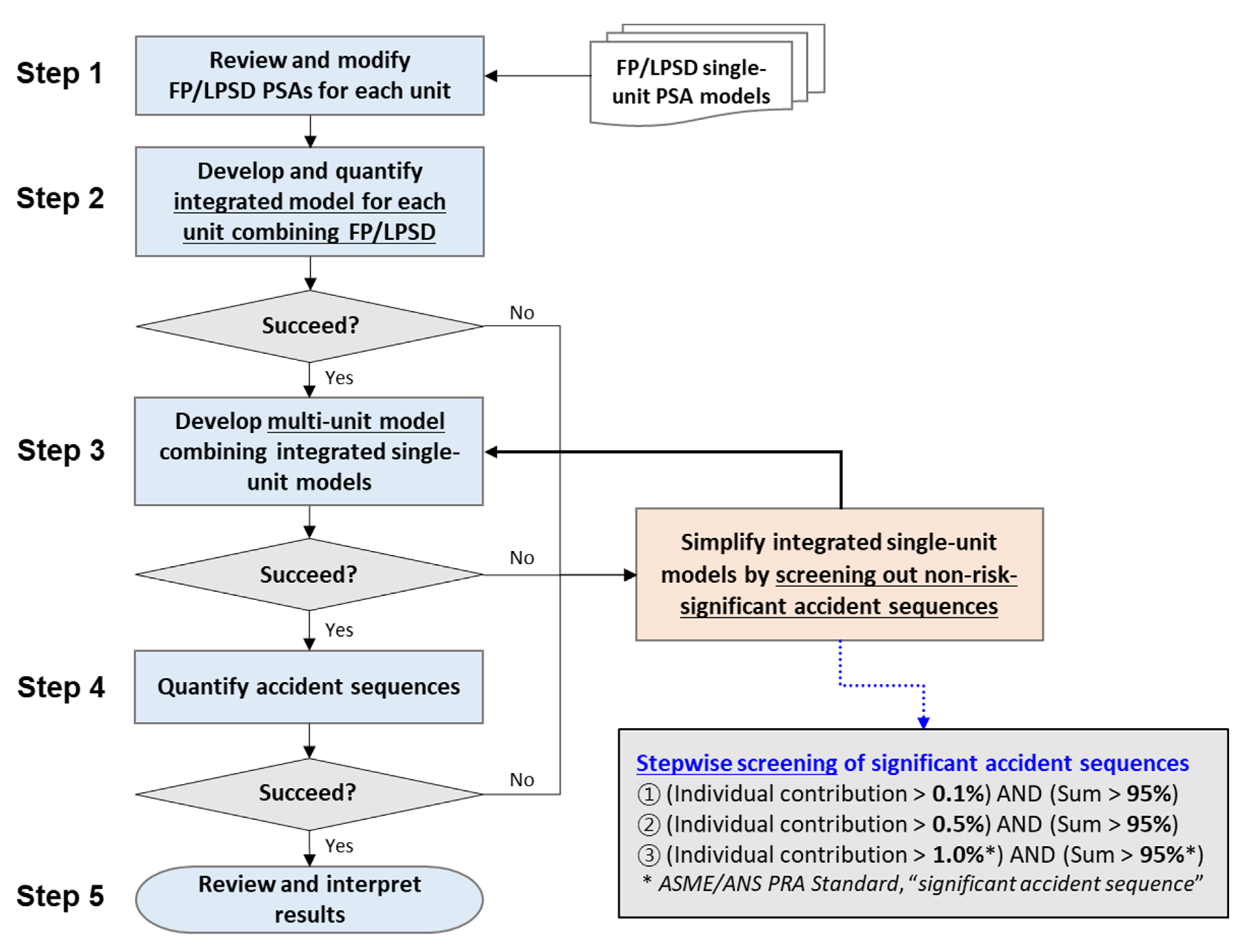
One of the technical challenges in multi-unit probabilistic safety assessment (MUPSA) is dealing with numerous combinations of plant operational states (POSs) for each nuclear power plant unit. Since the number of possible combinations of POSs increases exponentially with the number of units, it is impractical to develop separate MUPSA models and assess the risk for each POS combination. This paper proposes a pragmatic approach to modeling combinations of POSs for each reactor unit in MUPSA involving up to 10 reactor units. This approach does not focus on selecting representative POS combinations but rather on screening out non-risk-significant accident sequences in a stepwise manner according to the model quantification results. The effectiveness of the approach is demonstrated by application to cases with four different numbers of units. As a result, in the 2-, 4-, and 6-unit cases, the site and multi-unit core damage frequency (CDF) due to a multi-unit loss of offsite power initiating event are successfully calculated without screening out any accident sequences for each unit. In the 10-unit case, the quantification fails without screening, but it succeeds after reducing the model size by about 43% via the exclusion of the accident sequences in each integrated single-unit model with a CDF contribution of less than 0.1%. The results show that the minimal cut sets obtained in each case cover many POS combinations and that most non-risk-significant POS combinations can be truncated by the cutoff value of 1E-14/yr. In addition, comparing the quantification results according to the stepwise screening criteria shows that the proposed approach can effectively reduce the computational burden in MUPSA without losing much accuracy or realism.
Keywords: plant operational state; POS; low-power and shutdown PSA; multi-unit PSA; multi-unit PRA plant operational state; POS; low-power and shutdown PSA; multi-unit PSA; multi-unit PRA