Abstract
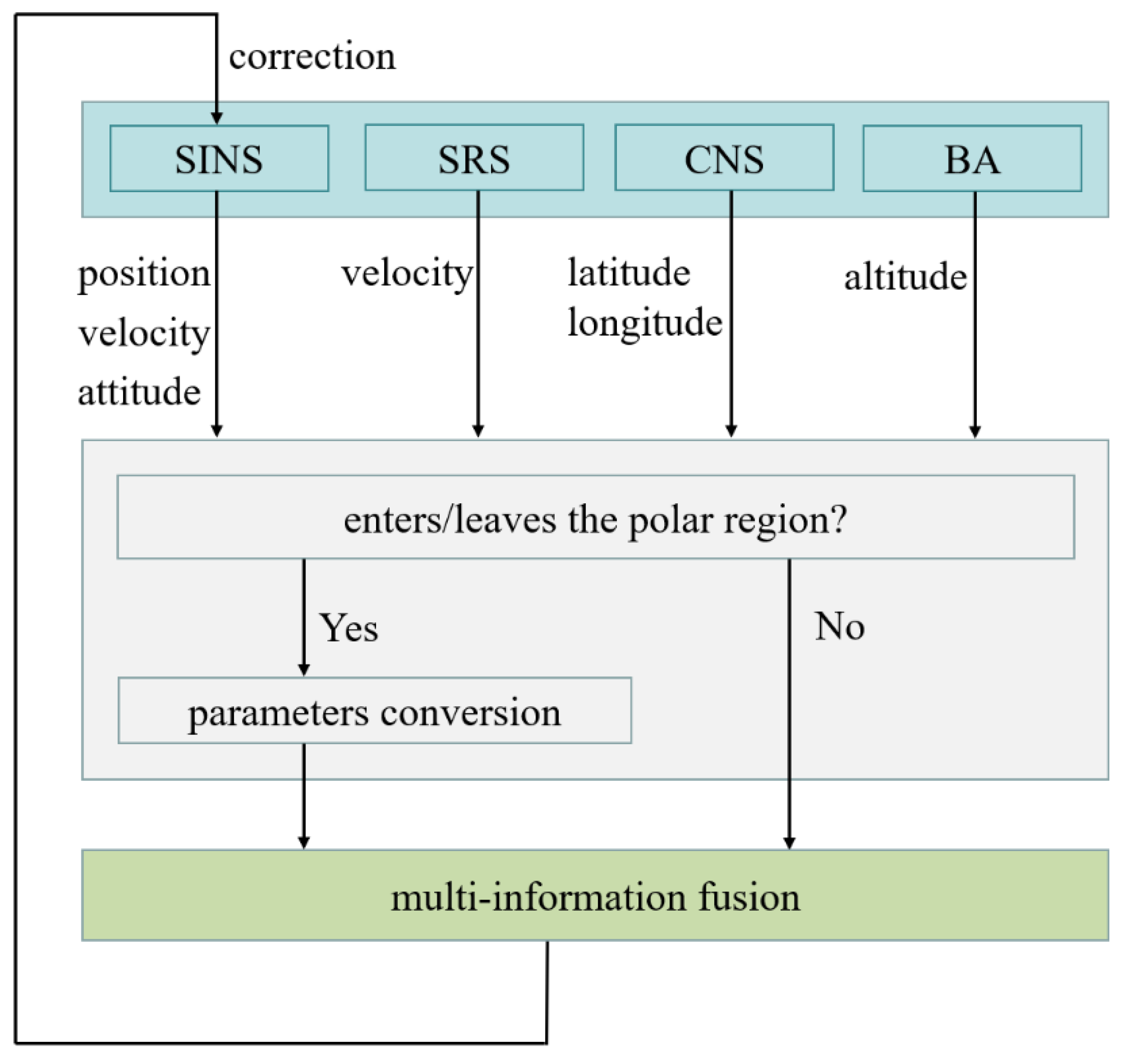
In order to improve the continuity and smoothness of transpolar flight and optimize autonomous navigation performance, a SINS/SRS/CNS (strapdown inertial navigation system/spectral redshift navigation system/celestial navigation system) multi-information fusion global autonomous navigation method based on parameter conversion was studied for this article. The global autonomous navigation scheme based on multi-information fusion was designed. The principle of spectral redshift navigation was studied. On this basis, the system equations of the SINS/SRS/CNS multi-information fusion global autonomous navigation system were established in the middle–low latitudes and high latitudes. Furthermore, the navigation and filter parameter conversion relationships between the geographic navigation coordinate frame and the grid navigation coordinate frame were derived. The simulation and experiment verified that the SINS/SRS/CNS multi-information fusion global autonomous navigation method with parameter conversion can effectively improve the accuracy and smoothness and realize non-oscillation switching in transpolar navigation. In the vehicle experiment, the proposed algorithm improved the horizontal position accuracy by more than 29% compared with the multi-information fusion global autonomous navigation method without filter parameter conversion.
1. Introduction
High-altitude and long-endurance flight requires UAVs (unmanned aerial vehicles) to have global autonomous navigation capability [1]. The unique geographical environment of the polar regions puts forward higher requirements for the continuity and smoothness of navigation. SINS (the strapdown inertial navigation system) is applicable to global navigation because of its concealment, real-time operation, and independence from complex environments. However, with the increase in latitude, the east–north–up navigation coordinate frame extensively used in the middle–low latitudes is ineffective because of meridian convergence [2,3,4]. Consequently, the transverse geographic coordinate frame that rotates the traditional longitude and latitude lines by 90° and the grid coordinate frame that is based on the Greenwich meridian plane are presently used [5,6,7]. In addition, the SINS errors gradually accumulate, making it difficult to accomplish a UAV high-precision and long-endurance global flight mission. Consequently, it is essential to introduce other navigation information for SINS correction [8].
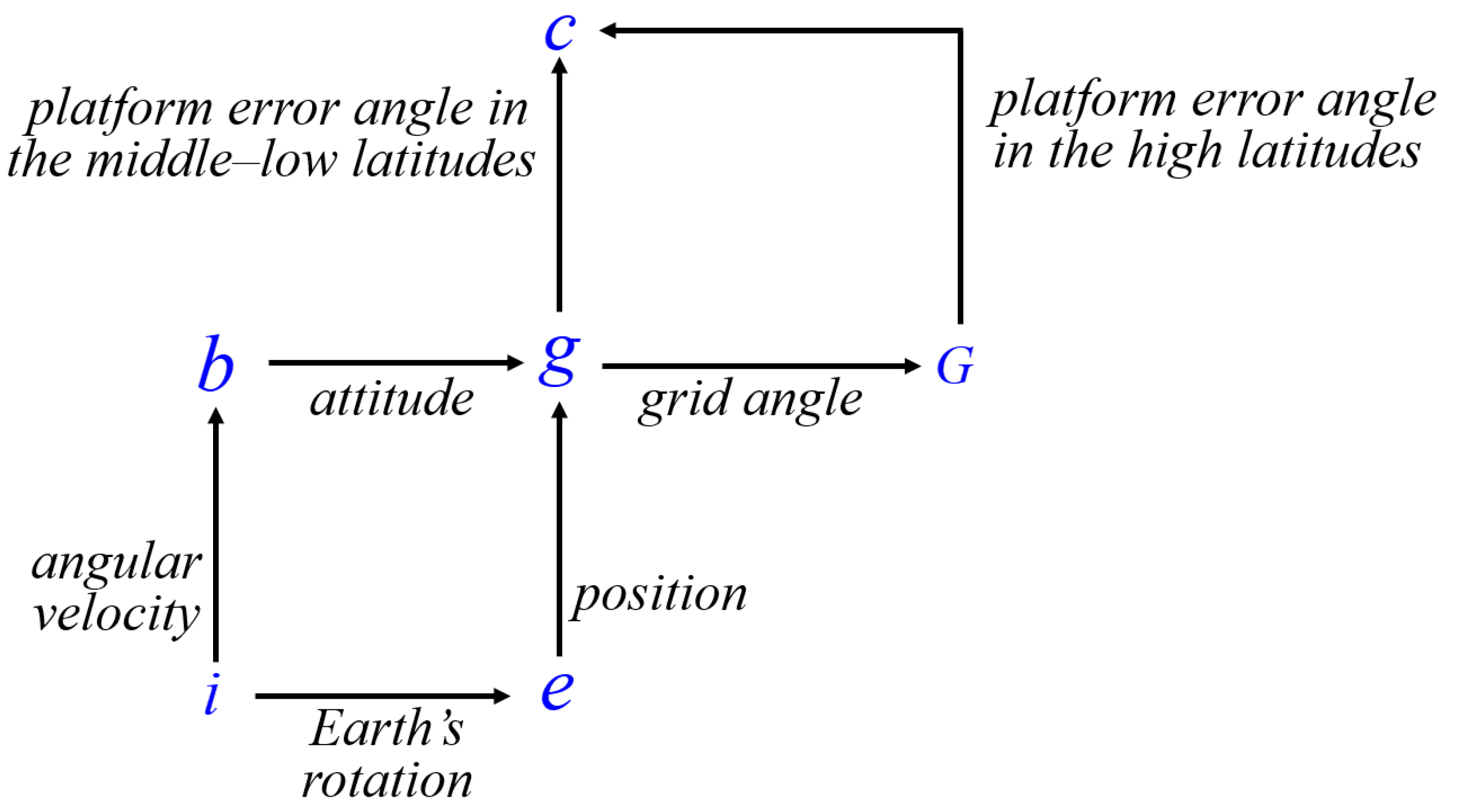
In recent years, many studies have been carried out on polar navigation. A fault-tolerant grid SINS/DVL (Doppler velocity log)/USBL (ultra-short baseline) integrated algorithm was proposed to improve the reliability and accuracy of polar navigation for ocean space applications [9]. The integrated navigation scheme of transverse SINS/DVL based on the virtual sphere model was proposed, and the navigation accuracy could meet the requirements of an autonomous underwater vehicle [10]. The rotation modulation inertial navigation system algorithm under a grid coordinate frame was studied, and the applied basis of polar navigation was established [11]. An interacting dual-model-based adaptive filter was proposed in INS/GNSS/DVL integrated navigation to overcome nonstationary noise and certain non-Gaussian factors, and ship sailing simulations demonstrated that the proposed architecture and algorithms enhanced navigational performance in the Arctic [12]. A SINS/CNS/GPS integrated navigation system that combines the azimuth navigation algorithm and the grid navigation algorithm was obtained, and the feasibility in the high latitudes was verified [13]. Related studies have achieved remarkable results. However, autonomous navigation technology of multi-information fusion for an airborne application background and transregional switching between middle and high latitudes need further research.
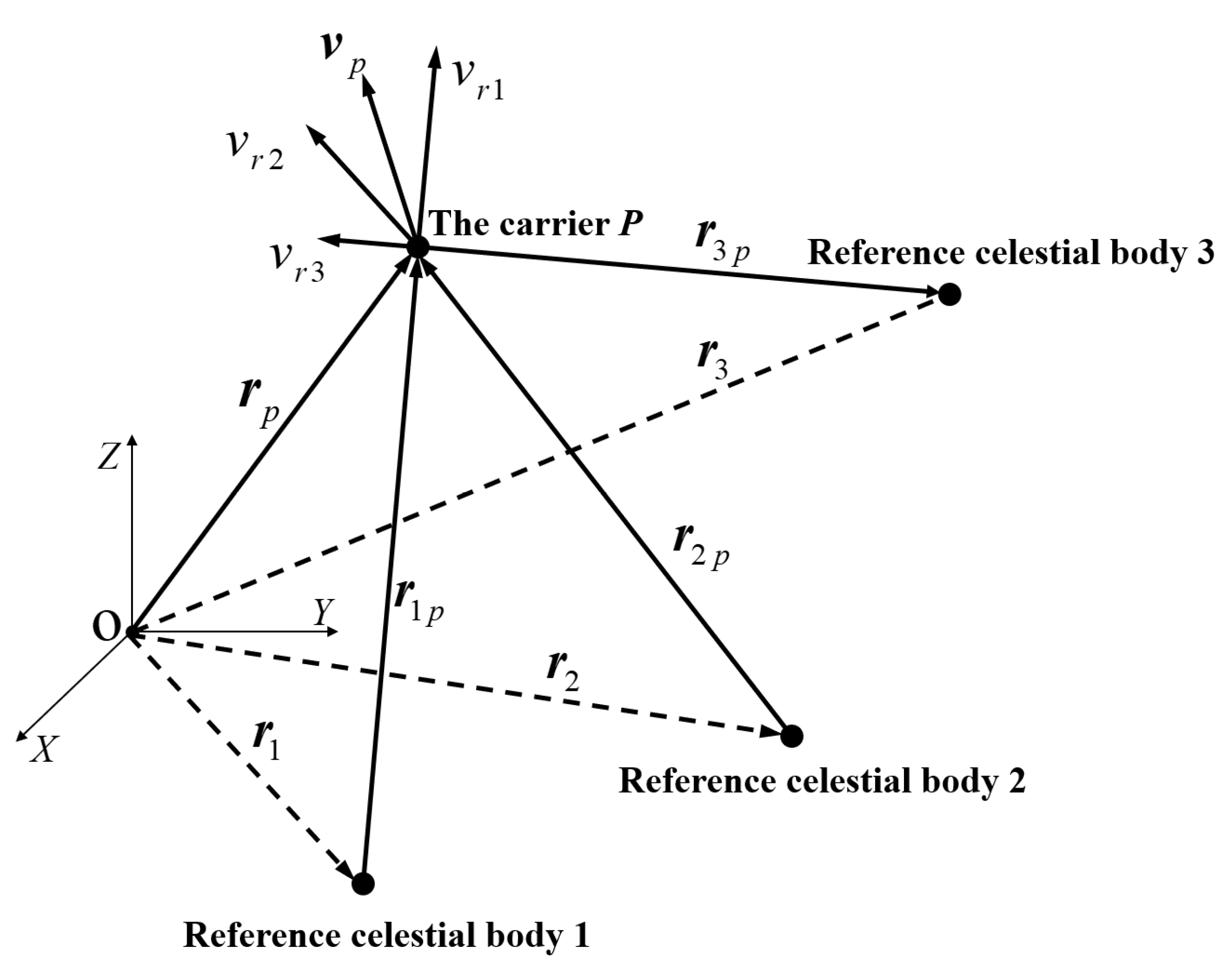
To meet the demand for fully autonomous, high-accuracy, and long-endurance navigation, correcting SINS errors with CNS (the celestial navigation system) has already become one research focus of aerospace engineering [14]. The U.S. Air Force has developed various typical airborne SINS/CNS integrated navigation products to meet the requirements of strategic reconnaissance missions [15]. SRS (the spectral redshift navigation system) is a novel autonomous navigation technology that uses the Doppler shift effect of astronomical spectra to realize aircraft navigation with preferable real-time operation and autonomy [16]. The fusion of SINS with SRS and CNS could guarantee the reliability of the navigation system while maintaining a high level of autonomy.
In this article, a SINS/SRS/CNS multi-information fusion global autonomous navigation method based on parameter conversion is proposed. Our main contribution is to establish the SINS/SRS/CNS multi-information fusion system equations in different navigation coordinate frames and to derive the navigation and filter parameter conversion relationships between different coordinate frames, ensuring the high autonomy and precision of the UAV global navigation system. The sections of this article are arranged as follows: The design of the scheme of multi-information fusion global autonomous navigation is detailed in Section 2. Section 3 analyzes the principle of spectral redshift navigation. The system equations of the middle–low-latitude geographic coordinate frame and the high-latitude grid coordinate frame are also established in Section 3. Based on Section 3, Section 4 is devoted to deriving the navigation and filter parameter conversion relationships between different navigation coordinate frames. Section 5 describes the simulation and experiment that were performed to verify the proposed algorithm. Section 6 discusses the main conclusion of this article.
5. Experiment and Discussion
5.1. Simulation and Analysis
To validate the performance of the SINS/SRS/CNS multi-information fusion global autonomous navigation method, a simulation and an analysis were performed, combined with the system equations established in Section 3. The parameters of the navigation sensors for the simulation are shown in Table 1.
Table 1.
Sensor rate settings.
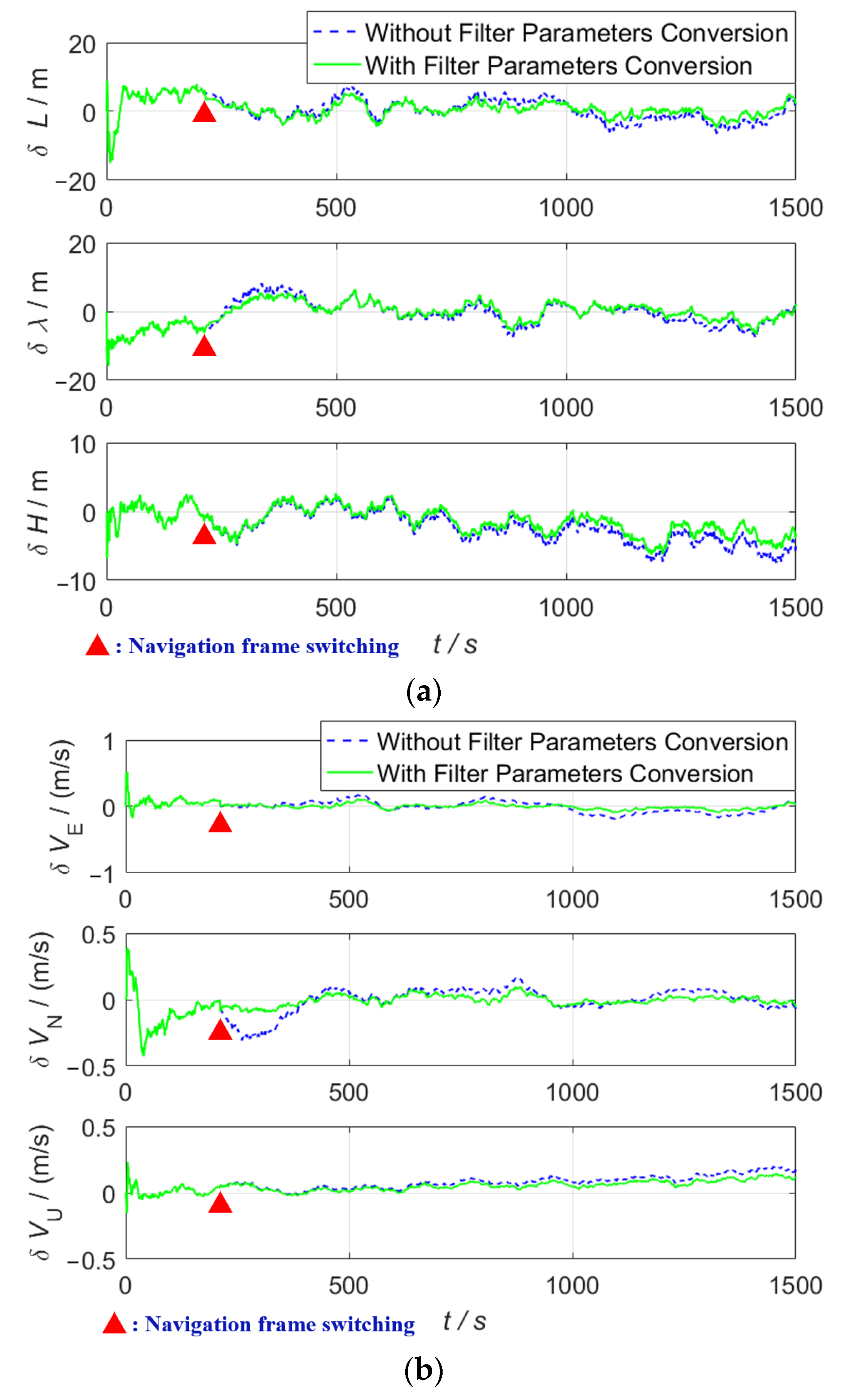
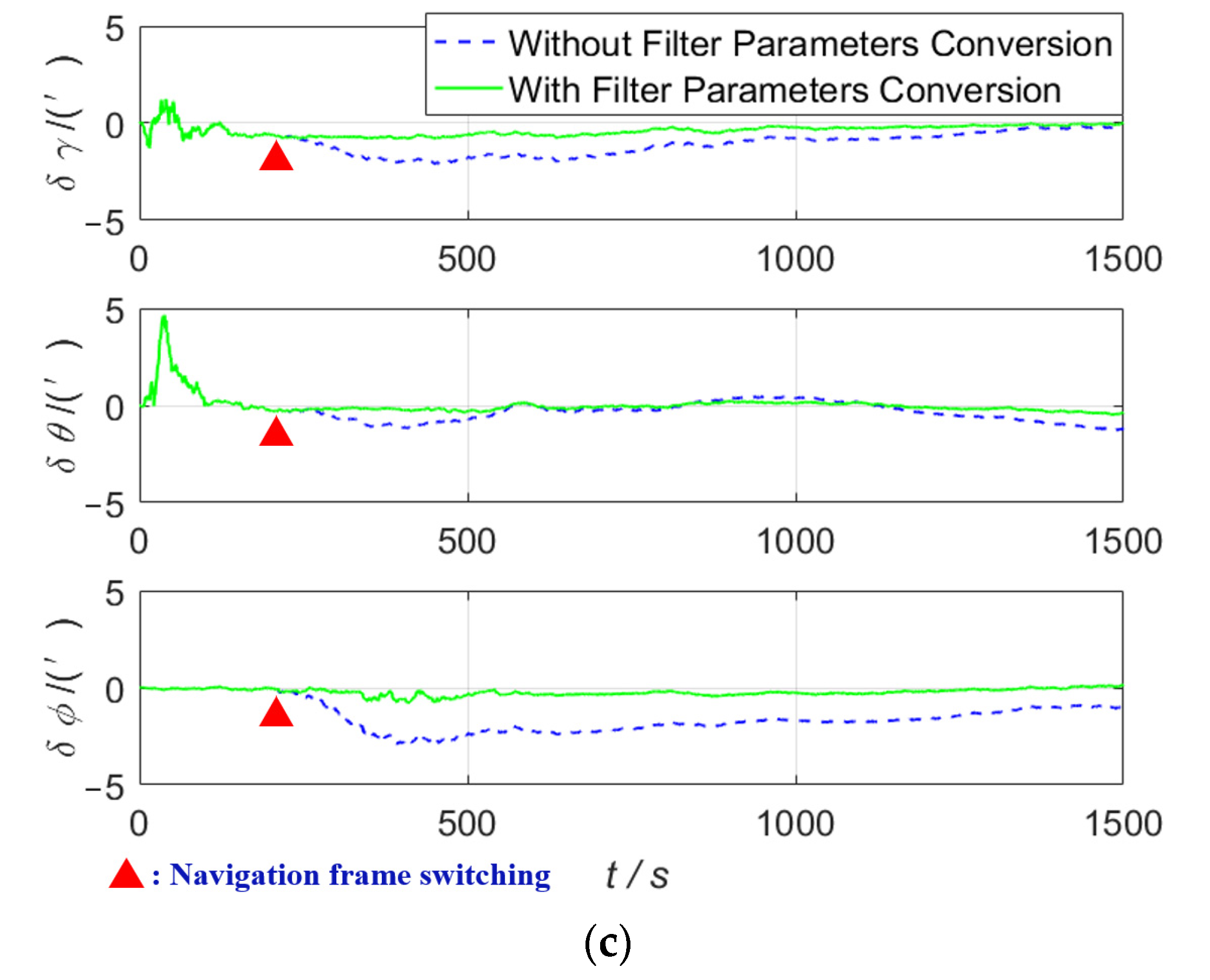
The latitude of the original location was 87.5°. The UAV flew at uniform velocity and arrived at latitude 88° at 212 s. The navigation coordinate frame was switched from the frame to the frame. The proposed SINS/SRS/CNS multi-information fusion autonomous navigation method with filter parameter conversion was compared with that without filter parameter conversion. Figure 4a–c demonstrate the position error, velocity error, and attitude error generated by these two methods, respectively.

Figure 4.
Error curves of the two methods: (a) position error curves; (b) velocity error curves; and (c) attitude error curves.
It can be seen from Figure 4 that the errors of multi-information fusion autonomous navigation without filter parameter conversion oscillate when entering the polar regions. In the attitude errors, the yaw error without the filter parameter conversion was the largest, and the oscillation amplitude reached up to 3’. Due to the low observability of the yaw during a uniform flight, the change in filter structure was prone to oscillation. The oscillation amplitude of the velocity error was 0.3 m/s. The oscillations in the velocity error and position error were smaller than that of the attitude error and could converge quickly. That is because the multi-information fusion autonomous navigation filter took the velocity provided by SRS and the position provided by CNS as the measurements. Therefore, the velocity and position could be corrected directly. During the conversion of the navigation coordinate frame, the errors of the multi-information fusion autonomous navigation method with the filter parameter conversion were lower, and there were no significant oscillations.
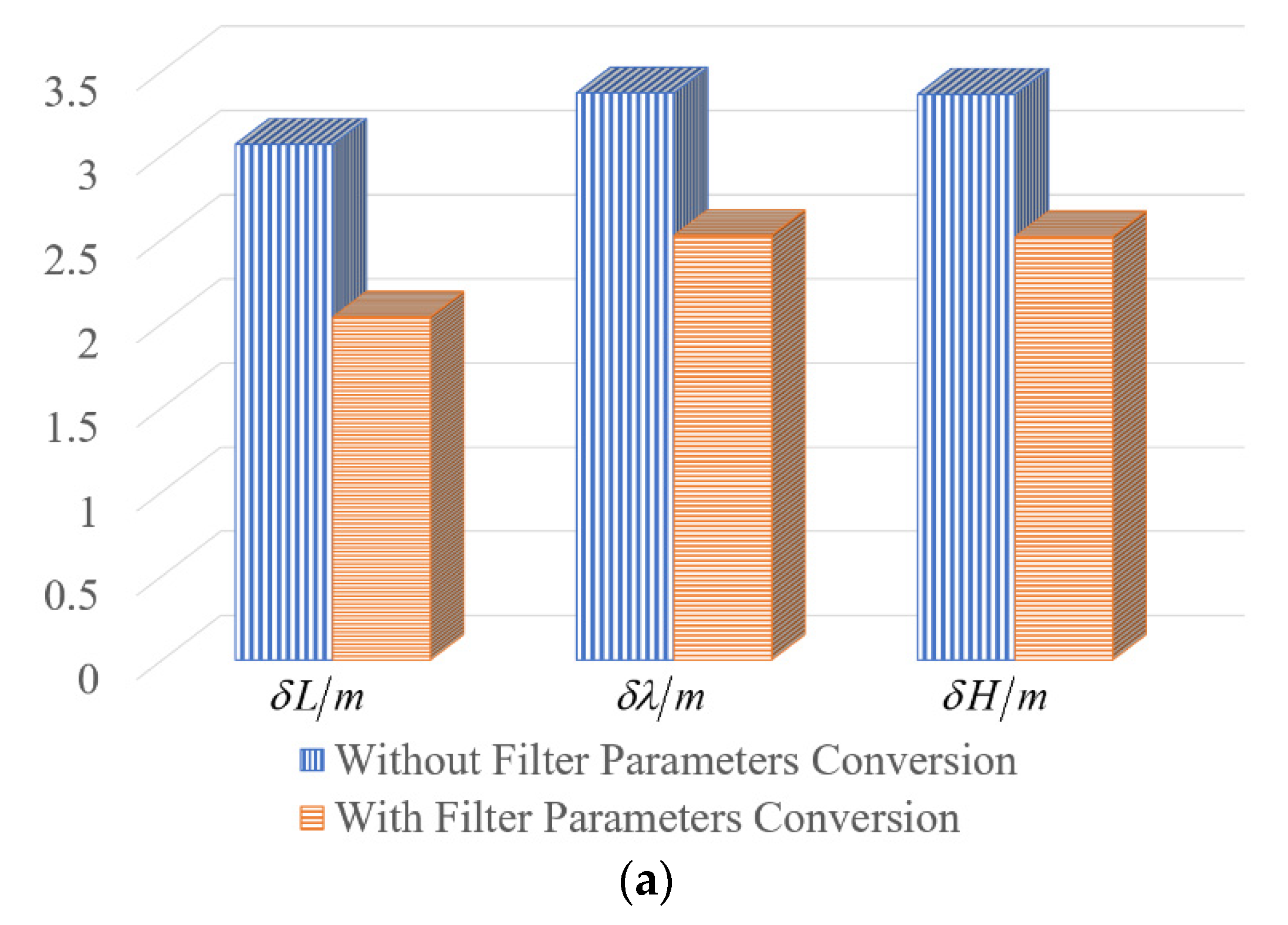
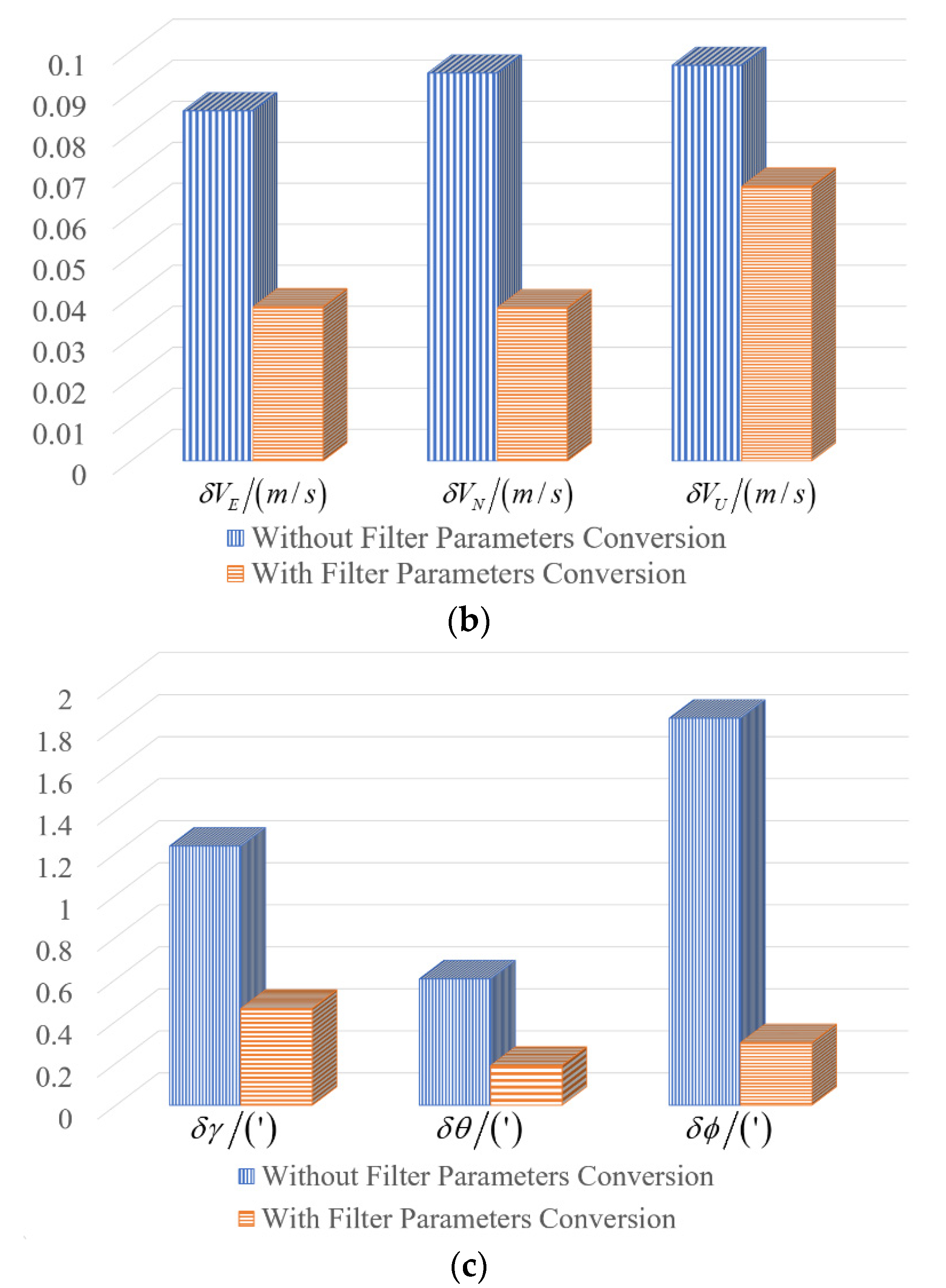
The RMSEs (root-mean-square errors) of the SINS/SRS/CNS multi-information fusion autonomous navigation with and without filter parameter conversion are shown in Figure 5.

Figure 5.
The RMSEs of multi-information fusion autonomous navigation: (a) the RMSEs of the position; (b) the RMSEs of the velocity; and (c) the RMSEs of the attitude.
Based on the results demonstrated in Figure 4 and Figure 5, the navigation performance of the multi-information fusion autonomous navigation method with filter parameter conversion was better than that without filter parameter conversion. It could realize smooth switching between different coordinate frames and improve the navigation accuracy.
5.2. Experiment and Analysis
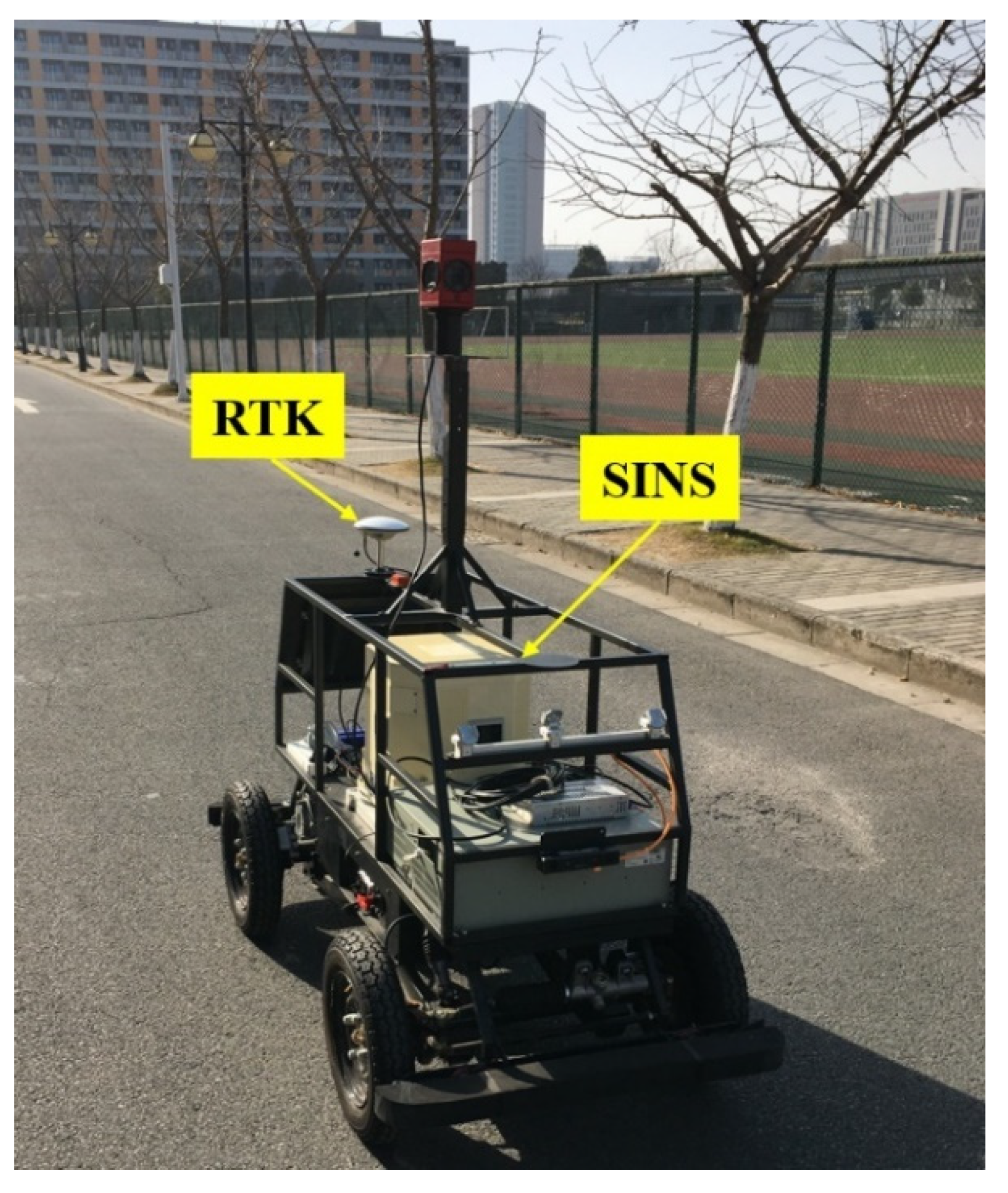
In view of the restriction of experimental conditions, actual high-altitude and long-endurance flight experiments cannot be conducted in our research center. Considering that RTK (real-time kinematics) can provide high-accuracy velocity and position, the following experimental scheme was designed. The high-accuracy velocity and position offered by RTK were taken as the true values of the SRS velocity, CNS position, and BA altitude. The CNS position error, BA altitude error, and SRS velocity error simulated in Section 5.1 could be superimposed on the true values to obtain the experimental data. On this basis, a SINS/RTK integrated navigation vehicle experiment in a natural system was conducted to verify the parameter conversion method proposed in Section 4. The experimental vehicle is shown in Figure 6.
Figure 6.
The experimental vehicle.
The parameters of the vehicle experiment are listed in Table 2.
Table 2.
The parameters of the vehicle experiment.
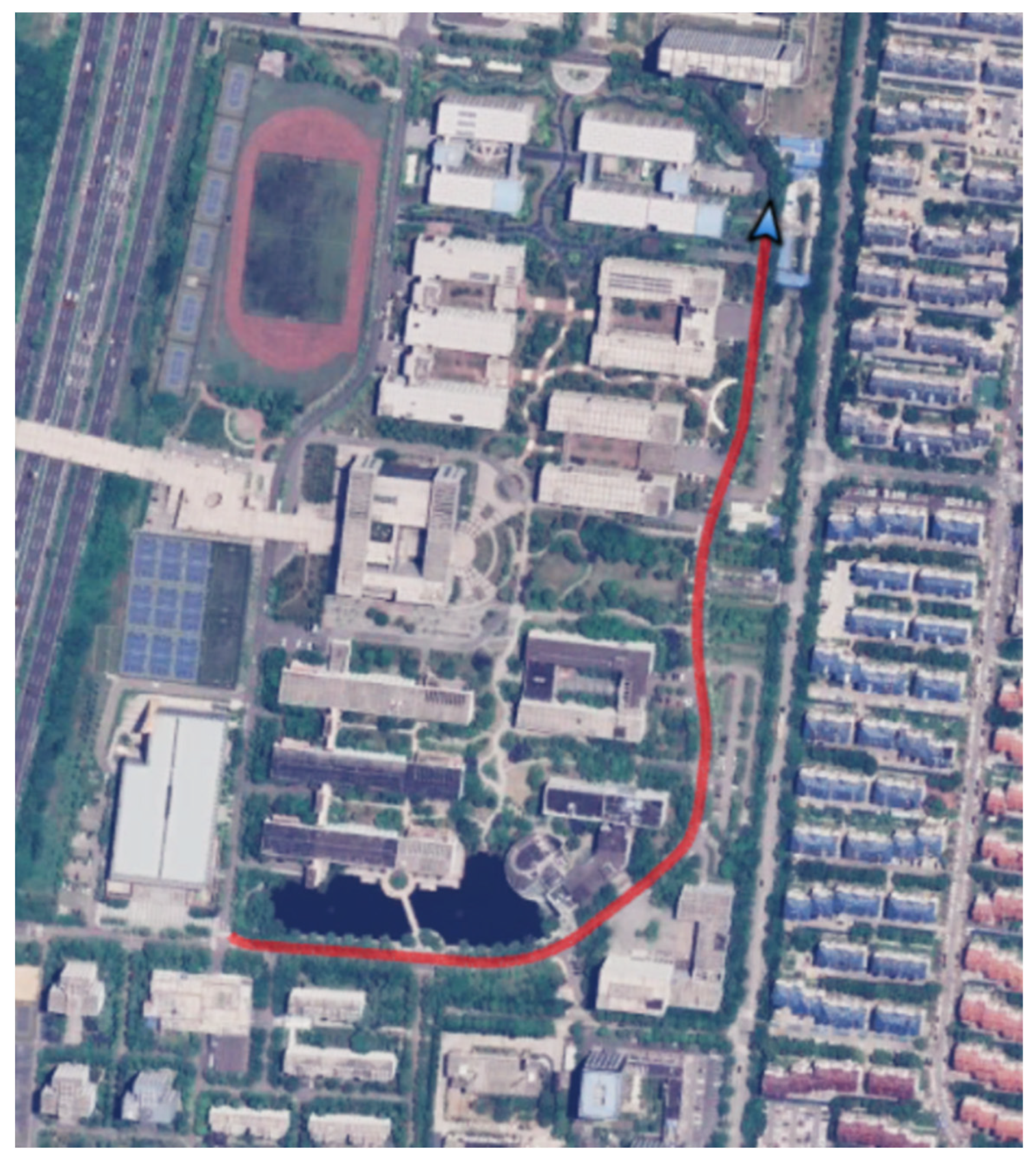
The experiment trajectory is demonstrated by the red line in Figure 7. The approximate location was east longitude 118.790° and north latitude 31.939°. The navigation coordinate frame was the frame in the beginning, and it switched to the frame after 300 s. The transpolar navigation was imitated by coordinate system switching.
Figure 7.
The experimental trajectory.
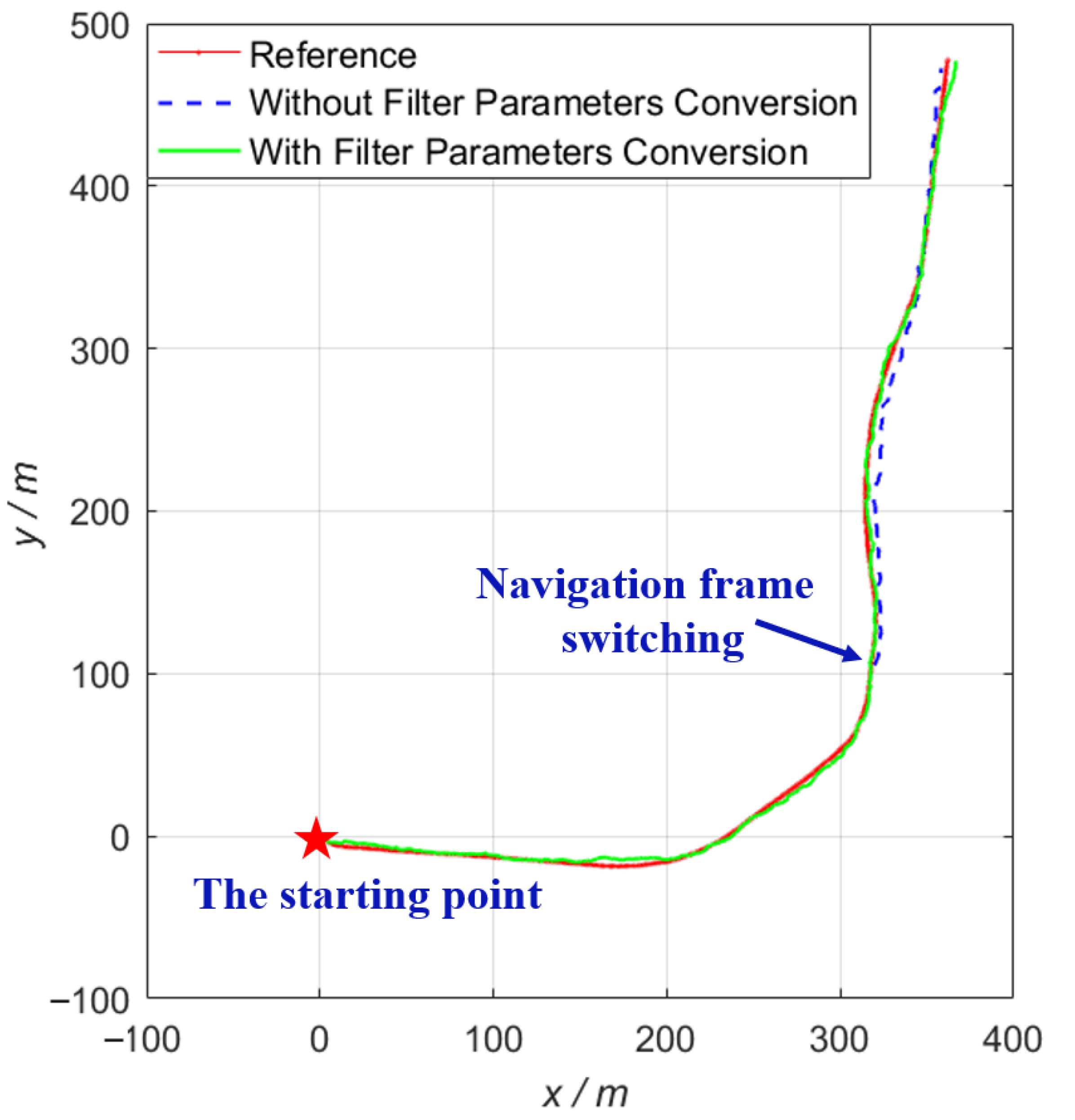
Figure 8 illustrates the positions generated by the different methods.
Figure 8.
The positions of the two methods with and without filter parameter conversion.
Figure 8 indicates that the filter parameter conversion method proposed in this article can achieve smooth switching between different coordinate systems without oscillation.
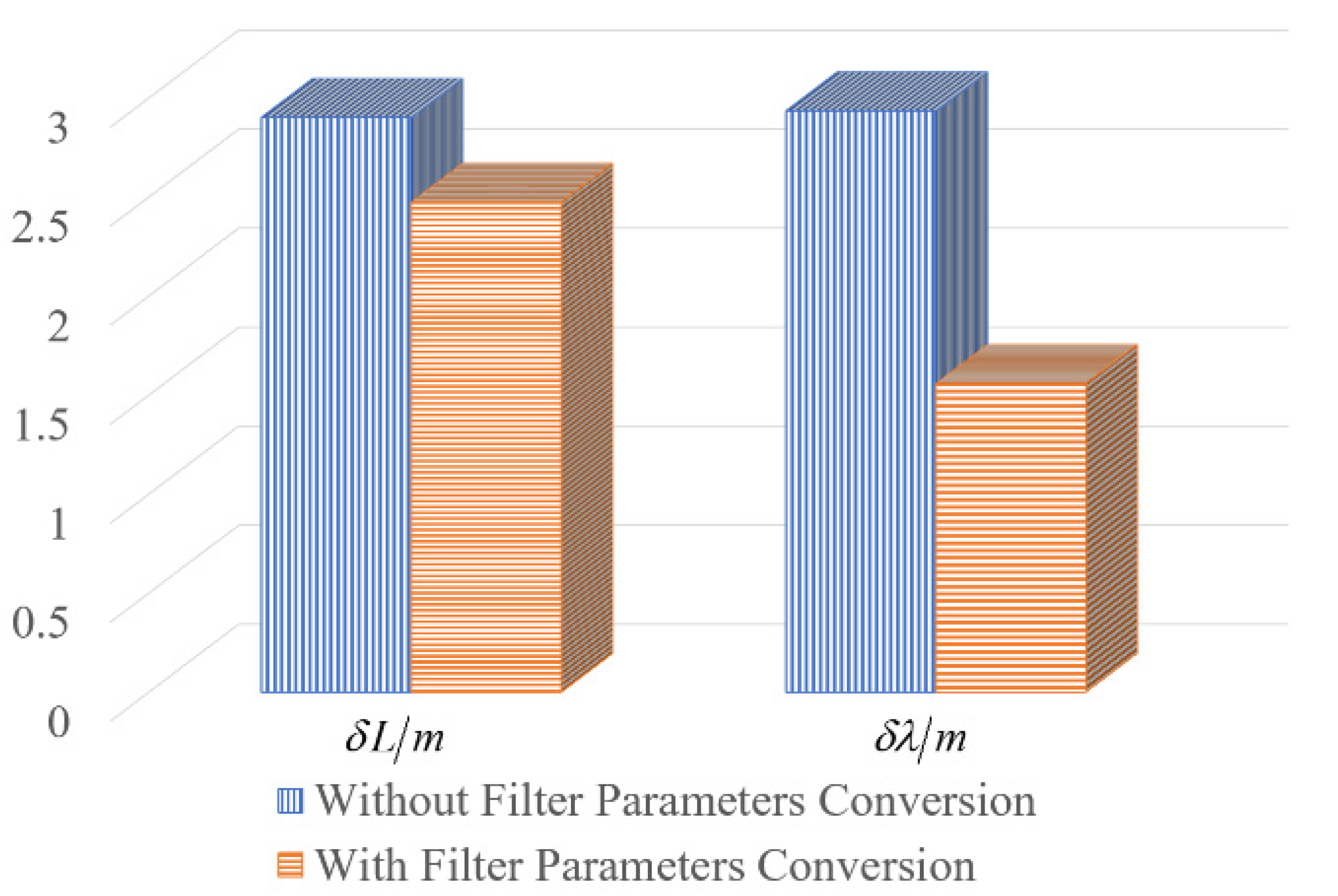
The horizontal position RMSEs of these two methods are shown in Figure 9.
Figure 9.
The horizontal position RMSEs of multi-information fusion autonomous navigation.
Figure 9 also shows that the proposed multi-information fusion autonomous navigation method with filter parameter conversion can effectively reduce the navigation errors caused by coordinate frame switching. Compared with the method without filter parameter conversion, the horizontal position accuracy of the proposed method was enhanced by about 29%.
6. Conclusions
To improve the continuity and smoothness of high-altitude and long-endurance UAV transpolar flight and to optimize autonomous navigation performance, a SINS/SRS/CNS multi-information fusion global autonomous navigation method was proposed. The system equations in the middle–low latitudes and high latitudes were established. The navigation and filter parameter conversion relationships between different coordinate frames were derived. The simulation and experiment verified that the SINS/SRS/CNS multi-information fusion global autonomous navigation method with parameter conversion can effectively improve the accuracy and smoothness and realize non-oscillation switching in transpolar navigation. In the vehicle experiment, the proposed algorithm improved the horizontal position accuracy by more than 29% compared with the multi-information fusion global autonomous navigation method without filter parameter conversion.
Author Contributions
Conceptualization, B.Z. and Q.Z.; methodology, B.Z.; software, B.Z.; validation, B.Z., Q.Z. and C.G.; formal analysis, X.Z. and W.Q.; investigation, C.G. and X.Z.; resources, J.L.; data curation, C.G. and W.Q.; writing—original draft preparation, B.Z.; writing—review and editing, Q.Z.; visualization, B.Z.; supervision, Q.Z.; project administration, J.L.; funding acquisition, J.L. All authors have read and agreed to the published version of the manuscript.
Funding
This research was funded by the National Natural Science Foundation of China (grants 61533008 and 61603181), the Postgraduate Research & Practice Innovation Program of Jiangsu Province (No. KYCX18_0268), the Qing Lan Project of the Jiangsu Higher Education Institutions (No. 2022), and the Natural Science Foundation of the Jiangsu Higher Education Institutions of China (No. 19KJD590001).
Institutional Review Board Statement
Not applicable.
Informed Consent Statement
Not applicable.
Data Availability Statement
Not applicable.
Acknowledgments
The authors would like to thank all the editors and anonymous reviewers for their helpful comments and valuable remarks.
Conflicts of Interest
The authors declare no conflict of interest.
References
- Sheridan, I. Drones and Global Navigation Satellite Systems: Current Evidence from Polar Scientists. R. Soc. Open Sci. 2020, 7, 191494. [Google Scholar] [CrossRef]
- Huang, L.; Xu, X.; Ge, H.R. Single-Axis Rotation Modulation Transverse SINS Based on Virtual Sphere Model in Polar Region. IEEE Sens. J. 2022, 22, 13442–13450. [Google Scholar] [CrossRef]
- Zhao, W.Y.; Zhang, G.T.; Liu, W. Working Performance Analysis on Polar Navigation of Semi-analytical Inertial Navigation System. In Proceedings of the 2021 IEEE Conference on Telecommunications, Optics and Computer Science (TOCS), Shenyang, China, 10–11 December 2021. [Google Scholar]
- Zhao, B.; Zeng, Q.H.; Liu, J.Y. A New Polar Alignment Algorithm Based on the Huber Estimation Filter with the Aid of BeiDou Navigation Satellite System. Int. J. Distrib. Sens. Netw. 2021, 17, 15501477211004115. [Google Scholar] [CrossRef]
- Zhao, W.Y.; Zhang, G.T.; Liu, W. Research on High-latitude Transfer Alignment Technology. In Proceedings of the 2021 International Conference on Intelligent Computing, Automation and Systems (ICICAS), Chongqing, China, 29–31 December 2021. [Google Scholar]
- Zhang, F.B.; Gao, X.H.; Song, W.B. A Vision Aided Initial Alignment Method of Strapdown Inertial Navigation Systems in Polar Regions. Sensors 2022, 22, 4691. [Google Scholar] [CrossRef] [PubMed]
- Cui, W.T.; Ben, Y.Y.; Zhang, H.X. A Review of Polar Marine Navigation Schemes. In Proceedings of the 2020 IEEE/ION Position, Location and Navigation Symposium (PLANS), Portland, OR, USA, 20–23 April 2020. [Google Scholar]
- Song, L.J.; Zhao, W.L.; Cheng, Y.X. Based on Grid Reference Frame for SINS/CNS Integrated Navigation System in the Polar Regions. Complexity 2019, 2019, 2164053. [Google Scholar]
- Zhao, L.; Kang, Y.Y.; Cheng, J.H. A Fault-Tolerant Polar Grid SINS/DVL/USBL Integrated Navigation Algorithm Based on the Centralized Filter and Relative Position Measurement. Sensors 2019, 19, 3899. [Google Scholar] [CrossRef] [PubMed]
- Huang, L.; Xu, X.; Zhao, H.M. Transverse SINS/DVL Integrated Polar Navigation Algorithm Based on Virtual Sphere Model. Math. Probl. Eng. 2020, 2020, 8892750. [Google Scholar] [CrossRef]
- Zhao, C.L.; Wu, W.Q.; Lian, J.X. Research on Rotating Modulation Inertial Navigation System Error Characteristics Simulation Method in Polar Area. In Proceedings of the Guidance, Navigation & Control Conference (CGNCC), Yantai, China, 8–10 August 2014. [Google Scholar]
- Sun, J.L.; Wu, Z.L.; Yin, Z.D. Adaptive Filtering and Temporal Alignment Based Fusion Algorithm for Navigation Systems in the Arctic Region. IEEE Syst. J. 2018, 13, 2022–2033. [Google Scholar] [CrossRef]
- Song, L.J.; Yang, G.Q.; Zhao, W.L. The Inertial Integrated Navigation Algorithms in the Polar Region. Math. Probl. Eng. 2020, 2020, 5895847. [Google Scholar] [CrossRef]
- Yang, S.J.; Feng, W.W.; Wang, S. A SINS/CNS Integrated Navigation Scheme with Improved mathematical horizon reference. Measurement 2022, 195, 111028. [Google Scholar] [CrossRef]
- Tian, M. Review of Polar Integrated Navigation Algorithm. J. Phys. Conf. Ser. 2019, 1213, 032017. [Google Scholar]
- Wei, W.H.; Gao, Z.H.; Gao, S.S. A SINS/SRS/GNS Autonomous Integrated Navigation System Based on Spectral Redshift Velocity Measurements. Sensors 2018, 18, 1145. [Google Scholar] [CrossRef]
- Collins, J.; Conger, R. MANS-Autonomous Navigation and Orbit Control for Communications Satellites. In Proceedings of the 15th International Communicatons Satellite Systems Conference and Exhibit, San Diego, CA, USA, 28 February–3 March 1994. [Google Scholar]
- Tai, F.; Noerdlinger, P.D. A Low Cost Autonomous Navigation System. In Proceedings of the Guidance and Control Conference, Keystone, CO, USA, 4–8 February 1989. [Google Scholar]
- Gao, G.L.; Gao, S.S.; Hong, G.Y. A Robust INS/SRS/CNS Integrated Navigation System with the Chi-Square Test-Based Robust Kalman Filter. Sensors 2020, 20, 5909. [Google Scholar] [CrossRef]
- Gao, G.L.; Gao, S.S.; Hu, G.L. Spectral Redshift Observation-based SINS/SRS/CNS Integration with an Adaptive Fault-tolerant Cubature Kalman Filter. Meas. Sci. Technol. 2021, 32, 095103. [Google Scholar] [CrossRef]
- Chen, W.N.; Zeng, Q.H.; Liu, J.Y. Seamless Autonomous Navigation Based on the Motion Constraint of the Mobile Robot. Ind. Robot. 2017, 44, 178–188. [Google Scholar] [CrossRef]
Publisher’s Note: MDPI stays neutral with regard to jurisdictional claims in published maps and institutional affiliations. |
© 2022 by the authors. Licensee MDPI, Basel, Switzerland. This article is an open access article distributed under the terms and conditions of the Creative Commons Attribution (CC BY) license (https://creativecommons.org/licenses/by/4.0/).