
You are currently viewing a new version of our website. To view the old version click .
Applied Sciences
  • Communication
  • Open Access

23 October 2022

Production of Photovoltaic Electricity at Different Sites in Algeria

,
,
,
,
,
,
,
and
1
Process Engineering Laboratory, Process Engineering Department, Faculty of Applied Sciences, Kasdi Merbah University, Ouargla 30000, Algeria
2
Laboratory of Biodiversity and Application of Biotechnology in the Agricultural Field, Faculty of Nature and Life, University of El Oued, El-Oued 39000, Algeria
3
Department of Process Engineering, Faculty of Technology, University of El Oued, El-Oued 39000, Algeria
4
Laboratory of Biotechnology Biomaterial and Condensed Matter, Faculty of Technology, University of El Oued, El-Oued 39000, Algeria
This article belongs to the Special Issue Advances in Solar Photovoltaic Technologies

Abstract

The necessity for further growth in the demand for electricity, particularly in the remote countryside, has been essential to Algeria’s economic and social progress in recent years. The Saharan regions account for around 80% of Algeria’s surface and have significant power demands. These areas are distinguished by their scattered population, extremely hot weather with high radiation levels (7 kw h/m2/day), and minimal energy use. Photovoltaic technology is one of the finest ways to harness solar power. The conversion of radiant energy (light quanta) into electrical energy can be achieved with the use of semiconductor materials. The effects of a solar cell depend on parameters such as solar cell technology, the position of the photovoltaic array, climate, and geographic data of the site. This paper presented: the role of site choice in the production of photovoltaic electricity. The results obtained for five sites in Algeria: Ouargla, Algers, Bechar, Sidi Bel Abbès, and Batna, confirmed that desert sites (Ouargla, Bechar) have a good photovoltaic efficiency result with large solar power irradiance.

1. Introduction

New opportunities to use renewable energy sources are emerging as a result of growing global environmental concerns, rising energy demand, and ongoing advancements in renewable energy technology [1]. Algeria, which is exposed to the sun for a large portion of the year and must utilize this energy, which is a non-depletable resource, would profit from turning to the usage of renewable energies [2]. In the near future, solar energy is anticipated to be crucial in supplying energy needs. Solar energy will be a good answer for energy needs, especially in rural regions, as it is a clean source of energy with a variety of applications, a decentralized nature, and availability.
In rural and Saharan areas, particularly in developing nations, where the population is dispersed, has a low energy consumption, and the grid power is not extended to these areas due to viability and financial issues, stand-alone photovoltaic systems have established themselves as dependable and affordable sources of electricity. The majority of the population in the most rural and isolated areas of practically all developing nations throughout the world lacks access to electricity. Temperature and insolation both affect how much electricity a photovoltaic (PV) generator can produce. Due to the changing nature of the PV generator’s output, a battery is required. An inverter is used to change the direct current (DC) power generated by solar cells into alternating current (AC) [3].
In Algeria, which has a high insolation level, there are around 3300 h of sunlight every year. Although the environment is generally conducive to the use of solar energy, the dispersion of the solar radiation is not well understood [4]. The major goal of this study is to compare observed data for several sites in Algeria, including Ouargla, Algers, Bechar, Sidi Bel Abbès, and Batna, with findings from the use of certain models that forecast daily and monthly radiation as well as photovoltaic power on a horizontal surface. As a result, the best models are chosen.

2. Materials and Methods

2.1. Presentation of Study Sites

In order to design a photovoltaic installation capable of providing significant electricity production, we studied five sites in Algeria with different geographical and climatic coordinates, namely: Algiers, Batna, Sidi Bel Abbès, Ouargla and Bechar.
The geographical and temperature data of the five selected sites are presented in Table 1 and Table 2.
Table 1. Geographic data of study sites [5].
Table 2. Temperature data of study sites [6].

2.2. Radiation Model Used: Mathematic Model in Horizontal Plan

To simplify the modelling of our problem, we have assumed that the day studied is characterized by a clear day and an average sky.
In this study, we used the PERRIN DE BRICHAMBAUT model [5], which calculates the global radiation as the plural of two radiations: direct and diffuse in the horizontal plane.
G = S + d
S: direct radiation
S = A sin ( h ) exp 1 C   sin ( h + 2 )  
d: diffuse radiation
d = B ( sin ( h ) ) 0 , 4
h: angular height (°).
A, B and C are the constant that depend on sky nature:
  • A = 1300 B = 87 C = 6 for very clear sky
  • A = 1230 B = 125 C = 4 for medium sky
  • A = 1200 B = 187 C = 2.5 for polluted sky

2.3. Photovoltaic System

The direct conversion of sunshine into electricity without the need for a heat engine is known as photovoltaic conversion [7]. The fundamental benefit of photovoltaic devices is that they can be built as independent systems to provide outputs ranging from microwatts to megawatts. They are robust and simple in design, require very little maintenance, and are available in a variety of sizes. As a result, they are employed in megawatt-scale power plants, reverse osmosis facilities, remote buildings, solar home systems, communications, satellites, and spacecraft. With such a broad range of uses, photovoltaics are in greater demand every year [8].
Cells, mechanical and electrical connections, supports, and devices for controlling and/or altering the electrical output are only a few of the parts that make up a photovoltaic power-generating system. These systems are rated in kilowatt-peak (kWp), which represents the maximum amount of electrical power that a system is anticipated to produce on a clear day with the sun directly overhead [9].

2.3.1. Mathematical Model of PV Generator

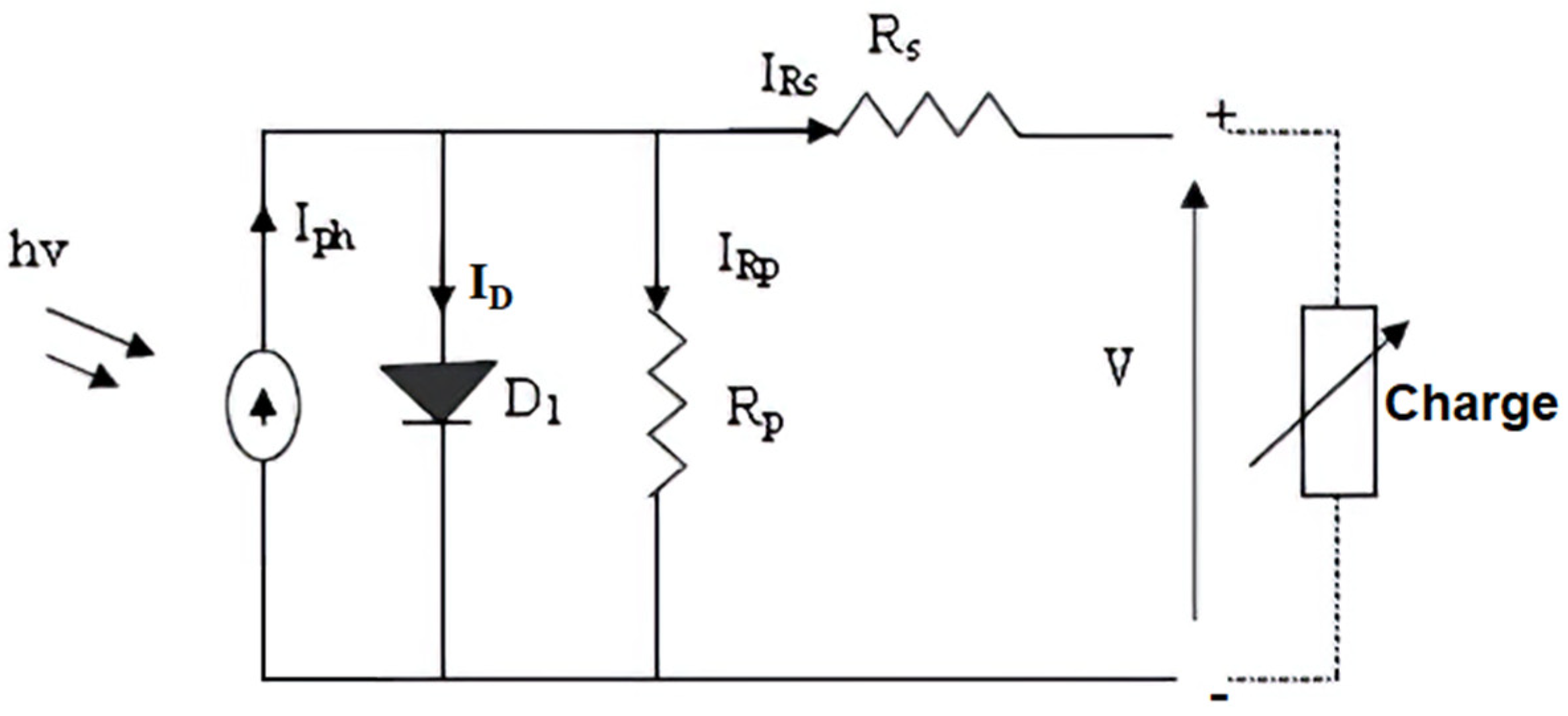
The current–voltage characteristics of the solar cell’s electrical circuit are presented in Figure 1. They can be described by the following simplified equation [10]:
I = I p h I d I p
where I is cell current (A), Iph is photo-current (A), ID is diode current (A), and IP is shunt resistance current (A).
Figure 1. The equivalent electrical circuit of the PV module, showing the diode and ground leakage currents [11].
Equation (4) becomes:
I = I P h I 0 [ exp ( V + I . R s n V T ) 1 ] V + I . R s R P
where V is cell voltage (V), Io is saturation current (A), V = KT/e is thermic voltage, e is electron charge (1.602 × 10¹⁹ C), K is Boltzmann constant (1381 × 1023 J/K), and T is cell temperature (K).
The electrical power produced by the PV system is:
Pel = I .V
Moreover, the maximum output power is given by:
Pmax = (I V) max = VOC .ISC. FF
where VOC is open circuit voltage (V), ISC is short circuit current (A), and FF is fill factor Pmax = Vmp ∗ Imp, corresponding to the maximum power point, MPP.
The energy conversion efficiency, η, is given by:
η = Vmp .Imp/Pin = Voc .Isc .FF/Pin

2.3.2. Panel Characteristics

The panel simulates polycrystalline technology, placed at 0° of tilt and orientation angles. Its characteristics are presented in Table 3.
Table 3. Characteristics of panel technology.

3. Results and Discussion

The results presented in this section were obtained by numerical simulation of the solar radiation and the PV power applied in the five sites studied.

3.1. Daily Evolution of Solar Radiation and Power PV

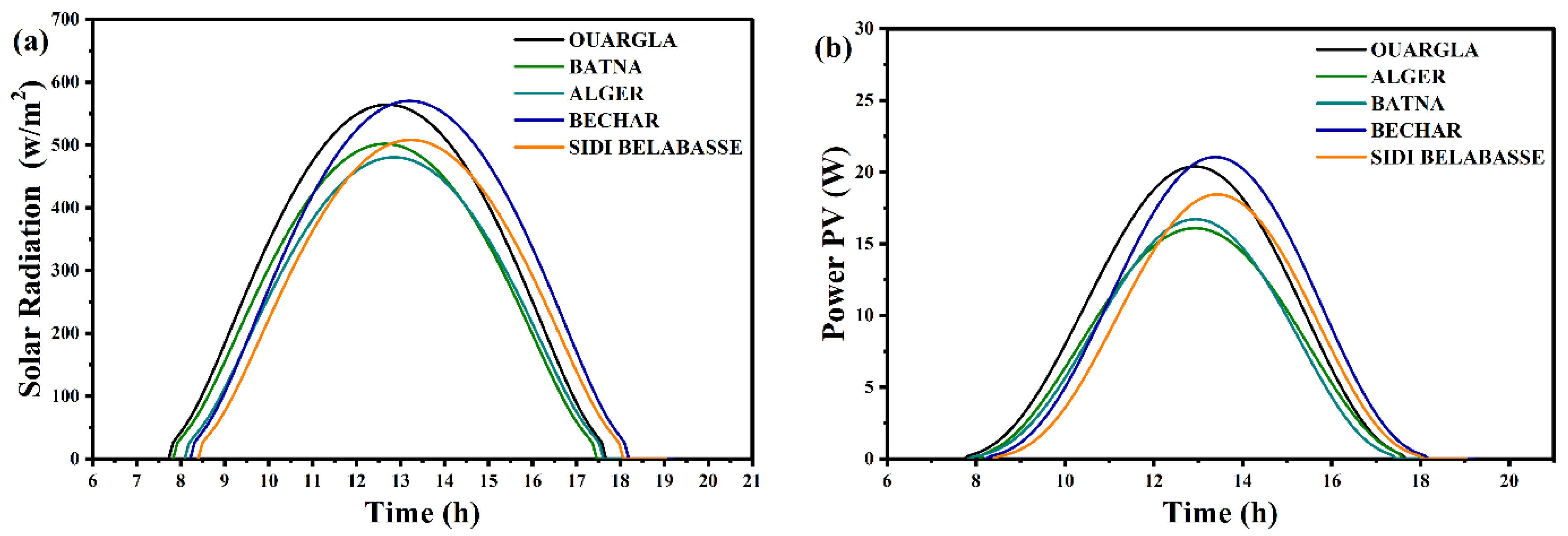
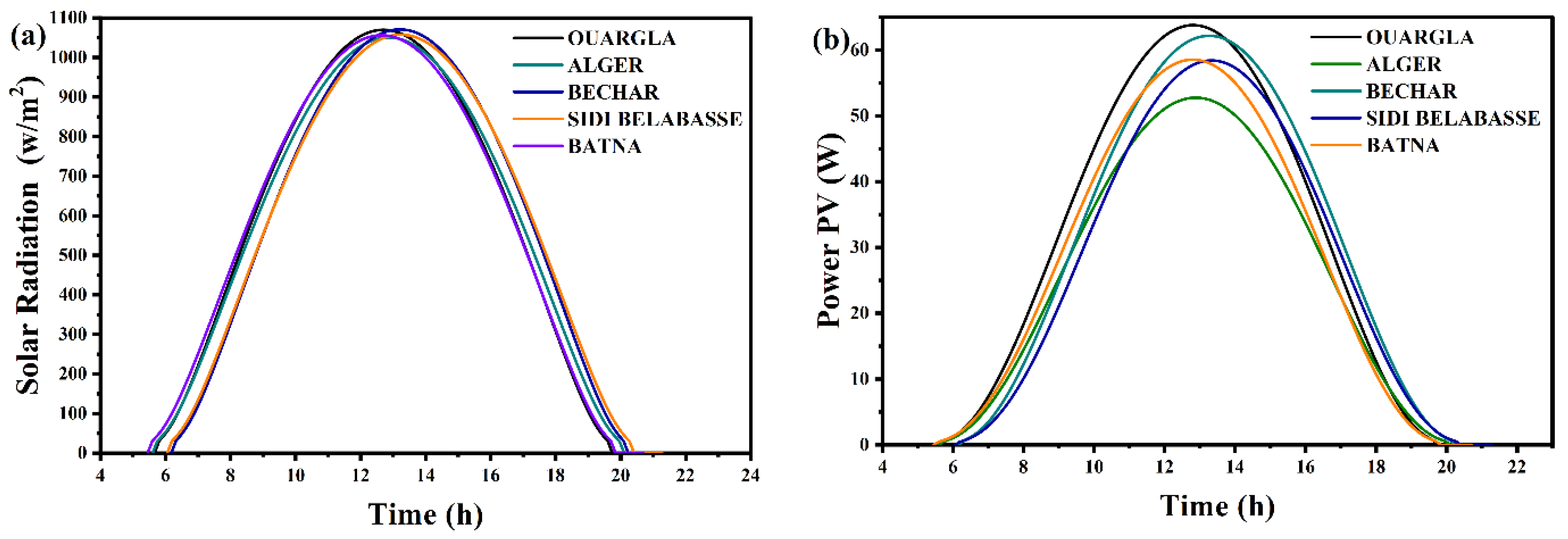
The results of the evolution of solar radiation and power PV at different sites in Algeria on 1 January and 1 July are shown in Figure 2 and Figure 3, respectively. We note that power PV depended proportionally on solar radiation.
Figure 2. Daily evolution of (a) solar radiation and (b) power PV at different sites in Algeria (1 January 2022).
Figure 3. Daily evolution of (a) solar radiation and (b) power PV at different sites in Algeria (1 July 2022).
Moreover, both curves have a bell shape. They start by growing to reach the optimum, then degrade.
The optimum values of solar radiation and power PV were detected between 13 h and 14 h on 1 January, and between 12 h and 13 h on 1 July for the five site studies.
The difference of radiation is more important on July 1 compared to January 1 due to the change in the position of the sun, and therefore the length of the day between the two seasons (winter and summer).
The differences in radiation and power results between January and July can be explained by the temperature variation that was higher in summer and lower in winter. Both the Ouargla and Bechar sites had maximum power PV. This result is justified by the dry climate of those areas that give higher values of radiation and, consequently, an important power PV.
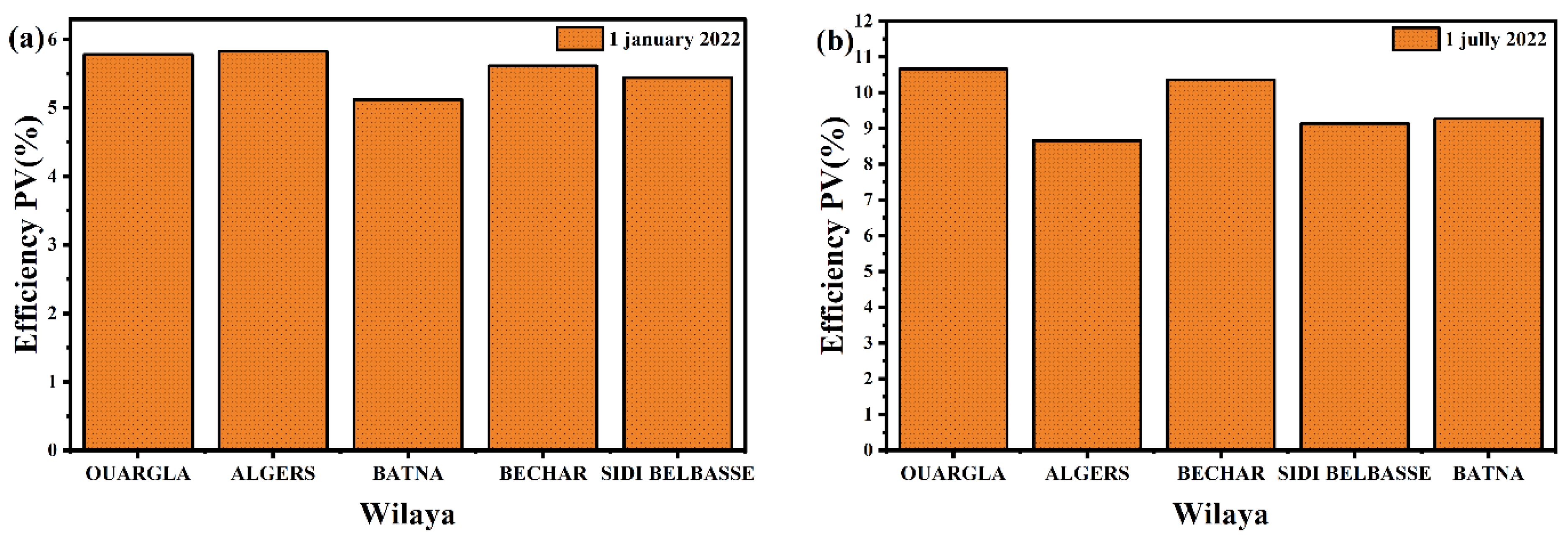
Figure 4 shows a PV efficiency evolution at different sites in Algeria during 1 January and 1 July. It is clear that the Ouargla site has the highest PV yield in the two selected days and the efficiency is more important in July than January.
Figure 4. Daily PV efficiency at different sites in Algeria on (a) 1 January and (b) 1 July 2022.
This results is signified by geographic and climate data which favour the site of Ouargla.

3.2. Monthly Evolution of Solar Radiation and Power PV

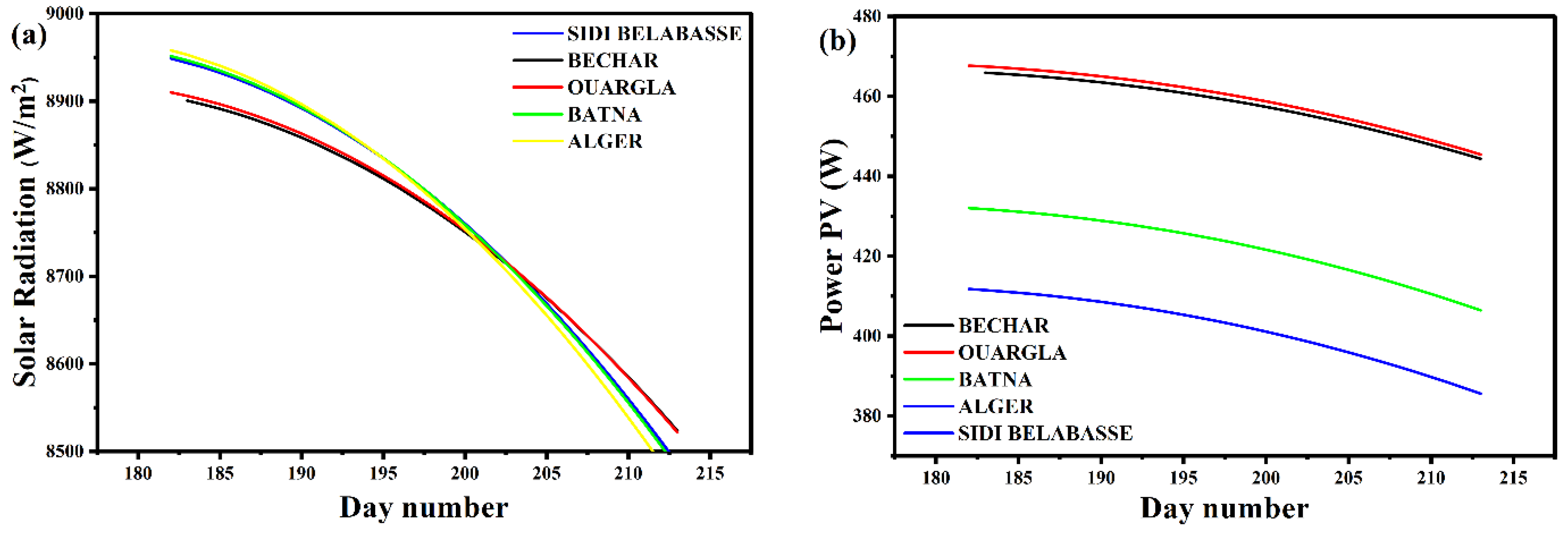
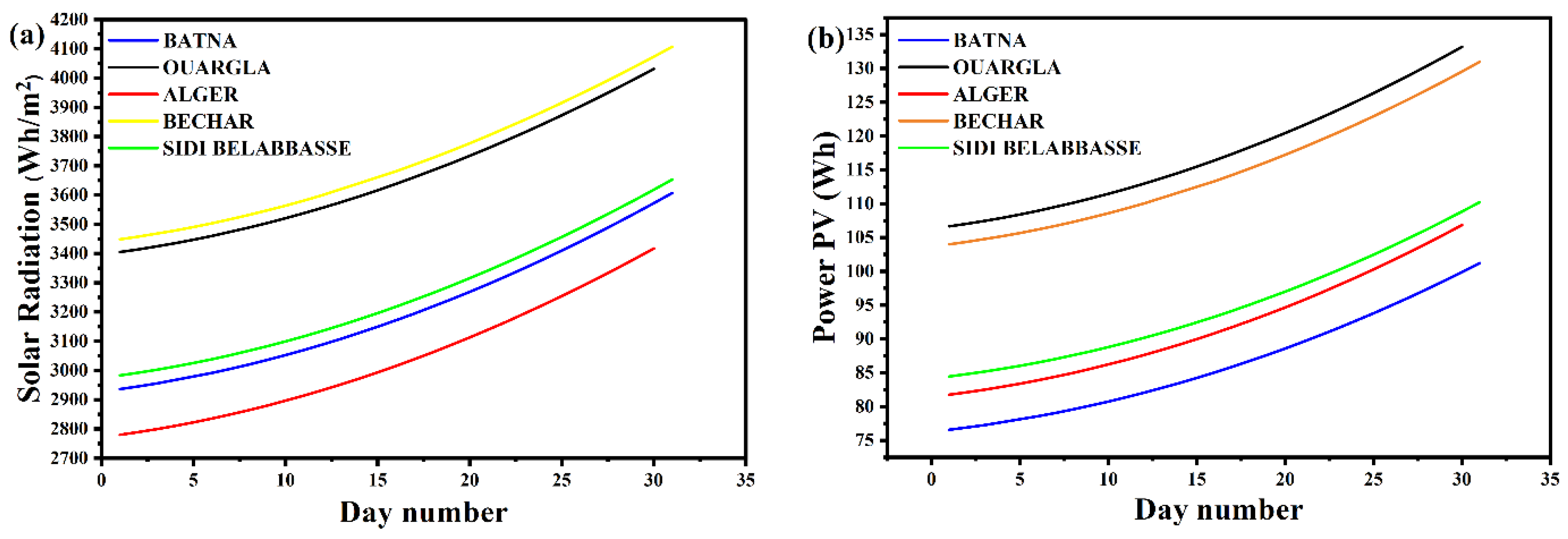
Figure 5 and Figure 6 present solar radiation and power PV evolution at different sites in Algeria in January and July.
Figure 5. Monthly evolution of (a) solar radiation and (b) power PV at different sites in Algeria (January 2022).
Figure 6. Monthly evolution of (a) solar radiation and (b) power PV at different sites in Algeria (July 2022).
In January, we see that solar radiation and power PV increase between the 1st and 31st days of the year, but in July, radiation and power decrease between the 182nd and 213th days of the year. The day length between the 1 and 31 January has increased, in contrast to July where the day length has decreased between 1 and 31 July, resulting in a significant change in radiation and PV power in both months.
Thus, PV energy production is more important in July, because the day length is longer, so solar radiation is more productive than in January.
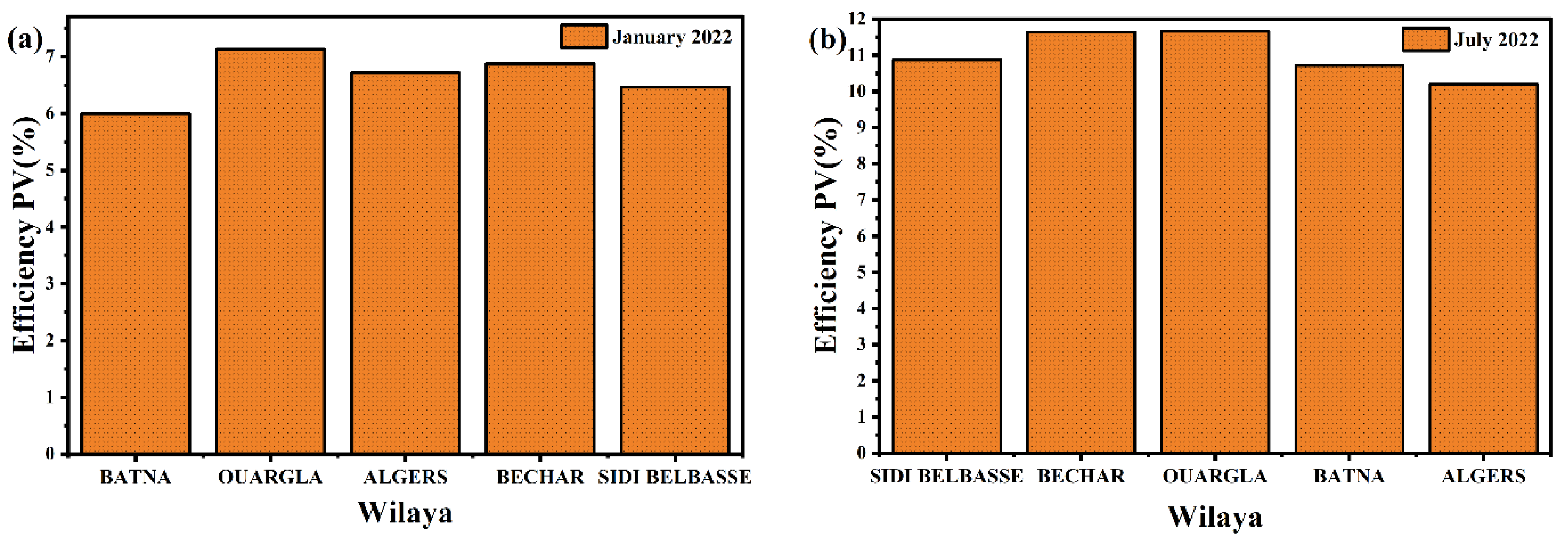
Figure 7 shows PV efficiency evolution at different sites in Algeria in the months of January and July. It is clear that the site of Ouargla has the highest value for both months, and the PV efficiency is more important in July than that obtained in January.
Figure 7. Monthly PV efficiency at different sites in Algeria in (a) January 2022 and (b) July 2022.

4. Conclusions

Algeria is initiating a green energy dynamic by launching an ambitious programme to develop renewable energy and energy efficiency. This vision of the Algerian government is based on a strategy focused on the development of inexhaustible resources, such as solar power, and their use to diversify energy sources and prepare Algeria for the future. Through the combination of initiative and intelligence, Algeria is embarking on a new sustainable energy era.
This research was carried out across the Algerian territory where we selected five sites of different geographical situations: Ouargla, Algers, Bechar, Sidi Bel Abbès and Batna. It focused on the study of the influence of the geographical site on photovoltaic production.
The study showed that when climatic conditions are different, photovoltaic production will also be different. Significant daily and monthly fluctuations in production were observed.
The results showed that the site of Ouargla, located in the south-east of Algeria, has favorable conditions of temperature, radiation, and geographical coordinates for good photovoltaic production, especially in summer during the month of July, considered as the warmest month. Studies of the production of photovoltaic electricity are necessary to see how the behavior and adaptation in conditions of sites, as well as the climatic and social condition, effects on working and profitability for a long time. This photovoltaic system faces many problems of adaptation, and to be reliable and competitive optimizes their cost.

Author Contributions

Conceptualization, K.B., S.E.L., N.C., A.B., F.M. and M.R.O.; methodology, K.B., A.B., N.C., G.A.M.A., H.M.M., M.M.R. and F.M.; validation, K.B., A.B., S.E.L., N.C., H.M.M., M.M.R. and F.M.; investigation, A.B., G.A.M.A., F.M. and N.C.; resources, K.B., A.B., H.M.M., M.M.R. and F.M.; data curation, K.B., A.B., G.A.M.A., F.M. and N.C.; writing—original draft preparation, K.B., S.E.L., N.C., A.B., M.R.O., G.A.M.A. and F.M.; writing—review and editing, A.B., N.C., G.A.M.A., H.M.M., M.M.R. and F.M.; supervision, A.B., S.E.L., N.C., F.M. and M.R.O. All authors have read and agreed to the published version of the manuscript.

Funding

This research received no external funding.

Institutional Review Board Statement

Not applicable.

Data Availability Statement

Not applicable.

Conflicts of Interest

The authors declare no conflict of interest.

References

  1. Sørensen, B. Total Life-Cycle Assessment of PEM Fuel Cell Car; World Hydrogen Energy Association: Rosklilde, Denmark, 2004. [Google Scholar]
  2. Wouters, F.P.H.; Loois, G.; Van der Weiden, T.C.J.; Adam, H.G.; Rentz, H. Joint implementation and the role of utilities in the dissemination of solar home systems in developing countries. In Proceedings of the 14th European Photovoltaic Solar Energy Conference, Barcelona, Spain, 30 June–4 July 1997. [Google Scholar]
  3. Benatiallah, A.; Mostefaou, R.; Bradja, K. Performance of photovoltaic solar system in Algeria. Desalination 2007, 209, 39–42. [Google Scholar] [CrossRef]
  4. Saheb-Koussa, D.; Haddadi, M.; Belhamel, M. Economic and technical study of a hybrid system (wind–photovoltaic–diesel) for rural electrification in Algeria. Appl. Energy 2009, 86, 1024–1030. [Google Scholar] [CrossRef]
  5. Capderou, M. Atlas solaire de l’Algérie, tome 1. Rev. Energ. Ren. 1999, 2, 69–85. [Google Scholar]
  6. Algeria National Meteorological Office. Available online: https://www.aps.dz/en/algeria/tag/NationalMeteorologicalOffice (accessed on 1 January 2022).
  7. Yaden, M.F.; Gaamouche, R.; Hirech, K.; Melhaoui, M.; Baghaz, E.H.; Kassmi, K. Conception, réalisation et caractérisation d’un système photovoltaïque menu des commandes de contrôle et d’acquisition numériques. Nat. Technol. 2014, 10, 29. [Google Scholar]
  8. Braun, H.; Buddha, S.T.; Krishnan, V.; Tepedelenlioglu, C.; Spanias, A.; Banavar, M.; Srinivasan, D. Topology reconfiguration for optimization of photovoltaic array output. Sustain. Energy Grids Netw. 2016, 6, 58–69. [Google Scholar] [CrossRef]
  9. Parida, B.; Iniyan, S.; Goic, R. A review of solar photovoltaic technologies. Renew. Sustain. Energy Rev. 2011, 15, 1625–1636. [Google Scholar] [CrossRef]
  10. Tributsch, H. Photovoltaic hydrogen generation. Int. J. Hydrogen Energy 2008, 33, 5911–5930. [Google Scholar] [CrossRef]
  11. Royer, J.; Djiako, T.; Schiller, E.; Sy, B.S. Pompage Photovoltaïque; IEPF; University of Ottawa; EIER; CREPA: Ottawa, ON, Canada, 1998; ISBN 2-89481-006-7. [Google Scholar]
Publisher’s Note: MDPI stays neutral with regard to jurisdictional claims in published maps and institutional affiliations.

Article Metrics

Citations

Article Access Statistics

Multiple requests from the same IP address are counted as one view.