


Preparation and Characterisation of Cellulose Nanocrystal/Alginate/Polyethylene Glycol Diacrylate (CNC/Alg/PEGDA) Hydrogel Using Double Network Crosslinking Technique for Bioprinting Application

 ,
,  ,
,
Abstract
1. Introduction
2. Materials and Methods
2.1. Materials
2.2. Isolation and Extraction of Cellulose Nanocrystal
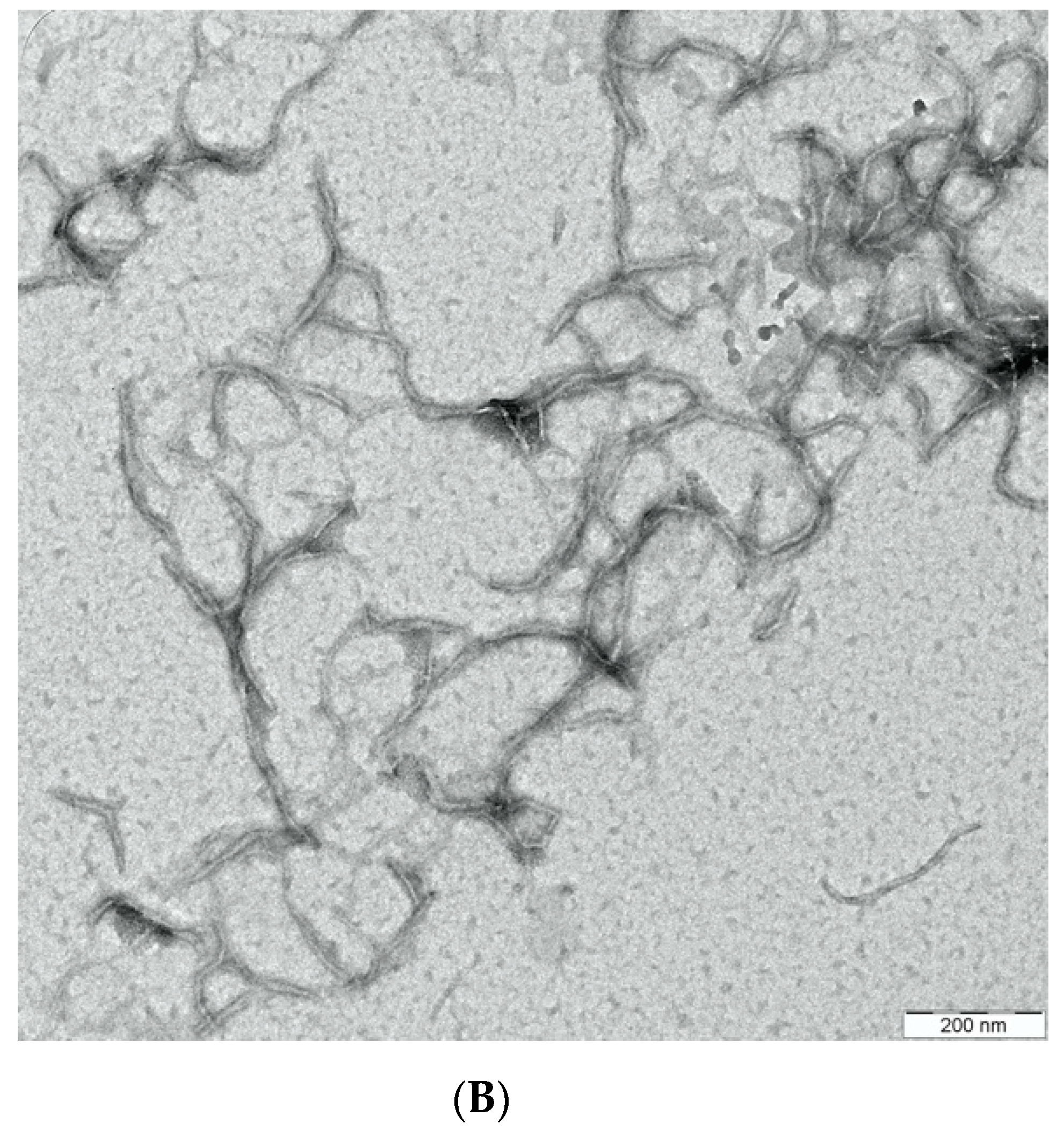
Characterisation Using TEM Analysis
2.3. Preparation and Formulation of CNC/Alg/PEGDA Scaffolds
2.4. Rheological Analysis of CNC/Alg/PEGDA Formulations
2.5. Compression Tests of Mechanical Properties of CNC/Alg/PEGDA Construct
2.6. Swelling Studies of CNC/Alg/PEGDA Constructs
2.7. Morphology of CNC/Alg/PEGDA 3D Constructs
3. Results and Discussion
3.1. Yield and Properties of Cellulose Nanocrystrals
3.2. Rheological Analysis of CNC/Alg/PEGDA Formulations
3.2.1. Shear-Thinning Properties of Pre-Gel Formulations
3.2.2. Determination of Storage and Loss Moduli of CNC/Alg/PEGDA Gelled Formulations
3.3. CNC/Alg/PEGDA Scaffold
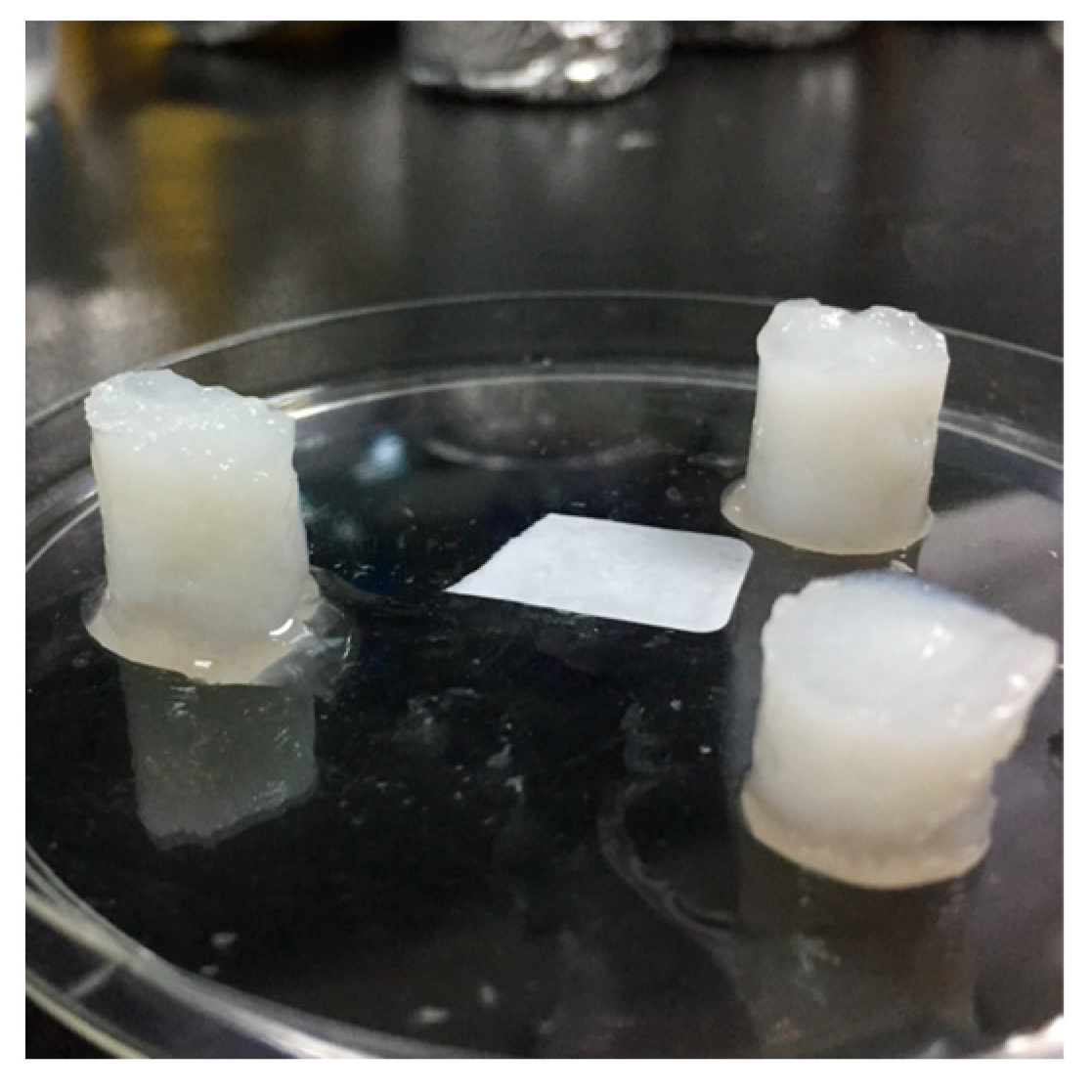
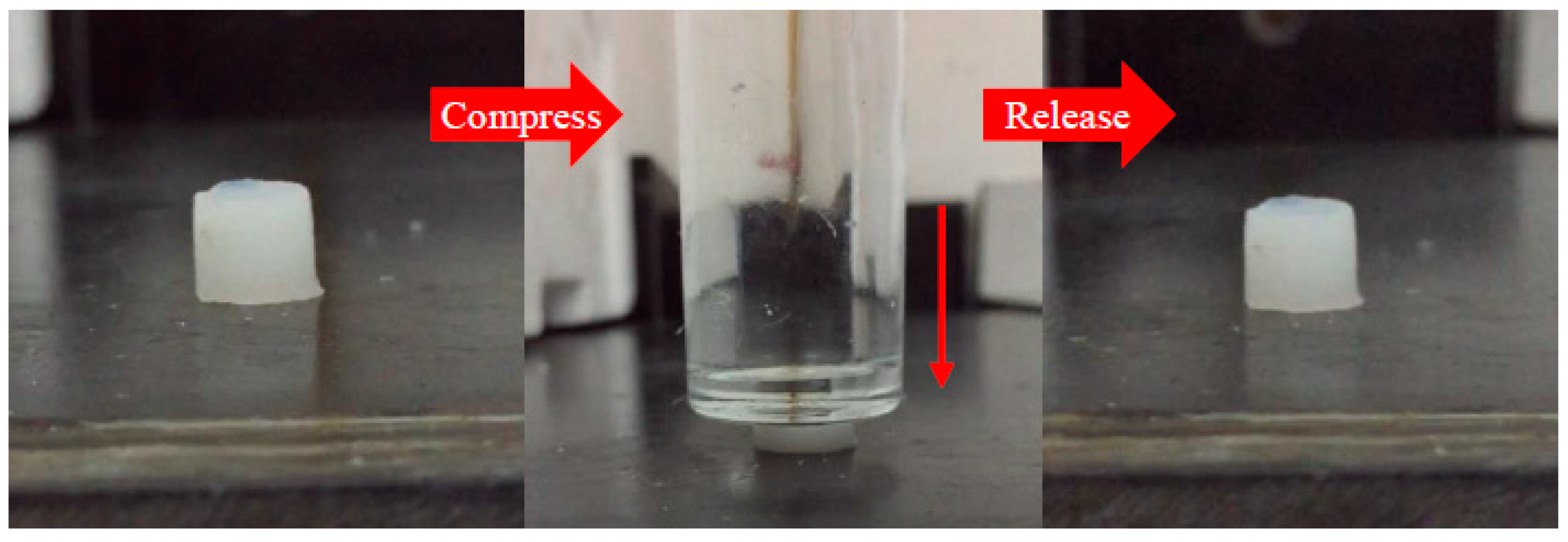
3.3.1. Physical Characteristics and Elastic-like Structure of CNC/Alg/PEGDA Scaffold
3.3.2. Swelling Properties of CNC/Alg/PEGDA Constructs
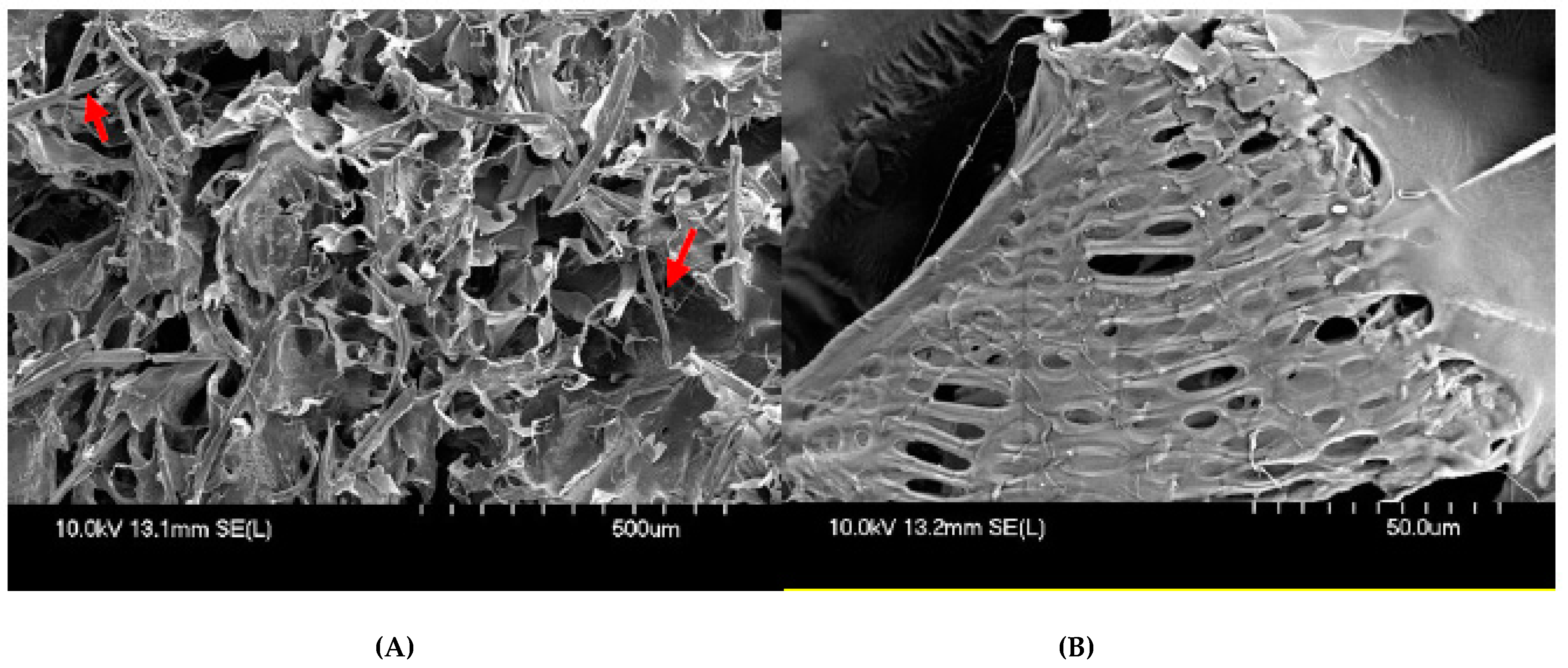
3.3.3. Morphology of CNC/Alg/PEGDA 3D Constructs
4. Conclusions
Supplementary Materials
Author Contributions
Funding
Institutional Review Board Statement
Informed Consent Statement
Data Availability Statement
Acknowledgments
Conflicts of Interest
References
- Sophia Fox, A.J.; Bedi, A.; Rodeo, S.A. The basic science of articular cartilage: Structure, composition, and function. Sports Health 2009, 1, 461–468. [Google Scholar] [CrossRef] [Scilit]
- Medvedeva, E.V.; Grebenik, E.A.; Gornostaeva, S.N.; Telpuhov, V.I.; Lychagin, A.V.; Timashev, P.S.; Chagin, A.S. Repair of Damaged Articular Cartilage: Current Approaches and Future Directions. Int. J. Mol. Sci. 2018, 19, 2366. [Google Scholar] [CrossRef] [Scilit]
- Cui, X.; Breitenkamp, K.; Finn, M.G.; Lotz, M.; D’Lima, D.D. Direct human cartilage repair using three-dimensional bioprinting technology. Tissue Eng.-Part A 2012, 18, 1304–1312. [Google Scholar] [CrossRef] [Scilit]
- Żylińska, B.; Silmanowicz, P.; Sobczyńska-Rak, A.; Jarosz, Ł.; Szponder, T. Treatment of Articular Cartilage Defects: Focus on Tissue Engineering. Vivo 2018, 32, 1289–1300. [Google Scholar] [CrossRef] [Scilit]
- Agarwal, S.; Saha, S.; Balla, V.K.; Pal, A.; Barui, A.; Bodhak, S. Current Developments in 3D Bioprinting for Tissue and Organ Regeneration—A Review. Front. Mech. Eng. 2020, 6, 90. [Google Scholar] [CrossRef] [Scilit]
- Morgan, F.L.C.; Moroni, L.; Baker, M.B. Dynamic Bioinks to Advance Bioprinting. Adv. Health Mater. 2020, 9, 1901798. [Google Scholar] [CrossRef] [Scilit]
- Gu, Z.; Fu, J.; Lin, H.; He, Y. Development of 3D bioprinting: From printing methods to biomedical applications. Asian J. Pharm. Sci. 2019, 15, 529–557. [Google Scholar] [CrossRef] [Scilit]
- Xu, T.; Binder, K.W.; Albanna, M.Z.; Dice, D.; Zhao, W.; Yoo, J.J.; Atala, A. Hybrid printing of mechanically and biologically improved constructs for cartilage tissue engineering applications. Biofabrication 2013, 5, 015001. [Google Scholar] [CrossRef] [Scilit]
- Axpe, E.; Oyen, M.L. Applications of Alginate-Based Bioinks in 3D Bioprinting. Int. J. Mol. Sci. 2016, 17, 1976. [Google Scholar] [CrossRef] [Scilit]
- Hospodiuk, M.; Dey, M.; Sosnoski, D.; Ozbolat, I.T. The bioink: A comprehensive review on bioprintable materials. Biotechnol. Adv. 2017, 35, 217–239. [Google Scholar] [CrossRef] [Scilit]
- Li, H.; Tan, C.; Li, L. Review of 3D printable hydrogels and constructs. Mater. Des. 2018, 159, 20–38. [Google Scholar] [CrossRef] [Scilit]
- Hoffman, A.S. Hydrogels for biomedical applications. Adv. Drug Deliv. Rev. 2012, 64, 18–23. [Google Scholar] [CrossRef] [Scilit]
- Chimene, D.; Kaunas, R.; Gaharwar, A.K. Hydrogel Bioink Reinforcement for Additive Manufacturing: A Focused Review of Emerging Strategies. Adv. Mater. 2019, 32, e1902026. [Google Scholar] [CrossRef] [Scilit] [PubMed]
- Gauss, C.; Pickering, K.L.; Muthe, L.P. The use of cellulose in bio-derived formulations for 3D/4D printing: A review. Compos. Part C Open Access 2021, 4, 100113. [Google Scholar] [CrossRef] [Scilit]
- Shankaran, D.R. Cellulose Nanocrystals for Health Care Applications. In Applications of Nanomaterials; Woodhead Publishing: Cambridge, UK, 2018; pp. 415–459. [Google Scholar] [CrossRef] [Scilit]
- Han, C.; Wang, X.; Ni, Z.; Ni, Y.; Huan, W.; Lv, Y.; Bai, S. Effects of nanocellulose on Alginate/Gelatin Bioinks for Extrusion-based 3D Printing. BioResources 2020, 15, 7357–7373. [Google Scholar] [CrossRef] [Scilit]
- Müller, M.; Öztürk, E.; Arlov, Ø.; Gatenholm, P.; Zenobi-Wong, M. Alginate Sulfate–Nanocellulose Bioinks for Cartilage Bioprinting Applications. Ann. Biomed. Eng. 2017, 45, 210–223. [Google Scholar] [CrossRef] [Scilit]
- Markstedt, K.; Mantas, A.; Tournier, I.; Ávila, H.M.; Hägg, D.; Gatenholm, P. 3D Bioprinting Human Chondrocytes with Nanocellulose–Alginate Bioink for Cartilage Tissue Engineering Applications. Biomacromolecules 2015, 16, 1489–1496. [Google Scholar] [CrossRef] [Scilit]
- Nguyen, D.; Hägg, D.A.; Forsman, A.; Ekholm, J.; Nimkingratana, P.; Brantsing, C.; Kalogeropoulos, T.; Zaunz, S.; Concaro, S.; Brittberg, M.; et al. Cartilage Tissue Engineering by the 3D Bioprinting of iPS Cells in a Nanocellulose/Alginate Bioink. Sci. Rep. 2017, 7, 658. [Google Scholar] [CrossRef] [Scilit]
- Wu, Y.; Lin, Z.Y.; Wenger, A.C.; Tam, K.C.; Tang, X. 3D bioprinting of liver-mimetic construct with alginate/cellulose nanocrystal hybrid bioink. Bioprinting 2018, 9, 1–6. [Google Scholar] [CrossRef] [Scilit]
- Hong, S.; Sycks, D.; Chan, H.F.; Lin, S.; Lopez, G.P.; Guilak, F.; Leong, K.W.; Zhao, X. 3D Printing of Highly Stretchable and Tough Hydrogels into Complex, Cellularized Structures. Adv. Mater. 2015, 27, 4035–4040. [Google Scholar] [CrossRef] [Scilit]
- Zhou, W.; Zhang, H.; Liu, Y.; Zou, X.; Shi, J.; Zhao, Y.; Ye, Y.; Yu, Y.; Guo, J. Sodium alginate-polyethylene glycol diacrylate based double network fiber: Rheological properties of fiber forming solution with semi-interpenetrating network structure. Int. J. Biol. Macromol. 2019, 142, 535–544. [Google Scholar] [CrossRef] [Scilit]
- Nguyen, T.; Watkins, K.E.; Kishore, V. Photochemically crosslinked cell-laden methacrylated collagen hydrogels with high cell viability and functionality. J. Biomed. Mater. Res. Part A 2019, 107, 1541–1550. [Google Scholar] [CrossRef] [Scilit]
- Williams, C.G.; Malik, A.N.; Kim, T.K.; Manson, P.N.; Elisseeff, J.H. Variable cytocompatibility of six cell lines with photoinitiators used for polymerizing hydrogels and cell encapsulation. Biomaterials 2005, 26, 1211–1218. [Google Scholar] [CrossRef] [Scilit] [PubMed]
- Fedorovich, N.E.; Oudshoorn, M.H.; van Geemen, D.; Hennink, W.E.; Alblas, J.; Dhert, W.J. The effect of photopolymerization on stem cells embedded in hydrogels. Biomaterials 2009, 30, 344–353. [Google Scholar] [CrossRef] [Scilit]
- Hamid, Z.A.; Lim, K. Evaluation of UV-crosslinked Poly(ethylene glycol) Diacrylate/Poly(dimethylsiloxane) Dimethacrylate Hydrogel: Properties for Tissue Engineering Application. Procedia Chem. 2016, 19, 410–418. [Google Scholar] [CrossRef] [Scilit]
- Liu, S.Q.; Tay, R.; Khan, M.; Ee, P.L.R.; Hedrick, J.L.; Yang, Y.Y. Synthetic hydrogels for controlled stem cell differentiation. Soft Matter 2009, 6, 67–81. [Google Scholar] [CrossRef] [Scilit]
- Fahma, F.; Iwamoto, S.; Hori, N.; Iwata, T.; Takemura, A. Isolation, preparation, and characterization of nanofibers from oil palm empty-fruit-bunch (OPEFB). Cellulose 2010, 17, 977–985. [Google Scholar] [CrossRef] [Scilit]
- Lamaming, J.; Hashim, R.; Sulaiman, O.; Leh, C.P.; Sugimoto, T.; Nordin, N.A. Cellulose nanocrystals isolated from oil palm trunk. Carbohydr. Polym. 2015, 127, 202–208. [Google Scholar] [CrossRef] [Scilit]
- Lu, Y.; He, W.; Cao, T.; Guo, H.; Zhang, Y.; Li, Q.; Shao, Z.; Cui, Y.; Zhang, X. Elastic, Conductive, Polymeric Hydrogels and Sponges. Sci. Rep. 2014, 4, srep05792. [Google Scholar] [CrossRef] [Scilit]
- Hamad, W.Y.; Hu, T.Q. Structure-process-yield interrelations in nanocrystalline cellulose extraction. Can. J. Chem. Eng. 2010, 88, 392–402. [Google Scholar] [CrossRef] [Scilit]
- Wang, Q.Q.; Zhu, J.Y.; Reiner, R.S.; Verrill, S.P.; Baxa, U.; McNeil, S.E. Approaching zero cellulose loss in cellulose nanocrystal (CNC) production: Recovery and characterization of cellulosic solid residues (CSR) and CNC. Cellulose 2012, 19, 2033–2047. [Google Scholar] [CrossRef] [Scilit]
- Phanthong, P.; Reubroycharoen, P.; Hao, X.; Xu, G.; Abudula, A.; Guan, G. Nanocellulose: Extraction and application. Carbon Resour. Convers. 2018, 1, 32–43. [Google Scholar] [CrossRef] [Scilit]
- Islam, M.N.; Rahman, F. Production and modification of nanofibrillated cellulose composites and potential applications. In Green Composites for Automotive Applications; Woodhead Publishing: Cambridge, UK, 2019; pp. 115–141. [Google Scholar]
- Paxton, N.; Smolan, W.; Böck, T.; Melchels, F.; Groll, J.; Jungst, T. Proposal to assess printability of bioinks for extrusion-based bioprinting and evaluation of rheological properties governing bioprintability. Biofabrication 2017, 9, 044107. [Google Scholar] [CrossRef] [Scilit]
- Hou, K.; Li, Y.; Liu, Y.; Zhang, R.; Hsiao, B.S.; Zhu, M. Continuous fabrication of cellulose nanocrystal/poly(ethylene glycol) diacrylate hydrogel fiber from nanocomposite dispersion: Rheology, preparation and characterization. Polymer 2017, 123, 55–64. [Google Scholar] [CrossRef] [Scilit]
- Sultan, S.; Siqueira, G.; Zimmermann, T.; Mathew, A.P. 3D printing of nano-cellulosic biomaterials for medical applications. Curr. Opin. Biomed. Eng. 2017, 2, 29–34. [Google Scholar] [CrossRef] [Scilit]
- Jessop, Z.M.; Al-Sabah, A.; Gao, N.; Kyle, S.; Thomas, B.; Badiei, N.; Hawkins, K.; Whitaker, I.S. Printability of pulp derived crystal, fibril and blend nanocellulose-alginate bioinks for extrusion 3D bioprinting. Biofabrication 2019, 11, 045006. [Google Scholar] [CrossRef] [Scilit]
- Al-Sabah, A.; Burnell, S.; Simoes, I.N.; Jessop, Z.; Badiei, N.; Blain, E.; Whitaker, I.S. Structural and mechanical characterization of crosslinked and sterilised nanocellulose-based hydrogels for cartilage tissue engineering. Carbohydr. Polym. 2019, 212, 242–251. [Google Scholar] [CrossRef] [Scilit]
- Maitra, J.; Shukla, V.K. Cross-linking in hydrogels—A review. Am. J. Polym. Sci. 2014, 4, 25–31. [Google Scholar]
- Tang, A.; Wang, Q.; Zhao, S.; Liu, W. Fabrication of nanocellulose/PEGDA hydrogel by 3D printing. Rapid Prototyp. J. 2018, 24, 1265–1271. [Google Scholar] [CrossRef] [Scilit]
- Mahanani, E.S.; Herningtyas, E.H.; Bachtiar, I.; Ana, I.D. Degradation profile and fibroblast proliferation on synthetic coral scaffold for bone regeneration. In AIP Conference Proceedings; AIP Publishing LLC: New York, NY, USA, 2016; Volume 1755, p. 160007. [Google Scholar] [CrossRef] [Scilit]
- Siqueira, P.; Siqueira, É.; De Lima, A.E.; Siqueira, G.; Pinzón-Garcia, A.D.; Lopes, A.P.; Segura, M.E.; Isaac, A.; Pereira, F.V.; Botaro, V.R. Three-dimensional stable alginate-nanocellulose gels for biomedical applications: Towards tunable mechanical properties and cell growing. Nanomaterials 2019, 9, 78. [Google Scholar] [CrossRef] [Scilit]
- Bociaga, D.; Bartniak, M.; Grabarczyk, J.; Przybyszewska, K. Sodium Alginate/Gelatine Hydrogels for Direct Bioprinting—The Effect of Composition Selection and Applied Solvents on the Bioink Properties. Materials 2019, 12, 2669. [Google Scholar] [CrossRef] [Scilit] [PubMed]
- Liu, T.; Lu, S.; Peng, X.; Jiao, C.; Zhang, J.; Han, M.; Wang, H. Tough, Stimuli-Responsive, and Biocompatible Hydrogels with Very High Water Content. Macromol. Rapid Commun. 2018, 39, e1800474. [Google Scholar] [CrossRef] [Scilit]
- Armstrong, C.G.; Mow, V.C. Variations in the intrinsic mechanical properties of human articular cartilage with age, degeneration, and water content. J. Bone Jt. Surg. Am. 1982, 64, 88–94. [Google Scholar] [CrossRef] [Scilit]
- Wan, L.Q.; Jiang, J.; Arnold, D.E.; Guo, X.E.; Lu, H.H.; Mow, V.C. Calcium Concentration Effects on the Mechanical and Biochemical Properties of Chondrocyte-Alginate Constructs. Cell. Mol. Bioeng. 2008, 1, 93–102. [Google Scholar] [CrossRef] [Scilit]
- Cidonio, G.; Cooke, M.; Glinka, M.; Dawson, J.; Grover, L.; Oreffo, R. Printing bone in a gel: Using nanocomposite bioink to print functionalised bone scaffolds. Mater. Today Bio 2019, 4, 100028. [Google Scholar] [CrossRef] [Scilit] [PubMed]
- Hussain, I.; Sayed, S.M.; Liu, S.; Oderinde, O.K.; Kang, M.; Yao, F.; Fu, G. Enhancing the mechanical properties and self-healing efficiency of hydroxyethyl cellulose-based conductive hydrogels via supramolecular interactions. Eur. Polym. J. 2018, 105, 85–94. [Google Scholar] [CrossRef] [Scilit]
- Hatano, K.; Inoue, H.; Kojo, T.; Matsunaga, T.; Tsujisawa, T.; Uchiyama, C.; Uchida, Y. Effect of surface roughness on proliferation and alkaline phosphatase expression of rat calvarial cells cultured on polystyrene. Bone 1999, 25, 439–445. [Google Scholar] [CrossRef] [Scilit]
- Bružauskaitė, I.; Bironaitė, D.; Bagdonas, E.; Bernotienė, E. Scaffolds and cells for tissue regeneration: Different scaffold pore sizes—Different cell effects. Cytotechnology 2016, 68, 355–369. [Google Scholar] [CrossRef] [Scilit]
- Zhang, X.; Yu, Y.; Jiang, Z.; Wang, H. The effect of freezing speed and hydrogel concentration on the microstructure and compressive performance of bamboo-based cellulose aerogel. J. Wood Sci. 2015, 61, 595–601. [Google Scholar] [CrossRef] [Scilit]
- Koch, M.; Włodarczyk-Biegun, M.K. Faithful scanning electron microscopic (SEM) visualization of 3D printed alginate-based scaffolds. Bioprinting 2020, 20, e00098. [Google Scholar] [CrossRef] [Scilit]
 ) F4: [4% CNC: 1% Alg: 40% PEGDA]; (
 ) F2: [4% CNC: 1% Alg: 10% PEGDA]; (
 ) F3: [1% Alg: 40% PEGDA]; and (
 ) F1: [1% Alg: 10% PEGDA]. Data points represent actual data, and lines are power-law model fits.
) F4: [4% CNC: 1% Alg: 40% PEGDA]; () F2: [4% CNC: 1% Alg: 10% PEGDA]; () F3: [1% Alg: 40% PEGDA]; and () F1: [1% Alg: 10% PEGDA]. Data points represent actual data, and lines are power-law model fits.
) F1: [1% Alg: 10% PEGDA]. Data points represent actual data, and lines are power-law model fits.
) F4: [4% CNC: 1% Alg: 40% PEGDA]; () F2: [4% CNC: 1% Alg: 10% PEGDA]; () F3: [1% Alg: 40% PEGDA]; and () F1: [1% Alg: 10% PEGDA]. Data points represent actual data, and lines are power-law model fits.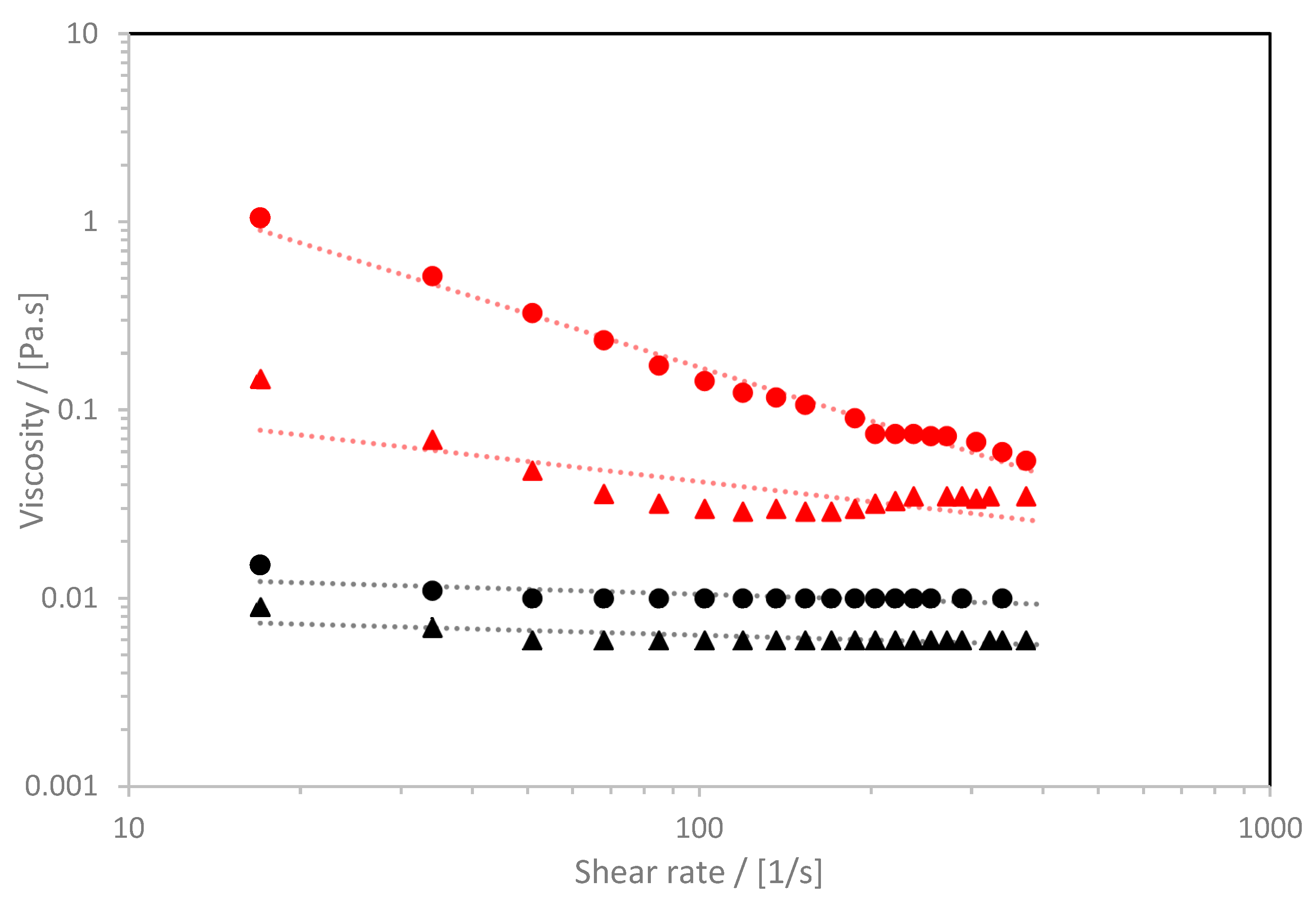
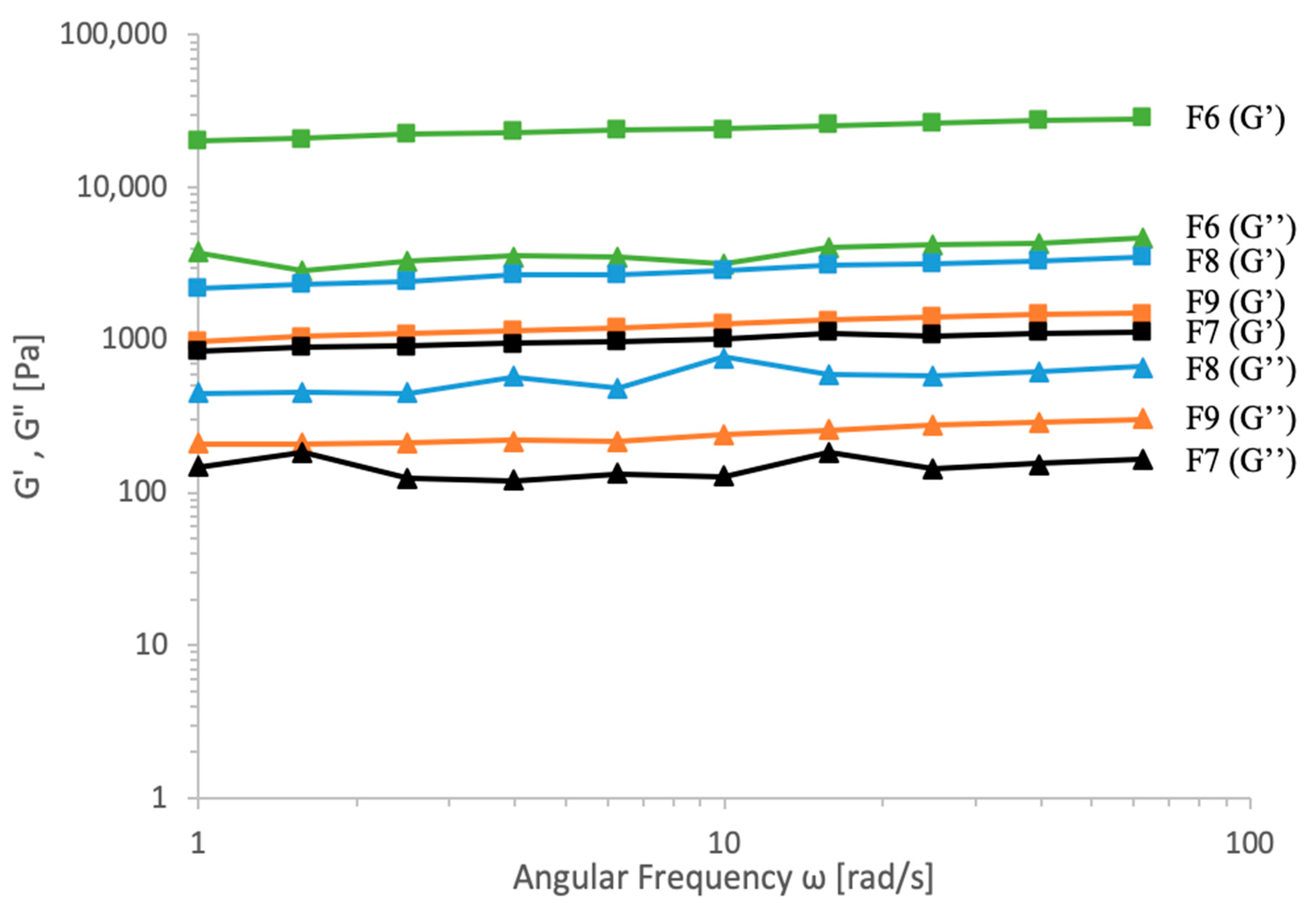
 ) F7: [4% Alg: 40% PEGDA; (
 ) F8: [4% CNC: 4% Alg: 40% PEGDA]; () F6: [4% CNC: 4% Alg: 10% PEGDA]; (
 ) F9: [2% CNC: 2.5% Alg: 25% PEGDA]; and () F5: [4% Alg: 10% PEGDA]. Data points represent actual data, and lines are power-law model fits.
) F7: [4% Alg: 40% PEGDA; () F8: [4% CNC: 4% Alg: 40% PEGDA]; () F6: [4% CNC: 4% Alg: 10% PEGDA]; () F9: [2% CNC: 2.5% Alg: 25% PEGDA]; and () F5: [4% Alg: 10% PEGDA]. Data points represent actual data, and lines are power-law model fits.
) F9: [2% CNC: 2.5% Alg: 25% PEGDA]; and () F5: [4% Alg: 10% PEGDA]. Data points represent actual data, and lines are power-law model fits.
) F7: [4% Alg: 40% PEGDA; () F8: [4% CNC: 4% Alg: 40% PEGDA]; () F6: [4% CNC: 4% Alg: 10% PEGDA]; () F9: [2% CNC: 2.5% Alg: 25% PEGDA]; and () F5: [4% Alg: 10% PEGDA]. Data points represent actual data, and lines are power-law model fits.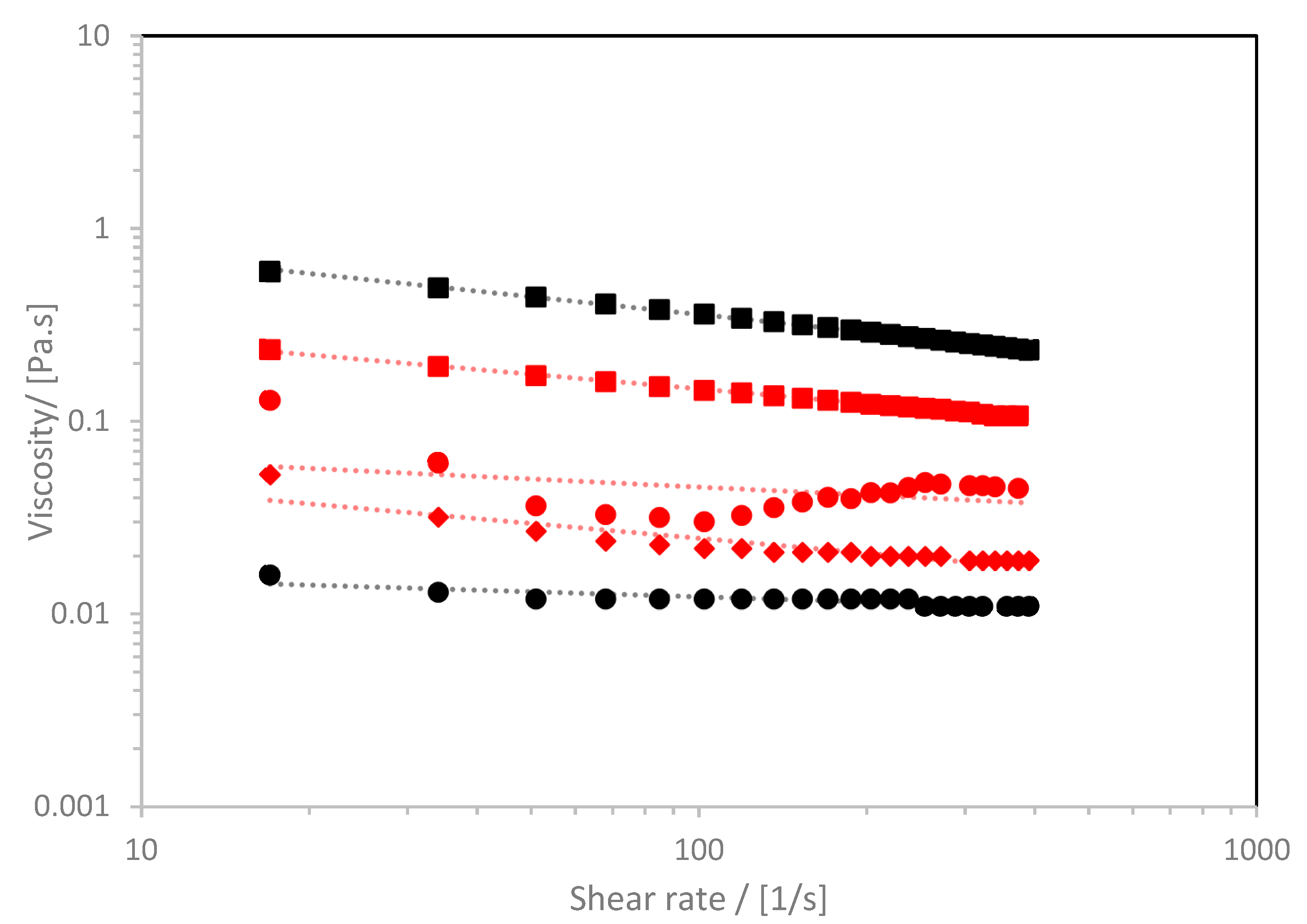

| Formulation | CNC% (w/v) | Alg% (w/v) | PEGDA% (v/v) |
|---|---|---|---|
| F1 | 0 | 1 | 10 |
| F2 | 4 | 1 | 10 |
| F3 | 0 | 1 | 40 |
| F4 | 4 | 1 | 40 |
| F5 | 0 | 4 | 10 |
| F6 | 4 | 4 | 10 |
| F7 | 0 | 4 | 40 |
| F8 | 4 | 4 | 40 |
| F9 | 2 | 2.5 | 25 |
| Formulation | CNC (% w/v) | Alginate (% w/v) | PEGDA (% v/v) | Power-Law Index (η) | Consistency Index, K (Pa) |
|---|---|---|---|---|---|
| 1 | 0 | 1 | 10 | 0.916 | 0.0094 |
| 2 | 4 | 1 | 10 | 0.645 | 0.2135 |
| 3 | 0 | 1 | 40 | 0.912 | 0.0157 |
| 4 | 4 | 1 | 40 | 0.054 | 13.15 |
| 5 | 0 | 4 | 10 | 0.913 | 0.0183 |
| 6 | 4 | 4 | 10 | 0.861 | 0.0863 |
| 7 | 0 | 4 | 40 | 0.696 | 1.4541 |
| 8 | 4 | 4 | 40 | 0.747 | 0.4719 |
| 9 | 2 | 2.5 | 25 | 0.744 | 0.0805 |
| Formulation | CNC (% w/v) | Alg (% w/v) | PEGDA (% v/v) | Equilibrium Water Content (%) | Equilibrium Swelling Ratio |
|---|---|---|---|---|---|
| 1 | 0 | 1 | 10 | 95.8 | 25.37 |
| 2 | 4 | 1 | 10 | 91.9 | 12.30 |
| 3 | 0 | 1 | 40 | 85.1 | 7.43 |
| 4 | 4 | 1 | 40 | 86.9 | 7.62 |
| 5 | 0 | 4 | 10 | 82.3 | 5.67 |
| 6 | 4 | 4 | 10 | 84.0 | 6.25 |
| 7 | 0 | 4 | 40 | 80.2 | 5.32 |
| 8 | 4 | 4 | 40 | 79.5 | 4.88 |
| 9 | 2 | 2.5 | 25 | 86.1 | 7.23 |
Publisher’s Note: MDPI stays neutral with regard to jurisdictional claims in published maps and institutional affiliations. |
© 2022 by the authors. Licensee MDPI, Basel, Switzerland. This article is an open access article distributed under the terms and conditions of the Creative Commons Attribution (CC BY) license (https://creativecommons.org/licenses/by/4.0/).
Share and Cite
Asohan, A.W.; Hashim, R.; Ku Ishak, K.M.; Abdul Hamid, Z.A.; Jasme, N.; Bustami, Y. Preparation and Characterisation of Cellulose Nanocrystal/Alginate/Polyethylene Glycol Diacrylate (CNC/Alg/PEGDA) Hydrogel Using Double Network Crosslinking Technique for Bioprinting Application. Appl. Sci. 2022, 12, 771. https://doi.org/10.3390/app12020771
Asohan AW, Hashim R, Ku Ishak KM, Abdul Hamid ZA, Jasme N, Bustami Y. Preparation and Characterisation of Cellulose Nanocrystal/Alginate/Polyethylene Glycol Diacrylate (CNC/Alg/PEGDA) Hydrogel Using Double Network Crosslinking Technique for Bioprinting Application. Applied Sciences. 2022; 12(2):771. https://doi.org/10.3390/app12020771
Chicago/Turabian StyleAsohan, Anusha Wei, Rokiah Hashim, Ku Marsilla Ku Ishak, Zuratul Ain Abdul Hamid, Nurshafiqah Jasme, and Yazmin Bustami. 2022. "Preparation and Characterisation of Cellulose Nanocrystal/Alginate/Polyethylene Glycol Diacrylate (CNC/Alg/PEGDA) Hydrogel Using Double Network Crosslinking Technique for Bioprinting Application" Applied Sciences 12, no. 2: 771. https://doi.org/10.3390/app12020771
APA StyleAsohan, A. W., Hashim, R., Ku Ishak, K. M., Abdul Hamid, Z. A., Jasme, N., & Bustami, Y. (2022). Preparation and Characterisation of Cellulose Nanocrystal/Alginate/Polyethylene Glycol Diacrylate (CNC/Alg/PEGDA) Hydrogel Using Double Network Crosslinking Technique for Bioprinting Application. Applied Sciences, 12(2), 771. https://doi.org/10.3390/app12020771

