Article

Urban Traffic Congestion State Recognition Supporting Algorithm Research on Vehicle Wireless Positioning in Vehicle–Road Cooperative Environment
1
China Academy of Transportation Sciences, Beijing 100029, China
2
School of Traffic and Transportation, Beijing Jiaotong University, Beijing 100044, China
*
Author to whom correspondence should be addressed.
Appl. Sci. 2022, 12(2), 770; https://doi.org/10.3390/app12020770
Submission received: 3 December 2021 / Revised: 29 December 2021 / Accepted: 10 January 2022 / Published: 13 January 2022
(This article belongs to the Section Transportation and Future Mobility)

Abstract

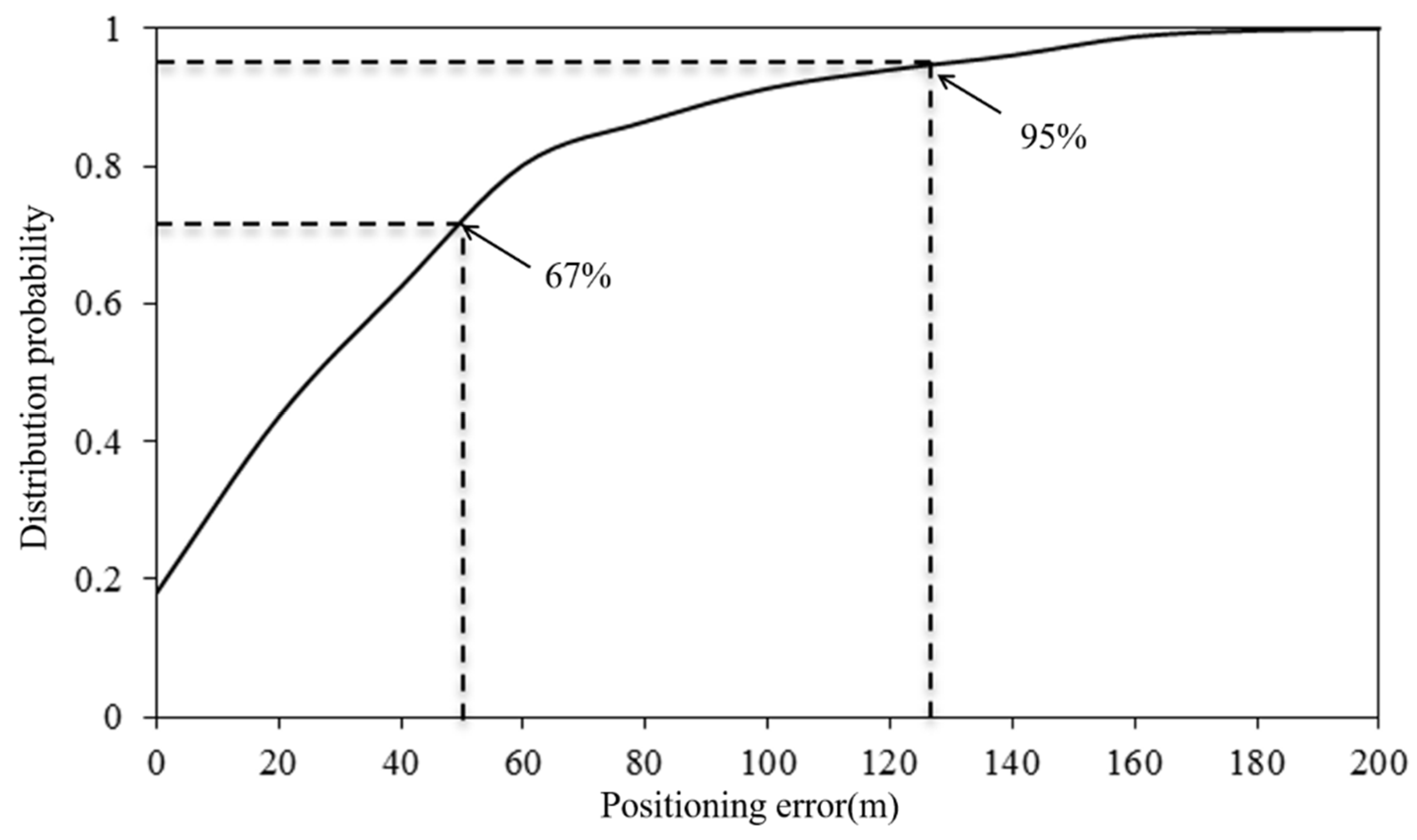
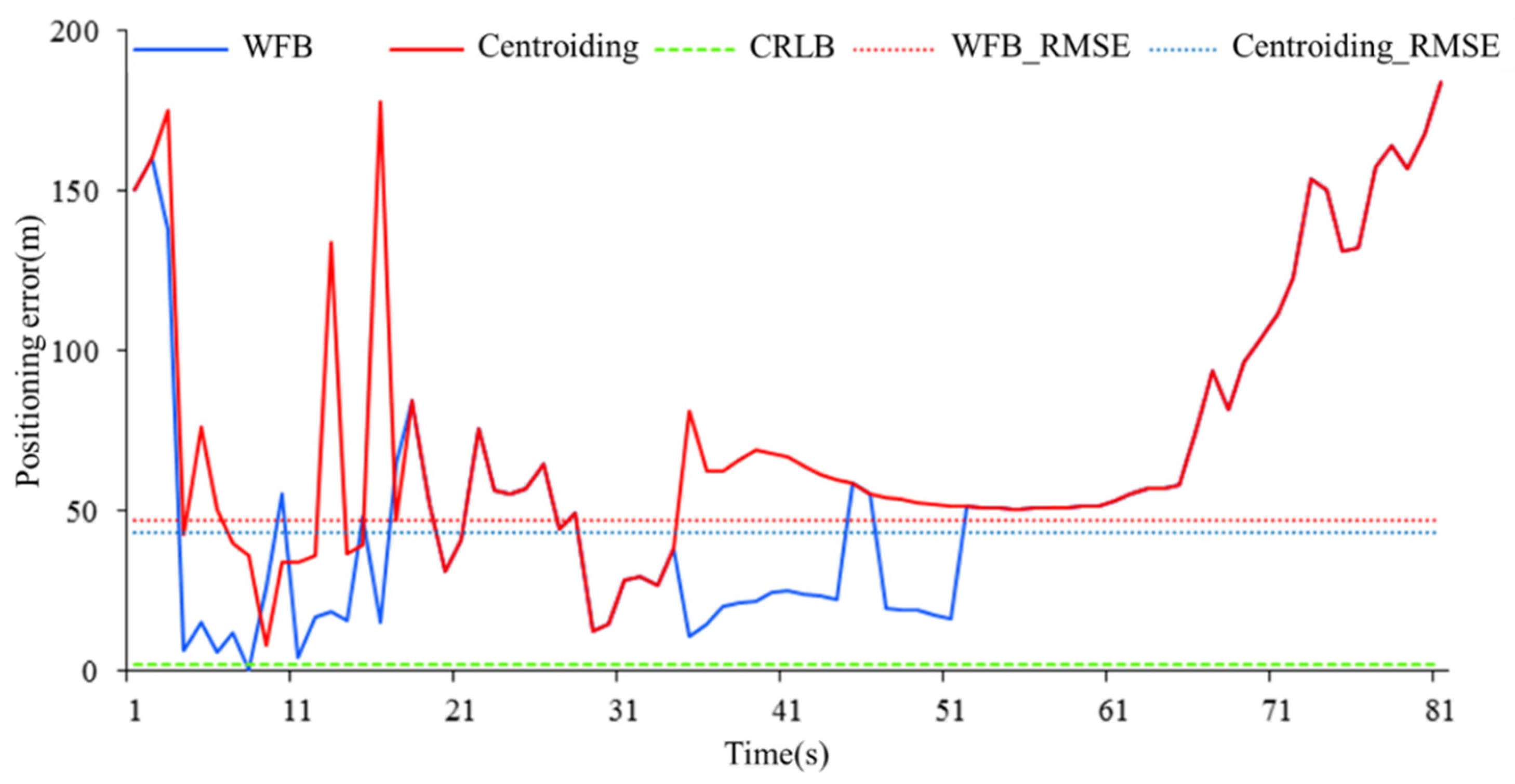
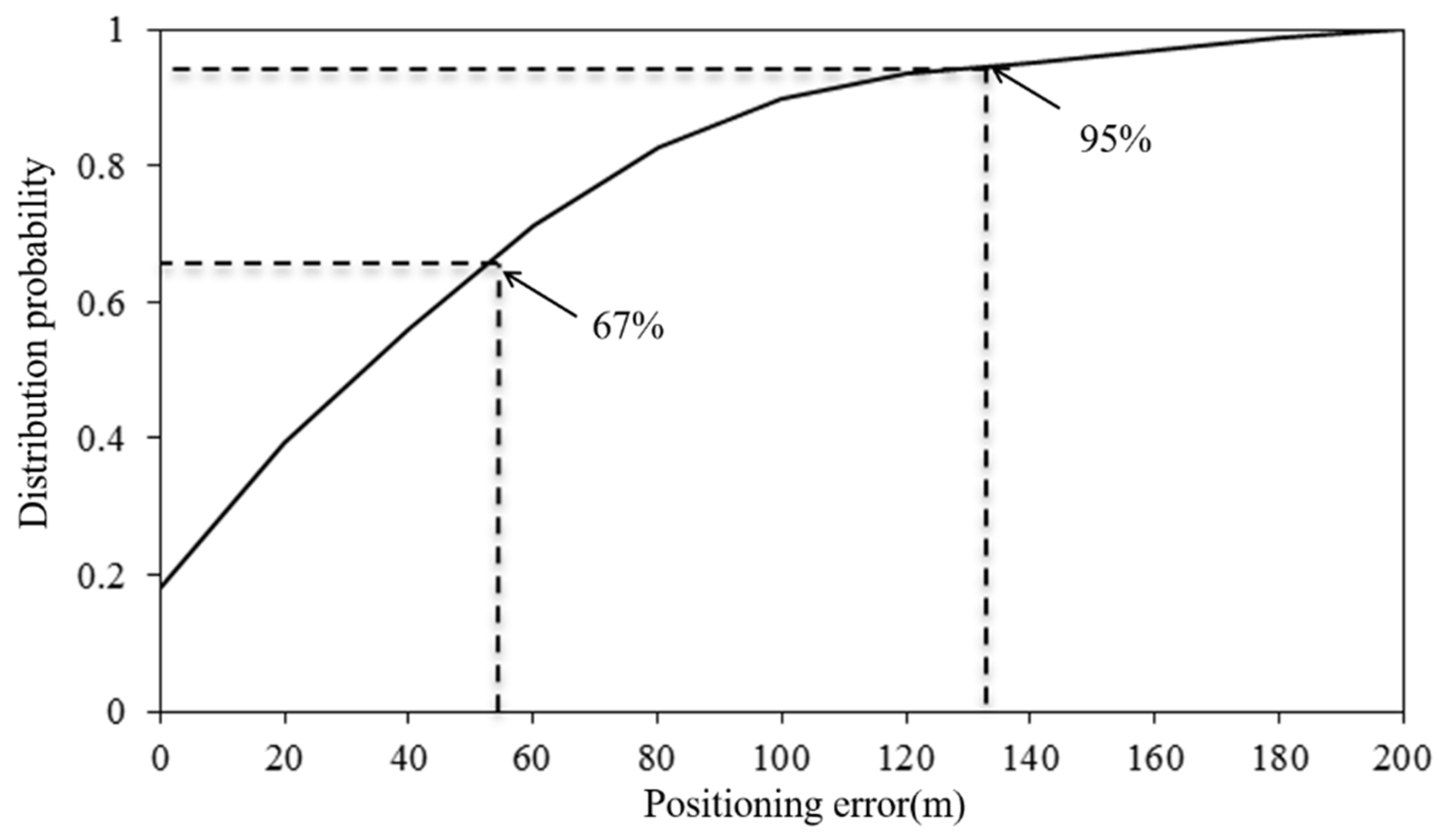
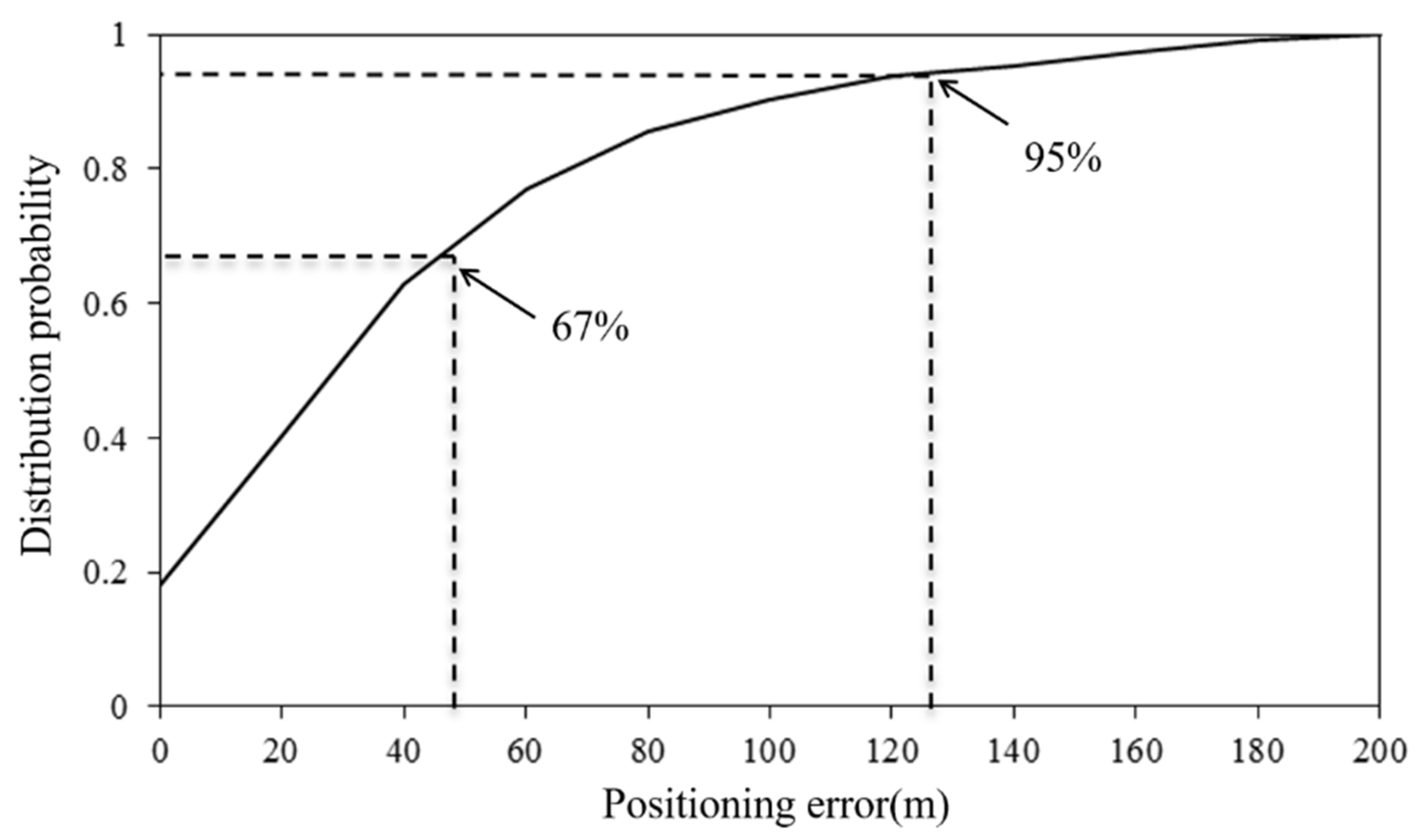
Vehicle–road cooperative technology applies wireless communication and a new generation of internet technology to urban traffic management, providing an effective way to solve urban traffic congestion and improve traffic efficiency. This article researches the vehicle wireless positioning fusion algorithm, suitable for the actual vehicle–road collaborative environment, which is an important step of urban traffic congestion state recognition. First, based on the error correction of existing wireless positioning algorithms, a weighting indicator considering distance and positioning compound errors is designed, and a vehicle wireless positioning fusion algorithm based on error weighting to eliminate line-of-sight (LOS) and non-line-of-sight (NLOS) error is proposed. Secondly, the wireless positioning fusion algorithm is verified based on accuracy evaluation indicators such as root mean square error (RMSE), Cramer Rao lower bound (CRLB), geometric differentiation of precision (GDOP), and cumulative distribution probability (CDP), and the sensitivity of the distance propagation model parameters to the positioning error is analyzed. The verification results show that the local vehicle wireless positioning fusion algorithm proposed in this article could be useful to locate vehicles in an actual vehicle–road collaborative environment. The positioning accuracy could reach 46.31 m with 67% probability, while the positioning accuracy could reach 122.53 m with 95% probability. The average positioning accuracy could reach 39.97 m. Compared with the two types of wireless positioning methods based on ranging and non-ranging methods, the positioning accuracy is improved by 7.74% and 17.69%. The algorithm can either use the roadside base stations to carry out the individual vehicle positioning or cooperate with GPS positioning and trilateral positioning to make up for the positioning blind spots caused by the lack of signal, interference, or base station overload in the urban complex road environment and, furthermore, improves the robustness of vehicle positioning. The results could assist in all-day real-time traffic congestion state recognition and other actual scenarios.
Keywords: vehicle–road cooperative; vehicle positioning; weighted fusion algorithm vehicle–road cooperative; vehicle positioning; weighted fusion algorithm