Article

Adaptive Hybrid Storage Format for Sparse Matrix–Vector Multiplication on Multi-Core SIMD CPUs

1
Institute for Quantum Information & State Key Laboratory of High Performance Computing, National University of Defense Technology, Changsha 410073, China
2
College of Computer Science and Technology, National University of Defense Technology, Changsha 410073, China
3
School of Computing, University of Leeds, Leeds LS2 9JT, UK
*
Author to whom correspondence should be addressed.
Appl. Sci. 2022, 12(19), 9812; https://doi.org/10.3390/app12199812
Submission received: 7 September 2022 / Revised: 23 September 2022 / Accepted: 25 September 2022 / Published: 29 September 2022
(This article belongs to the Special Issue AI-Based Image Processing)

Abstract

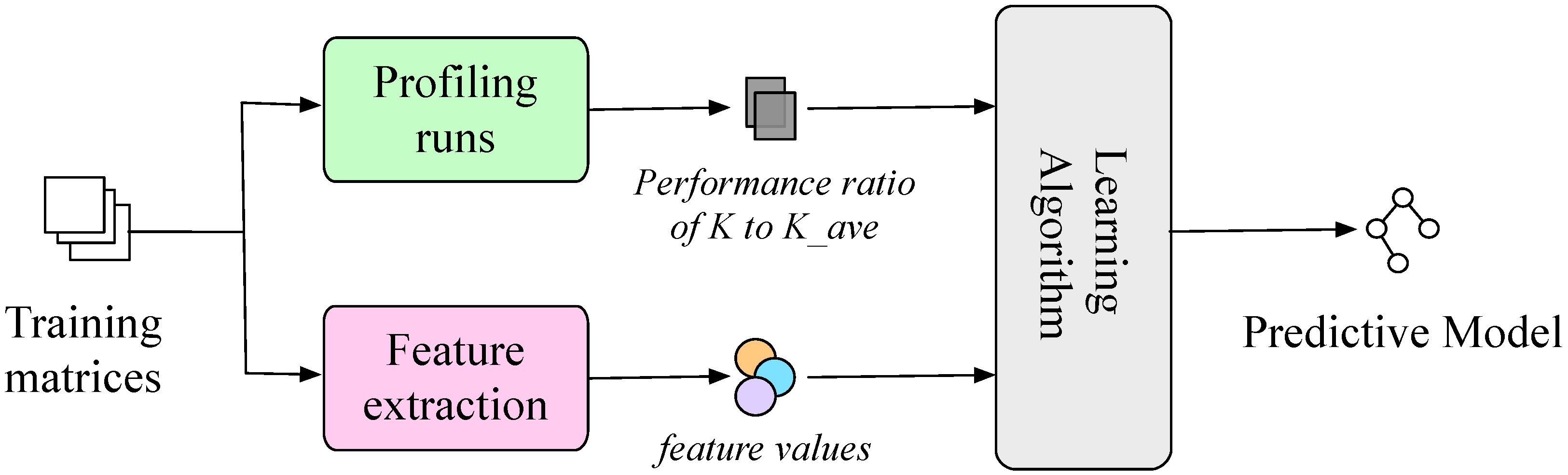
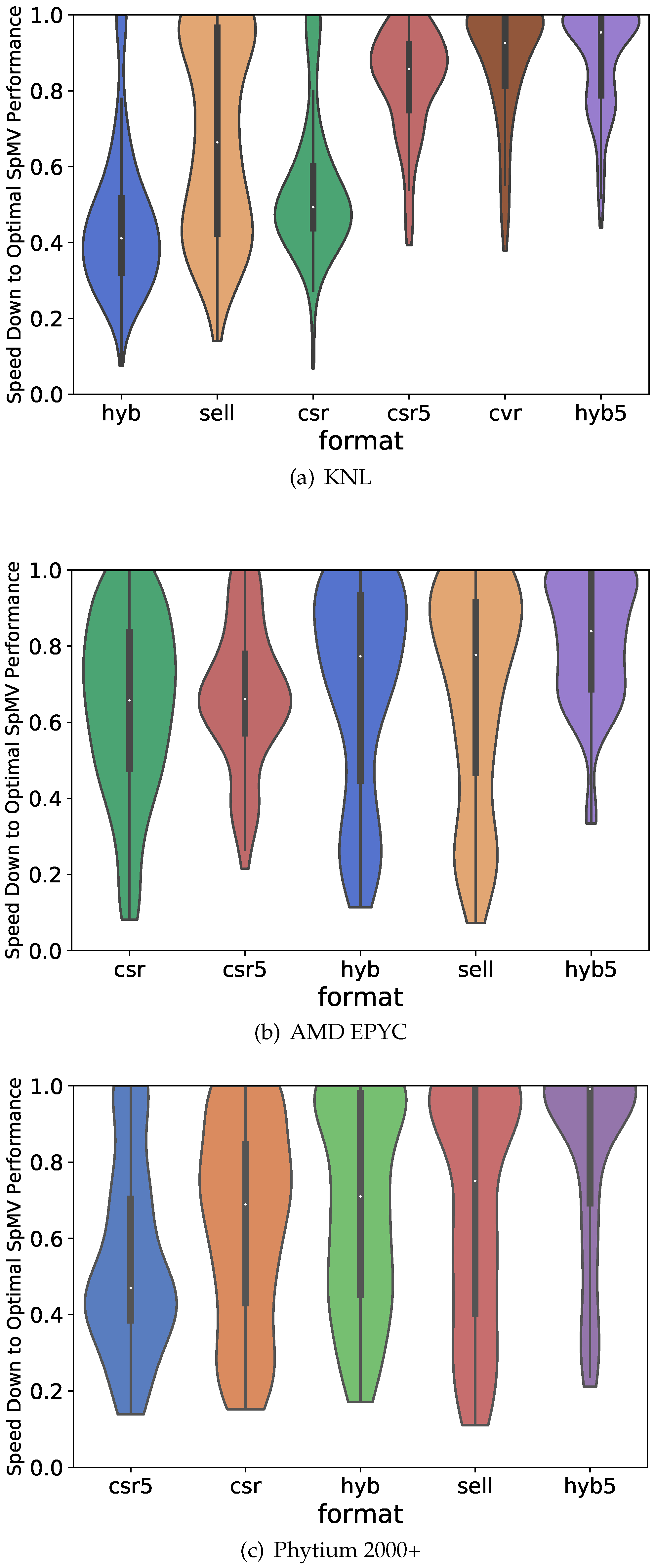
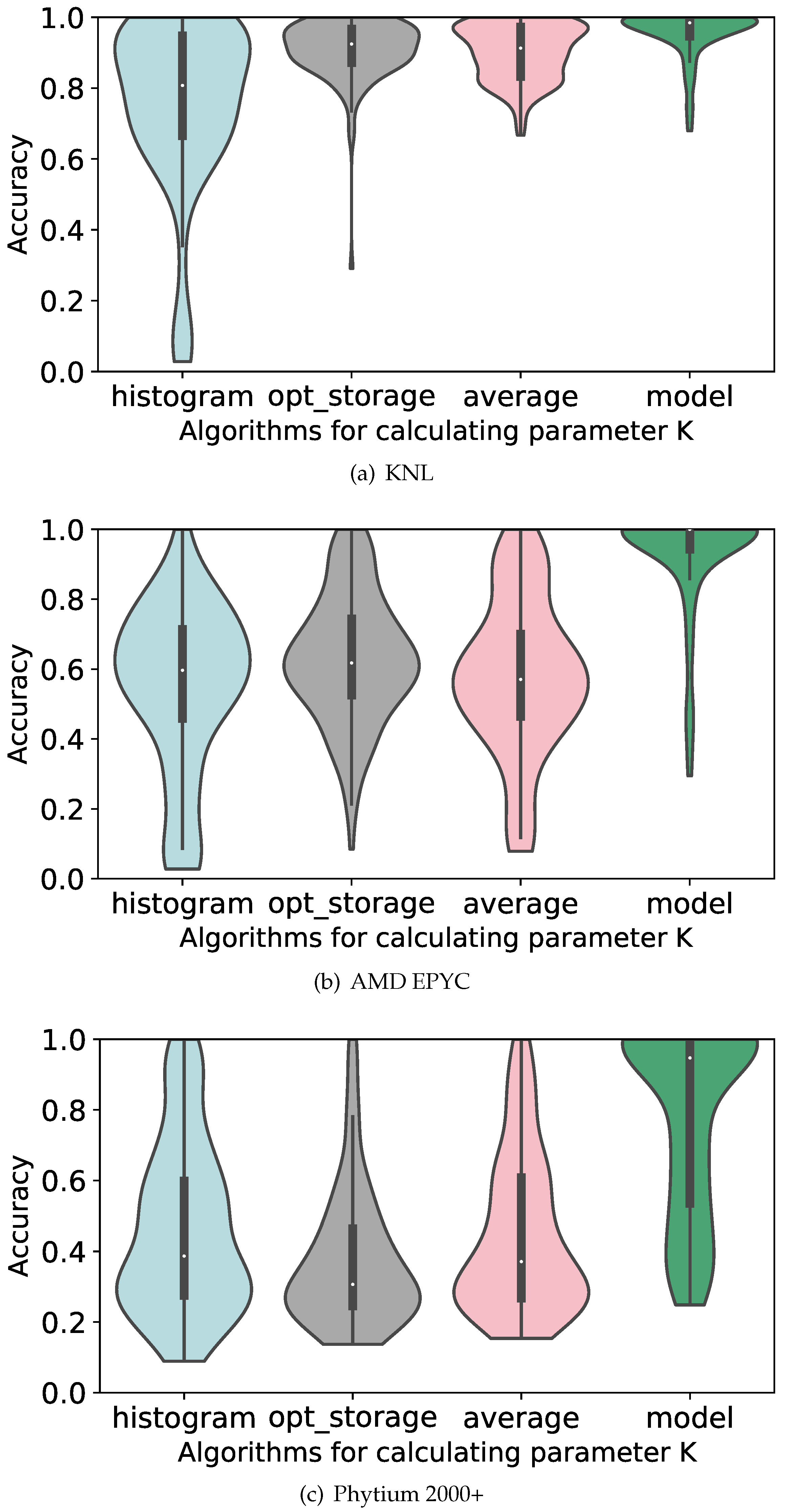
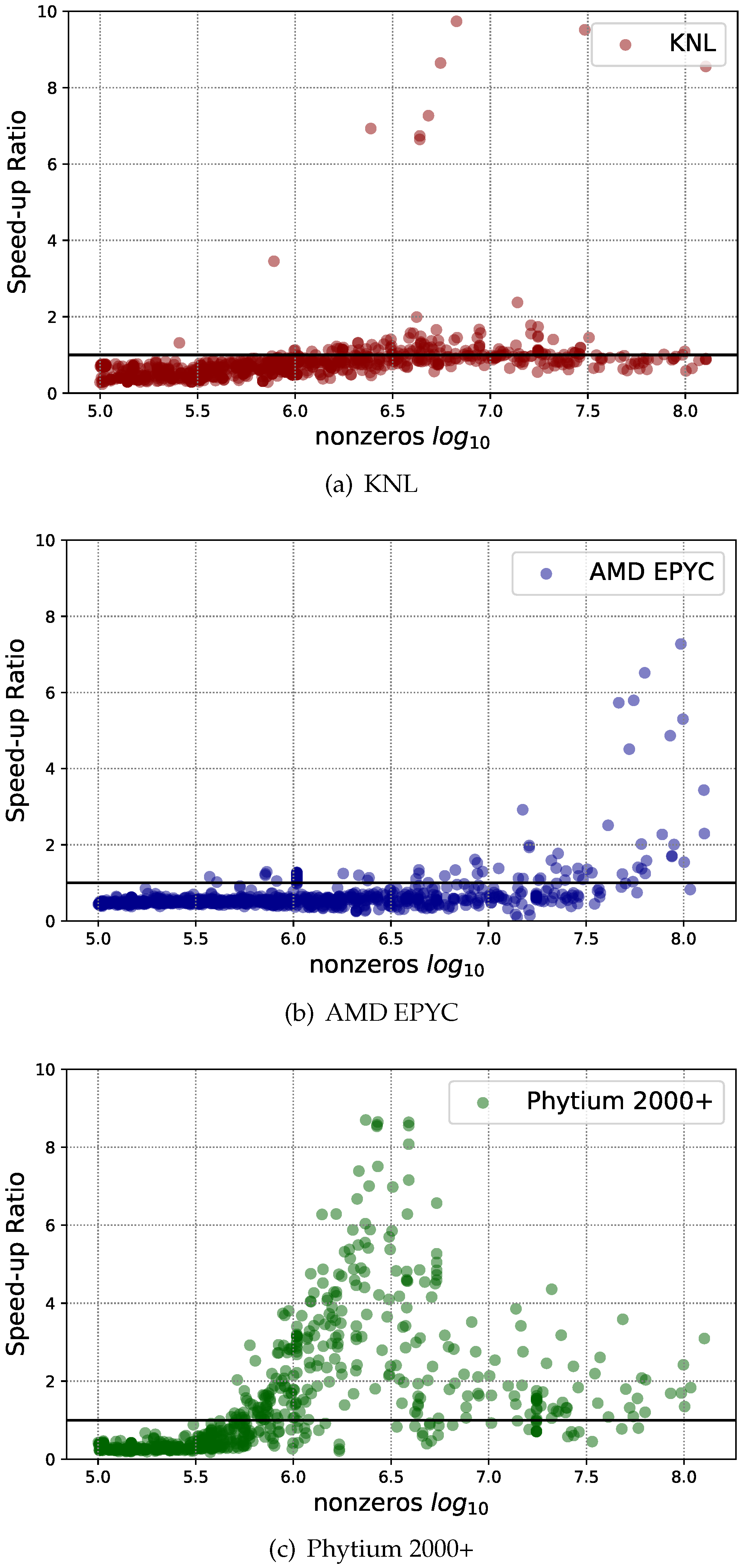
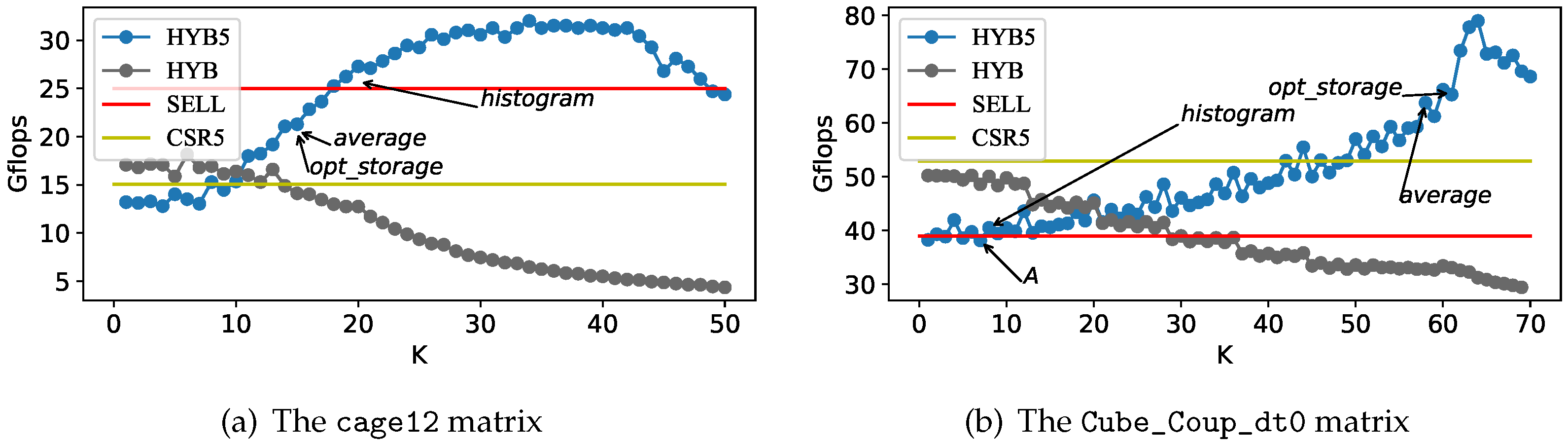
Optimizing sparse matrix–vector multiplication (SpMV) is challenging due to the non-uniform distribution of the non-zero elements of the sparse matrix. The best-performing SpMV format changes depending on the input matrix and the underlying architecture, and there is no “one-size-fit-for-all” format. A hybrid scheme combining multiple SpMV storage formats allows one to choose an appropriate format to use for the target matrix and hardware. However, existing hybrid approaches are inadequate for utilizing the SIMD cores of modern multi-core CPUs with SIMDs, and it remains unclear how to best mix different SpMV formats for a given matrix. This paper presents a new hybrid storage format for sparse matrices, specifically targeting multi-core CPUs with SIMDs. Our approach partitions the target sparse matrix into two segmentations based on the regularities of the memory access pattern, where each segmentation is stored in a format suitable for its memory access patterns. Unlike prior hybrid storage schemes that rely on the user to determine the data partition among storage formats, we employ machine learning to build a predictive model to automatically determine the partition threshold on a per matrix basis. Our predictive model is first trained off line, and the trained model can be applied to any new, unseen sparse matrix. We apply our approach to 956 matrices and evaluate its performance on three distinct multi-core CPU platforms: a 72-core Intel Knights Landing (KNL) CPU, a 128-core AMD EPYC CPU, and a 64-core Phytium ARMv8 CPU. Experimental results show that our hybrid scheme, combined with the predictive model, outperforms the best-performing alternative by 2.9%, 17.5% and 16% on average on KNL, AMD, and Phytium, respectively.
Keywords: SpMV; performance; machine learning; sparse matrix format SpMV; performance; machine learning; sparse matrix format