Research on Side-Channel Analysis Based on Deep Learning with Different Sample Data
Abstract
1. Introduction
2. Four Deep Learning Models
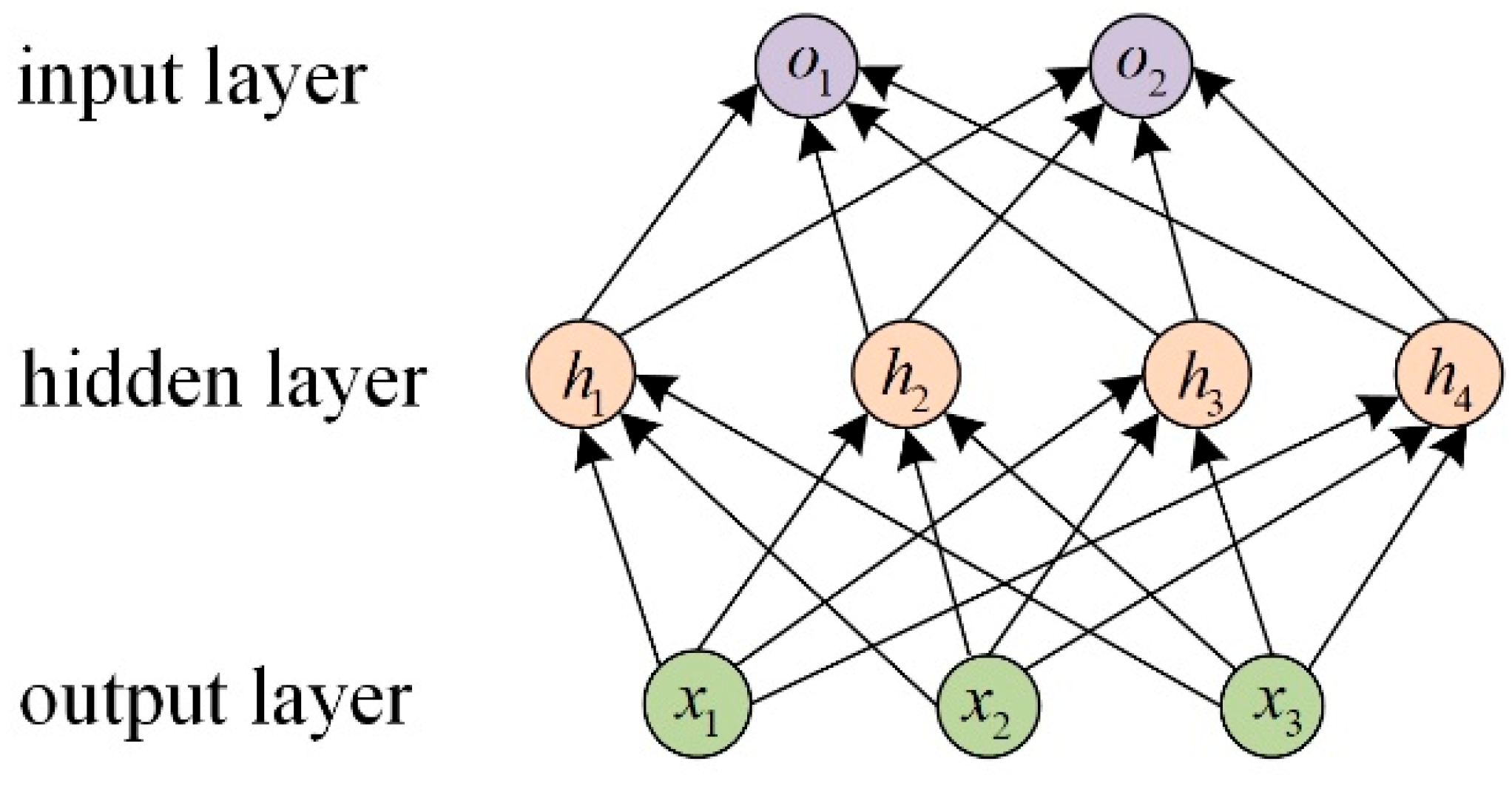
2.1. Multilayer Perceptron
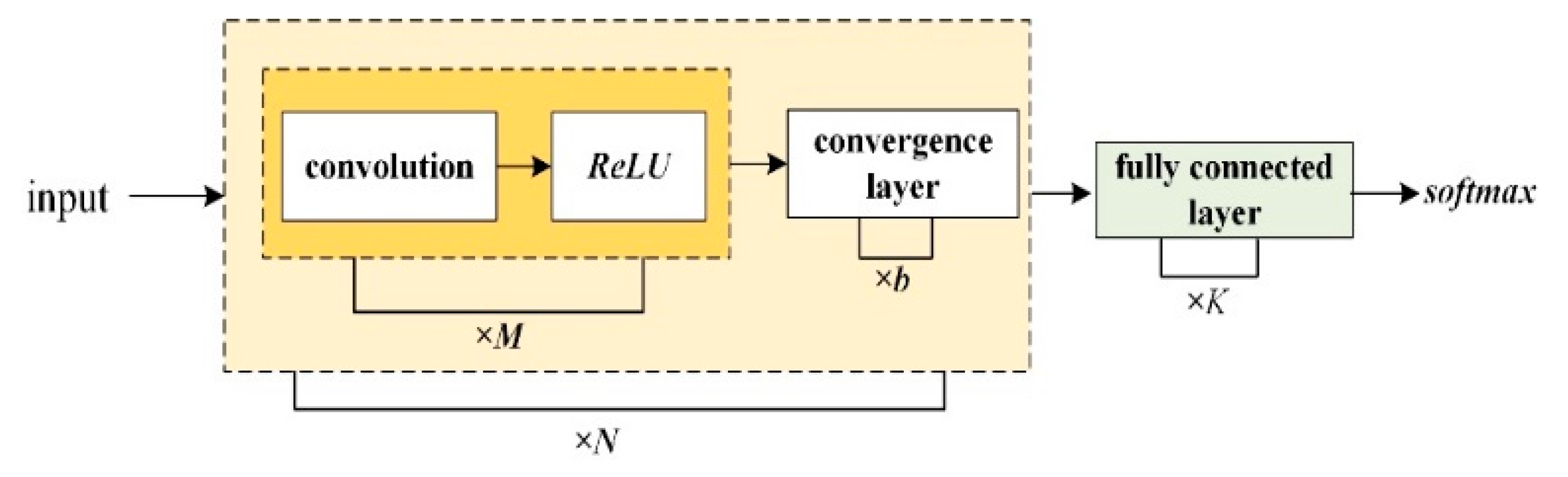
2.2. Convolutional Neural Network
2.2.1. Softmax Function
2.2.2. Softmax Regression
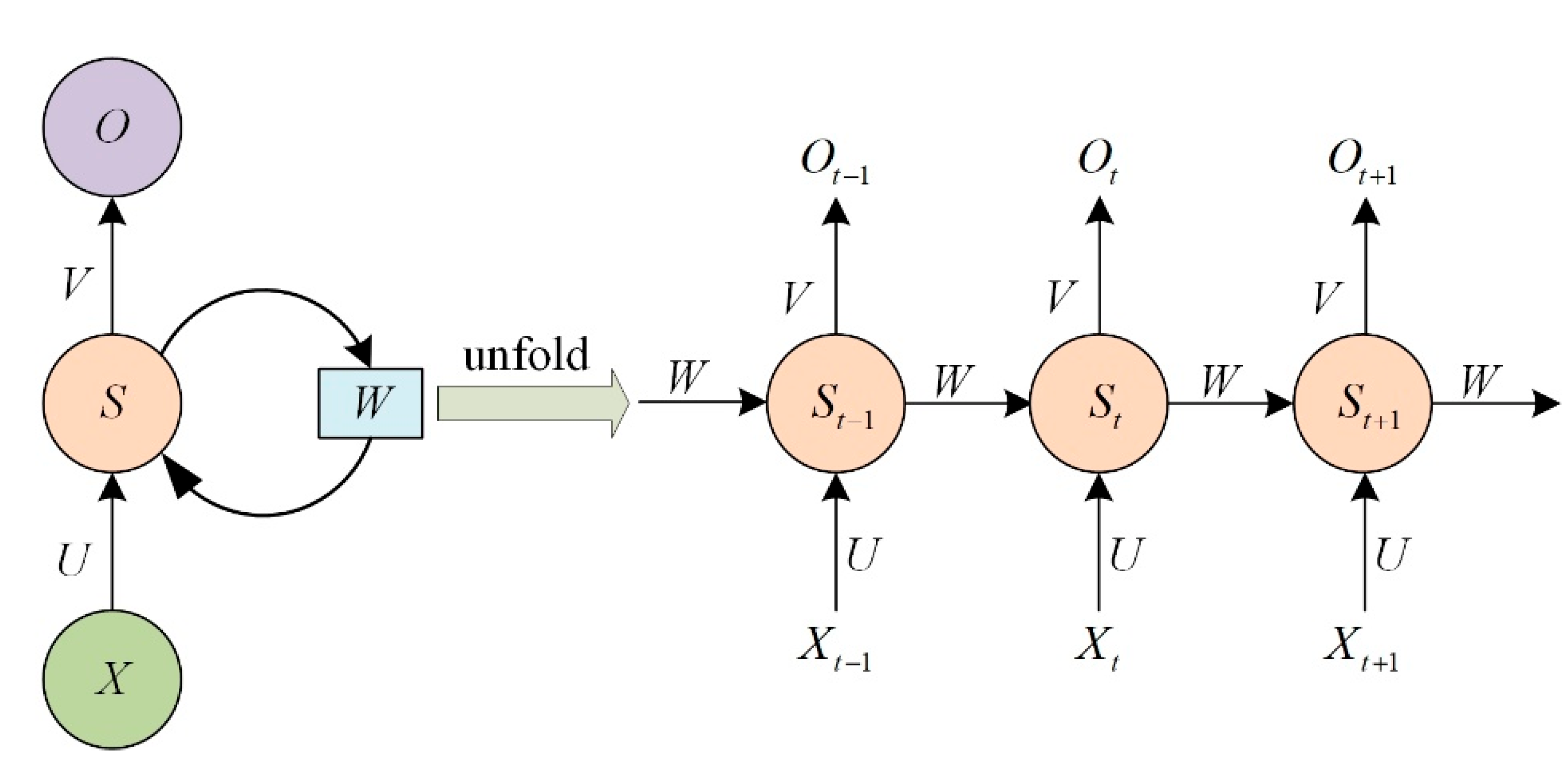
2.3. Recurrent Neural Network
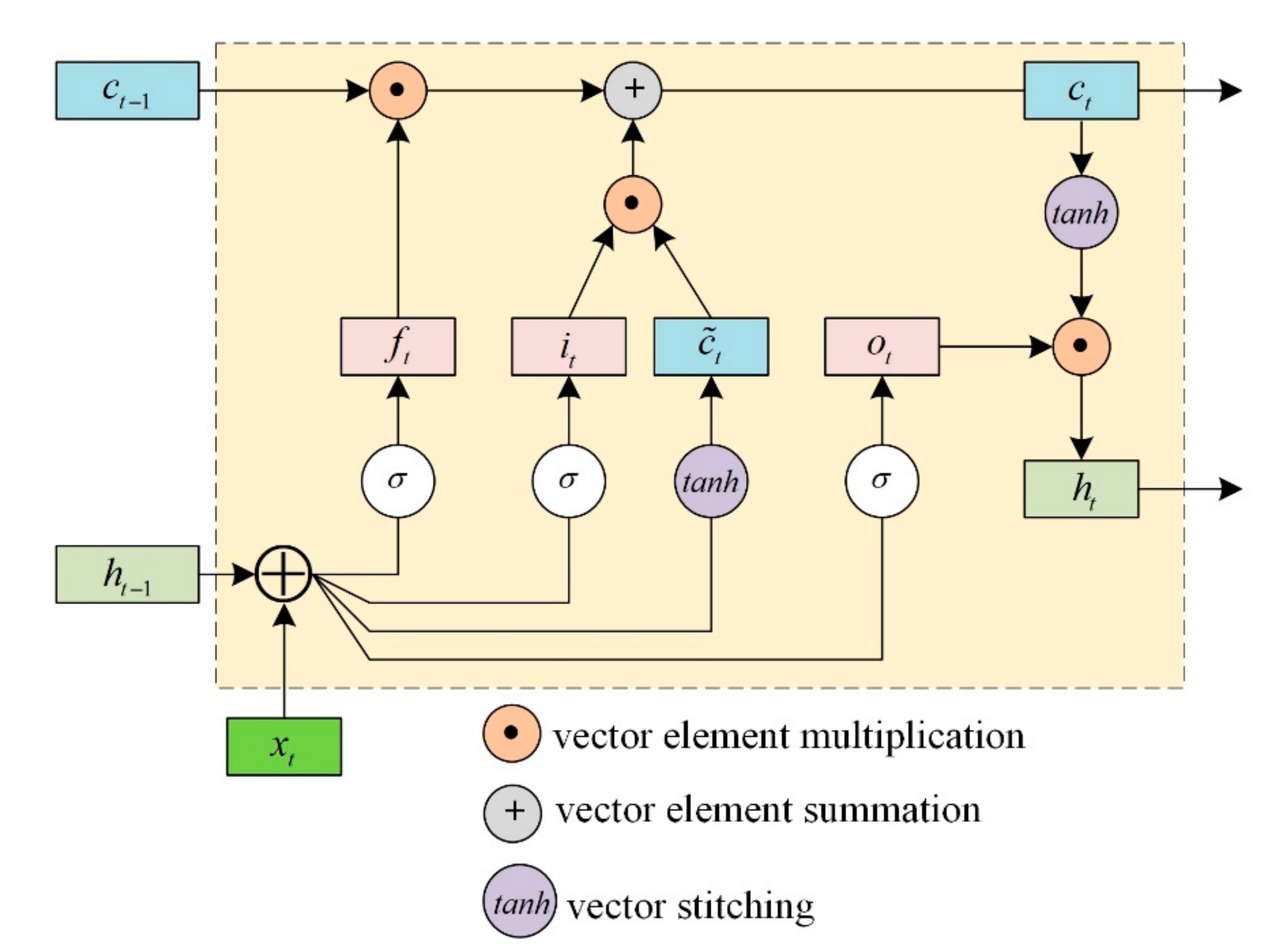
2.4. Long Short-Term Memory Network
3. AES-128 Algorithm
| Algorithm 1: Preudocode of the AES-128 algorithm |
| //AES-128 Cipher //in: 128 bits (plaintext) //out: 128 bits (ciphertext) //Nr: number of rounds, Nr = 10 //Nb: number of columns in state, Nb = 4 //w: expanded key K, Nb * (Nr + 1) = 44 words, (1 word = Nb bytes) state = in; AddRoundKey (state, w [0, Nb − 1]); for round = 1 step 1 to Nr − 1 do SubBytes (state); // Attack Point, at round 1. ShiftRows (state); MixColumns (state); AddRoundKey (state, w [round * Nb, (round + 1) * Nb − 1]); end for SubBytes (state); ShiftRows (state); AddRoundKey (state, w [Nr * Nb, (Nr + 1) * Nb − 1]); out = state; |
4. CPA Side-Channel Analysis Based on Deep Learning
4.1. CPA-Related Principles
| Algorithm 2: Randomly select plaintext and collect a power trace; each power trace has M sampling points |
| For byte = 1:16 For k = 0:255 H = HammingWeight(Sbox(Pbyte⊕k)) // Pbyte: The byte-th byte of each Pn For m = 1:M V = vm // vm: The m-th sampling point of each power trace v Corr (k) = r(V,H) rightkeybyte = find(max{Corr}) |
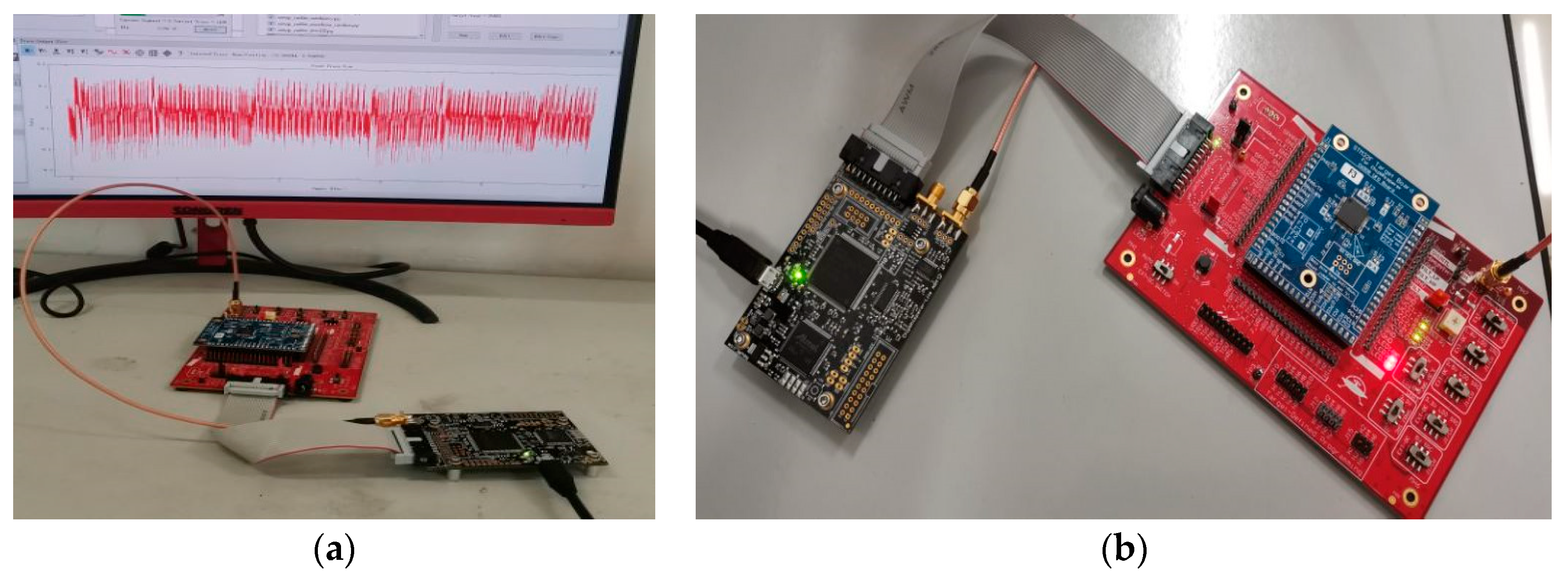
4.2. CPA Experimental Environment Configuration
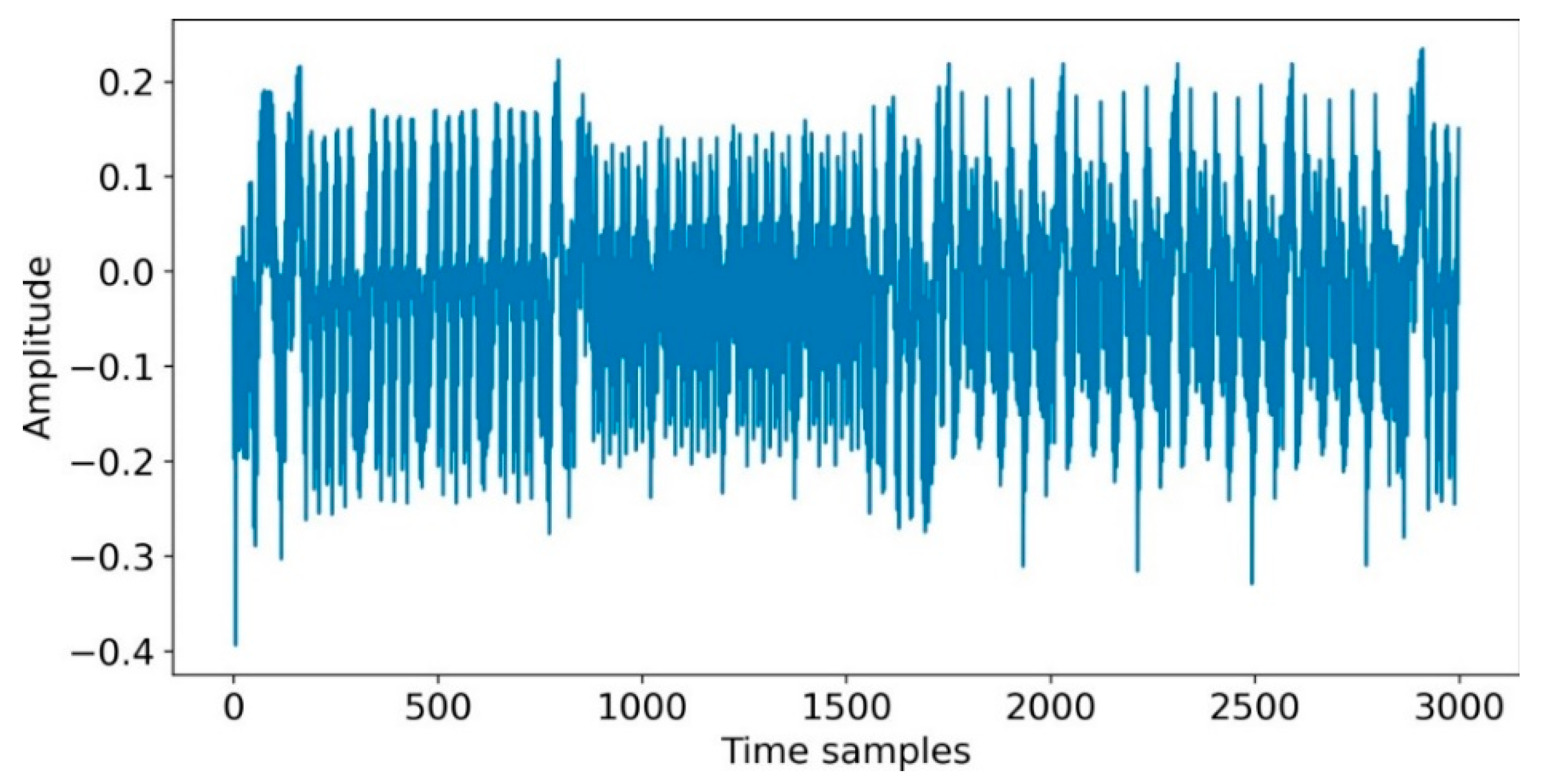
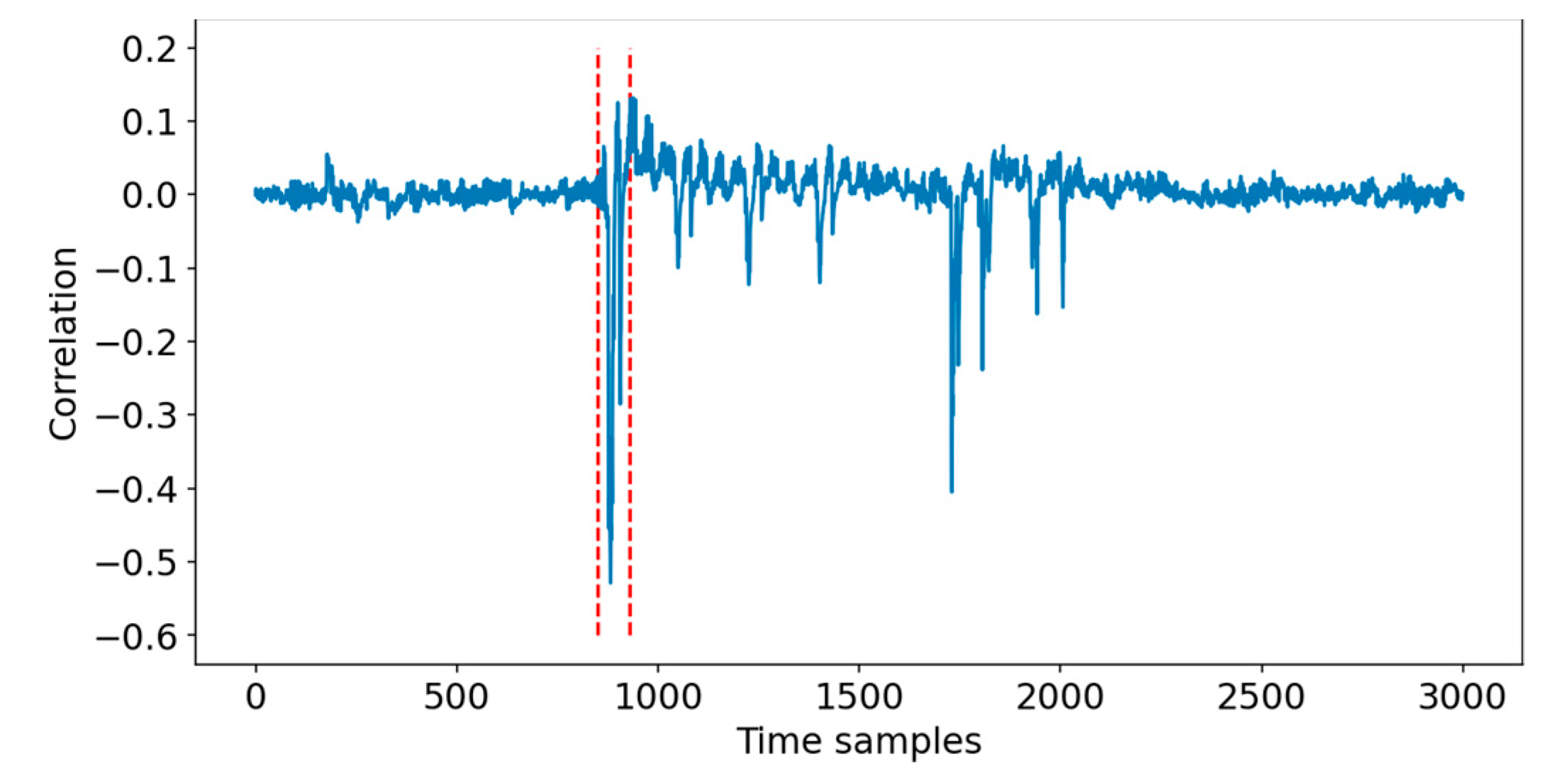
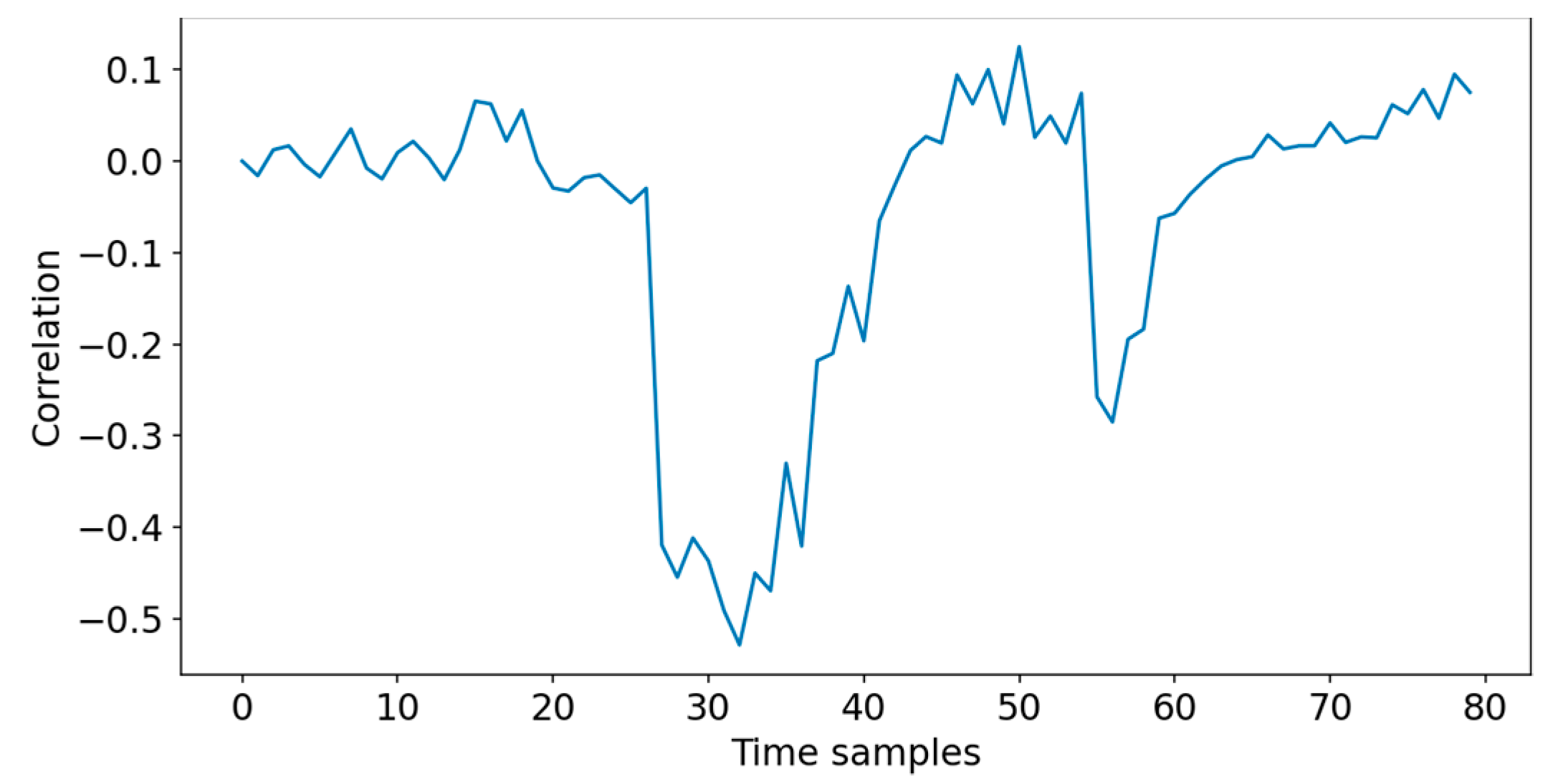
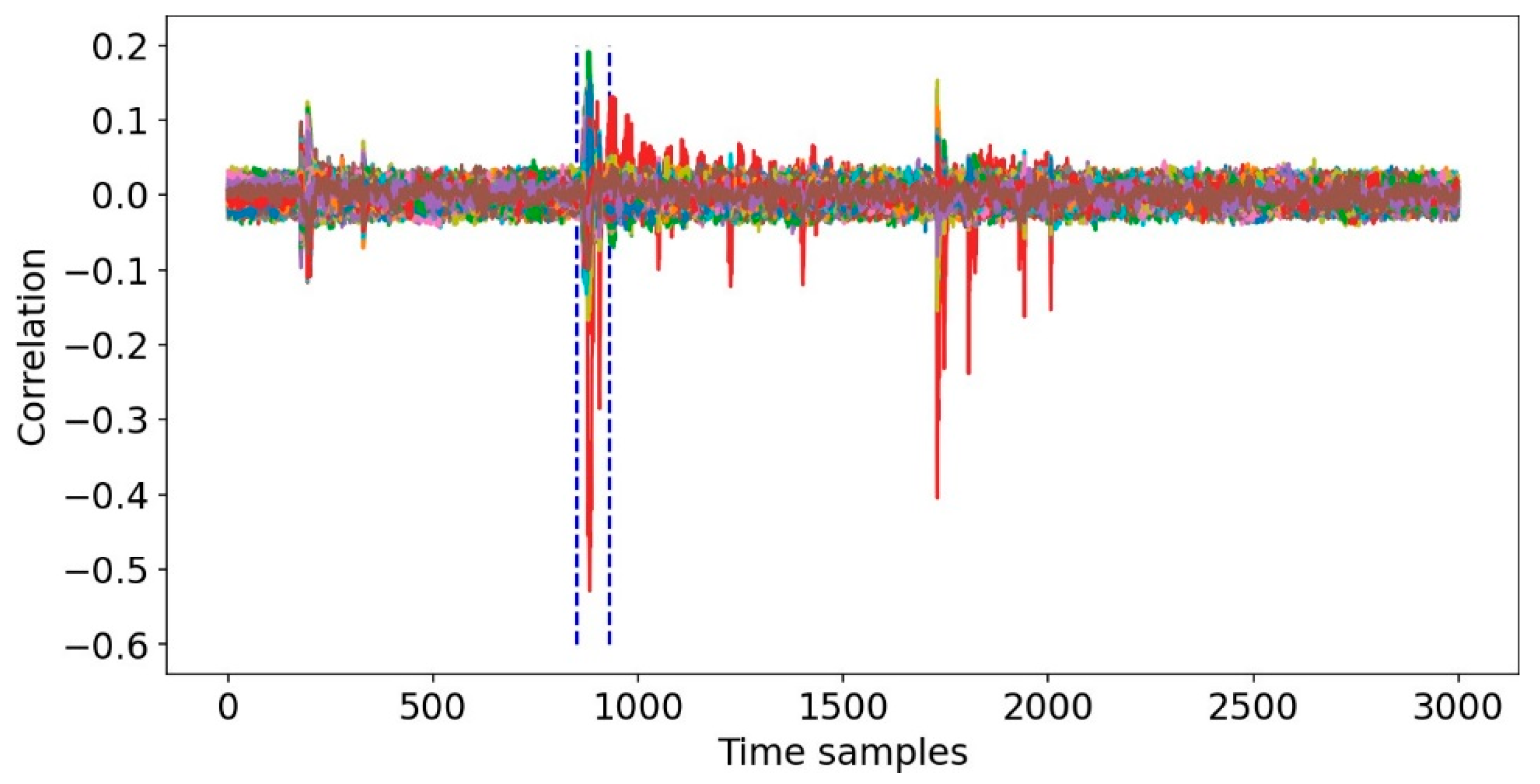
4.3. CPA Experimental Analysis Process
5. Experiment and Model Evaluation
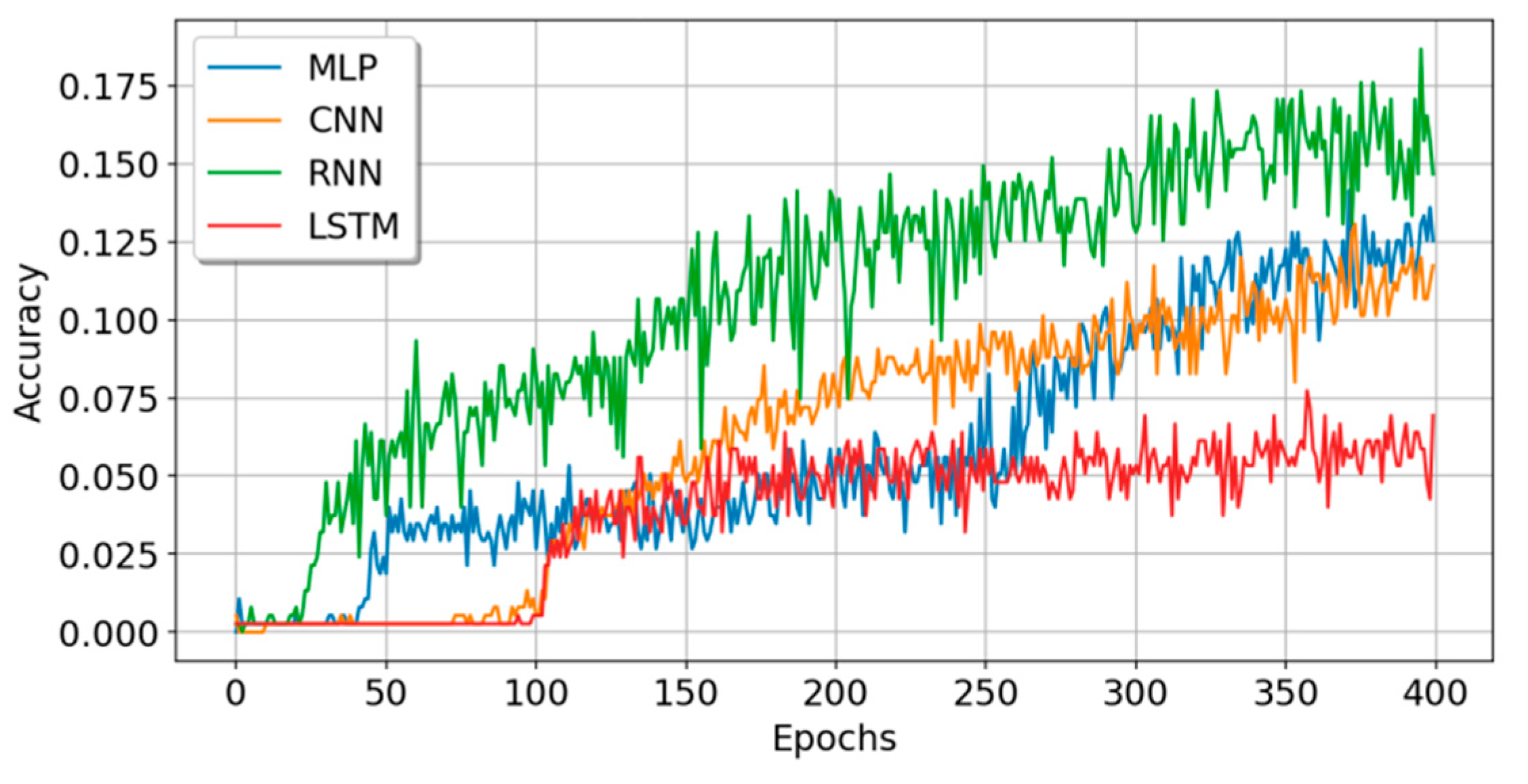
5.1. Experiment A: Small Sample Data Experiment
5.2. Experiment B: Sufficient Sample Data Experiment
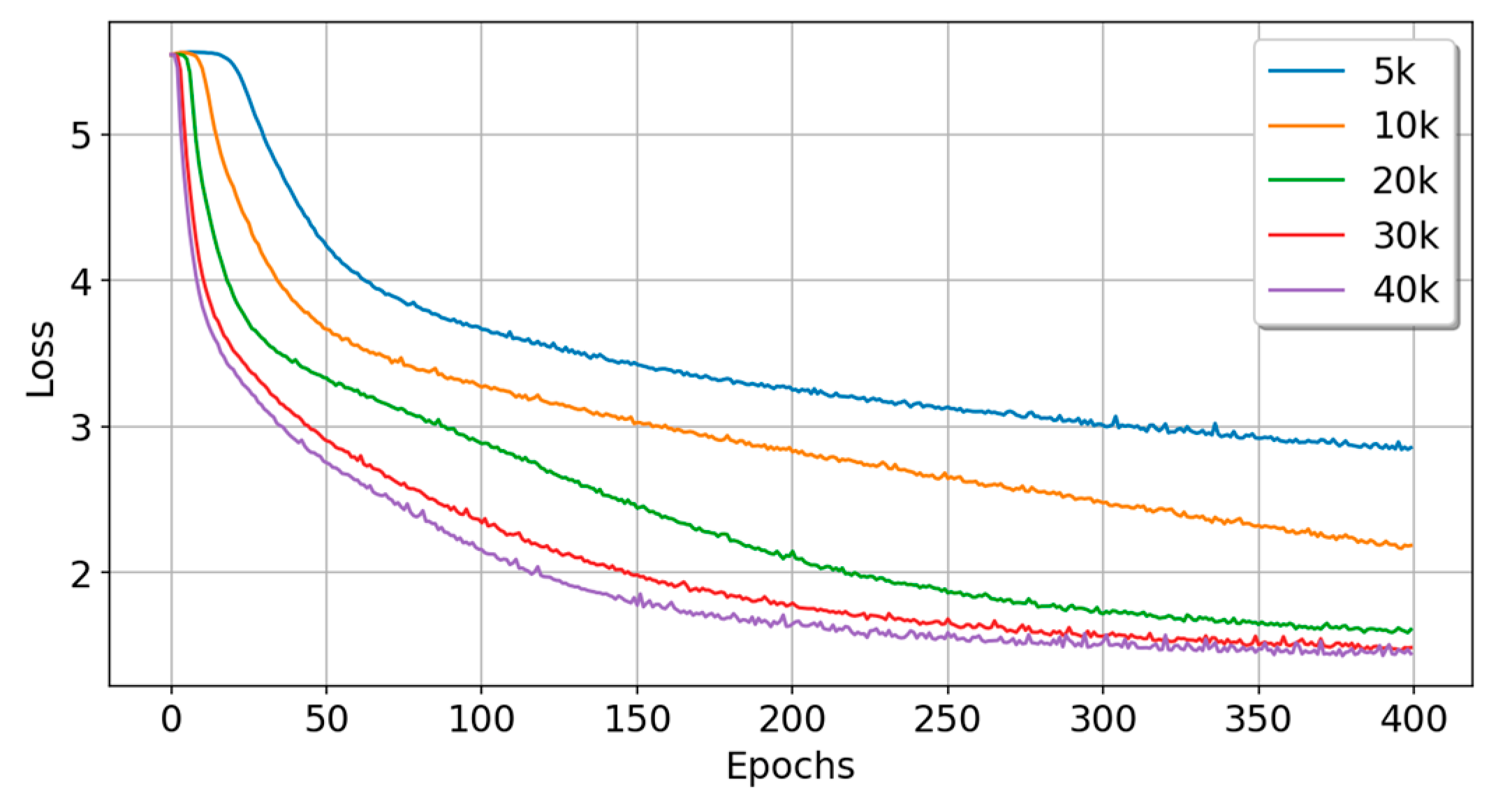
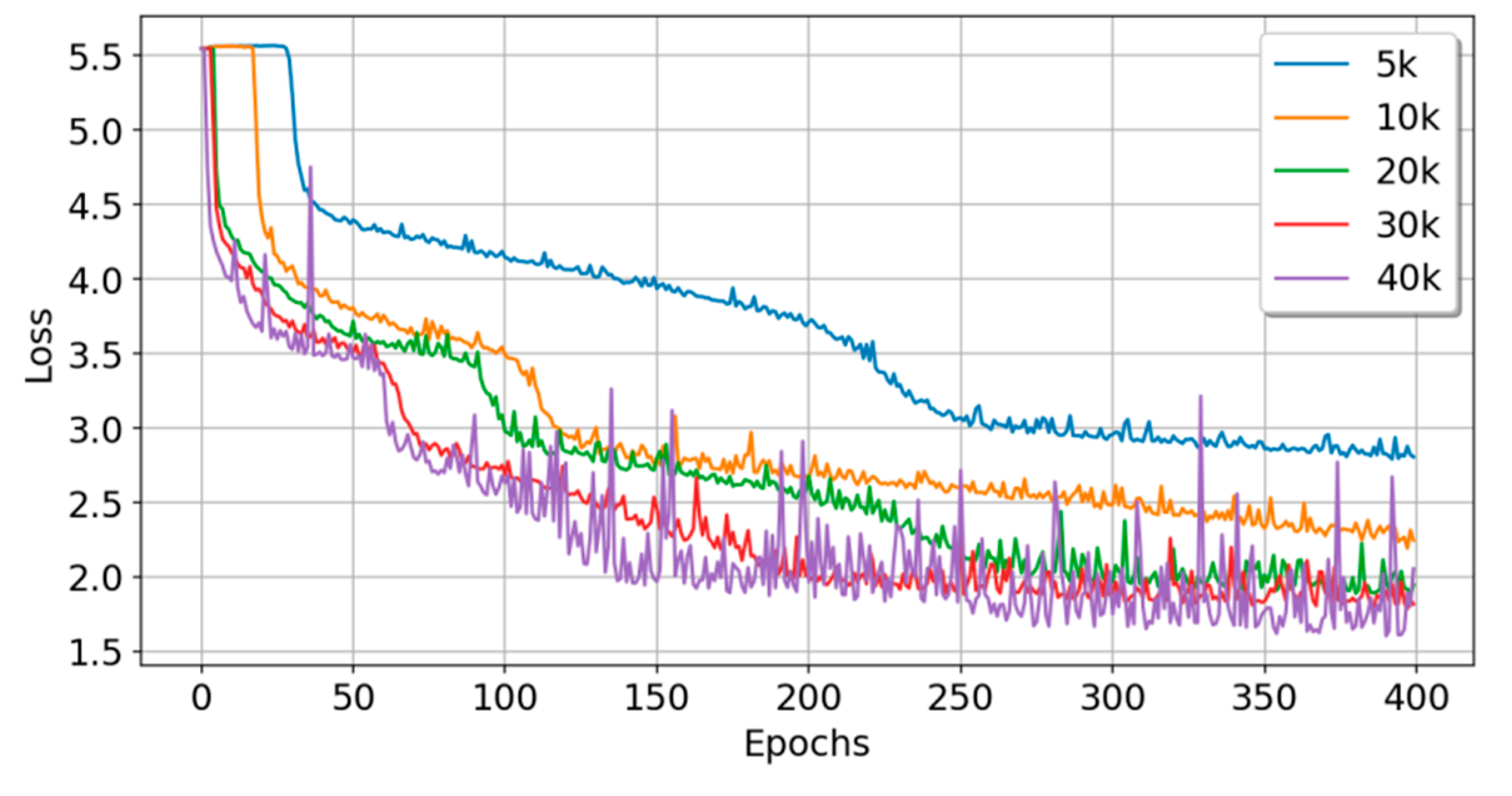
5.3. Experiment C: Experiments with Sample Data of Different Scales
6. Conclusions
Author Contributions
Funding
Informed Consent Statement
Data Availability Statement
Conflicts of Interest
References
- Kocher, P.C. Timing attacks on implementations of Diffie-Hellman, RSA, DSS, and other systems. In Annual International Cryptology Conference; Springer: Berlin/Heidelberg, Germany, 1996; pp. 104–113. [Google Scholar]
- Cortes, C.; Vapnik, V. Support-vector networks. Mach. Learn. 1995, 20, 273–297. [Google Scholar] [CrossRef] [Scilit]
- Rokach, L.; Maimon, O.Z. Data Mining with Decision Trees: Theory and Applications; World Scientific: Hackensack, NJ, USA, 2007. [Google Scholar]
- Hospodar, G.; Gierlichs, B.; Mulder, E.D.; Verbauwhede, I.; Vandewalle, J. Machine learning in side-channel analysis: A first study. J. Cryptogr. Eng. 2011, 1, 293–302. [Google Scholar] [CrossRef] [Scilit]
- Lerman, L.; Bontempi, G.; Markowitch, O. Side-Channel Attack: An Approach Based on Machine Learning; Center for Advanced Security Research Darmstadt: Darmstadt, Germany, 2011; Volume 29. [Google Scholar]
- Picek, S.; Heuser, A.; Jovic, A.; Ludwig, S.A.; Guilley, S.; Jakobovic, D.; Mentens, N. Side-channel analysis and machine learning: A practical perspective. In Proceedings of the 2017 International Joint Conference on Neural Networks (IJCNN), Anchorage, AK, USA, 14–19 May 2017; pp. 4095–4102. [Google Scholar]
- Robissout, D.; Bossuet, L.; Habrard, A.; Grosso, V. Improving Deep Learning Networks for Profiled Side-channel Analysis Using Performance Improvement Techniques. ACM J. Emerg. Technol. Comput. Syst. 2021, 17, 1–30. [Google Scholar] [CrossRef] [Scilit]
- Timon, B. Non-profiled deep learning-based side-channel attacks with sensitivity analysis. IACR Trans. Cryptogr. Hardw. Embed. Syst. 2019, 107–131. [Google Scholar] [CrossRef] [Scilit]
- Kocher, P.; Jaffe, J.; Jun, B. Differential power analysis. In Annual International Cryptology Conference; Springer: Berlin/Heidelberg, Germany, 1999; pp. 388–397. [Google Scholar]
- Brier, E.; Clavier, C.; Olivier, F. Correlation power analysis with a leakage model. In International Workshop on Cryptographic Hardware and Embedded Systems; Springer: Berlin/Heidelberg, Germany, 2004; pp. 16–29. [Google Scholar]
- Gierlichs, B.; Batina, L.; Tuyls, P.; Preneel, B. Mutual information analysis. In International Workshop on Cryptographic Hardware and Embedded Systems; Springer: Berlin/Heidelberg, Germany, 2008; pp. 426–442. [Google Scholar]
- Chari, S.; Rao, J.R.; Rohatgi, P. Template attacks. In International Workshop on Cryptographic Hardware and Embedded Systems; Springer: Berlin/Heidelberg, Germany, 2002; pp. 13–28. [Google Scholar]
- Schindler, W.; Lemke, K.; Paar, C. A stochastic model for differential side channel cryptanalysis. In International Workshop on Cryptographic Hardware and Embedded Systems; Springer: Berlin/Heidelberg, Germany, 2005; pp. 30–46. [Google Scholar]
- LeCun, Y.; Bengio, Y.; Hinton, G. Deep learning. Nature 2015, 521, 436–444. [Google Scholar] [CrossRef] [Scilit] [PubMed]
- Maghrebi, H.; Portigliatti, T.; Prouff, E. Breaking cryptographic implementations using deep learning techniques. In International Conference on Security, Privacy, and Applied Cryptography Engineering; Springer: Cham, Switzerland, 2016; pp. 3–26. [Google Scholar]
- Benadjila, R.; Prouff, E.; Strullu, R.; Cagli, E.; Dumas, C. Deep learning for side-channel analysis and introduction to ASCAD database. J. Cryptogr. Eng. 2020, 10, 163–188. [Google Scholar] [CrossRef] [Scilit]
- Wang, H.; Forsmark, S.; Brisfors, M.; Dubrova, E. Multi-Source Training Deep-Learning Side-Channel Attacks. In Proceedings of the 2020 IEEE 50th International Symposium on Multiple-Valued Logic (ISMVL), Miyazaki, Japan, 9–11 November 2020; pp. 58–63. [Google Scholar]
- Masure, L.; Dumas, C.; Prouff, E. A comprehensive study of deep learning for side-channel analysis. IACR Trans. Cryptogr. Hardw. Embed. Syst. 2020, 348–375. [Google Scholar] [CrossRef] [Scilit]
- Wang, J.; Wang, W.; Yu, W.; Hu, F. Side-channel attack based on dendritic network. J. Xiangtan Univ. Nat. Sci. Ed. 2021, 43, 16–30. [Google Scholar]
- Ou, Y.; Li, L. Side-channel analysis attacks based on deep learning network. Front. Comput. Sci. 2022, 16, 162303. [Google Scholar] [CrossRef] [Scilit]
- Liu, Z.; Wang, Z.; Ling, M. Side-channel Attack Using Word Embedding and Long Short Term Memories. J. Web Eng. 2022, 21, 285–306. [Google Scholar] [CrossRef] [Scilit]
- Hu, F.; Wang, H.; Wang, J. Cross subkey side channel analysis based on small samples. Sci. Rep. 2022, 12, 6254. [Google Scholar] [CrossRef] [Scilit] [PubMed]
- O’Flynn, C.; Chen, Z.D. Chipwhisperer: An open-source platform for hardware embedded security research. In International Workshop on Constructive Side-Channel Analysis and Secure Design; Springer: Cham, Switzerland, 2014; pp. 243–260. [Google Scholar]
- Bishop, C.M. Neural Networks for Pattern Recognition; Oxford University Press: Oxford, UK, 1996. [Google Scholar]
- Krizhevsky, A.; Sutskever, I.; Hinton, G.E. Imagenet classification with deep convolutional neural networks. In Proceedings of the Advances in Neural Information Processing Systems 25, Lake Tahoe, NV, USA, 3–6 December 2012. [Google Scholar]
- Lipton, Z.C.; Berkowitz, J.; Elkan, C. A critical review of recurrent neural networks for sequence learning. arXiv 2015, arXiv:1506.00019. [Google Scholar]
- Hochreiter, S.; Schmidhuber, J. Long short-term memory. Neural Comput. 1997, 9, 1735–1780. [Google Scholar] [CrossRef] [Scilit] [PubMed]
- Gers, F.A.; Schmidhuber, J.; Cummins, F. Learning to forget: Continual prediction with LSTM. Neural Comput. 2000, 12, 2451–2471. [Google Scholar] [CrossRef] [Scilit] [PubMed]
- Daemen, J.; Rijmen, V. The Design of Rijndael; Springer: New York, NY, USA, 2002. [Google Scholar]
- Mangard, S.; Oswald, E.; Popp, T. Power Analysis Attacks: Revealing the Secrets of Smart Cards; Springer: Heidelberg, Germany, 2007. [Google Scholar]
- Gulli, A.; Pal, S. Deep Learning with Keras; Packt Publishing Ltd.: Birmingham, UK, 2017. [Google Scholar]
- Abadi, M.; Barham, P.; Chen, J.; Chen, Z.; Davis, A.; Dean, J.; Devin, M.; Ghemawat, S.; Irving, G.; Isard, M.; et al. Tensorflow: A system for large-scale machine learning. In Proceedings of the 12th USENIX Symposium on Operating Systems Design and Implementation (OSDI 16), Savannah, GA, USA, 2–4 November 2016; pp. 265–283. [Google Scholar]
- Kingma, D.P.; Ba, J. Adam: A method for stochastic optimization. arXiv 2014, arXiv:1412.6980. [Google Scholar]



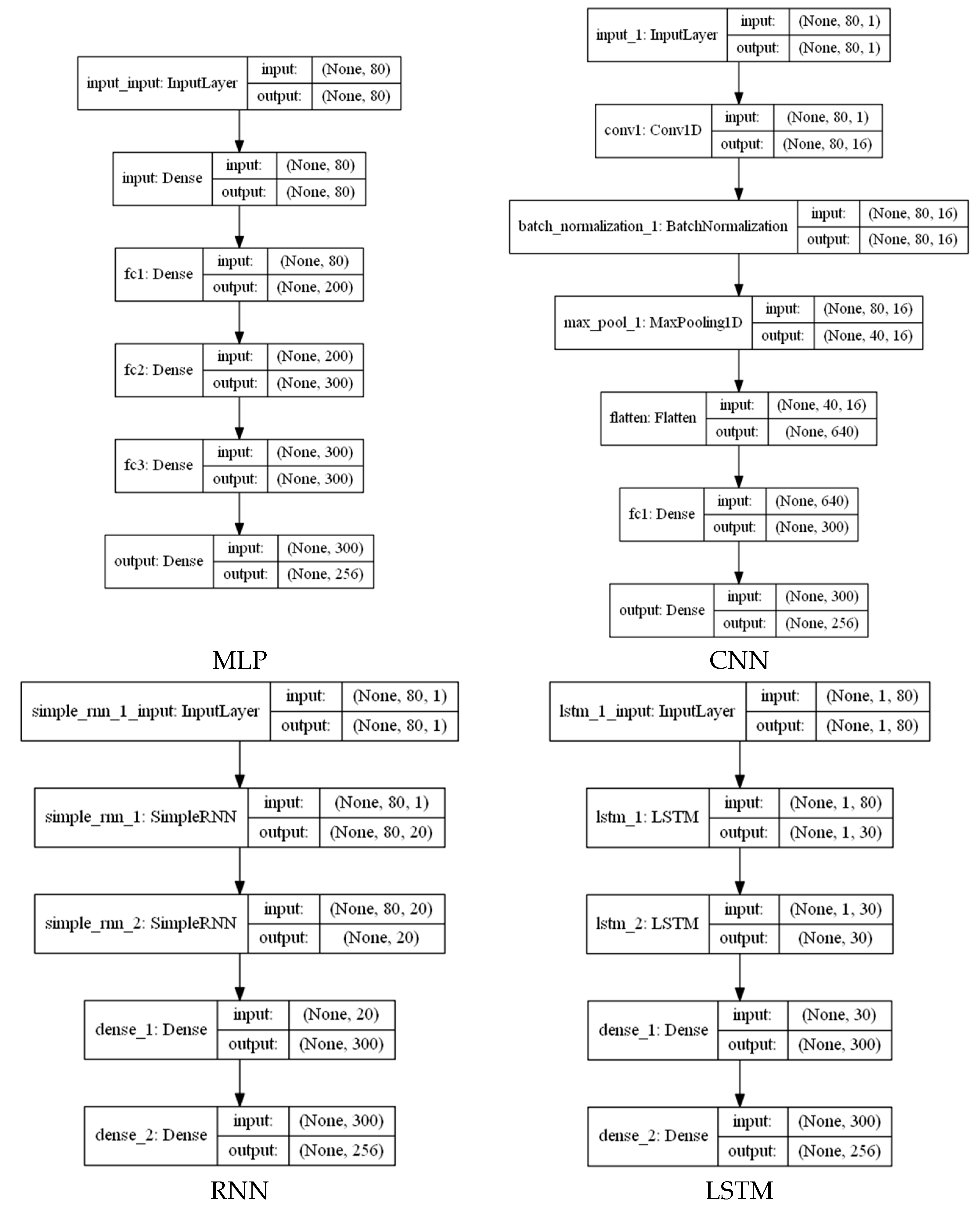

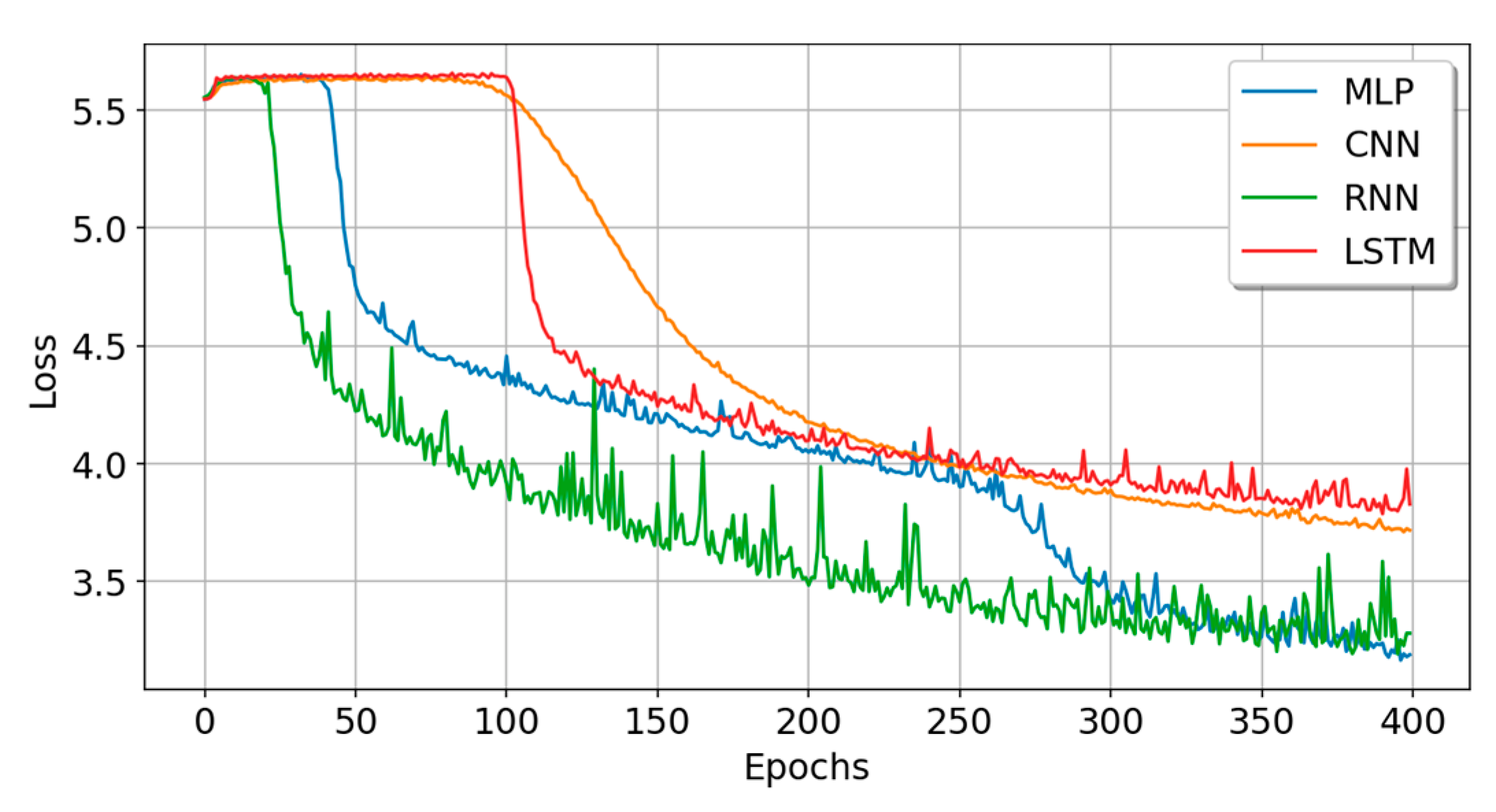
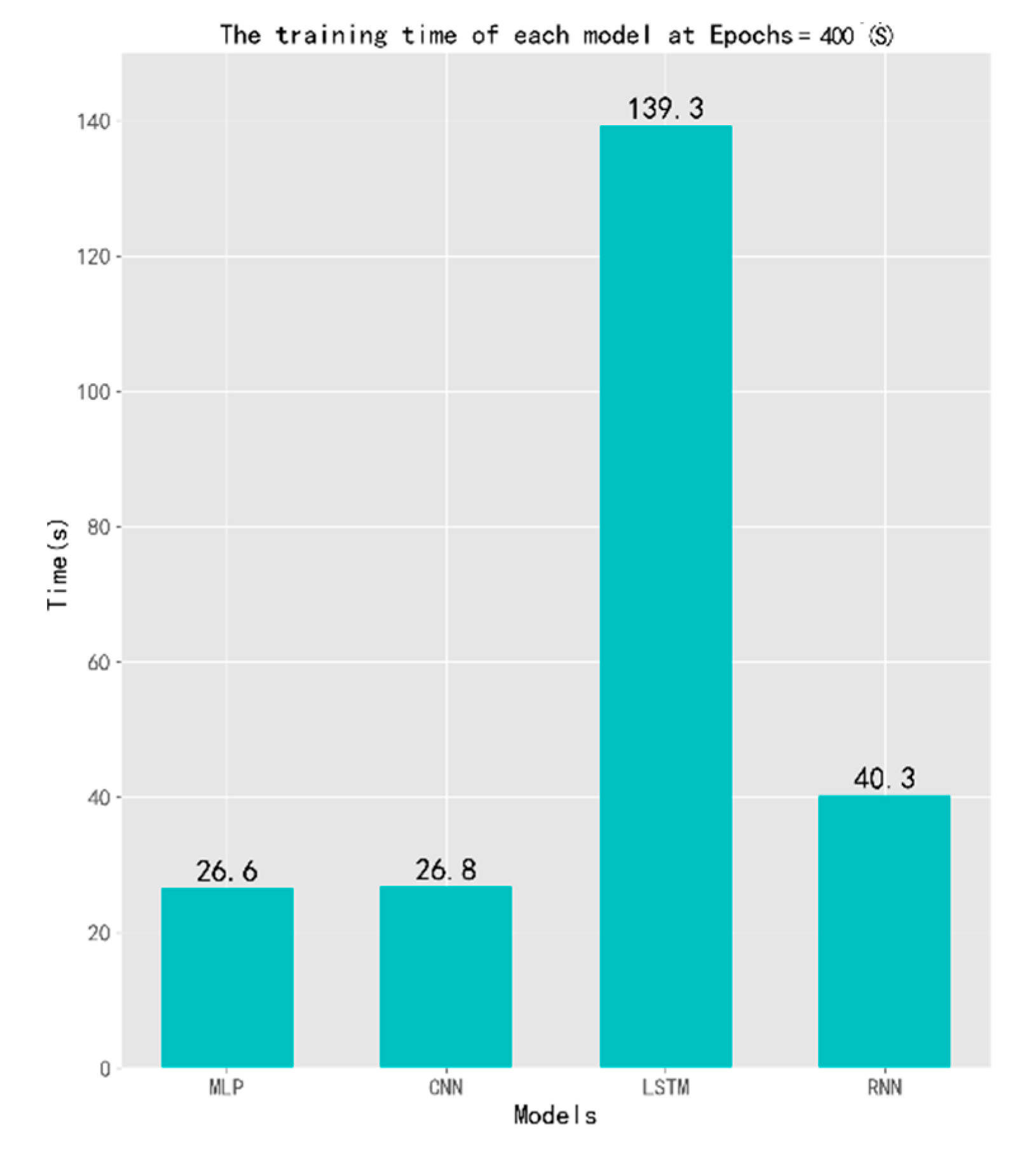

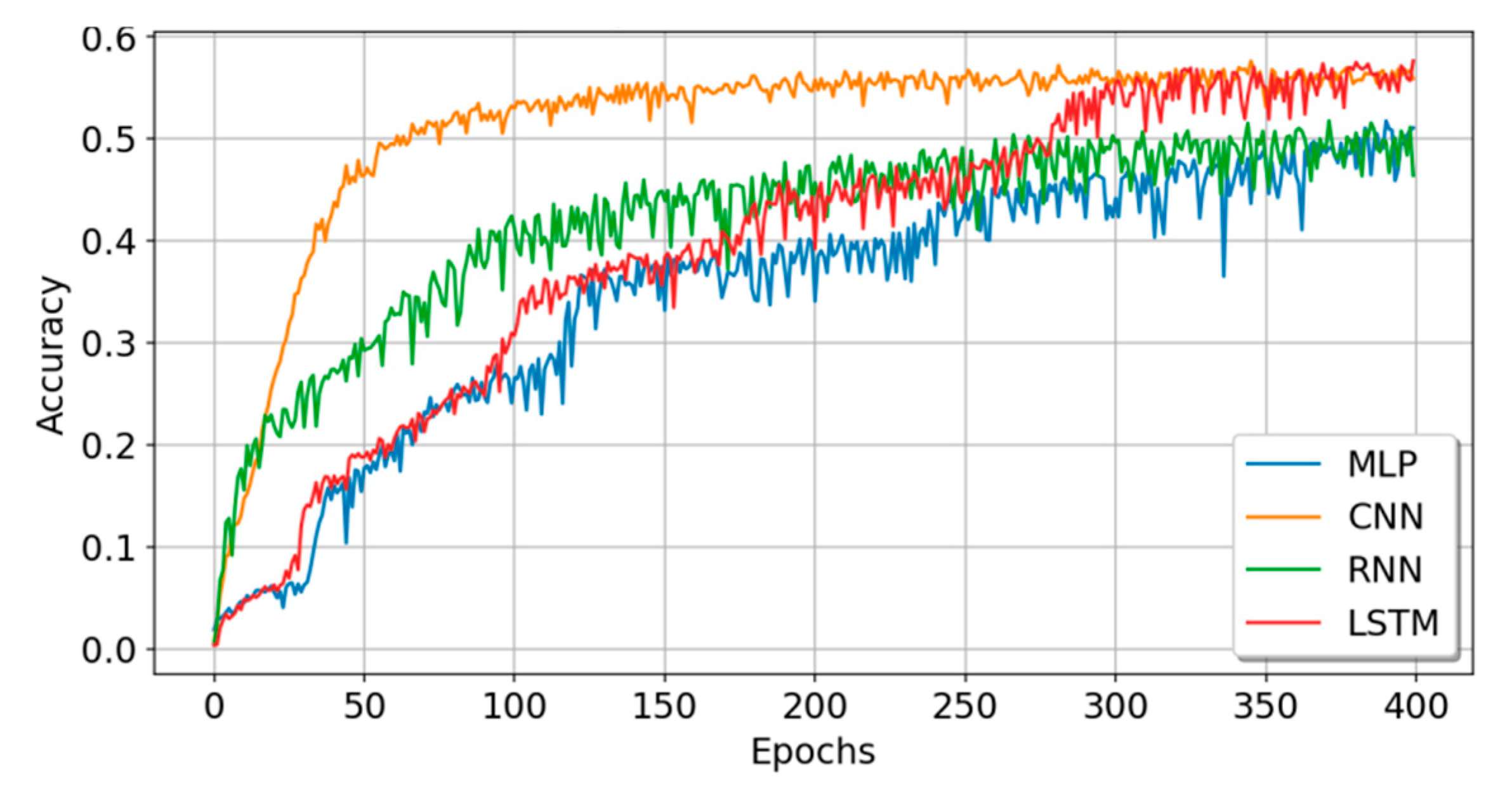
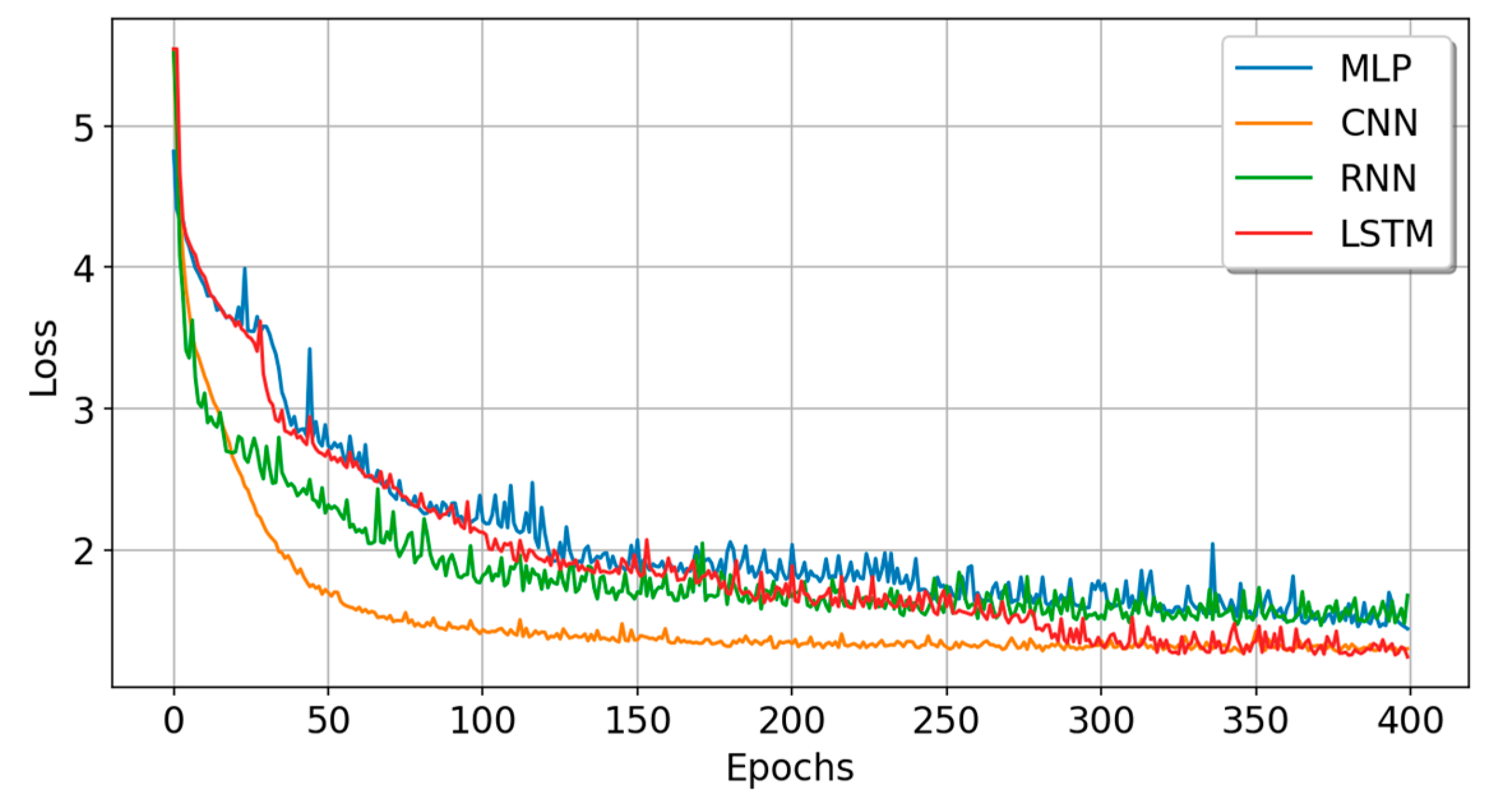




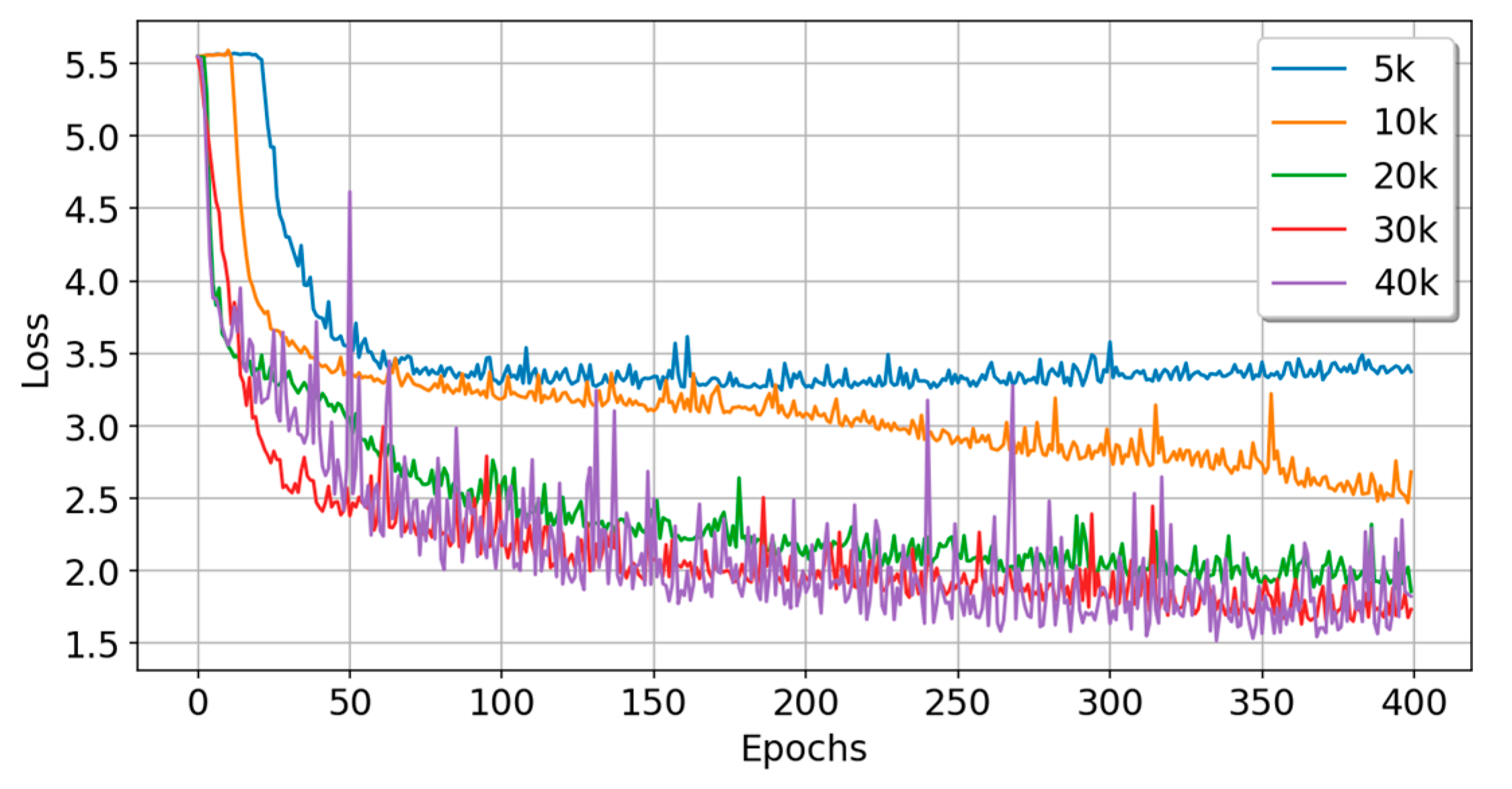
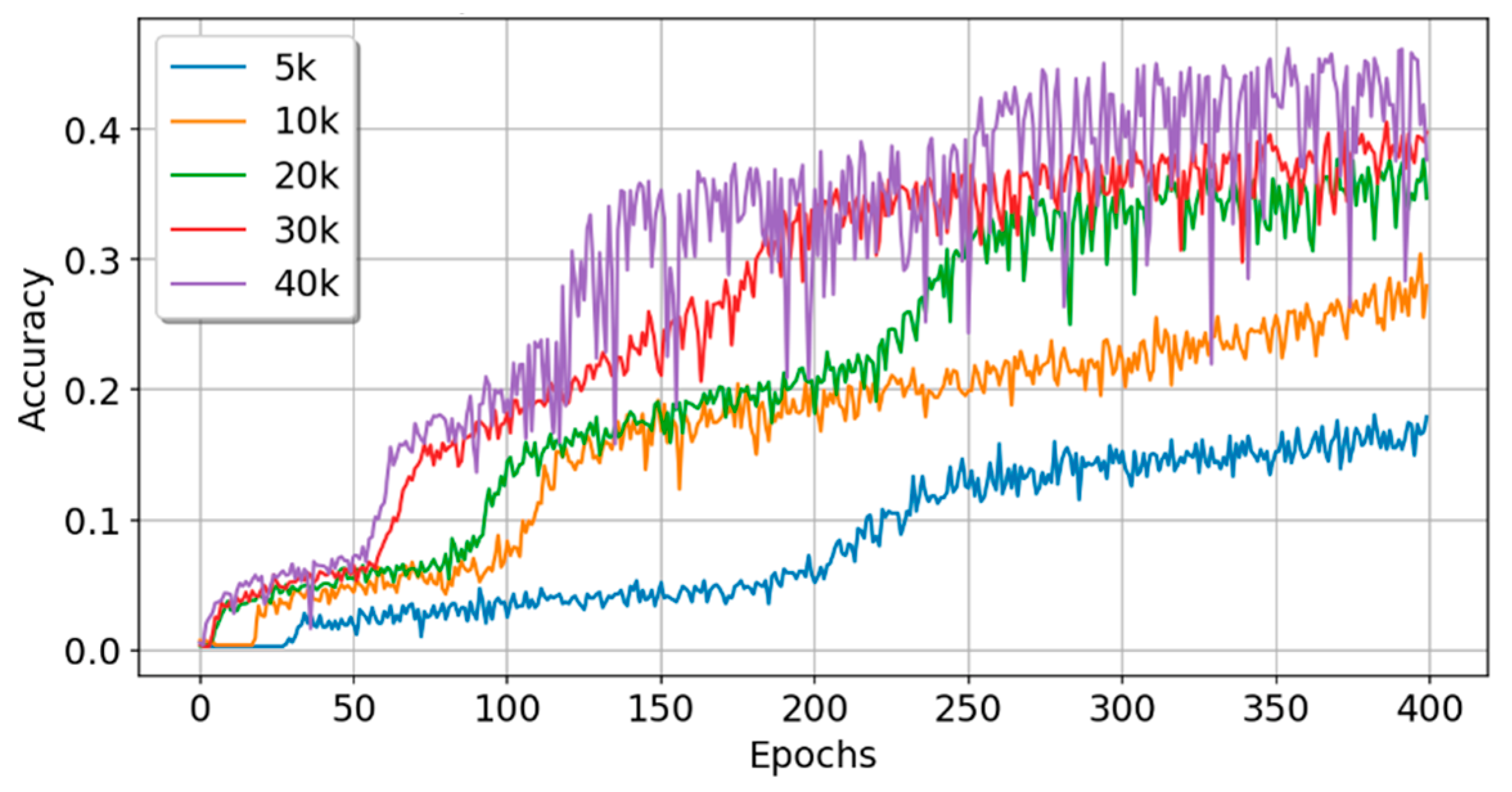


| Model | Optimizer | Learning_Rate | Mini_Batch | Epochs |
|---|---|---|---|---|
| MLP | Adam | 0.0005 | 128 | 400 |
| CNN | Adam | 0.0005 | 128 | 400 |
| RNN | Adam | 0.0005 | 128 | 400 |
| LSTM | Adam | 0.0005 | 128 | 400 |
| Model | Train_Acc | Train_Loss | Test_Acc | Test_Loss | Time (s) | Param# | Rank |
|---|---|---|---|---|---|---|---|
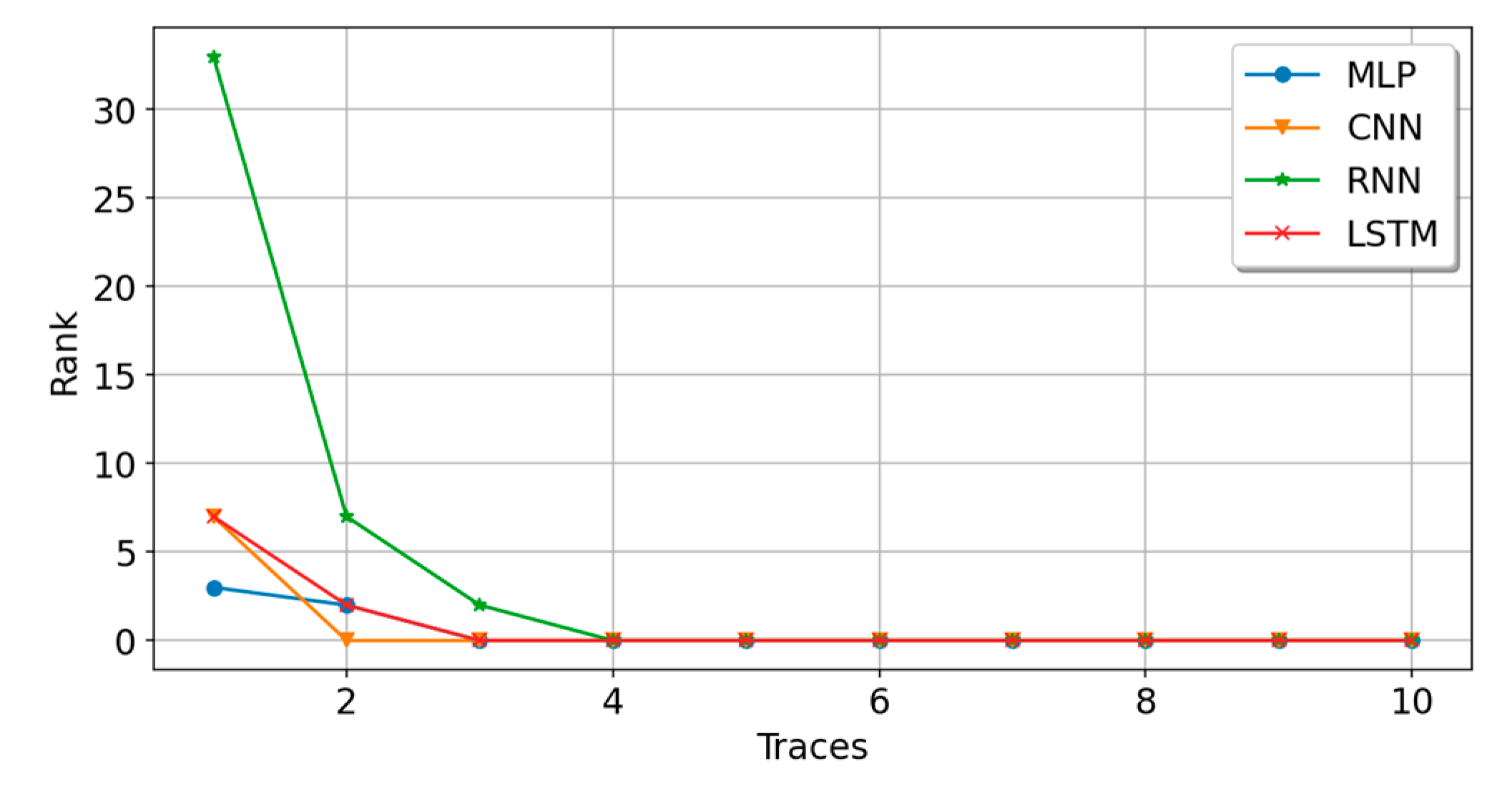
| MLP | 0.1399 | 3.0573 | 0.1180 | 3.1467 | 26.6 | 250,336 | 3 |
| CNN | 0.1438 | 3.4043 | 0.0940 | 3.6542 | 26.8 | 269,484 | 2 |
| RNN | 0.2471 | 2.5843 | 0.1300 | 3.4500 | 139.3 | 84,616 | 3 |
| LSTM | 0.0676 | 3.6082 | 0.0600 | 3.8582 | 40.3 | 106,996 | 4 |
| Model | Train_Acc | Train_Loss | Test_Acc | Test_Loss | Time (s) | Param# | Rank |
|---|---|---|---|---|---|---|---|
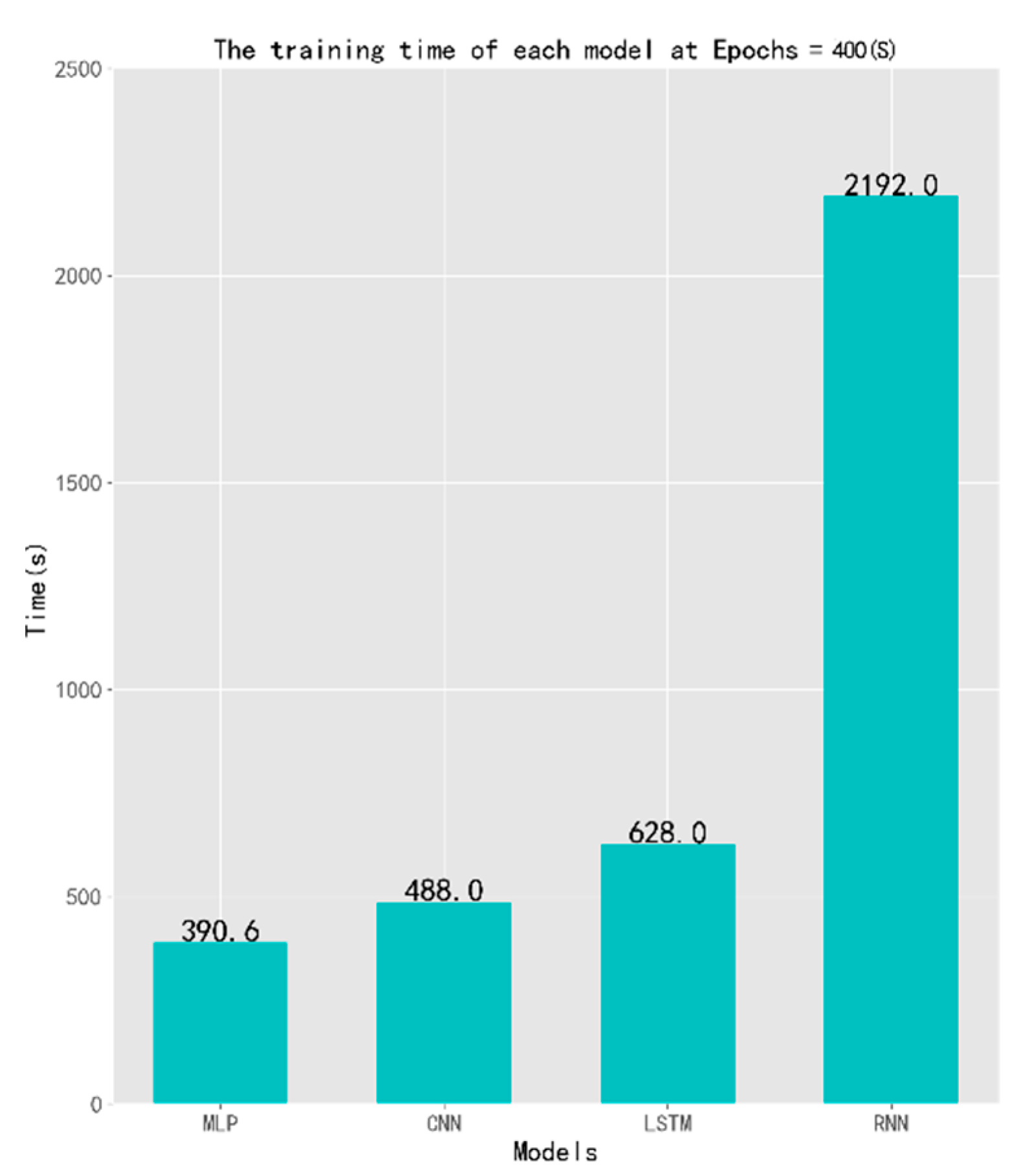
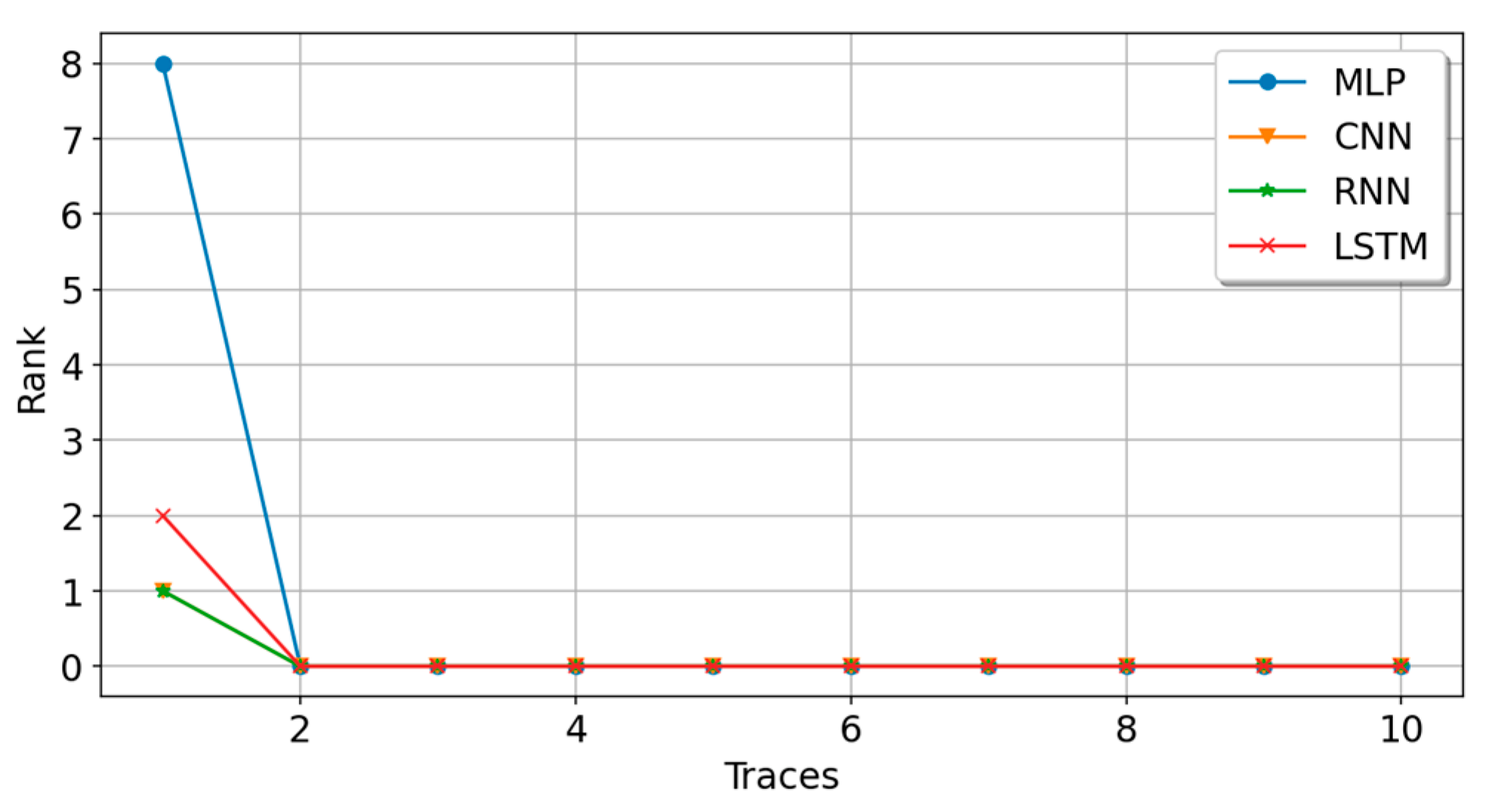
| MLP | 0.4944 | 1.4880 | 0.5084 | 1.4599 | 390.6 | 250,336 | 2 |
| CNN | 0.5745 | 1.2589 | 0.5496 | 1.3214 | 488.0 | 269,484 | 2 |
| RNN | 0.5128 | 1.4618 | 0.4550 | 1.6926 | 2192.0 | 84,616 | 2 |
| LSTM | 0.5666 | 1.2700 | 0.5680 | 1.2813 | 628.0 | 106,996 | 2 |
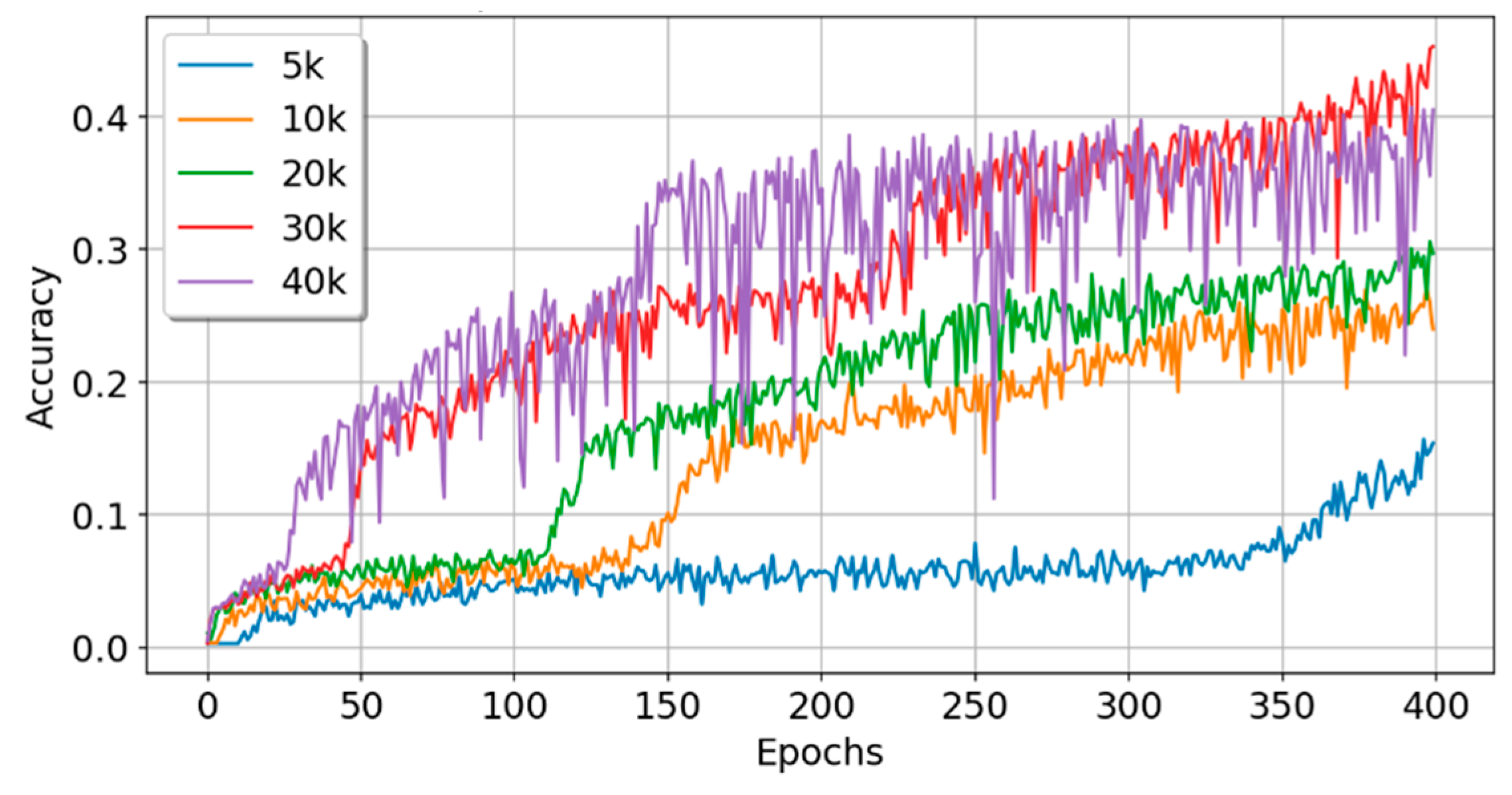
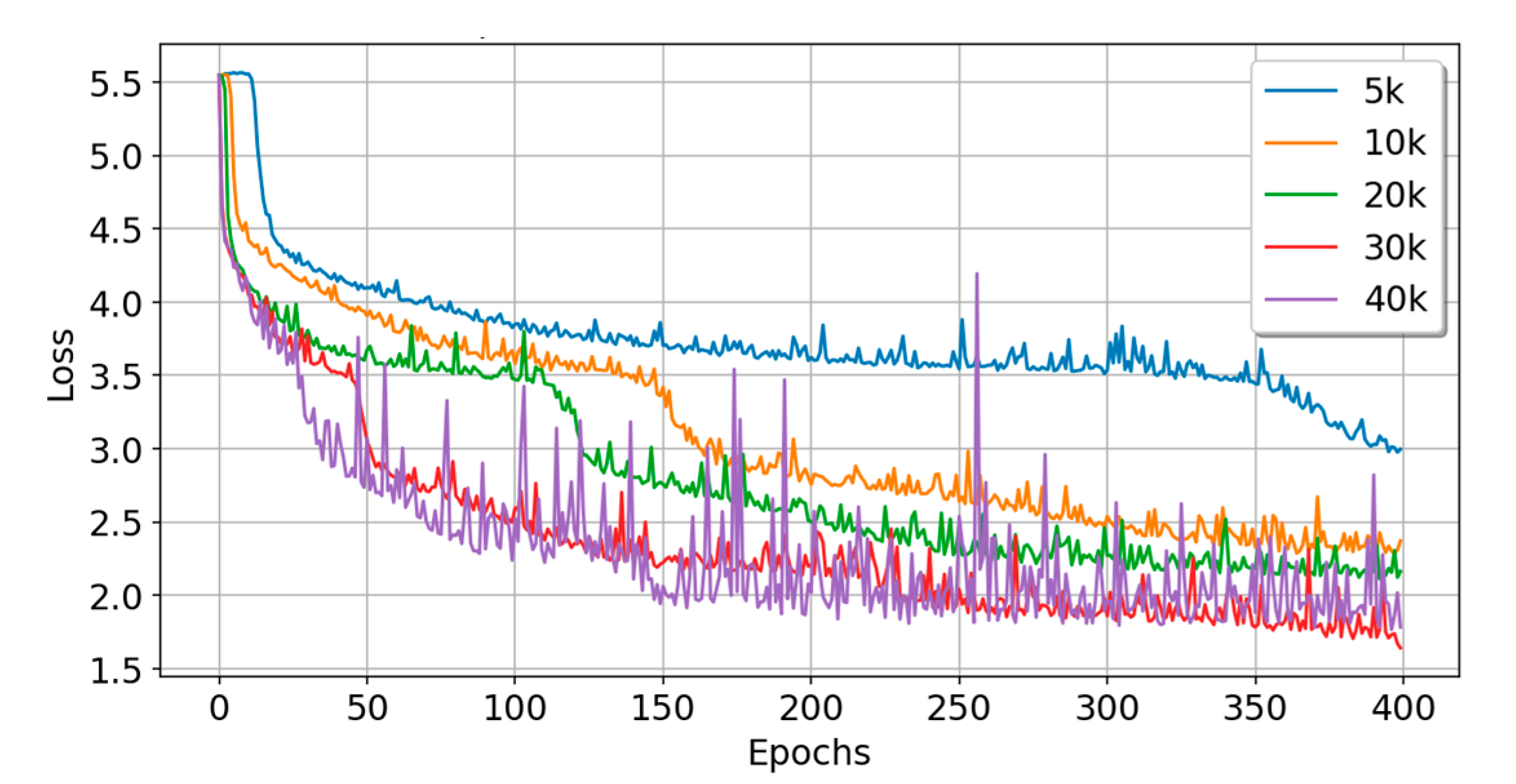
| Data Size | Train_Acc | Train_Loss | Test_Acc | Test_Loss | Time (s) | Param# | Rank |
|---|---|---|---|---|---|---|---|
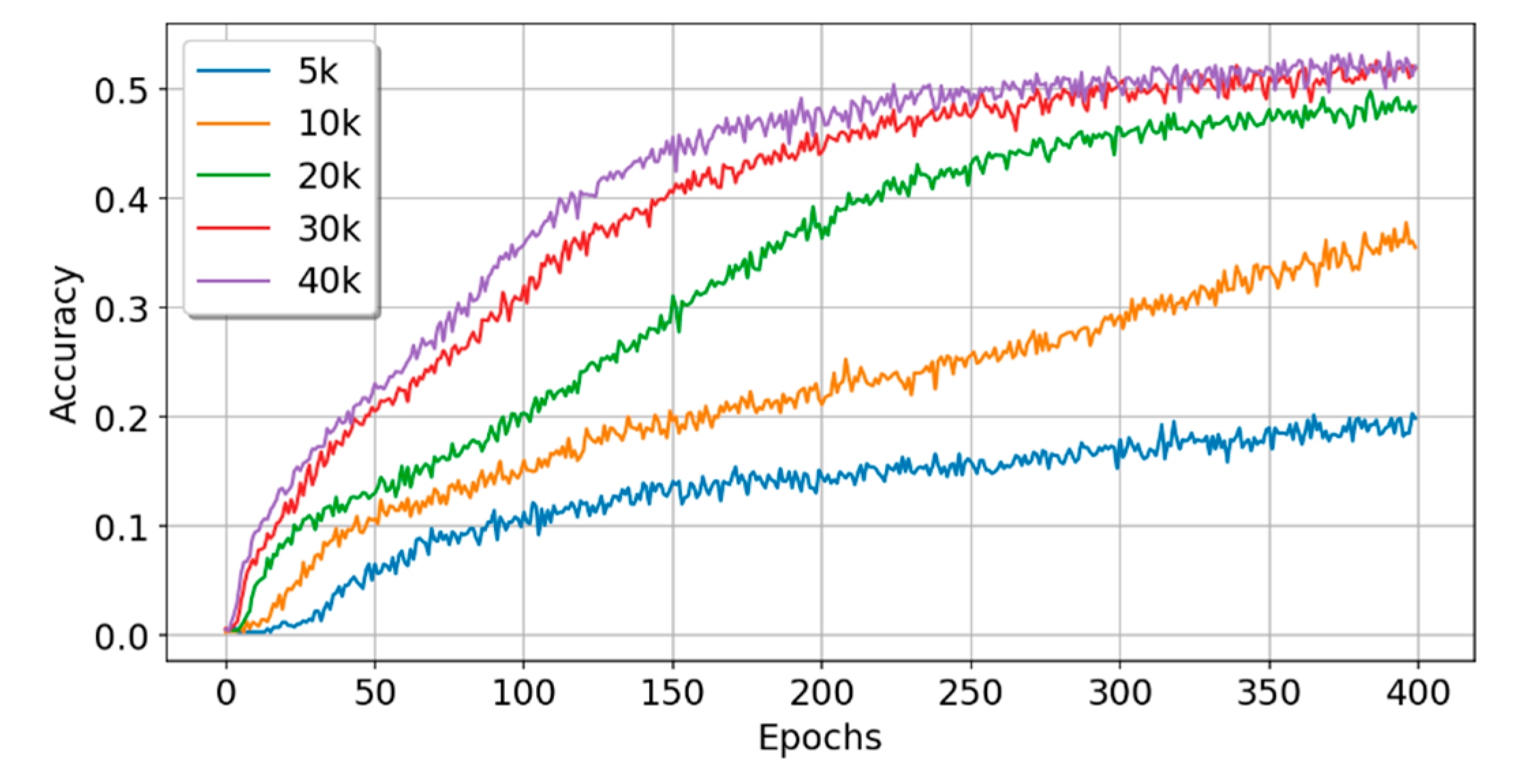
| 5k | 0.1358 | 3.0848 | 0.1480 | 2.9956 | 40.1 | 250,336 | 2 |
| 10k | 0.2606 | 2.2648 | 0.2470 | 2.3530 | 81.7 | 250,336 | 3 |
| 20k | 0.2884 | 2.1439 | 0.3055 | 2.1393 | 156.7 | 250,336 | 2 |
| 30k | 0.4164 | 1.7370 | 0.4350 | 1.6421 | 236.6 | 250,336 | 2 |
| 40k | 0.4023 | 1.7705 | 0.4145 | 1.7597 | 312.1 | 250,336 | 2 |
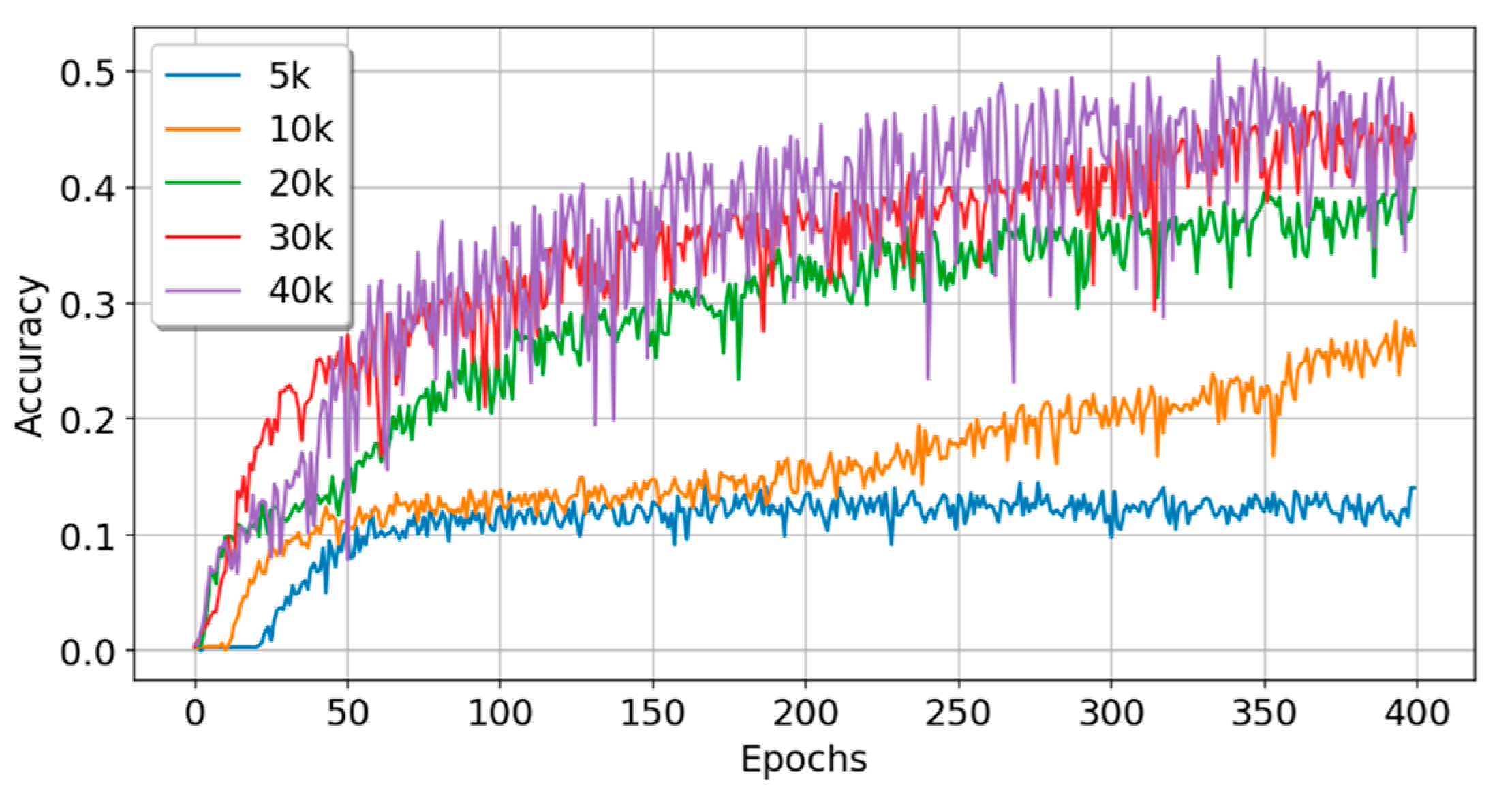
| Data Size | Train_Acc | Train_Loss | Test_Acc | Test_Loss | Time (s) | Param# | Rank |
|---|---|---|---|---|---|---|---|
| 5k | 0.3045 | 2.4804 | 0.2180 | 2.8696 | 45.9 | 269,484 | 2 |
| 10k | 0.3826 | 2.1234 | 0.3450 | 2.2371 | 84.0 | 269,484 | 2 |
| 20k | 0.5258 | 1.4856 | 0.4820 | 1.6300 | 163.8 | 269,484 | 2 |
| 30k | 0.5352 | 1.4234 | 0.5133 | 1.4520 | 247.8 | 269,484 | 2 |
| 40k | 0.5441 | 1.3806 | 0.5265 | 1.4232 | 328.5 | 269,484 | 2 |
| Data Size | Train_Acc | Train_Loss | Test_Acc | Test_Loss | Time (s) | Param# | Rank |
|---|---|---|---|---|---|---|---|
| 5k | 0.2025 | 2.7272 | 0.1100 | 3.5471 | 238.0 | 84,616 | 3 |
| 10k | 0.2809 | 2.3556 | 0.2350 | 2.7587 | 464.7 | 84,616 | 2 |
| 20k | 0.4281 | 1.7523 | 0.4105 | 1.8600 | 927.3 | 84,616 | 2 |
| 30k | 0.4818 | 1.5794 | 0.4390 | 1.7173 | 1410.2 | 84,616 | 2 |
| 40k | 0.5237 | 1.4271 | 0.4265 | 1.8233 | 1895.4 | 84,616 | 2 |
| Data Size | Train_Acc | Train_Loss | Test_Acc | Test_Loss | Time (s) | Param# | Rank |
|---|---|---|---|---|---|---|---|
| 5k | 0.1932 | 2.6546 | 0.1780 | 2.8335 | 68.0 | 106,996 | 3 |
| 10k | 0.2820 | 2.2234 | 0.2770 | 2.2410 | 128.0 | 106,996 | 2 |
| 20k | 0.3826 | 1.8559 | 0.3695 | 1.9201 | 255.0 | 106,996 | 3 |
| 30k | 0.3954 | 1.7949 | 0.3863 | 1.8032 | 386.0 | 106,996 | 2 |
| 40k | 0.4671 | 1.5768 | 0.3718 | 2.0258 | 511.2 | 106,996 | 2 |
Publisher’s Note: MDPI stays neutral with regard to jurisdictional claims in published maps and institutional affiliations. |
© 2022 by the authors. Licensee MDPI, Basel, Switzerland. This article is an open access article distributed under the terms and conditions of the Creative Commons Attribution (CC BY) license (https://creativecommons.org/licenses/by/4.0/).
Share and Cite
Chang, L.; Wei, Y.; He, S.; Pan, X. Research on Side-Channel Analysis Based on Deep Learning with Different Sample Data. Appl. Sci. 2022, 12, 8246. https://doi.org/10.3390/app12168246
Chang L, Wei Y, He S, Pan X. Research on Side-Channel Analysis Based on Deep Learning with Different Sample Data. Applied Sciences. 2022; 12(16):8246. https://doi.org/10.3390/app12168246
Chicago/Turabian StyleChang, Lipeng, Yuechuan Wei, Shuiyu He, and Xiaozhong Pan. 2022. "Research on Side-Channel Analysis Based on Deep Learning with Different Sample Data" Applied Sciences 12, no. 16: 8246. https://doi.org/10.3390/app12168246
APA StyleChang, L., Wei, Y., He, S., & Pan, X. (2022). Research on Side-Channel Analysis Based on Deep Learning with Different Sample Data. Applied Sciences, 12(16), 8246. https://doi.org/10.3390/app12168246