
Article

Performance Evaluation of Planetary Boundary Layer Schemes in Simulating Structures of Wintertime Lower Troposphere in Seoul Using One-Hour Interval Radiosonde Observation
1
Department of Environment and Energy, Semyung University, Jecheon 27136, Korea
2
School of Natural Resources and Environmental Science, Kangwon National University, Chuncheon 24341, Korea
3
National Typhoon Center, Korea Meteorological Administration, Seogwipo 63614, Korea
4
School of Environmental Engineering, University of Seoul, Seoul 02504, Korea
*
Author to whom correspondence should be addressed.
Appl. Sci. 2022, 12(13), 6356; https://doi.org/10.3390/app12136356
Submission received: 26 April 2022 / Revised: 18 June 2022 / Accepted: 19 June 2022 / Published: 22 June 2022
(This article belongs to the Special Issue Advances in Monitoring and Modeling of Urban Air Quality)

Abstract

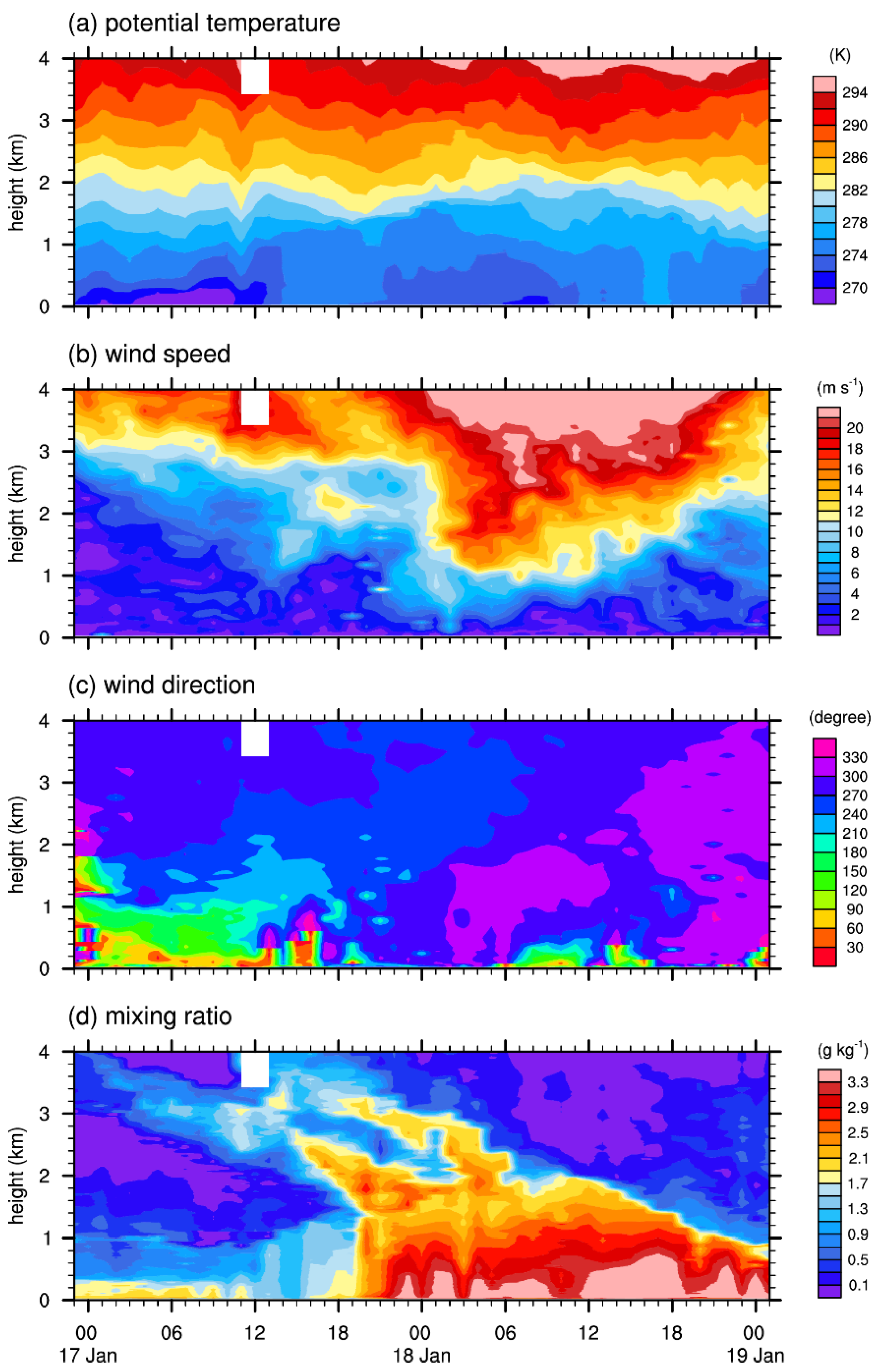
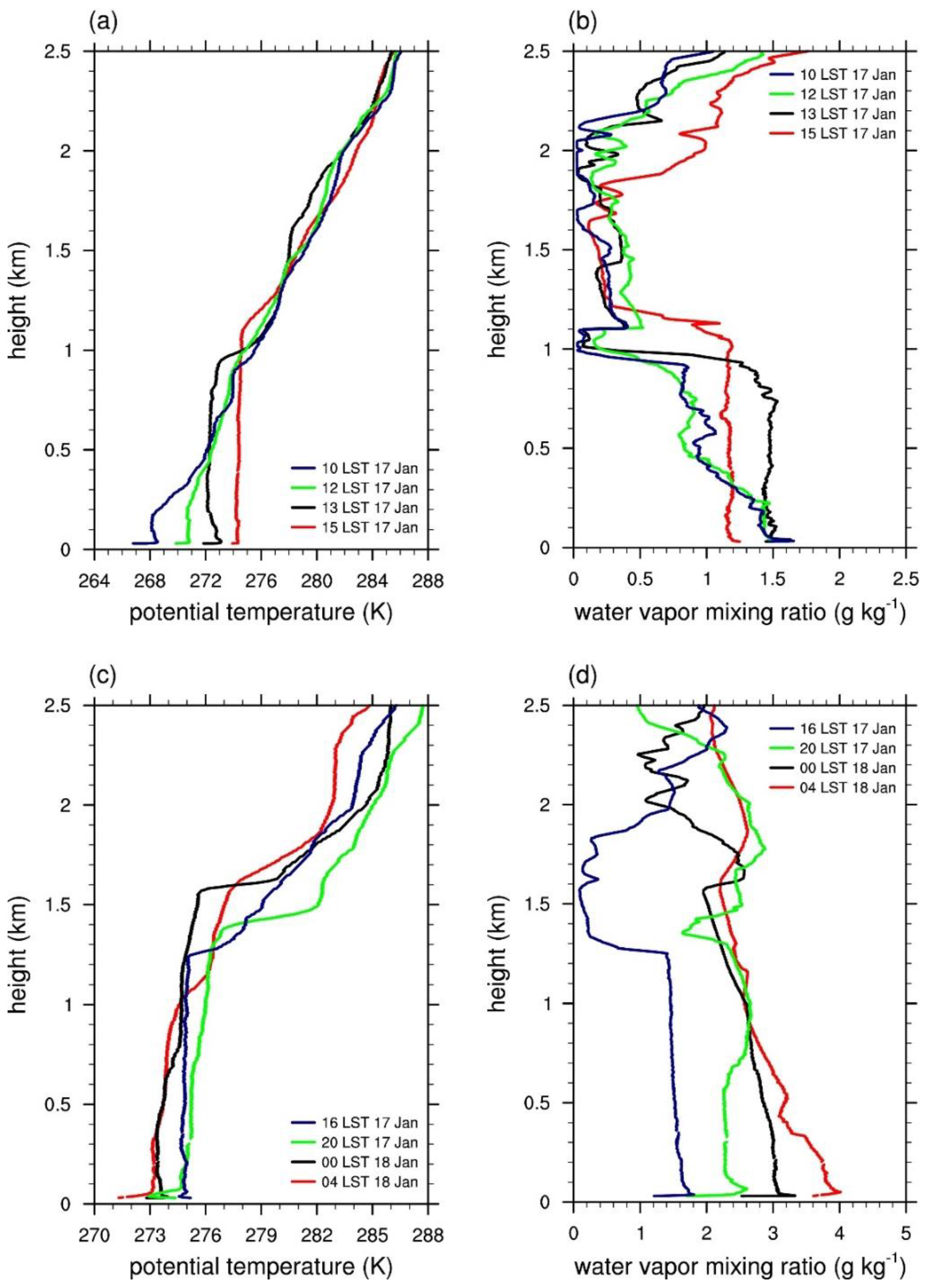
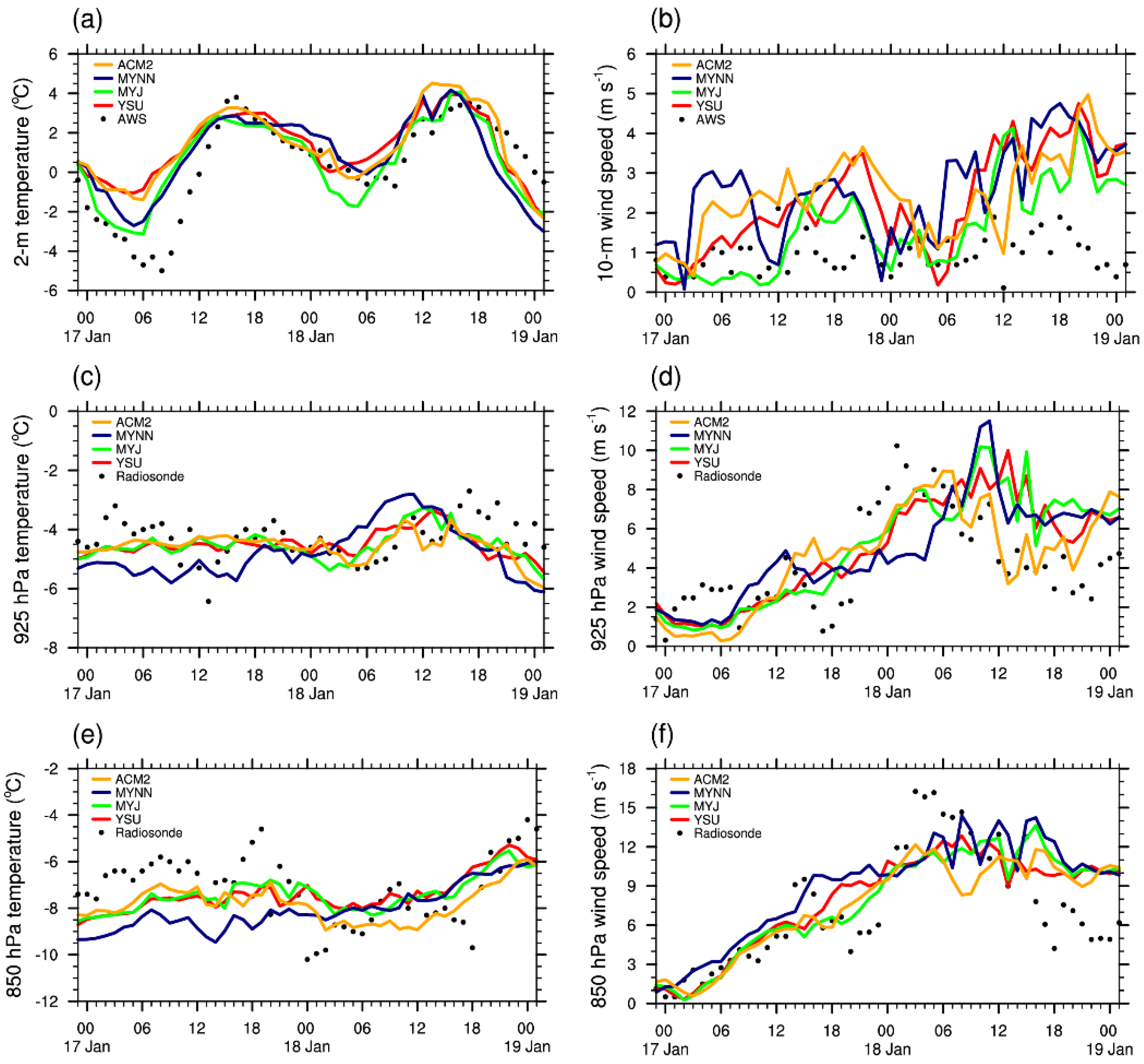
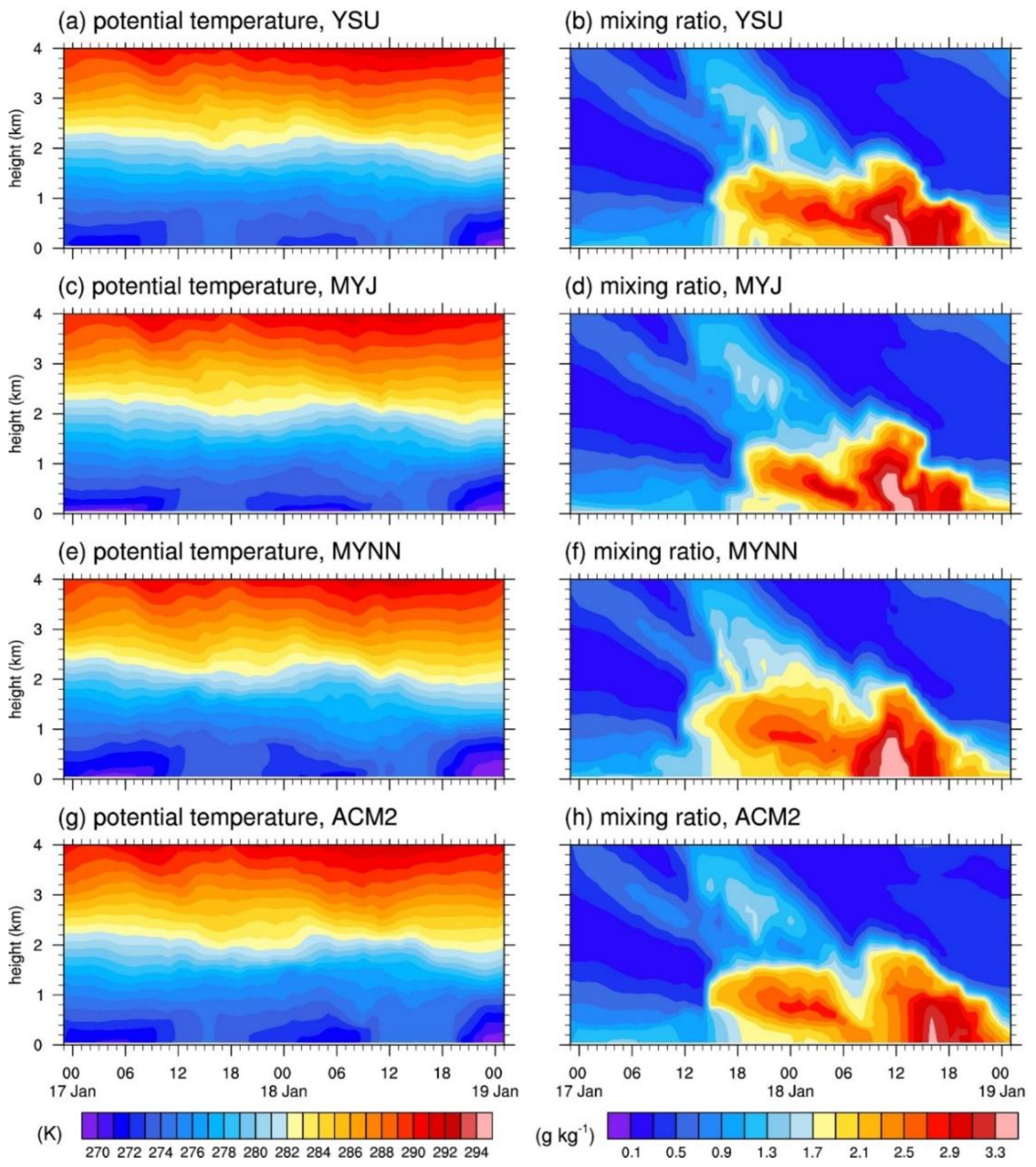
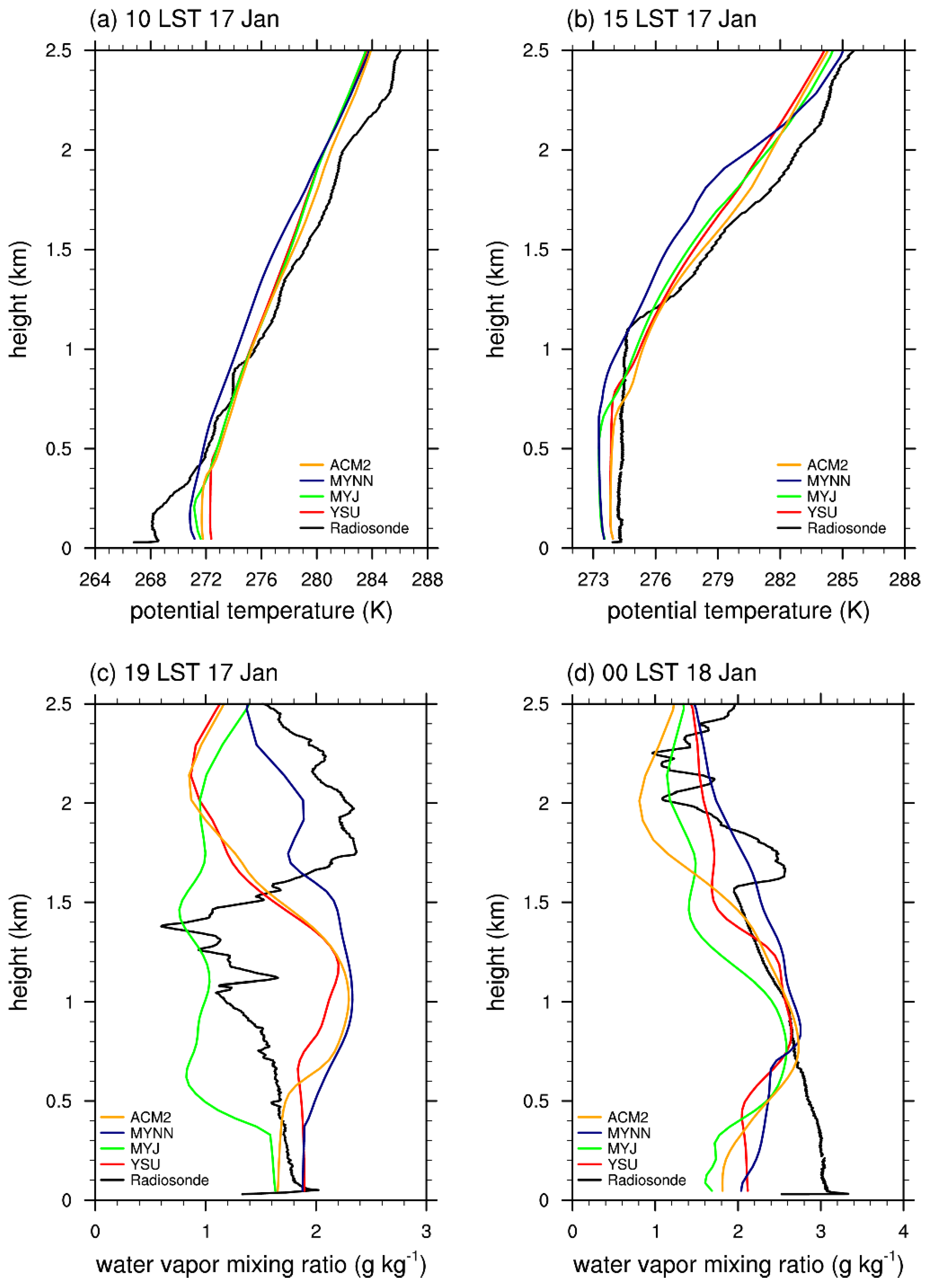
We investigated the structures of the wintertime lower troposphere in Seoul, South Korea on 17 and 18 January 2017 by performing 1 h interval radiosonde observation and numerical simulations. In the daytime on 17 January, the height of the convective boundary layer (CBL) sharply and quickly increased when the residual layer became a part of the CBL. From the afternoon on 17 January, moist air with clouds began to substantially intrude in the lower troposphere in Seoul, and radiative heating/cooling weakened. As a result, the mixing of air in the lower troposphere was inhibited and the vertical gradients of potential temperature and water vapor mixing ratio changed little on 18 January. We evaluated the performance of four planetary boundary layer (PBL) parameterization schemes (the Yonsei University (YSU), Mellor–Yamada–Janjić (MYJ), Mellor–Yamada–Nakanishi–Niino (MYNN), and Asymmetric Convective Model version 2 (ACM2) schemes) coupled with the Weather Research and Forecasting model in simulating the structures of the lower troposphere against 1 h interval radiosonde observation. The general tendencies of the air temperature and wind speed in the lower troposphere were well-reproduced in the four simulations. However, the sharp increase in the CBL height did not appear in the four simulations, implying that the process of the residual layer becoming a part of the CBL in the daytime is not well-parameterized. Additionally, the simulated water vapor mixing ratio near the surface was smaller compared with the observation. We found that small-scale turbulence in the CBL, which mixes advected air and pre-existing air, was not reproduced well by the PBL parameterization schemes. Compared with the other simulations, the most accurate air temperature and wind speed were reproduced in the simulation with the MYJ scheme, while the CBL development and moisture advection were reproduced relatively well in the simulation with the MYNN scheme.
Keywords: 1 h interval radiosonde observation; wintertime lower troposphere; WRF model; PBL scheme 1 h interval radiosonde observation; wintertime lower troposphere; WRF model; PBL scheme