Article

Experimental Study on Flow and Heat Transfer Characteristics in the Circular-Arc-Shaped Flow Channel
1
School of Mechanical and Automotive Engineering, Qingdao University of Technology, Qingdao 266300, China
2
Shandong Gold Jinchuang Group Co., Ltd., Yantai 265600, China
*
Author to whom correspondence should be addressed.
Appl. Sci. 2022, 12(1), 376; https://doi.org/10.3390/app12010376
Submission received: 20 October 2021 / Revised: 19 December 2021 / Accepted: 28 December 2021 / Published: 31 December 2021
(This article belongs to the Section Applied Thermal Engineering)

Abstract

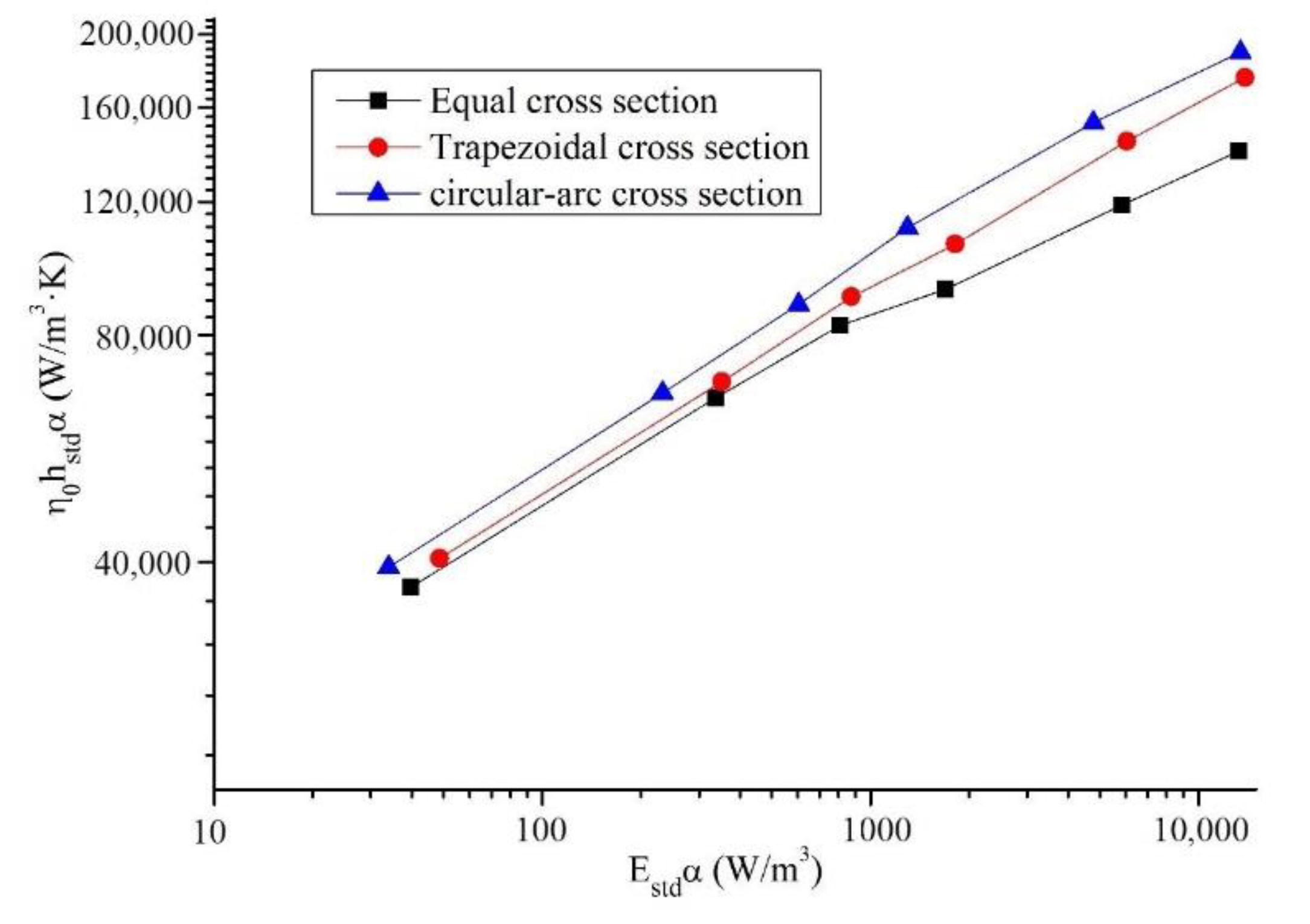
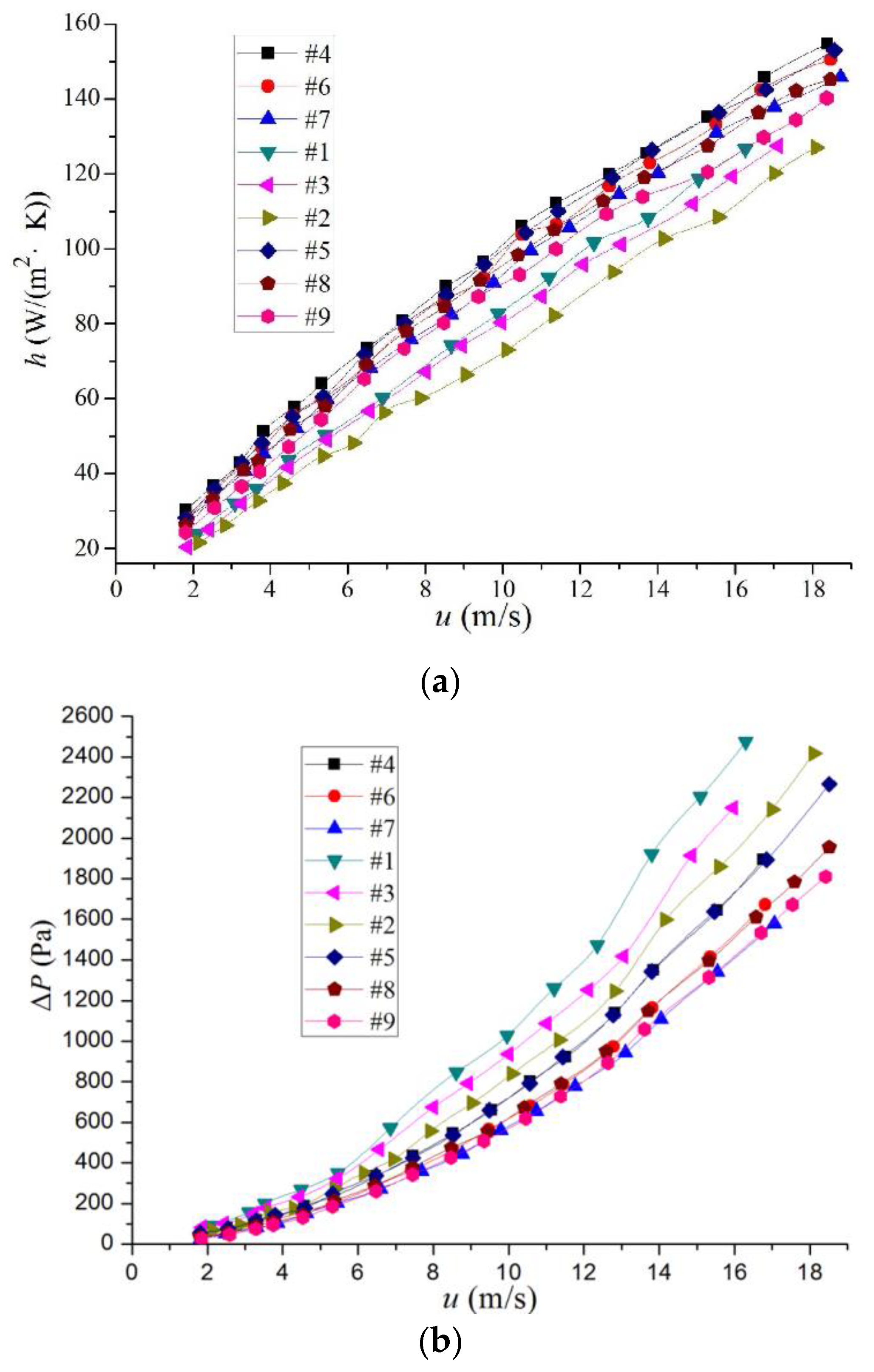
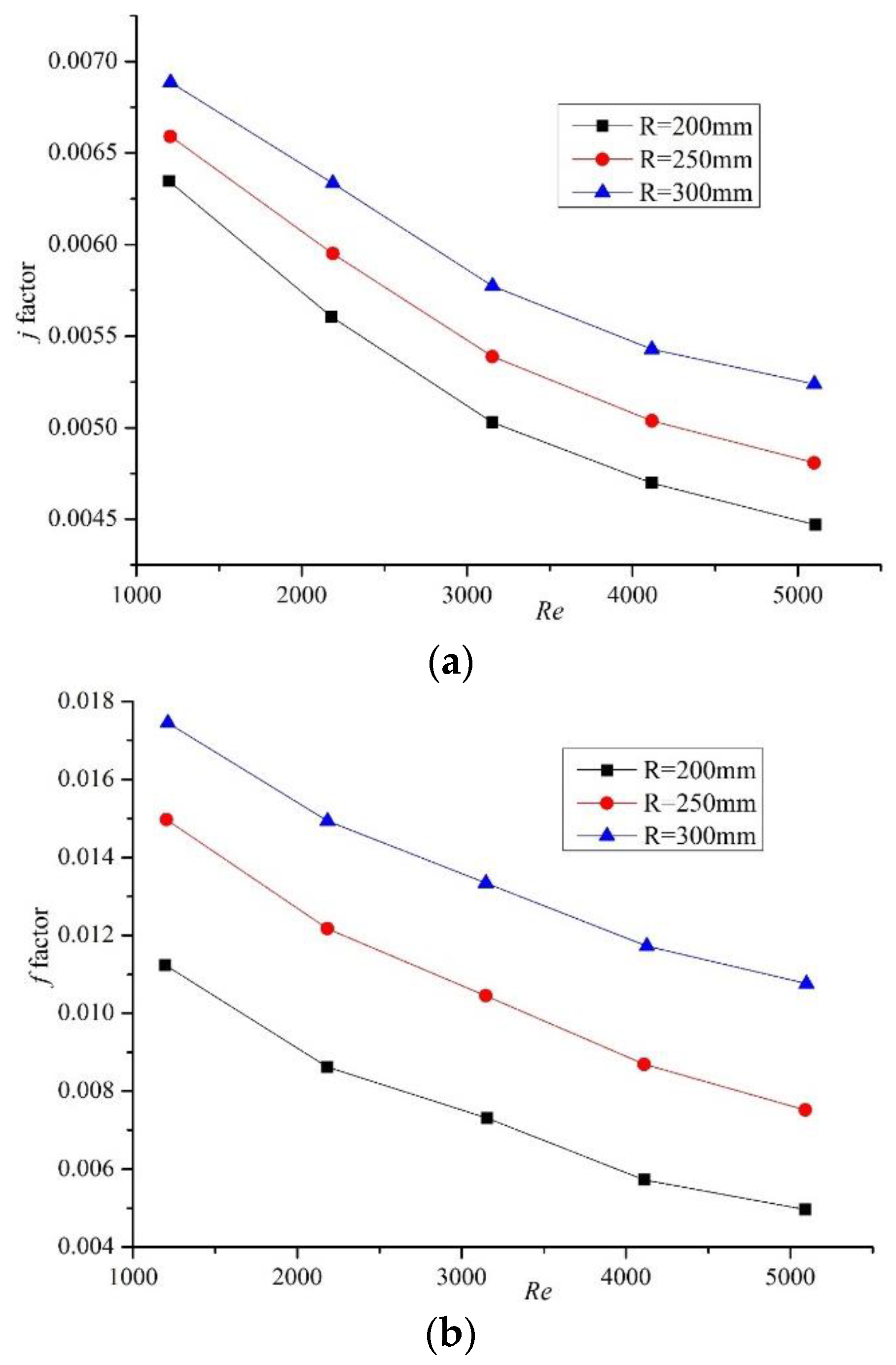
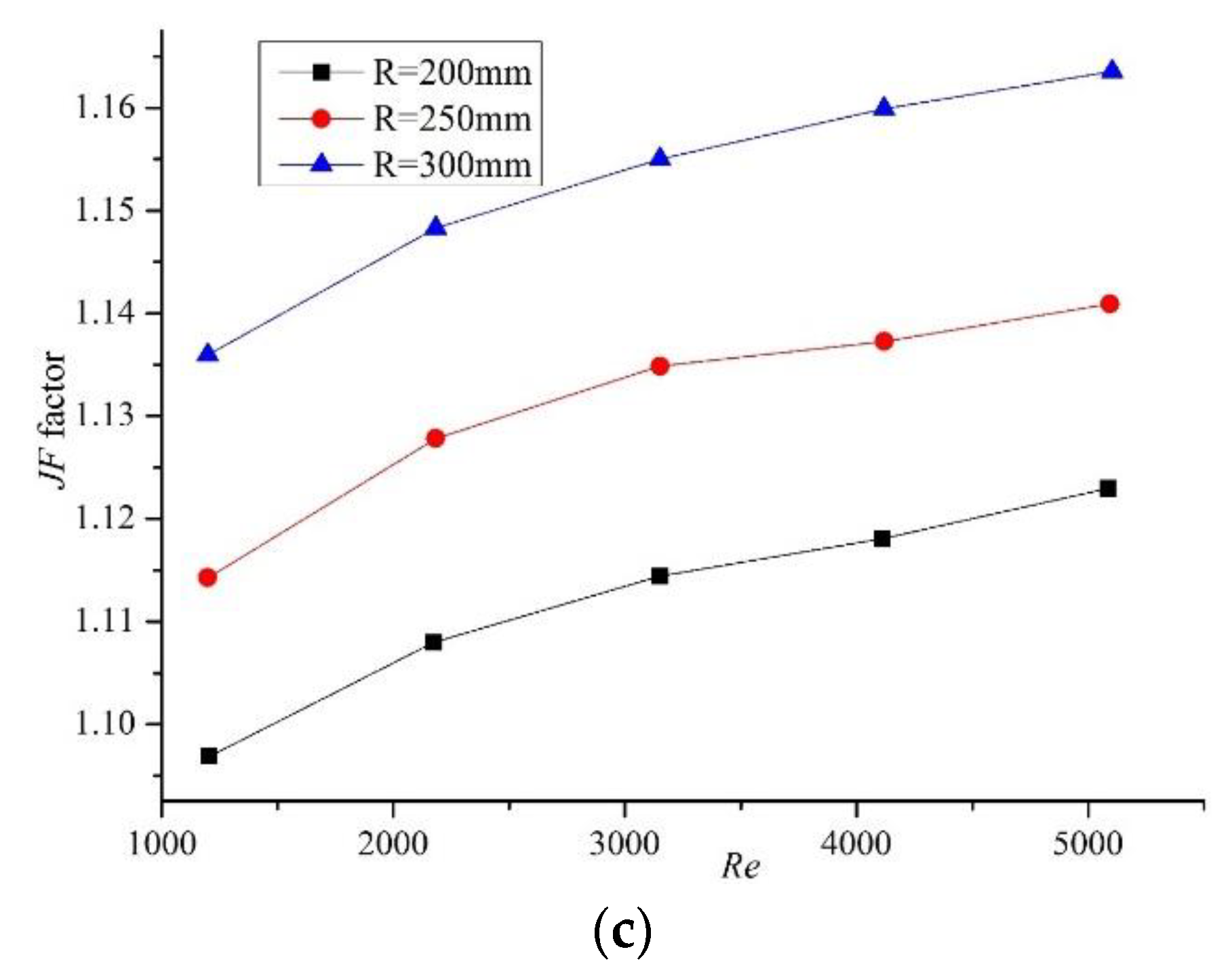
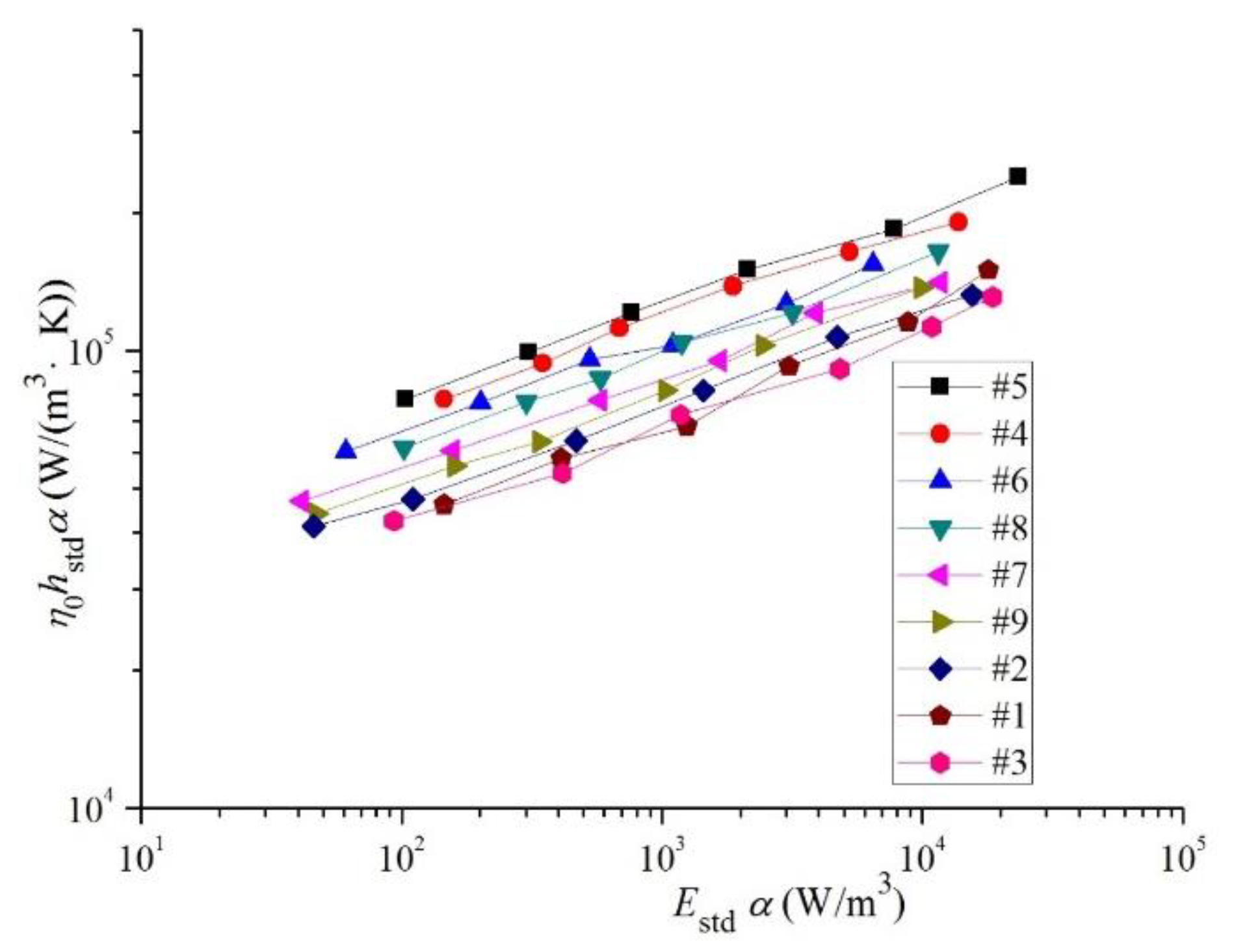
Different parameters of the circular-arc, trapezoidal and equal cross-section-shaped flow channels were analyzed, and the core volume goodness factor was used for the comparison of the three different types of flow channels. During the experiment, the Reynolds number (Re) on the air side ranged from 1200 to 5100. The results showed that the overall heat transfer performance of the three channels in this paper are circular-arc, trapezoidal and equal cross-section in order from good to bad. The overall heat transfer enhancement performance of the circular-arc flow channel is the best, which is 9–26.2% and 3.6–11.8% higher than that of the equal and trapezoidal cross-section flow channels, respectively. This showed that although the divergent flow channel structure reduces the fluid velocity in the flow process, it weakens the convective heat transfer performance in the flow channel. However, this gradually decreasing cross-sectional area improves the downstream heat transfer area and reduces the pressure drop in the flow process, thus promoting the overall heat transfer performance. With the increase in the circular radius (R), both the j and f factors increase, and the highest overall heat transfer performance is obtained at R = 300 mm. The convective heat transfer coefficient increases with the decrease in the inlet height.
Keywords: circular-arc shaped; curved flow channel; circular radius; core volume goodness factor circular-arc shaped; curved flow channel; circular radius; core volume goodness factor