Article

Material Removal Model for Lapping Process Based on Spiral Groove Density
1
Dongnam Regional Division, Korea Institute of Industrial Technology, Busan 46938, Korea
2
School of Mechanical Engineering, Pusan National University, Busan 46241, Korea
*
Author to whom correspondence should be addressed.
Appl. Sci. 2021, 11(9), 3950; https://doi.org/10.3390/app11093950
Submission received: 31 March 2021 / Revised: 19 April 2021 / Accepted: 22 April 2021 / Published: 27 April 2021
(This article belongs to the Special Issue Chemical Mechanical Polishing and Grinding)

Abstract

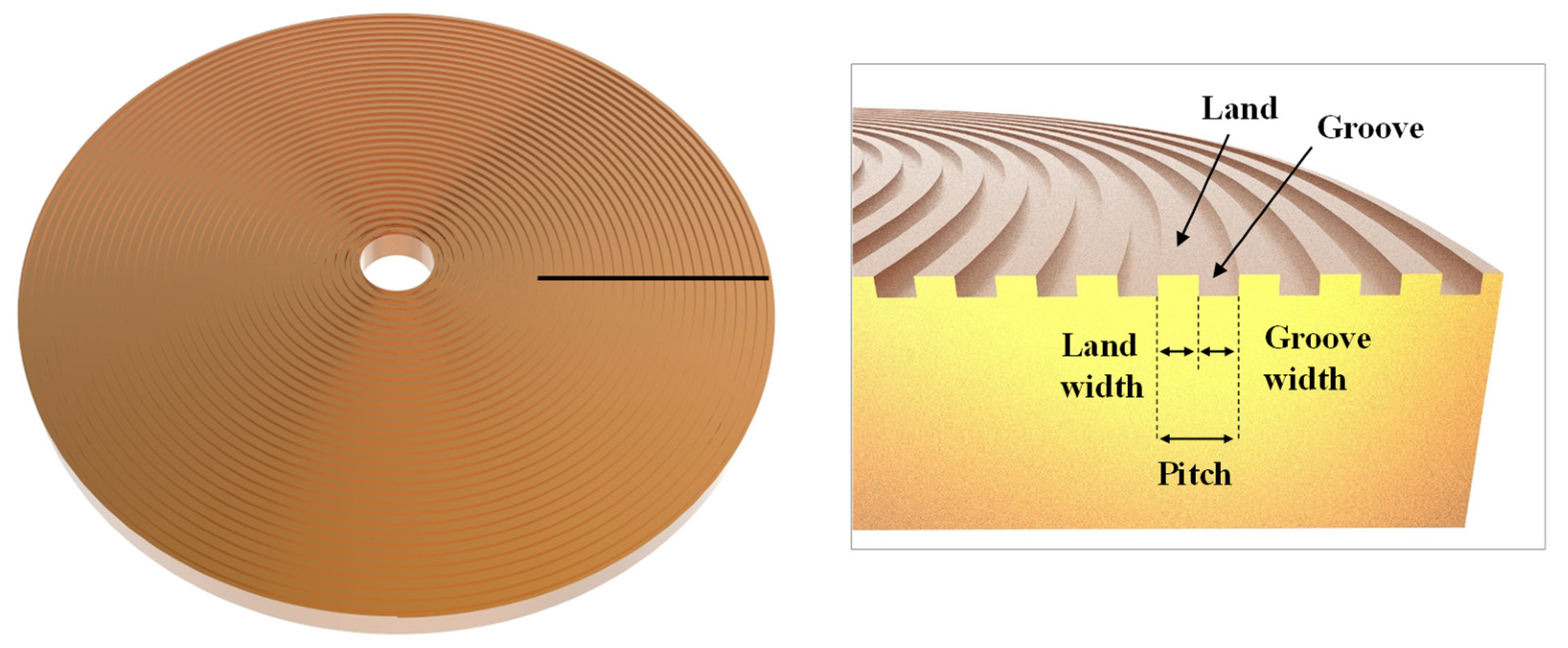
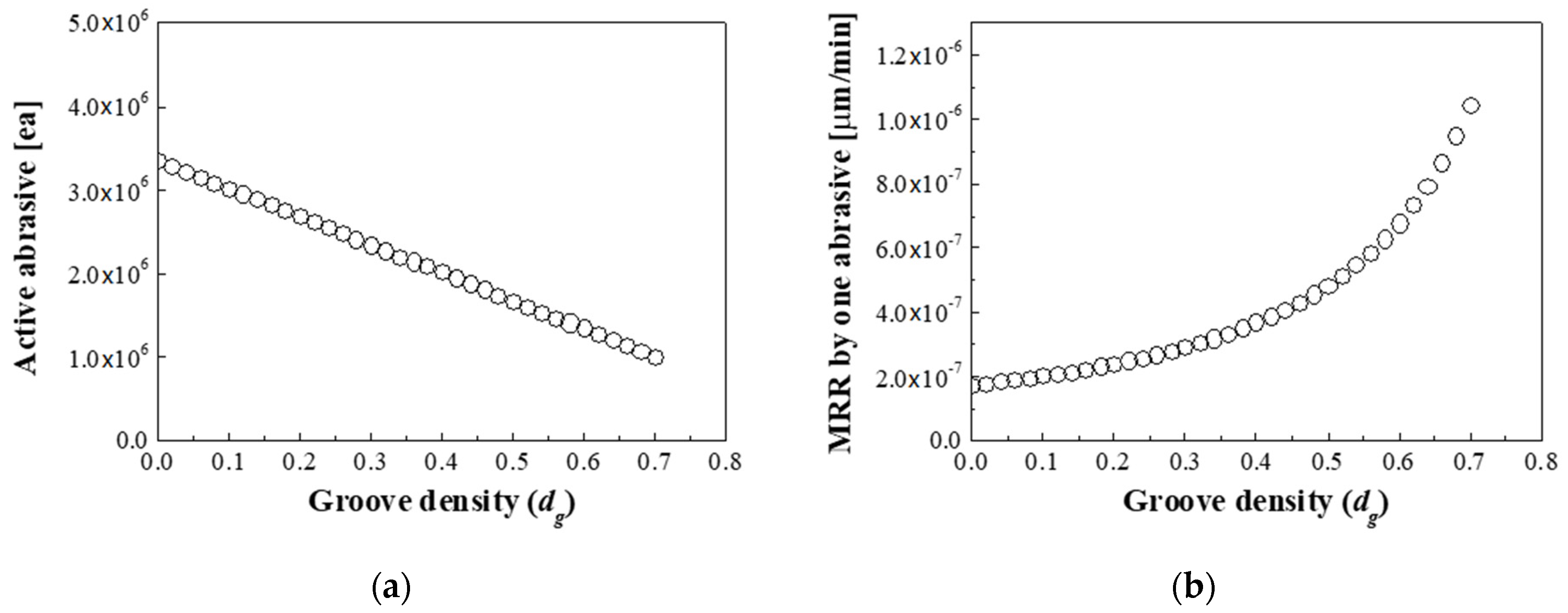
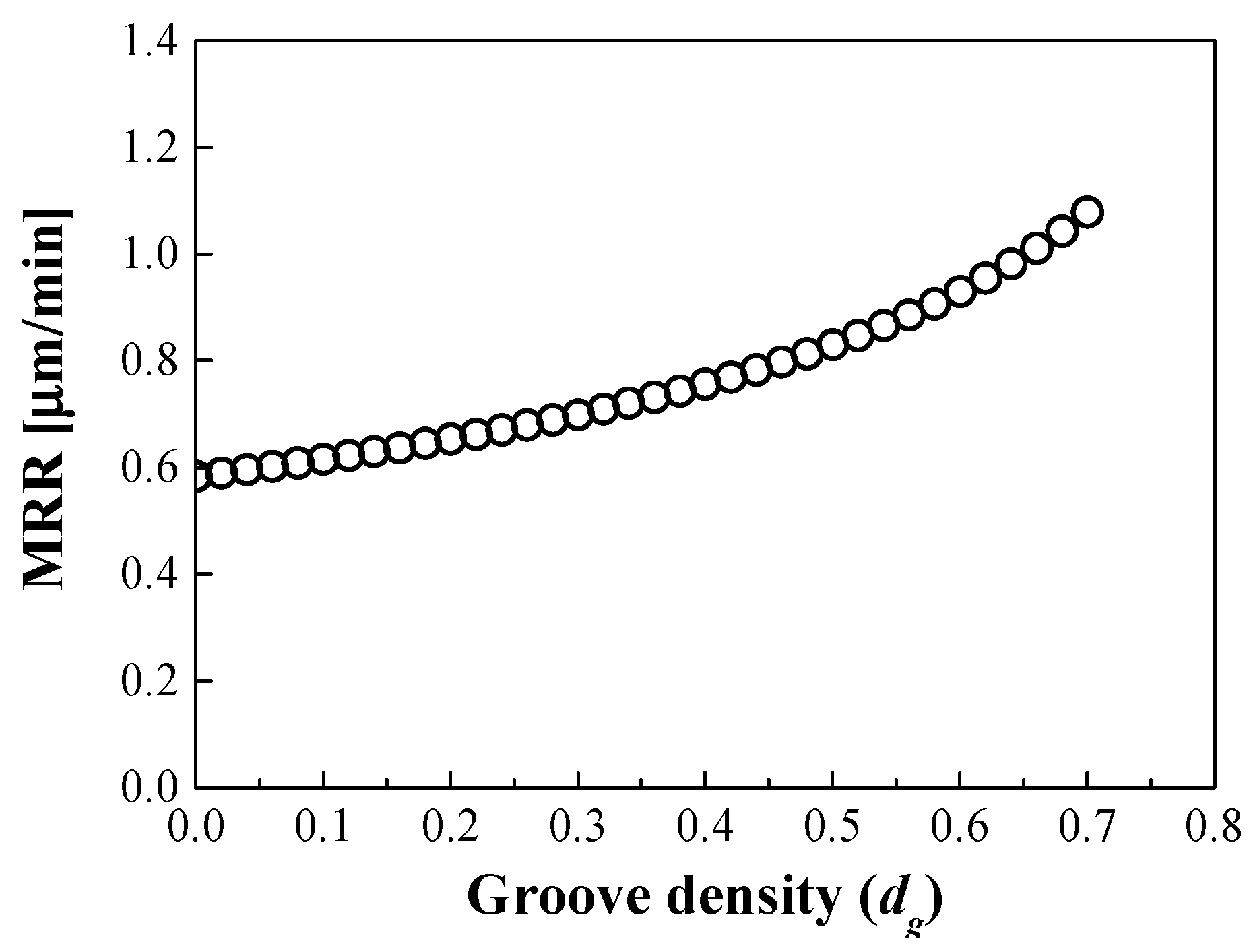
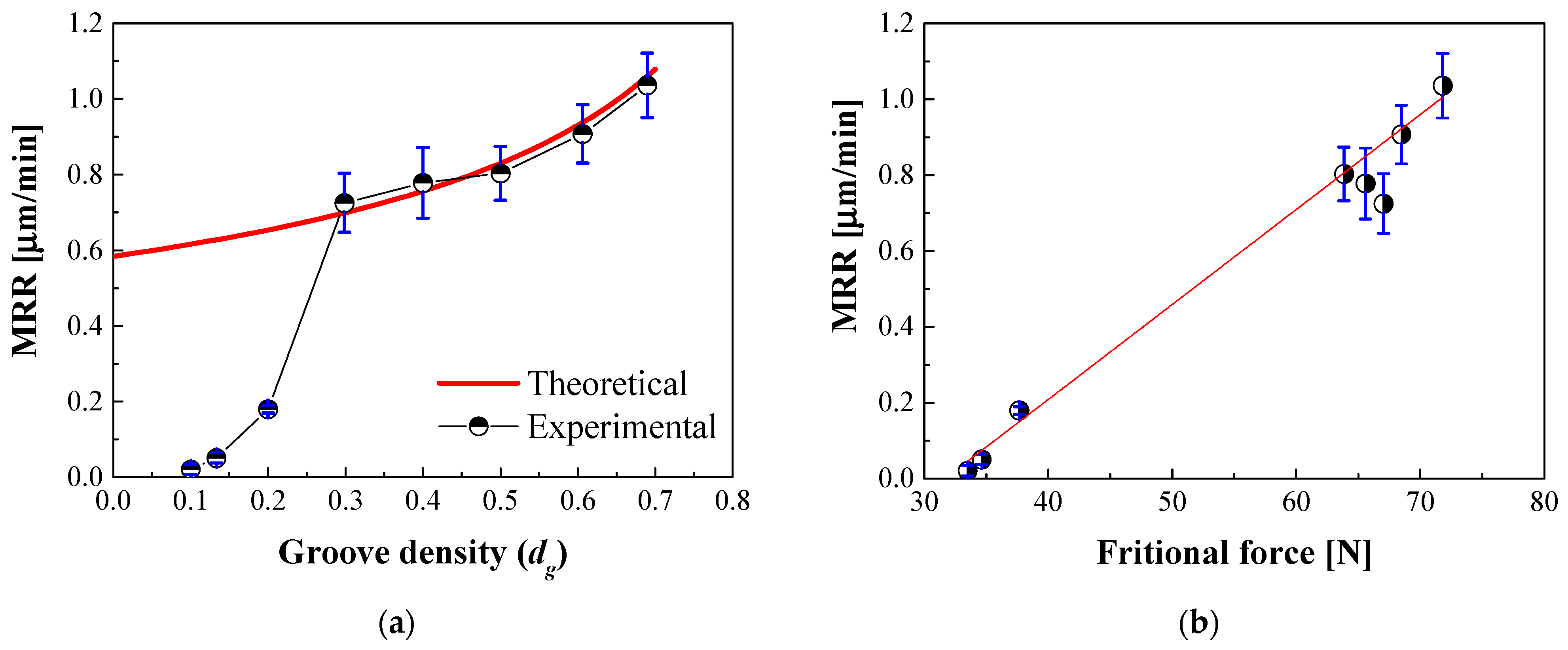
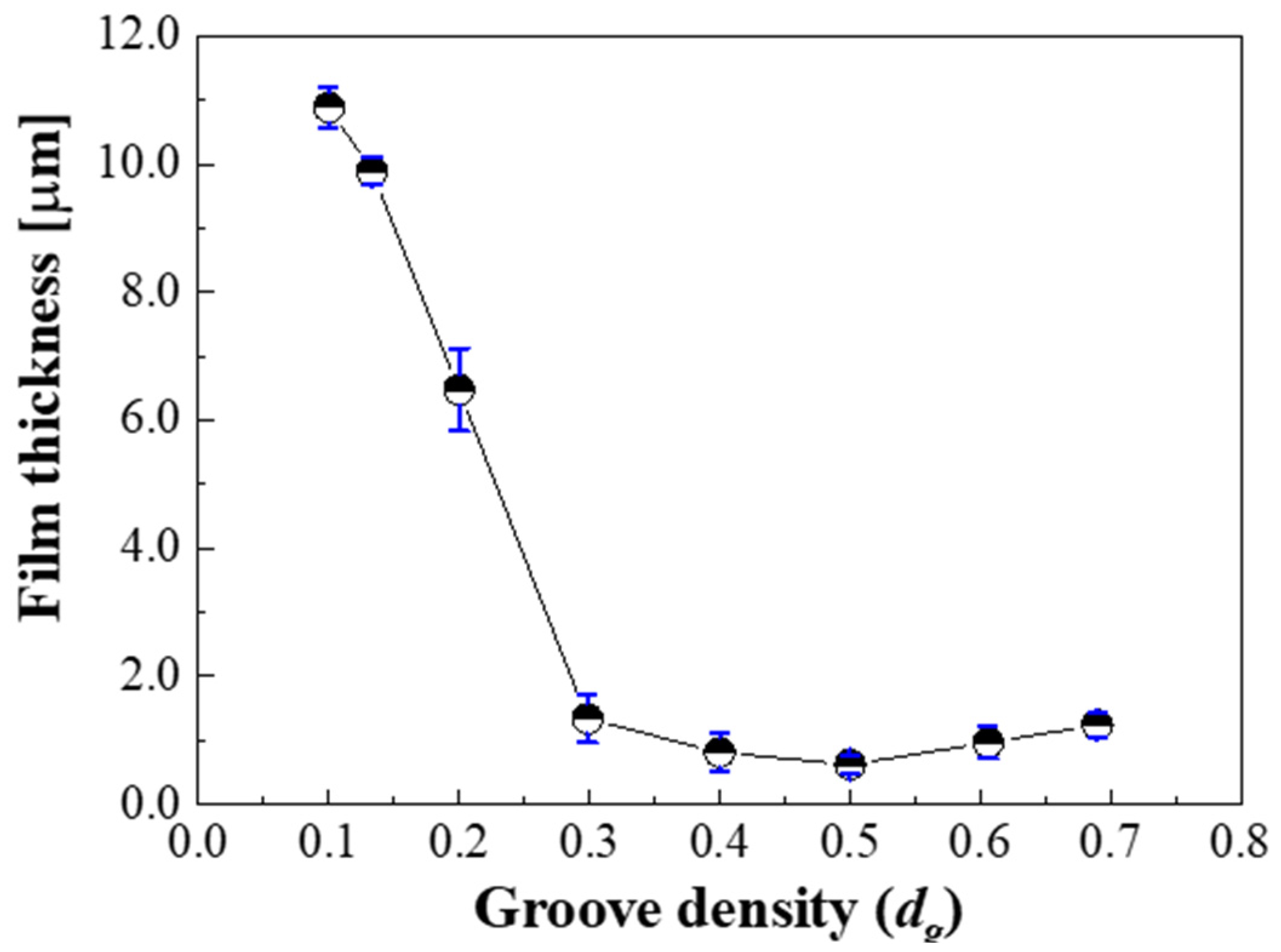
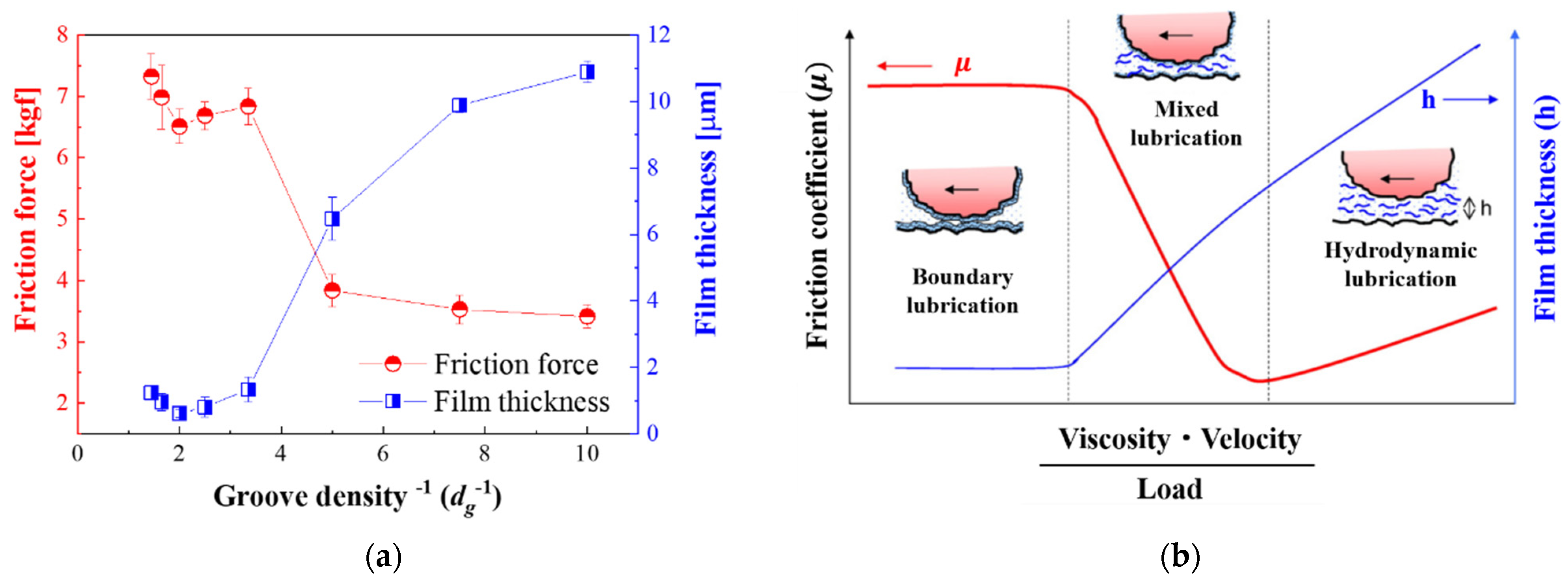
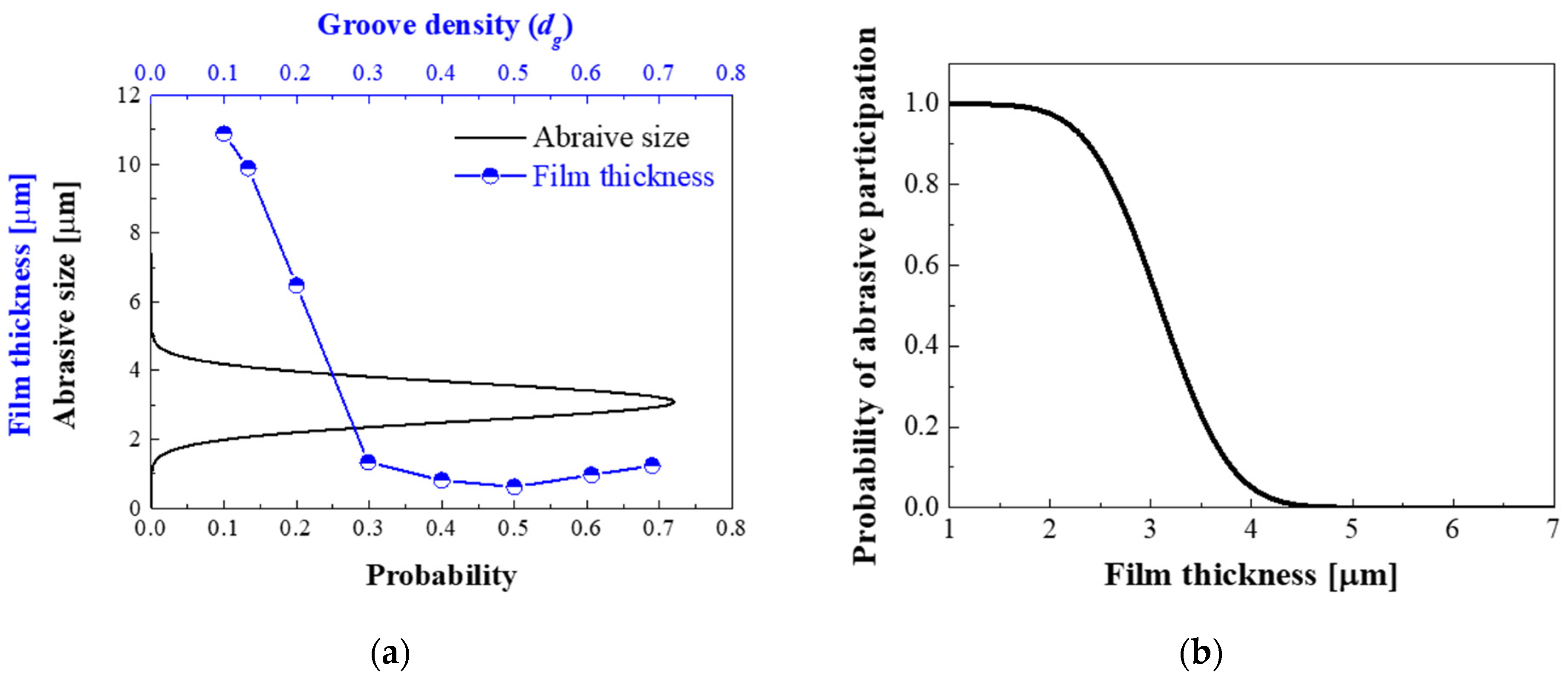
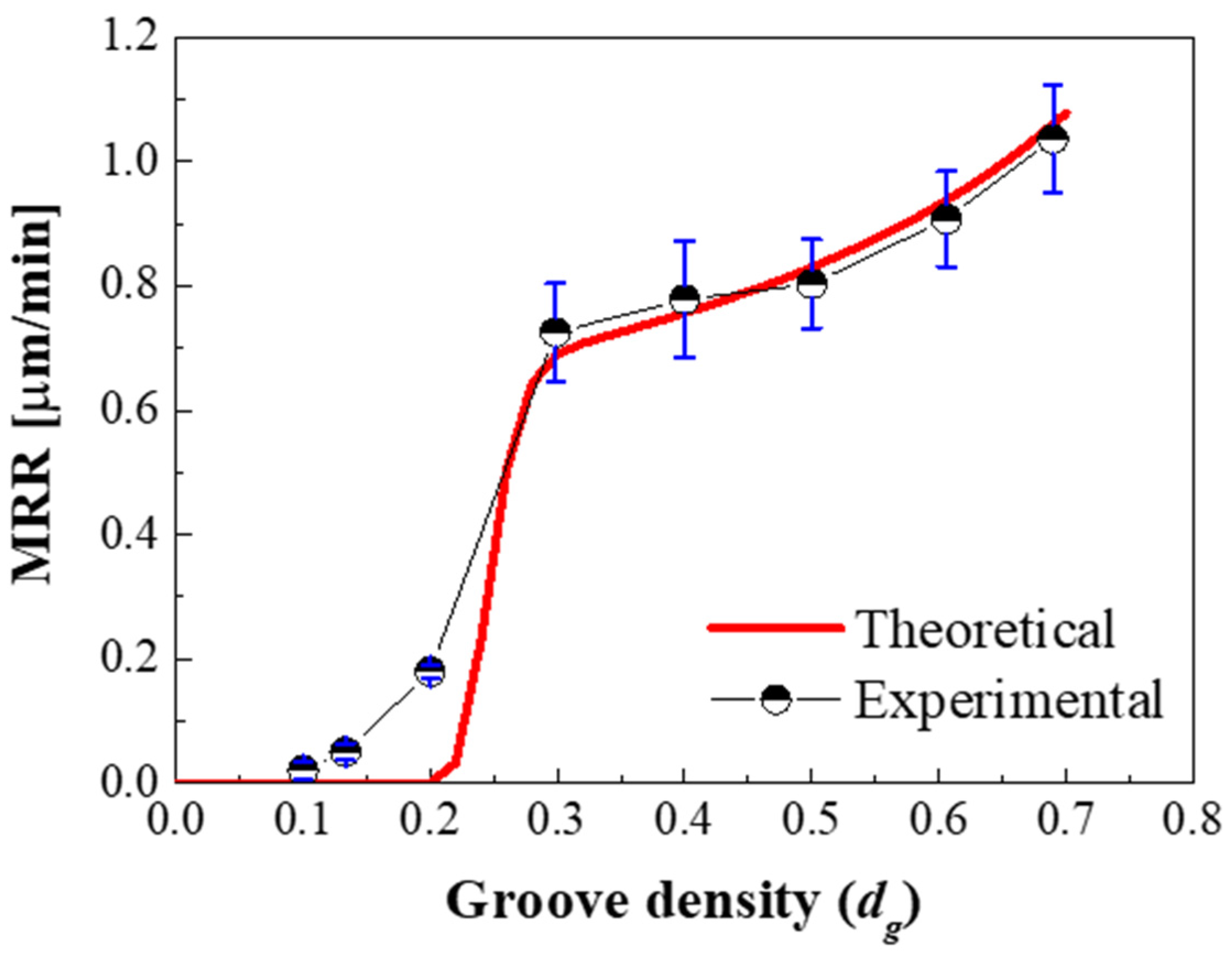
The increasing demand for single-crystal wafers combined with the increase in diameter of semiconductor wafers has warranted further improvements in thickness variation and material removal rate during lapping to ensure price competitiveness of wafers; consequently, the lapping process has gained the attention of researchers. However, there is insufficient research on the effect of platen grooves on the lapping process. In this study, the parameters to describe grooves were defined in order to understand their influence on the lapping process, and a material removal model was suggested based on indentation theory and subsequently experimentally validated. The results indicate that changes in groove density affect the lubrication condition at the contact interface as well as the probability of abrasive participation by varying the oil film thickness. When fabricating the groove for a lapping platen, a groove density at the critical groove density (CGD) or higher should be selected. The higher the groove density, the easier it is to avoid the CGD, and the higher is the material removal rate. The results of this study will enable engineers to design lapping platen grooves that are suitable for the production of modern semiconductor wafers.
Keywords: lapping; groove density; contact interface; oil film; wafer; boundary lubrication lapping; groove density; contact interface; oil film; wafer; boundary lubrication