Review

Strategies for Reducing Sodium Intake in Bakery Products, a Review

by
Georgiana Gabriela Codină
*,
Andreea Voinea
and
Adriana Dabija
Faculty of Food Engineering, Stefan cel Mare University of Suceava, 720229 Suceava, Romania
*
Author to whom correspondence should be addressed.
Appl. Sci. 2021, 11(7), 3093; https://doi.org/10.3390/app11073093
Submission received: 1 March 2021 / Revised: 25 March 2021 / Accepted: 27 March 2021 / Published: 31 March 2021
(This article belongs to the Special Issue Effects of Plants’ Ingredients on Dough and Final Product)

Abstract

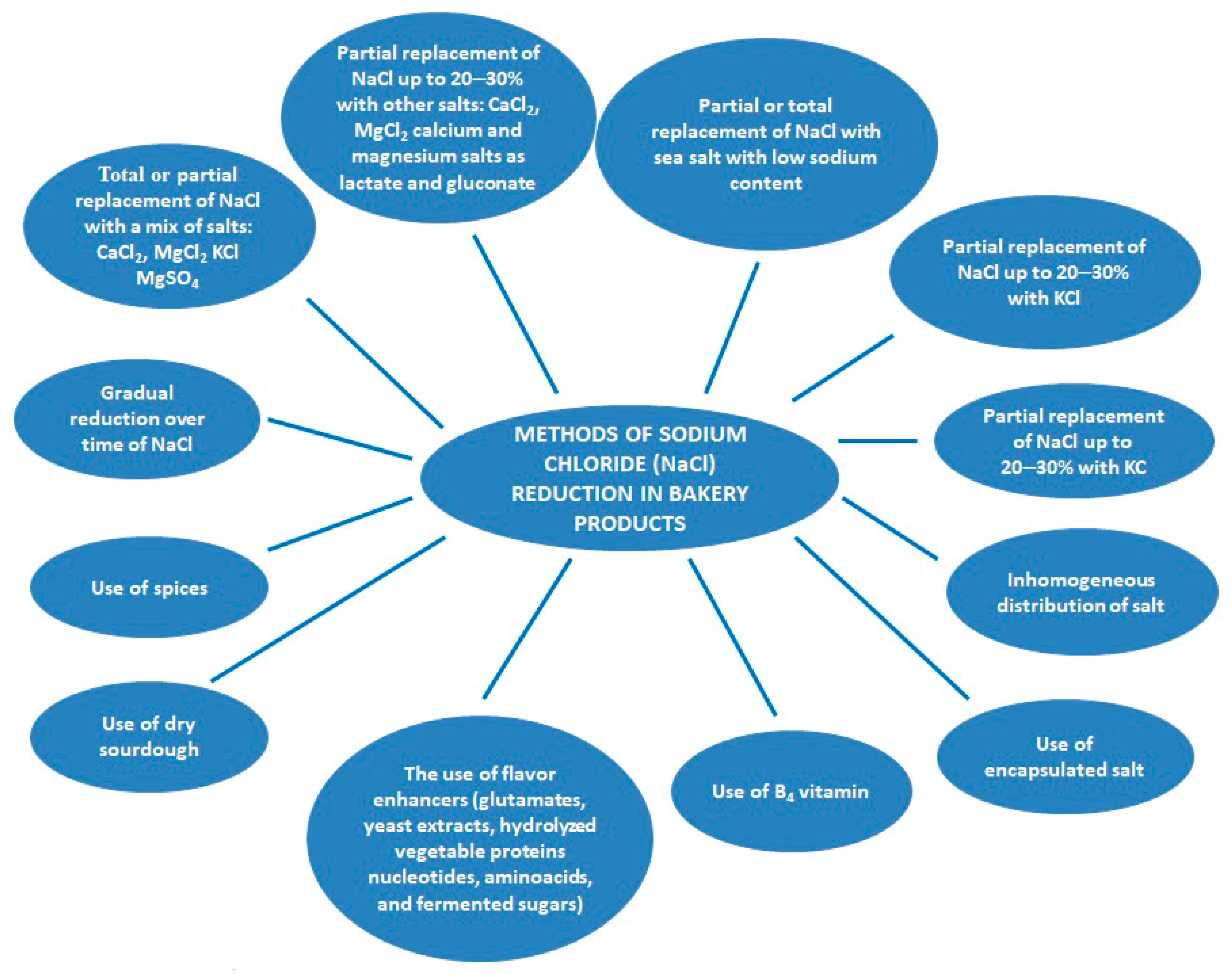
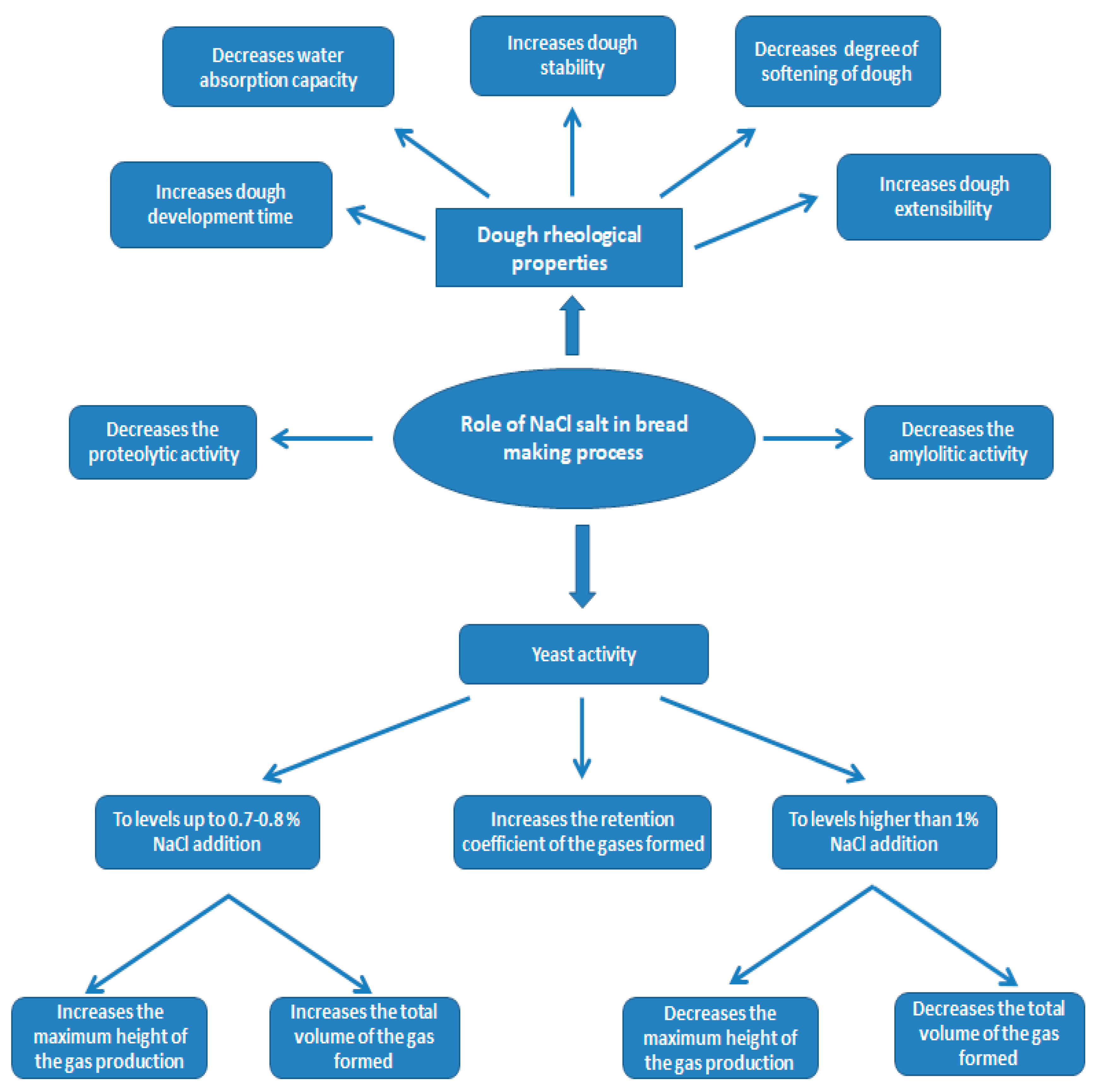
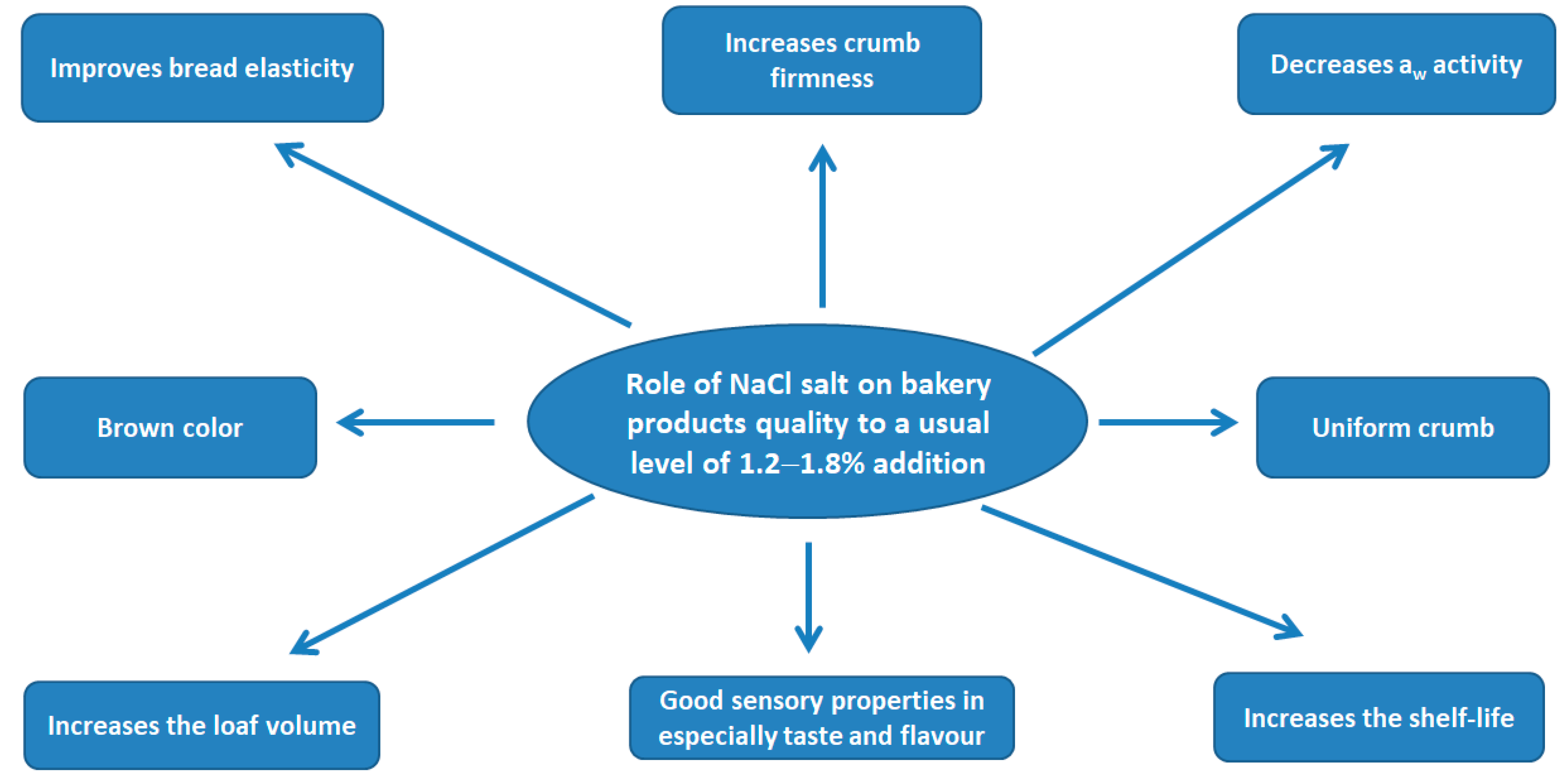
Nowadays, the dietary sodium chloride intake is higher than the daily recommended levels, especially due to its prominent presence in food products. This may cause an increase of high blood pressure leading to cardiovascular diseases. Cereal products, and in particular bread, are the main source of salt in human diet. However, salt is a critical ingredient in bread making, and its reduction can have a negative impact on bread quality. This review focuses on physiological role of sodium chloride, its effect on the human body and legislative recommendations on its consumption. Moreover, it presents sodium chloride effects on the bread making from the technological and sensory point of view and presents different options for salt reduction in foods focusing on bakery products. It may be concluded that salt reduction in bread making while maintaining dough rheological properties, yeast fermentation rate, bread quality through its loaf volume, color, textural properties, sensory characteristics is difficult to be achieved due to sodium chloride’s multifunctional role in the bread-making process. Several strategies have been discussed, focusing on sodium chloride replacement with other type of salts, dry sourdough and flavor enhancers.
Keywords: salt reduction; legislative recommendations; bread making; salt replacement; bread quality salt reduction; legislative recommendations; bread making; salt replacement; bread quality