Chaos-Based Synchronized Dynamic Keys and Their Application to Image Encryption with an Improved AES Algorithm


Abstract
1. Introduction
2. Synchronization Design and Dynamic Chaos-Based Random Key Generators
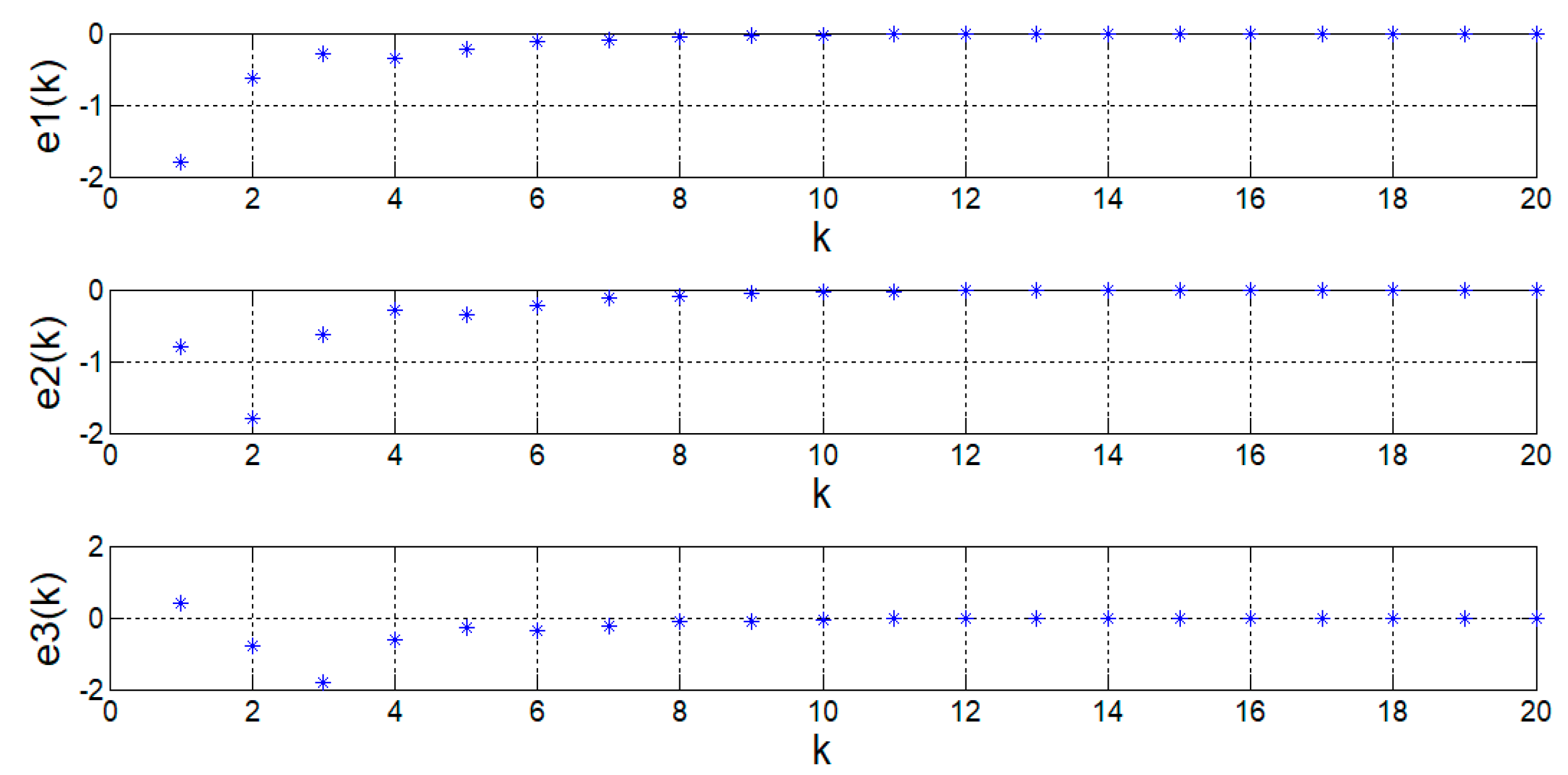
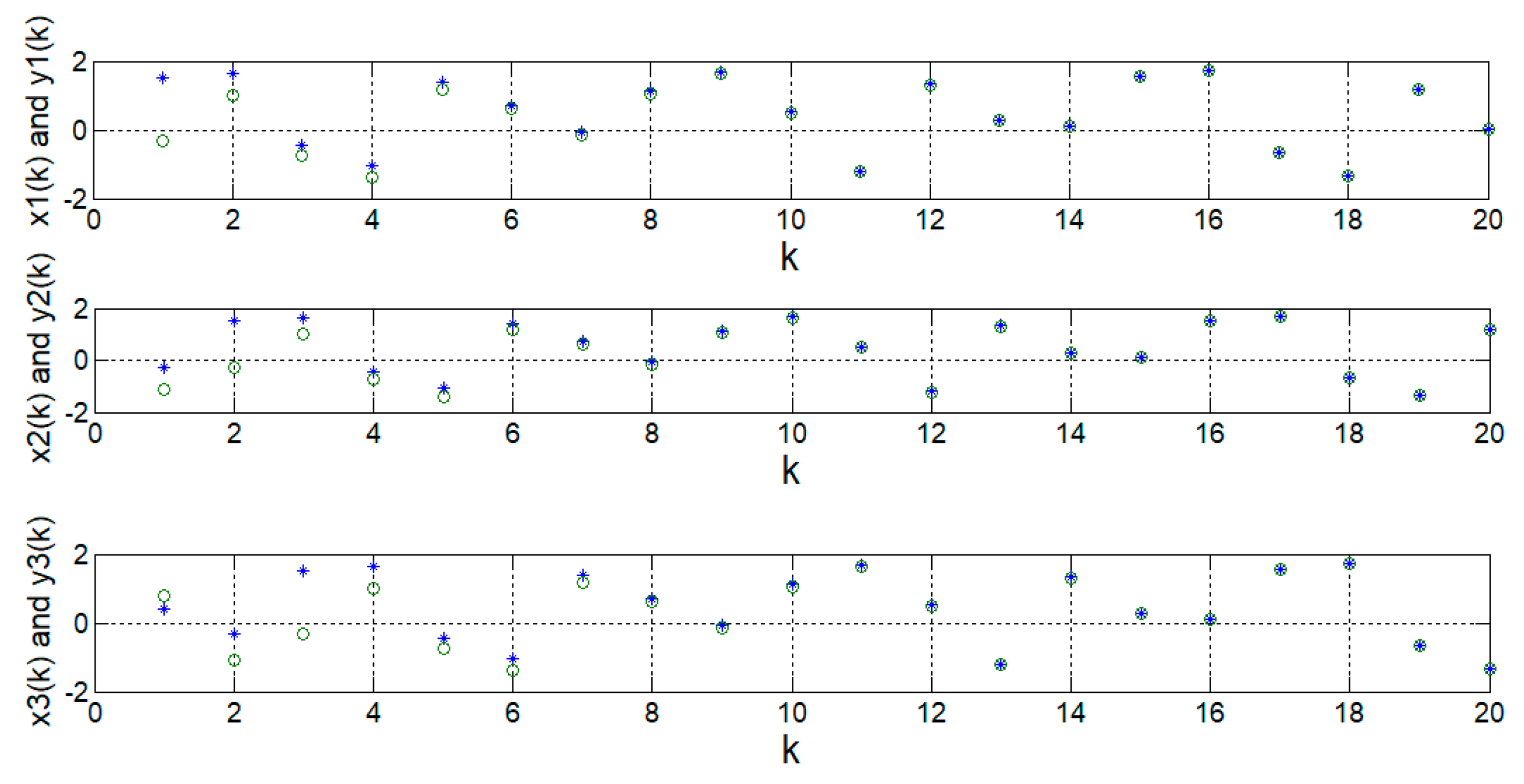
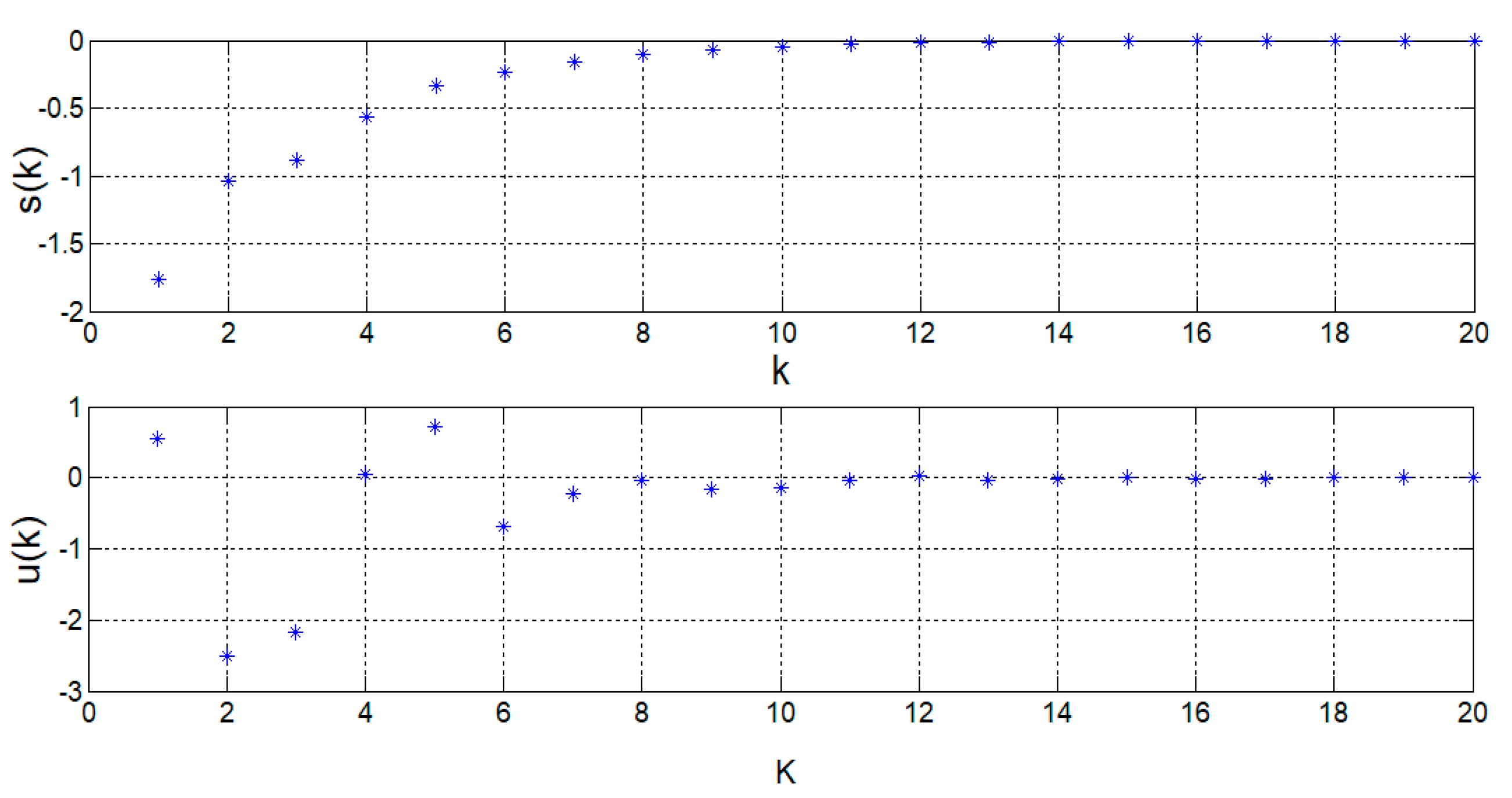
2.1. Chaos Synchronization Design
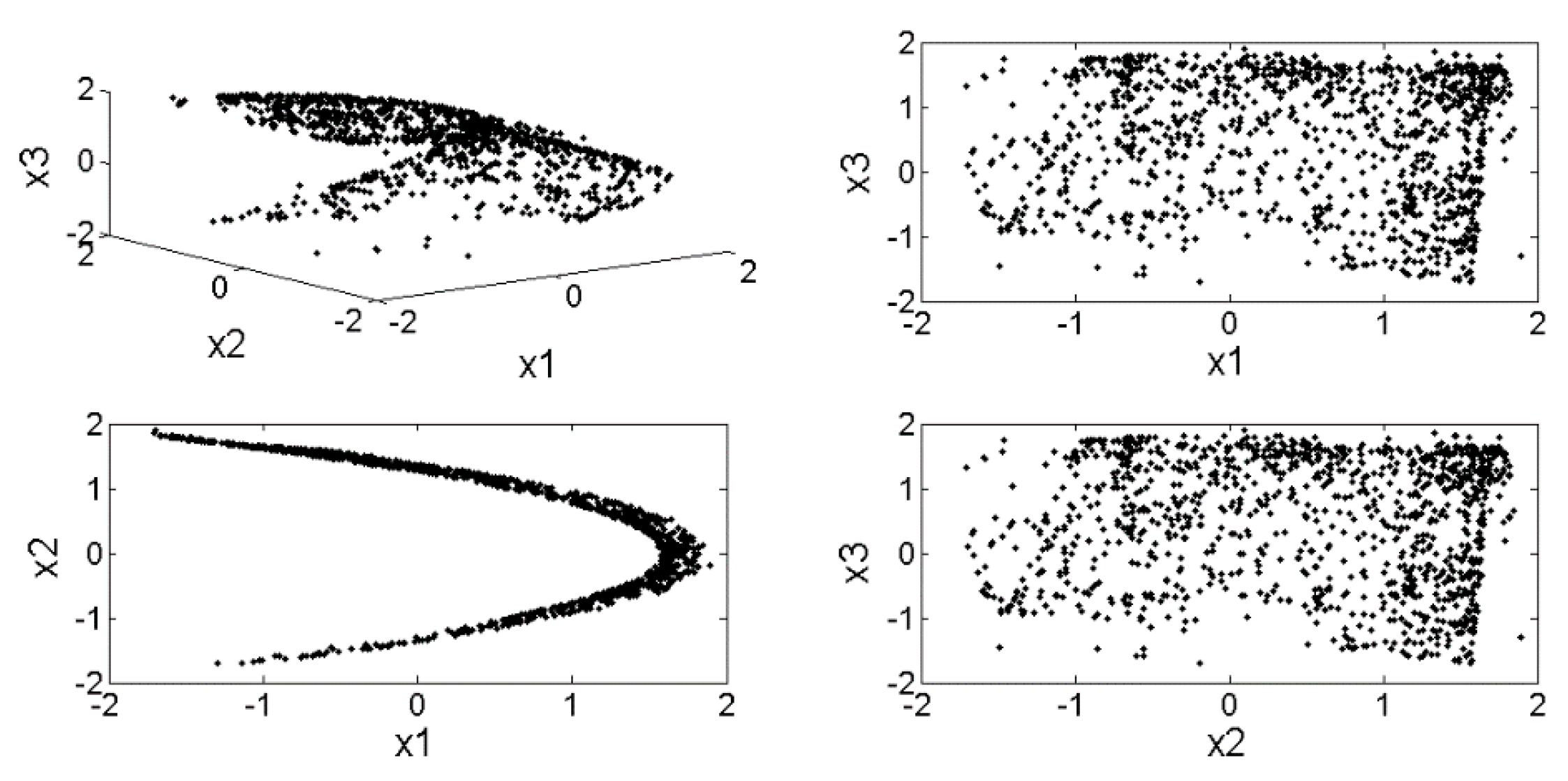
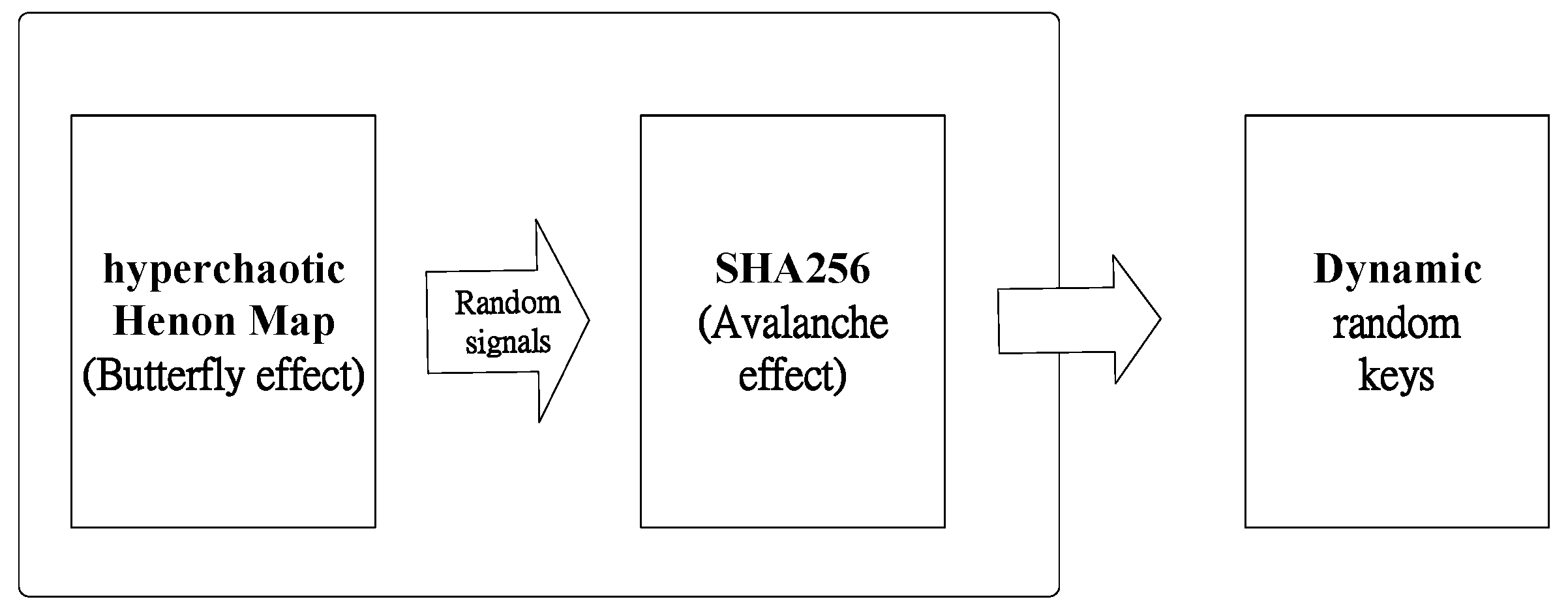
2.2. Dynamic Chaos-Based Random Key Generator
3. Design of the Improved AES Algorithm
4. Implementation and Performance Analysis of CAES-Based Image Encryption
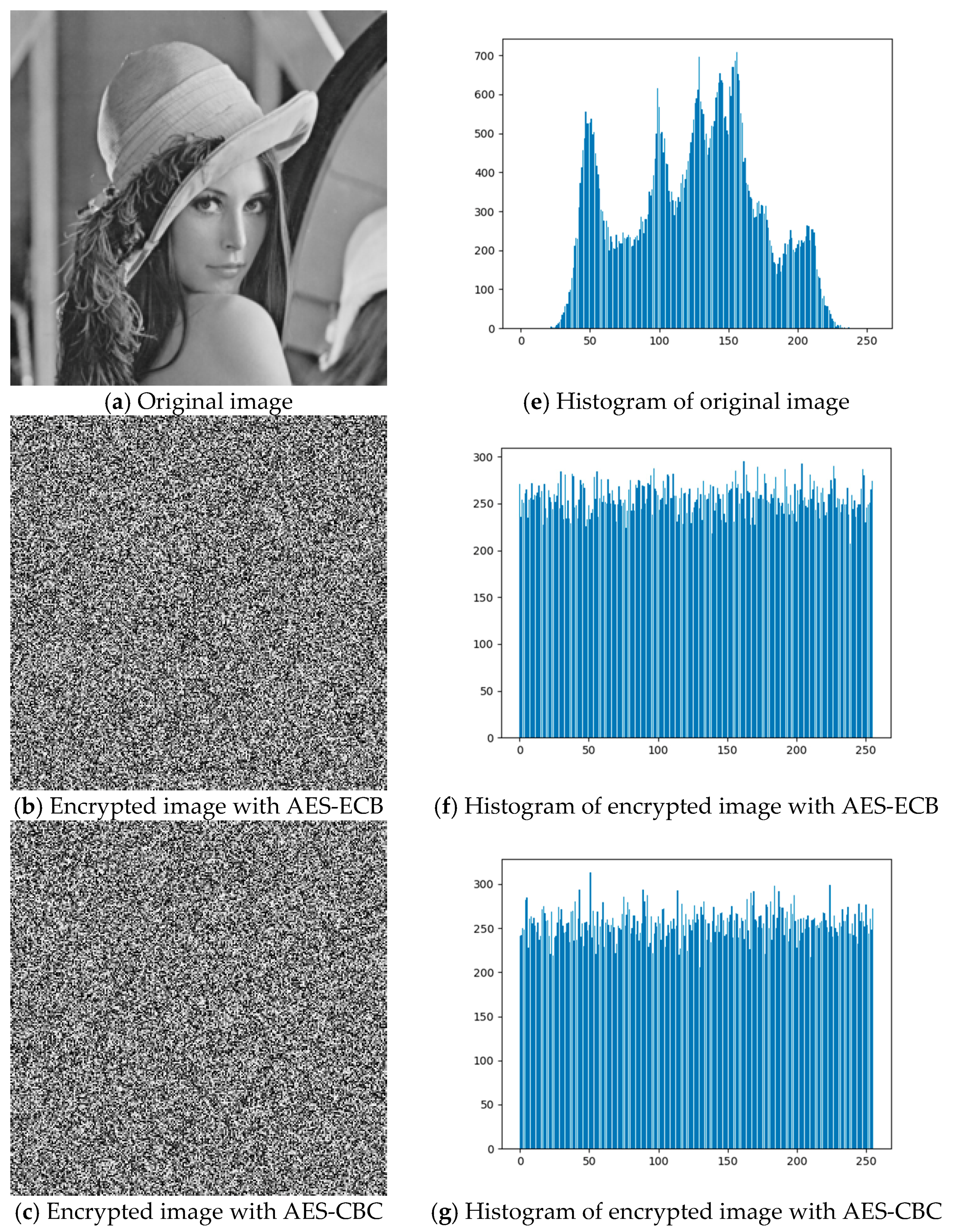
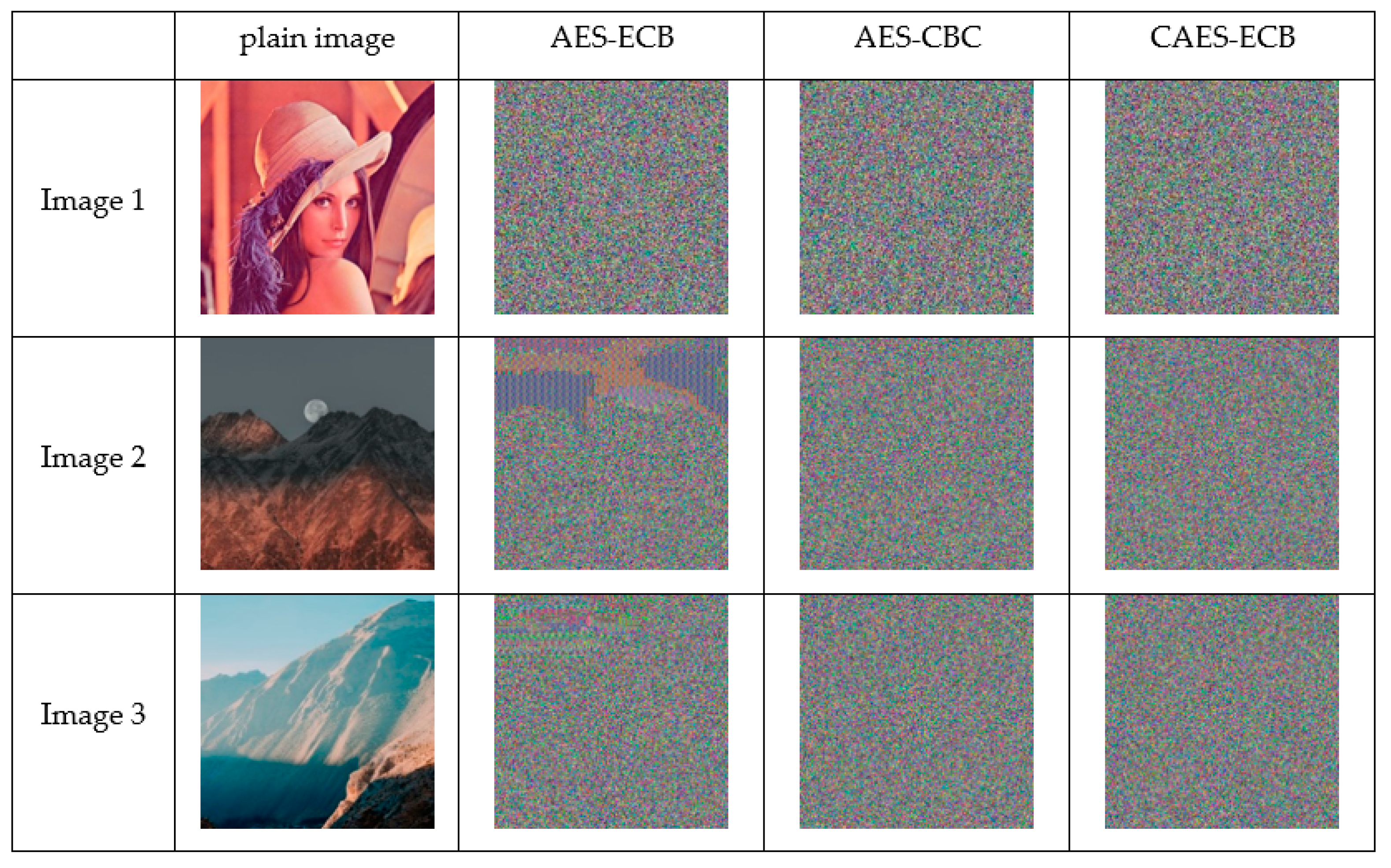
4.1. Visual Effect of Encrypted Images
4.2. Statistical Analysis by NIST
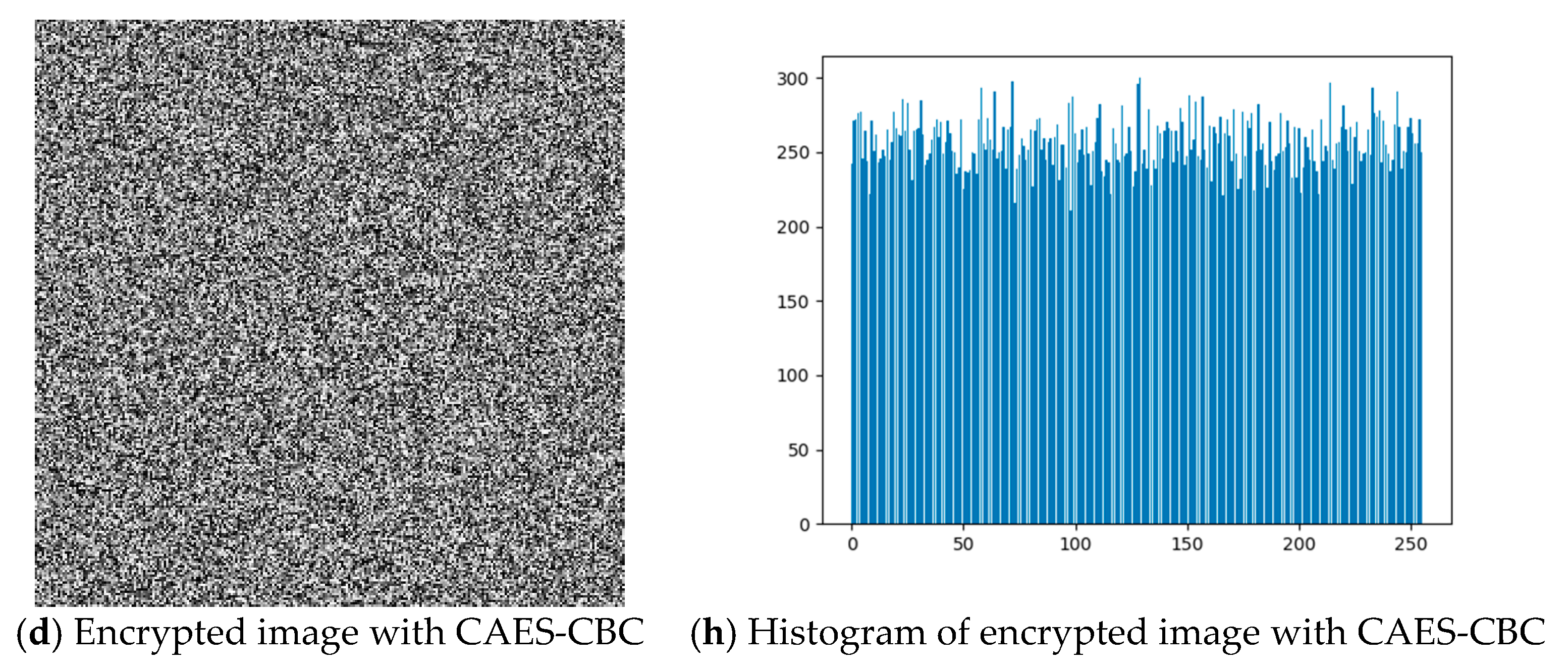
4.3. Histogram Analysis and Mean Absolute Deviation
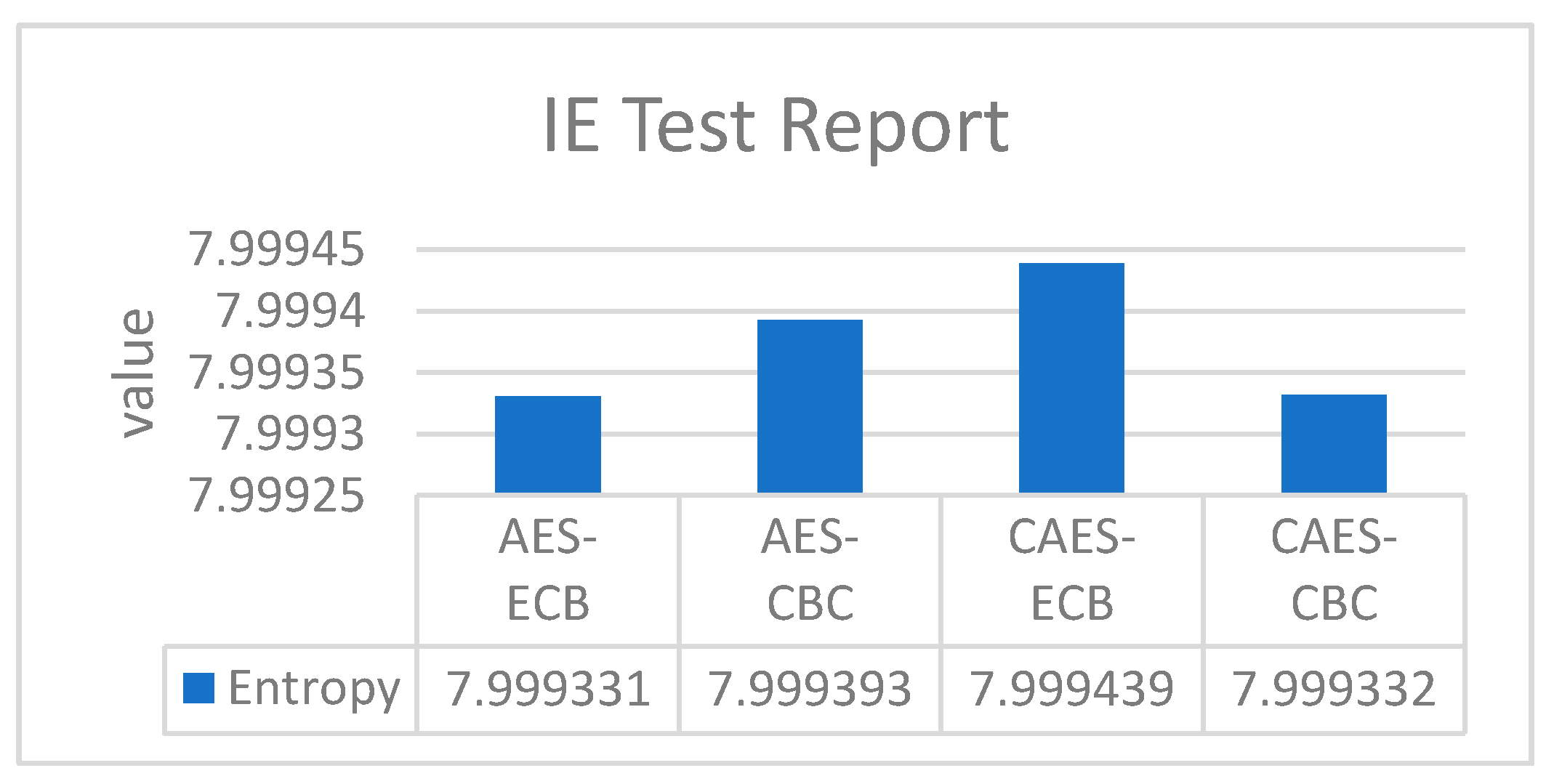
4.4. Information Entropy Analysis
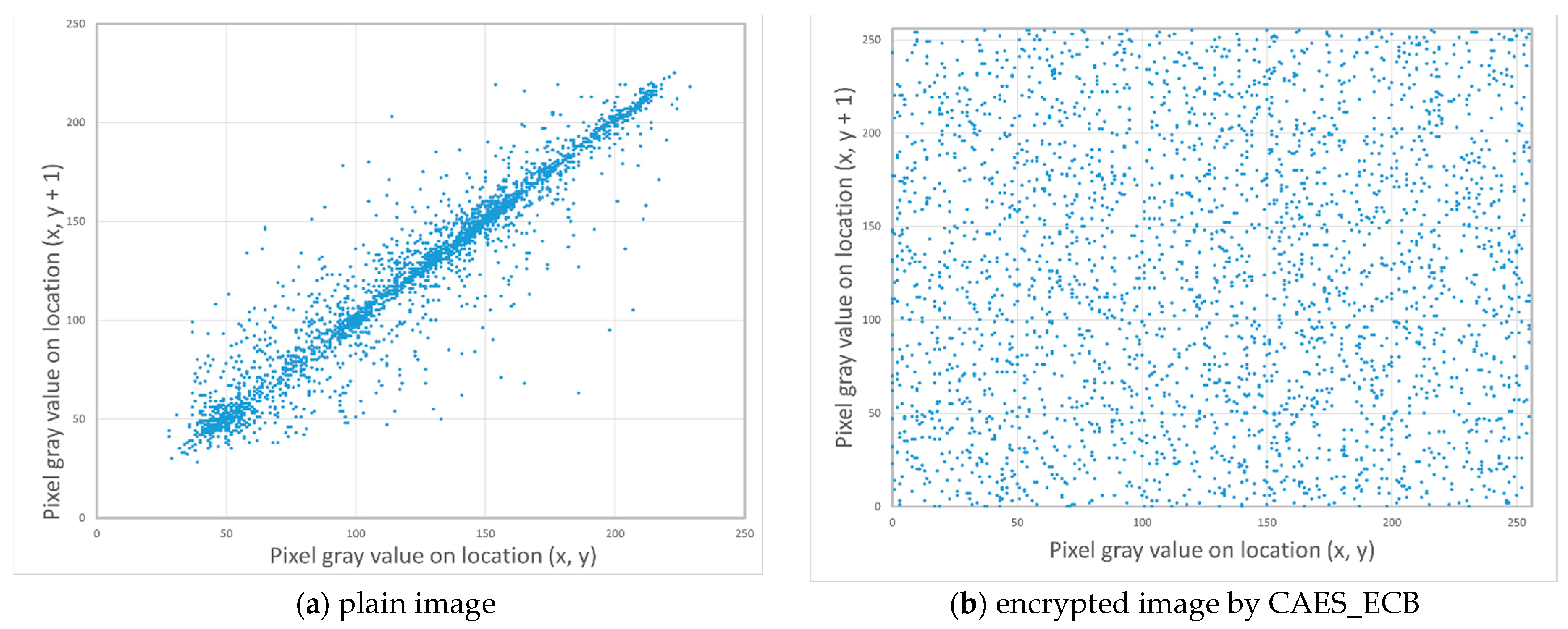
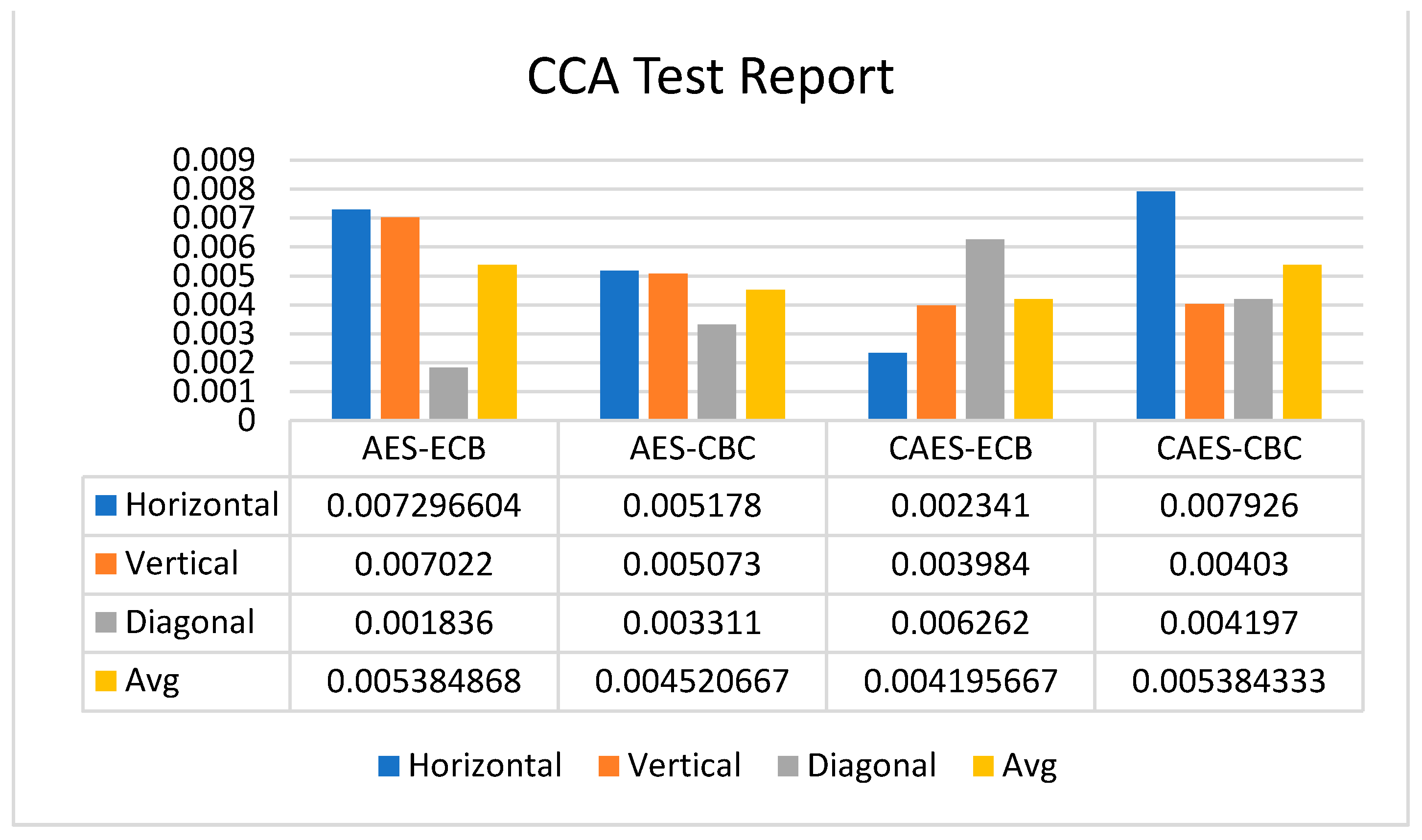
4.5. Connected Component Analysis
5. Conclusions and Future Works
Author Contributions
Funding
Institutional Review Board Statement
Informed Consent Statement
Data Availability Statement
Conflicts of Interest
References
- Durdi, V.B.; Kulkarni, P.T.; Sudha, K.L. Selective encryption framework for secure multimedia transmission over wireless multimedia sensor networks. Advances in Intelligent Systems and Computing. 2017. In Proceedings of the International Conference on Data Engineering and Communication Technology, Lavasa, Pune, Maharashtra, India, 10–11 March 2016; Springer: Singapore, 2017; Volume 469. [Google Scholar]
- Li, C.; Zhao, F.; Lei, C.; Lei, L.; Zhang, J. A hyperchaotic color image encryption algorithm and security analysis. Secur. Commun. Netw. 2019, 2019. [Google Scholar] [CrossRef] [Scilit]
- Zhang, Y.H.; Zhang, B. Algorithm of image encrypting based on Logistic chaotic system. Appl. Res. Comput. 2015, 32, 1770–1773. [Google Scholar]
- Liu, Y.; Lin, T.; Wang, J.; Yuan, H.M. An image encryption algorithm based on hyper-chaos system and DNA plane. J. Comput. 2018, 29, 43–55. [Google Scholar]
- Liu, Y.; Tong, X.; Hu, S. A family of new complex number chaotic maps based image encryption algorithm. Signal Process. Image Commun. 2013, 28, 1548–1559. [Google Scholar] [CrossRef] [Scilit]
- Suri, S.; Vijay, R. An AES–chaos-based hybrid approach to encrypt multiple images, recent developments in intelligent computing, communication and devices. In Advances in Intelligent Systems and Computing; Springer: Singapore, 2017; Volume 555. [Google Scholar]
- Hraoui, S.; Gmira, F.; Jarar, A.O.; Satori, K.; Saaidi, A. Benchmarking AES and chaos based logistic map for image encryption. In Proceedings of the IEEE/ACS International Conference on Computer Systems and Applications, AICCSA, Ifrane, Morocco, 27–30 May 2013. [Google Scholar]
- Arab, A.; Rostami, M.J. An image encryption method based on chaos system and AES algorithm. J. Supercomput. 2019, 75, 6663–6682. [Google Scholar] [CrossRef] [Scilit]
- Kotel, S.; Zeghid, M.; Tourki, R.; Machhout, M.; Baganne, A. High-Level Implementation of a Chaotic and AES Based Crypto-System. J. Circuits Syst. Comput. 2017, 26, 1750122. [Google Scholar]
- Yang, C.H. Symplectic Synchronization of Lorenz-Stenflo system with uncertain chaotic parameters via adaptive control. Abstr. Appl. Anal. 2013, 2013. [Google Scholar] [CrossRef] [Scilit]
- Abbas, A.M. Image encryption based on independent component Analysis and Arnold’s cat map. Egypt. Inform. J. 2016, 17, 139–146. [Google Scholar] [CrossRef] [Scilit]
- Pecora, L.M.; Carroll, T.L. Synchronization in chaotic systems. Phys. Rev. Lett. 1990, 64, 821–824. [Google Scholar] [CrossRef] [Scilit] [PubMed]
- Njah, A.N. Tracking control and synchronization of the new hyperchaotic Liu system via backstepping techniques. Nonlinear Dyn. 2010, 61, 1–9. [Google Scholar] [CrossRef] [Scilit]
- Yu, Y.; Li, H.X. Adaptive hybrid projective synchronization of uncertain chaotic systems based on backstepping design. Nonlinear Anal. Real World Appl. 2011, 12, 388–393. [Google Scholar] [CrossRef] [Scilit]
- Kuo, C.L. Design of a fuzzy sliding-mode synchronization controller for two different chaos systems. Comput. Math. Appl. 2011, 61, 2090–2095. [Google Scholar] [CrossRef] [Scilit]
- Yau, H.T.; Kuo, C.L.; Yan, J.J. Fuzzy sliding mode control for a class of chaos synchronization with uncertainties. Int. J. Nonlinear Sci. Numer. Simul. 2006, 7, 333–338. [Google Scholar] [CrossRef] [Scilit]
- Pai, M.C. Global synchronization of uncertain chaotic systems via discrete-time sliding mode control. Appl. Math. Comput. 2014, 228, 663–671. [Google Scholar] [CrossRef] [Scilit]
- Heron, S. Advanced encryption standard (AES). Netw. Secur. 2009, 12, 8–12. [Google Scholar] [CrossRef] [Scilit]
- Using AES Encryption in CC111xFx and CC251xFx. Application Report, SWRA172C-August 2008-Revised March 2015, Copyright © 2008–2015. Texas Instruments Incorporated. Available online: http://www/er (accessed on 30 January 2021).
- Ashokkumar, C.; Venkatesh, M.B.S.; Giri, R.P.; Roy, B.; Menezes, B. An error-tolerant approach for efficient AES key retrieval in the presence of cacheprefetching-experiments, results, analysis. Sadhana 2019, 44, 88. [Google Scholar] [CrossRef] [Scilit]
- Arute, F.; Arya, K.; Babbush, R.; Bacon, D.; Bardin, J.C.; Barends, R.; Biswas, R.; Boixo, S.; Brandao, F.G.; Buell, D.A.; et al. Quantum supremacy using a programmable superconducting processor. Nature 2019, 574, 505–510. [Google Scholar] [CrossRef] [Scilit] [PubMed]
- Miller, D.A.; Grassi, G. A discrete generalized hyperchaotic Henon map circuit. In Proceedings of the 44th IEEE 2001 Midwest Symposium on Circuits and Systems (MWSCAS), Dayton, OH, USA, 14–17 August 2001. [Google Scholar]
- Liao, T.L.; Wan, P.Y.; Chien, P.C.; Liao, Y.C.; Wang, L.K.; Yan, J.J. Design of high-security USB flash drives based on chaos authentication. Electronics 2018, 7, 82. [Google Scholar] [CrossRef] [Scilit]
- Gilbert, H.; Handschuh, H. Security Analysis of SHA-256 and Sisters, SAC 2003, LNCS 3006; Springer: Berlin/Heidelberg, Germany, 2004; pp. 175–193. [Google Scholar]
- Delfs, H.; Knebl, H. Symmetric-Key Encryption-Introduction to Cryptography: Principles and Applications; Springer: Berlin/Heidelberg, Germany, 2007; ISBN 9783540492436. [Google Scholar]
- Rukhin, A.; Soto, J.; Nechvatal, J.; Smid, M.; Barker, E. A Statistical Test Suite for Random and Pseudorandom Number Generators for Cryptographic Applications; Booz-Allen and Hamilton Inc.: McLean, VA, USA, 2001. [Google Scholar]
- Kolassa, S.; Schütz, W. Advantages of the MAD/Mean Ratio over the MAPE. Foresight: Int. J. Appl. Forecast. 2007, 6, 40–43. [Google Scholar]
- Pathria, R.K.; Beale, P.D. Statistical Mechanics, 3rd ed.; Academic Press: Cambridge, MA, USA, 2011; p. 51. ISBN 978-0123821881. [Google Scholar]
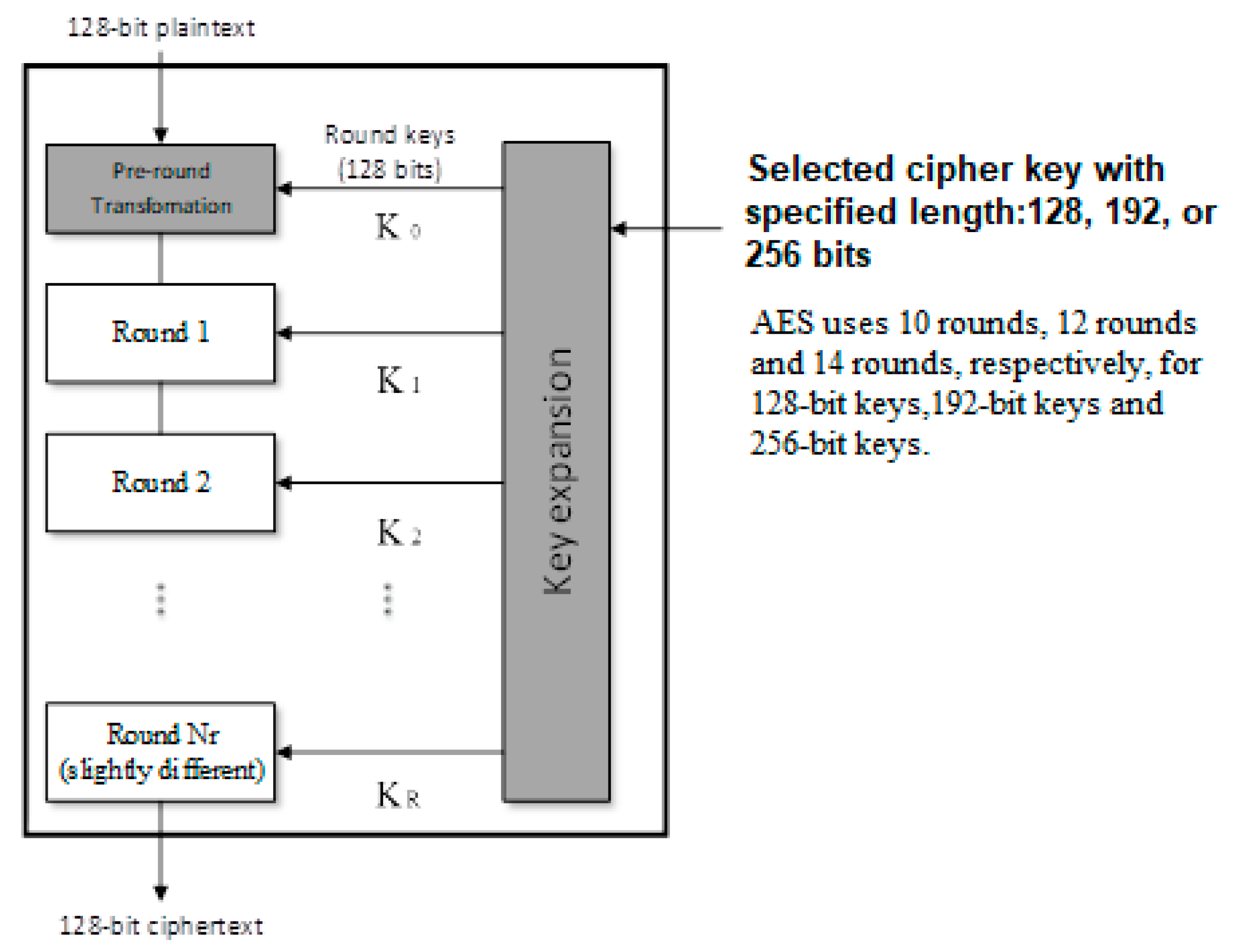
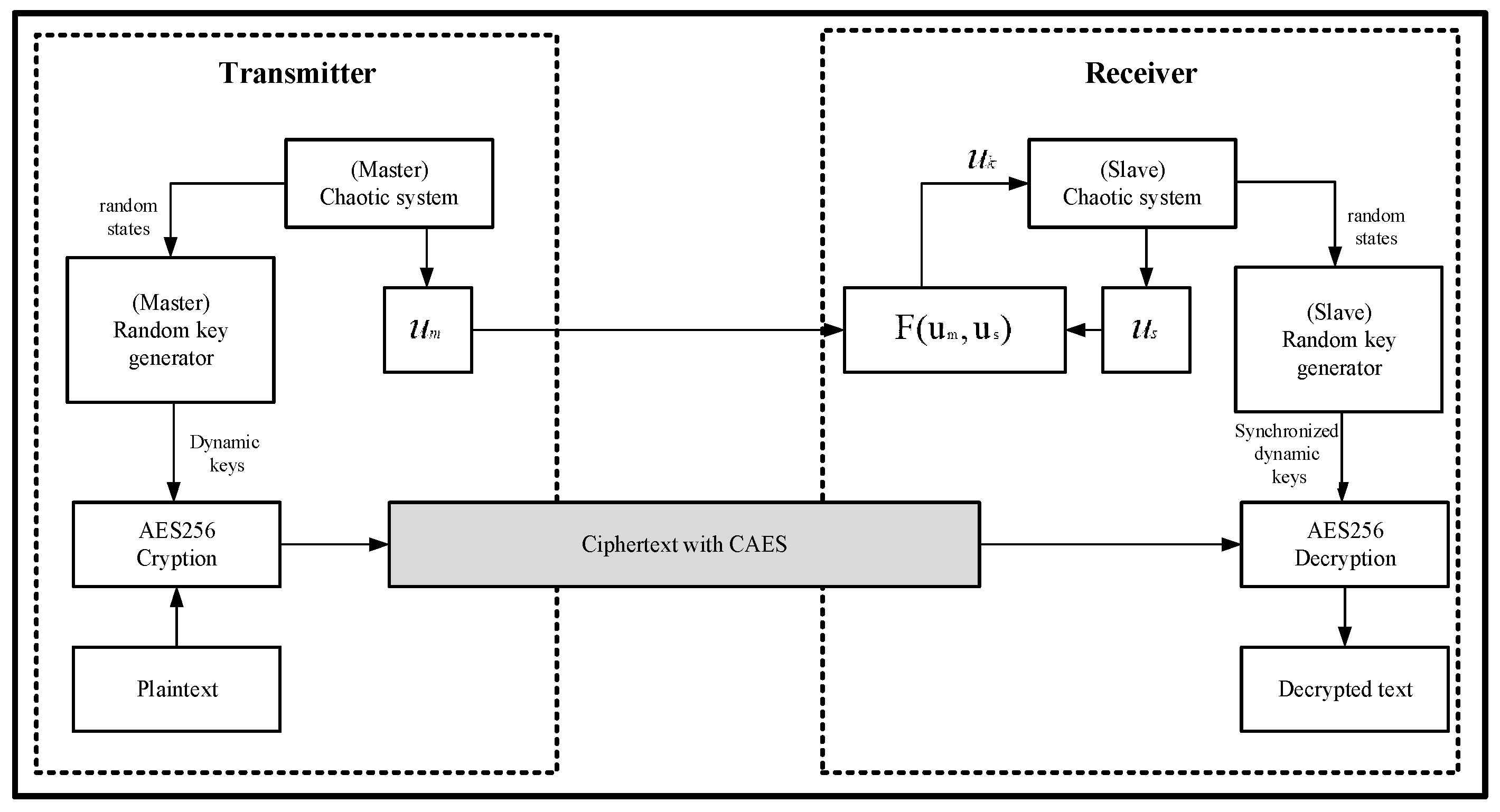
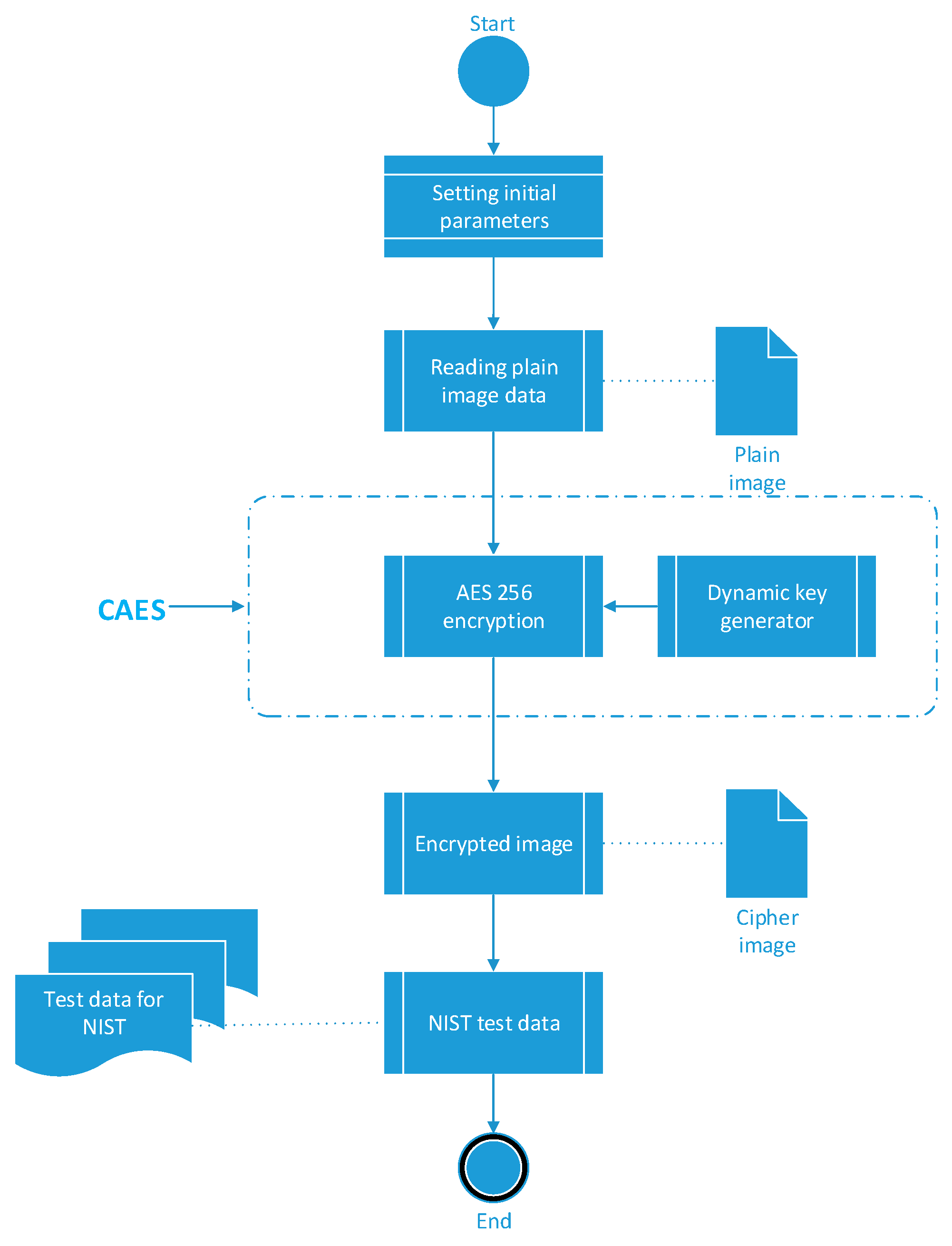
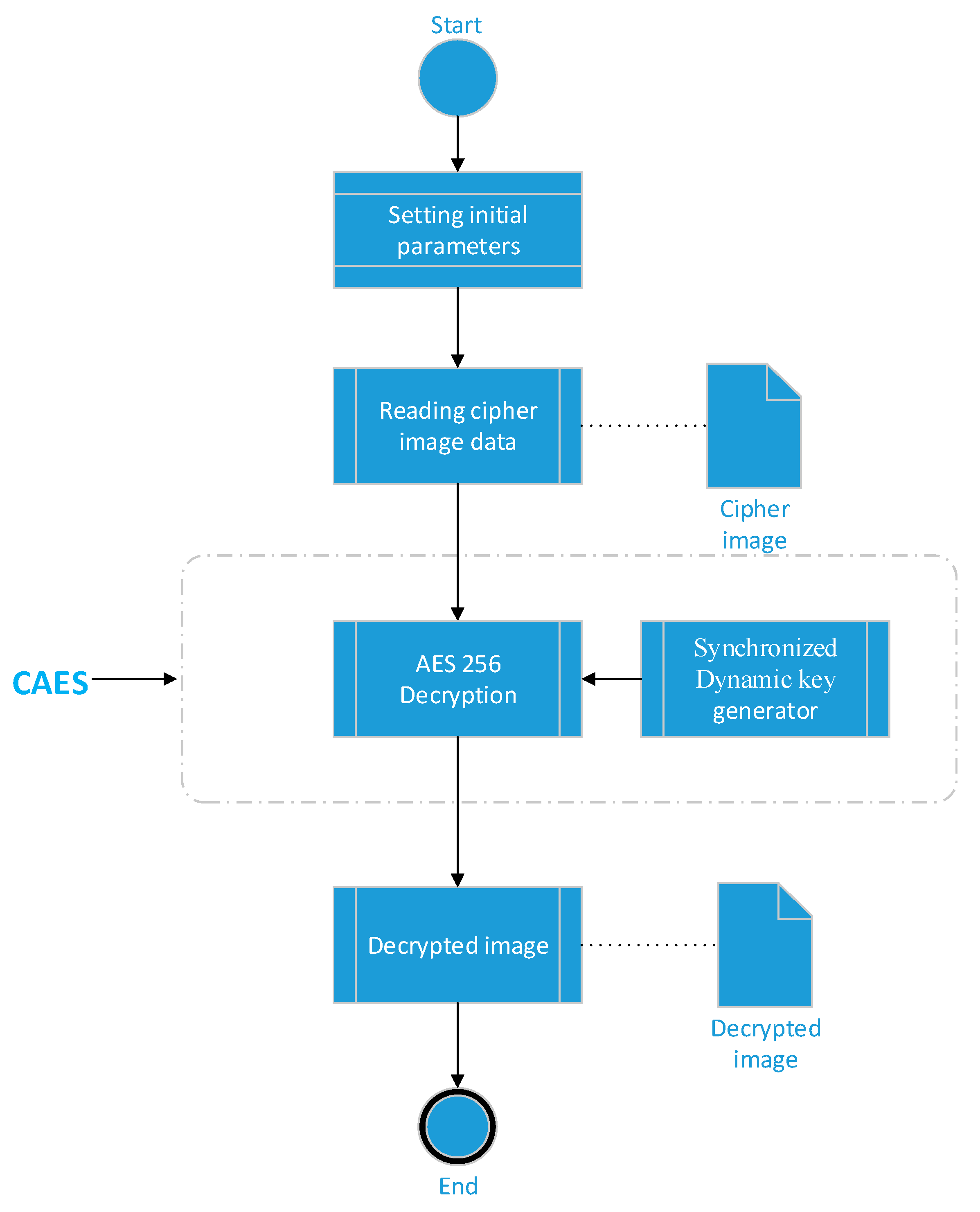




| Nist Test | p-Value | |||
|---|---|---|---|---|
| AES-ECB | AES-CBC | CAES-ECB | CAES-CBC | |
| Frequency | 0.000000 | 0.468595 | 0.602458 | 0.862344 |
| Block frequency | 0.000954 | 0.534146 | 0.602458 | 0.350485 |
| Cumulative sums | 0.000001 | 0.949602 | 0.602458 | 0.999896 |
| Runs | 0.000000 | 0.407091 | 0.991468 | 0.299251 |
| Longest run | 0.000000 | 0.534146 | 0.739918 | 0.739918 |
| Rank | 0.000000 | 0.534146 | 0.350485 | 0.407091 |
| FFT | 0.000000 | 0.468595 | 0.407091 | 0.253551 |
| Non overlapping template | 0.000000 | 0.998205 | 0.991468 | 0.991468 |
| Overlapping template | 0.000439 | 0.000737 | 0.407091 | 0.911413 |
| Universal | 0.000000 | 0.804337 | 0.862344 | 0.862344 |
| Approximate entropy | 0.000000 | 0.407091 | 0.862344 | 0.299251 |
| Random excursions | 0.122325 | 0.484646 | 0.350485 | 0.534146 |
| Random excursions variant | 0.025193 | 0.980883 | 0.637119 | 0.911413 |
| Serial | 0.000000 | 0.350485 | 0.911413 | 0.804337 |
| Linear complexity | 0.000000 | 0.299251 | 0.299251 | 0.671779 |
| Sum | 0.148912 | 8.221956 | 9.617851 | 9.898687 |
| Average | 0.009927 | 0.548130 | 0.641190 | 0.659912 |
| Image | Histogram MAD Uniform Distribution Test | ||
|---|---|---|---|
| AES-ECB | AES-CBC | CAES-CBC | |
 | 12.3 | 12.67 | 12.67 |
 | 33.56 | 12.68 | 12.99 |
 | 93.51 | 12.32 | 12.07 |
 | 13.93 | 12.41 | 11.87 |
| Average MAD | 38.325 | 12.52 | 12.4 |
Publisher’s Note: MDPI stays neutral with regard to jurisdictional claims in published maps and institutional affiliations. |
© 2021 by the authors. Licensee MDPI, Basel, Switzerland. This article is an open access article distributed under the terms and conditions of the Creative Commons Attribution (CC BY) license (http://creativecommons.org/licenses/by/4.0/).
Share and Cite
Lin, C.-H.; Hu, G.-H.; Chan, C.-Y.; Yan, J.-J. Chaos-Based Synchronized Dynamic Keys and Their Application to Image Encryption with an Improved AES Algorithm. Appl. Sci. 2021, 11, 1329. https://doi.org/10.3390/app11031329
Lin C-H, Hu G-H, Chan C-Y, Yan J-J. Chaos-Based Synchronized Dynamic Keys and Their Application to Image Encryption with an Improved AES Algorithm. Applied Sciences. 2021; 11(3):1329. https://doi.org/10.3390/app11031329
Chicago/Turabian StyleLin, Chih-Hsueh, Guo-Hsin Hu, Che-Yu Chan, and Jun-Juh Yan. 2021. "Chaos-Based Synchronized Dynamic Keys and Their Application to Image Encryption with an Improved AES Algorithm" Applied Sciences 11, no. 3: 1329. https://doi.org/10.3390/app11031329
APA StyleLin, C.-H., Hu, G.-H., Chan, C.-Y., & Yan, J.-J. (2021). Chaos-Based Synchronized Dynamic Keys and Their Application to Image Encryption with an Improved AES Algorithm. Applied Sciences, 11(3), 1329. https://doi.org/10.3390/app11031329